Hollow polytopes of large width
Giulia Codenotti, Francisco Santos

TL;DR
This paper constructs the first known high-width hollow lattice polytopes and simplices, demonstrating that maximum lattice width grows at least linearly with dimension, and explores bounds in three dimensions.
Contribution
It introduces the first known hollow lattice polytopes of width larger than their dimension and establishes linear growth of maximum lattice width with dimension.
Findings
Constructed hollow lattice polytopes of dimension 14 and width 15.
Constructed hollow lattice simplices of dimension 404 and width 408.
Showed that maximum lattice width grows at least linearly with dimension.
Abstract
We construct a hollow lattice polytope (resp. a hollow lattice simplex) of dimension (resp.) and of width (resp.). They are the first known hollow lattice polytopes of width larger than dimension. We also construct a hollow (non-lattice) tetrahedron of width and conjecture that this is the maximum width among -dimensional hollow convex bodies. We show that the maximum lattice width grows (at least) additively with . In particular, the constructions above imply the existence of hollow lattice polytopes (resp. hollow simplices) of arbitrarily large dimension and width (resp.).
Click any figure to enlarge with its caption.
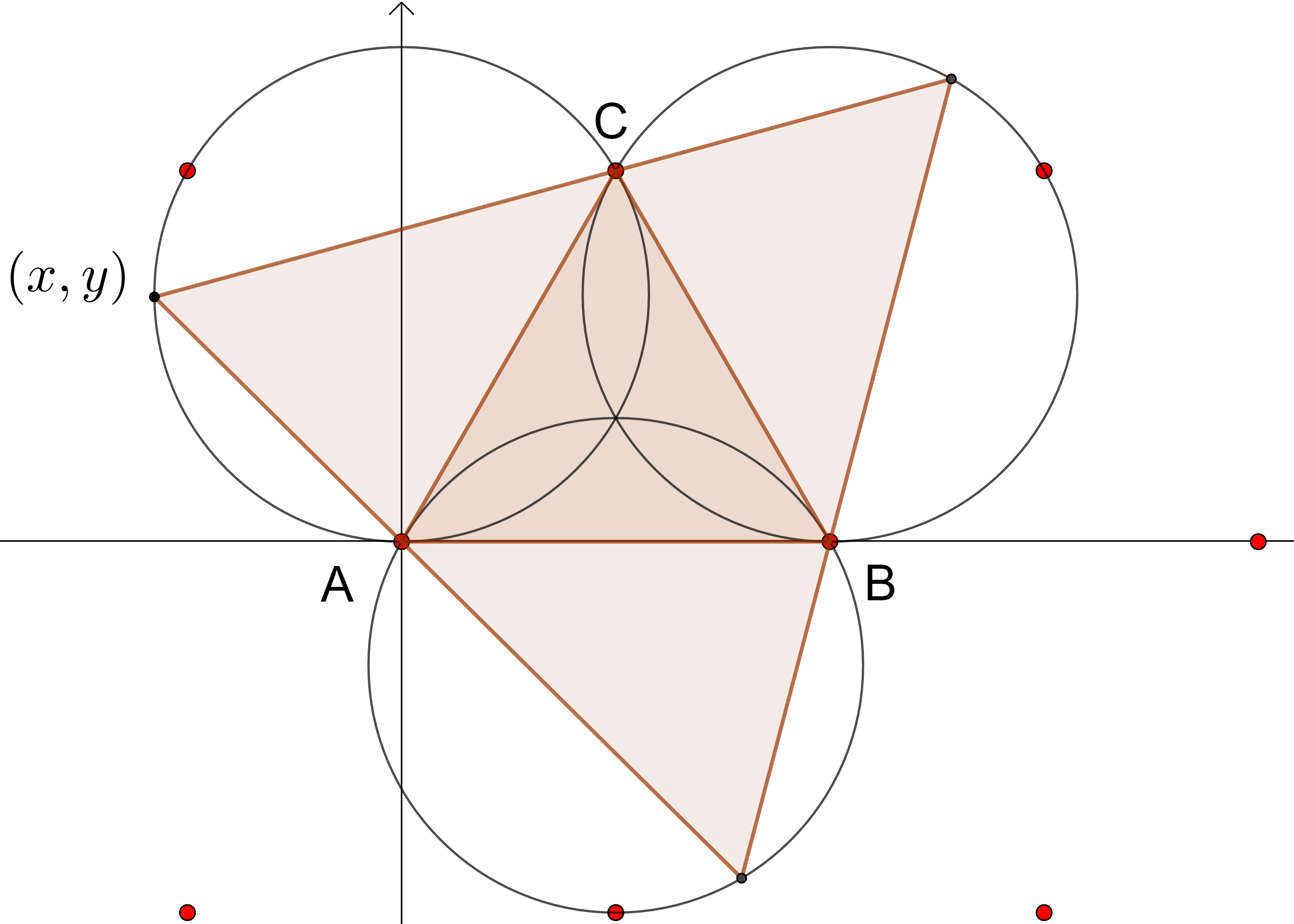 Figure 1
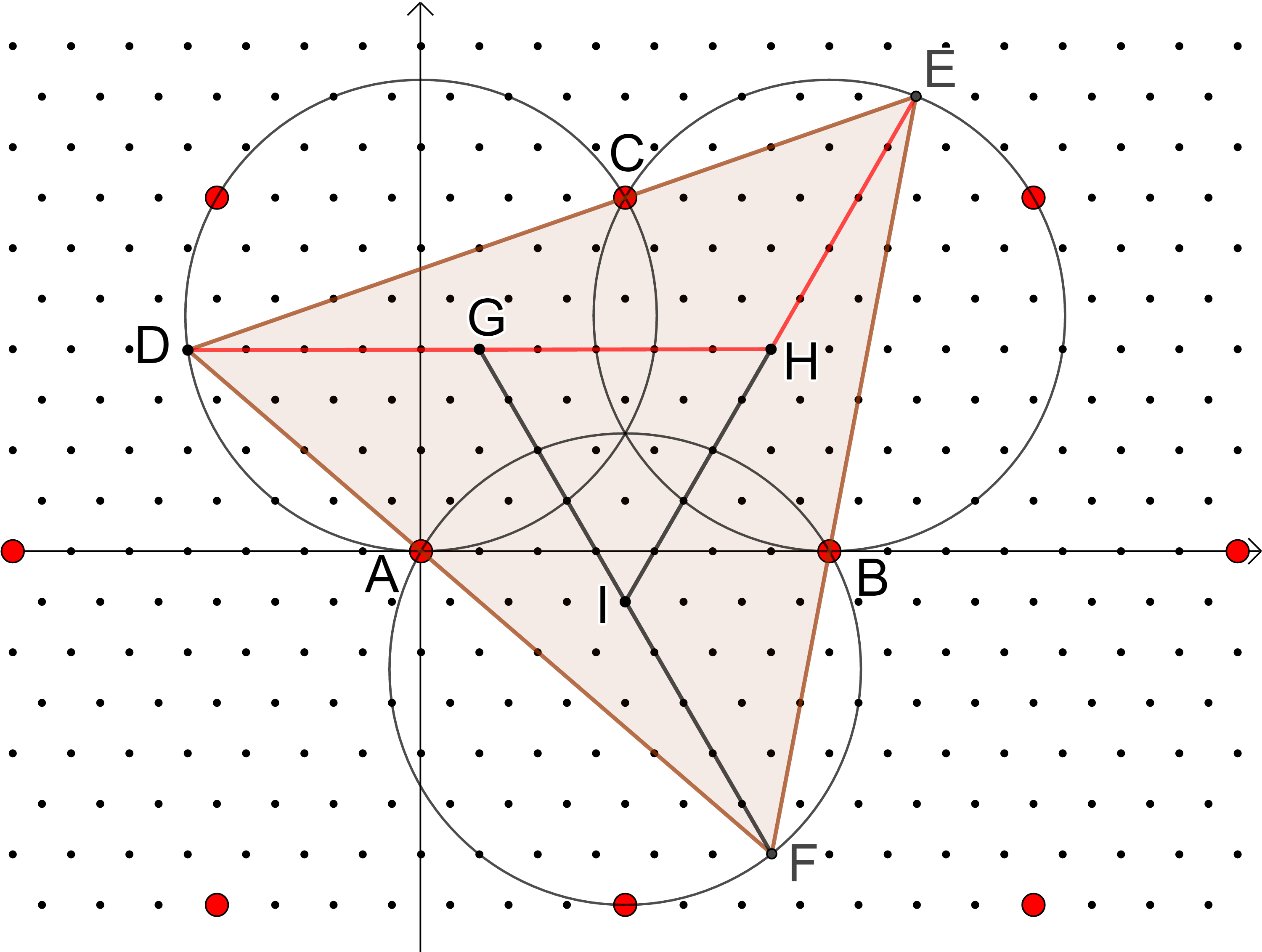 Figure 2
Peer Reviews
No public reviews on file for this paper yet. If you reviewed it on a platform where reviews are public (OpenReview, ICLR, NeurIPS, ICML), you can paste yours below so the community can read it here.
Videos
No videos yet. Explain this paper in a talk, walkthrough, or lecture? Add one.
Hollow polytopes of large width
Giulia Codenotti
and
Francisco Santos
Institut für Mathematik, Freie Universität Berlin, Germany
Dept. of Mathematics, Statistics and Comp. Sci., Univ. of Cantabria, Spain
Abstract.
We construct the first known hollow lattice polytopes of width larger than dimension: a hollow lattice polytope (resp. a hollow lattice simplex) of dimension (resp.) and of width (resp.). We also construct a hollow (non-lattice) tetrahedron of width and conjecture that this is the maximum width among -dimensional hollow convex bodies.
We show that the maximum lattice width grows (at least) additively with . In particular, the constructions above imply the existence of hollow lattice polytopes (resp. hollow simplices) of arbitrarily large dimension and width (resp.).
2010 Mathematics Subject Classification:
Primary 52C07, 52B20; Secondary 52C17
The authors were supported by the Einstein Foundation Berlin under grant EVF-2015-230 and, while they were in residence at the Mathematical Sciences Research Institute in Berkeley, California during the Fall 2017 semester, by the Clay Institute and the National Science Foundation (Grant No. DMS-1440140). Work of F. Santos is also supported by project MTM2017-83750-P of the Spanish Ministry of Science (AEI/FEDER, UE)
1. Introduction
A convex body is called hollow or lattice-free with respect to a lattice if . The width of with respect to a linear functional is the length of the segment . We denote it . The lattice width of is
[TABLE]
We omit and write just when this creates no ambiguity. We also say width of meaning lattice width.
The celebrated flatness theorem states that hollow bodies in fixed dimension have bounded lattice width. That is, for each fixed , the supremum width among all hollow convex bodies in is a certain constant . We are also interested in the following specializations of . We call the maximum width among all hollow lattice -polytopes, the maximum width among hollow lattice -simplices and the maximum width among empty -simplices; here a lattice simplex is empty if its only lattice points are its vertices. Observe that these specializations take integer values. Obviously,
[TABLE]
Much work has been done in finding upper bounds for (see references, e.g., in the introductions to [6, 12]). The current best upper bound is [14], where the notation denotes that a polylog factor is neglected. Better upper bounds are known for restricted classes of convex bodies. For example, it is known that the maximum width of hollow (not necessarily lattice) simplices [6] and of centrally symmetric hollow bodies [5] is in . But work on lower bounds is very scarce. To the best of our knowledge, can be summarized as follows:
- •
Since the -th dilation of a unimodular -simplex is hollow and has width , .
- •
Sebő [15] showed .111As Sebő points out, for even the bound can be increased to .
- •
Conway and Thompson (see [13, Theorem I.9.5]) showed a lower bound of for the maximum width of hollow ellipsoids.
- •
Dash et al. [7] (Theorem 3.2 and the paragraphs before it) show that
[TABLE]
- •
The following exact values are known for small :
[TABLE]
In this paper we establish some new lower bounds, both for specific dimensions (Sections 4, 5 and 6) and in the asymptotic sense (Section 7).
More precisely, in Section 5 we show that :
Theorem 1.1**.**
There is a hollow (non-lattice) tetrahedron of width .
The tetrahedron of Theorem 1.1 is symmetric with respect to the fcc-cubic lattice and has width for seven different linear functionals (the three coordinates and four diagonals of the cube). To certify that no integer functional gives smaller width to it we develop in Section 3 a method which may be of independent interest, based on existence of long piecewise-linear paths of rational directions.
This tetrahedron maximizes width among a two-parameter family of hollow tetrahedra that contains two of the five existing hollow -polytopes of width 3 (see Theorem 5.1), in much the same way as the value of in the table above is attained by optimizing a perturbation of the second dilation of the unimodular triangle (see details in Section 4). This makes us conjecture that:
Conjecture 1.2**.**
The tetrahedron in Theorem 1.1 is the convex -body of largest width; that is, .
Similarly, in Sections 4 and 6, we show and :
Theorem 1.3**.**
There is a hollow lattice -polytope of width and a hollow lattice -simplex of width .
We do not know of any hollow lattice -polytope of width larger than in previous literature.
Our main technical tool, both in Theorem 1.3 and for the asymptotic results, is to use dilated direct sums of polytopes and convex bodies. Let , , be convex bodies containing the origin. Their direct sum [9] (sometimes called free sum [1]) is defined as
[TABLE]
For a constant , denotes the dilation of by a factor of . For a given lattice polytope or convex body containing the origin (not necessarily in the interior) let us denote , the -fold direct sum of with itself. The following proposition is a particular case of Theorem 2.2 in Section 2.
Proposition 1.4**.**
- (1)
. 2. (2)
If is hollow then is hollow.
As a consequence we have the following statement, proved in Section 7.
Theorem 1.5**.**
Let denote any of the functions , , or . Then
[TABLE]
This, in turn, implies our main asymptotic result:
Theorem 1.6**.**
[TABLE]
Proof.
From Theorem 1.5, together with the explicit lower bounds (Theorem 1.1) and (Theorem 1.3), we get
[TABLE]
Thus, we only need to show the equality
[TABLE]
The “” is obvious. For the “”, let be a hollow convex body such that is very close to . We can approximate arbitrarily by a hollow rational polytope , and choose an integer such that is a lattice polytope. By Proposition 1.4 we have that is a hollow lattice polytope of dimension and
[TABLE]
Another implication of our analysis of direct sums together with the values and is
Proposition 1.7** (Section 7).**
For every we have
[TABLE]
As a consequence,
[TABLE]
In Section 8 we study the width of empty simplices. We do not know whether exists. However, we can prove the following slightly weaker result:
Theorem 1.8** (Section 8).**
For every we have
[TABLE]
In particular,
[TABLE]
We do not know whether there is an empty simplex of width larger than its dimension. Yet, Theorem 1.8 disproves the following guess from [15, p. 403]: “it seems to be reasonable to think that the maximum width of an empty integer simplex in is + constant” (unless the constant is zero).
We believe our results are a first step towards the main goal concerning flatness lower bounds, which would be to show that , at least for .
Acknowledgement:
We thank Gennadiy Averkov, Benjamin Nill, and an anonymous referee for useful comments on the first version of this paper.
2. Hollow direct sums
Since we will often be using direct sums of polytopes, let us remind the reader of their combinatorial structure.
Lemma 2.1**.**
Let be a direct sum of polytopes. Then:
- (1)
If is a face of that does not contain the origin for each then the join of them is a face of that does not contain the origin of dimension . All faces of that do not contain the origin arise in this way. 2. (2)
If is a face of that contains the origin for each then the direct sum of them is a face of that contains the origin of dimension . All faces of that contain the origin arise in this way.
In particular, the non-zero vertices of are the points of the form , with a non-zero vertex of the corresponding , and [math] is a vertex of if and only if it is a vertex of every . ∎
Our main technical result is the following theorem. Proposition 1.4 is the case and of it. Part (4) of Theorem 2.2 is equivalent to Corollary 5.5(a) in [1].
Theorem 2.2**.**
Let be convex bodies containing the origin and let be dilation factors. Let
[TABLE]
Then:
- (1)
If is a lattice polytope for every then is a lattice polytope. 2. (2)
If is a simplex with a vertex at the origin for every then is a simplex with a vertex at the origin. 3. (3)
The width of equals . 4. (4)
If is hollow for every and then is hollow.
Proof.
Part (1) is obvious, from the description of the vertices of direct sums in Lemma 2.1. For part (2) let be the dimension of . Each has non-zero vertices plus the origin so, by the same Lemma, has vertices plus the origin. Since lives in dimension , it must be a simplex.
To prove (3), first note that , so we can assume w.l.o.g. for all . Let be a lattice direction for which is obtained. Then
[TABLE]
This proves that . For the other inequality, given any lattice functional , we want to show that for some . For this, let us choose any with . Then:
[TABLE]
Finally, to prove part (4), suppose by contradiction that is not hollow, and let . Since , we can write with and with . On the other hand, since , we know that each . Since is hollow and , we have that . This implies , contradicting our assumption. ∎
Observe that the assumption that the s contain the origin is no loss of generality: lattice polytopes can be translated to have the origin as a vertex; convex bodies can first be enlarged so that they have lattice points in the boundary, then translated. In both cases, the direct sum of Theorem 2.2 can be constructed using these modified s.
3. A certificate for width
In Sections 4–6, we construct explicit examples of polytopes of width larger than their dimension. Before that, we show a heuristic method to certify the width of a convex body. This method indirectly takes advantage of the fact that in our examples the width is attained with respect to several different functionals.
By a rational path in , with respect to a certain lattice , we mean a concatenation of segments in rational directions. That is, is given as a sequence of points in such that for every the vector is parallel to a lattice vector. This allows us to define the lattice length of each segment as the scalar such that is primitive, meaning that it is the shortest integer vector in its direction. The lattice length of the rational path is the sum of the lattice lengths of the individual segments; we denote this by .
We say that a functional is strictly increasing along if
[TABLE]
The open polar cone of , denoted , is the set of functionals that are strictly increasing along .222The notation comes from the fact that this cone is the (open) polar, in the standard sense, of the cone generated by the vectors , .
Lemma 3.1**.**
Let be a convex body. Let be a rational path of lattice length for a certain lattice , with the first and last points of in . Then any lattice functional in the open polar cone of gives width at least to .
Proof.
If then
[TABLE]
since takes an integer positive value in the primitive vector parallel to each segment of . ∎
Remark 3.2**.**
As a consequence of the lemma, if is a collection of rational paths with end-points in , all of length at least , and with the property that
[TABLE]
then the lattice width of is at least .
Example 3.3**.**
The necessity for using the open polar cone and not the closed one in Lemma 3.1 can be illustrated by considering to be the square . The two boundary paths between opposite vertices in have lattice length two and by Lemma 3.1 this guarantees that the width of with respect to any functional in is at least two. But, of course, the width of with respect to the functionals and is , and these two functionals are weakly increasing along the boundary paths.
4. A hollow lattice -polytope of width 15
Let , and be the vertices of an equilateral triangle in the plane; without loss of generality, , , . Let be the lattice they generate:
[TABLE]
We consider the family of equilateral triangles circumscribed around , where denotes, by convention, the vertex lying between and . A point defines such a triangle if and only if it lies outside and along the circle
[TABLE]
It is easy to see that every triangle in the family is hollow. For example, is a hollow lattice triangle of width two, unimodularly equivalent to the second dilation of . The triangle , pictured in Figure 1 (left) maximizes the width of the family and was shown by Hurkens [10] to maximize width among all hollow convex -bodies (see also Averkov and Wagner [4]).
We now consider the seventh refinement of . The circle contains, apart from the points , additional points of . In particular, if we fix for the point we get a triangle with vertices in and of width close to the maximum, since is close to Hurken’s point (See Figure 1, again). Specifically:
[TABLE]
Lemma 4.1**.**
The triangle defined above is hollow and of width with respect to . It is also rational, with its seventh dilation being a lattice triangle.
Proof.
It is clear by our construction that is hollow with respect to , and since it has its vertices in , its seventh dilation is a lattice triangle of .
We now claim that the width of in is 15. It is easy to check that it has width 15 with respect to the three functionals , and that define edges of . We call and the vertices of in clockwise order from . To show that the width of is at least , we apply Lemma 3.1 to each of the three paths (drawn in red in Figure 1), and . These paths have lattice length equal to 15. It is easy to see that the polar cones of the paths are , and , so by Lemma 3.1, functionals in the interior of any of these cones give width at least to . The only (primitive) functionals not in the open cones are precisely and which, as said above, yield width . ∎
We can now prove the first half of Theorem 1.3:
Theorem 4.2**.**
* is a -dimensional hollow lattice polytope of width . It has vertices and facets ( simplices and seven combinatorially of the form segmenttriangle⊕6).*
Proof.
The first claim follows from Proposition 1.4 and Lemma 4.1. has vertices by the description of vertices of direct sums in Lemma 2.1. The same lemma implies the following description of the facets:
- (1)
Facets of that do not contain the origin are the joins of edges of that do not contain the origin. Since there are two such edges to chose from in and joins of simplices are simplices, we obtain the stated simplices. 2. (2)
Facets of that contain the origin are of the form
[TABLE]
where is the edge of that contains the origin. Since can be placed anywhere in the sum, we have seven such facets. ∎
5. A hollow -simplex of width
Consider the (dilated) face-centered cubic lattice
[TABLE]
with dual
[TABLE]
Here and in what follows we use the standard coordinates in , so that denotes the functional .
For the sake of symmetry, all constructions in this section are with respect to the following affine lattice, which is a translation of :
[TABLE]
By lattice width with respect to we mean the lattice width with respect to .
Consider the following lattice tetrahedron (see Figure 2) of width three in :
[TABLE]
is (modulo unimodular transformation) the hollow -simplex of normalized volume 25 and width that appears in [2, Figure 2] and [3, Figure 1(h)].
We want to modify to a non-hollow simplex of larger width, in the spirit of the previous section. We chose this because it achieves its lattice width only with respect to two lattice functionals, namely and . This gives a certain freedom to scale down the coordinate and enlarge the other two, thus increasing the minimum width. We can simultaneously rotate the whole tetrahedron around the axis.
To formalize this, we consider the family of tetrahedra that share the following properties with : they are circumscribed around the unimodular simplex , and they are invariant under the order four isometry . Put differently, for each we define to be the tetrahedron with vertices
[TABLE]
We constrain to satisfy that , , and lie, respectively, in the planes containing , , and . By symmetry, these four conditions are equivalent to one another and an easy computation shows that they translate to the equality
[TABLE]
In the rest of this section we show the following, which implies Theorem 1.1:
Theorem 5.1**.**
Let be a point satisfying the constraint of Equation 1. Then, the width of with respect to is at most , with equality if and only if
[TABLE]
Proof of the upper bound in Theorem 5.1.
Let us consider the functionals , , and , which are in . The width of with respect to first two equals , and with respect to the third equals . We are going to show that whenever we have . Let
[TABLE]
be the function giving in terms of and . The assumption implies that the denominator of is positive, since it is only negative (or zero) inside (or on) the circle with center and radius . The numerator is also obviously positive, and thus is positive. The equation
[TABLE]
defines again a circle, with center and radius . Outside the circle is smaller than and inside the circle at least one of and is.
∎
Thus, for the rest of the section we fix , which has the following vertices and is depicted in Figure 3:
[TABLE]
Observe that the width of with respect to the following 14 lattice functionals equals :
[TABLE]
We now prove that this is the width of .
Proof of the equality in Theorem 5.1.
In Figure 3 we have written, next to each vertical lattice line intersected by , the interval . Hollowness follows from this information, since the intervals do not contain points of in their interior. To check correctness of these computations observe that the facet-defining inequality for triangle is
[TABLE]
Plugging in the coordinates of the four vertical lines meeting the triangle we get that the highest points of on each are indeed
[TABLE]
The rest of upper and lower bounds for the intervals in Figure 3 follow by symmetry.
To show that the width is at least we apply Lemma 3.1 to various paths. For example, the expression
[TABLE]
gives a rational path from vertex to vertex with directions , and and of length
[TABLE]
The open polar cone of this rational path is the octant , so all lattice functionals in the interior of the octant give width at least to . The same path in reverse implies the same for the opposite octant, and the symmetry of order 4 in implies it for the eight open octants.
We now define a second family of paths whose open polar cones are the connected components of . (Observe that these are non-pointed cones). The first one goes from to based on the equality
[TABLE]
Its length is and its open polar cone is
[TABLE]
Again, symmetry of gives paths for the other three connected components of .
Together, these two sets of paths show width for all lattice functionals except for the integer multiples of , and . These three give widths , and to , respectively. ∎
Remark 5.2**.**
The family of tetrahedra also contains
[TABLE]
which is the third dilation of a unimodular simplex. In this sense, is a common generalization of two of the three existing lattice tetrahedra of maximal width [2]. This is further motivation for Conjecture 1.2.
6. A hollow lattice -simplex of width 408
We now want to construct a lattice simplex of width larger than its dimension. To do this via Theorem 2.2, we need a rational hollow simplex with the origin as a vertex and of width larger than its dimension, which can be found in dimension four. We do not know whether one exists in dimension three.
Lemma 6.1**.**
There is a rational hollow -simplex of width and with a lattice vertex whose -th dilation is a lattice simplex.
Proof.
It is known that the following lattice -simplex is empty, that is, it has no lattice points other than its vertices, and it has width four ([8, 11]):
[TABLE]
Observe that the facet of opposite the origin lies in the hyperplane . Since is coprime with , dilating by a factor of gives a hollow simplex : apart of the five vertices of (which lie in the boundary of ) all other lattice points must be in the facet-defining hyperplane . ∎
Applying Proposition 1.4 to the hollow simplex , we obtain that is a -dimensional lattice simplex of width . This proves the second half of Theorem 1.3.
Remark 6.2**.**
Any dilation of by a factor strictly greater than is not hollow anymore, since the point
[TABLE]
lies in the relative interior of the facet of opposite the origin.
7. General lower bounds
In this section, we apply Theorem 2.2 to the explicit examples from Sections 4–6 to obtain lower bounds for , and in general dimension . In particular, we prove Theorem 1.5 and Proposition 1.7.
Corollary 7.1**.**
For , or we have that
[TABLE]
For we have the more general result
[TABLE]
Proof.
For the first inequality, let be a hollow convex -body (resp., a lattice -polytope, a lattice -simplex) achieving (resp. , and, in the case of a lattice polytope, assume without loss of generality that the origin is a vertex of ). Then, apply Theorem 2.2 with and for all . This gives a -dimensional hollow convex body (resp., a lattice polytope, a lattice simplex) of width .
For the case of we have more freedom, since we do not need the s to be integers. Thus, if for each we let the s in Theorem 2.2 be hollow convex bodies of width and we take for each , we obtain a hollow convex body of width and dimension . ∎
Inequality (3) implies that is strictly increasing. For and we can only prove weak monotonicity:
Corollary 7.2**.**
[TABLE]
Proof.
Let and let be a lattice polytope (resp. a hollow simplex) of dimension and with . Apply Theorem 2.2 with and . ∎
Question 7.3**.**
Are , or strictly increasing? Since these take only integer values, strict monotonicity is equivalent to the inequality
[TABLE]
(For even non-strict monotonicity is unclear, due to its more arithmetic nature).
We can now prove Theorem 1.5 and Proposition 1.7:
Proof of Theorem 1.5.
By Corollaries 7.1 and 7.2, the three sequences , and satisfy the conditions of the following elementary statement:
If a sequence satisfies and , then
[TABLE]
Proof of Proposition 1.7.
The inequalities
[TABLE]
follow from applying Equation 3 of Corollary 7.1 with [10] and (Section 5).
Any integer can be written as for some nonnegative integers . Then for all , the inequalities above yield
[TABLE]
8. Lower bound for empty simplices
To prove the asymptotic lower bound of Theorem 1.8, we use the following lemma:
Lemma 8.1**.**
Let be an empty -simplex of width and let be an integer. For each and , let
[TABLE]
with in the -th summand, and define
[TABLE]
with taken modulo and modulo . Let
[TABLE]
Then: (1) ; and (2) is empty.
Proof.
Observe that is contained in and tries to approximate it: the vertices of are [math] and , and the vertices of are close to them.
To prove (1), let be an integer functional. Assume without loss of generality that
[TABLE]
Let us denote and let be indices such that and are the maximum and minimum values of on , respectively. Then,
[TABLE]
For part (2), to search for a contradiction assume is not empty. Let be an integer point different from [math] and from the s. We can then write as a convex combination of the vertices of . That is:
[TABLE]
with and .
But since , we can also write
[TABLE]
with each , , and . Comparing Equations (4) and (5) we obtain
[TABLE]
Claim: for every . Indeed, if there is a where this sum is zero, assume without loss of generality that . Then Equation (6) gives
[TABLE]
which is a nonzero point in . Since is empty and , we conclude that one of the s equals 1, so that , a contradiction because was assumed not to be a vertex of .
From the claim and Equation (6) it follows that for all . In order for to be a lattice point we need (because implies to be a lattice point in but not a vertex of , which is not possible). Since on the other hand , we conclude that for every . This implies that every is a non-zero lattice point of ; that is, for each there is an such that . Equation (6) now becomes
[TABLE]
Since the s are independent, we have
[TABLE]
Summing over we get the contradiction
[TABLE]
Remark 8.2**.**
Lemma 8.1 and its proof generalize Sebő’s construction of empty -simplices of width [15]. Indeed, letting our lemma gives an empty -simplex of width (at least) . Sebő’s is obtained with an additional argument that works for but not (as far as we can see) for an arbitrary .
Proof of Theorem 1.8.
Let be an empty -simplex of maximum width; that is, with . Applying Lemma 8.1 to we obtain a sequence of empty -simplices of width , which implies
From this fact, combined with , we obtain
[TABLE]
The reference list from the paper itself. Each links out to its DOI / PubMed record.
- 1[1] G. Averkov, A. Basu. Lifting properties of maximal lattice-free polyhedra, Math. Program., Ser. B 154 (2015) 81–111. http://dx.doi.org/10.1007/s 10107-015-0865-6 · doi ↗
- 2[2] G. Averkov, J. Krümpelmann and S. Weltge, Notions of maximality for integral lattice-free polyhedra: the case of dimension three. Math. Oper. Res. , 42:4 (2017), 1035–1062. http://dx.doi.org/10.1287/moor.2016.0836 · doi ↗
- 3[3] G. Averkov, C. Wagner and R. Weismantel. Maximal lattice-free polyhedra: finiteness and an explicit description in dimension three, Math. Oper. Res. 36 (2011), no. 4, 721–742.
- 4[4] G. Averkov and C. Wagner. Inequalities for the lattice width of lattice-free convex sets in the plane, Beitr. Algebra Geom. (2012) 53:1–23. http://dx.doi.org/10.1007/s 13366-011-0028-8 · doi ↗
- 5[5] W. Banaszczyk. Inequalities for convex bodies and polar reciprocal lattices in ℝ n superscript ℝ 𝑛 \mathbb{R}^{n} II: Application of K-convexity. Discrete Comput. Geom. 16. (1996) 305–311.
- 6[6] W. Banaszczyk, A. E. Litvak, A. Pajor, and S. J. Szarek, The flatness theorem for nonsymmetric convex bodies via the local theory of Banach spaces. , Math. Oper. Res. 24 (1999), no. 3, 728–750.
- 7[7] S. Dash, N. B. Dobbs, O. Günlük, T. J. Nowicki, G. M. Świrszcz, Lattice-free sets, multi-branch split disjunctions, and mixed-integer programming, Math. Program. 145 :1–2 (2014) 483–508. https://doi.org/10.1007/s 10107-013-0654-z · doi ↗
- 8[8] C. Haase and G. M. Ziegler, On the maximal width of empty lattice simplices. Eur. J. Combin. 21 (2000), 111–119.