Rescuing Quartic and Natural Inflation in the Palatini Formalism
I. Antoniadis, A. Karam, A. Lykkas, T. Pappas, K. Tamvakis

TL;DR
This paper demonstrates that minimally coupled quartic and natural inflation models, previously excluded by observational data, can be made viable within the Palatini formalism by adding an $R^2$ term.
Contribution
It shows how adding an $R^2$ term in the Palatini formalism rescues certain inflation models from observational exclusion.
Findings
Quartic and natural inflation models become compatible with Planck data.
Adding $R^2$ term in Palatini formalism alters inflationary predictions.
Rescued models fit current cosmological observations.
Abstract
When considered in the Palatini formalism, the Starobinsky model does not provide us with a mechanism for inflation due to the absence of a propagating scalar degree of freedom. By (non)--minimally coupling scalar fields to the Starobinsky model in the Palatini formalism we can in principle describe the inflationary epoch. In this article, we focus on the minimally coupled quartic and natural inflation models. Both theories are excluded in their simplest realization since they predict values for the inflationary observables that are outside the limits set by the Planck data. However, with the addition of the term and the use of the Palatini formalism, we show that these models can be rendered viable.
Click any figure to enlarge with its caption.
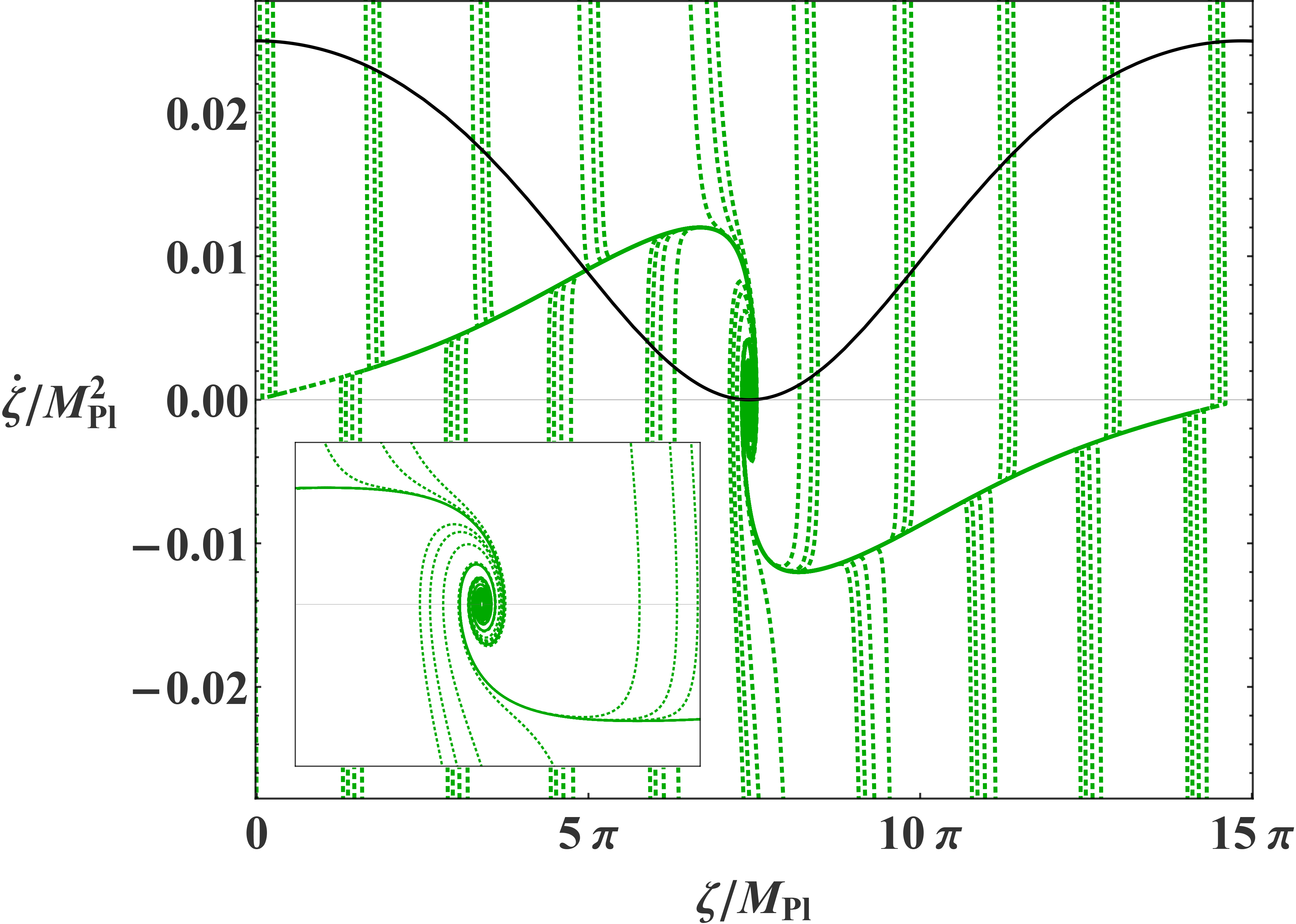 Figure 1
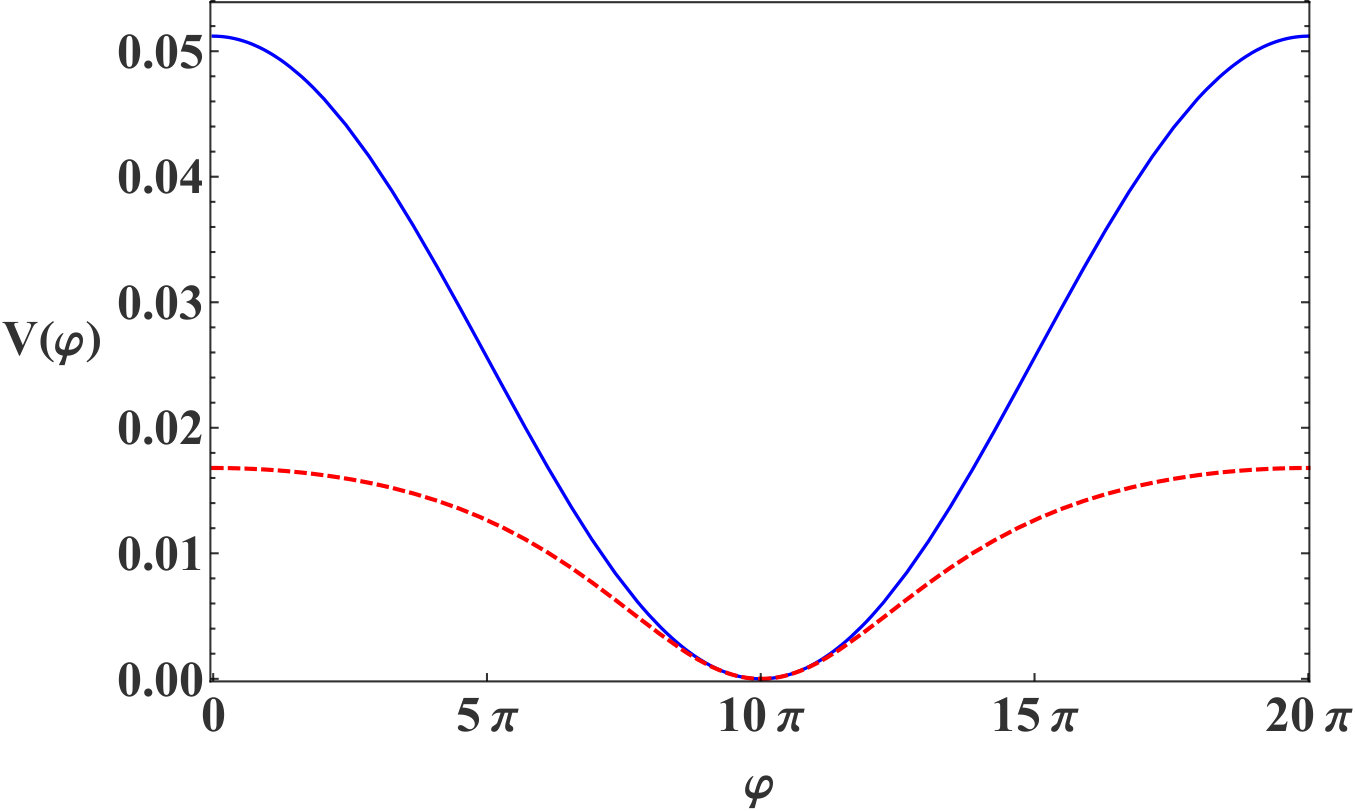 Figure 2
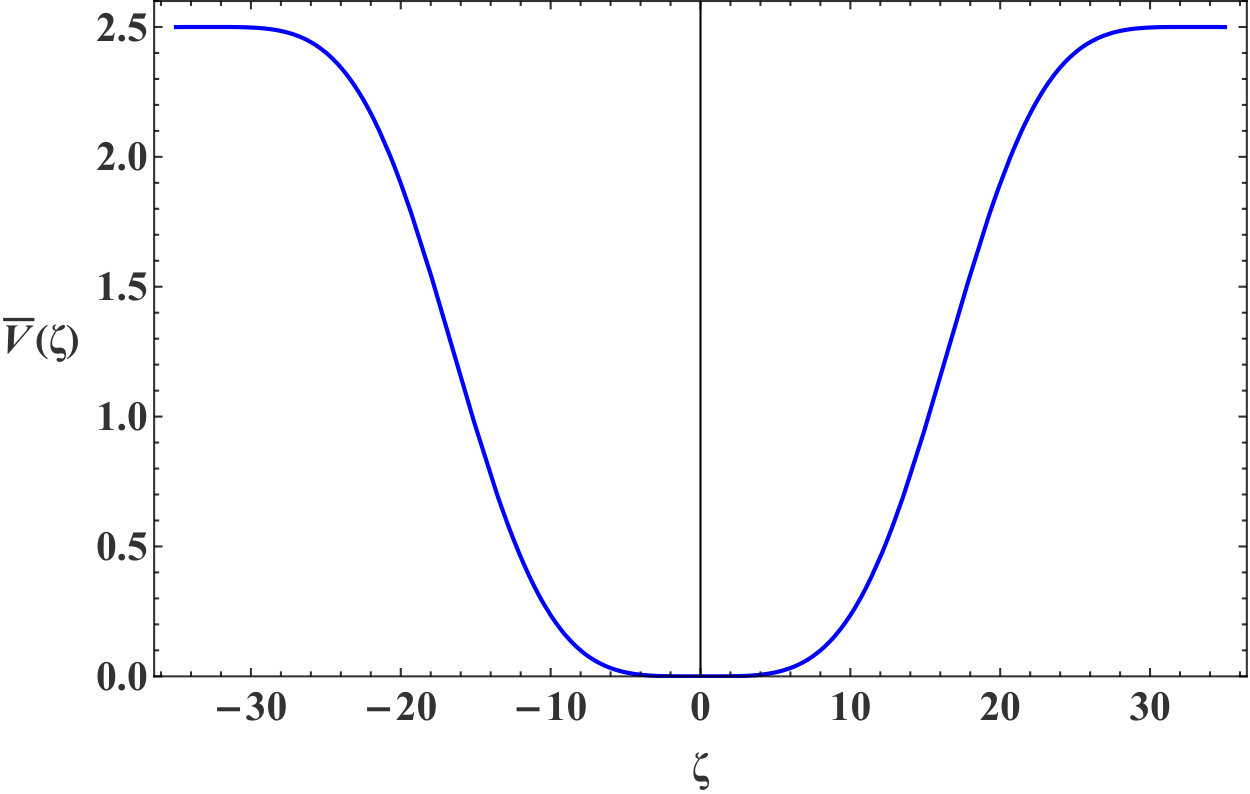 Figure 3
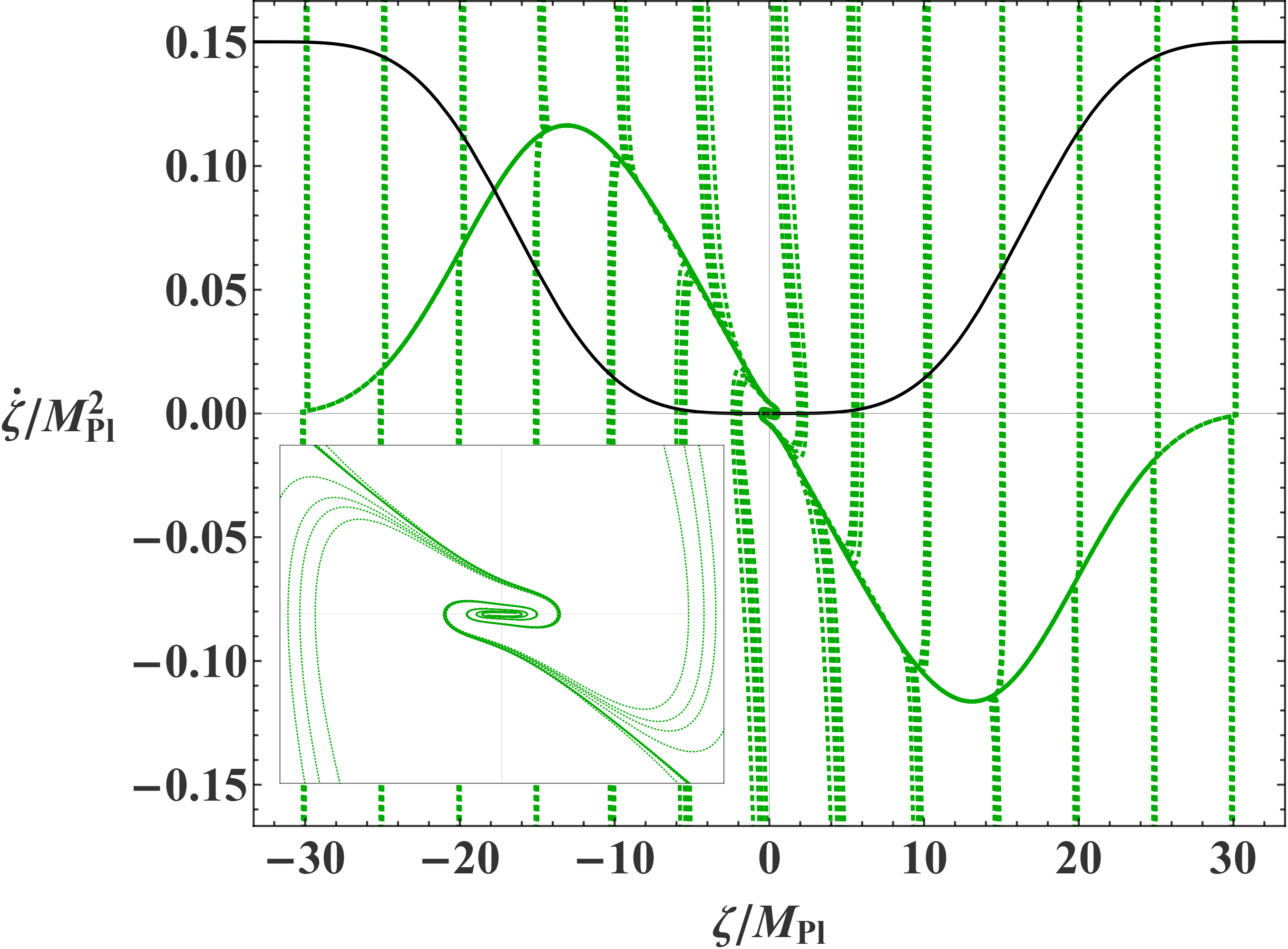 Figure 4
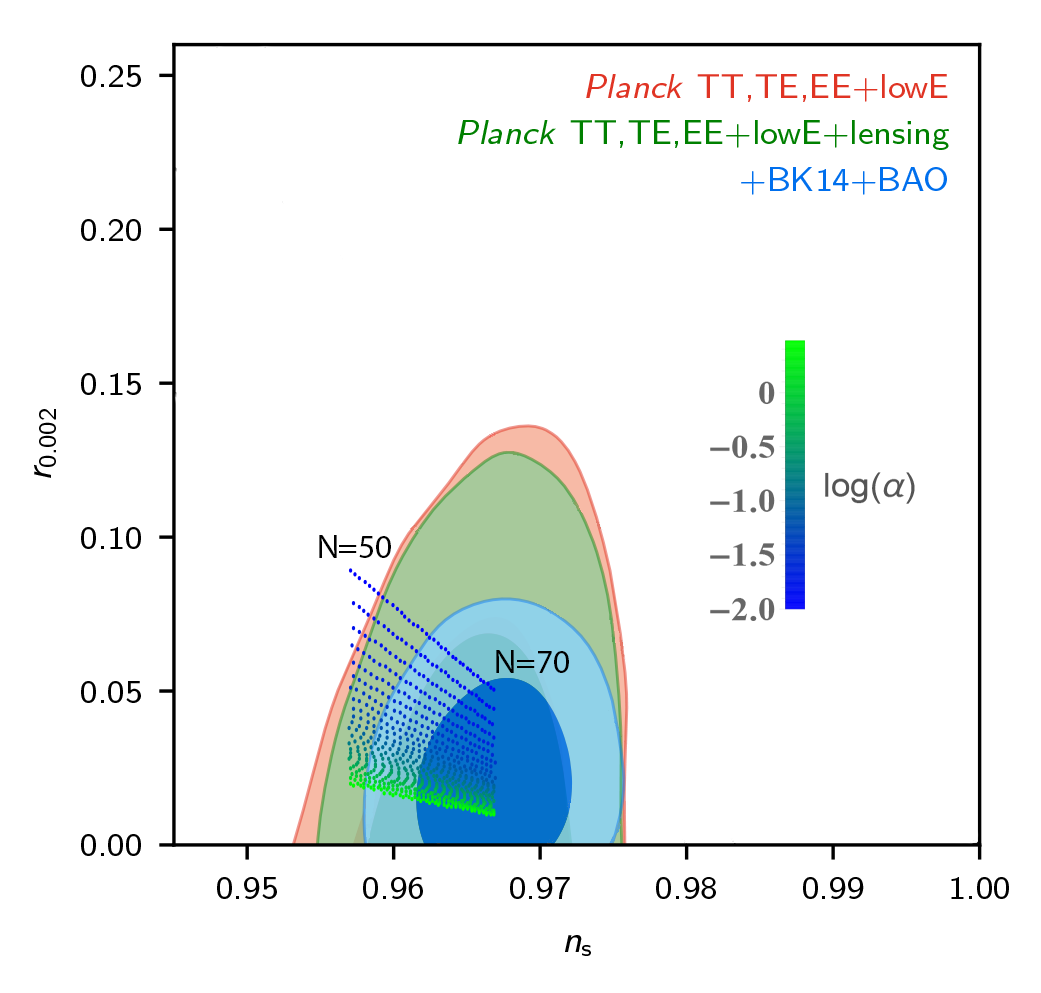 Figure 5
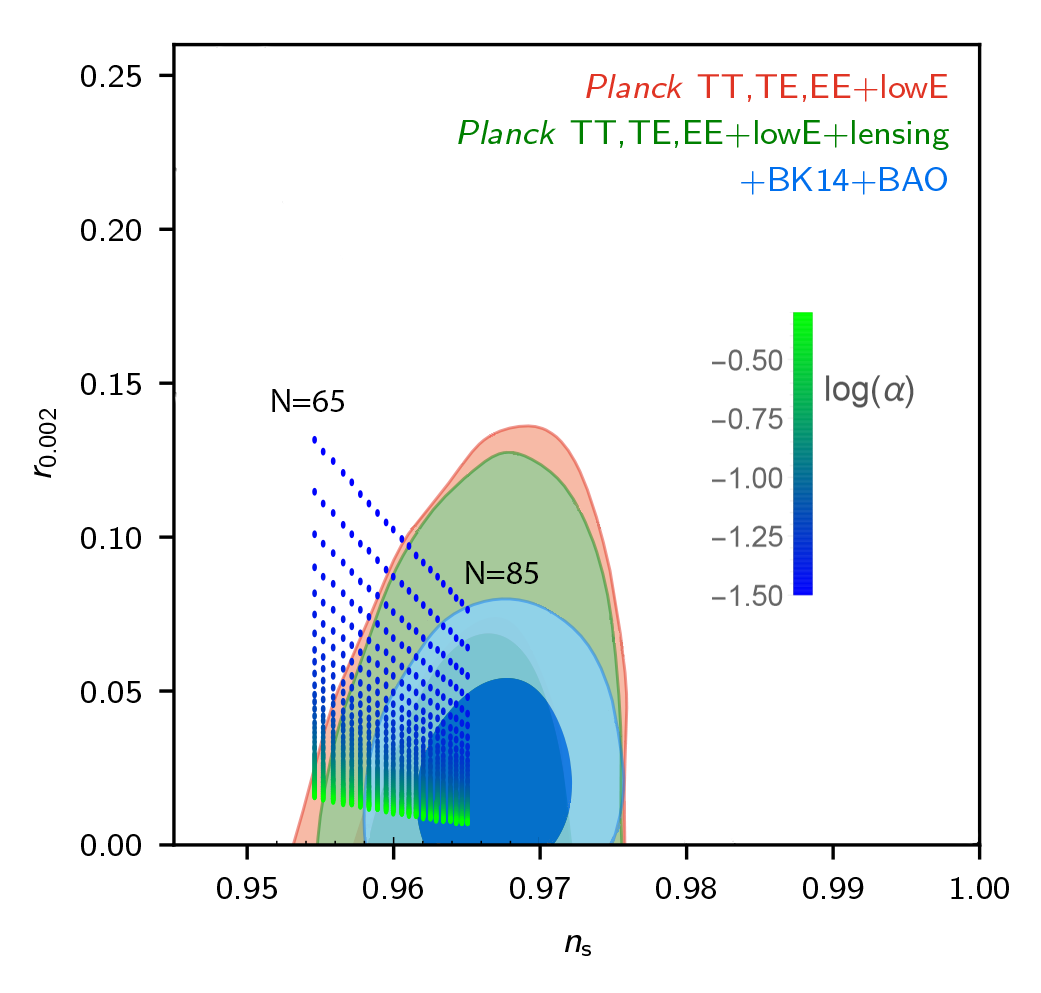 Figure 6
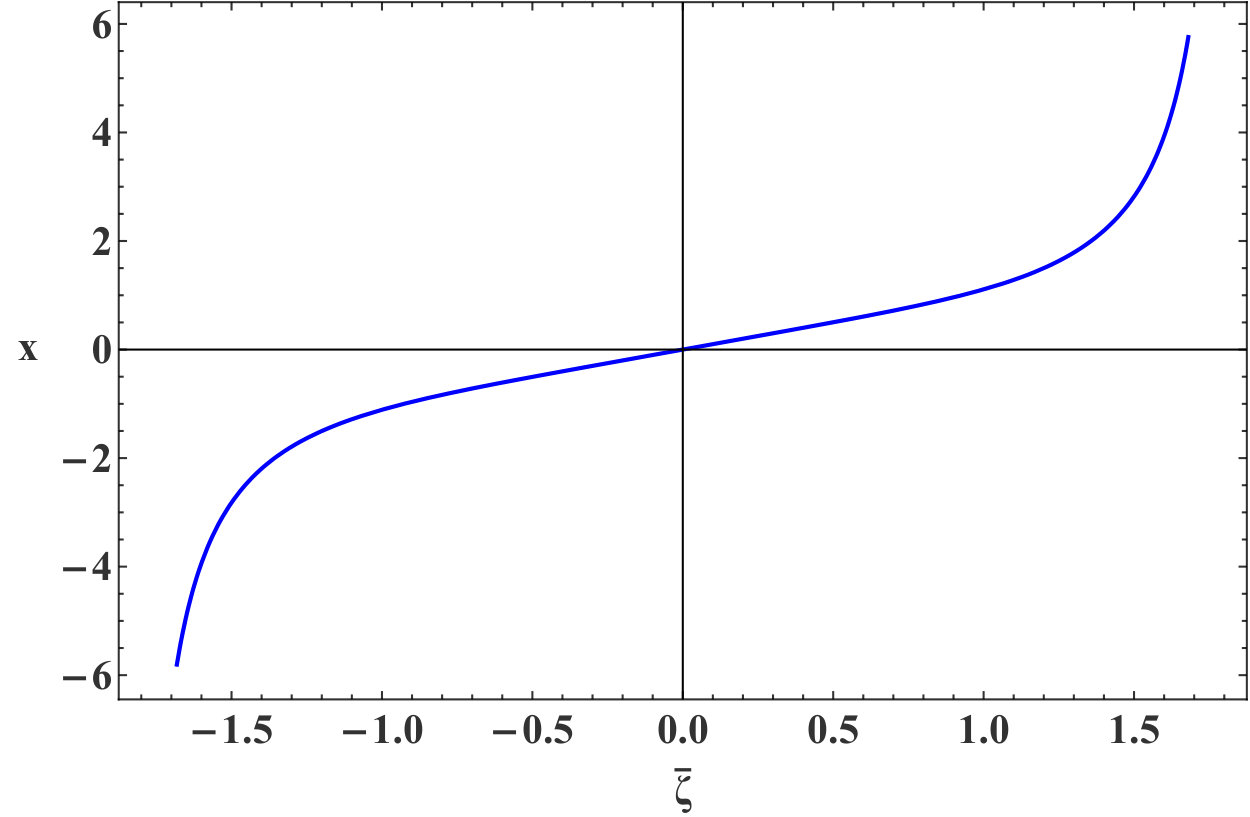 Figure 7
Peer Reviews
No public reviews on file for this paper yet. If you reviewed it on a platform where reviews are public (OpenReview, ICLR, NeurIPS, ICML), you can paste yours below so the community can read it here.
Videos
No videos yet. Explain this paper in a talk, walkthrough, or lecture? Add one.
Rescuing Quartic and Natural Inflation
in the Palatini Formalism
I. Antoniadis
A. Karam
A. Lykkas
T. Pappas
and K. Tamvakis
Abstract
When considered in the Palatini formalism, the Starobinsky model does not provide us with a mechanism for inflation due to the absence of a propagating scalar degree of freedom. By (non)–minimally coupling scalar fields to the Starobinsky model in the Palatini formalism we can in principle describe the inflationary epoch. In this article, we focus on the minimally coupled quartic and natural inflation models. Both theories are excluded in their simplest realization since they predict values for the inflationary observables that are outside the limits set by the Planck data. However, with the addition of the term and the use of the Palatini formalism, we show that these models can be rendered viable.
1 Introduction
Cosmological inflation [1, 2, 3, 4, 5, 6, 7], namely a phase of de Sitter expansion after the big bang, provides an attractive paradigm addressing the open issues of the early universe. In this framework quantum fluctuations, magnified to a cosmic size, ultimately generate the large scale structure of the universe and the presently observed anisotropy in the CMB. Although a detailed particle physics mechanism underlying inflation has not been established yet, models of inflation formulated in terms of a scalar degree of freedom (inflaton) exist with a number of predictions confirmed by observations. This scalar degree of freedom is introduced either as a fundamental scalar field or can be provided by gravity itself in models featuring generalizations of the Einstein-Hilbert action. The latter possibility is realized in the Starobinsky model where an extra quadratic term of the Ricci curvature scalar is present. Among the models realizing the former possibility of a fundamental scalar, the case of Higgs inflation [8, 9, 10, 11, 12, 13, 14, 15, 16, 17, 18, 19, 20, 21, 22, 23, 24, 25], where the inflaton is identified with the Standard Model Higgs boson, has attracted a lot of attention since it provides a direct connection of cosmological inflation to particle physics. Higgs inflation requires the presence of an appreciable coupling of the Higgs field to the Ricci curvature scalar .
Both of the above possibilities are intimately connected with gravitation and its formulation. It is well known that for the Einstein-Hilbert action of pure gravitation the alternative variational principle of Palatini [26, 27, 28, 29, 30], in which not only the metric but also the connection are treated as independent variables, leads to the standard equations of motion of General Relativity (GR) and the Palatini formulation is equivalent to the standard metric formulation. Nevertheless, this is not the case when extra fields are coupled to gravity non-minimally as in the case of Higgs inflation. New interactions in the scalar sector modifying significantly the Einstein-frame potential are present in the Palatini formulation. The inequivalence of the two formulations is also quite striking in the case of the Starobinsky model, where, in the Palatini formulation there is no propagating extra scalar degree of freedom, in contrast to the metric formulation, where the quadratic curvature term introduces an extra scalar suitable to play the role of the inflaton.
In the present article we consider scalar matter coupled to gravity in the framework of the Palatini formulation (see [31] for a review and [30, 32, 33, 34, 35, 36, 37, 38, 39, 40, 41, 42, 43, 44, 45, 25, 46, 47, 48, 49, 50, 51, 52, 53, 54, 55] for various applications). We focus on the case that a quadratic Starobinsky term is present while the scalar fields are minimally coupled to gravity111See [56, 57, 58, 59, 60, 61, 23, 62, 63, 64, 65, 66, 67, 68, 69, 70, 71, 52, 72, 73] for some alterations of the Starobinsky model with the addition of an extra scalar field.. We analyze the case of a model with quartic scalar interactions, a case of interest to Higgs inflation. We find acceptable slow-roll inflationary behaviour, despite the fact that scalars are minimally coupled to gravity, contrary to the standard metric case where an appreciable non-minimal coupling is required. The central ingredient of the inflation mechanism operating in the Palatini framework for a model described by a potential is the creation of a plateau for the Einstein-frame potential at large field values [52, 46]. We extend our analysis to the case of the natural inflation model [74, 75] characterized by a bounded potential and find that the resulting flattening of the inflationary plateau in the Palatini formulation leads to acceptable slow-roll inflationary behaviour.
The paper is organized as follows: In section 2 we start with the action of a scalar field minimally coupled to gravity in the presence of a quadratic curvature scalar term with a general self-interacting potential and derive the Einstein frame Lagrangian in the framework of the Palatini formalism. In section 3.1 we consider the case of a quartic potential modelled in the fashion of the Higgs boson and proceed to analyze the inflationary behaviour calculating the slow-roll parameters and the corresponding inflationary observables. Also, in section 3.2 we briefly discuss other monomial potentials. Then, in section 4 we analyze the natural inflation model. Finally, in section 5 we present our conclusions.
2 Minimally Coupled Scalars in the Palatini Formalism
Consider the action of scalar fields minimally coupled to gravity. Although we restrict our consideration to one scalar, the generalization to many is straightforward. We have
[TABLE]
We expect that quantum corrections are bound to generate in (2.1) terms of the form and . Either of these terms has been shown to lead to a number of interesting results with respect to inflation. It is conceivable though, since the phenomenological values of the parameters and are not a priori known, that one or both of these terms are small or negligible. In what follows we shall focus on the case of a negligible non-minimal coupling, i.e. take , and consider the action
[TABLE]
which can be readily written in terms of an auxiliary scalar field as
[TABLE]
We shall consider the above action in the framework of the Palatini or first order formalism in which, next to the metric , the connection also is an independent variable. Therefore, is independent of the metric. Performing a Weyl rescaling of the metric according to
[TABLE]
we transform the action(2.3) into the Einstein frame
[TABLE]
where and
[TABLE]
Variation of the Einstein-Hilbert action (2.5) with respect to the connection yields the standard Levi-Civita relation in terms of the metric . The Einstein field equations are the same as in the standard metric formulation. Varying with respect to the auxiliary field we obtain
[TABLE]
Note that we have dropped the bars for the sake of simplicity of notation. Substituting (2.7) into the action (2.5) we obtain
[TABLE]
Since we aim to study the properties of this action in the framework of slow-roll inflation, higher than quadratic powers of are not expected to play any role.
The above can be generalized to any theory replacing the action (2.5) with
[TABLE]
where the derivative is with respect to and
[TABLE]
Then, the Weyl rescaling factor is replaced by and (2.7) becomes
[TABLE]
3 Application to Higgs-like Scalars
3.1 Quartic potentials
Higgs inflation, i.e. the possibility of the Standard Model Higgs playing the role of the inflaton, has attracted a lot of attention. A necessary requirement of such a scenario within the standard metric formulation is a rather large non-minimal coupling of the Higgs to the Ricci scalar . In the unitary gauge the Higgs doublet can be replaced by a single scalar
[TABLE]
Of course, if this is to represent a realistic version of the Standard Model, issues like the stability of the Higgs self-coupling have to be addressed, possibly by enlarging the Higgs sector.
In this section we shall consider the case of a scalar with a quartic potential (3.1) minimally coupled to gravity () in the framework of the Palatini formalism. The corresponding scalar part of the Lagrangian derived in (2.8) is
[TABLE]
Note that the vanishing of the potential at the (Minkowski) vacuum corresponds through (2.7) to a vanishing of the vacuum expectation value of the auxiliary field and consequently to an equality of the Jordan frame and Einstein frame Planck masses.
The scalar field can be replaced by a canonically normalized field defined by
[TABLE]
For very large values of the field this is approximately
[TABLE]
where , and refers to the elliptic integral of the first kind.222Note that and is important in the asymptotic regions of the field . We can invert the above expression and obtain in terms of one of the Jacobi’s elliptic functions (). In Fig. 1 we present a plot of in terms of the normalized canonical field .
The function saturates at some value, say , for . This can also be verified analytically, by means of an asymptotic expansion of at large values.
The potential in (3.2) for the large region, expressed in terms of , reads
[TABLE]
and it is presented in Fig. 2.
Next, we proceed to study slow-roll inflation for this particular model. Substituting the above potential in the slow-roll parameters
[TABLE]
we arrive at the expressions
[TABLE]
Then, the number of e-folds can be computed as
[TABLE]
where and are the values of the field at the start and end of inflation, respectively. The field value is given by the condition for the end of inflation, i.e. , which for yields .
Substituting the expressions (3.7) into the formula for the spectral index we obtain
[TABLE]
and the spectral index turns out to be approximately independent of . This corresponds to a larger than usual number of e-folds, , not necessarily out of line with high-scale inflation. This number of e-folds seems to require a period of slower expansion than the standard radiation dominated one. This issue goes beyond the scope of this article and will be investigated in a future work. In Fig. 3 we have plotted the tensor-to-scalar ratio versus the spectral index for and .
Focusing on characteristic values for the parameters, namely , , and , we obtain for the initial and final field values
[TABLE]
At the same time the Lyth bound for this specific field excursion is trivially satisfied.
In Fig. 4, for the fixed value of and , we solve numerically the Klein-Gordon equation for a plethora of initial conditions for the inflaton and plot the trajectories in the phase space. It is clear that the potential exhibits an attractor behaviour, since, regardless of initial conditions, all trajectories in phase space (green-dotted curves) quickly converge in a single trajectory that ends at the location of the potential minimum.
3.2 Other Potentials
It has already been established that a quadratic potential in this Palatini framework leads to an acceptable inflationary behaviour. The quartic potential studied here is also supported by obvious particle physics renormalization and phenomenological arguments. This is not the case for potential functions with a large field behaviour carried out by a power greater than four. Nevertheless, it is interesting to analyze whether this behaviour is shared by more general functions, since for any increasing function the effective potential for large values of tends to a plateau . As a general example we may consider a monomial potential . The case (quadratic potential) has been studied elsewhere [52] and is proven to exhibit acceptable inflationary behaviour. The integral defining the corresponding canonical field can be estimated to behave as in terms of , following an analogous behaviour as in the quartic case. Similarly, the potential as a function of follows the same behaviour reaching a plateau. The corresponding expressions for the slow-roll parameters are similar, being
[TABLE]
The value of is obtained from . In the case that is small this corresponds to . The number of e-folds is
[TABLE]
Focusing on the case with we have . Substituting the expressions of , for and , we obtain for the spectral index
[TABLE]
which requires an unacceptably large number of e-folds in order to comply with the observed value of . Therefore, the case is excluded for inflation. The same is true for larger values of . Note however that for rational values of in the range the situation is different. For example leads to an acceptable value of for . The same is true for and , for and respectively.
General conclusions can also be drawn by taking the large limit of the above formula (3.13)
[TABLE]
which singles out the values of in the neighbourhood of (quadratic potential), as corresponding to the best fit value .
4 Natural Inflation
As we saw in the preceding sections the main ingredient of the inflation mechanism operating in the Palatini framework for a model described by a potential is the creation of a plateau for the Einstein-frame potential at large field values. This mechanism works perfectly for quadratic and higgs-like quartic potentials leading to acceptable inflationary predictions, although it fails for steeper potential functions. On the other hand, it is possible for a model possessing an inflationary plateau in its standard metric formulation but falling short in its numerical predictions to yield improved results in the Palatini framework.
As an example, in what follows we consider the so-called natural inflation models, where the role of the inflaton is played by axions, i.e. pseudo-Nambu-Goldstone bosons arising whenever an approximate global symmetry is spontaneously broken [74, 75]. We assume a global shift symmetry of the inflaton field is spontaneously broken at some scale , with soft explicit symmetry breaking at a lower scale , which gives the boson its mass. The scalar potential is generally of the form
[TABLE]
The potential has a height and a unique minimum at , assuming the periodicity of is . For appropriately chosen values of the mass scales, namely, and the field can drive inflation. Nevertheless, the latest results from the Planck collaboration have excluded333However, see Refs[76, 77] for a possible way to circumvent that in the metric formalism. natural inflation [78, 79].
It is interesting to see how the predictions of natural inflation change in the Palatini framework with the term. The integral for the canonical field yields
[TABLE]
where is again the elliptic integral of the first kind. The above expression can be easily inverted in terms of . Then, the effective potential becomes
[TABLE]
with being the Jacobi elliptic function. Choosing , , and (in natural units) we show in Fig. 5 the two potentials and . For the chosen values of the parameters, one can see that the potential in the Palatini framework has a flatter plateau.
Next, we proceed with the calculation of the inflationary observables. We assume slow-roll conditions for the canonically normalized field and follow a similar line of analysis, as in the previous section. In the following figure we present the - predictions, plotted against the Planck 2018 and curves [79].
For a specific set of the scale parameters , the variation of only affects the tensor-to-scalar ratio . By increasing we obtain smaller values of . There is a lower bound on the scale (in natural units), set by the Planck collaboration [78], to which we also abide by here. Increasing the scale results in pushing the curve to larger values of and .
In Fig. 7, for the value of and (the period is ), we solve numerically the Klein-Gordon equation for a plethora of initial conditions for the inflaton and plot the trajectories in phase space, showing the attractor behaviour of the potential.
5 Summary and Conclusions
In this article we considered scalar fields coupled to gravity in the framework of the Palatini formalism. We focused on the case that the theory, extended with a quadratic curvature term (rewritten in terms of an auxiliary scalar as ), also includes fundamental scalar fields coupled minimally to gravity and self-interacting through a scalar potential . Transforming the theory to the Einstein frame and integrating out the auxiliary non-propagating scalar degree of freedom we end up with an Einstein frame scalar potential of the form which, under general conditions, could in principle lead to an inflationary plateau for large field values, this property being a central feature of this framework.
We analyzed the slow-roll inflationary behaviour in the case of a quartic potential and found acceptable inflationary predictions for the spectral index and tensor to scalar ratio. This case could be of interest for realizing Higgs inflation with a minimal coupling to gravity. We also considered other monomial potentials, although the analogous inflationary behaviour is not shared by steeper potential functions. Next, we analyzed the case of the natural inflation or cosine inflation model, where the role of the inflaton is undertaken by a pseudo-Goldstone boson (axion). Although these models, characterized by a bounded periodic potential, fall short in their inflationary predictions in the standard formulation, when considered in the presence of an term in the framework of the Palatini formalism are shown to yield quite acceptable values for the inflationary observables.
Acknowledgments
The research of I.A. is funded in part by the “Institute Lagrange de Paris”, in part by the Swiss National Science Foundation and in part by a CNRS PICS grant. A.K. and T.P. acknowledge support from the Operational Program “Human Resources Development, Education and Lifelong Learning” which is co-financed by the European Union (European Social Fund) and Greek national funds. A.K. also acknowledges the support of the Estonian Research Council grant MOBJD381 and the ERDF Centre of Excellence project TK133. The research of A.L. is co-financed by Greece and the European Union (European Social Fund - ESF) through the Operational Programme “Human Resources Development, Education and Lifelong Learning” in the context of the project “Strengthening Human Resources Research Potential via Doctorate Research” (MIS-5000432), implemented by the State Scholarships Foundation (IKY).
The reference list from the paper itself. Each links out to its DOI / PubMed record.
- 1[1] A. A. Starobinsky, A New Type of Isotropic Cosmological Models Without Singularity , Phys. Lett. 91B (1980) 99–102.
- 2[2] K. Sato, First Order Phase Transition of a Vacuum and Expansion of the Universe , Mon. Not. Roy. Astron. Soc. 195 (1981) 467–479.
- 3[3] A. H. Guth, The Inflationary Universe: A Possible Solution to the Horizon and Flatness Problems , Phys. Rev. D 23 (1981) 347–356.
- 4[4] A. D. Linde, A New Inflationary Universe Scenario: A Possible Solution of the Horizon, Flatness, Homogeneity, Isotropy and Primordial Monopole Problems , Phys. Lett. 108B (1982) 389–393. [Adv. Ser. Astrophys. Cosmol.3,149(1987)].
- 5[5] A. Albrecht and P. J. Steinhardt, Cosmology for Grand Unified Theories with Radiatively Induced Symmetry Breaking , Phys. Rev. Lett. 48 (1982) 1220–1223. [Adv. Ser. Astrophys. Cosmol.3,158(1987)].
- 6[6] A. D. Linde, Chaotic Inflation , Phys. Lett. 129B (1983) 177–181.
- 7[7] D. H. Lyth and A. Riotto, Particle physics models of inflation and the cosmological density perturbation , Physics Reports 314 (1999), no. 1 1–146.
- 8[8] A. De Simone, M. P. Hertzberg, and F. Wilczek, Running Inflation in the Standard Model , Phys. Lett. B 678 (2009) 1–8, [ ar Xiv:0812.4946 ].