Affine Factorable Surfaces in Pseudo-Galilean Space
H. S. Abdel-Aziz, M. Khalifa Saad, Haytham. A. Ali

TL;DR
This paper investigates affine factorable surfaces of the second kind in pseudo-Galilean space, deriving their fundamental forms and curvatures, and classifies these surfaces based on their curvature properties.
Contribution
It provides a classification of affine factorable surfaces in pseudo-Galilean space with explicit curvature conditions, using invariant theory and differential equations.
Findings
Derived fundamental forms, Gaussian and mean curvatures of the surfaces.
Classified surfaces with zero and non-zero Gaussian and mean curvatures.
Presented examples illustrating the theoretical results.
Abstract
An affine factorable surface of the second kind in the three dimensional pseudo-Galilean space G13 is studied depending on the invariant theory and theory of differential equation. The first and second fundamental forms, Gaussian curvature and mean curvature of the meant surface are obtained according to the basic principles of differential geometry. Also, some special cases are presented by changing the partial differential equation into the ordinary differential equation to simplify the solving process. The classification theorems of the considered surface with zero and non zero Gaussian and mean curvatures are given. Some examples of such a study are provided
Click any figure to enlarge with its caption.
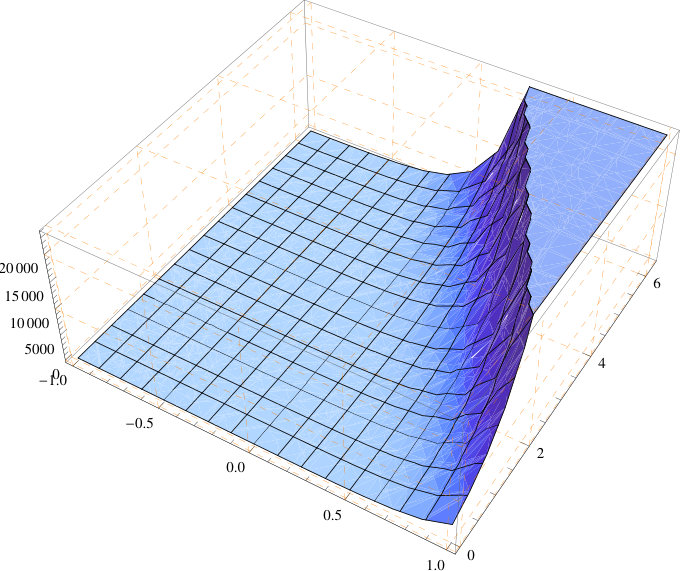 Figure 1
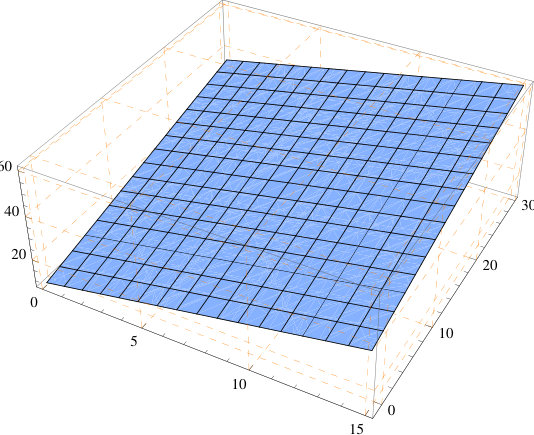 Figure 2
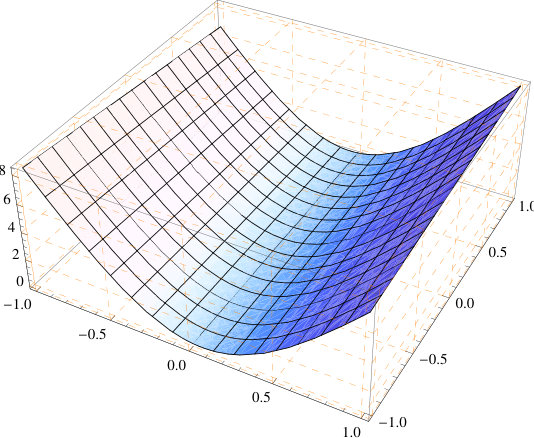 Figure 3
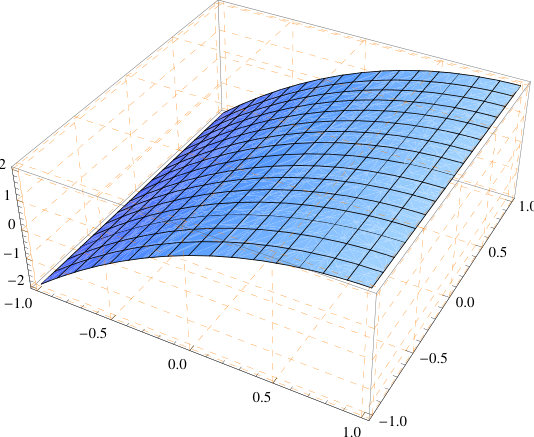 Figure 4
Peer Reviews
No public reviews on file for this paper yet. If you reviewed it on a platform where reviews are public (OpenReview, ICLR, NeurIPS, ICML), you can paste yours below so the community can read it here.
Videos
No videos yet. Explain this paper in a talk, walkthrough, or lecture? Add one.
Taxonomy
TopicsAdvanced Theoretical and Applied Studies in Material Sciences and Geometry · Advanced Numerical Analysis Techniques · Material Science and Thermodynamics
Affine Factorable Surfaces in Pseudo-Galilean Space
H. S. Abdel-Aziz, M. Khalifa Saad and Haytham. A. Ali
*⋆,†,‡*Dept. of Math., Faculty of Science, Sohag Univ., 82524 Sohag, Egypt
† Dept. of Math., Faculty of Science, Islamic University in Madinah, KSA
E-mail address: [email protected] E-mail address: [email protected] E-mail address: [email protected]
**Abstract. **An affine factorable surface of the second kind in the three dimensional pseudo-Galilean space is studied depending on the invariant theory and theory of differential equation. The first and second fundamental forms, Gaussian curvature and mean curvature of the meant surface are obtained according to the basic principles of differential geometry. Also, some special cases are presented by changing the partial differential equation into the ordinary differential equation to simplify the solving process. The classification theorems of the considered surface with zero and non zero Gaussian and mean curvatures are given. Some examples of such a study are provided.
Keywords: Affine factorable surface; mean curvature; Gaussian curvature; minimal surface.
Mathematics Subject Classification: 53A05, 53A10, 53C42.
1 Introduction
In classical differential geometry, the problem of obtaining Gaussian and mean curvatures of a surface in the Euclidean space and other spaces is one of the most important problems, so we are interested here to study such a problem for a surface known as affine factorable surface in the three dimensional pseudo Galilean space .
The geometry of Galilean Relativity acts like a “bridge” from Euclidean geometry to special Relativity. The Galilean space which can be defined in three-dimensional projective space is the space of Galilean Relativity [1]. The geometries of Galilean and pseudo-Galilean spaces have similarities, but, of course, are different. In the Galilean and pseudo Galilean spaces, some special surfaces such as surfaces of revolution, ruled surfaces, translation surfaces and tubular surfaces have been studied in [2, 3, 4, 5, 6, 7, 8, 9, 10]. For further study of surfaces in the pseudo Galilean space, we refer the reader to Šipǔs and Divjak’s paper [9]. Recall that the graph surfaces are also known as Monge surfaces [11]. In this work, we are interested here in studying a special type of Monge surface, namely factorable surface of second kind that is graph of the function . Such surfaces with in various ambient spaces have been classified (cf [12, 13, 14, 15, 16]). Our purpose is to analyze the factorable surfaces in the pseudo-Galilean space that is one of real Cayley-Klein spaces (for details, see [17, 18, 19]). There exist three different kinds of factorable surfaces, explicitly, a Monge surface in is said to be factorable (so-called homothetical) if it is given in one of the following forms the first kind the second kind and is the third kind where , are smooth functions [14]. These surfaces have different geometric structures in different spaces such as metric, curvatures, etc.
2 Basic concepts
The pseudo-Galilean space is one of the Cayley-Klein spaces with absolute figure that consists of the ordered triple , where is the absolute plane given by in the three dimensional real projective space , the absolute line in given by and the fixed hyperbolic involution of points of and represented by , which is equivalent to the requirement that the conic is the absolute conic. The metric connections in are introduced with respect to the absolute figure. In terms of the affine coordinates given by , the distance between the points and is defined by (see [9, 20])
[TABLE]
The pseudo-Galilean scalar product of the vectors and is given by
[TABLE]
In this sense, the pseudo-Galilean norm of a vector is . A vector is called isotropic (non-isotropic) if . All unit non-isotropic vectors are of the form . The isotropic vector is called spacelike, timelike and lightlike if , and , respectively. The pseudo-Galilean cross product of and on is given as follows
[TABLE]
where and are canonical basis.
Let be a connected, oriented 2-dimensional manifold and be a surface in with parameters . The surface parametrization is expressed by
[TABLE]
On the other hand, we denote by , , and , , the coefficients of the first and second fundamental forms of , respectively. The Gaussian and mean curvatures are
[TABLE]
where
[TABLE]
and
[TABLE]
3 Factorable surfaces in pseudo-Galilean space
In what follows, we consider the factorable surface of second kind in which can be locally written as
[TABLE]
For this study it is important to consider the following definition:
Definition 3.1**.**
An affine factorable surface in pseudo-Galilean space is defined as a parameter surface which can be written as
[TABLE]
*for non zero constant and functions and [21]. *
Now, from (3.2) by a direct calculation, the first fundamental form with its coefficients of can be given by
[TABLE]
where
[TABLE]
Also, the second fundamental form of is
[TABLE]
note that
[TABLE]
where
[TABLE]
In addition, the Gaussian and mean curvature of can be obtianed
[TABLE]
where
[TABLE]
A surface in is said to be isotropic minimal (resp. flat) if (resp. ) vanishes identically. Further, it is said to have constant isotropic mean (resp. Gaussian) curvature if (resp. ) is a constant function on whole surface.
4 Affine factorable surfaces with zero curvatures
In this section, if the Gaussian and mean curvatures of (3.2) are vanished, then we get the following main result:
Theorem 4.1**.**
Let be an affine factorable surface of second kind in the form
[TABLE]
if its Gaussian curvature is zero, then the surface is one of the following surfaces:
**
**
**
* *
Proof.
If the Gaussian curvature of is zero, then from (3.3), we have
[TABLE]
To solve this equation we have the following cases to be discussed:
**Case1. **if then then .
**Case2. **if then then .
**Case3. **if and let
[TABLE]
where . Then (4.1) can be written as
[TABLE]
or
[TABLE]
From (4.2), we have
[TABLE]
Since and so
[TABLE]
let’s write the last equation as follows
[TABLE]
(a) If then from (4.4), we have
[TABLE]
Solving this equation takes the form
[TABLE]
where are constants. And then
[TABLE]
where and are constants.
(b) When then from (4.4), we have
[TABLE]
which has the solution
[TABLE]
Therefore we find that
[TABLE]
where and are constants.
Theorem 4.2**.**
For a given affine factorable surface of second kind in a three dimensional pseudo-galilean space in the form
[TABLE]
Let its mean curvature equal zero, then this surface will be one of the following:
* or *
**
* or *
* or *
Proof.
If , then from (3.4), we have
[TABLE]
This equation can be solved by introducing the following:
(1) If , then and (4.6) becomes
[TABLE]
It can be written in a simple form
[TABLE]
which gives the solution
[TABLE]
it is so
[TABLE]
or
[TABLE]
where and are constants.
(2) When , then and (4.6) becomes
[TABLE]
which has the solution
[TABLE]
Using what we got from solutions we can write
[TABLE]
where are constants.
(3) When , this leads to which gives From (4.6), we have
[TABLE]
which can be written as
[TABLE]
Differentiating this equation three times with respect to , we obtain
[TABLE]
which gives
[TABLE]
or
[TABLE]
in light of this, we get
[TABLE]
or
[TABLE]
where and are constants.
(4) If , this means that and then from (4.6), we obtain
[TABLE]
which can be written as
[TABLE]
If we differentiate this equation with respect to , we get
[TABLE]
[TABLE]
or
[TABLE]
So, we have
[TABLE]
or
[TABLE]
taking into cosideration and are constants. This completes the proof.
5 Affine factorable surfaces with non zero curvatures
In this section, we describe the affine factorable surfaces of second kind in when and . So, we start as follows:
Theorem 5.1**.**
Let be an affine factorable surface of second kind in . Let its Gaussian curvature is non-zero constant, then the surface takes the form:
[TABLE]
Proof.
Let be a non-zero constant Gaussian curvature. Hence, we get
[TABLE]
from this equation, vanishes identically when or is a constant function. Then and must be non-constant functions. We distinguish two cases for eq(5.1):
Case1. then from eq(5.1), we can get polynomial equation on ():
[TABLE]
which yields a contradiction.
Case2. Then eq(5.1) leads to
[TABLE]
after solving this equation, we obtain
[TABLE]
Case3. . Then eq(5.1) can be arranged as follows:
[TABLE]
let and , we can obtain
[TABLE]
The partial derivative of (5.2) with respect to and leads to a polynomial equation
[TABLE]
which means that all coefficients must vanish, the contradiction is obtained. Thus the proof is completed.
Theorem 5.2**.**
For a given affine factorable surface of second kind in which has a non-zero constant mean curvature . Then the following occurs:
[TABLE]
Proof.
From (3.4), we get
[TABLE]
for solving this equation, the following two cases can be discussed:
Case a. , we get
[TABLE]
let and , we can obtain
[TABLE]
which has the partial derivative with respect to as
[TABLE]
Solving this equation gives
[TABLE]
then we have
[TABLE]
Case b. , we get
[TABLE]
so, we obtain
[TABLE]
Where Then the proof is finised.
Here, through the study, which presented on affine factorable surface of second kind in pseudo-Galilean space , we conclude with the following important theory which relates between its mean and Gaussian curvatures.
Theorem 5.3**.**
Let be an affine factorable surface in three dimentional pseudo-Galilean space. The relation between its Gaussian curvature and its mean curvature is given by the formula
[TABLE]
*where . When then is isotropic minimal affine factorable surfaces of second kind. *
6 Some examples
We illustrate several examples relating to the affine factorable surfaces of second kind with zero and non zero Gaussian () and mean () curvatures in the three dimentional pseudo-Galilean space .
Example 6.1**.**
Let us consider the affine factorable surfaces of second kind in given by
* (isotropic flat ()),*
* (isotropic minimal ()),*
* (),*
* ().*
These surfaces can be drawn respectively as in Figs.1-4.
7 Conclusion
In surface theory in the field of differential geometry, especially factorable surfaces, there are three kinds of these surfaces known as first, second and third kind. In this paper, we are interested in studing factorable surface of second kind which has affine form in the three dimentional pseudo Galilean space . The classification of this surface with zero and non zero Gaussian and mean curvatures is discussed. Also, an important relation between the curvatures of this surface is obtained. Finally, some examples are introduced and plotted.
The reference list from the paper itself. Each links out to its DOI / PubMed record.
- 1[1] M. P. Do Carmo, Differential Geometry of Curves and Surfaces, Prentice Hall, Englewood Cliffs, NJ, (1976).
- 2[2] B. Divjak and Ž. M. Šipuš, Some special surfaces in the pseudo-Galilean space, Acta Math. Hungar. 118 (2008), 209–226.
- 3[3] B. Divjak and Ž. M. Šipuš, Minding isometries of ruled surfaces in pseudo-Galilean space, J. Geom. 77 (2003), 35–47.
- 4[4] B. Divjak and Ž. M. Šipuš, Special curves on ruled surfaces in Galilean and pseudo-Galilean spaces, Acta Math. Hungar. 98 (2003), 203–215.
- 5[5] I. Kamenarović, Existence theorems for ruled surfaces in the Galilean space G 3 subscript 𝐺 3 G_{3} , Rad Hrvatske Akad. Znan. Umjet. No. 456 (1991), 183–196.
- 6[6] M. K. Karacan and Y. Tuncer, Tubular surfaces of Weingarten types in Galilean and pseudo-Galilean, Bull. Math. Anal. Appl. 5 (2013), 87–100.
- 7[7] Z̆. Milin Šipuš, Ruled Weingarten surfaces in the Galilean space, Period. Math. Hungar. 56 (2008), 213–225.
- 8[8] Z̆. Milin Šipuš and B. Divjak, Translation surface in the Galilean space, Glas. Mat. Ser. III 46(66) (2011), 455–469.