Probing, Quantifying and Freezing Coherence in a Thermal Ensemble of Atoms
Arif Warsi Laskar, Niharika Singh, Pratik Adhikary, Arunabh Mukherjee, and Saikat Ghosh

TL;DR
This paper introduces a new quantifier for measuring and controlling quantum coherence in room-temperature atomic ensembles, demonstrating the transition from EIT to ATS and coherence freezing.
Contribution
It proposes an experimental method to quantify and actively control coherence in thermal atomic ensembles, advancing room-temperature quantum system research.
Findings
New coherence quantifier for atomic ensembles
Demonstration of coherence control and freezing
Observation of EIT to ATS transition
Abstract
Creating stable superposed states of matter is one of the most intriguing aspects of quantum physics, leading to a variety of counter-intuitive scenarios along with a possibility of restructuring the way we understand, process and communicate information. Accordingly, there has been a major research thrust in understanding and quantifying such coherent superposed states. Here we propose and experimentally explore a quantifier that captures effective coherent superposition of states in an atomic ensemble at room-temperature. The quantifier provides a direct measure of ground state coherence for electromagnetically induced transparency (EIT) along with distinct signature of transition from EIT to Autler-Townes splitting (ATS) regime in the ensemble. Using the quantifier as an indicator, we further demonstrate a mechanism to coherently control and freeze coherence by introducing an active…
Click any figure to enlarge with its caption.
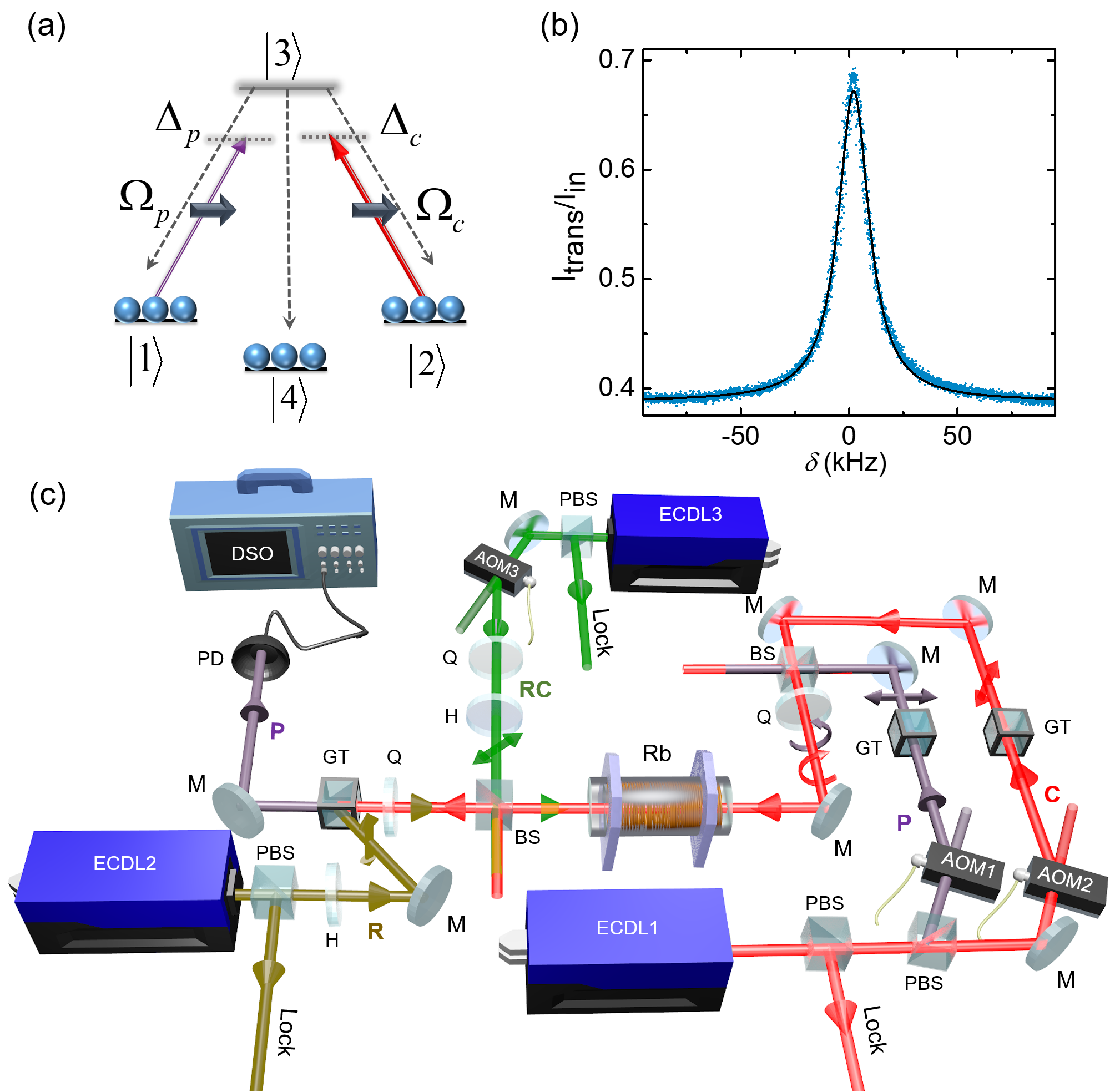 Figure 1
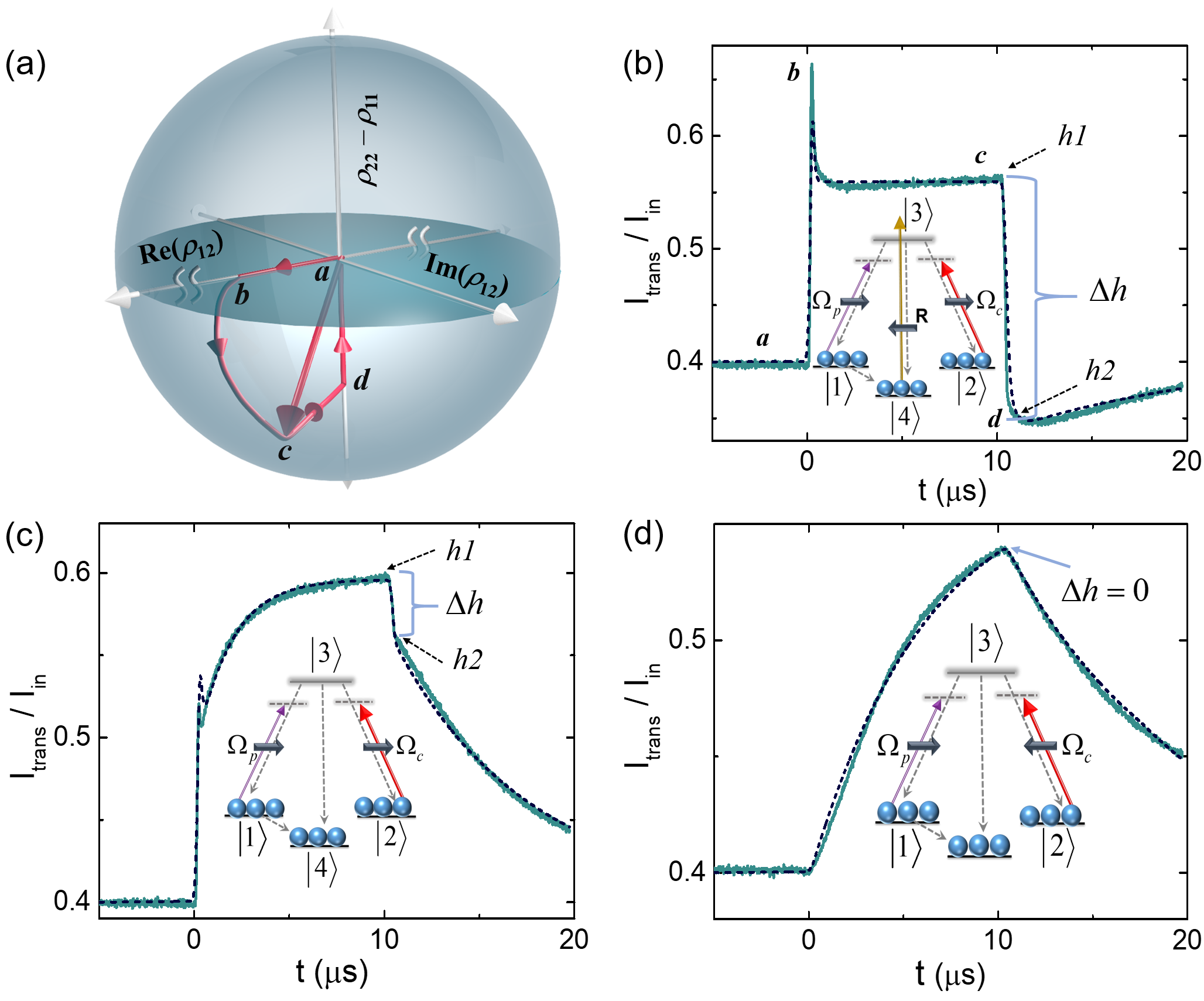 Figure 2
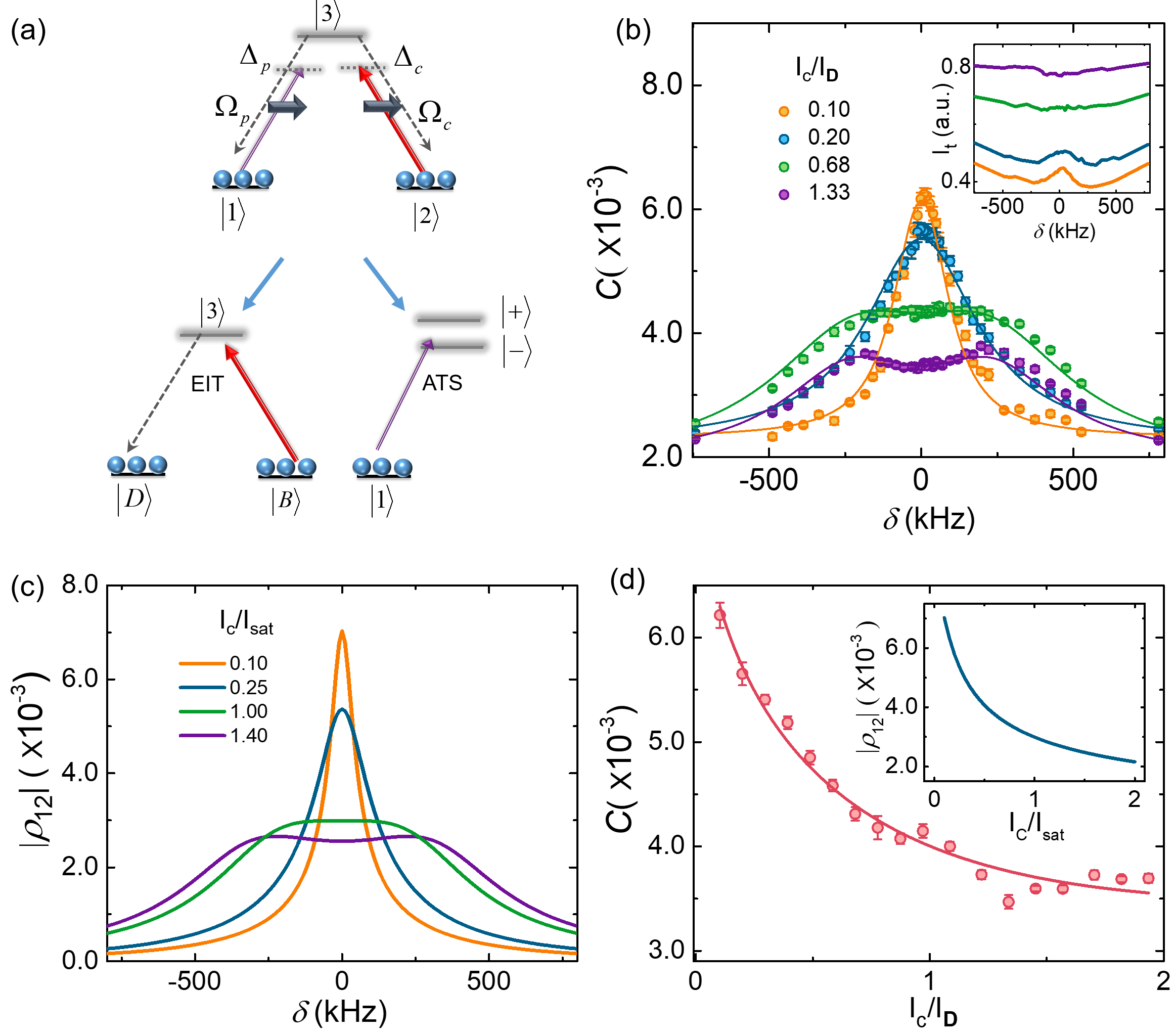 Figure 3
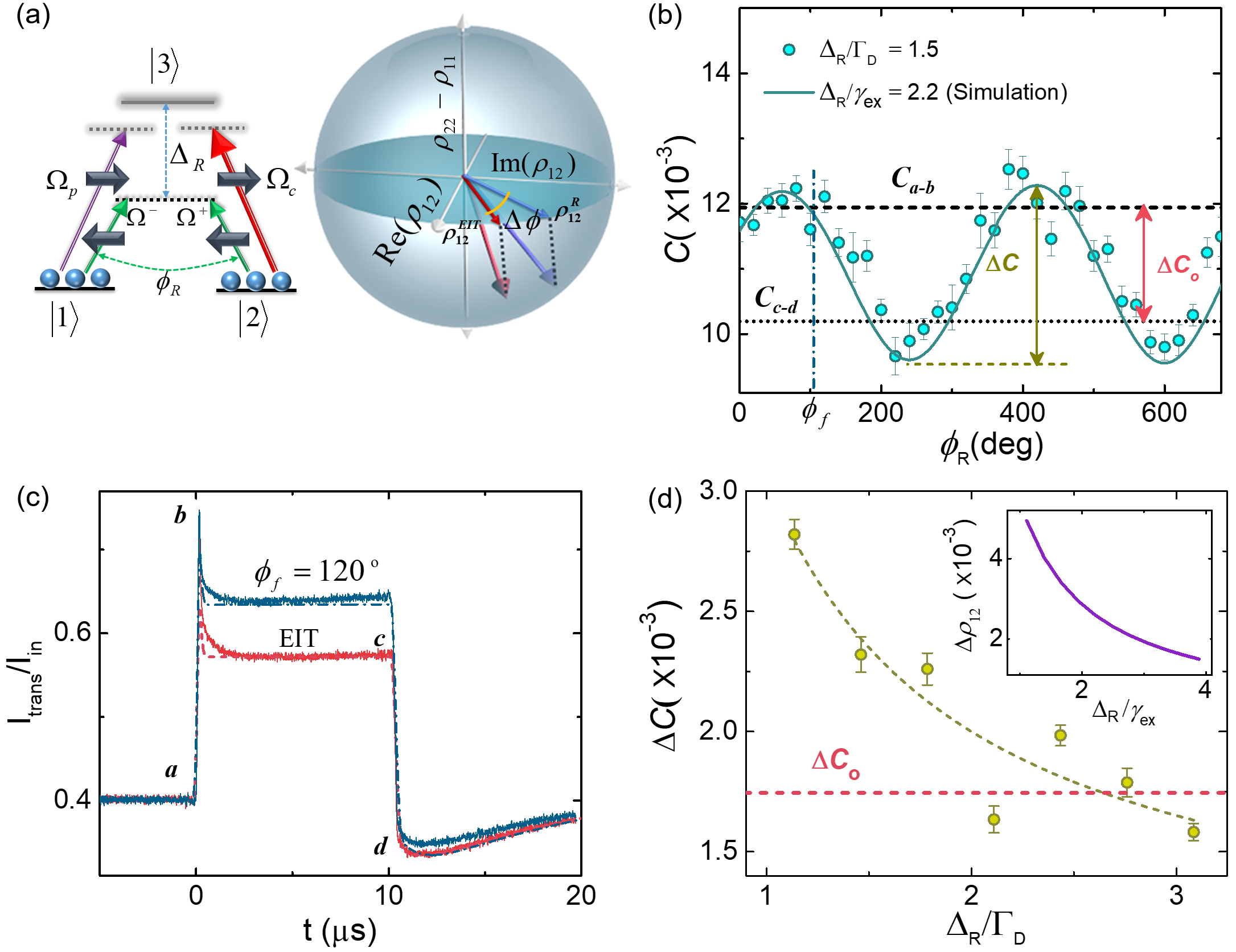 Figure 4
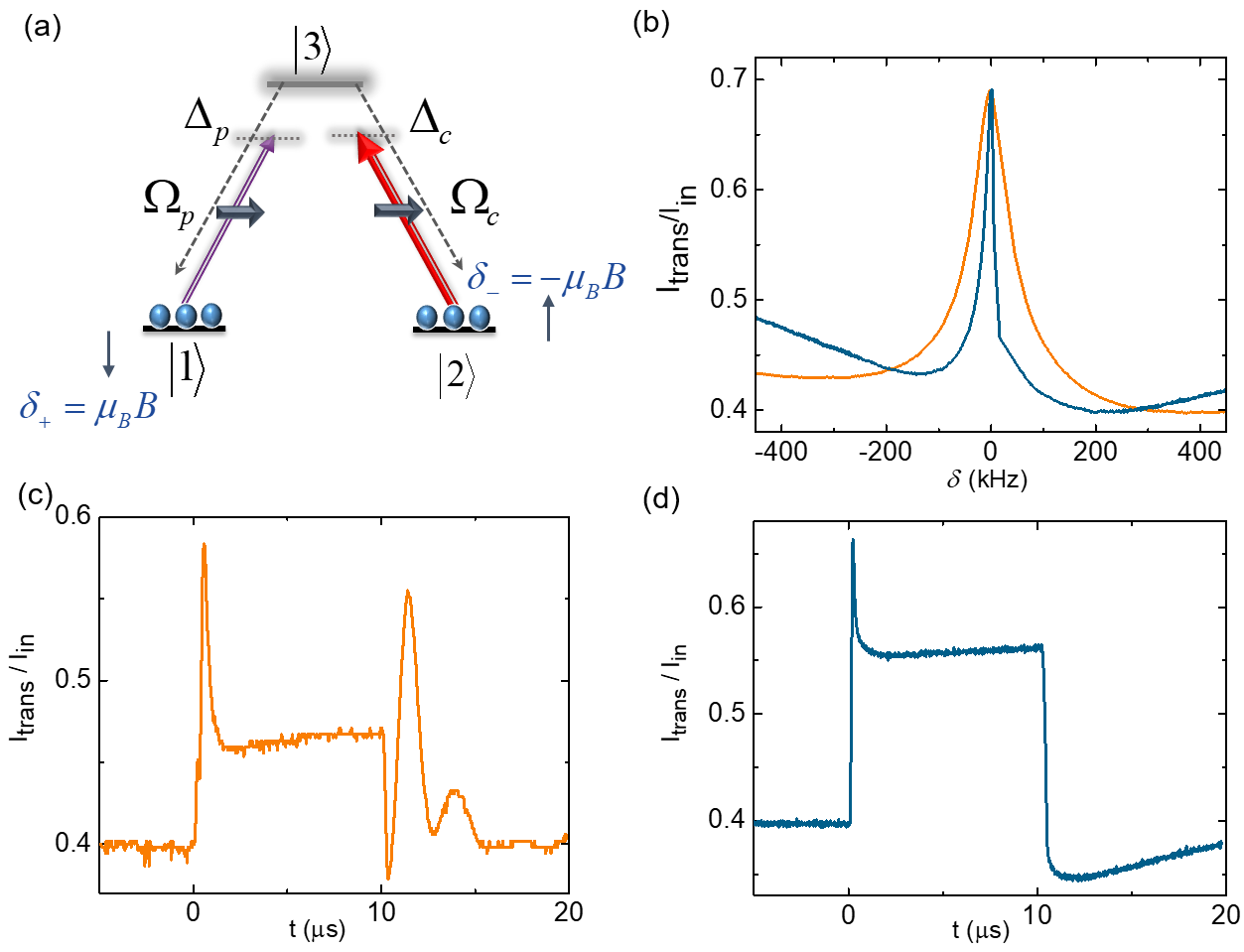 Figure 5
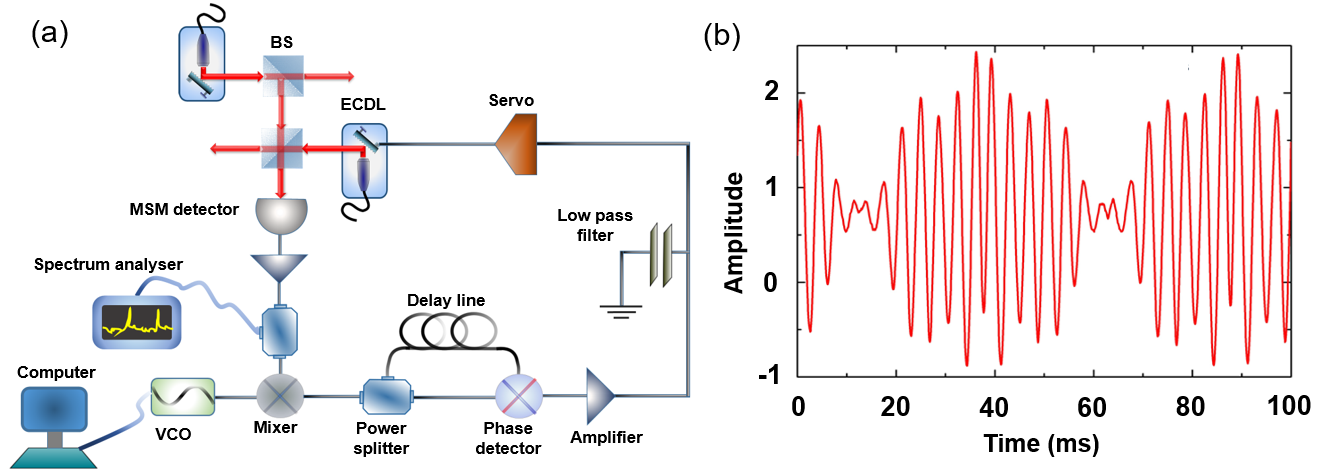 Figure 6
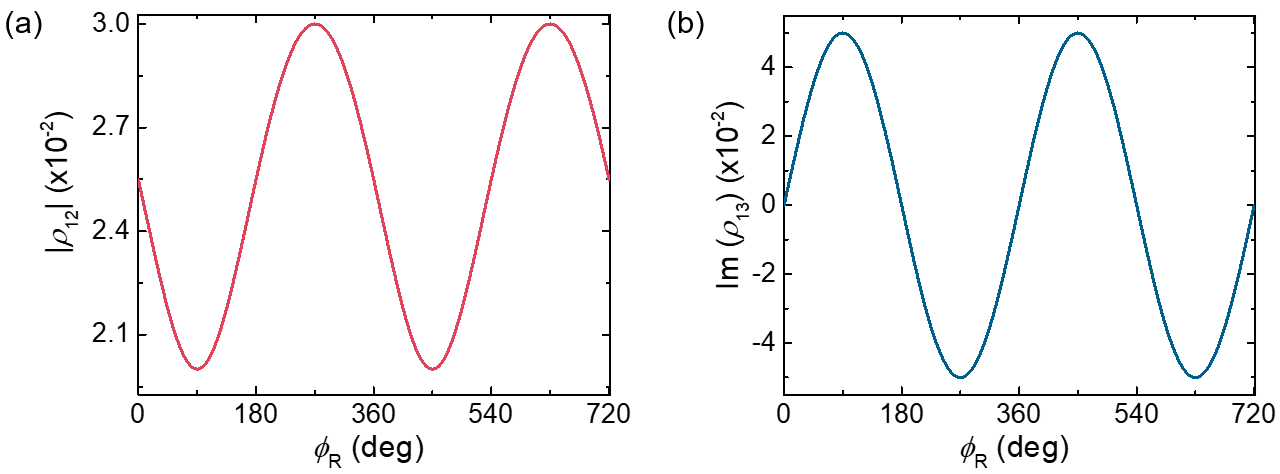 Figure 7
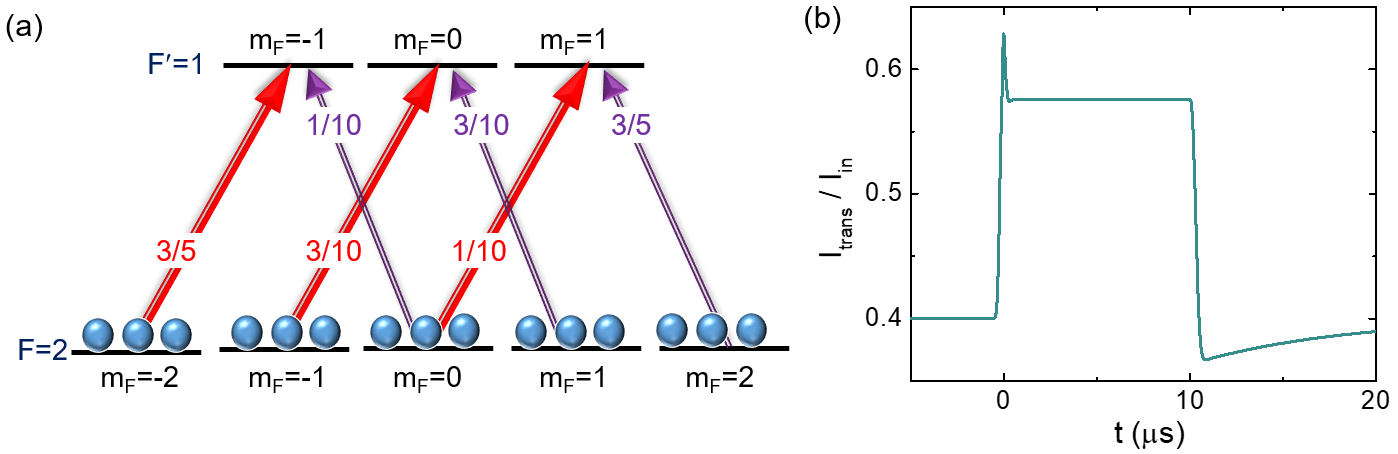 Figure 8
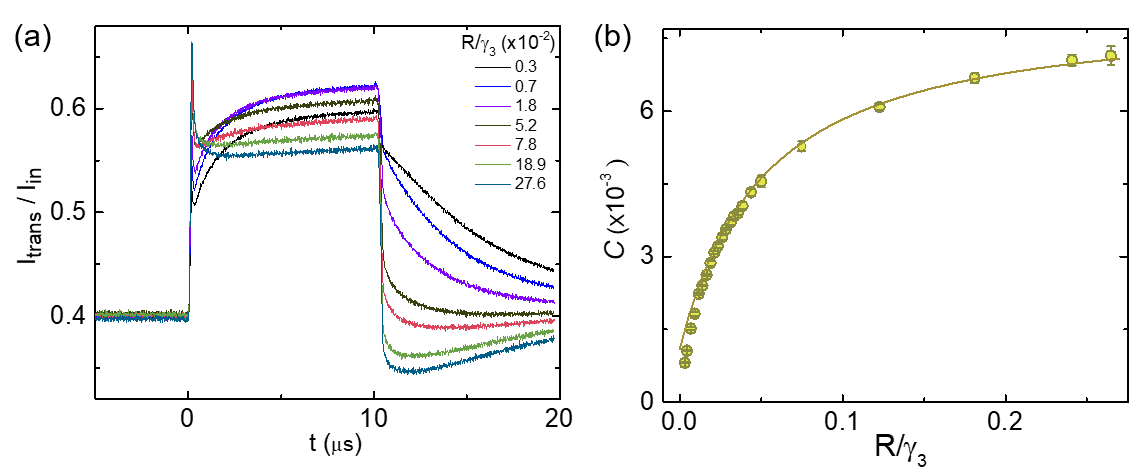 Figure 9
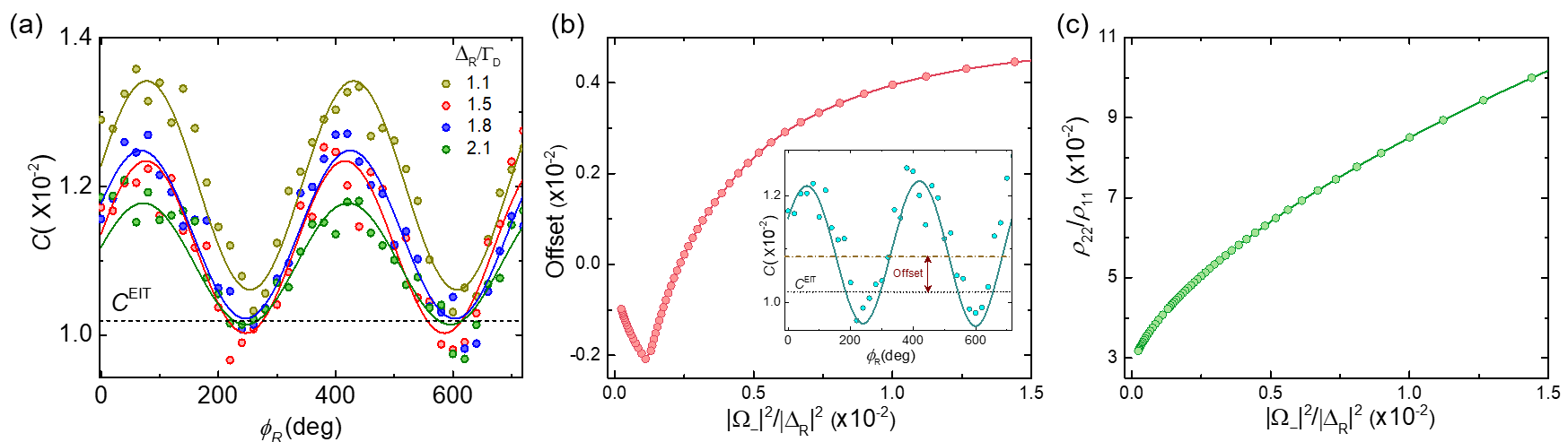 Figure 10
Peer Reviews
No public reviews on file for this paper yet. If you reviewed it on a platform where reviews are public (OpenReview, ICLR, NeurIPS, ICML), you can paste yours below so the community can read it here.
Videos
No videos yet. Explain this paper in a talk, walkthrough, or lecture? Add one.
Probing, Quantifying and Freezing Coherence in a Thermal Ensemble of Atoms
Arif Warsi Laskar1, Niharika Singh1, Pratik Adhikary1, Arunabh Mukherjee1,‡ and Saikat Ghosh1
1Department of Physics, Indian Institute of Technology, Kanpur-208016, India
Abstract
Creating stable superposed states of matter is one of the most intriguing aspects of quantum physics, leading to a variety of counter-intuitive scenarios along with a possibility of restructuring the way we understand, process and communicate information. Accordingly, there has been a major research thrust in understanding and quantifying such coherent superposed states. Here we propose and experimentally explore a quantifier that captures effective coherent superposition of states in an atomic ensemble at room-temperature. The quantifier provides a direct measure of ground state coherence for electromagnetically induced transparency (EIT) along with distinct signature of transition from EIT to Autler-Townes splitting (ATS) regime in the ensemble. Using the quantifier as an indicator, we further demonstrate a mechanism to coherently control and freeze coherence by introducing an active decay compensation channel. In the growing pursuit of quantum systems at room-temperature, our results provide a unique way to phenomenologically quantify and coherently control coherence in atom-like systems.
pacs:
Ability to generate, probe and control superposed states of physical systems provide distinct technological advantages in quantum protocols, when compared to their corresponding classical counterparts Tannoudji93 ; Chuang11 ; Hammerer10 ; Atndt14 ; Martini12 ; arif16 . Even entanglement Lukin00 ; Matsukevich06 ; Simon07 ; Choi08 , a critically important resource in quantum information, relies on superposed states of distinctly measurable channels. Over last few decades, there has therefore been a tremendous thrust in research, to better quantify such states theoretically Streltsov17 ; Plenio14 ; zoller16 , and to generate and control them experimentally Boller91 ; Li95 ; Fleischhauer00 ; Fleischhauer05 ; suter16 ; bromley15 ; Noguchi11 ; Wang17 . A widely used technique to generate superposed states in atom-like systems Gu16 ; yang14 is based on the phenomenon of electromagnetically induced transparency(EIT) Boller91 ; Li95 ; Fleischhauer00 ; Fleischhauer05 , where a strong control field is used to drive an effective three level atomic system into a particular coherent superposition of ground-state sub-levels ( and , Fig. 1a), known as dark state, in presence of a weak probe field. Such superposed dark states remain mostly decoupled from the lossy excited state () Boller91 ; Li95 ; Fleischhauer00 ; Fleischhauer05 leading to dramatic effects such as slow Hau99 , stopped Heinze13 and stored Heinze13 ; Phillips00 ; Kuzmich13 light, generation of entangled photons Lukin00 ; Matsukevich06 ; Simon07 ; Choi08 and enhanced optical non-linearities at the level of single photons Tanji09 ; Turchette95 ; Vuletic12 . With such broad applicability Gu16 ; yang14 , harnessing superposed states to their complete potential requires a concrete means of quantifying the corresponding coherence.
Traditionally, superposition in EIT is characterized spectroscopically, through its signature transparency window in probe absorption profile (Fig. 1b). However, it is also well acknowledged that such a transparency is not necessarily a unique signature of superposed states, but can also appear due to the strong control field either optically pumping atoms out of the system Happer72 or hybridizing the ground state with the excited state, leading to Autler-Townes splitting (ATS) in the absorption profile agarwal10 ; sanders11 . Early efforts to discern EIT from optical pumping effects relied on characterization of the transparency linewidth by fitting convolved absorption profiles Javan02 . Several recent works have explored the more subtle issue of discerning EIT from ATS using Akaike information criterion that provides a quantitative indicator based on Bayesian comparison of probe absorption profiles yang14 ; sanders11 ; giner13 . Nevertheless, such techniques, based on post-processed spectroscopic data are cumbersome and do not directly quantify the useful ground state superposition. Experiments showing the storage and retrieval of light pulses provide an alternative characterization of ground state coherence via storage time and retrieval efficiency Heinze13 ; Phillips00 ; Kuzmich13 . However, these parameters are also common to other mechanisms, including storage based on photon echo Gisin07 ; Lvovsky09 or coherent population oscillation Neveu17 . In particular, for comparing dynamically varying or coherently controlled superposed states, a direct experimental quantification of coherence, characterized by the off-diagonal matrix element , can significantly boost applications in EIT.
Here we propose a phenomenological quantifier that accurately captures ground state coherence in EIT for an ensemble of rubidium () atoms at room temperature. The quantifier is based on single-shot time domain measurement of dynamical probe susceptibility and relies on the vastly differing classical and quantum time-scales in the system arif16 . We experimentally demonstrate that with decreasing coherence, the quantifier decreases monotonically. Furthermore, with increasing control field strength, we observe emergence of a distinct splitting in the otherwise resonance peak of the quantifier, as a function of two-photon detuning. Such distinct spectroscopic signatures in the two regimes of EIT and ATS greatly simplify identification of the transition. Finally, using this quantifier as a tool for directly probing ground-state coherence, we propose and demonstrate a novel technique to phase coherently control and compensate its decay using an additional pair of fields. Our work complements growing theoretical initiatives in quantifying coherence in quantum systems Streltsov17 ; Plenio14 ; zoller16 while the phase dependent control of coherence demonstrated here can be applied to improve the ability to store, process and retrieve quantum information in a variety of systems that use EIT to generate stable superposition ghosh05 ; englund07 ; bhaskar17 ; zhong15 ; Hansom14 .
The primary motivation for this study is based on the observation that in a three level atomic system (Fig. 1a), the probe transmission is driven by a part due to ground state (quantum) superposition along with another part due to (classical) population dynamics, both adding linearly. This is particularly evident in the off-diagonal density matrix element () that drives the probe transmission and takes a form (see Supplementary Information)
[TABLE]
in steady state (), where with being the probe detuning and includes decay channels out of the excited state. While the ground state quantum superposition couples via the control field (with Rabi frequency ), there is also a part that is set by steady state populations and , modified from their thermal equilibrium values due to optical pumping by the strong field and losses. This modified one-photon population term adds to probe transmission, leading to ambiguities in identifying useful ground state coherence from probe spectrum. However, it can be observed that in absence of control, steady state populations equilibrate via thermal diffusion through probe in a time scale that is significantly long ( for a probe beam diameter of mm) compared to atomic time-scales (). By adiabatically turning off the control in an intermediate time-scale and taking the difference in response, one can thereby subtract out this one-photon contribution. Accordingly, we define a phenomenological quantifier , such that
[TABLE]
where and are the probe response in presence and absence of control. For an intermediate control turn-off time scale of and in the limit of , the quantifier is then proportional to . We set up an experiment to test the validity for the assertion of as a quantifier of in different scenarios and compare observations with toy models and simulation results.
Experiment
We probe a thermal ensemble of 85Rb atoms in a vapor cell, along with coils to apply a small magnetic field in the probe propagation direction (Fig. 1c). The hyperfine manifold, forms the two ground states (see Methods and Supplementary Information). The control (of 10 pulse width) and probe (cw) fields of opposite circular polarization are derived from a single laser and are near resonant () with the excited state manifold (see Methods for details). When a small magnetic field is scanned across resonance, sharp two-photon Raman resonance peak is observed in probe transmission, a typical signature of EIT (Fig. 1b).
The transmitted probe intensity is recorded in time, while the control is adiabatically turned on and off (in ) with acousto-optic modulator (AOM), keeping it on for long enough times (10 ) for the system to reach steady state. Furthermore, we experimentally simulate a quasi-closed three-level system with a counter-propagating continuous repumper field (resonant and locked at a transition ), that cycles back any atom escaping out of the manifold to arif16 .
A typical experimental trace for the system (along with numerical simulations for a closed three-level system) is shown in Fig. 2b. With turn-on of control, there is a sharp rise a-b, followed by a slower decay b-c. In a recent work arif16 , we have shown experimentally, that from the scaling of time scales with field strength, it can be inferred that there is an initial fast build up of ground state coherence , followed by optical pumping, rearranging the populations and .
It is particularly intuitive to visualize this dynamics in an effective Bloch sphere corresponding to the ground state manifold spanned by and . With an initial unpolarized ensemble (equally populated thermal states) corresponding to zero length, the Bloch vector grows in a convex path, first building up coherence along equatorial plane and then moving towards the pole due to optically pumped population imbalance (Fig. 2a). For an ideal EIT scenario with all the atoms in , steady state vector points mostly down, with a slight tilt due to a small coherence, . It can also be noted that though depends on the relative phase between control and probe, setting the angle of the tilt in the equatorial plane, is independent of it (due to the additional excited state ). We use this visualization later for phase coherent control of .
At control turn-off, there is a sharp fall in probe transparency going below the initial level (Fig. 2b), indicating a new steady state population difference . We use the fall height from point c() to d(), to estimate the quantifier
[TABLE]
In contrast, in absence of the repumper field, atoms escape out of the three level manifold and the system becomes open. This corresponds to traditional EIT experiments and experimentally, in absence of repumper, we observe a partial drop with a corresponding smaller (Fig. 2c). To test a scenario where the system is incoherent, we use a counter-propagating control field. Here one expects the Doppler averaging to wash out any built-up coherence in the system. Experimentally, we observe (Fig. 2d).
The long rise time in Fig. 2d corresponds to optical pumping, while the long time scales after control turn-off in all the three scenarios (Fig. 2b,c,d) correspond to thermal diffusion of atoms () which can be modelled using a simple rate equation picture arif16 .
As a first test, we therefore conclude that the defined quantifier behaves monotonically, with
[TABLE]
Transition from EIT to ATS
As a second test, we probe with increasing control intensity. At large control fields, it is well-known that the system hybridizes in a fragile superposition of ground () and excited () states, with corresponding Autler-Townes splitting Tannoudji93 . In such hybridized basis (Fig. 3a), the corresponding low-field strength EIT regime is usually understood as a Fano resonance sanders11 ; yang14 ; giner13 , which vanishes monotonically with increasing field strength.
One therefore expects a corresponding signature of splitting in probe transmission Yang05 . However, due to power broadening, such a signature is not always discernible sanders11 ; yang14 ; giner13 . The situation is particularly severe in an ensemble of hot atoms, where a large Doppler broadened one-photon background profile washes out any signature of ATS (Fig. 3b, inset).
However, the quantifier precisely subtracts out this one-photon background (i.e. at in Fig. 2a), corresponding to the term , which hardly evolves during control turn-off. can thereby be viewed as distilling the information of coherent superposed states, in the system. Experimentally, it captures excellently a splitting in the corresponding two-photon resonance peak, a signature otherwise un-discernible in a steady state measurement (Fig. 3b and inset). The behavior matches well with a wave-function model (Fig. 3c), where decreases monotonically with increasing control field strength (Fig. 3d).
Freezing coherence:
Along with magnitude, there is also an absolute phase of which remains undetected in EIT and can only be characterized with respect to a reference phase. An additional field, usually a radio-frequency field, coupling the ground states can provide such a reference Yang05 ; ye02 ; lukin99 ; Agarwal01 ; Andal17 . Instead, here we use a a pair of far-detuned, two-photon resonant, counter-propagating Raman fields. While large detuning ( in Fig. 4a) ensures a build up of two-photon coherence with minimal population reshuffle, counter-propagation of the fields washes out higher-order multi-photon effects, simply adding a perturbative correction to the coherence, in the form (see Supplementary Information):
[TABLE]
where . The resulting, modified is now sensitive to the phase difference between control-probe and the Raman fields and through the effective two-photon Rabi frequency Tannoudji93 where is the phase difference between Raman fields (Fig. 4a).
Experimentally, we use an additional counter-propagating laser for a closed system (with repumper), locked at a programmable detuning with respect to the probe (Methods and Supplementary Information). While linear polarization generates both and , rotation of the polarization with a half-wave plate changes their relative phase difference (). By changing , we experimentally observe sinusoidal variation of the total coherence (Fig. 4b).
Such a reference field controlled EIT coherence offers an intriguing consequence. For the closed system, we have observed (Fig. 2b) that an initial large build up in (segment a-b) eventually decays down (segment c-d) due to optical pumping by control field. With the reference Raman fields as an additional channel, one can now compensate for this decay. Notably, at phase difference 120, coherence freezes to its initial maximum (Fig. 4c). In particular, the phase dependence (Fig. 4b) indicates that one can over compensate with phase, with the visibility () encompassing the difference between initial and final steady state coherence (, corresponding dotted lines a-b and c-d, respectively). Furthermore, with increasing detuning , the visibility decreases (Fig. 4d). These observations match well with simulation and a simple rate equation model accounting for far-detuned optical pumping effects of the Raman fields (Fig. 4d, inset and Supplementary Information).
Conclusions
To conclude here we have demonstrated a phenomenological quantifier for ground state coherence in an atomic ensemble for EIT at room-temperature. The quantifier is based on a single shot time-domain measurement of probe susceptibility and relies on the differing time-scales for classical and quantum dynamics in the system. A variety of platforms with such widely differing time-scales, including ensembles of cold atoms Kuzmich09 , trapped ions Blatt09 , defect centres in diamond bhaskar17 , synthesized or fabricated quantum dots englund07 and rare-earth doped solid state materials zhong15 are currently being pursued for quantum devices. While, traditionally, steady state spectroscopic signatures have been usually used to claim coherence in them Boller91 ; Li95 ; Fleischhauer00 ; Fleischhauer05 , here we show that time domain measurements can be used to settle observational ambiguities. Accordingly, this work complements recent efforts of quantifying many-body entanglement through dynamical susceptibilities zoller16 and experimental efforts to store and retrieve light based on EIT Heinze13 ; Phillips00 . While in the later case, the retrieval efficiency provides an indirect measure of the left-over coherence, here we provide its more direct quantification. We believe that along with the quantifier, the mechanism presented here to phase coherently control and freeze coherence can be used to enhance performance of quantum devices at room-temperature.
References
- (1) Yudin, V.I., Taichenachev, A.V., Dudin, Y.O., Velichansky, V.L., Zibrov, A.S. & Zibrov, S.A. Vector magnetometry based on electromagnetically induced transparency in linearly polarized light. Phys. Rev. A 82, 033807 (2010).
- (2) Schünemann, U., Engler, H., Weidemüller, M. & Zielonkowski, M. Simple scheme for tunable frequency offset locking of two lasers. *Rev. of Sci. Instrum. * 70, 242-243 (1999).
- (3) Steck, D.A. Rubidium85 D line data, available online at http://steck.us/alkalidata (revision 2.1.6, 20 September 2013).
- (4) Budker, D. Atomic physics: an exploration through problems and solutions (Oxford University Press, New York, 2008).
- (5) Laskar, A.W., Singh, N., Mukherjee, A. & Ghosh, S. Interplay of classical and quantum dynamics in a thermal ensemble of atoms. New J. Phys. 18, 053022 (2016).
- (6) Parkins, A.S., Marte, P., Zoller, P. & Kimble, H.J. Synthesis of arbitrary quantum states via adiabatic transfer of Zeeman coherence. Phys. Rev. Lett. 71, 3095-3099 (1993).
- (7) Pellizzari, T., Gardiner, S.A., Cirac, J.I. & Zoller, P. Decoherence, continuous observation, and quantum computing: a cavity QED mode. Phys. Rev. Lett. 75, 3788-3791 (1995).
- (8) Cirac, J.I., Zoller, P., Kimble, H.J. & Mabuchi, H. Quantum state transfer and entanglement distribution among distant nodes in a quantum network Phys. Rev. Lett. 78, 3221-3224 (1997).
- (9) Phillips, D.F., Fleischhauer, A., Mair, A., Walsworth, R.L. & Lukin, M.D. Storage of light in atomic vapor. Phys. Rev. Lett. 86, 783-786 (2001).
- (10) Kozuma, M., Akamatsu, D., Deng, L., Hagley, E.W. & Payne, M.G. Steep optical-wave group-velocity reduction and “storage” of light without on-resonance electromagnetically induced transparency. Phys. Rev. A 66, 031801(R) (2002).
- (11) Streltsov, A., Adesso, G. & Plenio, M.B. Quantum coherence as a resource. Rev. Mod. Phys. 89, 041003 (2017).
The reference list from the paper itself. Each links out to its DOI / PubMed record.
- 1(1) Cohen-Tannoudji, C., Dupont-Roc, J. & Grynberg, G. Atom-photon interactions: Basic processes and applications. vol. 14, (Wiley Periodicals, Inc., New York, 1993).
- 2(2) Nielsen, M.A. & Chuang, I.L. Quantum computation and quantum information, edition 10th. (Cambridge University Press, New York, 2011).
- 3(3) Hammerer, K., Sørensen, A.S. & Polzik, E.S. Quantum interface between light and atomic ensembles. Rev. Mod. Phys. 82, 1041-1093 (2010).
- 4(4) Arndt, M. & Hornberger, K. Testing the limits of quantum mechanical superpositions. Nature Phys. 10, 271-277 (2014).
- 5(5) Martini, F.D. & Sciarrino, F. Multiparticle quantum superpositions and the quantum-to-classical transition. Rev. Mod. Phys. 84, 1765-1789 (2012).
- 6(6) Laskar, A.W., Singh, N., Mukherjee, A. & Ghosh, S. Interplay of classical and quantum dynamics in a thermal ensemble of atoms. New J. Phys. 18, 053022 (2016).
- 7(7) Lukin, M.D., Yelin, S.F. & Fleischhauer, M. Entanglement of atomic ensembles by trapping correlated photon states. Phys. Rev. Lett. 84, 4232-4235 (2000)
- 8(8) Matsukevich, D.N., Chanelière, T., Jenkins, S.D., Lan, S. Y., Kennedy, T.A.B. & Kuzmich, A. Entanglement of remote atomic qubits. Phys. Rev. Lett. 96, 030405 (2006).