Jumps of Milnor numbers of Brieskorn-Pham singularities in non-degenerate families
Tadeusz Krasi\'nski, Justyna Walewska

TL;DR
This paper provides an explicit formula and an inductive algorithm to compute the minimal non-zero change in Milnor numbers for non-degenerate deformations of certain singularities, specifically Brieskorn-Pham types.
Contribution
It introduces a novel inductive algorithm based on Diophantine equations to calculate the non-degenerate jump of Milnor numbers for specific singularities.
Findings
Derived a formula for the non-degenerate jump of Milnor numbers.
Developed an inductive algorithm using Diophantine equations.
Applied the method to Brieskorn-Pham singularities.
Abstract
The jump of the Milnor number of an isolated singularity is the minimal non-zero difference between the Milnor numbers of and one of its deformation In the case are non-degenerate singularities we call the jump non-degenerate. We give a formula (an inductive algorithm using diophantine equations) for the non-degenerate jump of in the case is a convenient singularity with only one -dimensional face of its Newton diagram which equivalently (in our problem) can be replaced by the Brieskorn-Pham singularities.
Click any figure to enlarge with its caption.
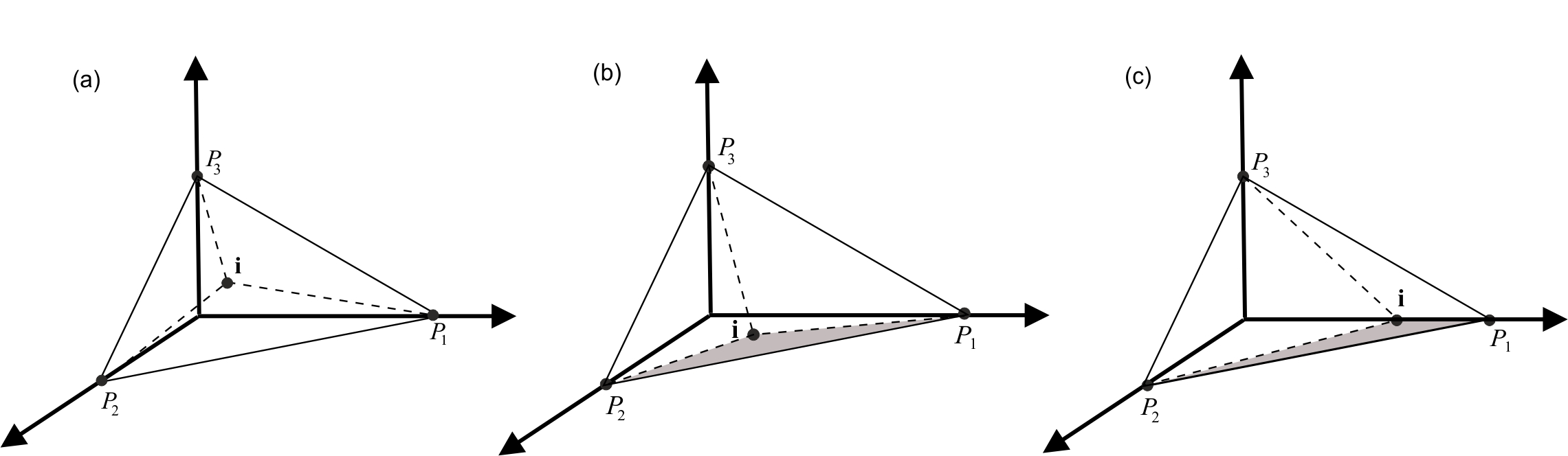 Figure 3
Peer Reviews
No public reviews on file for this paper yet. If you reviewed it on a platform where reviews are public (OpenReview, ICLR, NeurIPS, ICML), you can paste yours below so the community can read it here.
Videos
No videos yet. Explain this paper in a talk, walkthrough, or lecture? Add one.
Jumps of Milnor numbers of Brieskorn-Pham singularities in non-degenerate families
Tadeusz Krasiński and Justyna Walewska
Faculty of Mathematics and Computer Science, University of Łódź, ul. Banacha 22, 90–238 Łódź, Poland
Abstract.
The jump of the Milnor number of an isolated singularity is the minimal non-zero difference between the Milnor numbers of and one of its deformation In the case are non-degenerate singularities we call the jump non-degenerate. We give a formula (an inductive algorithm using diophantine equations) for the non-degenerate jump of in the case is a convenient singularity with only one -dimensional face of its Newton diagram which equivalently (in our problem) can be replaced by the Brieskorn-Pham singularities.
Key words and phrases:
Milnor number, deformation of singularity, non-degenerate singularity, Newton polyhedron, Newton diagram
2010 Mathematics Subject Classification:
14B07, 32S30
1. Introduction
Let be an (isolated) singularity, i.e. is the germ at [math] of a holomorphic function having an isolated critical point at , and as the corresponding critical value. More specifically, there exists a representative of holomorphic in an open neighborhood of the point such that:
,
,
for ,
where for a holomorphic function we put .
The ring of germs of holomorphic functions of variables will be denoted by .
A deformation of the singularity is the germ of a holomorphic function such that:
,
,
The deformation of the singularity will also be treated as a family of germs, putting . Since is an isolated singularity, has also isolated singularities near the origin, for sufficiently small [8, Theorem 2.6 in Chap. I].
Remark 1**.**
Notice that in the deformation there can occur in particular smooth germs, that is germs satisfying . In this context, the symbol will always denote .
By the above assumptions, for every sufficiently small , one can define a (finite) number as the Milnor number of , namely
[TABLE]
where is the ideal in generated by .
Since the Milnor number is upper semi-continuous in the Zariski topology
[8, Prop. 2.57 in Chap. II], there exists an open neighborhood of the point such that
for ,
for .
The (constant) difference for will be called the jump of the deformation and denoted by . The smallest non-zero value among the jumps of all deformations of the singularity will be called the jump (of the Milnor number) of the singularity and denoted by .
The first general result concerning the jump was S. Guseĭn-Zade’s [9], who proved that there exist singularities for which and that for irreducible plane curve singularities it holds . In [4] the authors proved that is not a topological invariant of but it is an invariant of the stable equivalence of singularities. The computation of is not an easy task. It is related to the problem of adjacency of classes of singularities. Only for few classes of singularities we know the exact value of . For plane curve singularities () in the class (see [1] for terminology) that is singularities of the form , , , we have (see [4]) and for specific homogeneous singularities , , we have , where is the integer part of (see [5]).
In the paper we consider a weaker problem: compute the jump of over all non-degenerate deformations of (i.e. the in deformations of are non-degenerate singularities). Clearly, we always have . Up to now, this problem has been studied only for plane curve singularities by A. Bodin [3], S. Brzostowski, T. Krasiński and J. Walewska [16], [17], [5]. We give a formula (more precisely an algorithm) in -dimensional case for , where is non-degenerate, convenient and has its Newton diagram reduced to one -dimensional face. Since for non-degenerate singularities of a deformation of the Milnor number depends only on the Newton diagram of and not on specific coefficients of (see Section 2) we may restrict considerations to the class of the Brieskorn-Pham singularities
[TABLE]
where .
Remark 2**.**
Let us note that we compute non-degenerate jump of a singularity in a fixed system of coordinates. The reason is that non-degeneracy depends on coordinate system. For instance, for singularity , in the original system of coordinates while for , , we have .
The problem of finding a minimal non-degenerate jump of a singularity in arbitrary system of coordinates is open.
2. Non-degenerate singularities
In this Section we recall the notion of non-degenerate singularities. Let be a singularity and the support of . The Newton polyhedron of is the convex hull of the set The finite set of compact faces (of all dimensions) of the boundary of constitutes the Newton diagram of and is denoted by . The singularity is convenient if intersects all coordinate axes in . For each face we define a weighted homogeneous polynomial We call the singularity non-degenerate on if the system of equations , has no solutions in . The singularity is non-degenerate if is non-degenerate on every face .
In the sequel we put the following notations for coordinate hyperplanes in . Let . We denote
[TABLE]
and
[TABLE]
For a convenient singularity we define the Newton number of by
[TABLE]
where is the -dimensional volume under , is the -dimensional volume under on the hyperplane , is the -dimensional volume under on the hyperplane and so on.
The importance of has its source in the celebrated Kouchnirenko theorem.
Theorem 2.1** ([11]).**
If is a convenient singularity, then
- (1)
, 2. (2)
if is non-degenerate then .
Remark 3**.**
For non-convenient singularities the Kouchnirenko Theorem also holds provided is appropriately defined (see for instance [6]). It is interesting that both conditions of item 2. of the Theorem are equivalent in -dimensional case by A. Płoski [15]. For weaker non-degeneracy conditions equivalent to the equality in -dimensional case see recent preprint by P. Mondal [12].
3. Non-degenerate jump of Milnor numbers of singularities
Let be a singularity. A deformation of is called non-degenerate if is non-degenerate for . The set of all non-degenerate deformations of the singularity will be denoted by . Non-degenerate jump of the singularity is the minimal of non-zero jumps over all non-degenerate deformations of , which means
[TABLE]
where by we denote all non-degenerate deformations of for which .
Obviously
Proposition 3.1**.**
For each singularity we have the inequality
[TABLE]
From the Kouchnirenko Theorem we get
Corollary 3.2**.**
*If and are non-degenerate and convenient singularities and
then .*
Corollary 3.3**.**
If is a convenient and non-degenerate singularity such that the Newton diagram has only one -dimensional face which intersects the axes in points respectively, then for the Brieskorn-Pham singularity we have
[TABLE]
In investigations concerning we may restrict our attention to non-dege- nerate because the non-degenerate jump for degenerate singularities can be found using the proposition below (cf. [3, Lemma 5]). For a given let denote any non-degenerate singularity for which . Such singularities always exist.
Proposition 3.4**.**
If is degenerate then
[TABLE]
**Proof. ** This follows from the fact that a generic small perturbation of coefficients of these monomials of which correspond to points belonging to (which are finite in number) give us non-degenerate singularities with the same Newton polyhedron as .
Remark 4**.**
By the Płoski theorem ([14, Lemma 2.2], [15, Theorem 1.1]), for degenerate plane curve singularities () the second possibility in Proposition 3.4 is excluded.
A crucial role in the search for the formula for will be played by the monotonicity of the Newton number with respect to the Newton polyhedron. Namely, J. Gwoździewicz [10], M. Furuya [7] and C. Biviá-Ausina [2] proved.
Theorem 3.5** (Monotonicity Theorem).**
Let be two convenient singularities such that . Then .
We need a stronger version of the above theorem in the particular case has only one -dimensional face and differs from in one monomial.
Theorem 3.6**.**
If is a convenient and non-degenerate singularity such that the Newton diagram has only one -dimensional face and , where the lattice point lies under i.e. , then .
**Proof. ** By the Kouchnirenko Theorem we may consider only the Brieskorn-Pham singularities (1). We will use induction with respect to the number of variables. For we have , , and , . Hence and . This gives .
Suppose the theorem is true for any Brieskorn-Pham singularity in variables. Let now , , . Let .
If i does not lie on any coordinate hyperplane then and are identical on all these hyperplanes (see Figure 1(a)) and hence
[TABLE]
where is the -dimensional simplex with vertices .
Take now a lattice point under which lies on a coordinate hyperplane. For simplicity we may assume i.e. . Two possible cases in dimension three are illustrated in Figure 1(b),(c). By definition of the Newton number the difference is equal to the sum of volumes of differences of and on all hyperplanes multiplied by . First we consider these differencies in hyperplanes which do not contain the axis . They are equal to the sum of volumes of differencies for truncated singularities and but taken with opposite signs. So, the sum of this differencies is equal to . Now we consider differencies in coordinate hyperplanes which contain the axis . Each such difference in a coordinate hyperplane is a pyramid whose base is equal to the difference, say , of and in and the vertex is equal to . Hence, in this pyramid will give the term
[TABLE]
But the latter expression is precisely the term in associated to the difference . Together we get
[TABLE]
Since and by induction hypothesis is positive, we get the assertion of the theorem.
Now we define specific non-degenerate deformations of a convenient and non-degenerate singularity (in particular for Brieskorn-Pham singularities). Denote by the set of lattice points (points with integer coordinates) lying under the Newton diagram of i.e. . Obviously, is a finite set. For we define the monomial deformation of by the formula
[TABLE]
Proposition 3.7**.**
For every the deformation of is convenient and non-degenerate for all sufficiently small .
**Proof. ** See [11] or [13, Appendix].
Combining the Monotonicity Theorem with the above proposition we reach the conclusion that in order to find it is enough to consider only the non-degenerate deformations of the type .
Theorem 3.8**.**
If is a convenient and non-degenerate singularity such that the Newton diagram has only one -dimensional face, then
[TABLE]
**Proof. ** By the Kouchnirenko theorem it suffices to consider non-degenerate deformations of of the form
[TABLE]
where are holomorphic at and . Then by the Monotonicity Theorem and Theorem 3.6 we may restrict the scope of deformations (2) to deformations with only one term added i.e. to the deformations for .
4. An algorithm for the non-degenerate jump of Brieskorn-Pham singularities
In this Section we give an algorithm for calculating for a non-degenerate and convenient singularity with one -dimensional face of its Newton diagram. By Corollary 3.3 we may assume that is a Brieskorn-Pham singularity
[TABLE]
We have . By Theorem 3.8 to find we have to compare the jumps of all monomial deformations where is a lattice point lying under . First we prove a lemma relating the jumps of monomial deformations of the Brieskorn-Pham singularities to the jumps of their "truncations".
Lemma 4.1**.**
Let be a Brieskorn-Pham singularity. Define , . Let be a lattice point under lying in the hyperplane . Then
[TABLE]
**Proof. ** The proof follows the line of the proof of Theorem 3.6. For simplicity of notations we take , i.e. . Since , , by definition of the Newton number the difference is equal to the sum of volumes of differences of and on all hyperplanes multiplied by . Similarly as in the proof of Theorem 3.6 we divide all differencies in hyperplanes into two kinds: in those hyperplanes which do not contain the axis and those which do contain the axis . The sum of the first ones is equal to the number while the second ones . Together we get equality (4) for .
Now we present an inductive algorithm for where is any Brieskorn-Pham singularity
[TABLE]
with respect to the number of variables . In each step we give the formula for and simultaneously the point (precisely the deformation ) realizing this jump. For we have , and . We have and the point realizes this jump.
Assume that for all Brieskorn-Pham singularities in -variables we can compute and can indicate the point i realizing this jump.
Take the Brieskorn-Pham singularity , in variables. By Theorem 3.8 we have to compare the jumps of all monomial deformations , where is a lattice point lying under .
A. First we consider points lying in coordinate hyperplanes of dimension . By induction hypotheses on each coordinate hyperplane
there exists a point realizing non-degenerate jump of the truncated singularity in variables. Denote this jump by . By the Lemma 4.1 the jump of the deformation is given by the formula
[TABLE]
This formula implies that there is no "better" point in the hyperplane
which could give a monomial deformation of with smaller jump. In fact, for any point we would have
[TABLE]
and hence again by the Lemma 4.1
[TABLE]
Hence doing the same for all hyperplanes , , we get that the minimum of the jumps of monomial deformations associated to points lying in these hyperplanes is equal to
[TABLE]
Denote this number by .
B. Now we consider monomial deformations of associated to points under not lying in coordinate hyperplanes i.e. lying in the interior of the simplex , where , ,, . Such a point satisfies the conditions:
, , 2. 2.
(or equivalently ).
For such a point i we obviously have
[TABLE]
This follows from the fact that and
, . So the problem is to find minimal in the set for which there exist solutions of the diophantine equation
[TABLE]
satisfying conditions 1. and 2. First, we transform (5) into the more useful form
[TABLE]
If we denote , , then we reduce the problem to find integer solutions of the equations
[TABLE]
satisfying
[TABLE]
Then for such a minimal for which the solution of (7) with conditions exists we have
[TABLE]
We give a simple algorithm (using only Euclid’s algorithm) to solve the equation (7) with conditions (8) only in the case , , . In general case we also may compute but modulo finding solutions of (7) satisfying (8).
Assume , , , for . First we consider the equation (7) for . Since are pairwise prime therefore . Hence by Euclid’s algorithm we find integers such that
[TABLE]
By simple transformations we get another identity
[TABLE]
where , , . If then for we have
[TABLE]
and consequently
[TABLE]
If then we claim there is no solution to our problem for . Assume to the contrary that is such a solution i.e.
[TABLE]
Hence and by (9) we obtain
[TABLE]
Since , , then . But is relatively prime to . Hence . But which implies .
Similarly . This implies , which contradicts our supposition .
So in this case and we repeat our considerations for etc. up to . If in one of this steps we find solutions of (7) satisfying conditions (8) we stop the procedure and in this case and the monomial deformation for realizes the jump. If the above search fails we conclude
[TABLE]
We may sum up the above considerations in the following theorem.
Theorem 4.2**.**
*Let be a convenient and non-degenerate singularity with only one
-dimensional face of its Newton diagram. Assume the vertices (on axes) of this face are . Then the non-degenerate jump of can be inductively (with respect to ) calculated as follows. For , . For let be the non-degenerate jump of the restriction of to the hyperplane and . Then putting , we have*
[TABLE]
In the first case the jump is realized by the monomial deformation where and in the second case by where i is the point in a coordinate hyperplane for which , realizing the jump for the restriction of to the hyperplane .
Moreover in the case for the jump can be computed using only Euclid’s algorithm.
Example 1** (Bodin [3], Walewska [16]).**
For and putting we have from the above theorem
[TABLE]
In fact, we have , and we always have the solution of , , .
Example 2**.**
Let . We have , , and by Example 1 , . By the algorithm given in the proof we easily find solutions of diophantine equations in the formula (10) for
[TABLE]
[TABLE]
[TABLE]
Only the last equation fulfills the condition in the formula. Hence
[TABLE]
and the jump is realized by the monomial deformation
[TABLE]
Acknowledgement
The first author was partially supported by the Polish National Science Centre (NCN), Grant No. 2012/07/B/ST1/03293.
The reference list from the paper itself. Each links out to its DOI / PubMed record.
- 1[1] V. I. Arnold, S. M. Guseĭn-Zade, and A. N. Varchenko. Singularities of differentiable maps. Vol. I , volume 82 of Monographs in Mathematics . Birkhäuser Boston Inc., Boston, MA, 1985. The classification of critical points, caustics and wave fronts, Translated from the Russian by Ian Porteous and Mark Reynolds.
- 2[2] C. Biviá-Ausina. Local Łojasiewicz exponents, Milnor numbers and mixed multiplicities of ideals. Math. Z. , 262(2):389–409, 2009.
- 3[3] A. Bodin. Jump of Milnor numbers. Bull. Braz. Math. Soc. (N.S.) , 38(3):389–396, 2007.
- 4[4] S. Brzostowski and T. Krasiński. The jump of the Milnor number in the X 9 subscript 𝑋 9 {X}_{9} singularity class. Cent. Eur. J. Math. , 12:429–435, 2014.
- 5[5] S. Brzostowski, T. Krasiński, and J. Walewska. Milnor numbers in deformations of homogeneous singularities. Bull. Sci. Math. (to appear) , 2014.
- 6[6] S. Brzostowski and G. Oleksik. On combinatorial criteria for non-degenerate singularities. Kodai Math. J. , 39(2):455–468, 2016.
- 7[7] M. Furuya. Lower bound of Newton number. Tokyo J. Math. , 27:177–186, 2004.
- 8[8] G.-M. Greuel, C. Lossen, and E. Shustin. Introduction to singularities and deformations . Springer Monographs in Mathematics. Springer, Berlin, 2007.