Magnetically-defined topological edge plasmons in edgeless electron gas
Dafei Jin, Yang Xia, Thomas Christensen, Siqi Wang, King Yan Fong,, Matthew Freeman, Geoffrey C. Gardner, Saeed Fallahi, Qing Hu, Yuan Wang,, Lloyd Engel, Michael J. Manfra, Nicolas X. Fang, and Xiang Zhang

TL;DR
This paper introduces a new class of topological edge plasmons called domain-boundary magnetoplasmons in an edgeless 2DEG, which are unidirectional, defect-immune, and tunable, enabling reconfigurable topological devices.
Contribution
It demonstrates the existence of domain-boundary magnetoplasmons in a uniform edgeless 2DEG, expanding topological plasmonics beyond physical edges and enabling new device applications.
Findings
Domain-boundary magnetoplasmons are protected by gap Chern number differences.
DBMPs propagate unidirectionally along domain boundaries.
They are tunable via magnetic field or gate voltage.
Abstract
Topological materials bear gapped excitations in bulk yet protected gapless excitations at boundaries. Magnetoplasmons (MPs), as high-frequency density excitations of two-dimensional electron gas (2DEG) in a perpendicular magnetic field, embody a prototype of band topology for bosons. The time-reversal-breaking magnetic field opens a topological gap for bulk MPs up to the cyclotron frequency; topologically-protected edge magnetoplasmons (EMPs) bridge the bulk gap and propagate unidirectionally along system's boundaries. However, all the EMPs known to date adhere to physical edges where the electron density terminates abruptly. This restriction has made device application extremely difficult. Here we demonstrate a new class of topological edge plasmons -- domain-boundary magnetoplasmons (DBMPs), within a uniform edgeless 2DEG. Such DBMPs arise at the domain boundaries of an engineered…
Click any figure to enlarge with its caption.
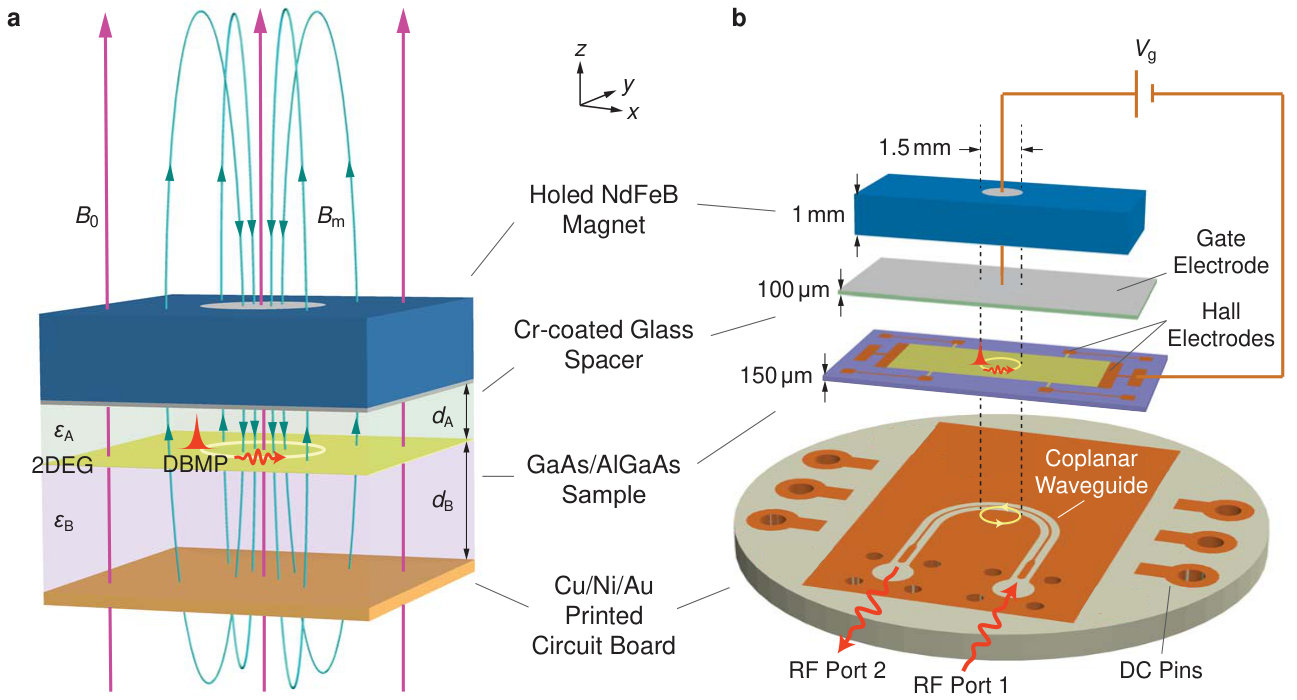 Figure 1
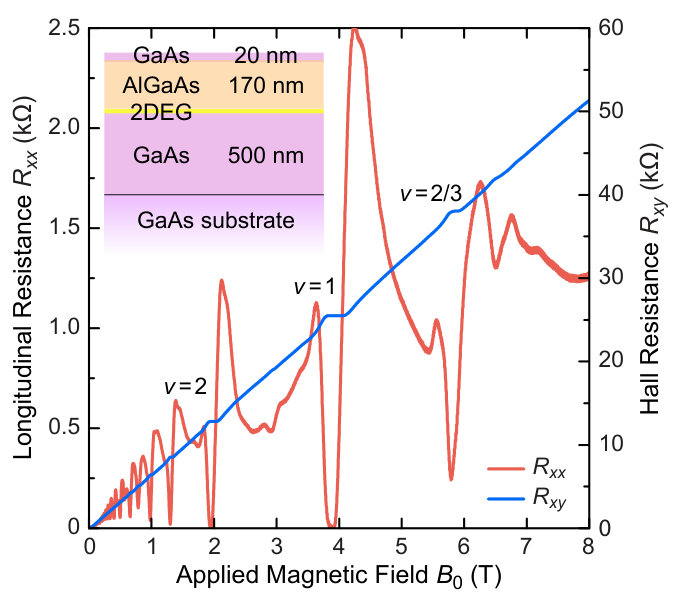 Figure 2
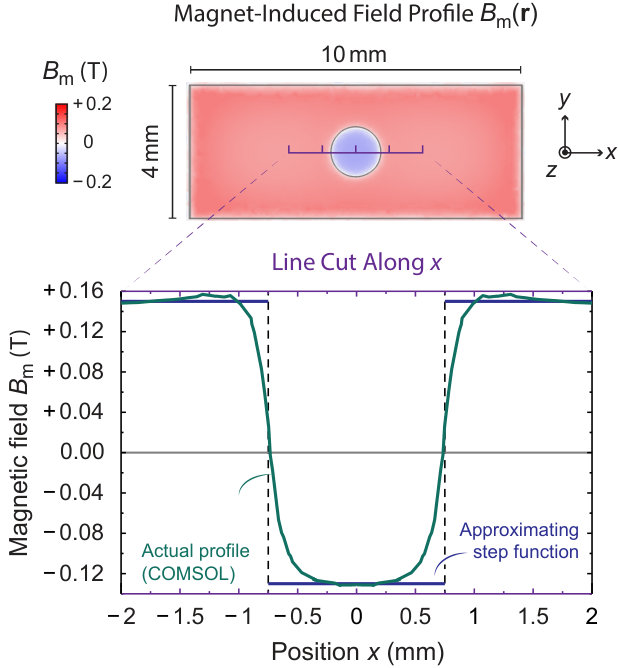 Figure 3
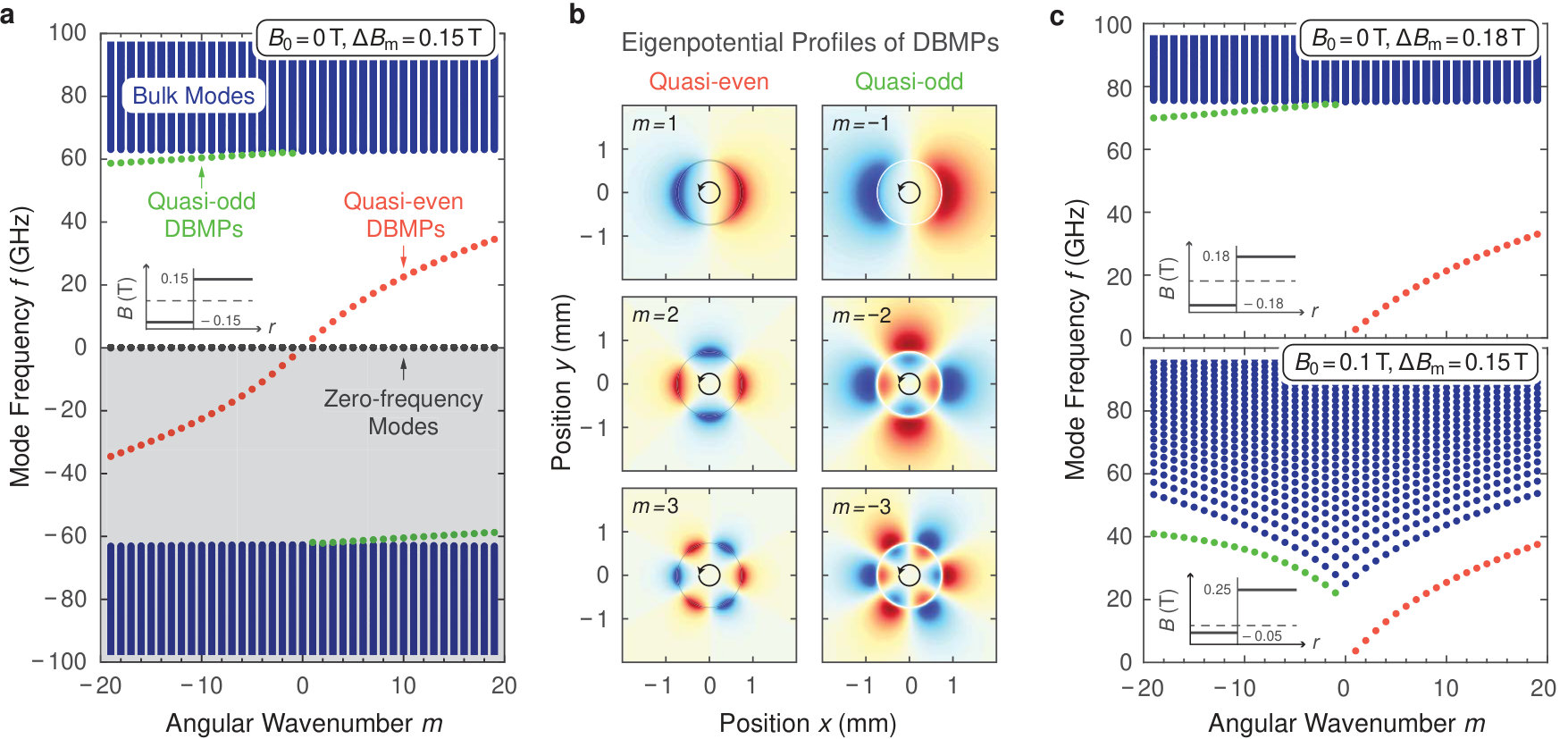 Figure 4
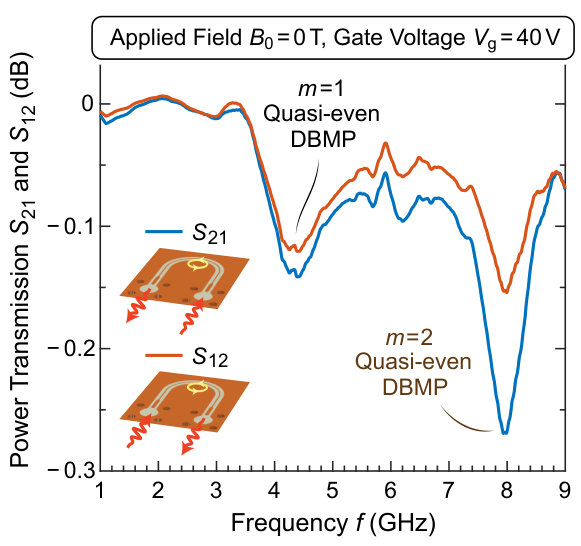 Figure 5
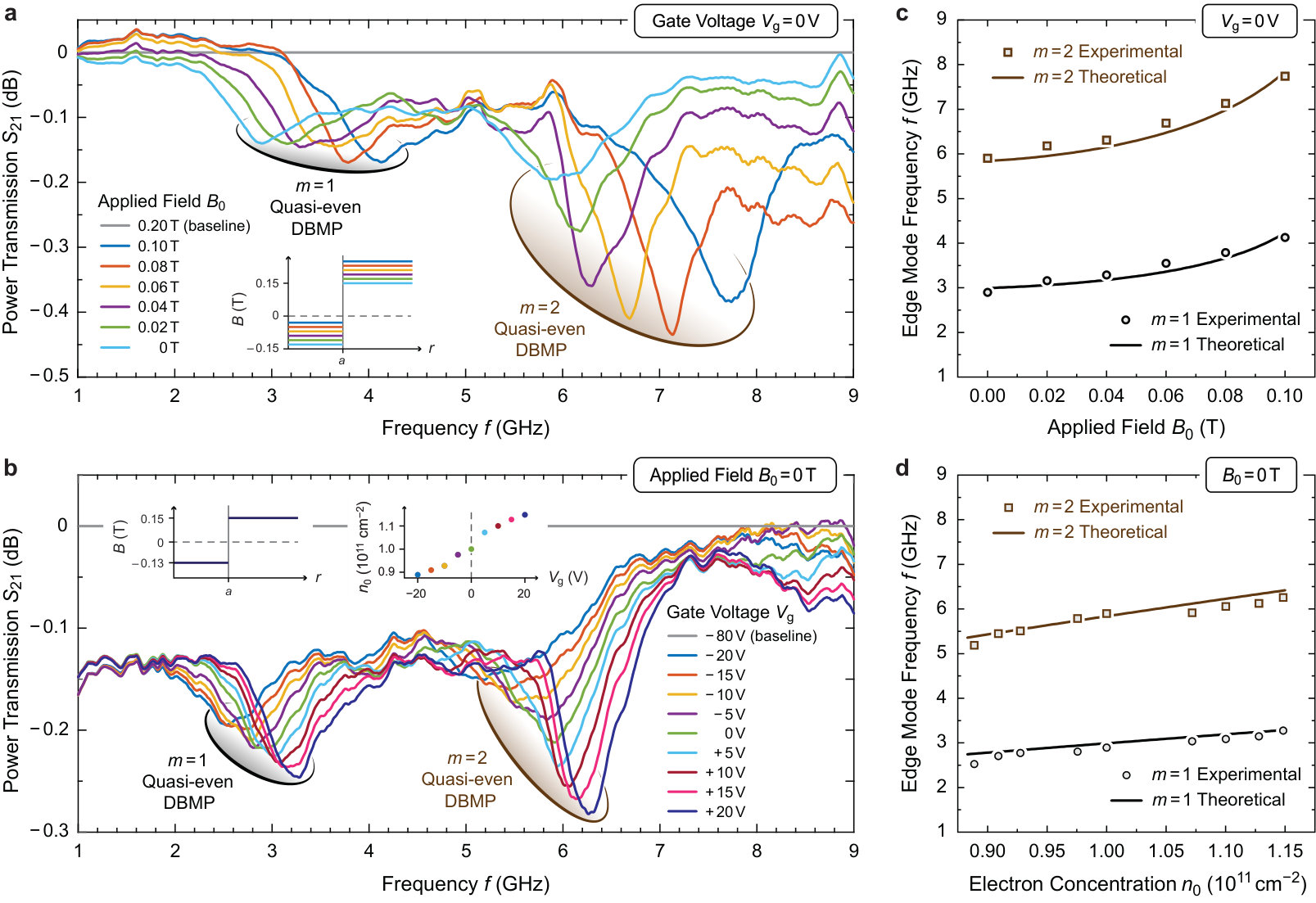 Figure 6
Peer Reviews
No public reviews on file for this paper yet. If you reviewed it on a platform where reviews are public (OpenReview, ICLR, NeurIPS, ICML), you can paste yours below so the community can read it here.
Videos
No videos yet. Explain this paper in a talk, walkthrough, or lecture? Add one.
Taxonomy
TopicsTopological Materials and Phenomena · Quantum and electron transport phenomena · Electronic and Structural Properties of Oxides
Magnetically-defined topological edge plasmons in edgeless electron gas
Dafei Jin
D. J. and Y. X. contributed equally to this work.
Yang Xia
D. J. and Y. X. contributed equally to this work.
Nanoscale Science and Engineering Center, University of California, Berkeley, California 94706, USA
Thomas Christensen
Department of Physics, Massachusetts Institute of Technology, Cambridge, Massachusetts 02139, USA
Siqi Wang
King Yan Fong
Nanoscale Science and Engineering Center, University of California, Berkeley, California 94706, USA
Matthew Freeman
National High Magnetic Field Laboratory, Tallahassee, Florida 32310, USA
Geoffrey C. Gardner
Department of Physics and Astronomy and Birck Nanotechnology Center, Purdue University, West Lafayette, Indiana 47907, USA
Station Q Purdue and School of Materials Engineering, Purdue University, West Lafayette, Indiana 47907, USA
Saeed Fallahi
Department of Physics and Astronomy and Birck Nanotechnology Center, Purdue University, West Lafayette, Indiana 47907, USA
Qing Hu
Department of Mechanical Engineering, Massachusetts Institute of Technology, Cambridge, Massachusetts 02139, USA
Yuan Wang
Nanoscale Science and Engineering Center, University of California, Berkeley, California 94706, USA
Lloyd Engel
National High Magnetic Field Laboratory, Tallahassee, Florida 32310, USA
Michael J. Manfra
Department of Physics and Astronomy and Birck Nanotechnology Center, Purdue University, West Lafayette, Indiana 47907, USA
Station Q Purdue and School of Materials Engineering, Purdue University, West Lafayette, Indiana 47907, USA
School of Electrical and Computer Engineering, Purdue University, West Lafayette, Indiana 47907, USA
Nicolas X. Fang
Department of Mechanical Engineering, Massachusetts Institute of Technology, Cambridge, Massachusetts 02139, USA
Xiang Zhang
Corresponding author. Email: [email protected]
Nanoscale Science and Engineering Center, University of California, Berkeley, California 94706, USA
**Topological materials bear gapped excitations in bulk yet protected gapless excitations at boundaries Qi and Zhang (2011); Lu et al. (2014). Magnetoplasmons (MPs), as high-frequency density excitations of two-dimensional electron gas (2DEG) in a perpendicular magnetic field Ando et al. (1982); Kushwaha (2001), embody a prototype of band topology for bosons Jin et al. (2016, 2017). The time-reversal-breaking magnetic field opens a topological gap for bulk MPs up to the cyclotron frequency Zudov et al. (2003); Gao et al. (2016); topologically-protected edge magnetoplasmons (EMPs) bridge the bulk gap and propagate unidirectionally along system’s boundaries Mast et al. (1985); Glattli et al. (1985); Fetter (1986); Volkov and Mikhailov (1988). However, all the EMPs known to date adhere to physical edges where the electron density terminates abruptly Ashoori et al. (1992); Balev and Vasilopoulos (1997); Kumada et al. (2014). This restriction has made device application extremely difficult. Here we demonstrate a new class of topological edge plasmons – domain-boundary magnetoplasmons (DBMPs), within a uniform edgeless 2DEG. Such DBMPs arise at the domain boundaries of an engineered sign-changing magnetic field and are protected by the difference of gap Chern numbers () across the magnetic domains. They propagate unidirectionally along the domain boundaries and are immune to domain defects Jin et al. (2016). Moreover, they exhibit wide tunability in the microwave frequency range under an applied magnetic field or gate voltage. Our study opens a new direction to realize high-speed reconfigurable topological devices Mahoney et al. (2017); Fang et al. (2012); Bahari et al. (2017). **
In this work, we present the first experimental observation of a new class of topological edge plasmons, domain-boundary magnetoplasmons (DBMPs), at microwave frequencies in a high-mobility GaAs/AlGaAs heterojunction. In contrast to the traditional wisdom, where edge magentoplasmons (EMPs) must rely on a space-varying electron density , in our scenario, the DBMPs are defined by a space-varying magnetic field embedded into a uniform 2DEG Ye et al. (1995); Nogaret et al. (2000); Reijniers and Peeters (2000); Yasuda et al. (2017). A custom-shaped NdFeB strong permanent magnet, placed immediately above the heterojunction, produces a sign-changing magnetic field around T in magnitude, sufficient to gap bulk MPs in each magnetic domain. The cm2 V*-1* s*-1* high electron mobility in this system affords an ultra-long relaxation time of hundreds of picoseconds and ultra-low damping rate of only a few gigahertz, superior to any other existing 2DEG systems Mast et al. (1985); Bolotin et al. (2008); Ohtomo and Hwang (2004). By measuring microwave resonant spectra, we clearly verify the existence and nonreciprocal nature of DBMPs. Their excitation frequencies display a unique dependence on both an applied magnetic field and gate voltage, differing substantially from the conventional EMPs in several intriguing aspects. Our theoretical prediction and experimental observation show excellent mutual agreement.
System design Figure 1 illustrates the layout of our magnetoplasmonic device. Conceptually (Fig. 1a), a 2DEG in a GaAs/AlGaAs heterojunction (see Methods) is cladded above and below by a fused silica (glass) spacer and a GaAs substrate, respectively, of thicknesses m and m, and permittivities and . This dielectric-2DEG-dielectric structure is enclosed in a metallic cavity along , terminating at the spacer’s top and substrate’s bottom. A holed NdFeB permanent magnet, atop the upper cavity wall, projects a circular magnetic field onto the 2DEG. The sign of changes abruptly across the projection of the hole’s radius, mm, producing adjacent oppositely-signed magnetic domains (see Methods). The entire 2DEG is additionally exposed to a tunable homogeneous magnetic field from a superconducting coil, allowing an overall shift of the magnetic field profile.
In practice (Fig. 1b), the heterojunction sample has a 12 mm 6 mm rectangular footprint. A 9 mm 3 mm Hall bar is fabricated atop of it, allowing in situ measurements and control of the 2DEG electron concentration . The fused silica spacer is topped by a 100 nm thick e-beam evaporated Cr-coating, serving simultaneously as upper cavity wall and gate electrode Hatke et al. (2015); Mi et al. (2017). A gate voltage of V can be applied across the Cr-coating–Hall bar junction to tune the electron concentration. The sample-spacer-magnet assembly is glued by Poly(methyl methacrylate) (PMMA) onto a customized Cu printed circuit board (PCB) with a 5 m Ni and 200 nm Au surface finish. The PCB hosts a coplanar waveguide (CPW) connecting RF Ports 1 and 2 with mini-SMP connectors Hatke et al. (2015). By design, the CPW has a 50 impedance with the sample-magnet assembly loaded. The CPW signal line is aligned tangentially to the projected circle from the hole of magnet so as to maximize the microwave-DBMP coupling.
Theoretical prediction The main physics of MP system can be captured by the continuity equation and a constitutive equation containing the longitudinal Coulomb force and transverse Lorentz force:
[TABLE]
Here, and are the surface current and charge densities, evaluated at frequencies and in-plane positions . is the self-consistent potential due to the (screened) Coulomb interaction . is a space-varying cyclotron frequency, with the electron effective mass. As elaborated below, even with a constant electron density , topologically-protected DBMPs can reside at boundaries of sign-changing magnetic domains solely defined by the spatial profile and Jin et al. (2016).
The total magnetic field, , is the sum of a tunable, uniform field from the superconducting coil, and a fixed, -dependent field from the holed NdFeB permanent magnet. The latter is well-approximated by a step function,
[TABLE]
Here, contributes an equal-magnitude sign-changing jump at mm, while accounts for a small, overall shift due to the small distance between magnet and 2DEG. By a combination of finite-element simulations and room-temperature Hall-probe measurements on the surface of magnet, we infer the low-temperature values of each as T and T (see Methods).
The presence of cladding dielectrics and encapsulating metals in this system significantly influences the Coulomb interaction and frequency scale of the problem. In momentum space, the Coulomb interaction takes a screened form,
[TABLE]
with being the -dependent screening function Fetter (1986); Volkov and Mikhailov (1988). The scalar potential and surface charge density are related by . The eigenmodes consistent with Eqs. (1) are eigenstates of a Hamiltonian with operator elements Jin et al. (2016, 2017). In the circularly symmetric “potential” of Eq. (2), the eigenmodes decompose according to with azimuthal angle and angular wavenumber . The radial function can be expanded by the Bessel functions with radial wavenumbers , , which enter the Coulomb interaction Eq. (3) (see Methods).
The resulting plasmonic properties are explored in Fig. 2. Figure 2a illustrates the magnetoplasmonic dispersion of bulk MP and DBMP modes for cm*-2*, T, and T. The spectrum exhibits particle-hole symmetry, i.e. , with a zero-frequency band describing static modes Jin et al. (2016). The bulk MPs in each magnetic domain exhibits a gap from zero frequency to approximately . The band topology of each domain, considered as an extended bulk, is characterized by a topological invariant, the Chern number, equaling Jin et al. (2016). The associated gap Chern number , also equaling in this case, can be identified, whose difference across the domains, , dictates the existence of two unidirectional edge states localized at . These conclusions are clearly manifest in Fig. 2a and 2b from the existence of quasi-even and quasi-odd DBMP branches (so named due to their asymptotic association with the even and odd DBMPs of a linear domain boundary). Both are unidirectional and exhibit increasing localization with incrementing angular wavenumbers . We emphasize that these DBMPs drastically differ from the conventional EMPs by being solely magnetically-engineered. Interestingly, they are topologically equivalent to the equatorial Kelvin and Yanai waves of the ocean and atmosphere (with a Coriolis parameter in place of ) Delplace et al. (2017).
Figure 2c investigates the dispersion for increased (from 0.15 T to 0.18 T) and (from 0 to 0.1 T). Comparing to Fig. 2a, increasing widens the bandgap and decreases the frequencies of the quasi-even DBMPs. Conversely, increasing (but maintaining ) reduces the overall gap—since the cyclotron frequency is lowered in the inner domain—and increases the excitation frequencies of the quasi-even DBMP. This latter behavior further distinguishes our new DBMPs from the traditional EMPs which shift in the opposite direction with increasing Fetter (1986); Mast et al. (1985). The quasi-odd DBMP branch in Fig. 2c appears non-gapless and hence non-topological in the considered range of : this, however, is remedied at larger where the dispersion bends downwards (not shown), instating an asymptotically gapless behavior in deference to the topological requirements.
Experimental observation We next seek experimental evidence for the theoretically predicted DBMPs. The device is inserted into a He-3 cryostat running at 0.5 K. An Agilent E5071C Network Analyzer (NA) is used to acquire power transmission (Port 1 to Port 2) and (Port 2 to Port 1) in the frequency range 300 kHz to 20 GHz Hatke et al. (2015); Mi et al. (2017); Mahoney et al. (2017). In practice, however, our focused frequency range is limited to 1 to 10 GHz, beyond which the cables and NA bear too high loss and noise, prohibiting acquisition of clear signals. Referring to Figs. 2a and 2c, we consequently expect to observe characteristic absorption associated with only the and quasi-even DBMPs.
In the first series of measurements, we keep the gate grounded, V, and investigate the influence of the applied magnetic field on the resonant absorption of quasi-even DBMPs in (Fig. 3a). All signals are divided by a reference (denoted baseline). Here, we choose T as baseline, which provides a high suppression of unwanted low-frequency bulk modes, without exerting too great a torque on the magnet–sample assembly. For every -spectrum in Fig. 3a, each reflecting a single applied field in the range to T, we observe two well-defined absorptive resonances, corresponding to the right-circulating quasi-even DBMPs. Spanning frequencies from 3 to 4 GHz and 6 to 8 GHz, they exhibit linewidths of approximately 1 to 2 GHz, roughly consistent with the Hall-probe inferred DC damping rate GHz. Figure 3c compares the measured and theoretically predicted resonance frequencies. First, we observe the excellent mutual agreement in the absence of fitting parameters. Second, we emphasize the monotonously increasing excitation frequencies with increasing , which unambiguously differentiates our magnetically-defined DBMPs from the conventional EMPs.
In the second series of measurements, we fix the applied magnetic field T, and explore the DBMPs’ dependence on the gate voltage (Fig. 3b). The baseline is chosen at V, which corresponds to an essentially electron-depleted 2DEG supporting no plasmonic modes. Once more, every spectrum in Fig. 3b, each now corresponding to distinct gate voltages in the range to V, exhibits two clear absorptive resonances associated with the quasi-even DBMPs. Increasing the gate voltage (or, equivalently, the electron concentration ) increases the DBMP frequency, as expected. Moreover, the extinction depth of each resonance also increases with the . This is consistent with the -sum rule Yang et al. (2015) which dictates a linear increase of integrated extinction with increased (disregarding the negligible spectral dispersion in the microwave-DBMP coupling). Comparing theoretical and experimental observations, in Fig. 3d, we once again find excellent agreement.
Finally, in Fig. 4, we examine the nonreciprocal properties of the DBMPs in order to explicitly demonstrate the underlying unidirectional character of the DBMPs. Since the DBMPs are right-circulating in the bandgap (Fig. 2), and correspond to the “easy-coupling” and “hard-coupling” directions, respectively, of our device (Fig. 1b). Each coupling direction is normalized separately, with baselines taken at T. The 2DEG is gated by V, ensuring a pronounced extinction depth, and the applied magnetic field is turned off T. In this configuration, the and quasi-even DBMPs exist at 4.2 GHz and 8.0 GHz, respectively. Comparing and we observe distinct asymmetry of extinction depth at each resonance, with exhibiting shallower extinction. This asymmetry is indicative of the unidirectional character of the DBMPs. The observed isolation ratio is small because of the wavelength mismatch between the microwaves in CPW and the DBMPs along the circle. This is mainly a limitation from the CPW evanescent-coupling technique. A fuller assessment of the isolation capabilities could more naturally be enabled by point-source excitation Ashoori et al. (1992); Wang et al. (2009); Fei et al. (2011); Kumada et al. (2014).
Conclusion We have for the first time realized a new class of topologically-protected edge plasmons, domain-boundary magnetoplasmons, embedded in an edgeless 2DEG. They situate at magnetically-defined domain boundaries, and are topologically distinct from the conventional edge magnetoplasmons. We have experimentally observed and characterized these new DBMPs at microwave frequencies in a high-mobility GaAs/AlGaAs heterojunction under a custom-shaped NdFeB permanent magnet. Our experimental results show remarkable agreement with theoretical calculations. The demonstrated DBMP architecture, if packed with denser magnetic patterns, can be extended to higher frequencies and finer scales, and shall pave the way towards high-speed reconfigurable topological devices Mahoney et al. (2017); Fang et al. (2012); Bahari et al. (2017).
Acknowledgements D.J., Y.X., S.W., K.Y.F., Y.W. and X.Z. acknowledge support from AFOSR MURI (Grant No. FA9550-12-1-0488) and Office of Sponsored Research (OSR) (Award No. OSR-2016-CRG5-2950-03). T.C. acknowledges support from the Danish Council for Independent Research (Grant No. DFF–6108-00667). The National High Magnetic Field Laboratory (NHMFL) is supported by NSF Cooperative Agreement (No. DMR-0654118), the State of Florida, and the DOE. M.F. and L.E., and Microwave Spectroscopy Facility are supported by the DOE (Grant No. DE-FG02-05-ER46212). G.C.G. and M.J.M. acknowledge support from the DOE Office of Basic Energy Sciences, Division of Materials Sciences and Engineering (Award No. DE-SC0006671), the W. M. Keck Foundation, and Microsoft Station Q. Q.H. and N.X.F. are supported by AFOSR MURI (Grant No. FA9550-12-1-0488).
The reference list from the paper itself. Each links out to its DOI / PubMed record.
- 1Qi and Zhang (2011) X.-L. Qi and S.-C. Zhang, Rev. Mod. Phys. 83 , 1057 (2011).
- 2Lu et al. (2014) L. Lu, J. D. Joannopoulos, and M. Soljačić, Nat. Photon. 8 , 821 (2014).
- 3Ando et al. (1982) T. Ando, A. B. Fowler, and F. Stern, Rev. Mod. Phys. 54 , 437 (1982).
- 4Kushwaha (2001) M. S. Kushwaha, Surf. Sci. Rep. 41 , 1 (2001).
- 5Jin et al. (2016) D. Jin, L. Lu, Z. Wang, C. Fang, J.D. Joannopoulos, M. Soljačić, L. Fu, and N.X. Fang, Nat. Commun. 7 , 13486 (2016) . · doi ↗
- 6Jin et al. (2017) D. Jin, T. Christensen, M. Soljačić, N. X. Fang, L. Lu, and X. Zhang, Phys. Rev. Lett. 118 , 245301 (2017) . · doi ↗
- 7Zudov et al. (2003) M. Zudov, R. Du, L. Pfeiffer, and K. West, Phys. Rev. Lett. 90 , 046807 (2003).
- 8Gao et al. (2016) W. Gao, B. Yang, M. Lawrence, F. Fang, B. Béri, and S. Zhang, Nat. Commun. 7 , 12435 (2016) .