On the Nature of Self-Consistency in Density Functional Theory
Nick Woods

TL;DR
This paper provides a comprehensive overview of self-consistency challenges in density functional theory, introduces a new preconditioning method, and discusses its implementation in the CASTEP software to improve convergence efficiency.
Contribution
It introduces a novel, computationally efficient preconditioning strategy for achieving self-consistency in density functional theory calculations.
Findings
Identifies inefficiencies in current self-consistent field methods.
Proposes a new preconditioning approach that enhances convergence.
Demonstrates implementation in CASTEP software with improved performance.
Abstract
A thesis providing a pedagogical introduction to the problem of achieving self-consistency in density functional theory. Contained is an introduction to the framework of Kohn-Sham density functional theory, leading then to the considerations required to solve the equations of Kohn-Sham density functional theory. Specifically, a focus is placed on where current self-consistent field methodology is inefficient and/or fails to converge to a solution. As such, this review spans sub-disciplines such as numerical analysis of linear and non-linear systems, linear response theory, and general electronic structure theory. Toward the end of the thesis, certain contemporary methods for achieving self-consistency from literature are outlined, and a novel, computationally efficient preconditioning strategy is proposed. This work is implemented in the CASTEP software.
Click any figure to enlarge with its caption.
 Figure 1
 Figure 2
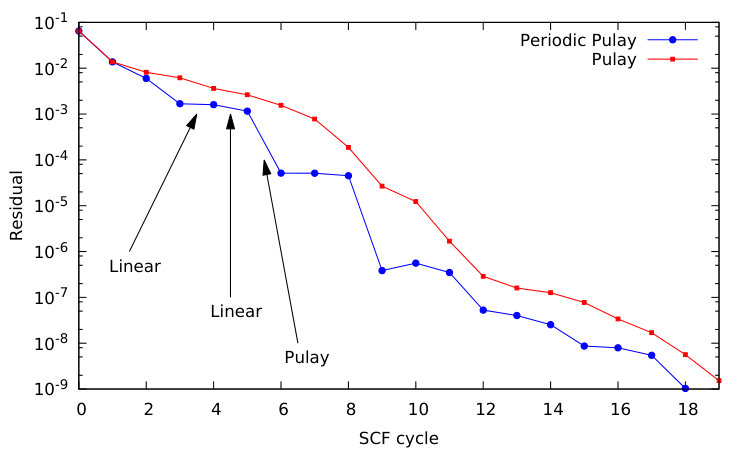 Figure 3
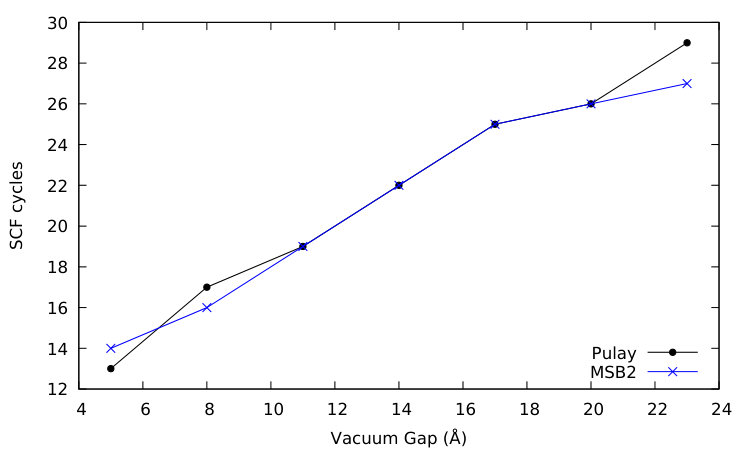 Figure 4
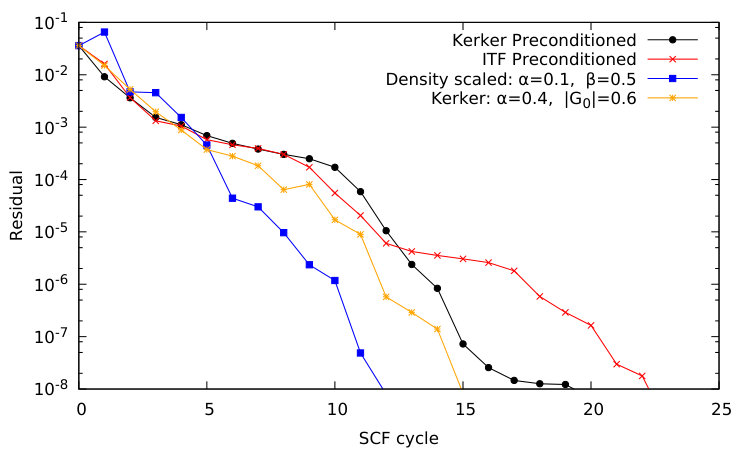 Figure 5
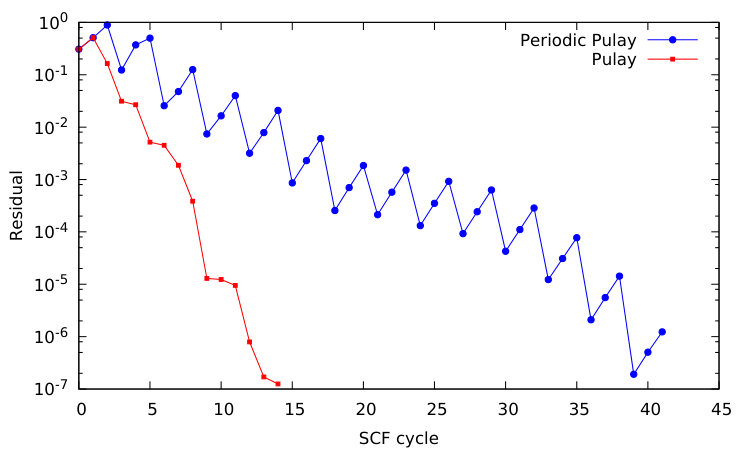 Figure 6
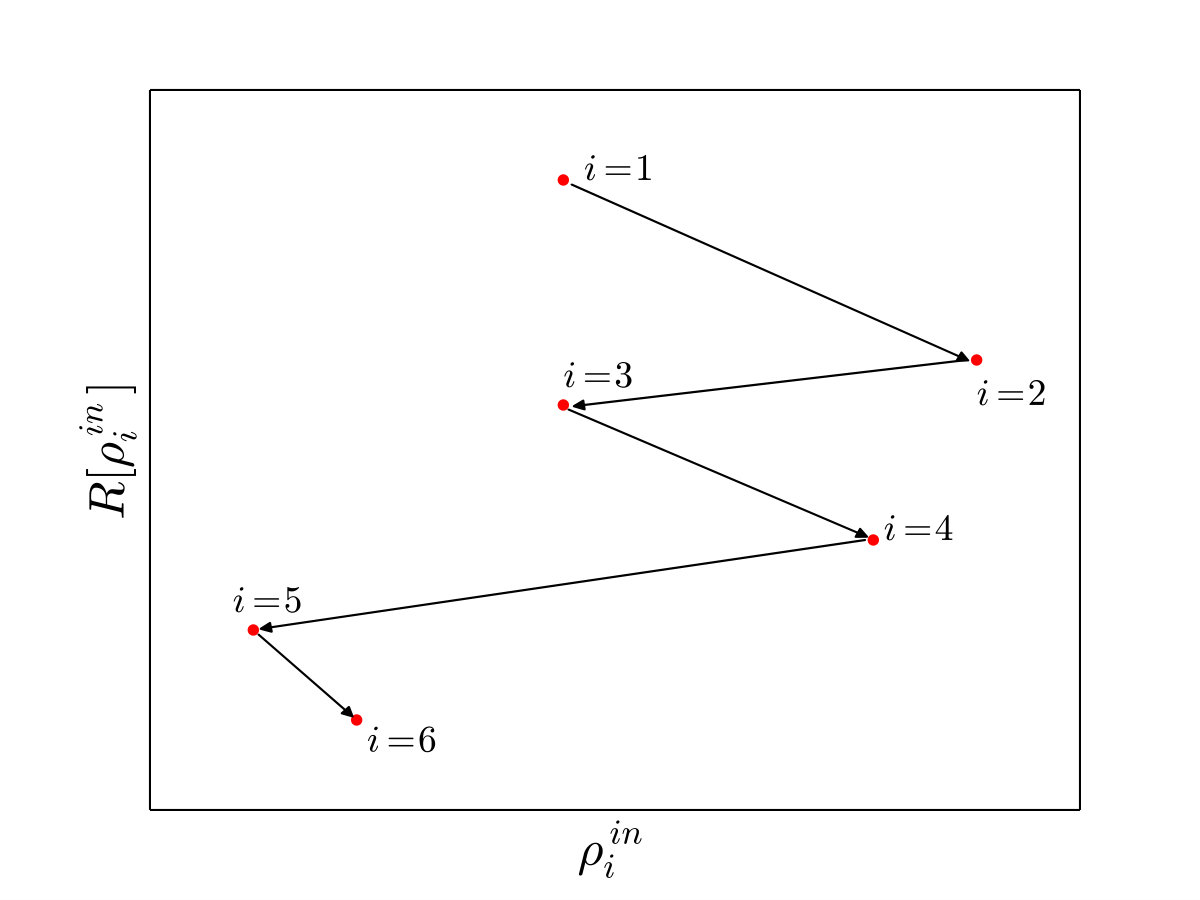 Figure 7
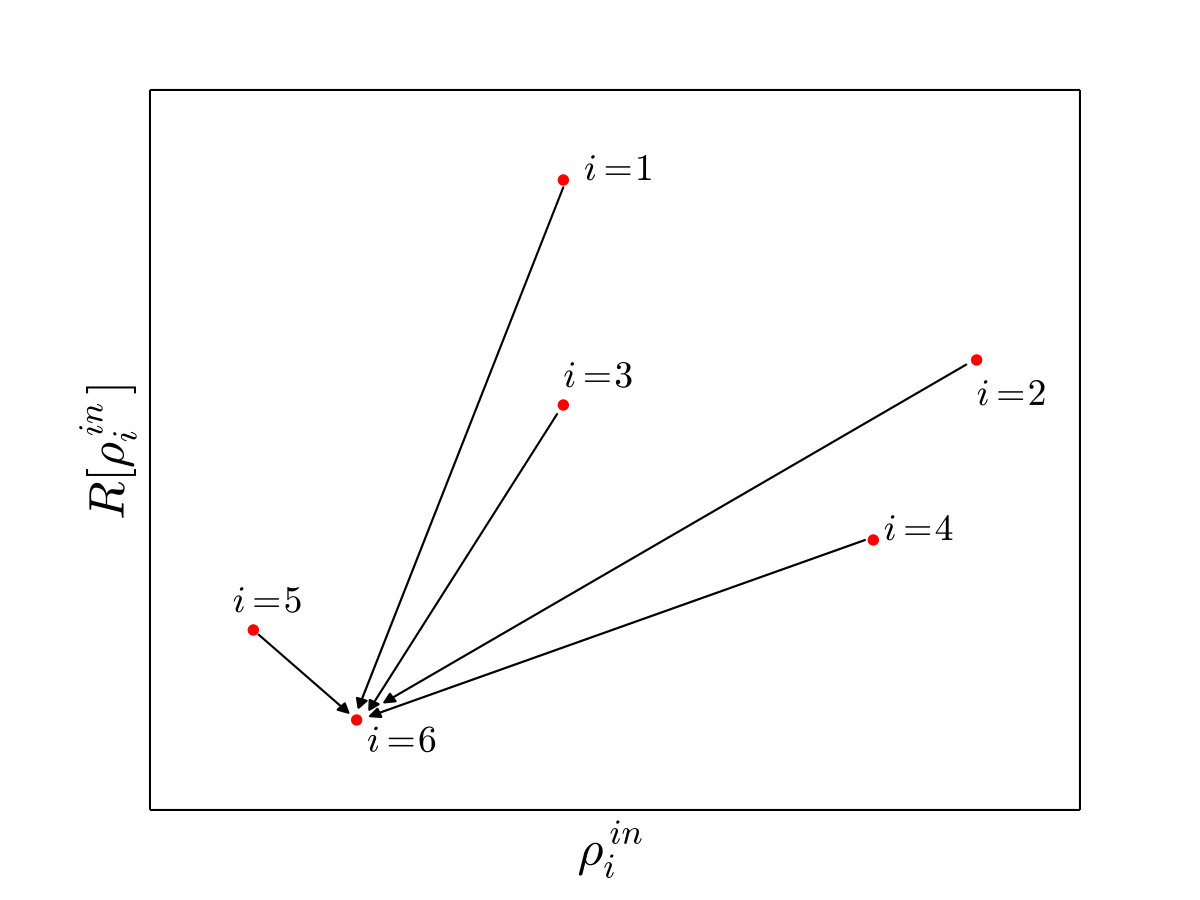 Figure 8
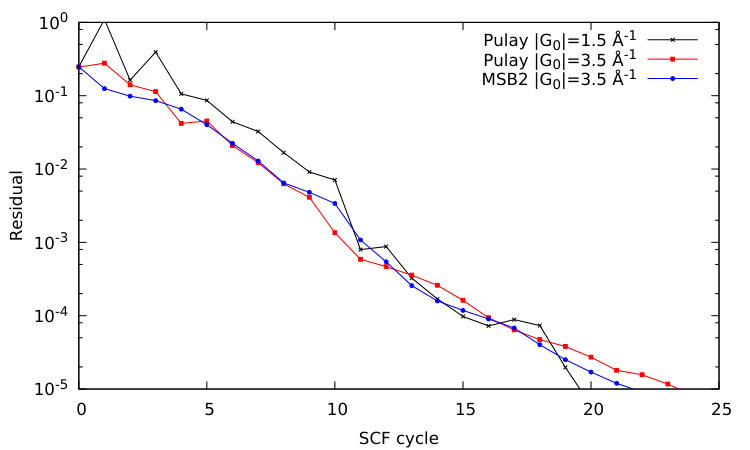 Figure 9
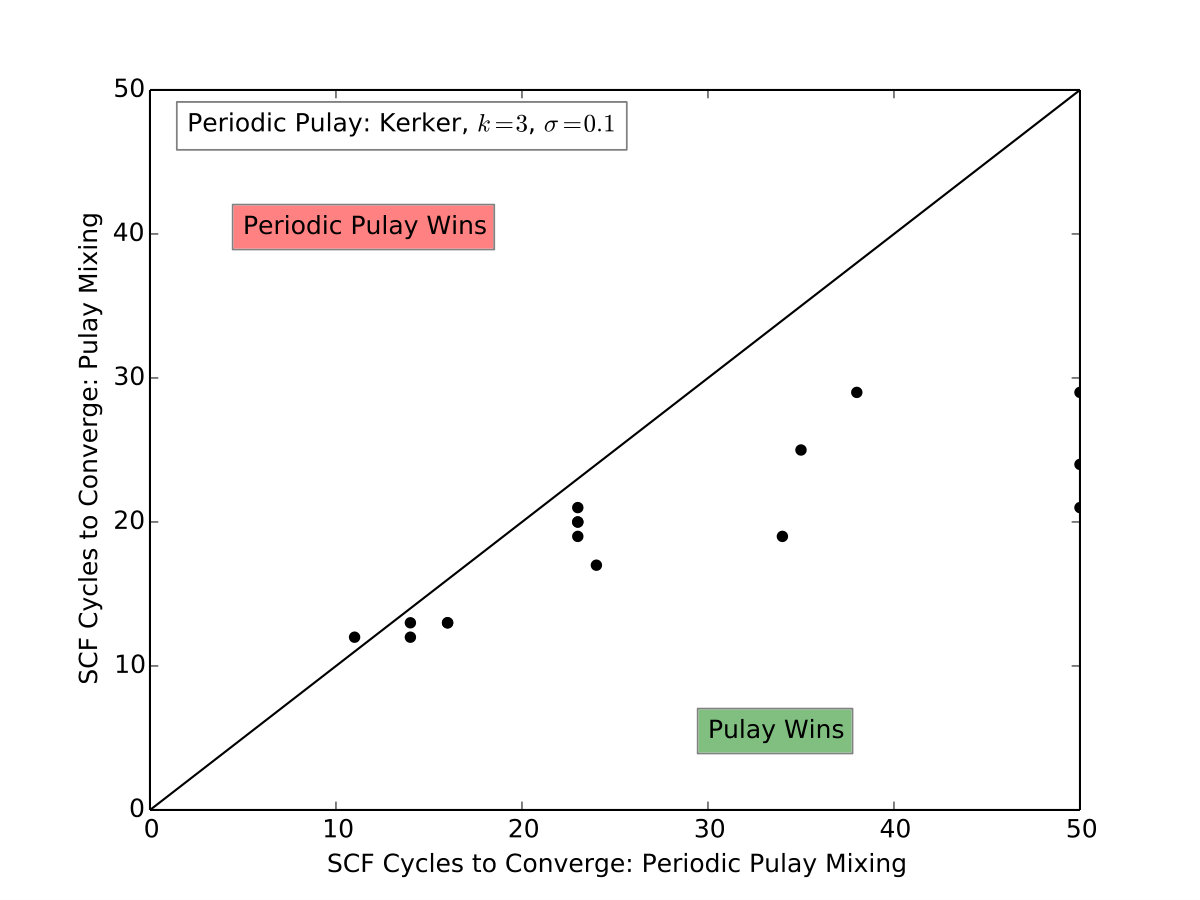 Figure 10
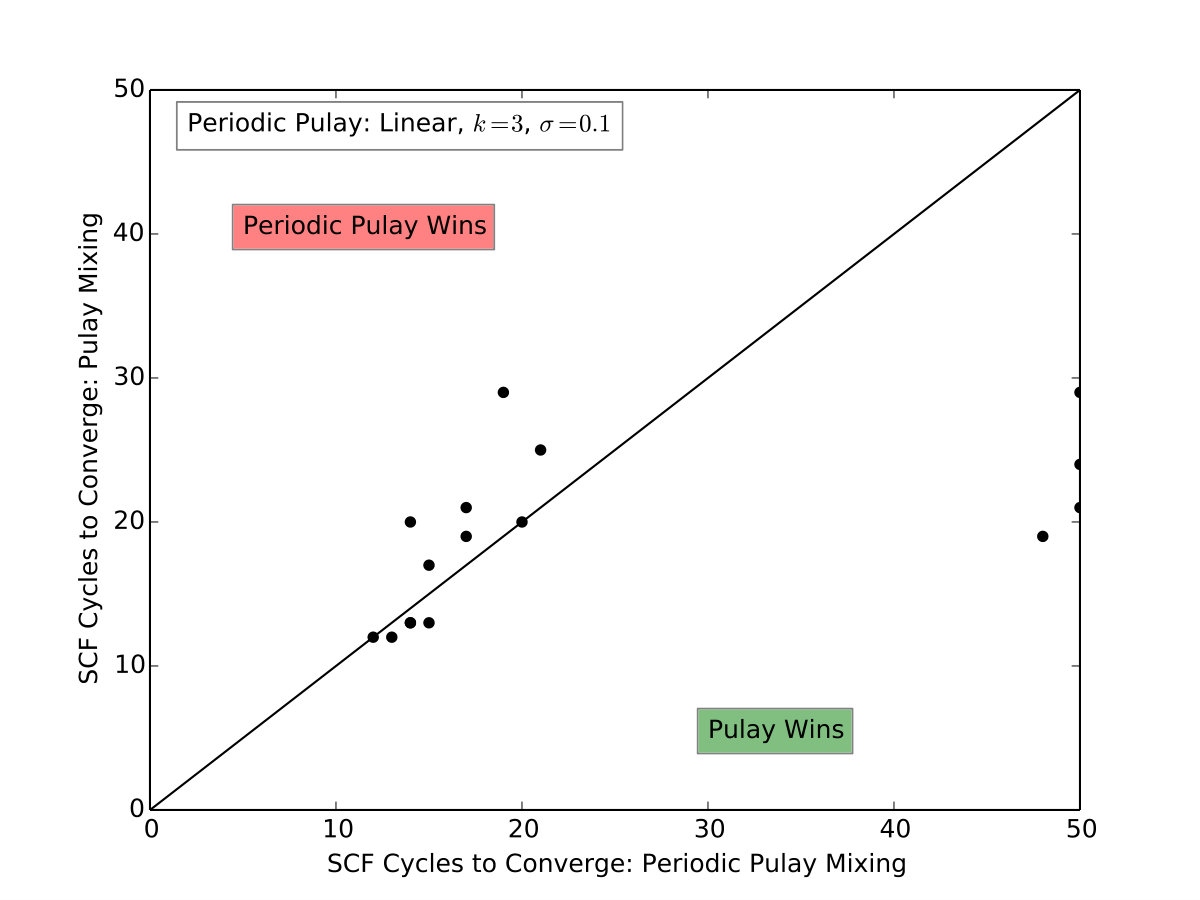 Figure 11
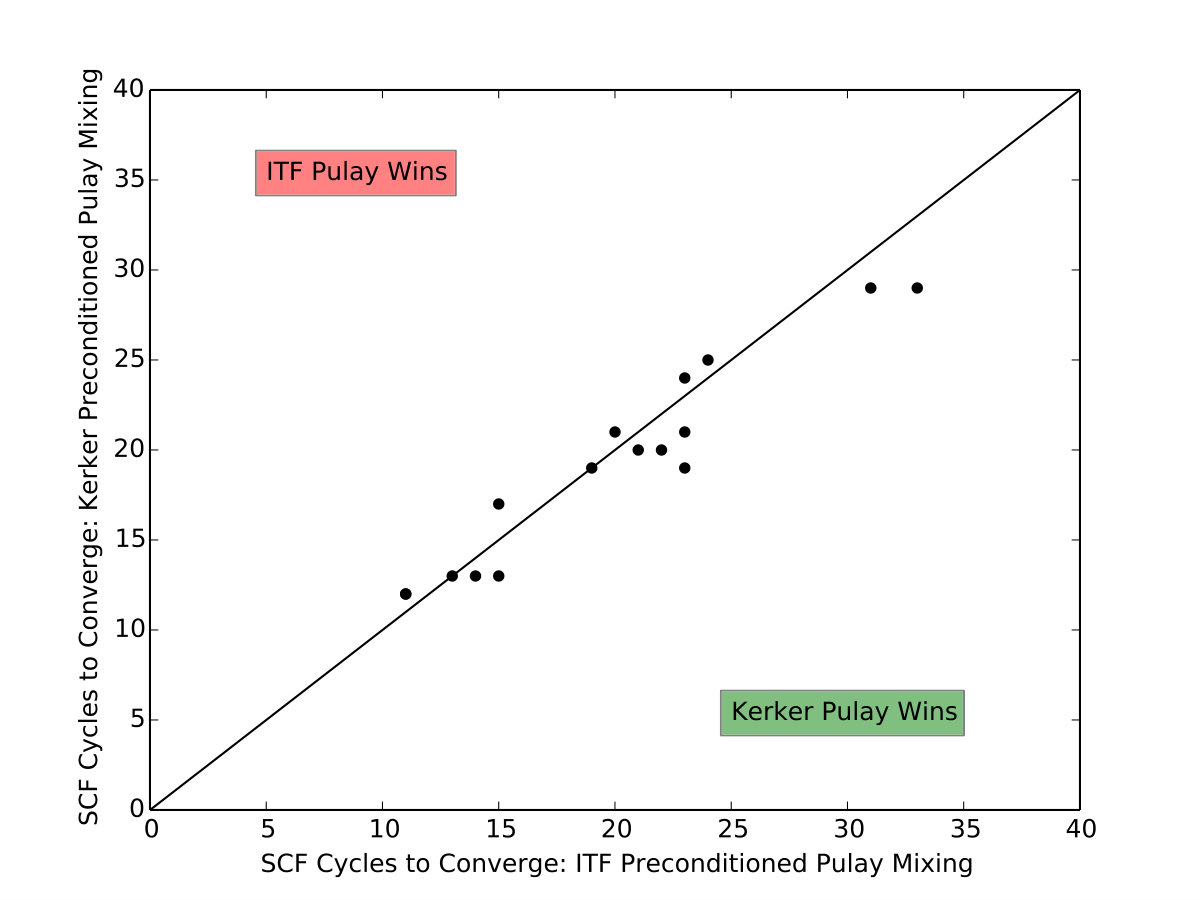 Figure 12
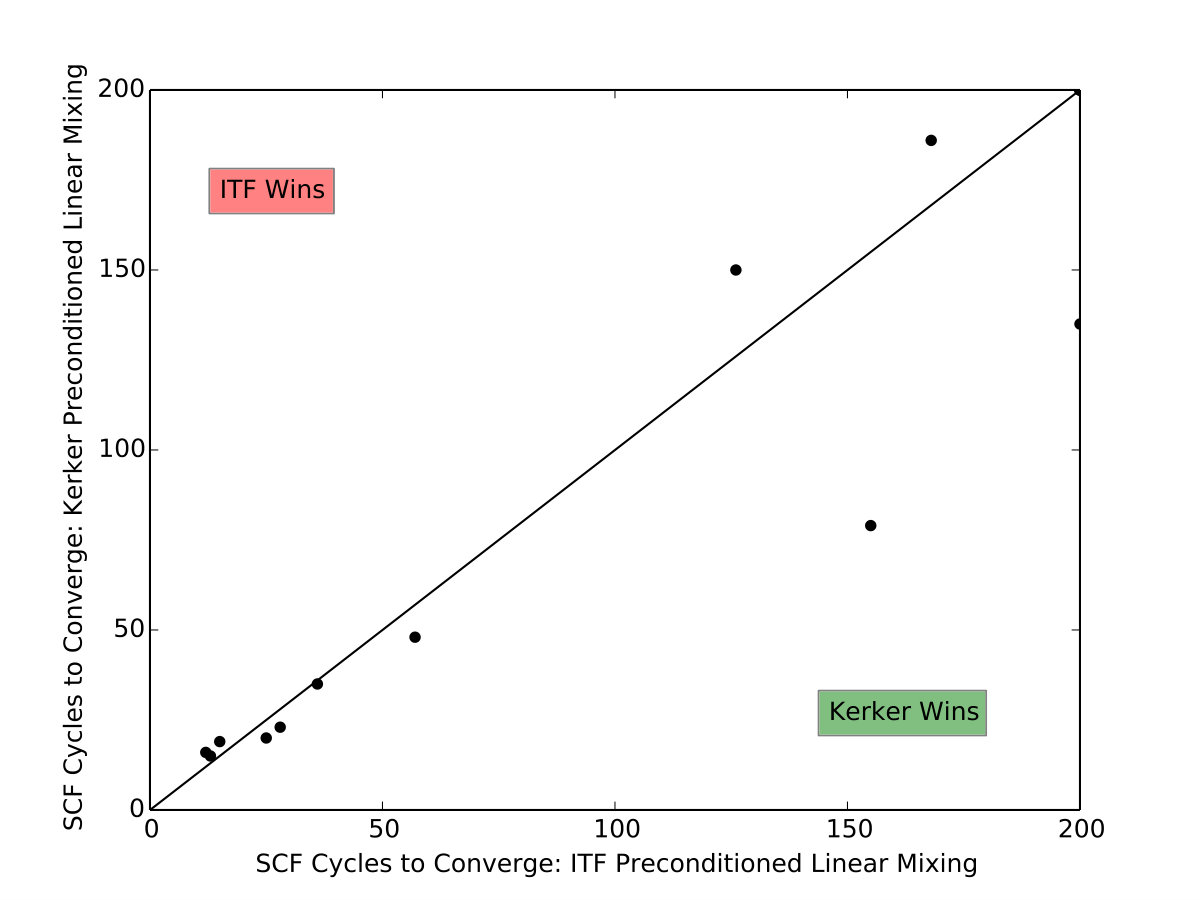 Figure 13
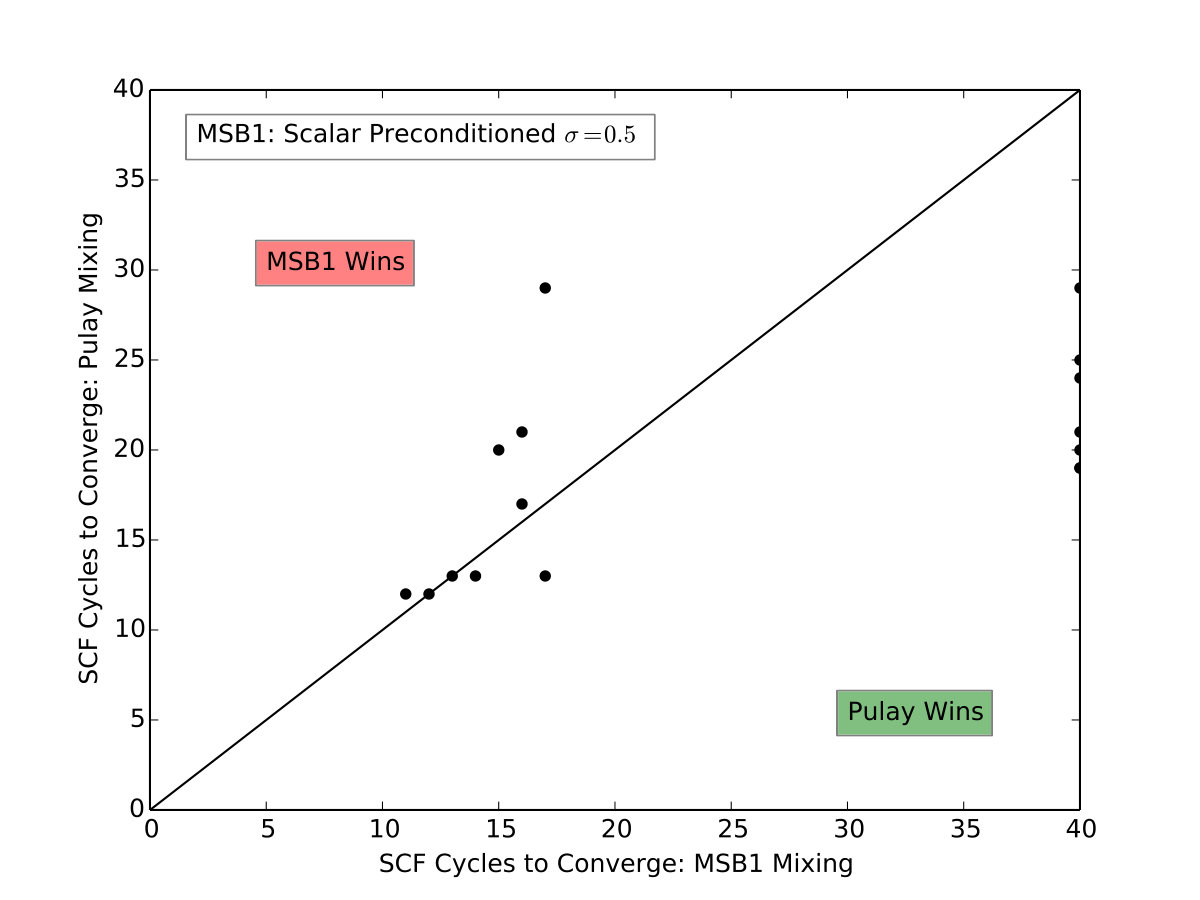 Figure 14
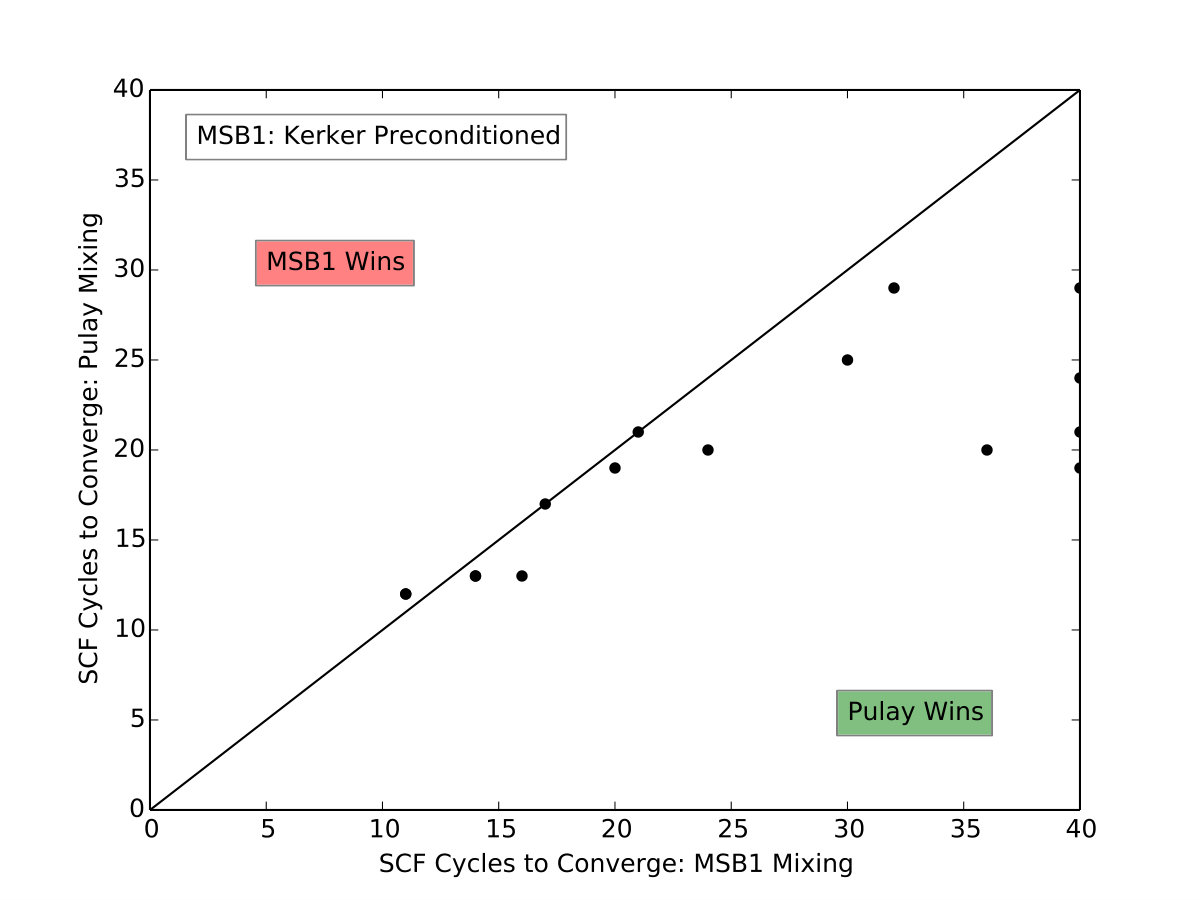 Figure 15
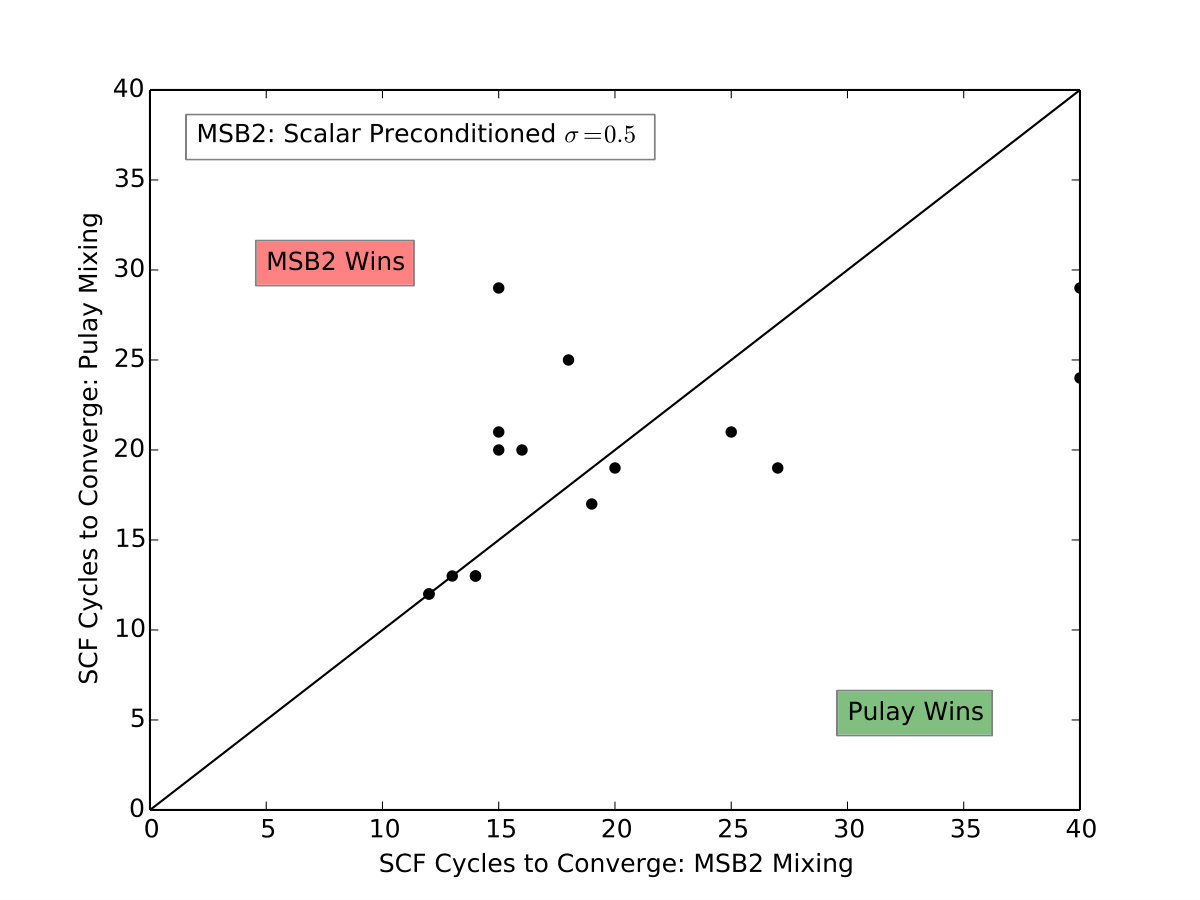 Figure 16
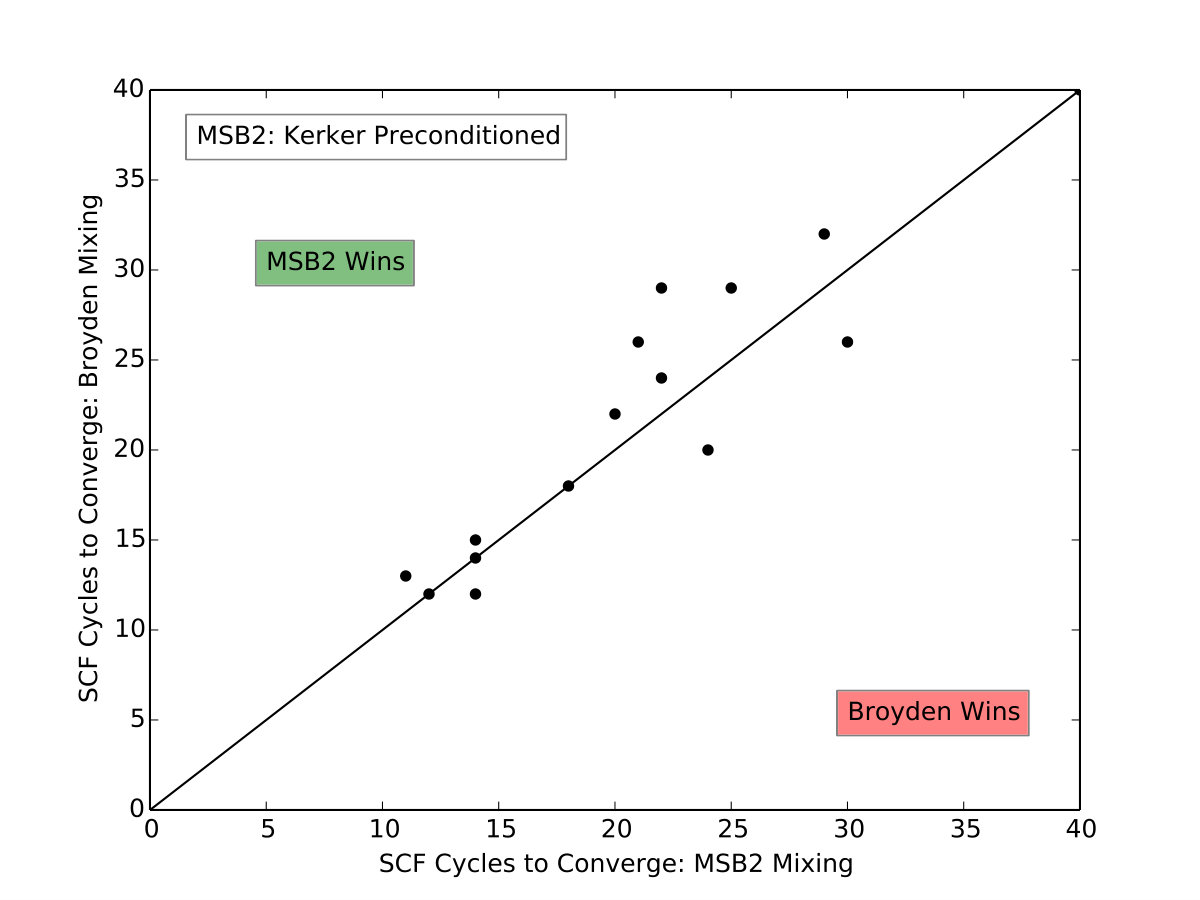 Figure 17
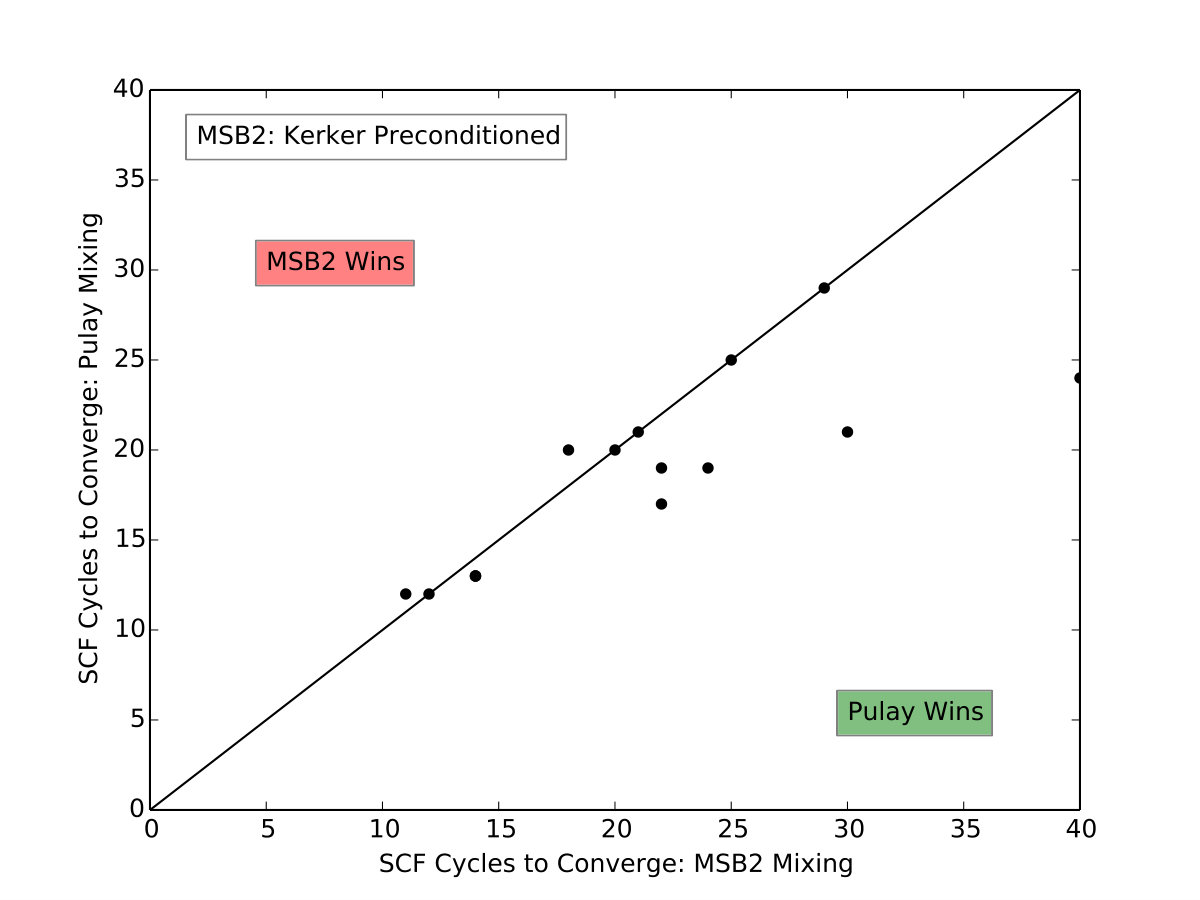 Figure 18
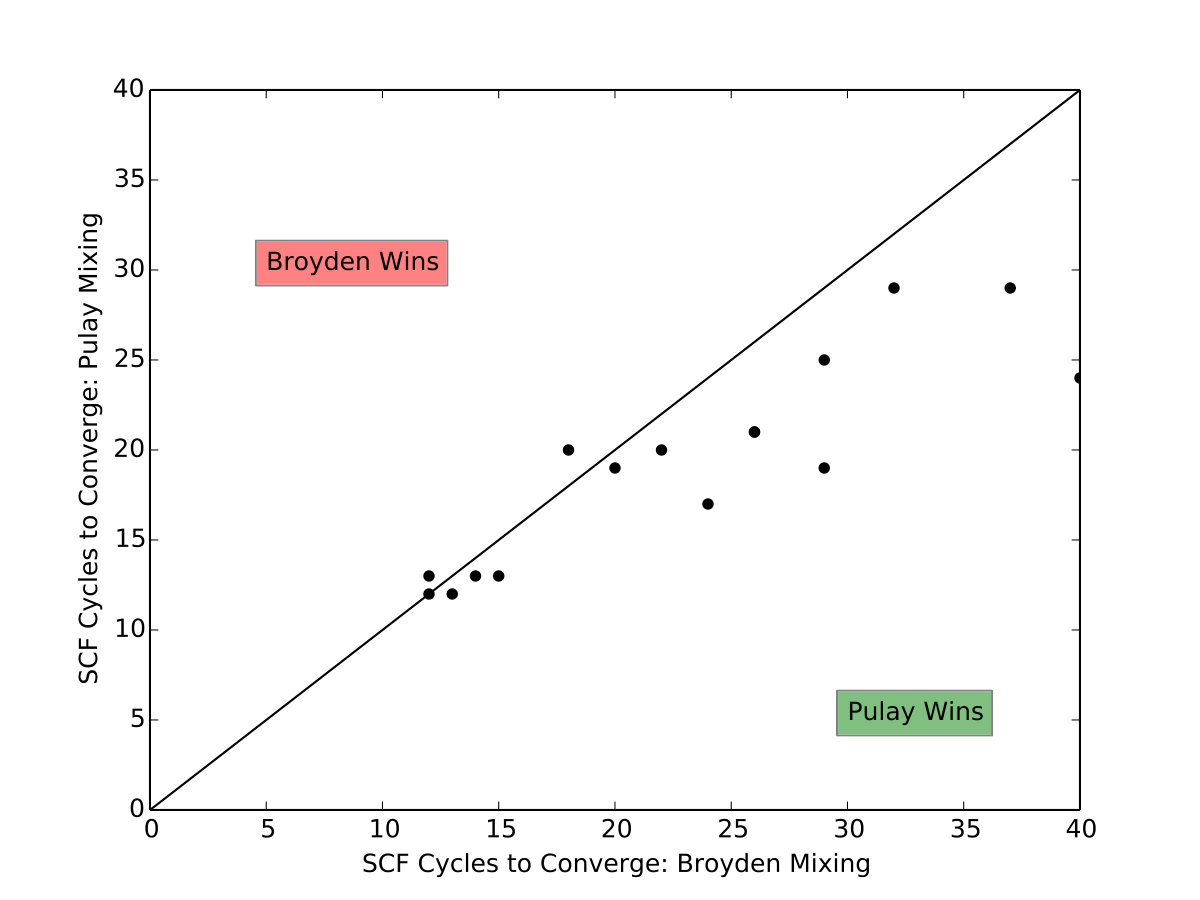 Figure 19
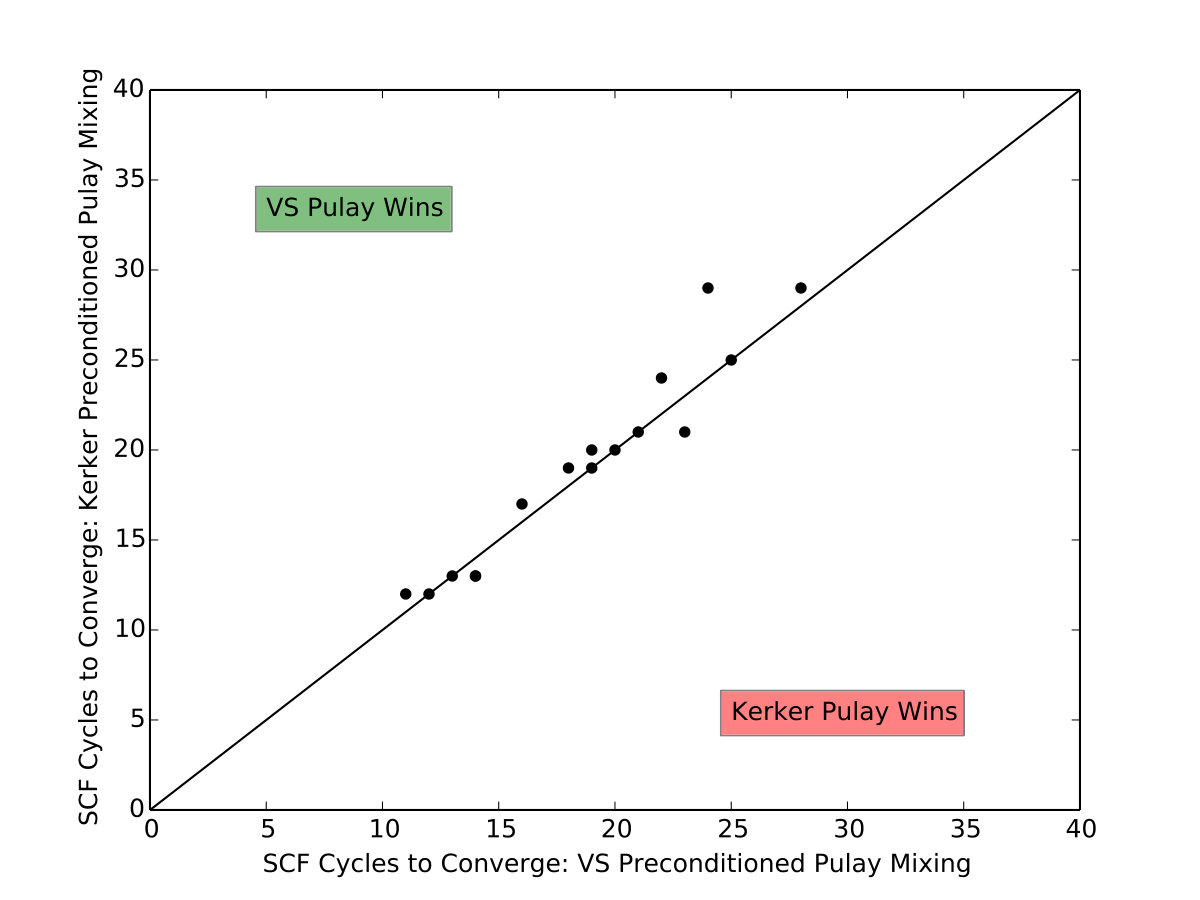 Figure 20
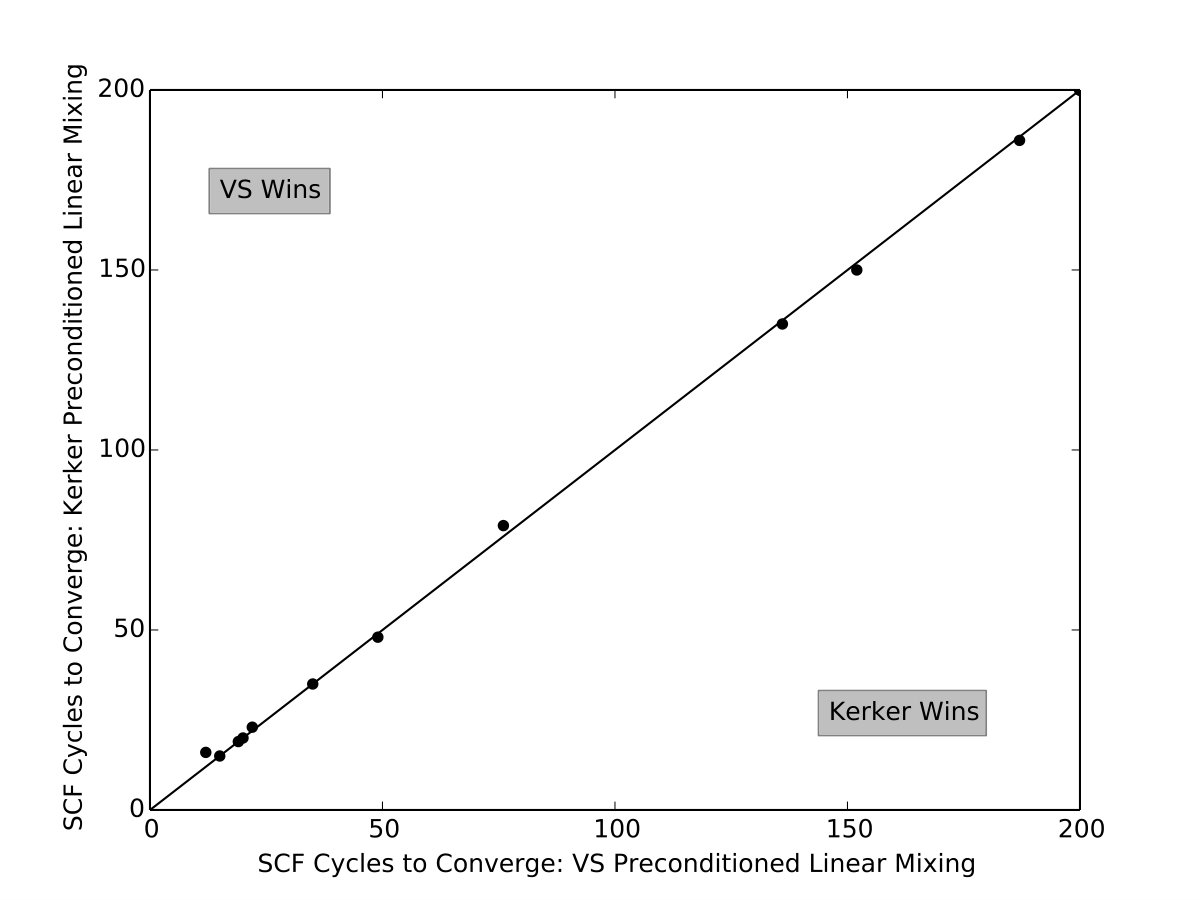 Figure 21
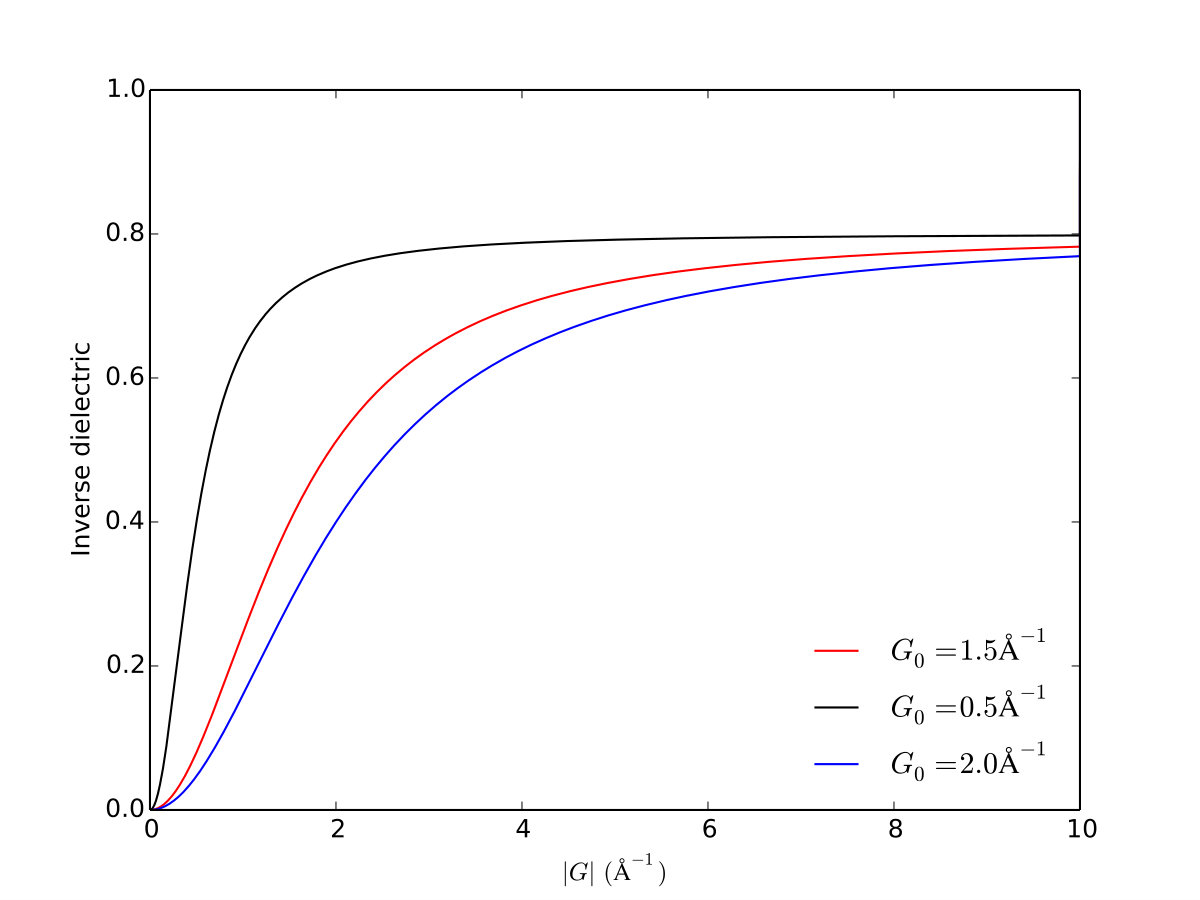 Figure 22
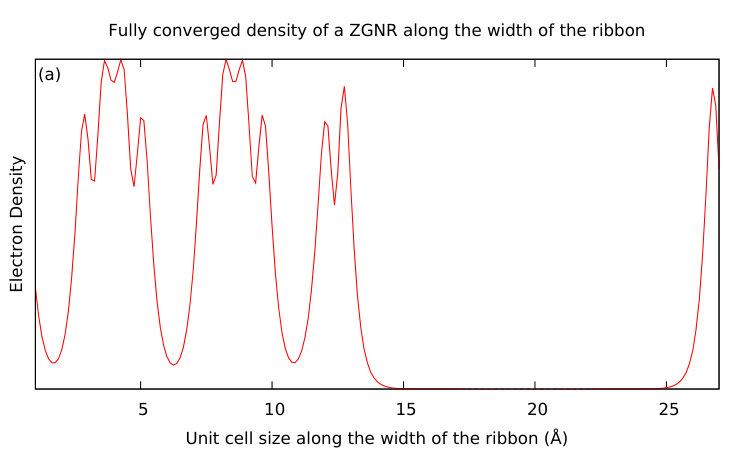 Figure 23
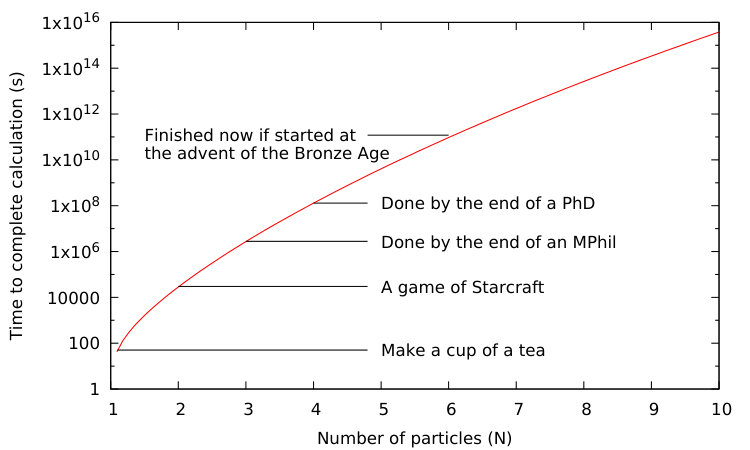 Figure 24
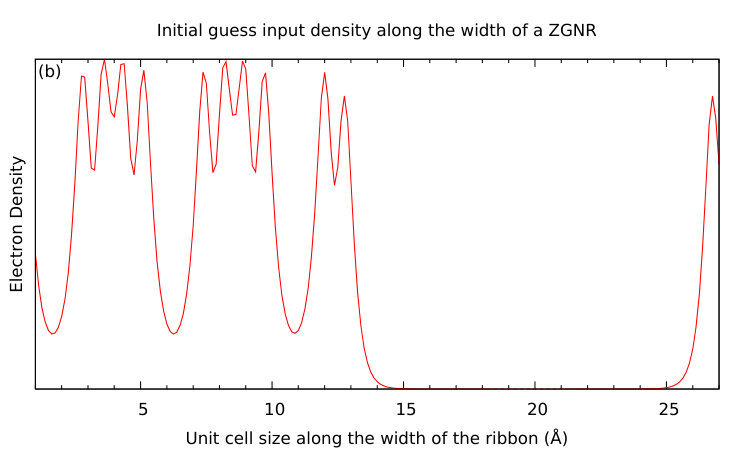 Figure 25
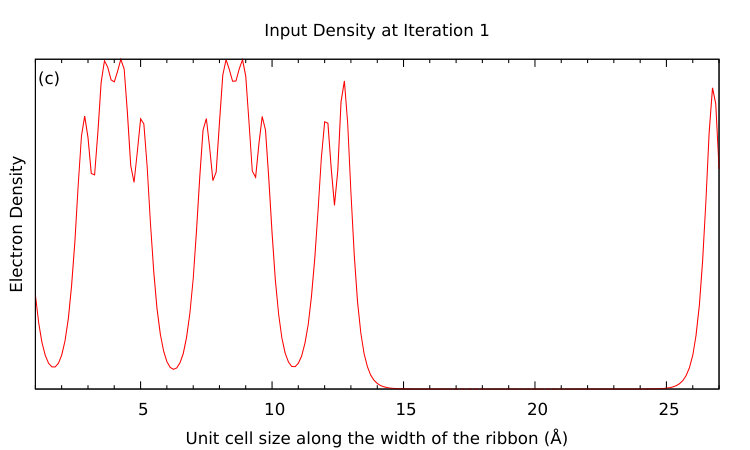 Figure 26
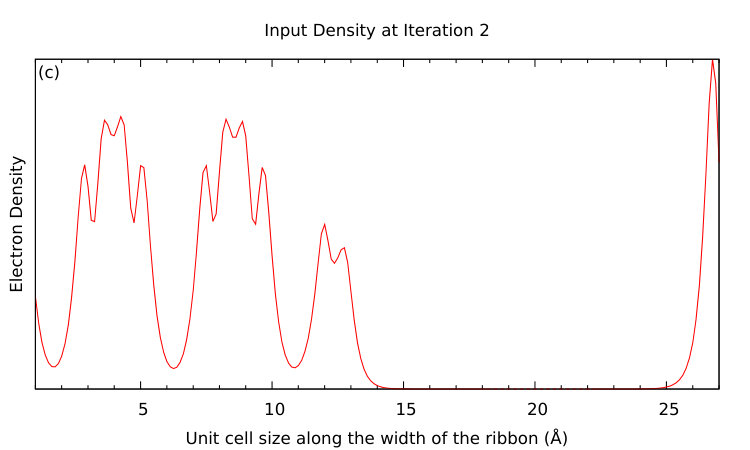 Figure 27
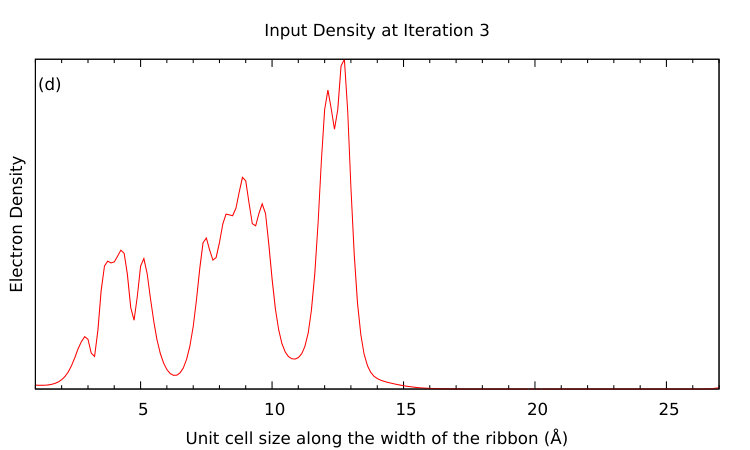 Figure 28
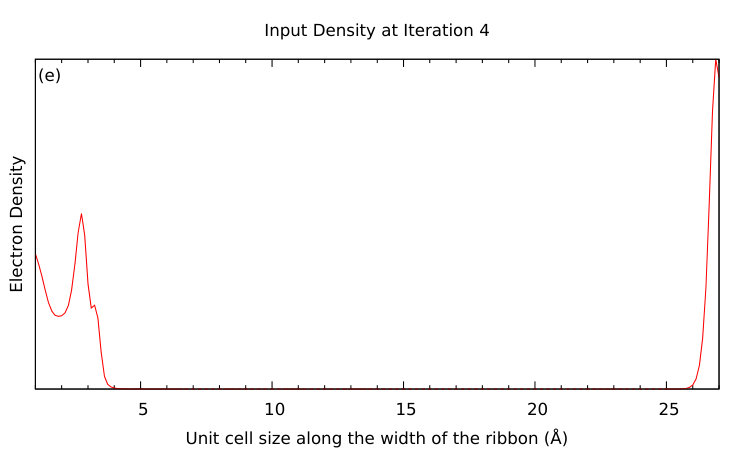 Figure 29
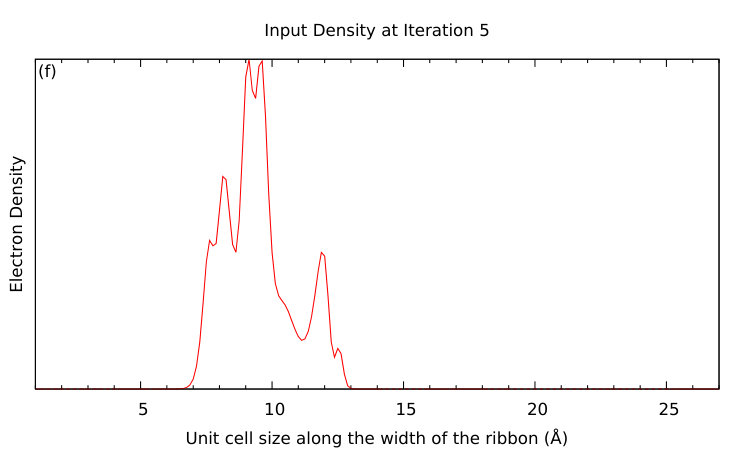 Figure 30
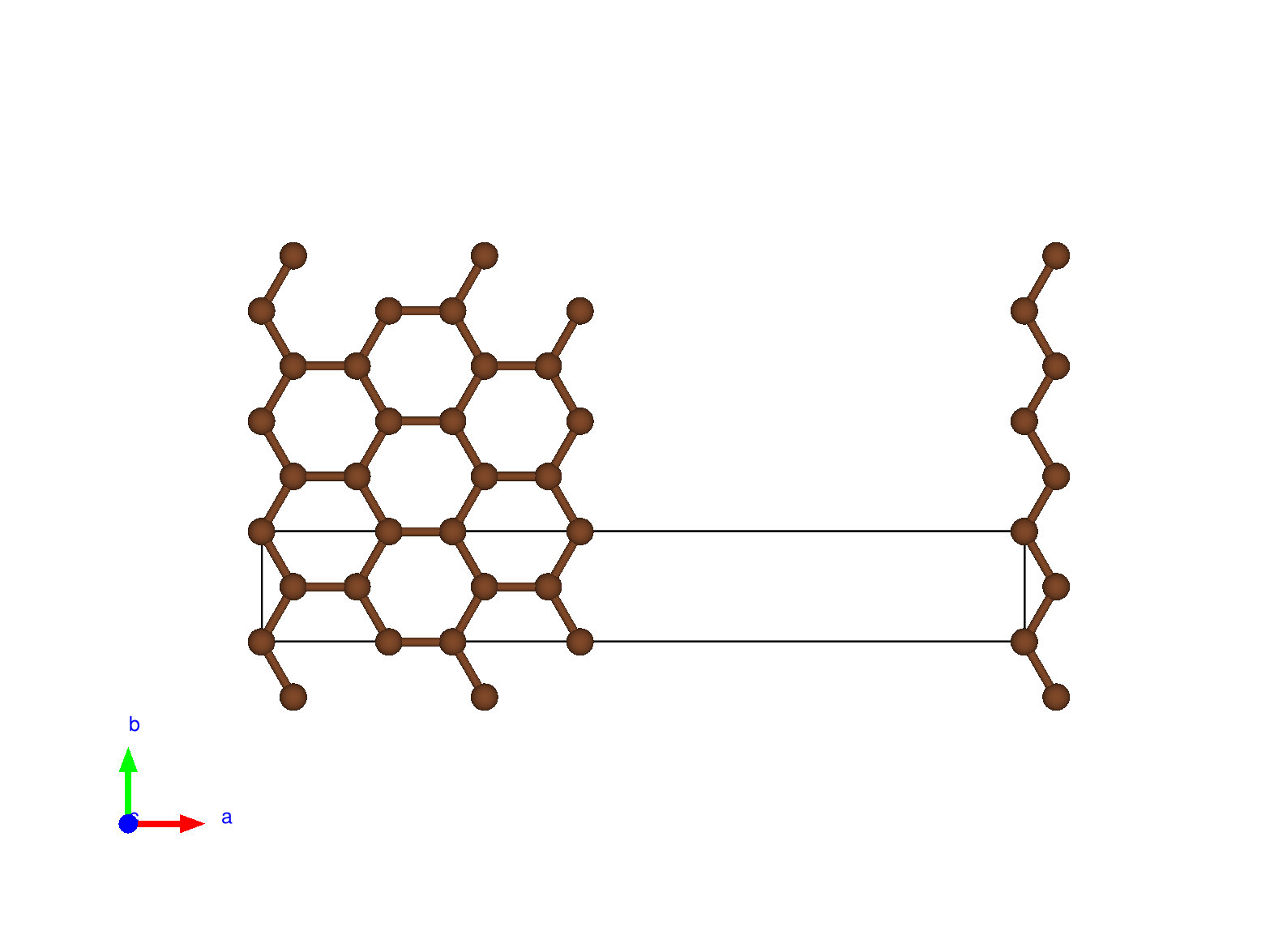 Figure 31
Peer Reviews
No public reviews on file for this paper yet. If you reviewed it on a platform where reviews are public (OpenReview, ICLR, NeurIPS, ICML), you can paste yours below so the community can read it here.
Videos
No videos yet. Explain this paper in a talk, walkthrough, or lecture? Add one.
Taxonomy
TopicsAdvanced Chemical Physics Studies · Zeolite Catalysis and Synthesis · High-pressure geophysics and materials
\univname
\ttitle
Nick Woods
Clare College
Theory of Condensed Matter, Cavendish Laboratory
*A thesis submitted in fulfilment of the requirements
for the degree of Master of Philosophy
in the
Centre for Scientific Computing
Supervisors: Dr. Phil Hasnip, Prof. Mike Payne*
Abstract
Density functional theory (DFT) in the Kohn-Sham (KS) framework presents a non-linear eigenvalue problem whereby, in order to solve the system, the particle density one calculates from the KS equations must be equal to the particle density one uses to construct the KS equations. Such a solution defines what it means to attain self-consistency. This work studies the methods used to achieve and accelerate convergence toward a self-consistent solution of KS DFT. That is, the extent to which one can utilise prior information about an input (and the framework itself) to minimise the time spent in going from an initial guess solution, to a self-consistent solution. The ideas and techniques presented here are general and (mostly) implementation independent. However, this work will focus specifically on self-consistency within the castep software – a planewave, pseudopotential implementation. Density (potential) mixing is the name formally given to the process one uses to combine iterative particle densities (potentials) in order to produce an optimal estimate for the subsequent particle density (potential) such that self-consistency is achieved. Density mixing is studied from two perspectives. First, from a mathematical perspective, where KS DFT is simply treated as a featureless non-linear system – a ‘black-box’. Second, from a physical perspective, where the linear response of KS DFT is studied in an attempt to augment the above-mentioned purely mathematical treatment; this defines preconditioning. The former perspective leads to the implementation of two recently proposed mathematical methods within castep: Marks Luke (2011) and Banerjee et al. (2015). Both of these methods are examined utilising a test suite of over fifteen representative input systems, and neither were found to provide a significant, systematic improvement over the default methods in castep. The latter perspective involves the implementation of an adaptable framework allowing one to posit a model for the inhomogeneous KS dielectric in either real or Fourier space, which is in turn used to precondition the self-consistent cycles. The scope for improvement with such a framework in place is discussed, and simple models utilising the framework are analysed with the aforementioned test suite.
This dissertation is substantially my own work and conforms to the University of Cambridge’s guidelines on plagiarism. Where reference has been made to other research this is acknowledged in the text and bibliography.
Acknowledgements.
I would first like to thank Phil Hasnip, my supervisor, for countless hours of invaluable help and guidance, despite the difficulties caused by remote supervising. Matt Smith, for many fun discussions in our (now 1% completed) quest to understand castep, particularly in helping me understand castep’s parallelism, and for proof reading the thesis. Andrew Morris and his group, for kindly letting me sit in on (and occasionally contribute to) their group meetings, and providing me with an application project to run along side the development. Finally, Mike Payne and Michael Rutter, for help throughout the year with castep, computing, and logistical issues.