Symplectic realisation of electric charge in fields of monopole distributions
Vladislav G. Kupriyanov, Richard J. Szabo

TL;DR
This paper develops a symplectic framework for describing electric charges in magnetic monopole fields, providing new insights into their classical and quantum dynamics, and connecting to non-geometric string theory.
Contribution
It introduces a symplectic realisation of twisted Poisson structures for charges in monopole backgrounds, unifying classical and quantum descriptions without Dirac strings.
Findings
Constructed a symplectic phase space for monopole fields.
Reproduced Lorentz force law within the new formalism.
Established equivalence with nonassociative quantum mechanics approaches.
Abstract
We construct a symplectic realisation of the twisted Poisson structure on the phase space of an electric charge in the background of an arbitrary smooth magnetic monopole density in three dimensions. We use the extended phase space variables to study the classical and quantum dynamics of charged particles in arbitrary magnetic fields by constructing a suitable Hamiltonian that reproduces the Lorentz force law for the physical degrees of freedom. In the source-free case the auxiliary variables can be eliminated via Hamiltonian reduction, while for non-zero monopole densities they are necessary for a consistent formulation and are related to the extra degrees of freedom usually required in the Hamiltonian description of dissipative systems. We obtain new perspectives on the dynamics of dyons and motion in the field of a Dirac monopole, which can be formulated without Dirac strings. We…
Click any figure to enlarge with its caption.
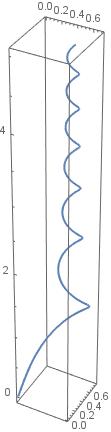 Figure 1
Peer Reviews
No public reviews on file for this paper yet. If you reviewed it on a platform where reviews are public (OpenReview, ICLR, NeurIPS, ICML), you can paste yours below so the community can read it here.
Videos
No videos yet. Explain this paper in a talk, walkthrough, or lecture? Add one.
MPP–2018–28
EMPG–18–05
**Symplectic realisation of electric charge
in fields of monopole distributions**
Vladislav G. Kupriyanov1 and Richard J. Szabo2
1 *Max-Planck-Institut für Physik, Werner-Heisenberg-Institut
Föhringer Ring 6, 80805 München, Germany *
and *CMCC-Universidade de Federal do ABC, Santo André, SP, Brazil
*and Tomsk State University, Tomsk, Russia
Email: [email protected]
2 *Department of Mathematics, Heriot-Watt University
Colin Maclaurin Building, Riccarton, Edinburgh EH14 4AS, U.K.
*and Maxwell Institute for Mathematical Sciences, Edinburgh, U.K.
and *The Higgs Centre for Theoretical Physics, Edinburgh, U.K.
*Email: [email protected]
We construct a symplectic realisation of the twisted Poisson structure on the phase space of an electric charge in the background of an arbitrary smooth magnetic monopole density in three dimensions. We use the extended phase space variables to study the classical and quantum dynamics of charged particles in arbitrary magnetic fields by constructing a suitable Hamiltonian that reproduces the Lorentz force law for the physical degrees of freedom. In the source-free case the auxiliary variables can be eliminated via Hamiltonian reduction, while for non-zero monopole densities they are necessary for a consistent formulation and are related to the extra degrees of freedom usually required in the Hamiltonian description of dissipative systems. We obtain new perspectives on the dynamics of dyons and motion in the field of a Dirac monopole, which can be formulated without Dirac strings. We compare our associative phase space formalism with the approach based on nonassociative quantum mechanics, reproducing extended versions of the characteristic translation group three-cocycles and minimal momentum space volumes, and prove that the two approaches are formally equivalent. We also comment on the implications of our symplectic realisation in the dual framework of non-geometric string theory and double field theory.
Contents
- 1 Introduction and summary
- 2 Symplectic realisation of the magnetic monopole algebra
- 3 Classical dynamics from symplectic realisation
- 4 Hamiltonian reduction
- 5 Dyonic motion
- 6 Integrability
- 7 Quantum dynamics from symplectic realisation
- 8 Extended magnetic translations and two-cocycles
- 9 Nonassociative quantum mechanics
- A Symplectic realisations of quasi-Poisson structures
- B Doubled harmonic oscillators
- C Magnetic duality and locally non-geometric fluxes
1 Introduction and summary
Despite their elusiveness to experimental observation, magnetic monopoles have been of wide-spread theoretical interest in various areas of physics for many years due to their novel conceptual and mathematical implications. In particular, the quantum mechanics of an electric charge coupled to a magnetic monopole density exhibits a variety of interesting geometric and algebraic features. For the standard example of motion in the field of a Dirac monopole, the charged particle wavefunction can be regarded as a section of a non-trivial line bundle associated to the Hopf fibration [51] which provides a topological explanation for Dirac charge quantisation [21, 22] and formulates the quantum dynamics of the particle without using the unphysical Dirac string singularities that usually arise due to the absence of a globally defined magnetic vector potential for the monopole field.
In this paper we are predominantly interested in smooth distributions of magnetic charge, for which vector potentials do not exist even locally and the classical dynamics of the canonical phase space coordinates of the particle are described by a necessarily nonassociative twisted Poisson algebra. These systems have been of interest recently as magnetic analogues of certain flux models in non-geometric string theory and double field theory, see e.g. [39, 4, 11, 43, 40] and references therein. In these instances the corresponding quantum theory cannot be formulated in the usual framework of canonical quantisation by operators acting on a separable Hilbert space. Two formulations have thus far been proposed to handle nonassociative quantum mechanics in this setting, each with its own limitations. Deformation quantisation by explicit construction of nonassociative phase space star products was originally developed by [41], and subsequently treated in [4, 42, 36]; however, beyond the case of constant magnetic charge density, this procedure does not yield a quantisation of the classical dynamical system because the Planck constant appears as a formal expansion parameter, and the result is a deformation over an algebra of formal power series rather than with a complex parameter. On the other hand, the approach of [12, 13] is based on developing algebraic properties of quantum moments from the assumption that the underlying twisted Poisson algebra is a Malcev algebra; however, even in the simplest case of constant monopole density, the alternative property used there cannot be realised in general and this formalism is restricted to observables which are linear in the kinematical momenta.
The purpose of the present paper is to develop a new approach to the classical and quantum dynamics of electric charges in monopole distributions by generalising the technique of ‘symplectic realisation’ from Poisson geometry [49, 32, 50, 19]. Symplectic realisation is a useful mathematical tool for quantisation, because it embeds arbitrary Poisson manifolds into the framework of geometric quantisation or other standard quantisation methods based on symplectic structures. In the following we construct a symplectic realisation of the twisted Poisson structure corresponding to the algebra of covariant momenta of a charged particle in the background of an arbitrary monopole field. This construction doubles the original phase space coordinates by introducing a set of auxiliary degrees of freedom. The resulting associative extended algebra of Poisson brackets is then used to construct a Hamiltonian description of a charged particle interacting with a distribution of magnetic monopoles, by an appropriate choice of Hamiltonian on the extended phase space that leads to the Lorentz force equation for the physical coordinates. In the case of a magnetic field with no monopole sources, one can eliminate the auxiliary variables by Hamiltonian reduction and thus recover the standard Hamiltonian formulation of a charged particle in a divergenceless magnetic field. However, in the presence of magnetic monopoles, the auxiliary degrees of freedom are necessary for a consistent Hamiltonian description. In the particular example of a spherically symmetric magnetic field sourced by a constant monopole density, we show that Hamiltonian reduction results either in free particle motion or in the absence of propagating degrees of freedom altogether. We demonstrate that the necessary presence of auxiliary degrees of freedom in this case is related to the fact that the motion of a charged particle can be effectively described as motion in the field of a single Dirac monopole with some frictional forces [4], and normally the consistent Hamiltonian description of a system with friction requires the introdution of additional degrees of freedom representing a reservoir.
With this set up, quantisation then proceeds along the usual lines using canonical methods by constructing a suitable Hilbert space on which the quantum Hamiltonian operator acts, and studying the Schrödinger equation. Our formalism mimicks the standard quantisation schemes which assume that the phase space is topologically trivial and that the magnetic field has a globally defined vector potential. In standard approaches this is not the case even for the Dirac monopole field. Our formalism also provides a new perspective on the quantisation of a charged particle in the field of a Dirac monopole, in that our extended vector potentials are constructed without the usual Dirac string singularities [21, 22]. In this respect our approach of employing extended coordinates is reminescent of old approaches to the description of electrodynamics with electric and magnetic sources in terms of two vector potentials [15], which also avoids the pathologies associated to the unphysical Dirac string; however, this latter formulation necessitates Dirac charge quantisation for consistency, whereas our approach does not. Our constructions analogously have a natural extension to settings which respect electromagnetic duality, and when applied to the dynamics of dyons, our formalism circumvents the usual problems with defining electromagnetically dual vector potentials. Gauge theory versions of (ordinary associative) phase space doubling were introduced by [23, 24] for dealing with Schwinger terms viewed as cocycles, and more generally by [5, 6] for dealing with second class constraints; see [25] for an application of this formalism to the superparticle and to the Proca Lagrangian.
We will demonstrate that the symplectic realisation which we develop is equivalent to the framework of nonassociative phase space quantum mechanics in terms of star products of states and composition products of observables [42], see [48] for a review in the setting of the present paper. On the other hand, our framework avoids the problems with constructing star products for spatially varying monopole densities. Our formalism should reproduce the quantum fluctuations which compute the quantum evolution of basic dynamical variables from [12, 13], which demonstrate that the nonassociative dynamics generically exhibit modifications of the classical Lorentz force law (but we do not check this in detail). In our formalism based on an extended phase space we are able to reproduce the novel predictions of nonassociative quantum mechanics within an associative approach, such as an extended realisation of the three-cocycle of the translation group which obstructs a projective representation on the charged particle wavefunctions, and also of the minimal uncertainty volumes due to non-vanishing associators. The latter are particularly interesting in the string theory dual models where they imply a coarse-graining of spacetime [9, 38, 42]. Indeed, our framework is analogous to the locally ‘non-geometric’ backgrounds in string theory, wherein there are no local expressions for the geometry and the background fields require the extended space of double field theory for their proper definition. In particular, as discussed by e.g. [40], the uniform magnetic charge density is the magnetic analogue of the locally non-geometric -flux background of string theory in three dimensions. Our approach bears certain qualitative similarities to double field theory, such as an underlying symmetry of the dynamics on the extended phase space, but also certain important differences that we discuss in the following.
The outline of the remainder of this paper is as follows. In Section 2 we introduce our symplectic realisation of the twisted Poisson algebra governing the kinematics of an electric charge in a generic magnetic background; our approach generalises the standard symplectic realisations of Poisson structures whose technical details we briefly describe in Appendix A. In Section 3 we demonstrate how to construct a suitable Hamiltonian on the extended phase space which reproduces the classical Lorentz force law for the physical degrees of freedom, while in Section 4 we analyse in detail the problem of classical Hamiltonian reduction, or polarisation, of the extended dynamics. In Section 5 we extend our formalism in a way which respects electromagnetic duality and describe the ensuing dynamics of dyons within our symplectic realisation. In Section 6 we address the problem of explicitly integrating the equations of motion for a charged particle in a magnetic monopole background; for spherically symmetric magnetic fields sourced by constant monopole densities we relate the classical dynamics on extended phase space to that of dissipative systems, which is reviewed briefly in Appendix B, and we show that the equations of motion are integrable in the case of axial magnetic fields, obtaining the explicit solution which is analogous to motion in the source-free case. In Section 7 we consider the quantum dynamics in the symplectic realisation, demonstrating how the extended formalism reproduces the expected results in source-free cases, and exploiting the connections to quantum dissipation discussed in Appendix B. In Section 8 we demonstrate how our extended associative formulation captures features of nonassocative quantum mechanics, and in Section 9 we show that the symplectic realisation is formally equivalent to the phase space formulation of nonassociative quantum mechanics in terms of star products and composition products. A final Appendix C compares the extended phase space of the symplectic realisation to the phase space of locally non-geometric closed strings and double field theory, and also presents potential applications of our formalism in non-geometric M-theory.
2 Symplectic realisation of the magnetic monopole
algebra
The phase space of a nonrelativistic point particle with electric charge and mass in a magnetic field in three dimensions is parameterised by position coordinates and the kinematical momentum variables , where an overdot denotes a time derivative. The coordinate algebra is defined by the brackets
[TABLE]
where throughout we set the speed of light to . These brackets are equivalent to an almost symplectic structure on , i.e. a non-degenerate two-form on phase space given by
[TABLE]
which is not generally closed: The Jacobiator amongst the momenta is given by
[TABLE]
Thus the brackets (2.1) generically define a twisted Poisson structure on the six-dimensional phase space, with twisting three-form on the configuration space.111See Appendix A for relevant background on Poisson geometry, and in particular for a brief account of the general theory of symplectic realisations that we use below.
In classical Maxwell theory one has , so that the Jacobiator (2.3) vanishes and the algebra (2.1) is associative. In this case the magnetic field can be written as for a globally defined smooth vector potential on , and the Poisson algebra can be represented by transforming the symplectic two-form (2.2) to the standard symplectic structure for the canonically conjugate position and momentum coordinates and .
For the spherically symmetric field
[TABLE]
of a Dirac monopole at the origin with magnetic charge , the algebra is associative at every point away from the location of the monopole. In this case one can excise the origin, where is singular, and locally define a corresponding vector potential [54]
[TABLE]
at every position of the configuration space , which has a smaller domain of regularity obtained by removing a Dirac string singularity [21, 22] along the line in the direction of the fixed unit vector from the origin to infinity in . The exclusion of the origin from the configuration space implies that the charged particle and the monopole cannot simultaneously occupy the same point in space.
In the present paper we are primarily interested in smooth distributions of magnetic poles, where on a connected dense open subset of . In this case there is no associated local vector potential and the algebra (2.1) is nonassociative on the entire configuration space . We call it the magnetic monopole algebra.
In this section we will construct a symplectic embedding of the magnetic monopole algebra. For this, let us introduce an extended -dimensional phase space with position coordinates and momentum coordinates , where and , which have the canonical Poisson brackets and . We define the “covariant” momenta associated to the magnetic field by
[TABLE]
with the corresponding magnetic Poisson brackets
[TABLE]
where . We choose the magnetic vector potential as
[TABLE]
It has the property
[TABLE]
where are the directional derivatives along the extended configuration space directions , which we denote by . The non-vanishing Poisson brackets read
[TABLE]
The algebra (2.10) defines a symplectic structure, and (2.6) expresses in terms of the Darboux coordinates and .
To relate (2.10) with the magnetic monopole algebra (2.1) we introduce
[TABLE]
The vanishing brackets are
[TABLE]
while the non-vanishing brackets are given by
[TABLE]
The symplectic two-form on the extended phase space corresponding to the Poisson brackets (2.13) is given by
[TABLE]
There is a natural projection with , under which our original phase space can be embedded into as the zero section with . Then the pullback of (2.14) to the constraint surface defined by coincides exactly with the almost symplectic structure (2.2), i.e. . This therefore determines a symplectic realisation of the twisted Poisson structure on (see Appendix A), and it is in this sense that we refer to (2.13) as a symplectic realisation of the magnetic monopole algebra (2.1).
An important example of a symplectic realisation of the magnetic monopole algebra corresponds to a constant and uniform magnetic charge distribution with density . In this paper we will study in detail two particular examples of corresponding magnetic fields. A magnetic field with spherical symmetry is given by
[TABLE]
with the symplectic algebra
[TABLE]
As discussed in [40], the uniform magnetic charge density can be interpreted as a smearing of infinitely many densely distributed Dirac monopoles of charge and magnetic fields , and in this setting there is a formal non-local magnetic vector potential for (2.15). The gauge field on the extended configuration space from (2.8) in this case,
[TABLE]
is a vector potential for (2.15) in the sense of (2.9). This gives a precise meaning to the absence of a local definition of the vector potential and to the formal non-local smeared expression derived in [40]: A definition of fields of smooth magnetic charge distributions akin to classical Maxwell theory necessitates the symplectic realisation of the magnetic monopole algebra. It is this feature that we shall exploit in the following which makes the classical and quantum dynamics tractable.
At the opposite extreme, we can break spherical symmetry by choosing an axial magnetic field which is oriented in the direction of a fixed vector in ; this is the analogue of a static uniform magnetic field in the source-free case. We can choose coordinates in which this direction is along the -axis and take the linear magnetic field
[TABLE]
where . This leads to the symplectic algebra
[TABLE]
The corresponding vector potential on the extended configuration space is given by
[TABLE]
Both magnetic fields (2.15) and (2.18) correspond to a uniform magnetic charge distribution of density , as , and their difference is a divergenceless magnetic field
[TABLE]
which therefore does not contribute to the distribution of magnetic charge. However, it does contribute to the twisted Poisson structure defining the magnetic monopole algebra (2.1). Specifying only the equation does not uniquely define the corresponding magnetic field so that, in contrast to the magnetic field (2.4) of a Dirac monopole, here we cannot apply considerations of spherical symmetry and the fact that the field should be directed from the origin to fix the form of . From a geometric perspective, the Poisson algebra (2.7) is invariant under the usual one-form gauge transformations on , as in this case defines a gauge field associated to a trivial -bundle over the extended configuration space. However, it is not invariant under the higher two-form gauge transformations of the magnetic field on , which preserve the curvature . The essential geometric feature is that the field of a constant and uniform magnetic charge distribution defines a “higher” gauge field associated to a -gerbe on , contrary to the field of a Dirac monopole which defines a gauge field of a non-trivial -bundle over of degree ; see [14, 40, 48] for further discussion of this point. This absence of higher gauge symmetry has profound physical consequences, as we shall see later on.
3 Classical dynamics from symplectic realisation
The classical motion of a spinless point particle of electric charge and mass under the influence of both a background magnetic field and a background electric field in three dimensions is governed by the Lorentz force
[TABLE]
In this paper we assume that the electromagnetic backreaction due to acceleration of the charged particle is negligible, and treat the magnetic and electric fields in (3.1) as fixed prescribed backgrounds. As before, in this equation we need not assume that the magnetic field is divergenceless, i.e. we include fields created by magnetic poles. If , the electric field can be represented as a gradient field for a globally defined smooth scalar potential on . In this case, the Lorentz force law (3.1), together with the definition , can be written as the Hamilton equations of motion , with the magnetic monopole algebra (2.1) and the Hamiltonian taken to be the sum of the kinetic energy and the electrostatic potential energy: . When , for instance when magnetic currents are present, this is no longer possible when . Here we shall allow for more general electric fields in our formalism, i.e. we also allow for motion in the field of general smooth distributions of electric poles. This is natural from the present perspective, but we shall argue for it more precisely later on through considerations of electromagnetic duality. The purpose of this section is to demonstrate that the Lorentz force (3.1) follows in these generic situations from our symplectic realisation of the magnetic monopole algebra by choosing an appropriate Hamiltonian function on the extended phase space .
For later use, we shall momentarily leave the explicit form of the vector potential in (2.6) unspecified. Since the Poisson brackets (2.7) do not depend on momentum, while the Lorentz force is linear in the kinematical momenta, the corresponding Hamiltonian is quadratic in the momenta and of the general form
[TABLE]
where , and are real coefficients, and is a smooth potential energy function on the extended configuration space. The corresponding Hamilton equations of motion , read
[TABLE]
from which one obtains the coupled system of second order differential equations for the extended configuration space coordinates and given by
[TABLE]
If , , and , which is exactly the case for the choice of vector potential in the form (2.8), then the terms proportional to the kinematical momentum in the right-hand side of (3.4) reproduce the correct contribution to the Lorentz force from the magnetic field . The scalar potential is then defined by the gradient field equation
[TABLE]
which leads to
[TABLE]
where is an arbitrary smooth function on . An analogous ambiguity also appears in the definition of the vector potential from (2.8): If we redefine by adding an arbitrary smooth vector field \vec{\alpha}(\vec{x}\,)=\vec{\tilde{\nabla}}\big{(}\vec{\tilde{x}}\cdot\vec{\alpha}(\vec{x}\,)\big{)} to get
[TABLE]
then one still generates the magnetic field (2.9) and the Poisson bracket is unchanged, and hence so is the corresponding equation of motion (3.4). This ambiguity in the definition of the scalar and vector potentials will be fixed below when we consider conditions for a consistent elimination of the auxiliary degrees of freedom .
Setting , the equations of motion thus become
[TABLE]
The corresponding Hamiltonian is
[TABLE]
with the metric
[TABLE]
The Hamiltonian (3.11) is invariant under rotations in the dynamical symmetry group of the extended phase space coordinates in the symplectic realisation. The price to pay for the inclusion of generic magnetic fields and electric fields here is the presence of the auxiliary variables , whose dynamics are governed by the equation (3.10). In the following we will elucidate the physical meaning of the additional degrees of freedom described by the coordinates .
4 Hamiltonian reduction
In this section we will view the original phase space as a Hamiltonian reduction of the extended phase space and analyse whether it is possible to consistently eliminate the auxiliary variables from , in the sense of preserving the Lorentz force equation (3.1) for the observable coordinates . We shall answer this question in the negative: Upon imposing Hamiltonian constraints that get rid of the additional degrees of freedom, our model based on the symplectic realisation of the magnetic monopole algebra cannot lead to a Lorentz force law describing the interaction with magnetic charges and currents. More precisely, we show that introducing suitable constraints recovers the standard model for the motion of electric charge in a source-free magnetic field. However, these Hamiltonian constraints annihilate the contribution to the Lorentz force from the magnetic sources. In particular, for the spherically symmetric magnetic field (2.15) they result in either free particle motion, or in the absence of propagating degrees of freedom altogether, i.e. the constrained mechanics is “topological”. This exemplifies the role and necessity of the auxiliary coordinates for a consistent Hamiltonian description of the interaction of the electric charge with the background electromagnetic distributions.
In fact, it is rather elementary to see that the restriction of the dynamical system with the Hamiltonian (3.11) to the constraint surface eliminates all propagating degrees of freedom. Conservation of the primary constraint gives and so results in the secondary constraint . On the constraint surface all constraints have vanishing Poisson brackets among each other and are thus of first class: . But six first class constraints in a -dimensional phase space kills all dynamics and there are no propagating degrees of freedom.
At this stage, however, we may ask whether, starting from the symplectic realisation of the magnetic monopole algebra, there is some more general constraint surface and Hamiltonian (3.2) such that the reduced Hamiltonian dynamics reproduces the Lorentz force (3.1). Let us start again with a generic form for the vector potential . The only way to obtain the Lorentz force (3.1) from the system of differential equations (3.4) and (3.5) is via a linear primary constraint of the generic form
[TABLE]
for some non-zero real parameter . We denote the corresponding constraint surface in by and global section of the projection by with . Conservation of the primary constraint (4.1) implies the strong relations
[TABLE]
and the analysis of the constrained Hamiltonian dynamics now depends on which region we consider of the four-dimensional space of parameters .
Suppose first that the parameters satisfy . Then (4.2) is identically zero, so (4.1) are first class constraints in this case. The Hamiltonian (3.2) becomes
[TABLE]
To obtain the constrained Hamilton equations of motion we introduce the total Hamiltonian , where are Lagrange multipliers, and write on the constraint surface for any function on the extended phase space . Using (3.3) the equations of motion for the phase space coordinates now read
[TABLE]
where and . We now observe that the combination of covariant momenta is conserved, , with and , which implies . Thus instead of the Lorentz force due to the electromagnetic field, we obtain free particle motion for the configuration space degrees of freedom and . That is, this region of parameter space is not suitable for our aims.
Henceforth we therefore assume . Then (4.2) can be represented as a secondary constraint
[TABLE]
where
[TABLE]
Let us now write the total Hamiltonian , and solve for the Lagrange multipliers and . The Poisson brackets of the constraints are , and we suppose that , or equivalently , for otherwise the constraints are of first class implying the absence of propagating degrees of freedom. Then from the strong equality one finds . Conservation of the constraint (4.5) implies the strong relation , from which one thereby obtains
[TABLE]
where we used the identity that follows from the definition (4.6). The resulting equations of motion are given by
[TABLE]
which lead to the second order differential equations
[TABLE]
This is exactly the Lorentz force corresponding to the effective magnetic field
[TABLE]
and the effective electric field
[TABLE]
By explicitly calculating the pullback of the Poisson brackets (2.7) (as a two-form) to the constraint surface , the magnetic field (4.10) can be written in the form
[TABLE]
where . Since the effective magnetic field is derived from an effective vector potential, it satisfies and so cannot be sourced by monopoles. Writing , we can decompose the original magnetic field as
[TABLE]
where the magnetic field with accounts for the contributions from magnetic charge distributions, while (4.12) is the magnetic field created by electric currents and time-varying electric fields. For the Hamiltonian (3.11) and the specific choice of vector potential from (3.8), one has
[TABLE]
Setting , for both spherically symmetric magnetic fields (2.4) of a Dirac monopole and (2.15) of a uniform magnetic charge distribution, the corresponding effective magnetic field (4.14) vanishes and ; in these cases, the constrained dynamics describes free particle motion in the absence of a force due to the potential . On the other hand, for the axial magnetic field (2.18) with we find and .
Likewise, since the effective electric field (4.11) is a gradient field of an effective electrostatic charge distribution, it satisfies and hence cannot be sourced by magnetic currents. Writing , we can decompose the original electric field as
[TABLE]
where the electric field with accounts for the contributions from magnetic currents and time-varying magnetic fields, while (4.11) is the electric field sourced by electric charge distributions. For the Hamiltonian (3.11) one has
[TABLE]
We can now ask for which original magnetic fields and electric fields do the constrained equations of motion (4.9) coincide with the original equations from (3.9), or equivalently when do the effective magnetic and electric fields from (4.14) and (4.16) (with ) coincide with the original fields: and . For the magnetic field, one firstly requires , so there exists a magnetic vector potential with . From the identity
[TABLE]
it follows that this requires . Since the vector field in the definition of the vector potential from (3.8) is arbitrary, we can take
[TABLE]
It is useful to retain the contribution (4.18) to the vector potential (3.8) even in the more general case whereby , and using the decomposition (4.13) we therefore write
[TABLE]
where here . For the spherically symmetric field (2.15) the vector potential (4.19) coincides with (2.17), while for the axial field (2.18) it modifies (2.20) to
[TABLE]
In a completely analogous way, we use the arbitrariness of the function appearing in the definition the scalar potential from (3.7) to ensure that the effective electric field from (4.11) coincides with the original electric field when . In the general case we thus find
[TABLE]
where .
We have thereby established that, independently of the choice of the vector potential and Hamiltonian , imposition of the Hamiltonian constraints (4.1) leads to the Lorentz force with the source-free magnetic and electric fields and . Conversely, if the original magnetic and electric fields are source-free then the choices (4.19) for the vector potential and (4.21) for the scalar potential ensure that the constrained equations of motion (4.9) coincide with the original Lorentz force (3.9). Thus only in this source-free case can we eliminate the auxiliary variables via Hamiltonian reduction, and thus recover the standard model for the dynamics of electric charges in magnetic and electric fields. From a geometric perspective we have shown that, by fixing the equations of motion (3.1) as the fundamental entities, there is no polarisation on the extended symplectic algebra which is compatible with both the Lorentz force law and nonassociativity of the magnetic monopole algebra (2.1): No polarisation can lead to a nonassociative algebra, and only associative algebras are possible upon Hamiltonian reduction.
5 Dyonic motion
Thus far our considerations have treated magnetic and electric fields on almost equal footing, and it is natural to extend our formalism in a way which incorporates the electromagnetic fields symmetrically. In fact, one of the arguments supporting the existence of magnetic monopoles is the desire to extend the electromagnetic duality of vacuum Maxwell theory to cases with sources. Recall that the electromagnetic duality transformation is the map of order four acting on electric and magnetic fields as
[TABLE]
This transformation generates a cyclic subgroup of the global symmetry group of Maxwell theory consisting of electromagnetic duality rotations
[TABLE]
with , for which (5.1) is the member of this family of continuous symmetries.
If a point particle of mass is a dyon with electric and magnetic charges and , respectively, the corresponding Lorentz force law becomes
[TABLE]
This equation is invariant under the electromagnetic duality rotations (5.2) if the charges of the dyon also transform correspondingly as
[TABLE]
A Hamiltonian formalism for the equations of motion (5.3) can be developed along the lines of Sections 3 and 4, by simply substituting everywhere the original electric and magnetic fields with the corresponding combinations
[TABLE]
Our symplectic realisation circumvents the usual problems of electromagnetic duality associated with relating dual vector potentials locally with the original ones. Let us look at two explicit examples in detail.
Consider first the interaction of a pair of dyons in three dimensions. We consider the field (2.4) of a Dirac monopole, for which the effective magnetic field vanishes and , and we also introduce the electric field
[TABLE]
corresponding to the Coulomb force exerted by a point charge. Then the prescription of Section 4 yields the corresponding vector and scalar potentials
[TABLE]
Note that, in contrast to (2.5), the vector potential on the extended configuration space has no Dirac string singularities and is defined for all (\vec{x},\vec{\tilde{x}}\,)\in\big{(}{\mathbb{R}}^{3}\setminus\{\vec{0}\,\}\big{)}\times{\mathbb{R}}^{3}, which coincides with the domain of the magnetic field (2.4) in . The Hamiltonian describing the interaction of two dyons of charges and is then given by
[TABLE]
where the vector
[TABLE]
is the angular momentum of the electromagnetic field produced by the pair of dyons around the axis through the midpoint separating them. In the quantum mechanics that we consider in Section 7, the components of the total angular momentum operator generate the rotation group , and quantum states thereby form representations of . Requiring that they generate a finite-dimensional representation of leads to the quantisation of angular momentum, giving
[TABLE]
which is just Dirac charge quantisation [21, 22]. The quantisation condition (5.10) is preserved by electromagnetic duality rotations (5.4) of both sets of dyon charges.
Consider next the motion of a single dyon in the spherically symmetric fields of constant and uniform magnetic and electric charge distributions of densities and , respectively. We assume there are no currents and set
[TABLE]
The Lorentz force law reads
[TABLE]
The duality rotation in this case is given by (5.4) together with
[TABLE]
Then the equations of motion (5.12) are clearly invariant under the transformations (5.4) and (5.13), as the rotation group preserves both the natural symplectic form and inner product on the two-dimensional vector space . Following the prescription of Section 4, we find the vector and scalar potentials
[TABLE]
and we write the corresponding Hamiltonian on the extended phase space as
[TABLE]
6 Integrability
Let us now address the problem of integrating the Lorentz force equation (3.1). The symplectic realisation of the magnetic monopole algebra may be used to consistently formulate the time evolution of classical observables; the Jacobi identity together with the Leibniz rule allows for the implementation of the classical Liouville theorem to construct integrals of motion in principle. We look at this in detail for two particular electromagnetic backgrounds in turn.
**Spherically symmetric fields. ** We consider first the Hamiltonian (3.11) with the spherically symmetric magnetic field (2.15) and no electric background, , which is given by
[TABLE]
The solutions of the classical equations of motion (3.9) and (3.10) are the union of the integral curves of the vector field \frac{2}{m}\,\big{(}\vec{\tilde{\pi}}\,,\,\vec{\pi}\,,\,\frac{e\,\rho}{6}\,(\vec{\pi}\times\vec{x}-2\,\vec{\tilde{\pi}}\times\vec{\tilde{x}}\,)\,,\,\frac{e\,\rho}{6}\,\vec{\tilde{\pi}}\times\vec{x}\,\big{)} on the extended phase space with the corresponding Hamiltonian flow equations
[TABLE]
We need to find from these flow equations a sextuple of integrals of motion , i.e. for . Several integrals of motion are readily found: As usual, the Hamiltonian
[TABLE]
is trivially conserved, and so is the kinetic energy
[TABLE]
which follows easily from (6.2) as . There is also the azimuthal angular momentum
[TABLE]
which corresponds geometrically to the volume of the tetrahedron in the extended phase space formed by the position vector , the kinematical momentum , and the orbital angular momentum of the charged particle. The proof that is a conserved quantity easily follows from the triple scalar product identity
[TABLE]
together with (6.2).
However, in addition to commuting with the Hamiltonian , these three integrals of motion are in involution with each other and therefore do not produce any new conserved quantities. We have not been able to find another three integrals of motion that would enable the integration of the Hamilton equations of motion on the extended phase space . This problem is also considered directly in the original phase space by [4] where it is suggested that, despite its spherical symmetry, the Lorentz force equations (3.1) in the magnetic field (2.15) do not appear to be integrable. This is in marked contrast to the case of the magnetic field (2.4) of a Dirac monopole, for which the Hamiltonian on extended phase space becomes
[TABLE]
In this case integrability is ensured by conservation of the Poincaré vector
[TABLE]
which is proportional to the sum of the orbital angular momentum with the angular momentum of the electromagnetic field due to the electric charge and the Dirac monopole; one easily checks that the components of commute with the extended Hamiltonian (6.7) and also with the kinetic energy . In particular, the Dirac charge quantisation condition (5.10) in this case simplifies to
[TABLE]
The conservation of the Poincaré vector ensures that the charged particle never reaches the location of the monopole [4], as it precesses around the direction with time-varying angular frequency and the motion is confined to the surface of a cone whose apex is the location of the monopole.222This is of course a well-studied system, and many extensions and reductions have been considered previously, see e.g. [45, 46].
It was shown in [4] that the motion of an electric charge in the magnetic field (2.15) can be effectively described as the dynamics in the field of a single Dirac monopole with some frictional force: After a suitable time reparameterisation, the Lorentz force (3.1) can be brought to the form
[TABLE]
where the time-dependent friction coefficient captures the uniform distribution of magnetic charge. In particular, the motion is no longer confined in any direction. This interpretation lends a physical explanation for the necessity of keeping auxiliary degrees of freedom in order to reproduce the correct equations of motion (3.1) as we demonstrated in Section 4: A consistent Hamiltonian description of dissipative dynamics with friction typically requires the introduction of additional degrees of freedom describing the reservoir which is needed to absorb the dissipated energy, see Appendix B. This analogy will be especially prominent when we consider the quantisation of this system below. For dissipative systems the auxiliary degrees of freedom are needed to conserve the total energy. In the present case the energy is already conserved in the “physical” sector, suggesting that there may be another physical quantity which is not conserved in the physical subsystem but only in the complete doubled system. It would be interesting to understand this further in order to better clarify the physical meaning of the auxiliary coordinates in our case.
**Axial fields. ** The situation is remarkably simpler in the case of the axial magnetic field (2.18). Let us first study the dynamics of the physical coordinates. The Lorentz force in components from (3.9) reads
[TABLE]
where and we assume here that . From the third equation we discover another integral of motion given by the kinematical momentum in the direction of the magnetic field, and from it we get . With the appropriate choice of origin of coordinates, we may set the initial position to . is the constant velocity in the -direction, and we suppose that . Note that the Lorentz force in (6.11) is different from the force exerted by the time-dependent magnetic field that would create an electric field , which is absent from (6.11). We will incorporate an electric background below to properly simulate dyonic motion, but for the moment we focus on the solutions to the system (6.11).
From the second equation we then find , and so the first equation gives
[TABLE]
We thus encounter dissipative dynamics as in the case of spherical symmetry: This is the equation of motion for a damped harmonic oscillator in one dimension with time-dependent frequency and friction coefficient. The solution of (6.12) with the initial conditions and yields the kinematical momenta
[TABLE]
The classical trajectories starting from the origin are then given in terms of the Fresnel integrals {\rm S}(u)=\int_{0}^{u}\,\sin\big{(}\frac{\pi}{2}\,t^{2}\big{)}\,{\rm d}t and {\rm C}(u)=\int_{0}^{u}\,\cos\big{(}\frac{\pi}{2}\,t^{2}\big{)}\,{\rm d}t as
[TABLE]
A parameteric plot of the solution \vec{x}(t)=\big{(}x(t),y(t),v_{z}\,t\big{)} is displayed in Figure 1. The trajectory of the electric charge is an Euler spiral along the straight line \big{(}v_{y}\,\sqrt{\frac{\omega\,v_{z}}{4\pi}}\,,\,v_{y}\,\sqrt{\frac{\omega\,v_{z}}{4\pi}}\,,\,v_{z}\,t\big{)} in this case, to which the solution asymptotes at . The particle moves with uniform velocity along the direction of the magnetic field and its motion in the plane perpendicular to the field is confined. This is analogous to motion in a uniform magnetic field , wherein (6.12) is replaced by the standard equation of motion for the one-dimensional harmonic oscillator with the cyclotron frequency and the charged particle follows a helicoidal trajectory with uniform velocity along the direction of .
Let us now consider the motion of a dyon in this magnetic background by including an axial electric field , with , which yields a harmonic force corresponding to a confining potential in the -direction. In this case the time evolution of the axial position coordinate with the initial conditions and is given by , with oscillation frequency . The differential equation for the kinematical momentum then becomes
[TABLE]
which reduces to (6.12) in the limit . For the special electric charge density , i.e. , the appropriate choice of initial data gives the solutions
[TABLE]
By electromagnetic duality, we should also set the magnetic charge density to , i.e. . Since \cos\big{(}\frac{v_{z}}{2}\cos t\big{)}\geq\cos\big{(}\frac{v_{z}}{2}\big{)}>0 if , the position coordinate then increases monotonically with time, so that the motion deconfines in the -plane after confining the motion along the -direction. That is, the three-dimensional motion cannot be completely confined, contrary to the expectations of [13]. This suggests that the corresponding quantum Hamiltonian exhibits a continuous energy spectrum. Below we shall investigate various aspects of the quantum mechanics of electric charge in the monopole background within our symplectic realisation.
Finally, we look at the dynamics of the auxiliary coordinates. With the physical solution (6.13), from (3.10) they evolve according to the equations of motion
[TABLE]
Thus the auxiliary degrees of freedom obey a complicated inhomogeneous system of coupled differential equations, which we have not been able to integrate; it would be interesting to better understand the physical significance of the auxiliary coordinates from these equations. This is in marked contrast to the case of a uniform magnetic field , whereby (3.10) would yield precisely the same Lorentz force law for the auxiliary variables, as expected since in that case the constraints (4.1) and (4.5) can be consistently imposed.
This example illustrates that the symplectic realisation is not always necessary for the integrability of the classical motion. However, it is necessary for a proper formulation of geometric quantisation, i.e. for a description of the “canonical” quantum mechanics. This is analogous to the situation of an electric charge in the background of a Dirac monopole, wherein the classical equations of motion can be integrated without an action formalism, but for quantisation it is necessary to construct a suitable vector potential in order to define a Hamiltonian.
7 Quantum dynamics from symplectic realisation
In this section we describe the quantisation of the dynamical system with Poisson brackets (2.10) and Hamiltonian (3.11). We shall mostly ignore the electric background in our discussion and set the scalar potential to . In the Schrödinger polarisation, the quantum Hilbert space consists of square-integrable wavefunctions (with respect to the standard Lebesgue measure) on the extended configuration space of the charged particle, which later on we will treat geometrically as sections of the trivial line bundle over with connection . On we represent position operators as multipliers, \big{(}\widehat{x}{}^{I}\Psi\big{)}(x)=x^{I}\,\Psi(x) with , and the canonical momentum operators as derivatives, \big{(}\widehat{p}_{I}\Psi\big{)}(x)=-{\,{\rm i}\,}\hbar\,\partial_{I}\Psi(x) with . Then the kinematical momentum operators
[TABLE]
define covariant differentiation on the trivial line bundle.
The corresponding quantum Hamiltonian is
[TABLE]
The probability current for a given state is defined by
[TABLE]
Since the energy is conserved, as we have discussed in Section 6, it suffices to consider stationary states which vary simply with a time-dependent phase and we can study energy eigenvalues of the quantum Hamiltonian (7.2) via the time-independent Schrödinger equation
[TABLE]
Due to (7.4), in a stationary state the probability current is conserved,
[TABLE]
and hence the quantum theory is also unitary.
This quantum theory is defined on a six-dimensional configuration space . In particular, the probability current also has six components. Just as in the classical situation considered in Section 4, we can try to eliminate the auxiliary degrees of freedom via quantum Hamiltonian reduction by imposing the constraints (4.1) and (4.5) (with ) at the quantum level, i.e. by restricting to the subspace of physical states which are annihilated by the constraint operators:
[TABLE]
The relevant commutator to analyse is given by
[TABLE]
where is the multiplier by the magnetic field .
If the magnetic field is divergenceless, i.e. everywhere, then the vector potential can be defined as
[TABLE]
With this choice, the effective quantum theory after resolving the constraints (7.6) coincides with the standard quantum mechanical description of a charged particle in the magnetic field with the Hamiltonian
[TABLE]
where
[TABLE]
In situations where the vector field is not globally defined on but only in specified compact regions, like in the case of the Dirac monopole, one can excise the support of the magnetic charge distribution from the configuration space and take the wavefunctions to be sections of a corresponding non-trivial line bundle over the excised space of degree given by the Dirac charge quantisation condition (6.9) [51]. In the standard treatments one needs to restrict the domains of quantum operators to wavefunctions which vanish sufficiently fast on the Dirac string, whereas in our approach we can simply consider wavefunctions in that vanish at the locus of the magnetic charge distribution, which provides a suitable extension of the effective Hamiltonian (7.9) to an essentially self-adjoint operator on [4]. It is known that a Dirac monopole and an electric charge do not form a bound state, whereas dyonic bound states are possible [54].
However, if everywhere then a vector potential does not exist even locally and the effective magnetic field in (7.10) does not account for the contribution from magnetic sources. In particular, for the spherically symmetric magnetic field (2.15) it simply vanishes, , and thus in this case the constraints (7.6) lead to a free particle quantum theory without any interaction with the magnetic field.
To understand better the quantum theory described by the Hamiltonian (7.2), we first observe that it is an unbounded operator on . It is convenient to represent it as a difference of two Hamiltonians which are each bounded from below as
[TABLE]
where
[TABLE]
The pairs of kinematical momentum operators (7.12) do not commute in general,
[TABLE]
and consequently neither do the Hamiltonians and unless the magnetic field is constant. Let us begin by considering some typical examples which illustrate how the imposition of the constraints (7.6) recovers well-known results, before moving on to our main examples of interest with smooth distributions of magnetic charge.
**Free particle. ** As a warmup, let us see how to reproduce free particle quantum states in the absence of a magnetic field, . The Schrödinger equation (7.4) in this case is
[TABLE]
The eigenfunctions are the plane waves
[TABLE]
with eigenvalues
[TABLE]
The physical state conditions (7.6) then force and , yielding the expected free particle plane waves and kinetic energy spectrum
[TABLE]
**Landau levels. ** Consider the Landau problem, i.e. the motion of an electric charge in a constant and uniform magnetic field , which by a suitable choice of coordinates we can take to lie along the -axis, . In this case
[TABLE]
and the only non-vanishing commutators between the covariant momentum operators are given by
[TABLE]
In particular, the axial momentum operators and commute with all other momentum operators, and so the quantum states in the direction of decouple into free particle states which can be solved for along the same lines as above. Henceforth we therefore consider only the planar quantum states and, assuming , we introduce creation and annihilation operators as
[TABLE]
One easily checks
[TABLE]
while all other commutators vanish.
In terms of the operators (7.20) the Hamiltonian (7.11) can be written as
[TABLE]
where
[TABLE]
is the cyclotron frequency. This Hamiltonian is unbounded, but it can be decomposed into the difference of two Hamiltonians of harmonic oscillator type which are bounded from below and commute, \big{[}\widehat{{\mathcal{H}}}_{+},\widehat{{\mathcal{H}}}_{-}\big{]}=0. As discussed in Appendix B, the simultaneous eigenvalues of are the integers such that the eigenvalues of (7.22) are
[TABLE]
with corresponding eigenstates in the standard number basis for the two-particle bosonic Fock space . Using the definition of the annihilation operator