Colloquium: Nonequilibrium effects in superconductors with a spin-splitting field
F. Sebastian Bergeret, Mikhail Silaev, Pauli Virtanen, and Tero T., Heikkila

TL;DR
This paper reviews recent advances in understanding non-equilibrium phenomena in spin-split superconductors, highlighting their transport properties and potential applications in thermoelectricity and spintronics.
Contribution
It provides a comprehensive theoretical framework based on quantum kinetic equations to describe non-equilibrium charge, spin, and energy distributions in hybrid superconducting structures.
Findings
Large thermoelectric effects observed in spin-split superconductors
Transport measurements reveal properties of non-equilibrium modes
Spin injection and diffusion are extensively characterized
Abstract
We review the recent progress in understanding the properties of spin-split superconductors under non-equilibrium conditions. Recent experiments and theories demonstrate a rich variety of transport phenomena occurring in devices based on such materials that suggest direct applications in thermoelectricity, low-dissipative spintronics, radiation detection and sensing. We discuss different experimental situations and present a theoretical framework based on quantum kinetic equations. Within this framework we provide an accurate description of the non-equilibrium distribution of charge, spin and energy, which are the relevant non-equilibrium modes, in different hybrid structures. We also review experiments on spin-split superconductors and show how transport measurements reveal the properties of the non-equilibrium modes and their mutual coupling. We discuss in detail spin injection and…
Click any figure to enlarge with its caption.
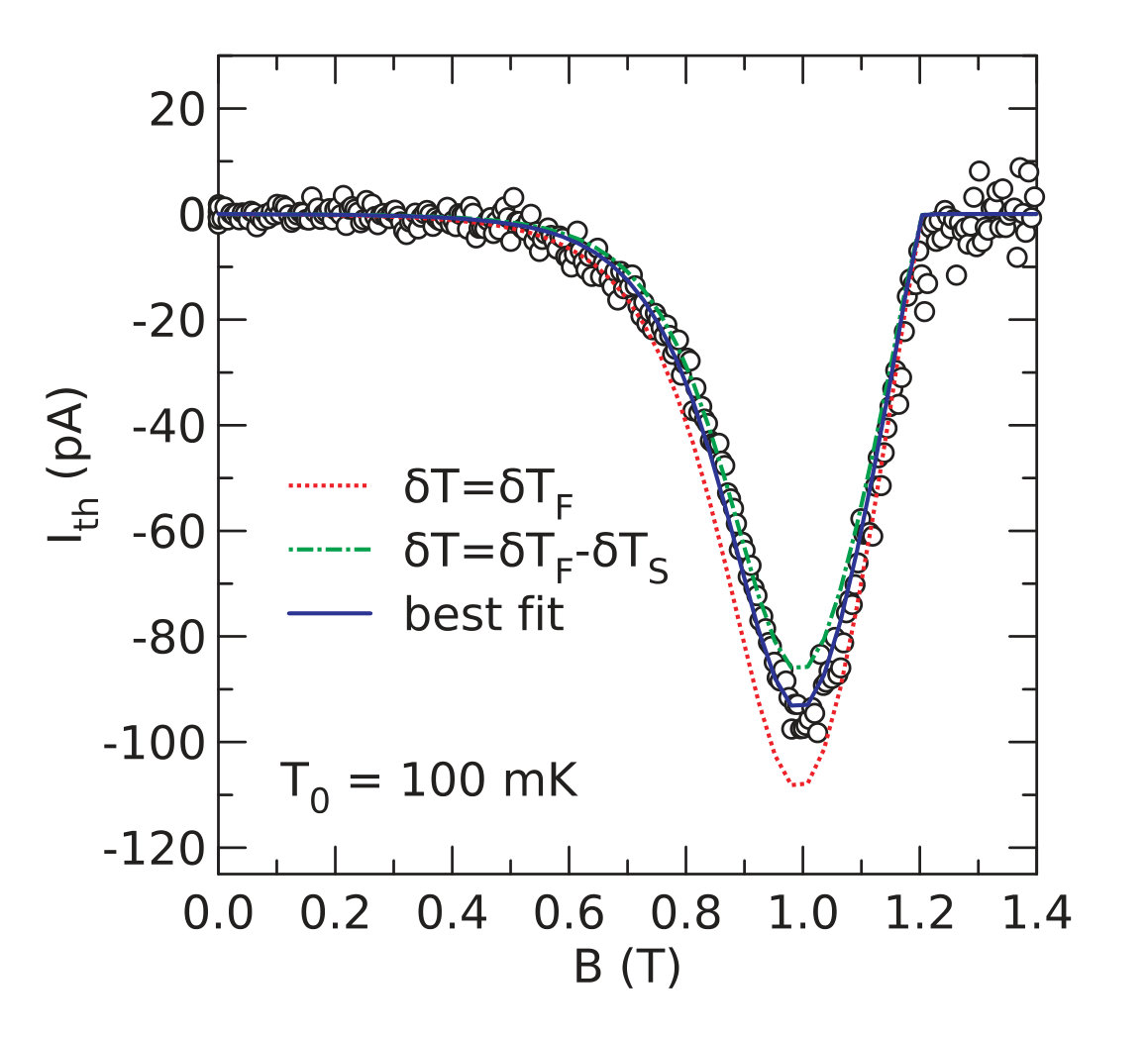 Figure 4
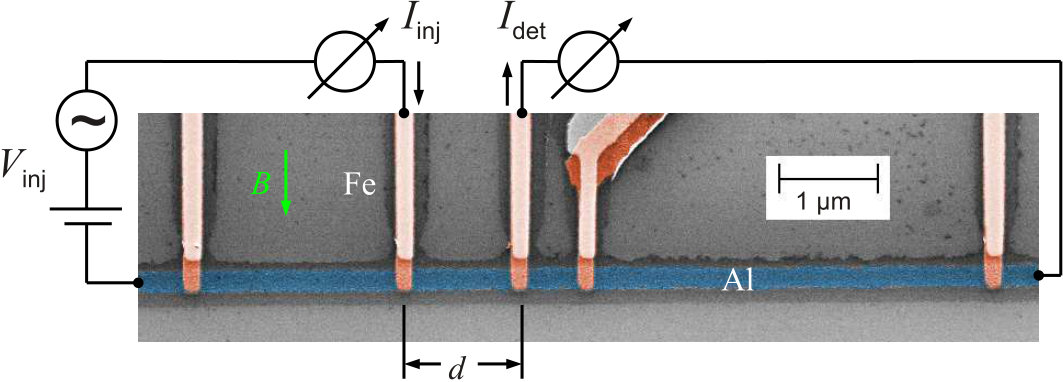 Figure 2
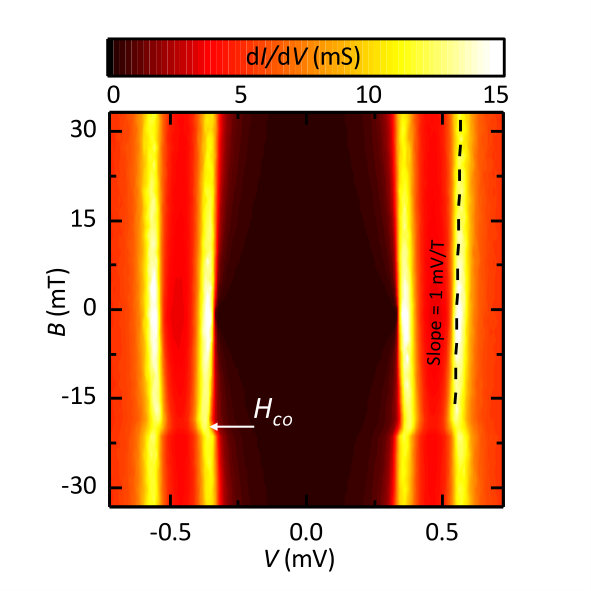 Figure 3
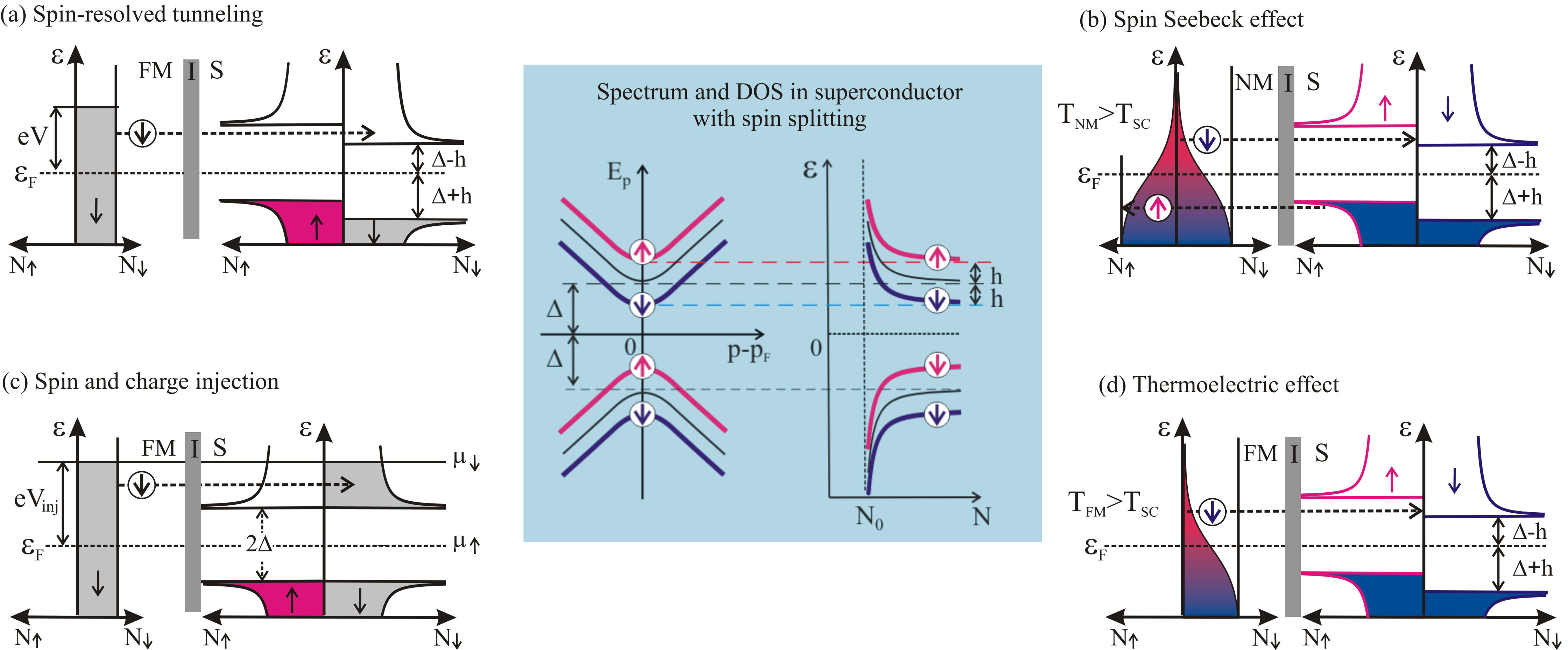 Figure 4
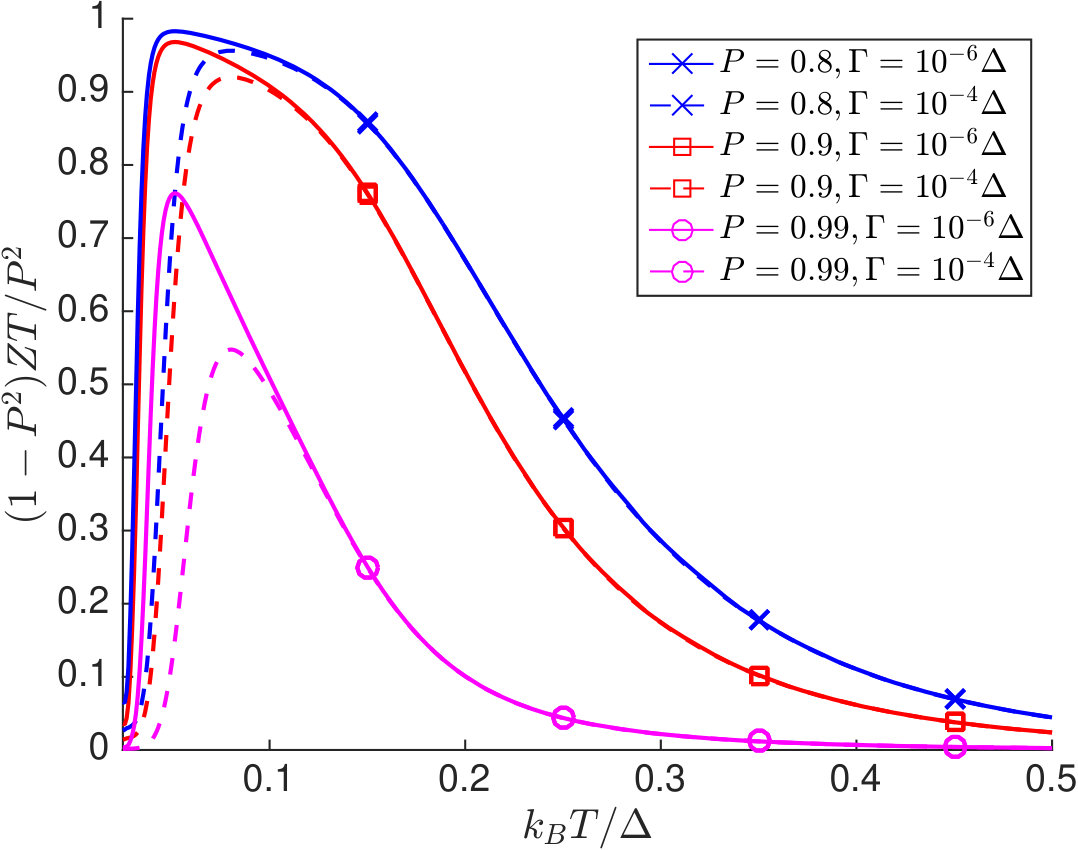 Figure 5
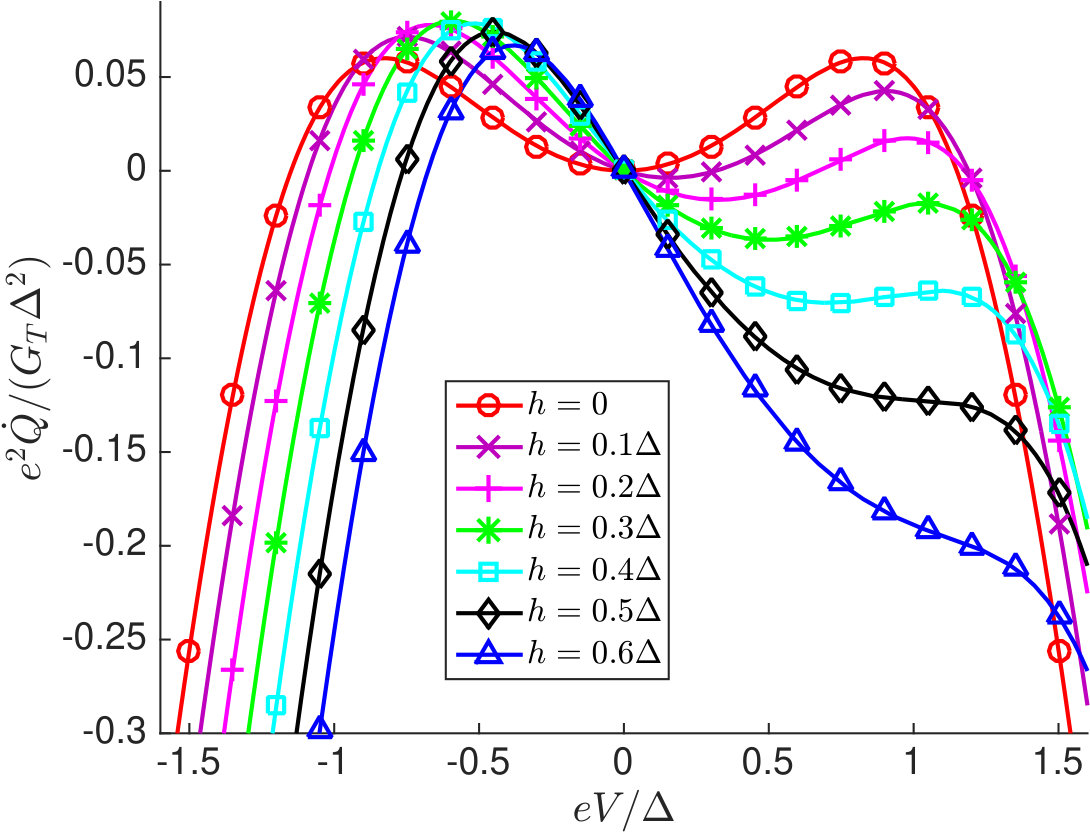 Figure 6
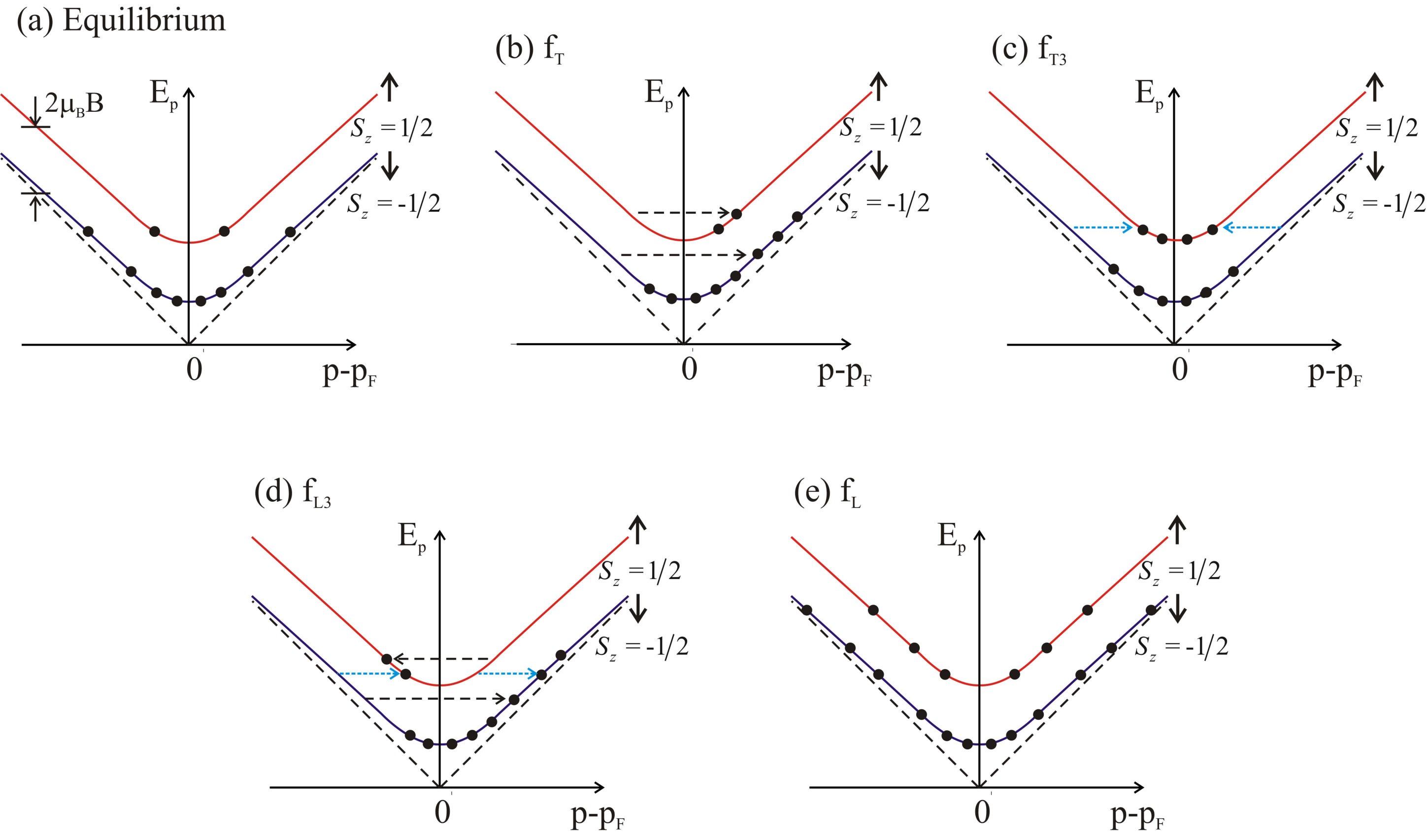 Figure 7
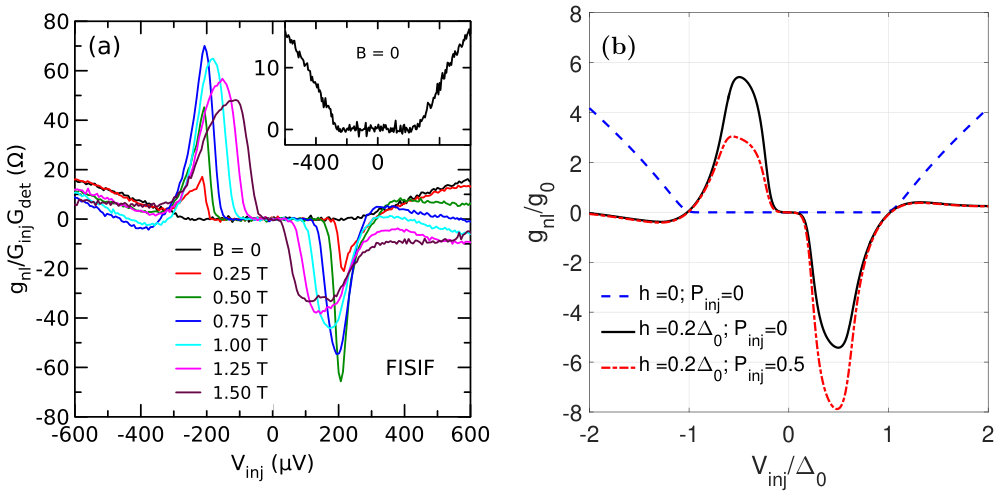 Figure 8
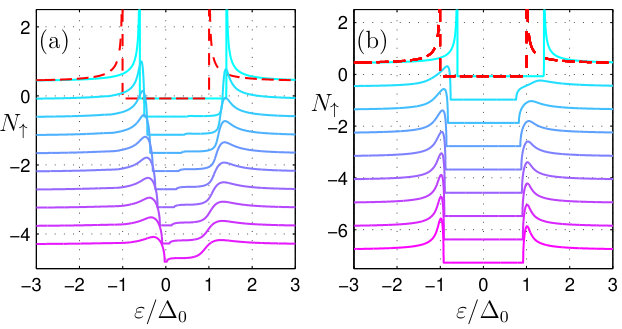 Figure 9
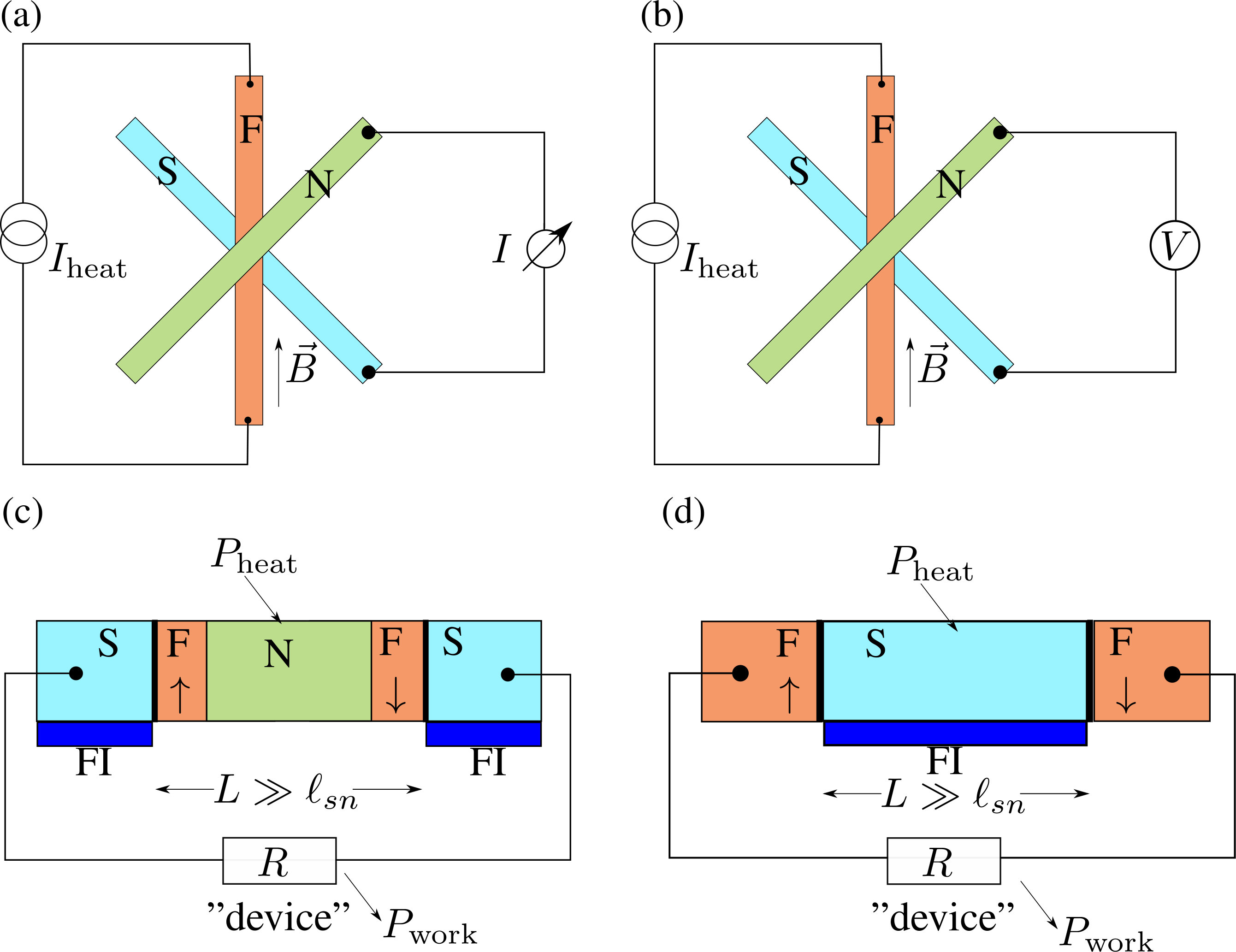 Figure 10
| Material Combination | Barrier polarization | Exchange Splitting (applied field) |
|---|---|---|
| EuO/Al/AlO3/Al 1 | no spin-filter barrier | 1 T (0.1 T)-1.73 T(0.4 T) |
| Au/ EuS/Al 2 | 0.8 | 1.6 T (0 T) |
| Al/ EuS/Al 3 | 0.6-0.85 | 1.9-2.6 T (0T) |
| Ag/ EuSe/Al 4 | 0.97 | none at zero field |
| EuSe/Al/AlO3/Ag 4 | no spin-filter barrier | 4 T (0.6 T) |
| NbN/ GdN/NbN 5 | 0.75 | |
| NbN/ GdN/TiN 6 | 0.97 | 1.4 T (0T) |
Peer Reviews
No public reviews on file for this paper yet. If you reviewed it on a platform where reviews are public (OpenReview, ICLR, NeurIPS, ICML), you can paste yours below so the community can read it here.
Videos
No videos yet. Explain this paper in a talk, walkthrough, or lecture? Add one.
\newtotcounter
citnum
Colloquium: Nonequilibrium effects in superconductors with a spin-splitting field
F. Sebastian Bergeret
Centro de Fisica de Materiales (CFM-MPC), Centro Mixto CSIC-UPV/EHU, Manuel de Lardizabal 4, E-20018 San Sebastian, Spain
Donostia International Physics Center (DIPC), Manuel de Lardizabal 5, E-20018 San Sebastian, Spain
Mikhail Silaev
University of Jyvaskyla, Department of Physics and Nanoscience Center, P.O. Box 35 (YFL), FI-40014 University of Jyväskylä, Finland
Pauli Virtanen
NEST, Istituto Nanoscienze-CNR and Scuola Normale Superiore, I-56127 Pisa, Italy
Tero T. Heikkilä
University of Jyvaskyla, Department of Physics and Nanoscience Center, P.O. Box 35 (YFL), FI-40014 University of Jyväskylä, Finland
Abstract
We review the recent progress in understanding the properties of spin-split superconductors under non-equilibrium conditions. Recent experiments and theories demonstrate a rich variety of transport phenomena occurring in devices based on such materials that suggest direct applications in thermoelectricity, low-dissipative spintronics, radiation detection and sensing. We discuss different experimental situations and present a theoretical framework based on quantum kinetic equations. Within this framework we provide an accurate description of the non-equilibrium distribution of charge, spin and energy, which are the relevant non-equilibrium modes, in different hybrid structures. We also review experiments on spin-split superconductors and show how transport measurements reveal the properties of the non-equilibrium modes and their mutual coupling. We discuss in detail spin injection and diffusion and very large thermoelectric effects in spin-split superconductors.
Contents
-
II.1 Brief overview of the quasiclassical theory of diffusive superconductors
-
III.1 Description of nonequilibrium modes in superconductors with spin splitting
-
IV.1 Detection of spin and charge imbalance: Non-local transport measurements
-
IV.2 Non-local conductance measurements in spin-split superconductors
-
V.1 Charge and heat currents at a spin-polarized interface to a spin-split superconductor
-
V.2 Linear response: heat engine based on a superconductor/ferromagnet structure
I Introduction
Ferromagnetism and spin-singlet superconductivity are antagonist orders and hardly coexist in bulk materials. However, hybrid nanostructures allow for the possibility of combining the two phenomena via mutual proximity effects. The combination leads to the emergence of novel features not present in either system alone. We can make a distinction among those characteristics affecting the spectral properties of the materials, showing up when the probed systems are in equilibrium, and those related to nonequilibrium phenomena. The emphasis of our text is in the latter phenomena, especially related to steady-state currents or voltages applied across the structures.
Both superconductors and ferromagnets are examples of electron systems with spontaneously broken symmetries, and thereby characterized by order parameters. The order parameter for a conventional spin singlet superconductor is the amplitude of (Cooper) pairing between electrons in states with opposite spins and momenta Bardeen et al. (1957). The presence of this complex pairing amplitude leads to two characteristic features of conventional superconductivity Tinkham (1996); de Gennes (1999): An equilibrium supercurrent that is proportional to the gradient of the phase of and that can be excited without voltage, and to the quasiparticle spectrum exhibiting an energy gap proportional to the absolute value of . The resulting density of states (DOS, Eq. (1) for ) is strongly energy dependent and results into a non-linear nonequilibrium response of superconductors.
The main defining feature of ferromagnets is the broken spin-rotation symmetry into the direction of magnetization, and the associated exchange energy that splits the spin up and down spectra. This also leads to a strong spin dependence (spin polarization) of the observables related to ferromagnets.
There are two mechanisms that prevent most of the ferromagnetic materials from becoming superconducting. One of them is the orbital effect due to the intrinsic magnetic field in ferromagnets. When this field exceeds a certain critical value, superconductivity is suppressed Ginzburg (1957). The second mechanism is the paramagnetic effect Chandrasekhar (1962); Clogston (1962); Saint-James et al. (1969). This is due to the intrinsic exchange field of the ferromagnet that shows up as a splitting of the energy levels of spin-up and spin-down electrons and hence prevents the formation of Cooper pairs. We focus here on the regime where this spin-splitting field is present, but not yet too large to kill superconductivity.
In superconductors the spin-splitting field can be generated either due to the Zeeman effect in magnetic field or as a result of the exchange interaction between the electrons forming Cooper pairs and those which determine the magnetic order. Such fields can lead to drastic modifications of the ground state of a spin-singlet superconductor. The best-known example is the formation of the spatially inhomogeneous superconducting state predicted by Fulde and Ferrell (1964) and Larkin and Ovchinnikov (1965) and dubbed as FFLO. Although extensively studied in the literature, the FFLO phase only takes place in a narrow parameter window and therefore its experimental realization is challenging.
The reference list from the paper itself. Each links out to its DOI / PubMed record.
- 1Aasen et al. (2016) Aasen, David, Michael Hell, Ryan V Mishmash, Andrew Higginbotham, Jeroen Danon, Martin Leijnse, Thomas S Jespersen, Joshua A Folk, Charles M Marcus, Karsten Flensberg, et al. (2016), “Milestones toward Majorana-based quantum computing,” Phys. Rev. X 6 (3), 031016 . · doi ↗
- 2Abrikosov and Gor’kov (1960 a) Abrikosov, A A, and L. P. Gor’kov (1960 a), “Contribution to the theory of superconducting alloys with paramagnetic impurities,” Zh. Eksp. Teor. Fiz. 39 (6), 1781, [Sov. Phys. JETP 12 (6), 1243 (1961)].
- 3Abrikosov and Gor’kov (1960 b) Abrikosov, A A, and L. P. Gor’kov (1960 b), “On the problem of the Knight shift in superconductors,” Zh. Eksp. Teor. Fiz. 39 (2), 480 , [Sov. Phys. JETP, 12 (2), 337 (1961)].
- 4Abrikosov and Gor’kov (1962) Abrikosov, A A, and L. P. Gor’kov (1962), “Spin-orbit interaction and the Knight shift in superconductors,” Zh. Eksp. Teor. Fiz. 42 (4), 1088 , [Sov. Phys. JETP, 15 (4), 752 (1962)].
- 5Aikebaier et al. (2017) Aikebaier, Faluke, Mihail A Silaev, and TT Heikkilä (2017), “Supercurrent induced charge-spin conversion in spin-split superconductors,” ar Xiv:1712.08653 .
- 6Alicea (2012) Alicea, J (2012), “New directions in the pursuit of Majorana fermions in solid state systems,” Rep. Progr. Phys. 75 (7), 076501 . · doi ↗
- 7Anthore et al. (2003) Anthore, A, H. Pothier, and D. Esteve (2003), “Density of states in a superconductor carrying a supercurrent,” Phys. Rev. Lett. 90 , 127001 . · doi ↗
- 8Aoi and Swihart (1970) Aoi, K, and J. C. Swihart (1970), “Theory of electron spin resonance in type-I superconductors,” Phys. Rev. B 2 , 2555–2560 . · doi ↗