Acceleration by Strong Interactions
Martin Erdmann, Christian Glaser, Thorben Quast

TL;DR
This paper explores the possibility of using repulsive strong interactions for particle acceleration, proposing a thought experiment involving deep inelastic scattering to directly observe these forces.
Contribution
It introduces a novel experimental concept to directly detect repulsive strong interactions between quarks, which has not been experimentally demonstrated before.
Findings
Estimated the number of electrons needed to observe repulsive effects
Proposed a specific experimental setup involving deep inelastic scattering
Discussed the theoretical basis for repulsive strong forces
Abstract
Beyond the attractive strong potential needed for hadronic bound states, strong interactions are predicted to provide repulsive forces depending on the color charges involved. The repulsive interactions could in principle serve for particle acceleration with highest gradients in the order of GeV/fm. Indirect evidence for repulsive interactions have been reported in the context of heavy meson production at colliders. In this contribution, we sketch a thought experiment to directly investigate repulsive strong interactions. For this we prepare two quarks using two simultaneous deep inelastic scattering processes off an iron target. We discuss the principle setup of the experiment and estimate the number of electrons on target required to observe a repulsive effect between the quarks.
Click any figure to enlarge with its caption.
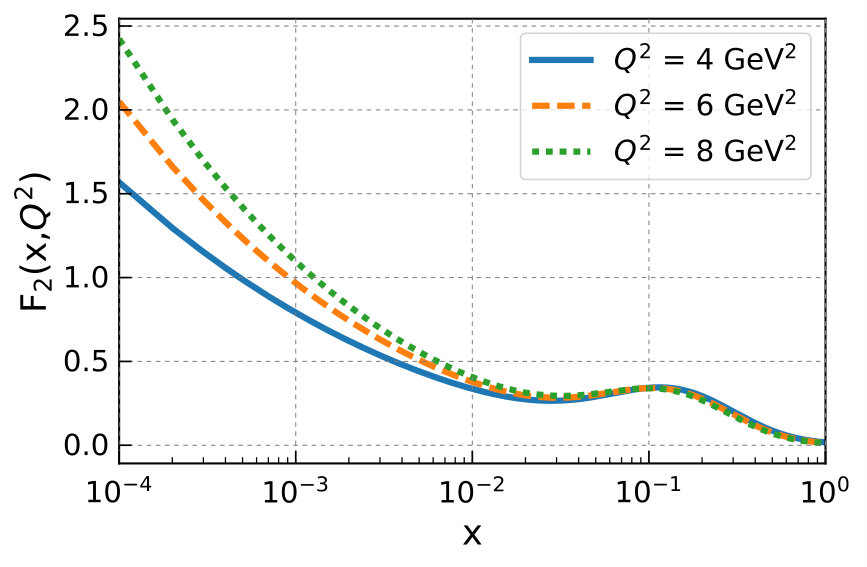 Figure 1
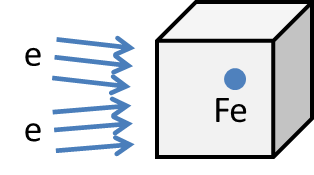 Figure 2
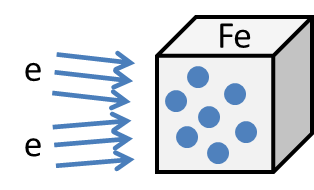 Figure 3
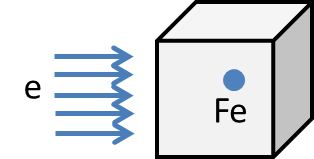 Figure 4
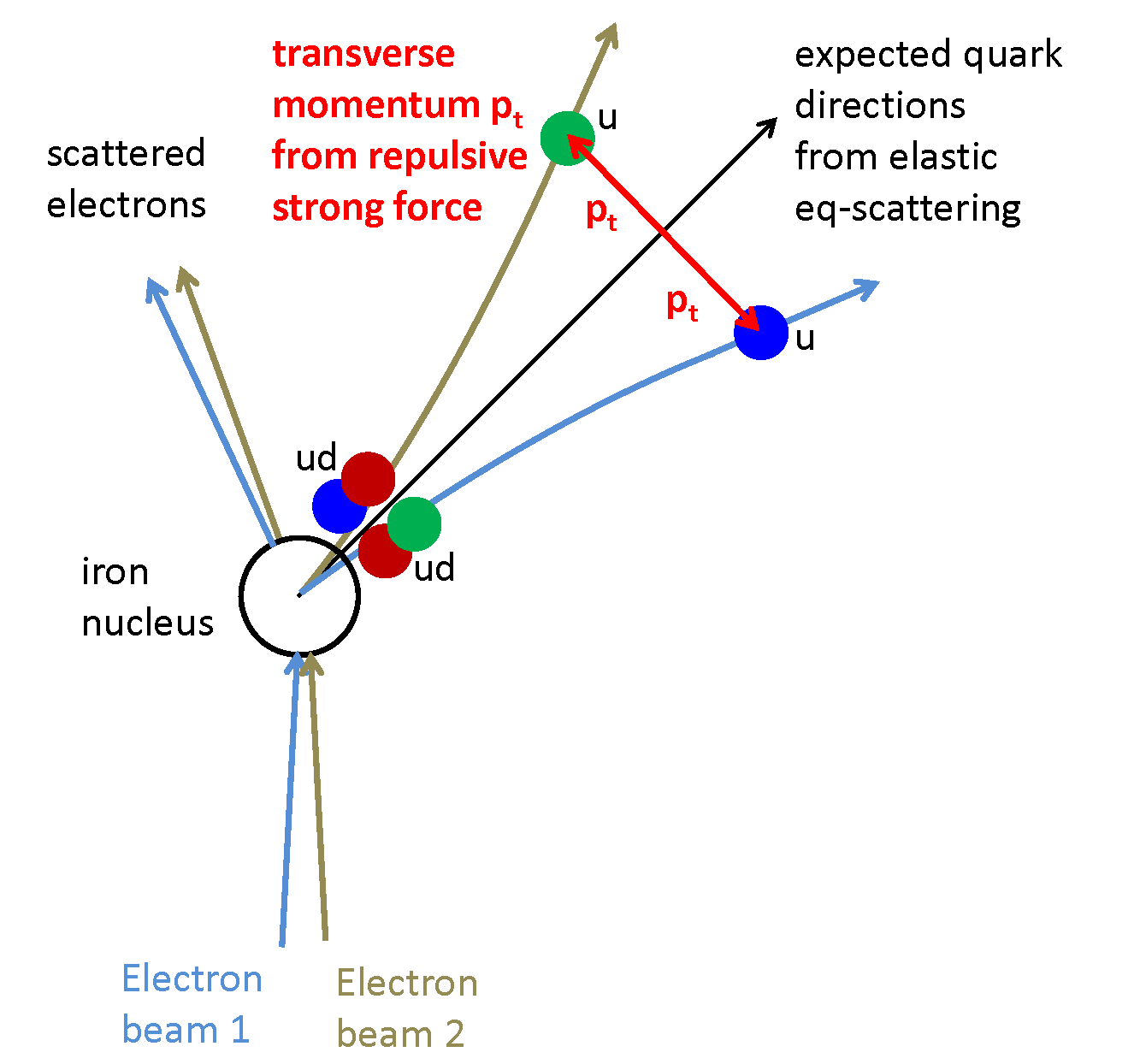 Figure 5
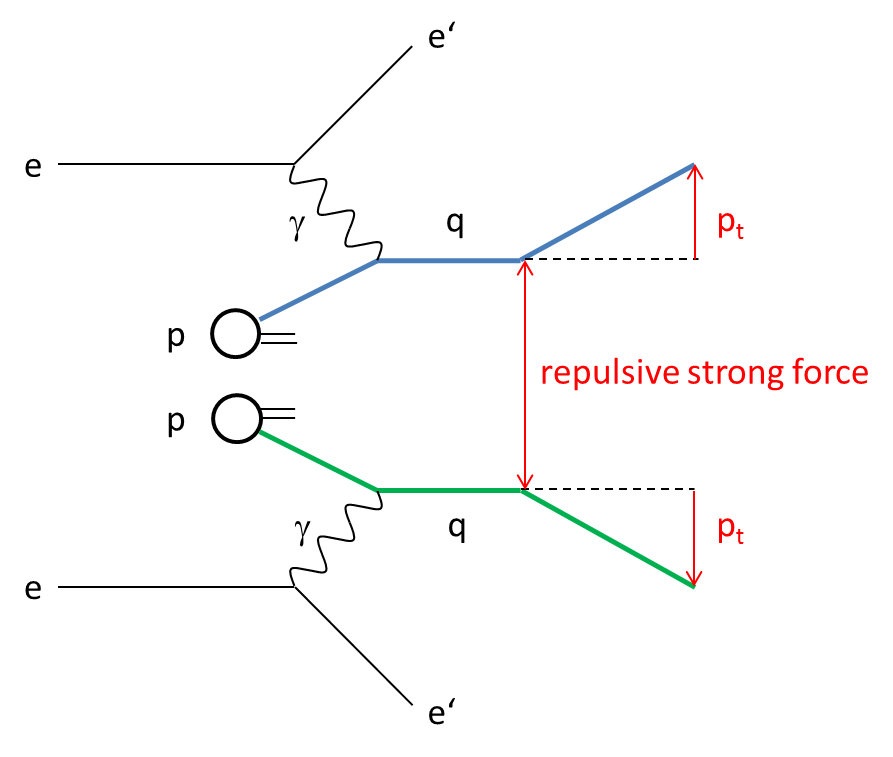 Figure 6
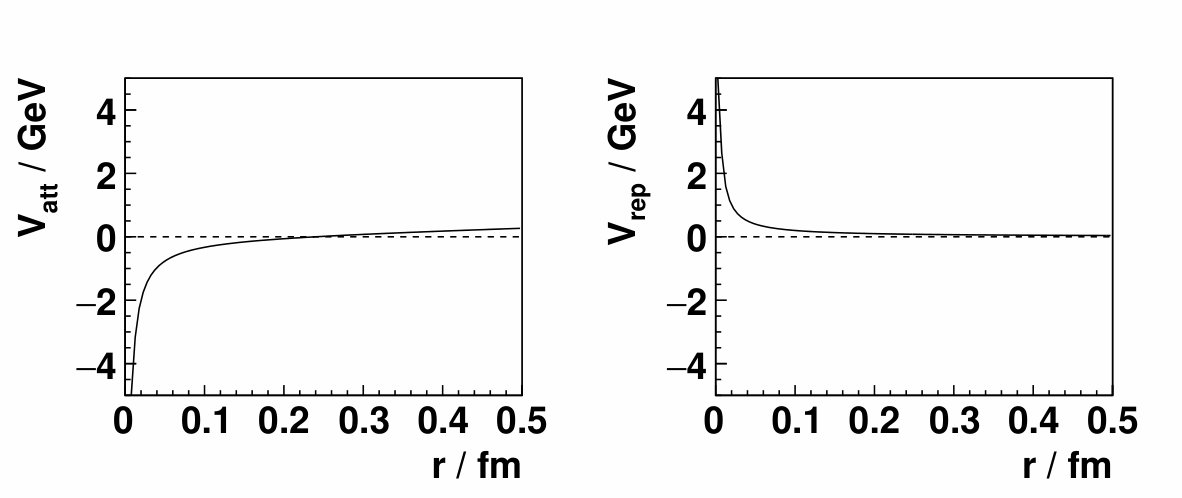 Figure 7
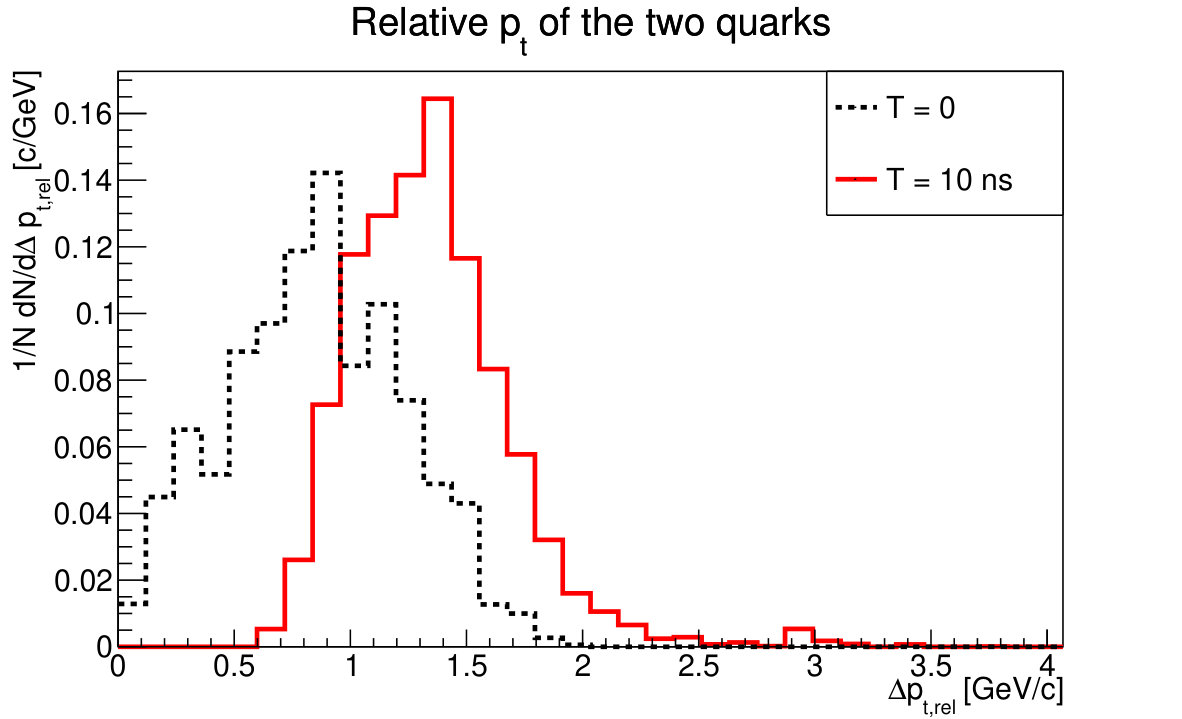 Figure 8
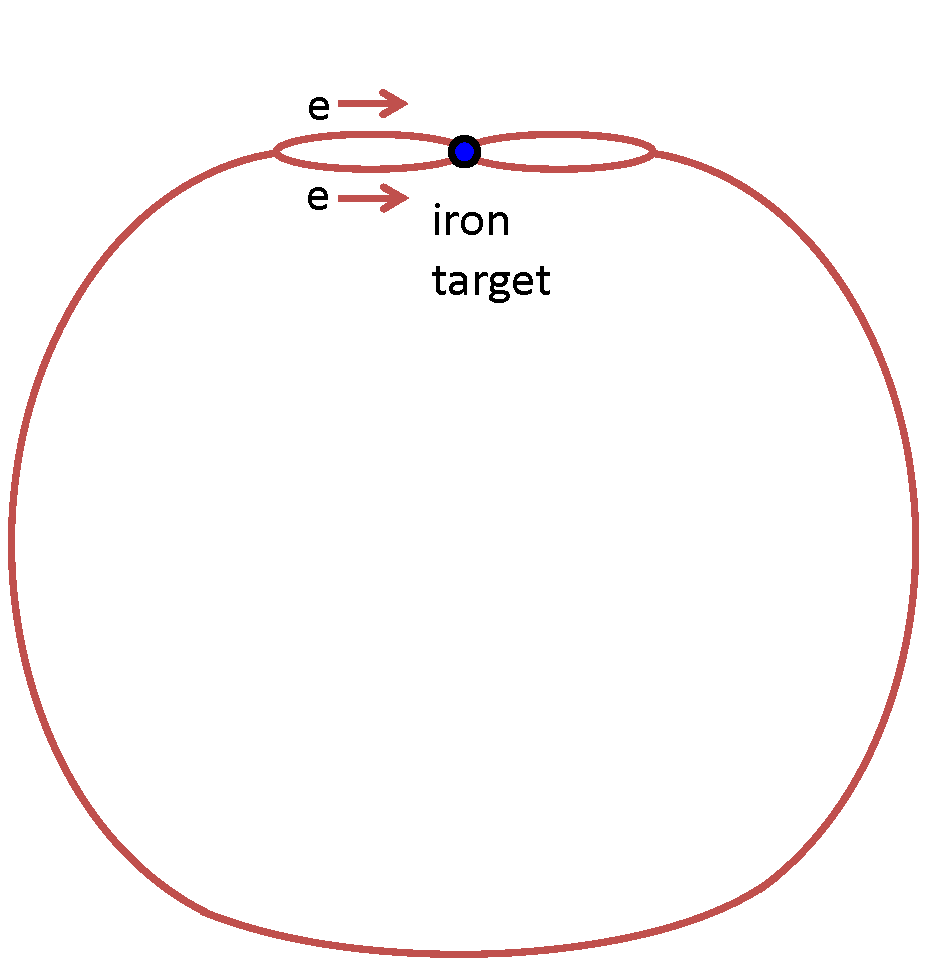 Figure 9
| Electron beam energy | GeV |
|---|---|
| Radius: electron storage ring | km |
| Deep inelastic scattering | GeV |
| Electrons per bunch | |
| Electron bunch length | nm |
| Electron bunch area | nm nm |
| Electron bunch distance | m |
| Length of iron target | m |
| Electrons in bunch | |
|---|---|
| Area of the bunch | |
| Bunch length | |
| Target length | |
| Rate dependence on | |
| electron energy | |
| Simultaneous electron beams |
Peer Reviews
No public reviews on file for this paper yet. If you reviewed it on a platform where reviews are public (OpenReview, ICLR, NeurIPS, ICML), you can paste yours below so the community can read it here.
Videos
No videos yet. Explain this paper in a talk, walkthrough, or lecture? Add one.
Taxonomy
TopicsQuantum Mechanics and Applications · Quantum, superfluid, helium dynamics · Cosmology and Gravitation Theories
Acceleration by Strong Interactions
M. Erdmann
C. Glaser
T. Quast
Physics Institute 3A, RWTH Aachen University, D-52056 Aachen, Germany
Abstract
Beyond the attractive strong potential needed for hadronic bound states, strong interactions are predicted to provide repulsive forces depending on the color charges involved. The repulsive interactions could in principle serve for particle acceleration with highest gradients in the order of GeV/fm. Indirect evidence for repulsive interactions have been reported in the context of heavy meson production at colliders. In this contribution, we sketch a thought experiment to directly investigate repulsive strong interactions. For this we prepare two quarks using two simultaneous deep inelastic scattering processes off an iron target. We discuss the principle setup of the experiment and estimate the number of electrons on target required to observe a repulsive effect between the quarks.
keywords:
strong interactions , color-octet , repulsive , acceleration , deep inelastic lepton-nucleon scattering
††journal: Physics Letter B
1 Motivation
In order to access smallest structures, the quest for high energies is mandatory. It is commonly believed that corresponding accelerator sites need to be large, and that even cosmic rays with eV are accelerated by electromagnetic interactions in giant cosmic structures. If, instead, strong interactions with gradients in the order of GeV/fm could be exploited, acceleration sites could in principle fit the size of a laboratory experiment.
Different aspects related to acceleration by strong interactions have been investigated before. For example, in fixed-target lepton-proton experiments, target protons were found to be accelerated up to GeV energies [1]. The distance dependence of the attractive strong potential for quark-antiquark states (Fig. 1a) has been studied in onium experiments [2, 3, 4, 5, 6, 7], and has been investigated in deceleration processes of quarks and antiquarks in boson decays [8].
For combinations of quark-antiquark pairs in color singlet states or two quarks in color triplet states, an attractive force is expected from color factors as predicted by Quantum Chromodynamics (QCD) [9] which is supplemented by a long-range term representing quark confinement. The attractive potential for color singlets reads
[TABLE]
Here, is the distance between the quarks, is the strong coupling constant, and represents the strength of quark confinement. and refer to the Planck constant and the vacuum velocity of light, respectively.
Instead, for combining two quarks in a color sextet state or quark-antiquark pairs in color octet states a repulsive force (Fig. 1b) is expected from the corresponding color factors of QCD [9]. The repulsive potential for a color sextet state is denoted by
[TABLE]
In principle, these repulsive forces could serve for acceleration purposes. Indirect evidence for repulsive color octet contributions has been reported in heavy meson physics at colliders before [10, 11, 12]. A repulsive strong force, however, has not yet been measured directly.
Building an accelerator site based on strong interactions is obviously a major, long-term project. The challenges call for a decade of research, as preparation of quarks, gluons, or generally colored objects is required. In addition, ways to control the strong potential and to concatenate acceleration phases need to be found.
As a first step towards exploiting particle acceleration by strong interactions, we study a thought experiment for direct observation of the repulsive force between two quarks. The pathbreaking challenge to be solved is direct control of the two quarks.
Preparation of two quarks can be achieved by two deep inelastic scattering processes off a nucleus (Fig. 2). Two electron beams are directed, for example, at a low-degree angle onto an iron target (Fig. 3). The angles and energies of the scattered electrons determine the energies and flight directions of the two quarks. In this way, events with the two quarks having a similar direction can be selected such that the quark-quark center-of-mass energy is small. A low is needed in order to avoid generating transverse momentum from standard QCD quark-quark scattering processes.
If a repulsive force between the two quarks exists as predicted by QCD, the two quarks will acquire transverse momentum relative to their original flight direction. The quark transverse momenta will be measured as hadron transverse momenta in an appropriate detector system (Fig. 3).
In the following, we will first estimate the simultaneous cross-section for two deep inelastic scattering processes off a single iron nucleus. We will then estimate the transverse momenta resulting from the repulsive interactions. Finally, we will estimate the number of events obtained with an assumed experimental setup.
2 Probability of two electrons scattering off an iron nucleus
To estimate the probability of two electrons scattering off a single iron nucleus, our strategy is to fold the well-known deep inelastic lepton-nucleon cross-section with a second lepton interaction. To keep the quark-quark center-of-mass energy low, the second interaction will be required to have a quark scattering direction close to the direction of the other scattered quark.
2.1 Cross-section for a single electron - single iron nucleus scattering
The double differential cross-section for deep inelastic electron-iron scattering reads [13]:
[TABLE]
Here, is the squared four-momentum transfer by the exchanged photon, and denotes the parton fractional momentum, often referred to as Bjorken-. The term is the enhancement factor for the iron nucleus with , resulting in where we neglect the EMC effect [14]. As is small compared to for most of the events, we approximate the term in brackets resulting from spin scattering by . As the structure function, we use a parameterized version following the phenomenological ansatz [15] with the result shown in Fig. 4.
To enable similar directions of the two scattered quarks, we first replace the fractional momentum by the scattering angle of the quark. The pseudorapidity of the scattered quark in the electron-proton center-of-mass frame can be expressed by the squared four-momentum transfer and the quark fractional momentum . At electron - proton colliders the angle is [16]:
[TABLE]
Here, is the electron beam energy, and is the proton energy for which we use the proton rest mass.
Using analytical tools, eq. (4) is converted to calculate the quark fractional momentum as a function of the quark scattering angle and . In the lepton-iron cross-section (3) we replace the quark fractional momentum by :
[TABLE]
Integrating this differential cross-section above, gives an estimate of the total cross-section for deep inelastic electron scattering off a single iron nucleus as visualized in Fig. 5a. To ensure deep inelastic scattering processes we chose GeV.
2.2 Cross-section for two electrons - single iron nucleus scattering
Here, we want to obtain the total cross-section of two electrons interacting with the same iron nucleus (Fig. 5b) which then produce two quarks flying into approximately the same direction. For this we calculate the cross-section of the first electron producing a quark flying in a specific direction and multiply this with the cross-section of the second electron producing a quark flying in the same direction.
To obtain this product of cross-sections, we simultaneously integrate differential cross-sections for two electrons, each from one of the beams, where we demand the quark scattering angles to be within deg. This is to ensure that the two scattered quarks move in the same direction and have a low quark-quark center-of-mass energy. For an electron beam energy of GeV and a typical quark fractional momentum , the squared quark-quark center-of-mass energy with deg amounts to:
[TABLE]
Therefore, is low and does not lead to significant transverse momentum from standard QCD quark-quark scattering processes.
The cross-section is then integrated above , and with the constraint on the scattering angle of the second quark. For the cross section of the second electron we omit the factor in eq. (5) to have the two interactions close to each other.
[TABLE]
Also, the azimuthal angular distance of the two quarks needs to be within the angular interval which we estimate by reducing the cross-section by
[TABLE]
We solve (7) numerically for two electrons with energy GeV, GeV2 and find
[TABLE]
3 Transverse momentum
Depending on their initial color states the two scattered quarks will either repel or attract each other. Here we are interested in repulsion leading to quarks with substantial transverse momenta with respect to the original quark directions after the deep inelastic scattering processes.
As can be seen from the repulsive potential in Fig. 1b, the gain in transverse momenta will be largest for two quarks which were initially at the smallest distance from one another. In order to identify transverse momenta originating from repulsive effects we require them to exeed transverse momenta naturally arising from Fermi motion.
To estimate the effect, we perform a simulation of the repulsive force between the two quarks using a semi-classical approach. The applied model corresponds to a classical interpretation of the repulsive strong potential. It assumes the validity of Newtonian mechanics in the laboratory frame in which two quarks at positions and experience a Coulomb-like repulsive force as defined by the gradient of . It reads
[TABLE]
The color factor for quark-quark color sextets is incorporated. Trajectories are computed relativistically implementing Euler’s method noting that
[TABLE]
The repulsive force between the two quarks is calculated for a fixed time. Subsequently, its value is used to update the momenta through the addition of the infinitesimal change in momentum . Thus, the quark’s positions at the next time step are given by
[TABLE]
with . Initial conditions for the computation of the trajectory correspond to the 4-momenta and relative positions of the two quarks, while all other possible interactions of the two outgoing quarks are neglected. To account for possibly large relative changes in the momentum at one iteration step, the step-size is initially set to . It is increased by a factor of 10 every 1000 iterations until , equivalent to m of flight distance at the speed of light, is reached. For two up-quarks at an initial transverse distance and parallel momentum along the z-axis , the relative transverse momentum with respect to the total momentum grows from 0 to 157 after 10 ns.
Figure 6 summarizes the study for 10,000 simulated quark-quark interactions. It illustrates that, in general a significant, amount of relative transverse momentum can be gained if the repulsive force repels two otherwise free quarks from one another. For the computation of one entry in these histograms, two of the aforementioned deep inelastic scatterings (DIS) occur within a sphere of 0.5 fm in radius. DIS generating electrons have 60 GeV energy. The angle between the two electron beams amounts to 1 degree. For each DIS individually, both up-type () and down-type () quarks are randomly picked in the proton as the collision partners. In agreement with the Fermi motion, their intrinsic momentum components are randomly chosen between . Hence, the initial four momenta and of the electrons and quarks are fixed. Subsequently, the kinematics of the outgoing electron and quark are set, such that both the energy-mass and the conservation of 4-momentum is guaranteed
[TABLE]
Consequently, the eight parameters in and are constrained sixfold. The remaining two degrees of freedom are chosen to be the relative amount of energy of the outgoing electron compared to the according summed initial values, and the relative momentum along the z-axis:
[TABLE]
[TABLE]
and are chosen randomly under consideration of both the energy-mass relation and the conservation of four-momentum111The choices of and are correlated. For instance, (similarly for the quark) needs to be ensured..
Afterwards, the kinematics of the scattering is fully determined analytically. Initial configurations are rejected from the simulation if the quarks’ angular distances exceed deg. The squared momentum transfer and the Bjorken-x are input to a probabilistic weight given by the product of the differential cross-section (see eq. 3) representing the likelihood of a generated kinematic configuration:
[TABLE]
We find that the distributions of the signal events from repulsive interactions can be distinguished well from events without such interactions (see Fig. 6).
4 Event rate for two simultaneous interactions with a single iron nucleus
Here, we assume an electron storage ring directing two beams on a single iron target (Fig. 7). The experimental conditions of the beam and iron target are summarized in Table 1. A part of the assumed numbers are obviously too large for current technologies. In the following section will therefore discuss dependencies on different variables and possibilities to relax the technical requirements.
The two electron interactions with the same iron nucleus should take place within a time frame of about fm/c. With two bunches of length m, the number of electrons appearing simultaneously at the iron nucleus within reduces the effectiveness of one bunch crossing:
[TABLE]
The number of target nuclei in the beam of size amounts to (Fig. 5c)
[TABLE]
where is the Avogadro constant, A is the molar mass of iron, and is the target volume. The time for a bunch turn is:
[TABLE]
Here, denotes the radius of the storage ring. The number of bunches in the storage ring is
[TABLE]
The number of bunches crossing per second amounts to:
[TABLE]
With the electron charge C, the electron current in the collider would then be at the extreme level of
[TABLE]
The total number of electrons on target (EOT) per year ( seconds) amounts to:
[TABLE]
The event rate for single electron beam scattering off the iron target is calculated from the luminosity and the integrated cross section (3):
[TABLE]
Correspondingly, the event rate for simultaneous deep inelastic scattering processes with similar directions of the scattered quarks using the product of the cross sections (9) amounts to
[TABLE]
Here the splitting of the electron beam in front of the target is included. The resulting number of events per year thus amounts to
[TABLE]
5 Discussion
The primary challenge in studying repulsive strong interactions is preparing two quarks in a sextet color state, or a quark and an antiquark in an octet color state. In this work we presented a thought experiment preparing the two quarks by deep inelastic electron-iron scattering. The product of the cross-sections of two simultaneous interactions is in the order of m4. To record events resulting from repulsive interactions, electrons on target are required which is extremely high and leads to very large electron currents in a collider.
Different dependencies to optimize the experimental conditions are presented in Table 2. A large improvement could be achieved by improving the beam structure with respect to the simultaneous arrival of the electrons at the target nucleus. If a bunch length of fm can be achieved, the efficiency factor for simultaneous appearance of electrons on target would increase from to (eq. (17)). Hence, the number of electrons per bunch could be reduced from to as the event rate depends quadratically on the number of electrons (eq. (25)). Correspondingly, the electron current reduces to the level of A.
Obviously we have a long way to go to accelerate particles by strong interactions in a controlled way. It seems like a good point in time to inquire about the interest in the community, and to ask interested colleagues from theory and experiments to participate in collecting ideas and developing a suitable road map.
Acknowledgments
This work is supported by the Ministry of Innovation, Science and Research of the State of North Rhine-Westphalia, and the Federal Ministry of Education and Research (BMBF).
References
- [1]
M. Arneodo, et al., The European Muon Collaboration, Proton and Anti-proton Production in Deep Inelastic Muon - Nucleon Scattering at 280 GeV, Z. Phys. C 35 (1987) 433
- [2]
E. Eichten, K. Gottfried, T. Kinoshita, K.D. Lane, T.M. Yan, Charmonium: The Model, Phys. Rev. D17 (1978) 3090, Erratum: Phys. Rev. D21 (1980) 313
- [3]
E. Eichten, K. Gottfried, T. Kinoshita, K.D. Lane, T.M. Yan, Charmonium: Comparison with Experiment, Phys. Rev. D21 (1980) 203
- [4]
C. Quigg, J. L. Rosner, Quantum Mechanics with Applications to Quarkonium, Phys. Rept. 56, 167 (1979).
- [5]
G.S. Bali, QCD forces and heavy quark bound states, Phys. Rept. 343 (2001) 1
- [6]
P. Hagler, Lattice QCD calculations of hadron structure: Status and perspectives, Prog. Theor. Phys. Suppl. 187 (2011) 221
- [7]
C. Ayala, P. Gonzalez, V. Vento, Heavy quark potential from QCD-related effective coupling, J. Phys. G43 (2016) no.12, 125002
- [8]
M. Erdmann, Investigation of quark - anti-quark interaction properties using leading particle measurements in annihilation, Phys. Lett. B 510 (2001) 29
- [9]
D. Griffith, Introduction to Elementary Particle Physics, Wiley-VCH, 2012
- [10]
A. Sansoni for the CDF Collaboration, Quarkonia production at Fermilab, Nuovo Cim. A109 (1996) 827
- [11]
E. Braaten, S. Fleming, T.C. Yuan, Production of heavy quarkonium in high-energy colliders, Ann. Rev. Nucl. Part. Sci. 46 (1996) 197
- [12]
G.T. Bodwin, et al., Quarkonium at the Frontiers of High Energy Physics: A Snowmass White Paper, arXiv:1307.7425 (2013)
- [13]
C. Patrignani, et al., The Particle Data Group, The Review of Particle Physics, Chin. Phys. C, 40 (2016) 100001
- [14]
J.J. Aubert, et. al. , The European Muon Collaboration, The ratio of the nucleon structure functions for iron and deuterium, Phys. Lett. B 123 (1983) 275
- [15]
M. Erdmann, On the structure of the proton, the photon, and color singlet exchange, Phys. Lett. B 488 (2000) 131
- [16]
S. Aid, et al., The H1 Collaboration, Energy flow in the hadronic final state of diffractive and nondiffractive deep inelastic scattering at HERA, Z. Phys. C 70 (1996) 609
The reference list from the paper itself. Each links out to its DOI / PubMed record.
- 1[1] M. Arneodo, et al., The European Muon Collaboration, Proton and Anti-proton Production in Deep Inelastic Muon - Nucleon Scattering at 280 Ge V, Z. Phys. C 35 (1987) 433
- 2[2] E. Eichten, K. Gottfried, T. Kinoshita, K.D. Lane, T.M. Yan, Charmonium: The Model, Phys. Rev. D 17 (1978) 3090, Erratum: Phys. Rev. D 21 (1980) 313
- 3[3] E. Eichten, K. Gottfried, T. Kinoshita, K.D. Lane, T.M. Yan, Charmonium: Comparison with Experiment, Phys. Rev. D 21 (1980) 203
- 4[4] C. Quigg, J. L. Rosner, Quantum Mechanics with Applications to Quarkonium, Phys. Rept. 56, 167 (1979).
- 5[5] G.S. Bali, QCD forces and heavy quark bound states, Phys. Rept. 343 (2001) 1
- 6[6] P. Hagler, Lattice QCD calculations of hadron structure: Status and perspectives, Prog. Theor. Phys. Suppl. 187 (2011) 221
- 7[7] C. Ayala, P. Gonzalez, V. Vento, Heavy quark potential from QCD-related effective coupling, J. Phys. G 43 (2016) no.12, 125002
- 8[8] M. Erdmann, Investigation of quark - anti-quark interaction properties using leading particle measurements in e + e − superscript 𝑒 superscript 𝑒 e^{+}e^{-} annihilation, Phys. Lett. B 510 (2001) 29