Topological quantum phase transition in the Ising-like antiferromagnetic spin chain BaCo$_2$V$_2$O$_8$
Q. Faure, S. Takayoshi, S. Petit, V. Simonet, S. Raymond, L.-P., Regnault, M. Boehm, J. S. White, M. M{\aa}nsson, Ch. R\"uegg, P. Lejay, B., Canals, T. Lorenz, S. C. Furuya, T. Giamarchi, and B. Grenier

TL;DR
This paper reports the experimental observation of a topological quantum phase transition in BaCo$_2$V$_2$O$_8$, driven by a magnetic field, where two dual topological excitations compete, revealing complex solitonic dynamics.
Contribution
It provides the first experimental realization of a transition between two different topological excitations in a quasi-one-dimensional antiferromagnet.
Findings
Neutron scattering shows a drastic change in quantum excitations at the critical field.
The transition is between two types of solitonic topological objects.
Theoretical calculations support the experimental identification of the transition.
Abstract
Since the seminal ideas of Berezinskii, Kosterlitz and Thouless, topological excitations are at the heart of our understanding of a whole novel class of phase transitions. In most of the cases, those transitions are controlled by a single type of topological objects. There are however some situations, still poorly understood, where two dual topological excitations fight to control the phase diagram and the transition. Finding experimental realization of such cases is thus of considerable interest. We show here that this situation occurs in BaCoVO, a spin-1/2 Ising-like quasi-one dimensional antiferromagnet when subjected to a uniform magnetic field transverse to the Ising axis. Using neutron scattering experiments, we measure a drastic modification of the quantum excitations beyond a critical value of the magnetic field. This quantum phase transition is identified, through a…
Click any figure to enlarge with its caption.
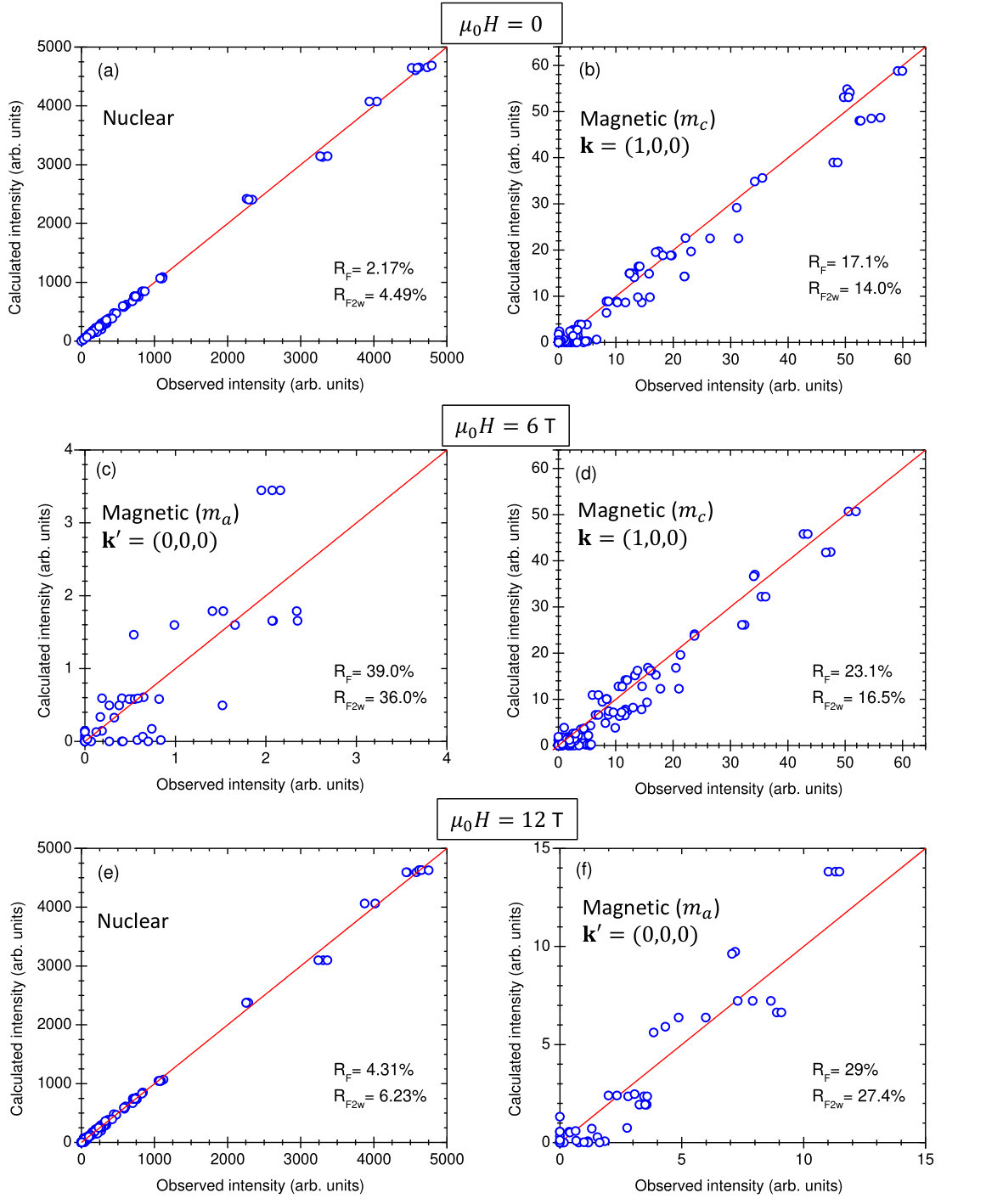 Figure 1
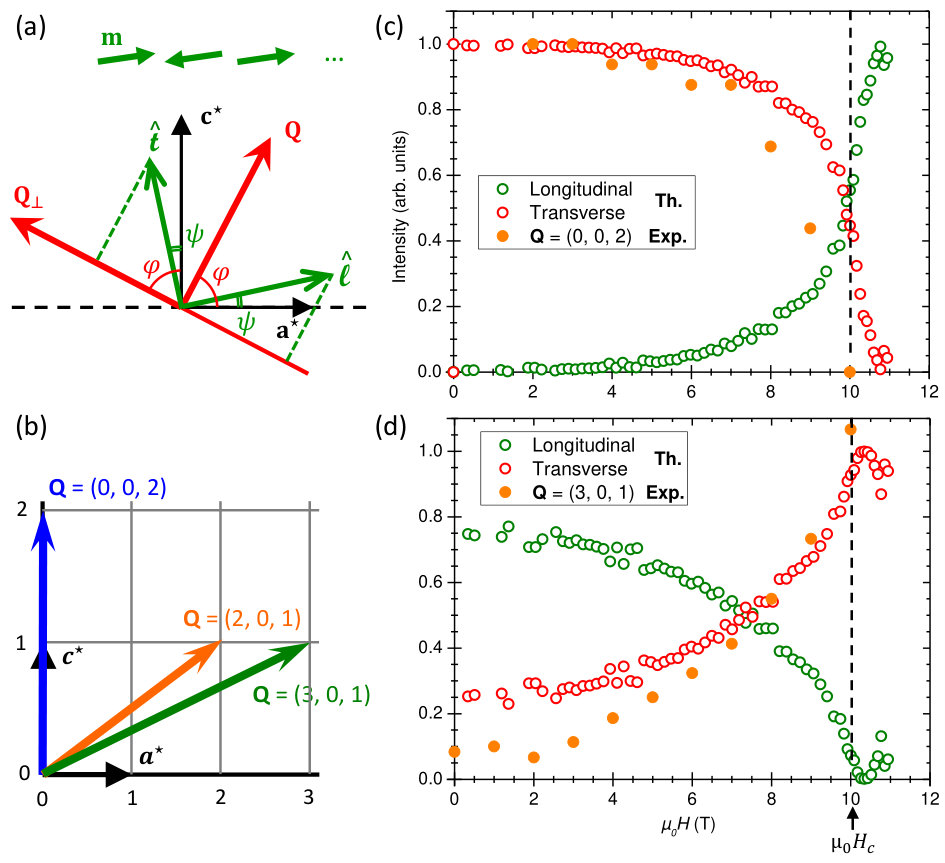 Figure 2
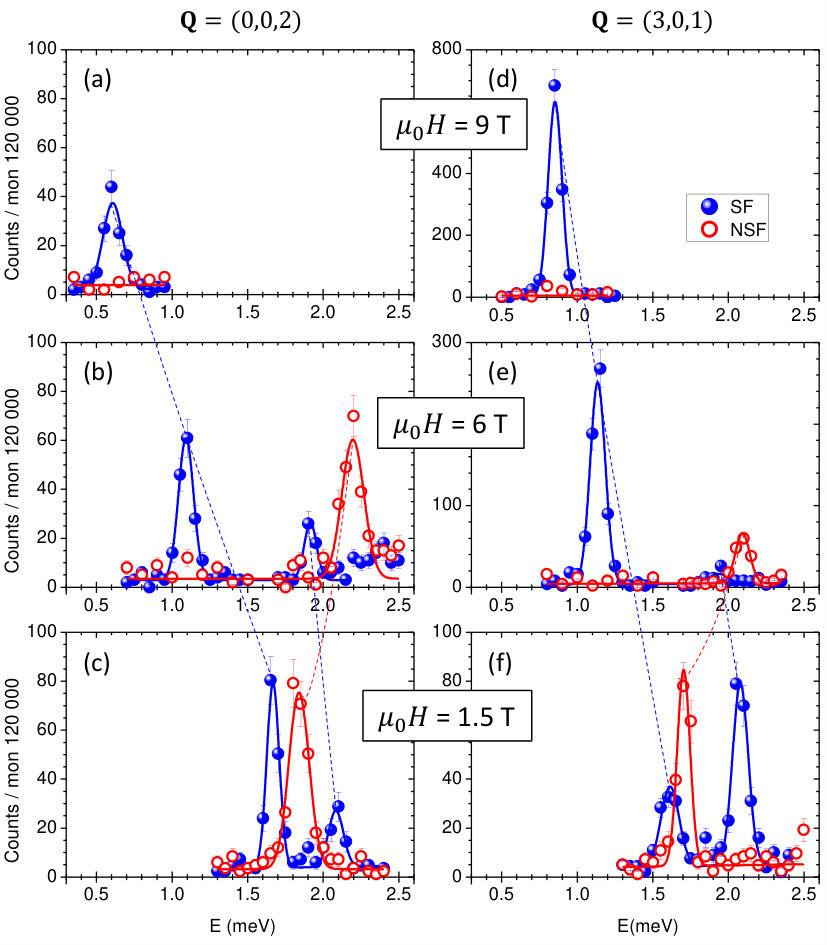 Figure 3
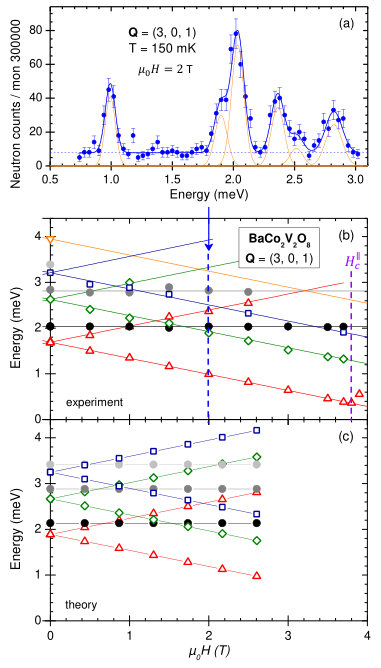 Figure 4
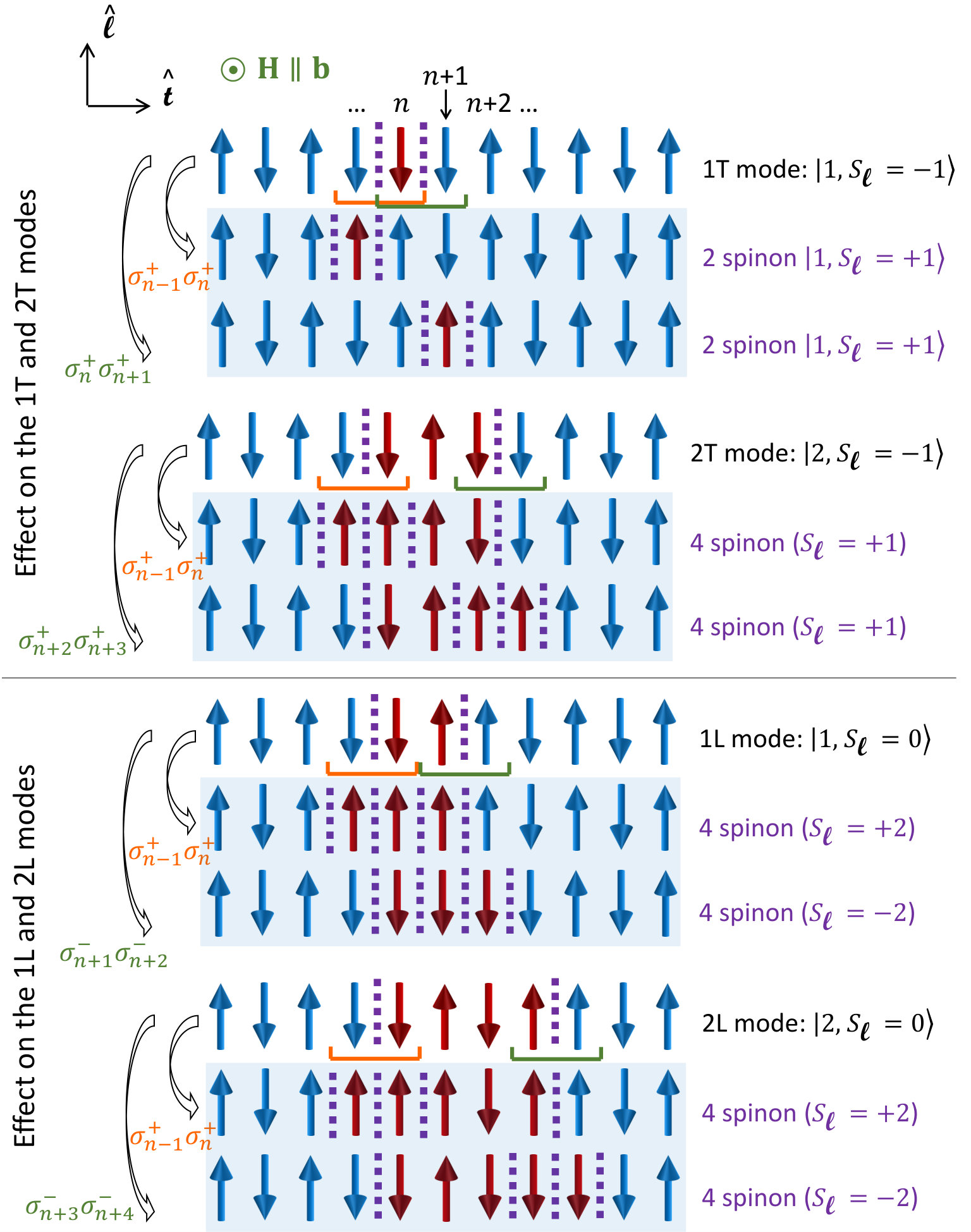 Figure 5
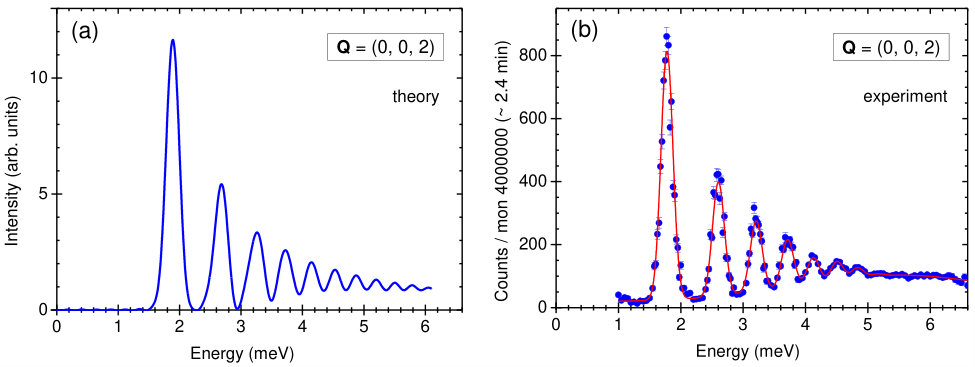 Figure 6
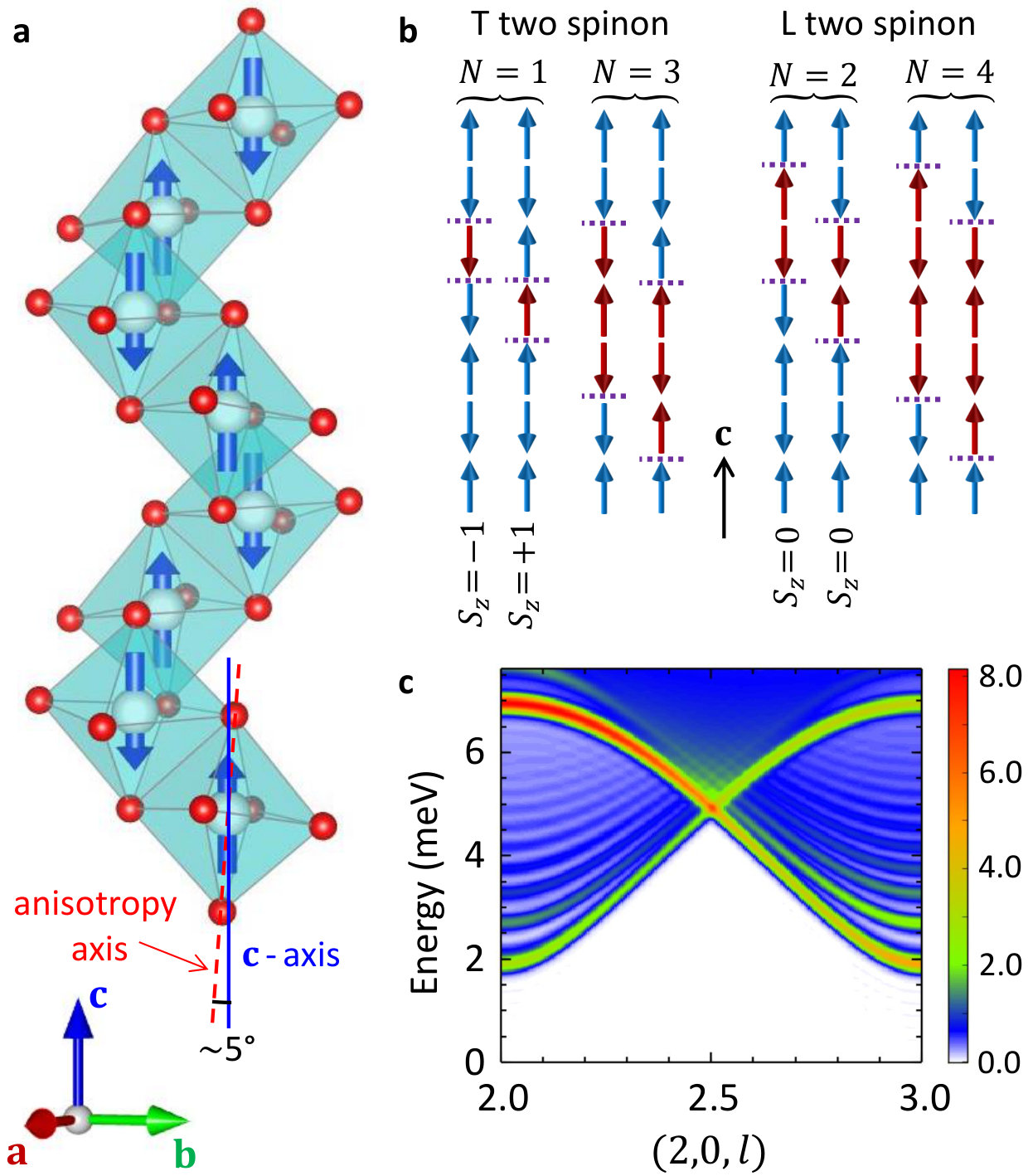 Figure 1
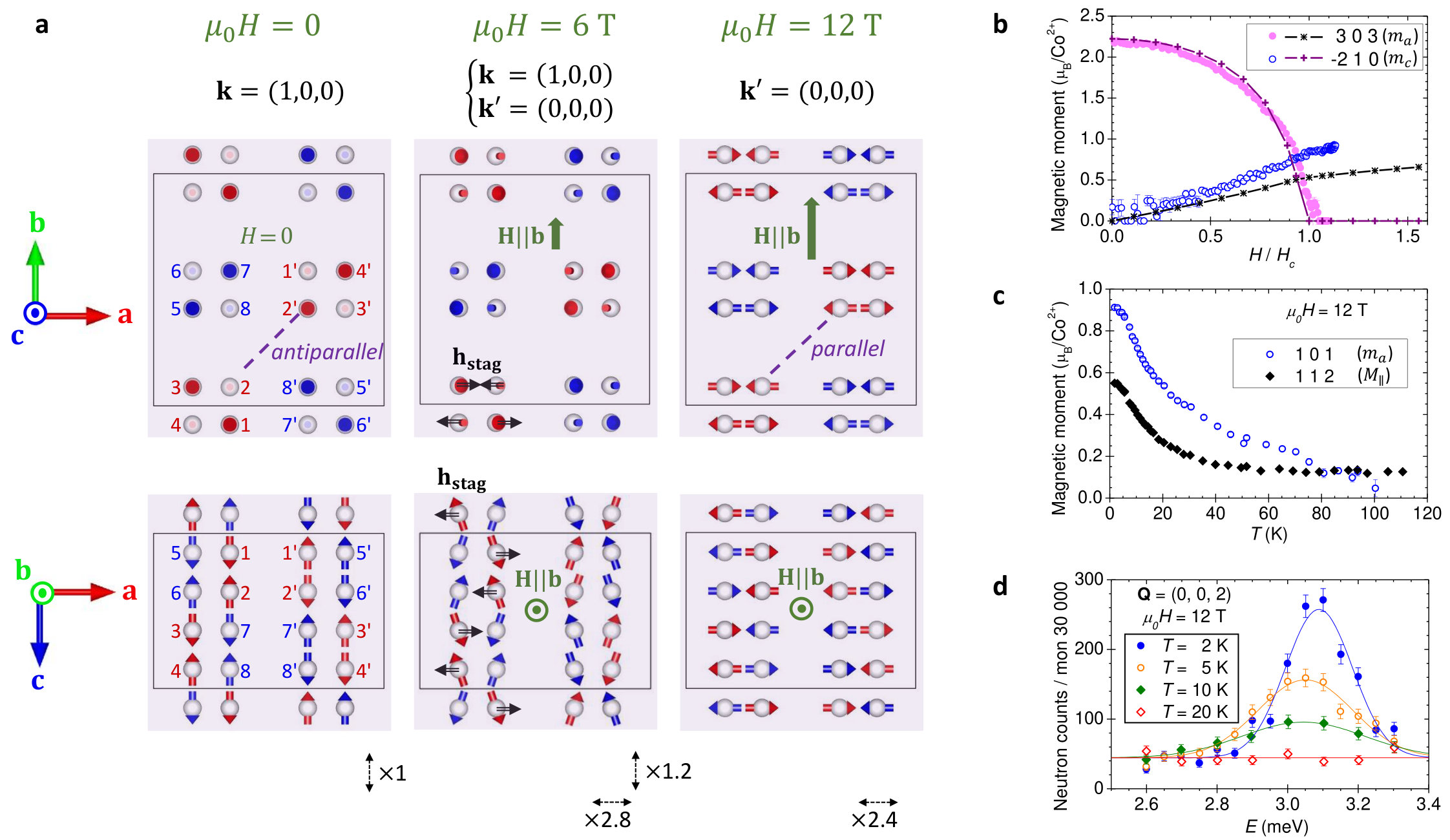 Figure 2
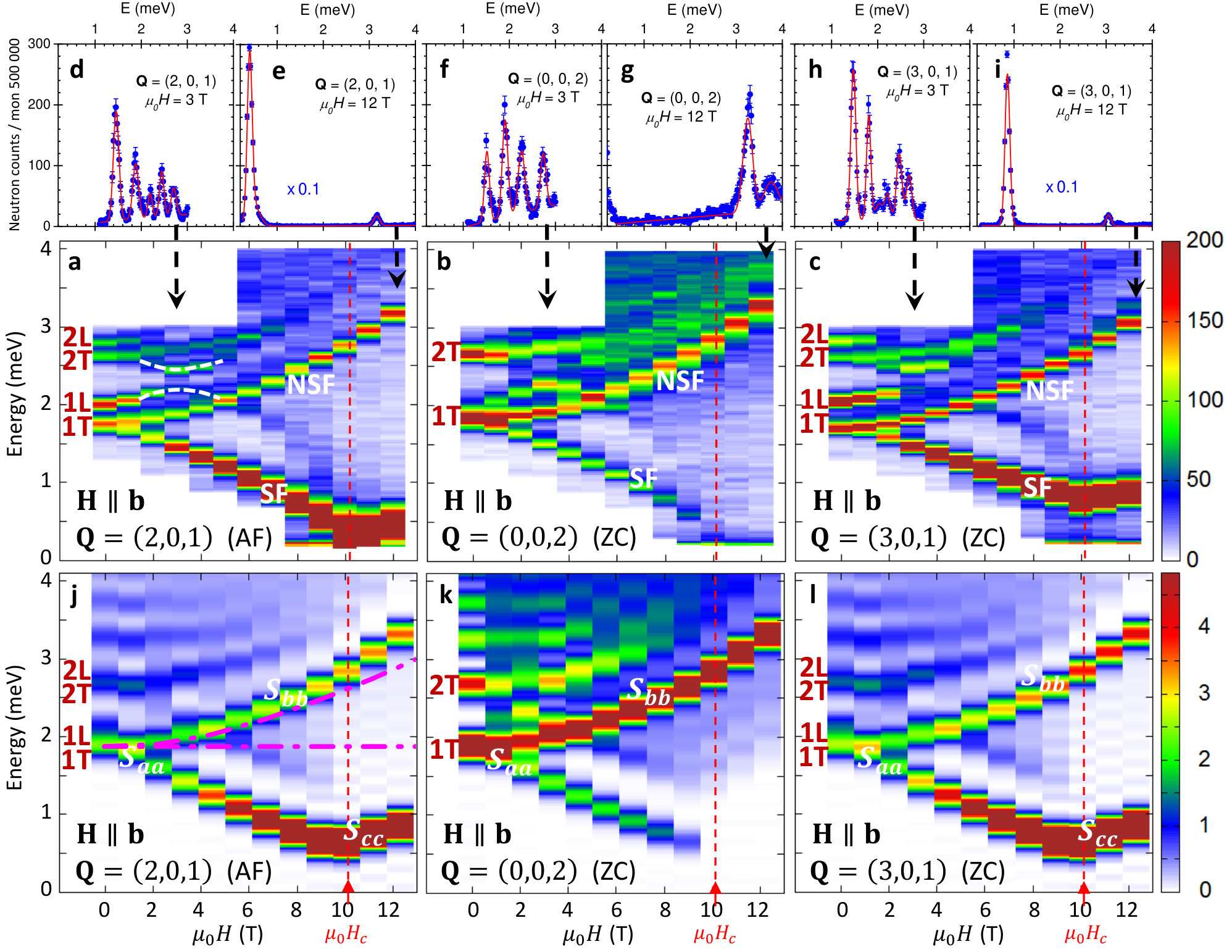 Figure 3
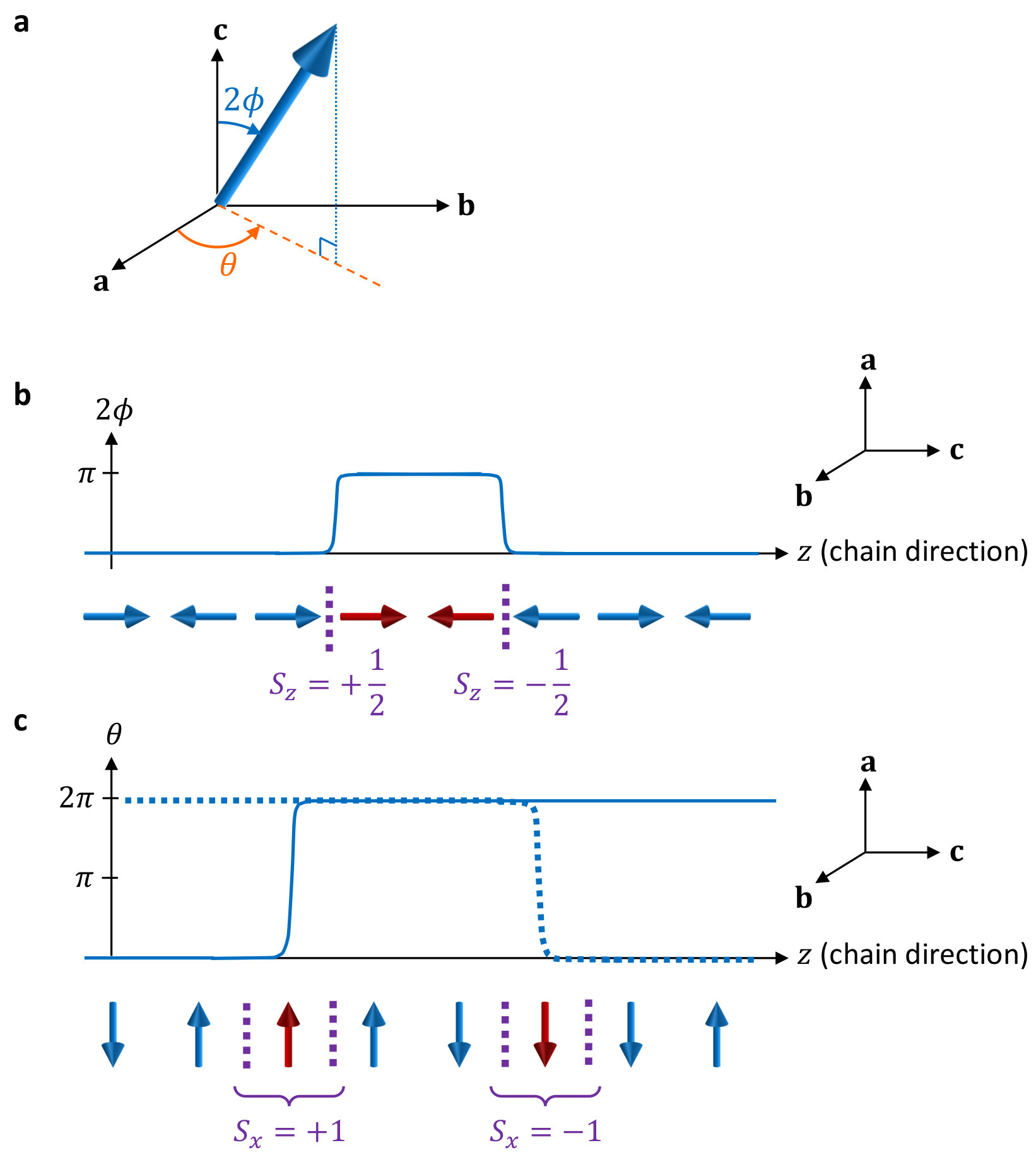 Figure 4
Peer Reviews
No public reviews on file for this paper yet. If you reviewed it on a platform where reviews are public (OpenReview, ICLR, NeurIPS, ICML), you can paste yours below so the community can read it here.
Videos
No videos yet. Explain this paper in a talk, walkthrough, or lecture? Add one.
(Dated: )
Topological quantum phase transition
in the Ising-like antiferromagnetic spin chain BaCo2V2O8
Q. Faure
Université Grenoble Alpes, CEA, INAC, MEM, F-38000 Grenoble, France
S. Takayoshi
DPMC-MaNEP, University of Geneva, 24 Quai Ernest Ansermet, CH-1211 Geneva, Switzerland
S. Petit
Laboratoire Léon Brillouin, CEA, CNRS, Université Paris-Saclay, CE-Saclay, F-91191 Gif-sur-Yvette, France
V. Simonet
Institut Néel, CNRS–UGA, F-38042 Grenoble, France
S. Raymond
Univ. Grenoble Alpes, CEA, INAC, MEM, F-38000 Grenoble, France
L.-P. Regnault
Univ. Grenoble Alpes, CEA, INAC, MEM, F-38000 Grenoble, France
M. Boehm
Institut Laue Langevin, CS 20156, F-38042 Grenoble, France
J. S. White
Laboratory for Neutron Scattering and Imaging, PSI, CH-5232 Villigen, Switzerland
M. Månsson
Materials Physics, KTH Royal Institute of Technology, Electrum 229, SE-16440 Kista, Stockholm, Sweden
Ch. Rüegg
Laboratory for Neutron Scattering and Imaging, PSI, CH-5232 Villigen, Switzerland
P. Lejay
Institut Néel, CNRS–UGA, F-38042 Grenoble, France
B. Canals
Institut Néel, CNRS–UGA, F-38042 Grenoble, France
T. Lorenz
II. Physikalisches Institut, Universität zu Köln, D-50937 Köln, Germany
S. C. Furuya
Condensed Matter Theory Laboratory, RIKEN, Wako, Saitama 351-0198, Japan
T. Giamarchi
DPMC-MaNEP, University of Geneva, 24 Quai Ernest Ansermet, CH-1211 Geneva, Switzerland
B. Grenier
Univ. Grenoble Alpes, CEA, INAC, MEM, F-38000 Grenoble, France
Since the seminal ideas of Berezinskii, Kosterlitz and Thouless, topological excitations are at the heart of our understanding of a whole novel class of phase transitions. In most of the cases, those transitions are controlled by a single type of topological objects. There are however some situations, still poorly understood, where two dual topological excitations fight to control the phase diagram and the transition. Finding experimental realization of such cases is thus of considerable interest. We show here that this situation occurs in BaCo2V2O8, a spin-1/2 Ising-like quasi-one dimensional antiferromagnet when subjected to a uniform magnetic field transverse to the Ising axis. Using neutron scattering experiments, we measure a drastic modification of the quantum excitations beyond a critical value of the magnetic field. This quantum phase transition is identified, through a comparison with theoretical calculations, to be a transition between two different types of solitonic topological objects, which are captured by different components of the dynamical structure factor.
The pioneering work of Berezinskii, Kosterlitz and Thouless (BKT) 1, 2 has enlightened the role played by topological excitations in the two dimensional classical model. Since then, the topological aspects have been found to be crucial not only to a host of two dimensional classical systems 3, but also in a spectacular way in the one dimensional quantum world 13 with in particular the remarkable case of spin-1 chains 5. Such concepts have allowed to understand important aspects of the physics of materials such as the quantum hall effect 6 and even predict new classes of systems such as topological insulators 7. Identifying and understanding the topological aspects of matter has thus become a major focus in condensed matter physics and quantum optics, where topological phases such as the Haldane model 8 have been remarkably realized 9.
For classical and quantum critical phenomena, we have by now a good understanding of the prototypical topological phase transition in which only a single topological entity controls the transition. This was the case in the original BKT work, where vortex-antivortex excitations deconfine in a similar way than electrical charges in the two dimensional Coulomb gas 10. In the quantum world, this situation is described by the celebrated sine-Gordon model, which also plays a central role in quantum field theory 11. However, a richer and more difficult to understand class of topological transitions was rapidly pointed out to also play a major role for several systems 12, 13. This situation arises when two conjugate fields, subjected to the Heisenberg uncertainty principle and plunged into different potentials, compete with each other. The phase diagram is thus controlled by the confinement/deconfinement of the corresponding dual topological exc itations. These situations are considerably more difficult to analyse 12, 13 and need much more sophisticated field theory descriptions such as the so-called dual-field double sine-Gordon model 14, 15. It is thus of considerable interest to find good experimental realizations of such cases, with the possibility to tune the system through the transition and in which the evolution of the excitations can be scrutinized.
Here we show that the Ising-like spin chain compound BaCo2V2O8 yields a good realization of such a topological transition when subjected to a magnetic field transverse to the Ising axis (which points along the chains). This compound is characterized by unique features. First, it shows a strong Ising-like anisotropy. Next, because of the crystallographic peculiarities, applying a uniform field creates a staggered field perpendicular to both the Ising-axis and the uniform field. This specificity allows dual topological excitations to be present. Those are solitonic excitations associated with the two angles needed to parametrize a spin and which in quantum mechanics are conjugate variables. Using a combination of neutron scattering experiments, numerical calculation of the microscopic description of the system, and a field theory analysis based on the double sine-Gordon model, we show that the transition observed in BaCo2V2O8 at a certain critical value of the magnetic field corresponds to a quantum phase transit ion between two phases dominated by dual topological excitations (see Fig. 4): i) spinons along the chain direction – fractionalized excitations carrying a spin 1/2 –; ii) their dual excitations – carrying a spin 1 – along the axis of the staggered magnetic field.
BaCo2V2O8, a model system
The cobalt oxide BaCo2V2O8 indeed offers the unique opportunity to study this physics. This material exhibits screw chains of Co2+ rotating around the 4-fold axis. The magnetic moments of the Co2+, in a distorted octahedral environment, are described as highly anisotropic effective spins (see Fig. 1a) 16. In BaCo2V2O8, the presence of a small coupling between the spin chains additionally leads to a long-range ordering below the critical temperature K. The order consists in an intra-chain AF arrangement of the magnetic moments pointing along the Ising axis 16, 4, 3.
Moreover, because of the original crystallographic structure of BaCo2V2O8, the magnetization local easy-axes of the Co2+ ions are actually tilted away from the chain axis by and rotate by 90*∘* when moving along the 4-fold axis (see Fig. 1a). This leads to a fully anisotropic g-tensor, which produces additional effective fields perpendicular to an applied transverse field 12. These effective fields are different wether the applied field is along (or equivalently ) or along . In all cases, effective fields are produced along whereas only in the former case a staggered field is induced along . Importantly, the critical field marking the end of the Néel phase determined from macroscopic measurements is T for and T for , the latter being much closer to the expected value corresponding to the magnetization satu ration 8, 12, 20. For only a small ferromagnetic component is induced at the critical field. As we will confirm in this article, this indicates that the effective staggered field induced along opens an unconventional intermediate phase above .
The adequate model to describe BaCo2V2O8 along with this phenomenology is the following:
[TABLE]
The first term is the Hamiltonian where is a spin 1/2, and are chain and site indexes, is the antiferromagnetic (AF) intra-chain interaction, the anisotropy parameter ( in our case). The action of a magnetic field yields the second term with the Bohr magneton, the Landé tensor and the external magnetic field. The last term arises from the weak inter-chain coupling . In the specific case of , the case that we shall consider below, the total (external + effective) magnetic field at site writes:
[TABLE]
with , and .
Spectroscopic studies in zero field showed 22, 7 that BaCo2V2O8 does not host a classical Néel state at low temperature, in the sense that it lacks conventional spin wave excitations. Instead, the excitations consist of 2-spinons bound states confined by the interchain coupling (see Fig. 1c for the calculated spectrum), leading to series of long-lived gapped discretized modes (called Zeeman ladders) strongly dispersing along the axis (and only weakly along the and directions). As depicted in Fig. 1b, these bound states exist in two different flavors, depending on the parity of the number of flipped spins between two domain walls: the modes with odd (resp. even) carry a spin (resp. ) 24. In BaCo2V2O8, the quasiparticles are described as linear combinations of those spinon pairs that we label using the index , in ascending order, as and . In neutron scattering experiments, the modes come as transverse (T) excitations (spin fluctuations in the plane perpendicular to the direction of the ordered magnetic moment, hence to the axis in zero field), while the modes come as longitudinal (L) ones (spin fluctuations parallel to the ordered moment). Note that allows the walls to flip by two sites. As a result, the and sectors, hence the T and L modes, are decoupled. This original excitation spectrum occurs in BaCo2V2O8 due to the sizable interchain interactions and to moderate Ising anisotropy 7. Finally, it is also observed in the related compound SrCo2V2O8 25, 26, 27.
Static properties in a magnetic field
We now examine, for the static magnetic properties of BaCo2V2O8, the effect of the effective fields, in particular of the staggered one along , created by applying a magnetic field along . The results of the neutron diffraction experiments provide insight into the ground state evolution. Fig. 2a display sketches of the refined magnetic structures measured at 0, 6 (below ) and 12 T (above ). With increasing , the magnetic moments remain staggered but progressively rotate in the plane, from the Ising axis to the axis precisely at the transition (see supplementary information). The field-evolution of the staggered components and of the ordered magnetic moments along and respectively are shown in Fig. 2b. The component increases at the expense of the component that eventually vanishes at the transition. This evolution of the staggered moment orientation from the Ising axis to the axis originates from an energetic compromise, between on the one hand the intrachain exchange interaction, and on the other hand the Zeeman energy gain due to the effective transverse fields 28.
It is worth noting that, in principle, the effective field along also induces a magnetic component of 0.04 at T, as deduced from the calculations. Its value, however, is extremely small and has consequently no relevant role in the phase transition.
Note that this transition is not a standard spin reorientation with a global rotation of the spins. Indeed, the relative orientations of the magnetic moments between neighboring chains are different in the zero field and in the high field structure, due to a different symmetry of the interchain interactions and the staggered field, respectively. As shown in Fig. 2a (see also supplementary information), to accommodate this competition, the spins rotate clockwise for half of the chains, and anti-clockwise for the other half, yielding a non-collinear intermediate magnetic structure. This subtle modification points out the role of the staggered field, which forces a magnetic structure that competes with the interchain interactions.
The peculiar nature of the high field phase at 12 T is further illustrated in Fig. 2c. It shows the measured temperature dependence of the staggered order parameter () compared to the uniform component () induced along by the field. In contrast with the usual abrupt drop of the order parameter expected for a temperature becoming larger than the interactions between magnetic moments above a critical field (see for instance Fig. 6 of reference 3), decreases smoothly up to high temperature. is thus induced by the staggered magnetic field as is induced by the uniform magnetic field. The intrachain interaction is still effective in the high field phase, and gives rise to well-defined excitations as shown in Fig. 2d. Note that these modes disappear between 10 and 20 K, at a much lower temperature than the staggered magnetization. These excitations are actually quite unconventional as described in the following.
Magnetic excitations in a magnetic field
Figs 3a-i show the measured evolution of the lowest modes ( and ) of the Zeeman ladder, as a function of the transverse field , for several scattering vectors : the AF point (2, 0, 1) and the two zone center (ZC) positions (0, 0, 2) and (3, 0, 1). By increasing , the zero-field mode splits into two branches (see Figs 3a-c). Note that the energy dependence of these two branches is not linear. The upper branch exhibits an upward variation up to T while the lower branch decreases down to T . At this field, this branch reaches its minimum energy before increasing again, as seen e.g. at the AF position . The softening of the lower branch at thus marks the quantum phase transition, as already observed by Electron Spin Resonance (ESR) 29. Note that a small energy gap of about meV is still present (see Fig. e̊ffig3a). The width of these two modes remains resolution-limited, indicating that they still must be considered as long lived quasiparticles. The energy of the mode is not constant with the field but increases with increasing field up to about T. At this field, an anti-crossing with the lowest branch of the upper mode occurs (see dashed white lines in Fig. 3a). As increases above T, the lowest of the two hybridized branches broadens while its energy decreases, to finally disappear completely at the critical field.
This field-dependence of the excitations is very different from the case of an external longitudinal field (parallel to the Ising axis) for which the and excitations remain decoupled. In this case, the field produces a Zeeman splitting of the transverse excitations (linear field dependence) and has no effect on the longitudinal ones whose energy remains constant. This is indeed what is observed by ESR 22 and inelastic neutron scattering in BaCo2V2O8 (see supplementary information). The transverse field, on the other hand, allows the spinons to hop by one site and the and sectors are no more independent. As a result, the field creates a quantum overlap between the and excitations (see Fig. 1b). This hybridization process produces non-linearities to second order in . In the present case, there are two kinds of transverse fields, the uniform one along b and the staggered one a long a. The influence of the latter is the strongest one as shown in Fig.3j since it produces the rapid decrease of the lower branch towards the critical field compared to almost no field dependence in its absence.
A signature of the influence of the staggered field along a is also visible in the field dependence of the intensity of the modes. The lowest energy mode displays a drastically different spectral weight evolution for the equivalent ZC and positions (see Figs 3b,c). The latter gets more intense as the critical field is approached, while the former progressively vanishes. To understand this behavior, we performed inelastic neutron scattering measurements using polarized neutrons and polarization analysis in a vertical magnetic field parallel to the axis on the IN12 triple-axis spectrometer. In this set-up, the non-spin-flip (NSF) and spin-flip (SF) scattering processes give information respectively about the spin fluctuations parallel to the field direction , and perpendicular to it (without discriminating between the and directions). The lowest branch of the split modes is found to be SF, hence polarized within the plane, while the upper branch is NSF, hence polarized along (see supplementary information). Note that a geometrical factor enters the neutron cross section, reflecting the fact that only spin components perpendicular to the scattering vector contribute to the intensity. The decrease [resp. increase] of the spectral weight of the lowest energy mode for the (0, 0, 2) [resp. (3, 0, 1)] ZC can be explained by the change of polarization of the excitation, from parallel to at low field to parallel to at the critical field and above. This result can be understood by the rotation of the ordered moment from to , as established by the diffraction results, the lowest excitation branch thus conserving its transverse character in the whole field range.
Topological nature of the transition and of the low energy excitations
To determine the nature of the transition experimentally identified above, we performed numerical simulations of the model in presence of an external magnetic field (see Eq. (S4)). The effects of the interchain interactions were taken into account by a mean field theory, in which an effective staggered field induced by the Néel order of the neighboring chains is determined self-consistently. We used an infinite time-evolving block decimation (iTEBD) 10 with the infinite boundary condition 11 (see the supplementary information for details). Using the parameters meV, and meV, close to those reported in the literature 12, 7, the results show excellent agreement with the experimental data and thus validate the model. In zero magnetic field (Fig. 1c), as discussed above, we reproduce the Zeeman ladders corresponding to the bound spinons 7. With the magnetic field, the results are shown in Fig. 2b for the order parameter and in Figs 3j-l for the excitation spectrum. In these calculations, we used the ratios and determined by Kimura et al. 12, along with , a value slightly different from the value of 2.75 determined in Ref. 12, in order to agree with the measured critical field. The numerics describe extremely well the field dependence of the (staggered) magnetization along the chains. For the component perpendicular to the chains, the overall trend of the data is correctly given by the numerics but a global scaling factor seems to exist with the experimental data. The reason for this discrepancy could be due to factors such as: i) effect of temperature; ii) bigger sen sitivity of this quantity on small uncertainties in the parameters, iii) treatment of the interchain interaction in the mean field theory. On the other hand, the results for the excitation spectrum (Figs 3j-l) show a very good agreement with the data (Figs 3a-c) accounting for the main modes observed experimentally. The numerics further validate the polarization of the modes and in particular the transverse nature of the lowest energy one. The rapid energy lowering of the lowest branch when the field is applied along is confirmed numerically to be a consequence of the additional effective staggered field along due to non diagonal components of the g-tensor 8, 12.
The validation of the model of Eq. (S4) from the numerics allows us to use field theory to describe the transition qualitatively, thereby determining its nature in a more transparent way. Using the bosonization technique 13, we obtain a dual-field double sine-Gordon model describing BaCo2V2O8 in an external field along :
[TABLE]
(see supplementary information) where is the spinon velocity, the Luttinger parameter, a contant having a dimension of energy and a dimensionless constant 13. These parameters () are a function of and , but there is no analytical representation. The effect of the Zeeman coupling with the uniform field along the axis is renormalized into these parameters 32. Since the Zeeman term of the four-site periodic field along the -axis is irrelevant, it does not appear in Eq. (Topological quantum phase transition in the Ising-like antiferromagnetic spin chain BaCo2V2O8). The effect of this field is actually negligibly small. and are dual bosonic fields that can be qualitatively identified with the polar and azimuthal angles of a staggered magnetization vector (see Fig. 4a). In Eq. (Topological quantum phase transition in the Ising-like antiferromagnetic spin chain BaCo2V2O8) the potential terms and compete with each other and pin the fields (resp. ) for the low (resp. high) field phase. The expectation values and correspond to the staggered magnetization along the and axes, respectively.
Excitations in a given phase correspond to the soliton of a pinned field (tunneling from one mininum of the cosine to the next), and carry a topological index (see Fig. 4). In the low-field phase, is fixed to ( is an integer). Thus, a low-energy excitation corresponds to the creation of a soliton-antisoliton pair in which changes from [math] to (for the soliton) and from back to [math] (for the antisoliton) (see Fig. 4b). The soliton and antisoliton are domain walls of the Néel order, with spins reversed with respect to the ground state between them. The solitons themselves can be identified with the spinons (see Fig. 1b). The soliton-antisoliton would be deconfined in a single chain while confined in BaCo2V2O8 due to the linear potential produced by interchain interaction. In the high-field phase the term dominates over and fixes the field. The corresponding soliton carries a spin (instead of ) since changes from [math] to (instead of [math] to for the field ) (see Fig. 4c). Note that important differences between the low and the high field phases exist. In the low field phase, the Hamiltonian contains while a physical observable such as the staggered part of depends on . Thus the two parts of the soliton and can be distinguished by local measurements of , such as the string of overturned spins separating the two objects. However, in the high field phase, both the Hamiltonian and the physical observable depend on , making both sides of the solution identical far from the soliton. In terms of a local measurement of , the corresponding excitations would thus be local and would not carry a topological index. There is however a true topological order present since orders. It could be detected thr ough a quantity such as , but would require nonlocal measurements as recently performed in cold atom systems 33, 34. How to conduct such measurements for quantum spin systems in solid state is a challenging question.
The analysis of the properties of the modes in the experimental data and the agreement with numerics confirm that the quantum transition of the dual field double sine-Gordon model is indeed what is observed in BaCo2V2O8, providing an explanation of the rather mysterious field-induced transition and enlightening its topological nature. From a theoretical point of view, the study of the transition itself is a challenging problem. The nature of the transition depends on the precise periodicity of the cosines 3. For the purely 1D Hamiltonian (3) special solvable points suggest an Ising transition 35, as also confirmed by a numerical calculation of the central charge. A complete study, in particular taking into account the effective 3D coupling beyond mean-field is still lacking. BaCo2V2O8 thus provides a remarkable experimental system in which this transition can be tuned and studied in a controlled way.
More generally, quantum spin systems have been a steady reservoir of experimental realizations of topological phases and transitions, with in particular several realizations of the sine-Gordon model, or of exotic phases such as Tomonaga-Luttinger liquids. Our analysis of the transition in a uniform transverse magnetic field in BaCo2V2O8 shows that they are also able to provide excellent and controlled realizations of more complex and yet challenging models from a theoretical point of view, confirming – in addition to the own intrinsic interest of quantum magnets – their place as quantum simulators of quantum correlated systems.
**Acknowledgments
**We thank R. Ballou, C. Berthier, M. Horvatić, M. Klanjšek, and S. Niesen for fruitful discussions, P. Courtois and R. Silvestre for their help in the sample co-alignment done at ILL prior to the experiment at PSI, E. Villard, B. Vettard, and M. Bartkowiak for their technical support during the Inelastic Neutron Scattering experiments on ThALES (ILL), IN12 (ILL) and TASP (PSI), respectively, J. Debray, A. Hadj-Azzem, and J. Balay for their contribution to the crystal growth, cut, and orientation. We acknowledge ILL and PSI for allocating neutron beam time. This work was partly supported by the French ANR Project DYMAGE (ANR-13-BS04-0013). ST is supported by the Swiss National Science Foundation under Division II and ImPact project (No. 2015-PM12-05-01) from the Japan Science and Technology Agency. MM acknowledges funding from the Swedish Research Council (VR) through a neutron project grant (Dnr. 2016-06955). TL acknowledges support by the Deutsche Forschungsgemeinschaft through CRC 1238 Project A02.
Author contributions
All authors contributed significantly to this work. In details, sample preparation by PL, neutron scattering experiments and analysis by QF, BG, SP, and VS with the support of SR, LPR, MB, JSW, MM, and ChR, calculations by ST, SCF, and TG, Physical discussions with ChR, BC, and TL; Manuscript written by VS, SP, BG, QF, TG, and ST with constant feedback from the other co-authors.
Author information
The authors declare no competing financial interests.
**Methods
**
Sample preparation & experimental set up
A BaCo2V2O8 single-crystal was grown at Institut Néel by the floating zone method. 36 A 5 cm long cylindrical crystal rod, of about 4 mm diameter, was obtained by imposing the growth axis to be along the crystallographic axis. One crystal piece of 10 mm long was cut from the rod for the diffraction experiment, while two crystal pieces of about 18 mm long were cut for the inelastic neutron scattering (INS) experiments.
The diffraction experiment was performed on CEA-CRG D23 single-crystal two-axis diffractometer with a lifting arm detector at Institut Laue Langevin (ILL). The sample, previously aligned with the axis vertical on the Laue diffractometer OrientExpress at ILL, was installed on D23 in the CEA 12 T vertical field cryomagnet. A maximum transverse magnetic field of 12 T ( and thus Ising axis) could be reached with a base temperature of 1.5 K. An incident wavelength of 1.28 Å was used, from a copper monochromator, thus allowing to measure and Bragg peaks with a maximum value of 17 for and 11 for .
The INS experiments under a transverse magnetic field were performed on two cold-neutron triple-axis spectrometers, ThALES and FZJ-CRG IN12 at ILL. On ThALES,37 a PG(002) monochromator (resp. analyzer) was used to select (resp. analyze) the initial (resp. final) wave vector of the unpolarized neutron beam. On IN12, we used polarized neutrons, from a cavity transmission polarizer located far upstream in the guide, with an initial wave vector selected by a PG(002) monochromator, and polarization analysis, from a heusler analyzer (see Ref. 38 for a more detailed description of the standard polarized neutron setup on IN12). On both spectrometers, the energy resolution was of the order of 0.15 meV and the higher order contamination was suppressed by a velocity selector. The same cryomagnet as on D23 was used on both instruments, thus providing a maximum transverse field of 12 T at a base temperature of 1.5 K. Due to the high applied vertical magnetic field (up to 12 T), the ver tical current of the Mezei spin flipper, placed just before the monochromator on IN12, was calibrated for every used value of the incident wave vector and of the magnetic field. The horizontal current was checked to be non sensitive to the applied field. The flipping ratios were ranging between 12 and 23, depending on the incident wave vector and magnetic field values. One of the two 200 mm3 crystal pieces was used in both experiments and previously aligned with the axis vertical on the triple-axis spectrometer IN3 at ILL, yielding a horizontal scattering plane. Once the sample glued, the alignment was checked to be better than 1∘ on the neutron Laue diffractometer OrientExpress at ILL. All the INS data presented here were measured at a fixed final wave vector of 1.3 Å*-1*.
I Single-crystal Neutron diffraction under a transverse magnetic field
We report hereafter the details about the nuclear and magnetic structures refinement, based on the neutron diffraction measurements performed on the lifting-arm diffractometer CEA-CRG D23 at ILL, both in zero-field and under a transverse magnetic field applied along the axis of the BaCo2V2O8 single crystal up to 12 T. All data presented here were collected during the same experiment, and thus using exactly the same set-up (described in the method section of the main paper).
BaCo2V2O8 crystallizes in the body-centered tetragonal space group with the following lattice parameters: Å and Å 1.
At , 288 nuclear reflections, allowed in the space group, reducing to 149 independent ones, were collected at K by performing rocking curves. The nuclear structure was then refined using the Fullprof software 2 in order to determine the necessary information for the magnetic structure refinement (i.e. the scale factor, the coordinate and Debye-Waller factor of Co, the extinction parameters, and the ratio). The calculated intensities plotted in Fig. S1a as a function of the observed ones emphasize the quality of the fit. 103 magnetic reflections, associated to the propagation vector and reducing to 48 independent ones, were then collected. Let us remind that they correspond to reflections with , that is, to Bragg positions for which the nuclear intensity is always null because of the body-centering of the crystallographic structure. The same magnetic structure as in Can ’evet et al.3 was found, with a staggered moment /Co2+ (see Fig. S1b for the plot of vs ). Note that implies an AF coupling in the diagonal direction, that is between two chains of the same nature (both described by a screw axis, plotted in red in Fig. 2a of the main paper, or by a screw axis, plotted in blue). Consequently, the magnetic structure presents an AF coupling along and a FM one along in the first domain (see top left panel of Fig. 2a in the main paper), while it is the reverse in the second domain.
The same nuclear reflections were then collected at T , yielding the same crystallographic structure as in zero-field, to within the error bars, with comparable agreement factors. 48 magnetic reflections, with , were then collected, reducing to 30 independent ones. This set of measured reflections (allowed by the lattice type) corresponds to those forbidden either by a screw axis or a glide plane of the space group. Nevertheless, some of them were not strictly null at zero-field because of the presence of a sizable and/or mostly because of small defects in the crystal. As a result, they had to be collected in both phases and the difference between the T collect and the one was then used for the magnetic refinement. For this reason and because of the small magnetic signal, a counting rate of 30 seconds per point was used. The magnetic structure refinement was then performed, yielding a staggered magnetic moment /Co2+ (see Figs S1e,f for the vs plots of the nuclear and magnetic refinements at 12 T). The propagation vector of the high field magnetic structure implies a FM coupling in the diagonal direction (see top right panel of Fig. 2a in the main paper). Consequently, an AF coupling both along and along now occurs, thus lifting the frustration and yielding a single magnetic domain.
The T magnetic structure consists in a superposition of the and phases, as shown by the field dependences plotted in Fig. 2b of the main paper. The same magnetic reflections as for and T were collected, with respective counting rates of 6 and 30 seconds. Here again, the difference with the zero-field phase was used for the second set of reflections. The results of the magnetic refinement is shown for both contributions (see Figs S1c,d). The following values of the staggered components were found: /Co2+ for the zero-field contribution and /Co2+ for the high field one. The very small value of the latter component, in addition to the data treatment that had to be applied (difference with the zero-field data) explains the poorness of the fit. The non collinearity of the 6 T structure comes from the fact that it is a double magnetic structure. It can be simply understood by comparing the exchange couplings along and in the zero field structure (one is AF the other one is FM) to those in the high field phase (both are AF): As a result, half of the spins rotate clockwise and the other half anti-clockwise (see middle panels of Fig. 2a in the main paper).
II Neutron geometrical factor and Longitudinal Polarization Analysis
As is well known, neutron scattering experiments probe the correlations between spin components perpendicular to the scattering vector , denoted hereafter . As a result, the neutron scattering differential cross section reads:
[TABLE]
where is the thermal average.
A convenient way to analyze the data is to consider longitudinal (L) and transverse (T) fluctuations with respect to the direction of the ordered moment for a given field . Since the direction of (in addition to its amplitude) changes with the field, a rotating frame is then introduced (see Fig. S2a). is the (rotating) quantization axis, and are two orthogonal vectors such that . The vectors are defined as:
[TABLE]
where is the angle. Using this frame, the differential cross section reads:
[TABLE]
For a vector making an angle with in the scattering plane, we have , hence:
[TABLE]
The neutron cross section for longitudinal and transverse fluctuations acquires a “geometrical factor” and respectively. Note that the cross term is usually small and is thus neglected. A stringent comparison between the measured field dependence of the spectral weight for and (see Figs 3b,c of the main article) and the simulation using the above geometrical factors along with the diffraction data is shown in Figs S2c,d. While the magnetic moments rotate from the axis () to the axis (), the low energy branch originating from the split modes indeed follows the transverse geometrical factor with in particular for and for .
A spin polarized beam (as available on the triple-axis FZJ-CRG IN12 cold neutron spectrometer at ILL) provides additional information. In the present set-up (see Methods in the main paper for more details), the neutron beam is polarized by a cavity transmission polarizer with an initial wavevector selected by a PG(002) monochromator. The vertical magnetic field at the sample position then drives the spin of the incident neutrons parallel to the axis. The scattered intensity is then analyzed (using a heusler analyzer), to separate the spin-flip (SF) and non-spin-flip (NSF) contributions, corresponding respectively to processes where the neutron spin has flipped or not (see Fig. S3). It turns out that the NSF scattering cross section probes the correlations between spin fluctuations perpendicular to Q and parallel to the incident neutrons polarization direction (b in the present case), while the SF contribution probes the correlations between spin fluctuations perpendicular to bo th Q and the polarization direction. As a result, owing to the above framework, the NSF intensity will be directly proportional to while the SF intensity will probe . We conclude that at these positions, the upper branch of the Zeeman ladder mode is polarized along the axis while the lower one is polarized along the axis.
III Magnetic excitations in a longitudinal magnetic field
An inelastic neutron scattering experiment was performed on the cold-neutron triple-axis spectrometer TASP at Paul-Scherrer Institute (PSI) aiming at measuring the magnetic excitations of BaCo2V2O8 in a longitudinal magnetic field (applied along the Ising axis). Two crystal pieces were used: prior to the experiment, they were first individually aligned with the axis vertical using X-ray Laue diffraction at Institut Néel, then co-aligned to within a rotation angle of 0.2∘ around the vertical direction, by using the hard X-ray Laue diffractometer of the neutron optics group at ILL. A 7 T horizontal field cryomagnet was installed on TASP, equipped with a dilution insert, allowing to reach a maximum field of 4.2 T only (due to strong forces exerted by the stray fields onto the sample table, still magnetic at that time) and a base temperature of 150 mK. The magnetic field was applied along the axis of the scattering plane, thus corresponding to a longitudinal field. The data were measured at a fixed final wave vector of 1.2 Å*-1* using graphite PG(002) monochromator and analyzer. An energy resolution of 0.075 meV was then achieved. A beryllium filter was installed after the sample to remove high order contaminations. No other ZC nor AF positions than the one were accessible in this set-up over a sufficiently large energy-range due to the four pillars building the horizontal cryomagnet (only four sectors of about 45∘ are accessible for the incident and diffracted beams).
The results presented here (see Figs S4a,b) were obtained at 150 mK up to the critical field at which the Néel phase transforms into an incommensurate longitudinal Spin Density Wave (SDW) ordered phase, describable in terms of a Tomonaga-Luttinger liquid 3, 4, 5, 6. At , discretized modes, corresponding to Zeeman ladders with transverse and longitudinal character, can be observed at the zone center (ZC) position as in our previous study 7. Up to a critical field T at 150 mK, the modes remain at the same energy position, whereas the modes get linearly split (see Fig. S4b). This field-dependence is due to the fact that the longitudinal magnetic field keeps independent the and sectors and thus does not mix the corresponding modes. The zero field transverse excitations simply experience a Zeeman splitti ng. The value of determined from the fit of the linear field-dependency of the transverse modes is 6.07, in good agreement with the value of 6.2 derived from magnetization measurements 8. This observation confirms our previous identification of the longitudinal and transverse modes in zero field 7 and is well reproduced by the numerical calculations (see Fig. S4c) described in the main text and in the following sections. The transition to the incommensurate longitudinal phase occurs at when the lowest energy transverse mode condenses (note that it is not strictly zero yet).
IV Description of the excitations under a transverse magnetic field
To understand the evolution of the excitations throughout the transition occurring under a transverse field applied along the axis, it is instructive to rewrite the Hamiltonian given by:
[TABLE]
in the rotating frame shown in Fig. S2a. New operators are introduced, along with , , the quantization axis pointing along the ordered magnetic moment. This yields, for the intrachain part of the Hamiltonian ( and Zeeman terms of Eq. S4):
[TABLE]
with
[TABLE]
[TABLE]
While complicated at first glance, this form of the Hamiltonian proves meaningful to understand, from a physical point of view, how the spinon bound states evolve upon the field. For instance, renormalizes the energies of the spinons from to . allows each kink forming the bound state to hop (independently) by two sites. This term does not mix the sectors and plays the role of kinetic energy. It evolves from in zero field up to above . The staggered field contribution developing with the external field, that enters (but also ), behaves as a confinement potential, in a similar way as the inter-chain interaction does in zero field. The remaining terms are more complicated: and move the spinons by one site and entangle the with the sectors. This coupling is responsible for the mixing of the an d states described in the main article.
The most peculiar term (absent in the isotropic Heisenberg case) is . It induces two spin-flips, changing by , and thus increases the number of spinons. Indeed, as shown in Fig. S5, when acting on the states, this term essentially gives rise to 4 spinons states. This is likely the origin of the growing ”incoherent” scattering that can be observed in Figs 3 and 4 of the main article. The cartoon shown in Fig. S5 shows further that also couples the two states with each other, resulting in new eigenstates constructed as:
[TABLE]
for the lower branch, and
[TABLE]
for the higher one. Finally, moves the two spinons by one site. Physically, this means that the new states get an extra kinetic energy provided the two spinons hop simultaneously. Although the physical mechanism is different, this quasiparticles become analogous to the kinetic bound state observed in the Ising-like FM compound CoNb2O6 9.
V Numerical simulations
In this section, we explain the method of numerical simulations for BaCo2V2O8. This material consists of the stacking of Co chains, and each Co chain can be considered as a spin-1/2 Heisenberg model with Ising (easy-axis) anisotropy. The ground state of this Hamiltonian is a Néel ordered state. Here we take the contribution of interchain interaction by a mean field approximation, which gives rise to an effective staggered magnetic field in the Hamiltonian (at ):
[TABLE]
The parameters and are determined in the way that the cross section for the scattering vector (in the unit of , where are the lattice constants in the direction of the axes) is reproduced. The differential neutron scattering cross section is represented as
[TABLE]
where is the magnetic form factor and are the initial and final wave vectors, respectively (). We calculate space-time correlation functions using infinite time-evolving block decimation (iTEBD) 10 with the infinite boundary condition 11. In the calculations, the time is taken to be with the discretization . The truncation dimension (i.e., dimension of matrix product states) is . For the Fourier transform in Eq. (S7), the summation is taken over the actual positions of Co atoms. The scattering cross section (i.e., intensity of scattered neutrons) for at zero magnetic field calculated by iTEBD with the parameters , , and ( is the Landé’s factor, and is the Bohr magneton) is shown in Fig. S6. It reproduces very well the experimental result 7. The effective staggered field originates from the interchain interaction. Using a mean field theory, we obtain , where and . The colormap of scattering intensity for () is also shown in the main article (Fig. 1c), which also agrees rather well with experiment (see Fig. 1 of reference 7) except for the anticrossing observed around 4-5 meV at .
When the uniform transverse field is applied, the system is subjected to effective fields in the and directions since the magnetic principal axes are inclined with respect to the crystal axes (see Fig. 1a in the main paper), which gives non-diagonal components to the g-tensor. With the external field parallel to the axis, the Hamiltonian becomes, with , and :
[TABLE]
Here we set the parameter , chosen slightly smaller than the value of Kimura et al. 12 in order to reproduce the critical field of the transition. The other parameters are and according to Ref. 12. Since is introduced from the mean field approximation of the interchain interactions, is determined from the self-consistency equation , where is the staggered magnetization of the Néel order along the axis. Scattering cross sections calculated using Eq. (S8) under magnetic field are shown in the main article.
The chosen set of parameters is the best compromise to reproduce the staggered ordered moments along and , the zero-field excitation spectrum, the value of the critical field and the field-dependence of the magnetic excitations.
VI Dual field double sine-Gordon model
The bosonization formula for spin operators is
[TABLE]
where ( is the lattice constant) and is a nonuniversal constant 13. We take the lattice constant as unity hereafter. The bosonized form of the model without an external magnetic field is given by
[TABLE]
where is the spinon velocity, is the Luttinger parameter and is a contant having a dimension of energy 13. These parameters () are a function of , and they are renormalized when the uniform field along is applied. However, there is no simple analytic form to represent as a function of and the strength of the uniform field. Since the scaling dimension of the term is and for , the term is relevant. Hence it opens an excitation gap in the system. The staggered field along effectively induced by the application of transverse field along also gives another relevant term
[TABLE]
which has the scaling dimension . Thus the effective Hamiltonian in the bosonized field theory becomes
[TABLE]
Since the Zeeman term of the four-site periodic field along the axis is irrelevant, it does not appear in Eq. (S13). This model has two relevant cosine potentials in addition to the kinetic term, which is then called a dual field double sine-Gordon model. For (), the term has a lower scaling dimension (i.e., is more relevant) than the term. While the term is dominant for small , the term dominates over the term with increasing and the phase transition happens.
References
- 1
Wichmann, R. & Müller-Buschbaum, Hk. Neue Verbindungen mit SrNi2V2O8-Struktur: BaCo2V2O8 und BaMg2V2O8. Z. Anorg. Allg. Chem. 532, 153 (1986).
- 2 Rodriguez-Carvajal, J. Recent advances in magnetic structure determination by neutron powder diffraction. Physica B 192, 55 (1993).
- 3 Canévet, E., Grenier, B., Klanjšek, M., Berthier, C., Horvatić, M., Simonet, V. & Lejay, P. Field-induced magnetic behavior in quasi-one-dimensional Ising-like antiferromagnet BaCo2V2O8: A single-crystal neutron diffraction study. P. Phys. Rev. B 87, 054408 (2013).
- 4 Kimura, S., Takeuchi, T., Okunishi, K., Hagiwara, M., He, Z., Kindo, K., Taniyama, T. & Itoh, M. Novel Ordering of an Quasi-1d Ising-Like Antiferromagnet in Magnetic Field. Phys. Rev. Lett. 100, 057202 (2008).
- 5 Kimura, S., Matsuda, M., Masuda, T., Hondo, S., Kaneko, K., Metoki, N., Hagiwara, M., Takeuchi, T., Okunishi, K., He, Z., Kindo, K., Taniyama, T. & Itoh, M. Longitudinal Spin Density Wave Order in a Quasi-1D Ising-like Quantum Antiferromagnet. Phys. Rev. Lett. 101, 207201 (2008).
- 6 Klanjšek, M., Horvatić, M., Krämer, S., Mukhopadhyay, S., Mayaffre, H., Berthier, C., Canévet, E., Grenier, B., Lejay, P.a & Orignac, E. Giant magnetic-field dependence of the coupling between spin chains in BaCo2V2O8. Phys. Rev. B 92 (2015) 060408(R).
- 7 Grenier, B., Petit, S., Simonet, V., Canévet, E., Regnault, L.-P., Raymond, S., Canals, B., Berthier, C. & Lejay, P. Longitudinal and transverse Zeeman ladders in the Ising-like chain antiferromagnet BaCo2V2O8. Phys. Rev. Lett. 114, 017201 (2015); ibid. Erratum: Longitudinal and transverse Zeeman ladders in the Ising-like chain antiferromagnet BaCo2V2O8. Phys. Rev. Lett. 115, 119902 (2015).
- 8 Kimura, S., Yashiro, H., Hagiwara, M., Okunishi, K., Kindo, K., He, Z., Taniyama, T. & Itoh, M. High field magnetism of the quasi one-dimensional anisotropic antiferromagnet BaCo2V2O8. J. Phys.: Conf. Ser. 51, 99 (2006).
- 9 Coldea, R., Tennant, D. A., Wheeler, E. M., Wawrzynska, E., Prabhakaran, D., Telling, M., Habicht, K., Smeibidl, P. & Kiefer, K. Quantum Criticality in an Ising Chain: Experimental Evidence for Emergent E8 Symmetry. Science 327, 177 (2010).
- 10
Vidal, G. Classical Simulation of Infinite-Size Quantum Lattice Systems in One Spatial Dimension. Phys. Rev. Lett. 98, 070201 (2007).
- 11
Phien, H. N., Vidal, G. & McCulloch, I. P. Infinite boundary conditions for matrix product state calculations. Phys. Rev. B 86, 245107 (2012).
- 12
Kimura, S., Okunishi, K., Hagiwara, M., Kindo, K., He, Z., Taniyama, T., Itoh, M., Koyama, K. & Watanabe, K. Collapse of Magnetic Order of the Quasi One-Dimensional Ising-Like Antiferromagnet BaCo2V2O8 in Transverse Fields. J. Phys. Soc. Jpn. 82, 033706 (2013).
- 13
Giamarchi, T. Quantum Physics in One Dimension (Oxford University Press, Oxford, 2004).
The reference list from the paper itself. Each links out to its DOI / PubMed record.
- 11 Berezinskii, V. L. Destruction of long-range order in one-dimensional and two-dimensional systems having a continuous symmetry group I. Classical systems. Sov. Phys. JETP 32 , 493 (1971); Destruction of long-range order in one-dimensional and two-dimensional systems having a continuous symmetry group II. Quantum systems. Sov. Phys. JETP 34 , 610 (1972).
- 22 Kosterlitz, J. M. & Thouless, D. J. Ordering, metastability and phase transitions in two-dimensional systems. Journal of Physics C: Solid State Physics 6 , 1181 (1973).
- 33 José, J. V. 40 years of Berezinskii-Kosterlitz-Thouless theory. World Scientific (2013).
- 44 Giamarchi T. Quantum Physics in One Dimension (Oxford University Press, Oxford, 2004).
- 55 Haldane, F. D. M. Continuum dynamics of the 1-D Heisenberg antiferromagnet: Identification with the O(3) nonlinear sigma model. Phys. Lett. A 93 , 464 (1983); ibid. Nonlinear Field Theory of Large-Spin Heisenberg Antiferromagnets: Semiclassically Quantized Solitons of the One-Dimensional Easy-Axis Néel State. Phys. Rev. Lett. 50 , 1153 (1983).
- 66 Thouless, D. J., Kohmoto, M., Nightingale, M. P. & den Nijs, M. Quantized Hall Conductance in a Two-Dimensional Periodic Potential. Phys. Rev. Lett. 49 , 405 (1982).
- 77 Hasan, M. Z. & Kane, C. L. Colloquium: Topological insulators. Rev. Mod. Phys. 82 , 3045 (2010).
- 88 Haldane, F. D. M. Model for a Quantum Hall Effect without Landau Levels: Condensed-Matter Realization of the “Parity Anomaly”. Phys. Rev. Lett. 61 , 2015 (1983).