Lines on smooth polarized $K3$-surfaces
Alex Degtyarev

TL;DR
This paper establishes precise maximum counts for lines on smooth polarized K3 surfaces in projective spaces, confirming conjectured bounds for specific degrees and dimensions.
Contribution
It provides sharp bounds on the number of lines on smooth polarized K3 surfaces for each degree, confirming previous conjectures in key cases.
Findings
Maximum of 42 lines on sextic K3 surfaces in P^4
Maximum of 36 lines on octic K3 surfaces in P^5
Confirmed conjectured bounds for these cases
Abstract
For each integer , we give a sharp bound on the number of lines contained in a smooth complex -polarized -surface in . In the two most interesting cases of sextics in and octics in , the bounds are and , respectively, as conjectured in an earlier paper.
Click any figure to enlarge with its caption.
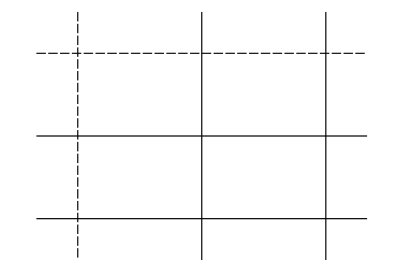 Figure 1
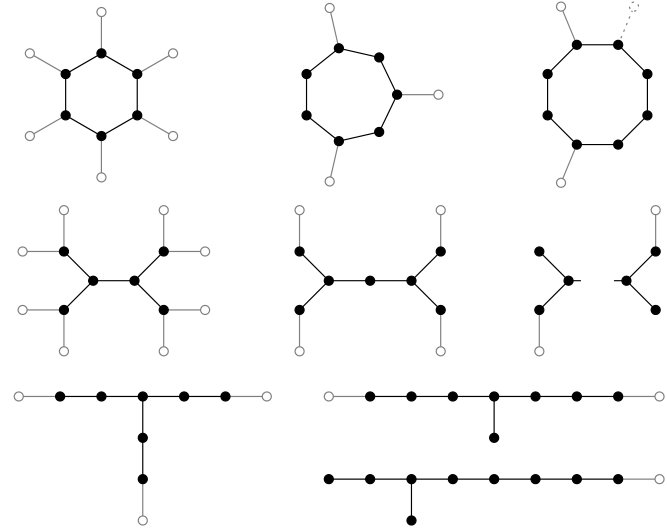 Figure 2
Peer Reviews
No public reviews on file for this paper yet. If you reviewed it on a platform where reviews are public (OpenReview, ICLR, NeurIPS, ICML), you can paste yours below so the community can read it here.
Videos
No videos yet. Explain this paper in a talk, walkthrough, or lecture? Add one.
Lines on smooth polarized -surfaces
Alex Degtyarev
Department of Mathematics
Bilkent University
06800 Ankara, TURKEY
Abstract.
For each integer , we give a sharp bound on the number of lines contained in a smooth complex -polarized -surface in . In the two most interesting cases of sextics in and octics in , the bounds are and , respectively, as conjectured in an earlier paper.
Key words and phrases:
-surface, sextic surface, octic surface, triquadric, elliptic pencil, integral lattice, discriminant form
2000 Mathematics Subject Classification:
Primary: 14J28; Secondary: 14J27, 14N25
The author was partially supported by the TÜBİTAK grant 116F211
1. Introduction
All algebraic varieties considered in the paper are over .
1.1. The line counting problem
The paper deals with a very classical algebra-geometric problem, viz. counting straight lines in a projective surface. We confine ourselves to the smooth -polarized -surfaces , , and obtain sharp upper bounds on the number of lines. Our primary interest are sextics in () and octics in (); however, the same approach gives us a complete answer for all higher degrees/dimensions as well.
Recall (see [Saint-Donat]) that a projectively normal smooth -surface has projective degree . Given a smooth embedding , the polarization is the pull-back regarded as a class ; one has . Since each line is a -curve, it is uniquely determined by its homology class ; to simplify the notation, we identify lines and their classes. In particular, the set of lines is finite; its dual incidence graph is called the Fano graph, and the primitive sublattice generated over by and all lines is called the Fano configuration of . This polarized lattice, subject to certain restrictions (see LABEL:th.K3), defines an equilinear family of -polarized -surfaces ; on the other hand, the lattice is usually recovered from the graph (see LABEL:s.graphs).
The case , i.e., that of spatial quartics, is very classical and well known. The quartic maximizing the number of lines was constructed by F. Schur [Schur:quartics] as early as in 1882. The problem kept reappearing here and there ever since, but no significant progress had been made until 1943, when B. Segre [Segre] published a paper asserting that 64 is indeed the maximal number of lines in a smooth spatial quartic. Recently, S. Rams and M. Schütt [rams.schuett] discovered a gap in Segre’s argument (but not the statement); they patched the proof and extended it to algebraically closed fields of all characteristics other than or . Finally, in [DIS], we gave an alternative proof and a number of refinements of the statement, including the complete classification of all quartics carrying more than 52 lines. In particular, Schur’s quartic is the only one with the maximal number 64 of lines.
All extremal (carrying more than 52 lines) quartics found in [DIS] are projectively rigid, as they are the so-called singular -surfaces. Recall that a -surface is singular if its Picard rank is maximal, . (This unfortunate term is not to be confused with singular vs. smooth projective models of surfaces.) Up to isomorphism, an abstract singular -surface is determined by the oriented isomorphism type of its transcendental lattice
[TABLE]
which is a positive definite even integral lattice of rank (see LABEL:s.lattice; the orientation is given by the class of a holomorphic -form on ); we use the notation , see § 1.2. As a follow-up to [DIS] (and also motivated by [Shimada:X56]), in [degt:singular.K3] I tried to study smooth projective models of singular -surfaces of small discriminant . Unexpectedly, it was discovered that Schur’s quartic can alternatively be characterized as the only smooth spatial model minimizing this discriminant: one has (see § 1.2 for the notation) and for any other smooth quartic .
After quartics, next most popular projective models of -surfaces are sextics and octics , and the results of [degt:singular.K3] extend to these two classes: if a singular -surface admits a smooth sextic or octic model, then or , respectively. In view of the alternative characterization of Schur’s quartic discovered in [degt:singular.K3], this classification, followed by a study of the models, suggested a conjecture that a smooth sextic (respectively, octic ) may have at most (respectively, ) lines. This conjecture is proved in the present paper (the cases in Theorem 1.2), even though the original motivating observation that discriminant minimizing singular -surfaces maximize the number of lines fails already for degree surfaces (see LABEL:th.min.det).
Each sextic in is a regular complete intersection of a quadric and a cubic. I am not aware of any previously known interesting examples of large configurations of lines in such surfaces. The maximal number of lines is attained at a -parameter family containing the discriminant minimizing surfaces and .
Most octics in are also regular complete intersections: they are the so-called triquadrics, i.e., intersections of three quadrics. The most well-known example is the Kummer family
[TABLE]
whose generic members contain lines: famous Kummer’s configuration (see, e.g., Dolgachev [Dolgachev:book]). There are four other, less symmetric, configurations of lines, either rigid or realized by -parameter families. However, is not the maximum: there also are configurations with , , and lines (see Table 1 on \autopagereftab.main).
The space of octics contains a divisor composed by surfaces that need one cubic defining equation (see [Saint-Donat] and LABEL:s.polarized below). We call these octics special and show that they do stand out in what concerns the line counting problem. Large Fano graphs of special octics (vs. triquadrics) are described by LABEL:th.special.
1.2. Common notation
We use the following notation for particular integral lattices of small rank (see LABEL:s.lattice):
- •
, , , , , , are the positive definite root lattices generated by the indecomposable root systems of the same name (see [Bourbaki:Lie]);
- •
, , is a lattice of rank ;
- •
, , , , is a lattice of rank ; when it is positive definite, we assume that and : then, is a shortest vector, is a next shortest one, and the triple is unique;
- •
is the hyperbolic plane.
Besides, , , is the lattice obtained by the scaling of a given lattice , i.e., multiplying all values of the form by a fixed integer .
To simplify the statements, we let the girth of a forest equal to infinity, so that the inequality means that has no cycles of length less than .
When describing lists of integers, means the full range .
We denote by the arithmetic progression , , and use the shortcut for finite unions.
1.3. Principal results
Given a field and an integer , let be the maximal number of lines defined over that a smooth -polarized -surface defined over may have.
Most principal results of the paper are collected in Table 1; precise statements are found in the several theorems below. (For the sake of completeness, we also cite some results of [DIS] concerning quartics, i.e., .)
In the table, we list:
- •
the degrees for which extra information is available (marking with a † the two values that are special in the sense of LABEL:th.min.det),
- •
the bounds and used in Theorem 1.2 (according to which, for all values of in the table), and
- •
the maximal number of real lines (see LABEL:th.main.real).
Then, for each value of , we list, line-by-line, all Fano graphs containing more than lines (the notation is explained below), marking with a ‡ those realized by real lines in real surfaces (see LABEL:th.main.real) and indicating
- •
the order of the full automorphism group of and
- •
the transcendental lattices of generic smooth -polarized -surfaces with (marking with a ∗ the lattices resulting in pairs of complex conjugate equilinear families).
For the rigid configurations (), we list, in addition,
- •
the determinant (underlining the minimal ones, see LABEL:th.min.det),
- •
the numbers of, respectively, real and pairs of complex conjugate projective isomorphism classes of surfaces with , and
- •
the order of the group of projective automorphisms of .
Each of the few non-rigid configurations appearing in the table is realized by a single connected equilinear deformation family ; we indicate the dimension \dim\bigl{(}\mathcal{M}_{D}(\Gamma)/\!\mathop{\operator@font\text{\sl PGL}}\nolimits(D+2,{\mathbb{C}})\bigr{)}=\mathop{\operator@font rk}\nolimits T-2 and, when known, the minimum of the discriminants of the singular -surfaces .
If , we use the notation for the extremal configurations introduced in [DIS]; otherwise, we refer to the isomorphism classes of the Fano graphs introduced and discussed in more details elsewhere in the paper. In both cases, the subscript is the number of lines in the configuration. For technical reasons, we subdivide Fano graphs into several classes (see LABEL:s.taxonomy) and study them separately, obtaining more refined bounds for each class. Thus, a Fano graph and the configuration are called
- •
triangular (the -series, see LABEL:th.trig), if ; all extremal quartics also fall into this class,
- •
quadrangular (the -series, see LABEL:th.quad), if ,
- •
pentagonal (the -series, see LABEL:th.a4), if ,
- •
astral (the -series, see LABEL:th.astral), if and has a vertex of valency .
All other graphs are locally elliptic (the -series, see LABEL:s.locally.elliptic), i.e., one has for each vertex .
In our notation for particular graphs/configurations, the subscript always stands for the number of vertices/lines. The precise description of all graphs “named” in the paper is available electronically (in the form of GRAPE records) in [degt:Fano.graphs]; in most cases, the implicit reference to [degt:Fano.graphs] is, in fact, the definition of the graph.
1.4. The bounds
Geometrically, apart from the spatial quartics, the two most interesting projective models of -surfaces are sextics in and octics (especially triquadrics) in . However, it turns out that the structure of the Fano graphs simplifies dramatically when the degree grows, and one can easily obtain the sharp bounds and for all values of . Below, these bounds are stated for small and ; the rather erratic precise values of
[TABLE]
are postponed till LABEL:s.locally.elliptic (see Corollaries LABEL:cor.le.mc and LABEL:cor.le.mr, respectively).
For the next theorem, given a degree , let and be as in Table 1 or if is not found in the table. As in [DIS], in addition to the upper bound , we give a complete classification of all large (close to maximal) configurations of lines.
Theorem 1.2** (see LABEL:proof.main).**
Let be a smooth -polarized -surface. Then one has . More precisely, unless is one of the exceptional graphs (configurations) listed in Table 1.
Both bounds are sharp whenever or ;* in particular, one has for these values.*