Toeplitz Subshifts with Trivial Centralizers and Positive Entropy
Kostya Medynets, James P. Talisse

TL;DR
This paper constructs a class of $\\mathbb{Z}^d$-Toeplitz dynamical systems with trivial automorphism groups that also exhibit positive topological entropy, expanding understanding of their structural complexity.
Contribution
It generalizes previous constructions to higher dimensions, identifying $\\mathbb{Z}^d$-Toeplitz systems with trivial centralizers and positive entropy.
Findings
Identified a class of $\\mathbb{Z}^d$-Toeplitz systems with trivial centralizers.
Showed these systems can have positive topological entropy.
Abstract
Given a dynamical system , the centralizer denotes the group of all homeomorphisms of which commute with the action of . This group is sometimes called the automorphism group of the dynamical system . In this note, we generalize the construction of Bulatek and Kwiatkowski (1992) to -Toepltiz systems by identifying a class of -Toeplitz systems that have trivial centralizers. We show that this class of -Toeplitz with trivial centralizers contains systems with positive topological entropy.
Click any figure to enlarge with its caption.
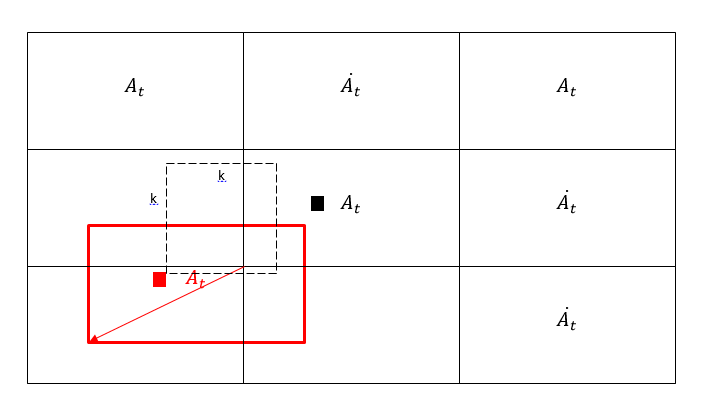 Figure 1
Peer Reviews
No public reviews on file for this paper yet. If you reviewed it on a platform where reviews are public (OpenReview, ICLR, NeurIPS, ICML), you can paste yours below so the community can read it here.
Videos
No videos yet. Explain this paper in a talk, walkthrough, or lecture? Add one.
Toeplitz Subshifts with Trivial Centralizers and Positive Entropy
Kostya Medynets
Mathematics Department, United States Naval Academy, Annapolis, MD 21402
and
MIDN James P. Talisse
Mathematics Department, United States Naval Academy, Annapolis, MD 21402
Abstract.
Given a dynamical system , the centralizer denotes the group of all homeomorphisms of which commute with the action of . This group is sometimes called the automorphism group of the dynamical system . In this note, we generalize the construction of Bulatek and Kwiatkowski (1992) to -Toepltiz systems by identifying a class of -Toeplitz systems that have trivial centralizers. We show that this class of -Toeplitz with trivial centralizers contains systems with positive topological entropy.
Key words and phrases:
Topological dynamics, symbolic dynamics, automorphism group, centralizer, topological entropy
2010 Mathematics Subject Classification:
37B05, 37B40, 37B50
The research of K.M. was supported by NSA YIG H98230258656.
1. Introduction
Toeplitz dynamical systems were first introduced by Jacobs and Keane in [18]. They provided a classical definition for a Toeplitz sequence over . In [21], Markley studied these sequences and showed the equivalence of various definitions of them. The orbit closure of a Toeplitz sequence is regarded as a Toeplitz flow. In [22], Markley and Paul showed that these flows were exactly almost one-to-one extensions of odometers, or the group of -adic integers. See [16] for a general discussion of the group theoretic properties of the group of -adic integers. For a general survey of symbolic dynamics, we refer the reader to Kitchens in [19]. For a good survey on odometers and Toeplitz flows, the reader is referred to [14]. Recently the definition of Toeplitz flows was extended to flows over by Cortez in [7], and then to flows over general groups in [8], and by Krieger in [20].
The centralizer of a dynamical system is the group of all homeomorphisms of the system which commute with the group action. Sometimes called the automorphism group of the dynamical system in the literature, the centralizer of a dynamical system has an intricate relationship with its parent dynamical system. For example, in [3], Boyle, Lind and Rudolph study the centralizer of shifts of finite type and show that they are countable, residually finite and contain the free group on two generators. Several results have been shown by Cyr and Kra ([9], [10], [11]) which relate varying levels of complexity of symbolic dynamical systems to algebraic properties of their centralizers. We notice that systems with positive entropy tend to have very large centralizers. For example, the centralizer of the full shift contains every finite group and the free group on two generators. On the other hand, Donoso, Durand and Petite showed that some classes of low complexity symbolic dynamical systems have very small centralizers, in the sense that they consist only of powers of in [12]. Bulatek and Kwiatkowski study the centralizer of a class of high complexity Toeplitz systems in [5] and [6]. The centralizer of multidimensional symbolic dynamical systems is studied by Hochman in [17]. For example, he shows that the centralizer of a positive entropy multidimensional shift of finite type contains a copy of every finite group.
The main question this paper seeks to answer is whether there are multidimensional systems with a trivial centralizer and positive entropy. Following the ideas of Bulatek and Kwiatkowski in [6], which developed this result in one dimension, we establish this result with a constructive proof. We note that there are several constructions of one-dimensional Toeplitz systems with trivial centralizers and positive entropy, see, for example, [13] and references therein.
In Section 3 we present main facts with proofs regarding general -odometers, where is a residually finite group. For the reader’s convenience, we include the proofs, otherwise scattered across multiple sources. In particular we show that the centralizer group of -Toeplitz systems embeds into the centralizer group of its maximal equicontinuous factor, which is a -odometer, and so is abelian. This result was originally established by Auslander in [1, Theorem 9] using the techniques of enveloping semigroups. The proof we present in this note follows the approach developed in [23].
In section 4, we construct a class of -Toeplitz systems that have trivial centralizers. Then in Section 5, we show that this class contains systems of positive entropy. In this section we provide an explicit construction of a two dimensional Toeplitz of positive entropy.
2. Definitions and Background
By a dynamical system we mean a pair , where is a compact topological space and is a countable discrete group acting on by homeomorphisms. The action of a group element on will be denoted by . The set is called the orbit of the point . If every orbit of is dense, we call the system minimal. A system is equicontinuous if for all , there exists , such that for all if , then for all . Let , and be two minimal systems. If there exists a continuous surjection which preserves the action of , we say that is an extension of , and that is a factor of . We call a factor map. Given two factor maps and , we say that is larger than if there exists a third factor map such that . As such, we can discuss the maximal factor of a system. It is a known fact that every dynamical system has a maximal equicontinuous factor.
In this paper we are interested in symbolic dynamical systems. We start with a finite set called the alphabet. Say . The set of all bi-infinite sequences over is called the full -shift and is denoted . In general, we denote the full dimensional -shift by . This set is endowed with the product topology from the discrete topology in each coordinate. Cylinder sets in which we fix a finite number of coordinates form a basis for the topology. For we write . We call a array. The group acts on , denoted by for and as follows: . The orbit of an array is . A subset is called a subshift if it is closed under the action of .
For the sake of completeness, we note that symbolic dynamics can be studied over general, discrete groups. In this case, let be a discrete group. Then is acted on by the group . While in this paper we restrict our study of symbolic dynamics to systems, we note that many of the results can be extended to systems for more general groups .
The topological spaces discussed in this note will be topological zero-dimensional compact metric space without isolated points, i.e. a Cantor set. Notice that by a theorem of Brouwer ([4]) every Cantor set is homeomorphic to the middle-thirds Cantor set, and so all Cantor sets are homeomorphic.
3. Odometers
In this section, we will recall some basic facts about odometers and their almost extensions. In particular, we show that the centralizer of an odometer is abelian, and the centralizer of the almost extension of an odometer is also abelian. These results are mostly known, but are scattered. In particular, the proof of Lemma 3.11 appears in [24] and the proof of Proposition 3.12 appears in [23]. We present slightly modified proofs for clarity and the reader’s convenience.
Definition 3.1**.**
A group is called residually finite if the intersection of all its finite index normal subgroups is normal.
Definition 3.2**.**
Let be a residually finite group, and be nested normal subgroups such that . Let be the natural homomorphism from onto , i.e. for . The G-odometer, , is the inverse limit
[TABLE]
An element acts on an element as .
First we prove that embeds into .
Lemma 3.3**.**
Let be defined as . Then is an embedding.
Proof.
Let . Suppose
[TABLE]
So for all . Therefore for all , and so . So . ∎
So we have shown that embeds into in a natural way. We now prove that is minimal.
Lemma 3.4**.**
The system is minimal.
Proof.
Consider the identity element, . In particular, . Let . So, for each , we have , where is a representative of the coset. Note
[TABLE]
So agrees with in the first coordinates. And so we can get arbitrarily close to as we increase . Hence has a dense orbit.
Now let . Note we can find a sequence such that , since has a dense orbit. Then so . Therefore has dense orbit. ∎
Definition 3.5** (Centralizer).**
Let be a dynamical system. The centralizer, is defined as
[TABLE]
That is, the centralizer of a system consists of all homeomorphisms of the system which commute with the group action. It can be checked that this is a group under composition.
Next we show that elements of the centralizer of an odometer act as translations of the odometer.
Lemma 3.6**.**
Let . There exists such that for all .
Proof.
Let . Since the orbit of is dense, by Lemma 3.4, there exists a sequence such that . Since is continuous, . But for all . Since , we have . So . Therefore . ∎
We are now ready to prove the following Proposition. In the following, is an abelian group.
Proposition 3.7**.**
The centralizer of an odometer is isomorphic to .
Proof.
Define as for all . Let . Then
[TABLE]
So is a homomorphism. Let . Let for all . Note, for , we have so . Also, , so is onto. Suppose . Then . So for any , . Therefore is an isomorphism. ∎
We now turn our attention to almost extensions of odometers.
Definition 3.8**.**
We say is an almost extension of if there is a factor map such that there is at least one so that is singleton. Almost extensions of odometers are also called Toeplitz Systems.
We make use of the following commutative diagram:
[TABLE]
Sometimes the context will deem the action of on or ambiguous, so we will use to denote the action of the group element on and to denote the action of on . In particular, . If the context is clear, the action of on a point will be denoted .
If is a minimal almost extension of a minimal equicontinuous system, , then it is known that is the maximal equicontinuous factor of ([2]). As such, the odometer of which a Toeplitz system is an almost extension is its maximal equicontinuous factor.
We will be considering almost extensions of -odometers. In this context, we will the following proposition.
Proposition 3.9**.**
The centralizer of the almost extension of a -odometer is abelian.
To prove Proposition 3.9, we show that the centralizer of the almost extension of an odometer embeds into the centralizer of its maximal equicontinuous factor, which we have already shown to be isomorphic to the odometer, which is abelian in the case of .
Definition 3.10** ([24]).**
Given a dynamical system and a metric compatible with the topology on , two points , are called proximal if
[TABLE]
Lemma 3.11**.**
Let be an almost extension of an odometer via the factor map . Then points of are proximal if and only if they are in the same fiber.
Proof.
Let be in the same fiber, i.e. . Let be such that is a singleton. Since is minimal, there exists a sequence such that and so . Since is compact, there is a subsequence such that converges. Suppose . Applying , we have
[TABLE]
So we also have . Since is a singleton, is unique. Now, . So,
[TABLE]
So the points and are proximal.
Now suppose are proximal. Assume that , i.e. they are not in the same fiber. Since are proximal, there is a sequence such that . Applying , we have . So which implies are proximal. But has no proximal points, so . ∎
Finally, we prove that the centralizer of embeds into the centralizer of the odometer .
Proposition 3.12**.**
Let be an almost extension of a odometer . Every element determines such that the following diagram commutes:
[TABLE]
Additionally, this relationship is an embedding, i.e. .
Proof.
Let . Let be proximal. So . Since and are proximal, . Thus which, by Lemma 3.11, implies that are proximal. So preserves the proximal relationship, and so it preserves fibers. Define as . This map is well defined because preserves the fibers. Suppose for . So , and so and are in the same fibers. Since preserves the fibers, and are in the same fibers, and so it is clear that . Therefore is . Also, is continuous, so it is a homeomorphism, i.e. .
Now suppose . Let be such that is a singleton. Then and . Since preserves fibers, for , these are singletons. In particular, . So it is clear then that for all , and so for all . But every orbit is dense, so and agree on a dense subset of , and hence agree everywhere. ∎
Finally we prove proposition 3.9.
Proof.
We have shown in Proposition 3.12 that embeds into and by Proposition 3.7 is abelian, so is abelian. ∎
4. -Toeplitz Systems
In this section, we study Toeplitz systems over and generalize the construction of Bulatek and Kwiatkowski. In particular, we present a class of Toeplitz systems over with a trivial centralizer and positive entropy.
Let . Note that the topological closure of the orbit of , is closed and -invariant. So is a subshift. This is called the orbit closure of .
Definition 4.1**.**
The centralizer of a symbolic dynamical system is called trivial if every element of the centralizer is for some .
Let be a finite index subgroup of isomorphic to . For and , define
[TABLE]
And,
[TABLE]
We say that is a Toeplitz array if for all , there exists a finite index subgroup isomorphic to such that .
It can be shown that the orbit closure of a Toeplitz Array is an almost one-to-one extension of a odometer. For details, the reader is referred to Theorem 7 and Proposition 21 in [7]. In fact, almost one-to-one extensions of odometers are exactly those systems which are orbit closures of Toeplitz Arrays. In particular, defining a Toeplitz System as the orbit closure of a Toeplitz Array is equivalent to Definition 3.8.
We now show how Toeplitz Arrays can be constructed over an alphabet borrowing ideas from Downarowicz ([14]).
Let be sequences of positive integers such that and divides for all . Define and for all and .
An array is a point in our system. Any finite rectangular block consisting of letters from our alphabet is called a finite block. For a finite block in dimensions, we denote the size of along the dimension as . We identify the element in the position as with the standard Cartesian coordinate system, i.e. the left most and bottom-most entry of is identified with .
Specify blocks as follows:
- (1)
2. (2)
Some spaces in are filled with elements from and others are left unfilled. The unfilled spaces are called holes. 3. (3)
The block is the concatenation of copies of along the dimension for all , where some holes are filled by symbols from . 4. (4)
For every there exists a such that and .
We obtain a Toeplitz array by continually repeating the above process. Note that the process described will only tile the first orthant. So to tile the entire space, at each step we shift the origin to be located in the center of our block . Continuing this process, we will tile the whole space.
The fourth condition assures that all holes are eventually filled. Note that if after any finite step all holes are filled we will have a periodic array.
Essentially, in this construction we build finite blocks, each of which contains multiple copies of the block built in the previous step. As we copy theses blocks, we fill in some the holes, and leave some them as holes. As we continue this process forever, we will have a Toeplitz Array covering the whole plane.
Example 4.2* (One dimensional Toeplitz array).*
(Due to Downarowicz in [14])
We will construct a Toeplitz array over from the alphabet . Let and so for all . Let , where the symbol indicates a hole. To get , we copy twice and fill in some of the holes. Say . The underline indicates a hole that was filled in at that step. In each step we will have two holes. For this construction, at each step we will alternately fill in the first hole with [math] and . Let the limiting sequence of this process be . Continuing, we have
[TABLE]
And so we have a Toeplitz array . The orbit closure of this point is a Topelitz system.
Example 4.3* (Two dimensional Toeplitz array).*
Again we will use the alphabet and we will construct a Toeplitz array over . Let . Then for all .
Let
[TABLE]
[TABLE]
[TABLE]
The black squares indicate where the holes are. Continuing this process, we will have a coloring of the whole plane, which will be a Toeplitz array, say .
We call subblocks of which coincide with indices of the location of concatenated blocks t-blocks. We note that consists of the concatenation of blocks in all directions for any , where all -blocks agree in all locations except for where the holes were. In Example 4.3, the thick lines in indicate the [math]-blocks, and the thick lines in indicate the -blocks.
Now we introduce a condition on constructing Toeplitz arrays which will give rise to Toeplitz Systems with a trivial centralizer.
Condition ) We say a Toeplitz Array satisfies the condition if:
- •
Every -block in is composed of or with all holes filled
- •
The perimeter of is composed of -blocks which are all filled in
Let be the generators of . For , let denote a shift by the vector . In this context, the shift action on the system can be considered independent shift actions, i.e. .
Definition 4.4**.**
Given a finite alphabet , a patch is a pair , where and is a labeling of . For the purposes of this paper, we will only consider rectangular patches which can be defined by vectors parallel to the coordinate axes.
Given a patch , we denote the the coordinate closest to the origin in Cartesian space by . Any other location in the patch is denoted by where is a vector pointing to that location, as referenced from . A square block within is denoted by where and is the (hyper)cube in located between and , where .
Theorem 4.5**.**
Let be a Toeplitz array satisfying the condition . Then the centralizer of is trivial.
Proof.
Let be the maximal equicontinuous factor of . Denote by the almost one-to-one factor map. Let . By Proposition 3.12, this determines an element which acts as a translation by some element , by Lemma 3.6. By a result of Hedlund in [15], we note is determined by a block code of window size . In particular, if , and , then
[TABLE]
In particular, the automorphism determines what to put in a specific location by looking at a block around that location in the preimage. By choosing appropriate , we can define which would require to only look forward. Specifically, for , and we have
[TABLE]
for some . As such, we can assume is defined as a block map as in (2).
Note that is a product odometer, so where for with . Each is an element of the one dimensional odometer occurring in the coordinate of . Let and . Let be the clopen cylinder set with [math]’s located in a -dimensional hybercube about the origin. Then .
We claim that for all either or .
Let and . Suppose that has a -block appearing at a location . Then by the construction of Toeplitz subshifts and almost one-to-one extensions, necessarily has a -block at the location .
Let denote any -block of . Note that for some and . This block looks like , which in turn is the concatenation of blocks. In particular, all -blocks are the same, except they may disagree where the holes are located. Specifically, suppose is a -block and is the location of the hole in that is closest to the bottom left corner. In general, we choose the hole whose location vector has the minimum length. If there is more than one hole with the same minimum length location vector, then we just choose one at random. Note is completely determined, and is the same in those locations as every other -block in . The only place where -blocks may potentially disagree is at the holes.
Let be the -block in starting at location . Suppose the first hole in occurs at for some . This hole occurs at in . In order to determine what is at this location in , looks at a hypercube of side length around . In view of Equation (2), is determined by . We note that if for any , then this window would not overlap the hole at . And since this hole was the hole closest to the bottom left corner, everything in the window is not a hole. And so is uniquely determined, and is not a hole. Since was an arbitrary -block, every -block will have the symbol located the relative position . In particular, .
We can continue to the next hole in on the same horizontal level, and the same argument would show that this hole is completely determined. Continuing this argument for every hole, we see that the entire block is completely filled in, and so then is periodic, which is a contradiction. In general, in dimensions, we move along hyperplanes in dimensions which are parallel to the coordinate hyperplanes. We fill in all the holes on a constant hyperplane, and then increase levels by one, until we fill in all the holes.
On the other hand, suppose that is a -block in starting at location . Note that is also determined by a block map. If is looking forward, then taking a larger if needed one can show that is a “past looking” map determined by . Changing the role of and and using for and using the argument similar to the one above, we can show that .
The first case is demonstrated for the two dimensional case in Figure 1. In this figure, indicates blocks with all holes filled and the solid black and red squares indicate a hole in and , respectively.
Now note that for all . And since , we have that is in the orbit of [math]. In particular,
[TABLE]
where . So, , i.e. and agree on one point. Furthermore, agrees with the action of on the entire orbit of [math], which is dense. Therefore is a power of the shift, i.e. .
Let be in the orbit of in , i.e. for some . Note
[TABLE]
So and are in the same fiber. Since is in the orbit of , it has a unique preimage under . Therefore . And so and agree on the entire orbit of , which is dense. So . ∎
5. Positive Entropy Toeplitz Subshift
We now construct an explicit example of a two dimensional Toeplitz subshift which has positive entropy. This example is constructed so that it obeys the condition, thus ensuring that it has a trivial centralizer.
Let and choose such that . For , let and be such that .
We note that for any and any , there exists sufficiently large such that
[TABLE]
since .
Let be chosen so that
[TABLE]
Also require . Define . We notice that there are square blocks of side length over the alphabet . We enumerate these blocks as for . Furthermore, we require that and contain every letter from the alphabet. Let be the square block of side length with the block surrounded by a [math] in the top left corner, a in the bottom right corner, and [math]’s below the main diagonal and ’s above it, as in the diagram below. We will denote this as for .
[TABLE]
For , define and let be such that
[TABLE]
Additionally, require that . Let be all the square blocks of side length over the alphabet for . Require that and contain every letter from the alphabet. Let for . Define and .
Consider the following operation on finite blocks. Let be square blocks of the same side length, over some alphabet. Let be a square block whose side length is at least over an alphabet containing . We define the block
[TABLE]
as . In particular, will be a square block of side length .
We are constructing a tiling of using -blocks as building blocks. Additionally, we must construct these blocks so that they satisfy the condition. As such we define -blocks in the following way: Let and
[TABLE]
We note that since and have every letter of the alphabet , the blocks and will have every block as a subblock. Similarly, and contain every letter in and so the blocks and will contain every block as a subblock. In general, we note that each block for has every block as a subblock.
We let
[TABLE]
where the side length of the square box is , and the dash in the center square indicates a square of side length consisting of all holes.
Define
[TABLE]
where there is a square block consisting of copies of surrounded by copies of for or on each side. Notice that and have no holes, so all the holes are contained in the middle block of blocks.
Let be the limiting array from the above process. We note here that satisfies the condition.
Proposition 5.1**.**
The Toeplitz system has positive entropy.
Proof.
Let be the entropy of and let be the number of square blocks of side length appearing in . We note that , by switching to a subsequence.
There are many blocks. We note that every block contains every block as a subblock. This is because the blocks for or contain every letter of the alphabet in them. This means that as we do the shuffling process described above, the blocks for or contain every single block for . The blocks for or are exactly those which occur in the blocks, and so they contain every block as a subblock. Furthermore, since blocks are squares of side length , there are at least as many blocks of side length occurring in as there are blocks. Specifically, square blocks of length can occur at any position within , while blocks only occur at specific positions. Hence we have
[TABLE]
So we have
[TABLE]
By (4) we have that
[TABLE]
It then follows, and by (3), that
[TABLE]
Continuing, we have
[TABLE]
Taking the limit as , from (6), we have .
It is a basic fact that every Toeplitz system is minimal, so this system is minimal. It is either finite or uncountable, and since it has positive entropy, it cannot be finite. So this is an infinite minimal Toeplitz system.
∎
The reference list from the paper itself. Each links out to its DOI / PubMed record.
- 1[1] Joseph Auslander. Endomorphisms of minimal sets. Duke Math. J. , 30(4):605–614, 1963.
- 2[2] Joseph Auslander. Minimal flows and their extensions , volume 153. Elsevier, 1988.
- 3[3] Mike Boyle, Douglas Lind, and Daniel Rudolph. The automorphism group of a shift of finite type. Transactions of the American Mathematical Society , 306(1):71–114, 1988.
- 4[4] L.E.J Brouwer. On the structure of perfect sets of points. KNAW, Proceedings , 12:785–794, 1910.
- 5[5] Wojciech Bulatek and Jan Kwiatkowski. The topological centralizers of Toeplitz flows and their ℤ 2 subscript ℤ 2 \mathbb{Z}_{2} -extensions. Publicacions matematiques , pages 45–65, 1990.
- 6[6] Wojciech Bułatek and Jan Kwiatkowski. Strictly ergodic Toeplitz flows with positive entropies and trivial centralizers. Studia Mathematica , 103(2):133–142, 1992.
- 7[7] Marıa Isabel Cortez. ℤ d superscript ℤ 𝑑 \mathbb{Z}^{d} Toeplitz arrays. Discrete and Continuous Dynamical Systems , 15(3):859, 2006.
- 8[8] María Isabel Cortez and Samuel Petite. G-odometers and their almost one-to-one extensions. Journal of the London Mathematical Society , 78(1):1–20, 2008.