Cosmogenic Activation of Germanium Used for Tonne-Scale Rare Event Search Experiments
W.-Z. Wei, D.-M. Mei, C. Zhang

TL;DR
This study uses simulations and experimental data to analyze how cosmic rays activate germanium, impacting the sensitivity of large-scale rare event detection experiments.
Contribution
It provides a comprehensive Geant4-based simulation framework for cosmogenic activation of germanium, including comparisons with experimental data and other models.
Findings
Fast neutron interactions dominate activation
Simulations agree reasonably with experimental data
Activation limits affect future experiment sensitivities
Abstract
We report a comprehensive study of cosmogenic activation of germanium used for tonne-scale rare event search experiments. The germanium exposure to cosmic rays on the Earth's surface are simulated with and without a shielding container using Geant4 for a given cosmic muon, neutron, and proton energy spectrum. The production rates of various radioactive isotopes are obtained for different sources separately. We find that fast neutron induced interactions dominate the production rate of cosmogenic activation. Geant4-based simulation results are compared with the calculation of ACTIVIA and the available experimental data. A reasonable agreement between Geant4 simulations and several experimental data sets is presented. We predict that cosmogenic activation of germanium can set limits to the sensitivity of the next generation of tonne-scale experiments.
Click any figure to enlarge with its caption.
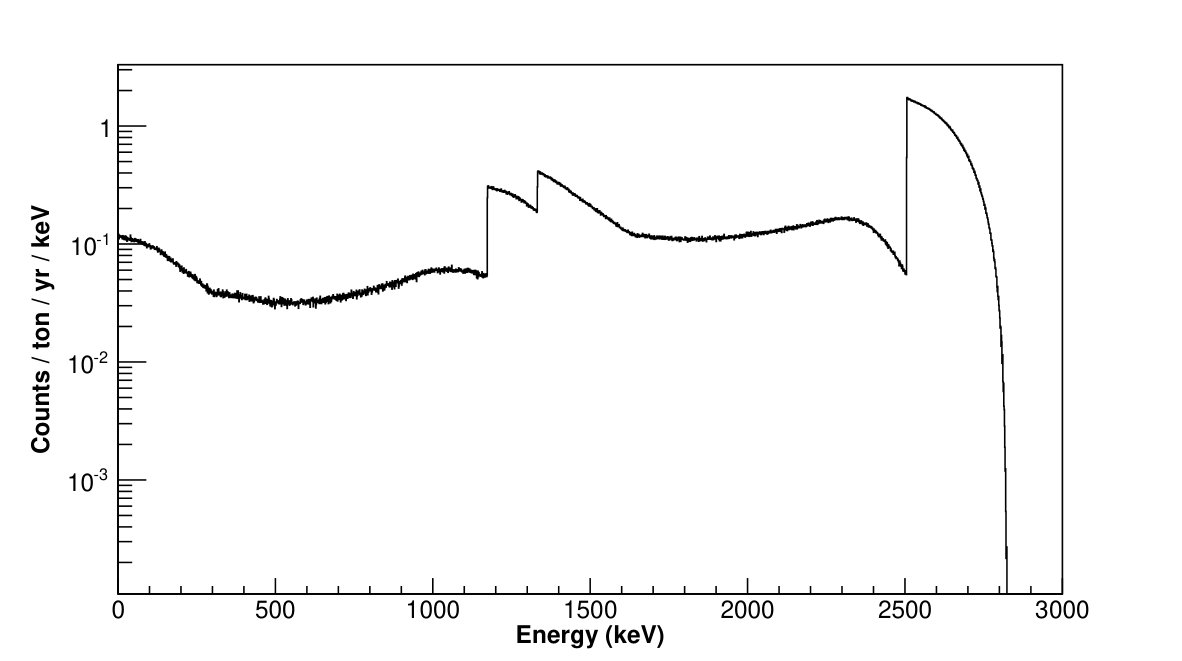 Figure 1
 Figure 2
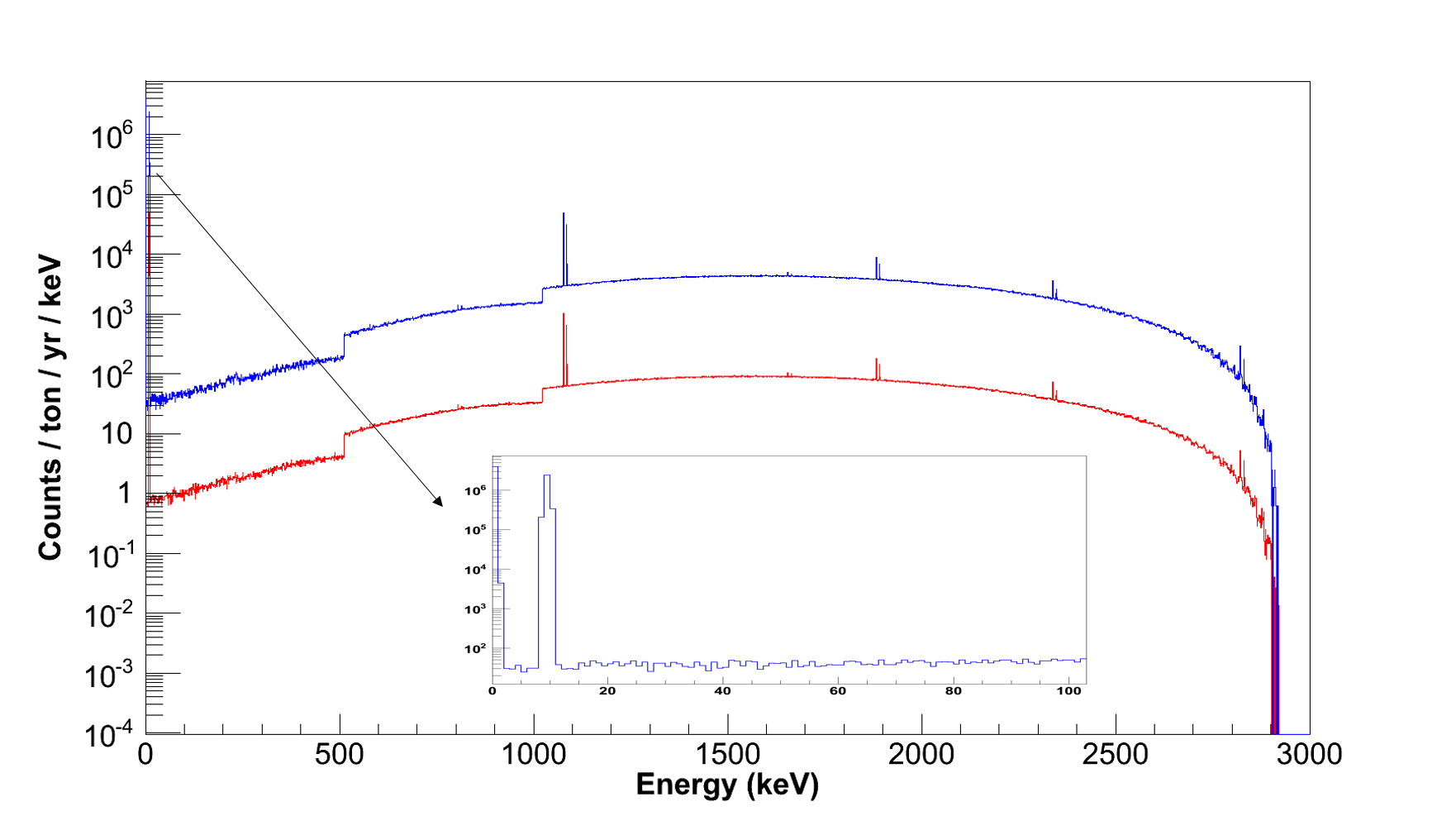 Figure 3
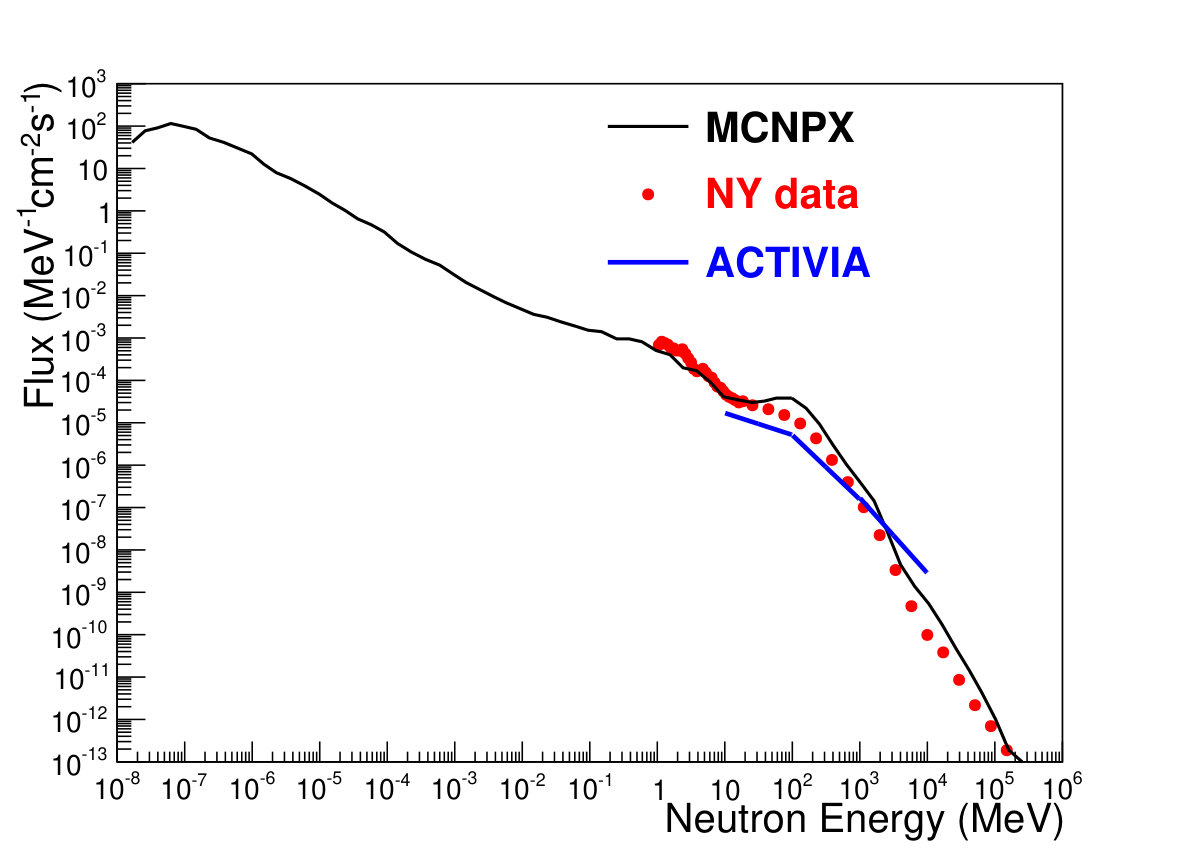 Figure 4
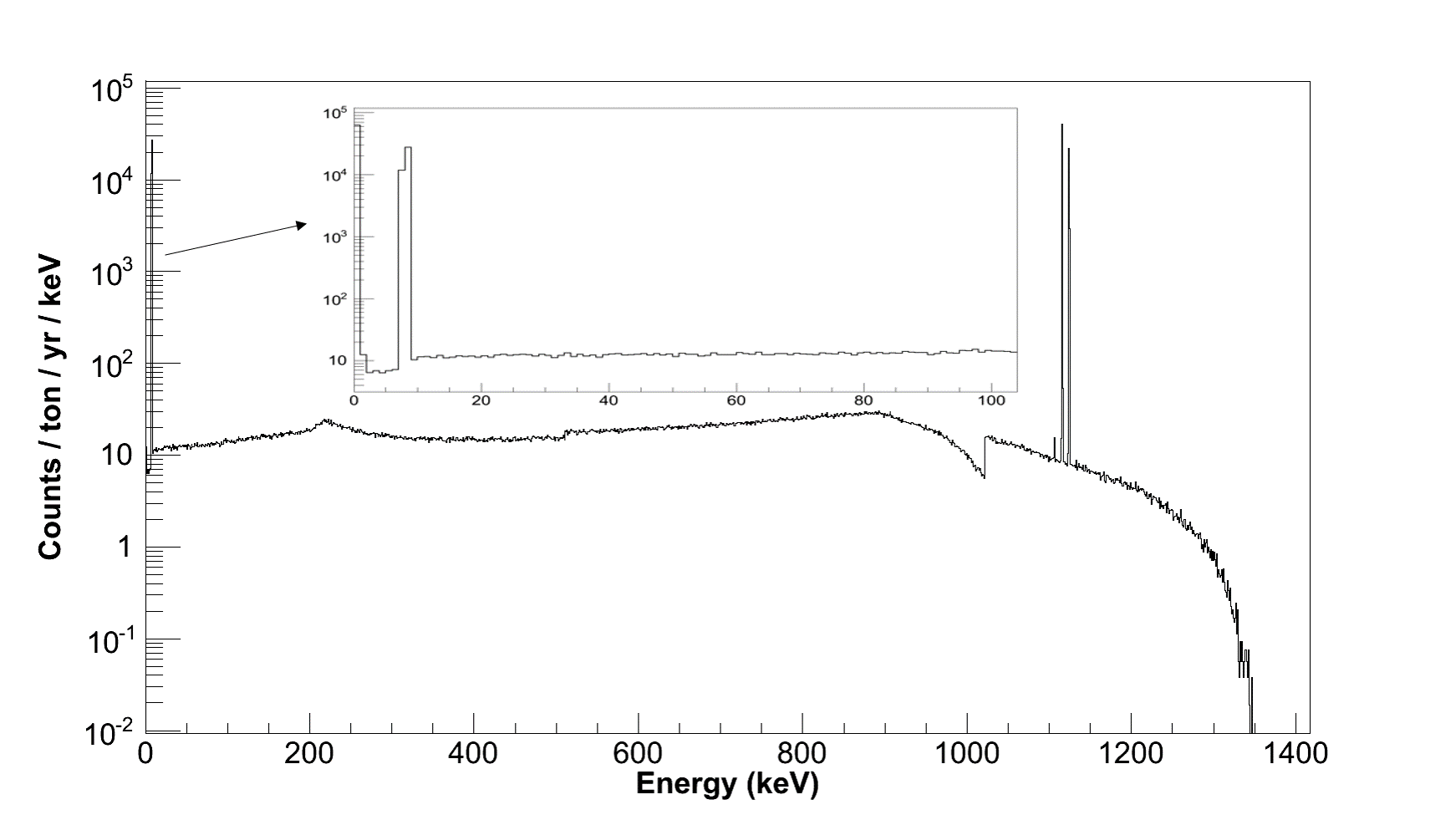 Figure 5
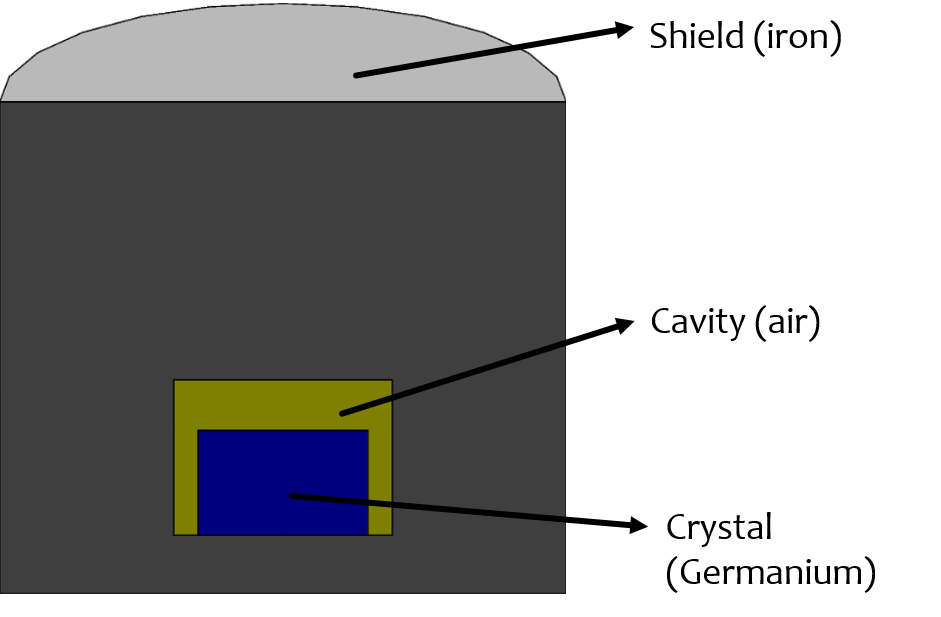 Figure 6
| Diameter (cm) | Height (cm) | |
|---|---|---|
| Shield | 140 | 126.5 |
| Cavity | 54 | 40 |
| Crystal | 42 | 27 |
| Isotope | Total | ACTIVIA1/2 | ||||||||
|---|---|---|---|---|---|---|---|---|---|---|
| no shield | shield | no shield | shield | no shield | shield | no shield | shield | |||
| 12.3y | 47.37 | 8.2 | 0.671 | 0.015 | 5.7 | 0.05 | 53.74 | 8.265 | 33.70/51.27 | |
| 5700y | 0 | 0 | 0 | 0 | 0.003 | 0.0003 | 0.003 | 0.0003 | 0.65/0.21 | |
| 150y | 0.027 | 0 | 0.009 | 0 | 0.009 | 0 | 0.045 | 0 | 0.066/0.027 | |
| 1.3e9y | 0.097 | 0.015 | 0 | 0 | 0.04 | 0 | 0.137 | 0.015 | 0.45/0.28 | |
| 4.5d | 0.035 | 0 | 0 | 0 | 0.009 | 0 | 0.044 | 0 | 0.016/0.012 | |
| 83.8d | 0.19 | 0 | 0.005 | 0 | 0.06 | 0.0009 | 0.255 | 0.0009 | 0.74/0.55 | |
| 3.3d | 0.19 | 0.015 | 0.019 | 0 | 0.05 | 0 | 0.256 | 0.015 | 0.33/0.26 | |
| 63y | 0.19 | 0.045 | 0 | 0 | 0.06 | 0.0009 | 0.25 | 0.046 | 0.015/0.011 | |
| 1.4e17y | 0.54 | 0.06 | 0.019 | 0 | 0.1 | 0.0006 | 0.66 | 0.06 | 1.46/1.23 | |
| 27.7d | 2.13 | 0.27 | 0.042 | 0 | 0.36 | 0.002 | 2.53 | 0.27 | 1.20/1.05 | |
| 312.3d | 1.43 | 0.15 | 0.023 | 0.03 | 0.2 | 0.002 | 1.65 | 0.18 | 2.18/2.15 | |
| 2.7y | 4.47 | 0.54 | 0.056 | 0 | 0.6 | 0.006 | 5.13 | 0.55 | 1.13/1.18 | |
| 44.5d | 1 | 0.1 | 0.014 | 0 | 0.08 | 0.0003 | 1.09 | 0.10 | 0.48/0.59 | |
| 1.5e6y | 0.57 | 0.12 | 0 | 0 | 0.04 | 0.001 | 0.61 | 0.12 | 0.23/0.30 | |
| 77.3d | 0.5 | 0.075 | 0.005 | 0 | 0.07 | 0.0006 | 0.57 | 0.076 | 0.40/0.44 | |
| 271.8d | 3.32 | 0.45 | 0.074 | 0 | 0.4 | 0.001 | 3.79 | 0.45 | 2.02/2.31 | |
| 70.9d | 2.91 | 0.49 | 0.028 | 0 | 0.3 | 0.003 | 3.24 | 0.49 | 4.56/5.45 | |
| 5.3y | 2.35 | 0.34 | 0.014 | 0 | 0.2 | 0.0006 | 2.56 | 0.34 | 3.36/4.41 | |
| 244.3d | 24.93 | 5.19 | 0.17 | 0.03 | 1.5 | 0.02 | 26.60 | 5.24 | 5.34/9.66 | |
| 270d | 21.75 | 5.26 | 0.088 | 0.046 | 1.3 | 0.02 | 23.14 | 5.33 | 7.04/15.38 | |
| Isotope | Total | ACTIVIA1/2 | ||||||||
|---|---|---|---|---|---|---|---|---|---|---|
| no shield | shield | no shield | shield | no shield | shield | no shield | shield | |||
| 12.3y | 47.39 | 8.59 | 0.61 | 0.88 | 5.2 | 0.19 | 53.2 | 9.66 | 34.12/52.37 | |
| 5700y | 0 | 0 | 0 | 0 | 0.004 | 0.0009 | 0.004 | 0.0009 | 0.59/0.19 | |
| 150y | 0.016 | 0 | 0 | 0 | 0.01 | 0.0006 | 0.026 | 0.0006 | 0.053/0.027 | |
| 1.3e9y | 0.086 | 0.015 | 0.014 | 0 | 0.05 | 0.0009 | 0.15 | 0.016 | 0.78/0.54 | |
| 4.5d | 0.039 | 0 | 0 | 0 | 0.009 | 0 | 0.048 | 0 | 0.011/0.0087 | |
| 83.8d | 0.33 | 0.045 | 0.005 | 0.015 | 0.07 | 0.002 | 0.41 | 0.062 | 0.60/0.49 | |
| 3.3d | 0.27 | 0.015 | 0.014 | 0 | 0.06 | 0.001 | 0.34 | 0.016 | 0.24/0.20 | |
| 63y | 0.49 | 0.03 | 0.009 | 0 | 0.1 | 0.004 | 0.60 | 0.034 | 0.081/0.065 | |
| 1.4e17y | 0.81 | 0.12 | 0.009 | 0 | 0.1 | 0.005 | 0.92 | 0.12 | 1.30/1.21 | |
| 27.7d | 3.62 | 0.45 | 0.06 | 0.076 | 0.5 | 0.012 | 4.18 | 0.54 | 2.48/2.50 | |
| 312.3d | 2.04 | 0.27 | 0.019 | 0.03 | 0.2 | 0.005 | 2.26 | 0.31 | 2.53/2.84 | |
| 2.7y | 7.91 | 0.94 | 0.065 | 0.061 | 0.8 | 0.02 | 8.78 | 1.02 | 3.29/4.10 | |
| 44.5d | 0.9 | 0.19 | 0.014 | 0 | 0.06 | 0.003 | 0.97 | 0.19 | 0.35/0.49 | |
| 1.5e6y | 0.49 | 0.09 | 0.005 | 0.03 | 0.02 | 0.001 | 0.51 | 0.12 | 0.16/0.24 | |
| 77.3d | 1.19 | 0.19 | 0.023 | 0.015 | 0.1 | 0.003 | 1.31 | 0.21 | 1.81/2.42 | |
| 271.8d | 7.38 | 0.94 | 0.074 | 0.061 | 0.7 | 0.026 | 8.15 | 1.03 | 6.38/8.94 | |
| 70.9d | 5.74 | 0.82 | 0.042 | 0.061 | 0.4 | 0.017 | 6.18 | 0.90 | 7.98/11.37 | |
| 5.3y | 2.87 | 0.57 | 0.023 | 0.091 | 0.2 | 0.0087 | 3.09 | 0.67 | 2.65/4.06 | |
| 244.3d | 75.93 | 16.87 | 0.2 | 0.68 | 2.7 | 0.24 | 78.83 | 17.79 | 19.53/44.19 | |
| 270d | 182.8 | 46.05 | 1.21 | 3.86 | 4.97 | 0.53 | 188.98 | 50.44 | 10.25/24.65 | |
| Isotope | Calculated Rates | Data | |||||||||
| Ref. | Ref. | Ref. | Ref. | Ref. | Ref. [28] | This work | Ref. | Ref. | |||
| [23] | [24] | [12] | [26] | [27] | [21] | [17] | G4 | ACT1/2 | [29] | [30] | |
| 3H | 140 | 24 | 47.37(a) | 33.70/51.27 | 14010 | ||||||
| 8.265(b) | |||||||||||
| 54Mn | 1.4 | 2.2 | 0.87 | 5.4 | 3.7 | 1.43(a) | 2.18/2.15 | 2.01.0 | 4.44.1 | ||
| 0.18(b) | |||||||||||
| 55Fe | 1.4 | 3.4 | 2.3 | 1.6 | 4.47(a) | 1.13/1.18 | 2.10.7 | ||||
| 0.55(b) | |||||||||||
| 57Co | 1 | 0.08 | 2.9 | 6.7 | 2.3 | 1.7 | 3.32(a) | 2.02/2.31 | 0.70.4 | ||
| 58Co | 1.8 | 1.6 | 5.5 | 6.2 | 4.6 | 2.91(a) | 4.56/5.45 | ||||
| 60Co | 3.5 | 3.3 | 2.4 | 1.6 | 6.7 | 5.1 | 2.35(a) | 3.36/4.41 | 2.51.2 | ||
| 65Zn | 6.4 | 6 | 10.54 | 20 | 24 | 20 | 24.93(a) | 5.34/9.66 | 8.92.5 | 4.33.6 | |
| 5.24(b) | |||||||||||
| 68Ge | 0.94 | 1.2 | 5.7 | 7.6 | 7.2 | 13 | 12 | 21.75(a) | 7.04/15.38 | 2.10.4 | 3.31.6 |
| 5.33(b) | |||||||||||
| Isotope | Calculated Rates | Data | ||||||||||||
|---|---|---|---|---|---|---|---|---|---|---|---|---|---|---|
| Ref. | Ref. | Ref. | Ref. | Ref. | Ref. | Ref. [28] | Ref. [22] | This work | Ref. | Ref. | ||||
| [23] | [24] | [25] | [12] | [26] | [27] | [21] | [17] | (I) | (II) | G4 | ACT1/2 | [23] | [22] | |
| 3H | 210 | 27.7 | 46 | 43.5 | 47.39 | 34.12/52.37 | 8221 | |||||||
| 54Mn | 2.7 | 9.1 | 2.7 | 2.7 | 7.2 | 5.2 | 2.04 | 2.53/2.84 | 3.30.8 | |||||
| 55Fe | 8.4 | 3.4 | 8.6 | 8 | 6 | 3.5 | 4 | 7.91 | 3.29/4.10 | 4.60.7 | ||||
| 57Co | 4.4 | 0.5 | 10.2 | 6.7 | 13.5 | 9.7 | 7.6 | 7.38 | 6.38/8.94 | 2.90.4 | ||||
| 58Co | 5.3 | 4.4 | 16.1 | 8.5 | 13.8 | 10.9 | 5.74 | 7.98/11.37 | 3.50.9 | |||||
| 60Co | 4.8 | 6.6 | 2.9 | 2.8 | 2 | 4.8 | 3.9 | 2.87 | 2.65/4.06 | |||||
| 65Zn | 34.4 | 30 | 79 | 29 | 37.1 | 77 | 63 | 38.7 | 65.8 | 75.93 | 19.53/44.19 | 386 | 10613 | |
| 68Ge | 29.6 | 26.5 | 58.4 | 81.6 | 45.8 | 41.3 | 89 | 60 | 23.1 | 45 | 182.8 | 10.25/24.65 | 307 | >74 |
| Isotope | no shield | shield |
|---|---|---|
| 60Co | 1.1210-2 | 1.4810-3 |
| 68Ge | 1.58 | 0.365 |
| Isotope | no shield | shield |
|---|---|---|
| 3H | 0.232 | 4.2110-2 |
| 65Zn | 2.28 | 0.514 |
| 68Ge | 64.9 | 17.32 |
| Isotope | Before cuts | After pulse shape cut | After timing correlation cut | |||
| no shield | shield | no shield | shield | no shield | shield | |
| 60Co | 3.76 | 0.50 | 0.38 | 0.05 | 0.38 | 0.05 |
| 68Ge | 1172.6 | 268.9 | 117.3 | 26.9 | 6.8 | 1.6 |
| Cooling time (years) | Contribution of 68Ge (counts/ton/yr/ROI) | |
|---|---|---|
| no shield | shield | |
| 1 | 2.7 | 0.6 |
| 2 | 1.1 | 0.2 |
| 3 | 0.4 | 0.1 |
| Energy region (keV) | 3H | 65Zn | 68Ge |
|---|---|---|---|
| 0-5 | 51.51% | 33.41% | 31.11% |
| 0-10 | 86.75% | 54.24% | 54.48% |
| 0-20 | 100% | 54.31% | 54.48% |
| 0-100 | 100% | 54.85% | 54.51% |
| Energy region | SuperCDMS-type detectors | Other germanium detectors | ||||||
| (keV) | 3H | 65Zn | 68Ge | Total | 3H | 65Zn | 68Ge | Total |
| 0-5 | 0.01 | 0.06 | 3.93 | 4.00 | 7.88103 | 6.28104 | 3.93106 | 4.00106 |
| 0-10 | 0.01 | 0.10 | 6.89 | 7.00 | 1.33104 | 1.02105 | 6.89106 | 7.00106 |
| 0-20 | 0.02 | 0.10 | 6.89 | 7.01 | 1.53104 | 1.02105 | 6.89106 | 7.00106 |
| 0-100 | 0.02 | 0.10 | 6.89 | 7.01 | 1.53104 | 1.03105 | 6.89106 | 7.00106 |
| Energy region | SuperCDMS-type detectors | Other germanium detectors | ||||||
| (keV) | 3H | 65Zn | 68Ge | Total | 3H | 65Zn | 68Ge | Total |
| 0-5 | 0.04 | 0.28 | 14.70 | 15.02 | 4.36104 | 2.78105 | 1.47107 | 1.50107 |
| 0-10 | 0.07 | 0.45 | 25.8 | 26.32 | 7.34104 | 4.51105 | 2.58107 | 2.63107 |
| 0-20 | 0.08 | 0.45 | 25.8 | 26.33 | 8.46104 | 4.52105 | 2.58107 | 2.63107 |
| 0-100 | 0.08 | 0.46 | 25.8 | 26.34 | 8.46104 | 4.56105 | 2.58107 | 2.63107 |
Peer Reviews
No public reviews on file for this paper yet. If you reviewed it on a platform where reviews are public (OpenReview, ICLR, NeurIPS, ICML), you can paste yours below so the community can read it here.
Videos
No videos yet. Explain this paper in a talk, walkthrough, or lecture? Add one.
Taxonomy
TopicsRadiation Therapy and Dosimetry · Dark Matter and Cosmic Phenomena · Nuclear physics research studies
, and
Cosmogenic Activation of Germanium Used for Tonne-Scale Rare Event Search Experiments
W.-Z. Wei
D.-M. Mei Corresponding author. [email protected]
C. Zhang
Department of Physics, The University of South Dakota, Vermillion, South Dakota 57069, USA
School of Physics and Optoelectronic, Yangtze University, Jingzhou 434023, China
Abstract
We report a comprehensive study of cosmogenic activation of germanium used for tonne-scale rare event search experiments. The germanium exposure to cosmic rays on the Earth’s surface are simulated with and without a shielding container using Geant4 for a given cosmic muon, neutron, and proton energy spectrum. The production rates of various radioactive isotopes are obtained for different sources separately. We find that fast neutron induced interactions dominate the production rate of cosmogenic activation. Geant4-based simulation results are compared with the calculation of ACTIVIA and the available experimental data. A reasonable agreement between Geant4 simulations and several experimental data sets is presented. We predict that cosmogenic activation of germanium can set limits to the sensitivity of the next generation of tonne-scale experiments.
keywords:
Cosmogenic production , Double-beta decay , Dark matter detection , Geant4 simulation
PACS:
13.85.Tp, 23.40-s, 25.40.Sc, 28.41.Qb, 95.35.+d, 29.40.Wk
1 Introduction
The search for rare event physics such as neutrinoless double-beta (0) decay [1, 2, 3, 4], i.e. (A, Z)(A, Z+2) + 2, and the interactions of dark matter particles [5] is of fundamental importance for understanding the physics beyond the Standard Model. Any experimental observation of 0 decay would shed light on the intrinsic nature of neutrinos: neutrinos have a Majorana mass component (i.e., neutrinos are their own anti-particles) and the lepton number is violated by two units. The discovery of dark matter particles would help to answer many significant open questions in physics and enable us to have a better understanding of our Universe and its evolution. In order to directly detect such rare physics processes, tonne-scale detectors with high sensitivity and ultra-low background conditions (both internal and external) are required for both 0 decay and dark matter experiments.
Due to their excellent energy resolution and high radio-purity, germanium detectors are a well-accepted methodology in direct detection of 0 decay and dark matter. The envisioned background level for future germanium-based tonne-scale 0 decay experiments is at or below 0.1 count/ton/yr in the 4-keV region of interest (ROI) around the 2039-keV Q-value for 76Ge 0 decay [6]. For germanium-based tonne-scale experiments aimed at directly detecting low-mass (10 GeV/c2) dark matter particles, the background expectation is about 0.02 events/ton/yr/keV to achieve the desired detector sensitivity [7]. Because of the exposure of germanium detectors to cosmic rays on the Earth’s surface, the production of cosmic-ray induced long-lived radioactive isotopes in germanium can be a significant source of background for germanium-based tonne-scale 0 decay and dark matter experiments demanding ultra-low background conditions. This necessitates a study evaluating the production rates of cosmogenic isotopes in germanium to have a better quantitative understanding of the effect of cosmic ray induced background on the achievable sensitivity of those two types of experiments. Also, such a study would be of great importance to successfully mitigate the impact of those cosmogenic isotopes.
Compared with ACTIVIA [8], which is a popular C*++* computer package used in the field of low-background experiments for calculating the cross-section, production rates and decay yields of cosmogenic isotopes based on data tables and semi-empirical formulae, Geant4-based Monte Carlo simulations [9, 10] have been proven to be a more reliable evaluation tool for estimating the cosmogenic production rates in various materials used for xenon-based rare event search experiments [11]. This motivates us to estimate the production rates of cosmogenic isotopes in germanium by using Geant4 simulations and ACTIVIA to evaluate which package is more reliable for germanium-based experiments exploring rare event physics by comparing with the available experimental data.
In this paper, the set-up for Geant4 Monte Carlo simulation is presented in Section 2. In Section 3, we show the production rates of several cosmic-ray produced long-lived isotopes in both enriched germanium (for 0 decay experiments) and natural germanium (for dark matter experiments) evaluated by Geant4 simulation and ACTIVIA. The comparison between this work and previous estimates and measurements is presented in Section 4. The impact of cosmogenic background on germanium-based tonne-scale rare event search experiments is evaluated in Section 5. Finally, we summarize our conclusions in Section 6.
2 Geant4 Monte Carlo simulation set-up
The Geant4 package (V9.5p02 Shielding physics list) used for this study is the same as the one used in our previous study [11]. We simulate two detector geometries in this work. One is a bulk cylinder of germanium with 10 cm in diameter and 10 cm in height. The other is a cylindrical germanium crystal with an iron shield outside as shown in Fig. 1. The dimensions of germanium crystal, air cavity and iron shield shown in Fig. 1 are the same as those in the GERDA cosmogenic shield [12], which is shown in Table 1. Note that, within the statistical fluctuations, the size of the crystal is expected to have no impact on the production rates of the cosmogenic isotopes since the simulated production rates will be normalized to a level which is constrained by the total flux of the input energy spectrum and the detector mass. The reason to have two different geometries (with and without the shield) is to quantitatively understand the reduction in the cosmogenic background due to the iron shield. Note that the enriched germanium defined in this simulation is the same as the one used in the MAGE package (a Geant4-based Monte Carlo simulation software framework jointly developed by MAJORANA and GERDA collaborations searching for 0 decay of 76Ge) [13], which is 86.6% of 76Ge, 13.1% of 74Ge, 0.2% of 73Ge and 0.1% of 72Ge.
The input energy spectra for this study include the surface muons, slow (energies below 4 MeV) and fast (energies above 4 MeV) neutrons, and protons. The energy spectra of surface muons, slow neutrons and fast neutrons come from the modified Gaisser’s formula [14, 15], the air shower simulation results using MCNPX package [16] and the measurements by Gordon [17], respectively. Our previous work [11] has detailed the energy spectrum, energy range, flux and distribution for surface muons and neutrons. For surface protons, the energy spectrum from the work by Hagmann et al. [18] is used to sample protons right above the simulation geometry. The total flux is normalized to be 0.0001358 cm*-2s-1*, which is the total proton flux corresponding to the energy range from 100 MeV to 100 GeV on the surface [18].
3 Cosmogenic production rates in germanium at sea level
For both detector geometries (with and without the iron shield), the Geant4-based simulations have been conducted to estimate the production rates of several cosmogenic isotopes in both enriched and natural germanium for a given input energy spectrum of surface muons, neutrons and protons. The simulation results are listed in Table 2 and Table 3 for enriched and natural germanium, respectively. Also shown in Table 2 and Table 3 are the production rates calculated by ACTIVIA. Note that the simulated production rates due to slow neutrons are not presented in Table 2 and Table 3 since slow neutrons have almost no activation in both enriched and natural germanium according to the Geant4 simulation. Also, note that the ACTIVIA package only includes the fast neutron activation of various materials without shielding. Thus, the production rates estimated by ACTIVIA can be compared with Geant4 simulation for fast neutrons only for the case of no shielding. As shown in Fig. 2, the input neutron spectrum [19, 20] used by ACTIVIA (blue curve) is different than the one (red dots) [17] used in the Geant4 simulation. Note that cosmic ray neutron flux has a strong dependence on the altitude and the variation at different locations around world has been reported by Gordon [17] and Ziegler [21]. Ziegler has studied the variation of neutron flux as a function of the altitude. Also, both Ziegler and Gordon found that the variation of the neutron flux from different locations at the sea level caused by geomagnetic rigidity is substantial. In the northern hemisphere, this variation is within 10% [17]. This work uses the measured cosmic ray neutron flux in the New York City (NY data) from Gordon [17] for fast neutrons, which are the red dots in Fig. 2. To assess the difference between the two neutron spectra used by ACTIVIA and Geant4, it is necessary to conduct the calculation of cosmogenic production rates in germanium using the ACTIVIA package with the default input neutron spectrum (ACTIVIA1) and the one used by Geant4 simulation (ACTIVIA2).
The following key information is delivered from Tables 2 and 3:
- •
Based on the considerations of total production rates, half life and energy region of interest, 60Co and 68Ge produced through the spallation reaction of hadrons with 76Ge in enriched germanium are the two most prominent cosmogenic radionuclides for 76Ge 0 decay experiments, while 3H, 65Zn and 68Ge in natural germanium are of big concern for germanium-based dark matter detection experiments.
- •
The iron shield can help reduce the cosmogenic isotope production rates by a factor of between 4.34 (68Ge) to 283.33 (46Sc) for enriched germanium, and a factor of between 3.75 (68Ge) to 43.33 (32Si) for natural germanium. This demonstrates that an iron shield container is necessary when transporting germanium detectors on the surface.
- •
The cosmogenic activation in both enriched and natural germanium is dominated by fast surface neutrons (energies above 4 MeV). This is because neutron inelastic scattering is the main reaction mechanism of cosmogenic activation in germanium.
- •
Although the production rates presented in columns 3 and 11 (the second value) were obtained with the same input neutron energy spectrum from the New York data [17], due to the fact that different cross section libraries are adopted in Geant4 simulation and ACTIVIA, the production rates in enriched germanium estimated by these two packages are different by a factor of 1.08 (3H) to 17.27 (44Ti), while such difference in natural germanium ranges from a factor of 1.11 (3H) to 7.54 (44Ti).
- •
The difference in production rates between ACTIVIA1 and ACTIVIA2 caused by a different input neutron spectrum is within a factor of 3 for both enriched and natural germanium.
- •
Columns 3 and 11 (the first value) present the production rates estimated by Geant4 and ACTIVIA with its own default input neutron energy spectrum, respectively. The difference in the production rates between these two packages ranges from a factor of 1.25 (56Co) to 12.27 (44Ti) for enriched germanium, while such difference ranges from a factor of 1.08 (60Co) to 17.83 (68Ge) for natural germanium. This indicates that, due to different input neutron energy spectrum and cross-section libraries used by Geant4 and ACTIVIA package, the production rates estimated are quite inconsistent with each other for many isotopes. A comparison with the available experimental data is needed to determine which evaluation tool is more reliable for estimating cosmogenic production rates in germanium.
4 Comparison between this work and previous estimates and measurements
Tables 4 and 5 show the comparison between this work and previous production estimates [12, 22, 23, 24, 25, 26, 27, 28] and measurements [22, 23, 29, 30] for several isotopes in enriched and natural germanium, respectively. As shown in Tables 4 and 5, the production rates of the cosmogenic isotopes considered here vary significantly among different model estimates, ranging from a factor of 4 (55Fe and 58Co) to 84 (57Co) for enriched germanium, and a factor of 3 (55Fe) to 27 (57Co) for natural germanium. Such large variation in the estimated rates is mainly due to the use of different input cosmic ray neutron spectra and cross-section libraries. Many estimates ( [12, 23, 24, 26]) come from calculations using historical cosmic ray neutron spectra from Ref. [31, 32] which are less precise than modern measurements [17, 21] used by the estimates in Ref. [22, 27, 28] and this work.
It is worthwhile mentioning that, as shown in Table 4, our result for 60Co in enriched germanium without shielding from Geant4 simulation agree quite well with the available measurement from Ref. [29], while ACTIVIA1/2 agree with the data within a factor of 2 for 60Co. For 68Ge in enriched germanium with shielding, our result from Geant4 simulation agrees within a factor of 2 with the recent preliminary measurement from MAJORANA [30]. For 68Ge in enriched germanium without shielding, our results from Geant4 simulation, ACTIVIA1 and ACTIVIA2 are a factor of 10, 3.5, and 7.3 higher than the measurement from Ref. [29], respectively. Such a difference between our Geant4 simulation and Ref. [29] is likely caused by very high energy neutrons. Since 68Ge is produced mainly through the spallation reaction of hadrons (neutron part) with 76Ge, more incident high energy neutrons yield more 68Ge in enriched germanium. However, the neutrons with different energies used in Ref. [29] were generated from a proton beam, which cannot provide as many high-energy neutrons as the neutron spectrum used in this simulation work. This is why the production rate of 68Ge estimated in this work from the Geant4 simulation is higher than the measurement in Ref. [29].
As shown in Table 5, our results from the Geant4 simulation agree with the two available measurements [22, 23] reasonably well, especially for the three most critical cosmogenic isotopes, 3H, 65Zn and 68Ge, when compared with the most recent measurement by the EDELWEISS detector [22]. Note that, for the rate measurement of 68Ge, EDELWEISS [22] only gives a lower limit at a 90% C.L.. Our results for 3H from ACTIVIA is also in a reasonable agreement with the EDELWEISS measurement [22]. However, for the production of the other two critical isotopes, 65Zn and 68Ge, the difference between ACTIVIA and the EDELWEISS data is a factor of more than 2 depending on the neutron flux used in ACTIVIA. For example, for the production of 68Ge, the difference between ACTIVIA1 and the EDELWEISS data is at least a factor of 7.2 and the difference between ACTIVIA2 and the EDELWEISS data is at least a factor of 3 since ACTIVIA2 used a more accurate neutron spectrum based on the fit to the data [11].
5 Evaluation of the impact of cosmogenic background on future tonne-scale experiments
The production rates estimated by Geant4 simulation and ACTIVIA can be converted into radioactivity (), which takes into account the history of exposure and cooling of the detector, through the following formula:
[TABLE]
where, is the radioactivity, is the cosmogenic production rate, is the decay half-live, is the exposure time on the surface and is the cooling time underground.
In this work, we focus on studying the cosmogenic isotopes of interest, as detailed in Section 3. It is worth mentioning that 3H may have a significant impact on the sensitivity of next generation germanium detectors in direct detection of low-mass dark matter particles considering the following two features of 3H: 1) The end point energy of 3H beta decay is only 18.6 keV. This implies that the entire energy spectrum of 3H could contribute to the background of low-energy region for low-mass dark matter detection; 2) 3H has particularly long half-life, 12.3 years. This indicates that, throughout the entire life of germanium detectors, the activity of 3H is expected to be essentially the same.
Table 6 and Table 7 show the radioactivity of those isotopes of interest in enriched and natural germanium, respectively. Note that, in the calculations of the radioactivity shown in Table 6 and Table 7 by using Eq. 1, the production rate was the total rate from Geant4 simulation in this work (Columns 9 and 10 in Tables 2 and 3), the cooling time () was assumed to be 365 days for all isotopes, and the sea-level cosmic ray exposure time () was assumed to be 30 days for all isotopes with the exception of 68Ge. For 68Ge in enriched germanium, considering the optimal case of MAJORANA DEMONSTRATOR [39], the total effective sea-level exposure is approximately the sum of the following processes: 1) Transportation of the enriched material from Russia to the germanium reduction facility in Oak Ridge, Tennessee, USA (40 days, in shielded container); 2) Reduction for 76GeO2 material at Electrochemical Systems Inc. (ESI) in Oak Ridge and primary zone refinement (20 days, no shielded container); 3) Detector fabrication (13.5 days, no shielded container); 4) Delivery from Oak Ridge to the Sanford Underground Research Facility (SURF) in lead, South Dakota (1.5 days, in shielded container). Thus, = 75 days was assumed in this work to be the exposure time of 68Ge in enriched germanium. For 68Ge in natural germanium, the exposure time was assumed to be a factor of three of its decay half-live, i.e., = 3.
In order to estimate the contribution, from each cosmogenic isotope shown in Tables 6 and 7, to the region of interest of 0 decay and dark matter experiments, the energy spectra of those isotopes of interest with geometry shown in Fig. 1 were simulated using Geant4 simulation. The Radioactive Decay Mode of Geant4 was used for this simulation. Each isotope was used as the generator in the simulation and assumed to be uniformly distributed inside the germanium detector. The simulated events for each isotope is 10 million. Each simulated energy spectrum is normalized to the radioactivity shown in Tables 6 and 7 for both cases, with and without the shield. That is, the normalization factor is the ratio of the radioactivity to the total simulated events for each isotope. As examples, we only present the energy spectra of those isotopes of interest in germanium after normalization for the geometry with the shield in this work. That is, the energy spectra of 68Ge, 60Co in enriched germanium and 68Ge, 65Zn in natural germanium after normalization, which are shown from Fig. 3 to Fig. 5. The energy spectra of 68Ge in enriched and natural germanium are presented in the same figure (Fig. 3) for comparison of any differences between them. The simulation shows that there is no difference between them. Note that the emission of daughter 68Ga in the decay of 68Ge was properly included in this simulation. A zoom of the low energy region of interest (0-100 keV) in the spectra of 68Ge and 65Zn in natural germanium is presented for the study of dark matter searches. Note that the energy spectrum of 3H is not shown in this work because the entire energy spectrum of 3H is in the energy region of interest for low-mass dark matter detection due to the fact that the endpoint energy of 3H is 18.6 keV.
5.1 The impact of 60Co and 68Ge on 0 decay experiments
Table 8 presents the simulated counting rates (expressed in counts/ton/yr/ROI) from 60Co and 68Ge in the 4-keV ROI around the 2039-keV Q-value for 0 decay of 76Ge before and after cuts. The pulse shape analysis cut (for both 60Co and 68Ge) and the time correlation cut (for 68Ge only) were considered in this work. We assumed that 90% [39] of the events from 60Co and 68Ge can be removed by the pulse shape analysis cut, and that 94.2 of the events from 68Ge can be further removed by applying a timing correlation cut. Note that 94.2 in the time correlation cut is the ratio of the mass of the active region to the total mass of the detector. We assumed that there is a dead layer with thickness 1 mm around a bulk germanium detector with 10 cm in diameter and 10 cm in height. A large number of 68Ge events can be rejected after a timing correlation cut with the exception of those with the emission of low-energy X-rays deposited in the dead layer. Also note that the detector granularity cut was not considered in this work due to the simple geometry used in this study. Since the granularity depends strongly on the geometry and it is correlated to the pulse shape rejection factor, it is expected that the total rejection factor combining granularity and pulse shape discrimination vary with the number of the detectors in a given geometry.
As shown in Table 8, the contribution from 60Co is at a negligible level after a pulse shape cut, while 68Ge is a concern even after a timing correlation cut for germanium-based 0 decay experiments. To understand how much of an effect increasing the enrichment percent of 76Ge has on the production of 68Ge, a Geant4 Monte Carlo simulation was carried out with germanium enriched to 100% in 76Ge. Based on this simulation, the production rate of 68Ge is 17.66 kg*-1day-1*, which is close to 21.75 kg*-1day-1*, the production rate of 68Ge in germanium enriched to 86.6% in 76Ge. Thus, going from 86.6% to 100% 76Ge has little effect on the production rate of 68Ge. Because of this, there are diminishing returns from enriching past 86.6% and therefore it is unnecessary.
In order to find out how long a germanium detector needs to be stored underground before taking data to mitigate the impact from 68Ge, as shown in Table 9, we evaluate the contribution from 68Ge after a given time period of cooling during which the detector is placed underground. As suggested by Table 9, the cooling time for a germanium detector searching for 0 decay can be about 3 years to achieve the background goal of 0.1 count/ton/yr/ROI, without the granularity and an active veto detector. It is expected that both granularity and an active veto, similar to the GERDA experiment, will further reduce the background events from 68Ge decay, allowing a much shorter cooling time.
5.2 The impact of 3H, 65Zn and 68Ge on dark matter experiments
For germanium-based experiments searching for GeV-scale dark matter particles, the kinetic energy of a recoiling nucleus due to a dark matter interaction is expected to be of orders of a few tens of keV [40]. Thus, we focused on the low energy contributions from the three most critical cosmogenic isotopes, 3H, 65Zn and 68Ge for dark matter experiments in this study. Table 10 shows the ratios of the number of events in a chosen energy region to that in the entire energy spectra of 3H, 65Zn and 68Ge based on Geant4 simulations. Tables 11 and 12 present the simulated number of events (expressed in events/ton/yr) contributed by 3H, 65Zn and 68Ge in those chosen energy regions shown in Table 10 for a natural germanium detector with and without the iron shield, respectively. Note that a background rejection factor of 1.010*-6* [7] was applied for SuperCDMS-type detectors, while no background rejection power was applied for other germanium detectors used to directly detect dark matter particles.
As shown in Tables 11 and 12, to reach the background goal of 0.02 events/ton/yr/keV for future germanium-based tonne-scale dark matter experiments, more powerful background rejection techniques are needed even for SuperCDMS-type detectors with the shield. Without shielding, as can be seen from Table 12, 65Zn and especially 68Ge are of big concerns. Due to the fact that the half lives of 65Zn and 68Ge are not very long (244.3 days and 270 days for 65Zn and 68Ge, respectively), one could store germanium detectors for a couple of years before taking data to mitigate the impact of 65Zn and 68Ge.
5.3 Possible solutions to mitigate the impact of cosmogenic isotopes
There are four possible solutions to reduce the contribution of cosmogenic isotopes in germanium for both 0 decay and dark matter experiments to reach their expected detector sensitivities. First, one could increase the amount of iron in the shield container especially on top of the germanium crystal. Previous work by E. Aguayo et al. [41] showed that, compared with the current GERDA shield design, the production rate of 68Ge in enriched germanium can be reduced by a factor of 30 by increasing the amount of iron to the container’s maximum allowable weight. Secondly, one could process the germanium detectors directly in an underground facility to avoid exposure to cosmogenic activation and the associated hadronic showers above ground [42]. If processing germanium detectors has to be above ground, try to limit the exposure time. Take 3H as an example, according to our calculation, with a fixed value of = 1 yr, the maximum threshold on the exposure time () of germanium crystals with and without shielding to limit the tritium component in order to achieve the background goal (0.02 events/ton/yr/keV) is 43 days and 8 days, respectively. Thirdly, one could use high purity germanium which has already been stored for several years in an underground laboratory [42]. Finally, one could build experiments with granularity and active veto to largely reject cosmogenic background events.
6 Conclusion
The cosmogenic activation of germanium for the next generation of rare event search experiments at sea level have been simulated using Geant4 simulations. Muons, fast neutrons, slow neutrons and protons on the Earth’s surface are considered individually. The total production rates of several isotopes are compared with ACTIVIA calculations as well as the available experimental data. We find a good agreement between the production rates from Geant4 simulation and experimental data. We conclude that 68Ge produced in germanium enriched in 76Ge can be a major source of background for a tonne-scale neutrinoless double-beta decay experiment. Special care, either enriched materials stored in an underground space long before processing into detectors or moving the detectors to an underground site sooner or building experiments with granularity and active veto, must be taken to mitigate the production of 68Ge in enriched germanium. For a tonne-scale dark matter experiment, 3H, 65Zn, and 68Ge are the main trouble makers. In the case of a SuperCDMS-type detector with excellent n/ discrimination, the sum of these three contributors will limit the sensitivity. For a generic germanium detector without n/ discrimination, cosmogenic production is too high and the only way to reduce it is to grow crystals and make detectors in an underground laboratory.
Acknowledgments
The authors wish to thank Christina Keller and Mitchell Wagner for carefully reading of this manuscript. We are also grateful to Bernhard Schwingenheuer for his comments on an earlier version of the manuscript. This work is supported in part by NSF PHY-0758120, PHYS-0919278, PHYS-1242640, DOE grant DE-FG02-10ER46709, the Office of Research at the University of South Dakota and a governor’s research center support by the State of South Dakota. The simulations of this work were performed on High Performance Computing systems at the University of South Dakota.
The reference list from the paper itself. Each links out to its DOI / PubMed record.
- 1[1] F. T. Avignone III, S. R. Elliott and J. Engel, Rev. Mod. Phys. 80 (2008) 481-516, ar Xiv:0708.1033 v 2.
- 2[2] S. Dell’Oro, S. Marcocci, M. Viel and F. Vissanim, Advances in High Energy Physics, Volume 2016 (2016), Article ID 2162659, ar Xiv:1601.07512 v 2.
- 3[3] S. M. Bilenky and C. Giunti, Mod. Phys. Lett. A 27 (2012) 1230015, ar Xiv:1203.5250.
- 4[4] A. Garfagnini, Int. J. Mod. Phys. Conf. Ser. 31 (2014) 1460286, ar Xiv:1408.2455.
- 5[5] Teresa Marrodan Undagoitia and Ludwig Rauch, J. Phys. G 43 (2016) no.1, 013001, ar Xiv:1509.08767, and references therein.
- 6[6] Reyco Henning, Rev. Phys. 1 (2016) 29-35.
- 7[7] R. Agnese et al. (The Super CDMS Collaboration), Phys. Rev. D 95 (2017) 082002.
- 8[8] J. J. Back and Y. A. Ramachers, Nucl. Instr. and Meth. A 586 (2008) 286-294.