Bounding entanglement spreading after a local quench
Raphael C. Drumond, Nat\'alia S. M\'oller

TL;DR
This paper derives bounds on how quickly entanglement spreads in many-body quantum systems after a local quench, showing it is limited by an effective light cone independent of subsystem size.
Contribution
It introduces volume-independent Lieb-Robinson-like bounds for entanglement growth after local quenches in lattice spin systems.
Findings
Entanglement growth is exponentially bounded in time and distance.
Entanglement propagation obeys an effective light cone regardless of system size.
Implications for quantum simulation and information propagation are discussed.
Abstract
We consider the variation of von Neumann entropy of subsystem reduced states of general many- body lattice spin systems due to local quantum quenches. We obtain Lieb-Robinson-like bounds that are independent of the subsystem volume. The main assumptions are that the Hamiltonian satisfies a Lieb-Robinson bound and that the volume of spheres on the lattice grows at most exponentially with their radius. More specifically, the bound exponentially increases with time but exponentially decreases with the distance between the subsystem and the region where the quench takes place. The fact that the bound is independent of the subsystem volume leads to stronger constraints (than previously known) on the propagation of information throughout many-body systems. In particular, it shows that bipartite entanglement satisfies an effective "light cone", regardless of system size. Further implications…
Click any figure to enlarge with its caption.
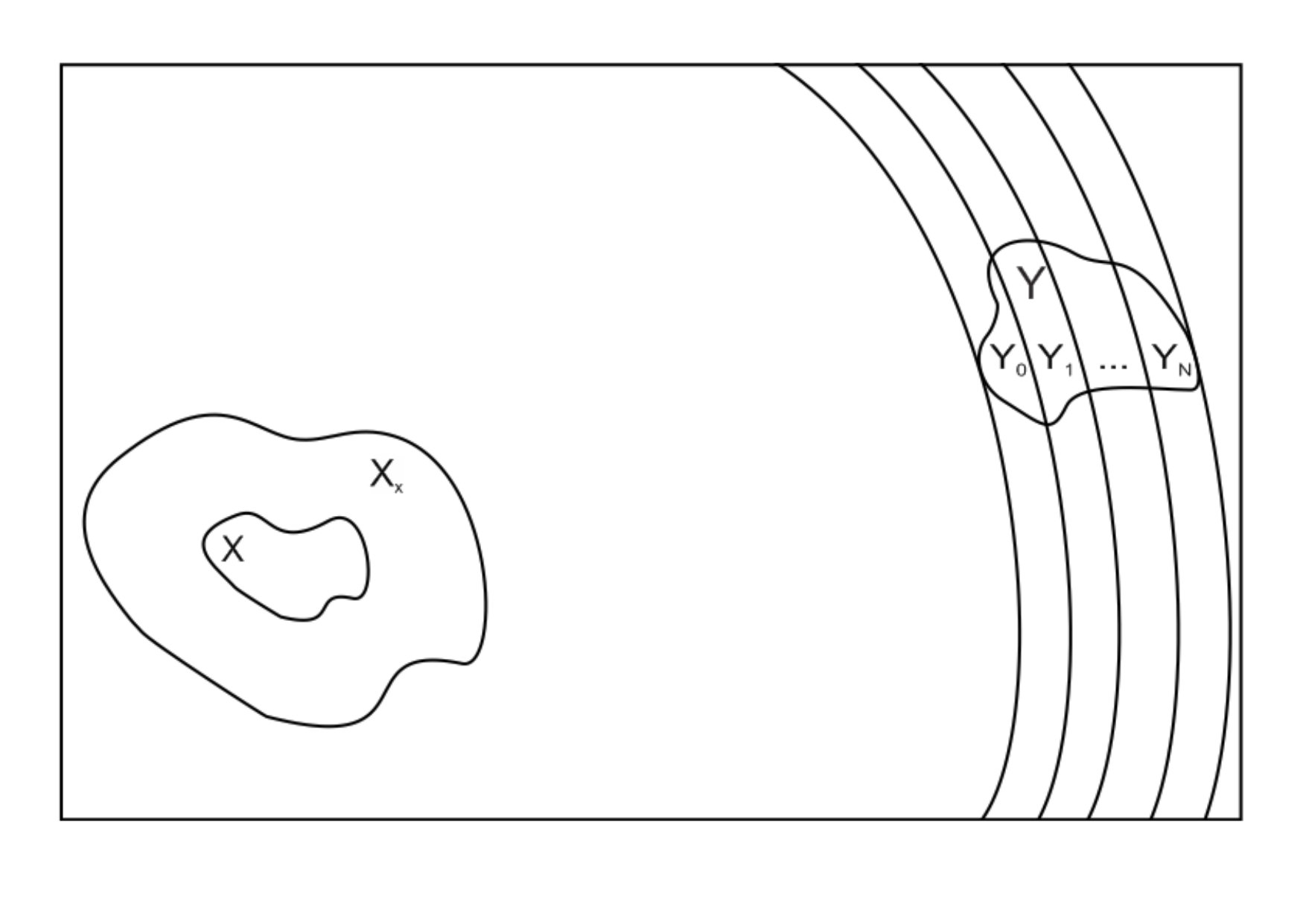 Figure 15
Peer Reviews
No public reviews on file for this paper yet. If you reviewed it on a platform where reviews are public (OpenReview, ICLR, NeurIPS, ICML), you can paste yours below so the community can read it here.
Videos
No videos yet. Explain this paper in a talk, walkthrough, or lecture? Add one.
Bounding entanglement spreading after a local quench
Raphael C. Drumond
Departamento de Matemática, Instituto de Ciências Exatas, Universidade Federal de Minas Gerais, CP 702, CEP 30123-970, Belo Horizonte, Minas Gerais, Brazil.
Natália S. Móller
Departamento de Física, Instituto de Ciências Exatas, Universidade Federal de Minas Gerais, CP 702, CEP 30123-970, Belo Horizonte, Minas Gerais, Brazil.
Abstract
We consider the variation of von Neumann entropy of subsystem reduced states of general many-body lattice spin systems due to local quantum quenches. We obtain Lieb-Robinson-like bounds that are independent of the subsystem volume. The main assumptions are that the Hamiltonian satisfies a Lieb-Robinson bound and that the volume of spheres on the lattice grows at most exponentially with their radius. More specifically, the bound exponentially increases with time but exponentially decreases with the distance between the subsystem and the region where the quench takes place. The fact that the bound is independent of the subsystem volume leads to stronger constraints (than previously known) on the propagation of information throughout many-body systems. In particular, it shows that bipartite entanglement satisfies an effective “light cone,” regardless of system size. Further implications to density-matrix renormalization-group simulations of quantum spin chains and limitations to the propagation of information are discussed.
I Introduction
Entanglement is a fundamental quantity of quantum information and computation, being essential to perform tasks such as teleportation or superdense coding quantcomp . In recent years it is becoming increasingly relevant also to quantum many-body physics. It can be a good order parameter for quantum phase transitions brandao . Algorithms for computing one-dimensional quantum many body ground states, such as the density matrix renormalization group (DMRG) dmrg method or the variational calculus over matrix product states (MPS) mps , have their efficiency based essentially on the spatial scaling of entanglement within these states dmrgmps . It is a key ingredient for the (subsystem) thermalization of many-body isolated quantum systems therm .
Entanglement may also be of interest for non-equilibrium phenomena global ; local . The spatial scaling of entanglement within the eigenstates of a many-body Hamiltonian, as well as its growth in time, is a signature of the many-body localized phase mblestat . The dynamics of entanglement due to global or local quenches may be computed by conformal field theory techniques cft , or by the time variants of DMRG or MPS based algorithms tdmrg , or at least have its growth bounded Bravyi ; bounded .
The behavior of a many-body system after a quantum quench can raise fundamental questions, such as whether the system equilibrates or not (see, e.g., equi ). It can be investigated with increasing detail in modern experimental settings such as ultracold atoms in optical lattices optlat or trapped ions ion . Moreover, novel numerical techniques, such as DMRG, allow one to simulate the evolution of significantly large systems, especially spin chains tdmrg . In simulations of quantum chains by DMRG the entanglement of every bipartition of the chain (in two contiguous regions) is naturally computed for every instant of time. After a local quantum quench, it can be seen, for instance in Ref. alberto , that entanglement of these bipartitions satisfies an effective “light cone” in the same way as any other local quantity of the system, such as magnetization.
In Bravyi this light cone effect can be partially explained for a local quench on the initial state of the system. There, a unitary operation with support on a small region of the system can be applied, with the purpose of establishing a communication channel between distant regions of the system. The authors of Bravyi estimate the variation of quantum entropy—with respect to the evolutions with and without an applied unitary—for any region away from the quench. They found a bound for its growth in time assuming a Lieb-Robinson bound LR for the model. However, their bound is proportional to the volume of the region, restricting its validity. For instance, it can not be applied if one takes the thermodynamic limit of the subsystem. Moreover, the bound could not be used to guarantee an area law for entanglement arealaw of the evolved states, since it is proportional to the subsystem volume.
Here we provide Lieb-Robinson-like bounds for the variation of quantum entropy of the reduced states of any region away from a quench. We consider two kinds of quenches: a local perturbation on the Hamiltonian and on the initial state. We assume only that the model satisfies a Lieb-Robinson bound and that the volume of lattice spheres grows at most exponentially with their radius.
We discuss three consequences of the bounds. First, we show the validity of an effective light cone for entanglement, in a sense we shall explain in detail later. Second, we point out how the bounds guarantee, for every instant of time, an area law for entanglement of the evolved states, as long as the initial state also satisfies an area law and is an eigenstate of the Hamiltonian. And third, we discuss how the bound implies a strong restriction on the information capacity of quantum channels established between distant regions of a many-body system.
This paper is organized as follows. In Sec. II we define the class of models we shall deal with, and we state a Lieb-Robinson bound and further necessary concepts and results. In Sec. III we prove bounds for the variation of entanglement after a local quench and point out some special cases. In Sec. IV we discuss some implications of the bounds obtained.
II Preliminaries
Schrödinger’s equation is non-relativistic, so, in principle, it does not forbid instantaneous propagation of information across space. On the other hand, the seminal paper by Lieb and Robinson LR suggests that a de facto causality should be valid when a perturbation propagates on a many-body system with short-range interactions. Further refinements Sims of their work led to a number of results, collectively known as Lieb-Robinson bounds. In Ref. Bravyi the authors show that if a many-body system satisfies a Lieb-Robinson bound, there is indeed a limit for the speed of propagation of (any significant amount of) information. In the following we shall recall the large class of quantum many-body systems considered in Ref. Sims for which the authors derive Lieb-Robinson bounds.
II.1 Lieb-Robinson Bounds
A quantum many-body spin model is given by a triple where is a metric space, is a Hilbert space for every , and is an interaction. We shall assume for simplicity that is the set of vertices of a connected graph, imbued with the set-theoretical distance. Namely, for every , the distance between them is the length of a shortest path connecting and . Each point of describes an individual quantum system with finite dimensional Hilbert space . For any finite subset of the corresponding state space is . The interaction associates to every finite subset of a self-adjoint operator on . Finally, for every finite the Hamiltonian of that portion of the system is defined by .
In order to get a Lieb-Robinson bound, the interaction must decay fast enough with the diameter of finite subsets of . This is encoded by a non-increasing function that must satisfy, for every :
[TABLE]
[TABLE]
where is the distance between . With such an , the following condition guarantees a fast enough decay of :
[TABLE]
Defining the boundary of a subset by , and by the number of elements of a set , the following bound can then be obtained Sims :
Lieb-Robinson Bounds**.**
Let with ; let and operators be defined on with support on and , respectively; and let . Then, the following inequality holds true for every and :
[TABLE]
where .
II.2 Continuity Inequalities for Entropy
For estimating the variation of entanglement we shall need to bound the variation of reduced states of the system, measured by the trace distance, as well as continuity inequalities for quantum entropy.
Let the trace norm of an operator be given by
[TABLE]
and let be the von Neumann entropy of a density operator acting on a Hilbert space of dimension . The following continuity inequality holds Audenaert :
[TABLE]
where is the binary entropy function. Moreover, the quantum conditional entropy , where is a state of a bipartite system and is the corresponding reduced state of part , satisfies the continuity inequality alicki :
[TABLE]
valid whenever , where is the Hilbert-space dimension of part .
III A bound for the variation of von Neumann entropy under local quenches
To understand the spreading of correlations and transport on many-body systems one may resort, both theoretically and experimentally optlat ; local , to following the dynamics of the system after a local quench. One can distinguish two kinds of local (instantaneous) quenches: a sudden local change on the Hamiltonian and on the initial state of the many-body system. That is, in the first case, from time and on, the Hamiltonian changes to . For the second case, an initial state is quickly changed to . Both and must have support on a small portion of the system. In either case, we can compare the evolution of the system with and without the applied quench.
First we show that, for small times, the reduced state of regions far from the region where the quench takes place is slightly perturbed. Note that inequality (5) shown below corresponds for it corresponds to a quenched Hamiltonian while for to a quenched initial state.
Lemma 1**.**
Let be a model satisfying the conditions described in Sec. II.1 and let be any finite subset of . Let be two subsets with . Let be a self-adjoint operator on and let be a unitary operator, both of them with support on . Let be a unit vector of and denote , , . Denote the reduced states on region as follows , for , are their respective reduced states on region . For any and the following inequality holds true:
[TABLE]
for , where and .
Proof. First we show the inequality for . Let be an operator acting on with support on and let be its restriction to . We have then kastner :
[TABLE]
where . Recalling that has support on , we can apply inequality (1) to the integrand of the last expression and get:
[TABLE]
Finally, from trace norm characterization (2) and observing that we get inequality (5).
For , take , and as above, so Bravyi :
[TABLE]
Again, using the Lieb-Robinson bound (1) and expression (2) for the trace norm, we get inequality (5) for ∎
If we use Lemma 1 above directly with the continuity inequality (3) for entropy we obtain bounds for the variation of entropy that grow linearly with , since the right hand side of Eq. (3) grows logarithmically with dim. In order to avoid this we can stratify in sets of increasing distance to and compute the entropy as a sum of conditional entropies between these sets. The advantage is twofold: (i) the conditional entropies are computed on regions of increasing distance to and, hence, of exponentially decreasing variation; (ii) the continuity inequality (4) for conditional entropy depends on the dimension of just one of the parts. We must assume, however, that the volume of each set does not grow too fast with its distance to in order to get the desired bound. We shall detail these conditions in the following.
For , let be the set of all points of with distance to . For and , let be a sphere of radius centered in . Denote by Int the interior of and let be its boundary. Note that for systems with (non-zero) nearest-neighbor interactions it holds that . We must have then the following.
Lemma 2**.**
For every finite and it must hold that
[TABLE]
Proof. Indeed, take and such that . Clearly we have . Take a path of length connecting to . Since this path necessarily contains a point of . It must hold that , otherwise one can construct a path of length connecting to a point of , in contradiction with condition . In other words, . ∎
Now we are ready to state the following.
Theorem 1**.**
Assume the same conditions and notation of Lemma 1. Furthermore, assume that
[TABLE]
for every and some constants . Suppose also that . Let be such that . Then, the following inequalities hold true:
[TABLE]
for and , where and .
Proof. Define for . If , the definitions of and guarantee that . Moreover, if , we have , and . See Figure 1 for a pictorial description of all these sets.
All these definitions imply that for any density operator acting on it must hold that:
[TABLE]
where denotes the conditional entropy . Letting for , we have on the one hand:
[TABLE]
On the other hand, from Lemma 1 we get, for :
[TABLE]
since . Moreover, by using dim, inequalities (23), the continuity inequalities for entropy (3), and conditional entropy (4), the right hand side of Eq. (22) can be bounded by:
[TABLE]
In order to bound the binary entropy functions we use that for , so we can write:
[TABLE]
In this expression the last two terms are smaller than the term of index of the summand. Therefore, we can bound the expression by a single sum ranging from [math] to and get:
[TABLE]
where we get the equality by rearranging the terms. We can bound the second summand in Eq.(27) immediately by . To bound the first summand we just have to observe that , where the first inequality comes from the definition of and Lemma 2 while the second comes from hypothesis (19). Therefore,
[TABLE]
since , and we get
[TABLE]
Finally, defining , using that and , we can conclude the desired bound:
[TABLE]
∎
Let us now consider some examples.
Example 1**.**
If with in Theorem 1, inequality (20) holds with and . Indeed, one just has to realize that such metric space satisfies (19) with and since every sphere in this space has precisely two elements, irrespective the size of its radius.
Assuming further that is the range of interaction [meaning that for every set with diameter larger than ]and is a contiguous region, one has and . Therefore, the bound is completely independent of the size of regions and .
One says that has fractal dimension if there exists and such that
[TABLE]
for every ref5 ; refref5 . Note that lattices are particular cases of such space. In such models one has the following.
Example 2**.**
In Theorem 1, if has fractal dimension , inequality (20) holds for every (and ), with . Indeed, from Eq. (31) we get that for every .
Finally, we note that a bound can be valid even for more “exotic” spaces. If is a rooted tree graph with branches, we have that , so its fractal dimension is infinite. But we still have the following.
Example 3**.**
In Theorem 1, if is a rooted tree graph with branches, inequality (20) holds for , , and . Since we just have to set and .
IV Discussion
First of all, let us explain in what sense we claim that entanglement satisfies an “effective light-cone”. Let be the enlargement of a subset up to distance , as depicted in Figure 1. Again, as in Sec. III, take to be the reduced state in region of the evolved states , where , or . Recall that the system evolves without perturbations if but is subjected to a local quench in region , at , in the Hamiltonian for or in the initial state if . Let be the entropy of entanglement of the evolved state under the bipartition defined by , that is, . For a large class of models our results show that this entanglement function satisfies an effective “light cone”, whatever the size of the whole system. Namely, by using inequality (20) with , we see that whenever we shall have for and . Therefore, significant variations of entanglement can take place only inside the “light cone” .
As a particular case of the above discussion, we point out some implications for DMRG simulations of local quenches on spin chains. In such algorithms one naturally computes the entanglement of the system for every bipartition (in two contiguous regions) and every instant of time. These values for entanglement are important to establish how large the sizes of the matrices involved in the simulation must be in order to achieve good approximations. In particular, a condition for the efficiency of the algorithms is that the simulated states must satisfy an area law for entanglement arealaw . Now, assume that a quench in the Hamiltonian is applied on an extreme point of the chain and take to be the distance between this site and the cutting point of a bipartition. As a particular case of the above discussion, we guarantee that satisfies the bound (20) with and has no dependence whatsoever with the size of the regions or the whole system. Now, if the initial state is an eigenstate of the unperturbed Hamiltonian and satisfies an area law, we have , where is some constant. Therefore, by our bound, the evolved state will still satisfy an area law for any finite time. Indeed, from Theorem 1 we have that , for every , where , and some fixed . Then, for some fixed value of , we have an area law. Note that an area law, by itself, can already be drawn, for instance, from reference bounded . There, the authors find that holds for every , where is a constant dependent only on the parameters of the Hamiltonian. Our bound, however, can impose a stronger restriction on the entanglement growth for fixed and increasing values of .
In Ref. Bravyi the authors show that a Lieb-Robinson bound indeed implies a limitation for the propagation of information throughout the many-body system in the information-theoretical sense. Assume two observers and have access to regions and of the many-body system, respectively. They can establish a communication channel from to in the following way. Observer can encode an alphabet with letters in the state of the system by applying one out of unitaries on the initial state , all of them with support on region . Observer can then perform measurements on region in order to discern which unitary was applied and, hence, which letter of the alphabet was intended to be sent. If is the probability for the th letter to be sent, the maximum amount of information that can pass through this channel is measured by the Holevo capacity, given by , where is the reduced state on given by the evolution of at time .
Through a bound for , for any , the authors of Bravyi show that the Holevo capacity is small for small times (). Their bound, however, is proportional to the volume of . Therefore, it is necessary to additionally assume this volume grows at most polynomially with . By Example 2, for systems with spatial dimensions, however, such additional assumption is no longer required. Even if observer has access to an arbitrarily large portion of the system, no significant amount of information can be sent through the channel for small times.
We may add that the communication channel could be alternatively implemented by observer encoding the letters of the alphabet on Hamiltonian perturbations with support on . Our results also guarantee the Holevo capacity would be small for small times, even for arbitrarily large regions .
Acknowledgements.
We acknowledge financial support from Conselho Nacional de Desenvolvimento Científico e Tecnológico (CNPq) and Coordenação de Aperfeiçoamento de Pessoal de Nível Superior (CAPES). We thank Fernando G. S. L. Brandão and Alberto L. de Paula, Jr. for useful discussions.
The reference list from the paper itself. Each links out to its DOI / PubMed record.
- 1(1) M. Nielsen and I. Chuang, Quantum Computation and Quantum Information (Cambridge University Press, Cambridge, UK, 2000).
- 2(2) F. G. S. L. Brandão, Entanglement as a quantum order parameter, New J. Phys. 7, 254 (2005).
- 3(3) S. R. White, Density Matrix Formulation for Quantum Renormalization Groups, Phys. Rev. Lett. 69, 2863 (1992); A. L. Malvezzi, An introduction to numerical methods in lowdimensional quantum systems, Braz. J. Phys. 33, 55 (2003).
- 4(4) U. Schollwoeck, The density-matrix renormalization group in the age of matrix product states, Ann. Phys. 326, 96 (2011).
- 5(5) I. P. Mc Culloch, From density-matrix renormalization group to matrix product states, J. Stat. Mech. (2007) P 10014.
- 6(6) J. Eisert, M. Friesdorf, and C. Gogolin, Quantum many-body systems out of equilibrium, Nat. Phys. 11, 124 (2015).
- 7(7) A. Polkovnikov, K. Sengupta, A. Silva, and M. Vengalattore, Nonequilibrium dynamics of closed interacting quantum systems, Rev. Mod. Phys. 83, 863, 2011.
- 8(8) V. Eisler, and I. Peschel, Evolution of entanglement after a local quench, J. Stat. Mech. (2007) P 06005.