A tale of two transients: GW170104 and GRB170105A
V. Bhalerao, M. M. Kasliwal, D. Bhattacharya, A. Corsi, E. Aarthy, S., M. Adams, N. Blagorodnova, T. Cantwell, S. B. Cenko, R. Fender, D. Frail, R., Itoh, J. Jencson, N. Kawai, A. K. H. Kong, T. Kupfer, A. Kutyrev, J. Mao, S., Mate, N. P. S. Mithun, K. Mooley, D. A. Perley

TL;DR
This study conducted multi-wavelength follow-up observations of the GW170104 gravitational wave event, found no X-ray counterpart, and identified an unrelated long GRB afterglow coincidentally located within the error circle.
Contribution
The paper provides the first detailed multi-wavelength follow-up of GW170104 and clarifies the nature of the optical transient ATLAS17aeu as an unrelated long GRB afterglow.
Findings
No hard X-ray counterpart detected for GW170104.
ATLAS17aeu is an unrelated long GRB afterglow.
The optical transient is not associated with GW170104.
Abstract
We present multi-wavelength follow-up campaigns by the AstroSat-CZTI and GROWTH collaborations to search for an electromagnetic counterpart to the gravitational wave event GW170104. At the time of the GW170104 trigger, the AstroSat CZTI field-of-view covered 50.3\% of the sky localization. We do not detect any hard X-ray (>100 keV) signal at this time, and place an upper limit of for a 1\,s timescale. Separately, the ATLAS survey reported a rapidly fading optical source dubbed ATLAS17aeu in the error circle of GW170104. Our panchromatic investigation of ATLAS17aeu shows that it is the afterglow of an unrelated long, soft GRB~170105A, with only a fortuitous spatial coincidence with GW170104. We then discuss the properties of this transient in the context of standard long GRB afterglow models.
Click any figure to enlarge with its caption.
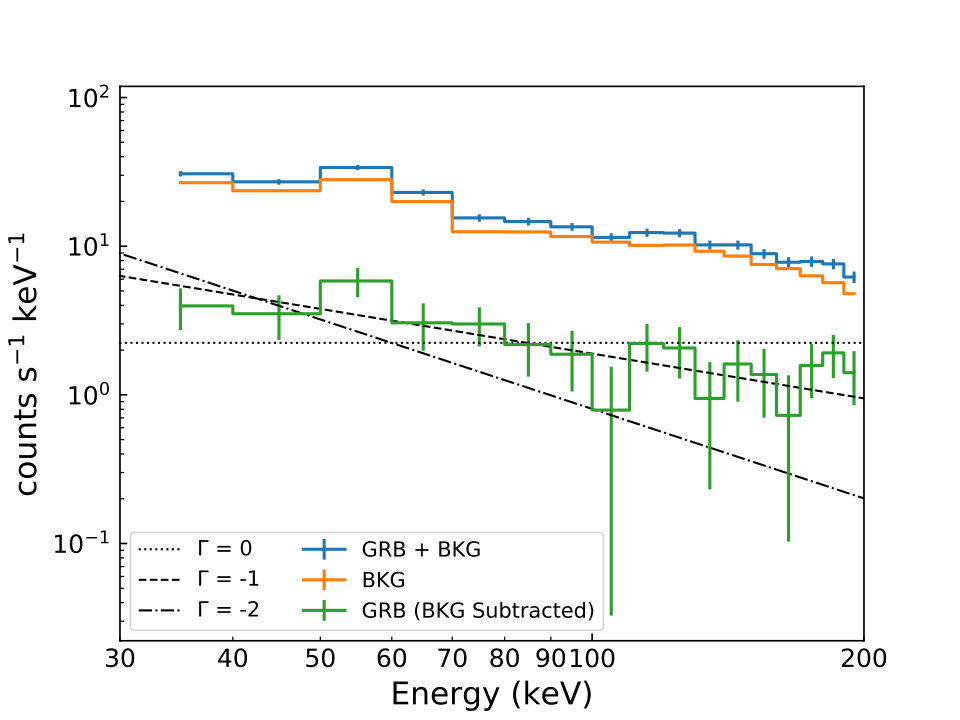 Figure 1
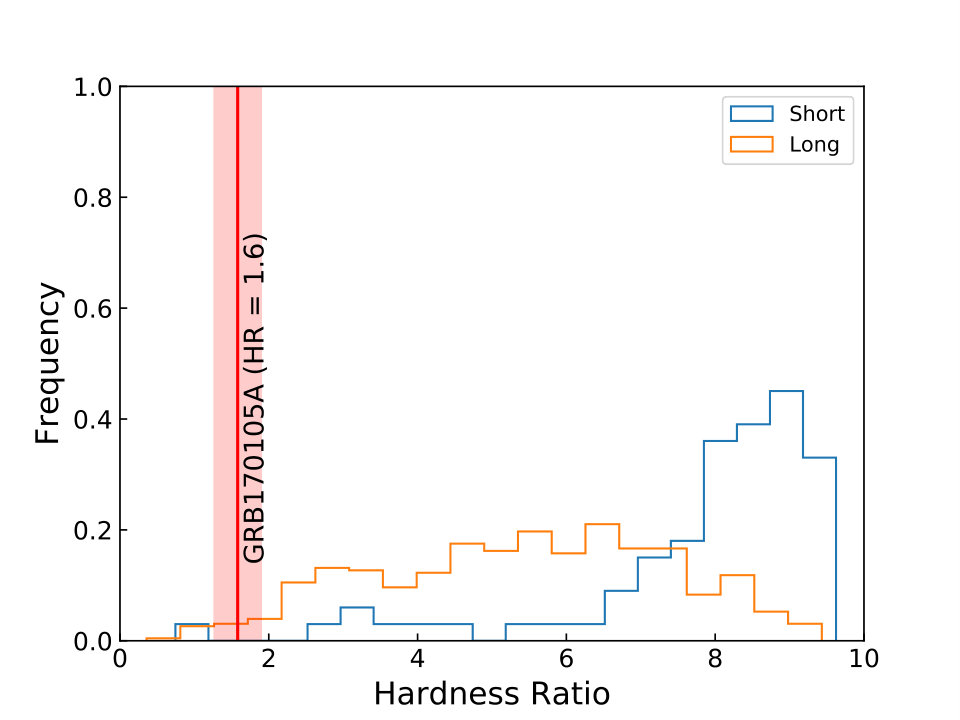 Figure 2
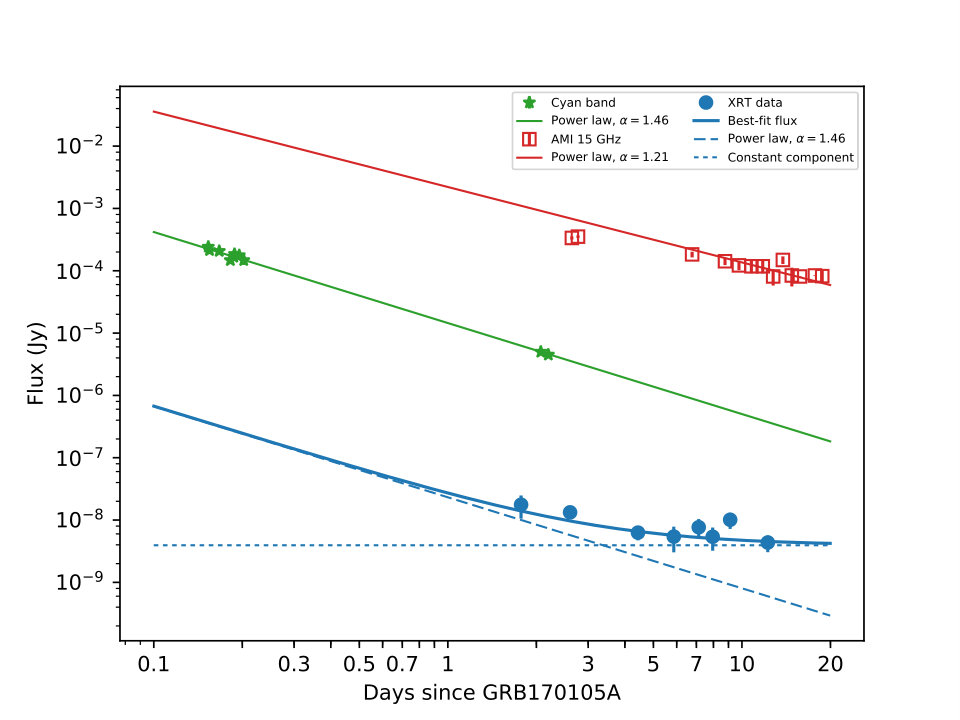 Figure 3
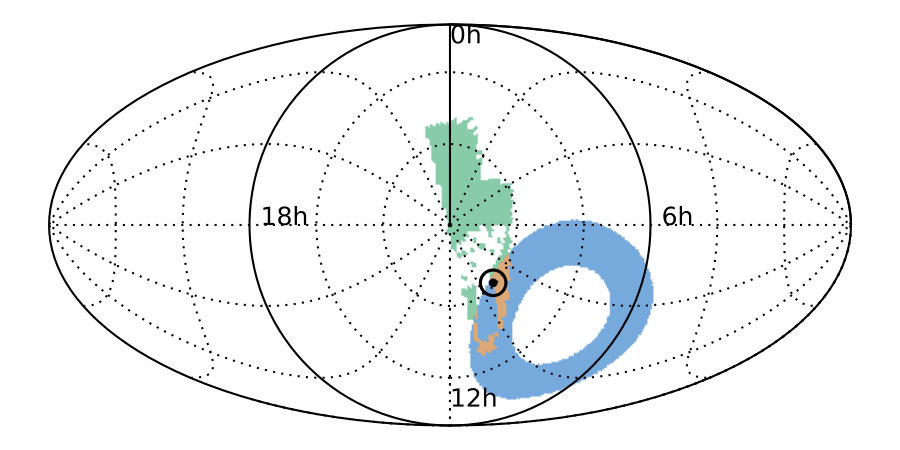 Figure 4
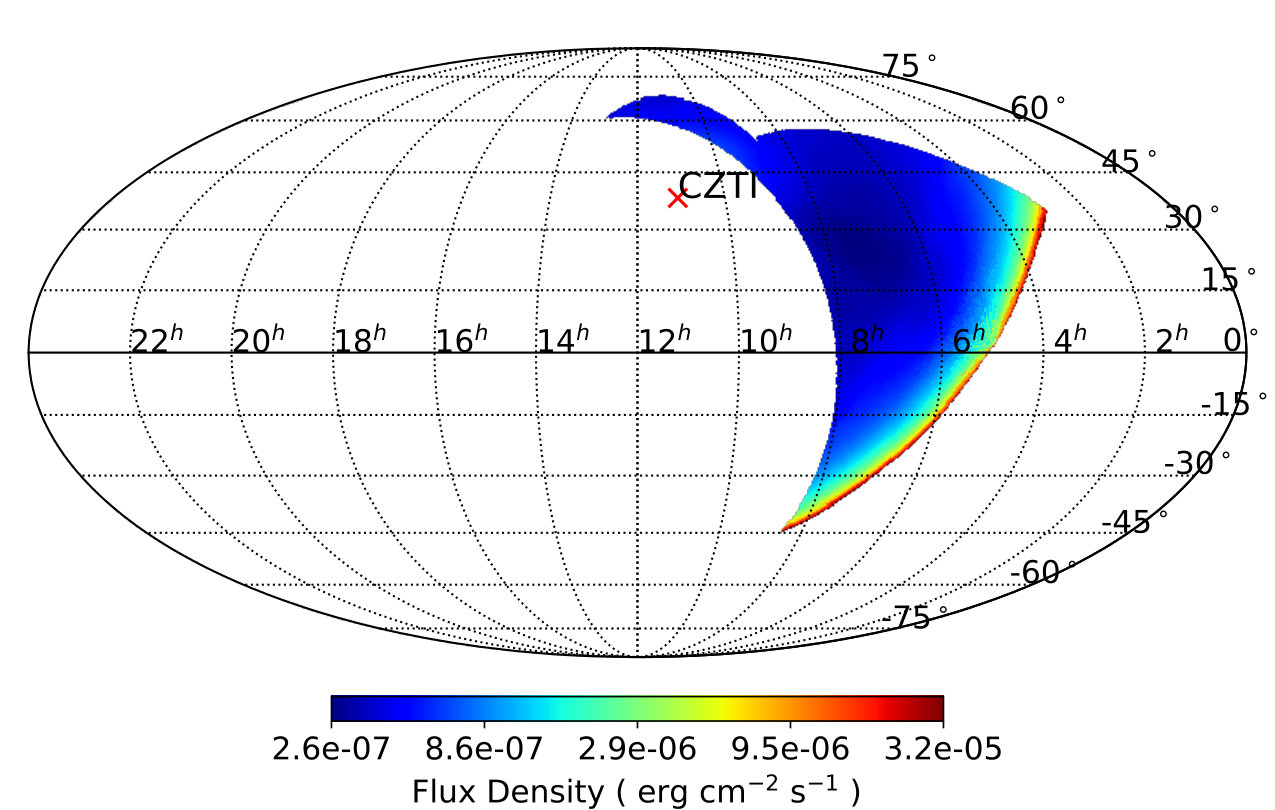 Figure 5
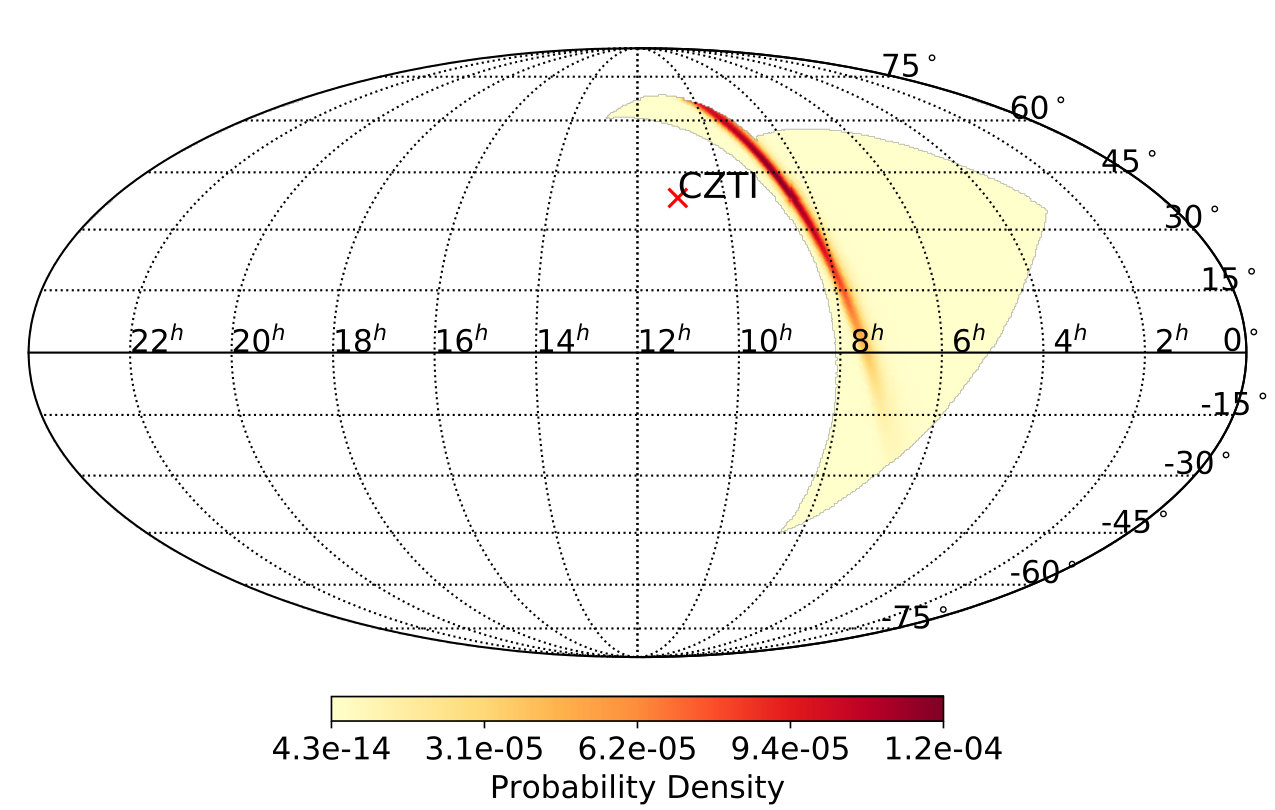 Figure 6
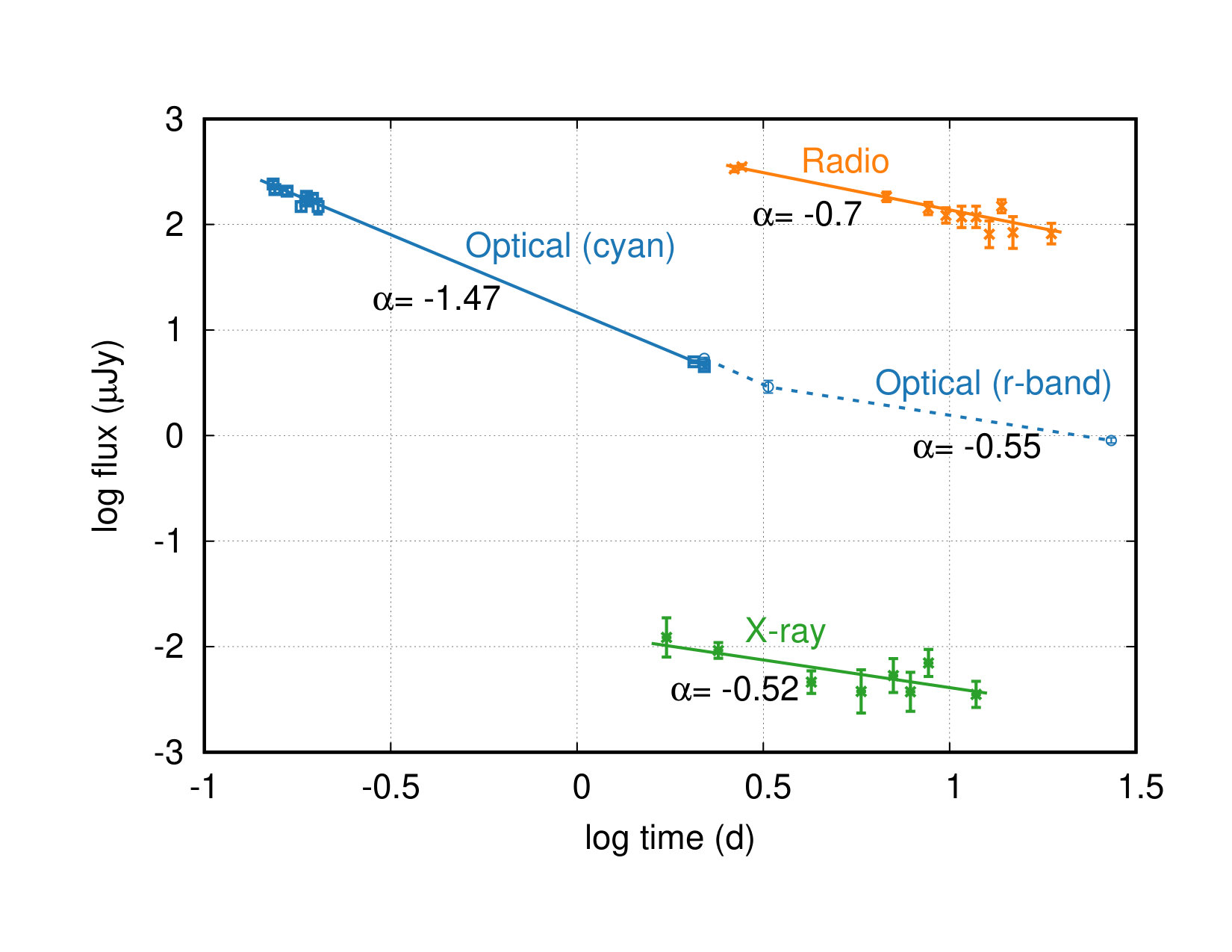 Figure 7
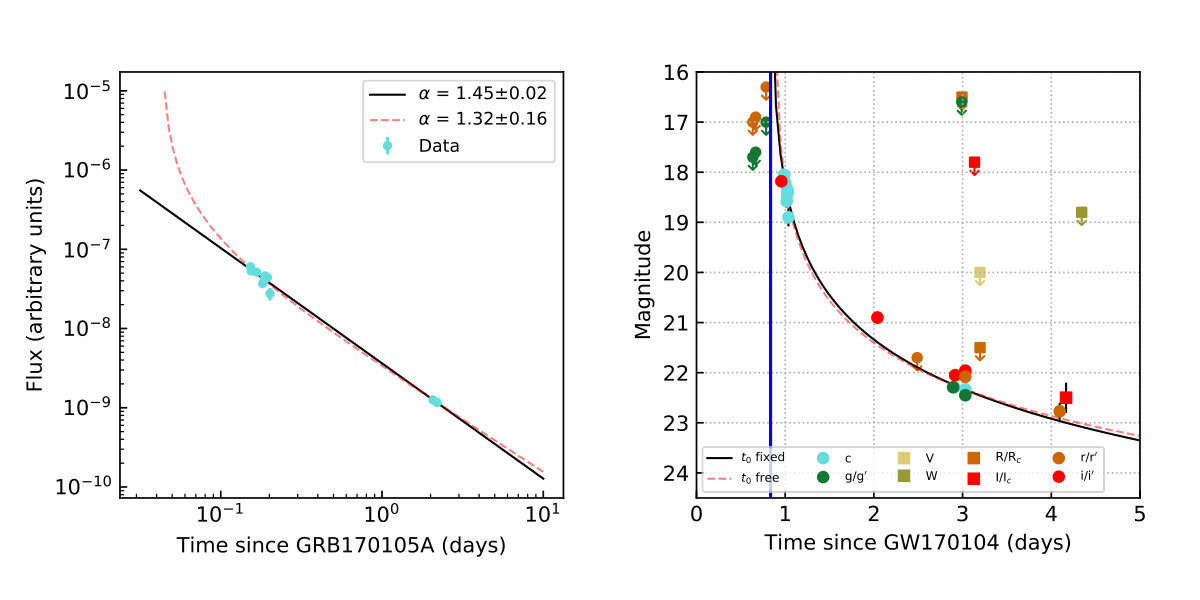 Figure 8
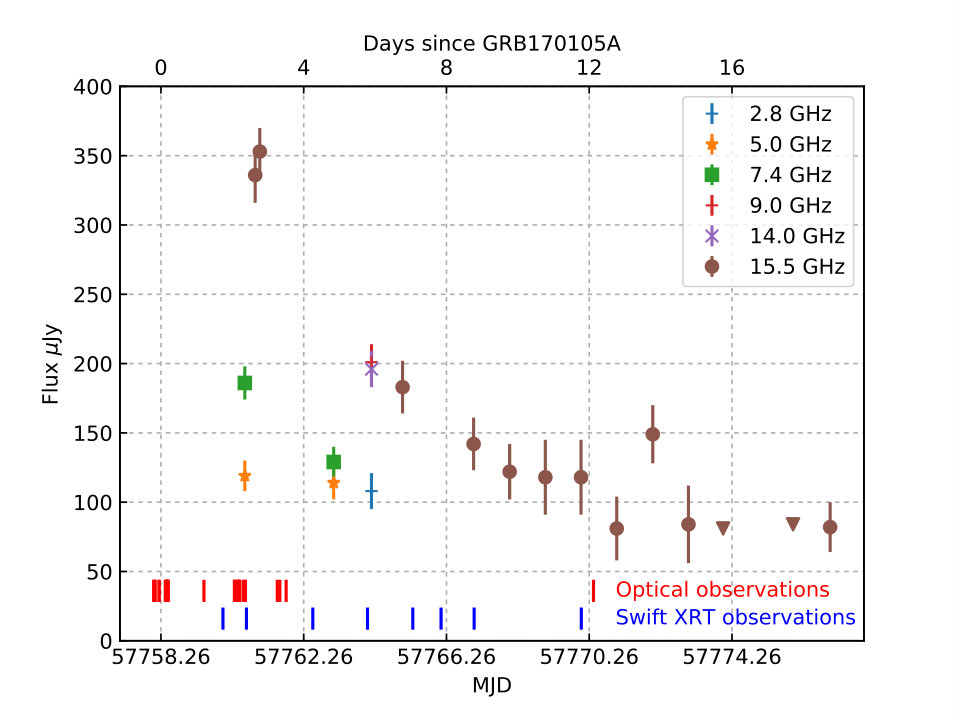 Figure 9
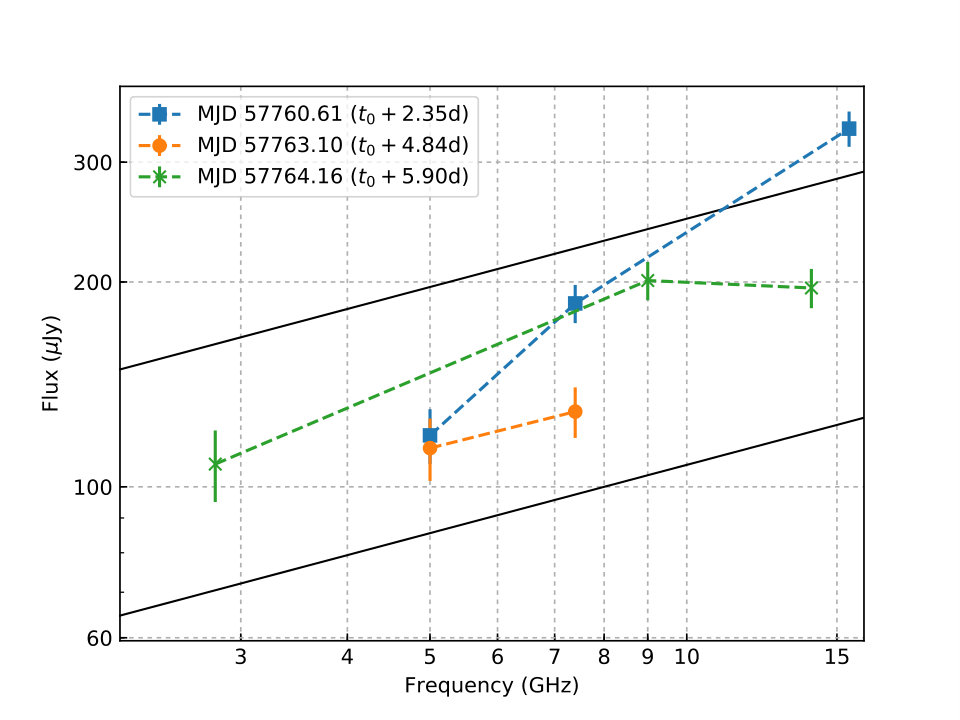 Figure 10
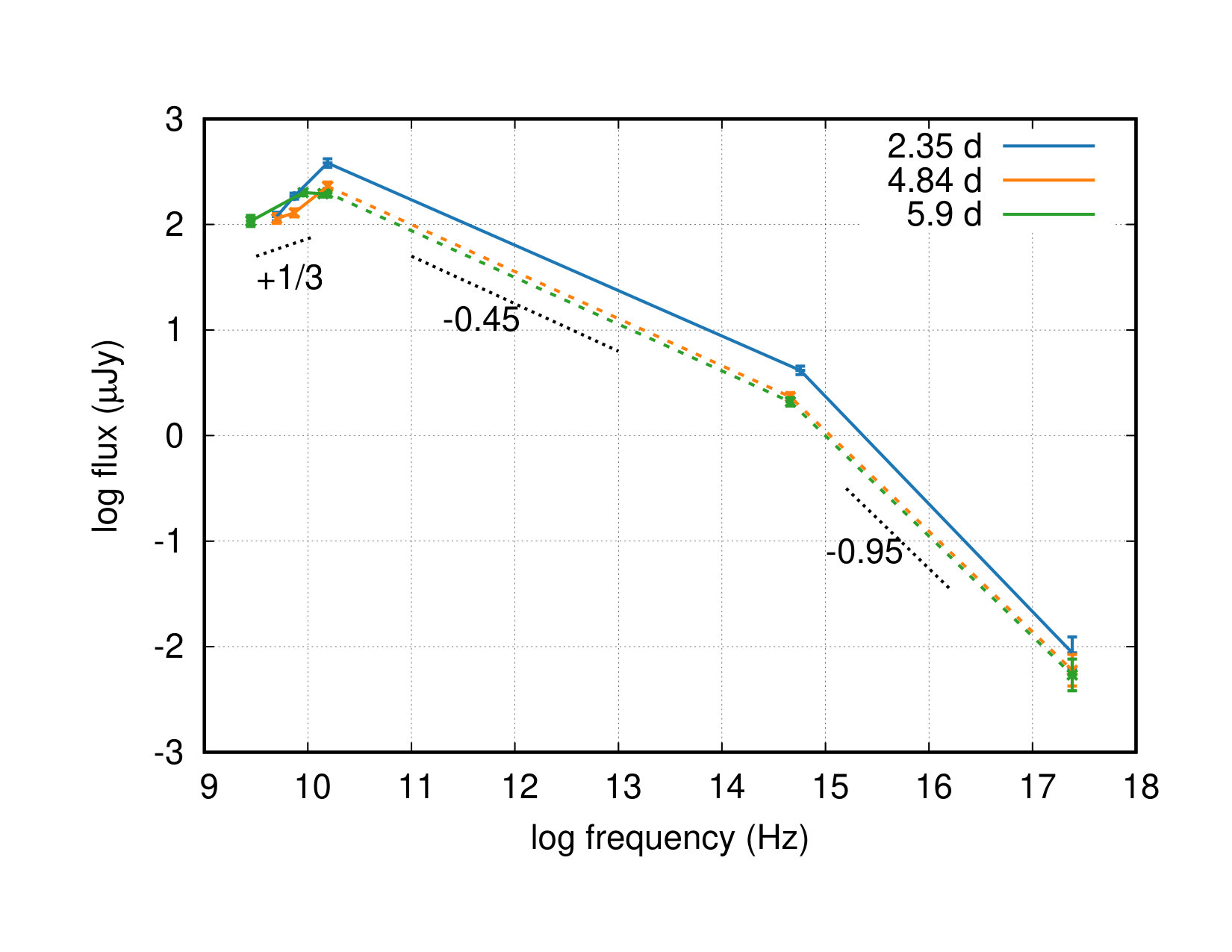 Figure 11
Peer Reviews
No public reviews on file for this paper yet. If you reviewed it on a platform where reviews are public (OpenReview, ICLR, NeurIPS, ICML), you can paste yours below so the community can read it here.
Videos
No videos yet. Explain this paper in a talk, walkthrough, or lecture? Add one.