Electrical 2{\pi} phase control of infrared light in a 350nm footprint using graphene plasmons
Achim Woessner, Yuanda Gao, Iacopo Torre, Mark B. Lundeberg, Cheng, Tan, Kenji Watanabe, Takashi Taniguchi, Rainer Hillenbrand, James Hone, Marco, Polini, Frank H.L. Koppens

TL;DR
This paper demonstrates a graphene-based plasmonic phase modulator capable of 0 to 2π phase tuning within a 350nm footprint, enabling ultra-compact optical control for various applications.
Contribution
It introduces the first graphene plasmonic phase modulator with in situ phase control in an ultra-small footprint, advancing transformation optics and biosensing technologies.
Findings
Achieves 0 to 2π phase modulation in a 350nm device
Provides a scattering theory for plasmons in spatial density profiles
Demonstrates potential for ultra-compact optical devices
Abstract
Modulating the amplitude and phase of light is at the heart of many applications such as wavefront shaping, transformation optics, phased arrays, modulators and sensors. Performing this task with high efficiency and small footprint is a formidable challenge. Metasurfaces and plasmonics are promising , but metals exhibit weak electro-optic effects. Two-dimensional materials, such as graphene, have shown great performance as modulators with small drive voltages. Here we show a graphene plasmonic phase modulator which is capable of tuning the phase between 0 and 2{\pi} in situ. With a footprint of 350nm it is more than 30 times smaller than the 10.6m free space wavelength. The modulation is achieved by spatially controlling the plasmon phase velocity in a device where the spatial carrier density profile is tunable. We provide a scattering theory for plasmons propagating through…
Click any figure to enlarge with its caption.
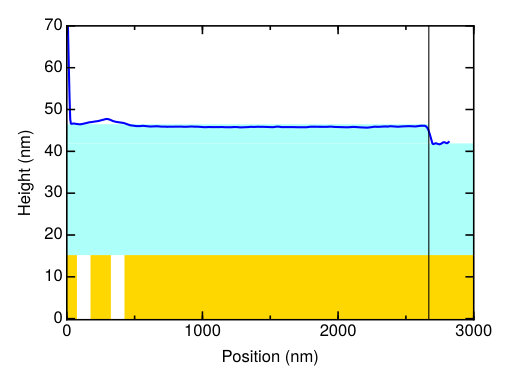 Figure 1
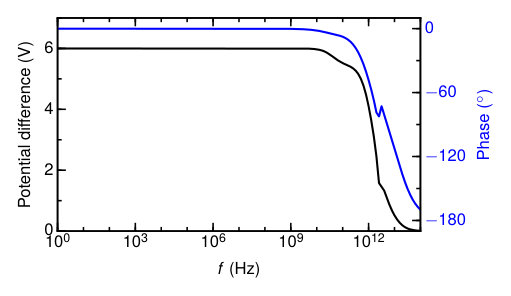 Figure 2
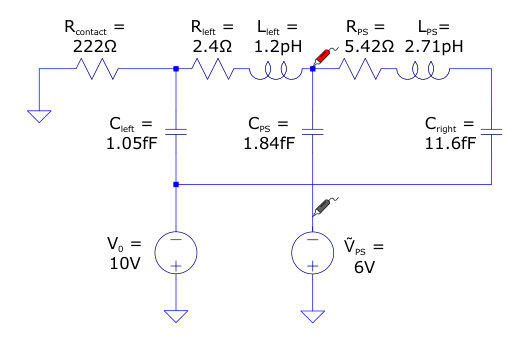 Figure 3
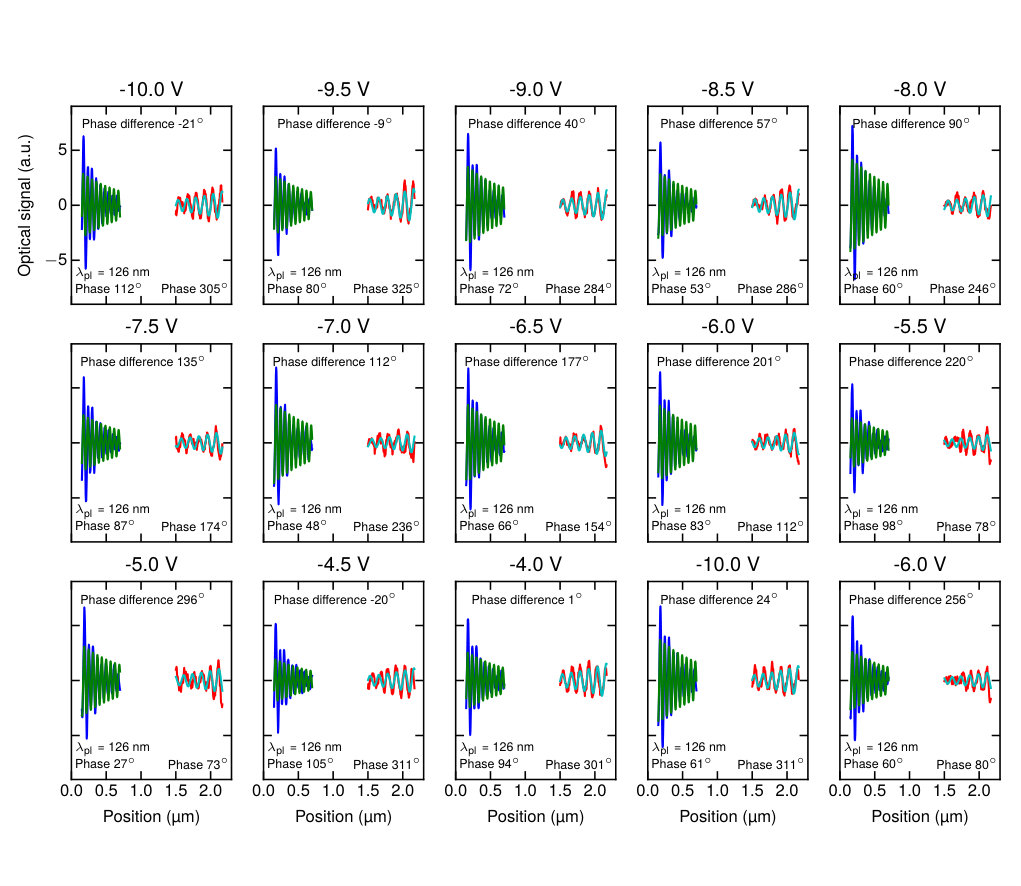 Figure 4
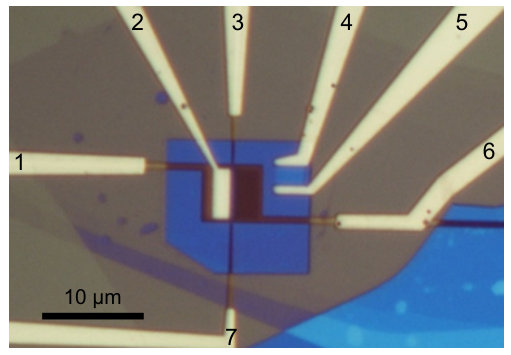 Figure 5
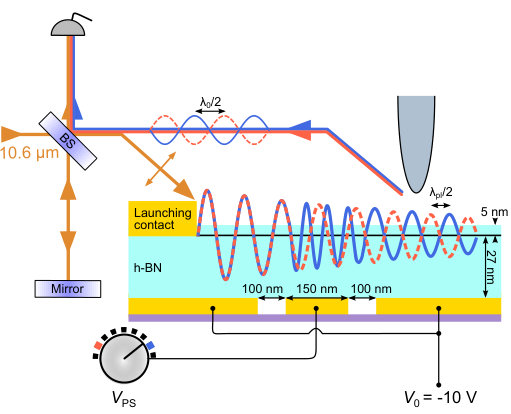 Figure 1
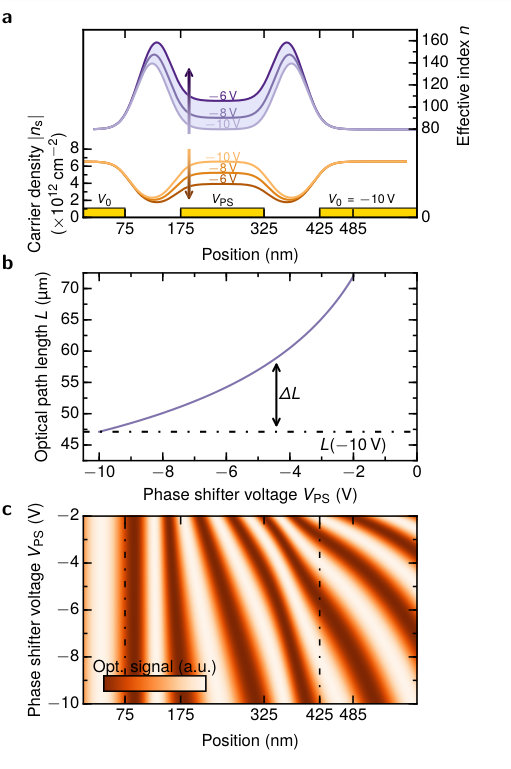 Figure 2
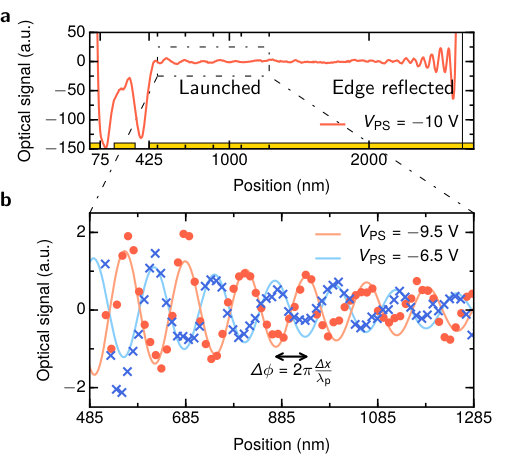 Figure 3
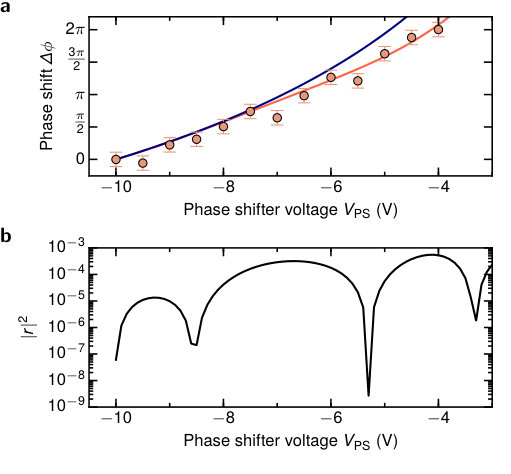 Figure 4
Peer Reviews
No public reviews on file for this paper yet. If you reviewed it on a platform where reviews are public (OpenReview, ICLR, NeurIPS, ICML), you can paste yours below so the community can read it here.
Videos
No videos yet. Explain this paper in a talk, walkthrough, or lecture? Add one.