
TL;DR
The MEG II experiment is an upgraded detector designed to search for the forbidden decay extmu ightarrow e extmu extgamma\ with higher precision, introducing new subdetectors and calibration methods to improve sensitivity.
Contribution
This paper details the design, upgrades, and expected performance of the MEG II detector, advancing the search for lepton flavor violation.
Findings
Enhanced detector resolution and sensitivity expected
Introduction of novel subdetectors and calibration hardware
Projected improved limits on extmu ightarrow e extmu extgamma"] ,
Abstract
We present a report of the MEG II experiment, the upgrade of MEG, whose goal is to search for the forbidden decay \megc\ with increased precision. After having briefly reviewed the motivation for such a search and the current limit due to MEG, we present the conceptual design of the detector detailing for each subdetector the motivations and the extent of the upgrade and the expected resolution improvements. Novel subdetectors and calibration hardware are introduced. We conclude with the expected sensitivity of the MEGII experiment.
Click any figure to enlarge with its caption.
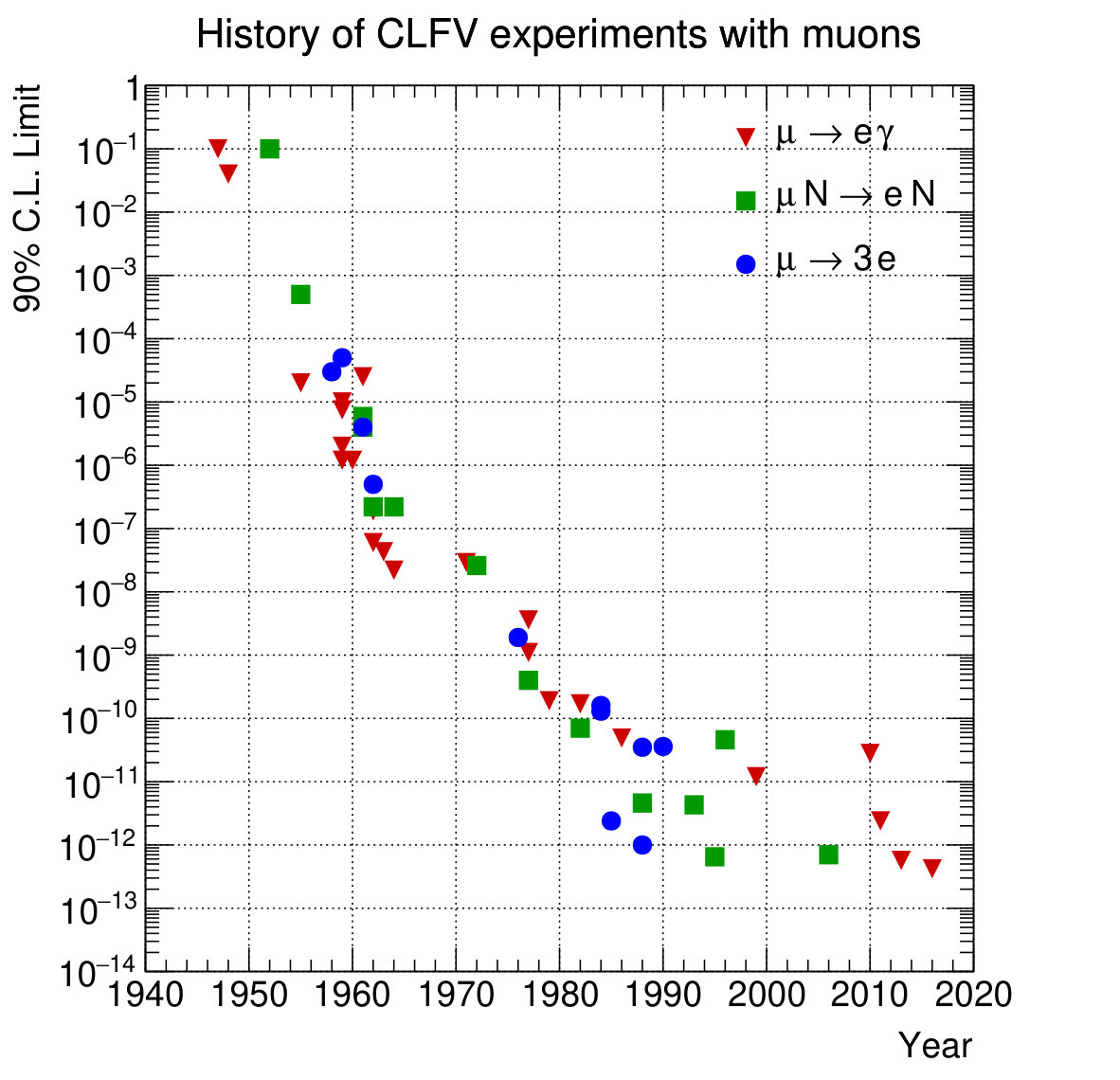 Figure 1
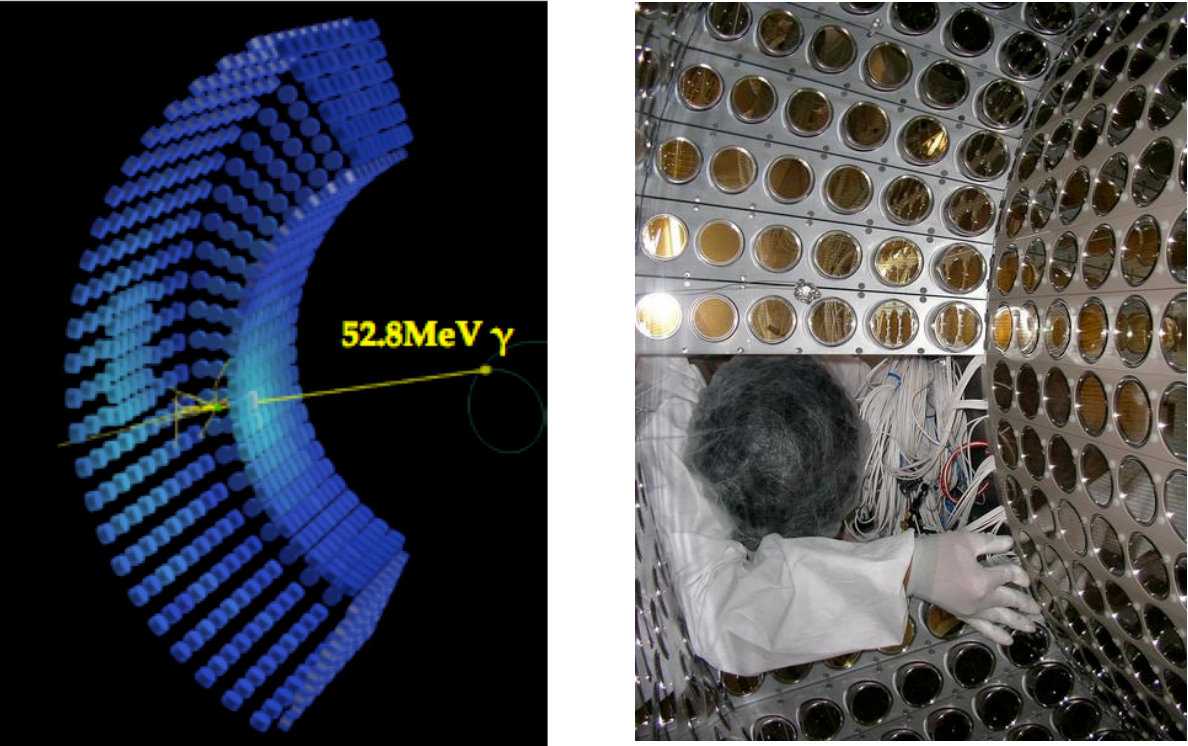 Figure 2
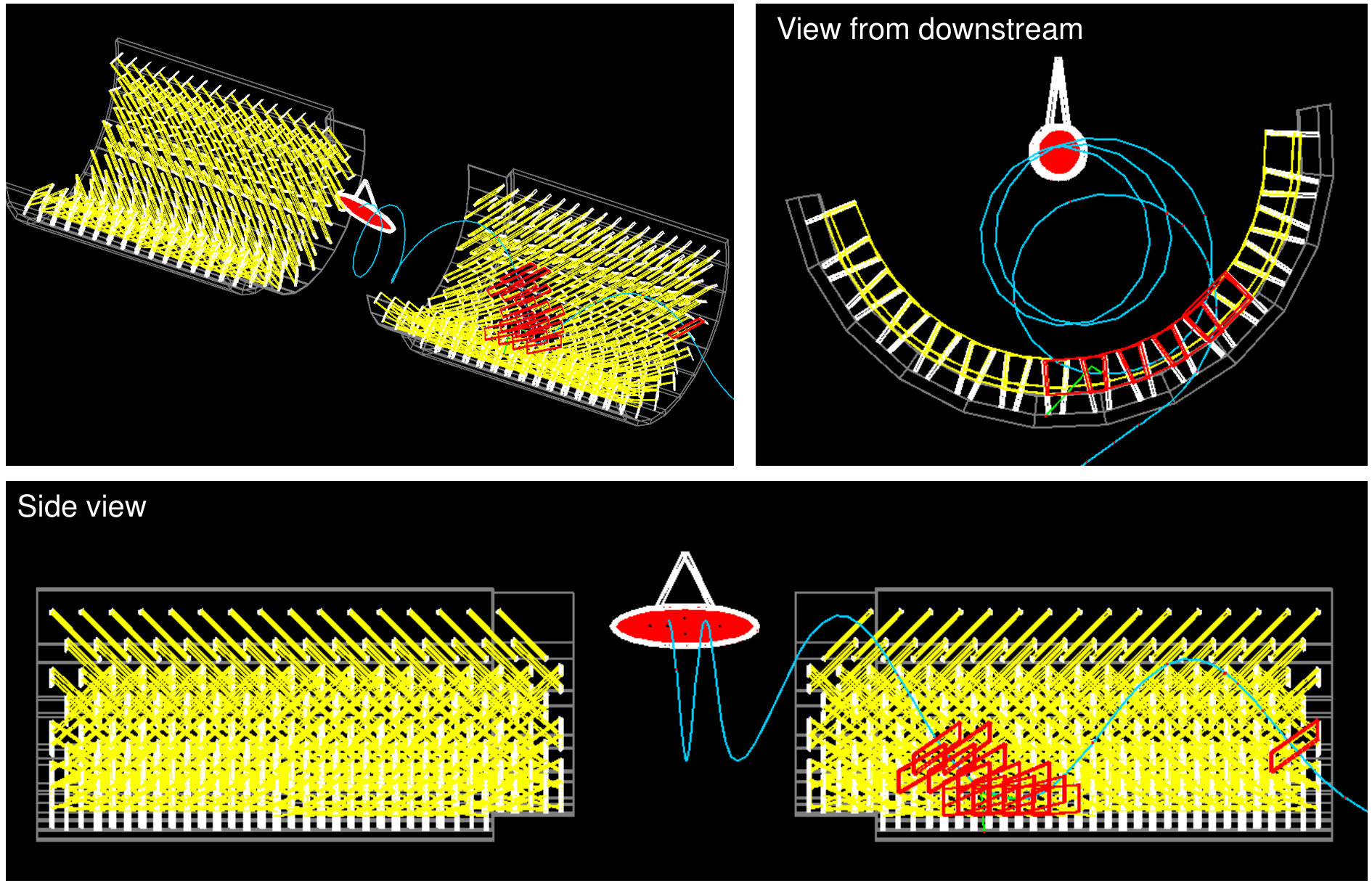 Figure 3
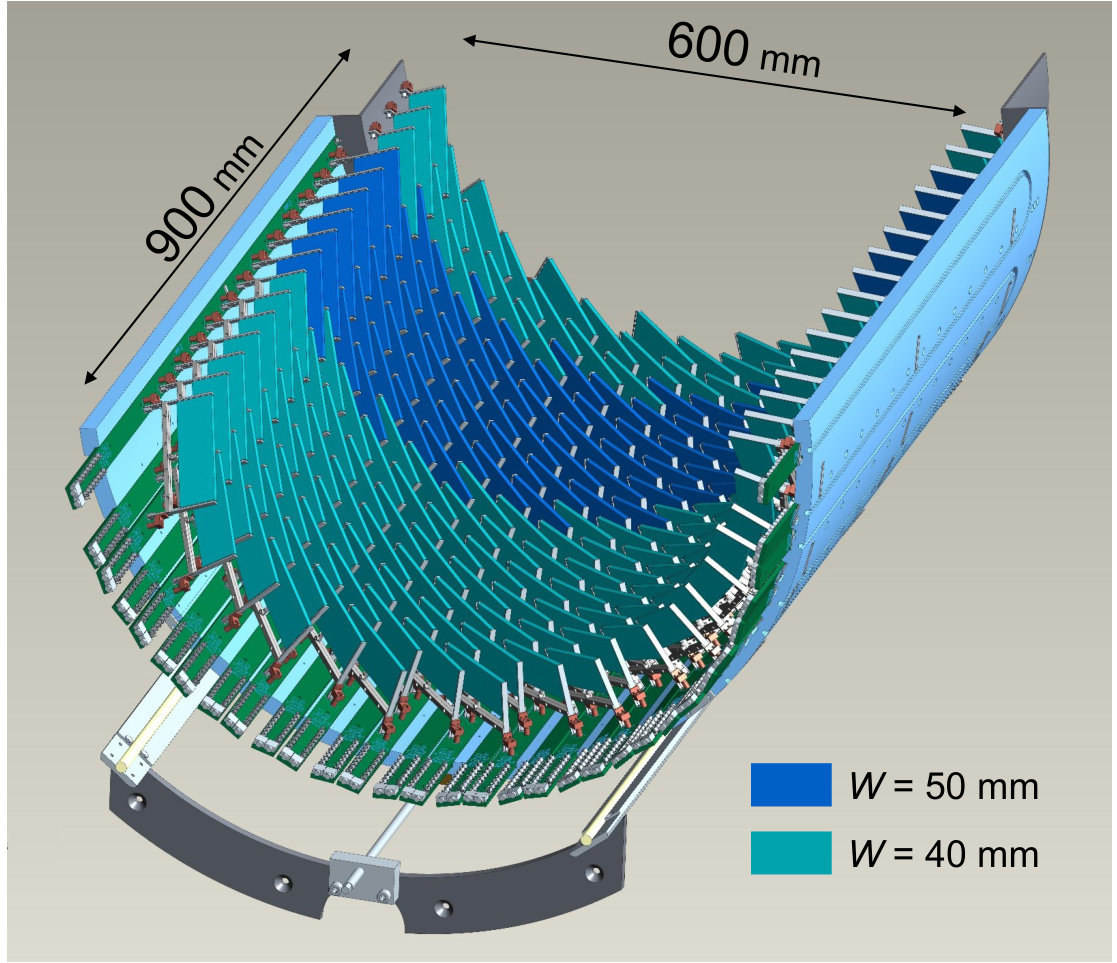 Figure 4
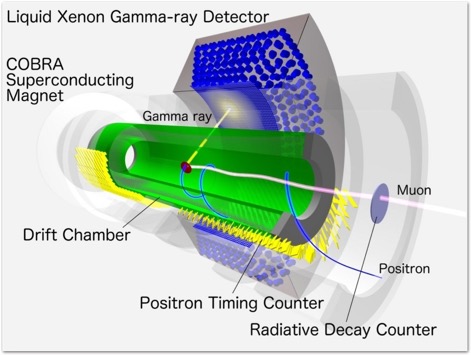 Figure 5
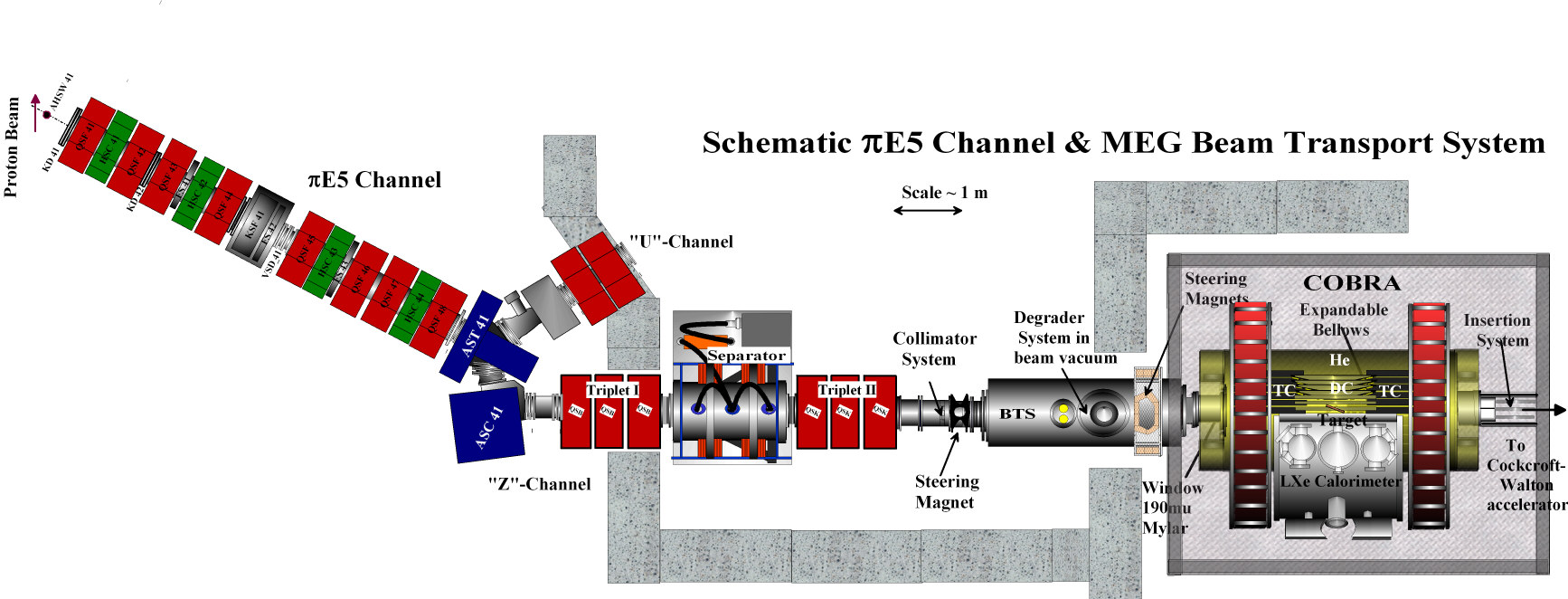 Figure 1
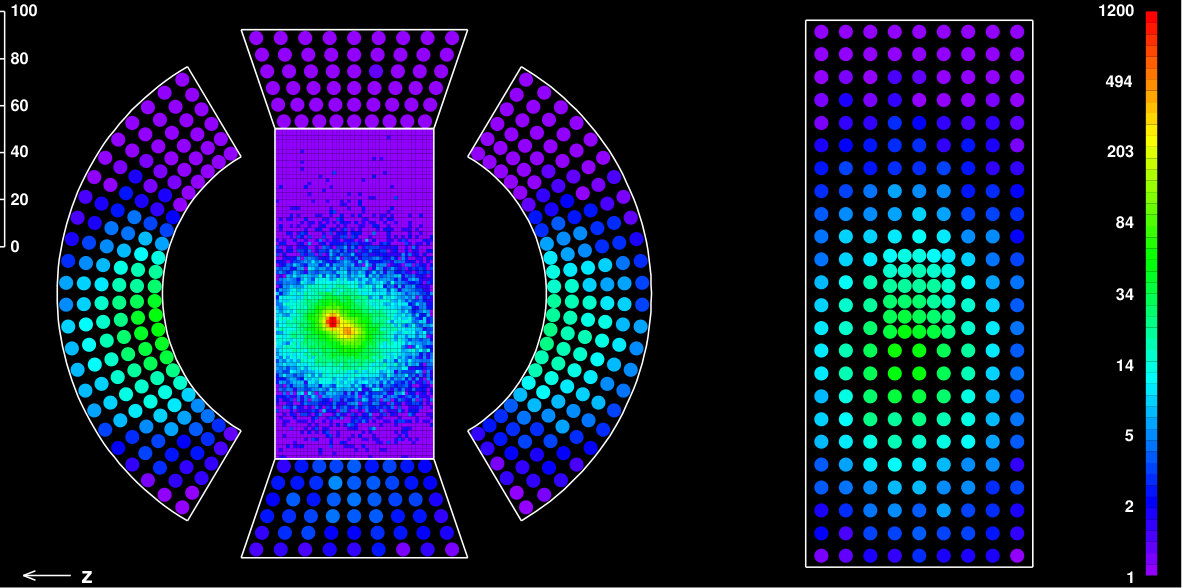 Figure 7
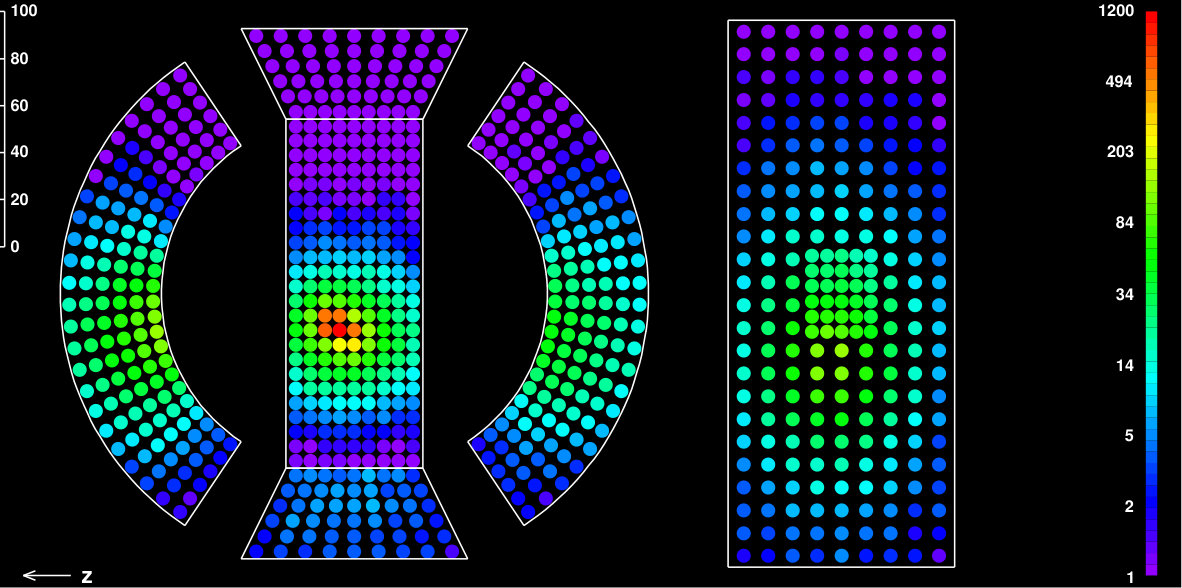 Figure 8
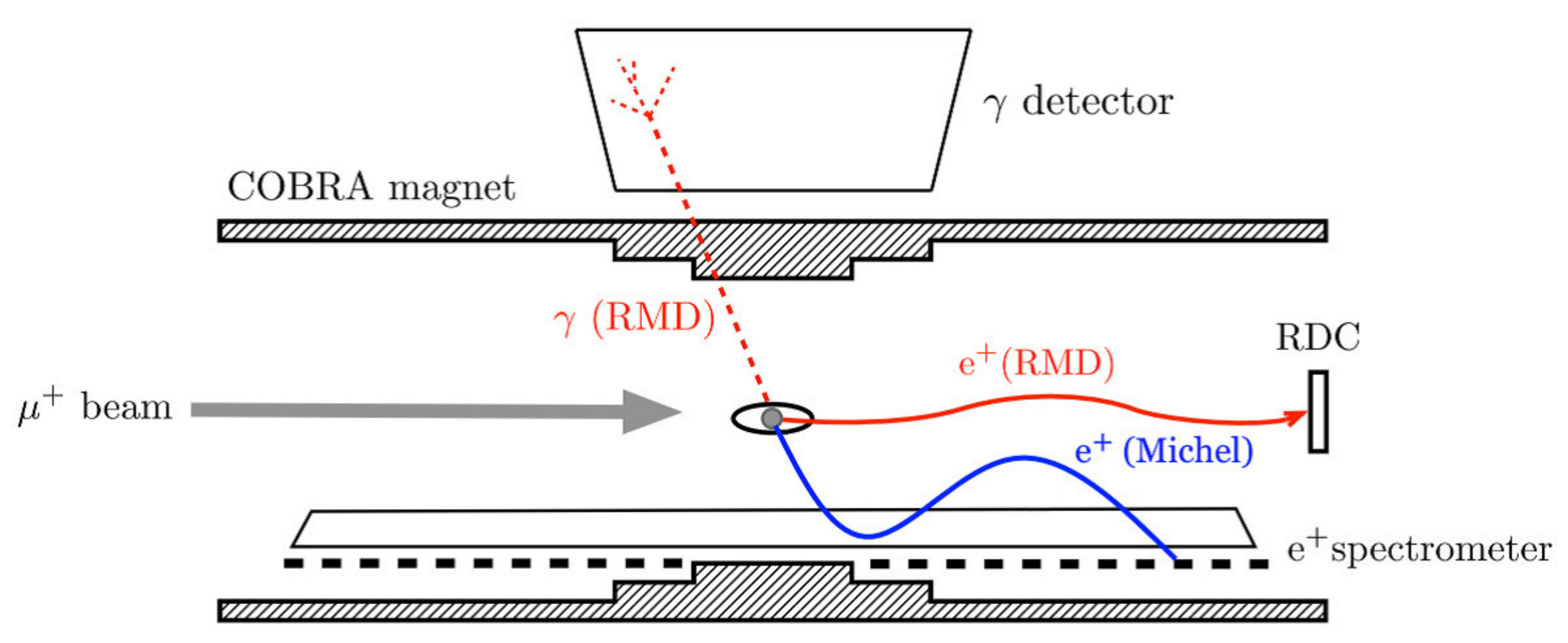 Figure 9
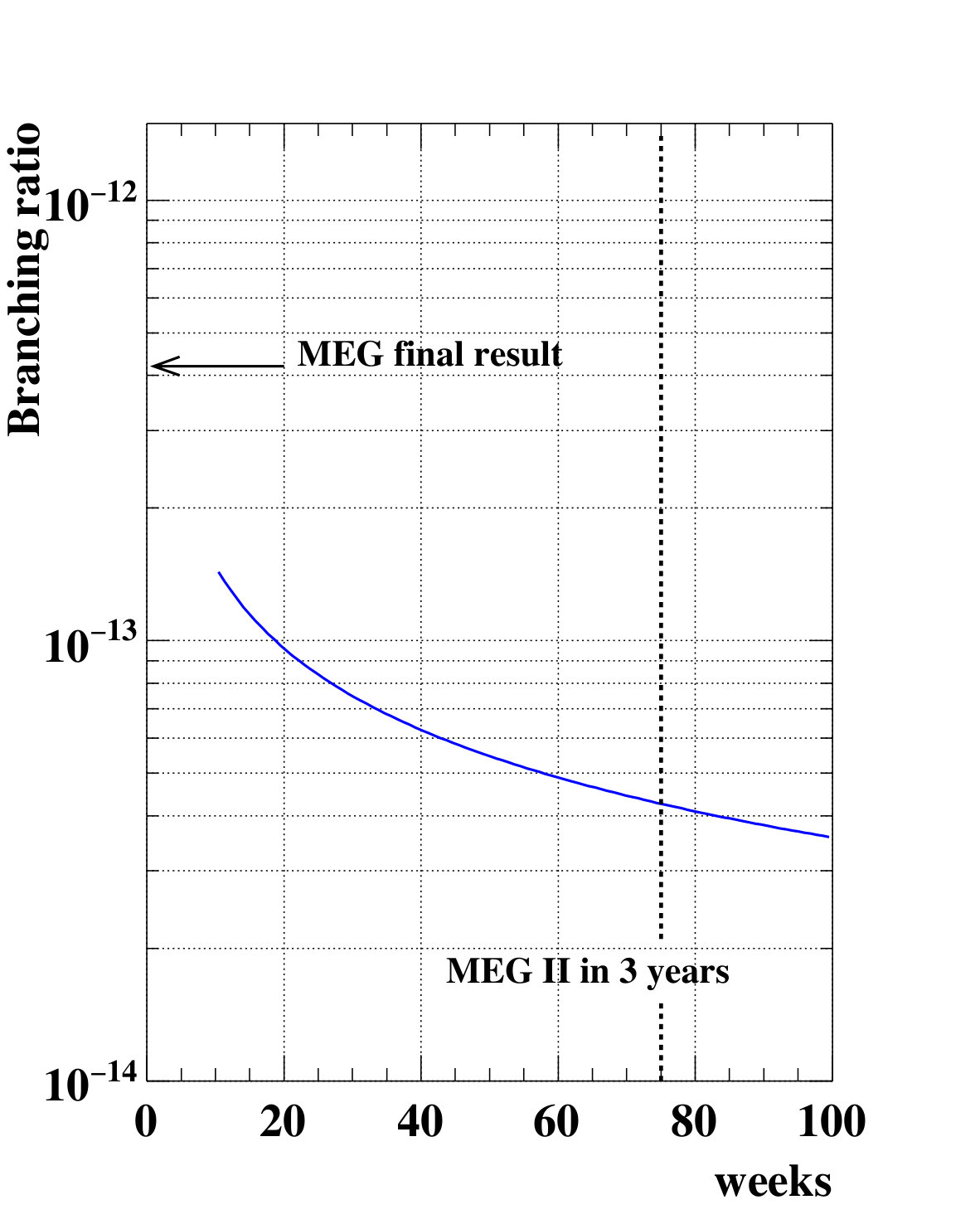 Figure 10
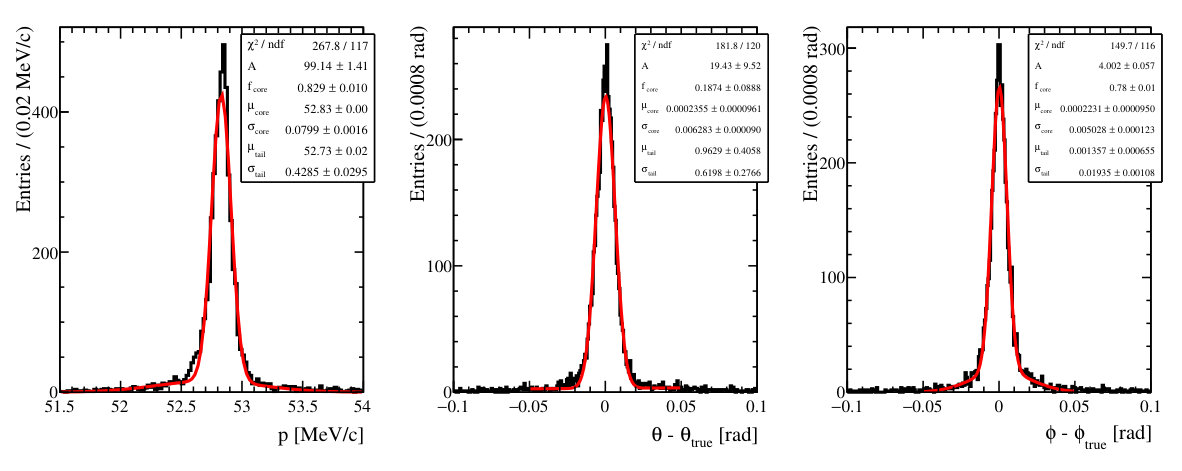 Figure 11
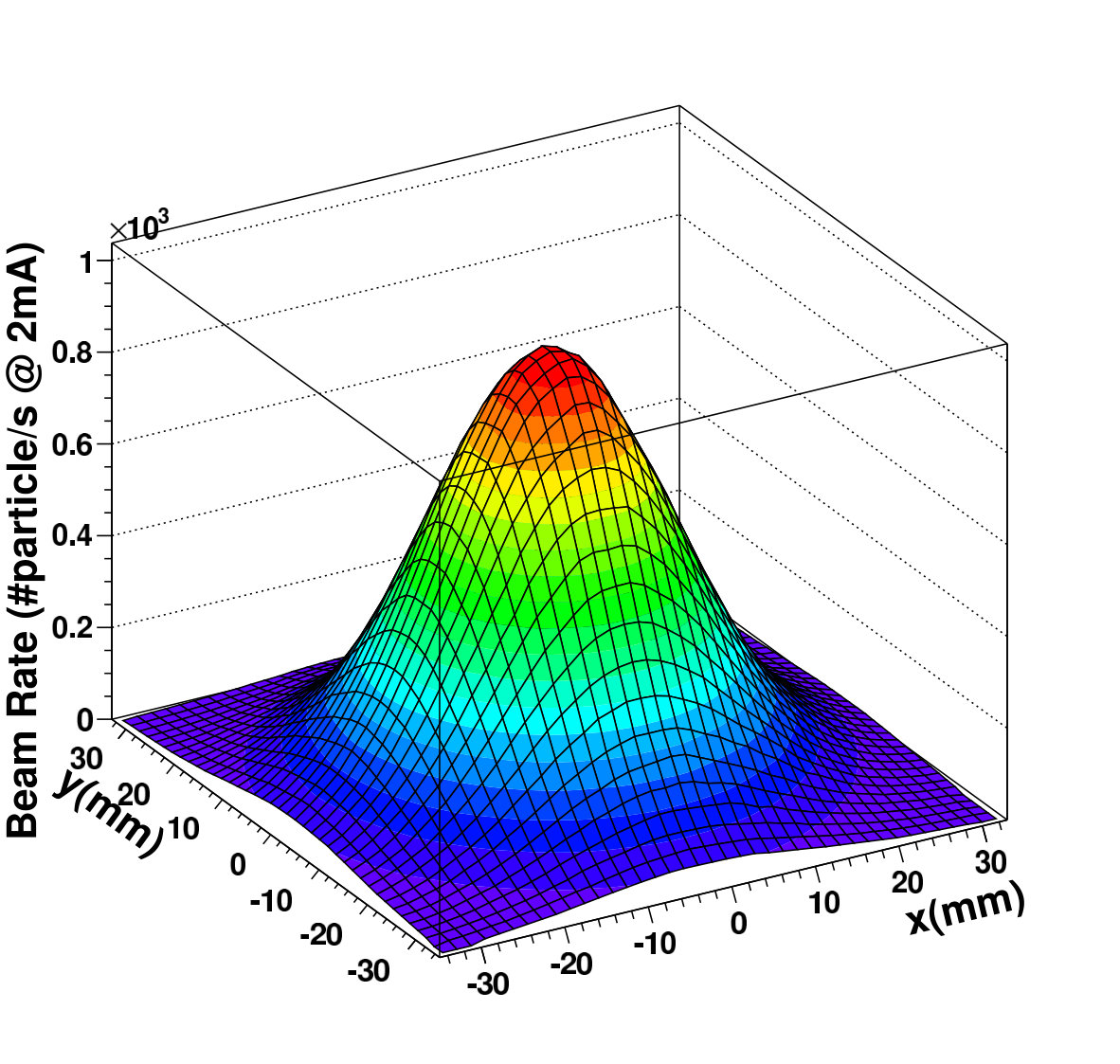 Figure 12
| Process | Energy | Main Purpose | Frequency | |
|---|---|---|---|---|
| Cosmic rays | atmospheric | Wide spectrum (GeV) | LXe–CDCH relative position | Annually |
| CDCH alignment | ||||
| LXe purity | On demand | |||
| Charge exchange | MeV | LXe energy scale/resolution | Annually | |
| Radiative decay | Photons MeV, | LXe–pTC relative timing | Continuously | |
| Positrons MeV | Normalisation | |||
| Normal decay | 52.83 MeV | CDCH energy scale/resolution | Continuously | |
| end-point s | CDCH energy scale/resolution | Continuously | ||
| CDCH and target alignment | ||||
| pTC time/energy calibration | ||||
| Normalisation | ||||
| Mott positrons | target target | MeV s | CDCH energy scale/resolution | Annually |
| CDCH alignment | ||||
| Proton accelerator | 14.8, 17.6 MeV photons | LXe uniformity/purity | Weekly | |
| 4.4, 11.6, 16.1 MeV photons | LXe–pTC timing | Weekly | ||
| Neutron generator | 9 MeV photons | LXe energy scale | Weekly | |
| Radioactive source | 5.5 MeV ’s | LXe PMT/SiPM calibration | Weekly | |
| LXe purity | ||||
| Radioactive source | 4.4 MeV photons | LXe energy scale | On demand | |
| Radioactive source | 136 (11 ), 122 keV (86 ) | LXe–spectrometer alignment | Annually | |
| X-rays | ||||
| LED | UV region | LXe PMT/SiPM calibration | Continuously | |
| Laser | 401 nm | pTC inter-counter timing | Continuously | |
| PDF parameters | MEG | MEG II |
|---|---|---|
| (keV) | 380 | 130 |
| (mrad) | 9.4 | 5.3 |
| (mrad) | 8.7 | 3.7 |
| (mm) core | 2.4/1.2 | 1.6/0.7 |
| (%) (2 cm)/(2 cm)) | 2.4/1.7 | 1.1/1.0 |
| (mm) | 5/5/6 | 2.6/2.2/5 |
| (ps) | 122 | 84 |
| Efficiency (%) | ||
| Trigger | 99 | 99 |
| Photon | 63 | 69 |
| 30 | 70 |
Peer Reviews
No public reviews on file for this paper yet. If you reviewed it on a platform where reviews are public (OpenReview, ICLR, NeurIPS, ICML), you can paste yours below so the community can read it here.
Videos
No videos yet. Explain this paper in a talk, walkthrough, or lecture? Add one.
The MEGII detector
P.W. Cattaneo
Abstract
We present a report of the MEG II experiment, the upgrade of MEG, whose goal is to search for the forbidden decay with increased precision. After having briefly reviewed the motivation for such a search and the current limit due to MEG, we present the conceptual design of the detector detailing for each subdetector the motivations and the extent of the upgrade and the expected resolution improvements. Novel subdetectors and calibration hardware are introduced. We conclude with the expected sensitivity of the MEGII experiment.
1 Introduction
The experimental upper limits established in searching for cLFV processes with muons, including the decay, are shown in Fig. 1. ‘Surface’ muon beams (i.e. beams of muons originating in the decay of ’s that stopped in the surface of the pion production target) with a monochromatic momentum of , offer the highest muon stop densities obtainable at present.
The MEG experiment [1] at the Paul Scherrer Institute (PSI, Switzerland) used the world’s most intense beam with a stopping intensity of in the period 2009-2013. The signal of the possible two-body decay at rest is distinguished from the background by measuring the photon energy , the positron momentum , their relative angle and timing with the best possible resolutions.111In the following we will indicate the (1) resolution on a variable with a in front of that variable
2 Search for the decay
The is practically forbidden in the Standard Model (SM). Even in presence of massive neutrinos, the SM predicts a below , which cannot be experimentally observed. Processes with charge Lepton Flavour Violation are therefore clean channels to look for possible new physics beyond the SM (BSM). Many BSM models predict a measurable value of BR() [2, 3, 4, 5, 6]. On the basis of these theoretical predictions the MEG collaboration suggested [7] to extend the sensibility of a search to .
In the search of this decay positive muons at rest are stopped in a target. The kinematic of the signal events is a very simple double body decay with the energies of the and of the equal to half of the rest muon mass . The particles are emitted in opposite directions. The background comes from radiative muon decay (RMD) close to the kinematic limit and, more relevant, accidental coincidences from decays of different muons.
The MEG experiment took data in the years 2009-2013 [1] improving the limit on this decay by almost a factor of 30, down to BR() [8, 9, 10, 11]. This result is presented in Fig. 1 together with the results of previous cLFV searches.
After the end of the run, the collaboration launched a redesign of the experiment, now called MEG II, for further improving the limit by almost an order of magnitude. The experiment has been redesigned, some parts refurbished, some designed from scratch, based on the experience acquired during the MEG run. After several years of R&D and beam tests the collaboration is ready for data taking next year. We estimate that three full years of data taking are required to reach the design sensitivity of .
3 The design of the MEG II detector
The MEG II detector design is based on the MEG detector design [1]. The MEG experiment exploits a surface high-intensity beam produced at the E5 channel at PSI. This beam is transported onto a thin (210 m) stopping target located at the center of a superconducting magnet generating a gradient magnetic field. This gradient field is shaped in such a way to sweep rapidly emitted at polar angle close to and to guarantee bending radius weakly dependent on the polar angle emission.
The photon from the decay is detected by a large liquid xenon detector read out by PMTs measuring the energy, interaction time and position. The positron momentum, direction and emission vertex on the target are measured by a set of drift chambers embedded in the magnetic field. The positron decay time is measured by two barrel shaped sets of scintillator bars read out by PMTs (TC) [12].
The beam line, depicted in Fig.2 as well as the COBRA magnet are retained in MEG II, while a thinner target (140 m) has been selected to reduce multiple scattering and therefore the positron angular resolution. The positron measuring part has been redesigned completely to overcome some of the problems that emerged during the MEG run.
The tracking detector in MEG‘II is a single-volume Cylindrical Drift Chamber (CDCH), whose design is optimized to satisfy the fundamental requirements of high transparency and low multiple scattering contribution for 50 MeV positrons, sustainable occupancy (at s stopped on target) and fast electronics for cluster timing capabilities. A sketch of the CDCH embedded in the MEGII detector is visible in Fig.3 while the results of Monte Carlo simulations of the momentum and angle resolutions are in Fig. 4.
In MEG II the TC is replaced by the pixelated Timing Counter (pTC). The pTC consists of two sets of scintillator pixels (256 each) approximately barrel shaped, each pixel read out by two sets of Silicon PhotoMultipliers (SiPM) connected in parallel positioned at opposite sides of the pixel [13, 14, 15, 16]. A design of the pTC is in Fig. 5 and an example of a simulated signal is in Fig. 6. An advantage of this configuration is that the positron timing is measured by many (in average ) pixels and the resolution is improved by averaging down to ps. This resolution has been obtained in beam tests.
The LXe detector has been retained as a photon detector (see Fig .7). It has been upgraded substituting the PMTs reading the front face with SiPMs. This brings important improvements in photon position and timing resolution and in resolving closely spaced photons as shown in Fig. 8.
A new subdetector added to MEG II is the downstream RDC detector. It is capable of identifying a fraction of the RMD decays with the photon energy close to the kinematic limit, which are the dominant source of background photons for accidental coincidences. The basic concept is depicted in Fig. 9. The detector consists of a plane of plastic scintillator plates for position measurement followed by a calorimeter based on LYSO crystals for energy measurements, both detectors are read out by SiPMs.
A crucial part of the experiment is the calibration and monitoring systems, some of them requiring dedicated hardware, to control over the lifetime of the experiment the responses of the subdetectors. In Table 1 the list of calibration of tools to be used in MEG II is presented. As an example, in Fig.10 the result of a novel device for monitoring the beam spot based on scintillating fibers is presented.
In Table 2 the resolutions and efficiencies required by the calculation of the sensitivity are presented for MEG (measured) and MEG‘II (expected); the improvements are clear.
In Fig 11 the MEG II sensitivity versus data taking time is shown. The MEG final limit () and the MEG II expectation for three years of data taking are shown.
Acknowledgments
We are grateful for the support and co-operation provided by PSI as the host laboratory and to the technical and engineering staff of our institutes.
The reference list from the paper itself. Each links out to its DOI / PubMed record.
- 1[1] J. Adam et al., The MEG detector for μ + → e + γ → superscript 𝜇 superscript e 𝛾 {\mu}^{+}\to\mathrm{e}^{+}{\gamma} decay search , Eur. Phys. J. C 73 (2013) 2365 , [ 1303.2348 ]. · doi ↗
- 2[2] R. Barbieri and L. Hall, Signals for supersymmetric unification , Phys. Lett. B 338 (1994) 212 , [ hep-ph/9408406 ]. · doi ↗
- 3[3] J. Hisano, K. Kurosawa and Y. Nomura, Large squark and slepton masses for the first-two generations in the anomalous U(1) SUSY breaking models , Phys. Lett. B 445 (1999) 316–322 , [ hep-ph/9810411 ]. · doi ↗
- 4[4] L. Calibbi, A. Faccia, A. Masiero and S. K. Vempati, Lepton flavor violation from supersymmetric grand unified theories: where do we stand for MEG, PRISM/PRIME, and a super flavor factory , Phys. Rev. D 74 (2006) 116002 , [ hep-ph/0605139 ]. · doi ↗
- 5[5] L. Calibbi, M. Frigerio, S. Lavignac and A. Romanino, Flavour violation in supersymmetric SO(10) unification with a type II seesaw mechanism , J. High Energy Phys. 0912 (2009) 057 , [ 0910.0377 ]. · doi ↗
- 6[6] L. Calibbi, D. Chowdhury, A. Masiero, K. Patel and S. Vempati, Status of supersymmetric type-I seesaw in SO(10) inspired models , J. High Energy Phys. 1211 (2012) 040 , [ 1207.7227 ]. · doi ↗
- 7[7] A. M. Baldini, A. De Bari, L. Barkov, C. Bemporad, P. Cattaneo, G. Cecchet et al., “The MEG experiment: search for the μ + → e + γ → superscript 𝜇 superscript e 𝛾 \mu^{+}\to\mathrm{e}^{+}\gamma decay at PSI.” Research Proposal to INFN, https://meg.web.psi.ch/docs/prop_infn/nproposal.pdf, Dec., 2002.
- 8[8] MEG Collaboration collaboration, J. Adam et al., A limit for the μ → e γ → 𝜇 e 𝛾 \mu\to\mathrm{e}\gamma decay from the MEG experiment , Nucl. Phys. B 834 (2010) 1–12 , [ 0908.2594 ]. · doi ↗