The neutral silicon-vacancy center in diamond: spin polarization and lifetimes
B. L. Green, S. Mottishaw, B. G. Breeze, A. M. Edmonds, U. F. S., D'Haenens-Johansson, M. W. Doherty, S. D. Williams, D. J. Twitchen, M. E., Newton

TL;DR
This paper reports on the optical spin polarization, long coherence times, and telecom-band emission of the neutral silicon-vacancy center in diamond, highlighting its potential for quantum communication.
Contribution
It demonstrates efficient optical spin polarization and long coherence times of the SiV^0 center, and explores its suitability for telecom-band quantum communication.
Findings
Spin polarization is most efficient under resonant excitation.
Ensemble spin coherence time exceeds 100 microseconds.
Spin relaxation time is greater than 25 seconds.
Abstract
We demonstrate optical spin polarization of the neutrally-charged silicon-vacancy defect in diamond (), an defect which emits with a zero-phonon line at 946 nm. The spin polarization is found to be most efficient under resonant excitation, but non-zero at below-resonant energies. We measure an ensemble spin coherence time at low-temperature, and a spin relaxation limit of . Optical spin state initialization around 946 nm allows independent initialization of and within the same optically-addressed volume, and emits within the telecoms downconversion band to 1550 nm: when combined with its high Debye-Waller factor, our initial results suggest that is a promising candidate for a long-range quantum communication technology.
Click any figure to enlarge with its caption.
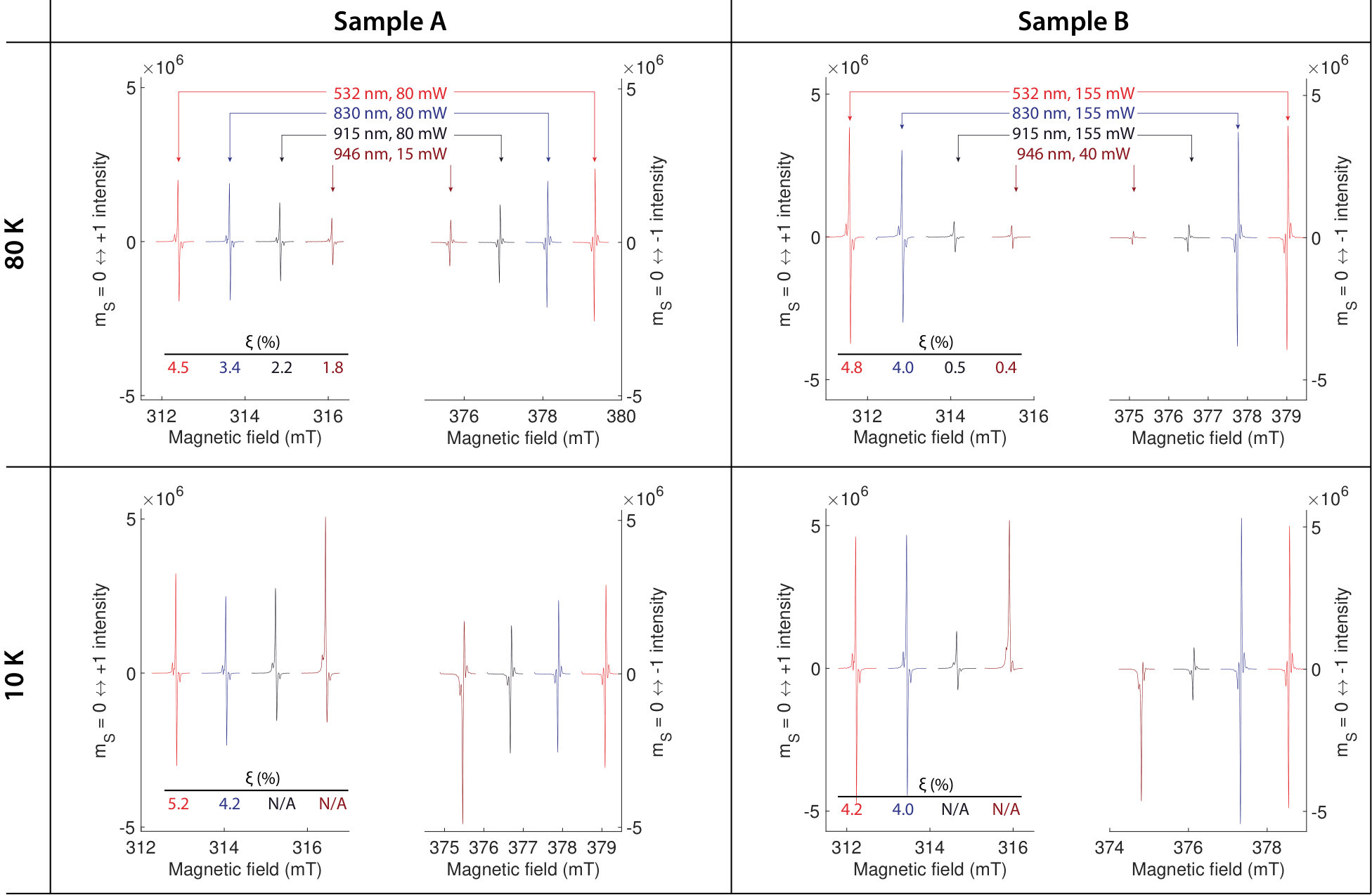 Figure 1
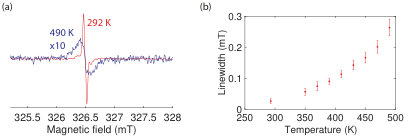 Figure 2
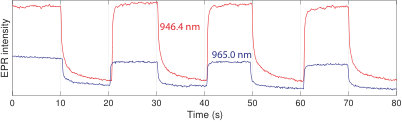 Figure 3
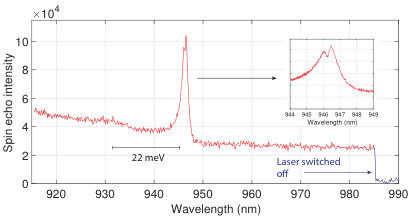 Figure 4
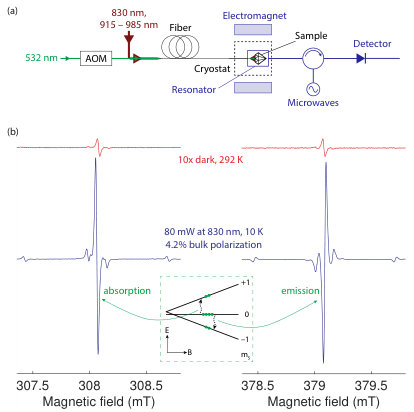 Figure 5
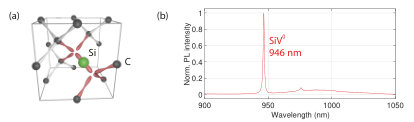 Figure 6
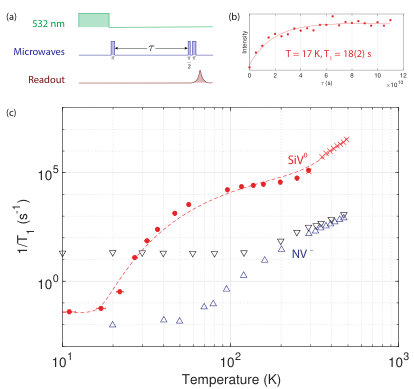 Figure 7
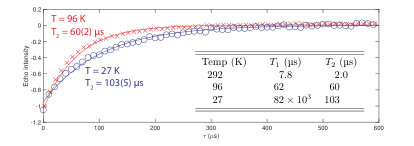 Figure 8
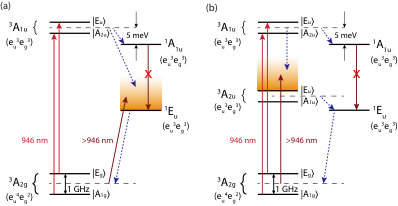 Figure 9
Peer Reviews
No public reviews on file for this paper yet. If you reviewed it on a platform where reviews are public (OpenReview, ICLR, NeurIPS, ICML), you can paste yours below so the community can read it here.
Videos
No videos yet. Explain this paper in a talk, walkthrough, or lecture? Add one.
\WarningFilter
revtex4-1Repair the float
The neutral silicon-vacancy center in diamond: spin polarization and lifetimes
B. L. Green
Corresponding Author
S. Mottishaw
B. G. Breeze
Department of Physics, University of Warwick, Coventry, CV4 7AL, United Kingdom
A. M. Edmonds
Element Six Limited, Global Innovation Centre, Fermi Avenue, OX11 0QR, United Kingdom
U. F. S. D’Haenens-Johansson
Gemological Institute of America, 50 W 47th St, New York, NY 10036, United States of America
M. W. Doherty
Laser Physics Centre, Research School of Physics and Engineering, Australian National University, Australian Capital Territory 0200, Australia
S. D. Williams
D. J. Twitchen
Element Six Limited, Global Innovation Centre, Fermi Avenue, OX11 0QR, United Kingdom
M. E. Newton
Department of Physics, University of Warwick, Coventry, CV4 7AL, United Kingdom
Abstract
We demonstrate optical spin polarization of the neutrally-charged silicon-vacancy defect in diamond (), an defect which emits with a zero-phonon line at . The spin polarization is found to be most efficient under resonant excitation, but non-zero at below-resonant energies. We measure an ensemble spin coherence time >100\text{,}\mathrm{\SIUnitSymbolMicro s} at low-temperature, and a spin relaxation limit of $T_{1}>$25\text{\,}\mathrm{s}. Optical spin state initialization around allows independent initialization of and within the same optically-addressed volume, and emits within the telecoms downconversion band to : when combined with its high Debye-Waller factor, our initial results suggest that is a promising candidate for a long-range quantum communication technology.
Point defects in diamond have attracted considerable interest owing to their application for quantum information processing, communication, and metrology. The most-studied defect, the negatively-charged nitrogen-vacancy () center, possesses efficient optical spin polarization and spin-state dependent fluorescence, enabling its exploitation as an ultra-sensitive nano-scale magnetic field sensor [1; 2; 3]. However, the zero phonon line (ZPL) of accounts for only a few percent of its total emission [4], leading to low efficiency in coherent photonic applications. The negatively-charged silicon-vacancy () center has also received significant interest as its high Debye-Waller factor ( [5]) makes it an attractive candidate for long-range quantum computation and communication. However, the exceptional optical properties of are not matched by its spin properties, where a large spin-orbit coupling in the ground state enables phonon-assisted spin-state depopulation, resulting in spin-lattice relaxation-limited coherence lifetimes of even at [6]: efforts are ongoing to overcome this limitation by strain engineering, but currently liquid helium temperatures and below are required to access and readout spin states [7].
The neutrally-charged silicon-vacancy () has a ground state electron spin . Unlike the center, where the nitrogen remains covalently bonded to three carbon atoms and the nitrogen-vacancy axis forms a symmetry axis, the silicon atom in adopts a bond-center location, with a axis formed by the \hkl¡111¿ joining the split-vacancy [Fig. 1(a)]. has been characterized both by electron paramagnetic resonance (EPR) [8; 9] and optical absorption/photoluminescence (PL) [10]. Similarly to , the neutral charge state also has a high Debye-Waller factor, with the majority of its photons emitted at the primary zero-phonon line (ZPL) at () [Fig. 1(b)]: this transition has been shown to occur between a ground state (GS) and excited state (ES) [10; 11]. Quenching of PL at low temperature indicates the presence of a shelving state below the ES [10]. The zero-field splitting (ZFS) in the GS is +1000\text{,}\mathrm{MHz} at $300\text{\,}\mathrm{K}$ [[9](#bib.bib9)]. The ZFS is highly temperature-dependent, being approximately linear in the range $50150\text{\,}\mathrm{K}$ with $dD/dT=$-337\text{\,}\mathrm{kHz}\text{\,}{\mathrm{K}}^{-1}, and an average of between and — these values are significantly higher than for at [12]. Finally, non-equilibrium populations of the four symmetry-related defect orientations have been observed in grown-in when the diamond crystal is grown on substrates of particular crystallographic orientation [10]. This behaviour has been previously observed in [13; 14] and [15].
We have studied in two samples grown by chemical vapor deposition (CVD); silicon was introduced by adding silane to the process gasses during growth. Sample A was grown on a \hkl100-oriented high pressure high temperature (HPHT) substrate, irradiated to a dose of at and annealed for four hours each at and to produce of . Sample B was grown on a \hkl113-oriented HPHT substrate. The sample was irradiated with electrons to a dose of before annealing for at to produce of .
To investigate the behavior of under optical excitation, we perform both CW and pulsed EPR measurements (Bruker E580 spectrometer) using a dielectric resonator (Bruker ER 4118X-MD5) and cryostat (Oxford Instruments CF935) for variable temperature measurements. Optical excitation from various laser sources is delivered to the sample via 1\text{,}\mathrm{mm}$$ core fiber held in place with a rexolite rod [Fig. 2(a)]. For pulsed measurements the laser (CNI MGLIII532) is switched using an acousto-optic modulator. Quantitative EPR measurements are carried out using non-saturating microwave powers.
Figure 2(b) illustrates the effect of in-situ continuous optical pumping at on the EPR spectrum of . The low- and high-field resonances spin-polarize into enhanced absorption and emission, respectively, under optical pumping. The ZFS of is known to be positive [9] (i.e. are higher in energy than at zero magnetic field) and thus the low- and high-field resonances correspond to the and transitions. Therefore, the optical pumping is generating enhanced population in the state [Fig. 2, inset] — analagous to the polarization behaviour observed in when excited with light of wavelength 637\text{,}\mathrm{nm}$$. Qualitatively similar polarization is observed in both samples for excitation at (), () and () at both and [17]. Given the high Debye-Waller factor of [Fig. 1(b)], it is surprising that spin polarization is generated over such a wide energy range. Photoconductivity measurements of diamond containing indicate a strong photocurrent at [18] and hence charge effects are expected to be important for excitation at and below: the polarization may therefore be a result of the capture of a hole (electron) at (), and not intrinsic to . Theoretical studies indicate that green excitation may also excite from deep valence-band states [11].
We investigate the possibility of an internal spin polarization mechanism by performing a Hahn echo-detected optical frequency-swept measurement: the optical frequency of a widely-tuneable narrow-linewidth laser (TOPTICA CTL 950) is swept over the ZPL, and we detect the resulting EPR enhancement by a two-pulse Hahn echo measurement at each frequency [Fig. 3]. A sharp increase in polarization is observed for resonant excitation at the ZPL (), confirming a spin-polarization mechanism internal to and unambiguously identifying the ZPL with . In stark contrast to the behavior of , polarization is observed even at sub-ZPL energies. Additionally, high-resolution measurements reveal a small ZPL splitting of (134\text{,}\mathrm{GHz}$$) [Fig. 3, inset]. The origin of this splitting is unclear: optical measurements place the ZPL as a transition between states with no orbital degeneracy () [10], and orientational degeneracy is removed by measuring only those defects with their \hkl¡111¿ axis parallel to the magnetic field. The effect of strain on a pair of orbital singlets is simply to shift the transition energy [19], and hence the observed splitting may indicate two populations of defects in distinct strain environments. Alternatively, if the excited state is in fact , then Jahn-Teller [20] and spin-orbit effects become significant (excited state spin-orbit splitting in is approximately [21]): further investigation is required to determine the microscopic origin of the observed splitting.
We define the degree of spin polarization as 100\text{,}\mathrm{\char 37\relax} when all spins are in the $m_{s}=0$ state; and $\xi=$0\text{\,}\mathrm{\char 37\relax} at thermal equilibrium (see 111See Supplemental Material at http://abc for details on spin polarization efficiency calculation, linewidth broadening at high temperature and raw polarized spectra for different excitation wavelengths. for details of calculation). In both samples is found to increase from a typical at room temperature to approximately at and for the same excitation [17]. Maximum bulk polarization of is observed at when pumping with at ; maximum per-photon efficiency is found in sample A under resonant ZPL excitation. At all temperatures and wavelengths the polarization is linear in optical power up to the maximum available at the sample, and therefore we neglect two-photon processes in our analysis.
The increase of with decreasing temperature may arise from several sources: temperature-dependent effects within the intrinsic spin-polarization mechanism itself can alter the polarization efficiency; and increases in electron longitudinal (spin-lattice) lifetime can lead to a greater macroscopic build-up of polarization for the same polarization efficiency. The latter was measured directly using the pulse sequence given in Figure 4(a). The sample was placed in a magnetic field applied within of \hkl¡111¿ at a field strength of at : the changes in field are a result of the temperature-dependence of both the microwave resonator frequency and the ZFS. The sample was subjected to a polarizing optical pulse to polarize into the state, and an inverting pulse of duration was applied to the transition, transferring polarization into . After a variable delay , the remaining spin polarization was measured using a Hahn echo detection sequence: this yields an exponentially-decaying signal with a single time constant equal to the longitudinal lifetime [Fig. 4(b)].
The measured for in sample B are highly temperature-dependent [Fig. 4(c)]: unlike , which retains at room temperature, lifetimes in this sample decrease from approximately at to at room temperature. EPR linewidth broadening is observed above room-temperature [17], and can be used as an indirect measure of in the limit that [23], indicating 1\text{,}\mathrm{MHz}. The dramatic temperature-dependence of $T_{1}$ is expected to account for the poor polarization efficiencies observed at room temperature. Interpretation of spin-lattice lifetimes in solids typically perfomed in terms of contributions from different phonon processes [[24](#bib.bib24)]. Interactions with single phonons (the so-called direct process, $1/T_{1}\propto T$) can be neglected, as the spin energies involved at X-band $T=$10\text{\,}\mathrm{GHz}$/k_{B}=$0.5\text{\,}\mathrm{K} are at least an order of magnitude lower than the lowest measurement temperature (). Relaxation via two phonons of different energies — a Raman process — can occur if the energy difference is equal to the spin transition energy, and takes the form where depending on the spin levels involved, with typical for a non-Kramers doublet [24; 25]. Finally, the Orbach process describes interaction with an excited spin state at a phonon-accessible energy above the ground state: the spin is excited by absorption of a phonon of energy and relaxes to a different ground spin state by emission of a phonon . The data were therefore phenomenologically modeled using
[TABLE]
The fit in Figure 4(c) was generated using the coefficients 0.036\text{,}{\mathrm{s}}^{-1}, $A_{Raman}=$5.0\text{\times}{10}^{-13}\text{\,}\mathrm{s}^{-1}\mathrm{K}^{-7}, 1.5\text{\times}{10}^{5}\text{,}{\mathrm{s}}^{-1} and $\Delta E=$22\text{\,}\mathrm{meV}. The energy 22\text{,}\mathrm{meV} matches the phonon sideband observed in the echo-detected PLE measurement [Fig. [3](#S0.F3)] and is close to the dominant phonon frequency $\hbar\Omega=$28\text{\,}\mathrm{meV} estimated from optical absorption measurements [10]: we therefore conclude that the primary phonon coupling frequency is similar in both the ground and excited states. Multifrequency measurements would enable confirmation of the involved processes via their magnetic field dependence [24].
The spin coherence time, , is a critical parameter for many applications in sensing and quantum computation [26; 2; 27]. We measure the directly using a Hahn echo-decay sequence () [25], and find that changes from at room temperature to at [Fig. 5]. At both and , we find , confirming that we are in the limit [23]: at , 103\text{,}\mathrm{\SIUnitSymbolMicro s} is limited by spin-spin interactions rather than $T_{1}=$82\text{\,}\mathrm{ms}. This value is comparable to , where ensemble measurements reach without the use of decoupling sequences [28].
We now consider the source of the spin polarization. In , the electronic structure relevant to spin polarization is described by the molecular orbitals (MO) , with the GS generated by the configuration [29]. Spin polarization occurs by intersystem crossing (ISC) from the ES () into a pair of singlets (, ) arising from the same orbital configuration as the GS [30]. In , the GS is described by the MO configuration , which also produces two singlet states & . The configuration is responsible for the ES and additional states , , , and . The multitude of available states suggests the possibility of spin-orbit (SO) mediated ISC mechanisms, similar to and other defects in diamond and SiC [31]: any model for must account both for PL quenching at low temperature [10] and spin polarization generated by sub-ZPL excitation. Two of the possible energy level schemes which are consistent with experiment are given in Figure 6, both based on ISC between singlet and triplet states. Sub-ZPL polarization is generated in (a) by pumping directly into the singlet state, which becomes weakly-allowed due to SO effects in the ground state. In (b), no-phonon dipole transitions from the GS to the ES are forbidden, but transitions into the vibronic sideband would be possible by emission of an phonon. Such an absorption would have no ZPL and the broad band may be difficult to detect. In this model, the spin polarization is generatred by ISC from the triplet to a singlet (), and not from the ES involved in the ZPL. Resonant excitation to the level would nevertheless result in spin polarization via non-radiative transitions from to . In both models, transitions between the singlet states must be dipole forbidden in order for the upper state to be an effective shelving state [10]. Detailed calculation of level energies and ordering is beyond the scope of the present work; nevertheless, the model emphasises that there are different possible polarization mechanisms. When pumping at the photoconductivity threshold or below ( [18]), additional mechanisms are expected to occur: further work is required to understand the electronic structure and spin polarization mechanism of .
Bulk spin polarization and long spin lifetimes at and below, combined with a high Debye-Waller factor and infrared emission, establish as a defect which demands further study. In particular, optical stress measurements would unambiguously identify the excited state of the ZPL and in turn aid in the interpretation of the observed echo-detected ZPL splitting. Additionally, demonstration of spin-dependent photoluminescence contrast would enable the rapid determination of center properties and enable its exploitation as e.g. a remote temperature sensor. The ability to efficiently spin-polarize at wavelengths which do not affect opens the possibility of protocols which use as a control/readout mechanism but where multiple qubits can be initialized independently of the center and within the same optically-addressed volume. The wavelength falls within the band, where downconversion to the telecoms wavelength has already been demonstrated [32]: if future studies detect ODMR from then it will be a compelling candidate for long-range quantum communication networks.
We thank TOPTICA Photonics AG for the use of the CTL 950 tuneable laser. This work was supported by EPSRC grants EP/J500045/1 & EP/M013243/1.
I Calculation of bulk spin polarization percentage
When considering the spin polarization of the triplet ground state it is necessary to examine the spin populations of the the and spin levels. The fractional spin population of the level is given by
[TABLE]
where denotes the number of spins in the spin level and is the total number of spins in the triplet state. For a three level system,
[TABLE]
where , and are the fractional populations of the , 0 and levels, respectively. The EPR signal intensity is proportional to the population difference between levels
[TABLE]
In the absence of optical pumping the population of the spin level is given by Boltzmann statistics according to
[TABLE]
where is the energy of the spin level in a magnetic field , is the Boltzmann constant, is the sample temperature and is the total number of spin states.
Optical pumping induces spin polarization and hence the occupation probabilities are no longer in thermal equilibrium (i.e. non-Boltzmann). It is possible to calculate the difference in the occupation probabilities under illumination by considering the experimentally determined intensities of the low and high field resonance lines:
[TABLE]
where and refer to the sample in the dark and light, respectively. is positive if the transition is in absorption and negative if the transition is in emission. However, Eq. S6 only applies when the transitions are not microwave-power saturated: in our experiments it was not possible to measure in non-saturated conditions at due to the long spin . The unsaturated value for ( at temperature ) was instead calculated using the following relationship, based on the experimental value for ( at room temperature) and the theoretical occupation probability difference between the spin levels at the different temperatures in the dark:
[TABLE]
Solving for the occupation probabilities of the , 0 and -1 spin levels under optical illumination one finds
[TABLE]
The degree of optical spin polarization is defined as
[TABLE]
Thus, occurs when all the spins are in the spin level and , with all values calculated at the same temperature . At the other extreme, when the system is not optically spin polarised and .
II Broadening of EPR linewidth at high temperature
At elevated temperatures (above approximately ), significant broadening of the EPR linewidth of is observed [Fig. S1]. The linewidth can be used as an indirect measurement of in the limit that is -limited [1]. The method is indirect as the linewidth also includes contributions from e.g. unresolved hyperfine couplings to distant , which will broaden the line without affecting . The linewidth-derived data included in Fig. 4(c) of the main text have been obtained as follows:
- •
Data were fit to extract raw linewidth in mT at each temperature
- •
Linewidth was converted to MHz using 28.025\text{,}\mathrm{MHz}\text{,}{\mathrm{mT}}^{-1}$$
- •
At room temperature, 900\text{,}\mathrm{ns} is within a factor of $4$ of $2T_{1}=$3.9\text{\,}\mathrm{\SIUnitSymbolMicro s} () and is changing rapidly. Therefore we assume that at temperatures of and above, is limited by .
- •
All linewidth data are offset by so that the directly-measured and linewidth-derived values match at room temperature: this offset is reasonable, as typical linewidths due to unresolved couplings are of the order of [2], and will increase the derived value.
III Polarization comparisons
Both samples A & B were measured using CW EPR at four different wavelengths and two different temperatures. The results are given in S2. It is clear that there are differences in the polarization efficiency at different wavelengths between the two samples, specifically the marked difference in behaviour at the higher energy ( and ) and lower energy ( and excitation): as () is the threshold for photocurrent from [3], it seems likely that the two samples are undergoing different degrees of charge transfer. Nevertheless, the visibility of polarization at all wavelengths suggests either direct pumping into a higher-energy state which decays into the spin-polarization path, or that ionization of can directly produce in a spin-polarized state. The situation is complicated by below-ZPL spin polarization [Fig. 3, Fig. S3]: further investigation is required to understand the spin polarization and charge transfer behavior of this system.
References
- Slichter [1990] C. Slichter, Principles of Magnetic Resonance, 3rd ed. (Springer-Verlag Berlin Heidelberg, 1990).
- Clevenson et al. [2015] H. Clevenson, M. E. Trusheim, C. Teale, T. Schröder, D. Braje, and D. Englund, Nat. Phys. 11, 393 (2015).
- Allers and Collins [1995] L. Allers and A. T. Collins, J. Appl. Phys. 77, 3879 (1995).
The reference list from the paper itself. Each links out to its DOI / PubMed record.
- 1Doherty et al. [2013] M. W. Doherty, N. B. Manson, P. Delaney, F. Jelezko, J. Wrachtrup, and L. C. L. Hollenberg, Phys. Rep. 528 , 1 (2013) . · doi ↗
- 2Rondin et al. [2014] L. Rondin, J.-P. Tetienne, T. Hingant, J.-F. Roch, P. Maletinsky, and V. Jacques, Reports Prog. Phys. 77 , 056503 (2014) . · doi ↗
- 3Maletinsky et al. [2012] P. Maletinsky, S. Hong, M. S. Grinolds, B. Hausmann, M. D. Lukin, R. L. Walsworth, M. Loncar, and A. Yacoby, Nat. Nanotechnol. 7 , 320 (2012) . · doi ↗
- 4Faraon et al. [2012] A. Faraon, C. Santori, Z. Huang, V. M. Acosta, and R. G. Beausoleil, Phys. Rev. Lett. 109 , 033604 (2012) . · doi ↗
- 5Neu et al. [2011] E. Neu, D. Steinmetz, J. Riedrich-Möller, S. Gsell, M. Fischer, M. Schreck, and C. Becher, New J. Phys. 13 , 025012 (2011) . · doi ↗
- 6Becker et al. [2016] J. N. Becker, J. Görlitz, C. Arend, M. L. Markham, and C. Becher, Nat. Commun. 7 , 13512 (2016) . · doi ↗
- 7Pingault et al. [2017] B. Pingault, D.-D. Jarausch, C. Hepp, L. Klintberg, J. N. Becker, M. Markham, C. Becher, and M. Atatüre, (2017) , ar Xiv:1701.06848 .
- 8Iakoubovskii and Stesmans [2001] K. Iakoubovskii and A. Stesmans, Phys. Status Solidi a 186 , 199 (2001) . · doi ↗