Deep Chandra Survey of the Small Magellanic Cloud. II. Timing Analysis of X-ray Pulsars
JaeSub Hong, Vallia Antoniou, Andreas Zezas, Frank Haberl, Manami, Sasaki, Jeremy Drake, Paul Plucinsky, and Silas Laycock

TL;DR
This deep Chandra survey of the Small Magellanic Cloud identified 20 X-ray pulsars and a new candidate, providing detailed timing, spectral, and luminosity data that enhance understanding of pulsar properties and behaviors in this galaxy.
Contribution
The study offers the first comprehensive timing analysis of SMC X-ray pulsars using extensive Chandra data, including new pulsation periods and spectral insights.
Findings
Detected periodic modulations in 20 pulsars and a new candidate.
X-ray luminosities range from 10^{34} to 10^{37} erg s^{-1}.
Most pulsars with L_X > 4×10^{35} erg s^{-1} show pulsations.
Abstract
We report the timing analysis results of X-ray pulsars from a recent deep Chandra survey of the Small Magellanic Cloud (SMC). We have analyzed a total exposure of 1.4 Ms from 31 observations over a 1.2 deg region in the SMC under a Chandra X-ray Visionary Program. Using the Lomb-Scargle and epoch folding techniques, we have detected periodic modulations from 20 pulsars and a new candidate pulsar. The survey also covers 11 other pulsars with no clear sign of periodic modulation. The 0.5-8 keV X-ray luminosity () of the pulsars ranges from to erg s at 60 kpc. All the Chandra sources with erg s exhibit X-ray pulsations. The X-ray spectra of the SMC pulsars (and high mass X-ray binaries) are in general harder than those of the SMC field population. All but SXP~8.02 can be fitted by an absorbed power-law model with a…
Click any figure to enlarge with its caption.
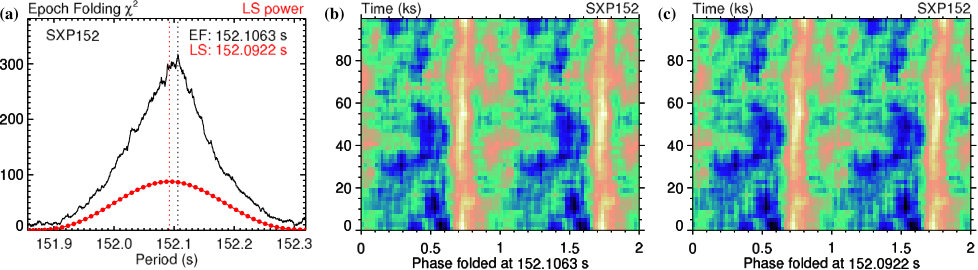 Figure 1
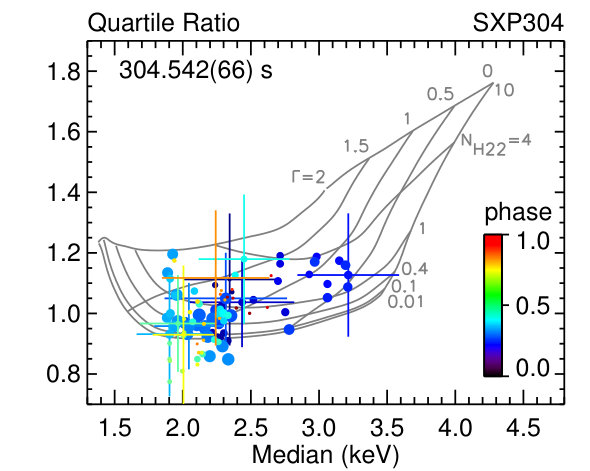 Figure 10
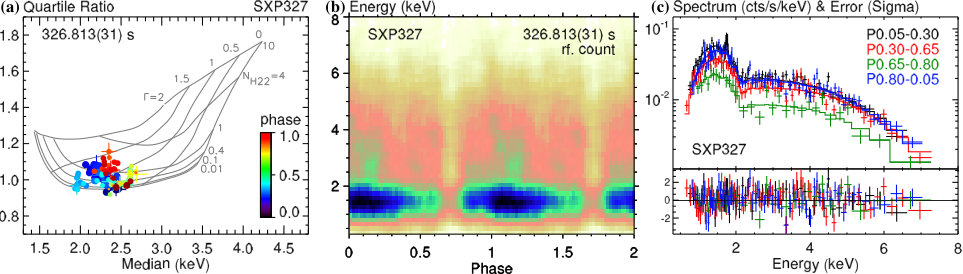 Figure 11
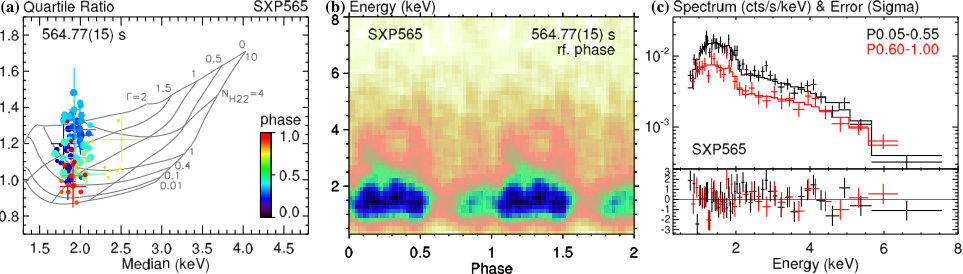 Figure 12
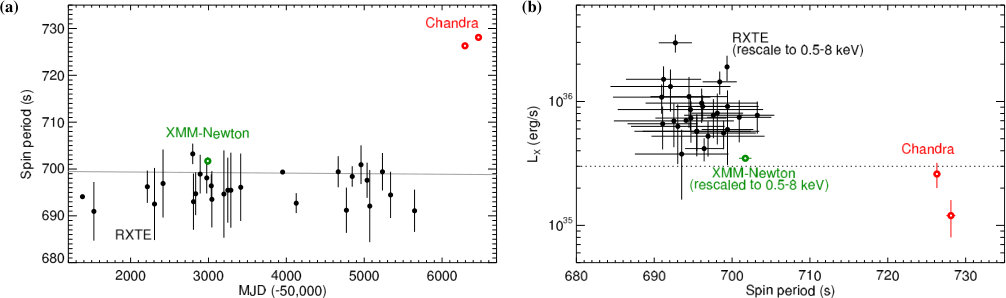 Figure 13
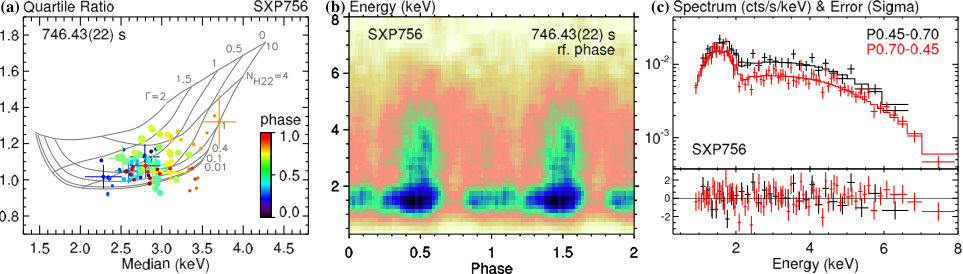 Figure 14
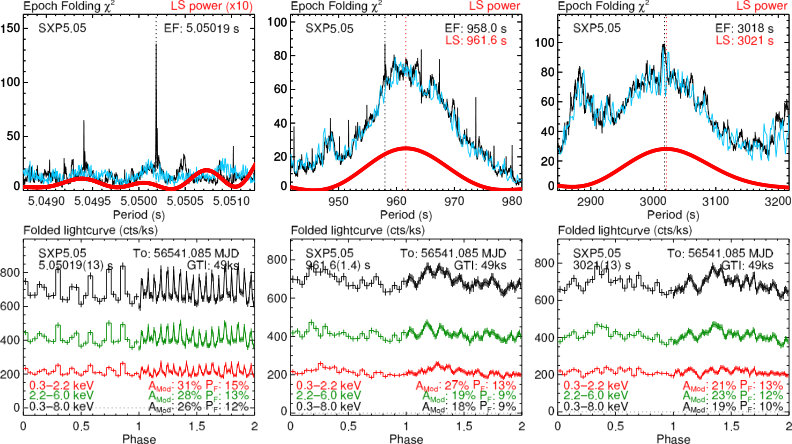 Figure 15
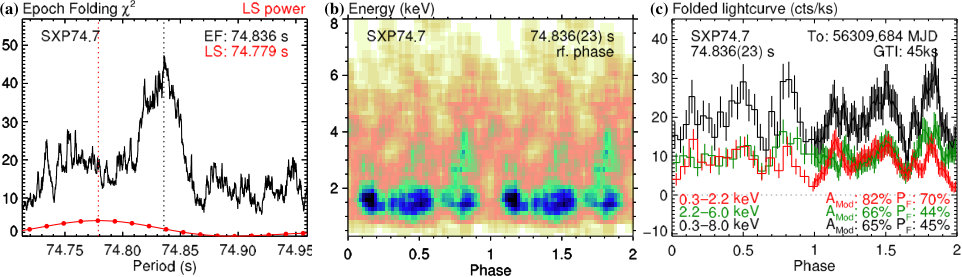 Figure 16
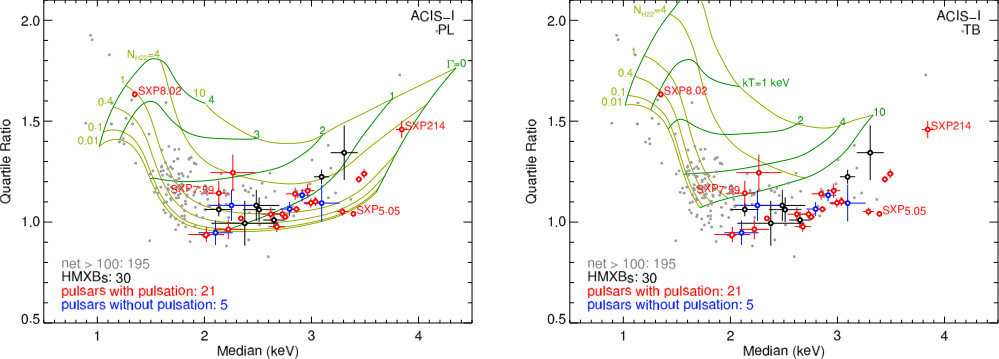 Figure 17
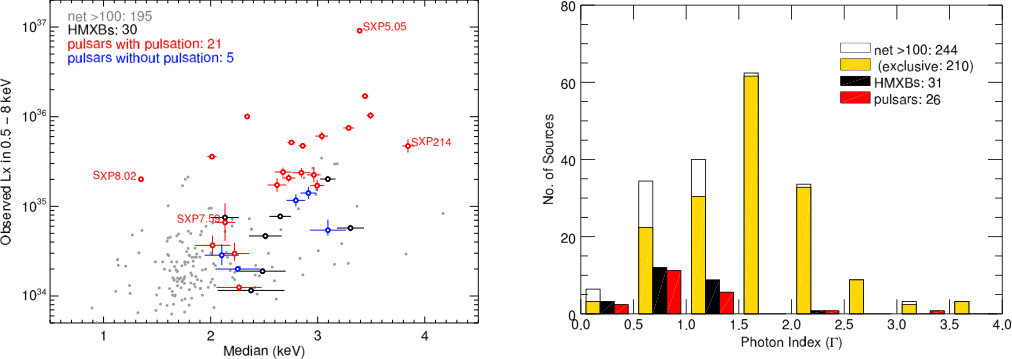 Figure 18
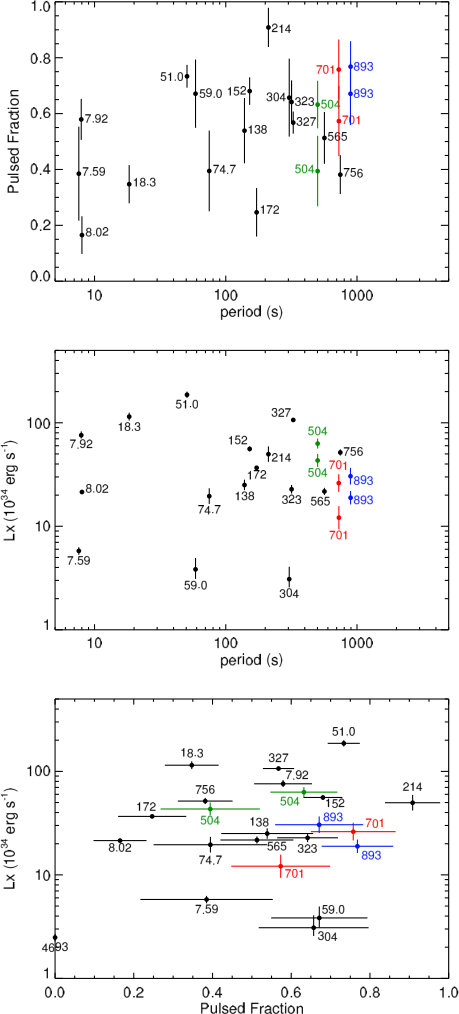 Figure 19
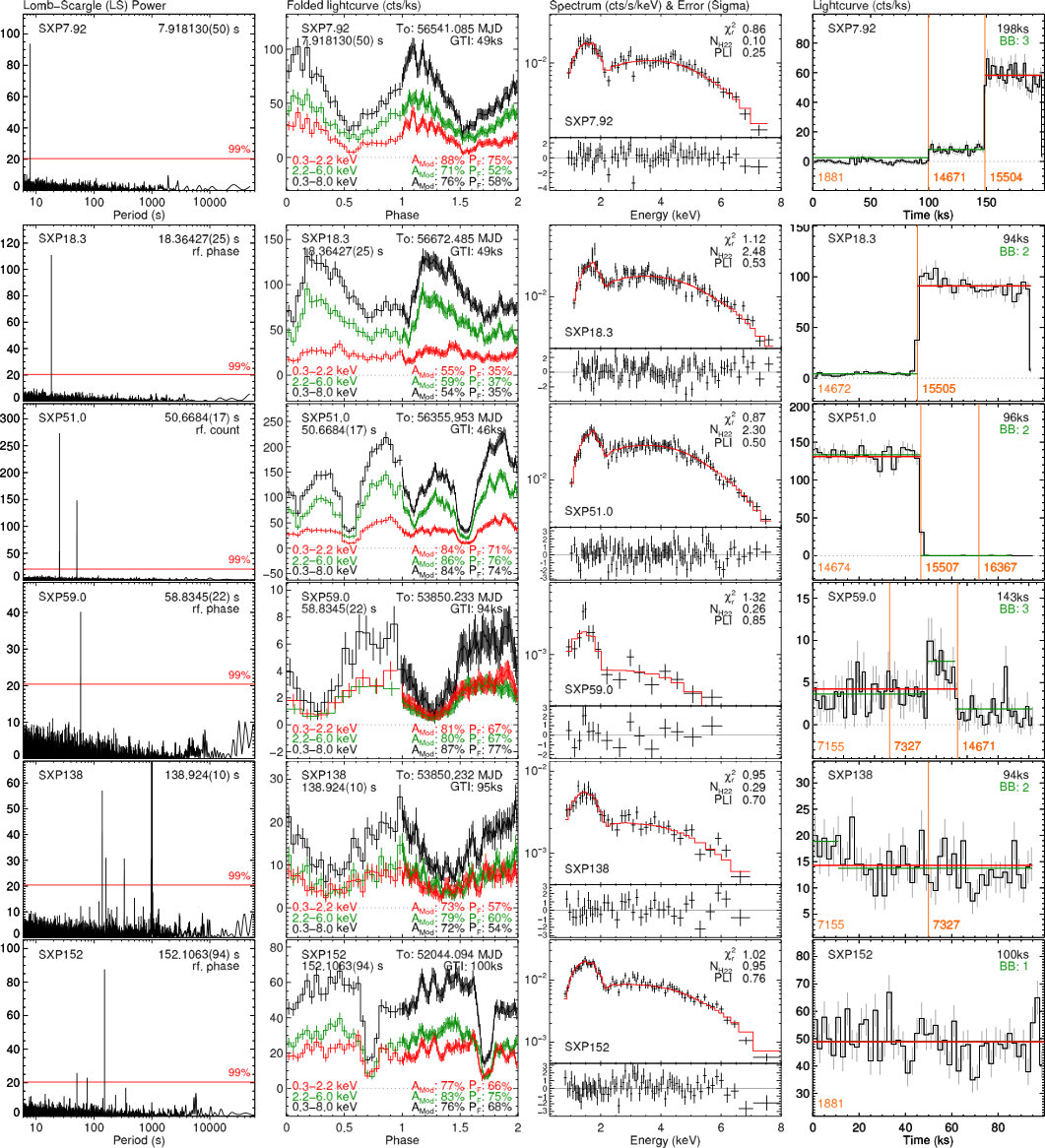 Figure 2
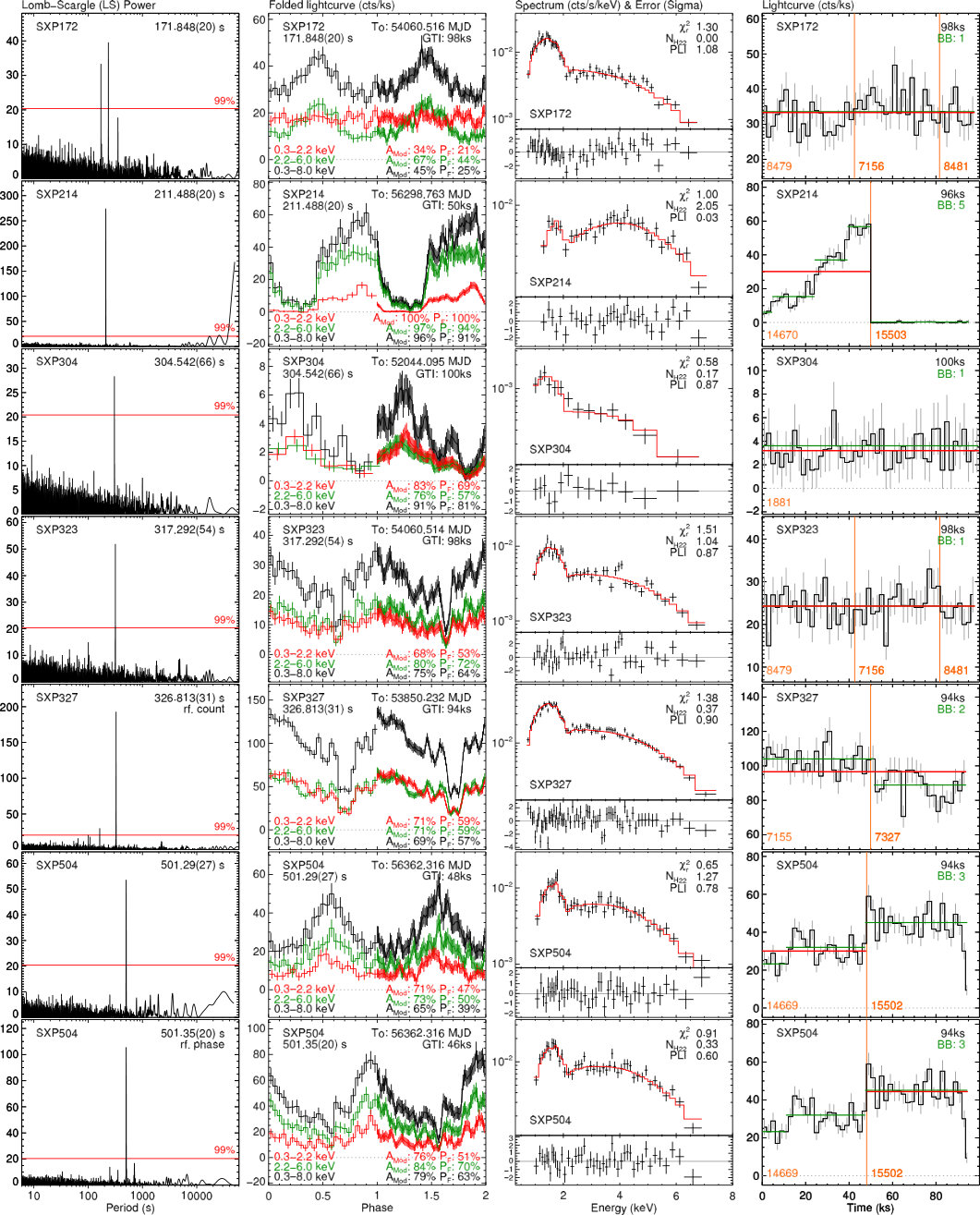 Figure 3
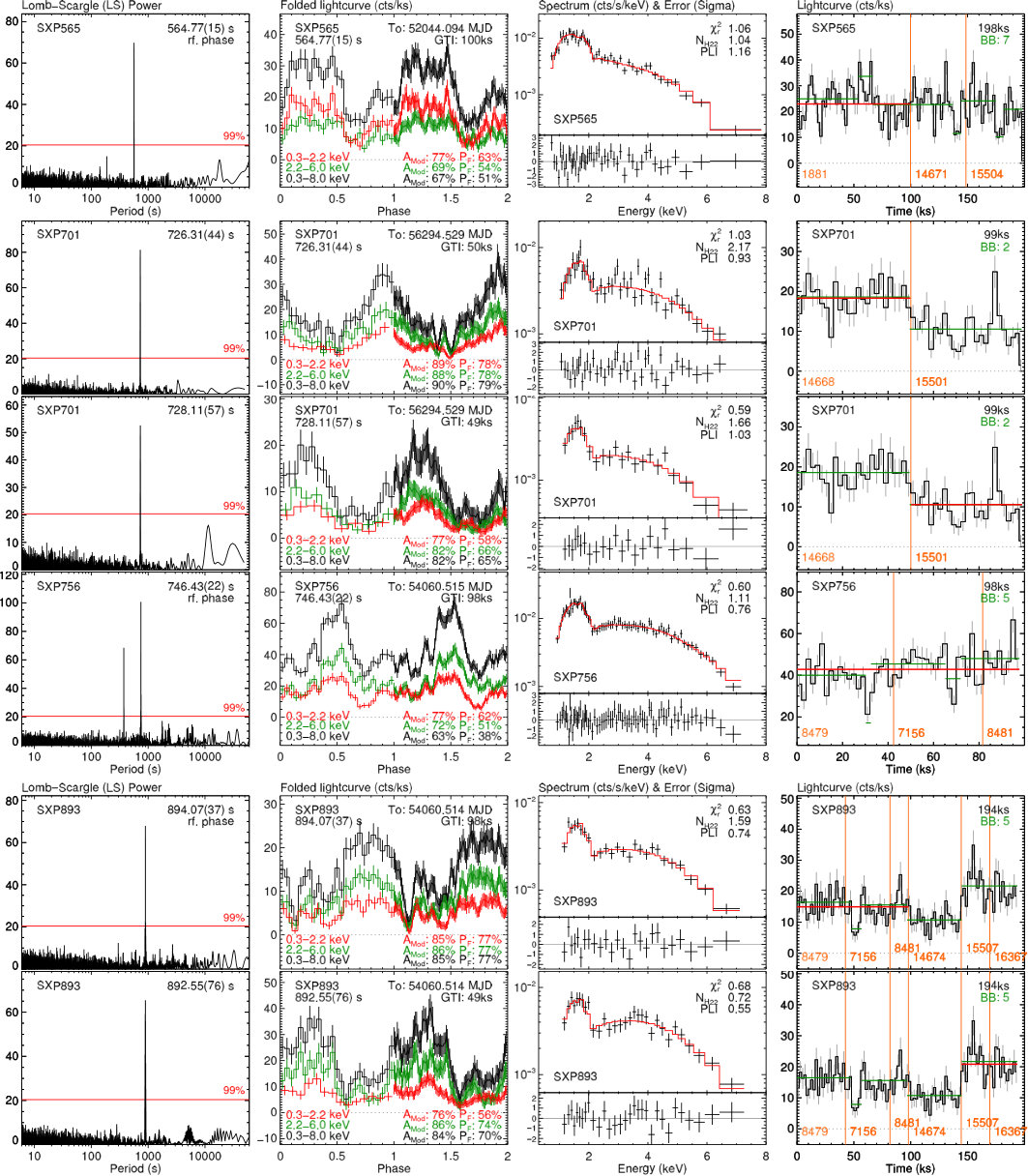 Figure 4
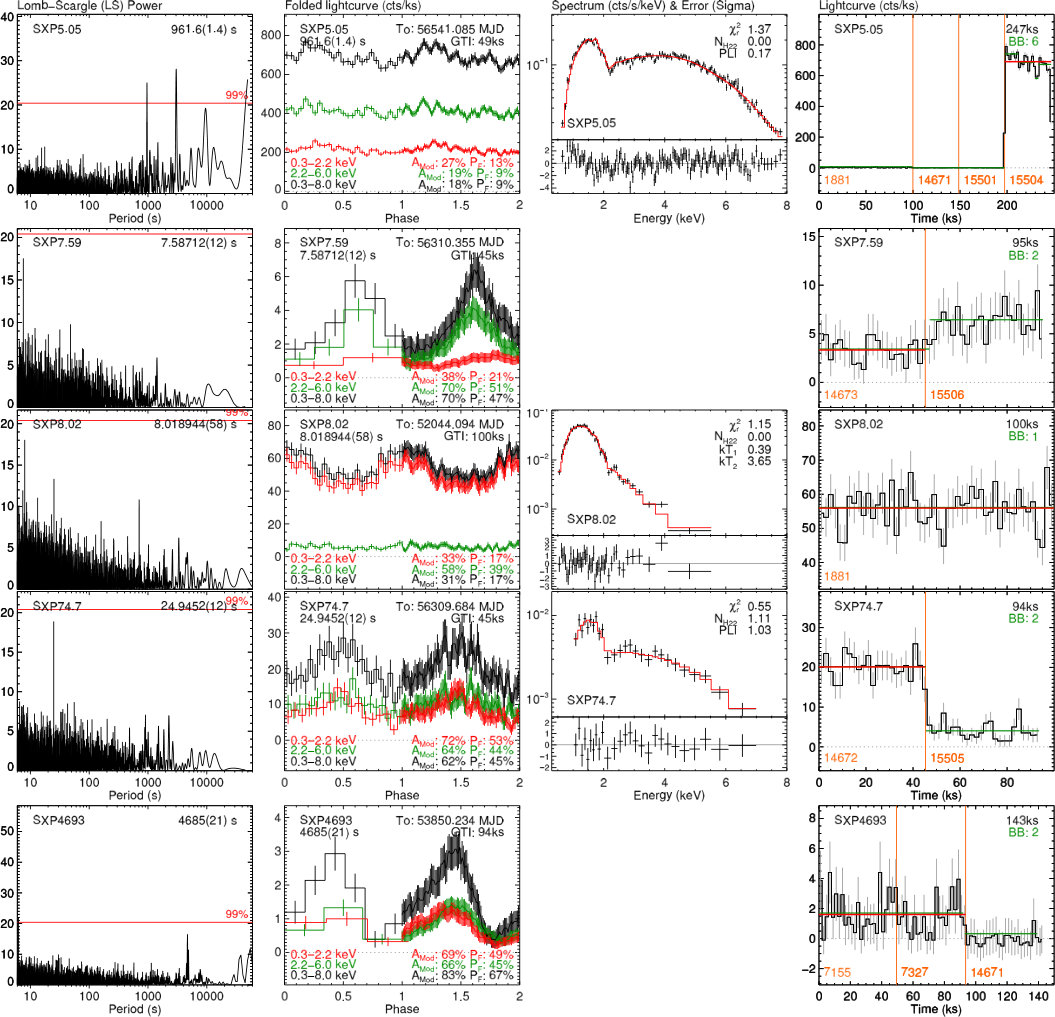 Figure 5
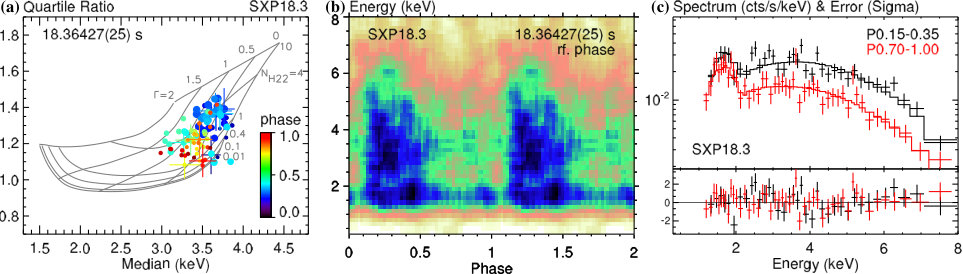 Figure 6
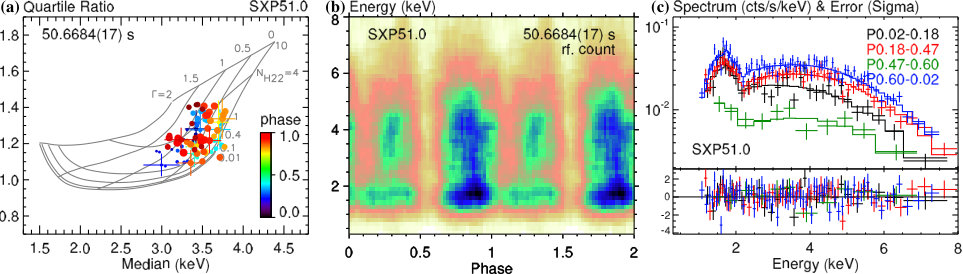 Figure 7
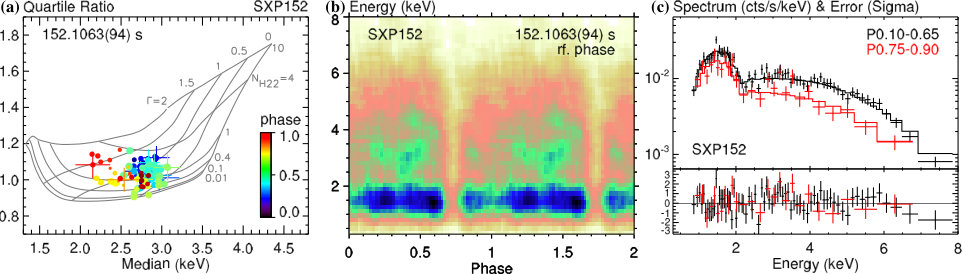 Figure 8
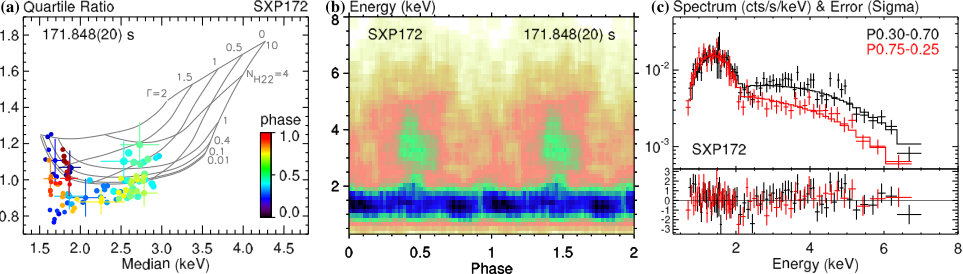 Figure 9
Peer Reviews
No public reviews on file for this paper yet. If you reviewed it on a platform where reviews are public (OpenReview, ICLR, NeurIPS, ICML), you can paste yours below so the community can read it here.
Videos
No videos yet. Explain this paper in a talk, walkthrough, or lecture? Add one.