Fuzzy Dark Matter and Non-Standard Neutrino Interactions
Vedran Brdar, Joachim Kopp, Jia Liu, Pascal Prass, Xiao-Ping Wang (JGU, Mainz)

TL;DR
This paper explores how neutrino oscillation experiments can detect interactions with ultra-light fuzzy dark matter, setting new limits and assessing future sensitivities, thus providing a novel probe of dark matter properties.
Contribution
It introduces a method to use neutrino oscillation data to constrain fuzzy dark matter interactions, including detailed simulations and new experimental limits.
Findings
Set new limits on fuzzy dark matter-neutrino interactions using T2K and solar data
Estimated sensitivities for reactor and future long-baseline experiments
Found potential connections to B physics anomalies in vector boson scenarios
Abstract
We discuss novel ways in which neutrino oscillation experiments can probe dark matter. In particular, we focus on interactions between neutrinos and ultra-light ("fuzzy") dark matter particles with masses of order eV. It has been shown previously that such dark matter candidates are phenomenologically successful and might help ameliorate the tension between predicted and observed small scale structures in the Universe. We argue that coherent forward scattering of neutrinos on fuzzy dark matter particles can significantly alter neutrino oscillation probabilities. These effects could be observable in current and future experiments. We set new limits on fuzzy dark matter interacting with neutrinos using T2K and solar neutrino data, and we estimate the sensitivity of reactor neutrino experiments and of future long-baseline accelerator experiments. These results are based on…
Click any figure to enlarge with its caption.
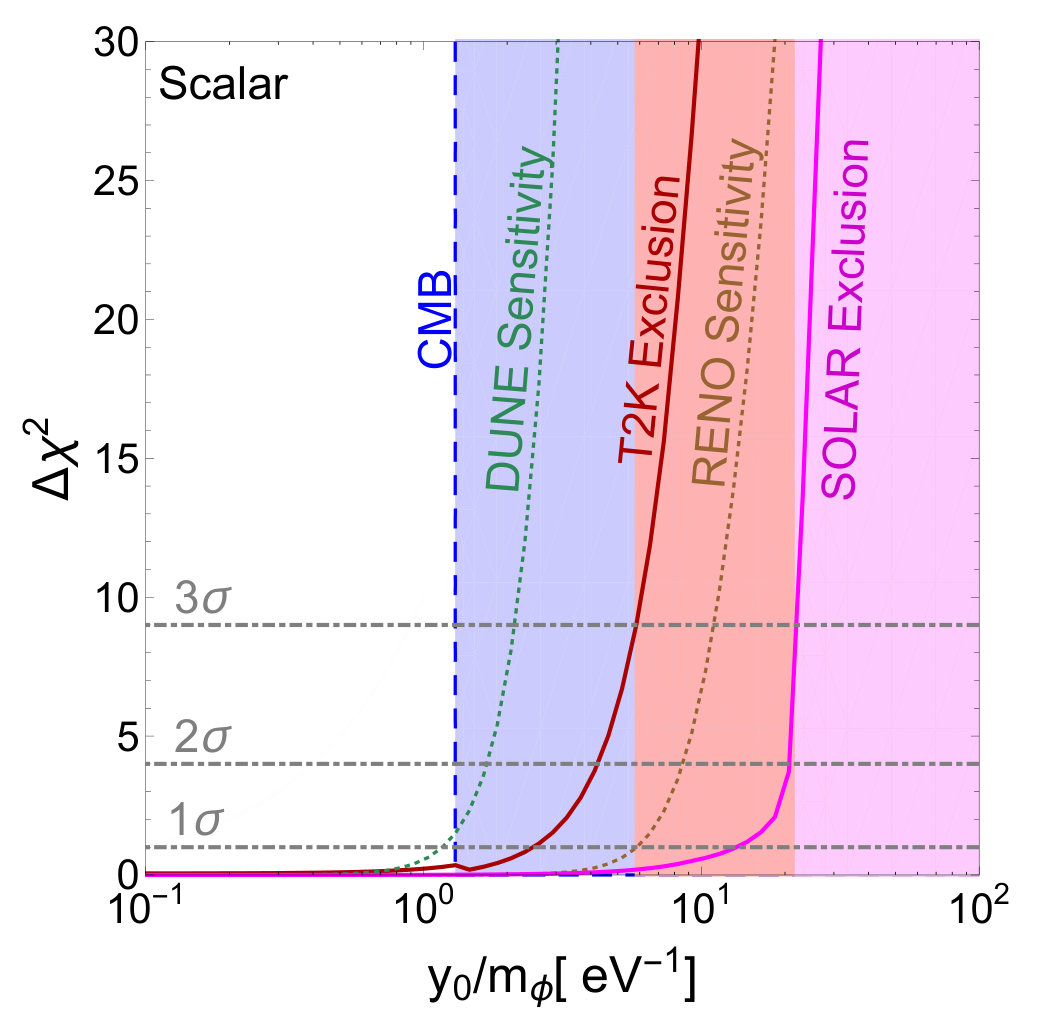 Figure 1
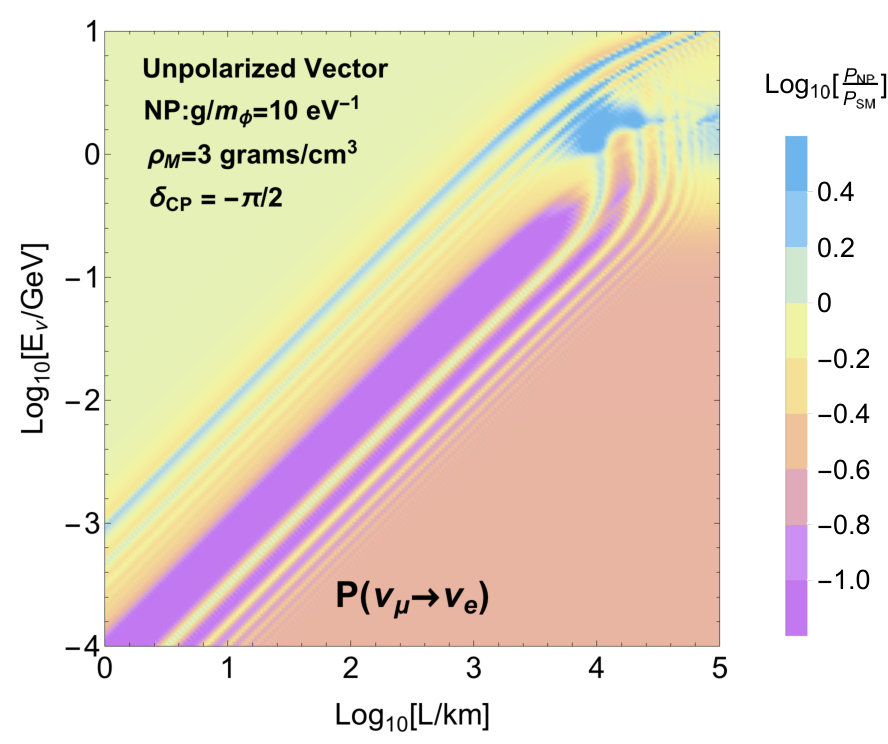 Figure 2
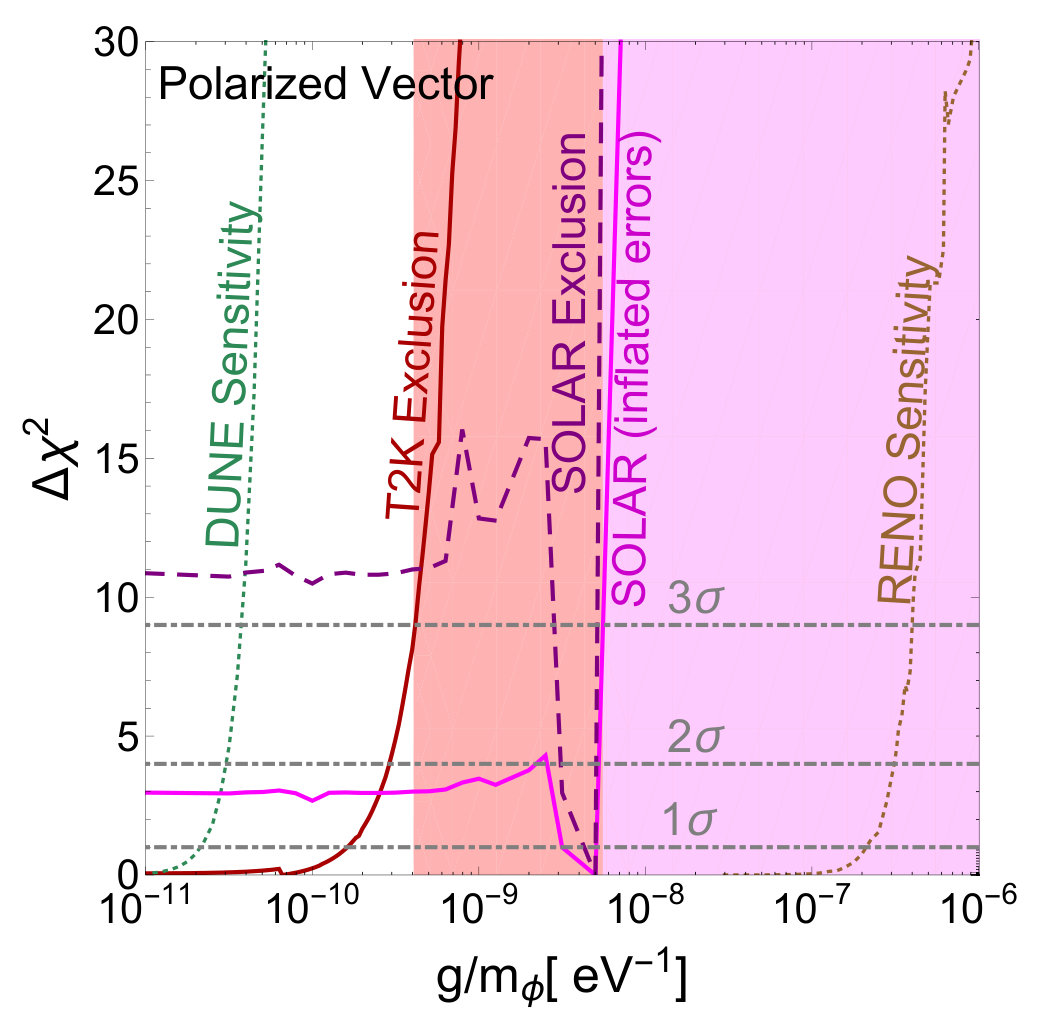 Figure 3
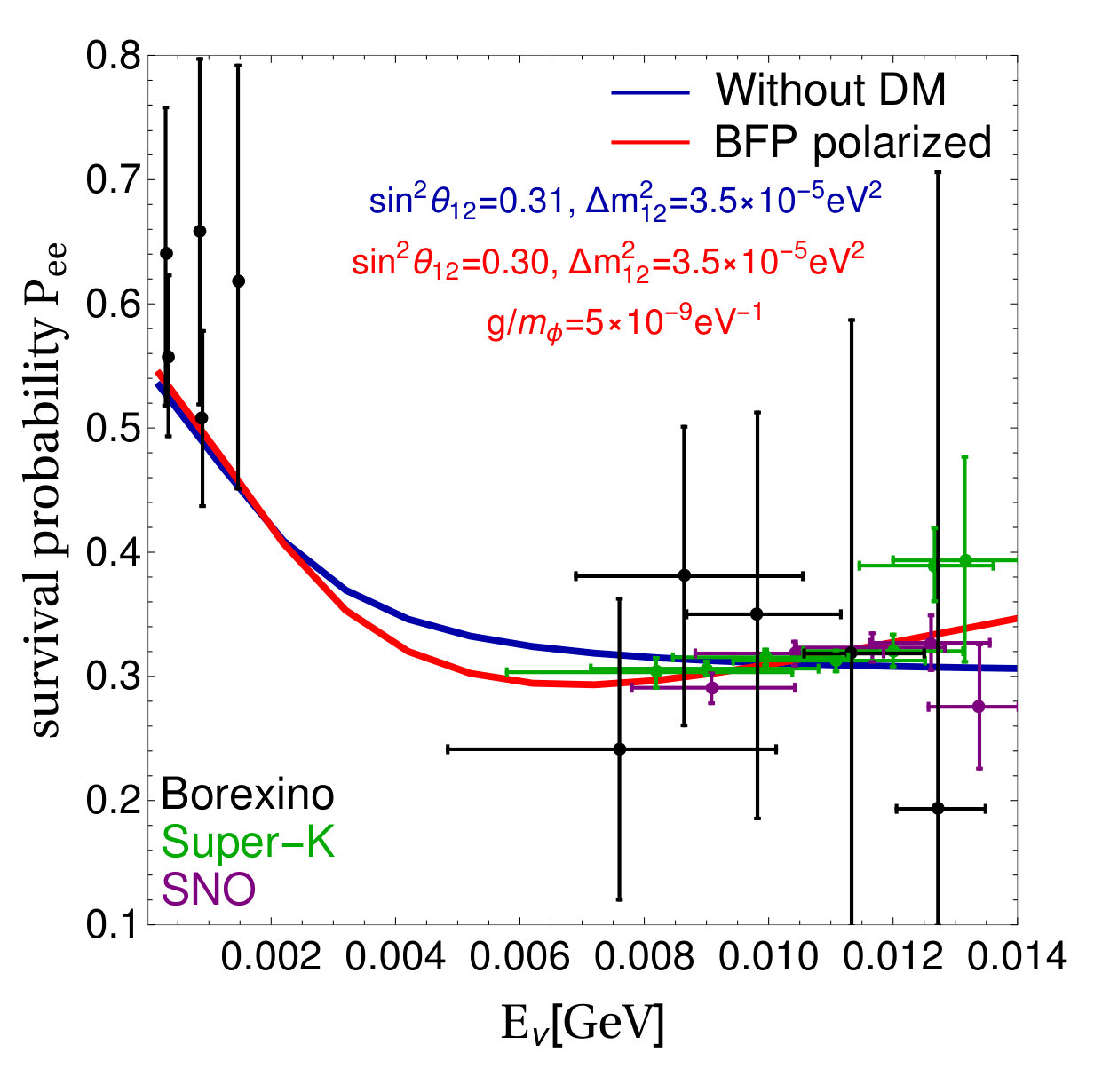 Figure 4
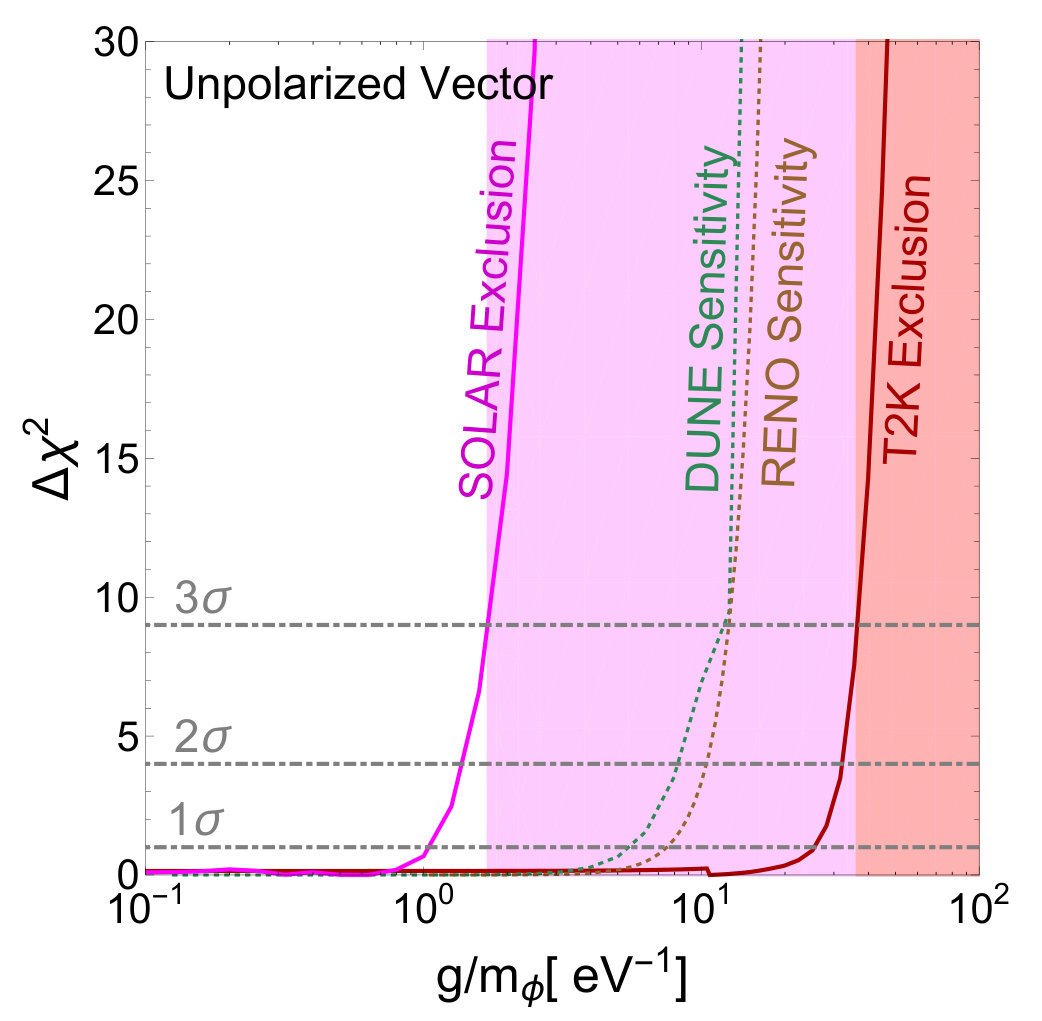 Figure 5
Peer Reviews
No public reviews on file for this paper yet. If you reviewed it on a platform where reviews are public (OpenReview, ICLR, NeurIPS, ICML), you can paste yours below so the community can read it here.
Videos
No videos yet. Explain this paper in a talk, walkthrough, or lecture? Add one.
Fuzzy Dark Matter and Non-Standard Neutrino Interactions
Vedran Brdar
Joachim Kopp
Jia Liu
Pascal Prass
Xiao-Ping Wang
PRISMA Cluster of Excellence and Mainz Institute for Theoretical Physics, Johannes Gutenberg-Universität Mainz, 55099 Mainz, Germany
(May 24, 2017)
Abstract
We discuss novel ways in which neutrino oscillation experiments can probe dark matter. In particular, we focus on interactions between neutrinos and ultra-light (“fuzzy”) dark matter particles with masses of order eV. It has been shown previously that such dark matter candidates are phenomenologically successful and might help ameliorate the tension between predicted and observed small scale structures in the Universe. We argue that coherent forward scattering of neutrinos on fuzzy dark matter particles can significantly alter neutrino oscillation probabilities. These effects could be observable in current and future experiments. We set new limits on fuzzy dark matter interacting with neutrinos using T2K and solar neutrino data, and we estimate the sensitivity of reactor neutrino experiments and of future long-baseline accelerator experiments. These results are based on detailed simulations in GLoBES. We allow the dark matter particle to be either a scalar or a vector boson. In the latter case, we find potentially interesting connections to models addressing various physics anomalies.
††preprint: MITP/17-037
Our ignorance about the particle physics nature of dark matter (DM) is so vast that viable candidate particles span more than 90 orders of magnitude in mass. At the heavy end of the spectrum are primordial black holes [1, 2, 3, 4, 5]. On the low end of the DM mass spectrum are models of “Fuzzy Dark Matter” with a mass of order eV. The term “fuzzy” refers to the huge Compton wave length of such DM particles. Fuzzy DM has been studied mostly in the context of axions or other extremely light scalar fields [6, 7, 8, 9, 10, 11, 12, 13]. Such DM candidates can be searched for in laboratory experiments using cavity-based haloscopes [14, 15, 16], helioscopes [17, 18, 19, 20], LC circuits [21], atomic clocks [22, 23], atomic spectroscopy [24] and interferometry [25], as well as accelerometers [26] and magnetometry [27, 28, 29]. Constraints on their parameter space can also be set using current gravitational wave detectors [30, 31, 32]. However, ultra-light vector bosons are also conceivable fuzzy DM candidates [33, 34, 7, 35, 36, 37, 38, 39, 40, 41, 42, 43, 44]. The tightest constraints on the mass of Fuzzy DM come from observations of large scale structure in the Universe, and very recent studies suggest that eV may be required [10, 12, 45].
Because of its macroscopic delocalization, Fuzzy DM has the potential to resolve several puzzles related to structure formation in the Universe: (i) DM delocalization can explain the observed flattening of (dwarf) galaxy rotation curves towards their center [6], which is in tension with predictions from -body simulations [46, 47, 48] (“cusp vs. core problem”); (ii) the lower than expected abundance of dwarf galaxies [49] (“missing satellites problem”) can be understood in Fuzzy DM scenarios because of the higher probability for tidal disruption of DM subhalos and because of the suppression of the matter power spectrum at small scales [50, 9]; (iii) the apparent failure of many of the most massive Milky Way subhalos to host visible dwarf galaxies [51, 52] (“too big to fail problem”) is ameliorated since Fuzzy DM predicts fewer such subhalos [50, 9]; While it is conceivable that these galactic anomalies will disappear with a more refined treatment of baryonic physics in simulations [53, 54, 55], the possibility that DM physics plays a crucial role is far from excluded.
Our goal in the present paper is to highlight the tremendous opportunities for probing interactions of fuzzy DM in current and future neutrino oscillation experiments. These opportunities exist in particular in scenarios in which DM–neutrino interactions are flavor non-universal or flavor violating. In this case, even very feeble couplings between neutrinos and dark matter are sufficient for coherent forward scattering to induce a non-negligible potential for neutrinos, which affects neutrino oscillation probabilities and will thus alter the expected event rates and spectra in current and future neutrino oscillation experiments [56, 57]. We will in particular derive constraints from T2K and solar neutrino neutrino data, and we will determine the sensitivities of DUNE and RENO. Similar effects have been considered previously in ref. [56], where the focus has been on anomalous temporal modulation of neutrino oscillation probabilities.
Dark Matter–Neutrino Interactions. Fuzzy DM can consist either of scalar particles or of vector bosons . In the scalar case, the relevant terms in the Lagrangian are given by [58]
[TABLE]
where , are flavor indices and are the coupling constants. For vector DM, the Lagrangian is
[TABLE]
with the coupling constant and the charge matrix . In both Lagrangians, is the effective Majorana neutrino mass matrix. The interaction term in eq. 1 can be generated in a gauge invariant way by coupling the scalar DM particle to heavy right-handed neutrinos in a seesaw scenario [58]. The interaction in eq. 2 could arise for instance if the DM is the feebly coupled gauge boson corresponding to a local lepton family number symmetry, defined via , , . Alternatively, the DM particle could couple to the SM via mixing with a much heavier gauge boson with flavor non-universal couplings. If the boson has a mass of order , we expect the mixing-induced coupling in eq. 2 to be of order . Intriguingly, we will see below that such tiny couplings may be within reach of neutrino oscillation experiments. Interesting candidates for a TeV-scale boson mediating interactions of ultra-light vector DM and neutrinos include an gauge boson, or a new gauge boson coupled predominantly to the second family of leptons. The latter possibility is of particular interest as such a particle could explain several recent anomalies in physics [59]. We defer a detailed discussion of possible UV completions of eqs. 1 and 2 to a forthcoming publication [60]. The mass of can be generated either through the Stückelberg mechanism [61] or from spontaneous symmetry breaking in a dark Higgs sector.
Production of Ultra-light DM Particles. DM particles with masses must have been produced non-thermally in the early Universe to avoid constraints on hot (i.e. relativistically moving) DM. The most popular way to achieve this is the misalignment mechanism, which was first introduced in the context of QCD axion models [62, 63, 64], but can also be applied to other ultra-light fields. For vector bosons, the misalignment mechanism has been discussed in refs. [34, 7, 39]. In this case, the mechanism may require also a non-minimal coupling of to the Ricci scalar to avoid the need for super-Planckian field excursions [7, 39]. It might be possible to avoid these extra couplings in certain UV completions of the model [39]. The misalignment mechanism for vector bosons is more constrained if the bosons obtain their mass through a Higgs mechanism than in models with Stückelberg masses. In particular, it is required that the boson is massive at the temperature at which begins to oscillate about its minimum [34]. This temperature is given by , where is the Planck mass. We see that the dark Higgs boson thus needs to acquire a vacuum expectation value (vev) at a critical temperature much larger than . Since typically [65], this implies . We will, however, see that neutrino oscillation experiments are sufficiently sensitive to probe the relevant parameter region. As an alternative to the misalignment mechanism, the authors of ref. [39] propose production of vector DM from quantum fluctuations during inflation, but argue that this mechanism can only account for all the DM in the Universe if eV.
Coherent Forward Scattering of Neutrinos on Fuzzy DM. By inspecting eqs. 1 and 2, we observe that scalar DM , treated as a classical field, alters the neutrino mass matrix, , while vector DM alters their effective 4-momenta, . This can be seen as dynamical Lorentz violation [66]. For implementing these effects in simulation codes, we parameterize them in terms of a Mikheyev–Smirnov–Wolfenstein-like potential [67, 68, 69, 70]. To do so, we use the equations of motion derived from eqs. 1 and 2 (treating and as classical fields) to derive a modified neutrino dispersion relation in the form
[TABLE]
Here, , , and should be understood as matrices. Neglecting the term in eq. 3, we read off that
[TABLE]
These expressions for should now be added to the Hamiltonian on which the derivation of neutrino oscillation probabilities is based. The classical DM field can be expressed as for scalar DM and as for vector DM, where is a polarization vector. The oscillation amplitude is related to the local DM energy density via [34, 7, 71]
[TABLE]
For the tiny DM masses we are interested in here, the period of field oscillations is macroscopic, [72, 73, 74, 75]. Note that in eqs. 4 and 5, the terms linear in the couplings constants are valid when the DM mass is so low that the DM field can be treated as classical; the quadratic terms are approximately valid for any DM mass.
In deriving numerical results, we will for definiteness assume the neutrino–DM couplings to have a flavor structure given by for scalar DM, where is a constant for scalar DM. This choice is motivated by the assumption of universal couplings of to right-handed neutrinos. For vector DM, we assume , as motivated by symmetry. We will moreover assume that contributions to the neutrino oscillation probabilities proportional to powers of are averaged. In other words, we assume the running time of the experiment to be much larger than . Equation 5 shows that for vector DM, depends on the polarization of the field. As it is unclear whether the initial polarization survives structure formation or is completely randomized even on scales km relevant to long-baseline experiments, we will consider both the case of fully polarized and fully unpolarized DM. In the former case, we assume the polarization axis to be parallel to the ecliptic plane for definiteness. For fully polarized DM, the leading contribution to is linear in the small coupling , while for unpolarized DM varies randomly along the neutrino trajectory, so the leading contribution to is . The same would be true for DM polarized in a direction transverse to the neutrino trajectory.
Modified Neutrino Oscillation Probabilities. We have implemented the potential from eqs. 1 and 2 in GLoBES [76, 77, 78, 79]. To facilitate integration of the predicted event rates over time, we evaluate the oscillation probabilities at several fixed times and interpolate them using a second order polynomial in . The latter can then be integrated analytically. We do not include long-term temporal modulation effects in our fits because the available long-baseline data is presented in time-integrated form. We have checked that including modulation with time in the fit does not significantly improve our results [60].
In fig. 1 we show the impact of neutrino–DM interactions on the oscillation probabilities as a function of neutrino energy and baseline . We see that even for tiny couplings, substantial modifications are possible.
Signals in Long Baseline Experiments. In fig. 2, we collect various limits and future sensitivities on neutrino–DM interactions. For the T2K experiment, we have developed a new GLoBES implementation [80, 81], which we use to fit data based on an integrated luminosity of protons on target (pot) [82, 83]. We have verified that we reproduce T2K’s standard oscillation results to high accuracy before setting limits on DM. For the projected sensitivity of DUNE [84], we use the simulation code released with ref. [85], corresponding to pot for neutrinos and anti-neutrinos each. To determine the sensitivity of RENO, we rely on a simulation based on refs. [86, 87, 88] and corresponding to 3 yrs of data taking.
We observe that experimental sensitivities are superb, thanks to the scaling of with , see eqs. 4, 5 and 6. For vector DM, the sensitivity is more than ten orders of magnitude better in the polarized case (left panel of fig. 2) than in the unpolarized case. In the former case, the sensitivity comes from the term linear in , which is enhanced by compared to the quadratic one. In general, experiments exclude values of the coupling constant for which is much larger than the oscillation frequency . For scalar or polarized vector DM, long baseline experiments have a significant edge over reactor experiments, while for unpolarized DM, RENO is able to compete even with DUNE. The reason is the scaling of with according to eqs. 4 and 5.
Signals in Solar Neutrino Experiments. Since solar neutrinos evolve adiabatically as they propagate out of the Sun, their survival probability in the electron flavor is given by
[TABLE]
where and are the effective leptonic mixing matrices at the center of the Sun and at Earth, respectively. is strongly affected by both SM matter effects and DM–neutrino interactions, while differs from the vacuum mixing matrix mainly through the DM term in our scenario. We neglect Earth matter effects as their impact on our results would be negligible [89].
We fit solar neutrino data from Borexino [90], Super-Kamiokande [91], and SNO [92, 93], as collected in ref. [89]. We illustrate in fig. 3 how the presence of DM–neutrino interactions could improve the fit to solar neutrino data. For standard oscillations, we find , while the best fit point for polarized vector DM yields . Even though we find in both cases an acceptable goodness of fit, standard oscillations are disfavored compared to the new physics hypothesis. This is a reflection of the fact that the upturn of the survival probability at low energy has not been observed yet [89]. As the preference for new physics in our fit is somewhat stronger than in a fit including full spectral data [94], we show in fig. 2 also conservative constraints obtained by artificially inflating the error bars of all solar data points by a factor of two.
Comparing limits from solar neutrino observations to those from long-baseline experiments, we see from fig. 2 that for unpolarized vector DM, solar neutrinos offer the most powerful constraints. This is once again due to the dependence of in this case. Even though the same scaling applies to scalar DM, solar limits are much weaker because in our benchmark scenario, neutrino–DM interactions alter only neutrino masses (to which solar neutrinos have poor sensitivity), but not the mixing angles. This is also the reason why the limits from ref. [56], which rely on variations in the mixing angle , are not applicable here.
Cosmological Constraints on . As pointed out in ref. [58], interactions between neutrinos and ultra-light scalar DM are constrained by the requirement that the DM-induced contribution to the neutrino mass term does not violate the cosmological limit on the sum of neutrino masses, . We estimate this constraint in fig. 2 (a) by requiring that, at recombination (redshift ), the correction to the heaviest neutrino mass (taken at 0.05 eV) should not be larger than 0.1 eV.
Astrophysical Neutrinos. One may wonder whether neutrino–DM interactions could inhibit the propagation of astrophysical neutrinos [95] from distant sources [96]. The optical depth for such neutrinos is given by [97] , with the DM column density , where the integral runs along the line of sight. For both galactic and extragalactic neutrino sources, we have typically – [97]. The scattering cross section for vector DM is approximately
[TABLE]
where the superscript indicates that, for simplicity, we have only considered the transverse polarization states of DM. For scalar DM, the corresponding expression is
[TABLE]
Requiring , we obtain the constraints
[TABLE]
We see that these limits are much weaker than the constraints imposed by oscillation experiments (see fig. 2) except for DM masses much larger than the ones considered here and for very low neutrino energies At low energy, however, astrophysical neutrinos cannot be observed because of prohibitively large atmospheric backgrounds.
Summary. To conclude, we have demonstrated that unique opportunities exist at current and future neutrino oscillation experiments to probe interactions between neutrinos and ultra-light DM particles. The latter are an interesting alternative to WIMP (Weakly Interacting Massive Particle) DM, avoiding many of the phenomenological challenges faced by WIMPs. A particularly interesting possibility, which we plan to explore further in an upcoming publication [60], is a possible connection to flavor non-universal new physics at the TeV scale, as motivated by recent anomalies in quark flavor physics.
Note added. While we were finalizing this paper, ref. [58] appeared on the arXiv, addressing similar questions. While the main focus of ref. [58] (and also of the earlier ref. [56]) is on scalar DM, we consider also DM in the form of ultra-light gauge bosons. The authors of ref. [58] have considered a larger range of experiments for setting limits than us, while our results are based on more detailed numerical simulations of the few most relevant experiments. Where our results are comparable to those of ref. [58], they are in good agreement.
Acknowledgments. We would like to thank Pedro Machado, Georg Raffelt, and Felix Yu for very helpful discussions. This work has been funded by the German Research Foundation (DFG) under Grant Nos. EXC-1098, KO 4820/1–1, FOR 2239, GRK 1581, and by the European Research Council (ERC) under the European Union’s Horizon 2020 research and innovation programme (grant agreement No. 637506, “Directions”).
The reference list from the paper itself. Each links out to its DOI / PubMed record.
- 1[1] S. Bird, I. Cholis, J. B. Muñoz, Y. Ali-Haïmoud, M. Kamionkowski, E. D. Kovetz, A. Raccanelli, and A. G. Riess, Did LIGO detect dark matter? , ar Xiv:1603.00464 .
- 2[2] B. Carr, F. Kuhnel, and M. Sandstad, Primordial Black Holes as Dark Matter , ar Xiv:1607.06077 .
- 3[3] L. Chen, Q.-G. Huang, and K. Wang, Constraint on the abundance of primordial black holes in dark matter from Planck data , ar Xiv:1608.02174 .
- 4[4] J. Georg and S. Watson, A Preferred Mass Range for Primordial Black Hole Formation and Black Holes as Dark Matter Revisited , ar Xiv:1703.04825 .
- 5[5] J. García-Bellido, Massive Primordial Black Holes as Dark Matter and their detection with Gravitational Waves , in 11th International LISA Symposium Zurich, Switzerland, September 5-9, 2016 , 2017. ar Xiv:1702.08275 .
- 6[6] W. Hu, R. Barkana, and A. Gruzinov, Cold and fuzzy dark matter , Phys. Rev. Lett. 85 (2000) 1158–1161, [ astro-ph/0003365 ].
- 7[7] P. Arias, D. Cadamuro, M. Goodsell, J. Jaeckel, J. Redondo, and A. Ringwald, WIS Py Cold Dark Matter , JCAP 1206 (2012) 013, [ ar Xiv:1201.5902 ].
- 8[8] B. Li, T. Rindler-Daller, and P. R. Shapiro, Cosmological Constraints on Bose-Einstein-Condensed Scalar Field Dark Matter , ar Xiv:1310.6061 .