Conformal symmetry of trapped Bose-Einstein condensates and massive Nambu-Goldstone modes
Keisuke Ohashi, Toshiaki Fujimori, Muneto Nitta

TL;DR
This paper explores the conformal symmetry properties of trapped Bose-Einstein condensates and identifies massive Nambu-Goldstone modes arising from symmetry breaking, providing universal equations of motion and an effective action.
Contribution
It reveals the presence of massive Nambu-Goldstone modes in trapped BECs and derives universal equations of motion based on modified Schr"odinger symmetry.
Findings
Massive Nambu-Goldstone modes correspond to variance and center of trapped gases.
Universal equations of motion describe harmonic, cyclotron, and breathing oscillations.
Exact effective action for NG modes is constructed.
Abstract
The Gross-Pitaevskii (GP) or nonlinear Schr\"odinger equation relevant to ultracold atomic gaseous Bose-Einstein condensates possess a modified Schr\"odinger symmetry in two spatial dimensions, in the presence of a harmonic trapping potential, an (artificial) constant magnetic field (or rotation) and an electric field of a quadratic electrostatic potential. We find that a variance and a center of a trapped gas with or without a vorticity can be regarded as massive Nambu-Goldstone (NG) modes associated with spontaneous breaking of the modified Schr\"odinger symmetry. We show that the Noether theorem for the modified Schr\"odinger symmetry gives universal equations of motion which describe exact time-evolutions of the trapped gases such as a harmonic oscillation, a cyclotron motion and a breathing oscillation with frequencies determined by the symmetry independently of the details of the…
Click any figure to enlarge with its caption.
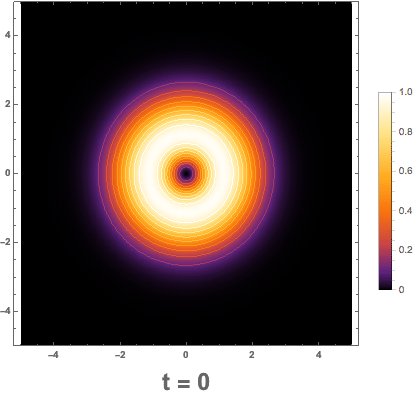 Figure 1
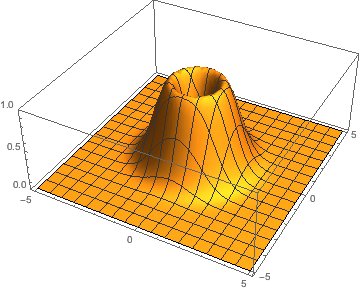 Figure 2
Peer Reviews
No public reviews on file for this paper yet. If you reviewed it on a platform where reviews are public (OpenReview, ICLR, NeurIPS, ICML), you can paste yours below so the community can read it here.
Videos
No videos yet. Explain this paper in a talk, walkthrough, or lecture? Add one.
Conformal symmetry of trapped Bose-Einstein condensates
and massive Nambu-Goldstone modes
Keisuke Ohashi
Toshiaki Fujimori
Muneto Nitta
Department of Physics & Research and Education Center for Natural Sciences, Keio University, Hiyoshi 4-1-1, Yokohama, Kanagawa 223-8521, Japan
Abstract
The Gross-Pitaevskii or nonlinear Schrödinger equation relevant to ultracold atomic gaseous Bose-Einstein condensates possesses a modified Schrödinger symmetry in two spatial dimensions, in the presence of a harmonic trapping potential, an (artificial) constant magnetic field (or rotation), and an (artificial) electric field of a quadratic electrostatic potential. We find that a variance and a center of a trapped gas with or without a vorticity can be regarded as massive Nambu-Goldstone (NG) modes associated with spontaneous breaking of the modified Schrödinger symmetry. We show that the Noether theorem for the modified Schrödinger symmetry gives universal equations of motion which describe exact time evolutions of the trapped gases such as a harmonic oscillation, a cyclotron motion, and a breathing oscillation with frequencies determined by the symmetry independent of the details of the system. We further construct an exact effective action for all the NG modes.
pacs:
I Introduction
Bose-Einstein condensations (BEC) were realized in dilute ultracold atomic Bose gases in a trapping potential Anderson:1995 ; Davis:1995 ; Bradley:1995 . The ideal feature of this system is its unprecedented controllability such as temperature, number of atoms, and strength and sign of interactions. BECs can be accurately described by the Gross-Pitaevskii (GP) or nonlinear Schrödinger equation Pitaevskii:2003 . BEC offers an ideal system with spontaneous symmetry breakings. In particular, spinor BECs have rich patterns of symmetry breakings and rich topology of order parameter spaces allowing various topological excitations Kawaguchi:2012ii .
The symmetry of the free Schrödinger equation is known as the Schrödinger symmetry (or nonrelativistic conformal symmetry) Hagen:1972pd ; Niederer:1972zz , consisting of the Galilean symmetry, the dilatation and the special Schrödinger transformation. In the presence of generic nonlinear interactions, the Schrödinger symmetry is explicitly broken to the inhomogeneous Galilean symmetry except in two spatial dimensions, where it remains intact if the non-linear term is limited to a quartic (two-body) interaction term relevant for BECs, as long as the quantum anomaly is ignored. (See 2010PhRvL.105i5302O ; Hu:2011 for recent discussions.) The presence of a trapping potential is necessary to realize BEC experimentally but it would break translational symmetry explicitly, so that the Schrödinger symmetry in two spatial dimensions (Galilean symmetry in other dimensions) would be an approximate symmetry.
In this paper, we show that in the presence of a harmonic trap, the Schrödinger (Galilean) symmetry including translational symmetry is not explicitly broken but is just modified as in the system of the harmonic oscillator Niederer:1973tz . This is an extension and completion of the previous study on the subgroup Pitaevskii:1997 ; Ghosh:2001an and the Galilean subgroup Ripoll:2001 . The Schrödinger symmetry in a harmonic trap was also discussed in the context of non-relativistic conformal field theories without account for the modified Schrödinger symmetry Nishida:2007pj ; Doroud:2015fsz . The point is that a harmonic potential has the same form as one of the generators of the Schrödinger symmetry, which can be regarded as a chemical potential term. We further show that a synthetic constant magnetic field (or rotation) and a synthetic electric field of a quadratic electrostatic potential further modify the Schrödinger symmetry. One of the peculiar features of the modified Schrödinger symmetry is that some of the generators explicitly depend on time. The following question now arises: what happens when such a modified symmetry is spontaneously broken? Here, we study Nambu-Goldstone (NG) modes arising due to the broken modified Schrödinger symmetry and show that they are so-called massive NG modes Nicolis:2012vf ; Nicolis:2013sga ; Watanabe:2013uya ; Takahashi:2014vua resulting from the generators depending on time. Our physical interpretation is different from previous studies where authors interpreted, without knowing a modified symmetry, that the NG modes become massive because the original symmetry is explicitly broken by the chemical potential. A typical feature of massive NG modes is that their excitations oscillate in time. As was done for the subgroup Pitaevskii:1997 ; Ghosh:2001an and the Galilean subgroup Ripoll:2001 , we further apply the full modified Schrödinger symmetry to collective motion of a trapped gas with or without a vorticity and find their exact time evolutions: the trapped gas moves as a charged particle in the artificially introduced external magnetic and electric fields, and at the same time it breathes. The equations of motion describing such time evolutions are determined by the modified Schrödinger symmetry and hence they are universal equations which are independent of the details such as states of the gas and the strength of the nonlinear interaction. We also construct an exact effective action for massive NG modes. Our work will provide an example of massive NG modes in a physical system which can be tested experimentally in a laboratory.
II Modified Schrödinger Symmetry
We consider the nonlinear Schrödinger system in spatial dimensions described by the action
[TABLE]
where the scalar field is coupled to an external gauge field through the covariant derivative with . In the case of the free Schrödinger system (), the action has the so-called Schrödinger symmetry or nonrelativistic conformal symmetry. To write down the explicit forms of the symmetry transformations, it is convenient to introduce the following set of time-independent Hermitian operators acting on :
[TABLE]
and . Then the generators of the infinitesimal Schrödinger symmetry can be written as the following linear combinations of :
[TABLE]
These operators form the Schrödinger algebra Hagen:1972pd ; Niederer:1972zz , whose nontrivial commutation relations are given by
[TABLE]
and forms the algebra under which and transform as vectors. The constants are conformal weights, given by , , , and .
Although the Schrödinger symmetry is explicitly broken once a generic external gauge field is turned on, the quadratic part of action (1) is invariant under a modified Schrödinger symmetry for some specific external fields . In this paper, we consider the external fields of the form
[TABLE]
where summation over the repeated indices is understood. Here, , , and , (antisymmetric) are all constants in but can depend on time. The matrix is given by with a positive definite parameter . For this choice of the external gauge field, the equation of motion of the action (1) reads
[TABLE]
where are the generalized chemical potential terms
[TABLE]
with and . Here is the label of the operators excluding the time translation . Note that is the standard chemical potential and is the strength of the harmonic trap. Here we regard as controllable parameters and allow them to have time dependence, .
Let us look for the symmetry of the quadratic part of the action (1) with non-vanishing . We assume that the infinitesimal transformation of takes the form . By requiring that is a symmetry of the quadratic part of the action or, equivalently, the corresponding equation of motion
[TABLE]
we can show that the infinitesimal transformation takes the form The time dependence of the coefficients and can be determined by solving the following equations
[TABLE]
where and are the coefficients in the commutation relation .
Since Eqs. (10) are homogeneous linear differential equations, the general solution takes the form , with a time-dependent matrix and constant parameters . Thus we find that the transformations generated by the operators
[TABLE]
are the symmetry of the quadratic part of the action. If are independent of , the matrix can be written as , by using the matrix , , and . These generators reduce to those of the Schrödinger group when the parameters are turned off. Furthermore, we can show that has the same algebraic structure as the Schrödinger algebra. Therefore, in the presence of non-zero , the Schrödinger symmetry is not broken, but modified. For instance, when except for the trapping potential , the generators of the translation and the Galilean boost oscillate:
[TABLE]
with .
Next let us turn on the nonlinear term in the action. This term is invariant if in spatial dimensions, so that the full modified Schrödinger group is the symmetry of the nonlinear action. For , it is explicitly broken to the modified inhomogeneous Galilean symmetry which consists of . In the following, we focus on the case, where the action has the full modified Schrödinger symmetry.
III Noether Charges
Let us consider localized configurations in dimensions. The scalar asymptotically behaves as with , so that stable localized solutions exist when . For such a localized object, the Noether charges of the modified Schrödinger symmetry take finite values. It is convenient to rewrite the conserved charges as
[TABLE]
where are the following “charges” defined by using the operators and :
[TABLE]
Although are not conserved charges, their time dependence can be determined from the Noether theorem as , or equivalently
[TABLE]
The physical meaning of this Noether’s theorem can be understood as follows. The first equation in Eq. (15) describes the relation between the energy and the time dependence of the parameters . Since the phase rotation is the symmetry of the modified action, one of the second equations in Eq. (15) gives the conservation law for the particle number .
Defining the center of the gas by the first moment of the charge density
[TABLE]
and the momentum
[TABLE]
we can interpret the equation for as the relation between the velocity and the momentum in the external magnetic field . Furthermore, eliminating the momentum from its equation of motion , we find that the gas behaves as a charged particle
[TABLE]
in the synthetic magnetic field and the synthetic electric field for the gauge potentials in Eq. (6). This equation can be regarded as a version of Ehrenfest’s theorem generalized so that it works even with the presence of the nonlinear term, . Since this property comes from the modified inhomogeneous Galilean symmetry, it holds for any interaction in any dimension Kohn:1961 . Its dynamics is described by a combination of the cyclotron motion caused by the magnetic field with a frequency and the harmonic oscillation due to the trapping potential with a frequency
[TABLE]
Eventually the frequencies of the combined motions are .
The equation of motion for the angular momentum can be rewritten as the conservation law for the internal angular momentum, with .
The charge satisfies
[TABLE]
Defining by using the second moment (variance)
[TABLE]
we find that satisfies
[TABLE]
Eliminating , we find that satisfies the equation
[TABLE]
When all are constant in time, this reduces to a harmonic oscillator with frequency .
As was pointed out in Pitaevskii:1997 ; Kagan:1996 , the frequencies for and for are universal constants determined by the symmetry. They are related to the conformal weights and the angular momenta of primary operators via the state-operator correspondence Nishida:2007pj . In non-relativistic conformal field theories, the conformal weight and the angular momentum of a primary operator , i.e., an operator satisfying , is related to the energy eigenvalue of the Hamiltonian with the harmonic potential as . This implies that the state-operator correspondence maps the primary operators and to the excited states of the gas with energy and , which correspond to the first excited states generated by the oscillation modes and , respectively.
The charges mentioned above will turn out to be identified with NG modes generated by their “conjugate” generators, as we will see later.
IV Massive Nambu-Goldstone modes and exact
time evolution
We have seen above that the modified Schödinger symmetry gives universal information, even when there are vortex-like or wall-like objects. Here, we focus on static axially symmetric configurations as typical examples, setting for simplicity. We define the vorticity as the winding number of the phase of around the center of the trap. The solution is invariant under and thus the dependence of the solution appears only in the form . Some numerical solutions and dependences of the charge and the energy are shown in the appendix.
The axially symmetric static solutions break the modified Schrödinger symmetry to its subgroup generated by and , so that there must appear NG modes around the solution . Such NG modes are generated by the symmetry whose transformation parameters are promoted to dynamical degrees of freedom ,
[TABLE]
where we have redefined the degrees of freedom by absorbing the time dependence of the generator as . The important difference from the case of the standard symmetry breaking is that some of are massive NG modes.
The kinetic terms of the massive NG modes in the low-energy effective action are determined by the commutators of the corresponding generators evaluated for the solution. The nontrivial commutation relations are given by
[TABLE]
This implies that the NG modes for and form canonical conjugate pairs. The number of generators in the former (latter) pair is four (two), while the number of corresponding NG modes is two (one), which is a half of the number of generators, since the (non)commutation relations in Eq. (25) give rise to type-B NG modes Watanabe:2012hr ; Hidaka:2012ym .
On the other hand, since the generator commutes with the other operators, giving rise to a type-A NG mode, a certain conjugate degree of freedom must be introduced to construct a kinetic term for the NG mode (phonon) . Taking into account the fact that appears in the effective Lagrangian so that , it is natural to introduce the conjugate mode by shifting dependence as .
The low-energy effective action describing the dynamics of the NG modes can be determined from the time dependent ansatz obtained by acting the finite transformation on the static solution as . Since is the basis of , the operator can be written as
[TABLE]
where we have introduced the shift operator for to include the conjugate mode as we explained. Explicitly, can be written as
[TABLE]
with . The dynamical degrees of freedom of the NG modes and are essentially equivalent to those of the charges . This fact can be seen by from the relation between and obtained by substituting the ansatz into the charges in Eq.(14),
[TABLE]
where and are the charges evaluated for the solution with the shifted chemical potential . We can show that the time dependent ansatz exactly satisfies the original equation of motion when have time dependence so that the equation of motion (15) for the charges and the equation for ,
[TABLE]
are satisfied.
By substituting the ansatz (27) into the action (1), we obtain the effective action for the NG modes and as,
[TABLE]
We can easily obtain time evolutions of by solving the equations of motion derived from this effective action. For instance, gives and gives the equation of motion (29) for the massless mode through the following identity for a static solution:
[TABLE]
which can be derived from the Noether theorem in Eq. (15) as shown in the appendix. Thus one can easily construct time-dependent solutions from a static solution . Animations of a time-dependent solution with and are shown in the ancillary file.
V Summary
We have found the modified Schrödinger symmetry of the GP equation in two spatial dimensions, in the presence of a harmonic potential, (artificial) constant magnetic field (or rotation) and an (artificial) electric field of a quadratic electrostatic potential. We have studied NG modes of the spontaneously broken modified Schrödinger symmetry, and found that spontaneous breaking of and ( and ), which do not commute as in Eq. (25), give rise to two (one) massive NG modes of type B, while that of gives rise to one type-A NG mode (phonon). We have found that a variance in addition to a center of a gas can be regarded as massive NG modes and derived the universal equations of motion from the Noether theorem. We have further constructed the general boosted solution in which the trapped gas does a cyclotron motion with frequency and a harmonic oscillation with frequency in Eq. (19) and at the same time breathes with frequency . Finally, we have constructed the exact effective action for all the NG modes. The frequencies of collective motions of BECs we have found should be observed in experiments in ultracold atomic gases. The effective Lagrangian Eq. (30) exactly describes the time evolution of the gas even when the parameters depend on time. It would be interesting to see if it is possible to adjust the time dependence of to find some characteristic time evolutions such as resonances and amplifications of the oscillations.
The universal frequencies and in Eq. (19) should be observed in experiments in ultracold atom gases, as was done for the breathing mode in the case of in Eq. (8) Chevy:2002 . The stability and robustness of massive NG modes against temperature effect and/or quantum fluctuations is one of the important issues which should be clarified. In particular, a quantum anomaly for the dilatation symmetry can generally arise and shift the frequencies as was discussed in 2010PhRvL.105i5302O ; Hu:2011 . It would be interesting to study how that anomaly appears in the low-energy effective action.
If we focus only on the Galilean subgroup, we can extend our analysis to anisotropic harmonic potential in any dimensions, as was done for Ripoll:2001 .
Although we have used numerical results as the static solutions in this work, it would be interesting to discuss them in fully analytic ways by taking some appropriate limits, as is done in Biasi:2017pdp .
Our work should be extended to other NG modes in trapped BECs, such as a kelvin mode of a vortex line Pitaevskii:1961 ; Donnelly ; Takahashi:2015caa ; Takahashi:2017ruq , a Tkachenko mode in a vortex lattice Baym:2003 , and a ripple mode on a domain wall (see, e.g., Refs. Takeuchi:2013mwa ; Takahashi:2015caa ).
The notion of modified symmetry should be applied to interpolation of relativistic and nonrelativistic NG modes, studied in a Lorentz invariant theory modified by a chemical potential term Kobayashi:2015pra (see also Refs. Kobayashi:2014xua ; Kobayashi:2014eqa ).
Acknowledgements.
V.1 Acknowledgments
We thank Daisuke A. Takahashi for useful comments. This work is supported by the Ministry of Education, Culture, Sports, Science (MEXT)-Supported Program for the Strategic Research Foundation at Private Universities “Topological Science” (Grant No. S1511006). The work of M. N. is also supported in part by a Grant-in-Aid for Scientific Research on Innovative Areas “Topological Materials Science” (KAKENHI Grant No. 15H05855) from the MEXT of Japan, and by the Japan Society for the Promotion of Science (JSPS) Grant-in-Aid for Scientific Research (KAKENHI Grant No. 16H03984).
Appendix A Static Localized Solutions
In this supplemental material, we discuss static solutions in spatial dimensions. For simplicity, we set . Then the equation of motion for a static configuration takes the form
[TABLE]
We assume the following axial symmetric solution,
[TABLE]
where is a real smooth function and non-negative integers and are the number of nodes of and the winding number, respectively. For each pair of integers , there is a unique solution satisfying the boundary condition as shown in FIG.1.
We can also show that the energy has the following parameter dependence, with ,
[TABLE]
where is a function which depends on the dimensionless parameter and integers and . The dependence of and dependence of for the axially symmetric solutions are shown in FIG. 2 and FIG. 3, respectively.
The Noether theorem in Eq. (15) in the letter for static solutions implies various relations between the charges . For example, for , which means that the center of gas must be at the origin. For , can be arbitrary since the electric field vanishes in this case. Furthermore, we find from Eq. (20) in the letter that the total energy is related to and as
[TABLE]
We can check this relation for the axially symmetric solutions by using the fact that and are given by
[TABLE]
Eq. (31) in the letter can be derived from these two equations.
The reference list from the paper itself. Each links out to its DOI / PubMed record.
- 1(1) M. H. Anderson, J. R. Ensher, M. R. Matthews, C. E. Wieman, and E. A. Cornell, Science 269 , 198 (1995).
- 2(2) K. B. Davis, M. -O. Mewes, M. R. Andrews, N. J. van Druten, D. S. Durfee, D. M. Kurn, and W. Ketterle, Phys. Rev. Lett. 75 , 3969 (1995)
- 3(3) C. C. Bradley, C. A. Sackett, J. J. Tollett, and R. G. Hulet, Phys. Rev. Lett. 75 , 1687 (1995)
- 4(4) L. P. Pitaevskii and S. Stringari, “Bose-Einstein Condensation,” Oxford Univ. Press. (2003).
- 5(5) Y. Kawaguchi and M. Ueda, Phys. Rep. 520 , 253 (2012).
- 6(6) C. R. Hagen, Phys. Rev. D 5 , 377 (1972).
- 7(7) U. Niederer, Helv. Phys. Acta 45 , 802 (1972).
- 8(8) M. Olshanii, H. Perrin, V. Lorent, Phys. Rev. Lett. 105 , 095302 (2010).