Entanglement is necessary for emergent classicality in all physical theories
Jonathan G. Richens, John H. Selby, Sabri W. Al-Safi

TL;DR
This paper demonstrates that entanglement is an essential feature of any physical theory that has a classical limit, highlighting its fundamental role beyond quantum mechanics.
Contribution
It proves that entanglement must exist in all theories that recover classical physics, establishing its necessity for theories extending beyond classical theory.
Findings
Entanglement is necessary for theories with a classical limit.
Classical limit implies the presence of entangled states.
Entanglement is an unavoidable feature of all non-classical theories.
Abstract
One of the most striking features of quantum theory is the existence of entangled states, responsible for Einstein's so called "spooky action at a distance". These states emerge from the mathematical formalism of quantum theory, but to date we do not have a clear idea of the physical principles that give rise to entanglement. Why does nature have entangled states? Would any theory superseding classical theory have entangled states, or is quantum theory special? One important feature of quantum theory is that it has a classical limit, recovering classical theory through the process of decoherence. We show that any theory with a classical limit must contain entangled states, thus establishing entanglement as an inevitable feature of any theory superseding classical theory.
Click any figure to enlarge with its caption.
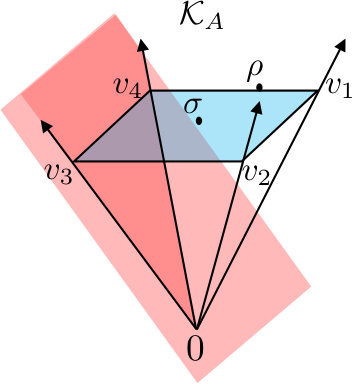 Figure 1
 Figure 2
 Figure 3
Peer Reviews
No public reviews on file for this paper yet. If you reviewed it on a platform where reviews are public (OpenReview, ICLR, NeurIPS, ICML), you can paste yours below so the community can read it here.
Videos
No videos yet. Explain this paper in a talk, walkthrough, or lecture? Add one.
††thanks: These authors contributed equally to this work
Entanglement is necessary for emergent classicality in all physical theories
Jonathan G. Richens
Controlled Quantum Dynamics theory group, Department of Physics, Imperial College London, London SW7 2AZ, UK.
Department of Physics and Astronomy, University College London, Gower Street, London WC1E 6BT, UK.
John H. Selby11footnotemark: 1
Controlled Quantum Dynamics theory group, Department of Physics, Imperial College London, London SW7 2AZ, UK.
University of Oxford, Department of Computer Science, Oxford OX1 3QD, UK.
Sabri W. Al-Safi
School of Science & Technology, Nottingham Trent University, Burton Street, Nottingham NG1 4BU, UK
Abstract
One of the most striking features of quantum theory is the existence of entangled states, responsible for Einstein’s so called “spooky action at a distance”. These states emerge from the mathematical formalism of quantum theory, but to date we do not have a clear idea of the physical principles that give rise to entanglement. Why does nature have entangled states? Would any theory superseding classical theory have entangled states, or is quantum theory special? One important feature of quantum theory is that it has a classical limit, recovering classical theory through the process of decoherence. We show that any theory with a classical limit must contain entangled states, thus establishing entanglement as an inevitable feature of any theory superseding classical theory.
I Introduction
Entanglement and non-locality are two of the features of quantum theory that clash most strongly with our classical preconceptions as to how the universe works. In particular, they create a tension with the other major theory of the twentieth century: relativity einstein1916foundation . This is most clearly illustrated by Bell’s theorem bell1966physics ; wood2015lesson , in which certain entangled states are shown to violate local realism by allowing for correlations that cannot be explained by classical causal structures wood2015lesson . In this paper we ask whether entanglement is a surprising feature of nature, or whether it should be expected in any non-classical theory? Could a scientist with no knowledge of quantum theory have predicted the existence of entangled states based solely on the premise that their classical understanding of the world was incomplete?
Any such scientist could reasonably postulate the existence of a classical regime - in that whatever theory describes reality must be able to behave like classical theory in some limit. Although this is a very natural assumption, given that we frequently observe systems behaving classically, we show that it imparts very strong constraints on the structure of any non-classical theory. Indeed in landau1977quantum , Landau and Lifshitz noted
“Quantum mechanics occupies a very unusual place among physical theories: it contains classical mechanics as a limiting case, yet at the same time it requires this limiting case for its own formulation”
Thus to answer these questions, we explore all theories that have a classical limit zurek2009quantum ; joos2013decoherence . This is formalised in quantum theory by decoherence maps, which take quantum systems to semi-classical states with respect to some basis. Physically, decoherence maps represents a quantum system interacting with some inaccessible environment resulting in the loss of quantum coherences. Inspired by this we develop a generalization of decoherence maps for arbitrary operationally defined theories (see gogioso2017categorical ; selby2017leaks ; lee2017no ; coecke2017twoTEST for a related categorical/process-theoretic approaches.). We consider all theories that can decohere to classical theory and show that any such theory either contains entangled states, or is classical theory. Thus, the existence of these classically counter-intuitive entangled states present in quantum theory can be understood as arising from, and being necessary for, the existence of a classical world. This result hints towards the possibility that other counter-intuitive features of quantum theory could be derived from its accommodation of a classical limit, and paves the way for deriving the features of post-classical and post-quantum theories from the existence of this limit.
The outline of this paper is as follows. In the following section we discuss the framework, describe the minimal characteristics expected of the generalised decoherence map and introduce the class of theories that can exhibit a classical limit through decoherence. In the results section we formally state and outline a proof of our result and in the conclusion section we discuss the physical significance of our result. All technical proofs are given in the corresponding appendices.
II Setup
To begin to pose questions about how different physical features of theories relate we makes use of the generalised probabilistic theories (GPT) framework hardy2001quantum ; barrett2007information ; chiribella2010probabilistic ; hardy2011reformulating ; masanes2006general , which is broad enough to describe any operational description of nature. The framework is based on the idea that any physical theory must be able to predict the outcomes of experiments, and moreover, that the theory should have an operational description in terms of those experiments. This framework is broad enough to describe arbitrary operationally defined theories including but not limited to quantum and classical theory. We provide a brief introduction to the framework and our notation below. For a full introduction to this framework see barrett2007information ; chiribella2011informational .
A primitive notion in this framework is the idea of a system , corresponding for example in quantum theory to an -level quantum system. Such a system can be prepared in a variety of ways and so has an associated set of states . One can perform measurements on the system to determine which state it has been prepared in, and the measurement outcomes are known as effects which are maps determining the probability that outcome is observed given the system was in state . Moreover, there will generally be transformations that can be applied to the system, note that if then and moreover that if then . Transformations are said to be reversible if is also a valid transformation where .
Based on operational ideas we find that these sets of states, effects and transformations have much more structure. Specifically, the state space has the structure of a finite-dimensional convex set. Convexity corresponds to the idea that if one can prepare a system in state or then it should be possible to prepare a probabilistic mixture of these two states, for example, conditioned on the outcome of a biased coin flip. If a state can we written as a convex combination of other states we say that refines (denoted (chiribella2010probabilistic, )). States that cannot be refined by any other states are called pure, otherwise they are called mixed. Not all of the well defined measures of purity in quantum and classical theory will translate to general theories, but there is a sufficient condition for if one state is purer than another that applies to all convex theories. In general, if state can be written as a probabilistic mixture involving , but not vice versa (e.g. , ), then is strictly purer than . Operationally, can be prepared by an experiment that prepares a probabilistic mixture of states including , but the converse is not true for .
Finite dimensionality comes from the requirement that it should be possible to characterise the state of a system by performing only a finite number of distinct experiments. Moreover this state space is typically assumed to be compact and closed. Transformations and effects should respect this convex structure, for example, probabilistically preparing state or followed by applying some transformation should be operationally equivalent to probabilistically preparing state or . This implies that transformations and effects should be linear maps 111or can at least with out loss of generality be extended to.
It is typically useful not to only consider the physical states of the system, but also, to consider sub- and super-normalised states. This extends the state space from a convex set in a -dimensional vector space to a convex cone living in a dimensional vector space. The state space is recovered by enforcing normalization via the deterministic effect . That is that states are normalised, and thus belongs to in , if , sub-normalised if and supernormalised otherwise. Effects now extend to linear maps and transformations extend to linear maps on the cone. Reversible transformations therefore must be automorphisms of the cone that preserve the normalised state space. Beyond these minimal assumptions, we place no further constraints on the state space which can take the form of arbitrary convex sets (see the supplementary materials for examples). In the statement of our results we use the notion of the faces of a convex set. These are defined in the supplementary materials but can be understood intuitively as the convex subsets that form the boundary of the convex set. For example, for the three dimensional cube the faces are the squares, edges and vertices on the boundary of the cube.
The above is best illustrate with examples, the key examples here being quantum theory and classical probability theory. Given an -level quantum system the convex cone is given by the set of positive semi-definite Hermitian matrices and the deterministic effect by the trace, such that normalised states are density matrices. Given an -level classical system the convex cone is given by real vectors with non-negative entries and the deterministic effect by the covector with all entries such that normalised states correspond to probability distributions over an element set. Effects are then linear functionals on these cones in quantum theory corresponding to POVM elements and in classical theory to covectors with elements . Transformations are then linear maps between these cones, in quantum theory corresponding to CP maps and in classical theory to sub-stochastic matrices. Reversible transformations are then cone-automorphisms that preserve the normalised states; in quantum theory these will be unitary transformations and in classical theory permutations of the underlying set.
There is a final key aspect of a theory that we are yet to discuss, and that is how to form composite systems. Given two systems and with their associated state spaces/cones, effects and transformations, there should be a way to form a composite system, denoted . Note that here we use the symbol to denote the construction of a bipartite system, which need not be related to the vector space tensor product 222Under the assumption of Local Tomography hardy2001quantum the vector spaces containing the cones will indeed compose under the standard vector space tensor product, but, there is still freedom to choose how the bipartite cone within this composite vector space barrett2007information .. There are various operational constraints on this product barrett2007information , for example, that if one can prepare system in state and in state then there should be a state, denoted which represents independently preparing the two systems in these two states. Similar statements and constraints can be made for the effects and transformations of the theory. These operational constraints however do not uniquely specify a way to form composite systems, as generally composite systems allow for more than just doing things on each system independently. Given local state spaces and there are therefore many different possible composite systems that could be formed (see for example barrett2007information ). An important feature of these composites is whether or not the bipartite state spaces exhibit entanglement, which we now define.
Definition 1* (Entanglement).*
A state belonging to the bipartite state space is entangled iff it cannot be written in the following form
[TABLE]
where , , i.e. a state is entangled if it cannot be seen as the convex combination of product states.
In this paper we will show that entangled states are a feature of any non-classical theory which can decohere to classical theory. We prove this by showing that any theory without entanglement that decoheres to classical theory must be classical theory itself. As such, we need a way to define classical theory and theories without entanglement. Constraining a theory to have no entanglement is equivalent to fixing a particular choice of tensor product for the theory, that is, the min-tensor product barrett2007information . Therefore rather than defining the general requirements of a tensor product we will just consider this particular case.
Definition 2* (Min-tensor product ).*
The min-tensor product for combining systems and is defined by:
[TABLE]
[TABLE]
where here is the vector space tensor product.
Note that as classical theory exhibits no entanglement, system compose under the minimal tensor product, . We can now define theories without entanglement and classical theory.
Definition 3* (Generalised probabilistic theory without entanglement).*
A GPT without entanglement is defined by a collection of systems , their associated effects , and transformations between them , and, the composite of systems and is given by the min-tensor product, .
Definition 4* (Classical probabilistic theory).*
An -level classical system, denoted has a state space which is an vertex simplex. These compose under the min-tensor product and satisfy:
[TABLE]
Reversible transformations correspond to permutations of the vertices of the simplex. Effects are any linear functional .
An interesting feature of classical and quantum theory is that they obey the no-restriction hypothesis chiribella2010probabilistic ; janotta2013generalized , which states all mathematically well defined effects are allowed in the theory and can be experimentally realised. We do not make this assumption when considering theories that can decohere to classical theory. Finally we must define and characterise the generalised decoherence-to-classical map, which we discuss in the following section.
III Decoherence
It is physically well motivated to postulate that, in any reasonable theory of nature, be it quantum or post-quantum, systems must be able to behave classically. Indeed the GPT framework is fundamentally built on the assumption that we have a classical interface with the world. We can choose, potentially using classical randomness, which experiment to perform, and we can characterise states, effects and transformations in terms of classical probability distributions that we obtain from experiments. However, ultimately this classical interface should be explainable from the theory itself rather than just being an external structure. This is indeed the case in quantum theory, where we can view the classical interface as an effective description of decohered quantum systems. It therefore seems like any well-founded GPT should have an analogous decoherence mechanism so as to explain how it gives rise to the classical interface. We now consider the key features of quantum to classical decoherence which we then take to define decoherence for GPTs. See gogioso2017categorical ; coecke2017twoTEST ; selby2017leaks for closely related approaches to decoherence in generalised theories.
For each quantum system there is a decoherence map and classical system with state space where the decoherence map is given by . This map has the following key properties:
Definition 5* (Decoherence maps).*
Purely decoherence maps, in quantum and general theories, obey the following properties
Physicality: the decoherence map is a physical map, typically considered to be arising from an interaction with some environmental system that is then discarded, and hence must satisfy all of the constraints on transformations in a GPT. In particular, it must be linear and map states to states.
- 2.
Idempotence: in quantum theory the decoherence map destroys the coherences between the basis states, and so applying it a second time does nothing to the state. In general, the decoherence map should restrict the state space to a classical subspace which is invariant under repeat applications. Therefore, applying it twice is the same as applying it once and .
- 3.
Purity-decreasing: the decoherence map arises from losing information to an environment and as such it cannot increase our knowledge of the input state. Therefore cannot be strictly purer than for any input state . For example in quantum theory a decoherence map will not map mixed states to pure states. In general a state is strictly purer than state if and . Therefore if , then , else is strictly purer that .
In general this map could decohere to any sub-theory. However, we are interested in particular with decoherence maps that take systems to classical systems.
Definition 6* (Decoherence to classical theory).*
A theory decoheres to classical theory if it has a decoherence map (Definition 5) for each system which obey the following
State space: the most obvious constraint is that image of the decoherence map is a classical state space:
[TABLE]
However, we don’t just want to reproduce the states of classical theory, but the full theory including its dynamical and probabilistic structure.
- 2.
Effect space: classical effects should also arise from the original theory. That is, that for every effect in classical theory there is some effect in the full theory that behaves as the classical effect when we restrict to . This can be formalised as for all there exists such that
[TABLE]
- 3.
(Reversible) Transformations: similarly for (reversible) transformations we expect for any classical (reversible) transformation there is a corresponding post-classical (reversible) transformation with the same action on the image of . This can be formalised as for all classical reversible transformations there exists some reversible such that
[TABLE]
- 4.
Composites: finally, we expect decoherence to act suitably with composition, i.e. if system decoheres to via and system to via , then the composite system can decohere to via .
To give an example consider quantum theory for qubits, which decohere to classical theory for bits by applying the standard dephasing map in (for example) the computational basis . Measurements in the computational basis provide the classical measurements, utilising the quantum effects and . Two qubits can decohere independently to classical bits, which can then interact and all permutations of composite bits can be achieved by the classical c-not and bit flip operations, which are provided by the quantum c-not unitary and the Pauli-X unitary. Also note that the dephasing map obeys all conditions in Definition 5.
IV Results
We are now in a position to prove our main result. If a theory can decohere to classical theory and does not have entanglement, then the original systems must be composites including a classical system, , and the decoherence map simply discards any non-classical subsystems. More succinctly,
*Theories with non-trivial decoherence
must have entangled states.
The proof of this is provided in the appendix along with all necessary mathematical definitions and background to understand the proof. However, we will also provide an outline of the proof here. We first show – by considering the consequences of decoherence for single systems – that the state space has the following geometric properties
Result 1: If where obeys Definitions 5 and 6 then the state space has the following properties
is the minimal face of a set of faces that are isomorphic , disjoint (share no states) and are exposed
- 2.
each face decoheres uniquely to a pure classical state , .
We then consider the consequences of decoherence on composite systems. Essentially, as the resulting classical systems must be able to interact under classical dynamics we deduce the following additional constraints
Result 2: If where obeys Definitions 5 and 6 and which enjoys the full set of classical dynamics in Definition 4, then
The classical faces are linearly independent,
- 2.
is the convex hull of these classical faces
Given these constraints on the state space it is then simple to show that it is a composite of a classical state space with a state space isomorphic to these faces, and the decoherence map simply discards the non-classical subsystem
Result 3: *For any theory that decoheres to classical theory as per Definitions 5 and 6, and whose composition rule is given by the minimal tensor product , all state spaces are of the form *
[TABLE]
*and the decoherence map is of the form *
[TABLE]
where is the discarding effect and is some fixed internal state of . E.g. decoherence of non-classical systems comprises of discarding them.
Therefore, if we restrict ourselves to considering non-classical theories, the only decoherence-to-classical map possible is the trivial map where we discard our non-classical systems. For example, in quantum theory this would correspond to all quantum systems regardless of their state or dimension decohereing to the zero-dimensional classical state, and the resulting classical theory being trivial.
V Discussion
In this article we have shown that if a theory has a non-trivial decoherence mechanism, such that decoherence isn’t simply discarding the system, then the theory must have entangled states. It therefore seems that entanglement, rather than being a surprising feature of nature, is an entirely inevitable feature of any post-classical theory. A natural question to ask is what other features of quantum theory can be reproduced simply by demanding that the theory has a classical limit?
There are myriad other physical features that could be implied from the existence of a classical limit such as information causality pawlowski2009information , bit symmetry muller2012structure and macroscopic locality navascues2009glance to name but a few. Of particular interest would be deriving genuine device-independent non-locality. The existence of entangled states is in general a necessary but insufficient condition for observing violations of Bell inequalities. For example, non-separable states are present in the local theory of Spekken’s toy model spekkens2007evidence . On the other hand, it has been shown that all entangled states in quantum theory display some hidden non-locality buscemi2012all ; masanes2008all . By determining the additional structure present in quantum theory that gives this correspondence between entanglement and non-locality, it could be possible to derive the violation of Bell inequalities from purely physical postulates. Given the simplicity of the postulates used to derive the existence of entangled states, it is plausible that the postulates that give rise to Bell non-locality are similarly mundane.
This notion of decoherence has allowed us to define an interesting class of GPTs – those with a classical limit 333Theories with a classical limit also have been considered in earlier work within the closely related frameworks of Categorical Probabilistic Theories gogioso2017categorical and process-theories selby2017leaks ; coecke2017twoTEST .. There is clear physical motivation to consider this class. For example, if a theory were not to have such a limit then one would have to posit the existence of two fundamentally distinct types of systems, the classical systems (which are how we interact with the world) along with post-classical systems (which we cannot directly probe). Such a fundamental distinction appears unnatural, and so it seems that decoherence is a necessary feature of any sensible operational theory. However, whilst being a physically well-motivated class, it nonetheless provides a great deal of mathematical structure and as such gives a more powerful framework for studying generalised theories.
Acknowledgments: The authors would like to thank the reviewers for this paper whose insightful criticism led to the development of the ideas presented in this current version. Additionally, the authors would like to thank Lluís Masanes and Ciarán Lee for useful discussion and Fabio Costa and Magdalena Zych for pointing out a flaw in the proof in the previous version of this paper. JR and JHS are supported by EPSRC through the Controlled Quantum Dynamics Centre for Doctoral Training.
Appendix A Mathematical background
As mentioned in the main body, we associate each system with a state space which is defined as a finite dimensional compact closed convex set. That is to say, a closed and bounded set of vectors in a real, finite-dimensional vector space such that if and are inside the set then for , is also in the set.
It will often be useful to work with the convex pointed cone generated by convex set , for which we use the standard definition [1], for a more detailed background on convex sets and cones see e.g. [25].
Definition 7*.*
is the cone generated by a convex set , defined as:
[TABLE]
An important feature of convex sets is that they have a partial ordering in terms of refinements [5].
Definition 8*.*
We say that a state refines a state , denoted , if there is some convex decomposition of that includes , more formally,
[TABLE]
Operationally this means that is ‘less pure’ than as it can be written as a probabilistic mixture which includes the state . This partial ordering on states allows us to define another important concept, that is, faces of the state space.
Definition 9*.*
A face is a subset of the state space which is closed under refinements, that is, if a state refines a state in the face then it must also be in the faces, formally:
[TABLE]
The 0 dimensional faces are referred to as vertexes, denoted , and correspond to pure states. Faces inherit an partial ordering from the ordering of states, that is, . This ordering can be shown to have the structure of a lattice. Importantly, this means that the set of faces have two binary operations, and . corresponds to the intersection of and whilst is the minimal face that contains the faces and . Furthermore, faces are exposed iff there is a supporting hyperplane that intersects the convex set at the face only, otherwise the face is not exposed.
Given two systems and there are two constructions of composite state cones which are important for the derivation of our results.
Definition 10*.*
Minimal tensor product, :
[TABLE]
where is the vector space tensor product such that .
Definition 11*.*
Direct sum, :
[TABLE]
where on the RHS is the vector space direct sum such that .
There is an important relation between these two constructions, namely that distributes over .
Lemma 1*.*
The min-tensor distributes over the direct sum .
Proof.
Consider three state spaces , and . We want to show that,
[TABLE]
This follows immediately from writing out both sides using the definitions of and , using distributivity of the direct sum and tensor product on the individual vectors, and noting that . ∎
We can characterise whether a state space is decomposable over the direct sum by observing certain properties of the cone.
Definition 12*.*
A state space is decomposable if and only if there are a pair of faces such that: i) the state space is the convex hull of the two faces, ; ii) the faces are linearly independent, .
Lemma 2*.*
i.e. faces are mapped to isomorphic faces.
Proof.
Consider some then is a face if for any decomposition, , are also in the set . Note that for some and as is reversible, this means that which by linearity of implies that . This provides a decomposition of and as is a face this means that and so are both in . Therefore is a face. It is clearly isomorphic to as provides the isomorphism. ∎
Lemma 3*.*
A reversible transformation on induces an automorphism of the face lattice .
Proof.
Lemma 2 shows that faces are mapped to faces, then reversibility of implies that this mapping of faces must be 1 to 1 and hence induces a lattice automorphism.∎
An immediate corollary of this is that:
Corollary 1*.*
A.1 Single system consequences of decoherence
We begin by considering a state space with a decoherence map such that . We label the vertices of this classical state space as for .
Lemma 4*.*
Every classical pure state is contained in a face that is the refining set of .
Proof.
A face is defined as a subset of the convex set such that if and then . It is simple to show that a refining set satisfies this property. ∎
Lemma 5*.*
Every state in decoheres to and every state that decoheres to is in : .
Proof.
Consider some state , this means that is in the refining set of that is, and where . Then linearity and idempotence of , and therefore . However is, by definition, a vertex of the image of which implies that . Conversely, assume that , and for the sake of contradiction assume that which implies that . Define a state . Clearly but . However and therefore , . Thus is strictly purer that violating the purity-decreasing postulate 3 of Definition 5. ∎
Lemma 6*.*
The corresponding to distinct pure classical states are disjoint: .
Proof.
By Lem. 5 we know that and so is contained within the preimage of . Hence, if the and are distinct then their preimages are disjoint and so . ∎
Lemma 7*.*
The are all isomorphic: .
Proof.
In classical theory there is a reversible transformation , hence, by Postulate 3 of Definition 6 there is a reversible transformation in the post-classical theory . As is linear it must map the refining set of into the refining set of and, as is reversible this defines an isomorphism between and . ∎
Lemma 8*.*
The are exposed faces: there is a linear functional such that and .
Proof.
In classical theory we have effects (i.e. linear functionals that are non-negative on the cone) such that and . By Postulate 2 of Definition 6 these arise from the post-classical theory as and so by idempotence of decoherence we have . Therefore, and . ∎
Lemma 9*.*
The faces are all exposed faces.
Proof.
First note that Lem. 4 implies that the refinement set of any state is a face. Moreover, note that if a state belongs to a face, then the refinement set of that state is a subset of that face. Also note that we always have . Which, as , implies that . Hence the refinement set of , denoted satisfies . However, it is also the case that for all we have hence – by minimality of and the fact that the refinement set is a face – we must have . Combining these gives us that
[TABLE]
Now we can consider a generalisation of Lem. 5. It is simple to see that , from idempotence of and the fact that . We then want to show that
[TABLE]
Assume the converse for the sake of contradiction, that is, there is a state such that . We can then define a state such that but as and it is clear that . Now note that so combining these we find that but which contradicts the purity-decreasing postulate 3 of Definition 5. Therefore it must be that .
Finally to complete this proof we generalise Lem. 8. We can consider the classical effect defined such that . And note that this must arise from an effect in the full theory as . It is then simple to see, from idempotence of , that which means that and so, by the above result, . This concludes the proof as is an effect that exposes the face . ∎
Lemma 10*.*
The minimal face that contains is the entire state space: .
Proof.
Consider some state in the interior of the state space i.e. . This means that every other state refines , i.e. . Now consider , and note that if a state is refined by an interior state then it too is an interior state. Therefore, for to not be an interior state it must be that but , this therefore violates the purity-decreasing Postulate 3 of Definition 5. Therefore, must also be an interior state. As is interior to then the minimal face that contains must be the entire state space. ∎
Result 1*.*
To summarise we have, from considering decoherence for single systems found the following properties of a state space that decoheres via to .
Every classical pure state is contained in a face that is its refining set . 2. 2.
These faces decohere to their associated pure classical state and any state that decoheres to the classical state is in the face: . 3. 3.
The faces corresponding to distinct classical pure states are disjoint: . 4. 4.
These faces are all isomorphic: . 5. 5.
These faces are ‘exposed’: there exists an effect such that . 6. 6.
The minimal face containing all of these is the whole state space:
A.2 Bipartite system consequences of decoherence
Now let us turn our attention to bipartite systems, in particular, let us consider the bipartite state space which decoheres via to . For example, one can consider these two state spaces decohereing independently and then being brought together.
Lemma 11*.*
The refining set for is .
Proof.
In the minimal tensor product a generic state can be written as . Therefore, if then by considering the two marginals by applying and (i.e discarding each of the sub-systems in turn) we get that and , and so and hence the refining set for is just . ∎
Lemma 12*.*
There exists a reversible transformation such that
[TABLE]
Proof.
For a classical bipartite system there is a reversible transformation achieving the permutation of classical states
[TABLE]
therefore by Postulate 3 of Definition 6 there must be a reversible transformation which has the same action as on the image of . By the same argument as in the proof of Lem. 7 this must extend to the relevent refining sets as given by Lem. 11, hence taking we obtain our result. ∎
Lemma 13*.*
The minimal face containing a set of faces is the convex hull of these faces,
Proof.
We prove this result via induction, the case is trivial as it simply states that . Now for the induction, assume that then Lem. 9 implies this face is exposed, we denote the effect that exposes the face as , and note that this means that . Now define the effect
[TABLE]
and note that . Hence, is a face and so we have
[TABLE]
Now consider the transformation such that,
[TABLE]
which exists by Lem. 12. Therefore we have
[TABLE]
Hence we have
[TABLE]
as we required. ∎
Lemma 14*.*
If the spans of and are equal then they must be the same face: .
Proof.
Firstly note that as the dimension of the spans are the same, hence this is equivalent to the statement that
[TABLE]
The direction is trivial so we focus on the direction. Consider some state , by assumption we have and so where and . Therefore and so . This is true for any state of and an identical proof holds with and swapped, therefore . ∎
Lemma 15*.*
Proof.
First note that given vector spaces and with subspaces and that
[TABLE]
(see for example Lemma 1.4.5 of [8]). Now consider the transformation from Lem. 12.
[TABLE]
Define , and . As is a linear reversible transformation it preserves the intersection of these subspaces. Equating the intersection of the subspaces in the pre-image and the image under gives
[TABLE]
This can only be satisfied if or . The first case is ruled out by Lemma 14 whereas the second case implies that as we require. ∎
Result 2*.*
To summarise, from considering decoherence for bipartite systems which decohere via to we have derived the following properties of the theory.
The classical faces in Result 1 have linearly independent spans 2. 2.
The minimal face containing a set of faces is just the convex hull of these faces,
A.3 Proof of main theorem
We can now combine Results 1 & 2 to prove the main theorem, restated here for convenience:
Theorem 1: If a theory decoheres to classical theory (Def. 6) then each state space – which decoheres via to – is of the form and the decoherence map is , where is some fixed state of the system and is the discarding map for the system.
Proof.
Given the previous results we have shown that the state space can be written as where the are linearly independent. Moreover, . The conjunction of these conditions implies that the cone generated by decomposes into the direct sum [1]
[TABLE]
Moreover, as the are all isomorphic we can define . Consider the state space
[TABLE]
Using where is a zero-dimensional face, and distributivity of over (Lemma 1) we can write
[TABLE]
Finally, as is zero dimensional, and therefore
[TABLE]
That is, is just the composite of some possibly non-classical state space with a classical state space where the state of labels which state a state decoheres to. Therefore, the output state of the decoherence process depends only on the state of the classical component. Hence, can be written in the required form,
[TABLE]
where is the discarding effect and is some fixed state of . ∎
The reference list from the paper itself. Each links out to its DOI / PubMed record.
- 1[1] George Phillip Barker. Theory of cones. Linear Algebra and its Applications , 39:263–291, 1981.
- 2[2] Jonathan Barrett. Information processing in generalized probabilistic theories. Physical Review A , 75(3):032304, 2007.
- 3[3] John S Bell. Physics 1, 195 (1964). Rev. Mod. Phys , 38:447, 1966.
- 4[4] Francesco Buscemi. All entangled quantum states are nonlocal. Physical review letters , 108(20):200401, 2012.
- 5[5] Giulio Chiribella, Giacomo Mauro D’Ariano, and Paolo Perinotti. Probabilistic theories with purification. Physical Review A , 81(6):062348, 2010.
- 6[6] Giulio Chiribella, Giacomo Mauro D’Ariano, and Paolo Perinotti. Informational derivation of quantum theory. Physical Review A , 84(1):012311, 2011.
- 7[7] Bob Coecke, John Selby, and Sean Tull. Two roads to classicality. In Bob Coecke and Aleks Kissinger, editors, Proceedings 14th International Conference on Quantum Physics and Logic, Nijmegen, The Netherlands, 3-7 July 2017, volume 266 of Electronic Proceedings in Theoretical Computer Science , pages 104–118. Open Publishing Association, 2018.
- 8[8] Sorin Dascalescu, Constantin Nastasescu, and Serban Raianu. Hopf algebra: An introduction . CRC Press, 2000.