
TL;DR
This paper surveys recent advances in combinatorial Hodge theory, including proofs of the Rota-Welsh conjecture, by translating algebraic geometry concepts into combinatorial frameworks.
Contribution
It reviews the combinatorial proof of the Rota-Welsh conjecture, extending Hodge theory techniques beyond algebraic geometry to matroids.
Findings
Proof of the Rota-Welsh conjecture using combinatorial methods
Establishment of combinatorial analogues of Hard Lefschetz and Hodge-Riemann relations
Development of inductive combinatorial proofs for key geometric principles
Abstract
George Birkhoff proved in 1912 that the number of proper colorings of a finite graph G with n colors is a polynomial in n, called the chromatic polynomial of G. Read conjectured in 1968 that for any graph G, the sequence of absolute values of coefficients of the chromatic polynomial is unimodal: it goes up, hits a peak, and then goes down. Read's conjecture was proved by June Huh in a 2012 paper making heavy use of methods from algebraic geometry. Huh's result was subsequently refined and generalized by Huh and Katz, again using substantial doses of algebraic geometry. Both papers in fact establish log-concavity of the coefficients, which is stronger than unimodality. The breakthroughs of Huh and Huh-Katz left open the more general Rota-Welsh conjecture where graphs are generalized to (not necessarily representable) matroids and the chromatic polynomial of a graph is replaced by the…
Click any figure to enlarge with its caption.
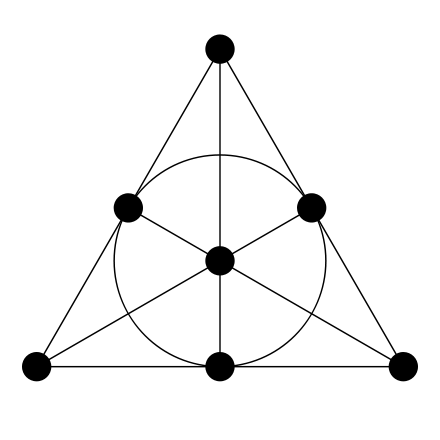 Figure 1
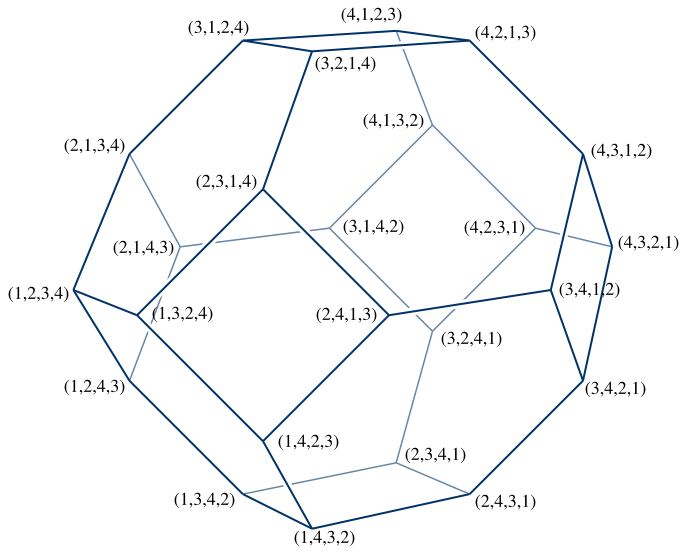 Figure 2
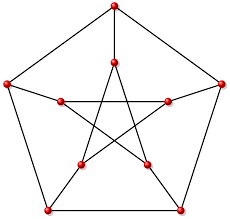 Figure 3
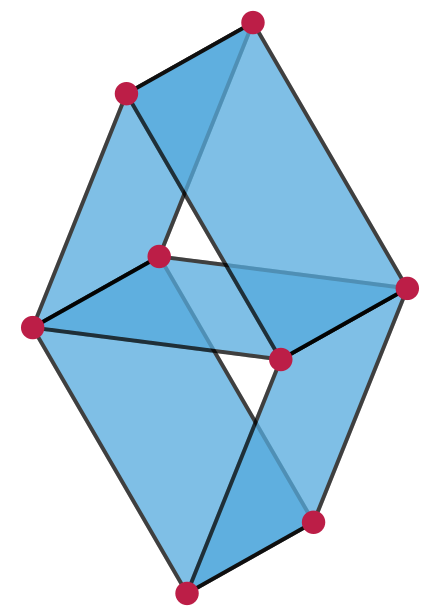 Figure 4
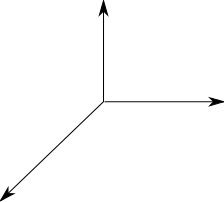 Figure 5
Peer Reviews
No public reviews on file for this paper yet. If you reviewed it on a platform where reviews are public (OpenReview, ICLR, NeurIPS, ICML), you can paste yours below so the community can read it here.
Videos
No videos yet. Explain this paper in a talk, walkthrough, or lecture? Add one.
Hodge Theory in Combinatorics
Matthew Baker
School of Mathematics, Georgia Institute of Technology, Atlanta GA 30332-0160, USA
Abstract.
If is a finite graph, a proper coloring of is a way to color the vertices of the graph using colors so that no two vertices connected by an edge have the same color. (The celebrated four-color theorem asserts that if is planar then there is at least one proper coloring of with 4 colors.) By a classical result of Birkhoff, the number of proper colorings of with colors is a polynomial in , called the chromatic polynomial of . Read conjectured in 1968 that for any graph , the sequence of absolute values of coefficients of the chromatic polynomial is unimodal: it goes up, hits a peak, and then goes down. Read’s conjecture was proved by June Huh in a 2012 paper [17] making heavy use of methods from algebraic geometry. Huh’s result was subsequently refined and generalized by Huh and Katz [18], again using substantial doses of algebraic geometry. Both papers in fact establish log-concavity of the coefficients, which is stronger than unimodality.
The breakthroughs of Huh and Huh–Katz left open the more general Rota–Welsh conjecture where graphs are generalized to (not necessarily representable) matroids and the chromatic polynomial of a graph is replaced by the characteristic polynomial of a matroid. The Huh and Huh–Katz techniques are not applicable in this level of generality, since there is no underlying algebraic geometry to which to relate the problem. But in 2015 Adiprasito, Huh, and Katz [1] announced a proof of the Rota–Welsh conjecture based on a novel approach motivated by but not making use of any results from algebraic geometry. The authors first prove that the Rota–Welsh conjecture would follow from combinatorial analogues of the Hard Lefschetz Theorem and Hodge-Riemann relations in algebraic geometry. They then implement an elaborate inductive procedure to prove the combinatorial Hard Lefschetz Theorem and Hodge-Riemann relations using purely combinatorial arguments.
We will survey these developments.
2010 Mathematics Subject Classification:
05B35,58A14
The author’s research was supported by the National Science Foundation research grant DMS-1529573. We thank Karim Adiprasito, Eric Katz, and June Huh for numerous helpful discussions and corrections, and Bruce Sagan for additional useful proofreading.
1. Unimodality and Log-Concavity
A sequence of real numbers is called unimodal if there is an index such that
[TABLE]
There are numerous naturally-occurring unimodal sequences in algebra, combinatorics, and geometry. For example:
Example 1.1**.**
(Binomial coefficients) The sequence of binomial coefficients for fixed and (the row of Pascal’s triangle) is unimodal.
The sequence has a property which is in fact stronger than unimodality: it is log-concave, meaning that for all . Indeed,
[TABLE]
It is a simple exercise to prove that a log-concave sequence of positive numbers is unimodal.
Some less trivial, but still classical and elementary, examples of log-concave (and hence unimodal) sequences are the Stirling numbers of the first and second kind.
Example 1.2**.**
(Stirling numbers) The Stirling numbers of the first kind, denoted , are the coefficients which appear when one writes falling factorials as polynomials in :
[TABLE]
This sequence of integers alternates in sign. The signless Stirling numbers of the first kind enumerate the number of permutations of elements having exactly disjoint cycles.
The Stirling numbers of the second kind, denoted , invert the Stirling numbers of the first kind in the sense that
[TABLE]
Their combinatorial interpretation is that counts the number of ways to partition an element set into non-empty subsets.
For fixed (with varying from [math] to ), both and are log-concave and hence unimodal.
Another example, proved much more recently through a decidedly less elementary proof, concerns the sequence of coefficients of the chromatic polynomial of a graph. This example will be the main focus of our paper.
Example 1.3**.**
(Coefficients of the chromatic polynomial) Let be a finite graph111We allow loops and parallel edges.. In 1912, George Birkhoff defined to be the number of proper colorings of using colors (i.e., the number of functions such that whenever and are adjacent in ), and proved that is a polynomial in , called the chromatic polynomial of .
For example,222Looking at the analogy between the formulas and , and between and , it may be reasonable to think of as a “binomial coefficient of the first kind” and of the usual binomial coefficients as being of the “second kind”. This fits in neatly with the “inversion formulas” and . if is a tree on vertices then the chromatic polynomial of is
[TABLE]
If is the complete graph on vertices, then
[TABLE]
And if is the Petersen graph, depicted in Figure 1, then
[TABLE]
Ronald Reed conjectured in 1968 that for any graph the (absolute values of the) coefficients of form a unimodal sequence, and a few years letter Stuart Hoggar conjectured that the coefficients in fact form a log-concave sequence333Log-concavity implies unimodality for the coefficients of by the theorem of Rota mentioned at the end of §3.2.. Both conjectures were proved only relatively recently by June Huh [17].
Another interesting and relevant example concerns linearly independent sets of vectors:
Example 1.4**.**
Let be a field, let be a vector space over , and let be a finite subset of . Dominic Welsh conjectured that is a log-concave sequence, where is the number of linearly independent subsets of of size . For example, if is the field of elements, , and , then
[TABLE]
This conjecture is a consequence of the recent work of Huh–Katz [18] (cf. [21]).
Finally, we mention an example of an apparently much different nature coming from algebraic geometry:
Example 1.5**.**
(Hard Lefschetz Theorem) Let be an irreducible smooth projective algebraic variety of dimension over the field of complex numbers, and let be the * Betti number* of . (Here denotes the singular cohomology groups of .) Then the two sequences and are symmetric and unimodal. Moreover, this remains true if we replace the hypothesis that is smooth by the weaker hypothesis that has only finite quotient singularities, meaning that looks locally (in the analytic topology) like the quotient of by a finite group of linear transformations.
The symmetry of the ’s is a classical result in topology known as Poincaré duality. And one has the following important strengthening (given symmetry) of unimodality: there is an element such that for , multiplication by defines an isomorphism from to . This result is called the Hard Lefschetz Theorem. In the smooth case, it is due to Hodge; for varieties with finite quotient singularities, it is due to Saito and uses the theory of perverse sheaves.
For varieties with arbitrary singularities, the Hard Lefschetz Theorem still holds if one replaces singular cohomology by the intersection cohomology of Goresky and MacPherson (cf. [10]).
Surprisingly, all five of the above examples are in fact related. We have already seen that Example 1.1, as well as Example 1.2 in the case of Stirling numbers of the first kind, are special cases of Example 1.3. We will see in the next section that Examples 1.3 and 1.4 both follow from a more general result concerning matroids. And the proof of this theorem about matroids will involve, as one of its key ingredients, a combinatorial analogue of the Hard Lefschetz Theorem (as well as the Hodge-Riemann relations, about which we will say more later).
2. Matroids
Our primary references for this section are [25] and [27].
2.1. Independence axioms
Matroids were introduced by Hassler Whitney as a combinatorial abstraction of the notion of linear independence of vectors. There are many different (“cryptomorphic”) ways to present the axioms for matroids, all of which turn out to be non-obviously equivalent to one another. For example, instead of using linear independence one can also define matroids by abstracting the notion of span. We will give a brief utilitarian introduction to matroids, starting with the independence axioms.
Definition 2.1**.**
(Independence Axioms) A matroid is a finite set together with a collection of subsets of , called the independent sets of the matroid, such that:
- (I1)
The empty set is independent.
- (I2)
Every subset of an independent set is independent.
- (I3)
If are independent sets with , then there exists such that is independent.
2.2. Examples
Example 2.2**.**
(Linear matroids) Let be a vector space over a field , and let be a finite subset of . Define to be the collection of linearly independent subsets of . Then satisfies (I1)-(I3) and therefore defines a matroid. Slightly more generally (because we allow repetitions), if and A is an matrix with entries in , a subset of is called independent iff the corresponding columns of are linearly independent over . We denote this matroid by . A matroid of the form for some is called representable over .
By a recent theorem of Peter Nelson [23], asymptotically 100% of all matroids are not representable over any field.
Example 2.3**.**
(Graphic matroids) Let be a finite graph, let be the set of edges of , and let be the collection of all subsets of which do not contain a cycle. Then satisfies (I1)-(I3) and hence defines a matroid . The matroid is regular, meaning that it is representable over every field . By a theorem of Whitney, if is 3-connected (meaning that remains connected after removing any two vertices) then determines the isomorphism class of .
Example 2.4**.**
(Uniform matroids) Let and let be a positive integer. The uniform matroid is the matroid on whose independent sets are the subsets of of cardinality at most . For each there exists such that is representable over every field having at least elements.
Example 2.5**.**
(Fano matroid) Let be the projective plane over the 2-element field; the seven elements of can be identified with the dots in Figure 2.
Define to be the collection of subsets of of size at most 3 which are not one of the 7 lines in (depicted as six straight lines and a circle in Figure 2). Then satisfies (I1)-(I3) and determines a matroid called the Fano matroid. This matroid is representable over but not over any field of characteristic different from 2. In particular, the Fano matroid is not graphic.
Example 2.6**.**
(Vamos matroid) Let be the 8 vertices of the cuboid shown in Figure 3. Define to be the collection of subsets of of size at most 4 which are not one of the five square faces in the picture. Then satisfies (I1)-(I3) and determines a matroid called the Vamos matroid which is not representable over any field.
2.3. Circuits, bases, and rank functions
A subset of which is not independent is called dependent. A minimal dependent set is called a circuit, and a maximal independent set is called a basis. As in linear algebra, all bases of have the same cardinality; this number is called the rank of the matroid , and is denoted . More generally, if is a subset of , we define the rank of , denoted or just , to be the maximal size of an independent subset of .
One can give cryptomorphic axiomatizations of matroids in terms of circuits, bases, and rank functions. For the sake of brevity we refer the interested reader to [25].
2.4. Duality
If is a matroid, let be the collection of subsets such that contains a basis for . It turns out that satisfies axioms (I1),(I2), and (I3) and thus is a matroid, called the dual matroid of .
If is the matroid associated to a planar graph , then is the matroid associated to the planar dual of . A theorem of Whitney asserts, conversely, that if is a connected graph for which the dual matroid is graphic, then is planar.
2.5. Deletion and Contraction
Given a matroid on and , we write for the matroid on whose independent sets are the independent sets of not containing .
We write for the matroid on such that is independent in if and only if with independent in and .
We call these operations on matroids deletion and contraction, respectively. Deletion and contraction are dual operations, in the sense that and .
If is a graphic matroid, deletion and contraction correspond to the usual notions in graph theory.
2.6. Spans
We defined matroids in terms of independent sets, which abstract the notion of linear independence. We now focus on a different way to define / characterize matroids in terms of closure operators, which abstract the notion of span in linear algebra.
Let denote the power set of .
Definition 2.7**.**
(Span Axioms) A matroid is a finite set together with a function such that for all and :
- (S1)
.
- (S2)
If then .
- (S3)
.
- (S4)
If but , then .
For example, if is a linear matroid as in Example 2.2 then is just the span of in .
The exchange axiom (S4) captures our intuition of a “geometry” as a collection of incidence relations
[TABLE]
For example, if is a line in an -dimensional projective space over a field and , then lies in the span of lies in the span of are coplanar.
The relation between Definitions 2.1 and 2.7 is simple to describe: given a matroid in the sense of Definition 2.1, we define to be the set of all such that . Conversely, given a matroid in the sense of Definition 2.7, we define a subset of to be independent if and only if implies .
A subset of is said to span if . As in the familiar case of linear algebra, one can show in general that is a basis (i.e., a maximal independent set) if and only if is independent and spans .
2.7. Flats
A subset of is called a flat (or a closed subset) if .
Example 2.8**.**
(Linear matroids) Let be a vector space and let be a finite subset of . A subset of is a flat of the corresponding linear matroid if and only if there is no vector in contained in the linear span of .
Alternatively, let be represented by an matrix of rank with entries in , and let be the row space of . Let , and for let be the “coordinate flat”
[TABLE]
Then for we have , and is a flat of if and only if for all . In particular, , where is the smallest flat of containing .
Example 2.9**.**
(Graphic matroids) Let be a connected finite graph, and let be the associated matroid. Then a subset of is a flat of if and only if there is no edge in whose endpoints are connected by a path in .
Example 2.10**.**
(Fano matroid) In the Fano matroid, the flats are , and each of the 7 points and 7 lines in Figure 2.
Every maximal chain of flats of a matroid has the same length, which coincides with the rank of .
One can give a cryptomorphic axiomatization of matroids in terms of flats. To state it, we say that a flat covers a flat if and there are no intermediate flats between and .
Definition 2.11**.**
(Flat Axioms) A matroid is a finite set together with a collection of subsets of , called flats, such that:444For the geometric intuition behind axiom (F3), note that given a line in , the planes which contain this line (minus the line itself) partition the remainder of .
- (F1)
is a flat.
- (F2)
The intersection of two flats is a flat.
- (F3)
If is a flat and is the set of flats that cover , then partitions .
We have already seen how to define flats in terms of a closure operator. To go the other way, one defines the closure of a set to be the intersection of all flats containing .
2.8. Simple matroids
A matroid is called simple if every dependent set has size at least . Equivalently, a matroid is simple if and only if it has no:
- •
Loops (elements ); or
- •
Parallel elements555The terms “loop” and “parallel element” come from graph theory. (elements with ).
Every matroid has a canonical simplification obtained by removing all loops and identifying parallel elements (with the obvious resulting notions of independence, closure, etc.). A simple matroid is also called a combinatorial geometry.
For future reference, we define a coloop of a matroid to be a loop of . Equivalently, a loop is an element which does not belong to any basis of , and a coloop is an element which belongs to every basis of .
2.9. The Bergman fan of a matroid
Let and let be a matroid on . The Bergman fan of is a certain collection of cones in the -dimensional Euclidean space which carries the same combinatorial information as . Bergman fans show up naturally in the context of tropical geometry, where they are also known (in the “trivially-valued case”) as tropical linear spaces.
For , let , where is the basis vector of corresponding to . Note that by the definition of . Let be a -step flag of non-empty proper flats of . We define the corresponding cone to be the nonnegative span of the for .
Definition 2.12**.**
The Bergman fan of is the collection of cones as ranges over all flags of non-empty proper flats of .
Example 2.13**.**
The Bergman fan of the uniform matroid has a zero-dimensional cone given by the origin in and three -dimensional cones given by rays from the origin in the directions of , and . This is the well-known “tropical line” in with vertex at the origin, see Figure 4.
Example 2.14**.**
Let be the rank uniform matroid on . Every subset of is a flat, so the top-dimensional cones of are the nonnegative spans of
[TABLE]
for every permutation of . The fan is the normal fan to the permutohedron , which by definition is the convex hull of over all permuations of , viewed as a polytope in the dual vector space to , see Figure 5.)
The fan plays a central and recurring role in [1]. For further information on some of the remarkable combinatorial and geometric properties of , see [29].
The isomorphism class of matroid determines and is determined by its Bergman fan.666One can in fact give a cryptomorphic characterization of matroids via their Bergman fans, using the flat axioms (F1)-(F3): a rational polyhedral fan in is the Bergman fan of a matroid on if and only if it is balanced and has degree one as a tropical cycle [15].
3. Geometric lattices and the characteristic polynomial
In this section we define the characteristic polynomial of a matroid in terms of the lattice of flats of . Our primary references are [27] and [28, Chapters 7-8].
3.1. Geometric lattices
The set of flats of a matroid together with the inclusion relation forms a lattice, i.e., a partially ordered set in which every two elements have both a meet (greatest lower bound) and a join (least upper bound) . Indeed, if and are flats then we can define as the intersection of and and as the closure of the union of and .
Example 3.1**.**
Flats of the uniform matroid can be identified with subsets of , and with this identification the lattice of flats of is the Boolean lattice consisting of subsets of partially ordered by inclusion.
Example 3.2**.**
Flats of the complete graph can be identified with partitions of , and with this identification the lattice of flats of the graphic matroid is isomorphic to the partition lattice consisting of partitions of partially ordered by refinement.
If is a lattice and , we say that covers if and whenever we have either or . A finite lattice has a minimal element and a maximal element . An atom is an element which covers .
The lattice of flats has the following properties:
- (L1)
is semimodular, i.e., if both cover then covers both and .
- (L2)
is atomic, i.e., every is a join of atoms.
A lattice satisfying (L1) and (L2) is called a geometric lattice. By a theorem of Garrett Birkhoff (the son of George), every geometric lattice is of the form for some matroid . However, the matroid is not unique, because if is the simplification of then . Birkhoff proves that this is in fact the only ambiguity, i.e., the map gives a bijection between isomorphism classes of simple matroids and isomorphism classes of geometric lattices. Thus, at least up to simplification, (L1) and (L2) give another cryptomorphic characterization of matroids.
If is a flat of a matroid , the maximal length of a chain of flats coincides with the rank of . This allows us to define the rank function on , restricted to the set of flats, purely in terms of the lattice . We write for the corresponding function on an arbitrary geometric lattice .
3.2. The Möbius function of a poset
There is a far-reaching combinatorial result known as the Möbius Inversion Formula which holds in an arbitrary finite poset . It simultaneously generalizes, among other things, the Inclusion-Exclusion Principle, the usual number-theoretic Möbius Inversion Formula, and the Fundamental Theorem of Difference Calculus.
There is a unique function , called the Möbius function of , satisfying , if , and
[TABLE]
if . Note that if covers .
The Möbius Inversion Formula states that if is a function from a finite poset to an abelian group , and if we define for all , then
[TABLE]
If is a finite lattice, the Möbius function satisfies Weisner’s theorem, which gives a “shortcut” for the recurrence defining : if then
[TABLE]
If is moreover a geometric lattice, it is a theorem of Rota that the Möbius function of is non-zero and alternates in sign. More precisely, if in then
[TABLE]
3.3. The characteristic polynomial
The chromatic polynomial of a graph satisfies the deletion-contraction relation:
[TABLE]
Indeed, the equivalent formula just says that the proper colorings of can be partitioned into those where the endpoints of are colored differently (giving a proper coloring of ) or the same (giving a proper coloring of ).
This formula is not only useful for calculating , it is also the simplest way to prove that is a polynomial in (by induction on the number of edges). In addition, this formula for suggests an extension to arbitrary matroids. This can be made to work, but it is not obvious that this recursive procedure is always well-defined. So it is more convenient to proceed as follows.
First, note that the chromatic polynomial of a graph is identically zero by definition if has a loop edge. So we will define for any matroid with a loop. We may thus concentrate on loopless matroids. Note that a matroid is loopless if and only if is a flat of .
Definition 3.3**.**
Let be a loopless matroid with lattice of flats . The characteristic polynomial of is
[TABLE]
In particular, if is loopless then , where denotes the simplification of .
The motivation behind (3.1) may be unclear to the reader at this point. In the representable case, at least, there is a “motivic” interpretation of (3.1) which some will find illuminating; see §3.6.
There is also a (simpler-looking but sometimes not as useful) expression for in terms of a sum over all subsets of , not just flats.
Proposition 3.4**.**
If is any matroid,
[TABLE]
If are matroids on and , respectively, and , we define the direct sum to be the matroid on whose flats are all sets of the form where is a flat of for . The following result gives an important characterization of the characteristic polynomial.
Theorem 3.5**.**
Let be a matroid.
If is neither a loop nor a coloop of , then .
If then .
If contains a loop then , and if consists of a single coloop then .
Furthermore, the characteristic polynomial is the unique function from matroids to integer polynomials satisfying -.
In particular, it follows from Theorem 3.5 that if is a graph then the chromatic polynomial of satisfies , where is the number of connected components of . (The extra factor of when is connected comes from the fact that the graph with two vertices and one edge has chromatic polynomial , whereas the corresponding matroid, which consists of a single coloop, has characteristic polynomial . Note that since no graph can be [math]-colored, for every graph and hence the chromatic polynomial is always divisible by .)
The characteristic polynomial of is monic of degree , so we can write
[TABLE]
with and . By Rota’s theorem, the coefficients of alternate in sign, i.e.,
[TABLE]
The numbers (resp. ) are called the Whitney numbers of the first kind (resp. unsigned Whitney numbers of the first kind) for . The recent work of Adiprasito–Huh–Katz [1] establishes:
Theorem 3.6**.**
For any matroid , the unsigned Whitney numbers of the first kind form a log-concave sequence.
Note that it is enough to prove the theorem for simple matroids, i.e., combinatorial geometries, since the characteristic polynomial of a loopless matroid equals that of its simplification.
Actually, Adiprasito, Huh, and Katz study the so-called reduced characteristic polynomial of . If then (e.g., if is a graph with at least one edge then has no proper one-coloring!). Thus we may write with . The reduced characteristic polynomial is the “projective analogue” of (cf. §3.6 below). It is an elementary fact that log-concavity of the (absolute values of the) coefficients of implies log-concavity for . So in order to prove Theorem 3.6 one can replace the by their projective analogues .
3.4. Tutte-Grothendieck invariants
Our primary reference for this section and §3.6 is [20].
One can generalize the characteristic polynomial of a matroid by relaxing the condition that it vanishes on matroids containing loops.
The Tutte polynomial of a matroid on is the two-variable polynomial
[TABLE]
By (3.2), we have .
To put Theorem 3.5 into perspective, we define the Tutte-Grothendieck ring of matroids to be the commutative ring defined as the free abelian group on isomorphism classes of matroids, together with multiplication given by the direct sum of matroids, modulo the relations that if is neither a loop nor a coloop of then .
If is a commutative ring, an -valued Tutte-Grothendieck invariant is a homomorphism from to . The following result due to Crapo and Brylawski asserts that the Tutte polynomial is the universal Tutte-Grothendieck invariant:
Theorem 3.7**.**
- (1)
The Tutte polynomial is the unique Tutte-Grothendieck invariant satisfying and . 2. (2)
More generally, if is any Tutte-Grothendieck invariant then where is the unique ring homomorphism sending to and to .
Similarly, the characteristic polynomial is the universal Tutte-Grothendieck invariant for combinatorial geometries. More precisely, if is any Tutte-Grothendieck invariant such that for every loopless matroid , then
[TABLE]
The Tutte polynomial has a number of remarkable properties. For example, one has the following compatibility with matroid duality:
[TABLE]
3.5. The rank polynomial
Let be a simple matroid with lattice of flats . The rank polynomial of is
[TABLE]
The coefficients of are strictly positive, and are called the Whitney numbers of the second kind. Concretely, is the number of flats in of rank . Comparing with (3.1), we see that the coefficients of and are related by
[TABLE]
For the matroid associated to the complete graph , and are the Stirling numbers of the first and second kind, respectively (hence the name for the Whitney numbers).
It is conjectured that the Whitney numbers of the second kind form a log-concave, and hence unimodal, sequence for every simple matroid . This, however, remains an open problem.
It is a recent theorem of Huh–Wang [19] that if is a rank matroid which is representable over some field, then and for every , see §4.10 below.
3.6. Motivic interpretation of the characteristic polynomial
Let be a field. The Grothendieck ring of -varieties is the commutative ring defined as the free abelian group on isomorphism classes of -varieties, together with multiplication given by the product of varieties, modulo the “scissors congruence” relations that whenever is a closed -subvariety we have .
When or is a finite field, there is a canonical ring homomorphism777This homomorphism may be defined when as the compactly supported -genus from mixed Hodge theory, and when as the compactly supported -genus in -adic cohomology. with the property that .
Let be an matrix with entries in representing a rank matroid with lattice of flats . Let be the row space of . With the notation of Example 2.8, the Möbius inversion formula shows that in the ring we have the “motivic” identity
[TABLE]
(For example, if is a generic subspace of then by Inclusion-Exclusion we have
[TABLE]
but in general there are subspace relations between the various governed by the combinatorics of the underlying matroid.)
The identity (3.3), which is strongly reminiscent of (3.1), can be used to establish Theorem 3.5 in the representable case. Since , it also explains the theorem of Orlik and Solomon [24] that for the Hodge polynomial of is , as well as the theorem of Athanasiadis [3] that for with sufficiently large we have
[TABLE]
We mentioned in §3.3 that the reduced characteristic polynomial is the “projective” analogue of . A concrete way to interpret this statement in the representable case is that since , which satisfies , acts freely on , we have
[TABLE]
4. Overview of the proof of the Rota–Welsh Conjecture
We briefly outline the strategy used by Adiprasito, Huh, and Katz in their proof of the Rota–Welsh conjecture. (See [2] for another survey of the proof.) The first step is to define a Chow ring associated to an arbitrary loopless matroid . The definition of this ring is motivated by work of Feichtner and Yuzvinsky [14], who noted that when is realizable over , the ring coincides with the usual Chow ring of the de Concini–Procesi “wonderful compactification” of the hyperplane arrangement complement associated to [11, 12]888Technically speaking, there are different wonderful compactifictions in the work of de Concini–Procesi; the one relevant for [1] corresponds to the “finest building set”.. (Although the definition of is purely combinatorial and does not require any notions from algebraic geometry, it would presumably be rather hard to motivate the following definition without knowing something about the relevant geometric background.) Note that is a smooth projective variety of dimension , where is the rank of .
4.1. The Chow ring of a matroid
Let be a loopless matroid, and let be the poset of non-empty proper flats of . The graded ring is defined as the quotient of the polynomial ring by the following two kinds of relations:
- •
(CH1) For every , the sum of the for all containing equals the sum of the for all containing .
- •
(CH2) whenever and are incomparable in the poset .
The generators are viewed as having degree one. There is an isomorphism999The isomorphism should not be confused with the grading on the ring , these are two different usages of the term “degree”. determined uniquely by the property that whenever is a maximal flag in .
It may be helpful to note that can be naturally identified with equivalence classes of piecewise polynomial functions on the Bergman fan . The fact that there is a unique homomorphism as above means, in the language of tropical geometry, that there is a unique (up to scalar multiple) set of integer weights on the top-dimensional cones of which make it a balanced polyhedral complex.
4.2. Connection to Hodge Theory
If is realizable, one can use the so-called Hodge-Riemann relations from algebraic geometry, applied to the smooth projective algebraic variety whose Chow ring is , to prove the Rota–Welsh log-concavity conjecture for . This is (in retrospect, anyway) the basic idea in the earlier paper of Huh and Katz, about which we will say more in §4.8 below.
We now quote from the introduction to [1]:
- “While the Chow ring of M could be defined for arbitrary M, it was unclear how to formulate and prove the Hodge-Riemann relations…We are nearing a difficult chasm, as there is no reason to expect a working Hodge theory beyond the case of realizable matroids. Nevertheless, there was some evidence on the existence of such a theory for arbitrary matroids.”
What the authors of [1] do is to formulate a purely combinatorial analogue of the Hard Lefschetz Theorem and Hodge-Riemann relations and prove them for the ring in a purely combinatorial way, making no use of algebraic geometry. The idea is that although the ring is not actually the cohomology ring of a smooth projective variety, from a Hodge-theoretic point of view it behaves as if it were.
4.3. Ample classes, Hard Lefschetz, and Hodge–Riemann
In order to formulate precisely the main theorem of [1], we need a combinatorial analogue of hyperplane classes, or more generally of ample divisors. The connection goes through strictly submodular functions.
A function is called strictly submodular if and whenever are incomparable subsets of . Strictly submodular functions exist, and each such gives rise to an element The convex cone of all associated to strictly submodular classes is called the ample cone101010Actually, the ample cone in [1] is a priori larger than what we’ve just defined, but this subtlety can be ignored for the present purposes., and elements of the form are called ample classes in .
Ample classes in correspond in a natural way to strictly convex piecewise-linear functions on the Bergman fan (cf. §2.9).
The main theorem of [1] is the following:
Theorem 4.1** (Adiprasito–Huh–Katz, 2015).**
Let be a matroid of rank , let be ample, and let . Then:
- (1)
(Poincaré duality) The natural multiplication map gives a perfect pairing . 2. (2)
(Hard Lefschetz Theorem) Multiplication by determines an isomorphism . 3. (3)
(Hodge-Riemann relations) The natural bilinear form
[TABLE]
defined by is positive definite on the kernel of (the so-called “primitive classes”).
This is all in very close analogy with analogous results in classical Hodge theory.
4.4. Combinatorial Hodge theory implies the Rota–Welsh Conjecture
To see why the Theorem 4.1 implies the Rota–Welsh conjecture, fix . Let be the sum of over all containing , and let be the sum of over all not containing . The images of and in do not depend on , and are denoted by and , respectively.
Theorem 4.2**.**
Let be the reduced characteristic polynomial of , and write . Then for all .
The proof of this result is based on the following positive combinatorial formula for due originally to Björner [5, 6]. (It can also be deduced as a straightforward consequence of Weisner’s theorem.)
A -step flag in is said to be initial if for all , and descending if
[TABLE]
where for we set .
Proposition 4.3**.**
* is the number of initial, descending -step flags in .*
Although and are not ample, one may view them as a limit of ample classes (i.e., they belong to the “nef cone”). This observation, together with the Hodge-Riemann relations for and and Theorem 4.2, allows one to deduce the Rota–Welsh conjecture in a formal way.
4.5. Log-concavity of -vectors of matroids
The Rota–Welsh conjecture implies a conjecture of Mason and Welsh on -vectors of matroids.
Corollary 4.4** (Mason–Welsh Conjecture).**
Let be a matroid on , and let be the number of independent subsets of with cardinality . Then the sequence is log-concave and hence unimodal.
To deduce Corollary 4.4 from the results of [1], one proceeds by showing that the signed -polynomial
[TABLE]
of the rank matroid coincides with the reduced characteristic polynomial of an auxiliary rank matroid constructed from , the so-called free co-extension of .111111To define the free co-extension, let be an auxiliary element not in and let . The free extension of by is the matroid on whose independent sets are the independent sets of together with all sets of the form with an independent set of of cardinality at most . The free co-extension of by is the matroid on given by . This identity was originally proved by Brylawski [7] and subsequently rediscovered by Lenz [21].
4.6. High-level overview of the strategy for proving Theorem 4.1
The main work in [1] is of course establishing Poincaré duality and especially the Hard Lefschetz Theorem and Hodge–Riemann relations for . From a high-level point of view, the proof is reminiscent of Peter McMullen’s strategy in [22], where he reduces the so-called “g-conjecture”121212For an overview of the -conjecture and applications of Hodge theory to the enumerative geometry of polytopes, see e.g. Richard Stanley’s article [26]. for arbitrary simple polytopes to the case of simplices using the “flip connectivity” of simple polytopes of given dimension.
A key observation in [1], motivated in part by McMullen’s work, is that for any two matroids and of the same rank on the same ground set , there is a diagram
[TABLE]
where each matroidal “flip”131313A word of caution about the terminology: although these operations are called flips in [1], they are not analogous to flips in the sense of birational geometry but rather to blowups and blowdowns. preserves the validity of the Hard Lefschetz Theorem and Hodge-Riemann relations.141414A subtlety is that the intermediate objects are balanced weighted rational polyhedral fans but not necessarily tropical linear spaces associated to some matroid. So one leaves the world of matroids in the course of the proof, unlike with McMullen’s case of polytopes. Using this, one reduces Theorem 4.1 to the Hodge-Riemann relations for projective space, which admit a straightforward (and purely combinatorial) proof.
The inductive approach to the hard Lefschetz theorem and the Hodge-Riemann relations in [1] is modeled on the observation that any facet of a permutohedron is the product of two smaller permutohedrons.
4.7. Remarks on Chow equivalence
The Chow ring of a rank matroid on coincides with the Chow ring of the smooth but non-complete toric variety associated to the Bergman fan of . One of the subtleties here, and one of the remarkable aspects of the results in [1], is that although the -dimensional toric variety is not complete, its Chow ring “behaves like” the Chow ring of a -dimensional smooth projective variety.
When is representable over a field , there is a good reason for this: one can construct a map from a smooth projective variety of dimension to which induces (via pullback) an isomorphism of Chow rings
[TABLE]
(We call such an isomorphism a Chow equivalence.)
For example, if is the uniform matroid represented over by a line in general position, its Bergman fan is a tropical line in (cf. Example 2.13) and the corresponding toric variety is isomorphic to . Pullback along the inclusion map induces a Chow equivalence between and . (However, that the induced map on singular cohomology rings is far from being an isomorphism.)
When is not realizable, however, there is provably no such Chow equivalence between and the Chow ring of a smooth projective variety mapping to [1, Theorem 5.12].
The construction of in the realizable case follows from the theory of de Concini–Procesi “wonderful compactifications”. One takes the toric variety associated to the -dimensional permutohedron (cf. §2.9) – the so-called permutohedral variety151515The permutohedral variety is an example of a Losev–Manin moduli space. – and views the Bergman fan of the realizable rank matroid as a -dimensional subfan of the normal fan to , which is a complete -dimensional fan in . This induces an open immersion of toric varieties , and the wonderful compactification of the hyperplane arrangement complement realizing , which is naturally a closed subvariety of , belongs to the open subset . The induced inclusion map realizes the desired Chow equivalence.
In this case, the linear relations (CH1) come from linear equivalence on the ambient permutohedral toric variety , pulled back along the open immersion , and the quadratic relations (CH2) come from the fact that if and are incomparable flats then the corresponding divisors are disjoint in .
4.8. Proof of log-concavity in the realizable case d’après Huh–Katz
The geometric motivation for several parts of the proof of the Rota–Welsh Conjecture comes from the proof of the representable case given in [18], and is intimately connected with the geometry of the permutohedral variety. (We remind the reader, however, that asymptotically 100% of all matroids are not representable over any field [23].) We briefly sketch the argument from [18].
The -dimensional permutohedral variety is a smooth projective variety which can be considered as an iterated blow-up of . After fixing homogenous coordinates on , we get a number of distinguished linear subspaces of , for example the points having all but one coordinate equal to zero. We also get the coordinate lines between any two of those points, and in general we can consider all linear subspaces of the form where is the coordinate hyperplane and . The permtohedral variety can be constructed by first blowing up the coordinate points, then blowing up the proper transforms of the coordinate lines, then blowing up the proper transforms of the coordinate planes, and so on. In particular, this procedure determines a distinguished morphism which is a proper modification of .
There is another distinguished morphism which can be obtained by composing with the standard Cremona transform given in homogeneous coordinates by . Although is only a rational map on , it extends to an automorphism of , i.e., there is a morphism such that as rational maps . In other words, resolves the indeterminacy locus of . We set .
A rank loopless matroid on which is representable over corresponds to a -dimensional subspace of which is not contained in any hyperplane. Let be the projectivization of . Like itself, the proper transform of in can be constructed as an iterated blowup, in this case a blowup of at its intersections with the various coordinate spaces of . In fact, coincides with the de Concini–Procesi wonderful compactification mentioned above. The homology class of in the permutohedral variety depends only on the matroid , and not on the particular choice of the subspace . We denote by the restrictions to of , respectively.
The key fact from [18] linking and the ambient permutohedral variety to the Rota–Welsh Conjecture is the following (compare with Theorem 4.2):
Theorem 4.5**.**
Let be the class of a hyperplane in , let , and let . Then:
- (1)
The class of in the Chow ring of is
[TABLE] 2. (2)
The coefficient of the reduced characteristic polynomial is equal to .
The Rota–Welsh conjecture for representable matroids follows immediately from Theorem 4.5(2) and the Khovanskii–Teissier inequality, which says that if is a smooth projective variety of dimension and are nef divisors on then is a log-concave sequence.
4.9. The Kähler Package
The proof of the Khovanskii–Teissier inequality uses Kleiman’s criterion to reduce to the case where are ample, then uses the Kleiman-Bertini theorem to reduce to the case of surfaces, in which case the desired inequality is precisely the classical Hodge Index Theorem. The Hodge Index Theorem itself is a very special case of the Hodge–Riemann relations.
One of the original approaches by Huh and Katz to extend their work to non-representable matroids was to try proving a tropical version of the Hodge Index Theorem for surfaces. However, there are counterexamples to any naïve formulation of such a result (see, e.g., [4, §5.6]), and the situation appears quite delicate — it is unclear what the hypotheses for a tropical Hodge Index Theorem should be and how to reduce the desired inequalities to this special case.
So instead, inspired by the work of McMullen and Fleming–Karu on Hodge theory for simple polytopes [22, 16], Adiprasito, Huh and Katz developed a completely new method for attacking the general Rota–Welsh Conjecture.
In both the realizable case from [18] and the general case from [1], one needs only a very special case of the Hodge–Riemann relations to deduce log-concavity of the coefficients of .161616Presumably one can use the general Hodge–Riemann relations to deduce other combinatorial facts of interest about matroids! And Poincaré Duality and the Hard Lefschetz Theorem for Chow rings of matroids are not needed at all for this application. So it’s reasonable to wonder whether Theorem 4.1 is overkill if one just wants a proof of the Rota–Welsh conjecture. It seems that in practice, Poincaré Duality, the Hard Lefschetz Theorem, and the Hodge–Riemann relations tend to come bundled together in what is sometimes called the Kähler package.171717Note that when some algebraic geometers refer to the Kähler package, they include additional results such as the Lefschetz hyperplane theorem or Künneth formula, which are not part of [1]. This is the case, for example, in the algebro-geometric work of de Cataldo–Migliorini and Cattani [9, 8], in the work of McMullen and Fleming–Karu on Hodge theory for simple polytopes [22, 16], in the work of Elias–Williamson [13] on Hodge theory for Soergel bimodules, and in Adiprasito–Huh–Katz.
In the case of simple polytopes and the -conjecture, what is needed is in fact the Hard Lefschetz Theorem, and not the Hodge–Riemann relations, for the appropriate Chow ring. But again the proof proceeds by establishing the full Kähler package.
One of the important differences between [1] and [16], already mentioned above, is that the intermediate objects in the inductive procedure from [1], obtained by applying flips to Bergman fans of matroids, are no longer themselves Bergman fans of matroids (whereas in [16] all of the simplicial fans which appear come from simple polytopes). Another important difference is that in the polytope case one is working with -dimensional fans in , whereas in the matroid case one is working with -dimensional fans in , where except in the trivial (but important) case of the -dimensional permutohedral fan. In both the polytope and matroid situations the fan in question defines an -dimensional toric variety, but the toric variety is projective in the polytope case and non-complete in the matroid case. As mentioned above in §4.7, the “miracle” in the matroid case is that the Chow ring of the -dimensional non-complete toric variety behaves as if it were the Chow ring of a -dimensional smooth projective variety; in particular, it satisfies Poincaré Duality, Hard Lefschetz, and Hodge–Riemann of “formal” dimension .
4.10. Whitney numbers of the second kind
The Whitney numbers of the second kind (cf. §3.5) are much less tractable then their first-kind counterparts. In particular, the log-concavity conjecture for them remains wide open. However, there has been recent progress by Huh and Wang [19] concerning a related conjecture, the so-called “top-heavy conjecture” of Dowling and Wilson:
Conjecture 4.6**.**
Let be a matroid of rank . Then for all we have .
In analogy with the work of Huh–Katz, Huh and Wang prove:
Theorem 4.7** (Huh–Wang, 2016).**
For all matroids representable over some field :
- (1)
The first half of the sequence of Whitney numbers of the second kind is unimodal, i.e., . 2. (2)
Conjecture 4.6 is true.
The following corollary is a generalization of the de Bruijn-Erdős theorem that every non-collinear set of points in a projective plane determines at least lines:
Corollary 4.8**.**
Let be a -dimensional vector space over a field and let be a subset which spans . Then (in the partially ordered set of subspaces spanned by subsets of ), there are at least as many -dimensional subspaces as there are -dimensional subspaces, for every .
We will content ourselves with just a couple of general remarks concerning the proof of Theorem 4.7. Unlike in the Rota–Welsh situation of Whitney numbers of the first kind, the projective algebraic variety which one associates to in this case is highly singular; thus instead of invoking the Kähler package for smooth projective varieties, Huh and Wang have to use analogous but much harder results about intersection cohomology. Specifically, they require the Bernstein–Beilinson–Deligne–Gabber decomposition theorem for intersection complexes181818See [10] for an overview of the decomposition theorem and its many applications. and the Hard Lefschetz theorem for -adic intersection cohomology of projective varieties.
It is tempting to fantasize about a proof of Conjecture 4.6 along the lines of [1]. One of many significant challenges in this direction would be to construct a combinatorial model for intersection cohomology of the variety .
The reference list from the paper itself. Each links out to its DOI / PubMed record.
- 1[1] Karim Adiprasito, June Huh, and Eric Katz, Hodge theory for combinatorial geometries , Preprint. Available at arxiv:math.CO/1511.02888 , 61 pages, 2015.
- 2[2] by same author, Hodge theory of matroids , Notices of the American Mathematical Society 64 (2017), no. 1, 26–30.
- 3[3] Christos A. Athanasiadis, Characteristic polynomials of subspace arrangements and finite fields , Adv. Math. 122 (1996), no. 2, 193–233. MR 1409420
- 4[4] Farhad Babaee and June Huh, A tropical approach to the strongly positive Hodge conjecture , To appear in Duke Math. J. Preprint available at arxiv:math.AG/1502.00299 , 50 pages, 2015.
- 5[5] Anders Björner, Shellable and Cohen-Macaulay partially ordered sets , Trans. Amer. Math. Soc. 260 (1980), no. 1, 159–183. MR 570784
- 6[6] by same author, The homology and shellability of matroids and geometric lattices , Matroid applications, Encyclopedia Math. Appl., vol. 40, Cambridge Univ. Press, Cambridge, 1992, pp. 226–283. MR 1165544
- 7[7] Tom Brylawski, The broken-circuit complex , Trans. Amer. Math. Soc. 234 (1977), no. 2, 417–433. MR 468931
- 8[8] Eduardo Cattani, Mixed Lefschetz theorems and Hodge-Riemann bilinear relations , Int. Math. Res. Not. IMRN (2008), no. 10, Art. ID rnn 025, 20. MR 2429243