On the cohomology of the mapping class group of the punctured projective plane
Miguel A. Maldonado, Miguel A. Xicot\'encatl

TL;DR
This paper investigates the cohomology of the mapping class group of punctured non-orientable surfaces, especially the real projective plane, using homotopy theory and spectral sequences to relate it to configuration spaces.
Contribution
It introduces a non-orientable version of the Birman exact sequence and analyzes the Serre spectral sequence for the real projective plane case, linking cohomology of the group to configuration spaces.
Findings
Derived a non-orientable Birman exact sequence.
Expressed mod-2 cohomology of the group in terms of configuration space cohomology.
Analyzed the Serre spectral sequence for the associated fiber bundle.
Abstract
The mapping class group of a non-orientable surface with punctures is studied via classical homotopy theory of configuration spaces. In particular, we obtain a non-orientable version of the Birman exact sequence. In the case of , we analize the Serre spectral sequence of a fiber bundle where is a and denotes the configuration space of unordered -tuples of distinct points in . As a consequence, we express the mod-2 cohomology of in terms of that of .
Click any figure to enlarge with its caption.
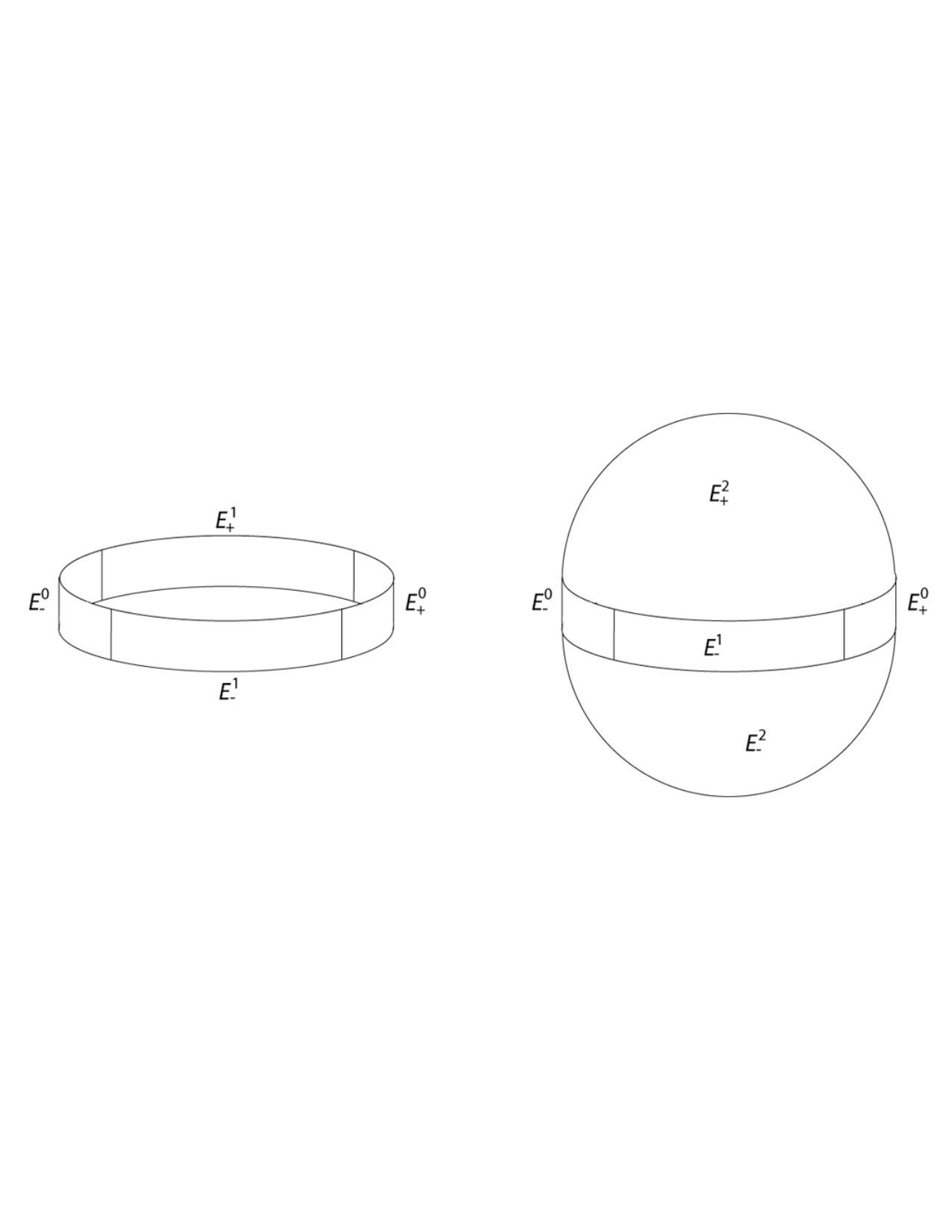 Figure 1
| basis | rank | |
|---|---|---|
Peer Reviews
No public reviews on file for this paper yet. If you reviewed it on a platform where reviews are public (OpenReview, ICLR, NeurIPS, ICML), you can paste yours below so the community can read it here.
Videos
No videos yet. Explain this paper in a talk, walkthrough, or lecture? Add one.
On the cohomology of the mapping class group
of the punctured projective plane
Miguel A. Maldonado
Unidad Académica de Matemáticas, Universidad Autónoma
de Zacatecas, Zacatecas 98000, MEXICO
Miguel A. Xicoténcatl
Departamento de Matemáticas, Centro de Investigación y de
Estudios Avanzados del IPN. Mexico City 07360, MEXICO
Abstract
The mapping class group of a non-orientable surface with punctures is studied via classical homotopy theory of configuration spaces. In particular, we obtain a non-orientable version of the Birman exact sequence. In the case of , we analize the Serre spectral sequence of a fiber bundle where is a and denotes the configuration space of unordered -tuples of distinct points in . As a consequence, we express the mod-2 cohomology of in terms of that of .
1 Introduction
Let be a closed orientable surface of genus and let denote the group of orientation preserving diffeomorphisms of , under the compact-open topology. The mapping class group is defined to be , the group of path components for . Equivalently, can be defined as , the group of isotopy classes of orientation preserving diffeomorphisms of , where is the identity component of . This group plays an important role in the theory of Teichmüller spaces since acts on the space of complex structures on and the quotient is the moduli space of Riemann surfaces of genus , see [16], [11]. Moreover, its cohomology is closely related to the theory of characteristic classes of -bundles, [19], [10]. There exist some variations on the definition above, for instance, consider the subgroup of orientation preserving diffeomorphisms of which leave a fixed set of distinct points invariant. The mapping class group of with marked points is defined to be , the group of path components for . Similarly, if is a non-orientable surface of genus , is defined to be where is the group of diffeomorphisms of which leave a set of points invariant. In the special case when one recovers the classical non-orientable mapping class group .
The purpose of this work is to use classical homotopy theory to compute the mod-2 cohomology of . Let denote the configuration space of ordered -tuples of distinct points in , equipped with the natural action of the symmetric group . Notice that acts diagonally on the space and thus it acts on the unordered configuration space . So one is led to consider the Borel construction
[TABLE]
Using the classical result that has as a deformation retract [14], [9], the construction above is homotopy equivalent to
[TABLE]
Moreover, it was proven in [23] that this space is an Eilenberg-MacLane space for , and we show here that its fundamental group is isomorphic to . Therefore, one may use the universal fibration
[TABLE]
to study the cohomology of . In fact we show in Section 5 that the associated Serre spectral sequence in mod-2 cohomology collapses at the -term. As a consequence, there is an isomorphim of –modules
[TABLE]
The additive structure of the mod-2 cohomology of is well understood for a compact smooth manifold and it is determined by the dimension of and its Betti numbers, see [4]. In the case of the projective plane, one can also express the mod-2 (co)homology of in terms of that of the classical braid groups , see section 6.
Mapping class groups have also been exhaustively studied due to its relations to low dimensional topology. One of these relations is the classical result that the mapping class group of the 2-disk with marked points is isomorphic to , the Artin’s braid group on -strands ([11]). In the case of the sphere , the group is isomorphic to the quotient of the braid group by its center ([2]). In section 3 we restrict attention to non-orientable surfaces and consider the -Borel construction on the unordered configuration space
[TABLE]
We define the reduced mapping class group to be the fundamental group of this space. We show that is naturally a subgroup of and fits into the following exact sequence
[TABLE]
It is easy to show that for , the group is isomorphic to the surfce braid group . Thus, the exact sequence above recovers the Birman exact sequence in the non-orientable case. In the case of the real proyective plane , the center of is and we show there is an isomorphism
[TABLE]
Similarly, in the case of the Klein bottle , we show the group is isomorphic to modulo a central .
The article is organized as follows. In section 2 we show how to construct concrete spaces for mapping class groups using configuration spaces. In section 3 we study the group and derive the Birman exact sequence in the non-orientable case. In section 4 we show the Serre spectral sequence of bundle (1) collapses and prove the main theorem. In section 5 we recall the main results from [4] on the mod-2 homology of configuration spaces for compact smooth manifolds, and finally, in section 6 we carry out some explicit calculations for the homology of in the case when .
2 Configuration spaces and mapping class
groups
Given a manifold and , define the configuration space of ordered -tuples of distinct points in by
[TABLE]
The symmetric group on letters, , acts naturally on by permutation of coordinates and the orbit space is the unordered configuration space. It is a classical result that when is a surface the spaces are Eilenberg-MacLane spaces for the corresponding surface braid groups on strands, . In the exceptional cases when or , one needs to consider the Borel construction with respect to the natural action. Namely, let be a topological group, a contractible space with a right free -action and a left -space. The associated homotopy orbit space (the Borel construction) is defined as the quotient of under the action of given by . The projection onto the first coordinate induces a fiber bundle
[TABLE]
where denotes the classifying space of .
Now, in the case when or , the corresponding ’s for the braid groups and are given as the Borel constructions and , respectively, where acts on the configuration spaces and via the double cover , see [7], [23]. Some further Borel constructions provide spaces for groups related to the mapping class groups as shown next. A proof of the following result can be found in [22], Theorem 1.8.6.
Lemma 2.1
Let be a locally compact Hausdorff topological group with a countable basis acting transitively on a locally compact Hausdorff space . Then for each the map , given by is open and the induced map
[TABLE]
is a homeomorphism, where is the isotropy group of .
Corollary 2.2
Under the assumptions of Lemma 2.1 above, for every there is a homotopy equivalence .
Proof: Notice that .
Now, let be a closed orientable surface and notice that acts diagonally on and thus on the unordered configuration space . The isotropy group of a fixed configuration in is , the group of orientation preserving diffeomorphisms of which leave the set invariant. Thus, by the corollary above, there is a homotopy equivalence
[TABLE]
which induces an isomorphism of fundamental groups
[TABLE]
Notice the last group is , the mapping class group of with marked points.
Example: If , a classical result of Smale [20] states that the inclusion is a homotopy equivalence. Thus the natural map
[TABLE]
is a homotopy equivalence and the fundamental group of this space is the mapping class group . Moreover, F. Cohen proved in [7] that for , the above construction is an Eilenberg-MacLane space and the cohomology with mod-2 coefficients was described by C.F. Bödigheimer, F. Cohen and D. Peim [5].
3 The reduced mapping class group
In this section will denote a non-orientable surface, although the same arguments apply to the orientable case with the obvious modifications. In the non-orientable case, the mapping class groups and are defined using the group of all diffeomorphisms of . The homotopy type of , the group of diffeomorphisms isotopic to the identity, is also known in this case, see [9] and [14]. We recall the result here:
Theorem 3.1** ([9], [14])**
Let be a closed non-orientable surface, and let be the group of diffeomorphisms isotopic to the identity. Then,
If , then is homotopy equivalent to . 2. 2.
If is the Klein bottle, then is homotopy equivalent to . 3. 3.
If , a closed non-orientable surface of genus , is contractible.
Next we consider the -Borel construction. Notice acts on the configuration space with isotropy subgroup . Therefore, there is a homotopy equivalence
[TABLE]
and thus and isomorphism of groups
[TABLE]
Inspired by this isomorphism, we define the reduced mapping class group of with marked points by
[TABLE]
This group is closely related to the extended and punctured mapping class group, as shown next.
Theorem 3.2
Let be a compact connected surface. The reduced mapping class group is naturally a subgroup of and fits into the following exact sequence:
[TABLE]
To prove this result, we will need a couple of simple lemmas.
Lemma 3.3
For every , .
Proof: Let and let be a fixed configuration of distinct points in . It is easy to see there is diffeomorphism , isotopic to the identity, sending the points to . Then , where and .
Lemma 3.4
For , the quotient group is isomorphic to .
*Proof: * Consider the natural projection and let be the restriction to the subgroup . Notice that the image of is isomorphic to the quotient
[TABLE]
and the kernel of is . Thus induces an isomorphism
[TABLE]
Proof of Theorem 3.2: Let be the connected component of the identity of and consider the following diagram of short exact sequences of topological groups:
[TABLE]
where the bottom row is an exact sequence of discrete groups. By Lemma 3.4 the cokernel is isomorphic to . On the other hand, notice the path component of the identity of the group is precisely . Then the kernel is given by
[TABLE]
and the theorem follows.
We proceed to give some examples in low genus.
Example: Let and consider the natural action of on given by rotation of lines through the origin in . It was shown by Gramain [14] that the natural inclusion is a homotopy equivalence, and thus and . Moreover, the natural map
[TABLE]
is a homotopy equivalence and the fundamental group of this space is . It was shown in [23] that for the Borel construction above is a . Thus:
Theorem 3.5
If , the -Borel construction
[TABLE]
is an Eilenberg-MacLane space where .
On the other hand, notice there is a fibration
[TABLE]
of spaces and thus one gets a short exact sequence of groups
[TABLE]
Moreover, recall that the center of can be described as the image of the full twist braid in under the homomorphism relative to an embedded disc . This braid is known to be the only element of order 2, see [12].
Corollary 3.6
There is an isomorphism , where is the center of .
Remark: Consider the matrices given by
[TABLE]
It can be shown that the group generated by and is isomorphic to , the dihedral group of order 8. Moreover, it is proven in [23] that is homotopy equivalent to the unordered configuration space . Thus, there is a homotopy equivalence
[TABLE]
Since the space on the left is homotopy equivalent to the classifying space , we have that is a space.
Example: If is the Klein bottle, it is well known that , see [15]. Then the exact sequence in Theorem 3.2 is given by
[TABLE]
and this exhibits as a normal subgroup of index 4 of . In this case and the natural map
[TABLE]
is a homotopy equivalence. Also, it is easy to show this space is a .
Theorem 3.7
If , the -Borel construction
[TABLE]
is an Eilenberg-MacLane space where .
Finally, consider the natural fibration
[TABLE]
whose homotopy exact sequence is given by
[TABLE]
Then we have
Corollary 3.8
There is an isomorphism .
Remark: The subgroup also corresponds to the center of the braid group of , a fact that can be checked by two different methods. The first one considers an inductive argument using the Fadell-Neuwirth fibrations to relate the center of the pure braid group to the center ; then one uses the fact that any free group on at least two generators has trivial center. The other method consists of a direct calculation of the center from a given finite presentation of . We thank F. Cohen and D. Gonçalves for nice talks dicussing these methods.
Example: If it also well known that , see [13]. Therefore, we have an exact sequence
[TABLE]
which shows that is a much smaller group than . In fact, we can prove the following result.
Theorem 3.9
For , the reduced mapping class group is isomorphic to the braid group .
Proof: Recall the group is the fundamental group of the Borel construction
[TABLE]
On the other hand, projection onto the first coordinate induces a universal bundle of the form
[TABLE]
But for , Theorem 3.1 implies the classifying space is contractible and the result follows.
Thus, Theorem 3.2 recovers a version of the Birman exact sequence on the non-orientable case, see [1], [11].
4 The mod-2 cohomology of
Recall that acts on by rotating lines in :
[TABLE]
[TABLE]
and thus, it acts diagonally on . So one may consider the -Borel construction and the associated fibration
[TABLE]
Theorem 4.1
The Serre spectral sequence for the fibration above collapses at the -term, in mod 2 cohomology.
Proof: Notice the action on can be extended to an action on by setting: . Thus the inclusion is -equivariant and gives rise to a map of fibrations
[TABLE]
which induces a map between the corresponding spectral sequences. We will show in Theorem 5.3 that the induced map on the fibers is an epimorphism in mod-2 cohomology. Then the desired spectral sequence collapses provided the spectral sequence for the fibration on the right collapses. Secondly, notice the natural maps
[TABLE]
are -equivariant and also homotopy equivalences. Therefore we get equivalences of fibrations
\textstyle{F_{k}(\mathbb{R}{\rm P}^{\infty})/\Sigma_{k}\ignorespaces\ignorespaces\ignorespaces\ignorespaces}$$\textstyle{E\Sigma_{k}\underset{\;\Sigma_{k}}{\times}F_{k}(\mathbb{R}{\rm P}^{\infty})\ignorespaces\ignorespaces\ignorespaces\ignorespaces\ignorespaces\ignorespaces\ignorespaces\ignorespaces\ignorespaces\ignorespaces\ignorespaces\ignorespaces}$$\scriptstyle{\simeq}$$\scriptstyle{\simeq}$$\textstyle{E\Sigma_{k}\underset{\;\Sigma_{k}}{\times}(\mathbb{R}{\rm P}^{\infty})^{k}\ignorespaces\ignorespaces\ignorespaces\ignorespaces}$$\textstyle{\qquad{ESO(3)}\underset{{}_{SO(3)}}{\times}F_{k}(\mathbb{R}{\rm P}^{\infty})/\Sigma_{k}\ignorespaces\ignorespaces\ignorespaces\ignorespaces}$$\textstyle{\quad\qquad\qquad ESO(3)\underset{{}_{SO(3)}}{\times}\left[E\Sigma_{k}\underset{\;\Sigma_{k}}{\times}F_{k}(\mathbb{R}{\rm P}^{\infty})\right]\ignorespaces\ignorespaces\ignorespaces\ignorespaces}$$\textstyle{\quad\qquad\qquad ESO(3)\underset{{}_{SO(3)}}{\times}\left[E\Sigma_{k}\underset{\;\Sigma_{k}}{\times}(\mathbb{R}{\rm P}^{\infty})^{k}\right]\ignorespaces\ignorespaces\ignorespaces\ignorespaces}$$\textstyle{BSO(3)\ignorespaces\ignorespaces\ignorespaces\ignorespaces}$$\textstyle{BSO(3)\ignorespaces\ignorespaces\ignorespaces\ignorespaces}$$\textstyle{BSO(3)\ignorespaces\ignorespaces\ignorespaces\ignorespaces\ignorespaces\ignorespaces\ignorespaces\ignorespaces},
To prove the assertion of the theorem we will actually show the right column is a trivial fibration. Let denote the space endowed with the trivial -action and consider the map given by shifting of coordinates: . Notice the map is -equivariant and also a homotopy equivalence, since it is non-trivial on fundamental groups. Thus we get an equivalence of fibrations
\textstyle{E\Sigma_{k}\underset{\;\Sigma_{k}}{\times}(\mathbb{R}{\rm P}^{\infty})_{t}^{k}\ignorespaces\ignorespaces\ignorespaces\ignorespaces\ignorespaces\ignorespaces\ignorespaces\ignorespaces}$$\scriptstyle{1\times s^{k}}$$\scriptstyle{\simeq}$$\textstyle{E\Sigma_{k}\underset{\;\Sigma_{k}}{\times}(\mathbb{R}{\rm P}^{\infty})^{k}\ignorespaces\ignorespaces\ignorespaces\ignorespaces}$$\textstyle{\quad\qquad\qquad ESO(3)\underset{{}_{SO(3)}}{\times}\left[E\Sigma_{k}\underset{\;\Sigma_{k}}{\times}(\mathbb{R}{\rm P}^{\infty})_{t}^{k}\right]\ignorespaces\ignorespaces\ignorespaces\ignorespaces}$$\textstyle{\quad\qquad\qquad ESO(3)\underset{{}_{SO(3)}}{\times}\left[E\Sigma_{k}\underset{\;\Sigma_{k}}{\times}(\mathbb{R}{\rm P}^{\infty})^{k}\right]\ignorespaces\ignorespaces\ignorespaces\ignorespaces}$$\textstyle{BSO(3)\ignorespaces\ignorespaces\ignorespaces\ignorespaces}$$\textstyle{BSO(3)\ignorespaces\ignorespaces\ignorespaces\ignorespaces}$$\scriptstyle{\simeq}
But the left column of the previous diagram is clearly a trivial fibration, since the -action on the fiber was trivial, and the statement of the theorem follows.
As a consequence of Theorem 4.1 we have
Theorem 4.2
For , there is an isomorphism of -modules
[TABLE]
where are the Stiefel-Whitney classes in the cohomology of .
It follows from here that the mod-2 cohomology of is determined by the mod-2 cohomology of .
5 Homology of configuration spaces
In this section we describe the homology of the space in terms of the homology of a much larger space. Let be manifold of dimension and a connected space with base point and recall the labelled configuration space is given by
[TABLE]
where the relation is generated by
[TABLE]
if . Such spaces of labelled configurations occur in [3], [4], [18] and [17] as models for mapping spaces. The space is naturally filtered by length of configurations
[TABLE]
and the filtration quotients are denoted by . The basic properties of this construction are given next, see [17], [4], [21]:
If then . 2. 2.
There is an analogue of Snaith’s stable splitting
[TABLE] 3. 3.
There is a natural vector bundle over the configuration space
[TABLE]
and the Thom space of its -fold sum is homeomorphic to . Therefore, by the Thom isomorphism
[TABLE]
Theorem 5.1** ([4])**
For a smooth, compact manifold of dimension and , there is an isomorphism of graded vector spaces
[TABLE]
where is the -th Betti number of .
Each factor is an algebra with weights associated to its generators. This yields a filtration on the tensor product and corresponds, via the isomorphism , to the vector space generated by the elements of weight . For completeness, we record here the mod 2 homology of the iterated loop spaces , see [6]. Throughout the rest of this and next section, all homology groups are taken with mod-2 coefficients.
Recall there are mod 2 homology operations which are natural for -fold loop maps
[TABLE]
which are linear if , known as the Dyer-Lashof operations [8]. Let be the fundamental class and let denote the composition if . The sequence is admissible if ; write if and .
Theorem 5.2** ([6])**
There is and isomorphism of Hopf algebras
[TABLE]
for admissible with and is primitive.
Thus, to compute , we first introduce for every basis element a generator, namely the fundamental class of degree and weight . Secondly, for each and index there is an additional generator if the condition holds. We have:
- •
- •
and if .
The isomorphism in Theorem 5.1 depends on the choice of a handle decomposition for and it is natural for embeddings which respect the handle decompositions. Recall that a manifold is obtained from a submanifold of codimension [math] by attaching a handle of index if with and . A handle decomposition for a manifold is a filtration by submanifolds
[TABLE]
where is obtained from by attaching handles of index and is a disjoint union of closed -dimensional discs.
As an example, consider the usual CW structure on with two antipodal -cells in every dimension, for , so that the -skeleton of is the sphere . It is clear that the cell structure above can be thickened to induce a handle decomposition for with two antipodal handles of index , for , such that the natural embedding respects the handle decomposition.
Moreover, passing to the quotient by the antipodal -action, we get a handle decomposition for with one handle of index , for , so that the natural embedding respects the corresponding handle decompositions. Thus, as a direct application of Theorem 5.1 we get
Theorem 5.3
The natural inclusion induces a map of unordered configuration spaces, which is an epimorphism in mod-2 cohomology:
[TABLE]
Proof: Let and consider the induced inclusion at the level of labelled configuration spaces . By Theorem 5.1 we have isomorphims in mod-2 cohomology:
[TABLE]
Moreover, the embedding respects the handle decompositions and the induced map in homology is given by the usual adjunction maps:
[TABLE]
which are monomorphisms and preserve the weight of the generators. Therefore, the inclusion induces a monomorphism in mod-2 homology
[TABLE]
and thus by duality, an epimorphism in mod-2 cohomology.
6 Explicit calculations
Let us specialize to the case when is a surface. By Theorem 5.1, the mod- homology of the labelled configuration space is given by the tensor product
[TABLE]
where and are the mod- Betti numbers of . In the case of the closed non-orientable surface of genus we have
[TABLE]
where and are the fundamental classes on degrees and , respectively, and . Here is the first Dyer-Lashof operation, so notice . The weights of all generators are given by
[TABLE]
and a basis for consists of all monomials of the form
[TABLE]
for some and , such that
[TABLE]
For example, is determined by the following table.
Thus, the rank of is and for . Similarly, in the case of , , and one has
[TABLE]
and
[TABLE]
Finally, we express the mod-2 homology of in terms of the homology of the classical braid groups. Since the Betti numbers of are , then by Theorem 5.3 there is an isomorphism
[TABLE]
where , and . Thus, a basis for is given by all the monomials of the form
[TABLE]
where runs over an additive basis for . Notice that basis elements of the form have degree and weight given by
[TABLE]
Therefore for fixed and , the monomial represents a generator in
[TABLE]
if and only if has degree:
[TABLE]
and weight: .
Case : Elements in of degree and weight generate the vector space
[TABLE]
Case : Elements in of degree and weight generate the vector space
[TABLE]
Thus there is an isomorphism of graded vector spaces:
[TABLE]
It is worth to compare this result with the analog for which is obtained in [5] in a similar manner to the one exposed here.
The reference list from the paper itself. Each links out to its DOI / PubMed record.
- 1[1] J.S. Birman, Braids, links and mapping class groups , Annals of Mathematical Studies, vol. 82, Princeton University Press, 1969.
- 2[2] , On braid groups , Comm. Pure Appl. Math. 22 (1969), 41–72.
- 3[3] C.F. Bödigheimer, Stable splittings of mapping spaces , Algebraic topology (Seattle, Wash., 1985), Lecture Notes in Math., vol. 1286, Springer, Berlin, 1987, pp. 174–187.
- 4[4] C.F. Bödigheimer, F. Cohen, and L. Taylor, On the homology of configuration spaces , Topology 28 (1989), no. 1, 111–123.
- 5[5] C.F. Bödigheimer, F.R. Cohen, and M.D. Peim, Mapping class groups and function spaces , Homotopy methods in algebraic topology (Boulder, CO, 1999), Contemp. Math., vol. 271, Amer. Math. Soc., 2001, pp. 17–39.
- 6[6] F.R. Cohen, A course in some aspects of classical homotopy theory , Algebraic topology (Seattle, Wash., 1985), Lecture Notes in Math., vol. 1286, Springer, Berlin, 1987, pp. 1–92.
- 7[7] , On the mapping class groups for punctured spheres, the hyperelliptic mapping class groups, SO ( 3 ) SO 3 {\rm SO}(3) , and Spin c ( 3 ) superscript Spin 𝑐 3 {\rm Spin}^{c}(3) , Amer. J. Math. 115 (1993), no. 2, 389–434. MR 1216436
- 8[8] E. Dyer and R.K. Lashof, Homology of iterated loop spaces , Amer. J. Math. 84 (1962), 35–88.