Quantizing the Palatini action using a transverse traceless propagator
F. T. Brandt, D. G. C. McKeon, Chenguang Zhao

TL;DR
This paper quantizes the first order Einstein-Hilbert action using a path integral approach with specific gauge conditions, resulting in a simplified propagator and a manageable set of interacting fields and vertices.
Contribution
It introduces a novel gauge fixing that yields a traceless, transverse graviton propagator and explicitly constructs the Feynman rules for all perturbative diagrams.
Findings
Graviton propagator is both traceless and transverse.
Feynman diagrams are built from five fundamental fields and vertices.
The quantization scheme simplifies perturbative calculations.
Abstract
We consider the first order form of the Einstein-Hilbert action and quantize it using the path integral. Two gauge fixing conditions are imposed so that the graviton propagator is both traceless and transverse. It is shown that these two gauge conditions result in two complex Fermionic vector ghost fields and one real Bosonic vector ghost field. All Feynman diagrams to any order in perturbation theory can be constructed from two real Bosonic fields, two Fermionic ghost fields and one real Bosonic ghost field that propagate. These five fields interact through just five three point vertices and one four point vertex.
Click any figure to enlarge with its caption.
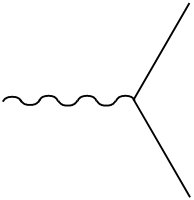 Figure 1
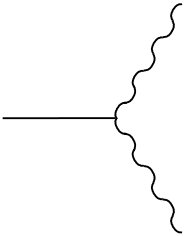 Figure 2
 Figure 3
 Figure 4
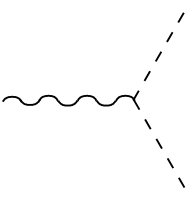 Figure 5
 Figure 6
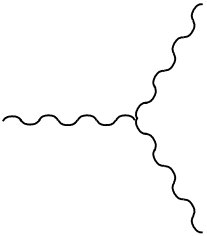 Figure 7
Peer Reviews
No public reviews on file for this paper yet. If you reviewed it on a platform where reviews are public (OpenReview, ICLR, NeurIPS, ICML), you can paste yours below so the community can read it here.
Videos
No videos yet. Explain this paper in a talk, walkthrough, or lecture? Add one.
Quantizing the Palatini Action using a Transverse Traceless Propagator
F. T. Brandt
Instituto de Física, Universidade de São Paulo, São Paulo, SP 05508-090, Brazil
D. G. C. McKeon
Department of Applied Mathematics, The University of Western Ontario, London, ON N6A 5B7, Canada
Department of Mathematics and Computer Science, Algoma University, Sault St.Marie, ON P6A 2G4, Canada
Chenguang Zhao
Department of Applied Mathematics, The University of Western Ontario, London, ON N6A 5B7, Canada
Abstract
We consider the first order form of the Einstein-Hilbert action and quantize it using the path integral. Two gauge fixing conditions are imposed so that the graviton propagator is both traceless and transverse. It is shown that these two gauge conditions result in two complex Fermionic vector ghost fields and one real Bosonic vector ghost field. All Feynman diagrams to any order in perturbation theory can be constructed from two real Bosonic fields, two Fermionic ghost fields and one real Bosonic ghost field that propagate. These five fields interact through just five three point vertices and one four point vertex.
gauge theories; first order; perturbation theory
pacs:
11.15.-q
I Introduction
It has been shown with both Yang-Mills (YM) action and the Einstein-Hilbert (EH) action for gravity, that by using the first order form of the action, there is only a single vertex arising from the classical action and this is independent of momentum Okubo:1979gt ; Buchbinder:1983ys ; McKeon:1994ds ; Kalmykov:1994fm ; Brandt:2015nxa . This simplifies the computation of loop diagrams, even though the number of propagating fields is increased.
It has also been shown that imposing both the conditions of tracelessness and transversality on the spin two propagator associated with the EH action requires use of a non-quadratic gauge fixing Lagrangian Brandt:2007td ; Brandt:2009qi ; Brandt:2009rq ; Brandt:2011zb ; McKeon:2014iea . Such gauge fixing results in the need to consider the contributions of two complex Fermionic ghosts and one real Bosonic ghost analogous to the usual complex “Faddeev-Popov” ghosts.
In this paper we consider how the full first order Einstein-Hilbert (1EH) action can be used in conjunction with the transverse-traceless (TT) gauge. We will show that the spin two propagator is TT only if the gauge fixing parameter is allowed to vanish. This limit for results in a well defined set of Feynman rules with two propagating Bosonic fields, two complex Fermionic ghost fields, one real Bosonic ghost, three three-point vertices for the Bosonic fields and four ghost vertices.
II The TT gauge for the 1EH Action
The Einstein-Hilbert action in first order (Palatini) form
[TABLE]
when written in terms of the variables
[TABLE]
becomes
[TABLE]
This “Palatini” form of the action facilitates a canonical analysis of McKeon:2010nf . It is equivalent to the second order form of the EH action at both the classical and quantum levels Brandt:2015nxa . The diffeomorphism invariance of in Eq. (1) leads to the local gauge transformations
[TABLE]
The term bilinear in and in Eq. (3) does not lead to a well defined propagator, irrespective of the choice of gauge fixing. However, upon making an expansion of about a flat background
[TABLE]
the term bilinear in and arising from Eq. (3) does have a well defined propagator once an appropriate gauge fixing is chosen. These bilinear terms are the first order form of the action for a spin two field McKeon:2010nf .
In order to have a TT propagator for the spin two field we must consider a general gauge fixing Lagrangian that is not quadratic Brandt:2007td . If the classical Lagrange density appearing in Eq. (3) is , then this entails inserting into the generating functional
[TABLE]
two factors of “”
[TABLE]
where . The gauge transformations of Eq. (4) are of the form
[TABLE]
and the gauge fixing conditions are
[TABLE]
Insertion of a third factor of “” that is of the form
[TABLE]
into Eq. (6) leads to
[TABLE]
Since the gauge transformation of Eq. (8) leaves , and invariant faddeev:book1980 ; weinberg:book1995 , we can make the shift
[TABLE]
in Eq. (II) () leaving us with
[TABLE]
A factor has been absorbed into the normalization of . We now choose the gauge fixing to be
[TABLE]
The gauge fixing contribution of Eq. (II) becomes
[TABLE]
(In Eq. (15) we use the convention .)
Provided , the shift in
[TABLE]
can be made to diagonalize Eq. (15) in and . In Refs. Brandt:2007td ; Brandt:2009qi ; Brandt:2009rq and a shift in was used to diagonalize the gauge fixing, but as such a shift is not a gauge transformation, is not invariant under this transformation and new vertices involving and must be introduced. We take in order to be able to make a shift in that eliminates mixed propagators for these fields without introducing extra vertices.
Together Eqs. (15) and (16) result in
[TABLE]
The integral over can now be evaluated in Eq. (17); it results in a contribution
[TABLE]
We now treat the last term in Eq. (17) as an interaction term. Due to its structure, the two fields that occur explicitly ( also is dependent on account of Eq. (4a)) are contracted with a propagator for and a factor of where
[TABLE]
by Eq. (14).
We know from Refs. Brandt:2007td ; Brandt:2009qi ; Brandt:2009rq that as , the propagator for the field that comes from is transverse and traceless in the limit provided . Only terms of order are not transverse and traceless. Thus, on account of the structure of Eq. (19), the contribution of the vertex coming from the last term in Eq. (17) vanishes as , even though this vertex is proportional to . There is on exception to this; when a sequence of these vertices lies in a ring, then a finite contribution arises in the limit . To see this in more detail, write this last term in Eq. (17) as
[TABLE]
A ring in which a sequence of these vertices occurs results in a contribution proportional to
[TABLE]
where is the propagator of . From Eq. (19) it is apparent that since when is transverse and traceless, then is of order ; since we have a factor of for each factor of on account of these vertices occurring in a ring, we can let
[TABLE]
Furthermore, a contribution of a closed loop of these vertices can be written as
[TABLE]
Together Eqs. (18) and (23) reduce Eq. (17) to
[TABLE]
provided . The functional determinants in Eq. (24) can be exponentiated using “ghost” fields; () using complex Fermionic “Faddeev-Popov” ghosts Feynman:1963ax ; DeWitt:1967yk ; Faddeev:1967fc ; Mandelstam:1968hz , by a complex Fermionic Nielsen-Kalosh ghost Nielsen:1978mp ; Kallosh:1978de and by a real Bosonic ghost . By Eq. (4a), it follows that
[TABLE]
Using Eqs. (19) and (25) and the propagator for given in Ref Brandt:2007td we find that the contribution that is bilinear in the ghost is given by
[TABLE]
which becomes
[TABLE]
when
[TABLE]
Similarly, the vertex for – – comes from
[TABLE]
Finally, a vertex for – – – can also be worked out. The vertices – – – and – – are both quartic in the external momenta.
The two complex “Faddeev-Popov” ghosts and and the real Bosonic ghost reduce to a single complex Fermionic Faddeev-Popov ghost if we deal with a quadratic gauge fixing Lagrangian when .
If we now define by the equation
[TABLE]
then the shift
[TABLE]
in in Eq. (22) leads to
[TABLE]
so that off diagonal propagators are eliminated. However, two new momentum dependent vertices now arise. They are and .
With the gauge fixing of Eq. (14) we find from Ref. Brandt:2007td that the propagator for the field is
[TABLE]
For the real fields we have
[TABLE]
The vertices are given by
[TABLE]
If , we cannot recover the TT propagator from Eq. (33b) even if Brandt:2007td .
For the Bosonic ghost we have a propagator and vertices that follow from Eqs. (27) and (28).
The arguments used in ref. faddeev:book1980 ; weinberg:book1995 can be used to show that when using a non-quadratic gauge fixing Lagrangian, physical results are independent of the gauge choice.
Beginning with the insertion of Eq. (7) into Eq. (6), we have
[TABLE]
We can now insert into this equation a further factor of “1”
[TABLE]
and then by interchanging and , and and we see that and are interchanged without altering , demonstrating that is independent of the gauge fixing condition.
It would be interesting to derive a set of WTST and BRST identities associated with the gauge transformation of Eq. (4) and the gauge choices of Eq. (14).
Acknowledgements.
We would like to thank CNPq (Brazil) for a grant and Roger Macleod for encouragement.
The reference list from the paper itself. Each links out to its DOI / PubMed record.
- 1(1) S. Okubo and Y. Tosa, Phys. Rev. D 20 , 462 (1979), [Erratum: Phys. Rev.D 23,1468(1981)].
- 2(2) I. l. Buchbinder and I. l. Shapiro, Yad. Fiz. 37 , 248 (1983); Acta Phys. Polon. B 16 , 103 (1985).
- 3(3) D. G. C. Mc Keon, Can. J. Phys. 72 , 601 (1994).
- 4(4) M. Yu. Kalmykov, P. I. Pronin, and K. V. Stepanyantz, Class. Quant. Grav. 11 , 2645 (1994).
- 5(5) F. T. Brandt and D. G. C. Mc Keon, Phys. Rev. D 91 , 105006 (2015); Phys. Rev. D 93 , 105037 (2016).
- 6(6) F. T. Brandt, J. Frenkel, and D. G. C. Mc Keon, Phys. Rev. D 76 , 105029 (2007).
- 7(7) F. T. Brandt and D. G. C. Mc Keon, Phys. Rev. D 79 , 087702 (2009).
- 8(8) F. T. Brandt, J. Frenkel, D. G. C. Mc Keon, and J. B. Siqueira, Phys. Rev. D 80 , 025024 (2009).