Power-law liquid in cuprate superconductors from fermionic unparticles
Zhidong Leong, Chandan Setty, Kridsanaphong Limtragool, and Philip W., Phillips

TL;DR
This paper explains the non-Fermi-liquid behavior observed in cuprate superconductors using the concept of fermionic unparticles, showing how their scale-invariant properties influence electron self-energy and spectral functions.
Contribution
It analytically demonstrates that fermionic unparticles can account for the anomalous scaling of electron self-energy in cuprates, linking unparticle physics to high-temperature superconductivity phenomena.
Findings
Self-energy scales as T^{2+2α} and ω^{2+2α}, matching experiments.
Unparticles exhibit broad spectral functions due to branch cuts in their propagator.
Spectral weights remain significant at high energies, unlike normal fermions.
Abstract
Recent photoemission spectroscopy measurements [arXiv:1509.01611] on cuprate superconductors have inferred that over a wide range of doping, the imaginary part of the electron self-energy scales as with in the overdoped Fermi-liquid state and in the optimal to underdoped regime. We show that this non-Fermi-liquid scaling behavior can naturally be explained by the presence of a scale-invariant state of matter known as unparticles. We evaluate analytically the electron self-energy due to interactions with fermionic unparticles. We find that, in agreement with experiments, the imaginary part of the self-energy scales with respect to temperature and energy as and , where is the anomalous dimension of the unparticle propagator. In addition, the calculated…
Click any figure to enlarge with its caption.
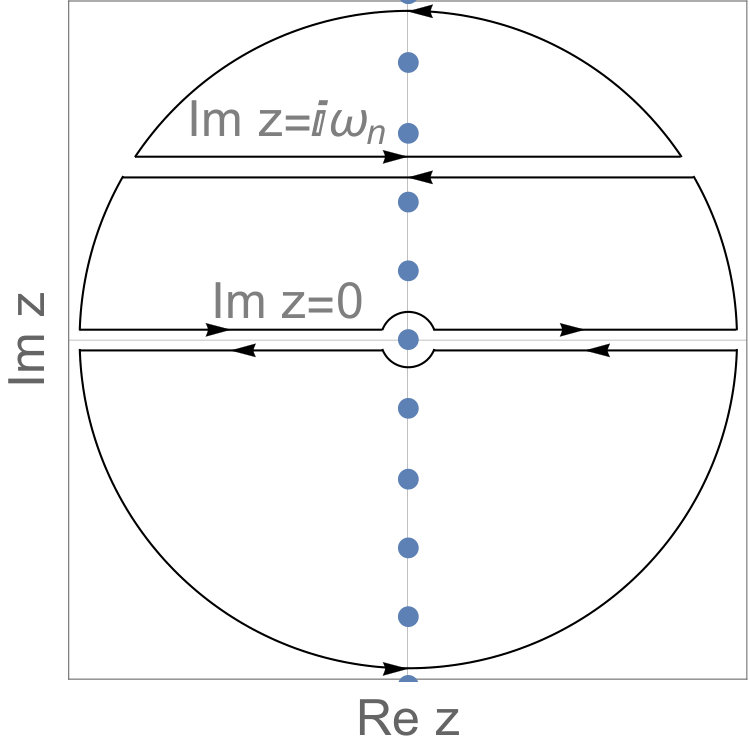 Figure 1
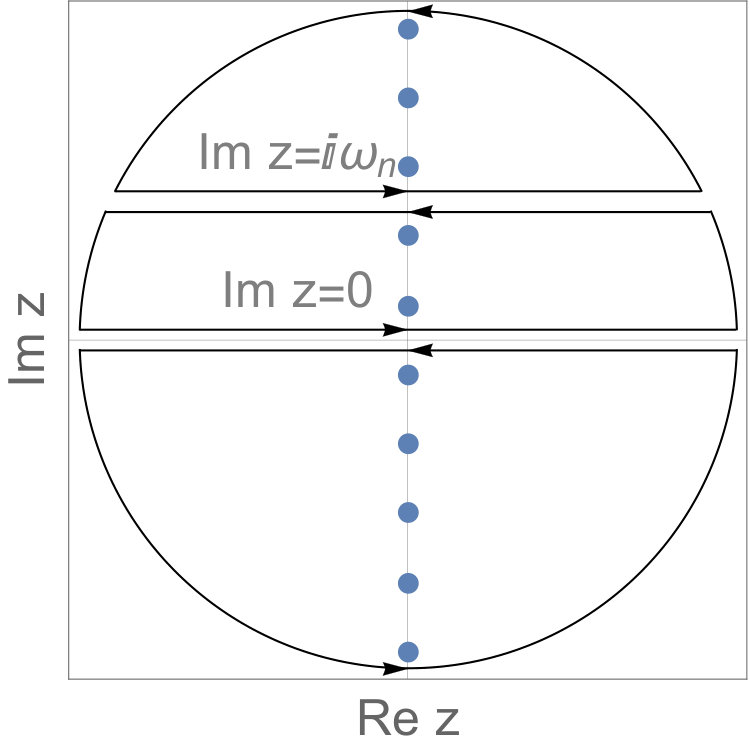 Figure 2
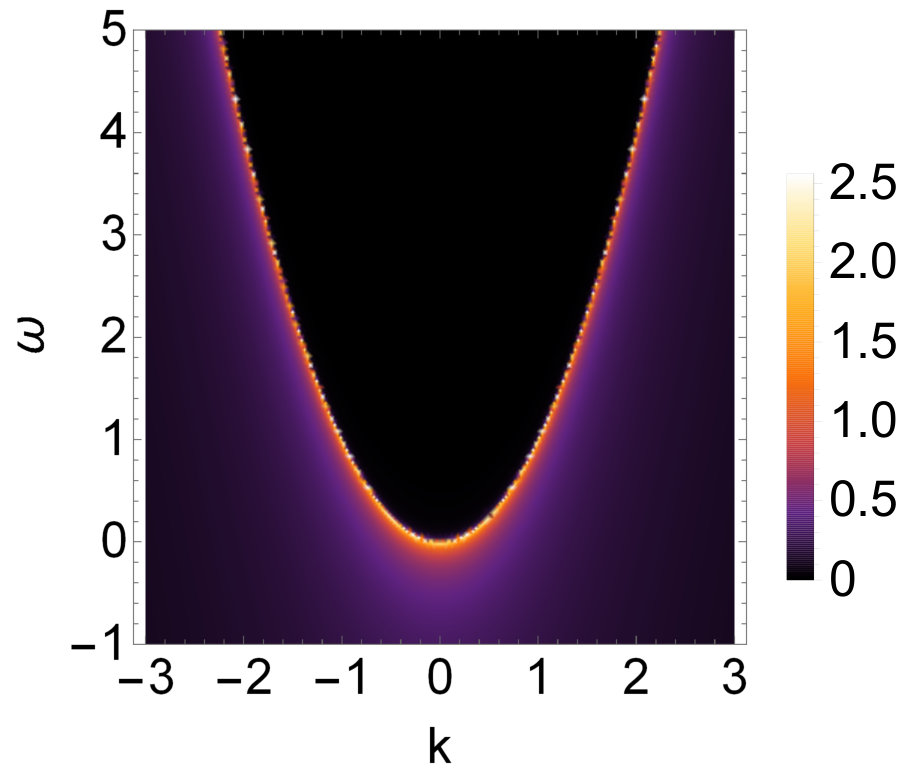 Figure 3
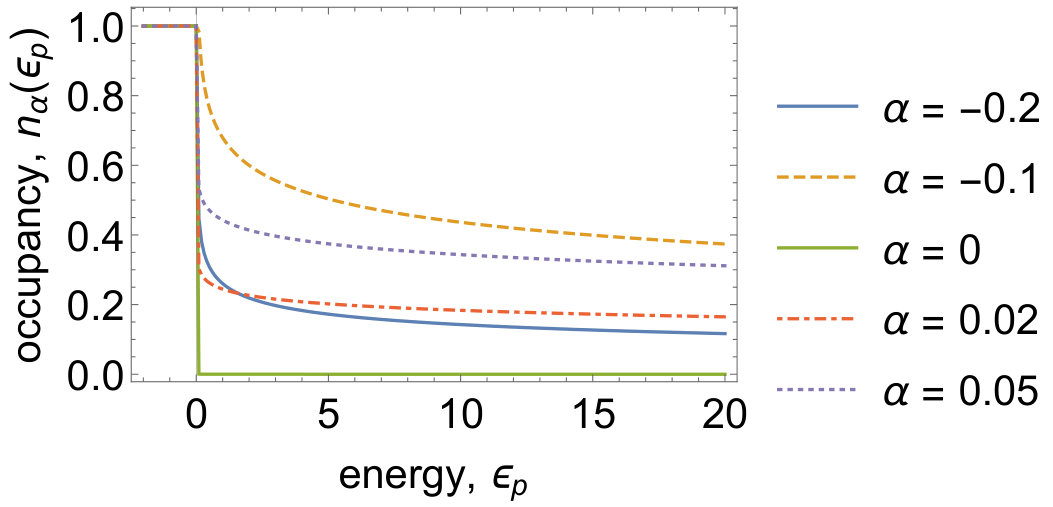 Figure 4
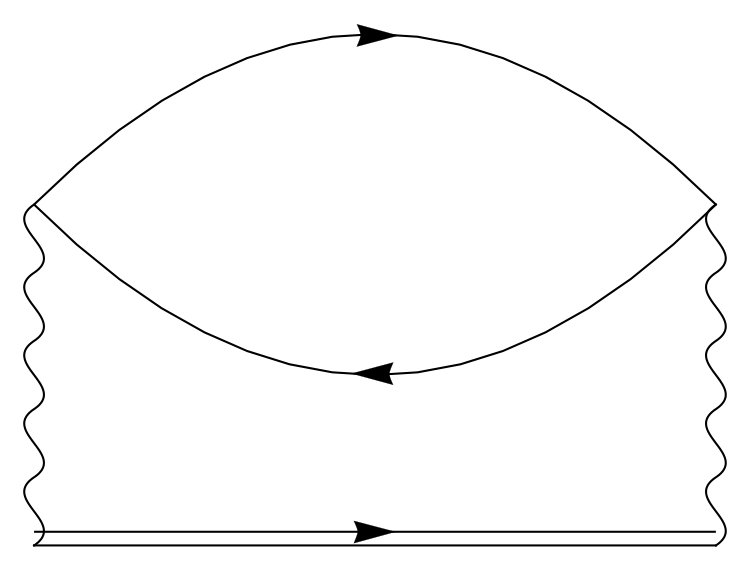 Figure 5
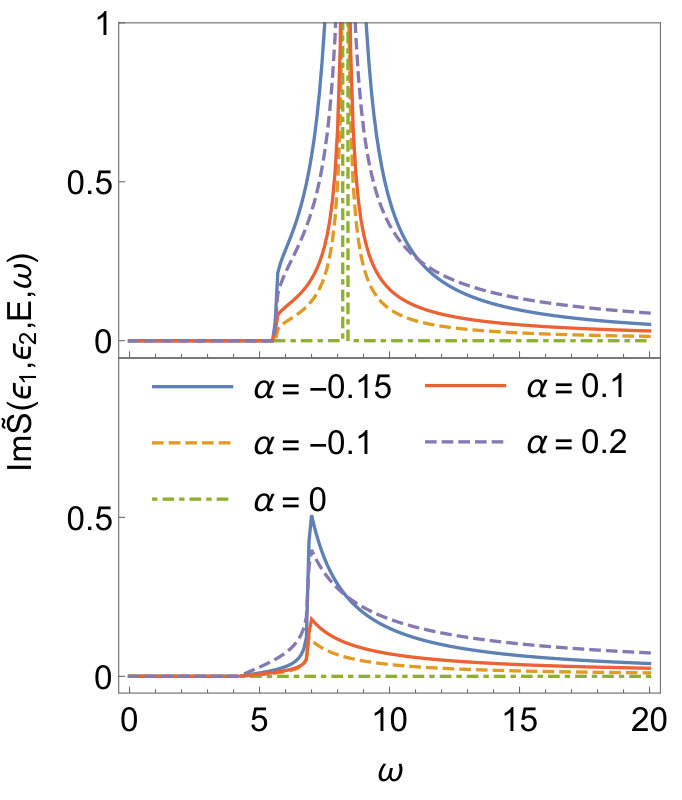 Figure 6
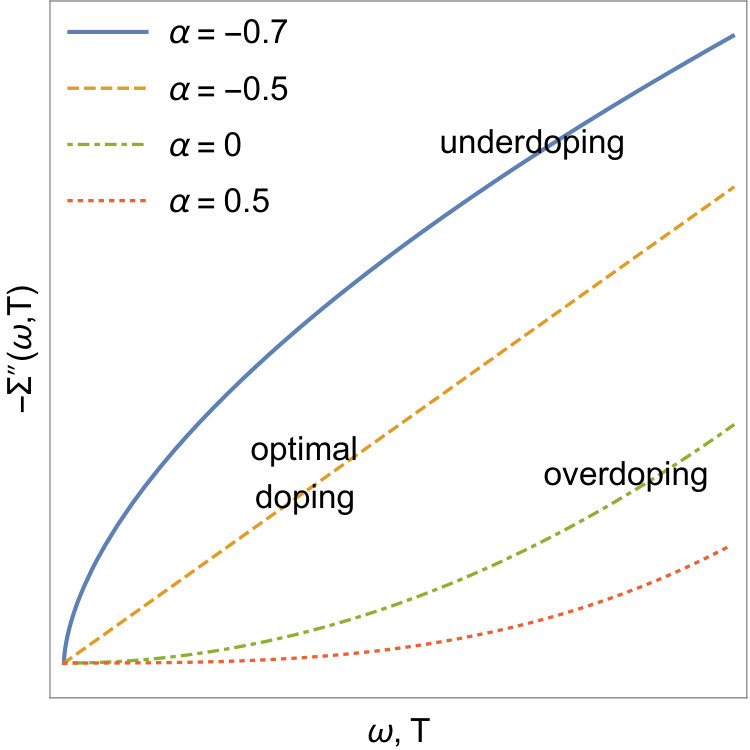 Figure 7
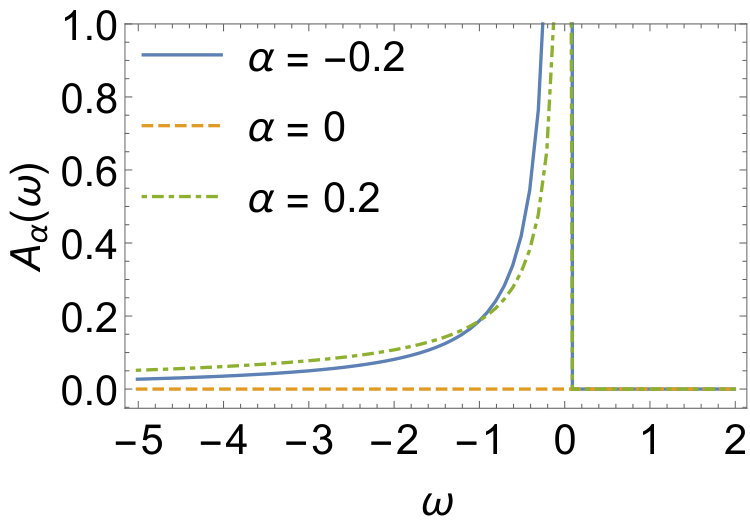 Figure 8
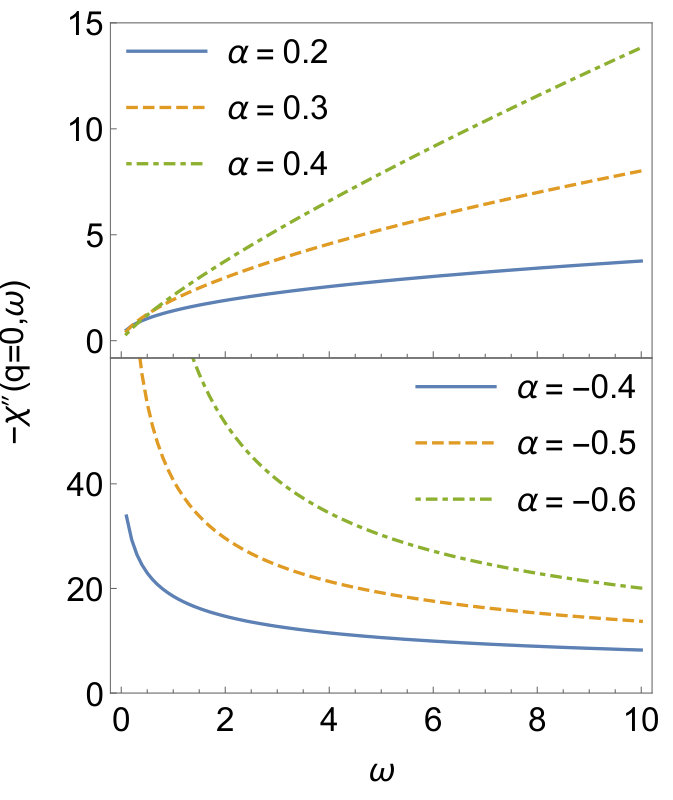 Figure 9
Peer Reviews
No public reviews on file for this paper yet. If you reviewed it on a platform where reviews are public (OpenReview, ICLR, NeurIPS, ICML), you can paste yours below so the community can read it here.
Videos
No videos yet. Explain this paper in a talk, walkthrough, or lecture? Add one.
Power-law liquid in cuprate superconductors from fermionic unparticles
Zhidong Leong
Chandan Setty
Kridsanaphong Limtragool
Philip W. Phillips
Department of Physics and Institute for Condensed Matter Theory, University of Illinois, Urbana, Illinois 61801, U.S.A
(March 15, 2024)
Abstract
Recent photoemission spectroscopy measurements [arXiv:1509.01611] on cuprate superconductors have inferred that over a wide range of doping, the imaginary part of the electron self-energy scales as with in the overdoped Fermi-liquid state and in the optimal to underdoped regime. We show that this non-Fermi-liquid scaling behavior can naturally be explained by the presence of a scale-invariant state of matter known as unparticles. We evaluate analytically the electron self-energy due to interactions with fermionic unparticles. We find that, in agreement with experiments, the imaginary part of the self-energy scales with respect to temperature and energy as and , where is the anomalous dimension of the unparticle propagator. In addition, the calculated occupancy and susceptibility of fermionic unparticles, unlike those of normal fermions, have significant spectral weights even at high energies. This unconventional behavior is attributed to the branch cut in the unparticle propagator which broadens the unparticle spectral function over a wide energy range and non-trivially alters the scattering phase space by enhancing (suppressing) the intrinsic susceptibility at low energies for negative (positive) . Our work presents new evidence suggesting that unparticles might be important low-energy degrees of freedom in strongly coupled systems such as the cuprate superconductors.
I Introduction
Understanding the physics of cuprate superconductors involves identifying the low-energy degrees of freedom that can reproduce the bizarre features of the normal state which traditionally include -linear resistivity, pseudogap, Fermi arcs, etc. Adding to the complexity are the recent angle-resolved photoemission spectroscopy (ARPES) measurements Reber et al. (2015) of the cuprates that revealed that its well-known -linear resistivity can be construed as a slice of a unified power-law scaling behavior. Over a wide range of doping levels, the measured scattering rates in the non-superconducting state scale with respect to temperature and frequency as , with only the scaling exponent varying with doping. The power-law smoothly varies from Fermi-liquid-like at overdoping, to one with representing -linear scattering rate at optimal doping, and to at underdoping. Such a non-Fermi-liquid state of matter is dubbed a power-law liquid.
Theoretically, mechanisms yielding similar non-Fermi liquid scalings have been extensively studied Varma et al. (1989); Metzner et al. (2003); Lee (2009); Watanabe and Vishwanath (2014); Fitzpatrick et al. (2014); Sachdev (2011); Faulkner et al. (2010); Casey and Anderson (2011); Faulkner et al. (2010); Zaanen et al. (2015). In a marginal Fermi liquid Varma et al. (1989), a polarizability proportional to leads to -linear resistivity, while a -wave Pomeranchuk instability in two dimensions Metzner et al. (2003) yields self-energies with and dependence. In addition, similar behaviors can also be obtained by coupling quasiparticles with gauge bosons Lee (2009), Goldstone bosons Watanabe and Vishwanath (2014), and critical bosons Fitzpatrick et al. (2014) near a quantum critical point Sachdev (2011). Furthermore, strong coupling theories using the anti-de Sitter spacetime (AdS)/conformal field theory (CFT) correspondence Faulkner et al. (2010) and Gutzwiller projection in hidden Fermi liquid theory Casey and Anderson (2011) also exhibit -linear resistivity. In particular, the spectral functions calculated within the AdS/CFT formalism can also exhibit a range of power-law scaling when the scaling dimension of the boundary fermionic operator is tuned continuously Faulkner et al. (2010); Zaanen et al. (2015).
Because of the recent unified scaling observations, it is natural to invoke a scale-invariant sector such as unparticles as the effective low-energy degrees of freedom in the cuprates. Proposed a decade ago as a scale-invariant sector within the standard model Georgi (2007), unparticles can emerge in strong coupling theories as low-energy degrees of freedom. Exhibiting features similar to those of a fractional number of invisible massless particles Georgi (2007), unparticles are an incoherent state of matter that lack any particle-like behavior. They can be construed as a product of states with a continuous distribution of masses Stephanov (2007); Krasnikov (2007); Deshpande and He (2008) and can be constructed from theories in AdS Cacciapaglia et al. (2009).
While extensively studied in high-energy physics, unparticles remain relatively new in condensed matter physics. In the context of the cuprates, unparticles have been proposed to explain the absence of Luttinger’s theorem in the pseudogap phase Phillips et al. (2013) using zeros in the Green function Dave et al. (2013) and have also been found to yield unusual superconducting properties Phillips et al. (2013); LeBlanc and Grushin (2015); Karch et al. (2016) and optical conductivity Limtragool and Phillips (2015).
In this paper, we show analytically that interactions between electrons and fermionic unparticles can reproduce the power-law liquid revealed in the cuprates by recent ARPES experiments Reber et al. (2015). This paper is a follow-up to our recent paper that focused on bosonic unparticles Limtragool et al. (2016). Here we find that, in agreement with the experiments, the electron self-energy due to interactions with fermionic unparticles exhibits power-law scaling with respect to both energy and temperature: and , where is the anomalous scaling of the unparticle propagator. In addition, we find that the occupancy number and susceptibility of fermionic unparticles, unlike those of normal fermions, have significant spectral weights even at high energies. These unconventional behaviors can be attributed to the branch cut in the unparticle propagator which broadens the unparticle spectral function over a wide energy range, and non-trivially alters the scattering phase space by enhancing (suppressing) the intrinsic susceptibility at low energies for negative (positive) .
II Electron-Fermionic Unparticle Scattering
II.1 Model
We consider a system of electrons in the presence of a background of fermionic unparticles. The action of the system in Matsubara-Fourier space is given by
[TABLE]
where is the non-relativistic electron field, is the fermionic unparticle field, is the bare electron Green function
[TABLE]
and is the fermionic unparticle Green function
[TABLE]
Here, is the unparticle energy spectrum, is the scaling exponent, and is the chemical potential. When , the Green function reduces to that of a normal particle. In addition, is the interaction between electrons and unparticles, and is the temperature. The subscripts of the fields denote the dependence on the Matsubara frequency. In this model, the fermionic unparticles are assumed to exist up to a UV momentum cutoff, because they represent a low-energy description of some microscopic theory. For the unparticle Green function to be scale-invariant, we set when . While the literature in high-energy physics considers fermionic unparticles as relativistic four-spinors within the standard model Luo and Zhu (2008); Basu et al. (2009), here in the context of the cuprates, we consider them as non-relativistic fermions. For simplicity, we also omit the normalization factor and the effects of spins.
In this paper, we focus on unparticles with . In this case, instead of a simple pole, the unparticle Green function has a branch cut, which we choose to be along the negative energy axis. That is, the branch cut of is chosen to be along with the phase angle defined in the range . Fig. 1 shows that, compared to particles, the spectral function of unparticles
[TABLE]
remains divergent at , but has a broadened peak due to the presence of the branch cut, representing the incoherence of unparticles. Here is the Heaviside step function. It is precisely the modeling of the broad incoherent background in the electron spectral function that unparticles are tailored to handle.
II.2 Electron self-energy
For a constant interaction between electrons and fermionic unparticles, Fig. 2 illustrates the lowest-order contribution to the electron self-energy . This can be written as
[TABLE]
where
[TABLE]
is the unparticle susceptibility, and is the electron Green function. While unparticle-particle interactions in the standard model are constrained by experiments to be weak Georgi (2007), the coupling strength here in the cuprates can be significant.
Appendix A details our analytic evaluation of the Matsubara sums in Eqs. 5 and LABEL:eq:suscep using standard contour integration techniques. After analytic continuation , we find that the imaginary part of the electron self-energy can be written as the momentum sum
[TABLE]
where
[TABLE]
Here, is the Fermi (Bose) distribution, and is the electron energy spectrum. To elucidate the analytic structure of , we note that, for in the limit, the integral evaluates to the closed-form expression
[TABLE]
where \mbox{{}{2}F{1}}\left(a,b;c;z\right) is the hypergeometric function, and . As in the Fermi liquid case, ,
[TABLE]
we find that the analogous expression for unparticles diverges when and . However, given that the unparticle chemical potential , this divergence does not occur because are nonnegative. In addition, unlike the Fermi liquid result, can be nonzero for other values of energies . These features are illustrated in Fig. 3. These nonzero values provide additional contributions to the electron self-energy, and can be attributed to the broadening of the unparticle spectral function illustrated in Fig. 1.
Next, to determine the scaling form of the electron self-energy in the limit, we note that the unparticle spectral function scales as
[TABLE]
Consequently, we have
[TABLE]
Then, approximating the density of states to be constant near the Fermi level, we find that the imaginary part of the electron self-energy in the limit becomes
[TABLE]
which scales with respect to energy as
[TABLE]
Therefore, the electron self-energy due to electron-unparticle interactions behaves as at low temperatures, deviating from the Fermi liquid behavior of . In the limit, a similar argument shows that at low energies. Summarized in Fig. 4, these scaling behaviors of the electron self-energy are our main result; they hold for , and do not depend on the specific form of the electron energy spectrum, . For , this non-Fermi-liquid state of matter quantitatively corresponds to the power-law liquid revealed in the cuprates by the recent ARPES measurements Reber et al. (2015).
II.3 Susceptibility
The scaling behavior of the electron self-energy can be traced back to the unparticle susceptibility defined by Eq. LABEL:eq:suscep. From the calculations in Appendix A, its imaginary part after analytic continuation can be written as
[TABLE]
where
[TABLE]
The function is defined above by Eq. 9. Fig. 5 illustrates the unparticle susceptibility in the and limit for a quadratic energy spectrum in two dimensions. We note three features distinctive from the analogous free electron susceptibility. First, the unparticle susceptibility is nonzero despite the chemical potential being restricted to be zero on account of scale invariance. This is unlike normal particles for which a zero chemical potential necessarily implies that there is zero filling and hence zero susceptibility. Second, the unparticle susceptibility does not have a cutoff at high energies. Third, from
[TABLE]
we see that the susceptibility scales as . Such a scaling form ensures that when (), the susceptibility is enhanced (suppressed) at low energies, as shown in Fig. 5. Such an enhancement (suppression) is crucial for the increased (decreased) scattering rate, as quantified by the electron self-energy in the previous subsection. These features completely violate the usual susceptibility sum rule and can be attributed to the broadening of the unparticle spectral function. As decreases, the features become less pronounced, as expected.
Similar non-Fermi liquid behavior induced by the enhancement of low energy susceptibility also occurs, for example, in systems where large portions of the Fermi surface are nested with a single nesting wave vector Virosztek and Ruvalds (1990, 1999), and in multiband models with orbital fluctuations Lee and Phillips (2012). Additionally, the self-energy of a Fermi liquid in the presence of weak impurities has an imaginary part of the form , where is the spatial dimensionGiuliani and Vignale (2005). Non-Fermi liquid behavior in this case can also be understood as an enhancement in the low energy spectrum of the susceptibilityGiuliani and Vignale (2005).
II.4 Occupancy
In Fermi liquid theory, the quadratic scaling of the electron self-energy follows from a phase-space argument involving the occupancy of electrons. Therefore, it can be illuminating to explore how this argument is modified in the case of unparticles by computing the occupancy for unparticles,
[TABLE]
Fig. 6 shows that in the limit, unlike the Fermi distribution for particles, the occupancy of unparticles is significant even when is large. This counterintuitive result can be understood by noting that the occupancy number measures the filling of states at momentum , instead of at energy . This distinction is important because, unlike the particle case, the unparticle spectral function is broadened over a wide energy range. Consequently, even unparticles with a large possess a significant amount of low energy states that are filled at low temperatures. For , these states enlarge the scattering phase space in the electron self-energy by enhancing the low energy susceptibility bubble, resulting in the non-Fermi liquid behavior described in the preceding section. In addition, the occupancy is notably non-symmetric, reflecting the particle-hole asymmetry of the unparticle Green function. This enhancement of phase space undoubtedly reflects the enhanced scattering rate that ultimately grows linearly with temperature as opposed to the standard in the Fermi liquid case.
III Discussion and conclusions
As discussed in Ref. Reber et al., 2015, a sublinear scaling of the electron self-energy can be interpreted as having a vanishing quasiparticle residue in Fermi liquid theory. This signifies that interactions with fermionic unparticles with cause electrons to behave completely incoherently, which is unsurprising given the nature of unparticles. Nevertheless, since , the Fermi surface remains sharp Senthil (2008).
We can similarly calculate the self-energy of unparticles due to self interactions, that is, when the electron line in Fig. 2 is replaced by another unparticle line. Naively, we expect the self-energy to scale as and . This result, as well as the susceptibility and occupancy calculated above, can in principle be observed experimentally. However, any meaningful comparison with experimental observations would require further knowledge about the form of couplings between unparticles and external fields.
Our recent paper Limtragool et al. (2016) studied the effects of bosonic unparticles on the electron self-energy. While similar scaling behaviors were obtained, there are a few subtle differences. First, while a unitarity bound constrains the scaling dimension of bosonic unparticles, we do not know of any such constraint for fermionic unparticles. This freedom allows for a more qualitative agreement with experiments. Second, unlike the results in the bosonic case, there is no dependence on the dimensionality in the scaling of . This state of affairs obtains because we approximate the density of states of both electrons and fermionic unparticles to be constant near the Fermi level. Third, our susceptibility plots in Fig. 5 differ from that in Ref. Limtragool et al., 2016, because a nonzero chemical potential was previously adopted.
In conclusion, we showed analytically that interactions between electrons and fermionic unparticles—a scale-invariant state of matter—can produce the power-law liquid revealed in the cuprates by recent ARPES experiments Reber et al. (2015). In particular, we found that, at low temperatures and energies, the electron self-energy due to interactions with fermionic unparticles exhibits power-law scaling with respect to energy and temperature: and , where is the anomalous scaling of the unparticle propagator. This non-Fermi-liquid behavior can be attributed to the broadening of the unparticle spectral function over a wide energy range, which drastically alters the scattering phase space by enhancing (suppressing) the intrinsic susceptibility at low energies for negative (positive) . Although unparticles have zero chemical potential as required by scale invariance, they nevertheless can contribute to the electron self-energy due to the same broadening. Our results present new evidence suggesting that unparticles might be important low-energy degrees of freedom in the cuprates, and should inspire the interpretation of other experimental data using unparticles.
Acknowledgements.
We thank the NSF DMR-1461952 for partial funding of this project. ZL is supported by the Department of Physics at the University of Illinois and a scholarship from the Agency of Science, Technology and Research. CS and PWP are supported by the Center for Emergent Superconductivity, a DOE Energy Frontier Research Center, Grant No. DE-AC0298CH1088. KL is supported by the Department of Physics at the University of Illinois and a scholarship from the Ministry of Science and Technology, Royal Thai Government.
Appendix A Analytic evaluation of Matsubara sums
A.1 Susceptibility
The unparticle susceptibility defined by Eq. LABEL:eq:suscep involves the fermionic Matsubara sum
[TABLE]
where is a bosonic Matsubara frequency. Using Cauchy’s residue theorem, we rewrite the Matsubara sum as
[TABLE]
where is the Fermi distribution. Since the integrand is analytic except along and , we use the contour illustrated in Fig. 7a.
The integrals along the paths at large radius vanish when . For , a convergence factor can be included so that the same integrals vanish. Consequently, the nonvanishing contributions to the contour integral are those along the branch cuts:
[TABLE]
Here , with being a positive real infinitesimal. After analytic continuation , the imaginary part of the Matsubara sum becomes
[TABLE]
where we have defined
[TABLE]
For , we can evaluate this exactly in the limit using the unparticle spectral function in Eq. 4:
[TABLE]
where , and \mbox{{}{2}F{1}}\left(a,b;c,z\right) is the hypergeometric function.
A.2 Self-energy
The electron self-energy defined by Eq. 5 involves the bosonic Matsubara sum
[TABLE]
where is a fermionic Matsubara frequency, and is the Bose distribution. Since the integrand has a branch cut along and a pole on a line , we adopt the contour shown in Fig. 7b. If , the integrals along the paths at large radius vanish.
The integrals along the small circle of radius around the origin require special consideration. Since is analytic in the upper (lower) half plane, we see that in the limit for in the same domain. Hence, as the radius , the integral along the small circle reduces to
[TABLE]
which exactly cancels the term in . This cancellation can be physically motivated. First, notice that the imaginary part of the term contains the factor after analytic continuation. Then, since corresponds to no energy transfer between unparticles and electrons, such a term understandably should not contribute to the electron self-energy.
Then, the nonvanishing contributions to are simply the integrals along the lines and :
[TABLE]
Here, is the spectral function of , and we take principal values of the integrals in due to the cancellation mentioned above. Then, analytic continuation gives
[TABLE]
Finally, using gives
[TABLE]
The reference list from the paper itself. Each links out to its DOI / PubMed record.
- 1Reber et al. (2015) T. J. Reber, X. Zhou, N. C. Plumb, S. Parham, J. A. Waugh, Y. Cao, Z. Sun, H. Li, Q. Wang, J. S. Wen, Z. J. Xu, G. Gu, Y. Yoshida, H. Eisaki, G. B. Arnold, and D. S. Dessau, Ar Xiv e-prints (2015), ar Xiv:1509.01611 [cond-mat.str-el] .
- 2Varma et al. (1989) C. M. Varma, P. B. Littlewood, S. Schmitt-Rink, E. Abrahams, and A. E. Ruckenstein, Phys. Rev. Lett. 63 , 1996 (1989) . · doi ↗
- 3Metzner et al. (2003) W. Metzner, D. Rohe, and S. Andergassen, Phys. Rev. Lett. 91 , 066402 (2003) . · doi ↗
- 4Lee (2009) S.-S. Lee, Phys. Rev. B 80 , 165102 (2009) , ar Xiv:0905.4532 . · doi ↗
- 5Watanabe and Vishwanath (2014) H. Watanabe and A. Vishwanath, Proc. Natl. Acad. Sci. 111 , 16314 (2014) , ar Xiv:1404.3728 . · doi ↗
- 6Fitzpatrick et al. (2014) A. L. Fitzpatrick, S. Kachru, J. Kaplan, and S. Raghu, Phys. Rev. B 89 , 165114 (2014) , ar Xiv:1312.3321 . · doi ↗
- 7Sachdev (2011) S. Sachdev, Quantum Phase Transitions , 2nd ed. (Cambridge University Press, Cambridge, 2011). · doi ↗
- 8Faulkner et al. (2010) T. Faulkner, N. Iqbal, H. Liu, J. Mc Greevy, and D. Vegh, Science 329 , 1043 (2010) . · doi ↗