Bell's Inequality and Entanglement in Qubits
Po-Yao Chang, Su-Kuan Chu, Chen-Te Ma

TL;DR
This paper introduces a new method to evaluate quantum entanglement by linking Bell's inequality violation to concurrence without partial trace, applied to Wen-Plaquette model ground states.
Contribution
It presents an alternative approach to measure entanglement directly from Bell's inequality violation, avoiding partial trace, and applies it to topological quantum states.
Findings
Wen-Plaquette ground states are maximally entangled.
Upper bound of Bell's inequality violation relates to topological entanglement entropy.
Method bridges Bell violation and concurrence in multi-qubit systems.
Abstract
We propose an alternative evaluation of quantum entanglement by measuring the maximum violation of the Bell's inequality without performing a partial trace operation. This proposal is demonstrated by bridging the maximum violation of the Bell's inequality and the concurrence of a pure state in an -qubit system, in which one subsystem only contains one qubit and the state is a linear combination of two product states. We apply this relation to the ground states of four qubits in the Wen-Plaquette model and show that they are maximally entangled. A topological entanglement entropy of the Wen-Plaquette model could be obtained by relating the upper bound of the maximum violation of the Bell's inequality to the concurrences of a pure state with respect to different bipartitions.
Click any figure to enlarge with its caption.
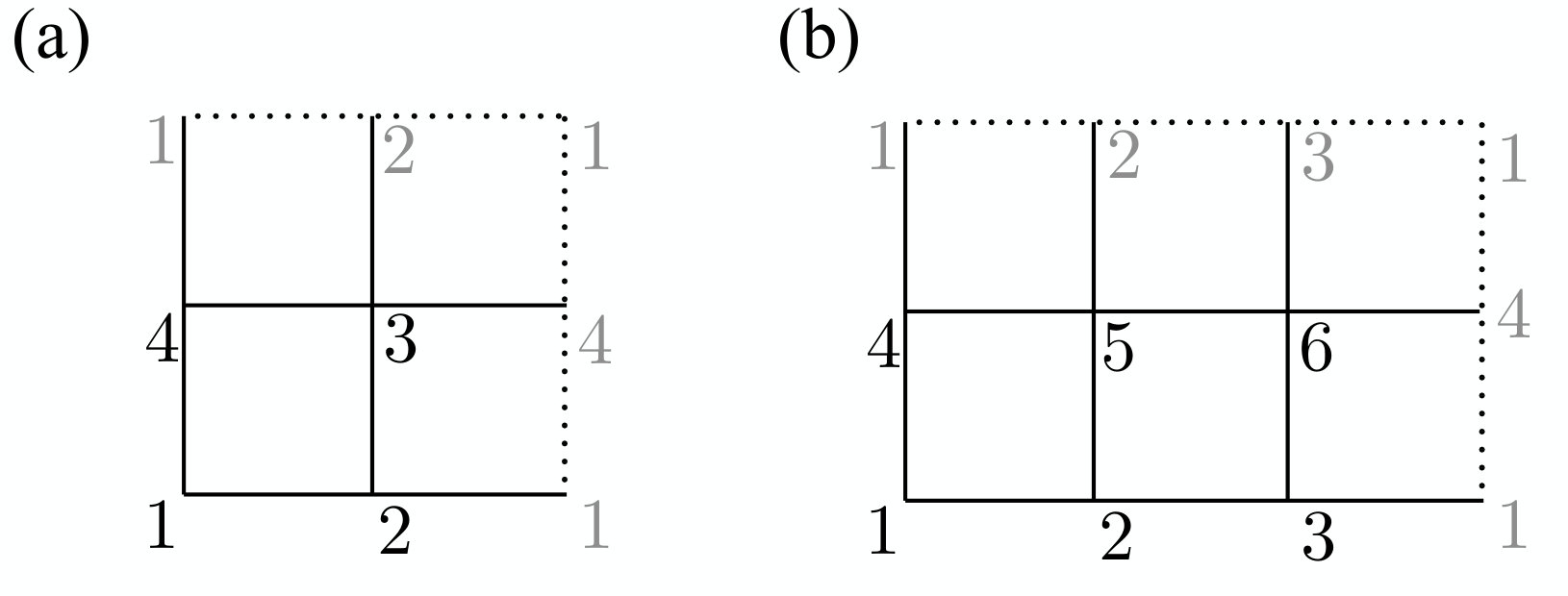 Figure 1
Peer Reviews
No public reviews on file for this paper yet. If you reviewed it on a platform where reviews are public (OpenReview, ICLR, NeurIPS, ICML), you can paste yours below so the community can read it here.
Videos
No videos yet. Explain this paper in a talk, walkthrough, or lecture? Add one.
**Bell’s Inequality and Entanglement in Qubits **
Po-Yao Changa 111e-mail address: [email protected], Su-Kuan Chub,c 222e-mail address: [email protected] and Chen-Te Mad 333e-mail address: [email protected]
a Center for Materials Theory, Rutgers University, Piscataway, New Jersey, 08854,
b Joint Quantum Institute, NIST/University of Maryland, College Park,
Maryland 20742,
c Joint Center for Quantum Information and Computer Science,
NIST/University of Maryland, College Park, Maryland 20742, USA.
d Department of Physics and Center for Theoretical Sciences,
National Taiwan University,
Taipei 10617, Taiwan, R.O.C.
We propose an alternative evaluation of quantum entanglement by measuring the maximum violation of the Bell’s inequality without performing a partial trace operation. This proposal is demonstrated by bridging the maximum violation of the Bell’s inequality and the concurrence of a pure state in an -qubit system, in which one subsystem only contains one qubit and the state is a linear combination of two product states. We apply this relation to the ground states of four qubits in the Wen-Plaquette model and show that they are maximally entangled. A topological entanglement entropy of the Wen-Plaquette model could be obtained by relating the upper bound of the maximum violation of the Bell’s inequality to the concurrences of a pure state with respect to different bipartitions.
1 Introduction
Entanglement measurements provide a way to extract quantum information from many-body wave-functions [1]. The most significant measure of entanglement is given by the entanglement entropy, with being the reduced density matrix of the subsystem , and being the density matrix of a Hilbert space . In other words, the entanglement entropy characterizes the entanglement between two complementary subsystems and . The entanglement entropy has been observed experimentally in a two-qubit system, but measuring the entanglement entropy for a higher-qubit system is still under development.
On the other hand, a qualitative detection of quantum entanglement could be performed experimentally by the observation of the violation of the Bell’s inequality [2]. The original theorem, proposed by the John S. Bell [3], states that correlations between the outcomes of different measurements of two separated particles must satisfy the inequality under the local realism. The violation of the constraints (the Bell’s inequality) indicates the quantum effect of correlations or ”entangledness” in quantum systems, which could be presented in two-qubit systems theoretically [4]. Although the violation of the Bell’s inequality may not reveal the general structure of entanglement of a quantum state, the relation between the entanglement, measured in terms of the concurrence [5], and the violation of the Bell’s inequality was shown in two-qubit systems [6, 7]. The generalization for higher-qubit systems is still unclear.
In this letter, we discuss relations between the maximum violation of the Bell’s inequality of an -qubit Bell’s operator [8] and the concurrence of a pure state when the -th qubit operators in the Bell’s operator are , where is a unit vector and are Pauli matrices. One crucial point is that the quantum entanglement depends on a partial trace operation in a system, but the Bell’s inequality does not. At first glance, this suggests that a quantitative entanglement measure by the Bell’s inequality is difficult. Thus, bridging the maximum violation of the Bell’s inequality and measures of quantum entanglement provides a huge application of an entanglement measure without performing a partial trace operation to detect the entanglement quantities.
There are various -qubit systems exhibiting topological properties such as the toric code model [9] and the Wen-Plaquette model [10]. One of the topological signature is that the total quantum dimension of quasi-paritcles could be detected from the universal term in the entanglement entropy [11], i.e., topological entanglement entropy [12, 13]. This motivates us to apply our theorem to the Wen-Plaquette model. We find that the upper bound of the maximum violation of the Bell’s inequality in the Wen-Plaquette model indicates that the ground state is maximally entangled. The use of the maximally entangled property for a six-qubit state in the Wen-Plaquette model could relate to the topological entanglement entropy via the maximum violation of the Bell’s inequality.
2 Entanglement and Maximum Violation
A Bell’s operator of qubits is defined iteratively as [8]: {\cal B}_{n}={\cal B}_{n-1}\otimes\frac{1}{2}\bigg{(}A_{n}+A_{n}^{\prime}\bigg{)}+{\cal B}^{\prime}_{n-1}\otimes\frac{1}{2}\bigg{(}A_{n}-A_{n}^{\prime}\bigg{)}, where and are the operators in the -th qubit with and being unit vectors and being the Pauli matrices. The operators and act on the rest of the qubits. Notice that we choose and with and being unit vectors. It is known that for a -qubit system, the upper bound of the expectation value of the Bell operator [8] leads to the violation of the Bell-CHSH inequality [2].
For a given density matrix , the maximum expectation value of a Bell’s operator is referred to as the maximum violation of the Bell’s inequality. Here we demonstrate a relation between the maximum violation of the Bell’s inequality and the concurrence (an entanglement quantity) in an -qubit system when the all -th operators in the Bell’s operator are and for :
[TABLE]
To proceed our derivation, we introduce an -matrix: , where is a density matrix, is the Pauli matrix with and are the site indices. We express the -matrix as a matrix with the first index being and the second index being . In a two-qubit system, the maximum violation of the Bell’s inequality is computed from a matrix defined above [7]. Now we generalize the maximum violation of the Bell’s inequality () in a -qubit system by using the -matrix.
Lemma 1**.**
The maximum violation of the Bell’s inequalities , where and are the first two largest eigenvalues of when and when .
Proof.
We first introduce two three-dimensional orthonormal vectors and such that and , where , through three-dimensional unit vectors and . The maximum violation of the Bell’s inequality is defined as with the Bell’s operator of the -qubit defined in (1). By using the -matrix and the unit vectors , , , and , in which and are unit vectors in dimensions, we have \gamma=\max_{\hat{B},\hat{B^{\prime}},\hat{a},\hat{a^{\prime}}}\bigg{(}\langle\hat{B},R(\hat{a}+\hat{a^{\prime}})\rangle+\langle\hat{B^{\prime}},R(\hat{a}-\hat{a^{\prime}})\rangle\bigg{)}\leq\max_{\hat{c},\hat{c^{\prime}},\theta}\bigg{(}2||R\hat{c}||\cos\theta+2||R\hat{c^{\prime}}||\sin\theta\bigg{)}=2\sqrt{u_{1}^{2}+u_{2}^{2}}, in which and are the first two largest eigenvalues of . The inner product and the norm are defined as and . Because and are defined in the dimensions and each unit vector and only contains parameters, it could not guarantee that parallels and parallels , except for . ∎
An earlier approach to relate the maximum violation of the Bell’s inequality and the concurrence of a pure state [5] in a two-qubit system is discussed in [6].
We generalize the relation of the maximum violation of the Bell’s inequality and the concurrence of a pure state in an -qubit system when a state is a linear combination of two product states. The concurrence is computed with respect to the bipartition with () qubits in subsystem and one qubit in subsystem .
Theorem 1**.**
*For an -qubit state |\psi\rangle=|u\rangle_{B}\otimes\big{(}\lambda_{+}|v\rangle_{B}\otimes|1\rangle_{A}+\lambda_{-}|\tilde{v}\rangle_{B}\otimes|0\rangle_{A}\big{)} with being a non-biseparable, -qubit state, , , being product states, and the maximum violation of the Bell’s inequality in an -qubit system is , in which the function is defined as:
is an even number:*
[TABLE]
* is an odd number:*
[TABLE]
Here, is the concurrence of a pure state computed with respect to the bipartition that subsystem contains qubits and subsystem contains one qubit.
Proof.
The Hilbert space for an -qubit system is bipartitioned as , in which dimensions of the sub-Hilbert spaces are and . We consider a pure state with respect to this bipartition , where and are the product states in and and are the states in . By using the property and , the coefficients can be expressed in terms of the concurrence, \lambda_{\pm}^{2}=\big{(}1\pm\sqrt{1-C^{2}(\psi)}\big{)}/2. The matrix elements of the -matrix are
[TABLE]
where . Here we choose the basis that and .
The conditions for non-vanishing matrix elements are number of matrices in , number of matrices and number of matrices in with being an even integer. The conditions for non-vanishing matrix elements are number of matrices in , number of matrices and number of matrices in with being an odd integer. The conditions for non-vanishing matrix elements are number of matrices in , number of matrices in .
The above conditions lead to the diagonal form of the matrix . In the case that is an even integer, the set of eigenvalues of is . In the case that is an odd integer, the set of eigenvalues of is .
Now we want to show , in which and are the first two largest eigenvalues of , , , and , where , , and . This equality holds when parallels and parallels . One natural choice of and could be obtained by equating two ratios, \big{|}R_{Ix}(\hat{a}_{x}+\hat{a^{\prime}}_{x})/R_{I^{\prime}y}(\hat{a}_{y}+\hat{a^{\prime}}_{y})\big{|}=\big{|}B_{I}/B_{I^{\prime}}\big{|} and \big{|}R_{Ix}(\hat{a}_{x}-\hat{a^{\prime}}_{x})/R_{I^{\prime}y}(\hat{a}_{y}-\hat{a^{\prime}}_{y})\big{|}=\big{|}B^{\prime}_{I}/B^{\prime}_{I^{\prime}}\big{|}, where and is chosen in a way that one site of the in is labeled by and in is labeled by , and other sites of the in and are labeled by the same symbols. This leads to \big{|}\hat{a}_{I,x}/\hat{a}_{I^{\prime},y}\big{|}=\big{|}\hat{c}_{n,x}/\hat{c}_{n,y}\big{|} and \big{|}\hat{a^{\prime}}_{I,x}/\hat{a^{\prime}}_{I^{\prime},y}\big{|}=\big{|}\hat{c^{\prime}}_{n,x}/\hat{c^{\prime}}_{n,y}\big{|}. When and , we could choose (\hat{c}_{n,x},\hat{c}_{n,y},\hat{c}_{n,z})^{\rm T}=\big{(}1/\sqrt{2}\big{)}(1,1,0)^{\rm T}, (\hat{c^{\prime}}_{n,x},\hat{c^{\prime}}_{n,y},\hat{c^{\prime}}_{n,z})^{\rm T}=\big{(}1/\sqrt{2}\big{)}(1,-1,0)^{\rm T}, and to show . For the other case and , we could choose , (\hat{c^{\prime}}_{n,x},\hat{c^{\prime}}_{n,y},\hat{c^{\prime}}_{n,z})^{\rm T}=\big{(}1/\sqrt{2}\big{)}(1,1,0)^{\rm T}, and to prove .
∎
We demonstrate that the maximum violation of the Bell’s inequality () is directly related to the concurrence of the pure state when the subsystem only contains one qubit and the state is a linear combination of two product states. For the maximally entangled state with the concurrence , the maximum violation of the Bell’s inequality satisfies the upper bound of the Bell’s operator of an -qubit system. Although we do not use the most generic form of the Bell’s operator, the information of the state could be complete when the -th qubit operators are measured. The extrapolation of the maximum violation of the Bell’s inequality () from the -matrix could be equivalent to direct computing of the maximum violation of the Bell’s inequality without losing generality.
3 Applications to the Wen-Plaquette Model
The Wen-Plaquette model [10] is defined by the Hamiltonian on a two-dimensional periodic lattice (torus) as , in which qubits live on the vertices with the four-spin interaction on each plaquette. A ground state of the Hamiltonian is an -qubit state with being the number of vertices. We first apply our Theorem to a four-qubit state, with the geometry of the system containing four vertices, eight edges, and four faces [14]. There are four degenerate ground states , , , . The order of each site in these four-qubit states are defined in the Fig. 1 (a). Since the maximum violation of the Bell’s inequalities for these ground states are , the ground states have concurrence according to the Theorem and are maximally entangled.
Before computing the upper bound of the maximum violation of the Bell’s inequality of a ground state of the six-qubit in the Wen-Plaquette model, we consider a six-qubit state, |G\rangle_{\rm 6-qubit}=\frac{\lambda_{+}}{\sqrt{2}}\big{(}-|111000\rangle+|001110\rangle\big{)}+\frac{\lambda_{-}}{\sqrt{2}}\big{(}|100011\rangle+|010101\rangle\big{)}, with the site labels shown in Fig. 1 (b). We relate the upper bound of the maximum violation of the Bell’s inequality to the concurrence of the state. Two different bipartitions are considered: (1) subsystem contains site number six, and (2) subsystem contains sites number five and number six. Here we use or as an indicator for the case one and the case two. According to the Lemma, we find that the upper bound of the maximum violation of the Bell’s inequality could be expressed as a function of the concurrence of the pure state when we exchange the final site with the first site in the Bell’s operator () ( We define C(\delta)\equiv\sqrt{2\bigg{(}1-2^{\delta-1}\mbox{Tr}\rho_{A(\delta)}^{2}\bigg{)}} as the concurrence of the pure state for the six-qubit state with respect to two different bipartitions.) (see Supplementary Material [15]).
In the case that , the six-qubit state is a ground state of the Wen-Plaquette model and has the concurrence , which indicates the maximally entangled state. The entanglement entropy with respect to the two bipartitions are and , which could be obtained from the -matrix through the inverse mapping, .
In general, the entanglement entropy has a form , in which the first term indicates the area law with being the length of the entangling boundary, being a constant, and is called the topological entanglement entropy. In the Wen-Plaquette model, the length of an entangling boundary is the number of bonds that connect subsystems and . We consider and to extract the area law of the entanglement entropy and obtain the topological entanglement entropy, , where is the number of distinct quasiparticles [12, 13]. Here, we demonstrate an indirect measure of the topological entanglement entropy by measuring the -matrix.
4 Outlook
Recently, the ground states in the toric code model with three sites have realized in [16] by using a 13C-labeled trichloroethylene molecule. The ground states in the Wen-Plaquette model with four sites were also measured in the Iodotrifluroethylene (C2F3I) [17, 18] by using geometric algebra procedures [19], which could give a four-body interaction [17, 18] from the combination of two-body interactions and radio-frequency pulses [19, 20]. These systems provide natural platforms for testifying our theoretical studies.
Acknowledgments
We would like to thank Ling-Yan Hung and Xueda Wen for their insightful discussion. C.-T. M would like to thank Nan-Peng Ma for his encouragement. P.-Y. C. was supported by the Rutgers Center for Materials Theory. S.-K. C. was supported by the AFOSR, NSF QIS, ARL CDQI, ARO MURI, ARO and NSF PFC at JQI.
The reference list from the paper itself. Each links out to its DOI / PubMed record.
- 1[1] A. Steane, “Quantum computing,” Rept. Prog. Phys. 61 , 117 (1998) doi:10.1088/0034-4885/61/2/002 [quant-ph/9708022].
- 2[2] J. F. Clauser, M. A. Horne, A. Shimony and R. A. Holt, “Proposed experiment to test local hidden variable theories,” Phys. Rev. Lett. 23 , 880 (1969). doi:10.1103/Phys Rev Lett.23.880
- 3[3] J. S. Bell, “On the Einstein-Podolsky-Rosen paradox,” Physics 1 , 195 (1964).
- 4[4] B. S. Cirelson, “Quantum Generalizations Of Bell’s Inequality,” Lett. Math. Phys. 4 , 93 (1980). doi:10.1007/BF 00417500
- 5[5] C. H. Bennett, D. P. Di Vincenzo, J. A. Smolin and W. K. Wootters, “Mixed state entanglement and quantum error correction,” Phys. Rev. A 54 , 3824 (1996) doi:10.1103/Phys Rev A.54.3824 [quant-ph/9604024].
- 6[6] Frank Verstraete, Michael M. Wolf “Entanglement versus Bell violations and their behaviour under local filtering operations,” Phys. Rev. Lett. 89 , 170401 (2002) doi:10.1103/Phys Rev Lett.89.170401 [quant-ph/0112012].
- 7[7] R. Horodecki, P. Horodecki, M. Horodecki, “Violating Bell inequality by mixed spin-12 states: necessary and sufficient condition,” Phys. Lett. A 200 , 5 (1995) doi:10.1016/0375-9601(95)00214-N.
- 8[8] N. Gisin and H. Bechmann-Pasquinucci, “Bell inequality, Bell states and maximally entangled states for n qubits,” Phys. Lett. A 246 , 1 (1998) doi:10.1016/S 0375-9601(98)00516-7 [quant-ph/9804045].