Quantum criticality in the coupled two-leg spin ladder Ba2CuTeO6
A. Glamazda, Y. S. Choi, S.-H. Do, S. Lee, P. Lemmens, A. N., Ponomaryov, S. A. Zvyagin, J. Wosnitza, Dita Puspita Sari, I. Watanabe, and, K.-Y. Choi

TL;DR
This study investigates quantum critical behavior in Ba2CuTeO6 using various spectroscopic techniques, revealing a crossover from paramagnetic to ordered states and identifying signatures of quantum criticality.
Contribution
It provides experimental evidence of quantum criticality in a coupled spin ladder system through multiple spectroscopic methods.
Findings
Successive magnetic state crossover observed
T-linear scaling in Raman response indicates quantum criticality
Proximity to a quantum critical point confirmed
Abstract
We report on zero-field muon spin rotation, electron spin resonance and polarized Raman scattering measurements of the coupled quantum spin ladder Ba2CuTeO6. Zero-field muon spin rotation and electron spin resonance probes disclose a successive crossover from a paramagnetic through a spin-liquid-like into a magnetically ordered state with decreasing temperature. More significantly, the two-magnon Raman response obeys a T-linear scaling relation in its peak energy, linewidth and intensity. This critical scaling behavior presents an experimental signature of proximity to a quantum critical point from an ordered side in Ba2CuTeO6.
Click any figure to enlarge with its caption.
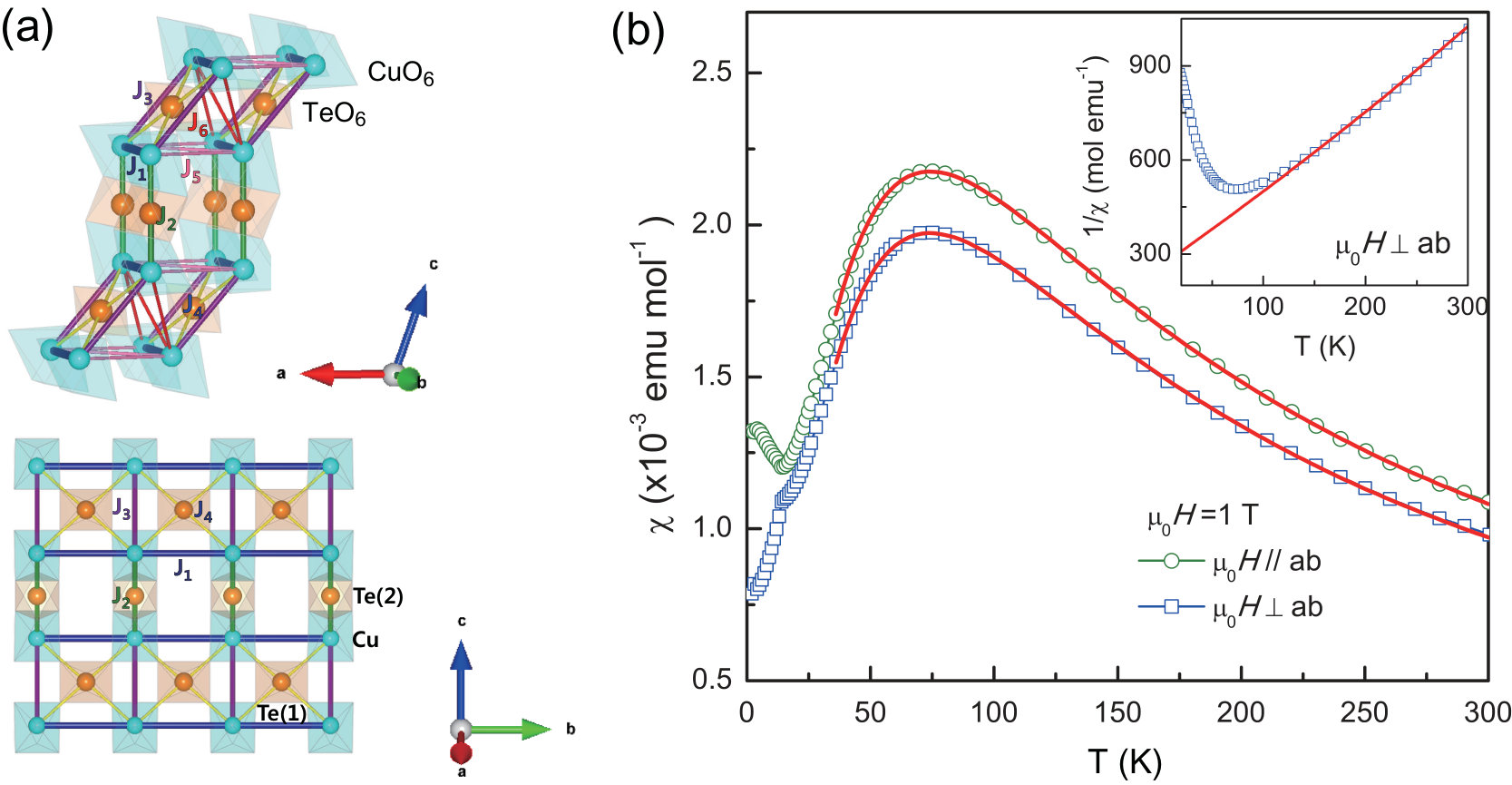 Figure 1
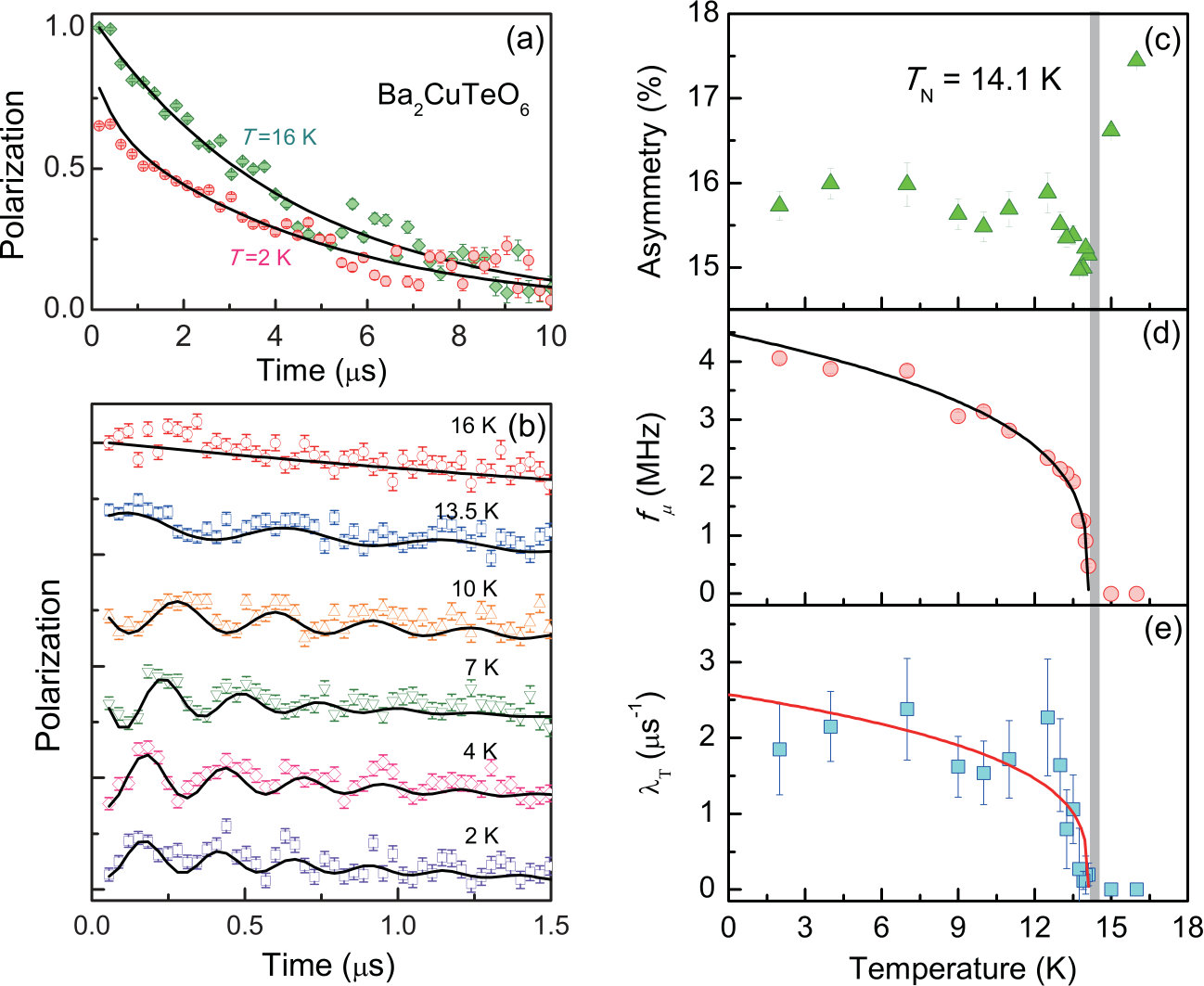 Figure 2
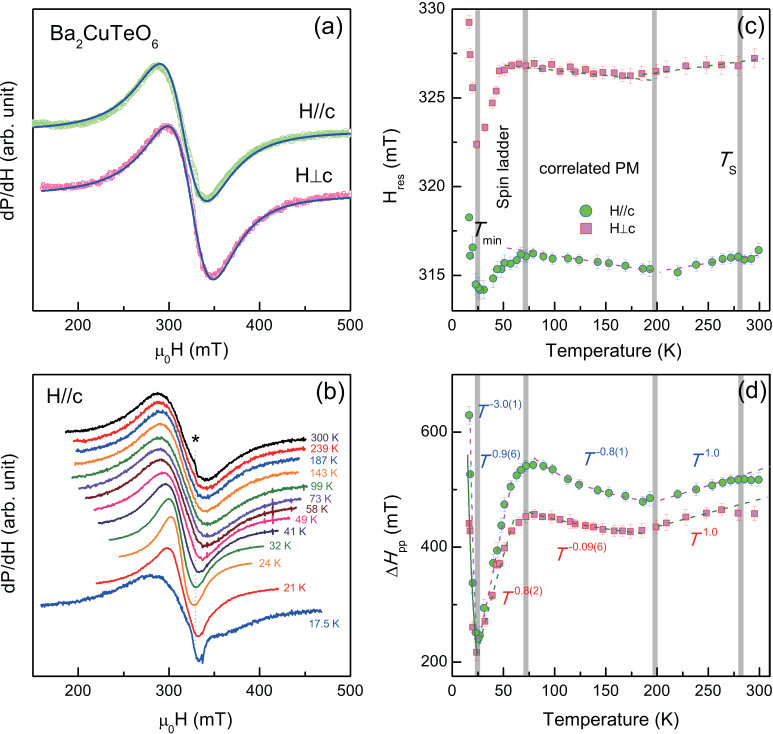 Figure 3
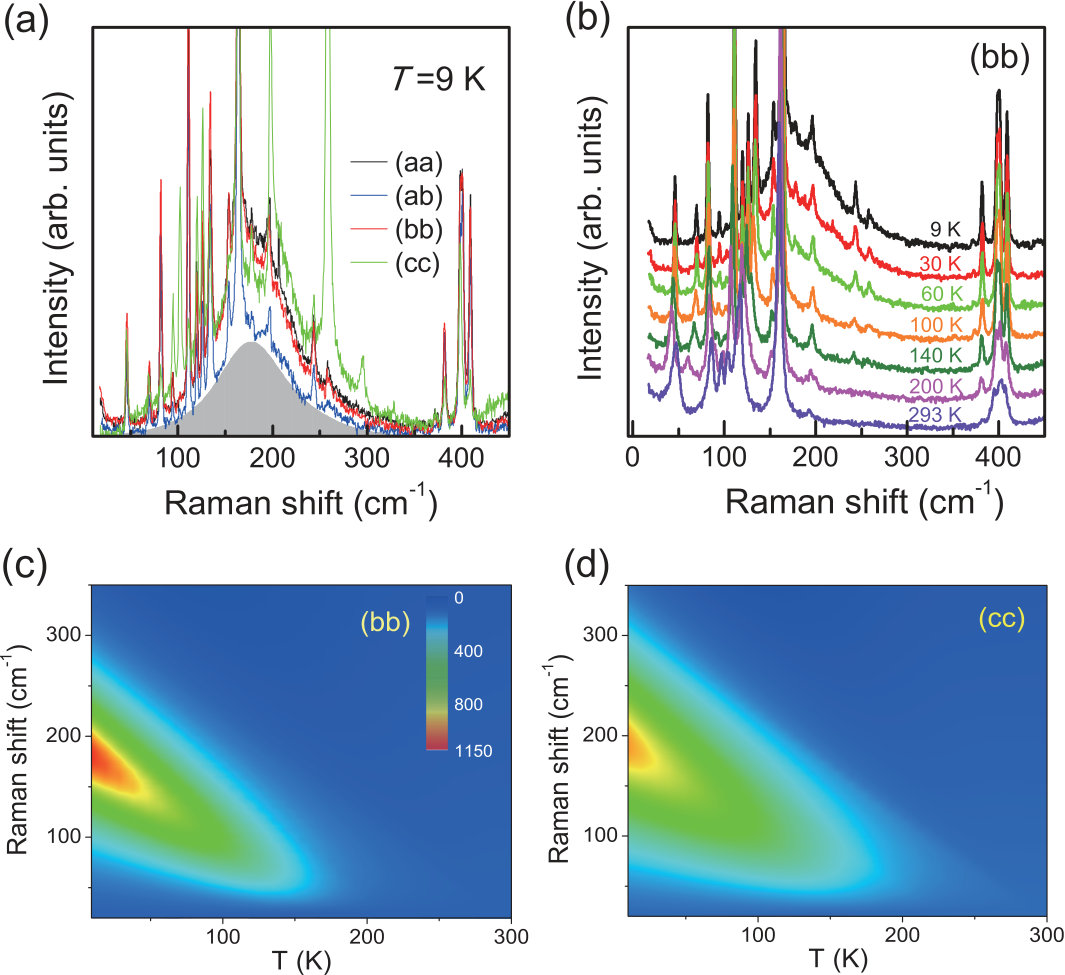 Figure 4
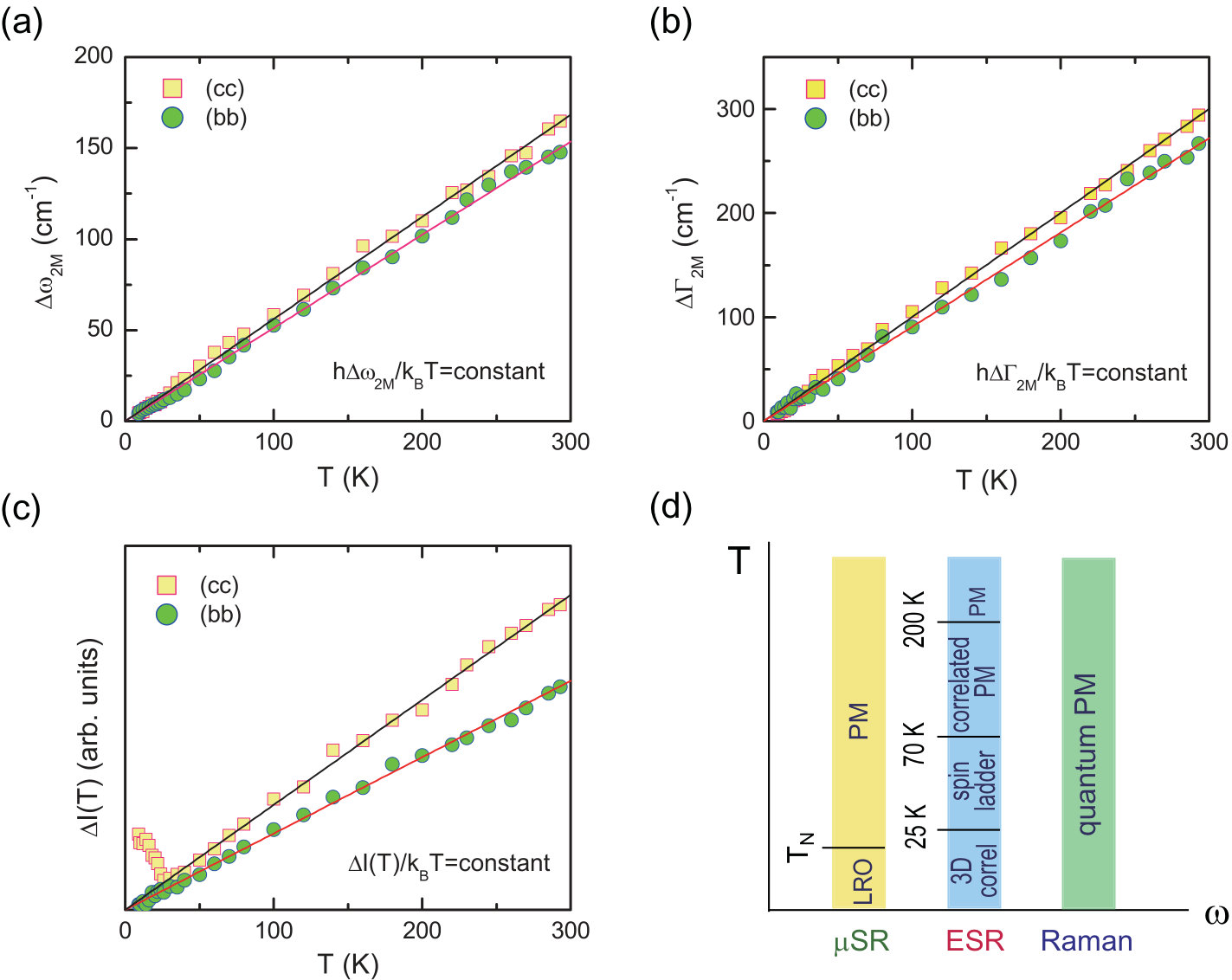 Figure 5
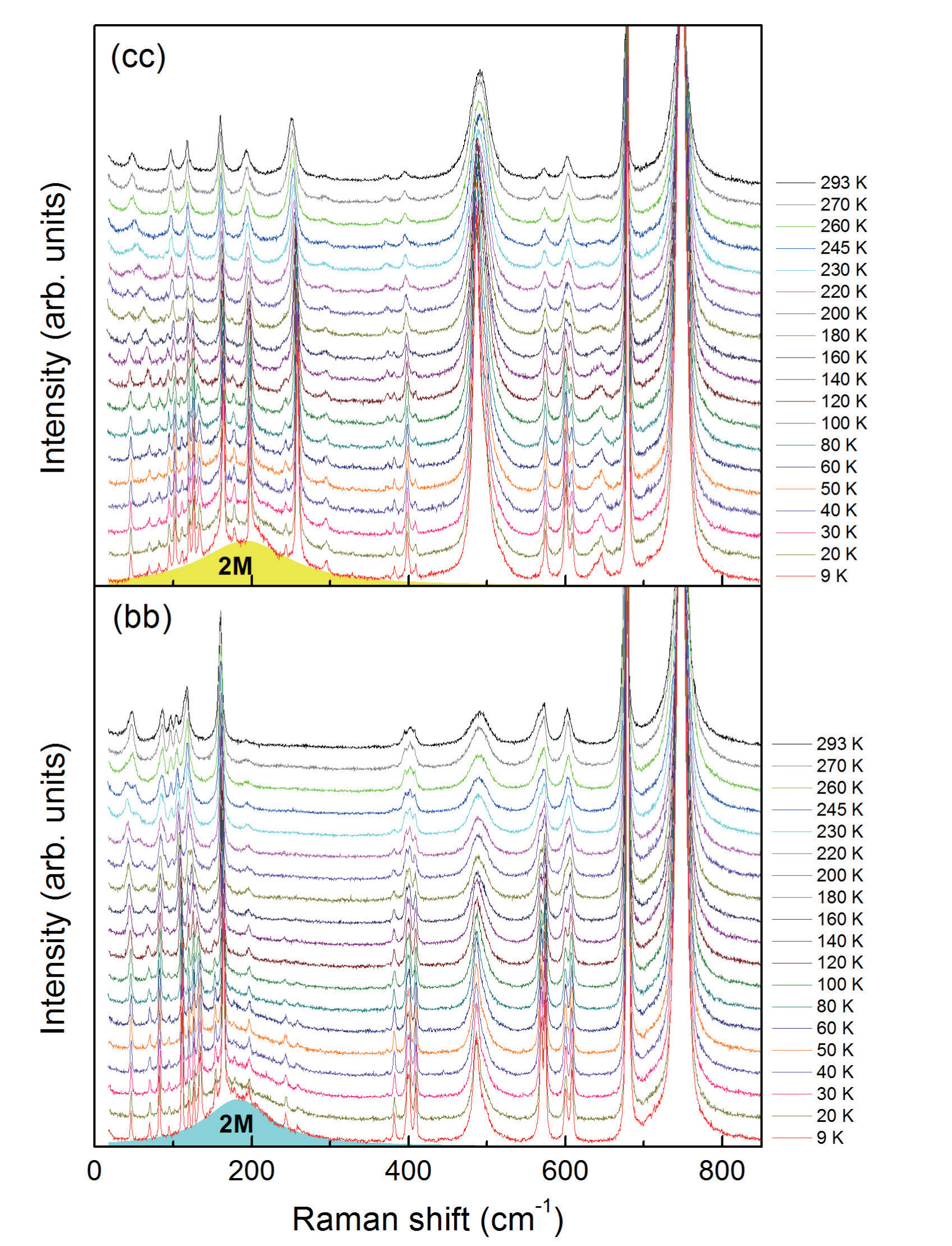 Figure 6
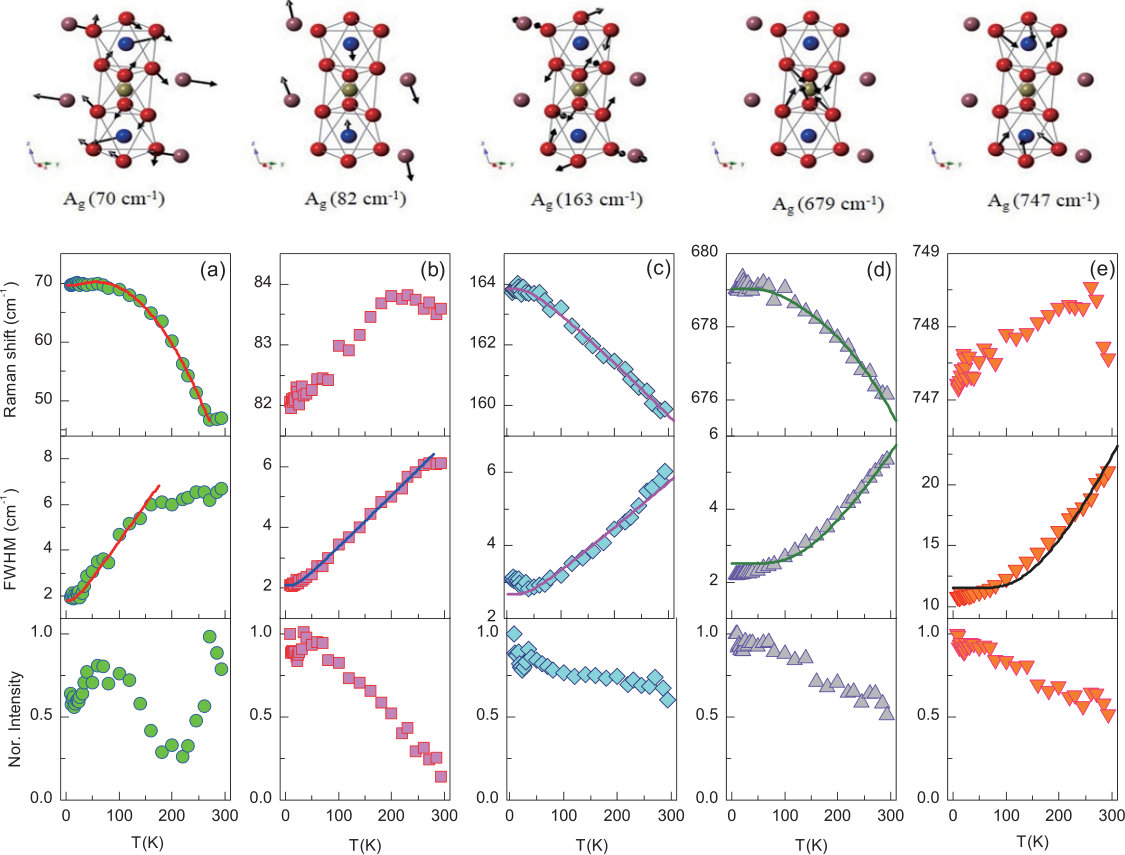 Figure 7
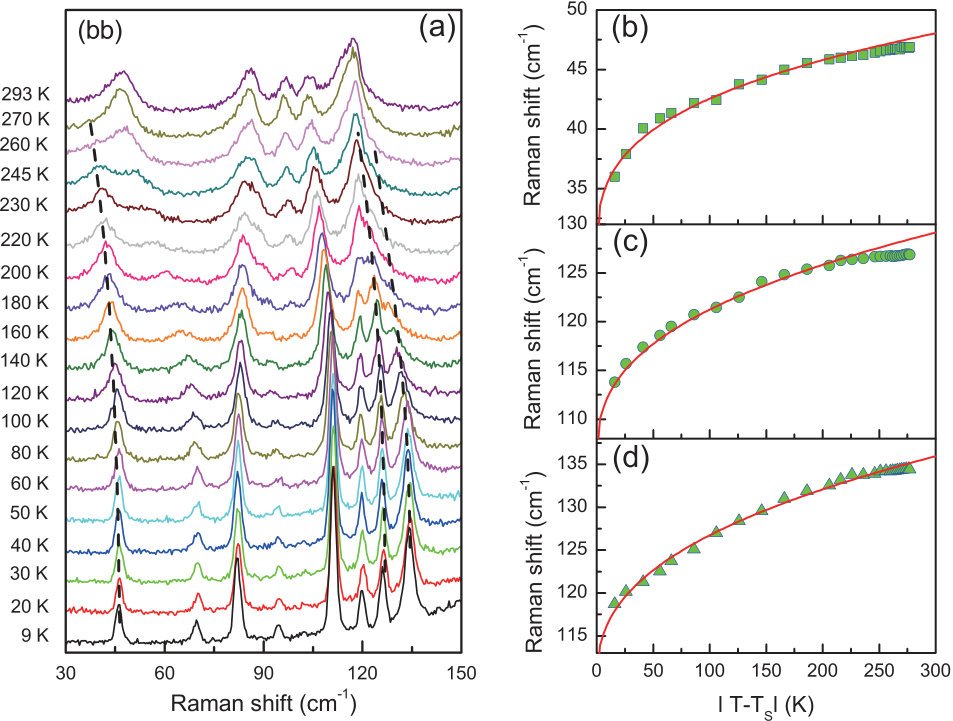 Figure 8
Peer Reviews
No public reviews on file for this paper yet. If you reviewed it on a platform where reviews are public (OpenReview, ICLR, NeurIPS, ICML), you can paste yours below so the community can read it here.
Videos
No videos yet. Explain this paper in a talk, walkthrough, or lecture? Add one.
Quantum criticality in the coupled two-leg spin ladder Ba2CuTeO6
A. Glamazda
Dept. of Physics, Chung-Ang University, Seoul 156-756, Republic of Korea
Y. S. Choi
Dept. of Physics, Chung-Ang University, Seoul 156-756, Republic of Korea
S.-H. Do
Dept. of Physics, Chung-Ang University, Seoul 156-756, Republic of Korea
S. Lee
Dept. of Physics, Chung-Ang University, Seoul 156-756, Republic of Korea
P. Lemmens
Inst. for Condensed Matter Physics, TU Braunschweig, D-38106 Braunschweig, Germany
Laboratory for Emerging Nanometrology (LENA), TU Braunschweig, 38106 Braunschweig, Germany
A. N. Ponomaryov
Dresden High Magnetic Field Lab. (HLD-EMFL), Helmholtz-Zentrum Dresden-Rossendorf, Dresden D-01328, Germany
S. A. Zvyagin
Dresden High Magnetic Field Lab. (HLD-EMFL), Helmholtz-Zentrum Dresden-Rossendorf, Dresden D-01328, Germany
J. Wosnitza
Dresden High Magnetic Field Lab. (HLD-EMFL), Helmholtz-Zentrum Dresden-Rossendorf, Dresden D-01328, Germany
Dita Puspita Sari
Department of Physics, Graduate School of Science, Osaka University, Toyonaka, Osaka 560-0043, Japan
Advanced Meson Science Laboratory, RIKEN, 2-1 Hirosawa, Wako, Saitama 351-0198, Japan
I. Watanabe
Advanced Meson Science Laboratory, RIKEN, 2-1 Hirosawa, Wako, Saitama 351-0198, Japan
K.-Y. Choi
Dept. of Physics, Chung-Ang University, Seoul 156-756, Republic of Korea
Abstract
We report on zero-field muon spin rotation, electron spin resonance and polarized Raman scattering measurements of the coupled quantum spin ladder Ba2CuTeO6. Zero-field muon spin rotation and electron spin resonance probes disclose a successive crossover from a paramagnetic through a spin-liquid-like into a magnetically ordered state with decreasing temperature. More significantly, the two-magnon Raman response obeys a -linear scaling relation in its peak energy, linewidth and intensity. This critical scaling behavior presents an experimental signature of proximity to a quantum critical point from an ordered side in Ba2CuTeO6.
I Introduction
Quantum criticality and quantum phase transitions dictated by quantum mechanical fluctuations are the key notions of current condensed matter physics. Quantum critical systems exhibit a universal scaling behavior, which results from the intertwined effects of thermal and quantum fluctuations Sondhi . In a quantum critical regime, the characteristic energy scale of low-energy excitations is determined solely by temperature. Such scaling relations are exemplified in distinct strongly correlated systems including high-temperature superconductors, heavy-fermion metals, and quantum magnets Lohneysen ; Gegenwart ; Sachdev ; Lake ; Merchant ; Keimer ; Helton ; Aronson .
Quantum spin ladders consisting of leg () and rung () couplings offer an outstanding platform to study quantum-critical spin dynamics and have a far-reaching relevance to diverse fields of physics such as Tomonaga-Luttinger liquids, magnon fractionalization, unconventional superconductivity, quantum computing, and quark confinement Maekawa ; Uehara ; Li ; Lake09 ; Thielemann ; Klanjsek ; Hong ; Schmidiger ; Jeong ; Choi . Isolated two-leg ladders with are known to have a short-range resonating valence bond (RVB) state. Depending on the ratio, their elementary excitations are given by either triplons or pairs of bound spinons White . It has been proposed that a quantum phase transition occurs from the RVB to the magnetically ordered state with growing interladder couplings Normand . In the ordered phase, the low-energy excitations are gapless spin waves arising from spontaneous symmetry breaking. In the vicinity of a quantum critical point, a number of thermally excited magnons increase progressively with temperature and thus their interaction energy becomes comparable to the energy of a single magnon, acquiring the quantum nature of the quasiparticle excitations. Experimentally, such a quantum-critical state has so far remained elusive in coupled two-leg ladders due to the lack of relevant materials.
Ba2CuTeO6 appears to be a prime candidate for a three-dimensionally networked spin ladder. In this material, two-leg spin ladders are formed by the tellurium-bridged Cu2+() ions Iwanaga ; Gibbs ; Rao . The TeO6 octahedral coordination is known for its capability to build a rich spin connectivity, while Jahn-Teller active CuO6 octahedra favor a low lattice coordination Khomskii . This structural peculiarity leads to a number of the residual interladder exchange interactions, thereby placing Ba2CuTeO6 close to a quantum critical point.
In the monoclinic phase of Ba2CuTeO6, triangular arrangements of the CuO6 and the TeO6 octahedra are stacked alternately along the axis Kohl [see Fig. 1(a)]. The Cu2+ ions are coupled through complex Cu-O-Te-O-Cu superexchange paths, giving rise to six main exchange interactions (). Depending on the relative strength of and , two different ladder models have been proposed: (i) a two-leg spin ladder with and Gibbs and (ii) a two-leg spin ladder with and within the plane Rao . The residual in- and inter-plane interladder couplings stabilize a possible low-temperature magnetic ordering.
The spin-ladder correlations are evidenced by the observation of a broad peak at K in the magnetic susceptibility and the spin-gap excitation of K inferred from the 125Te spin-lattice relaxation rate at elevated temperatures Gibbs . At low temperatures, the RVB state is preempted by the development of long-range magnetic ordering at K, indicated by a small kink in the magnetic susceptibility Gibbs ; Rao . However, the magnetic transition is largely hidden, while showing no magnetic Bragg peaks, no divergence of , and no apparent -like anomaly in the specific heat. This marginal transition points towards a thermally driven dimensional crossover from a spin ladder to a 3D magnetism with strong quantum fluctuations.
Here, we present the results of zero-field (ZF) muon spin rotation (SR), electron spin resonance (ESR), and inelastic light scattering measurements of the quantum spin ladder Ba2CuTeO6. By combining two resonance techniques, we identify a consecutive evolution of magnetic correlations from a paramagnetic through a spin ladder-like to a magnetically ordered state. The most salient finding is that the two-magnon Raman response exhibits a -linear dependence in its peak energy, linewidth, and intensity over almost two decades of temperature. This scaling behavior suggests that Ba2CuTeO6 lies close to a quantum critical point from an ordered side.
II Experimental Details
Powder samples of Ba2CuTeO6 were synthesized by the solid-state reaction method. Stoichiometric mixtures of BaCO3, CuO, and TeO2 powders were heated to 1000*∘* for 24 hours with several intermediate grindings under flowing oxygen. Single crystals were grown by the BaCl2 flux method. The prepared polycrystalline samples of Ba2CuTeO6 were mixed with the flux of BaCl2 in the molar ratio of 1:10 and then were melted in an alumina crucible. The mixture was heated at 1200*∘* for 5 hours and then slowly cooled down to 900*∘* at a rate of 2*∘*/h. Dark green crystals were obtained and were separated from the flux with hot water. Powder x-ray diffraction and magnetic susceptibility confirmed a high quality of the grown samples.
X-band ESR experiments were performed using a Bruker Elexsys E500 spectrometer at the Helmholtz-Zentrum Dresden-Rossendorf. The spectrometer measures the field derivative of the absorbed microwave power, . In the measured temperature range, the ESR signals are well described by a Lorentzian line profile , where . Here, , , and are the amplitude, the resonance field, and the peak-to-peak linewidth, respectively. The -factors are determined by the relation with GHz. Since is inversely proportional to the spin-spin relaxation rate , it gives information about spin-spin correlations.
ZF-SR measurements were carried out on the ARGUS spectrometer of RIKEN-RAL at the Rutherford Appleton Laboratory. In a SR experiment spin-polarized positive muons (momentum 28 MeV/c) are implanted into a sample. The experimentally measured quantity is the muon spin polarization function , where is the initial asymmetry, is an efficiency ratio of the forward and the backward detectors, and (t) and (t) are the muon counts at the detectors antiparallel and parallel to an incident muon spin direction. contains information on the magnitude, static distribution, and fluctuations of local magnetic fields. The collected data were analyzed using the free software package WiMDA Pratt .
A polarization-resolved Raman spectroscopy was employed to probe spin and phonon excitations of single crystals of Ba2CuTeO6. Raman scattering experiments were carried out with the excitation line nm of a Nd:YAG (neodymium-doped yttrium aluminium garnet) solid-state laser in a quasi-backscattering geometry. The scattered spectra were collected using a DILOR-XY triple spectrometer equipped with a liquid-nitrogen-cooled CCD. The samples were mounted onto an evacuated closed-cycle cryostat, while varying a temperature between 9 and 293 K. To minimize laser heating effect, we used the laser power of mW, focusing to a 0.1-mm-diameter spot on the surface of the single crystal. The heating of the sample did not exceed 2 K.
III Results and discussion
III.1 Static magnetic susceptibility
Figure 1(b) shows the temperature dependence of the magnetic susceptibility measured in an external field of T applied parallel and perpendicular to the plane. Our data are in a good accordance with the previously reported results Gibbs ; Rao . With decreasing temperature, first displays a broad maximum at about 75 K with the subsequent drop and then a small kink at about K. The 75 K broad maximum is a common feature of low-dimensional antiferromagnets developing short-range spin correlations. The bifurcation of between the two orientations for K together with the kink is associated with the onset of long-range magnetic ordering.
The high-temperature part of above 170 K can be well described by a Curie-Weiss law, yielding the Curie-Weiss temperature K and the effective magnetic moment . We analyze the magnetic susceptibility using a two-leg ladder model derived from a quantum Monte Carlo method Johnston . After the correction for the core diamagnetism , the ladder model fit to gives , the leg coupling K, , and the spin gap K. The fitting parameters for are determined to be , the leg coupling K, , and K. The exchange coupling constant agrees perfectly with the value of K estimated by a two-magnon excitation (see the section III.D).
III.2 Muon spin rotation/relaxation
To ensure the occurrence of static magnetic order, local magnetic fields were detected by ZF muon-spin rotation on a powder sample of Ba2CuTeO6. The time decay of the muon spin polarization at temperatures above and below is shown in Fig. 2(a). Upon cooling towards , we observe spontaneous muon-spin precession in together with a drop in the early-time asymmetry as shown in Fig. 2(b). This confirms the development of static local magnetic fields at the muon stopping site. The polarization curves can be well described by the sum of an exponentially relaxing cosine function and a simple exponential function: , where the two terms represent muons polarized transverse and parallel to the local magnetic fields. Here, () and () are the transverse (longitudinal) relaxing fraction and the transverse (longitudinal) relaxation rate caused by slow dynamics of the magnetic moments, respectively. is the muon-spin precession frequency.
The temperature dependences of the asymmetry, , and are plotted in Figs. 2(c)-(e). All SR parameters show distinct changes at . The initial asymmetry drops rapidly on cooling to . The missing asymmetry is ascribed to an unresolved precession signal within the pulsed muon beam time window. , corresponding to the magnetic order parameter, is fitted to the phenomenological form , where f MHz is the frequency at K and is the critical exponent. The extracted value of hardly varies with the choice of a temperature range (not shown here). We further note that the obtained critical exponent is not much different from the value of the 3D Heisenberg model. K is slightly lower than the transition temperature of 15 K determined from the uniform susceptibility. The temperature dependence of can be also modeled with the same order-parameter fit as plotted in Fig. 2(e).
III.3 Electron spin resonance
Further information on the evolution of spin and structural correlations is provided by X-band ESR measurements. In Fig. 3(a), we compare the room-temperature ESR spectra for and , which show a single Lorentzian line shape due to fast electronic fluctuations of Cu2+ spins induced by the exchange interactions. At room temperature, the -factors are evaluated to be and , typical for Cu2+ ions with a quenched orbital moment AB . As evident from Fig. 3(b), upon cooling the ESR signal evolves in a nonmonotonic manner. In addition to the main signal, we observe the weak, narrow peak at mT (denoted by the asterisk). The extra peak grows systematically in intensity with decreasing temperature without changing . Thus, it is ascribed to a small concentration of defects and orphan spins, to which ESR is sensitive.
For detailed quantification, the ESR spectra were fitted to the derivative of Lorentzian profiles. The resulting temperature dependencies of the resonance field, and the peak-to-peak linewidth, are shown in Figs. 3(c),(d). Strikingly, and shows similar temperature dependences, indicating the intriguing evolution of spin correlations as the resonance field is shifted by the buildup of internal fields. Even at temperatures above 200 K, both and exhibit a linear increase with increasing temperature, being incompatible with the temperature independence expected in a high-temperature paramagnetic regime AB . The deviation from the linear behavior at high temperatures is due to the structural transition from the monoclinic to a triclinic phase at K Kohl , giving rise to an additional relaxation channel (see Appendix for detailed discussion).
At temperatures between 75 and 200 K, follows a critical power law, with the exponent () for (). Combined with the concomitant occurrence of the weak dependence of , the critical-like line broadening can be related to the development of local spin correlations, representing a correlated paramagnetic state. On cooling below 70 K, the power law is changed to the quasilinear dependence () for () while shifts progressively toward lower fields. Particularly noteworthy is the observation of the asymptotic -linear at the temperature interval between 25 and 75 K where the static susceptibility exhibits a rapid drop [see Fig. 1(b)]. Here, we recall that the universal -linear behavior of the ESR linewidth is generic to spin chains or spin-ladder materials and pertains to one-dimensional low-energy spin excitations Oshikawa ; Ponomaryov . Thus, the apparent linear ESR line narrowing corroborates that spin-ladder-like correlations survive even in the presence of the three-dimensional interladder coupling Rao . Our ESR results are consistent with the proposed coupled two-leg ladder system, which undergoes a crossover to a decoupled ladder regime with pseudogap-type behavior at elevated temperatures Gibbs ; Rao ; Troyer . This can explain the gapped magnetic excitations observed by a 125Te NMR study Gibbs .
On approaching , shows a minimum at about K and then a strong critical increase () for (). Finally, the ESR signal is wiped out just above . As the steep increase of below accompanies a large upshift of , is linked to a crossover of the ladder correlations to three-dimensional spin correlations, bringing about a slowing down of spin fluctuations. In this regard, gives an average energy scale of the 3D interactions.
In an antiferromagnetically ordered state below , the anticipated antiferromagnetic resonance modes cannot be detected for the employed frequency either due to a large gap in the spin-wave excitation spectrum or to strong quantum fluctuations faster than 9.4 GHz. We are led to the conclusion that a series of power-law correlated regimes unveil the successive thermal crossover from a correlated paramagnet through a spin ladder to a 3D correlated state.
III.4 Magnetic Raman scattering
Next, we turn to the low-energy magnetic excitations probed through double spin-flip processes by inelastic light scattering. As shown in Fig. 4(a), a two-magnon (2M) continuum (gray shading) extending from 50 to 350 cm*-1* is observed in all measured polarizations, i.e., (aa), (bb), (cc), and (ab) scattering configurations at K. Here, the (xx) polarization denotes the polarization of the incoming and outgoing light parallel to the crystallographic axis. In this notation, (bb) and (cc) denote the leg and the rung polarization, respectively, and (aa) and (ab) are interladder polarizations. The magnetic spectra hardly vary in spectral form but in intensity as a function of polarization. With increasing temperature, the magnetic continuum is heavily damped and evolves to a quasielastic scattering at high temperatures as shown in Fig. 4(b) (see Appendix for the phonon modes).
Within the Fleury and Loudon theory FL , the two-leg ladder is predicted to exhibit the Raman continuum with a two-peak structure in an isotropic regime Schmidt . The observed single-peak continuum means that a pure isolated ladder model is not sufficient to describe the strongly coupled spin ladder of Ba2CuTeO6. As the isotropic ladders have a dominant 2D nature of local spin fluctuations, the 2M continuum has a primary peak energy at as in a case of two-dimensional antiferromagnets Lyons ; Gozar ; Gruninger ; Windt . Our peak position of cm*-1* yields the spin exchange interaction of K. This value is comparable to K evaluated from the nearly isotropic ladder model Gibbs , but is twice K estimated from the modified chain model Rao . This estimate together the asymptotic -linear at elevated temperatures suggests that the spin-ladder model provides a first approximation to the magnetism of Ba2CuTeO6.
The magnetic Raman scattering intensity scales in each polarization with the strength of the exchange interactions as it is given by . The ratio of the integrated scattering intensity is found to be . The comparable intensity between the parallel polarizations confirms a three-dimensionally networked spin ladder with Freitas . Shown in Figs. 4(c),(d) are the color contour plots of the magnetic Raman scattering intensity representing the temperature dependence of the Raman shift in (bb) and (cc) polarizations. The magnetic response is obtained after subtracting the sharp phonon peaks from the raw spectra. Upon heating, the 2M continuum softens and weakens in a quasilinear manner.
We now detail the temperature dependence of the 2M parameters. Generically, the dependence of the 2M frequency, linewidth, and intensity is given by , , and , respectively. The first , , and terms correspond to the energy, lifetime, and intensity of the quasiparticles at K. The second terms are associated with the renormalization and damping of the quasiparticles by thermal and quantum fluctuations. Remarkably, as shown in Figs. 5(a)-(c), the dependent part of the 2M parameters is determined by temperature itself: , , and are constant over almost two decades of temperature (see the solid linear fits). The observed linear dependence means that the only relevant energy scale is the thermal energy , lacking any energy scale of the underlying microscopic description. The universal scaling of , , and suggests that the magnon excitations acquire a quantum nature at finite temperatures, indicating the proximity to a quantum phase transition. This is supported by our ESR data that evidence the predominance of the RVB-type correlations at elevated temperatures.
We stress that these characteristics are fundamentally different from a thermal critical behavior of magnons and triplons. As the temperature is increased through in conventional antiferromagnets, magnons rapidly dampen and soften by thermal fluctuations and the integrated intensity grows strongly toward saturation in a high- paramagnetic state Cottam ; Choi08 . In a case of spin gapped systems, the peak energy and linewidth of triplons hardly vary with temperature while their intensity is gradually suppressed due to the thermal depletion of singlets Choi05 . In this regard, the quasiparticles of Ba2CuTeO6 are described by neither magnons nor triplons.
In Fig. 5(d), we sketch the phase diagram of Ba2CuTeO6. A combination of SR, ESR, and Raman scattering techniques unveils the distinct aspect of magnetic correlations, depending on a frequency (time) window. ZF-SR allows identifying the static magnetic order at K. However, only 8 % of the expected total magnetic entropy is recovered across the magnetic transition at , implying that most of entropy is released above Rao . The power-law dependence of the ESR linewidth with changing exponents evidences a successive crossover from a paramagnetic through a spin-liquid-like into a 3D correlated state with decreasing temperature. In contrast, the 2M Raman response is hardly affected by the successive transitions observed by SR and ESR. Significantly, the 2M parameters obey a scaling relation over the entire measured temperature range. As the 2M peak energy of has a much larger energy scale than the residual 3D interactions of , the characteristic features of the 2M response are dominated by short-time spin correlations. Thus, the short-wavelength magnetic excitations behave like quantum quasiparticles. In a long-wavelength limit, however, thermal fluctuations become stronger, thereby the distinct magnetic correlations show up within a gigahertz frequency window. The frequency-dependent magnetic behavior may be a generic feature of the system which is in the vicinity of the transition to 3D antiferromagnetic order.
IV CONCLUSIONS
To conclude, we have presented a combined study of ZF-SR, ESR, and Raman scattering measurements on the coupled two-leg spin ladder Ba2CuTeO6. The former two resonance techniques disclose a consecutive evolution of spin correlations, suggesting the presence of several different magnetic energy scales. At elevated temperatures, a crossover to a decoupled ladder takes place. Strikingly, we find that the two-magnon Raman response representing short-time spin correlations obeys a -linear scaling relation in its parameters over a wide range of temperature. This scaling behavior signifies that the local spin correlations are governed by the competition between thermal and quantum fluctuations and that Ba2CuTeO6 is close to a quantum critical point from an ordered side.
ACKNOWLEDGMENTS
This work was supported by the Korea Research Foundation (KRF) grant funded by the Korea government (MEST) (Grant No. 20170065). S.H.D. was supported by Chung-Ang University Research Assistant Fellowship.
APPENDIX: Phonon Raman scattering
According to the structural analysis, the monoclinic crystal structure of Ba2CuTeO6 undergoes a structural phase transition to the triclinic structure at about 287 K Kohl . The factor group analysis for the monoclinic crystal symmetry yields the total irreducible representation for Raman-active modes: . In the low-temperature triclinic phase, one expects the total of 27 one-phonon Raman-active modes: .
Figure 6 presents the temperature dependence of the Raman spectra of Ba2CuTeO6 measured in (cc) and (bb) polarizations in the frequency range of . At room temperature, we observe phonon modes and in the low-temperature phase phonon peaks, which agree well with the factor group predictions. This confirms the occurrence of the structural phase transition. The sharp phonons are superimposed on top of a broad continuum centered at 185 cm*-1* (denoted by shadings). The continuum is ascribed to a two-magnon excitation, judging from its energy scale and temperature dependence. With increasing temperature, the two-magnon continuum shifts to lower energies and is systematically suppressed. We note that the peak energy of the two-magnon scattering is larger than twice the spin gap of K, advocating the presence of sizable inter-leg interactions beyond a simple isolated two-leg model. Further discussions on the two-magnon scattering are provided in the main text.
Next, we pay our attention to the phonon peaks. The phonon modes can be classified into three spectral regimes in accordance with the frequency separation: (I) , (II) , and (III) . The low-energy phonon bands involve the displacement of the heaviest Ba atoms and the rotations of the CuO6 and the TeO6 octahedra. The intermediate-energy bands are assigned to the bending vibrations of the CuO6 and the TeO6 octahedra. The high-energy bands correspond to the breathing vibrations of the CuO6 and the TeO6 octahedra. Upon heating, the phonon modes exhibit intriguing changes in number, frequency, and linewidth as a function of temperature. To quantify their evolution as a function of temperature, we fit them to a sum of the Lorentzian profiles. The temperature dependence of the resulting phonon parameters is summarized in Fig. 7 for the five representative peaks at (a) 69.6, (b) 82.1, (c) 163.8, (d) 679 and (e) 747.2 cm*-1* together with their normal modes.
Upon heating, the 69.6 cm*-1* mode exhibits a giant softening by about 22.5 cm*-1*, being in stark contrast to the weak temperature dependence observed in other modes. The observed frequency shift is much larger than the several cm*-1* expected from lattice anharmonicity. As this mode involves the combined rotational vibrations of the CuO6 octahedra about the axis and out-of-phase motions of the Ba and Cu atoms in the plane (see Fig. 7), the large softening implies that the structural phase transition brings about the substantial octahedral tilting and rotations. The temperature dependence of the linewidth cannot be described by an anharmonic model over a larger temperature range (see the solid line) Balkanski . In addition, the normalized intensity shows a nonmonotonic variation with temperature, indicating a modulation of the electronic polarizability induced by the structural phase transition. The 82 cm*-1* mode involves out-of phase vibrations of the Ba and Cu atoms in the plane. Remarkably, with increasing temperature the 82 cm*-1* mode displays even a hardening by 1.7 cm*-1* with the subsequent small softening by 0.5 cm*-1* above 180 K. This behavior is opposite to the anticipated hardening. The small anomaly at about 35 K is observed in the peak position, the linewidth and the normalized intensity.
The 163 cm*-1* mode is associated with twisting vibrations of the CuO6 octahedra and out-of phase motions of the Ba(2) atoms along the axis. The 679 cm*-1* mode corresponds to bending vibrations of the TeO6 octahedra. For both modes, the phonon parameters are largely described by the anharmonic model. Small anomalies in the peak position, the linewidth and the normalized intensity are discernible at about 35 K. The 747 cm*-1* mode involving stretching vibrations of the threefold octahedral blocks displays a similar temperature dependence found in the 82 cm*-1* mode. Overall, the phonon modes show an intriguing temperature dependence reflecting the structural transition.
The direct consequence of the second-order phase transition is the presence of soft modes in the Ag symmetry. Indeed, we are able to identify at least three soft modes at 47, 126 and 134 cm*-1* as plotted in Fig. 8(a). Upon approaching the phase transition, these phonons shift to lower energies and finally disappear at about K [see the dashed lines in Fig. 8(a)]. Their frequencies are plotted in Figs. 8(b)-(d) as a function of . Fitting these energies to a power law, , gives a reasonable description with [see the solid lines in Figs. 8(b)-(d)]. This is far from a mean-field value of .
The reference list from the paper itself. Each links out to its DOI / PubMed record.
- 1(1) S. Sondhi, S. M. Girvin, J. P. Carini, & D. Shahar, Continuous Quantum Phase Transitions , Rev. Mod. Phys. 69 , 315 (1997).
- 2(2) H. von Löhneysen, A. Rosch, M. Vojta, & P. Wölfle, Fermi-liquid instabilities at magnetic quantum phase transitions , Rev. Mod. Phys. 79 , 1015 (2007).
- 3(3) P. Gegenwart, Q. Si, & F. Steglich, Quantum criticality in heavy-fermion metals , Nature Phys. 4 , 186 (2008).
- 4(4) S. Sachdev, Quantum magnetism and criticality , Nature Phys. 4 , 173 (2008).
- 5(5) B. Lake, D. A. Tennant, C. D. Frost, & S. E. Nagler, Quantum criticality and universal scaling of a quantum antiferromagnet , Nature Mat. 4 , 329 (2005).
- 6(6) P. Merchant, B. Normand, K. W. Krämer, M. Boehm, D. F. Mc Morrow and Ch. Rüegg, Quantum and classical criticality in a dimerized quantum antiferromagnet , Nature Phys. 10 , 373 (2014).
- 7(7) B. Keimer, R. J. Birgeneau, A. Cassanho, Y. Endoh, R. W. Erwin, M. A. Kastner, and G. Shirane, Scaling Behavior of the Generalized Susceptibility in La 2-x Sr x 𝑥 x Cu O 4+y , Phys. Rev. Lett. 67 , 1930 (1991).
- 8(8) J. S. Helton, K. Matan, M. P. Shores, E. A. Nytko, B. M. Bartlett, Y. Qiu, D. G. Nocera, and Y. S. Lee, Dynamic Scaling in the Susceptibility of the Spin- 1 2 1 2 \frac{1}{2} Kagome Lattice Antiferromagnet Herbertsmithite , Phys. Rev. Lett. 104 , 147201 (2010).