A Quantum Window Onto Early Inflation
Robert J. Hardwick, Vincent Vennin, David Wands

TL;DR
Quantum corrections to early Universe inflation dynamics enable probing much earlier epochs than classical models, expanding our observational window into the high-energy regime of gravity during inflation.
Contribution
This paper introduces the idea that quantum effects extend the observable window of inflationary dynamics into earlier epochs, beyond classical limitations.
Findings
Quantum corrections influence cosmological fluctuation statistics.
Spectator field displacements are sensitive to earlier inflationary phases.
The observable inflationary window can be extended by many orders of magnitude.
Abstract
Inflation in the early Universe is one of the most promising probes of gravity in the high-energy regime. However, observable scales give access to a limited window in the inflationary dynamics. In this essay, we argue that quantum corrections to the classical dynamics of cosmological fields allow us to probe much earlier epochs of the inflationary phase and extend this window by many orders of magnitude. We point out that both the statistics of cosmological fluctuations at observable scales, and the field displacements acquired by spectator fields that play an important role in many post-inflationary processes, are sensitive to a much longer phase of the inflationary epoch.
Click any figure to enlarge with its caption.
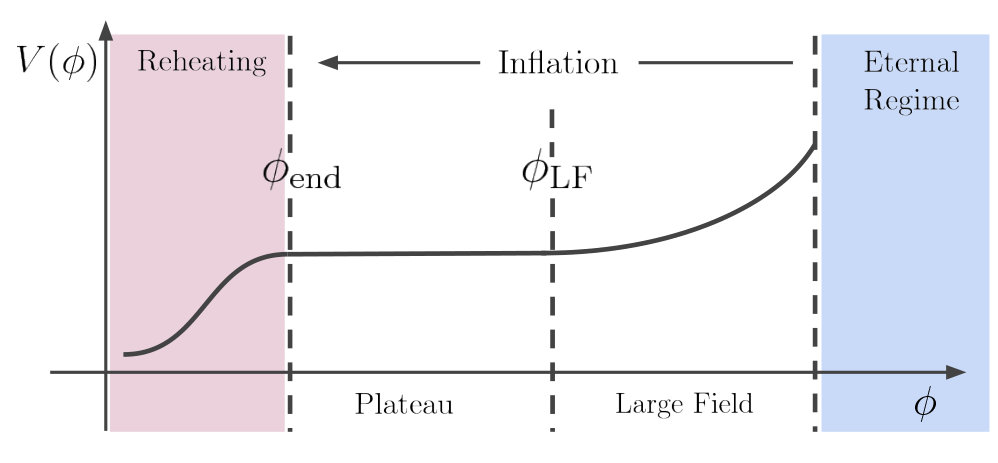 Figure 1
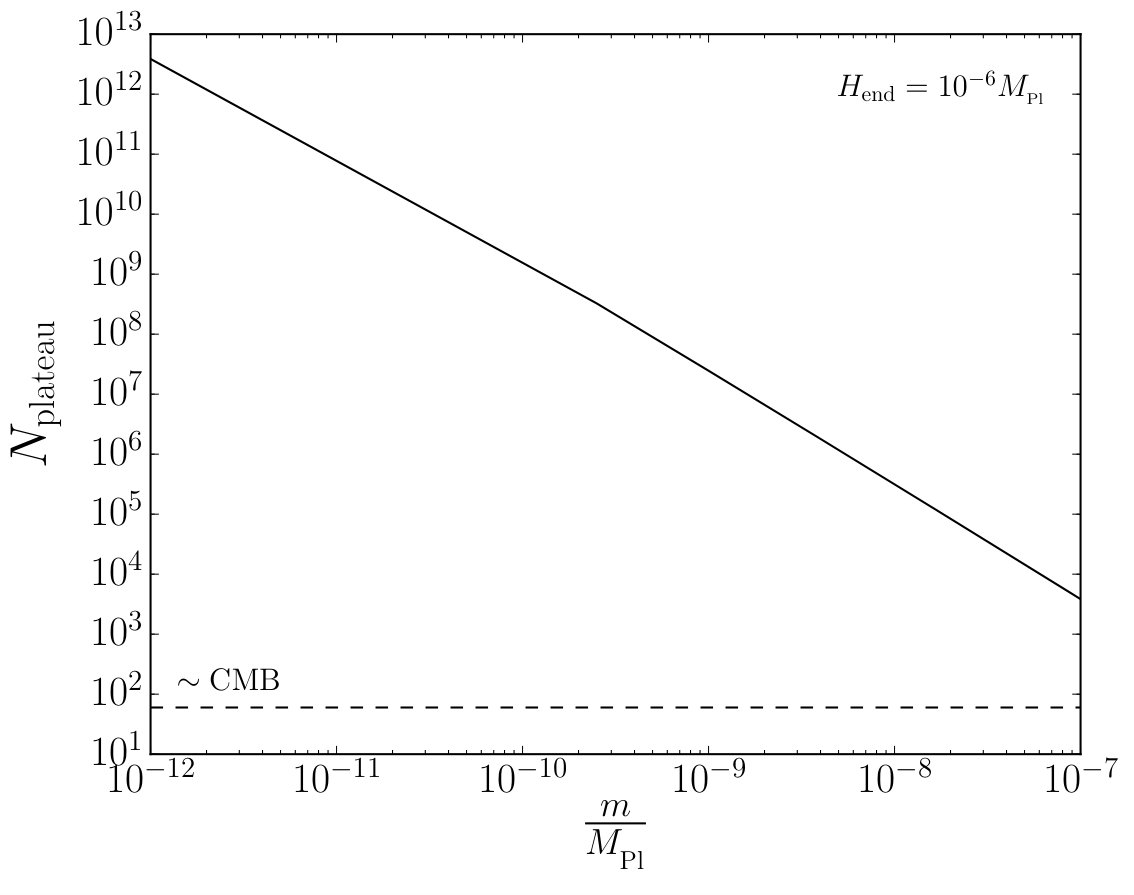 Figure 2
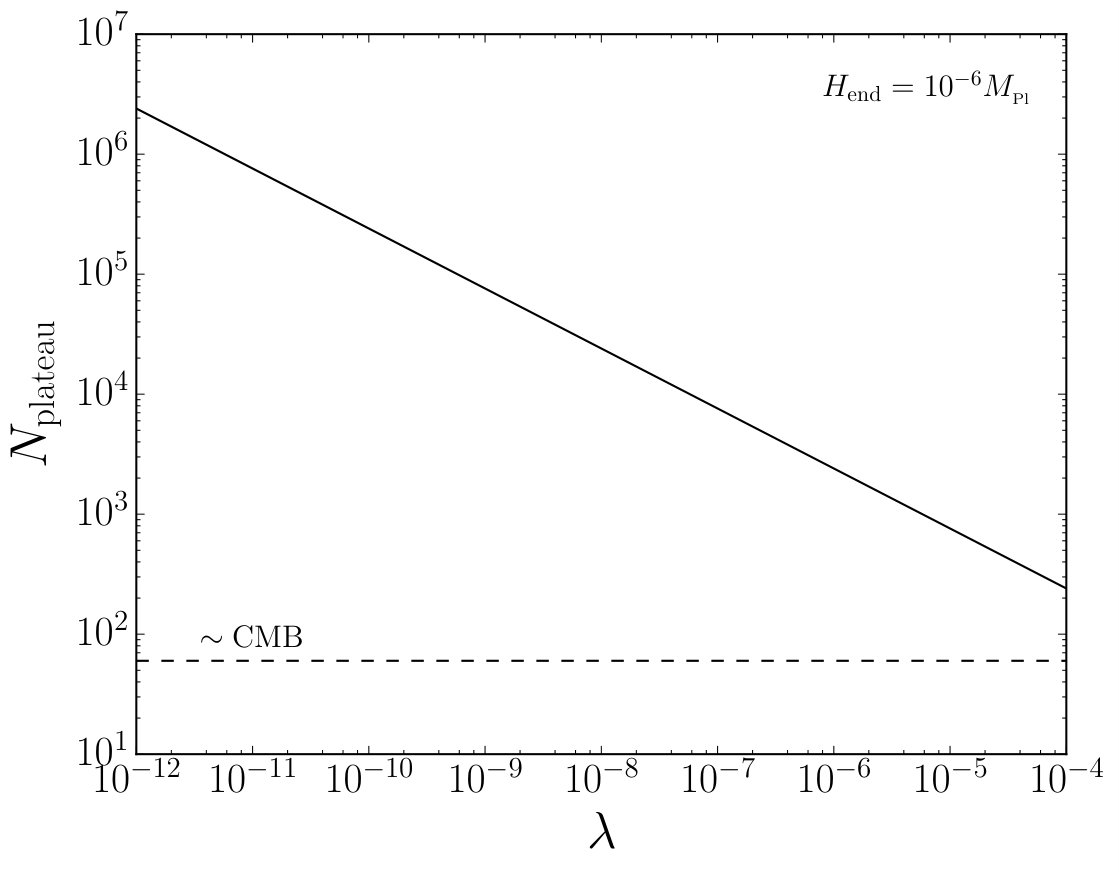 Figure 3
 Figure 4
Peer Reviews
No public reviews on file for this paper yet. If you reviewed it on a platform where reviews are public (OpenReview, ICLR, NeurIPS, ICML), you can paste yours below so the community can read it here.
Videos
No videos yet. Explain this paper in a talk, walkthrough, or lecture? Add one.
A Quantum Window Onto Early Inflation
Robert J. Hardwick
Institute of Cosmology & Gravitation,
University of Portsmouth, Dennis Sciama Building,
Burnaby Road, Portsmouth, PO1 3FX, United Kingdom
Corresponding author: [email protected]
Keywords: Inflation, Physics of the Early Universe, Quantum Gravity Phenomenology
PACS Number(s): 98.80.Cq 04.60.Bc 04.62.+v 05.10.Gg
Vincent Vennin
Institute of Cosmology & Gravitation,
University of Portsmouth, Dennis Sciama Building,
Burnaby Road, Portsmouth, PO1 3FX, United Kingdom
Corresponding author: [email protected]
Keywords: Inflation, Physics of the Early Universe, Quantum Gravity Phenomenology
PACS Number(s): 98.80.Cq 04.60.Bc 04.62.+v 05.10.Gg
David Wands
Institute of Cosmology & Gravitation,
University of Portsmouth, Dennis Sciama Building,
Burnaby Road, Portsmouth, PO1 3FX, United Kingdom
Corresponding author: [email protected]
Keywords: Inflation, Physics of the Early Universe, Quantum Gravity Phenomenology
PACS Number(s): 98.80.Cq 04.60.Bc 04.62.+v 05.10.Gg
Abstract
Inflation in the early Universe is one of the most promising probes of gravity in the high-energy regime. However, observable scales give access to a limited window in the inflationary dynamics. In this essay, we argue that quantum corrections to the classical dynamics of cosmological fields allow us to probe much earlier epochs of the inflationary phase and extend this window by many orders of magnitude. We point out that both the statistics of cosmological fluctuations at observable scales, and the field displacements acquired by spectator fields that play an important role in many post-inflationary processes, are sensitive to a much longer phase of the inflationary epoch.
Essay written for the Gravity Research Foundation 2017 Awards for Essays on Gravitation.
Cosmological inflation [1, 2, 3, 4, 5, 6, 7] is one of the only places in physics where an effect based on general relativity (the accelerated expansion) and quantum mechanics (the amplification of vacuum quantum fluctuations of the gravitational and matter fields to large-scale cosmological perturbations [8, 9, 10, 11, 12, 13]) gives rise to predictions that can be tested experimentally. For this reason, it is an ideal framework to discuss fundamental issues related to the nature of gravity and even quantum gravity. Indeed, the cosmological perturbations produced in this early epoch have been measured to very high accuracy [14, 15] in the temperature and polarisation anisotropies of the cosmic microwave background (CMB), and can be probed more generally in the large-scale structure of our Universe.
At a given physical length scale , where is the scale factor of the Universe and is a fixed comoving wavenumber, the statistical properties of cosmological fluctuations are mostly determined by the properties of the inflationary classical dynamics around the time when crosses the Hubble radius , where a dot denotes differentiation with respect to cosmic time . For example, if inflation is driven by a single scalar field with potential (where is the Planck mass), the power spectrum of curvature perturbations at scale is given by
[TABLE]
where is the value of when exits the Hubble radius. The range of scales probed e.g. in the CMB then translates into a time interval during inflation of length , measured by the number of -folds . If one includes the large-scale structure of our Universe, this window is extended but cannot exceed the last -folds of inflation. But can we ever learn about larger scales, hence earlier times?
During inflation, the coarse-grained fields (i.e. scales larger than the Hubble radius) are constantly sourced by the small-wavelength quantum fluctuations as they cross the Hubble radius. This quantum backreaction on the dynamics of the Universe can be modeled through the stochastic inflation formalism [16], where does not only evolve classically under the gradient of its potential , but also receives quantum corrections through an additional noise term
[TABLE]
where is a normalised white Gaussian noise. The system then explores parts of the potential that would be inaccessible under the classical dynamics. For example, the power spectrum (1) is now given by [17, 18, 19]
[TABLE]
Contrary to Eq. (1), this expression does not only depend on the potential evaluated at , but relies on the properties of the potential in the entire inflationary domain. For this reason, even the limited range of scales probed in the CMB may contain imprints from early features of the inflationary dynamics and in this sense, quantum diffusion in an expanding background greatly extends the observational window. In practice, when , i.e. , Eq. (3) is well approximated by Eq. (1) so the dependence on the potential function outside the standard observational window is usually Planck suppressed. This is however not the case when several fields drive inflation [20, 18, 19], or in very flat regions of the potential that can drive the dynamics at smaller (but still accessible [21]) scales than the ones probed in the CMB.
Another, less direct but more sensitive, cosmological probe sensitive to the early stages of inflation through quantum diffusion is the field displacement acquired by light spectator fields [22, Sanchez:2016lfw, 23]. Such fields do not participate in the accelerated expansion of inflation but can play an important role afterwards (e.g. Higgs fields [24] or dark matter candidates [25]) that depends on the field displacement they acquire during inflation. Let us consider the toy model depicted in Fig. 1 where the inflaton potential is made of a plateau (i.e. asymptotically constant) part between and and a monomial large-field (i.e. ) part at . Observations of the CMB constrain the potential to be of the plateau type in the last few -folds of inflation [26] so in the standard setup, the only constraint one has is that should be located at least -folds before the end of inflation.
A spectator field on top of this inflationary background evolves under its potential and according to Eq. (2) (where is to be replaced by ). If is constant, the probability distribution relaxes towards the stationary attractor profile [16]
[TABLE]
where any initial condition is erased. However, since is not exactly constant during inflation, this does not always happen on the large-field part of the inflationary potential, since the relaxation time towards Eq. (4) can be larger than the variation time scale of there. For example, if the spectator potential is quadratic, , Eq. (4) can never be attained in the early phase of large-field evolution where the typical field displacement remains strongly dependent on initial conditions. By setting at the exit point of eternal inflation (where the dynamics of is itself dominated by stochastic corrections), one can derive a lower bound on the number of -folds spent on the plateau part of the inflaton potential so that the details of the large-field phase are erased from the distribution of at the end of inflation [23],
[TABLE]
for . It is displayed in the left panel of Fig. 2 for (but the result depends only mildly on ). Compared to the standard constraint , one can see that the observational window on the inflaton potential extends by orders of magnitude. For a quartic spectator , it turns out that Eq. (4) is adiabatically tracked at early time in the large-field phase (more precisely, when ). In this case, initial conditions on the spectator field displacement can be erased during this adiabatic epoch, and the minimal number of -folds spent on the plateau such that no imprint is left from the large-field epoch on the distribution of at the end of inflation is given by [23]
[TABLE]
for . It is displayed in the right panel of Fig. 2 where one can see again that the observational window on the inflaton potential extends by orders of magnitude.
Thus the quantum dynamics of cosmological fields in the early Universe gives access to a vast range of scales that extend the classical window by orders of magnitude and allow us to explore high-energy gravity beyond the observable horizon.
Acknowledgments
We are grateful to our collaborators Chris Byrnes, Alexei Starobinsky and Jesús Torrado. This work was supported by STFC grants ST/N000668/1, ST/K502248/1 and ST/N504245/1.
The reference list from the paper itself. Each links out to its DOI / PubMed record.
- 1[1] A. A. Starobinsky, A New Type of Isotropic Cosmological Models Without Singularity , Phys. Lett. B 91 (1980) 99–102 . · doi ↗
- 2[2] K. Sato, First Order Phase Transition of a Vacuum and Expansion of the Universe , Mon.Not.Roy.Astron.Soc. 195 (1981) 467–479.
- 3[3] A. H. Guth, The Inflationary Universe: A Possible Solution to the Horizon and Flatness Problems , Phys.Rev. D 23 (1981) 347–356 . · doi ↗
- 4[4] A. D. Linde, A New Inflationary Universe Scenario: A Possible Solution of the Horizon, Flatness, Homogeneity, Isotropy and Primordial Monopole Problems , Phys.Lett. B 108 (1982) 389–393 . · doi ↗
- 5[5] A. Albrecht and P. J. Steinhardt, Cosmology for Grand Unified Theories with Radiatively Induced Symmetry Breaking , Phys.Rev.Lett. 48 (1982) 1220–1223 . · doi ↗
- 6[6] A. D. Linde, Chaotic Inflation , Phys.Lett. B 129 (1983) 177–181 . · doi ↗
- 7[7] Particle Data Group collaboration, C. Patrignani et al., Review of Particle Physics , Chin. Phys. C 40 (2016) 100001 . · doi ↗
- 8[8] A. A. Starobinsky, Spectrum of relict gravitational radiation and the early state of the universe , JETP Lett. 30 (1979) 682–685.