On Becker's univalence criterion
Juha-Matti Huusko, Toni Vesikko

TL;DR
This paper investigates the univalence of analytic functions in the unit disk under a specific growth condition, extending Becker's criterion and exploring implications for harmonic functions and function classes.
Contribution
It extends Becker's univalence criterion to cases where the constant exceeds 1, identifying conditions for univalence in horodiscs and generalizing to harmonic functions.
Findings
Functions remain univalent in certain horodiscs for C>1
Provides conditions for boundedness, Bloch space membership, and normality
Extends univalence criteria to harmonic functions
Abstract
We study locally univalent functions analytic in the unit disc of the complex plane such that holds for all , for some . If , then is univalent by Becker's univalence criterion. We discover that for the function remains to be univalent in certain horodiscs. Sufficient conditions which imply that is bounded, belongs to the Bloch space or belongs to the class of normal functions, are discussed. Moreover, we consider generalizations for locally univalent harmonic functions.
Click any figure to enlarge with its caption.
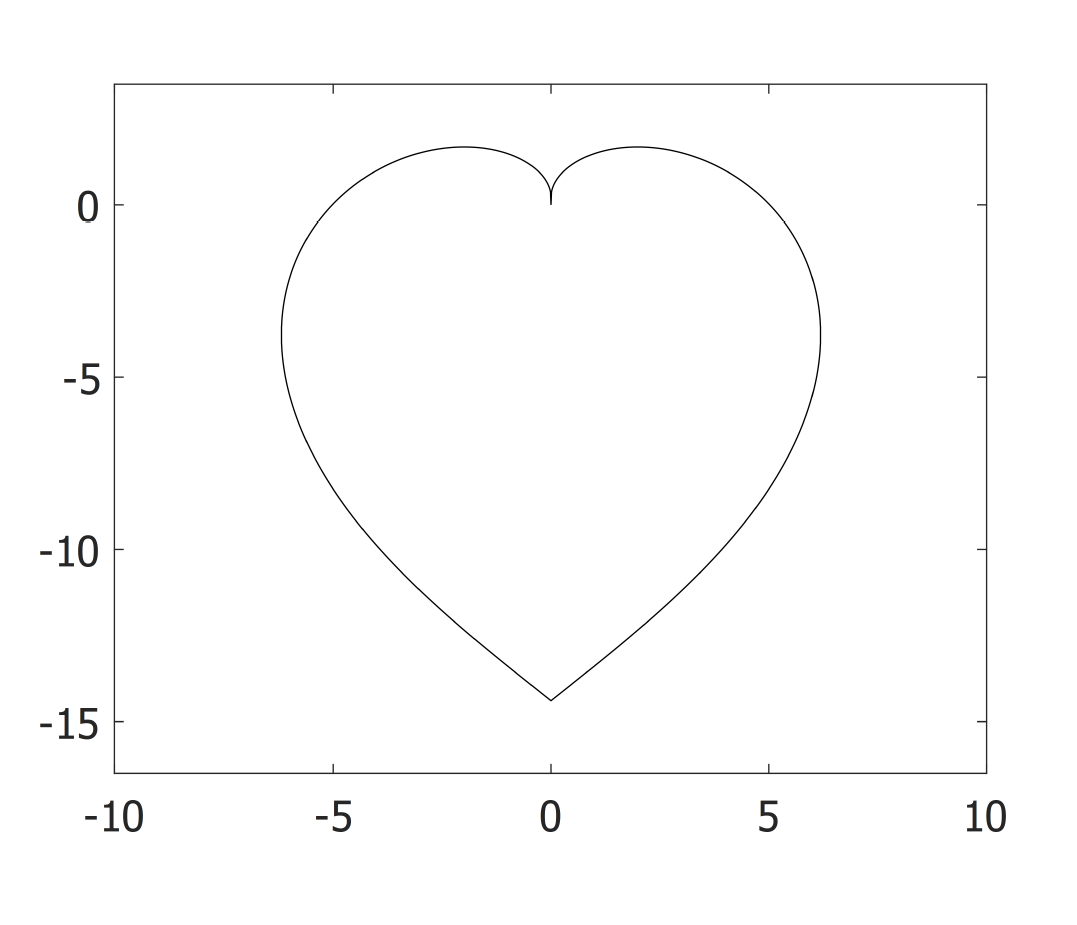 Figure 1
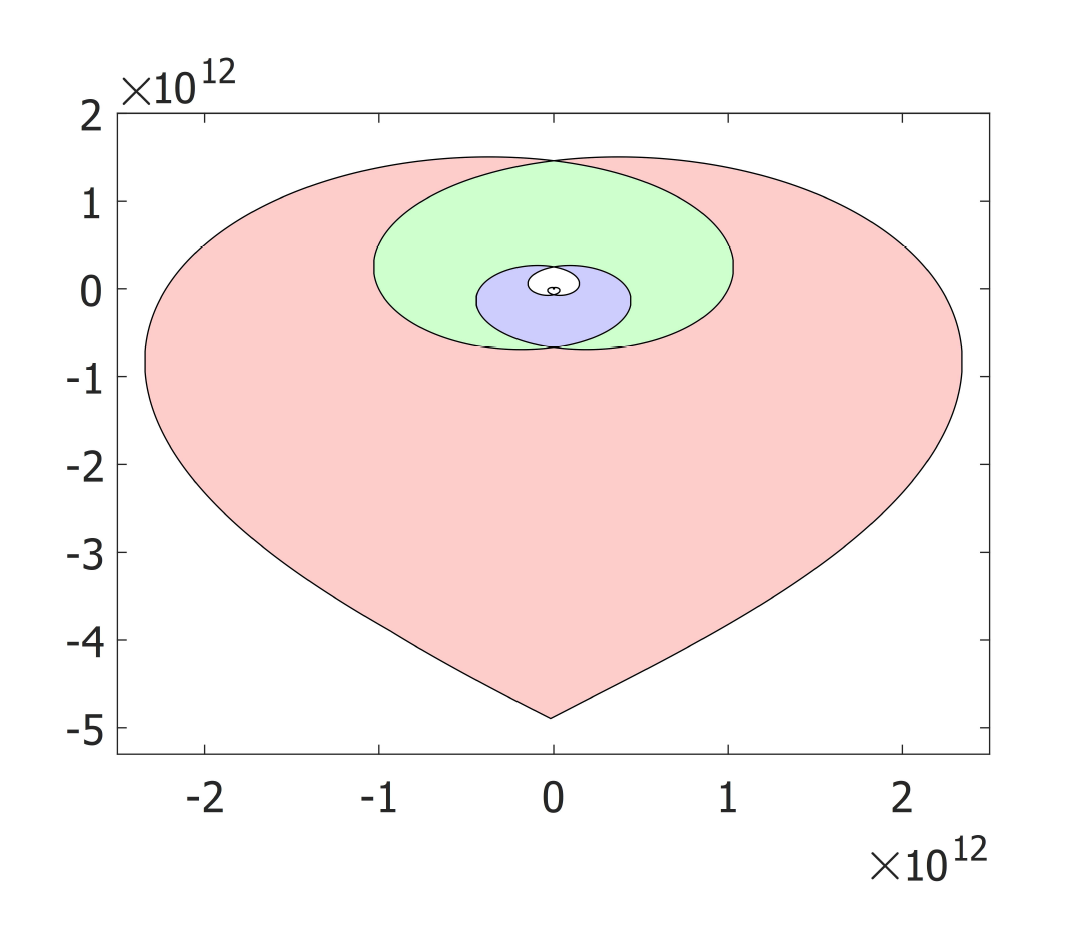 Figure 2
Peer Reviews
No public reviews on file for this paper yet. If you reviewed it on a platform where reviews are public (OpenReview, ICLR, NeurIPS, ICML), you can paste yours below so the community can read it here.
Videos
No videos yet. Explain this paper in a talk, walkthrough, or lecture? Add one.
Taxonomy
TopicsAnalytic and geometric function theory · Holomorphic and Operator Theory · Meromorphic and Entire Functions
On Becker’s univalence criterion
Juha-Matti Huusko
Department of Physics and Mathematics, University of Eastern Finland, P.O. Box 111, FI-80101 Joensuu, Finland
and
Toni Vesikko
Department of Physics and Mathematics, University of Eastern Finland, P.O. Box 111, FI-80101 Joensuu, Finland
Abstract.
We study locally univalent functions analytic in the unit disc of the complex plane such that holds for all , for some . If , then is univalent by Becker’s univalence criterion. We discover that for the function remains to be univalent in certain horodiscs. Sufficient conditions which imply that is bounded, belongs to the Bloch space or belongs to the class of normal functions, are discussed. Moreover, we consider generalizations for locally univalent harmonic functions.
Key words and phrases:
Univalence criterion, bounded function, Bloch space, normal function
2010 Mathematics Subject Classification:
Primary 34C10, 34M10
This research was supported in part by the Academy of Finland #268009, and the Faculty of Science and Forestry of the University of Eastern Finland #930349.
1. Introduction
Let be meromorphic in the unit disc of the complex plane . Then is locally univalent, denoted by , if and only if its spherical derivative is non-vanishing. Equivalently, the Schwarzian derivative
[TABLE]
of is an analytic function. If is a pole of , we define and along where . Both the Schwarzian derivative and the pre-Schwarzian derivative can be derived from the Jacobian of , namely
[TABLE]
According to the famous Nehari univalence criterion [19, Theorem 1], if satisfies
[TABLE]
for , then is univalent. The result is sharp by an example by Hille [14, Theorem 1].
Binyamin Schwarz [22] showed that if for some for , then
[TABLE]
Here is the hyperbolic segment between and and
[TABLE]
is an automorphism of the unit disc. Condition (1.3) implies that if
[TABLE]
for and some , then has finite valence [22, Corollary 1]. If (1.5) holds for , then has a spherically continuous extension to , see [7, Theorem 4].
Chuaqui and Stowe [5, p. 564] asked whether
[TABLE]
where is a constant, implies that is of finite valence. The question remains open despite of some progress achieved in [10]. Steinmetz [23, p. 328] showed that if (1.6) holds, then is normal, that is, the family is normal in the sense of Montel. Equivalently, .
A function analytic in is locally univalent, denoted by , if and only if is non-vanishing. By the Cauchy integral formula, if is analytic in , then
[TABLE]
Consequently, the inequality
[TABLE]
holds. Here, we denote for . Thus, each one of the conditions (1.2), (1.5) and (1.6) holds if is sufficiently small for . Note also that conversely
[TABLE]
see [20, p. 133].
The famous Becker univalence criterion [2, Korollar 4.1] states that if satisfies
[TABLE]
for , then is univalent in , and if , then has a quasi-conformal extension to . For , condition (1.7) does not guarantee the univalence of [3, Satz 6] which can in fact break brutally [8]. If (1.7) holds for , then is bounded, and in the case , is a Bloch function, that is, .
Becker and Pommerenke proved recently that if
[TABLE]
for and some , then has finite valence [4, Theorem 3.4]. However, the case of equality in (1.8) is open and the sharp inequality corresponding to (1.3), in terms of the pre-Schwarzian, has not been found yet.
In this paper, we consider the growth condition
[TABLE]
where is an absolute constant, for . When (1.9) holds, we detect that is univalent in horodiscs , , for some . Here is the Euclidean disc with center and radius .
The remainder of this paper is organized as follows. In Section 2, we see that under condition (1.9) the function is bounded. Weaker sufficient conditions which imply that the function is either bounded, a Bloch function or a normal function are investigated. The main results concerning univalence are stated in Section 3 and proved in Section 4. Finally in Section 5 we state generalizations of our results to harmonic functions. Moreover, for sake of completeness, we discuss the harmonic counterparts of the results proven in [10].
2. Distortion theorems
Recall that each meromorphic and univalent function in satisfies (1.2) for . This is the converse of Nehari’s theorem, discovered by Kraus [17]. In the same fashion, each analytic and univalent function in satisfies
[TABLE]
and hence (1.7) holds for , which is the converse of Becker’s theorem [21, p. 21].
The class consists of functions univalent and analytic in such that and . Among all functions in , the Koebe function
[TABLE]
has the extremal growth. Namely, by inequality (2.1), each satisfies
[TABLE]
for and . Moreover, satisfies condition (1.2), for , with equality for each .
Bloch and normal functions emerge in a natural way as Lipschitz mappings. Denote the Euclidean metric by , and define the hyperbolic metric in as
[TABLE]
where is defined as in (1.4), and the chordal metric in by setting
[TABLE]
Then each is a Lipschitz function from to with a Lipschitz constant equal to , and each is a Lipschitz map from to with constant . To see the first claim, assume that is analytic in such that
[TABLE]
By letting , we obtain , for all , and conclude that . Conversely, if , then
[TABLE]
and we conclude that is a Lipschitz map with a constant .
In the same fashion as above, we deduce that
[TABLE]
for some , is equivalent to
[TABLE]
This follows from the fact that the hyperbolic segment is contained in the disc , which yields
[TABLE]
We may deduce some relationships between the classes and . By the Schwarz-Pick lemma, each bounded analytic function belongs to . If , then both and . This is clear, since for all and since the exponential function is Lipschitz from to . Moreover, since each rational function is Lipschitz from to itself, whenever . However, it is not clear when implies .
If is univalent, then both by the estimate
[TABLE]
and (2.2). However, it is not clear if . At least, each primitive of an univalent function satisfies . Recently, similar normality considerations which have connections to differential equations, were done in [9].
If and there exists such that is univalent in each pseudo-hyperbolic disc , for , then is called uniformly locally univalent. By a result of Schwarz, this happens if and only if , or equivalently if . Consequently, the derivative of each uniformly locally univalent function is normal.
By using arguments similar to those in the proof of [4, Theorem 3.2] and in [16], we obtain the following result.
Theorem 1**.**
Let be meromorphic in such that
[TABLE]
for some .
- (i)
If
[TABLE]
then . 2. (ii)
If
[TABLE]
then .
Proof.
Let . Let and note that is non-vanishing on the circle . Then
[TABLE]
Therefore
[TABLE]
which implies the first claim. By another integration,
[TABLE]
Hence,
[TABLE]
for . ∎
The assumptions in Theorem 4(i) and (ii) are satisfied, respectively, by the functions
[TABLE]
and
[TABLE]
where , and .
By Theorem 1, if is meromorphic in and satisfies (2.3) and (2.4) for some , then . Moreover, if is also analytic in , then , and if (2.5) holds, then is bounded.
3. Main results
Next we turn to present our main results. We consider Becker’s condition in a neighborhood of a boundary point as well as univalence in certain horodiscs. Furthermore, we state some distortion type estimates similar to the converse of Becker’s theorem. Some examples which concerning the main results and the distribution of preimages of a locally univalent function are discussed.
Theorem 2**.**
Let and .
If there exists a sequence of points in tending to such that
[TABLE]
for some , then for each there exists a point such that at least two of its distinct preimages belong to .
Conversely, if for each there exists a point such that at least two of its distinct preimages belong to , then there exists a sequence of points in tending to such that (3.1) holds for some .
Example 3**.**
It is clear that (3.1), , does not imply that is of infinite valence. For example, the polynomial , , satisfies the sharp inequality
[TABLE]
although has solutions in for each when is small enough (depending on ).
The function , , satisfies the sharp inequality
[TABLE]
and for each , , the valence of is for suitably chosen points in the image set.
Under the condition (1.9), function the is bounded, see Theorem 1 in Section 2. Condition (1.9) implies that is univalent in horodiscs.
Theorem 4**.**
Let and assume that (1.9) holds for some . If , then is univalent in . If , then there exists , , such that is univalent in all discs , . In particular, we can choose .
Let be univalent in each horodisc , , for some . By the proof of [10, Theorem 6], for each , the sequence of pre-images satisfies
[TABLE]
for any Carleson square and some constant depending on . Here
[TABLE]
is called a Carleson square based on the arc and is the Euclidean arc length of .
By choosing in (3.2), we obtain
[TABLE]
where is the number of pre-images in the disc . Namely, arrange by increasing modulus, and let to deduce
[TABLE]
for some .
Theorem 5**.**
Let be univalent in all Euclidean discs
[TABLE]
for some . Then
[TABLE]
where as .
In view of (2.1), Theorem 5 is sharp. Moreover, since (2.1) implies
[TABLE]
for univalent analytic functions , the next theorem is sharp as well.
Theorem 6**.**
Let be univalent in all Euclidean discs
[TABLE]
for some . Then
[TABLE]
Example 7**.**
Let be a locally univalent analytic function in such that and
[TABLE]
Then
[TABLE]
hence (1.9) holds and is univalent in if by Becker’s univalence criterion. If is univalent, then and we obtain for ,
[TABLE]
Therefore, if , then is not univalent.
The boundary curve has a cusp at . When , the cusp has its worst behavior, and by numerical calculations the function is not univalent if . Moreover, as increases, the valence of increases, see Figure 1.
The curve is a spiral unwinding from . We may calculate the valence of by counting how many times changes its sign on . Numerical calculations suggest that the valence of is approximately equal to .
4. Proofs of main results
In this section, we proof the results stated in Section 3.
Proof of Theorem 2.
To prove the first assertion, assume on the contrary that there exists such that is univalent in . Without loss of generality, we may assume that . Let be a conformal map of onto a domain with the following properties:
- (i)
; 2. (ii)
for some ; 3. (iii)
for all , where is any pregiven number.
The existence of such a map follows, for instance, by [6, Lemma 8]. Then
[TABLE]
by (2.1), since is univalent in . Moreover, , as , by (iii). Let be a sequence such that , and define by . Then , and since belongs to the disc algebra by [6, Lemma 8], we have
[TABLE]
For more details, see [10, p. 879]. It follows that
[TABLE]
which is the desired contradiction.
To prove the second assertion, assume on the contrary that (3.1) fails, so that there exist and such that
[TABLE]
If , then (4.1) and (i)–(iii) yield
[TABLE]
for all . Hence is univalent in by Becker’s univalence criterion, and so is on . This is clearly a contradiction. ∎
Proof of Theorem 4.
Assume that condition (1.9) holds for some . Now
[TABLE]
and hence is univalent in by Becker’s univalence criterion.
Assume that (1.9) holds for some . It is enough to consider the case . Let for , and . Then
[TABLE]
By the next lemma, for , is univalent in and is univalent in . The assertion follows. ∎
Lemma 8**.**
Let . Then, for ,
[TABLE]
Proof.
Let , be defined by . Then
[TABLE]
if and only if . Hence, is strictly decreasing on and strictly increasing on . If
[TABLE]
then
[TABLE]
On the other hand, if
[TABLE]
then we obtain
[TABLE]
provided that
[TABLE]
Since and
[TABLE]
for , inequality (4.2) holds. This ends the proof of the lemma. ∎
Proof of Theorem 5.
Let , and , where is defined as in (1.4). Moreover, let
[TABLE]
The pseudo-hyperbolic disc with center and radius satisfies
[TABLE]
We deduce
[TABLE]
so that is univalent in . Now
[TABLE]
By (2.1), and therefore
[TABLE]
which implies
[TABLE]
where
[TABLE]
as . ∎
Proof of Theorem 6.
It suffices to prove (3.3) for , since trivially is univalent also in for and . Moreover, by applying a rotation , , it is enough to prove (3.3) for .
Let for . Now is univalent in and by (2.1)
[TABLE]
The assertion follows. ∎
5. Generalizations for harmonic functions
Let be a complex-valued and harmonic function in . Then has the unique representation , where both and are analytic in and . In this case, is orientation preserving and locally univalent, denoted by , if and only if its Jacobian , by a result by Lewy [18]. In this case, and the dilatation is analytic in and maps into itself. Clearly is analytic if and only if the function is constant.
For , equation (1.1) yields the harmonic pre-Schwarzian and Schwarzian derivatives:
[TABLE]
and
[TABLE]
This generalization of and to harmonic functions was introduced and motivated in [11].
There exists such that if satisfies (1.2) for , then is univalent in , see [1] and [12]. The sharp value of is not known. Moreover, if satisfies
[TABLE]
then is univalent. The constant is sharp, by the sharpness of Becker’s univalence criterion. If one of these mentioned inequalities, with a slightly smaller right-hand-side constant, holds in an annulus , then is of finite valence [15].
Conversely to these univalence criteria, there exist absolute constants such that if is univalent, then (1.2) holds for and (1.7) holds for , see [13]. The sharp values of and are not known.
By the above-mentioned analogues of Nehari’s criterion, Becker’s criterion and their converses, we obtain generalizations of the results in this paper for harmonic functions. Of course, the correct operators and constants have to be involved. Theorem 2 and its analogue [10, Theorem 1] for the Schwarzian derivative are valid as well. Moreover, Theorems 4, 5, and 6 are valid. We leave the details for the interested reader.
We state the important generalization of [10, Theorem 3] for harmonic functions here. It gives a sufficient condition for the Schwarzian derivative of such that the preimages of each are separated in the hyperbolic metric. Here is the hyperbolic midpoint of the hyperbolic segment for .
Theorem 9**.**
Let such that
[TABLE]
for some . Then each pair of points such that and satisfies
[TABLE]
Conversely, if there exists a constant such that each pair of points for which and satisfies (5.1), then
[TABLE]
where is positive, and satisfies as .
We have not found a natural criterion which would imply that is bounded. However, the inequality can be utilized. A domain is starlike if for some point all linear segments , , are contained in . Let be univalent, let be starlike with respect to and . Then the function
[TABLE]
maps into . To see this, let and let be the pre-image of the segment under . Then
[TABLE]
Consequently, if is such that is starlike and bounded, then is bounded.
The reference list from the paper itself. Each links out to its DOI / PubMed record.
- 1[1] L. V. Ahlfors and G. Weill, A uniqueness theorem for Beltrami equations , Proc. Amer. Math. Soc. 13 (1962), 975–978.
- 2[2] J. Becker, Löwnersche Differentialgleichung und quasikonform fortsetzbare schlichte Funktionen , (German) J. Reine Angew. Math. 255 (1972), 23–43.
- 3[3] J. Becker and Ch. Pommerenke, Schlichtheitskriterien und Jordangebiete , J. Reine Angew. Math. 354 , 74–94 (1984)
- 4[4] J. Becker and Ch. Pommerenke, Locally univalent functions and the Bloch and Dirichlet norm , Comput. Methods Funct. Theory 16 , 43–52 (2016)
- 5[5] M. Chuaqui and D. Stowe, Valence and oscillation of functions in the unit disk , Ann. Acad. Sci. Fenn. Math. 33 (2008), no. 2, 561–584.
- 6[6] E.A. Gallardo-Gutiérrez, M.J. González, F. Pérez-González, Ch. Pommerenke and J. Rättyä, Locally univalent functions, VMOA VMOA \mathord{\rm VMOA} and the Dirichlet space , Proc. Lond. Math. Soc. (3) 106 (2013), no. 3, 565–588.
- 7[7] F. Gehring and Ch. Pommerenke, On the Nehari univalence criterion and quasicircles , Comment. Math. Helvetici 59 (1984), 226–242.
- 8[8] J. Gevirtz, The set of infinite valence values of an analytic function . https://arxiv.org/abs/1508.05416