Ionic selectivity and filtration from fragmented dehydration in multilayer graphene nanopores
Subin Sahu, Michael Zwolak

TL;DR
This study uses molecular dynamics simulations to show how multilayer graphene nanopores can be engineered for ion selectivity based on dehydration effects, offering insights for designing selective filtration membranes.
Contribution
It reveals how pore size and number of graphene layers influence ion selectivity through dehydration, providing a new approach to membrane design.
Findings
Ion selectivity varies with pore radius and layer number.
Multilayer graphene shows dehydration-induced selectivity at larger pore sizes.
Energy barriers for ion passage are significant, enabling selective filtration.
Abstract
Selective ion transport is a hallmark of biological ion channel behavior but is a major challenge to engineer into artificial membranes. Here, we demonstrate, with all-atom molecular dynamics simulations, that bare graphene nanopores yield measurable ion selectivity that varies over one to two orders of magnitude simply by changing the pore radius and number of graphene layers. Monolayer graphene does not display dehydration-induced selectivity until the pore radius is small enough to exclude the first hydration layer from inside the pore. Bi- and tri-layer graphene, though, display such selectivity already for a pore size that barely encroaches on the first hydration layer, which is due to the more significant water loss from the second hydration layer. Measurement of selectivity and activation barriers from both first and second hydration layer barriers will help elucidate the…
Click any figure to enlarge with its caption.
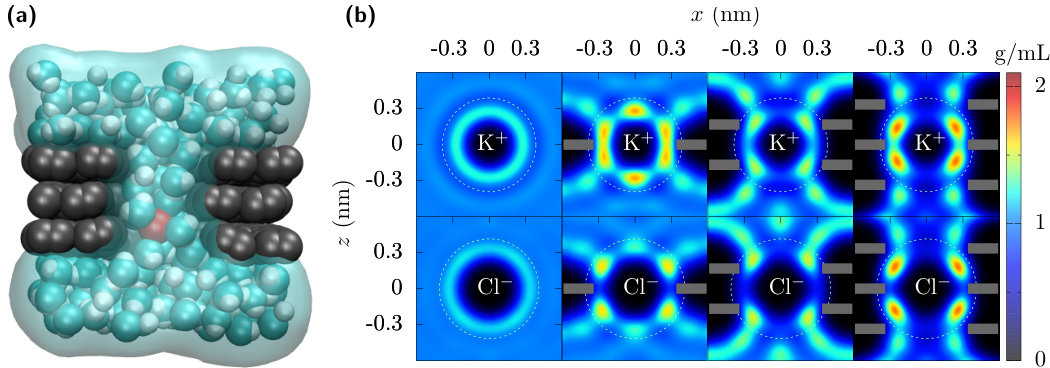 Figure 1
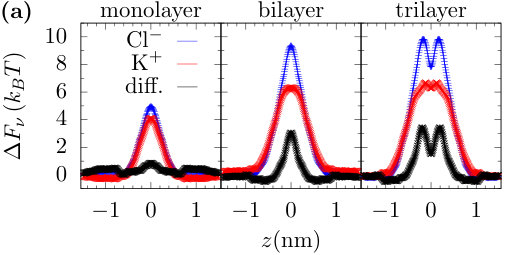 Figure 2
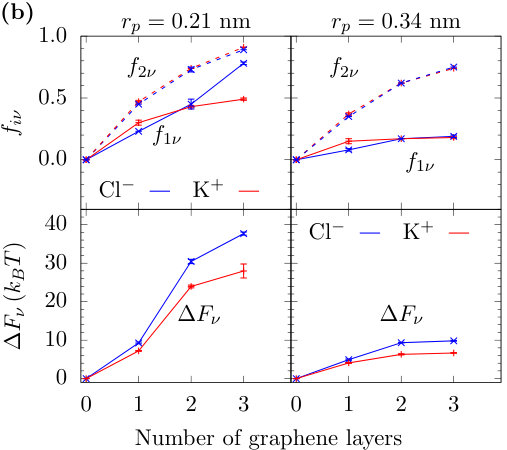 Figure 2
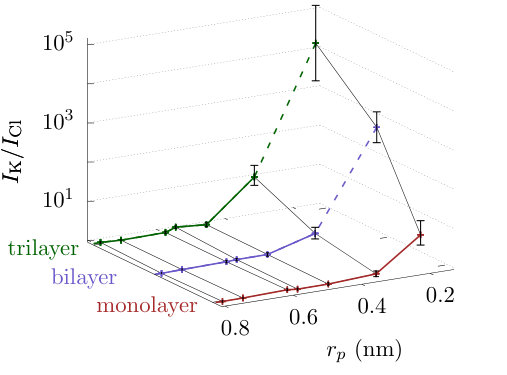 Figure 3
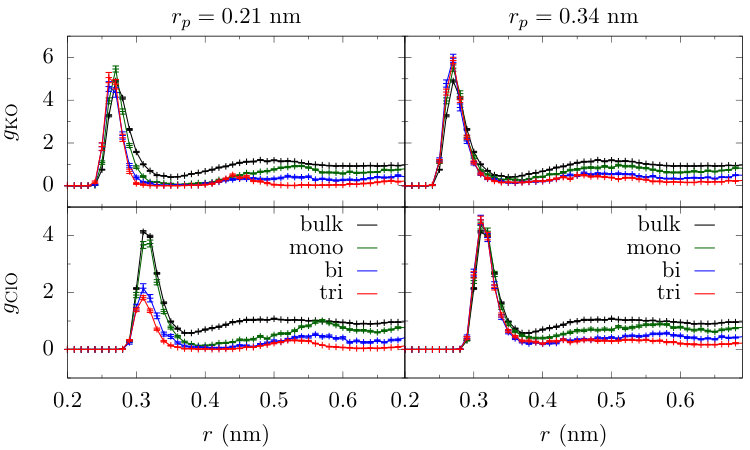 Figure 1
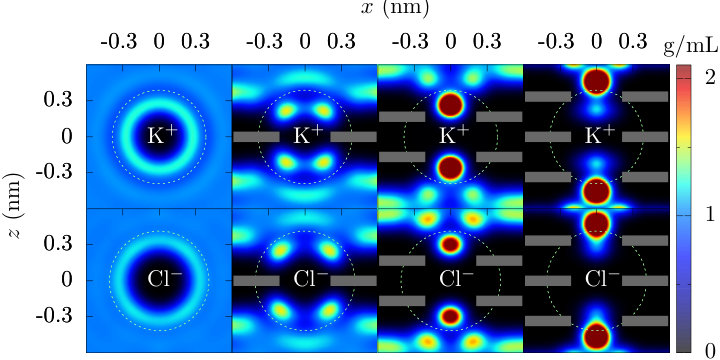 Figure 2
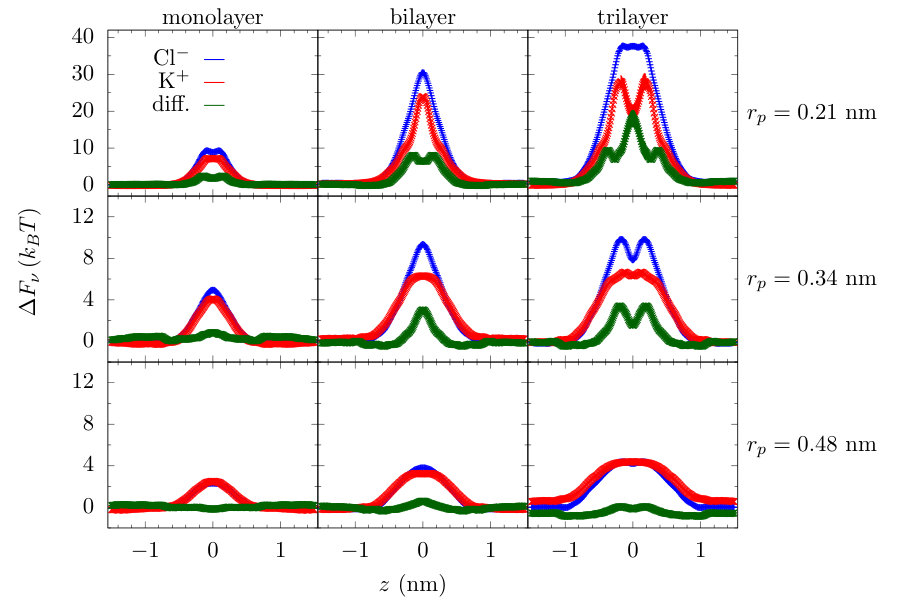 Figure 3
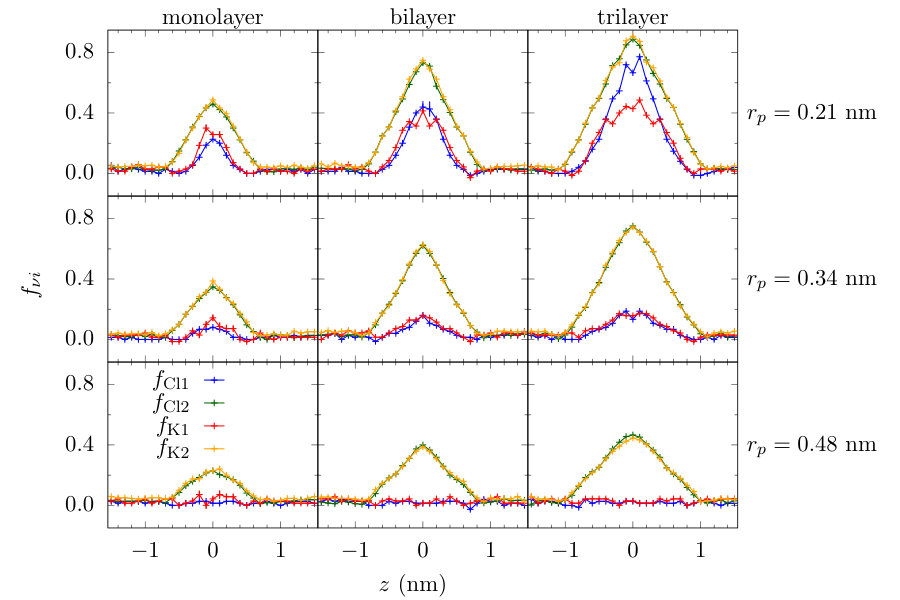 Figure 4
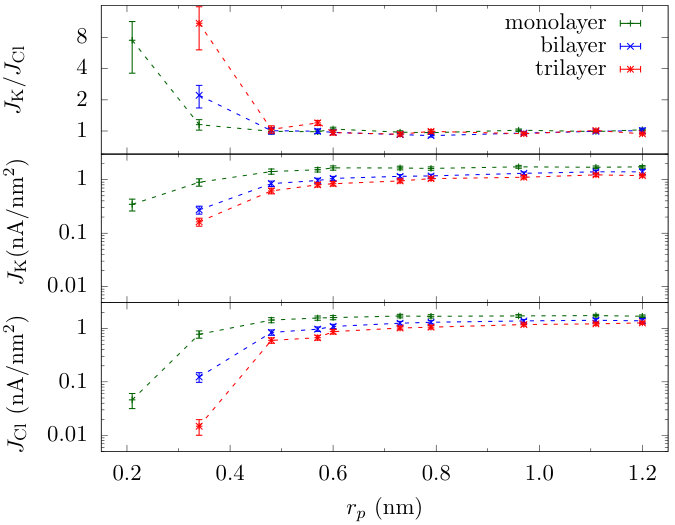 Figure 5
Peer Reviews
No public reviews on file for this paper yet. If you reviewed it on a platform where reviews are public (OpenReview, ICLR, NeurIPS, ICML), you can paste yours below so the community can read it here.
Videos
No videos yet. Explain this paper in a talk, walkthrough, or lecture? Add one.
Taxonomy
TopicsNanopore and Nanochannel Transport Studies · Graphene research and applications · Advanced biosensing and bioanalysis techniques
Ionic selectivity and filtration from fragmented dehydration in multilayer graphene nanopores
Subin Sahu
Center for Nanoscale Science and Technology, National Institute of Standards and Technology, Gaithersburg, MD 20899
Maryland Nanocenter, University of Maryland, College Park, MD 20742
Department of Physics, Oregon State University, Corvallis, OR 97331
Michael Zwolak
](mailto:[email protected])
Center for Nanoscale Science and Technology, National Institute of Standards and Technology, Gaithersburg, MD 20899
Abstract
Selective ion transport is a hallmark of biological ion channel behavior but is a major challenge to engineer into artificial membranes. Here, we demonstrate, with all-atom molecular dynamics simulations, that bare graphene nanopores yield measurable ion selectivity that varies over one to two orders of magnitude simply by changing the pore radius and number of graphene layers. Monolayer graphene does not display dehydration-induced selectivity until the pore radius is small enough to exclude the first hydration layer from inside the pore. Bi- and tri-layer graphene, though, display such selectivity already for a pore size that barely encroaches on the first hydration layer, which is due to the more significant water loss from the second hydration layer. Measurement of selectivity and activation barriers from both first and second hydration layer barriers will help elucidate the behavior of biological ion channels. Moreover, the energy barriers responsible for selectivity – while small on the scale of hydration energies – are already relatively large, i.e., many . For separation of ions from water, therefore, one can exchange longer, larger radius pores for shorter, smaller radius pores, giving a practical method for maintaining exclusion efficiency while enhancing other properties (e.g., water throughput).
Ion transport is vital to physiological processes in the cell Hille (2001); Bagal et al. (2012); Rasband (2010), where membrane ion channels control ion motion through the interplay of protein structural transitions, precisely placed dipoles and charges, and dehydration. Nanotechnologies seek to mimic and exploit the same physical mechanisms for membrane filtration and desalination. However, biological systems are complex and make use of sophisticated assembly methods, ones that remain difficult to utilize in artificial devices. Recent work, though, on two-dimensional channels in graphene laminates demonstrates ion selectivity Abraham et al. (2017) by constraining the channel height. One-dimensional channels – pores – give additional control over the confining geometry, where, for instance, recent theoretical results Sahu et al. (2017); *Sahu2016 show that experiments on sub-nanoscale, monolayer graphene pores likely display dehydration-only selectivity O’Hern et al. (2014).
Using all-atom molecular dynamics (MD) simulation and theoretical arguments, we show that the most fundamental of all processes – dehydration of ions – can be reliably tuned in bare graphene nanopores by controlling only the pore radius and number of graphene layers. This gives rise to selectivity across one to two orders of magnitude before ion currents drop to unmeasurable levels. This range of achievable selectivities is possible due to the ability to separately control the pore radius and length at the nanoscale, i.e., in the regime that influences the hydration layers via the confinement.
Figure 1 shows how the hydration layers change for mono- to trilayer graphene pores. As an ion goes from bulk into the pore, it can not bring its whole hydration layer with it, but rather some of the water molecules are blocked from entering the pore. The shedding of some of the hydration gives a free energy barrier, a simple estimate of which is,
[TABLE]
where, ( ) is the fractional dehydration (energy) in the hydration layer Zwolak et al. (2009, 2010). The fractional dehydration depends on the confinement via the pore radius and length (number of graphene layers), as this reduces the volume available for water to hydrate the ion. That is,
[TABLE]
with the total hydration number and volume of the hydration layer in bulk and the reduction, and , of those respective quantities in the pore. The quantity comes from pure geometric arguments – it is the volume excluded by the presence of graphene carbon atoms – and the approximation in Eq. 2 agrees well with the loss of water molecules computed from MD simulations [shown in Fig. 1(b)]. For narrow pores that split the hydration layer into two hemispherical caps, one can use the surface area available for waters to hydrate the ion, instead of volumes Zwolak et al. (2009, 2010); Sahu et al. (2017). The Supplementary Information (SI) contains additional details.
For the radius nm pore in Fig. 1(a), this simple analytic estimate predicts that there should be a small amount of dehydration in the first layer, increasing when going from mono- to bi-/tri-layer graphene. For the multilayer graphene, though, the second hydration layer is significantly reduced. However, due to the much larger hydration energy of the first layer Zwolak et al. (2010), both hydration layers influence the magnitude of the ion currents and thus the selectivity. Moreover, the contribution to the dehydration free energy barrier from hydration layer will “level off” when the length is greater than about twice its radius, i.e., when part of the hydration layer can no longer reside outside of the pore.
This is exactly what is seen from free energy computations using MD. Fig. 2(a) shows the free energy barrier for and moving through the pore. Monolayer graphene interferes very little with the hydration for this pore radius. To the extent that this membrane dehydrates the ions, the remaining water molecule can partially compensate for this effect by more strongly orienting their dipole moment with the ion, see the SI. When the number of layers increases, however, the energy barriers change in size and shape. For both bi- and tri-layer graphene, the dehydration is more substantial and, when accounting for the larger hydration energy, it starts to differentiate between the two ions. That is, the relative barriers are predominantly influenced by the hydration energies of the different ions. As the confinement increases – decreasing the pore radius and increasing the pore length – more water will be lost from the hydration layers, and ions with larger hydration energies will be more effectively filtered by the pore and selected against. Fig. 2(b) shows this effect, i.e., how the dehydration and free energy barriers increase with increasing number of graphene layers.
The free energy barriers are the primary factor in determining permeation rates and ion currents. For instance, the current in the pore is related to the free energy barrier and electric field according to Zwolak et al. (2010)
[TABLE]
where, is the electric charge, the ion valency, the effective mobility in the pore, is the area of the pore, the bulk ion density, is Boltzmann’s constant, and is the temperature. The factors that contribute to selectivity are and (and, to some extent, the accessible area for transport is ion dependent as it relates to hydrated ion size. This can be neglected here.). For atomically thin graphene membranes, one expects that the effective mobility is ill-defined. Even still, its contribution to selectivity should be of order 1 (for instance, the ratio of effective mobilities of and goes from about 1 in bulk to about 1.2 in -hemolysin Bhattacharya et al. (2011)). We can thus estimate selectivity as
[TABLE]
This is, however, only an estimate: In addition to the effects just discussed, the energy landscape has some ion-dependent spatial structure (which introduces additional factors into the current), and it changes when a bias is applied. For instance, the applied field orients the water dipoles, which can subsequently chaperone ions across the pore Sahu et al. (2017). Eq. 4, though, gives the expected scale for selectivity.
Using nonequilibrium MD, we directly compute where possible and use Eq. 4 otherwise. Fig. 3 shows the selectivity for pores of radii ranging from 0.21 nm to 0.79 nm in mono-, bi-, and tri-layer graphene. Just as the above theoretical arguments and free energy simulations indicate, the relative current of increases compared to as the pore radius approaches the hydration. The magnitude of this selectivity depends on the pore radius as well as the number of graphene layers. We note that the pores are electrically neutral and contain no dipoles. Hence, the selectivity is due to differences in their hydration energies of the ions. All ion types will thus display mutual selectivity. We also note that chemical functionalization of the pore and of the graphene can modify energy barriers, especially when, e.g., the chemical groups are strongly polar or charged under some ionic conditions. When this occurs, the sign of the charge matters, and anions, for instance, may be excluded from the pore. Thus, the selectivity between cations and anions due to a charged pore will be stronger and observable for larger pores, as seen in Ref. Rollings et al., 2016. However, the effect we discuss will never-the-less be present between cations, where Eqs. 1 and 2 can estimate the selectivity.
The selectivity that is measurable experimentally will be limited by the minimum resolvable current. The current is about 5 pA for the 0.34 nm trilayer pore (see Table S1 in the SI). Currents as low as 1 pA are measurable in experiments Balijepalli et al. (2014); thus a several fold change in selectivity should be detectable as the pore size and length vary. This will enable the experimental extraction of dehydration energy barriers (via the temperature dependence of the current) versus the size (length and radius) of this artificial “selectivity filter”.
Moreover, this provides a method to control selectivity beyond just changing the pore radius so that, e.g., other aspects of the device can be controlled for. According to Ref. Cohen-Tanugi et al., 2016, the water flow rate only decreases by about 20 % when going from mono- to bi- layer graphene when the pore size is kept constant, and there is no additional inter-layer spacing. Increasing the number of layers to increase selectivity (or ion exclusion overall) will not significantly reduce water flow for applications such as desalination. Moreover, for a given selectivity or ion exclusion, one can use a larger pore with more layers, increasing the overall water throughput (as the area available for transport is larger) and membrane stability.
These results indicate that to achieve a given selectivity, one can exchange a nm monolayer pore with a trilayer pore of a larger radius ( nm). These pore sizes are both clearly small, but this indicates that, when dealing with nanostructures, there is flexibility on how to create the desired ion exclusion. Pore sizes are controllable with individual pores fabricated with transmission electron microscopes Garaj et al. (2010); Schneider et al. (2010); Merchant et al. (2010) and techniques are under development to fabricate large scale membranes with precise control O’Hern et al. (2014); Jain et al. (2015). Moreover, we examine only pores with high symmetry. Varying the aspect ratio and the shape of the pore can further tune the conductance and the ion selectivity provided the lateral dimensions of the pore are on the scale of hydration. In any case, layering gives an additional, discrete “knob” to tune selectivity and exclusion.
Ion transport through sub-nanometer channels, where dehydration is inevitable, is a key process in biology. Ion transport at this scale is also increasingly important in applications, such as nanopore sequencing (both ionic Kasianowicz et al. (1996); Clarke et al. (2009); Sathe et al. (2011) and electronic Zwolak and Di Ventra (2005); Lagerqvist et al. (2006); Zwolak and Di Ventra (2008)), desalination Lee et al. (2011) and filtration Karan et al. (2015). Graphene membranes and laminates, as well as other atomically thick membranes, are playing a central role, where selective ion transport and ion exclusion is desired O’Hern et al. (2014); Rollings et al. (2016); Sahu et al. (2017); Walker et al. (2017); Surwade et al. (2015); Joshi et al. (2014); Abraham et al. (2017). Moreover, fundamental studies demonstrate the possibilities of seeing ionic analogs of electric phenomena, such as quantized ionic conductance Zwolak et al. (2009, 2010) and ionic Coulomb blockade Krems and Di Ventra (2013); Feng et al. (2016).
Our results form the basis for engineering and understanding selectivity and exclusion with multilayer graphene pores, where both the radial and longitudinal lengths can be controlled at the sub-nanoscale level. This is a feat not easily achievable with other approaches, e.g., solid state Zwolak et al. (2009, 2010) or carbon nanotubes Song and Corry (2009); Richards et al. (2012a, b) (despite some success in making ultra-thin solid state poresRodríguez-Manzo et al. (2015)). Moreover, examining pores with intermediate pore radii (but “non-circular”) may show that there is a notion of quantized ionic selectivity, that for, e.g., trilayer graphene, as the pore radius is reduced, the second hydration layer first gives rise to selectivity, and then the first layer (see the SI for an extended discussion). Channel/pore geometry gives a range of possibilities for designing selective pores and experimentally delineating the role of dehydration (to, e.g., understand more complex biological ion channels). Chemical functionalization Sint et al. (2008) and other factors give further possibilities for modifying and engineering selective behavior.
**Methods
**We perform all-atom molecular dynamics (MD) simulations using NAMD2 Phillips et al. (2005) with the time step of 2 fs and periodic boundary condition in all directions. The water model is rigid TIP3P Jorgensen et al. (1983) from the CHARMM27 force field. Bi- and tri-layer graphene has AB and ABA stacking, respectively. The real-time current comes from applying a 1 V potential across the simulation cell and counting the ion crossing events. The free energies are from equilibrium MD simulations using the adaptive biasing force (ABF) method Darve et al. (2008); Hénin and Chipot (2004). The SI contains additional details regarding methodology. Movie S1, Movie S2, and Movie S3 show a ion translocating through mono-, bi-, and tri-layer graphene pores, respectively.
**Acknowledgments
**We thank J. Elenewski and M. Di Ventra for helpful comments. S. Sahu acknowledges support under the Cooperative Research Agreement between the University of Maryland and the National Institute of Standards and Technology Center for Nanoscale Science and Technology, Award 70NANB14H209, through the University of Maryland.
The reference list from the paper itself. Each links out to its DOI / PubMed record.
- 1Hille (2001) B. Hille, Ion channels of excitable membranes , Vol. 507 (Sinauer Sunderland, MA, 2001).
- 2Bagal et al. (2012) S. K. Bagal, A. D. Brown, P. J. Cox, K. Omoto, R. M. Owen, D. C. Pryde, B. Sidders, S. E. Skerratt, E. B. Stevens, R. I. Storer, and N. A. Swain, J. Med. Chem. 56 , 593 (2012).
- 3Rasband (2010) M. N. Rasband, Nature Education 3 , 41 (2010).
- 4Abraham et al. (2017) J. Abraham, K. S. Vasu, C. D. Williams, K. Gopinadhan, Y. Su, C. T. Cherian, J. Dix, E. Prestat, S. J. Haigh, I. V. Grigorieva, P. Carbone, A. K. Geim, and R. R. Nair, Nat. Nanotechnol. 12 , 546 (2017).
- 5Sahu et al. (2017) S. Sahu, M. Di Ventra, and M. Zwolak, Nano Lett. 17 , 4719 (2017) . · doi ↗
- 6Sahu et al. (2016) S. Sahu, M. Di Ventra, and M. Zwolak, ar Xiv:1605.03134 (2016).
- 7O’Hern et al. (2014) S. C. O’Hern, M. S. H. Boutilier, J.-C. Idrobo, Y. Song, J. Kong, T. Laoui, M. Atieh, and R. Karnik, Nano Lett. 14 , 1234 (2014).
- 8Zwolak et al. (2009) M. Zwolak, J. Lagerqvist, and M. Di Ventra, Phys. Rev. Lett. 103 , 128102 (2009).