Dark Photon Search in the Mass Range Between 1.5 and 3.4 GeV/$c^2$
M. Ablikim, M. N. Achasov, X. C. Ai, O. Albayrak, M. Albrecht, D. J., Ambrose, A. Amoroso, F. F. An, Q. An, J. Z. Bai, R. Baldini Ferroli, Y. Ban,, D. W. Bennett, J. V. Bennett, M. Bertani, D. Bettoni, J. M. Bian, F. Bianchi,, E. Boger, I. Boyko, R. A. Briere, H. Cai, X. Cai

TL;DR
This study searches for dark photons in the 1.5 to 3.4 GeV/c^2 mass range using electron-positron collision data, finding no evidence but setting competitive upper limits on their coupling strength.
Contribution
First search for dark photons in this mass range at BESIII, providing new constraints on their properties with no observed signal.
Findings
No significant dark photon signal observed.
Set 90% CL upper limits on mixing strength.
Provided competitive constraints compared to previous experiments.
Abstract
Using a data set of 2.93 fb taken at a center-of-mass energy = 3.773 GeV with the BESIII detector at the BEPCII collider, we perform a search for an extra U(1) gauge boson, also denoted as a dark photon. We examine the initial state radiation reactions and for this search, where the dark photon would appear as an enhancement in the invariant mass distribution of the leptonic pairs. We observe no obvious enhancement in the mass range between 1.5 and 3.4 GeV/ and set a 90% confidence level upper limit on the mixing strength of the dark photon and the Standard Model photon. We obtain a competitive limit in the tested mass range.
Click any figure to enlarge with its caption.
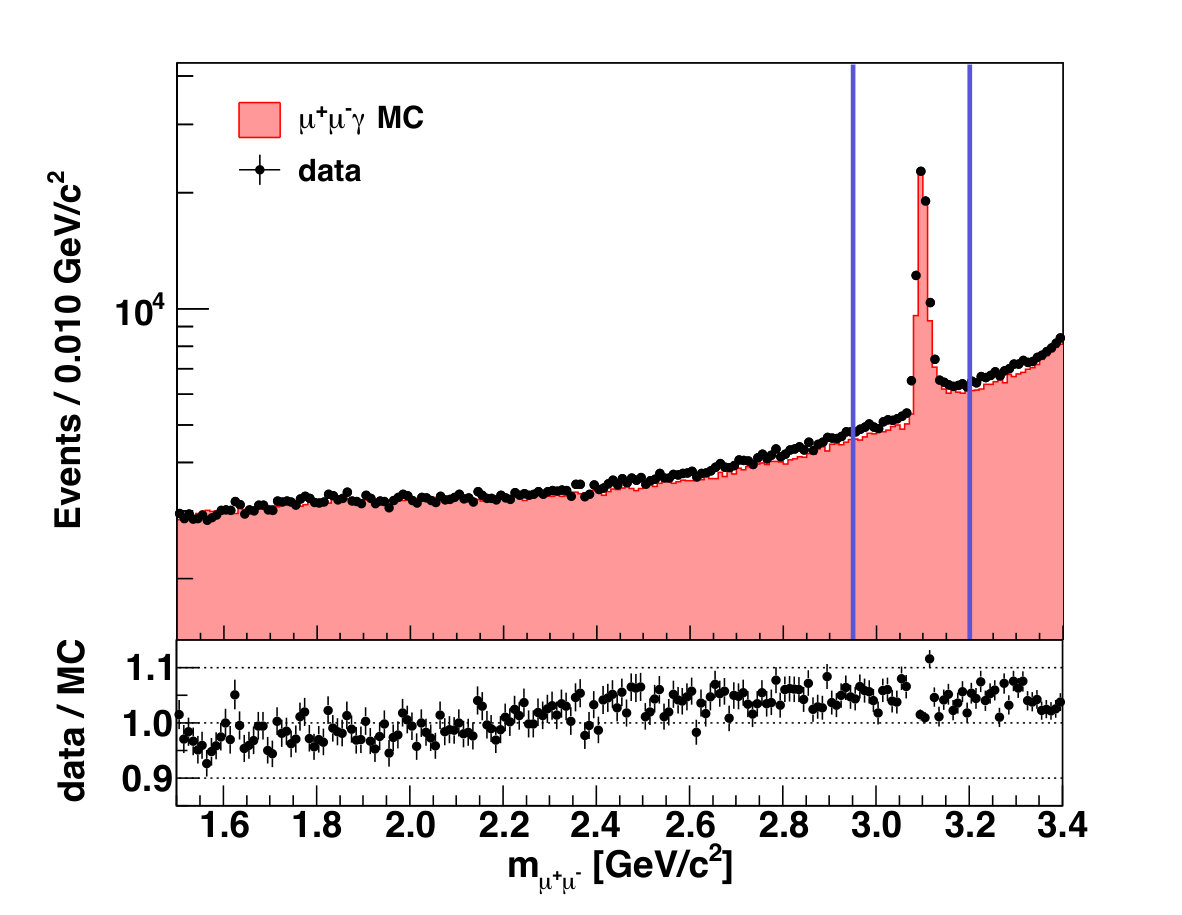 Figure 1
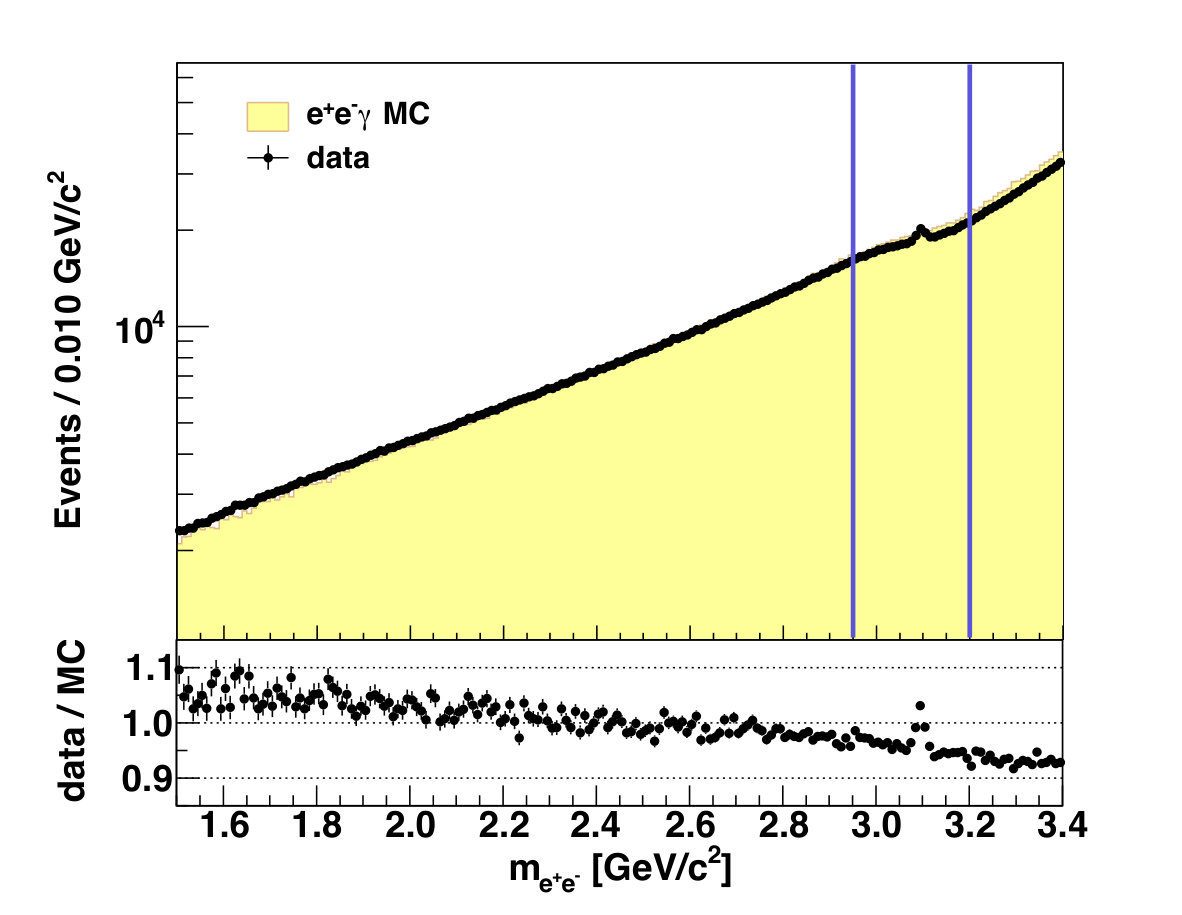 Figure 1
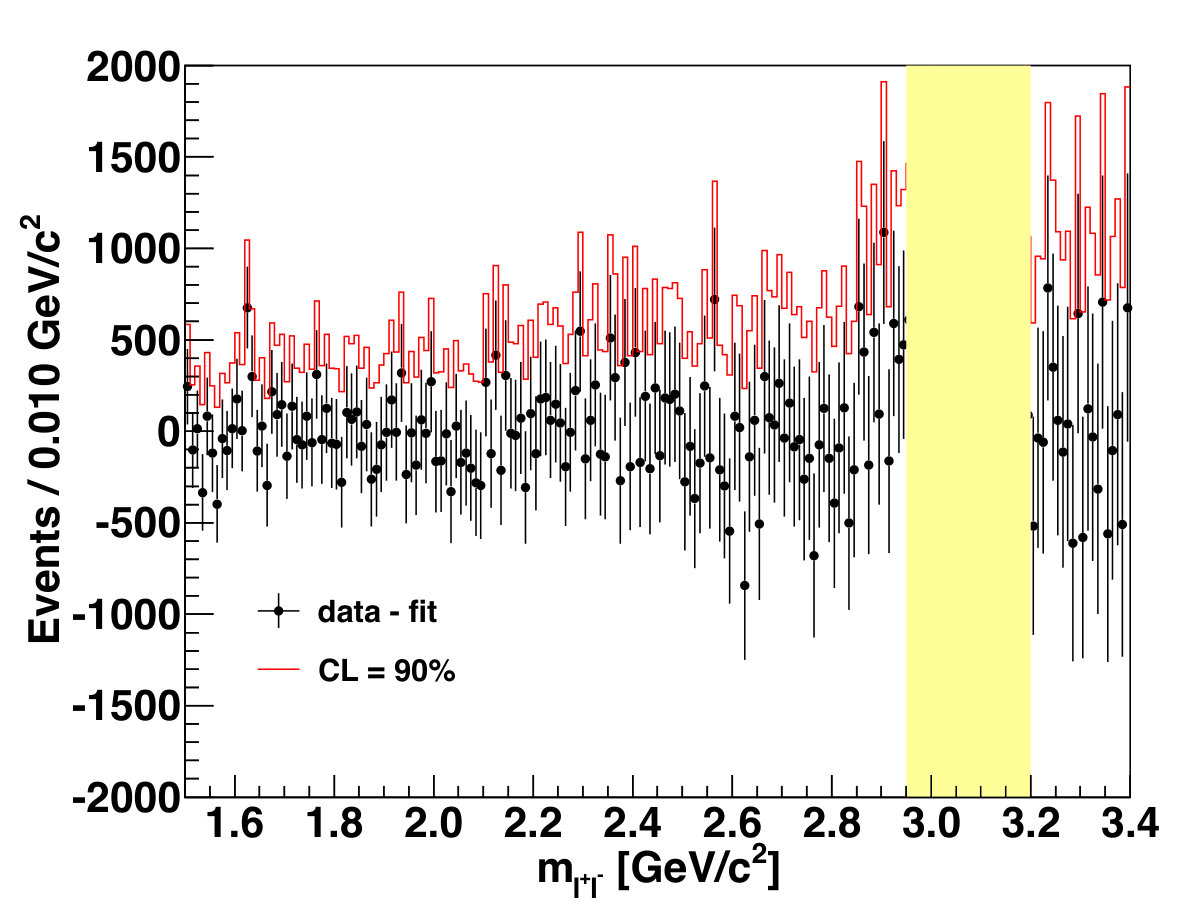 Figure 2
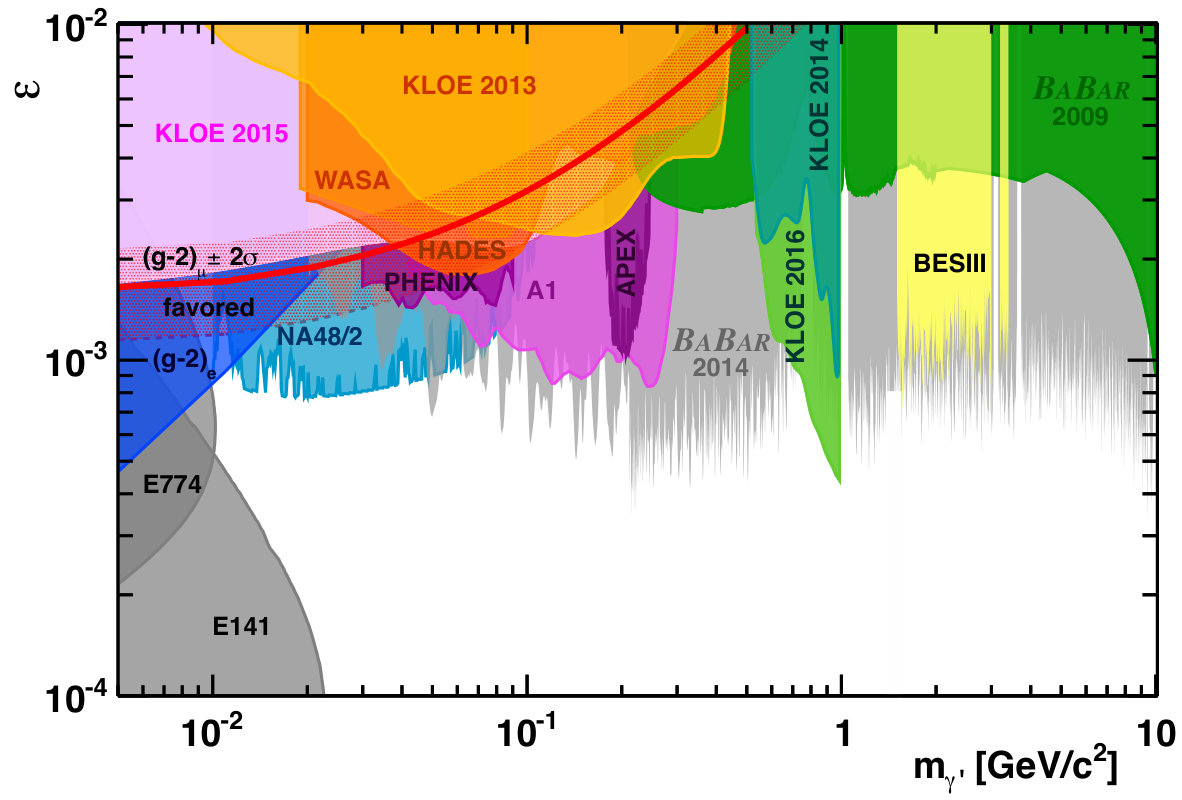 Figure 3
Peer Reviews
No public reviews on file for this paper yet. If you reviewed it on a platform where reviews are public (OpenReview, ICLR, NeurIPS, ICML), you can paste yours below so the community can read it here.
Videos
No videos yet. Explain this paper in a talk, walkthrough, or lecture? Add one.
Dark Photon Search in the Mass Range Between
1.5 and 3.4 GeV/
M. Ablikim1, M. N. Achasov9,f, X. C. Ai1, O. Albayrak5, M. Albrecht4, D. J. Ambrose44, A. Amoroso48A,48C, F. F. An1, Q. An45,a, J. Z. Bai1, R. Baldini Ferroli20A, Y. Ban31, D. W. Bennett19, J. V. Bennett5, M. Bertani20A, D. Bettoni21A, J. M. Bian43, F. Bianchi48A,48C, E. Boger23,d, I. Boyko23, R. A. Briere5, H. Cai50, X. Cai1,a, O. Cakir40A,b, A. Calcaterra20A, G. F. Cao1, S. A. Cetin40B, J. F. Chang1,a, G. Chelkov23,d,e, G. Chen1, H. S. Chen1, H. Y. Chen2, J. C. Chen1, M. L. Chen1,a, S. J. Chen29, X. Chen1,a, X. R. Chen26, Y. B. Chen1,a, H. P. Cheng17, X. K. Chu31, G. Cibinetto21A, H. L. Dai1,a, J. P. Dai34, A. Dbeyssi14, D. Dedovich23, Z. Y. Deng1, A. Denig22, I. Denysenko23, M. Destefanis48A,48C, F. De Mori48A,48C, Y. Ding27, C. Dong30, J. Dong1,a, L. Y. Dong1, M. Y. Dong1,a, S. X. Du52, P. F. Duan1, E. E. Eren40B, J. Z. Fan39, J. Fang1,a, S. S. Fang1, X. Fang45,a, Y. Fang1, L. Fava48B,48C, F. Feldbauer22, G. Felici20A, C. Q. Feng45,a, E. Fioravanti21A, M. Fritsch14,22, C. D. Fu1, Q. Gao1, X. Y. Gao2, Y. Gao39, Z. Gao45,a, I. Garzia21A, C. Geng45,a, K. Goetzen10, W. X. Gong1,a, W. Gradl22, M. Greco48A,48C, M. H. Gu1,a, Y. T. Gu12, Y. H. Guan1, A. Q. Guo1, L. B. Guo28, Y. Guo1, Y. P. Guo22, Z. Haddadi25, A. Hafner22, S. Han50, Y. L. Han1, X. Q. Hao15, F. A. Harris42, K. L. He1, Z. Y. He30, T. Held4, Y. K. Heng1,a, Z. L. Hou1, C. Hu28, H. M. Hu1, J. F. Hu48A,48C, T. Hu1,a, Y. Hu1, G. M. Huang6, G. S. Huang45,a, H. P. Huang50, J. S. Huang15, X. T. Huang33, Y. Huang29, T. Hussain47, Q. Ji1, Q. P. Ji30, X. B. Ji1, X. L. Ji1,a, L. L. Jiang1, L. W. Jiang50, X. S. Jiang1,a, X. Y. Jiang30, J. B. Jiao33, Z. Jiao17, D. P. Jin1,a, S. Jin1, T. Johansson49, A. Julin43, N. Kalantar-Nayestanaki25, X. L. Kang1, X. S. Kang30, M. Kavatsyuk25, B. C. Ke5, P. Kiese22, R. Kliemt14, B. Kloss22, O. B. Kolcu40B,i, B. Kopf4, M. Kornicer42, W. Kuehn24, A. Kupsc49, J. S. Lange24, M. Lara19, P. Larin14, C. Leng48C, C. Li49, C. H. Li1, Cheng Li45,a, D. M. Li52, F. Li1,a, G. Li1, H. B. Li1, J. C. Li1, Jin Li32, K. Li33, K. Li13, Lei Li3, P. R. Li41, T. Li33, W. D. Li1, W. G. Li1, X. L. Li33, X. M. Li12, X. N. Li1,a, X. Q. Li30, Z. B. Li38, H. Liang45,a, Y. F. Liang36, Y. T. Liang24, G. R. Liao11, D. X. Lin14, B. J. Liu1, C. X. Liu1, F. H. Liu35, Fang Liu1, Feng Liu6, H. B. Liu12, H. H. Liu16, H. H. Liu1, H. M. Liu1, J. Liu1, J. B. Liu45,a, J. P. Liu50, J. Y. Liu1, K. Liu39, K. Y. Liu27, L. D. Liu31, P. L. Liu1,a, Q. Liu41, S. B. Liu45,a, X. Liu26, X. X. Liu41, Y. B. Liu30, Z. A. Liu1,a, Zhiqiang Liu1, Zhiqing Liu22, H. Loehner25, X. C. Lou1,a,h, H. J. Lu17, J. G. Lu1,a, R. Q. Lu18, Y. Lu1, Y. P. Lu1,a, C. L. Luo28, M. X. Luo51, T. Luo42, X. L. Luo1,a, M. Lv1, X. R. Lyu41, F. C. Ma27, H. L. Ma1, L. L. Ma33, Q. M. Ma1, T. Ma1, X. N. Ma30, X. Y. Ma1,a, F. E. Maas14, M. Maggiora48A,48C, Y. J. Mao31, Z. P. Mao1, S. Marcello48A,48C, J. G. Messchendorp25, J. Min1,a, T. J. Min1, R. E. Mitchell19, X. H. Mo1,a, Y. J. Mo6, C. Morales Morales14, K. Moriya19, N. Yu. Muchnoi9,f, H. Muramatsu43, Y. Nefedov23, F. Nerling14, I. B. Nikolaev9,f, Z. Ning1,a, S. Nisar8, S. L. Niu1,a, X. Y. Niu1, S. L. Olsen32, Q. Ouyang1,a, S. Pacetti20B, P. Patteri20A, M. Pelizaeus4, H. P. Peng45,a, K. Peters10, J. Pettersson49, J. L. Ping28, R. G. Ping1, R. Poling43, V. Prasad1, Y. N. Pu18, M. Qi29, S. Qian1,a, C. F. Qiao41, L. Q. Qin33, N. Qin50, X. S. Qin1, Y. Qin31, Z. H. Qin1,a, J. F. Qiu1, K. H. Rashid47, C. F. Redmer22, H. L. Ren18, M. Ripka22, G. Rong1, Ch. Rosner14, X. D. Ruan12, V. Santoro21A, A. Sarantsev23,g, M. Savrié21B, K. Schoenning49, S. Schumann22, W. Shan31, M. Shao45,a, C. P. Shen2, P. X. Shen30, X. Y. Shen1, H. Y. Sheng1, W. M. Song1, X. Y. Song1, S. Sosio48A,48C, S. Spataro48A,48C, G. X. Sun1, J. F. Sun15, S. S. Sun1, Y. J. Sun45,a, Y. Z. Sun1, Z. J. Sun1,a, Z. T. Sun19, C. J. Tang36, X. Tang1, I. Tapan40C, E. H. Thorndike44, M. Tiemens25, M. Ullrich24, I. Uman40B, G. S. Varner42, B. Wang30, B. L. Wang41, D. Wang31, D. Y. Wang31, K. Wang1,a, L. L. Wang1, L. S. Wang1, M. Wang33, P. Wang1, P. L. Wang1, S. G. Wang31, W. Wang1,a, X. F. Wang39, Y. D. Wang14, Y. F. Wang1,a, Y. Q. Wang22, Z. Wang1,a, Z. G. Wang1,a, Z. H. Wang45,a, Z. Y. Wang1, T. Weber22, D. H. Wei11, J. B. Wei31, P. Weidenkaff22, S. P. Wen1, U. Wiedner4, M. Wolke49, L. H. Wu1, Z. Wu1,a, L. G. Xia39, Y. Xia18, D. Xiao1, H. Xiao46, Z. J. Xiao28, Y. G. Xie1,a, Q. L. Xiu1,a, G. F. Xu1, L. Xu1, Q. J. Xu13, Q. N. Xu41, X. P. Xu37, L. Yan45,a, W. B. Yan45,a, W. C. Yan45,a, Y. H. Yan18, H. J. Yang34, H. X. Yang1, L. Yang50, Y. Yang6, Y. X. Yang11, H. Ye1, M. Ye1,a, M. H. Ye7, J. H. Yin1, B. X. Yu1,a, C. X. Yu30, H. W. Yu31, J. S. Yu26, C. Z. Yuan1, W. L. Yuan29, Y. Yuan1, A. Yuncu40B,c, A. A. Zafar47, A. Zallo20A, Y. Zeng18, B. X. Zhang1, B. Y. Zhang1,a, C. Zhang29, C. C. Zhang1, D. H. Zhang1, H. H. Zhang38, H. Y. Zhang1,a, J. J. Zhang1, J. L. Zhang1, J. Q. Zhang1, J. W. Zhang1,a, J. Y. Zhang1, J. Z. Zhang1, K. Zhang1, L. Zhang1, S. H. Zhang1, X. Y. Zhang33, Y. Zhang1, Y. N. Zhang41, Y. H. Zhang1,a, Y. T. Zhang45,a, Yu Zhang41, Z. H. Zhang6, Z. P. Zhang45, Z. Y. Zhang50, G. Zhao1, J. W. Zhao1,a, J. Y. Zhao1, J. Z. Zhao1,a, Lei Zhao45,a, Ling Zhao1, M. G. Zhao30, Q. Zhao1, Q. W. Zhao1, S. J. Zhao52, T. C. Zhao1, Y. B. Zhao1,a, Z. G. Zhao45,a, A. Zhemchugov23,d, B. Zheng46, J. P. Zheng1,a, W. J. Zheng33, Y. H. Zheng41, B. Zhong28, L. Zhou1,a, Li Zhou30, X. Zhou50, X. K. Zhou45,a, X. R. Zhou45,a, X. Y. Zhou1, K. Zhu1, K. J. Zhu1,a, S. Zhu1, X. L. Zhu39, Y. C. Zhu45,a, Y. S. Zhu1, Z. A. Zhu1, J. Zhuang1,a, L. Zotti48A,48C, B. S. Zou1, J. H. Zou1
(BESIII Collaboration)
1* Institute of High Energy Physics, Beijing 100049, People’s Republic of China
2 Beihang University, Beijing 100191, People’s Republic of China
3 Beijing Institute of Petrochemical Technology, Beijing 102617, People’s Republic of China
4 Bochum Ruhr-University, D-44780 Bochum, Germany
5 Carnegie Mellon University, Pittsburgh, Pennsylvania 15213, USA
6 Central China Normal University, Wuhan 430079, People’s Republic of China
7 China Center of Advanced Science and Technology, Beijing 100190, People’s Republic of China
8 COMSATS Institute of Information Technology, Lahore, Defence Road, Off Raiwind Road, 54000 Lahore, Pakistan
9 G.I. Budker Institute of Nuclear Physics SB RAS (BINP), Novosibirsk 630090, Russia
10 GSI Helmholtzcentre for Heavy Ion Research GmbH, D-64291 Darmstadt, Germany
11 Guangxi Normal University, Guilin 541004, People’s Republic of China
12 GuangXi University, Nanning 530004, People’s Republic of China
13 Hangzhou Normal University, Hangzhou 310036, People’s Republic of China
14 Helmholtz Institute Mainz, Johann-Joachim-Becher-Weg 45, D-55099 Mainz, Germany
15 Henan Normal University, Xinxiang 453007, People’s Republic of China
16 Henan University of Science and Technology, Luoyang 471003, People’s Republic of China
17 Huangshan College, Huangshan 245000, People’s Republic of China
18 Hunan University, Changsha 410082, People’s Republic of China
19 Indiana University, Bloomington, Indiana 47405, USA
20 (A)INFN Laboratori Nazionali di Frascati, I-00044, Frascati, Italy; (B)INFN and University of Perugia, I-06100, Perugia, Italy
21 (A)INFN Sezione di Ferrara, I-44122, Ferrara, Italy; (B)University of Ferrara, I-44122, Ferrara, Italy
22 Johannes Gutenberg University of Mainz, Johann-Joachim-Becher-Weg 45, D-55099 Mainz, Germany
23 Joint Institute for Nuclear Research, 141980 Dubna, Moscow region, Russia
24 Justus Liebig University Giessen, II. Physikalisches Institut, Heinrich-Buff-Ring 16, D-35392 Giessen, Germany
25 KVI-CART, University of Groningen, NL-9747 AA Groningen, The Netherlands
26 Lanzhou University, Lanzhou 730000, People’s Republic of China
27 Liaoning University, Shenyang 110036, People’s Republic of China
28 Nanjing Normal University, Nanjing 210023, People’s Republic of China
29 Nanjing University, Nanjing 210093, People’s Republic of China
30 Nankai University, Tianjin 300071, People’s Republic of China
31 Peking University, Beijing 100871, People’s Republic of China
32 Seoul National University, Seoul, 151-747 Korea
33 Shandong University, Jinan 250100, People’s Republic of China
34 Shanghai Jiao Tong University, Shanghai 200240, People’s Republic of China
35 Shanxi University, Taiyuan 030006, People’s Republic of China
36 Sichuan University, Chengdu 610064, People’s Republic of China
37 Soochow University, Suzhou 215006, People’s Republic of China
38 Sun Yat-Sen University, Guangzhou 510275, People’s Republic of China
39 Tsinghua University, Beijing 100084, People’s Republic of China
40 (A)Istanbul Aydin University, 34295 Sefakoy, Istanbul, Turkey; (B)Dogus University, 34722 Istanbul, Turkey; (C)Uludag University, 16059 Bursa, Turkey
41 University of Chinese Academy of Sciences, Beijing 100049, People’s Republic of China
42 University of Hawaii, Honolulu, Hawaii 96822, USA
43 University of Minnesota, Minneapolis, Minnesota 55455, USA
44 University of Rochester, Rochester, New York 14627, USA
45 University of Science and Technology of China, Hefei 230026, People’s Republic of China
46 University of South China, Hengyang 421001, People’s Republic of China
47 University of the Punjab, Lahore-54590, Pakistan
48 (A)University of Turin, I-10125, Turin, Italy; (B)University of Eastern Piedmont, I-15121, Alessandria, Italy; (C)INFN, I-10125, Turin, Italy
49 Uppsala University, Box 516, SE-75120 Uppsala, Sweden
50 Wuhan University, Wuhan 430072, People’s Republic of China
51 Zhejiang University, Hangzhou 310027, People’s Republic of China
52 Zhengzhou University, Zhengzhou 450001, People’s Republic of China
a Also at State Key Laboratory of Particle Detection and Electronics, Beijing 100049, Hefei 230026, People’s Republic of China
b Also at Ankara University,06100 Tandogan, Ankara, Turkey
c Also at Bogazici University, 34342 Istanbul, Turkey
d Also at the Moscow Institute of Physics and Technology, Moscow 141700, Russia
e Also at the Functional Electronics Laboratory, Tomsk State University, Tomsk, 634050, Russia
f Also at the Novosibirsk State University, Novosibirsk, 630090, Russia
g Also at the NRC “Kurchatov Institute”, PNPI, 188300, Gatchina, Russia
h Also at University of Texas at Dallas, Richardson, Texas 75083, USA
i Currently at Istanbul Arel University, 34295 Istanbul, Turkey
Abstract
Using a data set of 2.93 fb*-1* taken at a center-of-mass energy = 3.773 GeV with the BESIII detector at the BEPCII collider, we perform a search for an extra U(1) gauge boson, also denoted as a dark photon. We examine the initial state radiation reactions and for this search, where the dark photon would appear as an enhancement in the invariant mass distribution of the leptonic pairs. We observe no obvious enhancement in the mass range between 1.5 and 3.4 GeV/ and set a 90% confidence level upper limit on the mixing strength of the dark photon and the Standard Model photon. We obtain a competitive limit in the tested mass range.
keywords:
Dark photon search; Initial state radiation; BESIII;
††journal: Physics Letters B
Several astrophysical anomalies, which cannot be easily understood in the context of the Standard Model (SM) of particle physics or astrophysics, have been discussed in relation to a dark, so far unobserved sector [1], which couples very weakly with SM particles. The most straightforward model consists of an extra U(1) force carrier, also denoted as a dark photon, , which couples to the SM via kinetic mixing [2]. It has been shown in Ref. [1] that the dark photon has to be relatively light, on the MeV/ to GeV/ mass scale, to explain the astrophysical observations. Furthermore, it was realized, that a dark photon of similar mass could also explain the presently observed deviation on the level of 3 to between the measurement and the SM prediction of [3]. These facts and the work by Bjorken and collaborators [4] triggered searches for the dark photon at particle accelerators in a world wide effort [5, 6]. Different experimental setups can be used, like fixed-target (e.g. Refs. [7, 8]), beam dump (e.g. Refs. [9, 10]), or low-energy collider experiments (e.g. Refs. [11, 12]). The mixing strength , where is the coupling of the dark photon to the electromagnetic charge and the fine structure constant, is constrained by previous measurements to be below approximately [4].
In this letter we present a dark photon search, using 2.93 fb*-1* [13] of data taken at = 3.773 GeV obtained with the Beijing Spectrometer III (BESIII). The measurement exploits the process of initial state radiation (ISR), in which one of the beam particles radiates a photon. In this way, the available energy to produce final states is reduced, and the di-lepton invariant masses below the center-of-mass energy of the collider become available. The same method has been used by the BaBar experiment [11, 12], where a dark photon mass between 0.02 and 10.2 GeV/ and values in the order of 10*-3* - 10*-4* have been excluded. We search for the processes () with leptonic invariant masses between 1.5 and 3.4 GeV/. The ISR QED processes and are irreducible background channels. However, the dark photon width is expected to be smaller than the resolution of the experiment [4] and, thus, a signal would lead to a narrow structure at the mass of the dark photon in the mass spectrum on top of the continuum QED background.
The BESIII detector is located at the double-ring Beijing Electron Positron Collider (BEPCII) [14]. The cylindrical BESIII detector covers 93% of the full solid angle. It consists of the following detector systems. (1) A Multilayer Drift Chamber (MDC) filled with a helium-gas mixture, composed of 43 layers, which provides a spatial resolution of 135 m and a momentum resolution of 0.5% for charged tracks at 1 GeV/ in a magnetic field of 1 T. (2) A Time-of-Flight system (TOF), built with 176 plastic scintillator counters in the barrel part, and 96 counters in the end caps. The time resolution in the barrel (end caps) is 80 ps (110 ps). For momenta up to 1 GeV/, this provides a 2 K/ separation. (3) A CsI(Tl) Electro-Magnetic Calorimeter (EMC) with an energy resolution of 2.5% in the barrel and 5% in the end caps at an energy of 1 GeV. (4) A Muon Counter (MUC) consisting of nine barrel and eight endcap resistive plate chamber layers with a 2 cm position resolution.
For the simulation of ISR processes and , the phokhara event generator [15, 16], which includes ISR and final state radiation (FSR) corrections up to next-to-leading order, is used. Bhabha scattering is simulated with babayaga 3.5 [17]. Continuum Monte Carlo (MC) events, as well as the resonant decays to , non-, and the ISR production of and , are simulated with the kkmc generator [18]. All MC generators, which are the most appropriate choices for the processes studied, have been interfaced with the geant4-based [19, 20] detector simulation.
The selection of and events is straightforward. We require the presence of two charged tracks in the MDC with net charge zero. The points of closest approach from the interaction point (IP) for these two tracks are required to be within a cylinder of 1 cm radius in the transverse direction and 10 cm of length along the beam axis. The polar angle with respect to the beam axis of the tracks is required to be in the fiducial volume of the MDC: 0.4 radians. In order to suppress spiraling tracks, we require the transverse momentum to be above 300 MeV/ for both tracks.
Muon particle identification is used [21]. The probabilities for being a muon and being an electron are calculated using information from MDC, TOF, EMC, and MUC. For both charged tracks, is required. To select electrons, the ratio of the measured energy in the EMC, , to the momentum obtained from the MDC is used. Both charged tracks must satisfy 0.8 .
The radiator function [22], which describes the radiation of an ISR photon, is peaked at small values with respect to the beam axis. Different from BaBar, we use untagged ISR events, where the ISR photon is emitted at a small angle and is not detected within the angular acceptance of the EMC, to increase statistics. A one constraint (1C) kinematic fit, applying energy and momentum conservation, is performed with the hypothesis or , using as input the two selected charged track candidates, as well as the four momentum of the initial system. The constraint is the mass of a missing photon. The fit quality condition /(dof=1) 20 is applied in the case, where dof is the degree of freedom. To suppress non-ISR background, the angle of the missing photon, , predicted by the 1C kinematic fit, is required to be smaller than 0.1 radians or greater than radians. We apply stronger requirements for the final state, to provide a better suppression of the non-ISR background which is higher in the channel compared to the channel. In this case, /(dof=1) 5, and radians, or radians.
Background in addition to the radiative QED processes and , which is irreducible, is studied with MC simulations and is negligible for the final state, and on the order of 3% for invariant masses below 2 GeV/ due to muon misidentification, and negligible above. This remaining background comes mostly from events. We subtract their contribution using a MC sample, produced with the phokhara generator. The subtraction of this background leads to a systematic uncertainty due to the generator precision smaller than 0.5%.
The and invariant mass distributions, and , which are shown separately in Fig. 1, are mainly dominated by the QED background but could contain the signal sitting on top of these irreducible events. For comparison with data, MC simulation, scaled to the luminosity of data, is shown, although it is not used in the search for the dark photon. In this analysis, the dark photon mass range between 1.5 and 3.4 GeV/ is studied. Below 1.5 GeV/ the cross section with muon misidentification dominates the spectrum. Above 3.4 GeV/ the hadronic process can not be suppressed sufficiently by the requirement. In order to search for narrow structures on top of the QED background, 4th order polynomial functions to describe the continuum QED are fitted to the data distributions shown in Fig. 1. The mass range around the narrow resonance between 2.95 and 3.2 GeV/ is excluded.
The differences between the and event yields and their respective 4th order polynomials are added. The combined differences are represented by the black dots in Fig. 2. A dark photon candidate would appear as a peak in this plot. The observed statistical significances are less than 3 everywhere in the explored region. The significance in each invariant mass bin is defined as the combined differences between data and the 4th order polynomials, divided by the combined statistical errors of both final states. In conclusion, we observe no dark photon signal for 1.5 GeV/ 3.4 GeV/, where is equal to the leptonic invariant mass . The exclusion limit at the 90% confidence level is determined with a profile likelihood approach [23]. Also shown in Fig. 2 as a function of is the bin-by-bin calculated exclusion limit, including the systematic uncertainties as explained below.
To calculate the exclusion limit on the mixing parameter , the formula from Ref. [4] is used
[TABLE]
[TABLE]
[TABLE]
where represents the -th mass bin, is the electromagnetic fine structure constant, the dark photon mass, the SM photon, and () the bin width of the lepton pair invariant mass spectrum, 10 MeV/. The mass resolution of the lepton pairs determined with MC for and is between 5 and 12 MeV/. The cross section ratio upper limit in Eq. 1 is determined from the exclusion upper limit () corrected by the efficiency loss () due to the bin width divided by the number of and events () corrected as described below. The efficiency loss caused by the incompleteness of signal events in one bin is calculated with , where is the Gaussian function used to describe the mass resolution.
The QED cross section must only take into account annihilation processes of the initial beam particles, where a dark photon could be produced. Thus, the event yield of the final state has to be corrected due to the existence of SM Bhabha scattering. This correction is obtained in bins of by dividing the annihilation events only by the sum of events of the annihilation and Bhabha scattering processes. The first is generated with the phokhara event generator by generating the final state and replacing the muon mass with the electron mass. The latter is generated with the babayaga@nlo generator [24]. The correction factor varies between 2% and 8% depending on .
The number of final states for the dark photon includes the phase space above the production threshold of the leptons , and is given by [25], where is the leptonic width and is the total width. These widths are taken from Ref. [25]
[TABLE]
[TABLE]
where , , and is the total hadronic cross section value [26] as a function of .
The systematic uncertainties are included in the calculation of the exclusion limit. The main source is the uncertainty of the value taken from Ref. [26], which enters the calculation of the and leads to a mass dependent systematic uncertainty between 3.0 and 6.0%. Other sources are background subtraction as described above ( 0.5%), the fitting error of the polynomial fit to data ( 1%), the Bhabha scattering correction factor using the phokhara and babayaga@nlo event generator ( 1%), and data-MC differences of the leptonic mass resolution. To quantify the latter one, we study the data-MC resolution difference of the resonance for the and decays, separately. The resonance is fitted with a double Gaussian function in data and MC simulation, and the width difference is ()% for and ()% for . The differences are taken into consideration in the calculations, and the uncertainty in the differences (1%) is taken as the systematic uncertainty of the data-MC differences. The mass dependent total systematic uncertainty, which varies from 3.5 to 6.5 % depending on mass, is used bin-by-bin in the upper limit.
The final result, the mixing strength as a function of the dark photon mass, is shown in Fig. 3, including the systematic uncertainties. It provides a comparable upper limit to BaBar [11, 12] in the studied mass range. Also shown are the exclusion limits from KLOE [27, 28, 29, 30], WASA-at-COSY [31], HADES [32], PHENIX [33], A1 at MAMI [7, 8], NA48/2 [34], APEX [35], and the beam-dump experiments E774 [9], and E141 [10]. The values, which would explain the discrepancy between the measurement and the SM calculation of the anomalous magnetic moment of the muon [3] are displayed in Fig. 3 as the bold solid line with a 2 band.
In conclusion, we perform a search for a dark photon in the mass range between 1.5 and 3.4 GeV/, where we do not observe a significant signal. We set upper limits on the mixing parameter between 10*-3* and 10*-4* as a function of the dark photon mass with a confidence level of 90%. This is a competitive limit in this dark photon mass range. The BESIII results, which are based on two years of data taking, are already competitive to the large BaBar data samples, based on 9 years of running. This is possible due to the use of untagged ISR events for the dark photon search as well as the fact that the center-of-mass energy of the BEPCII collider is closer to the mass region tested. We also use a different analysis approach, which has no dependence on the radiator function.
The BESIII collaboration thanks the staff of BEPCII and the IHEP computing center for their strong support. This work is supported in part by National Key Basic Research Program of China under Contract No. 2015CB856700; National Natural Science Foundation of China (NSFC) under Contracts Nos. 11235011, 11335008, 11425524, 11625523, 11635010; the Chinese Academy of Sciences (CAS) Large-Scale Scientific Facility Program; the CAS Center for Excellence in Particle Physics (CCEPP); Joint Large-Scale Scientific Facility Funds of the NSFC and CAS under Contracts Nos. U1332201, U1532257, U1532258; CAS under Contracts Nos. KJCX2-YW-N29, KJCX2-YW-N45, QYZDJ-SSW-SLH003; 100 Talents Program of CAS; National 1000 Talents Program of China; INPAC and Shanghai Key Laboratory for Particle Physics and Cosmology; German Research Foundation DFG under Contracts Nos. Collaborative Research Center CRC 1044, FOR 2359; Istituto Nazionale di Fisica Nucleare, Italy; Joint Large-Scale Scientific Facility Funds of the NSFC and CAS; Koninklijke Nederlandse Akademie van Wetenschappen (KNAW) under Contract No. 530-4CDP03; Ministry of Development of Turkey under Contract No. DPT2006K-120470; National Natural Science Foundation of China (NSFC); National Science and Technology fund; The Swedish Resarch Council; U. S. Department of Energy under Contracts Nos. DE-FG02-05ER41374, DE-SC-0010118, DE-SC-0010504, DE-SC-0012069; University of Groningen (RuG) and the Helmholtzzentrum fuer Schwerionenforschung GmbH (GSI), Darmstadt; WCU Program of National Research Foundation of Korea under Contract No. R32-2008-000-10155-0.
The reference list from the paper itself. Each links out to its DOI / PubMed record.
- 1[1] N. Arkani-Hamed, D. P. Finkbeiner, T. R. Slatyer, and N. Weiner, Phys. Rev. D 𝟕𝟗 79 \bf{79} (2009) 015014.
- 2[2] B. Holdom, Phys. Lett. B 𝟏𝟔𝟔 166 \bf{166} (1986) 196-198.
- 3[3] M. Pospelov, Phys. Rev. D 𝟖𝟎 80 \bf{80} (2009) 095002.
- 4[4] J. D. Bjorken, R. Essig, P. Schuster, and N. Toro, Phys. Rev. D 𝟖𝟎 80 \bf{80} (2009) 075018.
- 5[5] B. Batell, M. Pospelov, and A. Ritz, Phys. Rev. D 𝟕𝟗 79 \bf{79} (2009) 115008.
- 6[6] H. B. Li and T. Luo, Phys. Lett. B 𝟔𝟖𝟔 686 \bf{686} (2010) 249-253.
- 7[7] H. Merkel et al. [A 1 Collaboration], Phys. Rev. Lett. 𝟏𝟎𝟔 106 \bf{106} (2011) 251802.
- 8[8] H. Merkel et al. [A 1 Collaboration], Phys. Rev. Lett. 𝟏𝟏𝟐 112 \bf{112} (2014) 221802.