Chiral anomaly of Weyl magnons in stacked honeycomb ferromagnets
Ying Su, X. R. Wang

TL;DR
This paper demonstrates the realization of Weyl magnons in stacked honeycomb ferromagnets and explores their chiral anomaly, showing how magnetic and electric field gradients induce unidirectional magnon currents with potential spin and heat transport applications.
Contribution
It introduces a new platform for Weyl magnons in stacked honeycomb ferromagnets and reveals their chiral anomaly driven by magnetic and electric field gradients.
Findings
Weyl magnons can be realized in stacked honeycomb ferromagnets.
Magnonic Landau levels are quantized via the Aharonov-Casher effect.
Magnon currents depend linearly on field gradients.
Abstract
Chiral anomaly of Weyl magnons (WMs), featured by nontrivial band crossings at paired Weyl nodes (WNs) of opposite chirality, is investigated. It is shown that WMs can be realized in stacked honeycomb ferromagnets. Using the Aharonov-Casher effect that is about the interaction between magnetic moments and electric fields, the magnon motion in honeycomb layers can be quantized into magnonic Landau levels (MLLs). The zeroth MLL is chiral so that unidirectional WMs propagate in the perpendicular (to the layer) direction for a given WN under a magnetic field gradient from one WN to the other and change their chiralities, resulting in the magnonic chiral anomaly (MCA). A net magnon current carrying spin and heat through the zeroth MLL depends linearly on the magnetic field gradient and the electric field gradient in the ballistic transport.
Click any figure to enlarge with its caption.
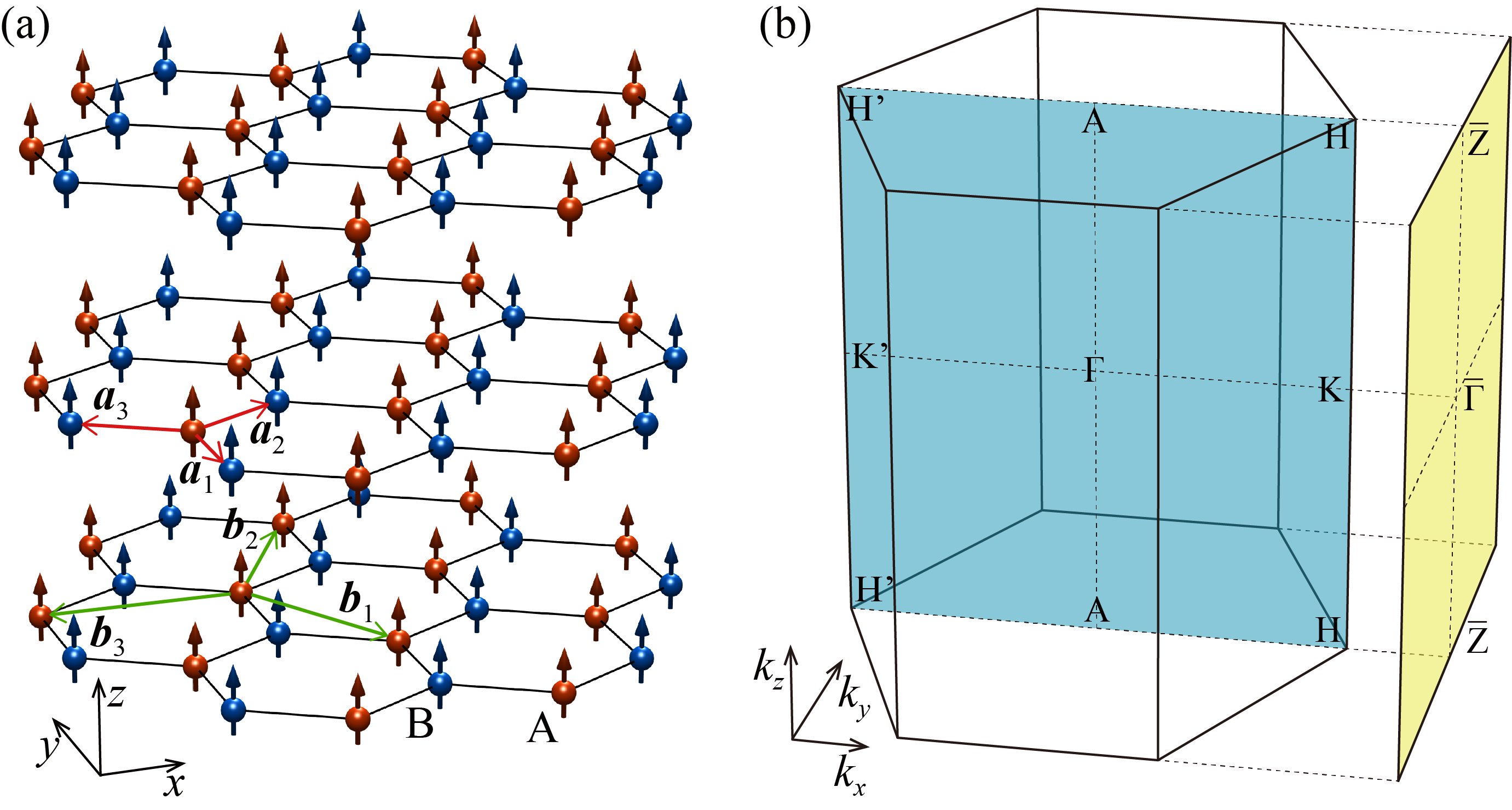 Figure 1
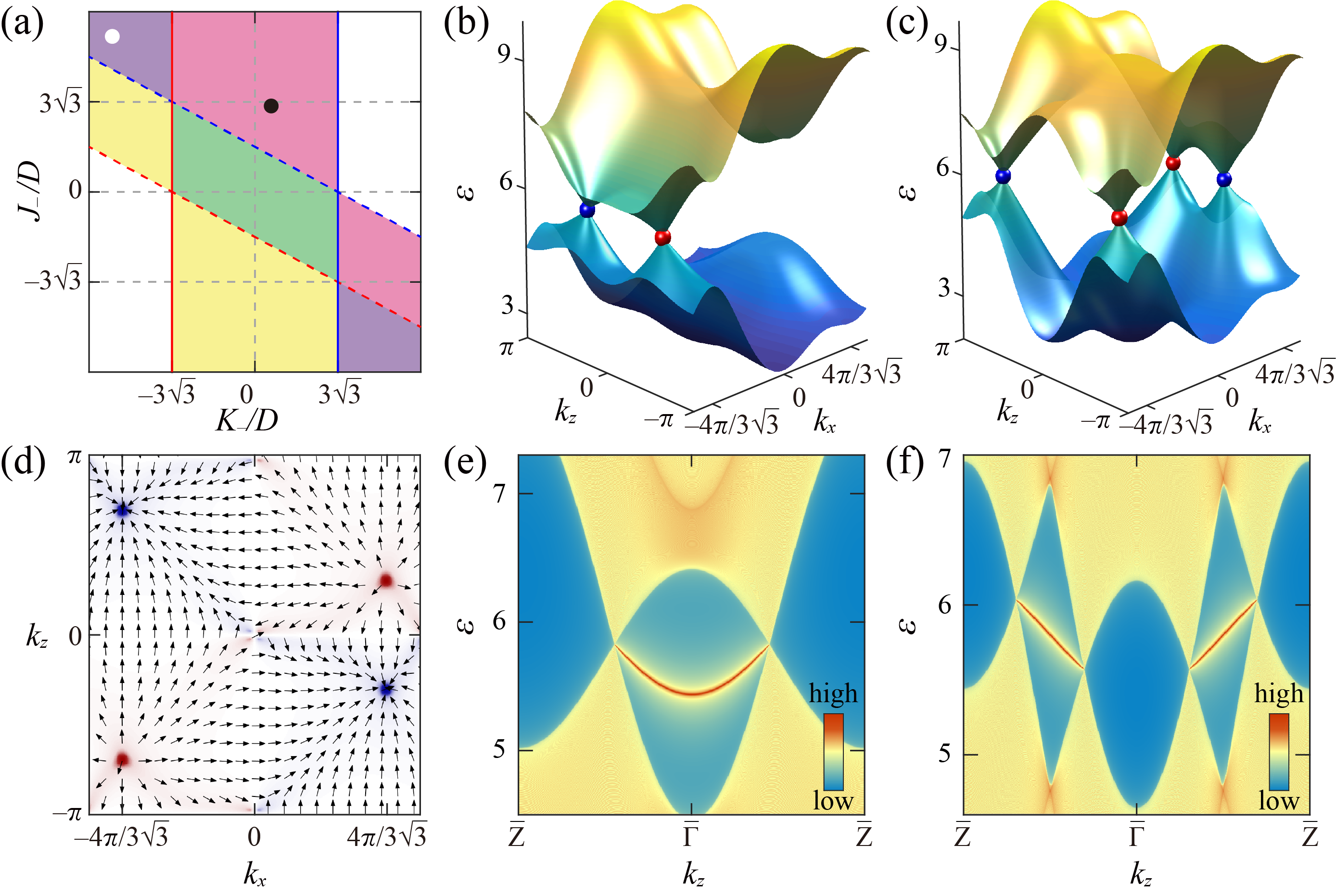 Figure 2
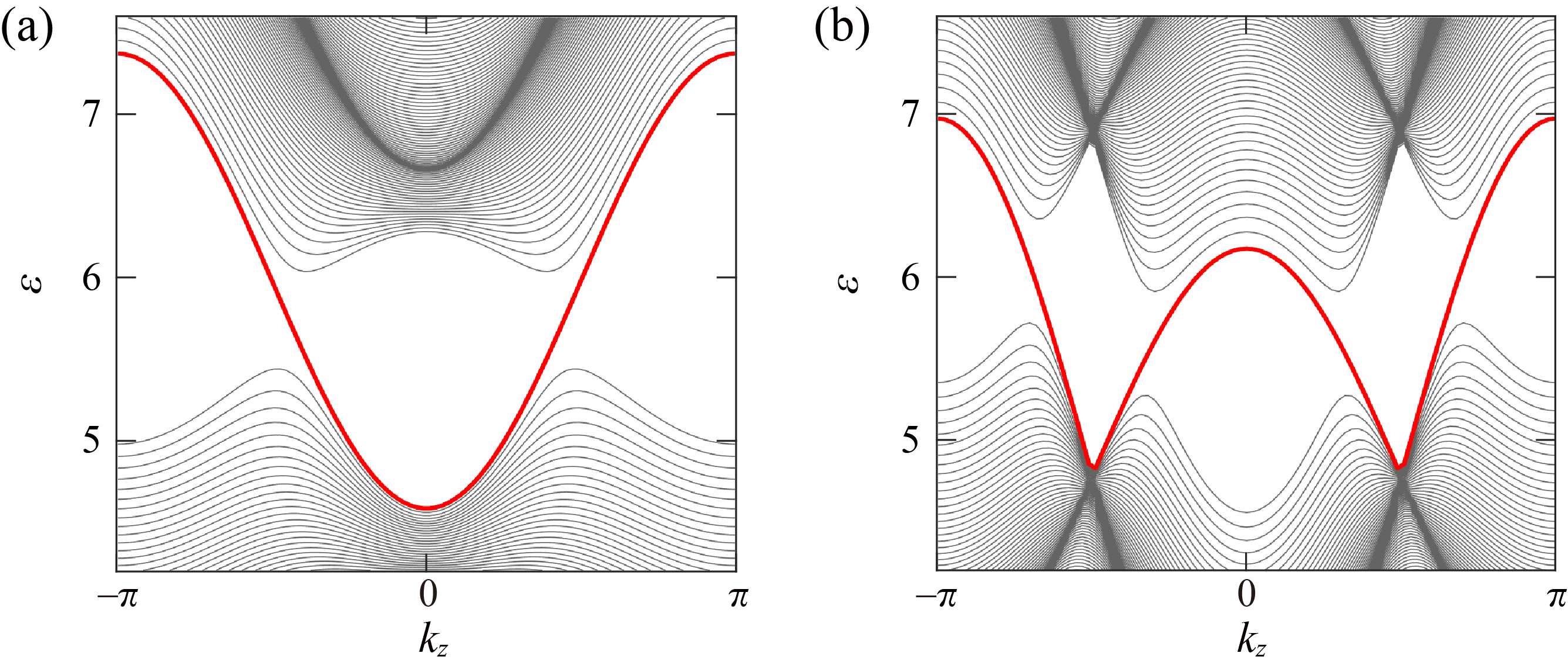 Figure 3
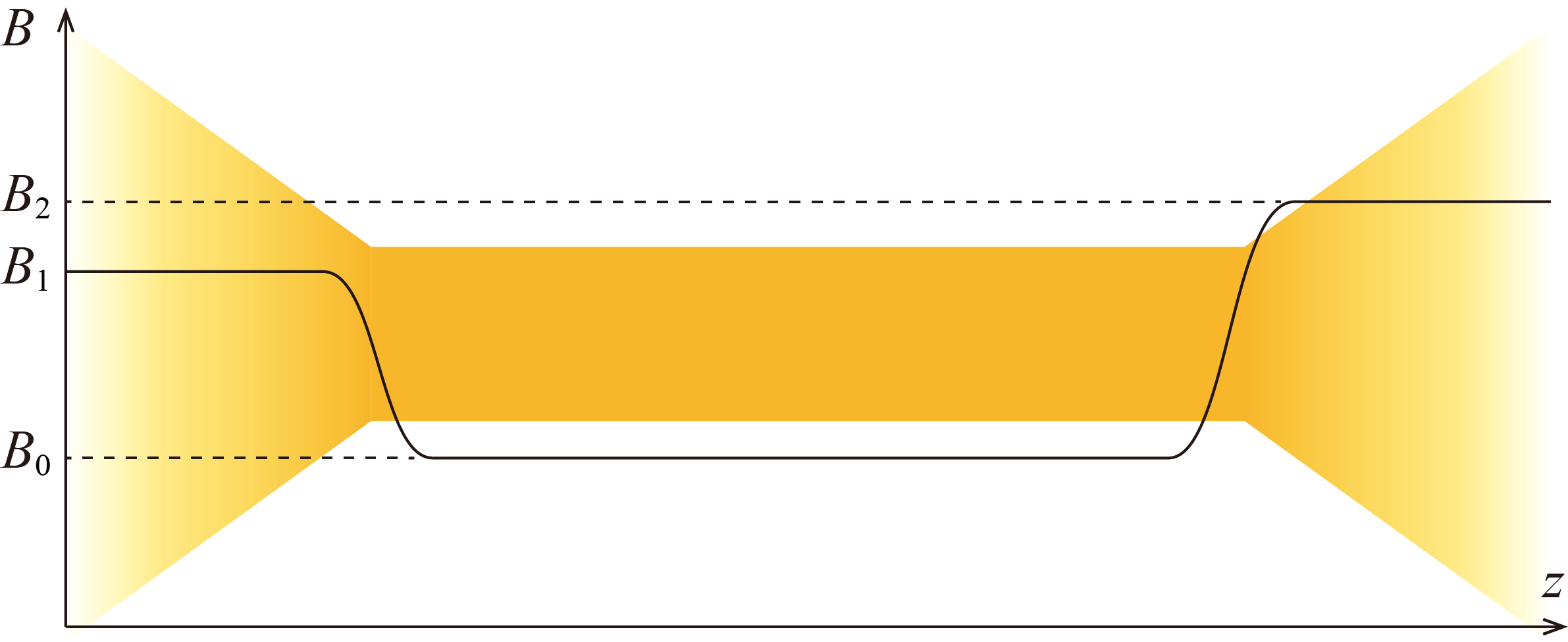 Figure 4
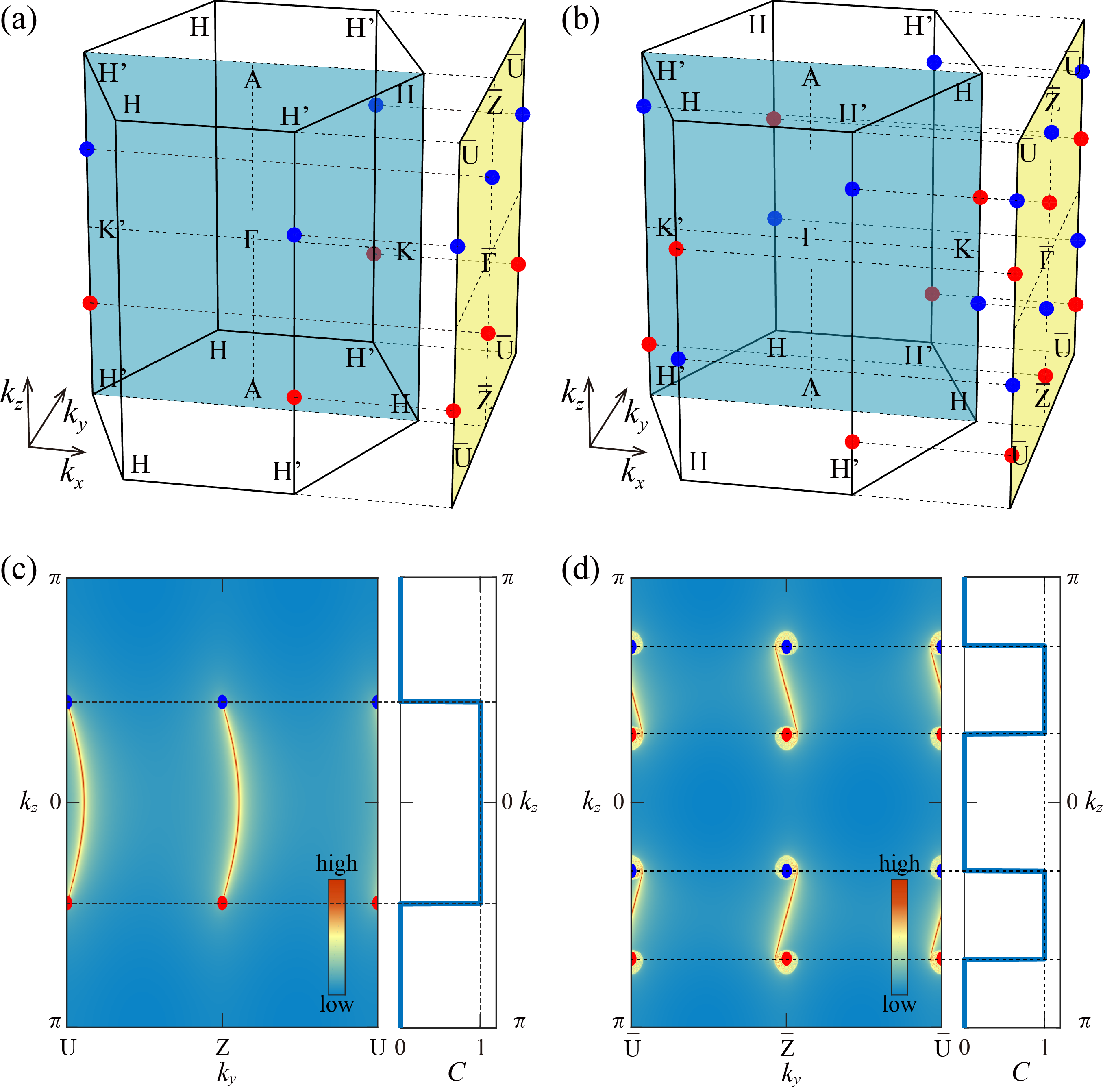 Figure 5
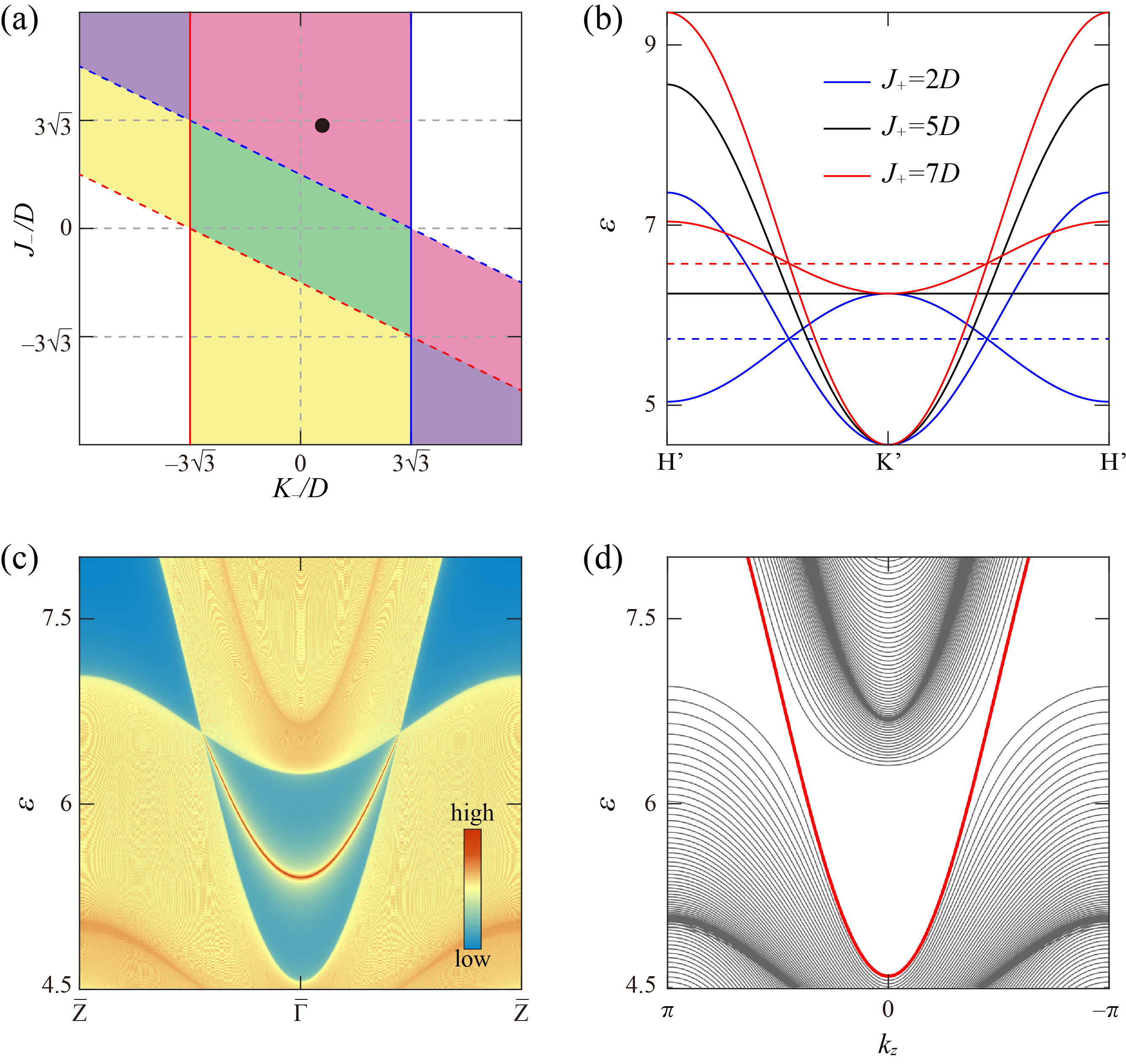 Figure 6
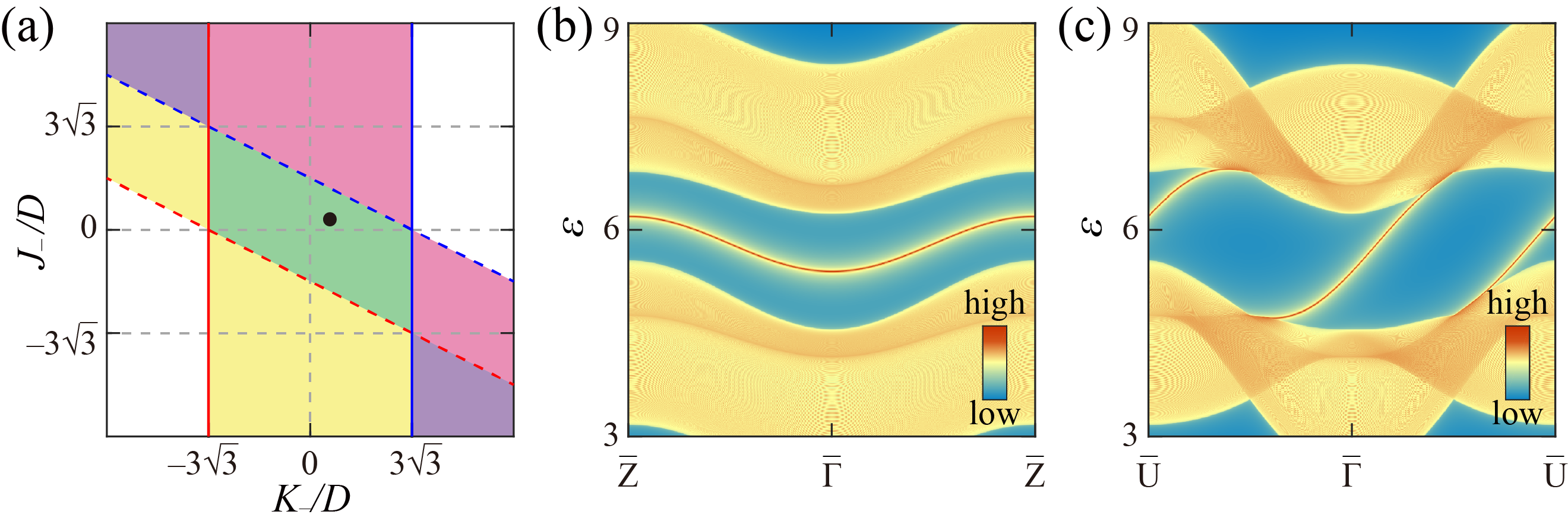 Figure 7
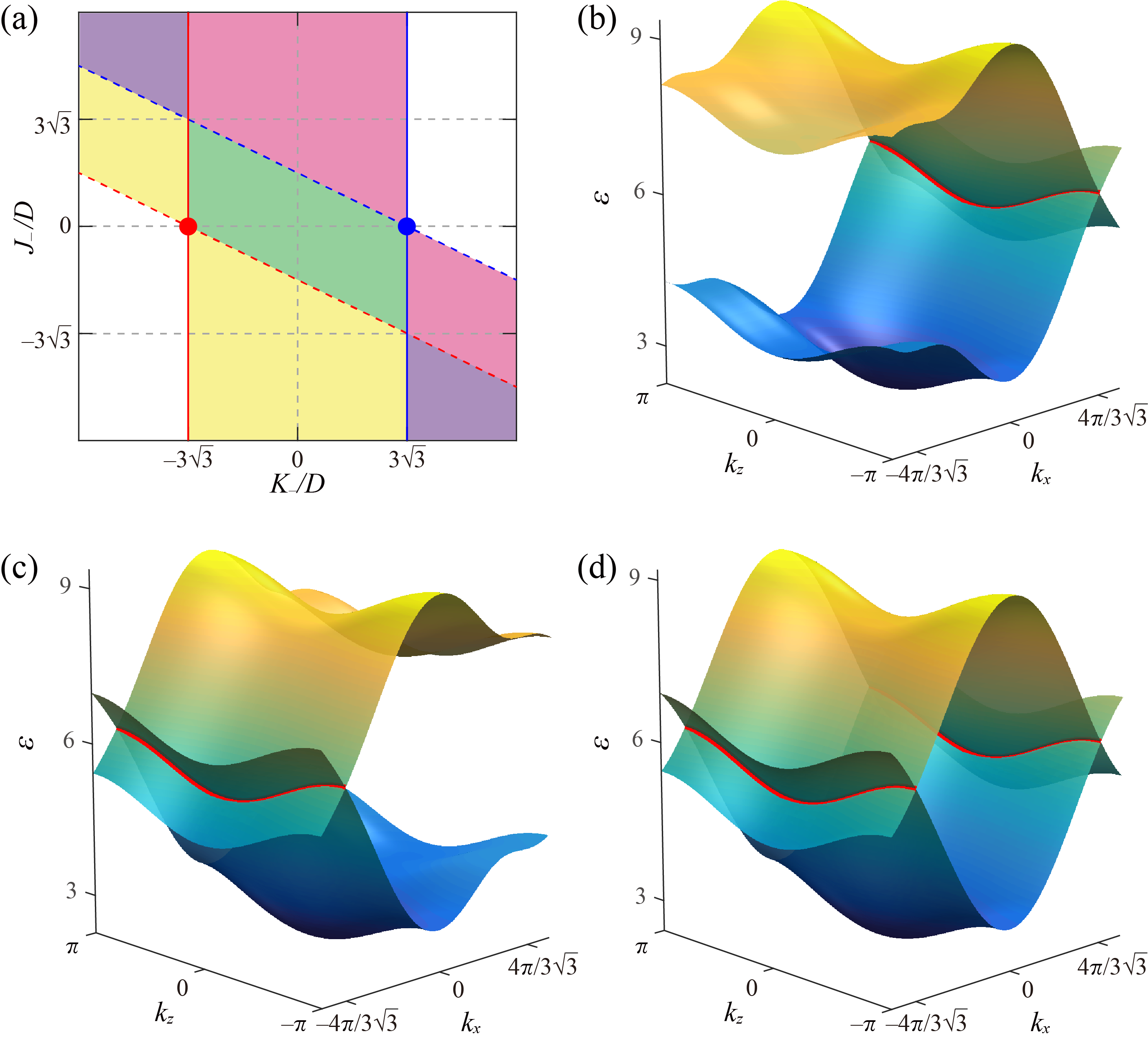 Figure 8
Peer Reviews
No public reviews on file for this paper yet. If you reviewed it on a platform where reviews are public (OpenReview, ICLR, NeurIPS, ICML), you can paste yours below so the community can read it here.
Videos
No videos yet. Explain this paper in a talk, walkthrough, or lecture? Add one.
Chiral anomaly of Weyl magnons in stacked honeycomb ferromagnets
Ying Su1,2
X. R. Wang1,2
1Physics Department, The Hong Kong University of Science and Technology, Clear Water Bay, Kowloon, Hong Kong
2HKUST Shenzhen Research Institute, Shenzhen 518057, China
Abstract
Chiral anomaly of Weyl magnons (WMs), featured by nontrivial band crossings at paired Weyl nodes (WNs) of opposite chirality, is investigated. It is shown that WMs can be realized in stacked honeycomb ferromagnets. Using the Aharonov-Casher effect that is about the interaction between magnetic moments and electric fields, the magnon motion in honeycomb layers can be quantized into magnonic Landau levels (MLLs). The zeroth MLL is chiral so that unidirectional WMs propagate in the perpendicular (to the layer) direction for a given WN under a magnetic field gradient from one WN to the other and change their chiralities, resulting in the magnonic chiral anomaly (MCA). A net magnon current carrying spin and heat through the zeroth MLL depends linearly on the magnetic field gradient and the electric field gradient in the ballistic transport.
Topological magnetic states have attracted enormous attention in recent years [1, 2, 3, 4, 5, 6, 7, 8, 9, 10, 11, 12, 13, 14, 15, 16, 17, 18, 19, 20, 21, 22, 23], because of their fundamental interest and importance in magnonics that is about generation, detection, and manipulation of magnons [24, 25, 26, 27]. Magnons, the quanta of low-energy excitations of magnetic materials, can carry, process, and transmit information [28, 29] like electrons besides being a control knob of magnetization dynamics [30, 32, 31]. So far, almost all studies on Weyl magnons (WMs) focus on the nontrivial band topology of Weyl nodes (WNs) and magnon surface states in pyrochlore magnetic materials [19, 20, 21]. There is no study of magnonic chiral anomaly (MCA), one of the two important signatures of Weyl materials [the other is the magnon (Fermi) arc on sample surfaces due to topologically protected surface states between two paired WNs]. The realization and detection of the MCA are the main theme of this work.
To study the MCA, one needs to have three-dimensional (3D) Weyl magnetic materials and to realize the magnonic Landau levels (MLLs) first. Only then one can study the magnon transport through the zeroth MLL under driving forces, i.e. the MCA. WNs in Weyl magnetic materials appear usually at high energy [19, 20, 21]. Thus, it is not trivial to inject magnons into the high-energy WNs to creat WMs. In this paper, we show that stacked honeycomb ferromagnets can be a Weyl magnetic material that supports both type-I WMs and type-II WMs. A two-band model is found with either one pair or two pairs of WNs. Magnons can interact with electric fields through the Aharonov-Casher effect [33] so that magnon motion in honeycomb layers can be quantized into the MLLs by a proper inhomogeneous electric field. A quasi-one-dimensional magnon conductor connected to two magnon reservoirs under a proper inhomogeneous magnetic field perpendicular to the honeycomb layers is used to study the MCA and magnon transport in the longitudinal direction.
Our 3D WMs exist in stacked honeycomb ferromagnets as shown in Fig. 1(a). The honeycomb lattices (in the plane) are perfectly aligned in the direction. A spin (in units of ) polarized in the direction is on each site. (red arrows) and (green arrows) () defined in honeycomb layers are three vectors connecting nearest neighbor (NN) sites and three vectors connecting next nearest neighbor (NNN) sites, respectively [34]. A and B denote two sublattices of honeycomb layers. The layer separation is the same as the distance between two NN intralayer lattice sites that is set as unity. The spin Hamiltonian reads
[TABLE]
where and label lattice sites in honeycomb layers, and and are layer indexes. and denote the NN and NNN intralayer sites, and are the NN layers. The first term describes the NN intralayer ferromagnetic exchange interaction with . The second term is the anisotropy energy with easy axis along direction and anisotropy coefficients () for sites on sublattice A (B). () in the third term are the NN interlayer exchange coefficients for sites on sublattice A (B). The fourth term describes the Dzyaloshinskii-Moriya interaction [14, 15, 16, 17, 35] and , where and are the unit vectors along NN intralayer bonds connecting the common NN site of and to site and . The last term is the Zeeman energy due to the external magnetic field along direction ( is assumed below since it only shifts the energy).
Under the Holstein-Primakoff transformation , , [36], where and are magnon creation and annihilation operators satisfying the boson commutation relations, Hamiltonian (1) becomes a tight-binding Hamiltonian
[TABLE]
where is the sublattice-dependent on-site energy. The Hamiltonian can be block diagonalized in momentum space as where and , (). and are respectively defined on sublattices A and B. , , , and are the identity matrix, and three Pauli matrices. The other quantities are , , , , and . The dispersion relations of the two magnon bands are .
The two magnon bands cross at called a WN when . This may happen on two lines, HKH and H’K’H’, in the first Brillouin zone (BZ) shown in Fig. 1(b) because and for . WNs are located at on H’K’H’ and at on HKH, where (). Conditions of result in four phase boundary lines of (solid lines) and (dashed lines) in Fig. 2(a), that divide the - plane into nine regions (colored differently). The two magnon bands are gapped in both white and green regions. However, the system in the green region is in a topologically nontrivial phase in which topologically protected surface states exist in the band gap (see Supplemental Material Ref. [37]). This phase is called topological magnon insulator in the literature [5]. For an arbitrary , Hamiltonian gives a nonzero Chern number [37]. On the other hand, the system in the white regions is in a trivial phase with zero topological number.
The rest of regions in Fig. 2(a) belongs to three different WM phases: the WM in the pink regions has one pair of WNs at ; WMs in the yellow regions has one pair of WNs at ; and WMs in the purple regions has two pairs of WNs at and . The effective Weyl Hamiltonian (to the first order in the momentum deviation ) around the WNs can be obtained from the Taylor expansion as
[TABLE]
where , , , , and . The chirality of WNs at can be calculated from the effective Weyl Hamiltonian Eq. (3) as [38]. Thus WNs appear in pairs with opposite chirality as required by the no-go theorem [39, 40, 38]. According to the classification of Weyl semimetals [41], the WMs are of type-II when (see Supplemental Material Ref. [37]). Namely, and have the same sign. Otherwise the WMs are of type-I. Two WNs merge at K’ on boundary (blue solid line) and at H’ on boundary (blue dash line), while two WNs merge at K on boundary (red solid line) and at H on boundary (red dash line). At and , WMs become nodal-line magnons [22] in which two magnon bands cross on HKH line for the former and on H’K’H’ line for the later (see Supplemental Material Ref. [37]).
One can use energy surfaces of two magnon bands, say as a function of and for fixed [the blue plane in Fig. 1(b)], to visualize the WNs of WMs identified above. To be concrete and without losing generality, we set , , and below. The magnon bands for and [respectively marked by the black and white dots in Fig. 2(a)] are plotted in Fig. 2(b) and 2(c). Apparently, they are type-I WMs with one or two pairs of WNs denoted by the red and blue dots for chirality , respectively. The magnon bands for type-II and nodal-line magnons are shown in the Supplemental Material Ref. [37]. The WM phase can also be confirmed by the topological number calculations from the Berry curvature , where are the eigenstates of the upper and lower magnon bands, and . From the effective Weyl Hamiltonian Eq. (3), the Berry curvature of the lower magnon band around the WN at can be analytically calculated
[TABLE]
which diverges at the WN (where ), corresponding to a magnetic monopole there in the momentum space as shown in Fig. 2(d) that is the numerical result of the exact Hamiltonian for the lower magnon band in Fig. 2(c) with . The black arrows show the directions of the projection of Berry curvature onto the plane and the color represents the divergence of Berry curvature : red for positive and blue for negative. Thus, the red and blue spots in Fig. 2(d) correspond to the WNs in Fig. 2(c).
The monopole charge carried by the WN at is , the chiralities of WNs. The integral is on a closed surface enclosing the WN in momentum space. The monopole charge is also identical to the Chern number of the lower magnon band on this surface. Thus topologically protected surface states exist between WNs. To see the surface states, we consider a slab whose two end surfaces are perpendicular to the [100] direction. The (100) surface BZ is represented by the yellow plane in Fig. 1(b), where the projection of the high symmetry points of the first bulk BZ onto the first surface BZ are denoted by the barred symbols. The density plot of the spectral function on the top surface along the line (a projection of both H’K’H’ and HKH) are shown in Fig. 2(e) and 2(f) for the model parameters used in Fig. 2(b) and 2(c), respectively. The surface states with high density (red color) on the top surface between WNs can be clearly seen. Near the energy of WNs, these surface states form magnon arcs (an analogue of the Fermi arcs) on the sample surfaces, see Supplemental Material Ref. [37].
According to the Aharonov-Casher effect [33], a magnon with a magnetic moment interacts with an electric field and acquires the Aharonov-Casher phase, . This effect is reminiscent of the magnetic field effect on electrons that induces the Aharonov-Bohm phase and leads to the Landau levels. Indeed, the effect has already been used to generate the MLLs and magnonic quantum Hall effect [42]. Here we consider magnons under an inhomogeneous electric field . Compare the Aharonov-Casher phase for magnons with the usual Aharonov-Bohm phase for electrons, the lattice momentum in the effective Weyl Hamiltonian Eq. (3) should be replaced by [42]. The effective Weyl Hamiltonian in the electric field can be solved exactly and the magnon motion in the plane is quantized into the MLLs with the eigenvalues
[TABLE]
where and electric length is an analogue of magnetic length for electrons [42]. The MLL degeneracy is , where and are the sample lengths in and directions. The zeroth MLL is chiral and linearly dispersed with opposite group velocities around two paired WNs at , where the density of states is (with the Landau degeneracy included). We also include the Aharonov-Casher phase into the tight-binding Hamiltonian (2) through the Peierls substitution [43] and calculate its spectrum for an infinite long bar along direction with periodic boundary condition in and directions. For the electric field gradient in units of , the MLLs for the same model parameters used in Fig. 2(b) and 2(c) are shown in Fig. 3(a) and 3(b), where the zeroth MLLs are the red curves. The MLLs for type-II WMs are shown in the Supplemental Material Ref. [37].
To realize the MCA, one needs to drive magnons to flow in the direction perpendicular to the magnon quantization plane. Due to the interaction energy between a magnetic field and a magnetic moment , an inhomogeneous magnetic field of can exert a force of on a magnon so that magnon momentum shall follow the dynamical equation . The change of the magnon momentum drives magnons to flow from one WN to the other due to the unidirectional nature of the zeroth MLL. The transport of chiralities through the zeroth MLL leads to the non-conservation of chirality [39, 44], an important feature of MCA.
To detect the MCA, we can consider a two-terminal setup sketched in Fig. 4 under an inhomogeneous magnetic field along the direction. Here a quasi-one-dimensional magnon conductor described by Eq. (1) and in an inhomogeneous electric field described above is connected to two magnon reservoirs. Higher magnetic fields and are applied on the reservoirs to shift the magnon band bottom to and (where ) so that the system is at nonequilibrium. The imbalance of magnon concentrations between the two reservoirs within the energy window drives magnons to flow from the left to the right through the magnon conductor [42]. In the ballistic regime where the sample length is smaller than the magnon mean free path, and for a type-I WM with only one pair of WNs at ( or 2), the spin and heat currents through the zeroth MLL can be calculated from the Landauer-Büttiker approach [42] as
[TABLE]
where is the Bose-Einstein distribution, and are respective the spin and heat conductance (from the pair of WNs labeled by ) in linear response. The neglect of the contributions from higher MLLs () can be justified when such that the energy window is within the energy gap between the first MLLs . Apparently, the spin (heat) conductance is linear in the electric field gradient due to the MLL degeneracy. Therefore, the MCA results in positive and linear electric spin (heat) conductance, or negative electric spin (heat) resistance as . These results are experimentally detectable [45] and can be used as the signatures of MCA.
Before concluding this paper, we would like to make the following remarks.
- The above results should be valid for any number of pairs of nearly degenerate WNs as long as the WM is type-I because each pair of WNs gives one zeroth MLL and different zeroth MLLs are additive. Thus, the total spin (heat) conductance is simply , due to different pairs of WNs labeled by . The transport of type-II WMs can be complicated because their higher MLL channels also conduct magnons so that the zeroth MLL cannot be isolated from higher MLLs, see Supplemental Material Ref.[37]. The linear electric spin and heat conductance from MCA means that the electric field gradient can be used to control magnon transport, and this should open a new avenue for magnonics. For diffusive transport (when sample length is much larger than the mean free path), the electric field dependence of spin (heat) conductance should be sensitive to the detailed scattering processes. In fact, it was recently shown that the linear magnetoconductance can exist in disordered Weyl semimetals [46]. How does it works for WMs is an open question for future investigation.
- Besides the transport measurement, one can also study the WMs by examining WNs and magnon arcs detectable by inelastic neutron scattering that was successfully used to probe the magnon bands of a topological magnon insulator [12].
- There is clear difference between the MCA and its electronic counterpart, electronic chiral anomaly. Instead of the electric and magnetic fields parallel to each other, the inhomogeneous electric and magnetic fields in MCA must be perpendicular to each other.
In conclusion, the stacked honeycomb ferromagnets can support both type-I and type-II WMs. MLLs can be realized by the interaction between electric field and magnon magnetic moment through the Aharonov-Casher effect. MCA results in linear dependence of spin and heat conductance on the electric field gradient when mutually perpendicular inhomogeneous electric and magnetic fields are applied. Our results provide a new way to probe WMs and open a door to new electrically controlled magnonic devices.
Acknowledgements.
This work is supported by the NSF of China Grant (No. 11374249) and Hong Kong RGC Grants (No. 163011151 and No. 16301816).
References
- [1]
A. A. Soluyanov, D. Gresch, Z. Wang, Q. Wu, M. Troyer, X. Dai, and B. A. Bernevig, Nature (London) 527, 495 (2015).
- [2]
Y. Aharonov and A. Casher, Phys. Rev. Lett. 53, 319 (1984).
The reference list from the paper itself. Each links out to its DOI / PubMed record.
- 1[1] S. Fujimoto, Phys. Rev. Lett. 103 , 047203 (2009).
- 2[2] H. Katsura, N. Nagaosa, and P. A. Lee, Phys. Rev. Lett. 104 , 066403 (2010).
- 3[3] Y. Onose, T. Ideue, H. Katsura, Y. Shiomi, N. Nagaosa, and Y. Tokura, Science 329 , 297 (2010).
- 4[4] R. Matsumoto and S. Murakami, Phys. Rev. Lett. 106 , 197202 (2011); R. Matsumoto, R. Shindou, and S. Murakami, Phys. Rev. B 89 , 054420 (2014).
- 5[5] L. Zhang, J. Ren, J.-S. Wang, and B. Li, Phys. Rev. B 87 , 144101 (2013).
- 6[6] R. Shindou, J. I. Ohe, R. Matsumoto, S. Murakami, and E. Saitoh, Phys. Rev. B 87 , 174402 (2013); R. Shindou, R. Matsumoto, S. Murakami, and J. I. Ohe, Phys. Rev. B 87 , 174427 (2013).
- 7[7] M. Mochizuki, X. Z. Yu, S. Seki, N. Kanazawa, W. Koshibae, J. Zang, M. Mostovoy, Y. Tokura and N. Nagaosa, Nat. Mater. 13 , 241 (2014).
- 8[8] A. Mook, J. Henk, and I. Mertig, Phys. Rev. B 90 , 024412 (2014).