TL;DR
This paper introduces a calibrationless parallel imaging method called SMS-NLINV for accelerated simultaneous multi-slice MRI, demonstrating improved reconstruction quality with Cartesian and radial FLASH sequences in phantom and in-vivo experiments.
Contribution
The paper extends the NLINV algorithm to enable simultaneous multi-slice MRI reconstruction without calibration, applicable to Cartesian and radial sampling schemes.
Findings
Validated against ESPIRiT in Cartesian experiments.
Improved results with multi-slice over single-slice imaging.
Sampling schemes with complementary samples outperform similar schemes.
Abstract
Purpose: The development of a calibrationless parallel imaging method for accelerated simultaneous multi-slice (SMS) MRI based on Regularized Nonlinear Inversion (NLINV), evaluated using Cartesian and radial FLASH. Theory and Methods: NLINV is a parallel imaging method that jointly estimates image content and coil sensitivities using a Newton-type method with regularization. Here, NLINV is extended to SMS-NLINV for reconstruction and separation of all simultaneously acquired slices. The performance of the extended method is evaluated for different sampling schemes using phantom and in-vivo experiments based on Cartesian and radial SMS-FLASH sequences. Results: The basic algorithm was validated in Cartesian experiments by comparison with ESPIRiT. For Cartesian and radial sampling, improved results are demonstrated compared to single-slice experiments, and it is further shown that…
Click any figure to enlarge with its caption.
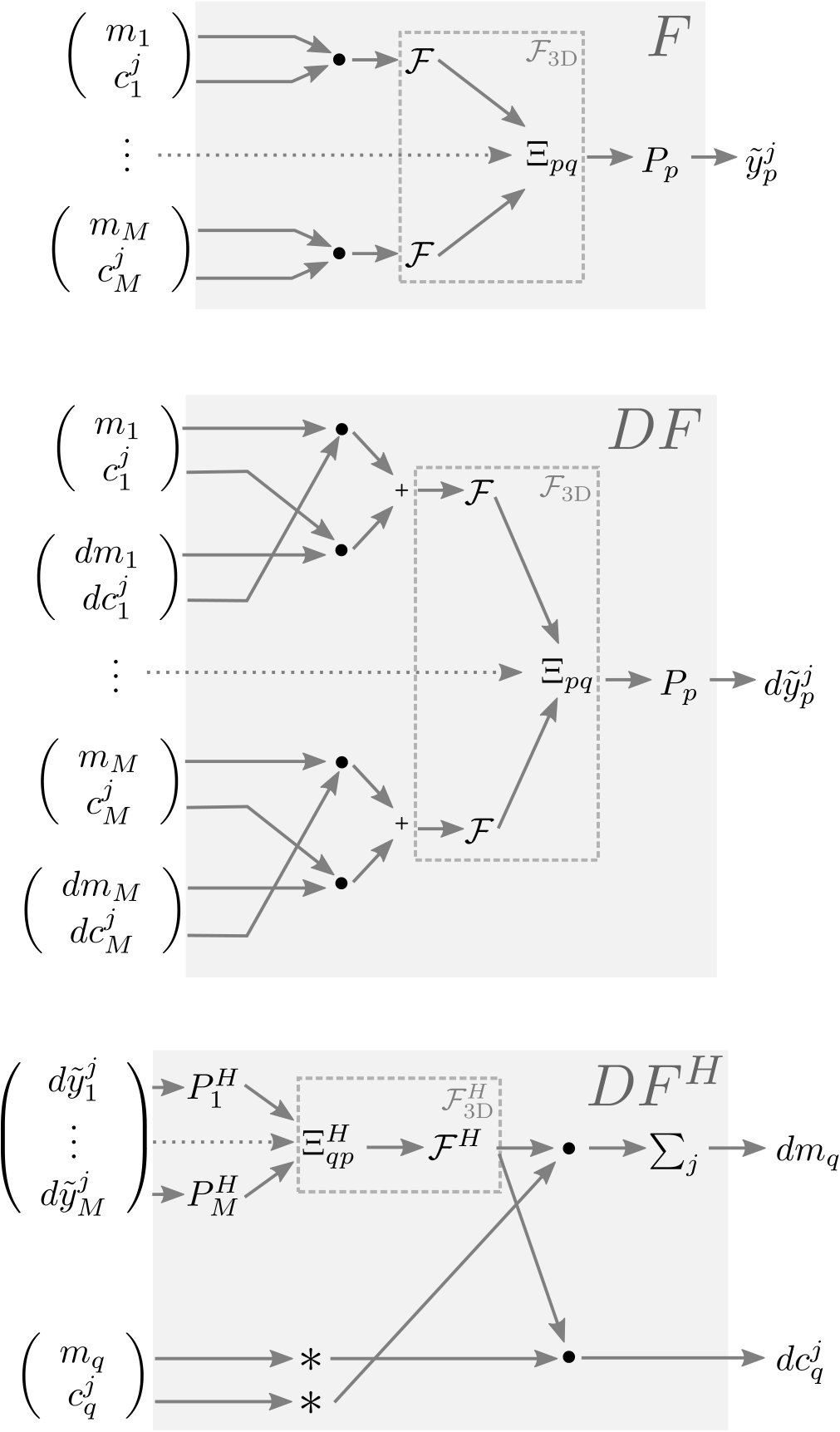 Figure 1
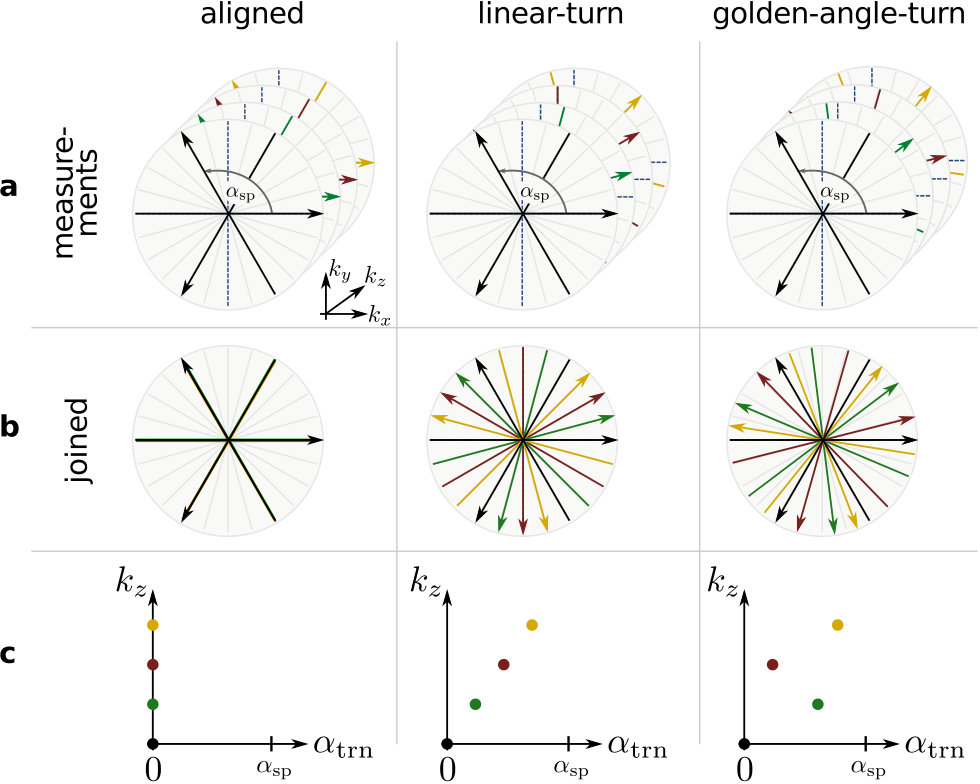 Figure 2
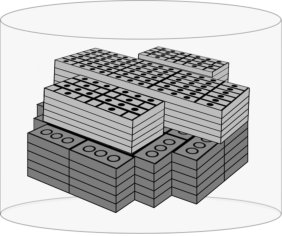 Figure 3
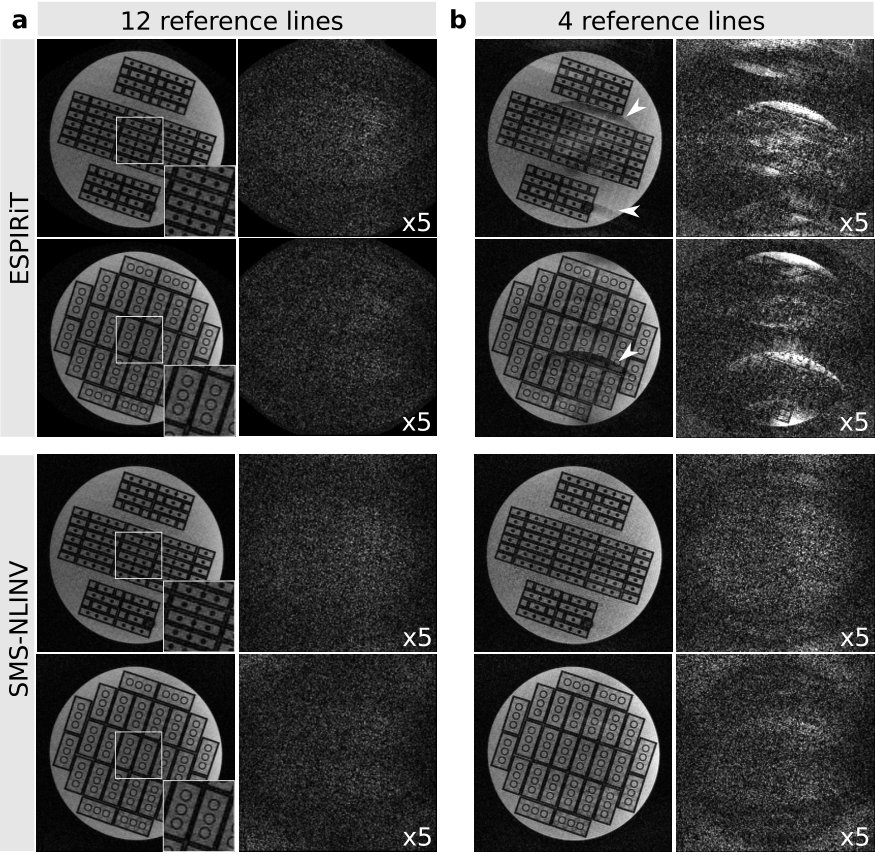 Figure 4
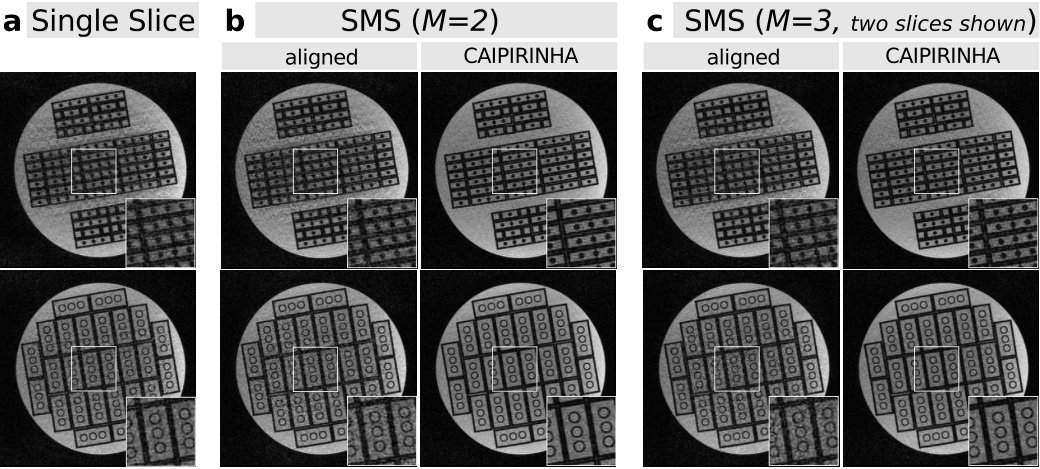 Figure 5
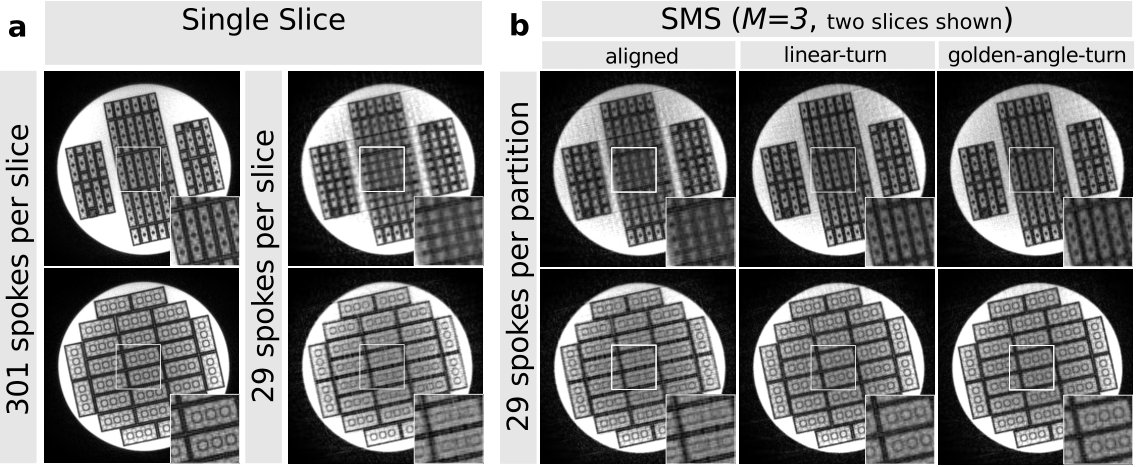 Figure 6
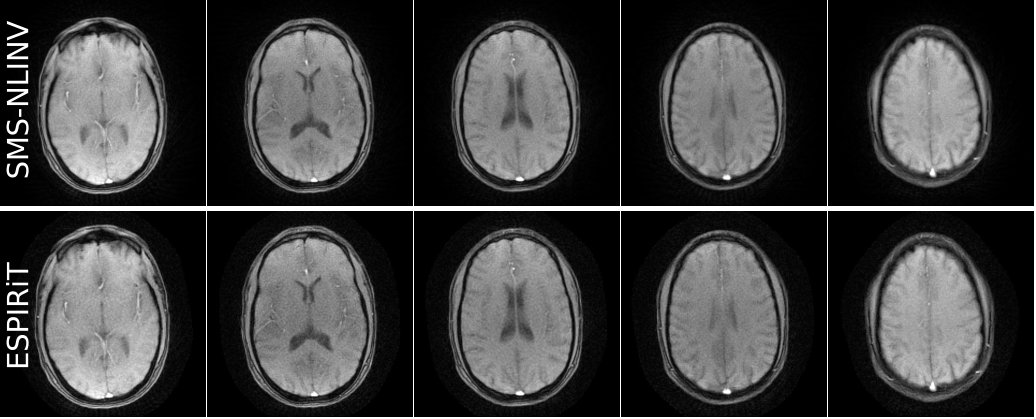 Figure 7
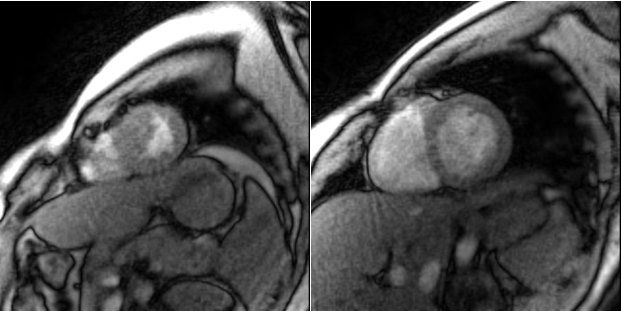 Figure 8
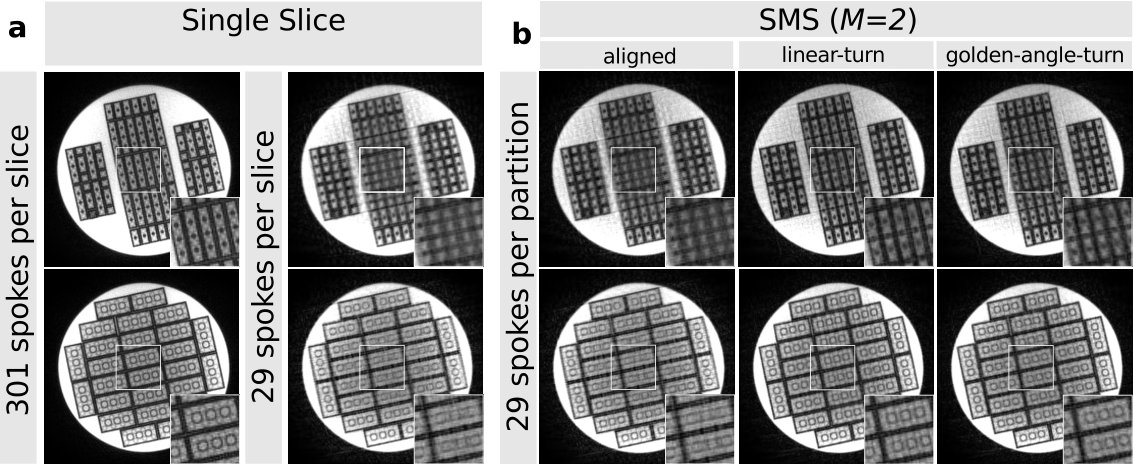 Figure 9
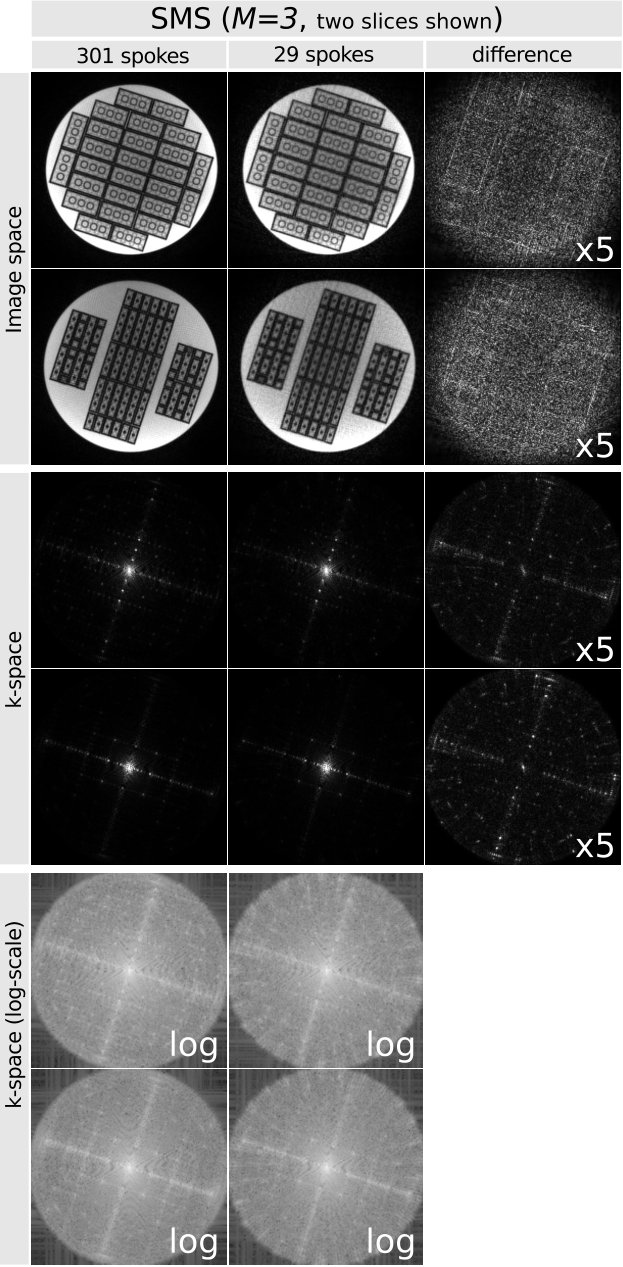 Figure 10
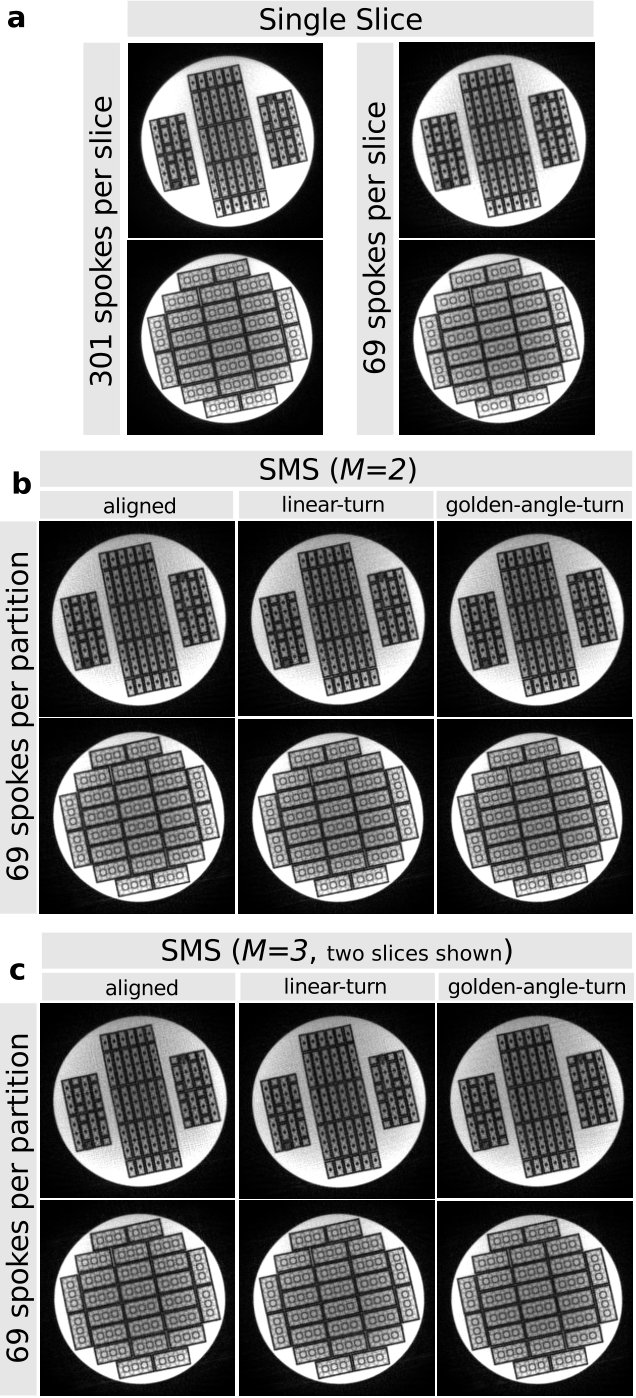 Figure 11
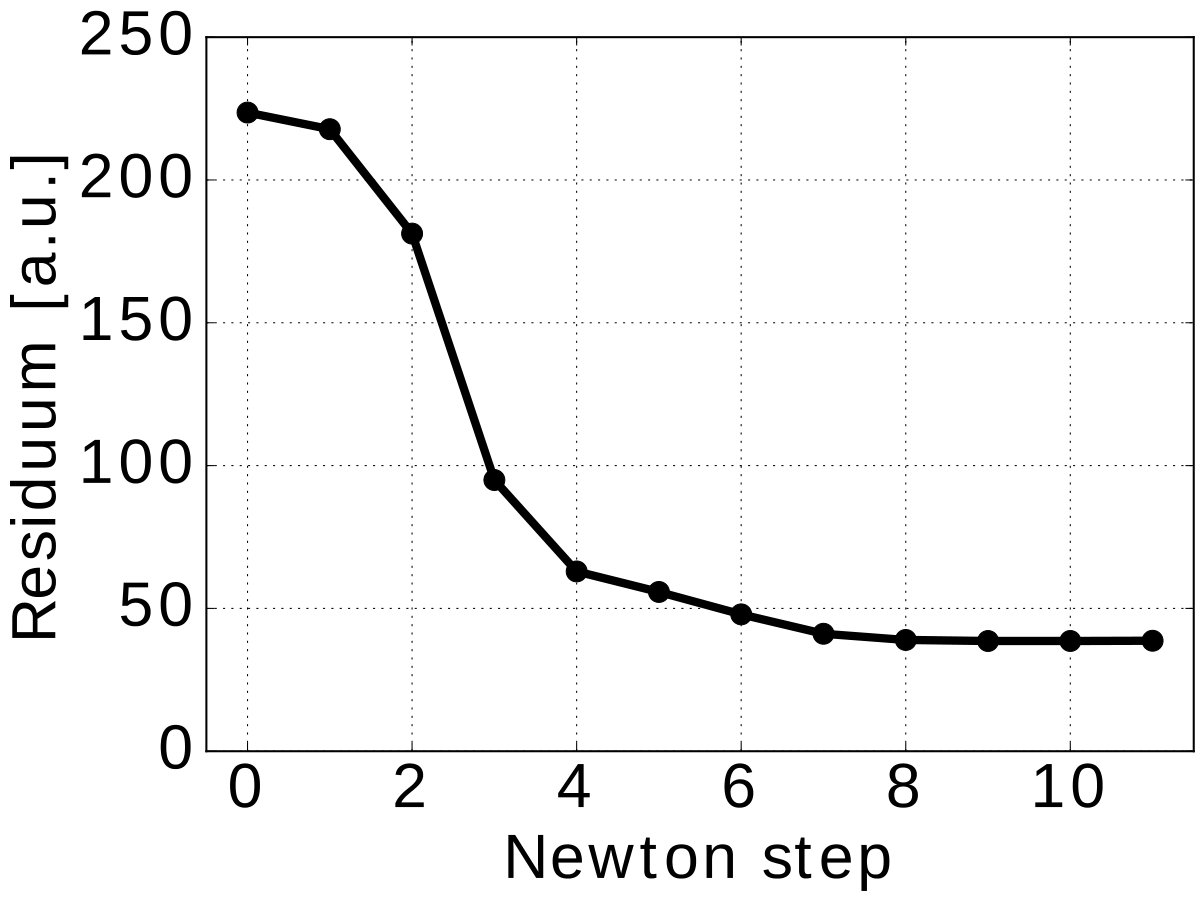 Figure 12
| Multi-band factor | |
| Number of receive channels | |
| Slice distance | |
| Magnetization and coil sensitivities for slice | |
| k-spaces of all coils | |
| k-space of coil | |
| k-space of slice | |
| Magnetizations seen by all coils | |
| Magnetization seen by coil | |
| Magnetization of slice | |
| Coil sensitivities of all coils | |
| Coil sensitivity of slice | |
| Normalized coil sensitivity | |
| Center coordinate of slice | |
| Slice thickness | |
| Encoded quantity | |
| H | Adjoint |
| T | Transpose |
| ∗ | Complex conjugate |
| Number of Newton steps. |
Peer Reviews
No public reviews on file for this paper yet. If you reviewed it on a platform where reviews are public (OpenReview, ICLR, NeurIPS, ICML), you can paste yours below so the community can read it here.
Code & Models
Videos
No videos yet. Explain this paper in a talk, walkthrough, or lecture? Add one.
Simultaneous Multi-Slice MRI using Cartesian and Radial FLASH
and Regularized Nonlinear Inversion: SMS-NLINV
Sebastian Rosenzweig1
1Institute for Diagnostic and Interventional Radiology,
University Medical Center Göttingen, Göttingen, Germany.
2German Centre for Cardiovascular Research (DZHK),
Partner site Göttingen, Göttingen, Germany.
3Biomedizinische NMR Forschungs GmbH am Max-Planck-Institut für biophysikalische Chemie, Göttingen, Germany.
H. Christian M. Holme1,2
1Institute for Diagnostic and Interventional Radiology,
University Medical Center Göttingen, Göttingen, Germany.
2German Centre for Cardiovascular Research (DZHK),
Partner site Göttingen, Göttingen, Germany.
3Biomedizinische NMR Forschungs GmbH am Max-Planck-Institut für biophysikalische Chemie, Göttingen, Germany.
Robin N. Wilke1,2
1Institute for Diagnostic and Interventional Radiology,
University Medical Center Göttingen, Göttingen, Germany.
2German Centre for Cardiovascular Research (DZHK),
Partner site Göttingen, Göttingen, Germany.
3Biomedizinische NMR Forschungs GmbH am Max-Planck-Institut für biophysikalische Chemie, Göttingen, Germany.
Dirk Voit3
1Institute for Diagnostic and Interventional Radiology,
University Medical Center Göttingen, Göttingen, Germany.
2German Centre for Cardiovascular Research (DZHK),
Partner site Göttingen, Göttingen, Germany.
3Biomedizinische NMR Forschungs GmbH am Max-Planck-Institut für biophysikalische Chemie, Göttingen, Germany.
Jens Frahm2,3 and Martin Uecker1,2
1Institute for Diagnostic and Interventional Radiology,
University Medical Center Göttingen, Göttingen, Germany.
2German Centre for Cardiovascular Research (DZHK),
Partner site Göttingen, Göttingen, Germany.
3Biomedizinische NMR Forschungs GmbH am Max-Planck-Institut für biophysikalische Chemie, Göttingen, Germany.
Running head: SMS Reconstruction Using Nonlinear Inversion
Address correspondence to:
Sebastian Rosenzweig
University Medical Center Göttingen
Institute for Diagnostic and Interventional Radiology
Robert-Koch-Str. 40
37075 Göttingen, Germany
Approximate word count: 153 (Abstract) 3470 (body)
Submitted to Magnetic Resonance in Medicine as a Full Paper.
Part of this work has been presented at the ISMRM Annual Conference 2016 (Singapore) and 2017 (Honolulu). This work was supported by a seed grant of the Physics-to-Medicine Initiative Göttingen (LM der Niedersächsischen Vorab).
Abstract
Purpose: The development of a calibrationless parallel imaging method for accelerated simultaneous multi-slice (SMS) MRI based on Regularized Nonlinear Inversion (NLINV), evaluated using Cartesian and radial FLASH.
Theory and Methods: NLINV is a parallel imaging method that jointly estimates image content and coil sensitivities using a Newton-type method with regularization. Here, NLINV is extended to SMS-NLINV for reconstruction and separation of all simultaneously acquired slices. The performance of the extended method is evaluated for different sampling schemes using phantom and in-vivo experiments based on Cartesian and radial SMS-FLASH sequences.
Results: The basic algorithm was validated in Cartesian experiments by comparison with ESPIRiT. For Cartesian and radial sampling, improved results are demonstrated compared to single-slice experiments, and it is further shown that sampling schemes using complementary samples outperform schemes with the same samples in each partition.
Conclusion: The extension of the NLINV algorithm for SMS data was implemented and successfully demonstrated in combination with a Cartesian and radial SMS-FLASH sequence.
Key words: simultaneous multi-slice, SMS, multi-band, regularized nonlinear inversion, NLINV, parallel imaging
Introduction
Accelerating image acquisition is of great importance in clinical magnetic resonance imaging (MRI). Parallel imaging exploits receive-coil arrays for acceleration. Conventional reconstruction methods for parallel imaging consist of a calibration from reference lines followed by linear reconstruction [1, 2, 3, 4]. In contrast, Regularized Nonlinear Inversion (NLINV) [5] does not require a calibration step but simultaneously computes image content and coil sensitivities from all available data. Because NLINV does not depend on the presence of explicit (Cartesian) calibration data, it is ideally suited for non-Cartesian parallel imaging. For example, NLINV is used in a highly accelerated real-time MRI method based on radial sampling [6].
Many applications require the acquisition of several slices. Simultaneous multi-slice (SMS) MRI [7] allows for significant scan time reductions and improved image quality [8, 9]. In SMS MRI several slices are excited at the same time and the resulting superposition is disentangled using special encoding schemes [10, 11] and/or the spatial encoding information inherent in receiver coil arrays [7]. The main benefit of accelerated SMS MRI over conventional single-slice imaging is the possibility to distribute undersampling among an additional dimension and exploit sensitivity encoding in all three dimensions which allows for higher acceleration factors [12, 13, 14, 15, 16, 17].
The aim of this work is to extend NLINV for the reconstruction of SMS data. First, the extension of the algorithm for Cartesian and radial sampling with arbitray encoding in slice direction is introduced. For Cartesian data from an SMS-FLASH sequence, SMS-NLINV is compared to ESPIRiT [4]. For Cartesian and radial data, a single-slice measurement is compared to SMS acquisitions with equivalent or complementary samples in each partition. Accelerated SMS measurements of a human brain and a human heart are performed to show feasibility of in vivo scans.
Theory
Table 1 shows the notation used in this work.
SMS Encoding and Excitation Pulses
In SMS MRI, partitions are measured to get information about parallel slices . Please note that a fully sampled acquisition with partitions has times the number of samples compared to a single-slice experiment, and the acceleration factor of an SMS experiment is then given by , with the number of samples acquired in a full and undersampled partition measurement, respectively. Contrary to conventional multi-slice, in each partition measurement all slices are excited simultaneously, i.e. superposed data are acquired. In the limit of small flip angles, an SMS radio frequency (RF) excitation pulse which excites slices at positions and thickness can be created by superposing conventional single-slice excitation pulses . To generate differently encoded partitions a unitary encoding matrix is included. The SMS RF excitation pulse for partition measurement is then given by
[TABLE]
Let be a vector which contains the k-spaces of slice and coils . Then, the encoded k-space of partition is given by
[TABLE]
Although the derived SMS-NLINV algorithm is completely generic, we use the discrete Fourier-matrix for encoding in the scope of this work, i.e.
[TABLE]
Image reconstruction
If the encoded k-spaces determined by the partition measurements are fully sampled, the k-space of each slice can be recovered by applying the inverse of the encoding matrix
[TABLE]
Note that the k-spaces possess an SNR benefit of compared to single-slice experiments due to averaging given by Eq. (4) and because is unitary. Eq. (4) can also be applied to undersampled data if the same k-space positions are acquired for all partitions. The recovered (but still undersampled) k-spaces can then be processed using conventional single-slice reconstruction algorithms. This still leads to an SNR benefit, but the actual advantage of SMS - the acceleration in direction perpendicular to the slices - only comes into play when distinct samples are acquired for each partition. Then, Eq. (4) is no longer applicable and more elaborate SMS reconstruction approaches must be applied. A novel approach to tackle this reconstruction problem is introduced in the following.
Regularized Nonlinear Inversion (NLINV) [5] can be extended for the reconstruction of encoded SMS data [18]. In NLINV, the MRI signal equation is modeled as a nonlinear operator equation,
[TABLE]
is the vector to be reconstructed. It contains the image content and the coil sensitivities , for each of the slices , i.e. the stacked vector as a concatenation of the vectors . The vector contains the encoded k-spaces for all partitions and all channels, i.e. with . Then, the nonlinear mapping function is given by
[TABLE]
Here, is the (two-dimensional) Fourier transform and is an encoding matrix, e.g. Eq. (3). The projection matrix is defined by
[TABLE]
where is the orthogonal projection onto the k-space trajectory used for partition . A more compact notation for Eq. (6) can be given by introducing the operator , which performs the multiplication of the object with the sensitivities:
[TABLE]
The forward operator weights the magnetization of slice with the coil sensitivities (), transforms into k-space (), encodes () and samples (). The derivative and its adjoint will be used later to solve the inverse problem Eq. (5) and are given in the Appendix. Figure 1 shows a flow chart of the operators , and .
Eq. (5) is highly underdetermined, hence prior knowledge has to be incorporated to prevent image content to be assigned to coil profiles and vice versa. While the image content can contain strong variations and edges, coil profiles in general are smooth functions, so a smoothness-demanding norm can be applied. Uecker et al. suggest a Sobolev norm
[TABLE]
with a positive integer, the identity matrix, and scaling parameters and the 2D Laplacian. Hence, in Fourier space the standard L2-norm has to be weighted by the additional term , which penalizes high spatial frequencies. This regularization is implemented by transforming using a weighting matrix . We denote and . This yields a transformed but equivalent system of equations
[TABLE]
which is solved using the Iteratively Regularized Gauss Newton Method (IRGNM).
As a first step, the IRGNM linearizes Eq. (10),
[TABLE]
where is the estimate of the Newton step and DG\big{|}_{X^{\prime}_{n}} is the Jacobian of at . This equation is solved in the least-squares sense and with regularization using the Conjugate Gradient algorithm. The corresponding cost function to be minimized in every Newton step is
[TABLE]
where the L2 penalty term , with and , implies Tikhonov regularization.
Implementation for Cartesian and non-Cartesian Data
We assume Eq. (5) to be given in discretized form and all functions are represented by vectors of point values on a rectangular grid. For Cartesian sampling, can be implemented exactly as a discrete Fourier transform, and is a diagonal matrix with ones at sample positions and zeros elsewhere. The 2D Fourier transform always appears in combination with the encoding matrix , which in this work is the discrete Fourier-matrix Eq. (3). Thus, and its adjoint can simply be implemented as a three-dimensional Fast Fourier transform and its adjoint. Note, that the 2D Fourier transform is a discretized version of a continuous Fourier transform, whereas the Fourier-encoding is discrete by definition.
For non-Cartesian sampling, projects onto arbitrary positions in k-space. As in non-Cartesian SENSE, can be implemented with a non-uniform Fourier transform [19]. The term is the main operation which occurs in each iteration step. As described previously [20], it can be interpreted as a non-periodic convolution with a point-spread function (PSF) which has to be evaluated on a region with compact support defined by the field-of-view. Thus, an efficient implementation is achieved with the fast Fourier transform on a -fold enlarged grid to implement the non-periodic convolution using Toeplitz embedding. This requires only a minor modification of the Cartesian implementation which can then be used with data gridded once onto the Cartesian grid in a preparatory step and with a pre-computed PSF.
Sampling Schemes
All utilized Cartesian sampling patterns possess reference lines in the k-space center, whereas the periphery is undersampled by a factor . For each of the partition measurements we can use a distinct undersampling pattern. The CAIPIRINHA technique can improve the image quality for SMS acquisitions by acquiring alternating lines between each partition [14, 21]. Alternatively, in each partition the same samples can be acquired (aligned pattern).
In radial measurements k-space samples are acquired along spokes. Let be the total number of acquired spokes per partition. Then, the angle between consecutive spokes of a partition is set to which guarantees uniform k-space coverage and prevents strong gradient delay artifacts by opposing the acquisition direction of adjacent spokes. For each partition the k-space trajectory, i.e. the spoke distribution scheme, can be chosen individually. Figure 2 shows three possible spoke distribution schemes: (1) The aligned scheme acquires the same spokes for each partition. (2) In the linear-turn scheme the initial spoke pattern is rotated by
[TABLE]
for partition , assuring the acquisition of complementary samples and uniform spoke distribution (cf. Fig. 2b). (3) Fourier-encoding in SMS MRI can also be seen as an additional phase-encoding in direction. The acquisition of many slices is therefore very similar to a stack-of-stars sequence in true 3D imaging for which Zhou et al. [22] showed that a golden angle-like rotation of the spoke distribution results in a higher image quality than aligned or linearly varied distributions. Here the turn angle for partition is given by
[TABLE]
This scheme provides a more uniform local 3D k-space coverage as can be seen in Fig. 2c, but the spokes themselves are not as evenly distributed as in the linear-turn scheme. Turn-based spoke distribution schemes in combination with Fourier-encoded partition measurements are known to improve image quality similar to CAIPIRINHA in the Cartesian case [15, 21].
Post-processing
Although the matrix promotes adequate distribution of image content and coil sensitivities, the results may still exhibit minor large scale intensity variations compared to a conventional root-sum-of-squares (RSS) reconstruction. This can be compensated for by multiplying the image content with the RSS of the coil profiles:
[TABLE]
Methods
Cartesian and radial 2D FLASH sequences with adapted RF excitation pulses for Fourier-encoded SMS excitation as described in the theory section were developed and utilized in this study. All experiments were conducted on a Magnetom Skyra 3T (Siemens Healthcare GmbH, Erlangen, Germany) scanner using a 20-channel head/neck coil for phantom and human brain measurements and a combined thorax and spine coil with 26 channels for human heart measurements. All phantom measurements (170\text{,}\frac{{\mathrm{mm}}^{2}}{}, matrix size $192\times 192$, slice thickness $\Delta z=$6\text{\,}\frac{\mathrm{mm}}{}) were performed on a custom-made phantom (Fig. 3) consisting of ABS bricks (LEGO) being immersed in pure water.
It is designed such that the proton density of the top and bottom part of the phantom differ distinctly from each other. This property can be used to demonstrate the capability of SMS-NLINV to disentangle simultaneously excited slices. The in-vivo brain measurements (230\text{,}\frac{{\mathrm{mm}}^{2}}{}, matrix size $192\times 192$, slice thickness $\Delta z=$4\text{\,}\frac{\mathrm{mm}}{}, flip angle 25\text{,}\frac{\mathrm{\SIUnitSymbolDegree}}{}) as well as the heart measurements ($\text{FOV}=256\times$256\text{\,}\frac{{\mathrm{mm}}^{2}}{}, matrix size , slice thickness 6\text{,}\frac{\mathrm{mm}}{}, flip angle $\theta=$8\text{\,}\frac{\mathrm{\SIUnitSymbolDegree}}{}) were performed on volunteers with no known illnesses. In all experiments, all simultaneously acquired slices are separated by a fixed distance . NLINV as well as SMS-NLINV were implemented in the C-based software package BART [23]. The initial guess was () for the magnetizations and () for the coil sensitivities. The parameters for the Sobolev norm were set to and . The initial regularization parameter was with reduction factor . In the interest of reproducible research, code and data to reproduce the experiments are made available on Github.111https://github.com/mrirecon/sms-nlinv
To confirm the basic functionality of SMS-NLINV, a Cartesian SMS measurement with multi-band factor (slice distance 60\text{,}\frac{\mathrm{mm}}{}, TE/TR=$4.4/\allowbreak$8.3\text{\,}\frac{\mathrm{ms}}{}, flip angle 15\text{,}\frac{\mathrm{\SIUnitSymbolDegree}}{}$$) was performed on the brick phantom. A full k-space was acquired and undersampling was performed retrospectively by multiplication with the corresponding patterns. The full and a retrospectively undersampled k-space (CAIPIRINHA pattern, , ) were reconstructed with SMS-NLINV. For comparison, reconstructions were also performed using the L2-regularized ESPIRiT algorithm [4], which is based on SENSE [1] and can therefore also be applied to SMS data [14]. To validate the accuracy of the results, difference images between the full and undersampled reconstructions were calculated. To assure proper difference images for ESPIRiT reconstructions, the complex-valued slice-images were multiplied with the corresponding coil sensitivities followed by a RSS combination. The post-processing step in SMS-NLINV already compensates for intensity variations, thus adequate difference images can be calculated using the magnitude of the resulting images. We performed the same experiment using reference lines to demonstrate the advantage of SMS-NLINV over ESPIRiT given a very small calibration region.
The CAIPIRINHA technique can significantly improve the image quality of SMS experiments [14, 21]. We confirm these findings for SMS-NLINV by comparing retrospectively undersampled SMS measurements (TE/TR=9.1\text{,}\frac{\mathrm{ms}}{}, flip angle $\theta=$15\text{\,}\frac{\mathrm{\SIUnitSymbolDegree}}{}, , ) with CAIPIRINHA patterns to SMS measurements with aligned patterns using the multi-band factors (slice distance 60\text{,}\frac{\mathrm{mm}}{}) and $M=3$ (slice distance $d=$30\text{\,}\frac{\mathrm{mm}}{}). The absolute slice locations were chosen such that the outermost slices in both experiments were located at the same positions, which allowed a comparison of the respective slice images. A reference measurement was performed with each investigated slice acquired separately in a single-slice experiment and reconstructed with regular NLINV using equivalent reconstruction parameters. Apart from reduced SNR, the single-slice measurements should be identical to the acquisition with the aligned patterns.
The same experiment was performed using a radial trajectory to rule out errors with the radial SMS-FLASH sequence (TE/TR=3.1\text{,}\frac{\mathrm{ms}}{}, flip angle $\theta=$15\text{\,}\frac{\mathrm{\SIUnitSymbolDegree}}{}, spokes per partition) and the SMS-NLINV reconstruction for non-Cartesian data. Again, the improved k-space coverage of interleaved acquisitions, i.e. the use of linear-turn- and golden-angle-turn-based spoke distributions, should provide better results than aligned distributions or single-slice measurements with the same reduction factor. As a reference we performed single slice measurements on the same slices using spokes to achieve Nyquist sampling even in the outer region of k-space. Finally, we present two in-vivo experiments. First, slices (slice distance 60\text{,}\frac{\mathrm{mm}}{}, TE/TR=$4.0/$9.8\text{\,}\frac{\mathrm{ms}}{}, spokes per partition) of a human brain were acquired using the golden-angle-turn scheme. Reconstructions were performed using SMS-NLINV and L2-ESPIRiT. Calibration using ESPIRiT requires a four step procedure: (1) the reconstruction of a fully-sampled Cartesian calibration regions using gridding (for all partitions) (3) disentangling of the partitions into slices using the inverse of matrix , (3) Fourier transformation back into a Cartesian k-space (for each slice), and (4) actual calibration from the Cartesian k-space data (for each slice). For this procedure to work, only the region in k-space which fulfills the Nyquist criterion in all partitions can be used. The size of the calibration region for ESPIRiT is limited by the Nyquist criterion and was calculated to be . Second, slices (slice distance 40\text{,}\frac{\mathrm{mm}}{}, TE/TR=$1.37/$2.2\text{\,}\frac{\mathrm{ms}}{}, spokes per partition) of a human heart were acquired without ECG-triggering [6]. To be able to reconstruct a single frame without temporal regularization or filtering, we combined 5 interleaves with 7 spokes per partition to obtain a single data set with 35 spokes per partition and linear-turn scheme.
Results
Cartesian data
Figure 4a shows ESPIRiT and SMS-NLINV reconstructions of a 4-fold undersampled Cartesian SMS measurement with multi-band factor and reference lines. The SMS-NLINV algorithm can completely disentangle the superposed slices without significant artifacts after Newton steps. The resulting image quality is equivalent to ESPIRiT. Figure 4a also depicts difference images of undersampled and full reconstructions for both methods. For better visibility the image intensity was increased by a factor of 5. In all difference images almost no residual image content can be observed and mostly noise is present, which means that almost all aliasing artifacts could be eliminated. The enhanced noise in the central region is a consequence of the specific Cartesian sampling pattern. Figure 4b shows the same reconstructions using a reduced calibration region. Whereas we find significant aliasing artifacts for ESPIRiT, SMS-NLINV still provides good results after Newton steps.
Figure 5 shows SMS-NLINV reconstructions of Cartesian SMS acquisitions with multi-band factors and after Newton steps using aligned and CAIPIRINHA patterns. As a comparison, the figure also depicts NLINV reconstructions of single-slice measurements for the same slices using Newton steps. For both pattern types and multi-band factors the superposition can be completely disentangled and no severe undersampling artifacts are present. However, the image quality resulting from the CAIPIRINHA data is clearly superior to aligned SMS and single-slice data. Besides an SNR benefit, the images of aligned SMS do not show any advantages compared to the single-slice images. By contrast, the CAIPIRINHA images resolve small details of the phantom bricks much better.
Radial data
Figure 6 depicts SMS-NLINV reconstructions of aligned, linear-turn- and golden-angle-turn-based radial SMS acquisitions with multi-band factor after Newton steps, as well as NLINV reconstructions of single-slice measurements for the same slices using Newton steps. The results for are provided as supporting Figure S1. Similar to Fig. 5 the slice images could be reconstructed without significant undersampling or superposition artifacts. As in the Cartesian case, the turn-based SMS acquisitions where complementary k-space data are acquired in each partition yield a much better image quality than aligned SMS and single-slice measurements. The linear-turn and the golden-angle-turn scheme yield similar results. As supporting Figure S2 we provide difference images in image and k-space for and spokes per partition for the linear-turn-based measurement. Supporting Figure S3 shows the same experiments as Figure 6 and supporting Fig. S1 but with spokes.
Figure 7 and 8 show the results of the in-vivo scans where we have chosen the number of Newton steps to obtain the best results using visual observation. Figure 7 shows slices of a 7-fold undersampled acquisition of a human brain reconstructed with SMS-NLINV using Newton steps and ESPIRiT. Both methods show similar results as all slices are completely disentangled and all streaking artifacts could be eliminated. As supporting Figure S4 shows, the residual for the SMS-NLINV reconstruction approaches a constant value when plotted against the number of Newton steps.
Figure 8 depicts slices of a human heart in end-diastole simultaneously acquired in using spokes per partition and reconstructed with SMS-NLINV using Newton steps. Again, the two slices are completely disentangled and only slight blurring as well as minor streaking artifacts are present.
Discussion
In this work, SMS-NLINV has been combined with a Cartesian and a radial SMS-FLASH sequence.
With sufficient reference lines, SMS-NLINV and ESPIRiT reconstruct undersampled SMS data with similar image quality as shown in this work for radial and Cartesian data. This finding is in agreement with previous results comparing ESPIRiT and regular NLINV [4]. For very small calibration regions SMS-NLINV still provides good results where ESPIRiT reconstructions already show severe artifacts. The reason for this is that SMS-NLINV does not rely on a fully sampled calibration region but jointly estimates the image content and the coil sensitivities. In contrast, direct calibration using ESPIRiT or other calibration methods requires a complicated four step procedure and only the region in k-space which fulfills the Nyquist criterion simultaneously in all partitions can be utilized for calibration. SMS-NLINV not only makes all these additional separate processing steps unnecessary, it also works even for very small calibration regions by exploiting all available samples. This latter property makes SMS-NLINV ideally suited for non-Cartesian sampling, especially for accelerated dynamic imaging with changing coil sensitivities where only 5 to 7 spokes per partition are acquired and the Nyquist-sampled region can become very small [24]. We compared Cartesian SMS acquisitions with CAIPIRINHA and aligned patterns as well as radial SMS acquisitions with aligned spoke scheme and linear-turn spoke schemes for different multi-band factors with single-slice () measurements as control. The aligned schemes acquire the same k-space samples for each of the partitions which resembles an averaging process and thus yields an SNR benefit relative to single-slice measurements. However, the partitions do not contain complementary k-space information and therefore no significant advantages in terms of better resolved details can be achieved. In this case a joint reconstruction does not possess any benefits compared to an inverse discrete Fourier transform (Eq. (4)) on the Fourier-encoded k-spaces followed by single-slice reconstructions. The actual advantage of SMS-NLINV becomes apparent with the use of schemes where each partition contributes complementary k-space data which is equivalent to supplementary object information. Consequently, in addition to the SNR benefit, details are better resolved. Whereas single-slice NLINV and aligned SMS-NLINV recover missing k-space samples using 2D sensitivity information, SMS-NLINV using complementary data also exploits sensitivity variations in the third dimension which allows for higher acceleration factors [12].
In principle, the more slices we simultaneously acquire using an interleaved scheme, the better will be the resulting image quality of each slice due to the -like SNR benefit and the acquisition of additional complementary samples. However, for the acquisition of slices we have to perform partition measurements and therefore the measurement time increases with increasing until it approaches the time of a 3D measurement. The optimal choice for depends on various experimental considerations such as overall motion robustness, magnetization preparation scheme, etc.
A future subject of study will be the use of SMS-NLINV for dynamic imaging at high temporal resolution, which was already successfully demonstrated for single-slice MRI using NLINV [25, 6, 26, 27]. The incorporation of additional minimization penalties such as temporal regularization and median filtering [25] known from NLINV and adapted spoke distribution schemes for dynamic SMS imaging [28] can directly be applied to SMS-NLINV and will further reduce streaking artifacts as well as blurring and improve the overall image quality. Preliminary results have been presented by Rosenzweig et al. [24].
In this work, we used a basic SMS-FLASH sequence. However, SMS-NLINV is a very general reconstruction approach and should be applicable to all sequences that can make use of an SMS acquisition, such as diffusion tensor imaging (DTI), functional MRI (fMRI) or / quantification. In the future, we also plan to combine SMS-NLINV with a bSSFP sequence [29] and more advanced regularization techniques which will improve image quality at high acceleration [30, 31].
Conclusion
The present work extends the NLINV algorithm to simultaneous multi-slice MRI. As NLINV does not rely on the presence of Cartesian calibration data, it is an ideal choice for parallel imaging with non-Cartesian acquisitions. The combination with simultaneous multi-slice (SMS) offers the advantages of increased SNR and higher acceleration by exploiting three-dimensional sensitivity encoding.
Appendix
Glossary
Derivative and adjoint of the Forward operator
Given the forward operator from Eq. (6) the corresponding derivative reads
[TABLE]
The adjoint of the derivative is given by
[TABLE]
with
[TABLE]
The asterisk denotes pointwise complex conjugation.
Weighting Matrix
The weighting matrix used in SMS-NLINV to implement the smoothness penalty for the coil sensitivities is given by:
[TABLE]
Here, is the same weighting matrix as used in conventional NLINV:
[TABLE]
The reference list from the paper itself. Each links out to its DOI / PubMed record.
- 1[1] Pruessmann KP, Weiger M, Scheidegger MB, Boesiger P. SENSE: sensitivity encoding for fast MRI. Magn. Reson. Med. 1999; 42:952–962.
- 2[2] Griswold MA, Jakob PM, Heidemann RM, Nittka M, Jellus V, Wang J, Kiefer B, Haase A. Generalized autocalibrating partially parallel acquisitions (GRAPPA). Magn. Reson. Med. 2002; 47:1202–1210.
- 3[3] Lustig M, Pauly JM. SPI Ri T: Iterative self-consistent parallel imaging reconstruction from arbitrary k-space. Magn. Reson. Med. 2010; 64:457–471.
- 4[4] Uecker M, Lai P, Murphy MJ, Virtue P, Elad M, Pauly JM, Vasanawala SS, Lustig M. ESPI Ri T—an eigenvalue approach to autocalibrating parallel MRI: where SENSE meets GRAPPA. Magn. Reson. Med. 2014; 71:990–1001.
- 5[5] Uecker M, Hohage T, Block KT, Frahm J. Image reconstruction by regularized nonlinear inversion—joint estimation of coil sensitivities and image content. Magn. Reson. Med. 2008; 60:674–682.
- 6[6] Uecker M, Zhang S, Voit D, Karaus A, Merboldt KD, Frahm J. Real-time MRI at a resolution of 20 ms. NMR Biomed. 2010; 23:986–994.
- 7[7] Larkman DJ, Hajnal JV, Herlihy AH, Coutts GA, Young IR, Ehnholm G. Use of multicoil arrays for separation of signal from multiple slices simultaneously excited. J. Magn. Reson. Imaging 2001; 13:313–317.
- 8[8] Moeller S, Yacoub E, Olman CA, Auerbach E, Strupp J, Harel N, Uğurbil K. Multiband multislice GE-EPI at 7 tesla, with 16-fold acceleration using partial parallel imaging with application to high spatial and temporal whole-brain f MRI. Magn. Reson. Med. 2010; 63:1144–1153.
