Universal Quantum Control in Zero-field Nuclear Magnetic Resonance
Ji Bian, Min Jiang, Jiangyu Cui, Xiaomei Liu, Botao Chen, Yunlan Ji,, Bo Zhang, John Blanchard, Xinhua Peng, Jiangfeng Du

TL;DR
This paper presents a universal quantum control method for nuclear spins in zero magnetic field, enabling quantum logic gates without magnetic fields, with potential applications across various scientific fields.
Contribution
It introduces a novel scheme for implementing universal quantum gates in zero-field NMR, expanding quantum control capabilities in field-free environments.
Findings
Realization of arbitrary single-qubit gates
Implementation of two-qubit controlled-NOT gate
Potential applications in quantum information processing
Abstract
This paper describes a general method for manipulation of nuclear spins in zero magnetic field. In the absence of magnetic fields, the spins lose the individual information on chemical shifts and inequivalent spins can only be distinguished by nuclear gyromagnetic ratios and spin-spin couplings. For spin-1/2 nuclei with different gyromagnetic ratios (i.e., different species) in zero magnetic field, we describe the scheme to realize a set of universal quantum logic gates, e.g., arbitrary single-qubit gates and two-qubit controlled-NOT gate. This method allows for universal quantum control in systems which might provide promising applications in materials science, chemistry, biology,quantum information processing and fundamental physics.
Click any figure to enlarge with its caption.
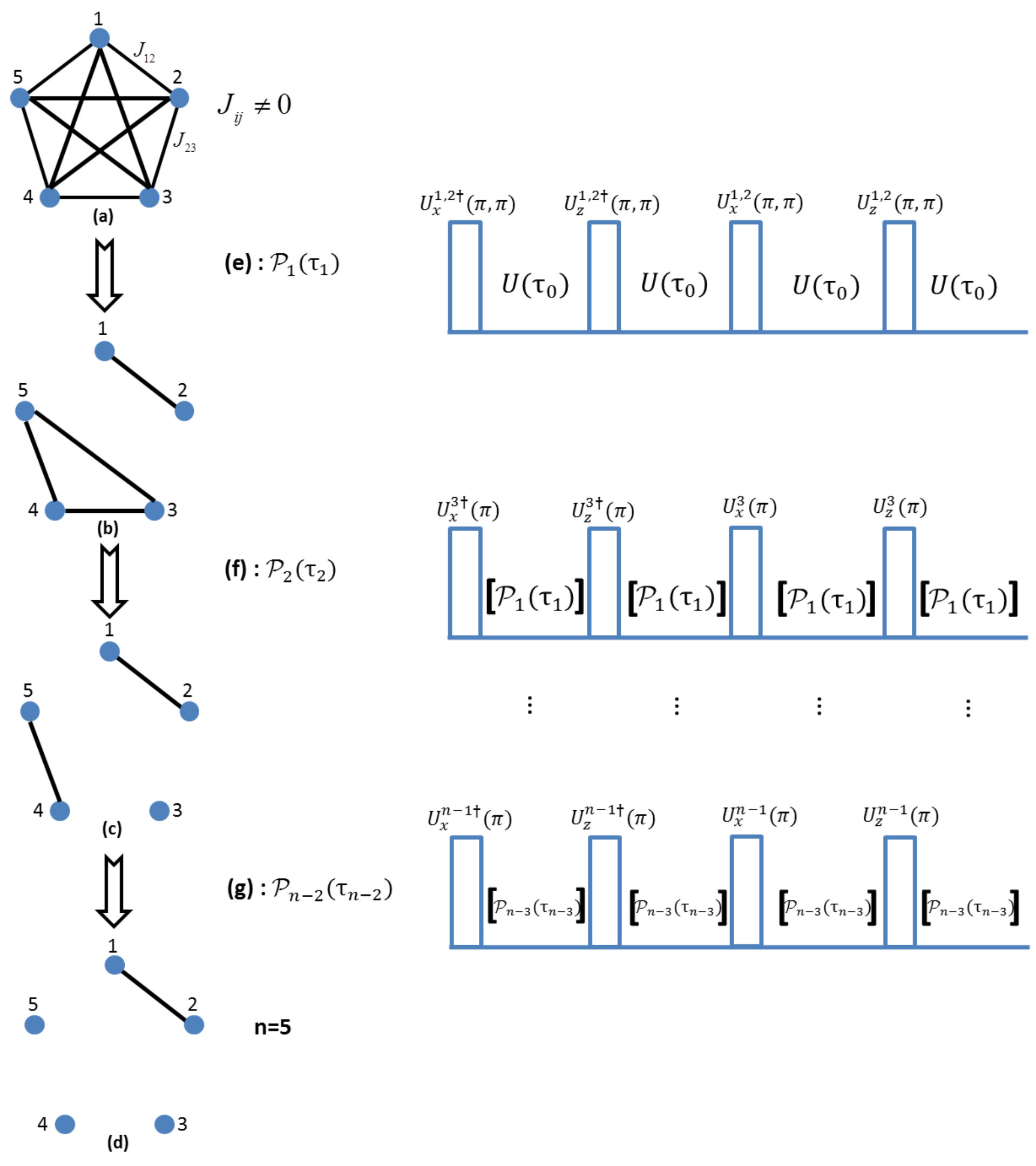 Figure 1
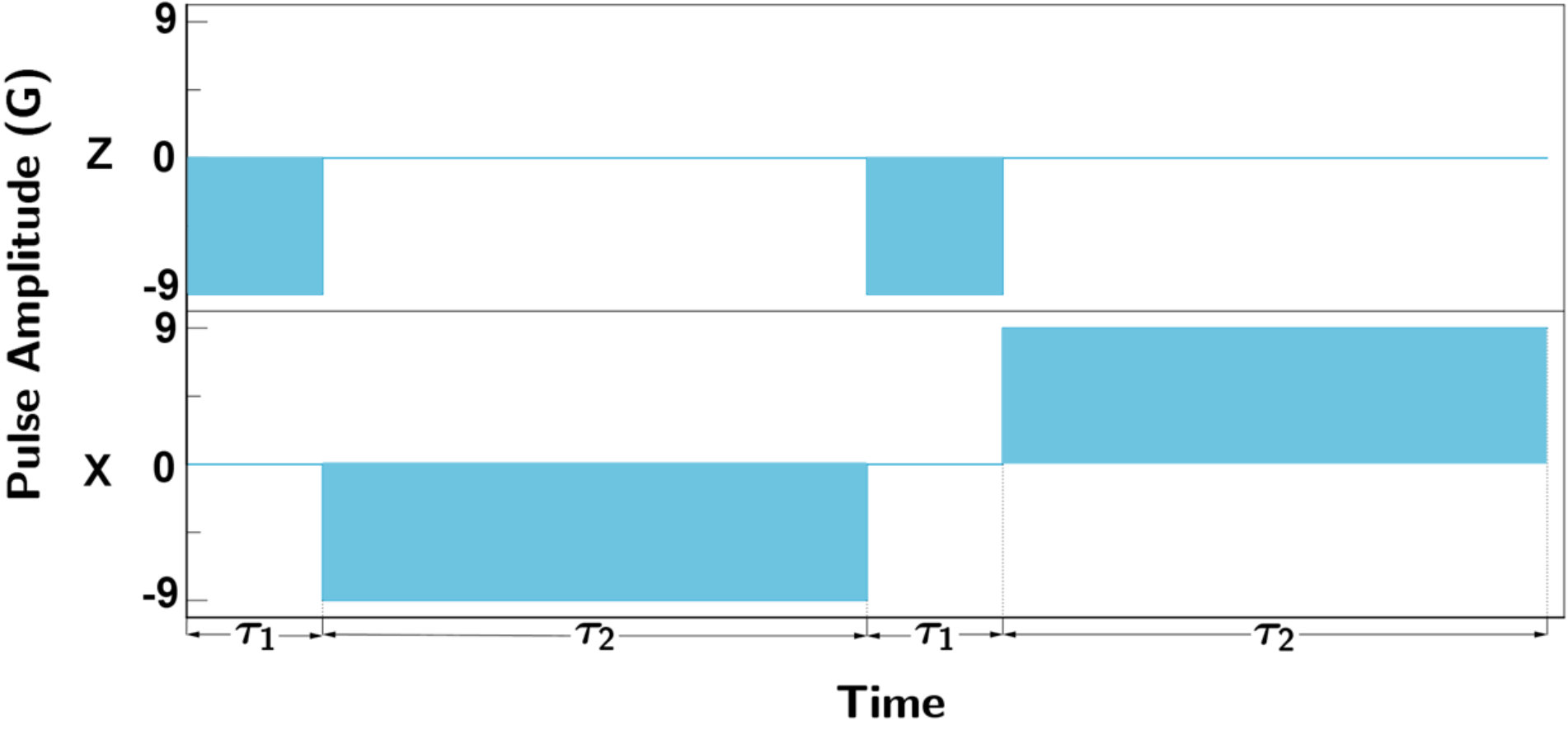 Figure 2
Peer Reviews
No public reviews on file for this paper yet. If you reviewed it on a platform where reviews are public (OpenReview, ICLR, NeurIPS, ICML), you can paste yours below so the community can read it here.
Videos
No videos yet. Explain this paper in a talk, walkthrough, or lecture? Add one.
Universal Quantum Control in Zero-field Nuclear Magnetic Resonance
Ji Bian1, Min Jiang1, Jiangyu Cui1, Xiaomei Liu1, Botao Chen1, Yunlan Ji1, Bo Zhang1, John Blanchard3
Xinhua Peng1,2
Jiangfeng Du1,2
1Hefei National Laboratory for Physical Sciences at Microscale and Department of Modern Physics, University of Science and Technology of China, Hefei, Anhui 230026, China
2Synergetic Innovation Center of Quantum Information Quantum Physics, University of Science and Technology of China, Hefei, Anhui 230026, China
3Helmholtz-Institut Mainz, 55099 Mainz, Germany
Abstract
This paper describes a general method for manipulation of nuclear spins in zero magnetic field. In the absence of magnetic fields, the spins lose the individual information on chemical shifts and inequivalent spins can only be distinguished by nuclear gyromagnetic ratios and spin-spin couplings. For spin-1/2 nuclei with different gyromagnetic ratios (i.e., different species) in zero magnetic field, we describe the scheme to realize a set of universal quantum logic gates, e.g., arbitrary single-qubit gates and two-qubit controlled-NOT gate. This method allows for universal quantum control in systems which might provide promising applications in materials science, chemistry, biology, quantum information processing and fundamental physics.
pacs:
03.65.-w, 03.67.-a, 03.67.Lx, 82.56.-b, 02.30.Yy
ntroduction
Zero-field NMR has attracted attention as a tool for chemical analysis jo ; mp ; jb ; tt ; nzf ; zulfjb , not limited by the disadvantages of superconducting magnets typically used in traditional high field NMR. In zero-field NMR, the Zeeman interaction is negligible which provides a natural regime for the measurement of local spin-spin interactions. This is “the inverse coupling” regime to that in conventional high-field NMR which allows one to measure some complementary information that can not be measured in the high-field case. Zero-field NMR features high absolute field homogeneity and the absence of certain relaxation pathways such as chemical shift anisotropy or susceptibility-induced gradients, yielding narrow resonance lines and accurate determination of coupling parameters zulfjb ; pines . Very recently, long-lived spin-singlet states (spin-singlet lifetimes as long as 37 seconds) were observed in heteronuclear spin pairs in zero magnetic field me , where the lifetime of the singlet-triplet coherence, T2, actually exceeds the lifetime of the triplet-state dipole moment, T1. Further, elimination of expensive cryogenically cooled superconducting magnets enables NMR devices that are portable, affordable, and energy-efficient.
In the absence of an external strong magnetic field, nuclear spin polarization can be prepared through techniques such as parahydrogen-induced polarization pip ; pip2 , dynamic nuclear polarization dnp ; dnp1 ; dnp2 ; dnp3 , quantum-rotor induced polarization qrip ; qrip1 or spin-exchange optical pumping seop ; seop1 ; encoding can be accomplished through the J-coupling and dipole-dipole coupling between spins; and spin resonance signals can be detected using atomic magnetometers ik ; ik1 , nitrogen-vacancy centers in diamond nv ; nv1 , or superconducting quantum interference devices (SQUIDs) squids ; squids1 . The spins in zero-field NMR can be manipulated by applying pulsed DC fields along three directions (, and ). Unlike high-field NMR, where spin dynamics and control problems are well studied, studies on these topics in zero-field where the spin dynamics and control methods are different from that in high field, are just beginning m1 ; m2 .
In this paper, we consider the topic of quantum control in zero-field NMR unpublished . While pioneering works have shown that performing arbitrary rotations in zero-field is not a solved problem and generally speaking the control of multiple spin species is significantly restricted m3 ; m4 , we show here a way of implementing a set of universal quantum logic gates, i.e., arbitrary single-qubit rotations and two-qubit controlled-NOT gate qcqi by using the information on nuclear gyromagnetic ratios and spin-spin couplings. Such a set of gates is sufficient to realize universal control on nuclear spins in zero field. The controllability in such systems might provide promising applications in materials science, chemistry, biology, quantum information processing and fundamental physics.
I uclear spin systems in zero magnetic field
A liquid-state spin-1/2 system in zero magnetic field can be described by the Hamiltonian (=1):
[TABLE]
where is the scalar coupling (or J-coupling) constant (in Hz) between the th and th spins and is the spin angular momentum operator of the th spin:
[TABLE]
We can apply a DC magnetic field to such a system:
[TABLE]
where and denotes the gyromagnetic ratio of the th spin. DC magnetic field pulses are simultaneously exerted on all the spins, but the effect is dependent on the different gyromagnetic ratios .
The controllability of such a system is determined by the property of the network of nuclear spins, as studied by Albertini and D’Alessandro gc . Taking the spin network as a graph whose nodes represent the spins and whose edges represent the interactions between the two corresponding spins (i.e., there exists an edge between node and when ), they relate Lie algebra structure to the properties of a graph. For networks with different gyromagnetic ratios, the necessary and sufficient condition of controllability is that the associated graph is connected, which implies that the spin system is completely controllable, i.e., it is possible to realize any unitary element in for a spin-1/2 nuclear spin system gc . The complete controllability also has significant practical implications, e.g., in quantum information processing, and it is directly related to the question of universality of a quantum computer qc1 ; qc2 ; qc3 ; qcqi .
A practical way to achieve universal control with physical operations is to realize a set of universal logic gates, e.g., arbitrary single-qubit gates and two-qubit controlled-NOT gates qcqi . The complete controllability tells us that a set of universal logic gates can in principle be implemented in such systems. The question is then how to achieve this using the internal Hamiltonian (Eq. (1)) and the external Hamiltonian (i.e., DC pulses in Eq. (3)) in zero-field NMR systems? In the following sections, we answer this question and describe the method to realize a set of universal logic gates consisting of arbitrary single-qubit gates and two-qubit controlled-NOT gate qcqi , where the qualities for the operations are evaluated by the gate fidelity qcqi defined by
[TABLE]
This describes the accuracy of a realized unitary operation with respect to the ideal one , and Tr denotes a trace operation.
II rbitrary single-qubit gates
An arbitrary single-qubit gate on spin is
[TABLE]
where is the unit vector and is the angle of the rotation. The available external control is the DC pulse with duration along any axis with the unit vector
[TABLE]
where is given by Eq. (3) with . Although the spins can not be individually addressed in zero magnetic field, their different gyromagnetic ratios allow one to effectively manipulate them individually. For example, in a two-spin system (say spins and ) chu , when
[TABLE]
where are integers (), one can realize a local pulse on either spin or spin , e.g., the 13C () and 1H () system with . For any two-spin system with , one can always find the integers and to approximate Eq. (7). Therefore, an arbitrary single-qubit gate on spin can be realized by
[TABLE]
where , and . In this sequence, the phases accumulated by spin in the two halves of the rotation cancel out, while the phases by spin are summed to the angle . Here we assume that the DC magnetic field such that we can neglect the effect of J-couplings during the DC pulses. For instance, an arbitrary rotation along the axis on spin can be realized as follows
[TABLE]
with by using with a unitary operator and its conjugation , and .
Similarly, the realization of any single-qubit gate can be generalized to multi-spin systems:
[TABLE]
where . The key is to implement a rotation on one local spin, e.g., . Without loss of generality, we consider the case of implementing the target operation , using DC pulse in Eq. (6) with along the axes. Intuitively this requires the pulse duration to be such that immediately after the pulse is applied, spin 1 undergoes a rotation around while spin () rotates around the same axes by , with integer and . This is mathematically equivalent to find a pulse duration satisfying and , which has an exact solution if and only if:
[TABLE]
which is a generalization of . A high fidelity pulse can be realized by choosing appropriate m’s. As mentioned above, a pulse on 13C in a 13C-1H system is approximated by choosing . Take (the value is in the reasonable range of experimental parameters) and take to be the pulse duration, one gets
[TABLE]
and the gate fidelity is about 0.9994 (gate fidelity is determined by numerical simulation. Alternatively, by (10) in the following).
A higher fidelity is achieved by a better approximation of , and generally results in a longer pulse duration. This can be seen for example in a 31P ( ) and 1H () system, one approximate solution of the pulse on 31P is utilizing the fact that . Take the pulse duration to be
[TABLE]
with G , the corresponding gate fidelity is about 0.9782. A higher fidelity can be obtained by a better approximation of Eq. (9), e.g., is closer to the real value of than , so and (utilizing ) is a better approximation. And indeed it results in a higher gate fidelity () with a longer pulse length .
Pulse durations in multi-spin systems can also be determined through approximating (9). Appropriate m’s have to be chosen to approximate equations simultaneously in (9) in a -spin system. Alternatively, write out the function of fidelity with respect to pulse duration and choose a duration with high enough fidelity. This is done in the following (omit the effect of J-coupling ): with the target operation and DC pulse , the gate fidelity becomes:
[TABLE]
which is a product of separated gate fidelities, each defined in a single-spin system.
(10) equals to if and only if (9) holds, which is in consistent with the above discussion. As an example, via (10), the approximate solution of the pulse on 19F in a three-spin system consisting of 13C, 1H and 19F () is and for G.
Generally, for systems composed of a larger number of spins, it requires a longer time to implement a pulse (perhaps with a lower fidelity). However, in a small spin system ( spins), it is feasible to find a reasonable solution with a high enough fidelity to achieve the local rotation by this method. For instance, in the C-H-F system, the pulse is constructed with the gate fidelity around 0.9998 via Eq. (8), where the pulses are implemented as above. The whole sequence is illustrated in Figure 1. By a similar procedure, local rotations on two or more different spins can also in principle be achieved.
Very recently, other methods have been found to achieve control with spin-species selectivity m1 or transition selectivity m2 in zero-field NMR. For example, the high-field selectivity in zero-field NMR is used by temporarily applying a magnetic field on the sample, allowing one to apply AC pulses that individually address different spin species, like that in high-field NMR m1 . In principle, this method is feasible for implementation of arbitrary single-qubit gates if all gyromagnetic ratios are different, as the operators are almost the same as those in high-field NMR quantum information processing. Furthermore, transition-selective pulses have been demonstrated in zero-field NMR m2 which can also be implemented by the set of universal logic gates presented in this paper.
V wo-qubit controlled-NOT gate
In order to to achieve universal control on a multi-spin system, one still needs a two-qubit gate, e.g. the controlled-NOT gate between spin and spin . Its matrix form in basis with and reads:
[TABLE]
where spin (the high bit) is the control spin, and spin (the low bit) is the target spin. This operation flips spin (target spin) when spin (control spin) is in the state and doing nothing when spin is in the state . This operation can be further decomposed into chu
[TABLE]
in which
[TABLE]
where and for . Arbitrary single-qubit gate or is realized by the method in Sec. III. If , is realized by as and the free evolution under is a conjugate to one with the case of .
For spin systems with spins (), the main barrier to implementing the controlled-NOT gate is the implementation of in a large coupled spin network, where only the coupling is active. To achieve this, one needs to turn off the undesired couplings, as achieved by refocusing schemes rf in high-field NMR. This is, however, somewhat more complicated in zero-field NMR.
Consider a complex spin network where all spin pairs are coupled, e.g., an example shown in Figure 2 (a). Let us first analyze a basic pulse sequence shown in Figure 2 (e):
[TABLE]
with and , ( if does not appear on the upper index of ). By average Hamiltonian theory st , one gets the zero-order approximation for :
[TABLE]
Here
[TABLE]
where is cyclic permutation of . Relations like , and are used. Hence one gets
[TABLE]
where is any integer. This property shows that one can turn on or turn off the coupling by choosing the rotation angles and . The simplest choices of and are the integer multiples of . For example, by setting
[TABLE]
Eq. (14) is rewritten as:
[TABLE]
up to a normalized phase factor, as shown in Figure 2 (e). Thus one gets from Eq. (19), the average Hamiltonian during the pulse sequence is
[TABLE]
After the sequence, the spin network shown in Figure 2 (a) is decoupled into two uncoupled subsystems: the pair of spin 1 and 2, and the rest network consisting of all the other spins , as shown in Figure 2 (b). However, the implementation of a CNOTij gate in an -qubit system requires keeping only while turning off all of the other couplings. This can be achieved via a concatenated scheme by recursively building on the base sequence , as shown in Figure 2. Here and . The sequence is initialized as
[TABLE]
and higher levels are generated via the rule
[TABLE]
where . By setting and for in the first-level , an -spin coupled system is divided into two subsystems: and . Spin 3 is further decoupled from the subsystem and keeps the subsystem unchanged in the second-level with and for . The -level procedure is required until all the spins in the subsystem are decoupled, and the coupling between spin 1 and 2 is kept. The procedure is shown schematically in Figure 2. Thus with . In order to implement the CNOT12 gate, the total time under is .
For a three-spin system, CNOT12 is realized by the first-level sequence with :
[TABLE]
The pulse sequence for realizing CNOTCH is numerically simulated for the 13C-1H-19F system (diethyl fluoromalonate) pls with J-coupling constants: Hz, Hz, Hz. The gate fidelity is about 0.9993 if the J coupling is neglected during the evolutions and all single-qubit gates required are assumed to be perfect. If single-qubit gates are achieved via the method discussed in section III, the gate fidelity is about 0.9927.
The procedure can be slightly modified to simultaneously realize several non-connected CNOTij operations. For example, the zero-order average Hamiltonian can be generated by setting in the second-level sequence , while maintaining the rest of the above procedure unchanged ( is unchanged while the rest couplings are turned off). and can be simultaneously implemented by
[TABLE]
with and . When , and can be simultaneously, directly implemented by Eq. (23). When , e.g., ,
[TABLE]
where and . Therefore, CNOT12 and CNOT34 can be simultaneously implemented via:
[TABLE]
Without loss of generality, is assumed.
onclusion
In summary, we have discussed the topic of universal control in zero-field NMR. Unlike the case in high-field NMR where nuclear spins can be individually addressed by different frequencies of RF irradiation, here nuclear spins are distinguishable by different gyromagnetic ratios and/or J-coupling constants. A general method is developed to design the pulse sequences for implementing a set of universal logic gates, i.e., arbitrary single-qubit gates and a two-qubit controlled-NOT gate for nuclear spins in zero magnetic field where all spins have the different gyromagnetic ratios. This provides an operational method to achieve the universal control for such systems. This method is experimentally feasible for some small real spin systems, such as formic acid me , diethyl fluoromalonate pls , acetonitrile nzf and so on. While the method can in principle be applied to some large spin systems , the exponential scaling of the free evolution time and the number of pulses, together with the increasing of each pulse duration, will always limit its practicability to within systems with small number of qubit.
Moreover, attention should be paid to some simplifications with neglecting the effect of J-coupling, the relaxation and magnetic field inhomogeneity in the calculation of the gate fidelity. Like in high field, we can combine further this current method with the methods of self-refocusing shaped pulses sr ; gf , composite pulses cp and numerical optimization GRAPE and so on. The numerical method is currently underway as our next work and will be described elsewhere. We expect the study of universal control in zero-field NMR will offer promising applications in materials science, chemistry, biology, quantum information processing and fundamental physics.
I cknowledgements
We thank Prof. Dmitry Budker for helpful discussions and comments. This work is supported by National Key Basic Research Program of China (2013CB921800 and 2014CB848700), the National Science Fund for Distinguished Young Scholars (Grants No. 11425523), the National Natural Science Foundation of China (Grants No. 11375167 and No. 11227901), the Strategic Priority Research Program (B) of the CAS (Grant No. XDB01030400). Key Research Program of Frontier Sciences of the CAS (Grant No. QYZDY-SSW-SLH004).
The reference list from the paper itself. Each links out to its DOI / PubMed record.
- 1(1) J. W. Blanchard, M. P. Ledbetter, T. Theis, M. C. Butler, D. Budker, and A. Pines, J. Am. Chem. Soc. 135 , 3607 (2013).
- 2(2) M. P. Ledbetter and D. Budker, Phys. Today 66 , 44 (2013).
- 3(3) J. W. Blanchard, T. F. Sjolander, J.P. King, M. Ledbetter, E.H. Levine, V.S. Bajaj, D. Budker, A. Pines, Phys. Rev. B 92 , 220202 (2015)
- 4(4) T. Theis, J. W. Blanchard, M. C. Butler, M. P. Ledbetter, D. Budker, A. Pines, Chem. Phys. Lett. 580 , 160-165 (2013).
- 5(5) M. P. Ledbetter, T. Theis, J. W. Blanchard, et al. Phys. Rev. Lett 107 , 107601 (2011)
- 6(6) J. W. Blanchard, D. Budker, e Mag Res 5 , (2016).
- 7(7) D. P. Weitekamp , A. Bielecki, D.Zax, et al. Phys. Rev. Lett. 50 , 1807 (1983)
- 8(8) M. Emondts, M. P. Ledbetter, S. Pustelny, et al. Phys. Rev. Lett. 112 , 077601 (2014)