A Bayesian Framework to Constrain the Photon Mass with a Catalog of Fast Radio Bursts
Lijing Shao, Bing Zhang

TL;DR
This paper introduces a Bayesian method to constrain the photon mass using a catalog of fast radio bursts, achieving the most stringent kinematic limit to date and paving the way for future improvements with more data.
Contribution
It develops a novel Bayesian framework that combines FRBs with and without redshift measurements to constrain the photon mass.
Findings
Combined FRB catalog limits photon mass to ≤ 8.7×10⁻⁵¹ kg at 68% confidence.
First application of Bayesian analysis to FRB data for photon mass constraints.
Framework adaptable for future FRB observations to improve limits.
Abstract
A hypothetical photon mass, , gives an energy-dependent light speed in a Lorentz-invariant theory. Such a modification causes an additional time delay between photons of different energies when they travel through a fixed distance. Fast radio bursts (FRBs), with their short time duration and cosmological propagation distance, are excellent astrophysical objects to constrain . Here for the first time we develop a Bayesian framework to study this problem with a catalog of FRBs. Those FRBs with and without redshift measurement are both useful in this framework, and can be combined in a Bayesian way. A catalog of 21 FRBs (including 20 FRBs without redshift measurement, and one, FRB 121102, with a measured redshift ) give a combined limit , or equivalently $m_\gamma \leq 4.9 \times 10^{-15}\, {\rm…
Click any figure to enlarge with its caption.
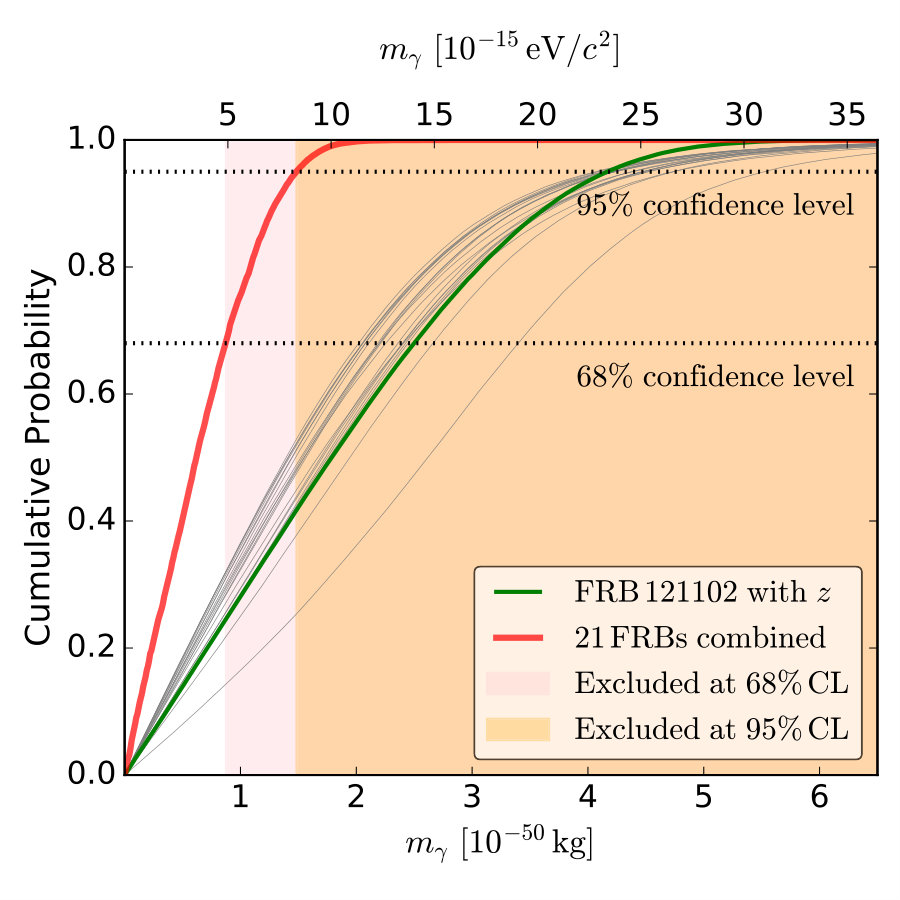 Figure 21
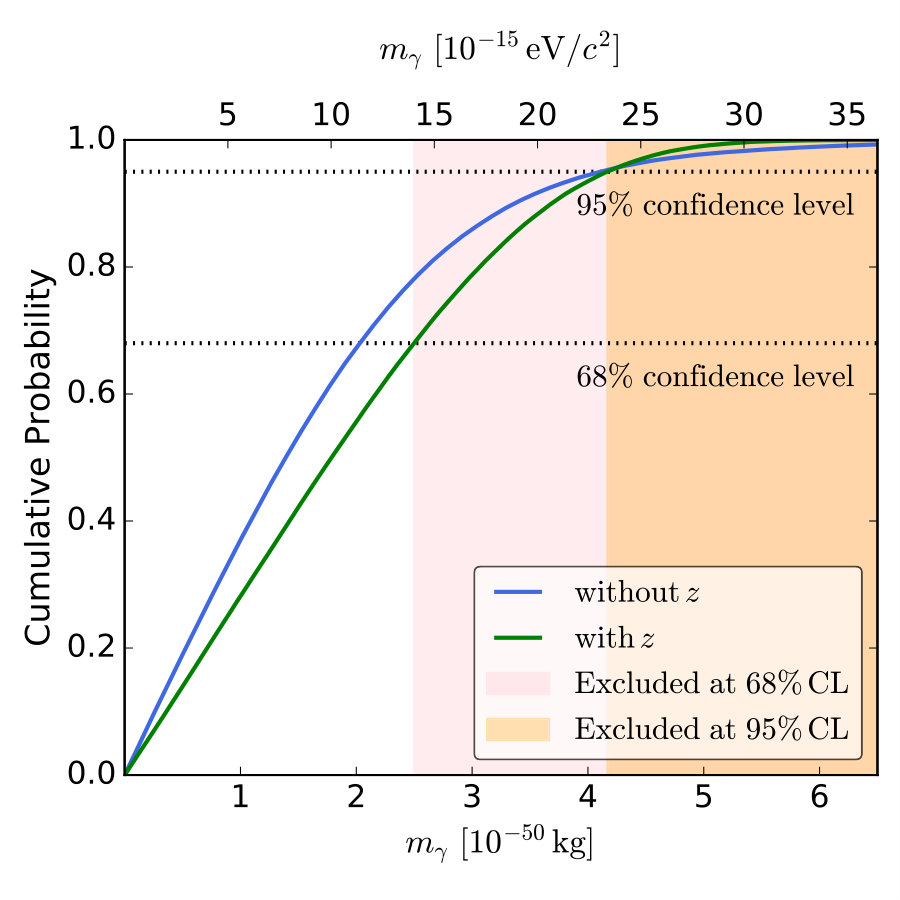 Figure 2
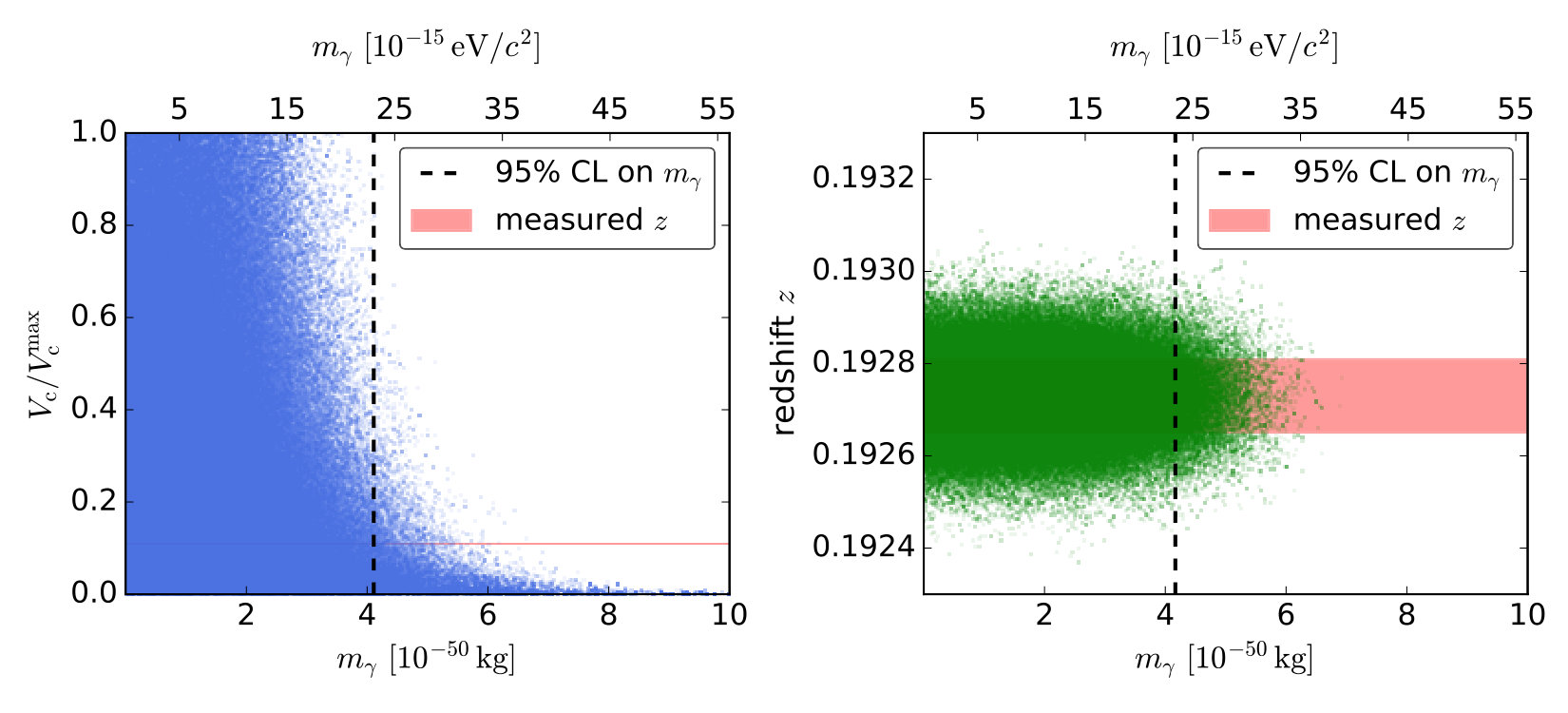 Figure 3
 Figure 4
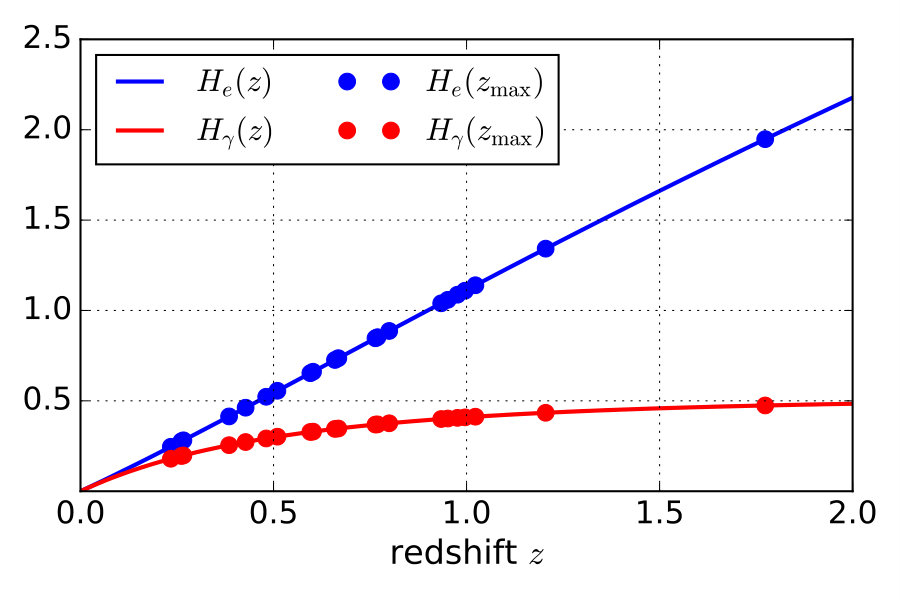 Figure 5
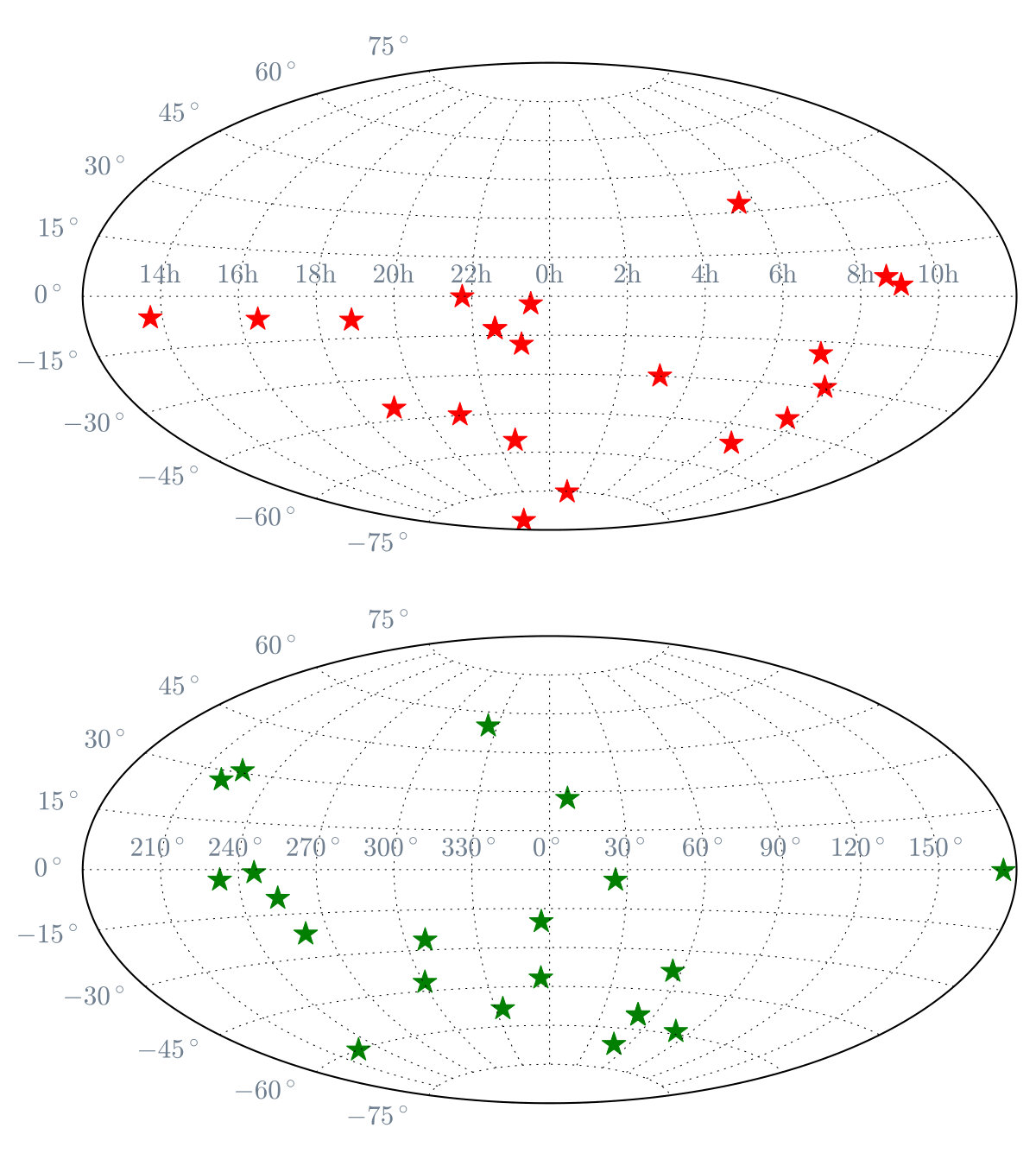 Figure 6
Peer Reviews
No public reviews on file for this paper yet. If you reviewed it on a platform where reviews are public (OpenReview, ICLR, NeurIPS, ICML), you can paste yours below so the community can read it here.
Videos
No videos yet. Explain this paper in a talk, walkthrough, or lecture? Add one.