On the Importance of Electroweak Corrections for B Anomalies
Ferruccio Feruglio, Paride Paradisi, Andrea Pattori

TL;DR
This paper highlights the critical role of electroweak corrections in interpreting B decay anomalies, showing that these effects significantly impact model predictions and challenge explanations based solely on new physics at the TeV scale.
Contribution
It emphasizes the necessity of including electroweak corrections in models explaining B anomalies, detailing the running and matching procedures for accurate low-energy predictions.
Findings
Electroweak corrections modify leptonic couplings of W and Z bosons.
These corrections generate a leptonic effective Lagrangian affecting B anomaly interpretations.
Experimental bounds on Z-pole observables constrain new physics explanations.
Abstract
The growing experimental indication of Lepton Flavour Universality Violation (LFUV) both in charged- and neutral-current semileptonic B-decays, has triggered many theoretical interpretations of such non-standard phenomena. Focusing on popular scenarios where the explanation of these anomalies requires New Physics at the TeV scale, we emphasise the importance of including electroweak corrections to obtain trustable predictions for the models in question. We find that the most important quantum effects are the modifications of the leptonic couplings of the W and Z vector bosons and the generation of a purely leptonic effective Lagrangian. As a result, the tight experimental bounds on Z-pole observables and tau decays challenge an explanation of the current non-standard data. We illustrate how these effects arise, by providing a detailed discussion of the running and matching procedure…
Click any figure to enlarge with its caption.
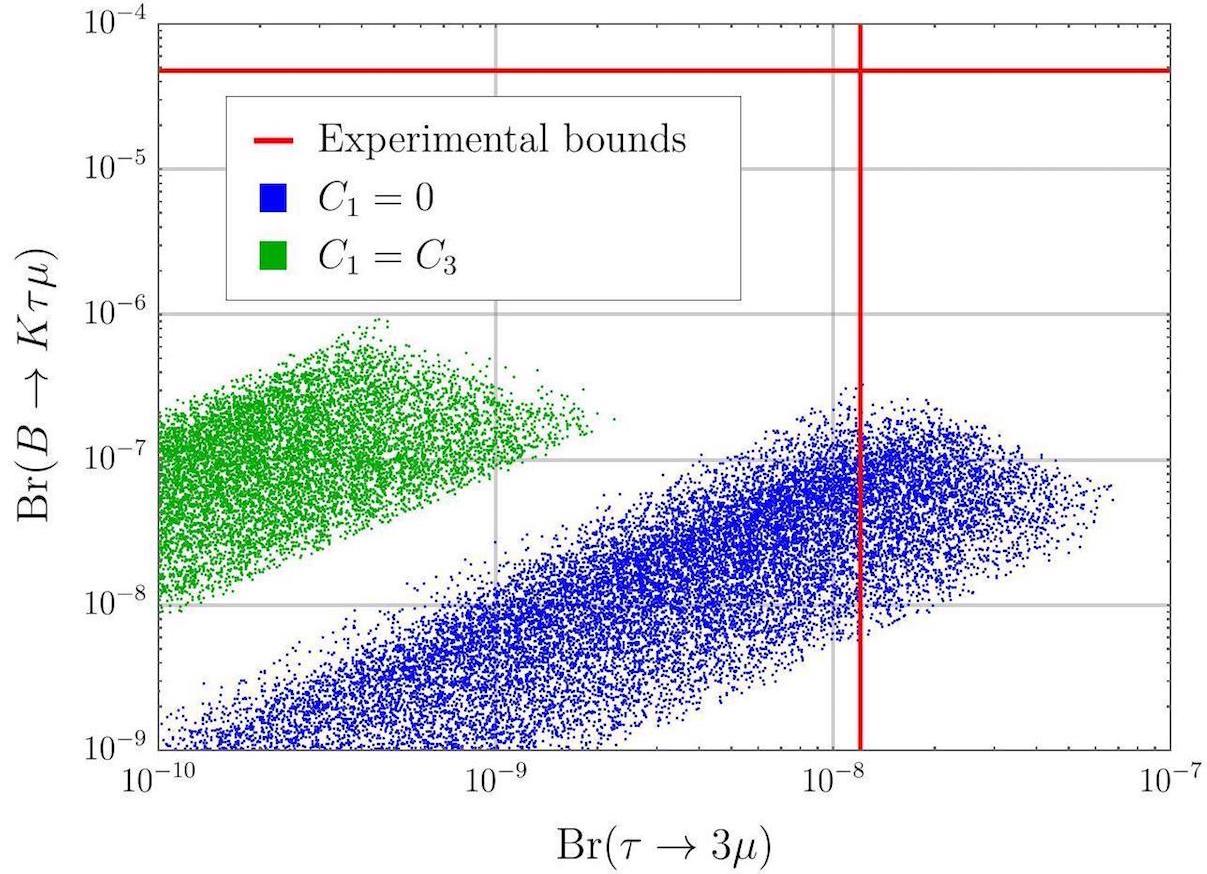 Figure 1
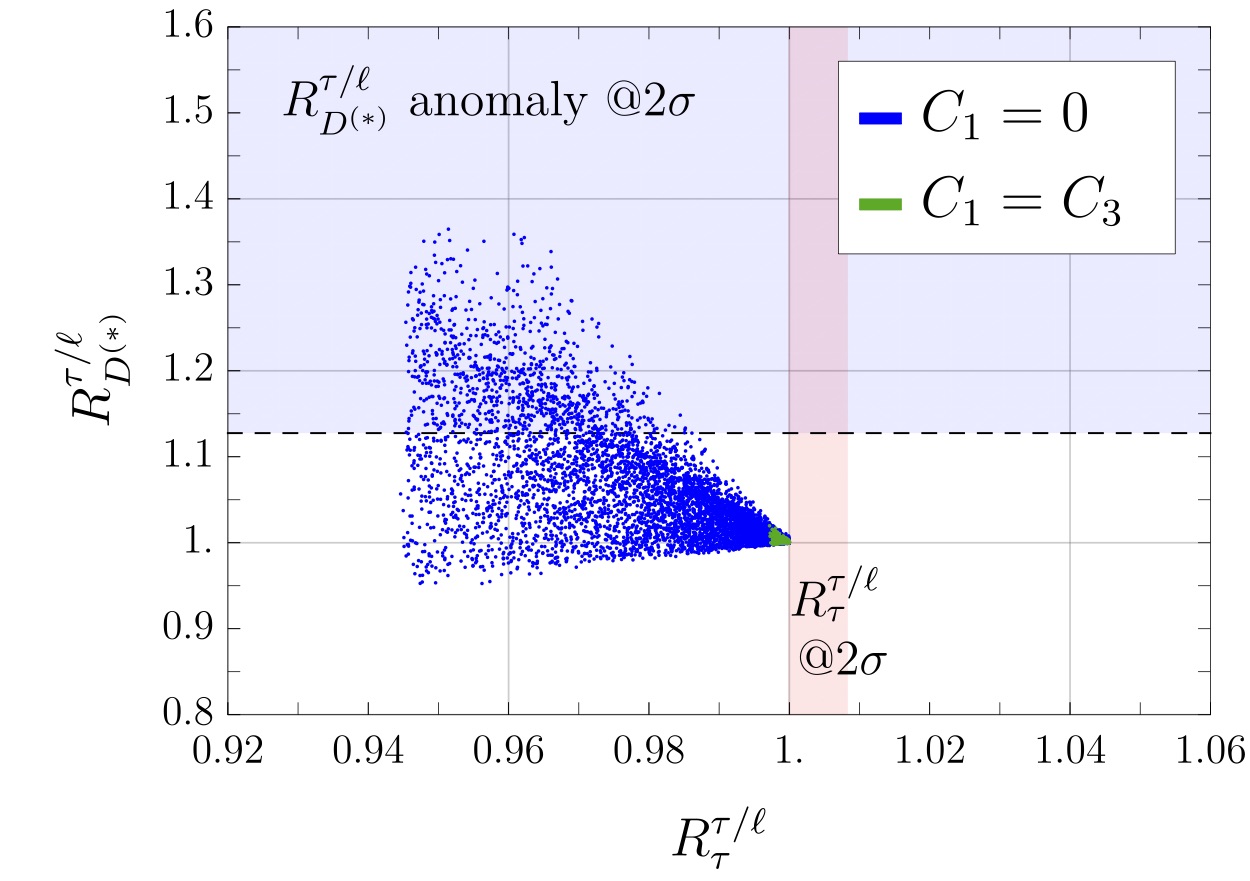 Figure 2
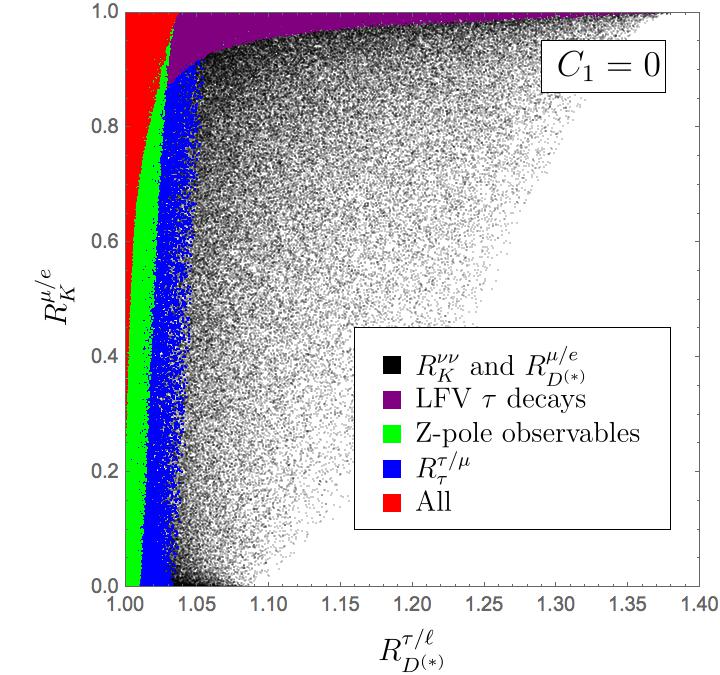 Figure 3
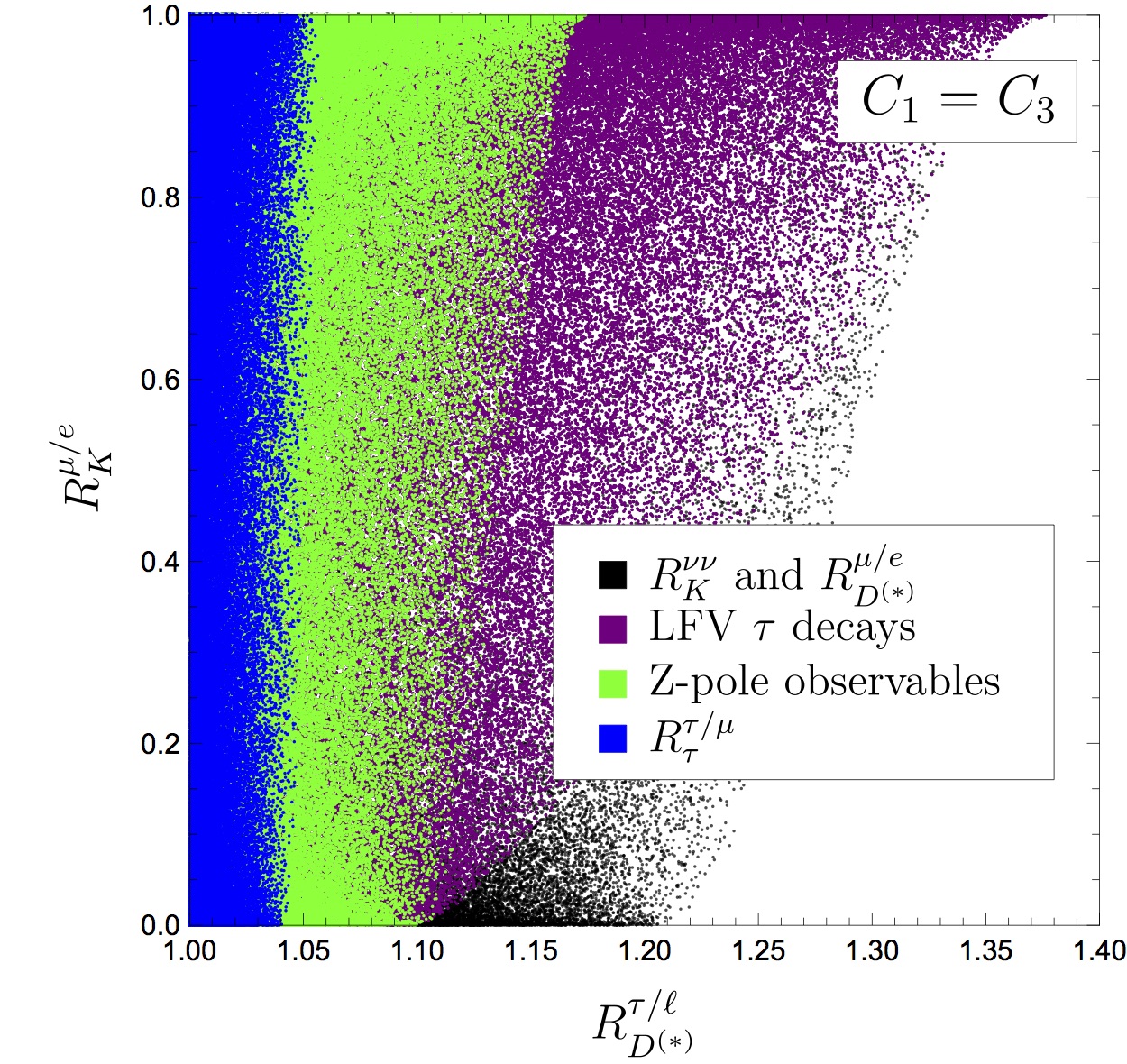 Figure 4
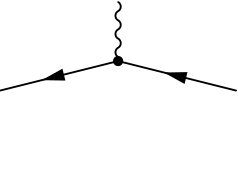 Figure 5
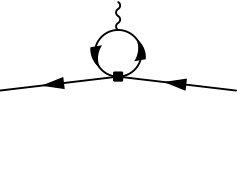 Figure 6
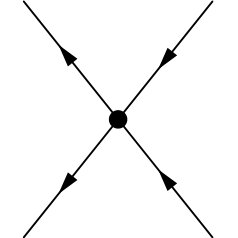 Figure 7
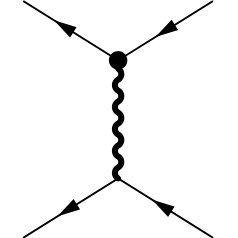 Figure 8
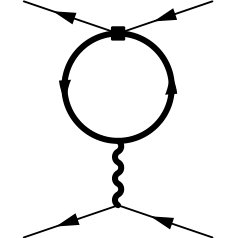 Figure 9
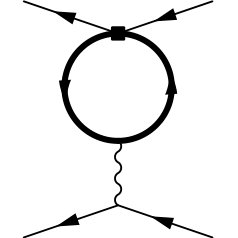 Figure 10
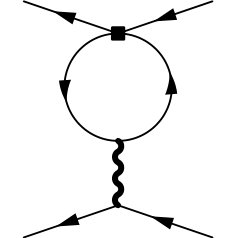 Figure 11
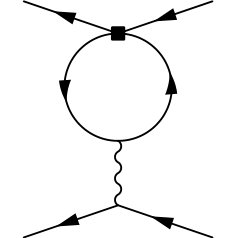 Figure 12
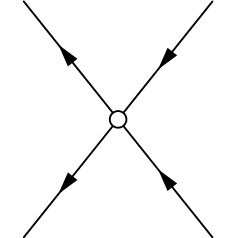 Figure 13
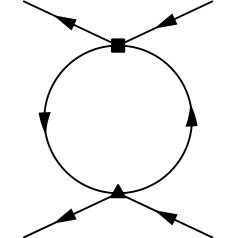 Figure 14
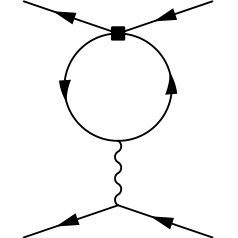 Figure 15
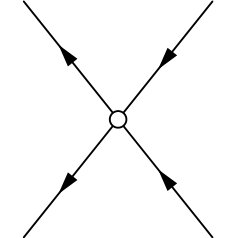 Figure 16
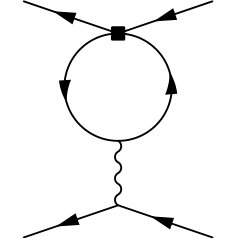 Figure 17
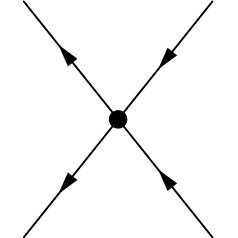 Figure 18
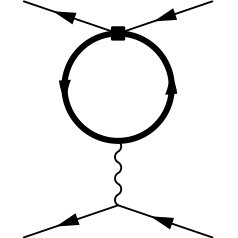 Figure 19
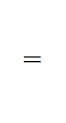 Figure 20
 Figure 21
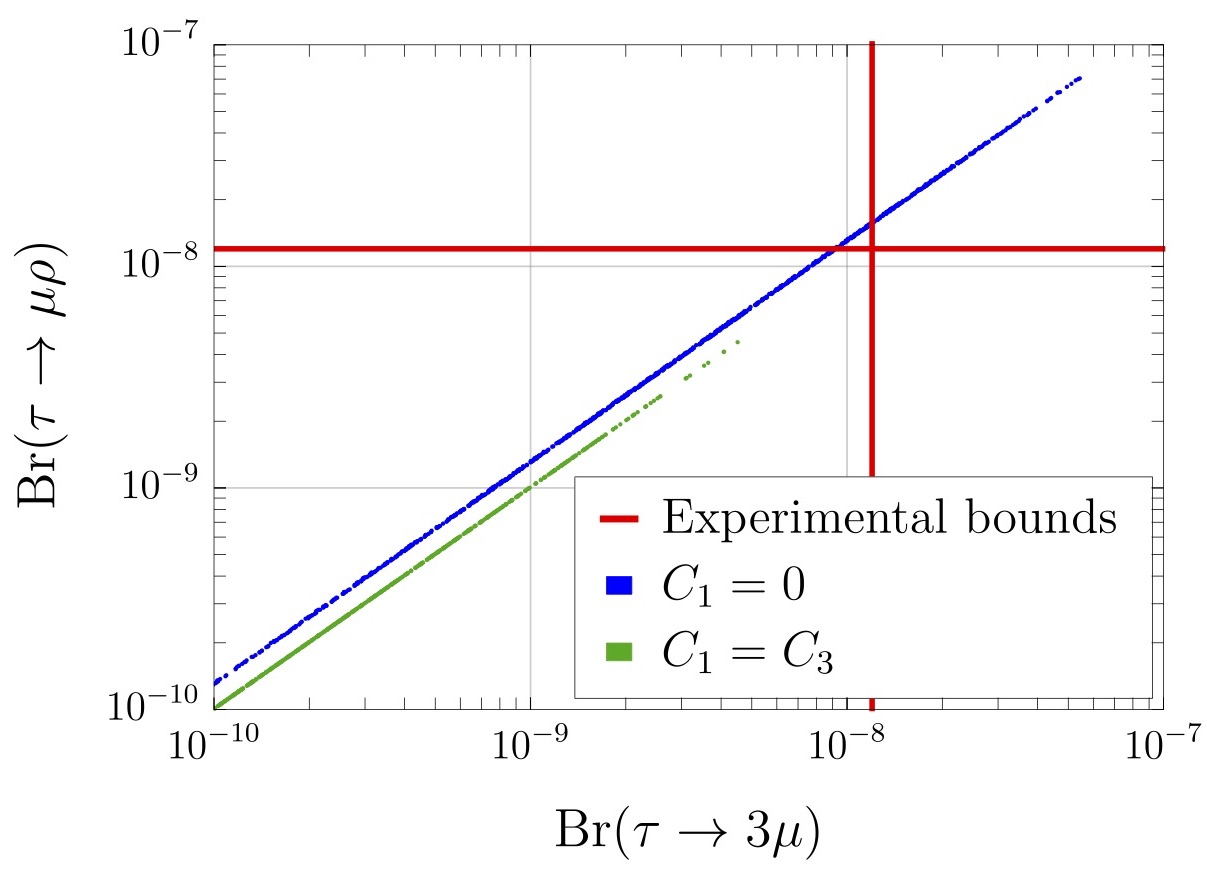 Figure 22
| Semileptonic operators: | Leptonic operators: | ||
|---|---|---|---|
| = | = | ||
| = | = | ||
| = | |||
| = | |||
| = | |||
| Vector operators: | Hadronic operators: | ||
| = | = | ||
| = | = | ||
| = | = | ||
| = | = | ||
| Field | Spin | Quantum Numbers | Operator | ||
|---|---|---|---|---|---|
Peer Reviews
No public reviews on file for this paper yet. If you reviewed it on a platform where reviews are public (OpenReview, ICLR, NeurIPS, ICML), you can paste yours below so the community can read it here.
Videos
No videos yet. Explain this paper in a talk, walkthrough, or lecture? Add one.
**On the Importance of Electroweak Corrections
for Anomalies**
Ferruccio Feruglioa, Paride Paradisia, Andrea Pattorib
* Dipartimento di Fisica e Astronomia ‘G. Galilei’, Università di Padova
INFN, Sezione di Padova, Via Marzolo 8, I-35131 Padua, Italy*
* Physik-Institut, Universität Zürich, CH-8057 Zürich, Switzerland*
Abstract
The growing experimental indication of Lepton Flavour Universality Violation (LFUV) both in charged- and neutral-current semileptonic B-decays, has triggered many theoretical interpretations of such non-standard phenomena. Focusing on popular scenarios where the explanation of these anomalies requires New Physics at the TeV scale, we emphasise the importance of including electroweak corrections to obtain trustable predictions for the models in question. We find that the most important quantum effects are the modifications of the leptonic couplings of the and vector bosons and the generation of a purely leptonic effective Lagrangian. Although our results do not provide an inescapable no-go theorem for the explanation of the B anomalies, the tight experimental bounds on Z-pole observables and decays challenge an explanation of the current non-standard data. We illustrate how these effects arise, by providing a detailed discussion of the running and matching procedure which is necessary to derive the low-energy effective Lagrangian.
1 Introduction
The search for lepton flavour universality violation (LFUV) represents one of the most powerful tool to unveil New Physics (NP) phenomena, as the Standard Model (SM) predicts negligible LFUV effects. Interestingly enough, in the last few years, hints of large LFUV in semi-leptonic decays were observed by various experimental collaborations both in charged-current as well as neutral-current transitions. In particular, the statistically most significant results are accounted for by the following observables:
[TABLE]
where , which follow from the HFAG averages [1] of Babar [2], Belle [3], and LHCb data [4], combined with the corresponding theory predictions [5, 6], and
[TABLE]
based on combination of LHCb data [7, 8] with the SM expectation [9]. Moreover, there are additional tensions between the SM predictions and experimental data in differential observables, though large non-perturbative effects can be invoked to explain the observed anomaly [10]. Yet, it is interesting that the whole set of data could be reconciled with the theory predictions assuming some NP contributions exclusively in the muonic channels, see e.g. Ref. [11]. In the recent literature, many studies focused on the experimental signatures implied by the solution of these anomalies in specific scenarios, including kaon observables [12], kinematic distributions in decays [13], the lifetime of the meson [14], and leptonic decays [15], tau lepton searches [16] and dark matter [17].
These anomalies have also triggered many theoretical speculations about the possible NP scenarios at work. Of particular interest are those attempting to a simultaneous explanation of both charged- and neutral-current anomalies. Such a task can be most naturally achieved assuming that NP intervenes through effective 4-fermion operators involving left-handed currents, and , which are related by the gauge symmetry [18]. In this setup, a necessary requirement is that NP couples much more strongly to the third generation than to the first two, since is already generated at the tree level in the SM while is loop-induced. Such a requirement is automatically accomplished if NP is coupled, in the interaction basis, only to the third fermion generation, couplings to lighter generations being generated by the misalignment between the mass and the interaction bases through small flavour mixing angles [19]. In this case LFUV is expected to be associated with lepton flavour violating (LFV) phenomena. Another possibility consists in NP coupling to different fermion generations proportionally to the charged lepton mass squared [20]. In this case LFUV does not necessarily imply LFV at an observable level, if also NP preserves the lepton family numbers in the limit of massless neutrinos.
In Ref. [21], electroweak corrections for B anomalies has been analyzed, focusing on a class of semileptonic operators defined above the electroweak scale which are invariant under the full SM gauge group, along the lines of Refs. [18, 19, 20, 22, 23, 24, 25]. The main new development of Ref. [21] compared to previous studies was the construction of the low-energy effective Lagrangian taking into account the running of the Wilson coefficients of a suitable operator basis [26] and the matching conditions when mass thresholds are crossed. The new quantum effects pointed out in Ref. [21] do not represent just a correction to the leading order results commonly employed in the literature, as one would naively expect. Indeed, the low-energy effective Lagrangian contains terms that are absent at the tree-level. Such new terms are crucial in order to establish the predictions of the model in question. At the quantum level, the leptonic couplings of the and vector bosons are modified and a purely leptonic effective Lagrangian is also generated. The resulting LFUV in and decays, which is correlated with the B-anomalies, and LFV contributions turned out to be large, challenging an explanation of such anomalies. Such a conclusion applies under the assumptions and approximations that will be clarified in this paper and should not be taken as a no-go theorem for the explanation of the B anomalies. We rather think that the main point raised by our analysis is that including electroweak corrections is mandatory when addressing the experimental anomalies with new physics at the TeV scale.
Aim of the present work is to detail, complete and expand the results of Ref. [21]. First of all we will derive the full effective Lagrangian relevant to leptonic and semileptonic transitions both at the electroweak scale and at the -mass scale. After discussing our starting assumptions, in particular the operators dominating NP effects at the TeV scale, we present the minimal set of gauge-invariant operators involved in the renormalization group equations (RGE) flow from the TeV to the electroweak scale. We solve the one-loop RGE equation in the limit of exact electroweak symmetry [27, 28] and in the leading logarithmic approximation. We analyze the induced modification to the couplings, relevant to precision tests. We explicitly show how the scale dependence of the RGE contributions from gauge and top Yukawa interactions cancels with that of the matrix elements in the physical amplitude for the Z decay into a lepton pair. Then we analyze the effective theory below the electroweak scale by explicitly discussing the matching to an electromagnetic invariant effective Lagrangian, after integrating out the top quark and the and bosons. Finally we include the further running, dominated by pure electromagnetic effects, down to the tau lepton mass scale, after crossing the bottom threshold. This discussion is detailed in Section 2 and represents the main original result of this work. By comparison, in Ref. [21] only the results strictly needed for the discussion of some physical processes were presented, without discussing the issues related to the derivation, such as the RGE flow, the matching conditions, or the consistency, such as the independence of the physical results from the running scale. For completeness, in section 3, we discuss the phenomenological implications of our findings focusing on both Z-pole observables and low-energy observables, such as and meson decays, extending the concise discussion made in Ref. [21]. In section 4, we investigate the relevance of our results on specific classes of NP models such as minimal flavor violating models, models and composite Higgs models. Our conclusions are presented in section 5.
2 Theoretical framework
If the new physics (NP) contributions originate at a scale much larger than the electroweak scale GeV, in the energy window above and below the NP mass scale, the NP effects can be described by an effective Lagrangian invariant under the gauge group of the Standard Model (SM):
[TABLE]
where is the SM Lagrangian and are dimension six gauge invariant operators, represents the scale of NP and dots stand for higher dimension operators.
In principle, 59 independent dimension six operators exist, which become 2499 when a completely general flavour structure is allowed [26]. The discussion in full generality of the phenomenology arising from such a gigantic Lagrangian is clearly inconceivable and some additional assumptions are necessary. Here we assume that at a scale , higher than the electroweak scale, the NP effects are fully described by the semileptonic operators and of table 1. Moreover, we further assume that a basis exists where NP affects only the third fermion generation111More generally, this assumption can be relaxed to say that NP mainly interact with only one fermion generation and interactions with the other two generations can be neglected.. As a result, our effective Lagrangian at the scale is given by
[TABLE]
where primed fields are meant to be in a generic interaction basis. The above setup is the most natural one to accommodate simultaneously and in a correlated way charged- and neutral-current anomalies. Moreover, it is favoured by global fit analyses of data [11] including the very recent experimental result for [29].
At the electroweak scale , additional operators will arise from Lagrangian (7), due to the well-known phenomenon of operator mixing. Here we will consider a reduced set of gauge-invariant operators involved in this RGE flow. Such set is summarised in Table 1, where one can recognize in , the two initial operators of eq. (7).
Some work is needed in order to extract phenomenological predictions from Lagrangian (7). This section is devoted to these computations. First of all, should be run down to the EW scale and a connection between the primed interaction basis introduced above and the fermion mass basis should be established (see section 2.1). Next, to describe several processes of interest, the , bosons and the quark should be integrated out (see section 2.2). Finally, for some processes a further RGE running (due to QED only) from to an energy scale of order 1 GeV is needed (see section 2.3).
2.1 Electroweak renormalization group flow
In our framework NP effects are dominated by the Lagrangian of eq. (7) at the scale , which is assumed to be larger than the electroweak scale. In the particular application we have in mind is of order TeV. At energies smaller than the RGEs renormalise the coefficients and give rise to additional operators not initially included in .
The anomalous dimension of these operators are known to one-loop accuracy [27, 28] and we can solve the related RGEs in a leading logarithmic approximation. By using of eq. (7) as initial condition at the scale we obtain the effective Lagrangian at the scale :
[TABLE]
[TABLE]
where
[TABLE]
and a sum over repeated indices is understood. In the above expressions we neglected all the Yukawa interactions but that of the top quark.
2.1.1 Rotation to the mass basis
In full generality, we can move to the mass basis by means of the unitary transformations
[TABLE]
where is the CKM mixing matrix and neutrino masses have been neglected. We can now define the flavour matrices which parametrize the flavour structure of Lagrangian (8) in the mass basis:
[TABLE]
These matrices are redundant, since the following relations hold:
[TABLE]
We also observe that are hermitian matrices, satisfying and which shows they are projectors with one eigenvalue equal to one. All the ’s satisfy
[TABLE]
so that all the elements should be smaller or equal to one. A useful and general parametrisation of is:
[TABLE]
where and are complex numbers. Such general parametrisation directly follows from our assumption that a basis exists where NP affects only one fermion generation. In summary the free parameters of our Lagrangian are the ratios and the two matrices and . From now on, we will work on the mass basis just defined. In the mass basis our starting point, eq. (7), reads:
[TABLE]
2.1.2 Modified Z and W couplings
Once performed the RGE running of Lagrangian (7) down to and discussed the rotation to the mass basis, we are already able to examine some phenomenology arising from Lagrangian (7) and in particular from . Indeed, one of its effects is the modification of the couplings of gauge vector bosons and to fermions.
The interaction Lagrangian between and fermions can be expressed as:
[TABLE]
where and
[TABLE]
The effective coupling constants include both the SM and the NP contributions:
[TABLE]
where the SM part is given by:
[TABLE]
[TABLE]
where . For generic Wilson coefficients of the vector operators and , the NP contributions read
[TABLE]
For our case they can be directly derived from Lagrangian (10):
[TABLE]
These effective couplings depends on the renormalisation scale . Such a dependence cancels when we compute the amplitudes for the relevant processes. For example, to compute the decay amplitude of the boson into a lepton pair, the contribution from the effective Lagrangian , which is formally a tree-level term, should be combined with that of the one-loop diagram arising from the four-fermion interactions contained in , with the boson on the mass-shell attached to the quark legs, as shown in fig. 1.
This has the effect of replacing the couplings of eq. (23) with
[TABLE]
where
[TABLE]
and
[TABLE]
where are finite and renormalization scale independent quantities defined as
[TABLE]
Starting from the above expressions, we find the following approximate results
[TABLE]
where should be evaluated in TeV.
The scale dependence of the RGE contribution cancels with that of the matrix element dominated by a quark loop. We kept non-vanishing only the top mass, neglecting corrections of order when . These quarks are responsible for the imaginary part of the effective coupling constants.
2.2 Effective theory below , and thresholds
At the electroweak scale we should integrate out the heavy particles , and the top quark . We will not distinguish among the mass scales , and , which we will approximately identify with a common scale . Below such scale, we should use a new effective Lagrangian , made of four fermion operators whose Wilson coefficients are determined by a matching procedure, i.e. by requiring that amplitudes computed with , eq. (8), and are the same at the scale . We work in leading log approximation (LLA) with one-loop accuracy. Therefore, matching conditions should include both contributions from tree-level topologies with RGE-improved dimension six operator insertions and contributions from one-loop topologies with tree-level-accurate dimension six operator insertions.
One of the steps required by this procedure is integrating out the massive gauge bosons , . In particular, from the tree-level exchange of and we get:
[TABLE]
where:
[TABLE]
where the contributions proportional to , in eq. (34) are of order one-loop.
As an explicit example of matching procedure, we discuss in detail the case of the four-fermion operator . Above the electroweak scale , the amplitude of the processes controlled by this operator is given by the sum of the diagrams in fig. 2. Diagrams (2.a) and (2.b) come from (eq. (11)) and (eq. (34)), respectively. They depend on the renormalization scale through the Wilson coefficients of the interactions displayed as a full circle. This dependence is cancelled by the diagrams (2.c)–(2.f). Below the electroweak scale, , and have been removed from the effective Lagrangian and the amplitude is given by the sum of the diagrams in fig. 3. The diagram (3.a) represents our unknown. By equating the amplitudes above and below , we find that (3.a) is given by the sum of (2.a)–(2.d), since (3.b) and (3.c) are canceled by (2.e) and (2.f) respectively:
[TABLE]
where we have exploited and, at first order in , . From eqs. (11), (15), (27) and (34) we get:
[TABLE]
An explicit computation of diagrams (2.c) and (2.d) at the leading logarithmic order gives:
[TABLE]
where dots stand for -independent finite contributions. Hereafter, we will not include such contributions in our analysis, as finite terms of the same size could originate from UV completions of our setup. Therefore our quantitative conclusions rely on the assumption that the logarithmic RGE-induced terms dominate over the finite ones. Given the relatively short range where the running takes place, it is not guaranteed that such dominance holds and the possibility of cancellations in physical observables cannot be excluded. Putting all together, we get
[TABLE]
At a scale just below , we can drop the last term of eq. (42). In this way we end up with our final result for the Wilson coefficient of below , reported in table 2.
To derive the full , we should repeat this procedure for each four-fermion operator arising from . In practice, as we have seen in the previous example, this amounts to:
move to the fermion mass basis in , removing every operator featuring a , or fields; 2. 2.
add the result to the term originating from tree-level and exchange, , eq. (34); 3. 3.
set the scale to , in this way accounting for the one-loop topologies contributions.
Our final result reads:
[TABLE]
where is the SM Lagrangian where and has been integrated out (Fermi theory), and the systematic omission on the right-hand side of the quark fields is understood. The four-fermion operators and their Wilson coefficients are given in Table 2–5 for the semileptonic and purely leptonic type.
The main point to stress here is that the purely leptonic contributions to the effective Lagrangian are entirely generated by quantum effects. They contain terms of order and . In the gauge part, interestingly enough, the surviving contributions are controlled by the electromagnetic coupling . These contributions can thus be interpreted as arising from a photon exchange between the quark loop arising from and the electromagnetic current.
2.3 Effective theory below the electroweak breaking scale
To derive the effective Lagrangian suitable for application to processes at the GeV scale, we should replicate the steps outlined above. From the electroweak scale down to the next mass thresholds, the bottom and charm masses , we have to include the further running of the Wilson coefficients. In this regime, the only relevant interaction of the electroweak theory is the electromagnetic one. At the scale close to (), we move to a new effective theory where the () quark is integrated out. The new theory is determined from matching conditions analogous to those described above for the electroweak threshold. We go on until we reach the GeV scale. For simplicity in the following we assume for the light quarks , and a common constituent mass of order GeV.
Again, we will exemplify the matching procedure by performing it explicitly for the operator . The corresponding matching condition is shown in fig. 4. On the right-hand side the process is evaluated above (), where the thick line represents a bottom (charm) loop. On the left hand side the same process is computed below the () scale where the bottom (charm) loop is absent. After crossing both mass thresholds we get
[TABLE]
This is the Wilson coefficient for , at a scale below the charm threshold.
In a similar way, the Wilson coefficient for the full effective Lagrangian at the GeV scale can be derived. We recast the final result in the following form:
[TABLE]
where is given in eq. (43), while
[TABLE]
The operators and the coefficients for the four-fermion operators of purely leptonic and semileptonic type are given in Table 6–9.
When computing the amplitude for a physical process, two contributions are generally required: the first is formally a tree-level amplitude described by the RGE-induced part of our effective Lagrangian. The second is a genuine one-loop amplitude where the residual light degrees of freedom of the low-energy theory are exchanged in the internal lines. These two terms correspond, for instance, to the two diagrams drawn in the left-hand side of Fig. 4. We will keep only the leading logarithmic part of each term. They are both scale dependent, but this dependence cancels in the sum. The neglected finite contributions do not depend on the scale . To deal with loops with the light virtual quarks , and , we will assume a common constituent mass 1 GeV.
3 Observables
In this section we analyze the phenomenological implications of Lagrangian (7), making use of the RGE-improved low-energy EFT derived extensively in the previous section.
As discussed in section 2.1.1, the full set of free parameters in our set-up are and the two matrices . In addition, we will assume . This will provide us with a simpler and yet conservative framework, since LFUV effects (i.e. and anomalies) can be easily shown to be maximized by such assumption. In conclusion, our setup contains effectively only four222More precisely, should be considered as a fifth independent parameter, governing the size of RGE effects. Since these effects depend on , which is of order TeV, only very mildly, we can approximately regard as a fixed quantity in the relevant logarithms. free parameters:
[TABLE]
while all other non-vanishing matrix elements can be derived through eq. (18) and the property . Furthermore, we will assume and also to be real in the CKM basis. Given eq. (18) and our assumptions, we straightforwardly derive .
Rather than aiming at a complete investigation of the wide phenomenology triggered by the Lagrangian (7), we prefer to focus our analysis on processes that, despite the loop suppression, can compete with tree-level semileptonic bounds thanks to their high experimental resolutions. Among them, arguably the most interesting ones are the fully leptonic processes and the leptonic decays of the vector boson. We structure the present section as follows. In section 3.1, we discuss how to address both charged- and neutral-current anomalies within our framework. In section 3.2, we discuss the most relevant tree-level phenomenology connected with the anomalies. In section 3.3, we proceed to study observables in the leptonic sector receiving large contributions at loop-level. In section 3.4, a global numerical analysis is performed in order to corroborate our main message, namely that bounds coming from one-loop induced lepton phenomenology play a major role while trying to address the anomalies, and particularly .
3.1 The anomalies
Here we recall how the -anomalies can be simultaneously explained by extending the SM through the addition of in eq. (7). To this purpose NP should contribute dominantly to charged-current transitions compared to the neutral-current ones, since in the SM the former arise at the tree-level and the latter at one-loop. This can be reproduced within the present framework by assuming an hierarchy between , which controls , and , which is responsible for .
3.1.1
In our setup, the leading invariant effective Lagrangian describing the semileptonic process is [30]
[TABLE]
where and the operators read
[TABLE]
By matching with at the tree level, we obtain:
[TABLE]
where dots stand for subleading RGE induced terms, typically negligible compared to the leading ones.
As shown in eqs. 3 and 4, the experimental values of , which accounts for LFUV in the process , read
[TABLE]
In our framework, is well approximated by the expression
[TABLE]
Given , assuming and , and working in a linear approximation for the NP contribution, we obtain
[TABLE]
As a result, for TeV, can be accounted for by values of and flavour mixing angles of order .
On the other hand, Eq. (52) cannot be directly applied to , since in that case a non-trivial role is played by the Wilson coefficient [31]. Nevertheless, under our NP assumptions the central value for differs less than from the value given by (52), thus not affecting our semi-quantitative arguments.
3.1.2
The effective Lagrangian relevant for charged-current processes like is given by
[TABLE]
In our model, for negligible values of , the coefficient reads
[TABLE]
LFUV in the charged-current process is encoded in the observable , see eqs. 1,2:
[TABLE]
In our framework, reads
[TABLE]
and therefore, for , we obtain
[TABLE]
where we took . As a result, in order to accommodate the anomaly, we need and , for TeV. The condition is justified a posteriori by the non observation of LFUV in the sector up to the level [32, 33]. Indeed, from the expression of
[TABLE]
we find the upper bound once the anomaly in the sector is explained. Notice that in our estimates we always set , as well as which implies .
3.2 Tree-level semileptonic phenomenology
An immediate consequence of the adopted framework is a set of deviations predicted in leptonic and semileptonic -decays strictly related to the anomalous channels discussed in the previous section. The modifications with respect to the SM predictions are entirely dominated by the Lagrangian and do not need the inclusion of quantum effects, at least in generic regions of the parameter space. In our framework , and thus are non vanishing, implying LFV in B meson decays. The processes presented in this section have been widely discussed in the literature. We list them here for completeness and we analyze the bounds on the parameters they give rise to.
3.2.1
In our framework, another charged-current process which is closely related to is the decay . The related LFUV observable, , is defined as
[TABLE]
which can be evaluated by means of the expression
[TABLE]
where
[TABLE]
Assuming that and , the expression for reads
[TABLE]
where . Since Belle II aims to measure with a resolution, it is likely that will provide a strong constraint to the present framework.
3.2.2
The leading invariant effective Lagrangian describing the semileptonic process is [30] is given in our framework by
[TABLE]
where the operator reads
[TABLE]
By matching with , we obtain:
[TABLE]
where, again, dots stand for RGE induced terms which are always subleading, unless . Interestingly, the latter condition can be realised in scenarios with vector leptoquark mediators [25]. In such a case, the RGE induced effects to are given by:
[TABLE]
which are of order for TeV. As already observed in [25], the process sets relevant constraints on our model. Defining as
[TABLE]
we get
[TABLE]
where so that reads
[TABLE]
The above expression has been obtained setting and using the properties and . Therefore, is well approximated by the numerical expression
[TABLE]
showing that for natural values of , and TeV, can easily satisfy the experimental bounds
[TABLE]
3.2.3
Since our model predicts the relation , an explanation of the anomaly implies NP contributions also for the decay mode . The current experimental measurement and SM prediction for the branching ratio of this process are [34, 35]:
[TABLE]
Defining as
[TABLE]
where and remembering that in our framework favours , we see that an explanation of the anomaly improves the agreement with the data.
3.2.4 Lepton-flavour violating decays
In our setting, LFV B-decays such as and arise already at the tree level. Here we give the expressions for their branching ratios assuming [36]
[TABLE]
where the coefficients , and read
[TABLE]
.
We observe that the above branching ratios have been multiplied by a factor of two since the experimental bounds refer to the final state .
It turns out that
[TABLE]
where we have used the relation and we recall that, in order to accommodate the anomaly, . The above prediction is far below the current experimental bound [37]. Moreover, we find
[TABLE]
As we will see shortly, loop-induced LFV decays are typically better probes of our scenario than LFV decays.
3.3 One-loop induced LFV and LFUV phenomenology
As illustrated in Section 2, electroweak corrections give rise to modified couplings of the and bosons to leptons and to a purely leptonic low-energy effective Lagrangian. LFV and LFUV are both expected in , and lepton decays. In this section we analyze these processes providing approximate analytical expressions for the corresponding observables in our framework.
3.3.1 and
At the loop-level the leptonic couplings are modified in our framework. Their departure from the SM expectations are constrained by the LEP measurements of the decay widths, left-right and forward-backward asymmetries. The bounds on lepton non-universal couplings are reported in table 10 and are expressed in terms of the vector and axial-vector couplings and , respectively, defined as
[TABLE]
We get
[TABLE]
with defined in eq. (2.1.2), leading to the following numerical estimates
[TABLE]
where we took and, hereafter, we set TeV in the argument of the logarithm.
Moreover, modifications of the couplings to neutrinos affect the extraction of the number of neutrinos from the invisible Z decay width. We find that
[TABLE]
with defined in eq. (2.1.2), leading to the following numerical estimate
[TABLE]
to be compared with the experimental result [32]
[TABLE]
Finally, we consider the LFV decay modes of the Z boson, , described by the following branching ratio
[TABLE]
where GeV and therefore we obtain
[TABLE]
which is well below the current experimental bound , especially when .
3.3.2
At the loop-level also the leptonic couplings are modified with respect to their SM expectations. In particular, summing the RGE contributions, see eq. (27), and the relevant matrix element, the NP corrections to in our model read
[TABLE]
up to finite corrections. Let us define now the quantity which accounts for LFUV in decays
[TABLE]
In our setup, is given by
[TABLE]
which has to be compared with the LEP measurements [32]
[TABLE]
As we will see shortly, LFUV in decays will provide more stringent constraints on our model parameters than decays.
3.3.3
The effective Lagrangian relevant for charged-current processes like is given by
[TABLE]
where and the coefficients read
[TABLE]
Notice that the term in proportional to generates exclusively LFV processes, while the one proportional to contains also lepton flavor conserving contributions which can therefore interfere with the SM amplitude. We stress that the NP part of is entirely generated by running effects from to driven by the top yukawa interactions (and therefore proportional to ) while gauge contributions (proportional to ) are absent. Moreover, the operator is not renormalised below the EW scale by QED interactions. The latter point can be easily understood using the Fiertz identity and remembering that the charged lepton current is protected from renormalization effects by the QED Ward identity which stems from the electric charge conservation. LFUV in is described by the observables
[TABLE]
and are experimentally tested at the few ‰ level [38]
[TABLE]
can be expressed in terms of the coefficients as follow,
[TABLE]
Keeping only linear terms in the NP contributions we find
[TABLE]
where in the last approximation we have set and TeV in the logarithm.
3.3.4 Neutrino trident production
Our purely leptonic effective Lagrangian induces also the neutrino-nucleus scattering , the so-called neutrino trident production (NTP) process (see, e.g. Ref. [39]). Within the SM, NTP is generated by the exchange of both the and vector bosons. The effective Lagrangian relevant for the NTP is
[TABLE]
where , and . In our model, read
[TABLE]
where
[TABLE]
In terms of the coefficients and , the inclusive cross section is proportional to [39] and therefore, at leading order in the NP contribution, we have
[TABLE]
with the running scale replaced by a constituent mass GeV. On the other hand, the experimental data and the SM prediction are in the following ratio [39]
[TABLE]
From a numerical analysis we find that quite below the current experimental resolution.
3.3.5 LFV
The purely leptonic and semileptonic parts of our effective Lagrangian generate LFV processes such as and with , etc. In the case of we find
[TABLE]
where
[TABLE]
where GeV is the common constituent mass for the light quarks. If , the leading effects to stem from top-yukawa interactions and we end up with the following numerical estimate
[TABLE]
to be compared with the current experimental bound [37]. Notice that in our framework it turns out that . On the other hand, in scenarios where , top-yukawa contributions vanish and is dominated by the electromagnetic interactions. The resulting for TeV, and is , yet within the future expected experimental sensitivity.
We turn now to the processes and . Employing the general formulae of Ref. [40], we find
[TABLE]
where is the Cabibbo angle, and we have defined
[TABLE]
A numerical estimate for is given by
[TABLE]
where the current bound is . Finally, the expression is
[TABLE]
where . We notice that, since the meson is a pseudoscalar, does not receive contributions from electromagnetic interactions. The full result is well approximated by the following numerical expression
[TABLE]
where the current bound reads [37].
3.4 Numerical analysis
In previous paragraphs we have analysed the challenges raised by individual observables to a common explanation of anomalies through left-handed currents, the main outcome being that LFV and LFUV processes triggered at one loop play a major role in constraining such scenarios. However, it is only through a global analysis that we can appreciate the interplay between different constraints and correctly quantify the effects induced by the full low-energy effective Lagrangian derived in this paper. As discussed at the beginning of this section, we can fully parametrize our setup using , . It is thus relatively easy to scan the parameter space of the model. We let the parameters vary within the following windows:
[TABLE]
We display our main results in fig. 5, 6 and 7, where the obtained limits are defined by the uncertainties of the observable quantities, assumed to be uncorrelated. Notice that the choice is by no means restrictive, since values out of this range are excluded by decays and LFUV phenomenology. Moreover, although the full allowed range for is , it is reasonable to assume to be close to the value, in order to avoid too much fine tuning when reproducing the matrix. This is the reason for the chosen range in Figs. 6, 7, the sign being the correct one to reproduce the anomaly.
In fig. 5 we can appreciate the impressive impact of the LFV and LFUV bounds from lepton phenomenology, for two typical choices of the parameters , namely and . The black dots are parameter configurations allowed by tree-level semileptonic bounds, i.e. those discussed in section 3.2. When , LFUV in decays represents the single most powerful constraint, while for there is a partial cancellation of the loop-induced effects in -pole and LFV observables. In this case the constraint coming from is the strongest one. In both cases values of exceeding cannot be accomodated. In Fig. 7, the same conclusion is reinforced by the comparison between the prediction and the most challenging LFUV observable, , which tests LFUV in purely leptonic decays. We have collectively called the two observables and discussed in section 3.3.3, whose predictions are equal at leading order in our model, see eq. (97). In particular, the experimental value of , which is away from the SM prediction and which has not been considered in Fig. 5 to remain on the conservative side, further reduces the allowed departure from the SM prediction. Finally, plots of Fig. 6 deal with the LFV predictions of our model, while satisfying all the other bounds, but the anomaly, otherwise no points would survive the scan. Also in these plots we choose the two representative values and . In the left plot, we study the correlation between the predictions for the LFV semileptonic and leptonic decays. An important result of the present analysis is that the process is a much more sensitive probe of the scenario under discussion, due both to the better proximity of the predicted to the current experimental bound, and to the expected improvements of such bound in the near future compared to the challenging semileptonic process. The right plot illustrates the comparable potential of other LFV decays compared with . In particular, the channel is rather equivalent to , both in terms of predictions and sensitivity. As another example, the channel, not displayed in Fig. 6, has analogous predictions to for the case, but it suffers a cancellation which reduces the predicted branching ratio for , as can be seen in eq. (111).
In conclusion, a simultaneous explanation of both the and anomalies is strongly disfavoured in the present framework, where NP at the TeV scale mainly affects left-handed currents333In principle, such a conclusion could be invalidated by large cancellations among different NP contributions entering with a required fine-tuning of order [41, 42]. So far, no UV-complete model accomplishing this task appeared in the literature.. Quite independently on the relative weight between and , the current data on forbid values of exceeding . Leaving aside the anomaly, in the present framework a significant room is available for LFV effects. However, our results contradict the widespread opinion that is the most promising channel to test these effects, since the best probes of LFV effects are by far the decays.
4 Relevance for specific NP models
In the previous sections we focused on a model-independent analysis of the B anomalies based on the effective Lagrangian of eq. (7), which was constructed under the following assumptions:
- (i)
NP mainly affects semileptonic fermion currents, i.e. only the operators and are present at the scale ;
- (ii)
a basis exists where NP affects only the third fermion generation. Such a basis is approximately aligned to the mass basis in the quark sector.
Notice that we have supplemented the assumption (ii) by the additional requirement of approximate alignment between the quark mass basis and the basis where NP mainly affects the third generation 444Of course there are two distinct mass basis in the quark sector, slightly misaligned by the CKM mixing matrix. The above statement refers to an approximate alignment to any of these two basis.. Such requirement is an output of our analysis and represents a necessary condition to simultaneously accommodate the anomalies in and . In our framework this condition translates into the requirement that the unitary matrix is close to the identity matrix. In the SM the matrices are not physical, only their combination is. In our setup the NP effects in lighter generations arise through the rotation to the mass basis after EWSB, see eqs. (18) and (2.1.1), and are controlled by . In particular we need to enforce which guarantees a correct interplay between the SM and NP contributions to the NC and CC anomalies, see eqs. (53) and (58).
In this section, we want to discuss how far our conclusions depend upon the above assumptions and to what extent such assumptions hold in specific NP scenarios. Assumption i) can be realised by the tree-level exchange of a limited number of mediators. If we restrict to spin 0 and spin 1 mediators, there are only six possibilities, listed in table 11. There are only two color-singlet mediators, either an electroweak singlet or a triplet . Their tree-level exchange gives rise to the operators and , respectively. Therefore, models containing only massive fields can address the but not the anomalies [43, 24, 33]. On the other hand, both and generate purely four-lepton and four-quark interactions which, in turn, induce very dangerous tree-level effects for processes like and mixing. In principle, the effects of tree-level four-lepton interactions can compete with or dominate over the loop-induced effects discussed in the present paper anomalies [43, 24, 33].
Moreover, there are four types of lepto-quark (LQ) mediators giving rise to and at the tree-level [44]. Two have spin one, and , and two have spin zero, and . In the case of the spin zero electroweak singlet , it turns out that and therefore is not modified. This conclusion remains true even after the inclusion of electroweak RGE effects, at least when NP affects a single generation. Out of the LQ mediators, the spin 1 electroweak singlet partially evades the bound from , since it produces operators satisfying the the tree-level condition . However, as pointed out in Ref. [21] and thoroughly discussed in Section 3.2.2, such condition is not RGE stable and a contribution to is generated at one-loop via electroweak effects. Notice that, in contrast to the case of color-singlet mediators, at the tree-level LQs do not give rise neither to four-quark nor to four-lepton operators and therefore the corresponding indirect constraints from low-energy processes are significantly relaxed. The new bounds arising from Z-pole observables and decays discussed in Section 3.3 potentially affects all models of table 11.
Assumption (ii) plays an important role in our analysis since it allows to strictly correlate the one-loop induced LFV and LFUV processes to the anomalous decays. In many specific SM extensions invoked to solve the -anomalies NP mainly affects the third quark generation, but our analysis shows that the near alignment between the primed basis and the quark mass basis is an additional very relevant condition. To better illustrate this point, we can consider a slightly more general starting point, described by the NP effective Lagrangian:
[TABLE]
where Q and L are hermitian matrices in flavour space and generation indices are understood. The previous results are recovered when . Concerning the lepton flavour matrix L, for simplicity we still choose , but we observe that the LFUV phenomenology is controlled by the diagonal entries of and can be equally parametrized even considering a more general form of L. Such a general form would instead affect LFV processes, with predictions departing from our results.
Without loss of generality Q can be assumed diagonal in the primed basis. In this more general setup our results are still valid to a very good approximation, provided the following two conditions are fulfilled:
The matrix Q has a non-vanishing trace and .
- 2.
The primed basis is approximately aligned with the quark mass basis, that is the unitary transformations are close to the identity.
These two conditions extend the assumption (ii) by relaxing the requirement that NP dominantly affects the third generation. It is not restrictive to assume assume , by absorbing the size and the sign of into the Wilson coefficients . In this more general setup the deviations and from the SM predictions are described by
[TABLE]
where, in analogy with , we have defined . Loop effects proportional to the gauge coupling constants are unchanged, since they are controlled by . Loop effects proportional to are obtained by the replacement:
[TABLE]
Conditions 1. and 2. guarantees that the NP contributions to and are of the same order. In particular, is proportional to while, for sufficiently small the deviation becomes proportional to , thus allowing to overcome the enhancement in . Moreover in this regime we have , which supplies the strict link between and the loop effects that are the object of our analysis. Notice that, provided is sufficiently close to the identity matrix, the elements of can also be of the same order. For instance a nearly degenerate matrix Q, arising for instance by an approximate flavor symmetry in the quark sector, would still give rise to the loop effects discussed above. Of course for non-vanishing and we should carefully check whether the constraints coming from processes involving quarks of the first two generations are satisfied.
The assumption that NP mainly affects the third quark generation can be relevant in NP scenarios where the Lagrangian (7) arises from LQ exchange. Indeed, when integrating out LQ, we would get contact interactions of the type
[TABLE]
where and the flavour structure is described by the matrix . If has rank 1 it can be decomposed as . In this case we can always define with matrices of rank 1 and we recover the flavour structure assumed in this paper.
Finally it is interesting to note that the assumption (ii) above is approximately realized in a class of models where the matrices have the following pattern:
[TABLE]
where , and are real matrices with entries of order one: . For the eigenvalues of are approximately 1, and and the unitary matrices needed to diagonalize are close to the identity. The matrices of our setup, eq. (18), are recovered by taking
[TABLE]
Matrices of the type in eq. (120) typically arise in models with flavour symmetries, such as abelian Froggatt-Nielsen symmetries or non-abelian symmetries, or in models where fermion masses are generated through the mechanism of partial compositeness. In all these scenarios, our conclusions still holds semi-quantitatively, i.e. up to corrections and barring accidental cancellations.
In the remaining of this section, we will briefly discuss different popular NP scenarios to explicitly analyse to what extent our assumptions hold and our conclusions can be applied.
4.1 Models with Minimal Flavour Violation
In the Minimal Flavour Violation (MFV) framework [45], one assumes that the SM Yukawa couplings are the only sources of flavour breaking. Within this scheme, the most relevant FCNC four-fermion operators in the quark sector are of the form as they are sensitive to the top yukawa coupling. In particular, the expression of in MFV reads:
[TABLE]
where and are real parameters. If , after appropriate rescaling of , eq. (122) is clearly equivalent to eq. (18), with , . As discussed above also the case can fulfill the more general conditions 1. and 2., provided . The implementation of MFV in the lepton sector is not unique due to the ambiguity related to the neutrino masses. Assuming massless neutrinos, it turns out that
[TABLE]
Even though lepton flavor is conserved, LFUV is generated by the lepton Yukawa couplings . By assuming that , has approximately rank 1. The relative size of LFUV in the and sectors is of order which roughly corresponds to a loop factor. Therefore, in principle, MFV seems to be a promising setup where to accommodate simultaneously the and anomalies [20]. However, this possibility is challenged by the quantum effects discussed in [21] and in the present paper.
4.2 Models with
flavour symmetries
Many explicit models proposed to address the anomalies, involving left-handed vector interactions mediated by e.g. or leptoquarks, rely on a flavour breaking pattern [46, 41, 42]. Common feature of models with flavour symmetries is the existence of small flavour symmetry breaking parameters which suppress the coupling of NP with the first two fermion generations. We will collectively call such small -breaking terms.
In the case of a color-singlet mediator we can easily see that, after suitable rescaling, and take the form [46, 41, 42]:
[TABLE]
where are generic spurions of the underlying model.555Again, we have assumed that no trivial spurion arises. For LQ mediators, we should first show that the flavour structure of the LQ model can be recast as in eq. (113). As discussed above, a special case where this is granted is when is rank 1, see eq. (116). This is actually the case, since assumes the same form as in eq. (126) and thus has rank 1 (up to corrections ). In conclusion, our analysis holds at least semi-quantitatively in scenarios with flavour symmetries.
5 Discussion
Our results apply to the wide class of models where NP at the TeV scale mainly affects left-handed currents and the third generation. In this framework a simultaneous explanation of both the and anomalies is strongly disfavoured. Therefore, it is important to examine in more detail the assumptions and the approximations made in our analysis. At the same time it is of great interest to look for possible NP scenarios where our conclusions do not necessarily apply.
First of all our tools do not allow to fully reproduce the predictions of a UV complete theory giving rise to the semileptonic operators considered here. In such a theory we expect finite contributions to the observables of interest, in particular the leptonic coupling constants and the LFUV/LFV decays, beyond the leading logarithmic corrections explicitly computed here. Depending on the specific model, significant cancellations of the most constraining effects may take place when summing finite and logarithmic contributions. In such a case, our conclusions would be softened or even invalidated. Such finite contributions can originate already at the NP scale . This is why in our analysis we have not included the finite corrections originating from the matching at the various thresholds: there is an intrinsic uncertainty due to the ignorance of the UV finite corrections and the knowledge of the full theory would be required to remove it.
A second remark concerns the set of semileptonic operators relevant to B anomalies that can be generated at the scale by a UV complete theory. While the choice of operators with only left-handed fermions is one of the preferred ones by the most recent fits, this does not exclude a leading or subleasing role of other operators. It is clear that a set of operators at the scale different from the one considered here in may lead to different conclusions. This scenario would deserve a new analysis, which goes beyond the scope of the present paper.
Moreover, also our assumption about the dominance of the third generation plays an important role. As we have seen in the previous section, many motivated flavour patterns predict such a dominance. However a completely different flavour pattern of semileptonic operators cannot be a priori excluded. For instance, NP could mainly give rise to operators selectively involving the bilinear and its conjugate. This would contribute to both CC and NC anomalies, while evading the bounds from quantum effects.
Finally, even within the assumptions and the approximations made here, both the CC and the NC anomalies can be individually explained in our framework. It is only their simultaneous explanation that appear strongly disfavored. For instance the experimental value of can be reproduced by choosing and . In this case cannot significantly deviate from the SM prediction, but the RGE effects are negligible. Conversely, by taking and we can fit and decouple the loop effects.
6 Conclusions
The growing experimental indication of LFUV both in charged- and neutral-current semileptonic B-decays, could represent the first indirect signal of New Physics. Since the required amount of LFUV is quite large, one would expect that other NP signals should appear in other low- and/or high-energy observables. Indeed, in the recent literature, many studies focused on the experimental signatures implied by the solution of these anomalies in specific scenarios, including kaon observables, kinematic distributions in decays, the lifetime of the meson, and leptonic decays, tau lepton and dark matter searches.
In particular, in Ref. [21], the importance of electroweak corrections for B anomalies has been highlighted, assuming a class of gauge invariant semileptonic operators at the NP scale , a common premise in many attempts to explain the B-anomalies. The most important quantum effects turned out to be the modifications of the leptonic couplings of the and vector bosons as well as the generation of a purely leptonic effective Lagrangian. It was found that the tight experimental bounds on -pole observables and decays challenge an explanation of the LFUV observed in the charged and neutral-current channels.
In this work, we provided a detailed derivation of the relevant low-energy effective Lagrangian, extending and generalizing the results of [21]. After defining the effective Lagrangian at the NP scale TeV, we have discussed the required procedure of running and matching in order to determine the effective Lagrangian at the electroweak and lower scales. In particular, the running effects from down to the electroweak scale have been accounted for by the one-loop RGE in the limit of exact electroweak symmetry, while from the electroweak scale down to the scale by RGEs dominated by the electromagnetic interaction. We have discussed the most relevant phenomenological implications of our setup focusing on -pole observables, and meson decays. As a proof of correctness of our results, we have explicitly verified that the scale dependence of the RGE contributions from gauge and top Yukawa interactions cancels with that of the matrix elements in the relevant physical amplitudes. Finally, we have investigated the relevance of our results for specific classes of NP models such as minimal flavor violating models, models and composite Higgs models. We find that, to good approximation, our conclusions apply to these models too, thus proving that the inclusion of electroweak quantum effects is mandatory for testing the consistency of the models with the existing data. Our analysis shows that a simultaneous explanation of both the and anomalies is strongly disfavoured in the adopted framework. However this conclusion should not be regarded as a no-go theorem. There are limitations in our approach and fine-tuned solutions invoking model-dependent finite corrections that cannot be excluded. Moreover different conclusions can be expected when the present framework is generalized, either by enlarging the set of initial operators or by allowing different flavour patterns. We believe that the most important message of our work is that electroweak corrections should be carefully analysed in any framework where the explanation of B-anomalies invokes NP at the TeV scale.
Acknowledgements
This work was supported in part by the MIUR-PRIN project 2010YJ2NYW and by the European Union network FP10 ITN ELUSIVES and INVISIBLES-PLUS (H2020- MSCA- ITN- 2015-674896 and H2020- MSCA- RISE- 2015- 690575). The research of P.P. is supported by the ERC Advanced Grant No. 267985 (DaMeSyFla), by the research grant TAsP, and by the INFN. The research of A.P. is supported by the Swiss National Science Foundation (SNF) under contract 200021-159720.
The reference list from the paper itself. Each links out to its DOI / PubMed record.
- 1[1] Y. Amhis et al. , ar Xiv:1612.07233 [hep-ex].
- 2[2] J. P. Lees et al. [Ba Bar Collaboration], Phys. Rev. D 88 (2013) 7, 072012 [ ar Xiv:1303.0571 ].
- 3[3] S. Hirose et al. [Belle Collaboration], ar Xiv:1612.00529 [hep-ex].
- 4[4] R. Aaij et al. [LH Cb Collaboration], Phys. Rev. Lett. 115 (2015) 15, 159901 [ar Xiv:1506.08614].
- 5[5] S. Fajfer, J. F. Kamenik and I. Nisandzic, Phys. Rev. D 85 (2012) 094025 [ar Xiv:1203.2654 [hep-ph]].
- 6[6] S. Aoki et al. , Eur. Phys. J. C 77 (2017) no.2, 112 [ar Xiv:1607.00299 [hep-lat]].
- 7[7] R. Aaij et al. [LH Cb Collaboration], Phys. Rev. Lett. 113 (2014) 151601 [ ar Xiv:1406.6482 ].
- 8[8] S. Bifani (LH Cb), ”Search for new physics with b → s ℓ + ℓ − → 𝑏 𝑠 superscript ℓ superscript ℓ b\to s\ell^{+}\ell^{-} decays at LH Cb”, CERN seminar, 18 April 2017.