Axions, Instantons, and the Lattice
Michael Dine, Patrick Draper, Laurel Stephenson-Haskins, Di Xu

TL;DR
This paper evaluates the uncertainties in the temperature-dependent topological susceptibility of QCD and their impact on axion relic density predictions, combining lattice results and instanton calculations to refine axion mass estimates.
Contribution
It provides a reassessment of the instanton contribution uncertainty and combines it with models for hi(T) to improve axion relic density predictions.
Findings
Instanton contribution uncertainty is less than 20% in the effective action.
Combined uncertainties lead to a factor of 2-3 in the zero-temperature axion mass.
Refined estimates help constrain axion dark matter models.
Abstract
If the QCD axion is a significant component of dark matter, and if the universe was once hotter than a few hundred MeV, the axion relic abundance depends on the function , the temperature-dependent topological susceptibility. Uncertainties in this quantity induce uncertainties in the axion mass as a function of the relic density, or vice versa. At high temperatures, theoretical uncertainties enter through the dilute instanton gas computation, while in the intermediate and strong coupling regime, only lattice QCD can determine precisely. We reassess the uncertainty on the instanton contribution, arguing that it amounts to less than in the effective action, or a factor of 20 in at GeV. We then combine the instanton uncertainty with a range of models for at intermediate temperatures and determine the impact on the axion relic density. We…
Click any figure to enlarge with its caption.
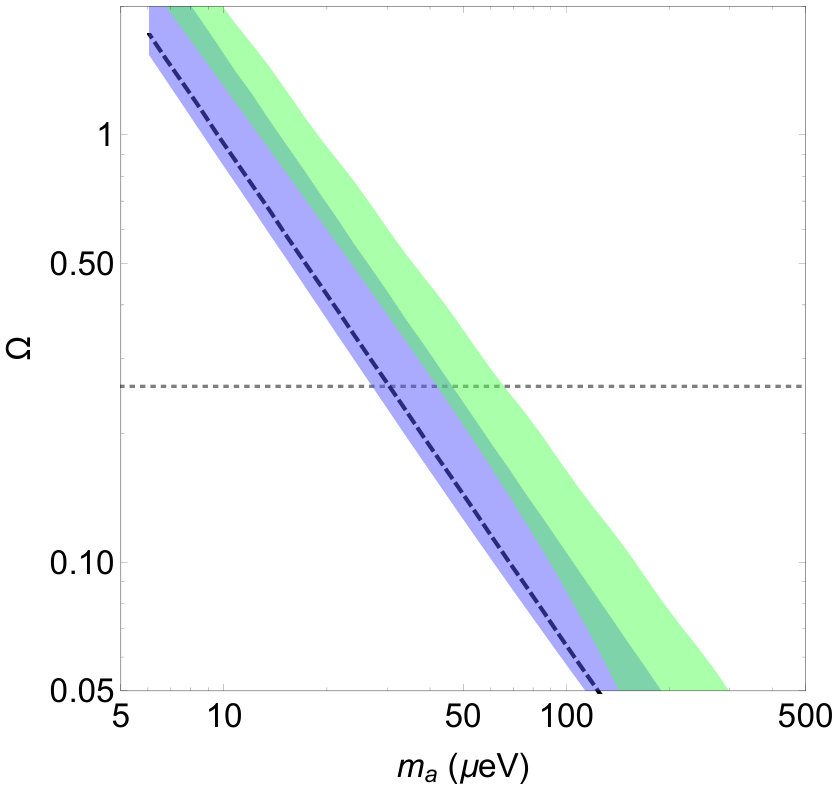 Figure 1
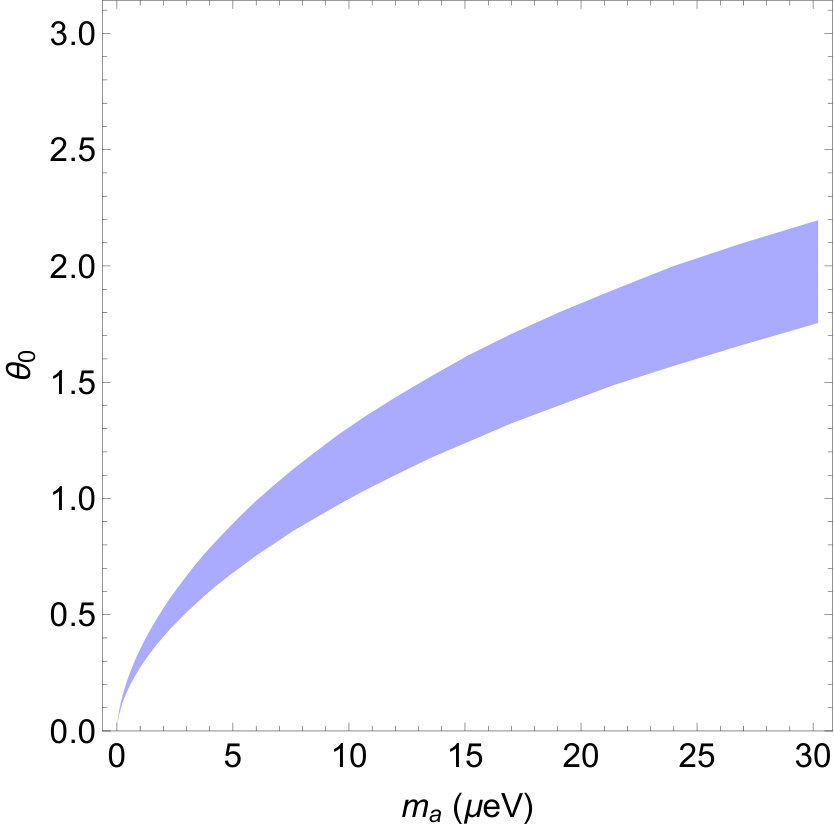 Figure 2
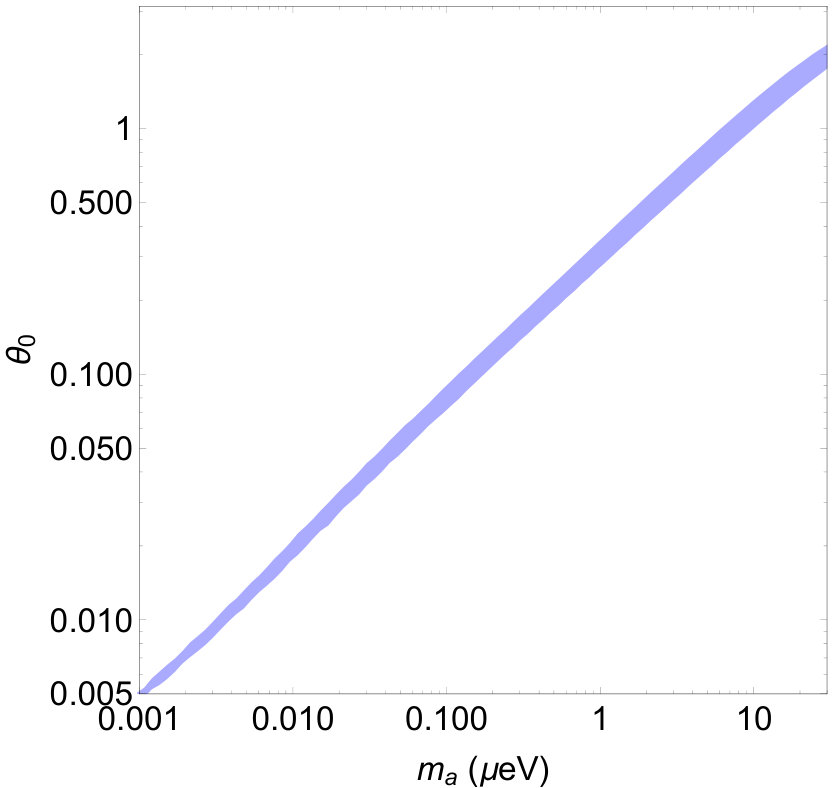 Figure 3
Peer Reviews
No public reviews on file for this paper yet. If you reviewed it on a platform where reviews are public (OpenReview, ICLR, NeurIPS, ICML), you can paste yours below so the community can read it here.
Videos
No videos yet. Explain this paper in a talk, walkthrough, or lecture? Add one.