Classical light vs. nonclassical light: Characterizations and interesting applications
Anirban Pathak, Ajoy Ghatak

TL;DR
This paper reviews the distinctions between classical and nonclassical light, emphasizing their modern applications such as quantum communication, spectroscopy, and astrophysics, with a focus on states like squeezed, antibunched, and entangled photons.
Contribution
It provides a comprehensive overview of classical and nonclassical light applications, highlighting recent developments in quantum states like Fock states for communication.
Findings
Nonclassical light states enable advanced quantum communication.
Applications of squeezed and entangled states are expanding in modern optics.
Classical light continues to be essential in traditional optical technologies.
Abstract
We briefly review the ideas that have shaped modern optics and have led to various applications of light ranging from spectroscopy to astrophysics, and street lights to quantum communication. The review is primarily focused on the modern applications of classical light and nonclassical light. Specific attention has been given to the applications of squeezed, antibunched, and entangled states of radiation field. Applications of Fock states (especially single photon states) in the field of quantum communication are also discussed.
Click any figure to enlarge with its caption.
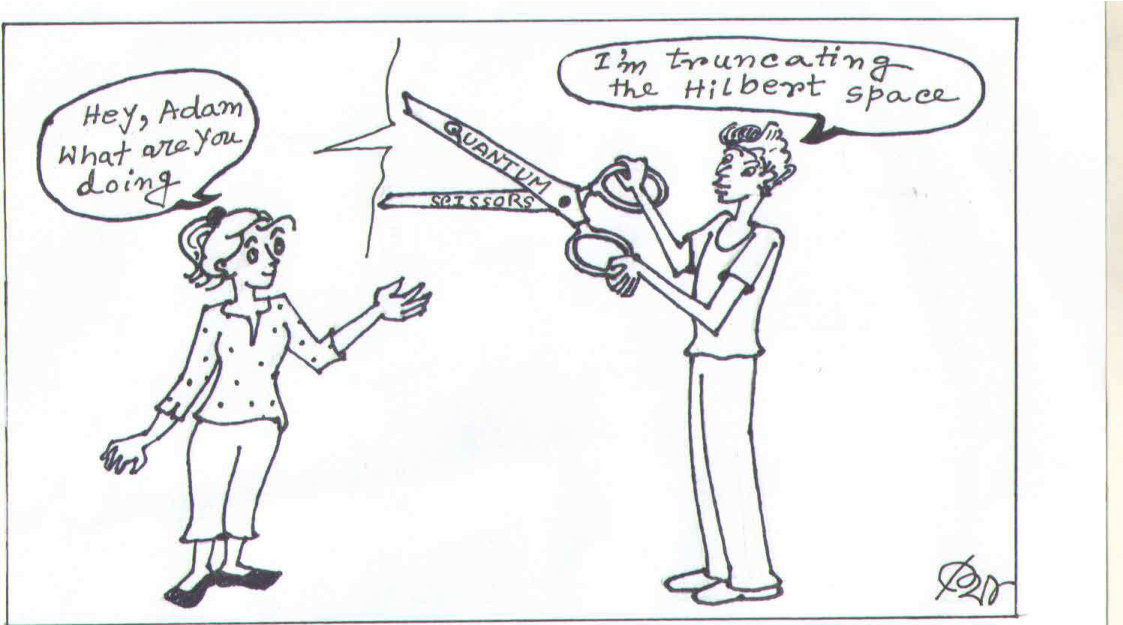 Figure 1
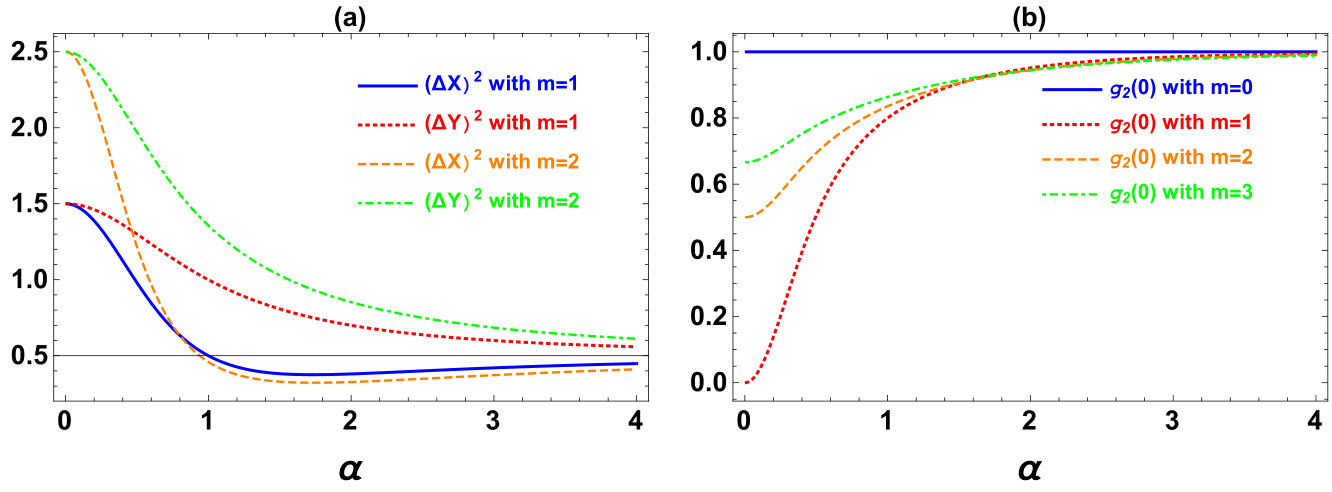 Figure 2
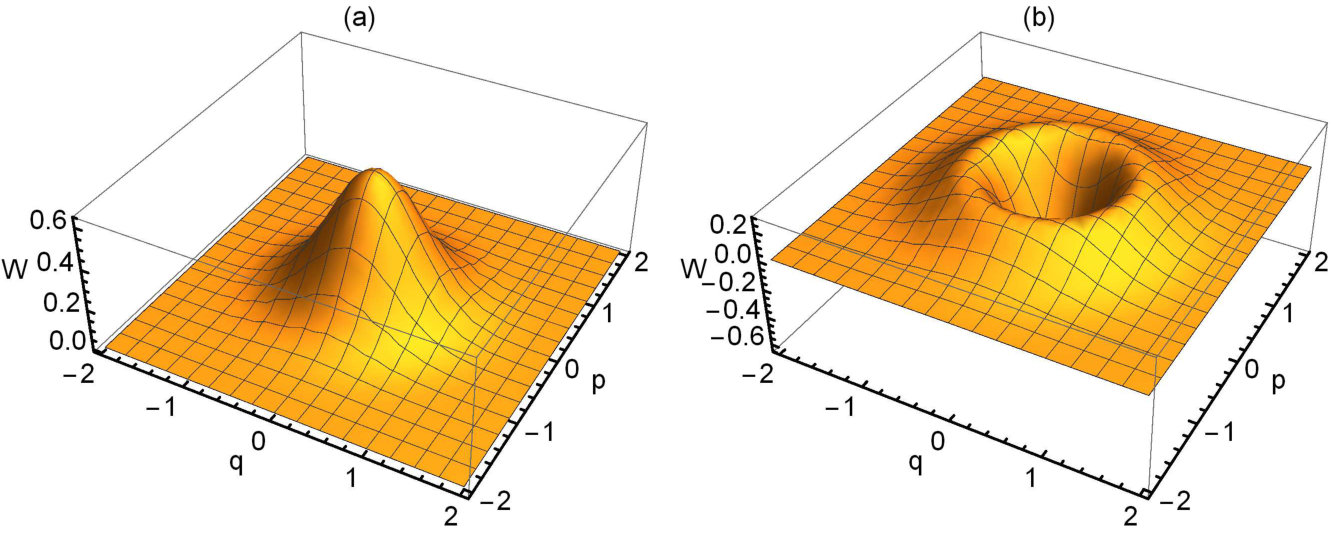 Figure 2
Peer Reviews
No public reviews on file for this paper yet. If you reviewed it on a platform where reviews are public (OpenReview, ICLR, NeurIPS, ICML), you can paste yours below so the community can read it here.
Videos
No videos yet. Explain this paper in a talk, walkthrough, or lecture? Add one.
Classical light vs. nonclassical light: Characterizations and interesting
applications
Anirban Pathak*a,111email: [email protected], Ajoy Ghatakb,*222email: [email protected]
Abstract
We briefly review the ideas that have shaped modern optics and have led to various applications of light ranging from spectroscopy to astrophysics, and street lights to quantum communication. The review is primarily focused on the modern applications of classical light and nonclassical light. Specific attention has been given to the applications of squeezed, antibunched, and entangled states of radiation field. Applications of Fock states (especially single photon states) in the field of quantum communication are also discussed.
aJaypee Institute of Information Technology, A-10, Sector-62, Noida, UP-201307, India
bM.N. Saha Fellow, The National Academy of Sciences, India (NASI), D42, Hauz Khas, New Delhi, India
1 Introduction
Once Poincare said “The scientist does not study nature because it is useful to do so. He studies it because he takes pleasure in it; and he takes pleasure in it because it is beautiful. If nature were not beautiful, it would not be worth knowing, and life would not be worth living… I mean the intimate beauty which comes from the harmonious order of its parts and which a pure intelligence can grasp” (as quoted in Chapter 4 of [1]). It is the search of this harmony in nature that brought different theories of light. If we look back at Newton’s corpuscular theory of light, it would not be difficult to guess that the harmony of nature revealed through his 3 laws of motion and the law of gravity (all four of which are obeyed by particles), which together can explain almost every phenomena known at that time might have forced him to consider light also as corpuscular. Later on, this search for harmony led Maxwell to discover the intimate relation between the earlier known laws of electricity, magnetism and light (optics). It may be noted that Maxwell’s main contribution in the famous Maxwell’s equation was to modify Ampere’s law by introducing the idea of displacement current and thus to introduce a symmetry among the laws involving electric field and magnetic field [2]333Interested readers may freely read Maxwell’s original paper at http://www.jstor.org/stable/pdf/108892.pdf. In fact, around 1860, Maxwell summed up all the laws of electricity and magnetism in the form of 4 equations – which are now known as Maxwell’s equations. He showed that, in free space, electric field satisfies the 4 equations with the corresponding magnetic field given by where and represent unit vector in and directions, respectively and is the dielectric permittivity and \mu_{0}=4\pi\times 10^{-7}$${\rm Ns^{2}C^{-2}} is the magnetic permeability of the free space (classical vacuum). The above equations describe propagating electromagnetic waves. Thus from the laws of electricity and magnetism, Maxwell predicted the existence of electromagnetic waves, and by substituting the above solutions in Maxwell’s equations he showed that the velocity (in free space) would be given by m/s. Thus, Maxwell not only predicted the existence of electromagnetic waves, he also predicted that the speed of the electromagnetic waves in air should be about m/s. He found that this value to be very nearly equal to the measured value of velocity of light (in air) known in that time. In fact, in 1849, Fizeau measured the speed of light (in air) as m/s. The sole fact that the two values were very close to each other led Maxwell to propound (around 1865) his famous electromagnetic theory of light. Here, we may note that observing a great symmetry (the fact that velocity of electromagnetic wave and that of light are nearly the same) present in nature, Maxwell conjectured that light is an electromagnetic wave. In making this powerful conjecture without any available experimental evidence, Maxwell actually showed his confidence on the fact that nature is beautiful and symmetric.
The confidence on the beauty of nature shown by Maxwell in particular and scientists in general is nicely reflected in a conversation between Einstein and Heisenberg, which was recorded by Heisenberg as [1]- “If nature leads us to mathematical forms of great simplicity and beauty—by forms, I am referring to coherent systems of hypotheses, axioms, etc. (etc.,)—to forms that no one has previously encountered, we cannot help thinking that they are “true,” that they reveal a genuine feature of nature…. You must have felt this too: the almost frightening simplicity and wholeness of the relationships which nature suddenly spreads out before us and for which none of us was in the least prepared.” The simplicity and beauty referred here were vibrantly present in Maxwell’s equations and those compelled Maxwell to consider light as an electromagnetic wave. It was confidence on the beauty of the mathematical forms of Maxwell’s beautiful equations, which forced Einstein to show confidence on these equations rather that on the century old and well tested Galilean transformations444Everyday, we see that relative velocity of two cars that approach each other with the same speed is double of the individual speed. This is in accordance with the Galilean transformation, but according to Maxwell’s equation, light would always move with a constant velocity in free space. Thus, if we send light from two torches in the opposite direction, their relative velocity would still remain This was in sharp contrast with the Galilean transformation. and indirectly this confidence on the symmetry of the Maxwell’s equations led him to introduce the special theory of relativity.
Historically, light played an extremely important role in understanding nature. For example, most of the information that we have about the celestial bodies are received through light (may not be restricted only to the visible range). However, at a more fundamental level, an effort to understand the blackbody spectrum (i.e., to explain experimental observations related to intensity of lights of different wavelength emitted by a blackbody) led Planck to postulate that energy from an electric oscillator (which constitutes the wall of a cavity) had to be transferred to electromagnetic waves in different quanta of each [3], but the waves themselves would follow the conventional wave theory of Maxwell. This was postulated in 1900555Planck’s paper cited here as [3] was published in 1901, but the paper contains following note- In other form reported in the German Physical Society (Deutsche Physikalische Gesellschaft) in the meetings of October 19 and December 14, 1900, published in Verh. Dtsch. Phys. Ges. Berlin, (1900) 2, 202 and 237. An English translation of Verh. Dtsch. Phys. Ges. Berlin, (1900) 2, 237 is available at http://hermes.ffn.ub.es/luisnavarro/nuevo_maletin/Planck%20(1900),%20Distribution%20Law.pdf. Just after 5 years, in 1905, Einstein (while he was working at the Swiss Patent office) published a set of five outstanding papers which, according to John Satchel “changed the face of physics” [4]. In one of those 5 papers [5], he introduced his famous theory of light quanta according to which light is considered to be consisted of mutually independent quanta of energy
[TABLE]
where is the frequency and is the Planck’s constant. Here it is important to note that there was a fundamental difference between Planck’s idea of light quanta and that of Einstein. Specifically, Planck postulated that energy from an electric oscillator had to be transferred to electromagnetic waves in different quanta of each, but the waves themselves would follow the wave theory of Maxwell. In contrast, Einstein assumed that energy is not only given to an electromagnetic wave in separate quanta, but is also carried in separate quanta. Einstein’s revolutionary idea of light quanta explained an interesting observation related to light. To be precise, in 1887, Hertz did a simple experiment with light [6]. In his experiment, electrodes illuminated with the ultraviolet (UV) light were found to emit electrons. This phenomenon is known as the photoelectric effect, and Einstein postulated “light quantum”, to explain this phenomenon. Thus, the revolutionary ideas of both Planck and Einstein were theoretical in nature, but were obtained from the efforts to explain experimental observations related to light and these ideas subsequently played important role in the construction of quantum physics, the best known model of nature.
Before we proceed further, it would be interesting to note that in [5], Einstein obtained Eq. (1) by comparing entropy of radiation with that of a gas having molecules. Specifically, he had shown that if volume changes from to , then the change in entropy of radiation having a fixed amount of total energy is given by
[TABLE]
whereas the corresponding change in entropy for an ideal gas having particles is
[TABLE]
Comparing Eqs. (2) and (3), Einstein reached to the conclusion that radiation behaves in manner like it is composed of independent light quanta and should represent the total number of light quanta ( having individual energy of [7]. It is of further interest to note that later on, a few scientists have tried to explain photoelectric effect without using the concept of photon or light quanta. They assumed that the energy of the atoms constituting the electrode on which light falls is quantized [8]. Thus, photoelectric effect can be explained by considering quantization of either light or matter. However, it seems obvious that Einstein used the concept of light quanta. This is so because Einstein provided an explanation of the photoelectric effect in 1905, when neither Rutherford’s model (1909), nor Bohr model (1913) was known666It may be noted that Bohr model also originated in an effort to explain the origin of lights of certain wavelengths (as was observed in Lyman, Balmer, Paschen, Bracket and Pfund series., but Planck’s idea was already present since 1900. Naturally, Einstein used the concept of light quanta in his explanation of the photoelectric effect. This discussion establishes two points:
It is important to know the history of a subject to understand that subject. 2. 2.
Light played a fundamental role in the development of the most fascinating and useful concepts of the modern physics.
In what follows, we would keep this in mind and would try to provide a historical (but not chronological) overview of the development of various concepts related to modern optics and modern applications of them.
Maxwell’s work provided a clear understanding of electromagnetic wave which still plays the most crucial role in communication engineering and enables us to speak with friends and relatives through cell phones, to see different channels in TV, to do online shopping, etc. On the other hand, the concept of photon plays a crucial role in many of the recently proposed path-breaking applications of quantum information processing and quantum communication, such as unconditionally secure quantum cryptography [9, 10], quantum teleportation [11], and dense coding [12, 13]. Before, we proceed to describe some of these applications and briefly introduce the notion of nonclassical light, we must mention that neither Planck nor Einstein used the term “photon”. It was only in 1926 that the American chemist Gilbert Lewis coined the word “photon”. In [14], Lewis wrote “…it spends only a minute fraction of its existence as a carrier of radiant energy, while the rest of the time it remains as an important structural element within the atom. …I therefore take the liberty of proposing for this hypothetical new atom, which is not light, but plays an essential part in every process of radiation, the name photon”. One can easily recognize that the term photon is used today with a different meaning. Further, we would like to note that in 1905, Maxwell’s electromagnetic theory was well established and consequently, Einstein’s idea of the light quantum was not readily accepted (for a discussion see [15]). In fact, even today there are some open questions related to the wave function of photon777The main problem in defining a wave function of photon in position space arises because of the fact that it cannot be localized in position space as it has a definite momentum. ([16, 17, 18] and references therein) and its momentum in a medium 888Interested readers may read about Abraham–Minkowski dilemma in detail to know the origin of this interesting problem. About a century ago, Abraham and Minkowski gave two different expressions for momentum of light in a medium. To understand the dilemma, at the single photon level, we may note that for free space momentum of a photon is and it’s unambigious, but for a medium having refractive index , there are two competing expressions for photon momentum: and . Both are used, and thus the open question is: Which one of these two expressions is correct? Apparently, the problem arises because even in the classical optics, there is no universally accepted definition for the electromagnetic momentum in a dispersive medium. (see [19, 20] and references therein); and there are people who are not confident on the existence of photon (interested readers may read Lamb Jr.’s article entitled, Anti-photon [21], where the author claimed that “…there is no such thing as a photon”). Our view is different, and we believe that the wide domain of optics can be classified into three sub-domains- classical optics, semi-classical optics and quantum optics [22]. Specifically, science of describing those phenomena which can be explained with the help of the classical theory of light (i.e., considering light as an electromagnetic wave) and classical theory of matter (which does not require quantization of atomic/molecular energy levels). Reflection, refraction, dispersion, etc., are examples of phenomena that fall under classical optics. Whereas explanation of another set of phenomena, like Compton effect and photoelectric effect, requires the quantum theory of matter, but does not essentially require quantum theory of light999It is interesting to note that Nobel laureate C V Raman, provided a semiclassical explanation of the Compton effect in Ref. [23].. Such phenomena fall under semiclassical optics. Finally, there exists a set of phenomena (like the recoil of atom on the emission of light) which cannot be explained without considering the quantum theory for both atom and field. Those phenomena fall under the domain of quantum optics, and a major part of this review is dedicated to the application of such phenomena.
In his 1905 paper on the photoelectric effect [5], Einstein conceptualized the notion of “wave particle duality”, which eventually led to the development of quantum theory. Few years later, in 1923, de Broglie, showed confidence on the symmetry and beauty of nature by claiming that nature manifest itself in two forms- light and matter, if one of them has a dual character, then the other one should also have the dual character [24, 25, 26]. Believing in the inherent harmony of nature, he conjectured that Fermat’s least optical path principle of optics and the least action principle of mechanics are manifestations of the same law as their mathematical forms are the same. This conjecture led to the idea of matter wave and de Broglie wavelength, which again played a very important role in the development of quantum mechanics. The fact that de Broglie was convinced that there was a harmony in nature, and the duality introduced through the work of Einstein was generally true, was captured in many of de Brogile’s own statements. For example, we may quote (cf. p. 58 of [27]) : “I was convinced that the wave-particle duality discovered by Einstein in his theory of light quanta was absolutely general and extended to all of the physical world, and it seemed certain to me, therefore, that the propagation of a wave is associated with the motion of a particle of any sort- photon, electron, proton or any other.”
Recognizing the harmony of nature captured in the work of de Broglie, he was awarded the 1929 Nobel Prize in Physics. The harmony of nature discovered by him was nicely reflected in the presentation speech of the Chairman of Nobel Committee for Physics (1929), who said: “Louis de Broglie had the boldness to maintain that not all the properties of matter can be explained by the theory that it consists of corpuscles……..Hence there are not two worlds, one of light and waves, one of matter and corpuscles. There is only a single universe.” (cf. Page 26.5 of [7]).
In another direction of development, in 1917, Einstein [28] was able to introduce famous and coefficients, which can describe the interaction between matter and radiation field. Specifically, the stimulated emission which governs the operation of all laser (light amplification by stimulated emission of radiation) systems were characterized by coefficient, whereas spontaneous emission which leads to all the spectral lines, can be characterized using Einstein’s coefficient. Einstein used thermodynamic argument to obtain coefficient. Ten years later, in 1927, Dirac performed quantization of the electromagnetic field [29], which is now known as the second quantization101010The word “quantum” means discrete. In quantum mechanics, we have Hermitian operators for all the physical observables. These operators satisfy eigenvalue equations, where the eigenfunctions are the wave functions. Obtained eigenvalues corresponding to any operator is discrete and on a particular measurement, we can obtain only one of those eigenvalues as the value of the corresponding physical observable. Thus, in quantum mechanics, we obtain discrete values for an observable, in other words, in quantum mechanics allowed values of physical observables get quantized. Historically, at the beginning of quantum mechanics (say, between 1925-1926), it was restricted to the quantization of the motion of particles, only, and in all the early works of the founder fathers of quantum mechanics (e.g., Schrodinger, Heisenberg, Dirac), electromagnetic field was treated classically. Later, in 1927, Dirac quantized electromagnetic field [29], subsequently, Jordan and Wigner developed a formalism in which particles are also represented by quantized fields. This led to quantum field theory, which has been formulated in the language of second quantization.. In fact, quantization of field in general and radiation field in particular is referred to as second quantization, and it naturally yields Einstein’s coefficient and the concept of light quanta. In the mean time, in 1924, Bose [30] provided a quantitative explanation of Planck’s law and paved the way for quantum statistics by introducing a technique for counting statistics of particles having zero rest mass [31]. This work of Bose was followed by another seminal paper of Einstein, in which counting statistics for particles having finite mass (boson) was provided. These works are relevant here because photons or light quanta are bosons and they follow Bose-Einstein statistics, introduced through the works of Bose and Einstein. Later, quantization of a system of finite rest mass was performed by the Russian physicist Vladimir Fock [31]; the corresponding space (i.e., the appropriate state space for the electromagnetic field) is called the Fock space and the basis states of this space are referred to as the Fock states or number states . To be precise, for the present review, we are only interested in bosonic Fock space, and wish to express states of the radiation field in Fock basis. From the discussion, so far, we can easily recognize that if one uses second-quantization formalism and Fock basis, he can express an arbitrary radiation field state as where represents a Fock state, more lucidly corresponds to vacuum state, corresponds to a single photon state, corresponds to a state with photons, is the probability of obtaining photons ( is also referred to as the photon number distribution) if the number of photons present in the quantum state is measured. Clearly, in this formalism (formalism of second quantization), notion of light quanta follows, automatically. However, that’s not our concern. Our concern is now, as the electromagnetic field is quantized in general, and as every state of the radiation field is essentially quantum because it can always be described as a quantum state how to distinguish classical and quantum light? Here, we need to come out of the popular classification made by using particle nature and wave nature of light and note that there are some properties of quantum world which are not present in the classical world. For example, in the quantum world, one cannot measure two non-commuting operators (that represent two physical observables) simultaneously with arbitrary accuracy. This is known as Heisenberg’s uncertainty principle. No such, uncertainty exists in the classical world, so a quantum state can be approximated as classical if the observed uncertainty (associated with both the noncommuting operators) reaches a minimum possible value for that state. In some sense, in a world where every state is quantum, such a quantum state can be viewed as the most classical state (or a state which is closest to a classical state). Let’s now translate this scenario into the context of the radiation field. Traditionally, when we look at a plane wave (a solution of Maxwell’s equations), the amplitude of the wave () is considered as a complex number, real and imaginary parts of which are referred to as the in-phase and out-of-phase quadratures of the field [31]. In the domain of quantum mechanics, is replaced by an annihilation operator for that mode and the corresponding field quadratures are defined as and Clearly, and don’t commute as In fact, using we obtain . Thus, these field quadratures which correspond to measurable quantities (i.e., physical observables) don’t commute and consequently cannot be measured simultaneously with arbitrary accuracy. Specifically, we obtain an uncertainty relation involving the fluctuations in the field quadrature as
[TABLE]
In the above discussion, we have assumed Now, we know that no such uncertainty exists for the classical field, and in principle, one can perform homodyne measurement and simultaneously measure field quadratures with arbitrary accuracy, but quantum mechanics does not allow that. This led to a new question: How close a quantum state can be to the states of the classical world, where there was no uncertainty. The quantum state of light closest to classical world of no-uncertainty would definitely be the one with minimum uncertainty, i.e., a state of radiation field which would satisfy Such a state is called coherent state, which will be elaborated separately in the next section. Coherent states and their statistical mixtures are considered as classical states of radiation field (classical light), and all other states of radiation field are referred to as nonclassical states (nonclassical light). A more formal definition of nonclassical states will be given in the next section, but before that we may just note that the lucid classification of light made earlier, is consistent with this modern view. This is so because, light quanta of Einstein can be viewed as Fock state, and for a Fock state we obtain which clearly indicates that, except vacuum state , no Fock state gives us minimum uncertainty states. Further, all Fock states (except , and thus they show sub-Poissonian photon statistics (which is a signature of nonclassicality- cf. Sec. 2 for a relatively elaborate discussion) and are nonclassical states (in other words they are quantum states having no classical analogue), whereas a vacuum state can be considered as a classical state. Similarly, electromagnetic fields for which field quadratures can be measured with accuracy are definitely classical. Now, we may further stress on this point by noting that in the framework of quantum mechanics, every state is a quantum state. As a consequence, the so called classical states are also quantum, and need to obey no go theorems of quantum mechanics, like Heisenberg’s uncertainty principle. However, for a classical state, the uncertainty would be minimum. Thus, in the framework of quantum mechanics a classical state would mean a state closest to classical world (where there is no uncertainty), in the sense that the uncertainty in the measured values of two noncommuting observables (for us two quadratures of the field) would be minimum for them. However, a state that satisfy Eq. (4), may have reduced small fluctuations (reduced with respect to the coherent state value) in one of the quadratures at the cost of increased fluctuations in the other quadrature. Such a state is referred to as a squeezed state. For example, any state of radiation field that would satisfy or would be referred to as a squeezed state, and all squeezed states are nonclassical. We will further elaborate on squeezed states and their applications in Sec. 5.1. Keeping this distinction between classical light and non-classical light in mind, in what follows, we will first provide a more formal definition of classical and nonclassical states of light and then state various modern applications of both types of light.
The rest of the paper is organized as follows. In Sec. 2, we formally introduce coherent state and the notion of nonclassical states and the Glauber-Sudarshan -function. In Sec. 3, a set of interesting nonlinear optical phenomena and their applications are discussed. Sec. 4 is dedicated to the methods that are used to identify nonclassical light. In Sec. 5, applications of nonclassical states of radiation field (i.e., nonclassical light) are discussed with a specific focus on the applications of squeezed, antibunched and entangled states of light and the recent developments in the field of quantum state engineering and quantum information processing in general and quantum communication in particular. In Sec. 6, the discussion on the modern applications of light is continued, and the modern applications of classical light are reviewed. Finally, the paper is concluded in Sec. 7 with a brief mention of some classical and nonclassical light-based technologies that may appear in the near future.
2 Coherent states and the idea of classical and nonclassical states
of radiation field
Let us now formally define a coherent state. For this review, we may consider a coherent state as a state of the radiation field, which is defined as an eigenket of annihilation operator (thus, defines a coherent state). A coherent state can also be defined using two other equivalent definitions. Specifically, as a displaced vacuum state or a minimum uncertainty state (as mentioned in the previous section). In infinite dimensional Hilbert space, these definitions are equivalent111111It may be noted that for the finite dimensional Hilbert space, these definitions are not equivalent, and any finite superposition of Fock states is always nonclassical. and lead to a well defined state which can be expanded in terms of Fock basis (introduced in the previous section) as where represents a Fock state and is the average photon number. Looking at the functional form of the probability distribution defined by one can identify that the photon number distribution for the coherent state of light is Poissonian121212In our notation, a Poissonian distribution is one which follows and . Here, can be easily recognized as a coherent state by noting that , and it would satisfy If a state satisfies , then the state will be referred to as a sub-Poissonian state and such a state will be nonclassical. Before we elaborate on other nonclassical states, let us first define nonclassicality.
Now, we may note that in quantum mechanics, a pure state is either described through its wave function or through its density matrix . However, if two pure states and are mixed with probability and then the density matrix of the state would be Thus, in general, density matrix of a mixed state would be . Now, consider a state which is a mixture of coherent states , then we must have where the summation has been replaced by integration considering as a continuous variable, and discrete probability is replaced by a probability distribution . Now, for a mixture of coherent states must be nonnegative (i.e., and must satisfy . In that case, we would say that is a true probability distribution.
Coherent states form an over complete basis as for any two coherent state and we obtain Thus, we may diagonally expand any quantum state131313Note that this description is valid for any quantum state and it’s not restrcited to the quantum states of radiation field. in the coherent state basis as
[TABLE]
However, in this expansion, which is usually referred to as Glauber-Sudarshan -function141414Although it is usually referred to as Glauber-Sudarshan -function, and the related formulation as the Glauber-Sudarshan -representation and Glauber won 2005 Nobel prize in Physics for developing this formalism, it is a bit controversial. Many scientists and Sudarshan himself often argue that this representation that provide correct quantum mechanical theory of optical coherence was actually developed by Sudarshan, and was later adopted by Glauber, who coined the term -representation. As -representation or diagonal representation played crucial role in the development of the non-classical optics, this debate about the origin of -representation is in existence since long. However, it resurfaced in 2005-06, when Glauber won the Nobel prize in Physics for this formulation, but Sudarshan missed it and wrote a strong letter of objection to the Nobel committee (for a short description of the controversy, interested readers may see [32, 33, 34]). To us it appears that Nobel committee gave more credit to Glauber’s 1963 paper [35] published in February 1963, over Sudarshan’s more powerful work [36] published in April 1963. However, -representation or diagonal representation (or, equivalently optical equivalence theorem) was actually developed by Sudarshan and it would have been more appropriate it call it Sudarshan diagonal representation or sudarshan’s -representation as he had used in place of in his pioneering work. In fact, in Eq. (4) of Ref. [36], Sudarshan expressed density function as where he considered as quantum state. Almost five months later, in Sec. VII of Ref. [37], Glauber reintroduced diagonal representation of Sudarshan as -representation. Note that Eq. (7.6) of [37] is the same as Eq. (5) given above. For a clear and chronological description of the events that happened in 1963, see [38]. is not restricted to follow and thus to remain a true probability distribution. To be specific a negative value of -function would mean that cannot be viewed as a true probability distribution, and the corresponding state cannot be expressed as a mixture of coherent (classical) states. This is why is often referred to as quasi-probability distribution, and we usually say that a state which cannot be expressed as a mixture of coherent states is nonclassical. Such nonclassical states are often seen in the radiation field, and nonclassical states of the radiation are the states of our interest as they don’t have any classical analogue. In what follows, any radiation field state with negative value of for some will be called nonclassical light, whereas the rest will be considered as classical light. Here it would be apt to note that the diagonal representation can be considered as a valid representation iff an inversion formula exist [38]. Interestingly, in Eq. (6) of the pioneering work of Sudarshan [36], an explicit expression for (in Sudarshan’s notation ) in terms of density matrix was given. Further, Sudarshan established that the expectation value of any normal ordered operator (i. e. , the operators are ordered in such a way that all creation operators appear in the left and all the annihilation operators appear in right), in the statistical state represented by density matrix represented in the diagonal form given in (5), would be
[TABLE]
Great importance of this result was recognized by Sudarshan. Immediately after introducing this result in Ref. [36], he wrote about Eq. (6) (notation is changed here for the consistency), “This is the same as the expectation value of the complex classical function for a probability distribution over the complex plane. The demonstration above shows that any statistical state of the quantum mechanical system may be described by a classical probability distribution over a complex plane, provided all operators are written in the normal ordered form. In other words, the classical complex representations can be put in one-to-one correspondence with quantum mechanical density matrices.” This lines describes optical equivalence theorem- probably the most important result of quantum optics, or more precisely of nonclassical optics. This is so because Sudarshan showed that all nonclassicalities, if any, of a given state are fully captured in the departure of the corresponding from being a genuine classical probability [38]. Thus, negativity of -function appeared as the defining criterion for nonclassicalty.
Negativity of -function being the defining criterion for nonclassicalty, it is both necessary and sufficient. However, -function cannot be measured experimentally151515There exists an interesting paper by Kiesel et al., [39] in which experimental determination of a well-behaved -function is reported for a single-photon added thermal state. However, the method cannot be generalized as -functions of nonclassical states are not always well-behaved. Further, to the best of our knowledge this is the only work that reports experimental determination of -function. , and as a consequence, over time several operational criteria for nonclassicality have been developed (for a systematic discussion on various criteria and a long list of criteria see [40]. This list was obtained by generalizing the moment based criteria of nonclassicality in general [41, 42] and entanglement in particular [43, 44]. A finite set of moment-based criteria for nonclassicality can only serve as a witness of nonclassicality, while a sufficient and necessary condition would require satisfaction of an infinite set of such nonclassicality criteria [41, 45]. In what follows, we will briefly mention some of these criteria.
The coherent states and the nonclassical states (such as squeezed states) generated through the time evolution of an initial coherent state in some physical Hamiltonian have many applications. Most of these applications and excitement connected to them started in 1960s after the discovery of laser and the initial excitement continued until 1980s. However, coherent state and squeezed state were known to the founding fathers of quantum mechanics (for an excellent review see [46], where the author describes a short history of the discovery of coherent state and squeezed state). Just like Einstein’s miraculous year, Schrodinger also had a miraculous year, it was 1926, first half of this year was extremely productive for him, and he submitted 6 famous papers in this period. In one of those papers [47], he discovered coherent state while he was looking for classical like states that satisfy the minimum uncertainty condition. Just in the next year, squeezed state was discovered by Kennard (see Sec. 4C of [48])161616Although, coherent state and squeezed state were discovered in the early years of quantum mechanics, their importance was realized much later. Consequently, Schrodinger and Kennard did not receive much credit for these discoveries. In this context, Nieto made following very interesting remark in [46]- “To be popular in physics you have to either be good or lucky. Sometimes it is better to be lucky. But if you are going to be good, perhaps you shouldn’t be too good.”.
Consider an arbitrary state of electromagnetic field which can be expressed in the coherent state representation as shown in Eq. (5). Photon number distribution of this state would be Now, since if is a true probability distribution (i.e., if has nonnegative values for all and then must be a positive quantity. In other words would imply negative value of for some value(s) of Thus, for some values of (which refers to a hole in the photon number distribution) is actually a signature of nonclassicality. The process of creating holes in the photon number distribution is known as hole burning [49]. Various mechanisms for hole burning have been proposed in the recent past [50, 51, 52, 49, 53].
Let us now, look at a finite superposition of Fock states, say a quantum state Clearly, for this state would describe the probability of finding an photon state. In this case, and we may thus view it as there are a large number of holes in the photon number distribution. This leads us to the conclusion that a finite superposition of Fock states is always nonclassical. Procedures adopted for hole burning and/or creation of finite dimensional states are in the heart of quantum state engineering, which we would elaborate separately. From the above logic it is clear that different realizations of the finite dimensional coherent states [54, 55] must be nonclassical. Similarly, photon added coherent state (PACS) introduced by Agarwal and Tara [56] and experimentally realized (for in [57] must also be nonclassical, as after the addition of one photon ( photons) to every Fock states, including vacuum, we must have P(0)=0\,\,$$\left(P(n)=0\forall n<m\right). It is interesting to note that the procedure of obtaining a nonclassical state (PACS) by adding a single photon to a classical state (coherent state ) manifests one of the simplest procedures that describes classical to quantum transition. Further, PACS and similar states are often referred to as the intermediate states [58, 59, 60, 61] as they reduce to different well known states at different limits. In particular, a PACS is intermediate between a fully quantum single photon Fock state and a coherent state Other popular intermediate states that show nonclassical characters at different limits are binomial state [62, 63], reciprocal binomial state [64], various types of generalized binomial state [65, 66, 67], negative binomial state [68], excited binomial and negative binomial states [69, 70], hypergeometric state [71], negative hypergeometirc state [72]. Among these states, except negative binomial state [68], all the states are finite dimensional and naturally show nonclassicality. In addition, negative binomial state is defined as
[TABLE]
where C_{n}\left(\eta,M\right)=\left[\left(\begin{array}[]{c}n\\ M\end{array}\right)\eta^{M+1}(1-\eta)^{n-M}\right]^{\frac{1}{2}}, and is a nonnegative integer. Clearly, for a nonzero and these holes in photon number distribution would imply that all negative binomial states are nonclassical for Thus, the fact that every finite superpostion of Fock states is nonclassical, implies that the nonclassicalities reported in various intermediate states [59, 60, 61, 73, 63, 69, 71, 72, 74] are not surprising. Rather, they are manifestation of the above discussed facts. Finally, a quantum scissors [73, 75] which can be used to truncate the usual infinite dimensional Hilbert space to a finite dimensional space must lead to nonclassicality (cf. Fig. 1).
3 Nonlinear optics and applications of nonlinear optical phenomena
In 1960, Theodore H. Maiman built the first laser at Hughes Research Laboratories [76]. It was a ruby laser, in which ruby was used as the active medium to produce stimulated emission at 694.3 nm. The realization was based on a theoretical work by Arthur Leonard Schawlow and Charles Hard Townes [77]. The advent of ruby laser was followed by the advent of other lasing systems, including He-Ne laser, laser, semi-conductor lasers, etc. The advent of laser also contributed highly in the development of fiber optics and experimental quantum optics. However, in this section we will restrict ourselves to the discussion on nonlinear optics only.
Lasing increases the intensity of light, and the output of the laser does not diverge. Thus, the advent of lasers allowed us to apply extremely high electric field (of the order of volts/m) to a medium and to investigate the effect of propagation of the intense electromagnetic wave (laser) through a medium. Such investigation led to the birth of a new field of optics, known as nonlinear optics, where due to the high intensity of the incident wave the linear relation between polarization (dipole moment per unit volume) and the applied electric field gets modified and we obtain a nonlinear relation. In fact, the first experiment that clearly demonstrated a nonlinear optical phenomenon was performed only after 1 year of the realization of the laser by Maiman. Specifically, in 1961, Franken, Hill, Peters, and Weinreich at the University of Michigan reported generation of light of wavelength 347 nm, when the output of a ruby laser (694 nm) was incident on a quartz crystal [78]. Thus, light of frequency was generated from the incident light having frequency This process is known as second harmonic generation, and it defines a typical nonlinear optical phenomenon as in the normal situation (in the regime of linear optics) wavelength of the incident light would not have changed. This process can be used to generate blue light by passing a red laser beam through a nonlinear crystal. This often happens inside the blue laser pointers. The presence of a small quadratic term in the optical polarizability of a nonlinear optical crystal led to second harmonic generation, soon after demonstrating the second harmonic generation, the same group of scientists recognized that this small quadratic term in the optical polarizability would also lead to mixing of light from two different sources with two different frequencies [79]. In other words, if we send two light waves at two frequencies and , then the crystal can mix these two frequencies to generate light of frequency (known as sum frequency generation) and/or (known as difference frequency generation). The process is now usually referred to as frequency mixing, but in the pioneering work of Bass et al. [79], in which sum frequency generation was experimentally demonstrated in 1962, it was referred to as optical mixing. It is easy to recognize that second harmonic generation is a special case of sum frequency generation where Similarly, we can visualize third or higher harmonic generation process as a nonlinear optical process where higher harmonics are generated by frequency mixing. Frequency mixing process is often used to convert frequency of a given light to the region 800 nm-1000 nm where detectors perform with highest efficiency. The applicability of frequency mixing in general and second harmonic generation in particular is huge. For example, second harmonic generation imaging microscopy has been used in the diagnostics of diseases [80], imaging cells and extracellular matrix in vivo [81] and in determination of ovarian and breast cancers [82]. Further, we would like to mention another interesting nonlinear optical process- subharmonic generation, in which a stronger beam produces two beams of frequencies lower than the original beam. A particular case of subharmonic generation is spontaneous parametric down conversion (SPDC) process [83]. Here, it would be apt to note that the nonlinear optical phenomena may happen in both classical and quantum worlds. 171717Classical nonlinear optics is discussed very frequently and can be found in many text books. To obtain an idea of quantum nonlinear optics interested readers may look at [84, 85, 86] and references therein.. In other words, at the output of a nonlinear optical crystal, one may obtain classical or non-classical light depending upon other conditions of the experiment. Specifically, type I and type II SPDC processes are primarily used to yield entangled states of light, which have been successfully used in realizing various ideas of quantum information processing and quantum communication. Considering its wide applicability, entangled states181818An entangled state is a quantum state of a composite system which cannot be expressed as a tensor product of the component systems (sub-systems) that constitute the composite system. Specifically, if the composite state , where and represent arbitrary states of subsystem and , then is considered to be entangled, otherwise it is called separable. Thus, a two photon state is entangled, but the state is separable. Here and denote horizontal and vertical states of polarization, respectively. are discussed separately in Sec. 5.4.1. Here, we just note that in the SPDC process of type I two nonlinear crystals are used in such a way that the photons generated from these two crystals are in orthogonal polarization and therefore the down conversion occurred in either of the crystals produces entangled photons of same polarization; whereas type II SPDC process uses a single nonlinear crystal and entangled photons of orthogonal polarization are generated (for an elaborate discussion see [83]). Before, we proceed to describe the applications of entangled states, we would like to mention about another common nonlinear optical phenomena known as four wave mixing (FWM). In the quantum description of the FWM process, simultaneous annihilation of two pump photons (which may have different frequencies) creates a signal-idler photon pair. This nonlinear optical phenomenon is of particular interest as its applications have been reported in various contexts ([87, 88, 89, 90, 91, 92, 93, 94] and references therein). Specifically, its applications are reported for optical parametric oscillators (OPOs) [87], optical filtering [92], low noise chip-based frequency converter [93], single-photon sources for quantum cryptography [88, 90, 91], frequency-comb sources [88], stimulated generation of superluminal light pulses [89], etc. Further, several useful optical phenomena (e.g., wavelength conversion, signal regeneration and tunable optical delay) have been observed in silicon nanophotonic waveguides using FWM (see [95] and references therein). FWM microscopy is also used recently to study the nonlinear optical responses of nanostructures [96].
With the advent of quantum information processing the challenge is to perform nonlinear optical operations with a few photons or a low intensity. This is so because the optical realization of and other similar quantum gates require nonlinearity, but quantum information processing is performed with single photon or a few photons. This is challenging because, conventional nonlinear optics is useful only when the incident beam is sufficiently intense. The requirement led to studies on nonlinear optics with low intensity sources [97] and a method to circumvent the problem by using linear optical elements and a set of detectors (KLM approach) [98]. The KLM approach works because the quantum measurement itself is a nonlinear process.
It is out of the scope of the present work to review all the nonlinear optical phenomena and their applications. However, we would like to mention that following nonlinear optical phenomena deserve special attention because of their applications listed against their names.
Optical parametric amplification (OPA) has applications in linear optical amplifier, transparent wavelength conversion, return-to-zero (RZ)-pulse generation, all-optical limiters, etc., (see [99] for a review). 2. 2.
Optical parametric oscillation (OPO) has applications in quantum noise reduction [100], frequency conversion [101], twin-beam generation [102], etc. 3. 3.
Optical rectification (OR) has applications in generation of tetrahertz pulses [103], 4. 4.
Optical Kerr effect, has applications in optical pulse compression, mode locking of lasers, nonlinear intensity-dependent discriminator’s, picosecond time-resolved emission and absorption spectroscopy [104]. 5. 5.
Self-phase modulation (SPM) has applications in designing schemes for all-optical data regeneration [105]. 6. 6.
Cross-phase modulation (XPM) has applications in quantum computation [106], optical switching [107], etc. 7. 7.
Cross-polarized wave generation (XPW) has applications in the designing of efficient temporal cleaner for femtosecond pulses [108]. 8. 8.
Optical phase conjugation has applications in adaptive optics, lens-less imaging, phase-conjugate resonators, image processing, associative memory,[109, 110].
4 Characterization of nonclassical light
Here we aim to briefly mention the concepts that are used to identify (characterize) a radiation field having nonclassical characteristics. We have already mentioned that -function cannot be measured directly. The same is true for Wigner function, which is also a quasi-probability distribution, and a quantum state in the quadrature phase space is defined as
[TABLE]
Negative values of it characterizes nonclassical state. See Fig. 2, where we have plotted Wigner function of coherent state in Fig. 2 (a) and the same for PACS in Fig. 2 (b). Once can clearly see that Wigner function of coherent state is always positive as the state is classical, but the Wigner function of PACS is negative in some places, and the observed negativity works as witness of nonclassicality for PACS. Thus, Wigner function can be used as a witness of nonclassicality, but there does not exist a general procedure for the measurement of Wigner function. More precisely, there are a few papers [111, 112, 113] that report the determination of nonclassical characteristics of radiation field (negative regions in the Wigner function) by direct measurement of the Wigner function, but the methods adopted there work for particular cases only and there does not exist any general method for the direct determination of Wigner function. So we characterize nonclassicality through other operational criteria for nonclassicality. Several experiments are routinely performed to characterize nonclassical light. A nice list of early experiments on nonclassical light is provided in Table 1 of Ref. [114], which also provide a lucid introduction to the experimental techniques used in those pioneering experiments. Without elaborating on all the techniques here, we may mention that in one of the pioneering experiments on quantum optics, in 1977, Kimble, Dagenais, and Mandel demonstrated antibunching in resonance fluorescence [115]. Subsequently, in 1983, Short and Mandel [116] used the resonance fluorescence again to demonstrate the existence of sub-Poissonian photon statistics, and in 1985, quadrature squeezing of vacuum was shown using non-degenerate FWM process in Na atoms [117] by using an idea proposed in 1979 by Yuen and Shapiro [118]. Thus, antibunched states were prepared in 1977, but it took another 8 years to generate squeezed state. More recently, squeezed state generation in optomechanical systems [119, 120] and higher order correlations in various states of the radiation field [121, 122, 123] have also been reported. The set of experiments indicates the possibility of characterizing higher order squeezed light. Further, several closely related experiments having applications in realizing various schemes for quantum communication have also been performed in the recent past (see [83] and references therein).
Here, it would be relevant to note that realization of BB84 and various other protocols of quantum cryptography requires single-photon sources, but there does not exist any on-demand single-photon source. However, there exist various approximate single-photon sources, and all of them are expected to show antibunching [124]. As a consequence, it has become quite relevant to check whether a given state of light is antibunched. This characterization is usually done using the famous Hanbury Brown and Twiss (HBT) experiment [125]. In this experiment, the light from a source is made to fall on a beam-splitter, and two detectors ( and ) are placed in the two output ports of the beam-splitter at equal distance from the beam-splitter. The outputs of the detectors are connected to a correlator or coincidence counter, which records both the number of counts and the time delay between the clicks on two different detectors. Specifically, the plots generated from the correlation counts reveal the probability of simultaneous clicks of two detectors compared to the consecutive clicks on the same detectors for different values of delay.
This can generate three possible scenarios captured in the correlation function. In the first case, when the probability of simultaneous clicks is greater than that of the consecutive clicks (clicks with a delay), the state of light is considered as bunched. On the contrary, when simultaneous clicks are less probable than the consecutive clicks, the light is characterized to be in the antibunched state. The correlation function for the first (second) case shows a peak (dip) at zero delay time. The third case is that of the equally probable consecutive and simultaneous clicks, which corresponds to a laser source (coherent state). The correlation function remains unchanged for every value of delay time. A conventional light source (namely, filament bulb) produces bunched states of light as they usually generate multiphoton pulses. It is worth pointing out here that the photons are simultaneous only if they reach the detectors within the resolution time (dead time) of the detectors, which is about 20-50 ns.
This coincidence-count-based scheme can be easily modified to design a scheme for detecting quadrature squeezing. Interestingly, in contrast to antibunching, squeezing is a phase sensitive property. This is why a strong laser beam (local oscillator) is made to incident on the second input port of the beam splitter used in HBT experiment. When the input light incident on the first input port of the beam splitter mixes with a strong beam (local oscillator) at the beam splitter, at the output the difference of the current from both the detectors is used to observe squeezing by varying the phase of the local oscillator. When the local oscillator of the same frequency as the beam under consideration is used, it is referred to as the homodyne detection, while different frequency corresponds to heterodyne detection.
There is one more interesting phenomenon associated with beam splitter, i.e., when two single photons reach a beam splitter simultaneously due to their bosonic nature both of them take the same output port of the beam splitter. This can be verified by checking the photon number detection in both the output ports. This phenomena is known as Hong-Ou Mandel effect.
5 Applications of nonclassical light
In this section, we aim to discuss applications of different types of nonclassical light (e.g., squeezed, antibunched and entangled states of light) with a brief introduction to the corresponding history. To begin with, let us briefly review the early history of squeezed state and its modern applications.
5.1 Squeezed state and its applications
We have already mentioned that squeezed state was discovered by Kennard in 1927 [48]. An extremely interesting history of this discovery can be found at Sec. 4 of [46]. Here we would like to narrate the story in brief. Earle Hesse Kennard was an assistant professor at Cornell University, and he was a granted a sabbatical in 1926. In October 1926, he reached Institut Theretische Physik, University of , where Max Born used to work at that time. There Kennard learned the matrix mechanics of Heisenberg and the wave mechanics of Schrodinger. This was a very productive period in physics, during this time, Heisenberg submitted his famous paper on uncertainty relations paper and went to Copenhagen to work with Bohr. Almost immediately after that (on March 7, 1927, Kennard also reached Copenhagen to work with Bohr. At Copenhagen, he completed the manuscript [48] that reported the discovery of the squeezed states. In that paper he acknowledged the help received from Bohr and Heisenberg. It was great contribution, but its importance was not properly understood until experimental quantum optics took shape. Although squeezed state was discovered in 1927, the term “squeeze” was coined much later in 1979 in the context of increased sensitivity of an antenna designed for the gravitational-wave detection [126]. It may be interesting to note that in [126] terms like squeeze operator and squeeze factor were used, but squeezed state was not used explicitly. Further, more interestingly, in 2016, the existence of gravitational wave has been confirmed in the famous LIGO experiment using squeezed states and a method in the context of which the term squeeze appeared in the world of quantum optics [127, 128]. The essential physics of using squeezed state for the detection of gravitational wave was known for long. The activities in this direction were actually initiated in 1980s [129], through the seminal proposal of Caves [130]. In a lucid manner, the procedure for gravitational wave detection can be visualized as follows. Consider that we have a Michelson interferometer and a laser as a source of light. Now, if a gravitational wave originated due to supernova explosion or black hole merging causes vibration of a mirror of the Michelson interferometer, then that would cause modulation of the reflected laser light from that mirror and consequently the interference pattern would be changed. The change in interference pattern can be detected by the appropriate detectors, but in the usual situation (i.e., when no squeezed light is used), the sensitivity of the interferometer would be limited by the fluctuations of the vacuum state entering through the unused port of the interferometer. Specifically, sensitivity limit arises because of two types of noise- photon counting and radiation pressure fluctuations, which originate due to fluctuations in the two different quadratures associated with the vacuum that enters through the unused input port of the interferometer. To beat this sensitivity limit, squeezed vacuum state is injected into the system through the otherwise unused port [127, 128, 131]. This would reduce one of the above mentioned noises, depending upon which quadrature of the squeezed vacuum state is squeezed. Following, similar argument, sensitivity of other devices can also be improved using squeezed light. To be precise, quantum fluctuations limit the sensitivity of measuring devices. However, this quantum uncertainty can be circumvented by using the quiet component (squeezed quadrature, say quadrature) of the squeezed state of a radiation field and by using a detection technique that is insensitive to the noise present in the other quadrature ( quadrature in our case) [131]. Another interesting application of squeezed state is an optical waveguide tap which was introduced by Shapiro in 1980 [132]. In an optical waveguide tap, squeezed state is sent through a waveguide which is used to tap another waveguide that carries the actual information. The use of squeezed state helps us to obtain a very high signal to noise ratio (SNR).
Squeezed state can also be used for teleportation of coherent states [133] and for continuous variable quantum key distribution (CVQKD) [134] in particular, and quantum communication in general [135, 136]. Out of these interesting applications, CVQKD needs special mention as it can provide unconditional security to the transmitted information. Detail description of the scheme proposed by Hillery can be found at [134], here we briefly note that in Hillery’s work, a quantum state is viewed as a point in a phase space defined by and quadratures (axes) and the point is surrounded by an error box. The error box would represent the quantum fluctuation. For coherent state, it would be a circle of radius , whereas for a minimum uncertainty squeezed state (a state with but ) it would become an ellipse and thus allow us to define one quadrature in a precise manner at the cost of precision in the other quadrature (cf. Fig. 3 a, where squeezing in quadrature is witnessed for PACS defined in Eq. (7) through the reduction of below , which is the value of for the coherent state). Now if Alice wants to distribute a key to Bob in a secret manner, using squeezed state, she may follow the following strategy suggested by Hillery. The sender (Alice) and receiver (Bob) divide both axes into segments (bins) of equal sizes, which are essentially less than in size. Each bin corresponds to a symbol, and the number of allowed bins depends on the length of the major axis. As a specific case, we may consider that only 2 bins are allowed and they correspond to 0 and 1, which can be chosen randomly on either of the axes. Specifically, Alice can encode a bit value 0 in two different ways, i.e., she can prepare a quantum state centered at -axis (-axis) in the first bin squeezed in () quadrature. This state has well defined () value and () value is poorly defined. Independently, Bob is also allowed to measure one of the quadratures at random using Homodyne detection technique discussed in Sec. 4. At the end of this step, Alice and Bob reconcile the choices of quadratures they have made to encode and measure. They discard all the cases, except where they have made the same choice. Using this method Alice and Bob share a symmetric key, whose security is ensured by checking half of the shared symmetric key.
As this review is not focused on squeezed states alone, we could not describe all the aspects and applications of the squeezed state. Interested readers may obtain more information about its interesting features and applicability in classic reviews [137, 138, 46] and a few relatively new reviews [139, 140].
5.2 Antibunched state and its applications
To lucidly visualize the phenomenon of antibunching, we may note that sometimes (in some states of radiation field) photons prefer to travel alone (one by one) and that leads to antibunching. Specifically, if we find a state of light in which photons prefer to travel alone in comparison to traveling with another photon then we refer to the state of light as antibunched and the corresponding phenomenon as the photon antibunching (see Chapter 8 of [141]). Antibunched light is nonclassical light as antibunched states don’t have any classical counterpart. This nonclassical state has been investigated since long time [115, 142, 131]. Recently on-chip generation of antibunched light has been reported in Ref. [143]. Similar to the notion of antibunching, a notion of bunched states of light may be introduced as a state of light in which photons prefer to travel in the company of other photons. Sunlight and light received from the lamps used at home are in bunched state. In addition, there are some sources of light (like lasers) which neither show any preference for traveling alone nor for travelling in groups. Such a state of light is considered coherent. A simple experiment designed by Hanbury Brown and Twiss (HBT), who were astronomers interested in measurement of diameter of stars can be used to determine whether the light coming from a source is antibunched, bunched or coherent. The experiment is briefly described in Sec. 4. Usually possibility of observing antibunching is checked using the following criterion: where A coherent state always yields , and we say that the light is unbunched and a thermal state gives which implies a bunched state of light where photons prefer to travel together. In Fig. 3 b, one can easily observe that PACS defined by Eq. (7) is antibunched. Antibunched states are of interest for various reasons. Firstly, they show a unique manifestation of nonclassicality. To illustrate this point, we may note that Fock states, which are considered to be most nonclassical show antibunching, but they don’t show squeezing.
Antibunching is closely related to sub-Poissonian photon statistics. Specifically, for a short counting time, the presence of antibunching would ensure the presence of sub-Poissonian photon number distribution and vice versa [131]. The sub-Poissonian photon statistics is already defined above through the criterion As for coherent (Poissonian) state, we obtain sub-Poissonian photon statistics essentially represent a state where fluctuations in photon number is less than that in the most classical (coherent) state. Thus, it may be referred to as the photon number squeezed state. In context of the applications of squeezed states, we have already discussed how the squeezing in one of the quadrature helps us in performing accurate measurements. Following the same argument, we may say that the photon number squeezed states may be useful in performing precise measurements where the intensity of the incident beam (the number of photons present in the beam) matters. A set of such applications is discussed in [114, 131]. Here we briefly note that sub-Poissonian light may be used to compare the roles of photon noise (which is reduced in the case of the sub-Poissonian light), retinal noise and neural noise in the visual response at threshold. Specifically, in our retina, in response to light, ganglion cells generate and transmit neural signals to higher visual centers of the brain using the optic nerves. The statistical nature of this signal gets affected by photon noise, retinal noise and neural noise. By using sub-Poissonian light, we can reduce the effect of photon noise and thus isolate the effect of other noises (for detail see [114, 131, 144] and references therein). Further, the use of sub-Poissonian light as a stimulus in visual psychophysics may help us to understand the process of seeing at the threshold [131, 144]. Specifically, it may help us to understand what governs the uncertainties that appear in the human visual response near the threshold of seeing. In optical communication systems, there are various sources of noise, including photon noise intrinsic to the source of light. Use of sub-Poissonian light as a source can reduce this particular type of noise and thus the errors caused due to this noise [114]. In brief the use of sub-Poissonian light helps us to improve the accuracy of those equipment whose sensitivity is restricted by the quantum fluctuations in the number of photons present in the radiation field. As mentioned above, for a short counting time, antibunching and sub-Poissonian photon statistics are equivalent and thus, these applications of sub-Poissonian light can also be viewed as applications of antibunched light. Further, antibunching is reported to be useful in characterizing single-photon sources [145].
Recently, antibunching has been reported theoretically in [146, 147, 148] and experimentally in [115, 149, 150, 151, 152]. Thus, this particular type of nonclassical light seems to be easily achievable in many physical systems and have interesting applications in various domains of physics.
5.3 Quantum state engineering
Until now we have seen that there are several applications of nonclassical states in general and nonclassical light in particular. Thus, in short, we can say that, nonclassical states are in the heart of quantum optics. The question is- how to generate a desired nonclassical state? There are various ways. For example, we may find a suitable Hamiltonian and construct corresponding unitary time evolution operator that would lead to the desired nonclassical state after evolution of a given initial state for time it may also be constructed by performing an appropriate measurement on one of the subsystems of an entangled system, and thus compelling the other subsystem to collapse into the desired nonclassical state [153, 154]. However, in practice, it is not possible to construct all Hamiltonian or entangled states. This practical restriction encouraged scientists to look for other routes to construct desired nonclassical states, and the same led to a subject now known as quantum state engineering which allows us to construct the desired nonclassical/quantum state. In one of the pioneering works in this domain, in Ref. [154], a prescription was provided for the construction any desired nonclassical state of the radiation field using a simple single mode Hamiltonian. This interesting approach led to many new ideas of quantum state engineering. For example, in [155] Janaszky et al., provided a recipe for the construction of a set of superposition states that coincide with the Fock states for any practical purpose. Specifically, it was shown that for all practical purposes, a Fock state can be viewed as a superposition of coherent states having small amplitudes. Earlier works of the same group [156, 157] established that some nonclassical states can be arbitrarily well approximated as a discrete superposition of coherent states. These early efforts of quantum state engineering led to many recent and interesting ideas. For example, as the state engineering allows one to create finite dimensional states of the radiation field, the process of generation of finite dimensional state is viewed as scissors which can truncate the usually infinite dimensional Hilbert space into an dimensional Hilbert space. Thus, the scissors cuts a finite dimensional Hilbert space from the infinite dimensional Hilbert space. Such a process of truncating the Hilbert space is referred to as quantum scissors [158, 75, 73] (see Fig. 1 for a feeling of the task performed by quantum scissors). We have already noted that any finite superposition of Fock states is nonclassical (for a review on nonclassicality of the finite dimensional states see [159, 160]), thus quantum scissors usually provides nonclassical states. For example, finite dimensional coherent states are nonclassical and they may be produced using quantum scissors implemented with beam splitters, detectors and mirrors as shown in [73]. Further, states produced through quantum scissors may be used for teleportation of single mode optical states [161] and qudit states [162].
5.4 Many facets of quantum communication
In the physical implementations of various schemes of QKD and MDIQKD, in place of a single-photon source weak coherent pulse (WCP) is used. For example, see Fig. 1 of [163] and Fig 3 of [164]. When a weak coherent pulse () is transmitted through a neutral density filter it reduces the average photon number , without altering the photon number distribution In such cases, when , most of the time there will be 0 photon in the output of WCP, whenever there will be non-zero number of photons, it will be most likely 1 photon, the probability of obtaining the output in state |2\rangle,$$|3\rangle, etc., will be negligibly small. Thus, the output of WCP can be used as an approximated single-photon source. However, as far as the -function-based definition of nonclassical light is concerned, the output of WCP is still in coherent state and thus it’s a classical light. In the next section, we will provide more examples of applications of classical light, before that we would like to note that even in schemes of quantum communication where technically we require a nonclassical state of radiation field (Fock state ), we often use classical light (WCP) in place of that.
The simplest and most powerful use of single photon state (Fock state , which is definitely maximally nonclassical by our discussion so far) appeared in 1984, when Bennett and Brassard [9] proposed an unconditionally secure scheme for quantum key distribution (QKD), which is now known as BB84 protocol. In this scheme, Alice randomly prepares a sequence of single photon states, where each state is randomly prepared in one of the following states of polarization and , where and represent a photon polarized at 45o and 135o with respect to the horizontal. She transmits the sequence to Bob, who at a later time measures the states randomly using or basis, and announces the basis used to measure a particular qubit. If the basis used by Bob for measurement and that used by Alice are same, Bob keeps the qubits, otherwise they discard. Now, Bob randomly selects half of the remaining qubits as verification qubits and announces the outcomes of those measurements. Ideally (i.e., in the absence of any Eavesdropper (Eve)), measurement outcomes of Bob would perfectly match with the states prepared by Alice as they have used the same basis. Any deviation from that would indicate the presence of Eve or noise, and if a mismatch greater than a pre-computed tolerable rate is found, they discard the protocol, otherwise they use the rest of the qubits (after some post-processing as key for future communication). Uncertainty principle restricts Eve from performing simultaneous accurate measurement using and bases as the corresponding measurement operators do not commute (cf. where and are measurement operators from and basis, respectively. As Eve does not know which qubit (photon) is prepared in which basis, any eavesdropping effort by her would imply measurement of some of the qubits in the wrong basis (i.e., in a basis other than the basis in which it was prepared), and that would leave detectable traces of eavesdropping. The security of this single photon (nonclassical state) based scheme is unconditional as it is obtained from the fundamental laws of physics and not from the computational difficulty of a mathematical problem. The unconditional security achieved is a desired feature, but it is not achievable in the classical world. This particularly interesting feature of this scheme led to a bunch of similar Fock-state-based (single-photon-based) schemes for various secure communication tasks. Some of them were restricted to QKD [12] and some of them were extended to perform secure direct quantum communication [165, 166]191919In [165], the author had described the scheme as a scheme for QKD, but a careful look into the scheme easily reveals that the scheme proposed in [165] was actually a scheme for quantum secure direct communication., where a message can be communicated directly without prior generation of keys. Some foundationally important ideas have essentially been explored using Fock state Specifically, the implementation of counterfactual measurement or interaction free measurement or Elitzur-Vaidman bomb testing [167] and Guo-Shi scheme of counterfactual QKD [168] requires Fock state and thus the nonclassical light (for a lucid description of these schemes see Chapter 8 of [141]). Further, in various entangled-state-based schemes for secure communication, single photons from a sequence of single photons prepared randomly in and are inserted randomly in the sequence of message qubits as verification (decoy) qubits which are subsequently measured and compared in a manner similar to what was followed in BB84 protocol and this strategy analogous to BB84 protocol is referred to as BB84 subroutine [169] gives unconditional security to those schemes. For example, in the original Ping-Pong protocol [170] and LM05 protocol [166] of quantum secure direct communication, B92 protocol [10] for QKD, quantum key agreement protocol by Chong et al. [171], and Shi et al.’s quantum dialogue scheme [172] unconditional security is derived from the use of Fock state Further, there exist a few commercial products, where single-photon sources are used. Of course, there are various commercial solutions for QKD [173, 174, 175], but a quantum random number generator needs a special mention (cf. QUANTIS sold by IdQuantique [176]) as there does not exist any true random number generator in the classical world, although it’s required for various applications including casinos. Working of a quantum random number generator is simple. Let’s send a single photon (i.e., Fock state ) through a 50:50 beam splitter; post beam splitter the photon will be in a superposition state . Now if we put one detector along the reflected path and one along transmitted path, this will be equivalent to measuring the superposition state using basis, and in accordance to quantum mechanics the state will collapse randomly to one of the possibilities, in other words, detectors will click randomly. We may consider the click of the detector along the reflected (transmitted) path as 0 (1), and thus obtain a truly random sequence of 0 and 1. Thus, the applications discussed so far require a single-photon source. However, a source that can provide on-demand states, is not available. In other words, a source of nonclassical light that can emit single photon as and when it is required is not available and this is why we use either WCP (a classical light source approximated as a single-photon source) or a heralded entangled-state-based single-photon source [177, 178]. Entangled states are nonclassical and their use is not restricted to the design of single-photon sources. In fact, they are used to propose many schemes for quantum communication. Some of them (e.g., teleportation and densecoding) have no classical analogue and entanglement is essential for them. For the implementation of device-independednt-quantum-key-distribution (DIQKD), we need Bell-nonlcal states, and all pure entangles states are Bell-nonlocal and every Bell-nonlocal states are entangled (but the converse is not true). For another set of schemes for secure quantum communication, entanglement is found to be useful, but not essential (say, quantum e-commerce and quantum voting). In the following subsection, we list a few tasks where entangled states, which are always nonclassical, are used.
5.4.1 Entangled state and its applications
It is already mentioned that entangled states, which are nonclassical states, are essential for the realization of dense-coding [12] and quantum teleportation202020Quantum teleportation is a very interesting process that nicely illustrates the power of quantum mechanics. In this scheme, an unknown quantum state is transferred using prior shared entanglement and classical communication, but the state can not be found in the channels that connect the sender and the receiver. of an unknown quantum state [11] and that of a known quantum state, which is referred to as remote state preparation [179]. Further, entanglement is essential for implementation of various variants of teleportation and remote state preparation, such as probabilistic teleportation [180], teleportation using non-orthogonal states [181], quantum information splitting [182], joint remote state preparation [183], hierarchical joint remote state preparation [184], bidirectional controlled state teleportation [185, 186], bidirectional controlled remote state preparation [187, 186], bidirectional controlled joint remote state preparation [187, 186]. It can be used to implement schemes for secure quantum communication, like- Ekert’s protocol for QKD [188], Ping-pong protocol for QSDC [170], protocols for two-way secure direct quantum communication known as quantum dialogue212121Due to the similarity of this two-way communication task with a telephone, this type of scheme is also referred to as quantum telephone [189] and quantum conversation [190]. [191, 192, 193], and its variant asymmetric quantum dialogue [194], quantum key agreement [195, 196] where two parties contribute equally to construct a key and no one alone can decide any bit of the key, quantum conference [197], quantum voting [198], quantum e-commerce or online shopping [196], quantum sealed bid auction [199], quantum private comparison [200, 196], quantum secret sharing [182], etc. Thus, in brief, this particular nonclassical state (entangled state) is extremely important for realizations of various schemes of secure quantum communication, and some of such schemes have direct applications in our daily life. For example, voting plays most crucial role in a democratic country, secure online shopping and fair sealed bid auction is also crucial for today’s economy. In fact, for any task related to secure quantum communication, if there exists a single-qubit-based scheme, there must exist an entanglement-state-based counterpart (see [201] for detail).
This is also an integral part of device independent quantum cryptography [202], which uses entangled states with stronger correlations violating Bell’s nonlocality.
6 Applications of classical light
The applications described in the last section may give a perception that all the modern applications of light are primarily focused around nonclassical light. Such a perception is not true. In today’s world, we frequently use technologies that are based on classical light. To be specific, just note that the output of a laser is in a coherent state, which is a classical state of light as per the definition of noclassicality provided through the Glauber-Sudarshan P-representation. The recognition of the fact that laser is a classical state of light, immediately reveals so many applications of classical light to us. For example, we use laser to read CD/DVD, to operate cataract, to destroy enemy’s airplane in war, to send an information through optical fiber. The domain of applications of laser is so vast that it is not only beyond the scope of this review, it is also beyond the scope of a single review dedicated on applications of laser. This is why several nice reviews are written on the applications of lasers [203, 204, 205, 206, 207, 208, 209, 210, 211, 212, 213, 214, 215, 216, 217]. However, most of them are focused on a set of particular applications. For example, elaborate separate reviews are available on the applications of laser-driven ion sources [203], laser shock processing [204, 205], laser-induced breakdown spectroscopy (LIBS) [206, 207, 208, 209] in general, and single-shot LIBS [210] and quantitative micro-analysis performed by LIBS [212] in particular, laser plasmas and laser ablation [211], laser tissue welding (a particularly important process for surgery and tissue engineering) [213], particle size measurement in different industries [214], non-surgical periodontal therapy [215], laser Doppler vibrometry (LDVi) [216], laser hybrid welding [217].
From the above, we can see that LIBS drew much attention of the scientific community. Keeping this in mind, we note that LIBS is a technique for performing atomic emission spectroscopy using a highly energetic (short) laser pulse as the excitation source. This method for elemental analysis is extremely fast and in this method, the focused laser pulse usually creates a micro-plasma on the sample surface, which leads to the atomization and excitation of the sample. Further, almost all kinds of traditional spectroscopic techniques (e.g., UV-VIS spectroscopy [218], luminescence spectroscopy [219], FTIR spectroscopy [220, 221], X-ray spectroscopy [222, 223], Raman spectroscopy [224] and its variants, like surface enhanced Raman spectroscopy (SERS) [225], tip enhanced Raman Spectroscopy (TERS) [226] and coherent anti-Stokes Raman spectroscopy (CARS) [227]) can be viewed as applications of classical light. These spectroscopic techniques play a crucial role in nanotechnology (cf. applications of Raman spectroscopy in nanotechnology [228, 229, 230, 231]) to sensor designing [232], characterization of materials [233, 234, 235, 236] to finding out the proof of big bang obtained through the detection of cosmic microwave background radiation [237, 211], drug designing [238, 239] to medical imaging [240, 241, 242, 243, 244], and thus, classical light plays a crucial role in all these domains of science. Further, almost all the quantum optical experiments use a laser (classical light) as an initial source of light (often referred to as pump) and generate nonclassical light via subsequent interaction and thus the properties of classical light, even play a crucial role in the experimental realizations of devices that can be viewed as applications of nonclassical light.
Another interesting application of classical light (laser) is in achieving extremely low temperature through magneto optical trapping (MOT) [245, 246, 247], which helps us in realizing BEC (Bose Einstein Condensation) [248, 249], a completely quantum phenomenon. In a conventional MOT, six laser beams (which are usually prepared from the same source) intersect in a glass cell (cf. Fig. 1 of [248]). Further, we may note that in Sec. 1, we mentioned about the velocity of light in the vacuum, which is very high and fixed in free space. However, inside a medium, it reduces by a factor of , where is the refractive index of the material through which light is passing. Usually, we come across materials with reasonable values of refractive index. For example, . Thus, if light passes through any of these media, it will slow down, but would still travel with a velocity of a couple of thousand km/sec, which is still very high compared to the velocities we come across in our daily life. The question is- Is it possible to further slow down the light? The answer is yes. Techniques for generating ultra-slow light have been developed in the last two decades. In 1998, laser pulses were slowed to propagate with a velocity of 17 km/sec in a BEC of Na [208]. Subsequently, in 2000, light was almost stopped, stored and retrieved [250]. The exciting progress in this domain is still continuing (for a quick review see [251, 252] and see [253] for a very interesting work on nonlinear optics of ultraslow single photons).
Laser is not the only classical light in use. Lights received from conventional sources are all classical and applications like traffic red lights to glow signs all are classical. Such applications of classical light are in existence since the beginning of the civilization (for a short review on uses of classical light in optical communication during early civilizations see Chapter 19 of [141]).
7 Conclusion
The world of light is fascinating, and the discussion above provides a glimpse of this world with a focus on different applications of classical and nonclassical light. It is shown that many fundamental ideas of physics were obtained through the effort to understand experiments involving light. Further, a nonchronological review of the ideas that have led to modern applications of optics has been provided. Using Glauber-Sudarshan -function, we have classified light as classical light and nonclassical light and have separately discussed the modern applications of classical and nonclassical light. In the context of classical light, major attention is given to laser, whereas in the context of nonclassical light, focused attention has been given to the applications of squeezed, antibunched and entangled states of light. Applications of single photon states have also been discussed. As the focus of the review is modern applications of classical and nonclassical light, we have restricted us from the detail discussion of some closely related phenomena which arise mostly because of properties of optical material (in some sense which is the case with the nonlinear optics, too). Specially, we have not discussed negative refractive index (NRI) materials [254, 255, 256]. We have not also discussed various types of lasers, optical fibers and schemes of fiber optic communication. However, a set of excellent reviews are already available in these topics. The domain of applications of both classical light and nonclassical light is so broad that it is almost impossible to do justice to every aspect of it. Naturally, this review cannot also do justice to every application of light. Still an effort has been made to lucidly introduce the readers with the difference between classical and nonclassical light, the ideas that led to this distinction, and the applications of these two types of light. We conclude the review with a hope that this review will show the link between various ideas of optics, and motivate the readers to go through the more focused works on the applications of their interest.
Acknowledgment: AP thanks Department of Science and Technology (DST), India for the support provided through the project number EMR/2015/000393. He also thanks Kishore Thapliyal, S Aravinda and J Banerji for their interest in the work and Kathakali Mandal for drawing the cartoon used in this paper. AG thanks the National Academy of Sciences India (NASI), for supporting the present work through the M N Saha Distinguished Fellowship.
The reference list from the paper itself. Each links out to its DOI / PubMed record.
- 1[1] Subrahmanyan Chandrasekhar. Truth and beauty: Aesthetics and motivations in science . University of Chicago Press, 1987.
- 2[2] J Clerk Maxwell. A dynamical theory of the electromagnetic field. Philosophical transactions of the Royal Society of London , 155:459–512, 1865.
- 3[3] Max Planck. On the law of distribution of energy in the normal spectrum. Annalen der Physik , 4(553):1, 1901.
- 4[4] John Stachel. Einstein’s miraculous year: Five papers that changed the face of physics, 1999.
- 5[5] Albert Einstein. Über einen die erzeugung und verwandlung des lichtes betreffenden heuristischen gesichtspunkt. Annalen der physik , 322(6):132–148, 1905.
- 6[6] Heinrich Hertz. Ueber einen einfluss des ultravioletten lichtes auf die electrische entladung. Annalen der Physik , 267(8):983–1000, 1887.
- 7[7] Ajoy Ghatak. Optics 6th Edition . Mc. Graw Hill Education, 2017.
- 8[8] S.D. Bosanac. Semiclassical theory of compton and photoelectric effects. The European Physical Journal D - Atomic, Molecular, Optical and Plasma Physics , 1(3):317–327, 1998.