Neutrino Astronomy with IceCube and Beyond
Kevin J. Meagher (on behalf of the IceCube Collaboration)

TL;DR
IceCube is a large neutrino telescope at the South Pole that has detected high-energy astrophysical neutrinos, but their sources remain unidentified, prompting plans for a next-generation detector.
Contribution
This paper provides an overview of IceCube's detection methods, recent astrophysical neutrino discoveries, source searches, and future detector plans.
Findings
Detection of a diffuse high-energy neutrino flux from tens of TeV to PeV energies.
No electromagnetic counterparts identified for the neutrino sources.
Plans for the next-generation detector IceCube-Gen2 are discussed.
Abstract
The IceCube Neutrino Observatory is a cubic kilometer neutrino telescope located at the geographic South Pole. Cherenkov radiation emitted by charged secondary particles from neutrino interactions is observed by IceCube using an array of 5160 photomultiplier tubes embedded between a depth of 1.5 km to 2.5 km in the Antarctic glacial ice. The detection of astrophysical neutrinos is a primary goal of IceCube and has now been realized with the discovery of a diffuse, high-energy flux consisting of neutrino events from tens of TeV up to several PeV. Many analyses have been performed to identify the source of these neutrinos, including correlations with active galactic nuclei, gamma-ray bursts, and the Galactic plane. IceCube also conducts multi-messenger campaigns to alert other observatories of possible neutrino transients in real time. However, the source of these neutrinos remains…
Click any figure to enlarge with its caption.
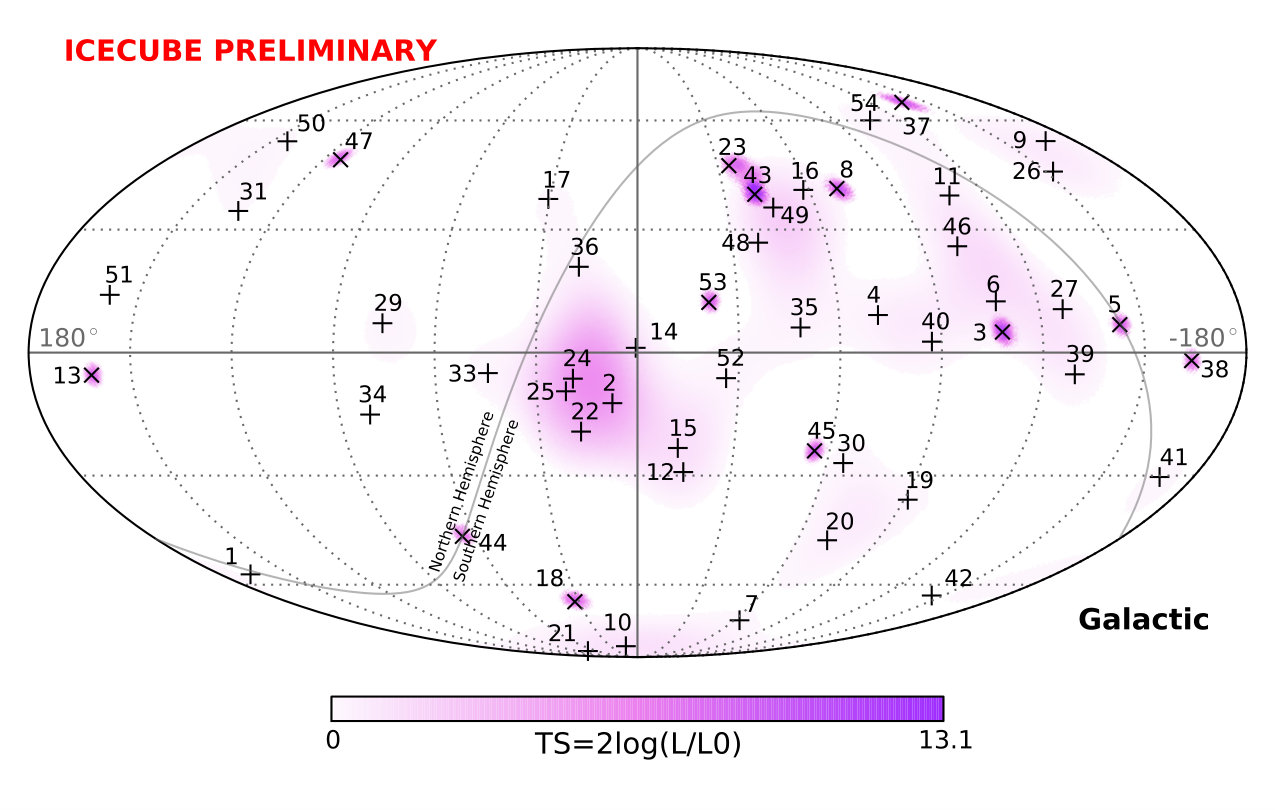 Figure 1
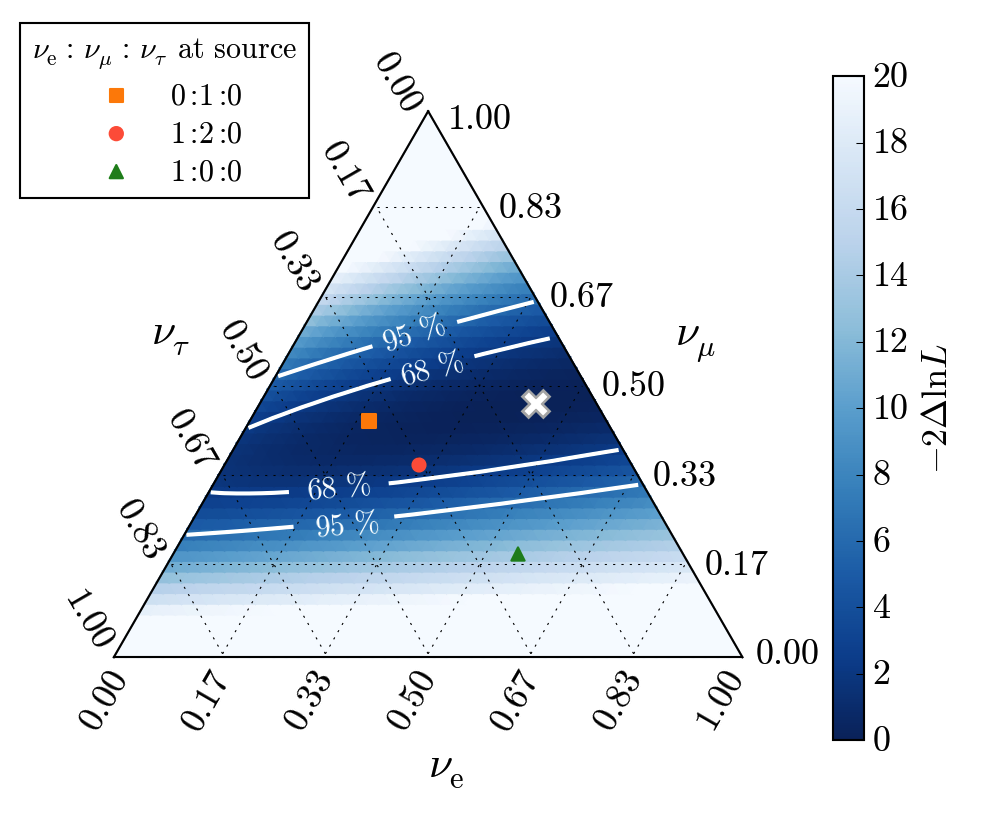 Figure 2
 Figure 3
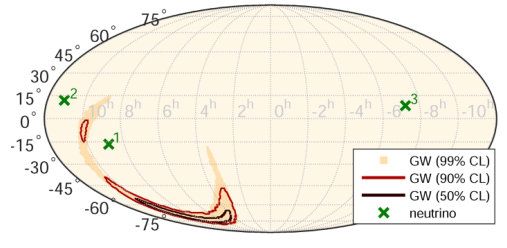 Figure 4
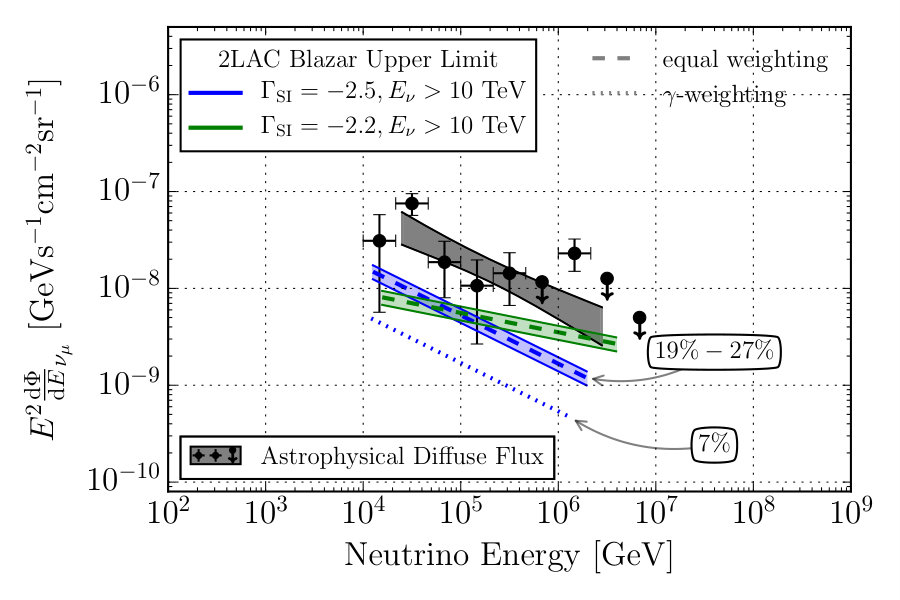 Figure 5
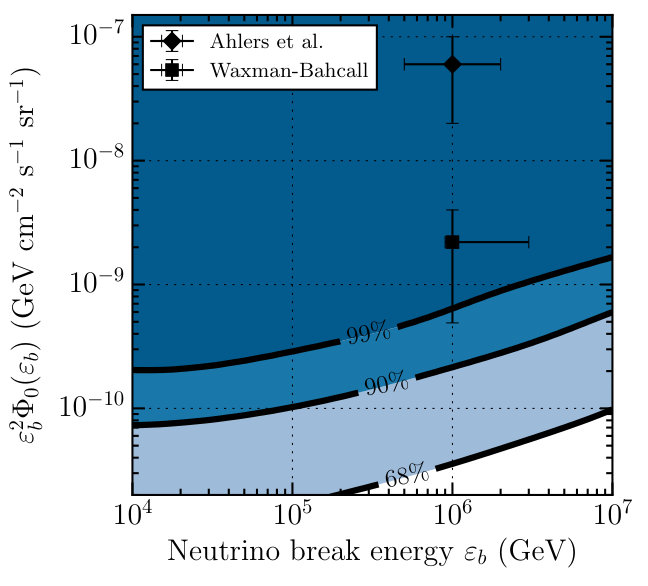 Figure 6
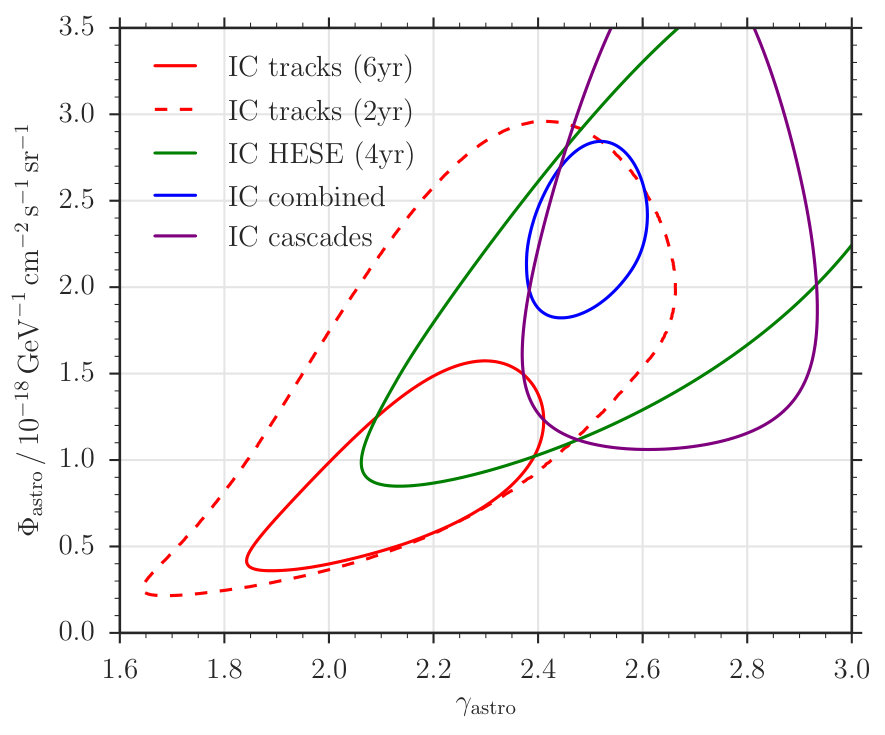 Figure 7
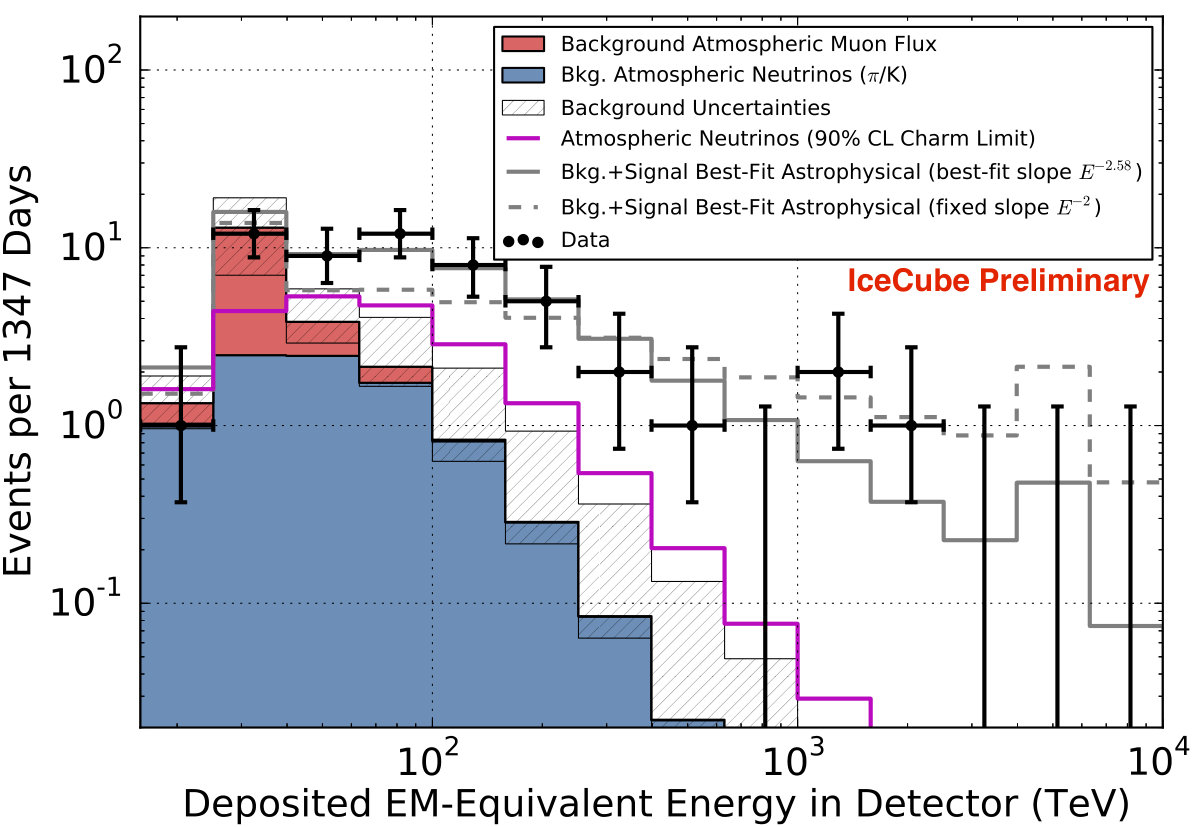 Figure 8
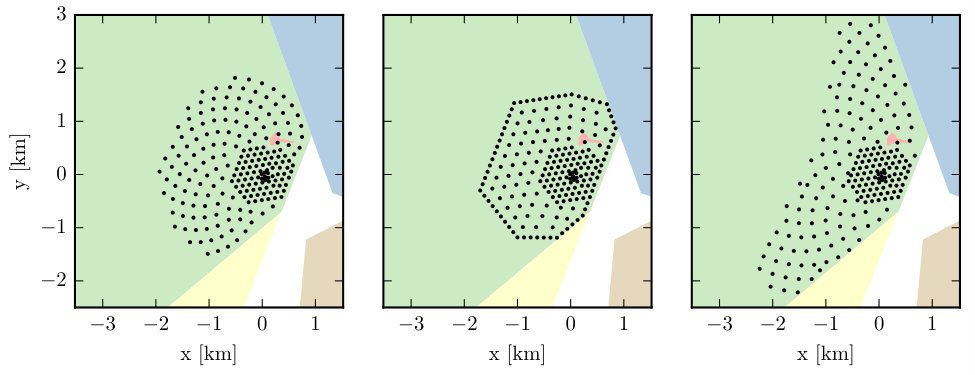 Figure 9
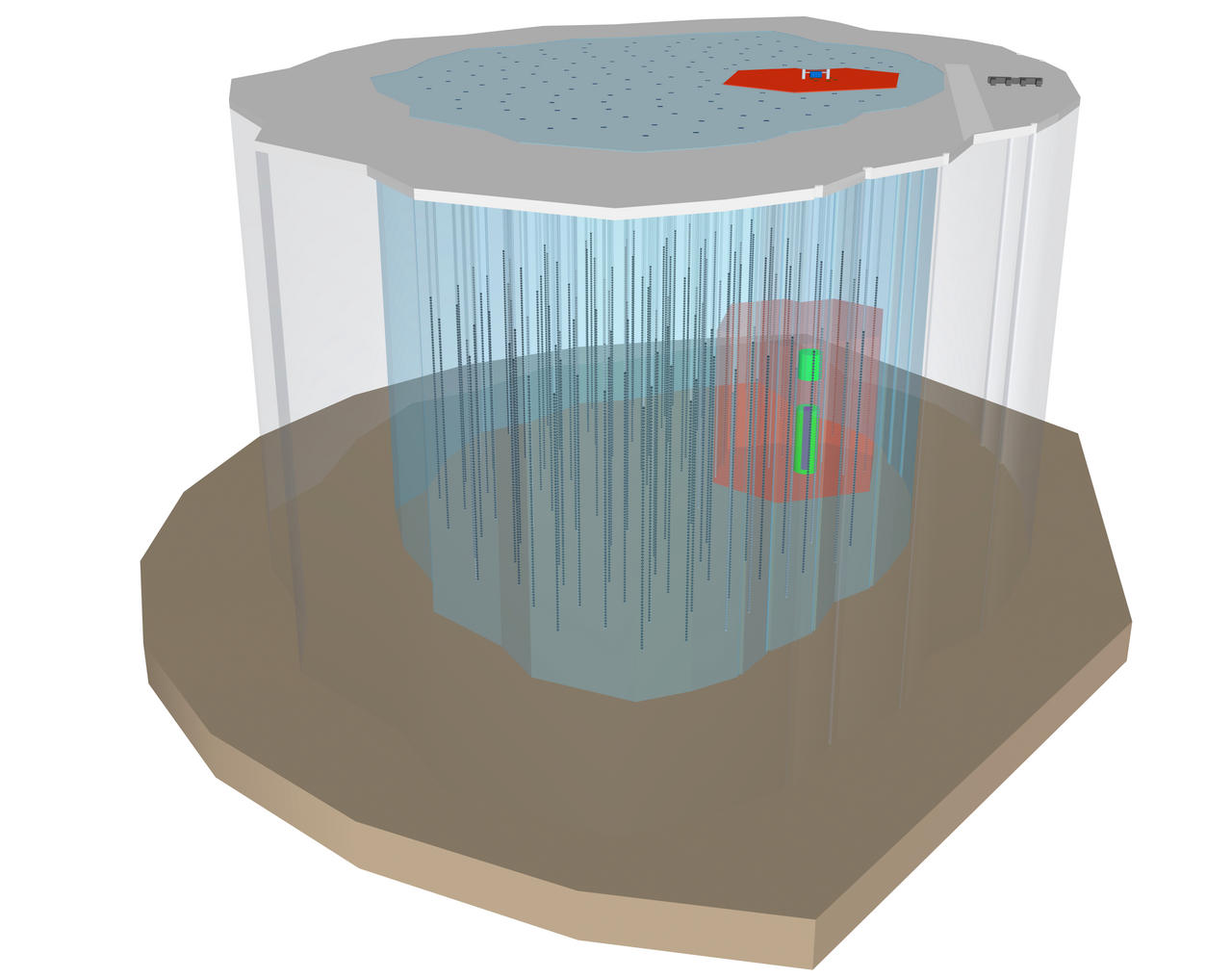 Figure 10
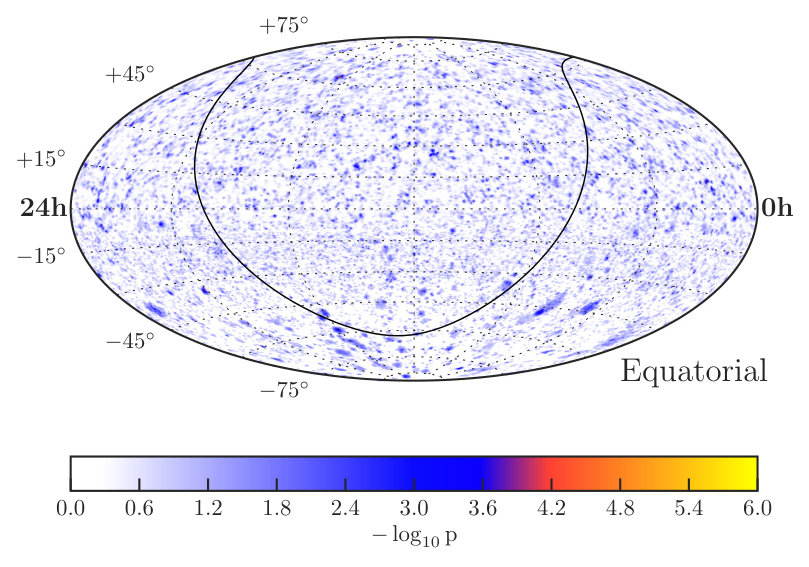 Figure 11
Peer Reviews
No public reviews on file for this paper yet. If you reviewed it on a platform where reviews are public (OpenReview, ICLR, NeurIPS, ICML), you can paste yours below so the community can read it here.
Videos
No videos yet. Explain this paper in a talk, walkthrough, or lecture? Add one.
NuPhys2015-Meagher
Neutrino Astronomy with IceCube and Beyond
Kevin J. Meagher
on behalf of the IceCube Collaboration
*Université Libre de Bruxelles, Science Faculty CP230,
B1050 Bruxelles, Belgium
*email: [email protected]
website: http://icecube.wisc.edu
The IceCube Neutrino Observatory is a cubic kilometer neutrino telescope located at the geographic South Pole. Cherenkov radiation emitted by charged secondary particles from neutrino interactions is observed by IceCube using an array of 5160 photomultiplier tubes embedded between a depth of 1.5 km to 2.5 km in the Antarctic glacial ice. The detection of astrophysical neutrinos is a primary goal of IceCube and has now been realized with the discovery of a diffuse, high-energy flux consisting of neutrino events from tens of TeV up to several PeV. Many analyses have been performed to identify the source of these neutrinos, including correlations with active galactic nuclei, gamma-ray bursts, and the Galactic plane. IceCube also conducts multi-messenger campaigns to alert other observatories of possible neutrino transients in real time. However, the source of these neutrinos remains elusive as no corresponding electromagnetic counterparts have been identified. This proceeding will give an overview of the detection principles of IceCube, the properties of the observed astrophysical neutrinos, the search for corresponding sources (including real-time searches), and plans for a next-generation neutrino detector, IceCube–Gen2.
PRESENTED AT
NuPhys2016, Prospects in Neutrino Physics
Barbican Centre, London, UK, December 12–14, 2016
1 Neutrino Astronomy
From radio waves to gamma rays, electromagnetic radiation has been the source of a wealth of information about the universe. Unfortunately, photons with energies above 1 TeV are absorbed by extra-galactic background light, making it difficult to detect sources beyond a redshift of 0.1 above this energy[1]. In order to study the universe above this cut-off we need to find an alternative to photons. Cosmic rays tell us that charged particles are accelerated by astrophysical objects up to at least eV, but since charged particles are deflected by magnetic fields, the origin of these particles still remains unclear. Since, aside from gravity, neutrinos interact solely via the weak force, they can traverse the universe completely unimpeded and therefore hold the potential to open a new window on astronomy.
2 The IceCube Neutrino Observatory
Neutrinos’ small cross section, the same property that allows them to arrive at Earth unimpeded, also makes them difficult to detect. Observing neutrinos requires a large target mass to make up for the small cross section. In addition, the medium must be transparent in order to observe the light from the secondary particles. The IceCube Neutrino Observatory was built in the Antarctic ice sheet at the South Pole Station.
The fundamental unit of IceCube is the digital optical module (DOM). Each DOM contains a 25 cm photomultiplier tube, high voltage power supply, and digitization and communication electronics. DOMs are aligned on vertical structures called strings, with 60 DOMs per string spaced vertically by 17 m between a depth of 1450 m and 2450 m. There are 86 strings for a total of 5160 DOMs. The strings form a triangular grid with a spacing of 125 m, except for 8 strings arrayed in the center to form a denser formation referred to as DeepCore.
There are three main event selections used for neutrino astronomy: muon tracks, cascades, and high energy starting-events (HESE). Muon tracks have good angular resolution, for energies above 10 TeV, but not all of the energy is deposited in the detector and so have comparatively poor energy resolution. With cascades, all of the energy is deposited near the vertex. These events have much better energy resolution than tracks, but at the cost of relatively poor angular resolution. The HESE selection observes events which start in the detector volume, by only selecting events where the initial light occurs on DOMs within the interior of the detector, and vetoing events which start near the edge. Although the events in this selection are either tracks or cascades, from an analysis point of view HESE is a separate event selection.
3 Observation of High-Energy Neutrinos
Using the HESE sample, an analysis performed on 4 years of data found 54 neutrino candidate events with a statistical significance of [2]. In order to describe the data, a maximum likelihood, forward-folding fit of all components (atmospheric muons, atmospheric neutrinos from /K decay, atmospheric neutrinos from charm decay and an astrophysical flux assuming a 1:1:1 flavor ratio) was performed on the energy spectrum. The result of the fit, shown in Figure 1 (left), is . A maximum likelihood clustering method was used to look for any neutrino point sources in this sample. This test, shown in Figure 1 (right), did not yield significant evidence of clustering, with p-values of 44% and 58% for the shower-only and the all-events tests, respectively. A test for Galactic plane clustering was also performed. Assuming a Galactic width of around the plane resulted in a p-value of 7% and a variable Galactic width scan resulted in a p-value 2.5% (both p-values are trials corrected.)
A separate diffuse spectral analysis was performed using six years of data with the muon track event sample [3]. At neutrino interaction energies between 191 TeV and 8.3 PeV an astrophysical contribution was observed with a significance of . As shown in Figure 2 (left), the data were well described by a power law: .
The ratio of different neutrino flavors can give important clues to acceleration mechanisms of the source. In [3] we also performed a measurement of the flavor composition of the astrophysical neutrino flux, in which the normalizations of all three flavors were allowed to vary independently. The results, shown in Figure 2 (right), are consistent with pion-decay sources and muon-damped sources but disfavor neutron-beam sources with a significance of .
In the cascade event sample, in an analysis of the first two years of data a total of 172 events were observed with energies between 10 TeV and 1 PeV [5]. The astrophysical component is also well described by a power law: . The background-only hypothesis is rejected with a significance of .
The results of these analyses along with the results of three other diffuse analyses were combined into a global spectral analysis [3]. Assuming the astrophysical neutrino flux to be isotropic and to consist of equal flavors at Earth, the all-flavor spectrum with neutrino energies between 25 TeV and 2.8 PeV is well described by an unbroken power law with a best-fit spectral index and a flux at 100 TeV of . Note that this flux is the sum of all three neutrino flavors, wheras the numbers quoted earlier in this section were per flavor fluxes. The results of the combined sample spectral fit along with the previously mentioned analyses are shown in Figure 3. Slight tension is seen between the different analyses. Since the analyses which are more sensitive to higher energy neutrinos also have a greater sensitivity in the Northern Hemisphere, this tension may indicate either a spectral hardening at high energies or that the sources in the Northern Hemisphere have a harder spectrum than their southern counterparts.
4 The Search for Astrophysical Sources
To identify the source of the neutrino populations described in the previous section, many analyses have been performed. To date none of them has identified any association with known or unknown astrophysical sources. In seven years of data, from 2008–2015, using an unbinned maximum-likelihood search for local clustering in the muon sample, no significant clustering of neutrinos above background expectation was observed [6]. The map generated by this analysis is shown in Figure 4 (left). The negative result of this analysis excludes point sources with a flux above .
Blazars have been proposed as a possible source of high-energy neutrinos[7]. To investigate this a stacked analysis was performed with blazars from the 2nd Fermi-LAT AGN catalog (2LAC) [8]. No significant excess is observed, constraining the total population of 2LAC blazars to contributing 27% or less of the observed astrophysical neutrino flux, assuming equipartition of neutrino flavors at Earth and the currently favored power law spectral index for the neutrino flux of 2.5. As shown in Figure 4 (right), the 2LAC blazars (and sub-populations) are excluded as being the dominant sources of the observed neutrinos up to a spectral index as hard as 2.2.
Another astrophysical source considered to be a likely source of neutrinos are gamma-ray bursts (GRBs). An analysis incorporating 5 years of muon track events and 1172 observed GRBs found no correlation more significant than expected from background [13]. The limits on the neutrino flux set by this analysis (see Figure 5,left) disfavor much of the parameter space for the theories on neutrino emission from GRBs. This analysis finds that no more than 1% of the observed astrophysical neutrino flux consists of prompt emission from GRBs that are observable by existing satellites.
Another considered source was the first gravitational wave transient GW150914 observed by the Advanced LIGO detectors on Sept. 14th, 2015. The analysis was performed by looking for neutrino candidates within 500 s of the gravitational wave event. As shown in Figure 5 (right) and consistent with background, three events were observed within this time window, none of them within the region triangulated by LIGO [14].
In order to alert other astronomers about possible neutrino transient events, the IceCube collaboration has developed several real-time alert programs. The neutrino data are processed in real time at the South Pole Station and the most interesting neutrino events are selected to trigger observations with optical and X-ray telescopes aiming for the detection of an electromagnetic counterpart such as a GRB afterglow or a rising supernova light curve. The program is capable of triggering follow-up observations in less than a minute. The optical follow-up program [15] has been sending such alerts to optical telescopes since 2008 and to X-ray telescopes since 2009. The gamma-ray follow-up program has been running since 2012 [16], sending triggers to the MAGIC and VERITAS gamma-ray telescopes. This program focuses on blazar flares by monitoring a predefined list of known blazars and looks for excesses of neutrino events on timescales of up to three weeks.
5 Future Upgrade
Although IceCube has positively identified neutrinos of astrophysical origin, the ability of IceCube to be an efficient tool for neutrino astronomy over the next decade is limited by the modest number of cosmic neutrinos measured, even with a cubic kilometer array. Design studies to increase IceCube’s sensitivity with additional strings outside the current volume are currently underway [17]. This section will describe this effort, referred to as the IceCube–Gen2 High-Energy Array. The design, shown in Figure 6, seeks to increase the instrumented volume to . The high-energy array is proposed to complement the high-density, low-energy sub-array known as PINGU [18]. PINGU targets precision measurements of the atmospheric neutrino oscillation parameters and the determination of the neutrino mass hierarchy.
The optical properties of deep Antarctic ice allow string spacing to be increased to 300 m for energies exceeding 10 TeV. Since angular resolution for muon tracks is proportional to the length of the lever arm, by increasing the size of the detector, the angular resolution will also be improved, further improving point-source sensitivity. Studies to find the optimal geometry and string spacing are currently underway. Some of the geometries can be seen in Figure 7. All of the designs add 120 strings to the detector within the region of the South Pole station designated as the Dark Sector. Uniform string spacings of 200 m, 240 m, and 300 m, which instrument volumes of , , and respectively, have been studied. Alternative array designs are also under study. In addition, IceCube–Gen2’s reach may further be enhanced by exploiting the air-shower detection and vetoing capabilities of an extended surface array, and by including an extended radio array to achieve improved sensitivity to neutrinos in the – eV energy range, including cosmogenic neutrinos.
While the design details remain to be finalized, IceCube–Gen2 will reveal an unobstructed view of the universe at PeV energies where most of the universe is opaque to high-energy photons. It will operate simultaneously with the next generation of electromagnetic and gravitational wave detectors, allowing for more multimessenger analyses. With its unprecedented sensitivity and improved angular resolution, this observatory will enable detailed spectral studies as well as potential point source detections and other new discoveries.
The reference list from the paper itself. Each links out to its DOI / PubMed record.
- 1[1] E. Dweka & F. Krennric, Astropart. Phys. 43, 112 (2013). ar Xiv:1209.4661 .
- 2[2] M. G. Aartsen et al. Po S(ICRC 2015)1081 (2015). ar Xiv:1510.05223 .
- 3[3] M. G. Aartsen et al. , Ap J 833, 3 (2016). ar Xiv:1607.08006 .
- 4[4] R. Enberg et al. PRD 78, 043005 (2008). ar Xiv:0806.0418 .
- 5[5] M. G. Aartsen et al. Po S(ICRC 2015)1109 (2015). ar Xiv:1510.05223 .
- 6[6] M. G. Aartsen et al. Ap J 835, 151 (2017). ar Xiv:1609.04981 .
- 7[7] F. W. Stecker et al. , PRL , 66, 2697 (1991). K. Mannheim, Ap P 3, 295 (1995).
- 8[8] M. G. Aartsen et al. Ap J 835, 45 (2017). ar Xiv:1611.03874 .