Resonant inelastic x-ray scattering operators for $t_{2g}$ orbital systems
B. J. Kim, Giniyat Khaliullin

TL;DR
This paper derives general RIXS operators for $t_{2g}$ orbital systems, linking them to spin and orbital moments, and applies the theory to spin-orbit coupled materials like iridates and ruthenates.
Contribution
It provides a theoretical framework for RIXS operators in $t_{2g}$ systems, including mapping onto pseudospins for spin-orbit entangled states, especially relevant for 4d and 5d compounds.
Findings
Derived RIXS operators in terms of spin and orbital angular momenta.
Mapped operators onto pseudospins for spin-orbit entangled states.
Discussed applications to iridates and ruthenates with $d^4$ ions.
Abstract
We derive general expressions for resonant inelastic x-ray scattering (RIXS) operators for orbital systems, which exhibit a rich array of unconventional magnetism arising from unquenched orbital moments. Within the fast collision approximation, which is valid especially for 4 and 5 transition metal compounds with short core-hole lifetimes, the RIXS operators are expressed in terms of total spin and orbital angular momenta of the constituent ions. We then map these operators onto pseudospins that represent spin-orbit entangled magnetic moments in systems with strong spin-orbit coupling. Applications of our theory to such systems as iridates and ruthenates are discussed, with a particular focus on compounds based on ions with Van Vleck-type nonmagnetic ground state.
Click any figure to enlarge with its caption.
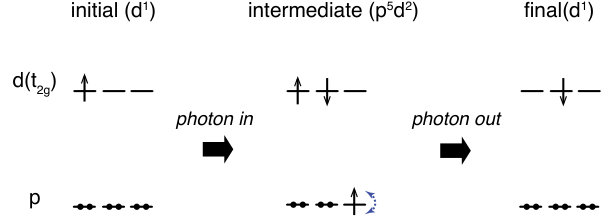 Figure 1
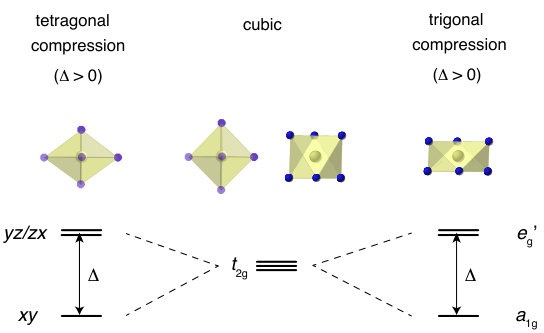 Figure 2
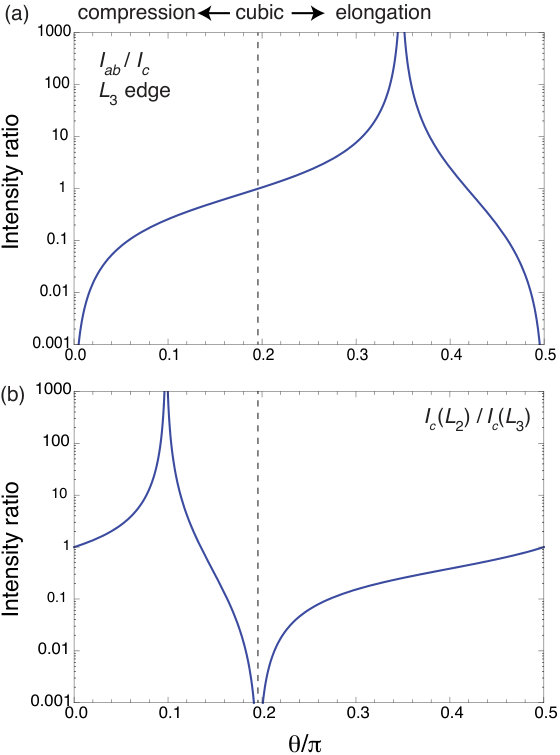 Figure 3
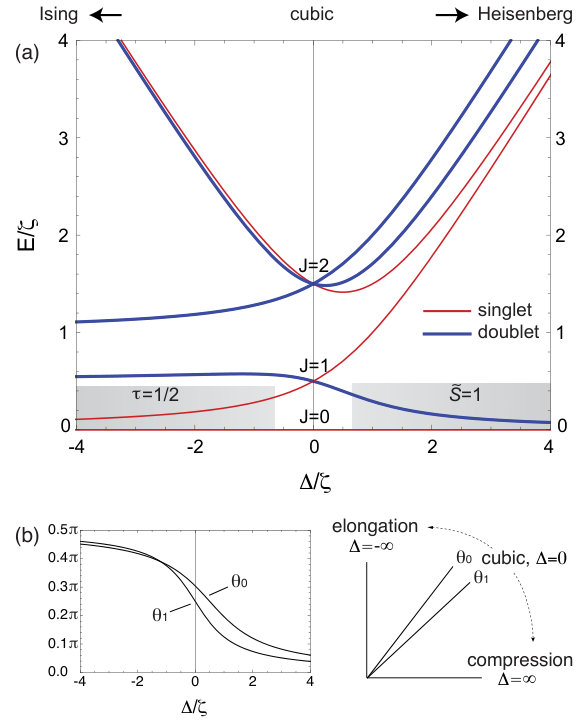 Figure 4
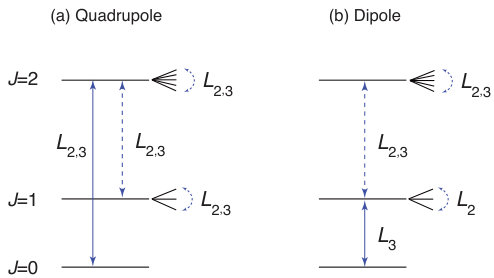 Figure 5
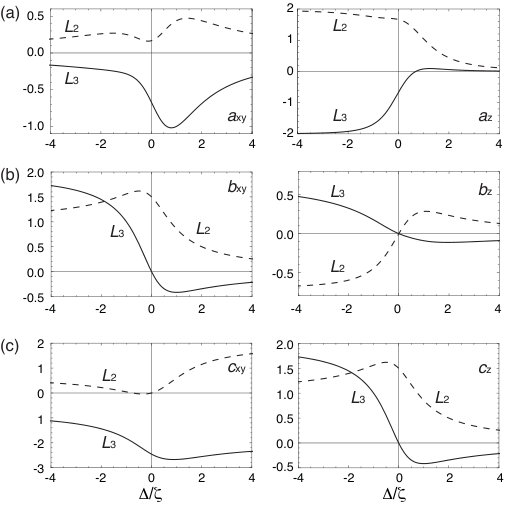 Figure 6
| (quadrupole) | edge | edge |
| (quadrupole) | edge | edge |
| (magnetic) | edge | edge |
| , | ||
| edge | cubic | edge | cubic | |
| 1/6 | ||||
| 5/3 | ||||
| 0 | 3/2 | |||
| 0 | 0 | |||
| 0 | ||||
| 0 | 3/2 |
Peer Reviews
No public reviews on file for this paper yet. If you reviewed it on a platform where reviews are public (OpenReview, ICLR, NeurIPS, ICML), you can paste yours below so the community can read it here.
Videos
No videos yet. Explain this paper in a talk, walkthrough, or lecture? Add one.
Resonant inelastic x-ray scattering operators for orbital
systems
B. J. Kim
Max Planck Institute for Solid State Research, Heisenbergstrasse 1, D-70569 Stuttgart, Germany
Department of Physics, Pohang University of Science and Technology, Pohang 790-784, Republic of Korea
Center for Artificial Low Dimensional Electronic Systems, Institute for Basic Science (IBS), 77 Cheongam-Ro, Pohang 790-784, Republic of Korea
Giniyat Khaliullin
Max Planck Institute for Solid State Research, Heisenbergstrasse 1, D-70569 Stuttgart, Germany
Abstract
We derive general expressions for resonant inelastic x-ray scattering (RIXS) operators for orbital systems, which exhibit a rich array of unconventional magnetism arising from unquenched orbital moments. Within the fast collision approximation, which is valid especially for 4 and 5 transition metal compounds with short core-hole lifetimes, the RIXS operators are expressed in terms of total spin and orbital angular momenta of the constituent ions. We then map these operators onto pseudospins that represent spin-orbit entangled magnetic moments in systems with strong spin-orbit coupling. Applications of our theory to such systems as iridates and ruthenates are discussed, with a particular focus on compounds based on ions with Van Vleck-type nonmagnetic ground state.
I Introduction
Raman scattering of photons in the infrared and visible range by a quantum of magnetic excitation, or magnon, was observed and understood by the late 1960sFleury and Loudon (1968). Corresponding advances in the x-ray regimeAment et al. (2011a) have only been achieved recently thanks to advances in x-ray technologies, including intense sources from modern synchrotrons, high resolution and efficiency optics, and multi-channel detectors. X-rays can transfer momenta () of the order of reciprocal-lattice spacings, which is a significant advantage over the Raman light scattering which is virtually limited to = 0 modes.
In 2010, Braicovich et al. made the first observation of dispersive single-magnon excitations using soft x-rays (Cu edge 930 eV) on a thin film of La2CuO4 (Ref. 3), which was shortly followed by Kim et al. who used hard x-rays (Ir edge 11.2 keV) on a single crystal of Sr2IrO4 (Ref. 4). These materials, with their large magnon energy scales, have served as ideal systems to explore magnetic scattering in the early development stage of Raman x-ray scattering, which is now more commonly known as resonant inelastic x-ray scattering (RIXS). Over the past years, RIXS has rapidly become a complementary tool to inelastic neutron scattering (INS) for studies of magnetic materials, and has witnessed a dramatic enhancement in its energy resolution, heading toward sub-10 meV resolutionKim .
RIXS has broad sensitivity to charge, orbital, spin, and lattice degrees of freedom in a solid, and in general probes different quantities as compared to INS. For magnetic insulators, however, magnetic and charge scatterings can usually be separated by their different energy scales, and the spectra at energies below the charge gap are dominated by magnetic scattering. In particular, when the orbital moment can be approximated as fully quenched, as for example in =1/2 cuprates and =1 nickelates, the RIXS cross section reduces to usual spin-spin correlation functionsAment et al. (2009); Haverkort (2010).
However, many transition-metal (TM) compounds possess unquenched orbital degrees of freedom active at low energiesKhaliullin (2005). For example, dispersive orbital excitations have been observed by RIXS in Mott insulating titanatesUlrich et al. (2009), vanadatesBenckiser et al. (2013), manganitesWeber et al. (2010), and iridatesKim et al. (2012a, 2014); Yuan et al. (2017), and described theoreticallyKim et al. (2012a); Ament and Khaliullin (2010); Kim et al. (2014). Nevertheless, RIXS cross sections for orbitally active systems still lack a general theoretical framework, which is particularly important for the emerging class of 4 and 5 transition-metal compounds with strong spin-orbit coupling (SOC). RIXS is particularly well matched to 5 TM compounds, because (i) the x-ray optics to implement RIXS is relatively straightforwardGog et al. (2013), (ii) wavelength at 5 TM edges (1Å) is small enough to cover many Brillouin zones (note that in RIXS there is no suppression of magnetic scattering at high due to the form factor as in INS), (iii) and thus equivalent -points can be measured in different scattering geometries, allowing differentiation among modes of different symmetries.
The aim of this paper is to provide general expressions for RIXS cross sections for magnetic insulators in which both spin and orbital degrees of freedom are active and reside in the orbitals of symmetry. This is the case for many compounds with TM ions in the octahedral coordination geometry, which allows the local symmetry around the TM ion to be approximated as a small deviation from the cubic limit. Within the fast collision approximationvan Veenendaal (2006), the RIXS operators are expressed in terms of total orbital and spin angular momentum operators active at low-energies. These operators depend only on the electron occupation number (; n = 1 – 5), symmetry of the probe, and the resonant TM edge ( and ).
The paper is organized as follows. In Sec. II we start with a brief review of the “direct” RIXS process sensitive to both single- and double-magnon excitations, and derive from it a set of general expressions for RIXS scattering operators. We shall not be concerned with the indirect RIXS process, which is generally insensitive to single magnon excitationsAment et al. (2011a). In Sec. III, we map the RIXS operators onto the pseudospins representing spin-orbit entangled magnetic moments in the strong SOC limit, with applications to iridates and ruthenates in mind. The effect of symmetry-lowering lattice distortions will be discussed. Sec. IV concludes the paper with a brief summary and an outlook.
II General expressions for RIXS operators
Formally, the RIXS process for magnetic excitations is identical to that of Raman scattering. It involves a radiative excitation to a set of intermediate states, and a subsequent de-excitation to a final state, which can be different from the initial state if there is a non-zero energy transfer. The initial and final states can have different spin quantum numbers () if there is sufficiently strong SOC in the intermediate states, even though dipole transitions themselves conserve . Figure 1 describes a typical RIXS process at the edges of TM compounds involving dipole transitions between core and valence states, given by the operator
[TABLE]
Here, denotes the x-ray polarization, and and annihilate an electron in the respective orbitals. The -orbitals are divided into two sets of and symmetries, and shorthand notations and = are used for the latter. Summation over spin projection is implied. In a crystal field of octahedral symmetry, the and levels split by a large energy of the order of 2-4 eV (increasing as one goes from 3 to 5 ions). Since splitting is an order of value larger than SOC constant - eV for electrons, the and orbital basis used in Eq. (1) is most natural and convenient in practice. In contrast, for the core states with strong SOC, a total angular momentum representation will be used in calculations.
Because the intermediate states are not detected, scattering amplitudes through all possible intermediate states () add up coherently weighted by their different energies (). Thus, the RIXS operator is expressed as
[TABLE]
where and denote the incident x-ray energy and lifetime (full width half maximum) of the core hole, respectively. The scattering amplitude is maximized when , which defines the resonant condition.
Since the energy separation between the and edges of 4 (5) TM ions are of the order 100 eV (1 keV), much larger than , resonances at the two edges can be taken as two separate RIXS processes to an excellent approximation. Thus, {} is divided into two subsets according to the core-hole total angular momentum , {} and {}, leading to two distinct RIXS operators for the two resonant edges, and respectively.
The complex time dynamics of the intermediate states makes the RIXS process hard to analyze microscopically. However, as far as one is concerned with the low-energy excitations in Mott insulators, the problem of the fast-evolving intermediate states can be disentangled and cast in the form of frequency independent constantsAment and Khaliullin (2010); Haverkort (2010); Savary and Senthil . This results in an effective RIXS operator formulated in terms of low-energy spin and orbital degrees of freedom.
Although this “fast collision” approximation may be questionable for 3 TM compounds with relatively shallow core levels, especially for doped systems where d-electron time scales become comparable to that of the intermediate statesBenjamin et al. (2014), it is well justified for 4 and 5 TM compounds with typically of the order of several eV (Ref. 19), i.e. much larger than spin-orbital energy scales in Mott insulators.
Within this approach, the RIXS operator is approximated as . Note that depends on two photon polarizations, (incoming) and (outgoing), the product of which can be decomposed into symmetric and antisymmetric combinations. As a result, operator is decomposed as
[TABLE]
where and describe the quadrupolar and dipolar RIXS channels, respectively. can further be decomposed into diagonal and off-diagonal components, which couple to photon polarizations as:
[TABLE]
To obtain explicit formulae for the quadrupolar tensor and the magnetic vector operators in the above equations, one has to (i) eliminate the core -holes in the product , and (ii) express transitions within the -shell in terms of total spin and effective orbital angular momenta of multi-electron configuration. While the step (i) is trivial (projecting states onto and manifolds, separating and scattering channels), the step (ii) deserves more explanations as follows.
First, while the above equations are completely general (provided that “fast collision” picture is valid), here we confine ourselves to systems based on -ions with . Under strong octahedral field , the dominant electron configuration is then , with only small admixture of higher-lying states due to SOC, covalency, etc.Thornley (1968). This admixture results in corrections of the order of which we neglect in our calculations of matrix elements. Second, we focus on low-energy collective excitations within the manifold, leaving aside high-energy ( 2-4 eV) local transitions from to empty levels (which are observable both in and edgesDi Matteo and Norman (2016) but not of interest in the present context). In technical terms, the above conditions imply that the dipolar transitions to states in Eq. (1) can be safely neglected, leaving us with the RIXS processes operating within the spin-orbital subspace alone. Finally, we assume that Hund’s coupling is strong enough to form a maximal spin allowed within the configuration (i.e. =1/2 for =1 and 5, =1 for =2 and 4, and =3/2 for =3). Except for the pure-spin = 3 case, there remains three-fold orbital degeneracy of multi-electron configuration which is conveniently described by an effective orbital moment (Ref. 22). A meaning of this mapping is that an octahedral crystal field separates the initially large Hilbert space of configuration into two subsets split by large that much exceeds SOC, noncubic crystal fields, etc. As far as one is interested in low-energy physics within the sector, the physical observables can be then concisely expressed via effective operator. In the context of RIXS problem, the task in step (ii) above is then to express various bilinear forms , etc… (that appear in the product of ) in terms of total and effective momenta. The resulting RIXS operators cover all the magnetic and quadrupole transitions within levels of configuration split by SOC and noncubic crystal fields.
After somewhat tedious but straightforward calculations, the and operators listed in Table I are obtained. This is the central result of this paper, which is used in the following sections.
We make few remarks on the RIXS operators. First, because the resonances at the and edges involve different intermediate states, the corresponding operators are different from each other. In particular in the magnetic scattering channel, they both probe some combinations of and , which are in general not parallel to the total magnetic moment = 2 (minus sign is due to the effective orbital angular momentum of orbitalsAbr ). This is made explicit by denoting the RIXS operator in the magnetic channel by “” to distinguish it from . Thus, RIXS and INS in general measure two different quantities even in the magnetic channel unless is fully quenched. It is explicitly confirmed that in the case of systems with fully quenched , the RIXS operators reduce to pure spin operators. Second, the ’s for the and edges add up to (times some constant multiplication factor), which is due to a well-known optical sum rule often used in x-ray magnetic circular dichroism studiesThole et al. (1992). Similarly, the operators for and sum up to a pure orbital quadrupoles of corresponding symmetries. This is because summing up the and edge operators is equivalent to neglecting SOC in the core-hole level, and no spin flips are then possible in the RIXS process. Third, electron-hole conjugation results (e.g. ) in the same operators with an overall minus sign for the quadrupole operators, which is not a priori obvious because of their different intermediate multiplet structures.
As a side remark, we note that if one tries to deduce the diagonal operators from the off-diagonal operators (or vice versa) through symmetry considerations (e.g. and - are related to each other by rotation around -axis), wrong results are obtained with an overall minus sign; note that and in Eq. (4) come with different signs. In other words, these operators do not rotate like vectors or dyadics under an arbitrary rotation, because a subsystem has at most the cubic symmetry.
In terms of these operators, RIXS cross section in quadrupole and magnetic channels is expressed as
[TABLE]
Because it is usually difficult to measure x-ray intensities in an absolute unit unlike in INS, the proportionality constant is unimportant.
III Mapping onto pseudospins
The RIXS operators we have derived can be applied to any system with electron configuration (). For systems with strong SOC (“strong” implies that SOC dominates over non-cubic crystal fields and thus orbital moment remains unquenched), it is more useful to express these operators in terms of pseudospin that spans the low-energy manifold of interest. In this section, we provide specific examples of such mappings for and configurations, which are particularly relevant to ruthenates and iridates.
III.1 electronic configuration
The ground state of TM ions with configuration in an octahedral crystal field is a Kramers doublet, stabilized by spin-orbit coupling. The case is relevant to compounds of Ir4+, Rh4+, Co4+, Ru3+, Os3+, etc., ions, and their magnetic properties can be described in terms of pseudospin =1/2 Abr ; Khaliullin et al. (2004); Khaliullin (2005); Kim et al. (2008); Jackeli and Khaliullin (2009); Kim et al. (2009) (often referred to as = 1/2). The wave functions, denoted as and respectively, can be written as
[TABLE]
in the basis with = and = ( . The quantization axis is along the axis of tetragonal distortion. From these expressions, it is easy to see that the wave functions in the limiting cases of () correspond to infinite compression (elongation) of the ligand octahedron (Fig. 2). In general, the angle parametrizes the distortion through = , where and denote tetragonal crystal field splitting and SOC, respectively. For example, = in the cubic limit where = 0, and in the limit the doublet reduces to pure =1/2 states.
Projecting the magnetic operators from Table I onto pseudospin doublet, one finds that
[TABLE]
with the following coefficients
[TABLE]
for the edge, and
[TABLE]
for the edge. Note that in the cubic limit (), Eq. (13) gives , so magnetic scattering at the edge vanishes for all polarizationsAment et al. (2011b); Di Matteo and Norman (2016).
At the edge, becomes isotropic (==) in the cubic limit (Fig. 3a) and thus there is a one-to-one correspondence between the =1/2 dynamics measured by RIXS and =1/2 dynamics measured by INS, which is behind the surprising similarity between the RIXS spectra of Sr2IrO4 (Ref. 4) and INS spectra of La2CuO4 (Ref. 3), which are both nearly isotropic (Heisenberg) antiferromagnets. Away from the cubic limit, RIXS sees different responses for the -plane and -axial spin components.
At the edge, on the other hand, is insensitive to the in-plane spin components. As noted beforeChapon and Lovesey (2011); Moretti Sala et al. (2014), this means that resonant x-ray diffraction is blind to magnetic moments lying in the plane regardless of the degree of tetragonal distortion. However, has a high sensitivity to tetragonal distortion through , which is identically zero in the cubic limit but rapidly grows away from it. Thus, for systems with in-plane moments such as Sr2IrO4, the proximity to the cubic limit can be measured through the dynamic out-of-plane fluctuations. For systems with c-axis moments, such as Sr3Ir2O7 (Ref. 31; 32; 33), the ratio between the magnetic Bragg peak intensities measured at and edges are a direct measure of the distortion of the wave functions away from the cubic limit (Fig. 3b).
We note that the above discussions also hold for systems with trigonal distortion () with the redefinition of the quantized along the trigonal axis. The corresponding RIXS operator and explicit expressions for the coefficients in the trigonal case can be found in Ref. 34. This is applicable to systems such as honeycomb iridates A2IrO2 (A=Li,Na). Na2IrO3 is known to have a collinear zig-zag magnetic structureChoi et al. (2012) with the moment not along the trigonal axesChun et al. (2015). We emphasize again that is not parallel to unless they are both along or perpendicular to the trigonal axis, and the relation between them is a function of trigonal distortionChaloupka and Khaliullin (2016). Thus, an independent measurement of the moment direction through INS can determine the trigonal distortion through its comparison to the angle measured by RIXS.
Finally, the quadrupolar operators vanish identically when projected to the doublet regardless of distortions, since (pseudo)spin-1/2 cannot form a quadrupolar moment. The quadrupolar (or higher-multipole) scattering is of course symmetry allowed even in the spin-1/2 case, but the corresponding RIXS operators should involve at least two neighboring spins in the scattering process. Such two-site terms are always present in the RIXS operator expansionAment and Khaliullin (2010), but they are in general weaker and are neglected in the present single-ion, local approximation.
III.2 electronic configuration
The case is relevant to compounds of Ru4+, Os4+, Ir5+, etc., ions in low-spin state with configuration. The SOC results in a nonmagnetic ground state with total angular momentum (Ref. 22). Magnetic properties of this class of Mott insulators are governed by collective behavior of spin-orbit excitonsKhaliullin (2013), that is, Van Vleck-type magnetic transitions between ground state and excited levels, propagating via spin-orbital exchange interactions.
Figure 4(a) shows the energy level diagram of ion as a function of non-cubic crystal field . As in the case, identical results are obtained for tetragonal and trigonal distortions by a suitable redefinition of the wave functions. In the cubic limit, the manifold splits by SOC into = 0, 1, and 2 multiplets. At any values of , the levels that originate from manifold stay well above the ground state singlet. The low-energy sector in the cubic limit comprises a ground state singlet and triplet. For a non-zero , the triplet splits into a singlet and a doublet, derived from and states correspondingly, either of which merge with the = 0 singlet when . As a result, the low-energy sector contains two quasi-degenerate singlet levels at large negative , while a singlet-doublet level system well separated from other levels is formed at positive values. This suggests that the low-energy Hilbert space can be described by pseudospin at large negative , and by pseudospin at . The pseudospin-1 case, which is of particular interest in the context of Ca2RuO4Jain et al. (2017), will be discussed in detail later in this section. Here we just notice that in the limit of , orbital moment is fully quenched and the pseudospin 1 becomes identical to pure spin , whose magnetism is necessarily isotropic (Heisenberg). In contrast, component of orbital moment remains unquenched in the pseudospin limit ( ), and an Ising doublet hosting total magnetic moment with effective -factors and is formed.
We now return to the RIXS operators and calculate their matrix elements within the above single-ion levels. In general (for any ), one may represent the diagonal elements of the quadrupole tensor in terms of cubic harmonics of and symmetry:
[TABLE]
The quadrupole operator in Eq. (4) then takes the following form:
[TABLE]
where the last term represents the quadrupoles of symmetry. It follows from Table I that component is proportional to the product . For the configuration, it reads as where upper (lower) sign corresponds to the () edge (unessential constant not shown).
We first consider the RIXS matrix elements in the cubic limit. As expected, the and operators allow quadrupole and dipole transitions with = and = , respectively. Thanks to high symmetry of the -wave functions, only few transitions are allowed. The transition matrix elements in quadrupole sector are given as follows:
[TABLE]
and
[TABLE]
For the magnetic scattering operator, the matrix elements for transitions from ground state to level are concisely written as
[TABLE]
Since the ground state = 0 is a nonmagnetic singlet, the magnetism necessarily involves statesKhaliullin (2013); Meetei et al. (2015). It is interesting to note that the “excitonic” magnetismKhaliullin (2013) arising from Van Vleck-type transitions between the = 0 and = 1 manifolds can only be probed at the edge, and thus this selection rules serve as a means to differentiate between magnetic moments derived from spin-orbit excitons and that from conventional origins, e.g. = 1 moments with quenched orbital moments. We also note that transitions within the excited states are also “edge-selective”; e.g., transitions within the manifold is allowed only at the edge:
[TABLE]
These selection rules are summarized in Fig. 5. For completeness, the figure includes the allowed transitions also within the excited states (dashed lines).
Away from the ideal cubic limit, spin-orbit wave functions and hence the above selection rules are gradually modified. In the extreme cases of and , corresponding to Ising and Heisenberg limits, the RIXS operators within the respective low-energy sectors read as follows ():
[TABLE]
These expressions tell that at negative values, the edge is still dominant in the magnetic RIXS process, while the edge becomes of comparable strength at large . It is also noticed that the two limits have an opposite (out-of-plane versus in-plane) polarization dependences.
Having in mind the Mott insulator Ca2RuO4, which has been recently confirmedJain et al. (2017); Souliou et al. to host spin-orbit excitonic magnetismKhaliullin (2013), we now consider the case of compressive distortion () in a greater detail. Figure 4(a) shows that already at , a singlet split off from the triplet quickly goes high in energy and thus the low-energy physics can be well approximated as a three-state (singlet plus doublet) system, i.e. by an effective Jain et al. (2017); Souliou et al. . In terms of basis, the pseudospin states are expressed as
[TABLE]
where the two angles and parametrize the distortion through = )/ and = +). In the cubic limit, and /4. Figure 4(b) shows and at arbitrary values of .
Using the results of Table I for quadrupole and magnetic operators, we evaluate their matrix elements within the above manifold. The results are then expressed in terms of pseudospin operators. This gives an effective RIXS operator with
[TABLE]
The coefficients , , and are as summarized in Table II and plotted in Fig. 6. In the limit of , only is finite; all other terms vanish, while =.
As in the case of system, RIXS is sensitive to magnetic dipole moments through the operator, and relative intensities of the and edges may help to quantify the ratio. A distinct difference from the case is that RIXS is sensitive to quadrupole moments which are expressed in terms of = 1 operators in Eq. (30).
The effective = 1 RIXS operator (30-31) and its parameters in Table II should be useful for quantitative analysis of RIXS experiments in systems including Ca2RuO4, where combined action of SOC and crystal fields results in a singlet-doublet level structure as shown in Fig. 4(a). We note that Eqs. (30-31) and Table II remain valid for arbitrary values of ; however, they only concern the transitions within the singlet-doublet subsystem. At small and/or negative values, transition to the singlet derived from state become relevant and have to be included in the low-energy RIXS operator.
Magnetic order in compounds based on Van Vleck-type ions is due to Bose-Einstein condensation of the higher lying magnetic statesKhaliullin (2013), and collective excitations in the ordered state comprise, in addition to conventional magnons, the amplitude (Higgs) mode. The latter has recently been detected by neutronJain et al. (2017) and RamanSouliou et al. scattering studies, and the present work suggests that the Higgs mode can be directly accessed by the RIXS. Indeed, the first term in of Eq. (30), which is proportional to should couple to the length fluctuations of the magnetic order parameter in Ca2RuO4. These results show also that RIXS is useful for detecting a spin quadrupolar (nematic) orderPodolsky and Demler (2005) and its associated collective excitations.
IV Summary
Despite the fact that RIXS has in the recent years become a very popular tool for probing magnetism, the quantities measured by RIXS have not been known precisely particularly for 4 and 5 TM compounds, which generally have unquenched orbital moments in addition to spin moments. In this paper, we have derived general expressions for RIXS operators for orbital systems; the RIXS operators are expressed in terms of and under the fast collision approximation, which is valid for Mott insulators where spin and orbital energy scales are lower than core-hole inverse lifetimes.
In 4 and 5 TM compounds, spin and orbital moments are coupled through strong intra-ionic spin-orbit coupling, and behave as one composite object that can be represented as pseudospins in certain limits. The RIXS operators are then more concisely expressed in terms of pseudospins, which offer more insights into the physics they realize, through mapping onto spin-only Hamiltonians for which a large body of theoretical studies are available. We have discussed the cases for = 1/2 and = 1 realized in some iridates and ruthenates, respectively. For iridates, our approach makes the physical reason behind the surprising similarities in the spin excitation spectra between iridates and cuprates more transparent. For ruthenates, we have shown that RIXS is capable of probing quadrupole moments in addition to dipole moments. For systems that lack static dipole moments, RIXS thus becomes a useful tool for detecting (pseudo)spin nematic order, which for pure-spin systems has been very challenging.
The RIXS operators documented in this paper can be useful for quantitative simulations and their comparisons with experimental spectra of a broad class of TM compounds with orbital degeneracy.
Acknowledgements.
We would like to thank M. Minola for useful comments. We acknowledge support by the European Research Council under Advanced Grant 669550 (Com4Com), and by IBS-R014-A2.
The reference list from the paper itself. Each links out to its DOI / PubMed record.
- 1Fleury and Loudon (1968) P. A. Fleury and R. Loudon, Phys. Rev. 166 , 514 (1968) . · doi ↗
- 2Ament et al. (2011 a) L. J. P. Ament, M. van Veenendaal, T. P. Devereaux, J. P. Hill, and J. van den Brink, Rev. Mod. Phys. 83 , 705 (2011 a).
- 3Braicovich et al. (2010) L. Braicovich, J. van den Brink, V. Bisogni, M. M. Sala, L. J. P. Ament, N. B. Brookes, G. M. D. Luca, M. Salluzzo, T. Schmitt, V. N. Strocov, and G. Ghiringhelli, Phys. Rev. Lett. 104 , 077002 (2010).
- 4Kim et al. (2012 a) J. Kim, D. Casa, M. H. Upton, T. Gog, Y.-J. Kim, J. F. Mitchell, M. van Veenendaal, M. Daghofer, J. van den Brink, G. Khaliullin, and B. J. Kim, Phys. Rev. Lett. 108 , 177003 (2012 a) . · doi ↗
- 5(5) J. Kim, D. Casa, A. Said, B. J. Kim, E. Kasman, X. Huang, and T. Gog, unpublished.
- 6Ament et al. (2009) L. J. P. Ament, G. Ghiringhelli, M. M. Sala, L. Braicovich, and J. van den Brink, Phys. Rev. Lett. 103 , 117003 (2009) . · doi ↗
- 7Haverkort (2010) M. W. Haverkort, Phys. Rev. Lett. 105 , 167404 (2010) . · doi ↗
- 8Khaliullin (2005) G. Khaliullin, Prog. Theor. Phys. Suppl. 160 , 155 (2005).