Diagrammatic routes to nonlocal correlations beyond dynamical mean field theory
G. Rohringer, H. Hafermann, A. Toschi, A. A. Katanin, A. E. Antipov,, M. I. Katsnelson, A. I. Lichtenstein, A. N. Rubtsov, and K. Held

TL;DR
This paper reviews diagrammatic methods that extend dynamical mean field theory to include nonlocal correlations, enabling the study of long-range fluctuations and critical phenomena in strongly correlated electron systems.
Contribution
It introduces diagrammatic extensions of DMFT using local two-particle vertices to incorporate nonlocal correlations beyond local approximations.
Findings
Successfully addresses long-range charge, magnetic, and superconducting fluctuations.
Enables analysis of quantum criticality in strongly correlated systems.
Provides a framework for realistic material calculations.
Abstract
Strong electronic correlations pose one of the biggest challenges to solid state theory. We review recently developed methods that address this problem by starting with the local, eminently important correlations of dynamical mean field theory (DMFT). On top of this, non-local correlations on all length scales are generated through Feynman diagrams, with a local two-particle vertex instead of the bare Coulomb interaction as a building block. With these diagrammatic extensions of DMFT long-range charge-, magnetic-, and superconducting fluctuations as well as (quantum) criticality can be addressed in strongly correlated electron systems. We provide an overview of the successes and results achieved---hitherto mainly for model Hamiltonians---and outline future prospects for realistic material calculations.
Click any figure to enlarge with its caption.
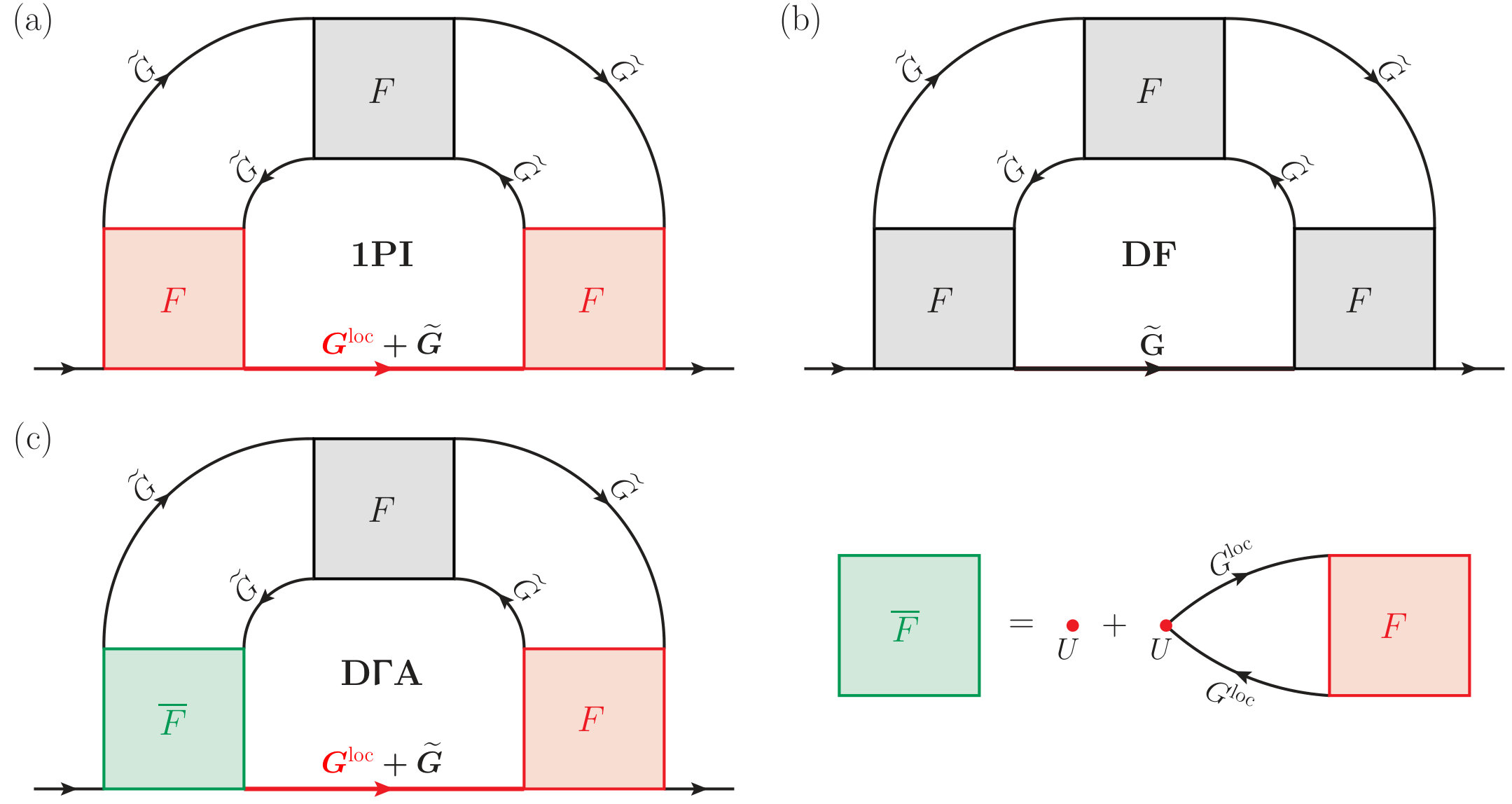 Figure 1
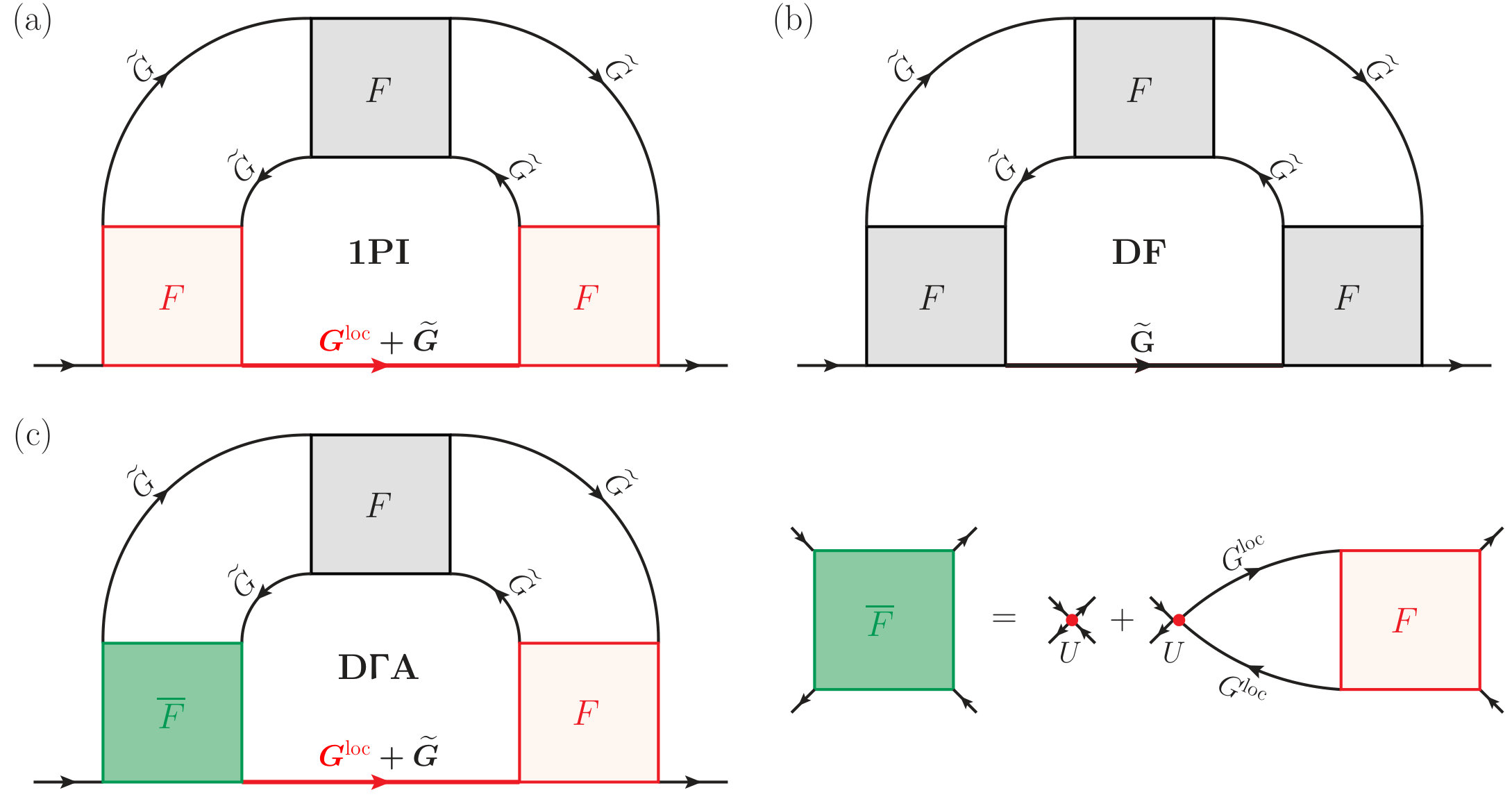 Figure 2
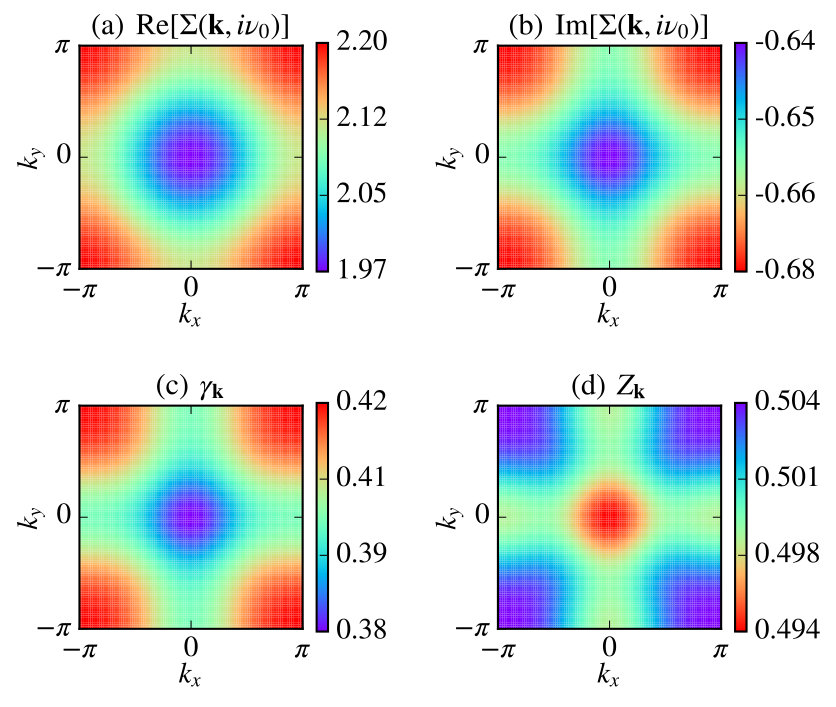 Figure 3
 Figure 4
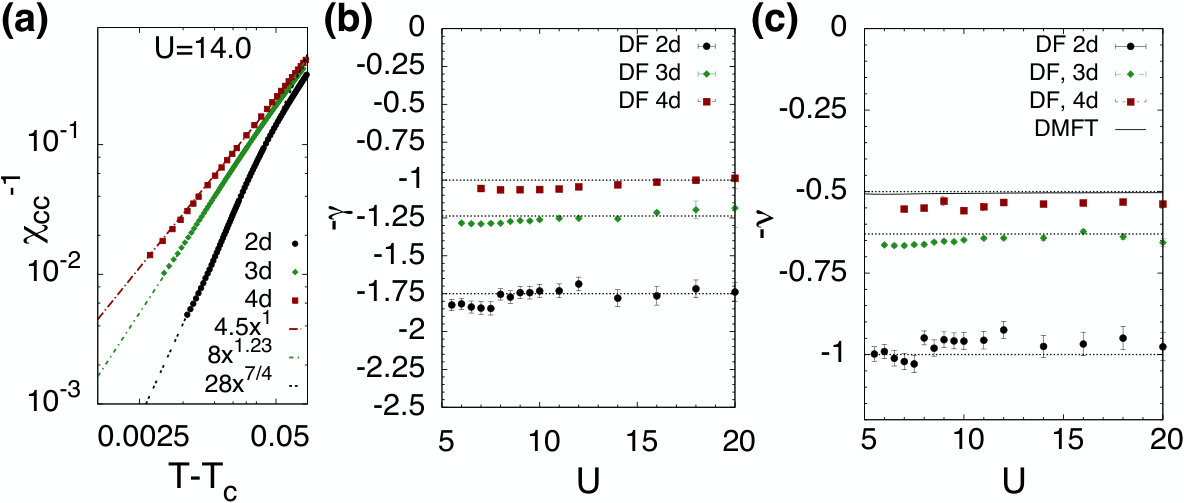 Figure 2
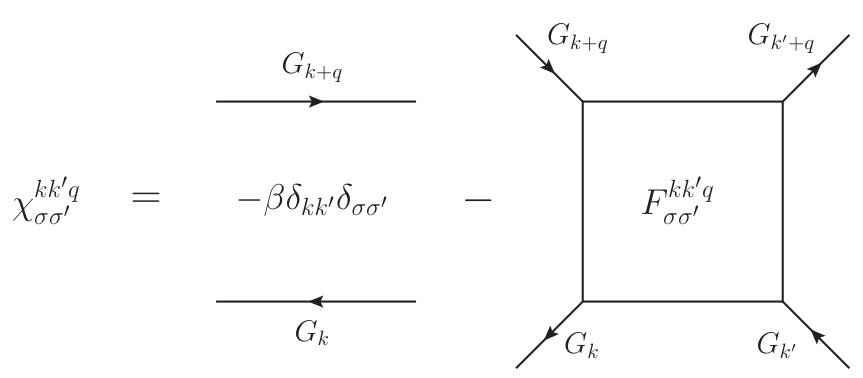 Figure 6
 Figure 7
 Figure 8
 Figure 9
 Figure 2
 Figure 11
 Figure 12
 Figure 13
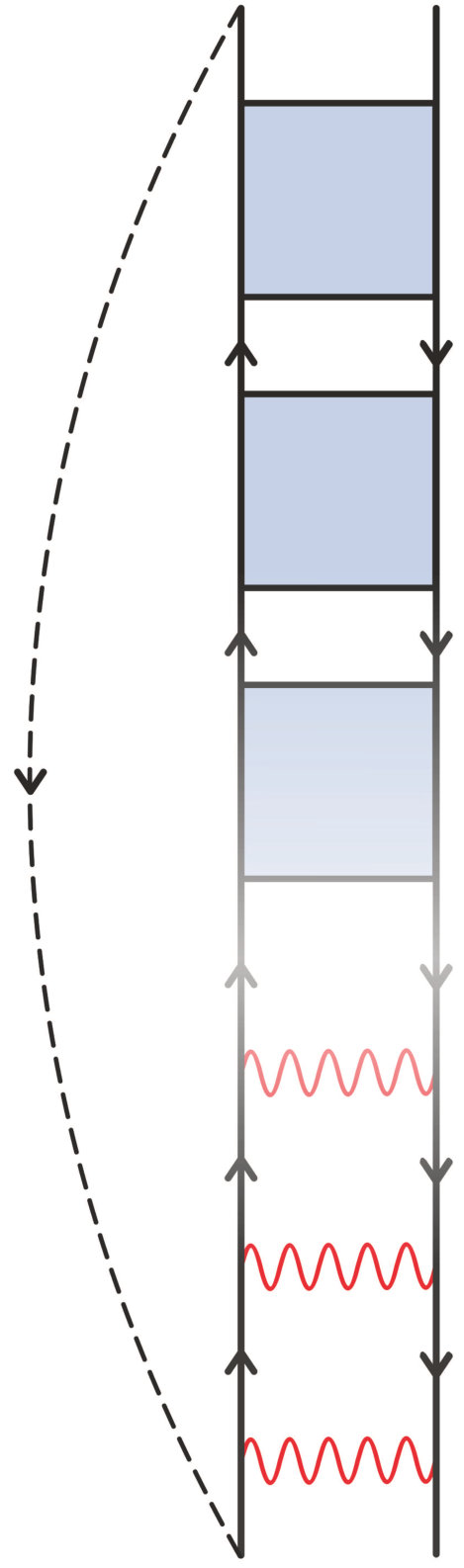 Figure 14
 Figure 15
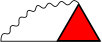 Figure 16
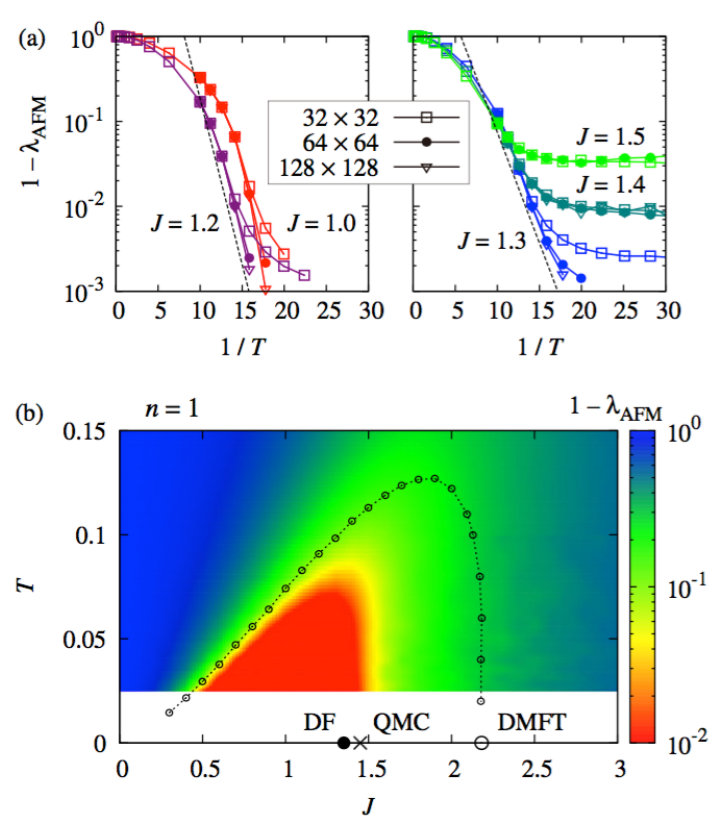 Figure 17
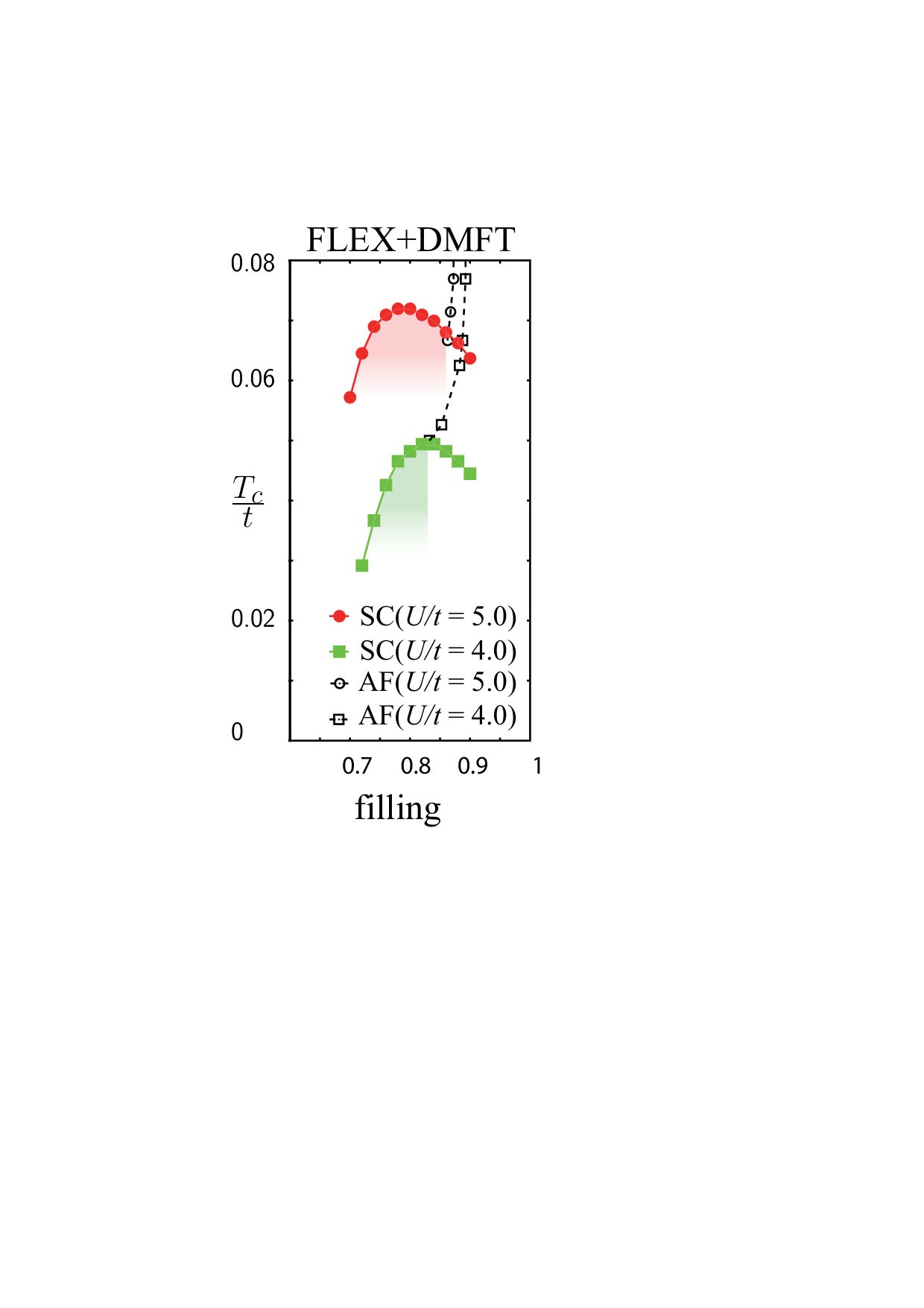 Figure 18
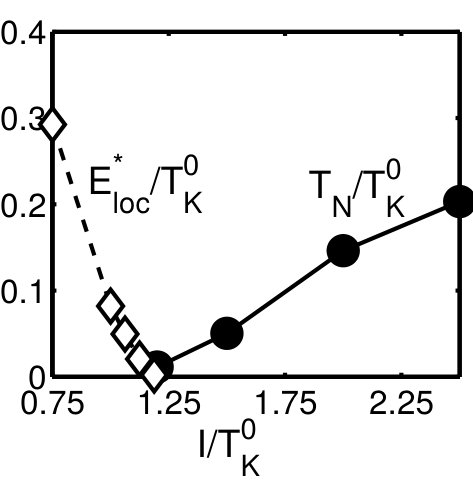 Figure 19
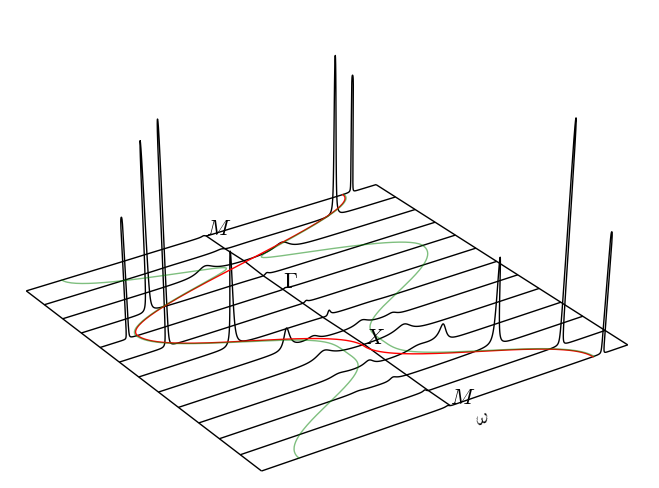 Figure 20
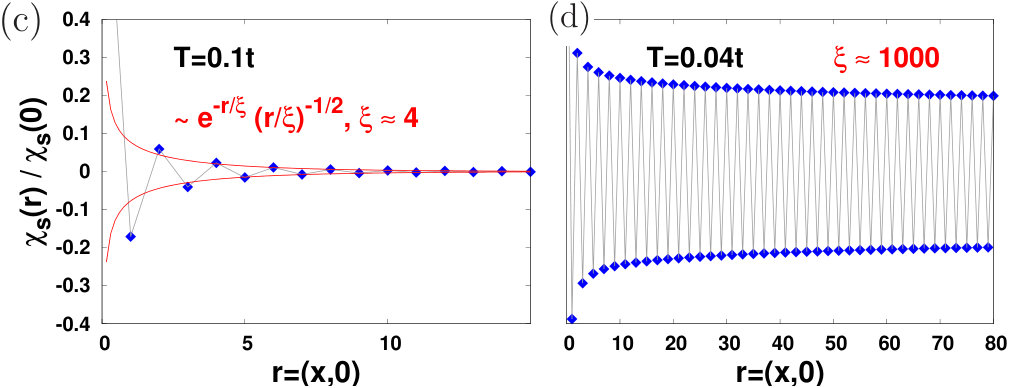 Figure 21
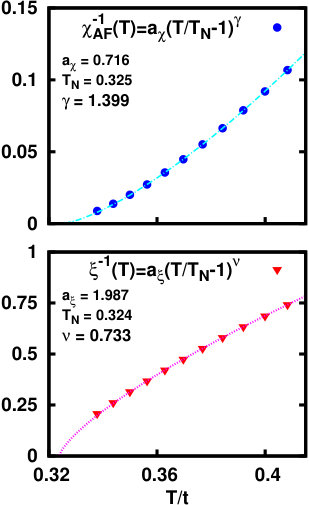 Figure 22
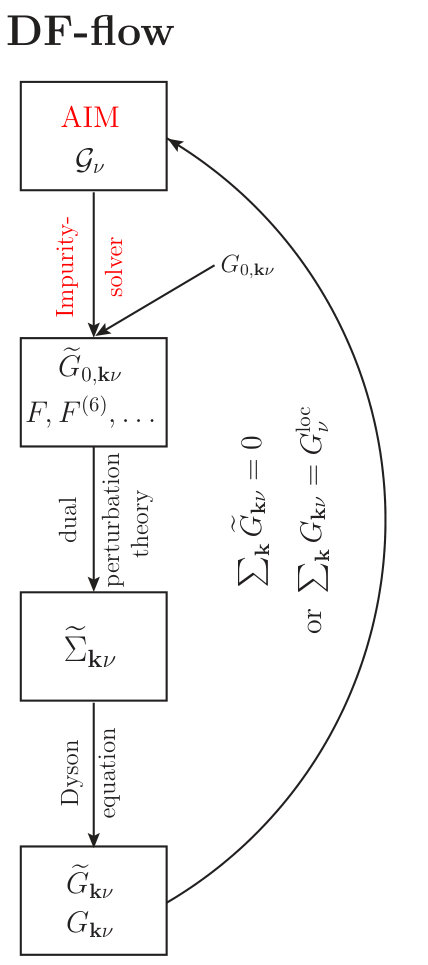 Figure 23
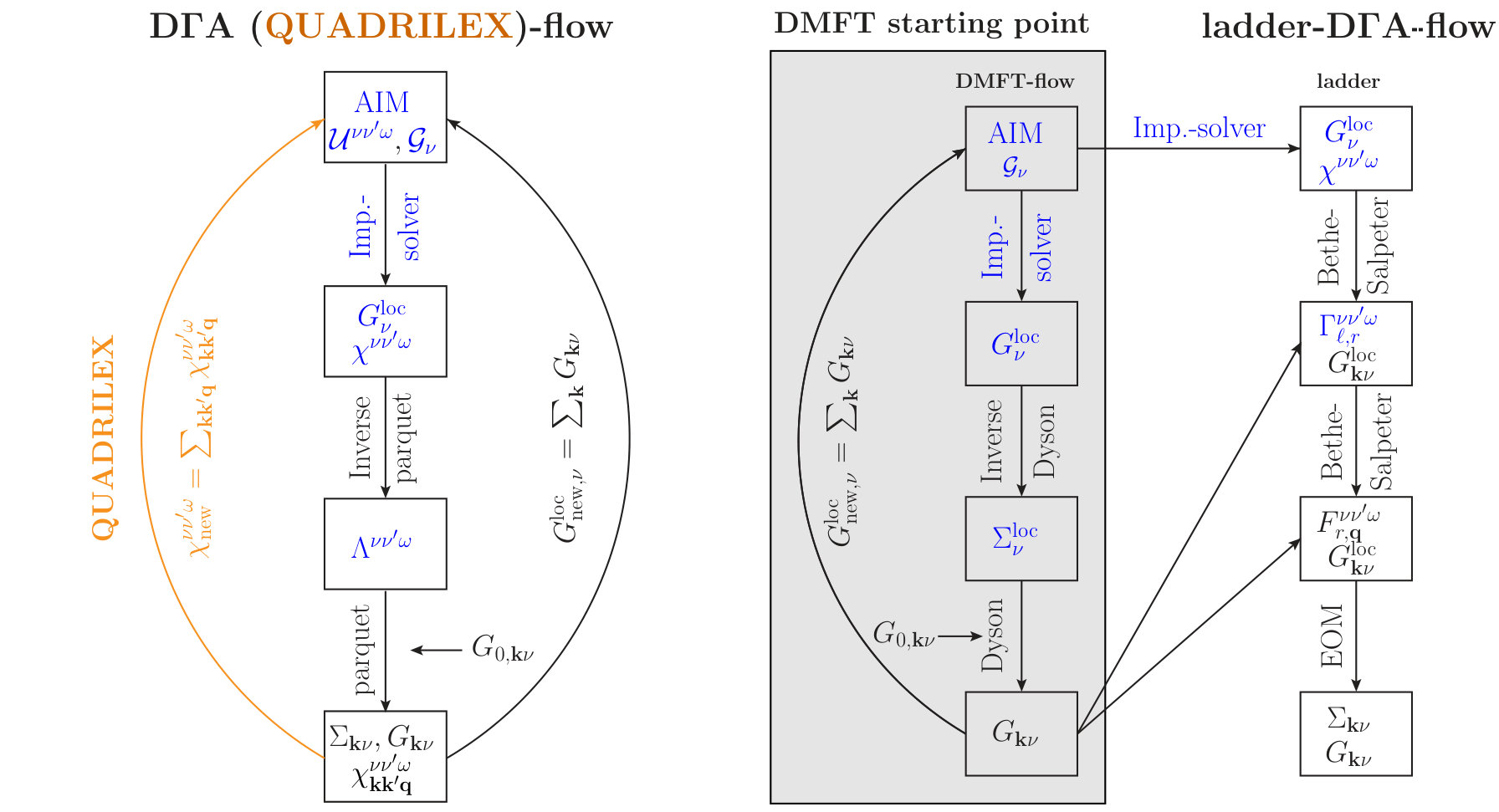 Figure 24
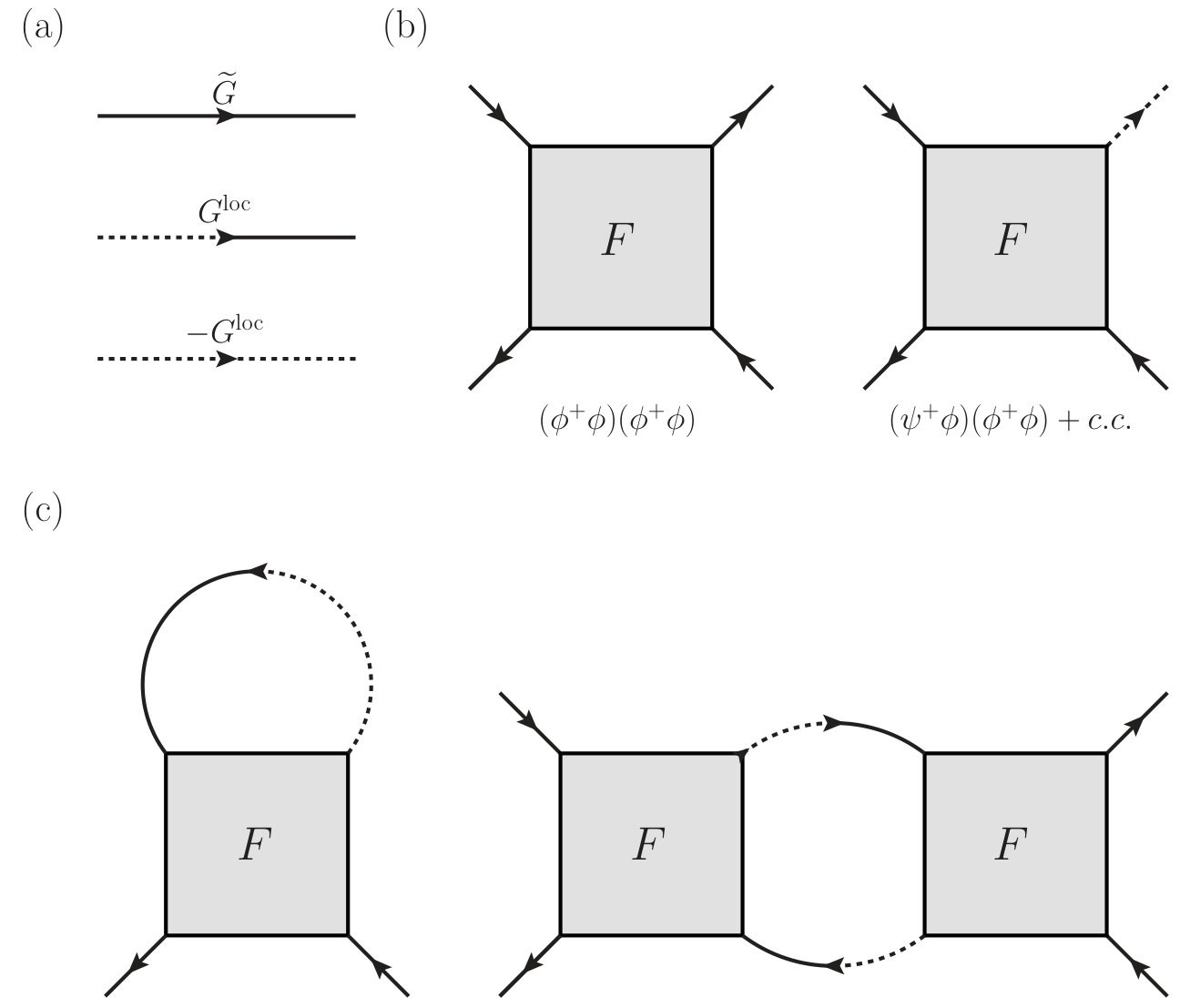 Figure 25
 Figure 26
 Figure 27
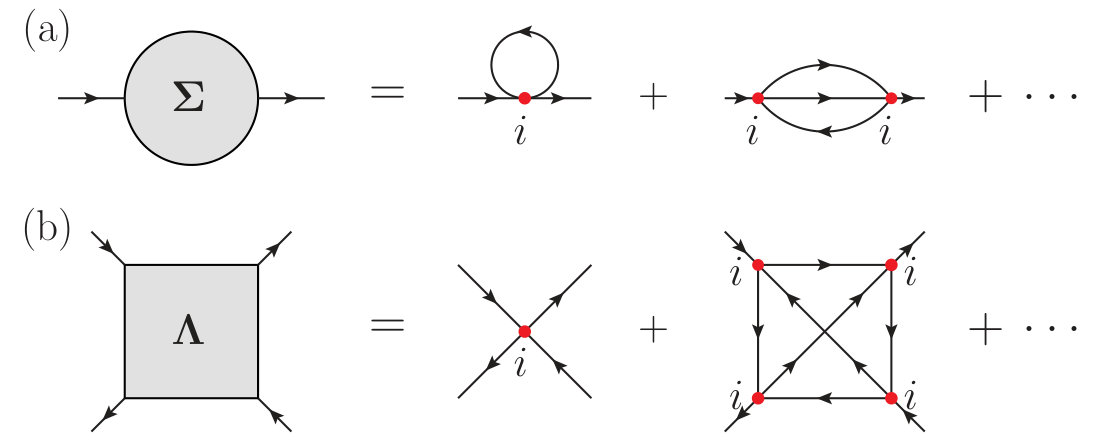 Figure 28
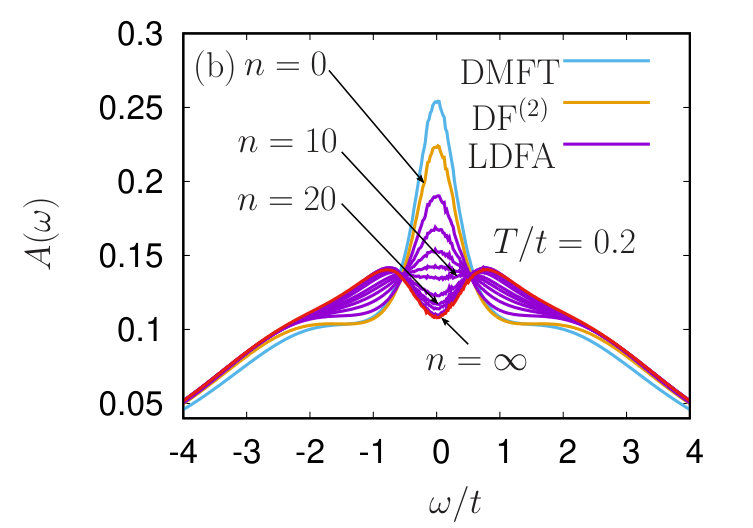 Figure 29
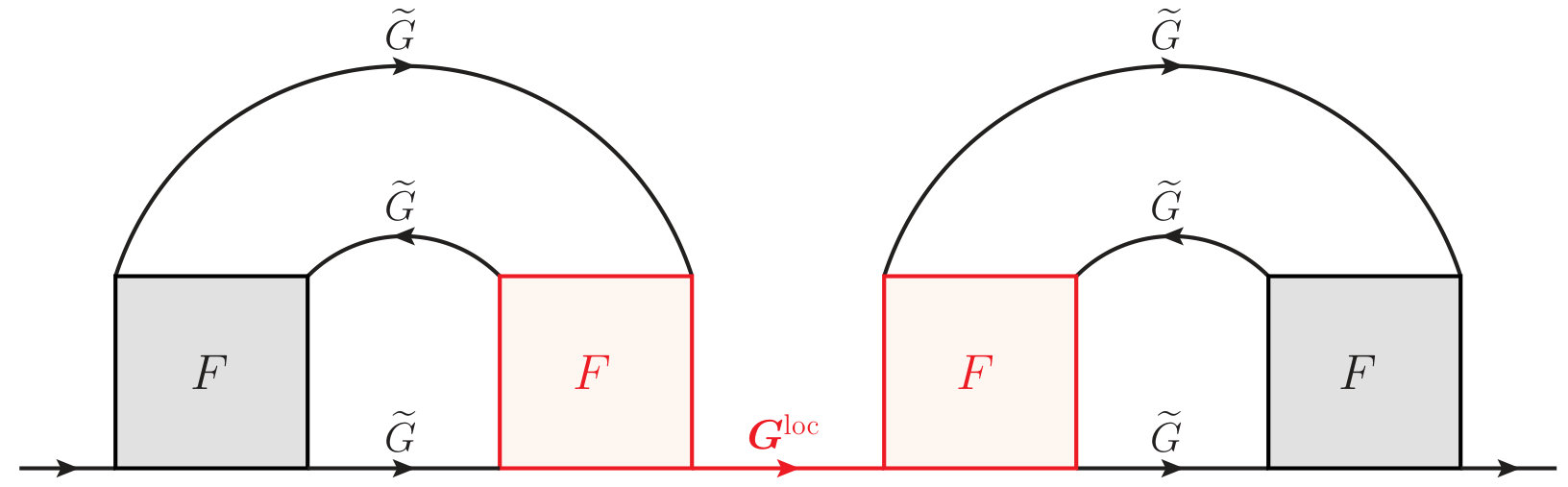 Figure 30
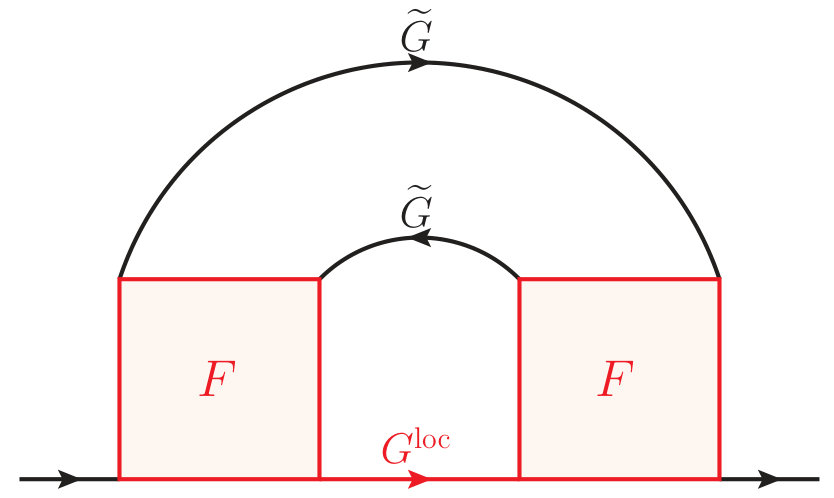 Figure 31
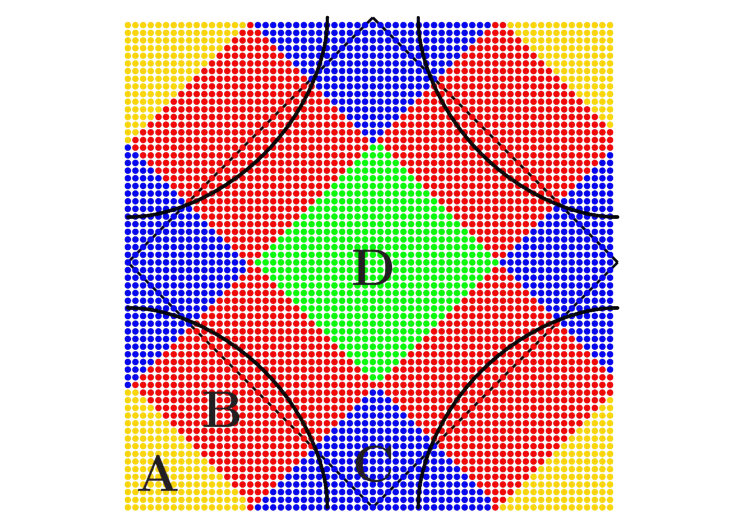 Figure 32
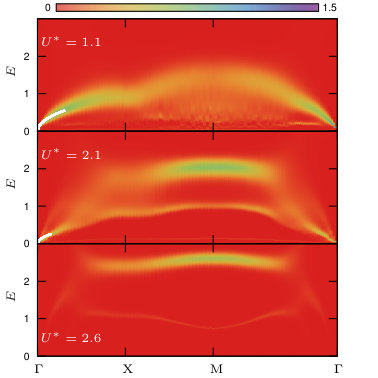 Figure 33
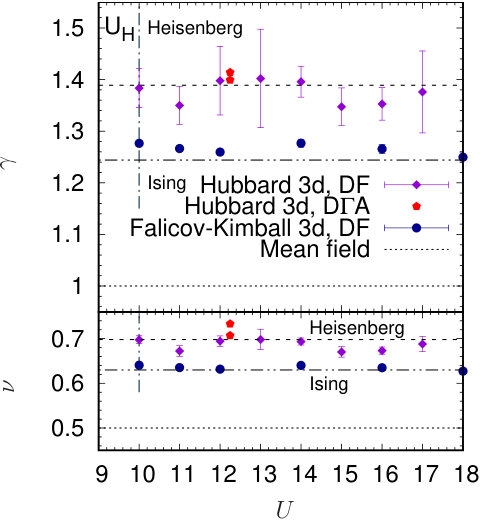 Figure 34
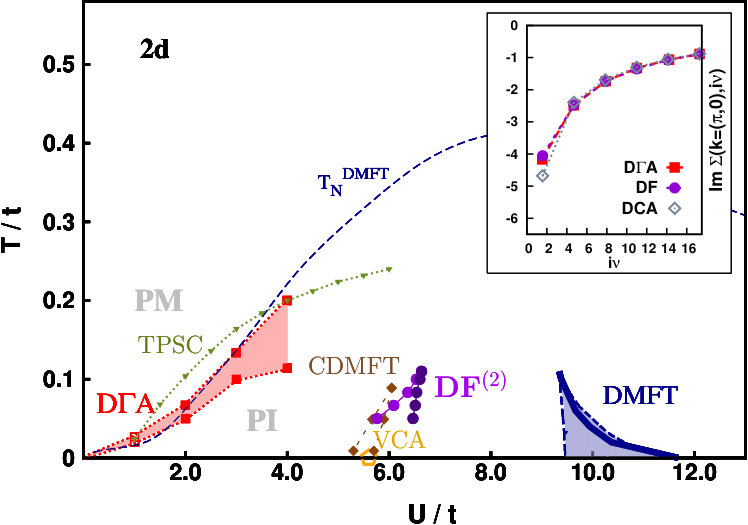 Figure 35
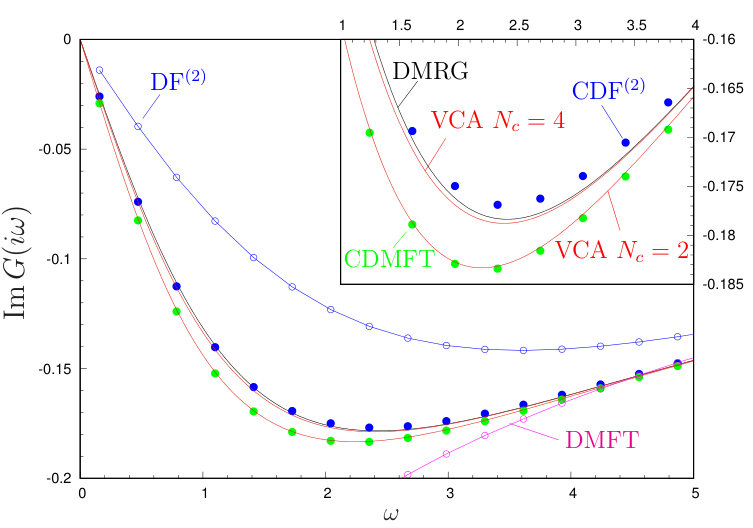 Figure 36
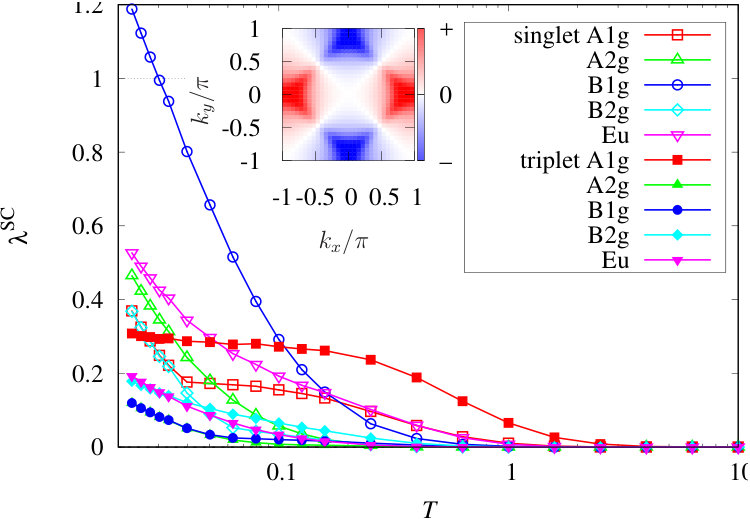 Figure 37
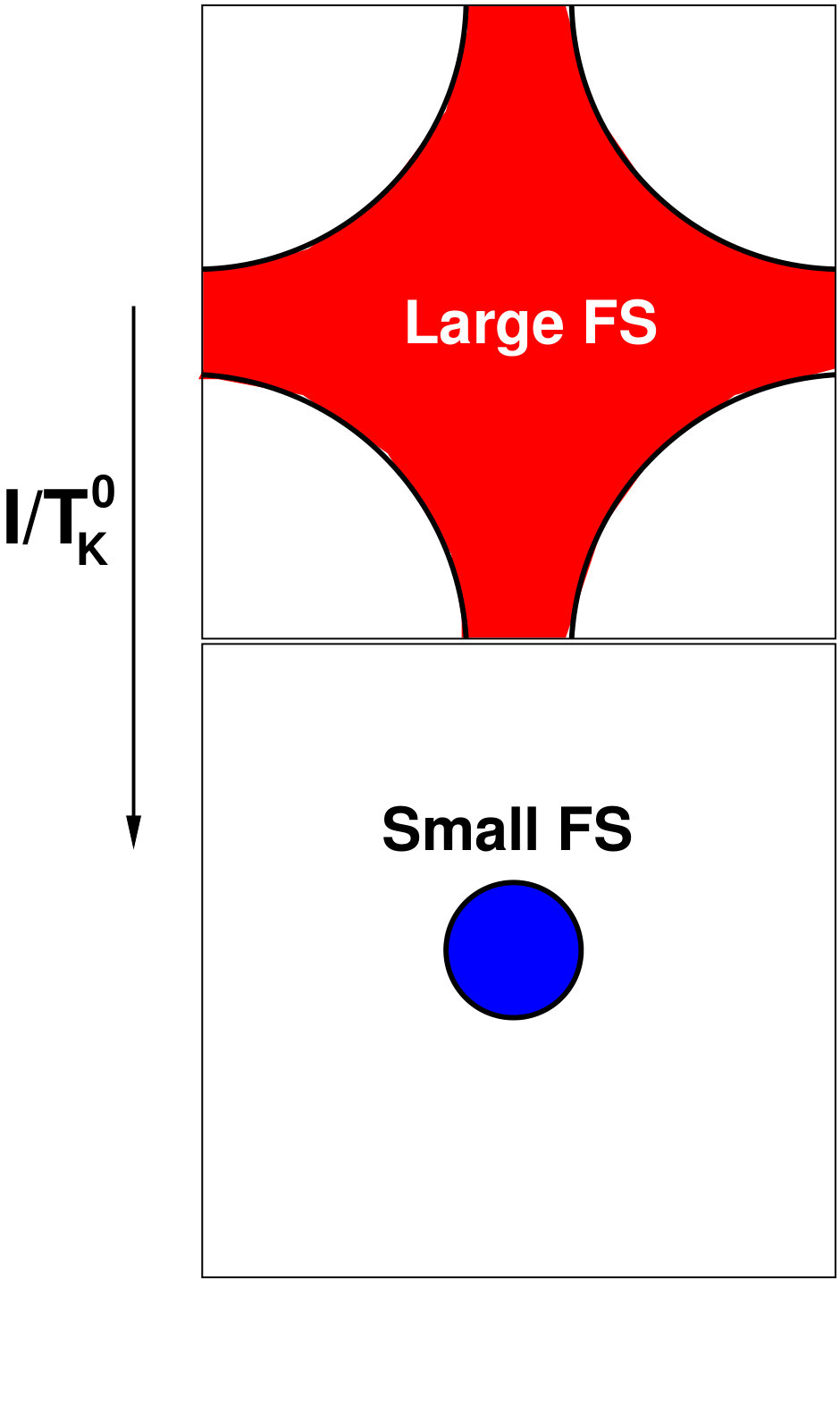 Figure 38
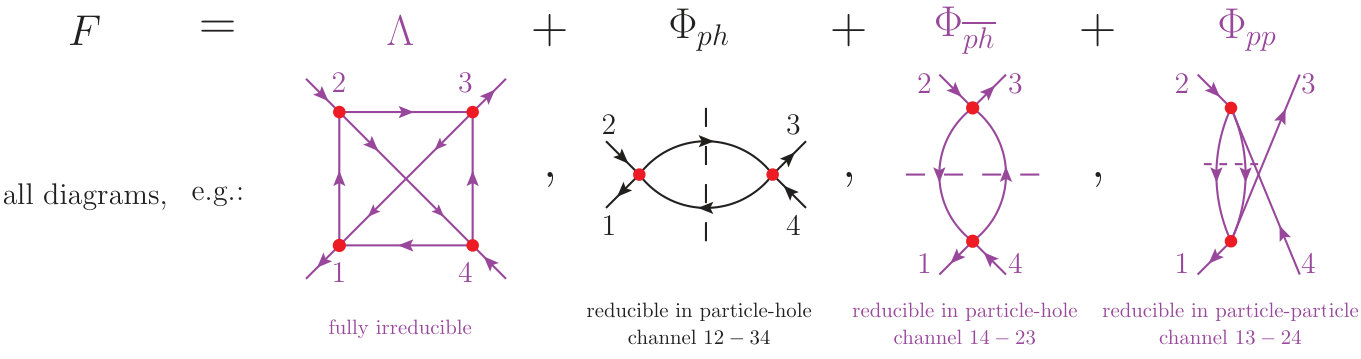 Figure 39
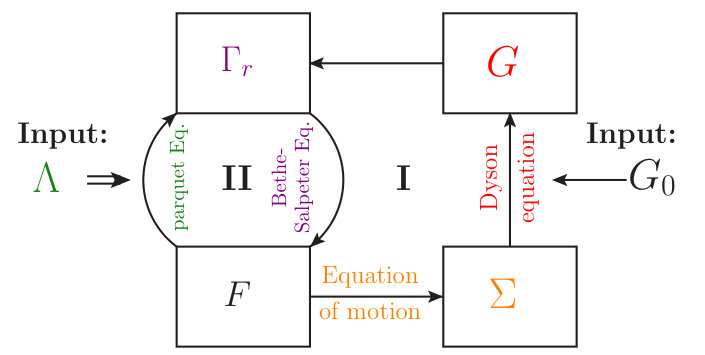 Figure 40
| Symmetry | Symmetry relation |
| Complex conjugation | |
| SU(2) symmetry | |
| Time reversal symmetry | |
| Particle-hole symmetry | |
| SU(2) symmetry | |
| Crossing symmetry |
| Method | Local vertex | Green’s function | Diagrams | Action/Functional |
|---|---|---|---|---|
| parquet DA [Sec. III.1.1] | two-particle irreducible | parquet | ||
| QUADRILEX [Sec. III.1.4] | (29) | |||
| ladder DA [Sec. III.1.2] | 2PI in channel : | ladder | — | |
| DF [Sec. III.2] | one-particle reducible | 2nd order, ladder, | (38) | |
| parquet | ||||
| 1PI [Sec. III.3] | one-particle irreducible | , | ladder | (49) |
| DMF2RG [Sec. III.4] | one-particle irreducible | , | RG flow in | (52) |
| TRILEX [Sec. III.7.4] | three-leg vertex | , | Hedin Eqs. (82) | (81) |
| DB [Sec. III.7.3] | , | , | 2nd order, ladder | (III.7.3) |
Peer Reviews
No public reviews on file for this paper yet. If you reviewed it on a platform where reviews are public (OpenReview, ICLR, NeurIPS, ICML), you can paste yours below so the community can read it here.
Videos
No videos yet. Explain this paper in a talk, walkthrough, or lecture? Add one.
Diagrammatic routes to nonlocal correlations
beyond dynamical mean field theory
G. Rohringer
Russian Quantum Center, 143025 Skolkovo, Russia
Institute for Solid State Physics, TU Wien, 1040 Vienna, Austria
H. Hafermann
Mathematical and Algorithmic Sciences Lab, Paris Research Center, Huawei Technologies
France SASU, 92100 Boulogne-Billancourt, France
A. Toschi
Institute for Solid State Physics, TU Wien, 1040 Vienna, Austria
A. A. Katanin
M. N. Mikheev Institute of Metal Physics, Russian Academy of Sciences, 620108 Ekaterinburg, Russia
A. E. Antipov
Station Q, Microsoft Research, Santa Barbara, California 93106-6105
Department of Physics University of Michigan, Randall Laboratory, Ann Arbor, Michigan 48109-1040
M. I. Katsnelson
Radboud University Nijmegen, Institute for Molecules and Materials, NL-6525 AJ Nijmegen, The Netherlands
Ural Federal University, 620002 Ekaterinburg, Russia
A. I. Lichtenstein
I. Institut für Theoretische Physik, Universität Hamburg, Jungiusstraße 9, D-20355 Hamburg, Germany
Ural Federal University, 620002 Ekaterinburg, Russia
A. N. Rubtsov
Russian Quantum Center, 143025 Skolkovo, Russia
Department of Physics, M.V. Lomonosov Moscow State University, 119991 Moscow, Russia
K. Held
Institute for Solid State Physics, TU Wien, 1040 Vienna, Austria
(March 10, 2024)
Abstract
Strong electronic correlations pose one of the biggest challenges to solid state theory. Recently developed methods that address this problem by starting with the local, eminently important correlations of dynamical mean field theory (DMFT) are reviewed. In addition, nonlocal correlations on all length scales are generated through Feynman diagrams, with a local two-particle vertex instead of the bare Coulomb interaction as a building block. With these diagrammatic extensions of DMFT long-range charge-, magnetic-, and superconducting fluctuations as well as (quantum) criticality can be addressed in strongly correlated electron systems. An overview is provided of the successes and results achieved mainly for model Hamiltonians and an outline is given of future prospects for realistic material calculations.
pacs:
71.10.-w,71.10.Fd,71.27.+a
Contents
I Introduction
The understanding of strongly correlated systems counts among the most difficult problems of solid state physics, since standard perturbation theory in terms of the bare Coulomb interaction breaks down. Dynamical mean field theory (DMFT) represents a breakthrough in this respect as it includes a major part of electronic correlations: the local ones. It does so in a nonperturbative way. For a three-dimensional () lattice at elevated temperature and in the absence of a close-by second-order phase transition, the local correlations (as described by DMFT) prevail. They bring forth, among others, quasiparticle renormalizations, Mott-Hubbard metal-insulator transitions, orbital, charge and magnetic ordering, see Georges et al., 1996 for a review. Building on its success, DMFT nowadays is routinely employed for realistic material and non-equilibrium calculations, for reviews see Held et al., 2006, Kotliar et al., 2006, Held, 2007, Katsnelson et al., 2008 and Aoki et al., 2014, respectively. It also fostered the development of new impurity solvers Bulla et al. (2008); Gull et al. (2011b).
Non-local correlations, on the other hand, are at the heart of some of the most fascinating physical phenomena such as high-temperature superconductivity Bednorz and Müller (1986) and quantum criticality v. Löhneysen et al. (2007). They are also responsible for the long-range correlations in the vicinity of phase transitions or Lifshitz transitions Lifshitz (1960) and play a crucial role in the physics of graphene Kotov et al. (2012) to name but a few. These nonlocal correlations are missing in DMFT, which is mean field in space but takes into account correlations in time. Often we can understand nonlocal physics in terms of perturbation theory or the ladder replication thereof.
Let us take, as a specific and illustrative example, the elementary excitations of a ferromagnet: magnons. These can be described by the repeated scattering of a minority-spin electron at the prevalent majority-spin electrons; see Fig. 1 (a). This corresponds to ladder-type Feynman diagrams which allow us to calculate the magnetic susceptibility or to identify its spin wave poles as the collective (bosonic) excitations of the system: the magnons. As described by Hertz and Edwards, 1973 one can diagrammatically “close” the Green’s function in the majority-spin channel by adding the dashed Green’s function line in Fig. 1, which yields the minority-spin self-energy. This self-energy describes the scattering of electronic quasiparticles with the particle-hole excitations (magnons). 111Such feedback of collective excitations on the fermionic degrees of freedom is crucially important for the nonquasiparticle states in the spin gap of half-metallic ferromagnets. These are an important limiting factor for spintronics applications; see Katsnelson et al., 2008 for a review.
In DMFT such magnon contributions to the self-energy are contained only in their local version, where all sites in Fig. 1 are the same, . In space, this translates into a -independent contribution. Instead of a magnon dispersion relation , in DMFT we have a single magnon energy and a gap in the magnon spectrum. Consequently, the important physics of low-energy long-range magnon fluctuations is not captured correctly by the DMFT self-energy.
The same kind of diagrams, if one also includes the SU(2)-related transversal spin fluctuations, describes the paramagnons in the paramagnetic phase Moriya (1985). These are nothing but the spin fluctuations dominating in the vicinity of a magnetic phase transition. Their effect on the spectrum and self-energy may be dramatic and may alter a metallic into a (pseudo) gapped phase. Such physics is missing in DMFT which does not feature any precursors of the incipient magnetic ordering. The spin fluctuations may also serve as a pairing glue, an attractive interaction in the particle-particle or cooperon channel, possibly leading to high-temperature superconductivity Scalapino (2012). Also at a quantum critical point the paramagnon contribution is important. Indeed, it is at the basis of the Hertz, 1976, Millis, 1993 and Moriya, 1985 theory of quantum criticality.
The aim of the diagrammatic extensions of DMFT is to describe the physics of long-ranged collective excitations, but beyond the weak-coupling ladder diagrams of Fig. 1(a) now also for strongly correlated systems. In fact, the key to such physics lies in Feynman diagrams such as those in Fig. 1 (a), but with the bare interaction replaced by a strongly renormalized, local two-particle vertex, as illustrated in Fig. 1 (b). This way the important local correlations can be fully included through the local two-particle DMFT vertex from the beginning and, through this vertex, salso affect the short- and long-range correlations. As we will see, spin fluctuations and other nonlocal correlations such as the critical fluctuations in the vicinity of a (quantum) critical point can be described this way, even in strongly correlated systems.
I.1 Brief History
Let us start with a brief synopsis of the various methods and approaches that aim at extending DMFT to include nonlocal correlations. We recall that DMFT becomes exact in the limit of high coordination number or alternatively for dimension Metzner and Vollhardt (1989). DMFT maps a lattice model onto the self-consistent solution of an Anderson impurity model (AIM) Georges and Kotliar (1992), allowing for an essentially exact solution, e.g., by quantum Monte Carlo (QMC) simulations Jarrell (1992).
From the very beginning, there have been attempts to include nonlocal correlations beyond the local ones of DMFT. The first such approach was the approach of Schiller and Ingersent, 1995 which includes all diagrams to next-to-leading order in and results in a two-site impurity model. This way nonlocal correlations between neighboring sites are included. A systematic expansion of DMFT has also been proposed in the strong-coupling limit by Stanescu and Kotliar, 2004, following the lines of Pairault et al., 1998.
Particularly important and widely employed are cluster extensions of DMFT: the dynamical cluster approximation (DCA) by Hettler et al., 1998 and the cellular DMFT (CDMFT) by Lichtenstein and Katsnelson, 2000 and Kotliar et al., 2001. These map a lattice model onto a cluster of sites embedded in a dynamical mean field. Thereby nonlocal correlations within the cluster are accounted for, and those to the outside (described by a generalized DMFT bath) are neglected. Impressive successes of these approaches are the description of pseudogap physics and unconventional superconductivity in the Hubbard model. Indeed, cluster extensions of DMFT became an integral part of the theory of high-temperature superconductivity [for more recent results and larger clusters see Gull et al., 2013, Harland et al., 2016, Sordi et al., 2011 and Sakai et al., 2012]. A particular advantage of cluster extensions of DMFT is that they systematically allow for studying larger and larger clusters, providing a controlled way of approaching the exact result (infinite cluster limit) with the cluster size as a control parameter. In practice, numerical limitations due to the exponential growth of the cluster Hilbert space restrict the cluster extensions however to relatively small clusters of about sites. While correlations are included nonperturbatively, they remain short-ranged even in two dimensions (2D) and for a single orbital. Cluster extensions have been reviewed by Maier et al., 2005b. In this review we focus instead on the complementary, diagrammatic extensions of DMFT. In these approaches, corrections to the DMFT self-energy are computed through Feynman diagrams, which allows one to reach significantly larger lattice sizes, as illustrated in Fig. 2.
Motivated by identifying particularly important contributions missing in DMFT, the first diagrammatic extensions supplemented the local DMFT self-energy by the nonlocal one of another approach. For example, in the +DMFT approach Sun and Kotliar (2002); Biermann et al. (2003), this is the nonlocal screened exchange. Sadovskii et al., 2005 added spin fluctuations contained in the spin-fermion model and Kitatani et al., 2015 those of the fluctuation exchange approximation (FLEX).
Dynamical vertex approaches on the other hand generate both, local and nonlocal, electronic correlations from a common, underlying entity: the local but frequency-dependent (i.e., dynamical) two-particle vertex. This development started with the dynamical vertex approximation (DA), see Toschi et al., 2007 and the closely related work by Kusunose, 2006. DA assumes the locality of the -particle irreducible vertex, recovering DMFT for and generating a nonlocal self-energy and susceptibility corrections for . One can view this as a resummation of Feynman diagrams not in terms of orders in the interaction, but in terms of the locality of diagrams – an approach which reestablishes the exact solution for . In an independent development, Rubtsov et al., 2008 introduced the dual fermion (DF) approach in which the lattice problem is expressed in terms of a local reference system and a coupling to the nonlocal degrees of freedom. A perturbation theory around this solvable reference system is obtained by decoupling the impurity by means of dual fields through a Hubbard-Stratonovich transformation. The dual fermions interact through the -particle vertex functions of the local reference system. In practice the three-particle and all higher-order vertices are neglected in both DA and DF, except for error estimates. Slezak et al., 2009 devised a multiscale approach where short-range correlations are treated on a DCA cluster and long-range correlations diagrammatically. These groundbreaking works have laid the foundation for further generalizations and developments of the methods and various applications, of which we provide a brief overview in the following.
The one-particle irreducible (1PI) approach by Rohringer et al., 2013 is based on a functional in terms of the one-particle irreducible vertex; it inherits properties of both DA and DF. The dynamical mean field theory to the functional renormalization group (DMF2RG) approach by Taranto et al., 2014 exploits the functional renormalization group (fRG) to generate the nonlocal diagrams beyond DMFT. The triply irreducible local expansion (TRILEX) of Ayral and Parcollet, 2015 is based on the three-point fermion-boson vertex. The nonlocal expansion scheme of Li, 2015 is a framework for expanding around a local reference problem which includes DF and the cumulant expansion as special cases.
Extensions to nonequilibrium Muñoz et al. (2013) and real-space formulations Valli et al. (2010); Takemori et al. (2016) are also possible. All of these approaches are closely related and rely on the same concept of taking the local vertex and generating nonlocal interactions from it as illustrated in Fig. 1 (b). They differ in the building blocks of the new perturbation expansion, in particular, the vertex (e.g., irreducible or full), the type of diagrams generated (e.g., ladder or parquet) and the details of the self-consistency schemes; cf. Table 15 on p. 15 for an overview. They allow us to describe the same kind of physics contained in weak-coupling ladder diagrams [Fig. 1 (a)], but now strong DMFT correlations are included through the vertex [Fig. 1 (b)].
In a complementary development, Si and Smith, 1996 and Chitra and Kotliar, 2000 devised the extended DMFT (EDMFT), which describes the local correlations induced by nonlocal interactions, which can actually be mapped onto local bosonic degrees of freedom. The dual boson (DB) approach of Rubtsov et al., 2012 also addresses nonlocal interactions, but it treats, in the spirit of the DF approach, single- and two-particle excitations on the same footing. DB explicitly includes long-range bosonic modes and hence goes much beyond EDMFT. In DA the nonlocal interaction can also be taken into account, in the form of a bare nonlocal vertex which allows for realistic ab initio DA material calculations Toschi et al. (2011); Galler et al. (2017a). This naturally includes , DMFT, and nonlocal spin fluctuations. It is the aim of this review to provide in Sec. III a comprehensive overview of the different approaches as well as to draw a clear picture of the physics they can describe.
In the following we mention a few highlights and applications and refer the interested reader to Sec. IV for a more detailed discussion. The physical results obtained using the diagrammatic extensions of DMFT are similar as for cluster extensions regarding short-range nonlocal correlations. However, the diagrammatic extensions also include long-range correlations, and hence allow us to address physical problems that were not accessible before. This is illustrated by Fig. 2 which shows the typical momentum resolution in momentum space for cluster and diagrammatic extensions of DMFT. The improved momentum resolution allowed Rohringer et al., 2011 and Hirschmeier et al., 2015 to calculate the critical exponents of the antiferromagnetic (AF) phase transition in the three-dimensional (3D) Hubbard model in DA and DF, respectively. Here the long-range correlations are of particular importance in the critical region close to a second-order phase transition. As one may expect from universality, these critical exponents are numerically compatible with those of the Heisenberg model. Similarly, the critical exponents of the Falicov-Kimball model as determined by Antipov et al., 2014 are of the Ising universality class. Schäfer et al., 2017 analyzed the quantum critical point in the Hubbard model which emerges when antiferromagnetism is suppressed by doping and find unusual critical exponents because of Kohn lines on the Fermi surface. The diagrammatic extensions of DMFT also show that spin fluctuations suppress the Néel temperature significantly in 3D Katanin et al. (2009); Rohringer et al. (2011); Otsuki et al. (2014). In 2D, the Mott-Hubbard transition can be significantly reshaped or even completely suppressed since the paramagnetic phase becomes always insulating at sufficiently low temperature in the unfrustrated case Schäfer et al. (2015a). Pertinent steps have also been taken toward our understanding of high-temperature superconductivity: Otsuki et al., 2014; Kitatani et al., 2015 studied superconducting instabilities and Gunnarsson et al., 2015 performed a diagnostics of the fluctuations responsible for the pseudogap. Further highlights are the renormalization of the plasmon dispersion by electronic correlations van Loon et al. (2014a), disorder-induced weak localization Yang et al. (2014), Lifshitz transitions in dipolar ultracold gases van Loon et al. (2016a) and the flat band formation (Fermi condensation) near Van Hove filling Yudin et al. (2014).
I.2 Outline
This review is organized along the following lines: We first focus, in Sec. II, on the two-particle vertex function as it is the building block of the diagrammatic approaches. In particular, Sec. II.1 sets the stage and introduces the notation used throughout the review. We define the various vertex functions, discuss their symmetries and introduce the Bethe-Salpeter and parquet equations. Section II.2 briefly recapitulates the DMFT, which serves as the starting point for the diagrammatic extensions. In Sec. II.3 we discuss the physical contents of the two-particle vertex and the origin of its asymptotic behavior for large frequencies. Finally, Sec. II.4 summarizes the various methods for calculating the local two-particle vertex numerically from the AIM.
In Sec. III we review the various methods developed in recent years for calculating nonlocal correlations beyond DMFT. Most of these have a two-particle vertex as a starting point. We start, in Sec. III.1, with the historically first vertex extension: the DA approach. Its parquet and ladder variants are introduced in Secs. III.1.1 and III.1.2, respectively. Extensions to nonlocal interactions and multiorbital models are discussed in Sec. III.1.3, before turning to the closely related functional integral formalism of the quadruply irreducible local expansion (QUADRILEX) in Sec. III.1.4. In Sec. III.2 we present the DF approach, which performs a diagrammatic expansion around a local reference system in terms of dual fermions. We discuss in particular the DF diagrammatics, the choice of the local reference system, as well as scaling and convergence. The approach can be viewed as a particular diagrammatic resummation in the nonlocal expansion scheme discussed in Sec. III.2.5. We also discuss the related superperturbation theory in Sec. III.2.5. The 1PI approach can be considered as an intermediate approach in between DA, which is based on the irreducible vertex, and DF, which is based on the reducible vertex. It inherits properties from both methods. The one-particle irreducible formalism is obtained through a Legendre transformation of the DF generating functional, as described in Sec. III.3. In Sec. III.4 we present a sophisticated alternative to generate nonlocal correlations and vertices with the DMFT vertex as a starting point: the fRG. As we discuss in Sec. III.5, all these diagrammatic extensions can naturally be formulated using a cluster instead of a single DMFT site as a starting point. Section III.6 is devoted to diagrammatic extensions of DMFT that are based on a perturbation in the bare interaction instead of the two-particle vertex. These approaches supplement the DMFT self-energy with a nonlocal one. Diagrammatic extensions of EDMFT are finally discussed in Sec. III.7: the EDMFT+ approach in Sec. III.7.2, the dual boson approach in Sec. III.7.3, and TRILEX in Sec. III.7.4. A separate section, Sec. III.8, is devoted to conservation laws and crossing symmetry.
In Sec. IV we review the main results achieved hitherto with diagrammatic extensions of DMFT. The application to the Hubbard model in three down to zero dimensions in Sec. IV.1 illustrates the physics these methods can describe and provides, at the same time, a unified picture for this fundamental model of electronic correlations. The application to the Kondo lattice model (KLM) in Sec. IV.1 requires one to account for the interplay between local Kondo physics and long-range antiferromagnetic fluctuations and therefore is an ideal playground for diagrammatic extensions. Applications to models for annealed and quenched disorder, i.e., the Falicov-Kimball model in Sec. IV.3 and the Anderson-Hubbard model in Sec. IV.4, illustrate the versatility of diagrammatic extensions. Finally, Sec. IV.5 discusses results for models and realistic material calculations with nonlocal interactions and multiple orbitals.
In Sec. V we provide an overview of open source codes that are available for solving the AIM, the computation of the two-particle vertex and for diagrammatic extensions of DMFT. Finally, in Sec. VI we close with a summary and outlook and with Table 15 providing a comparison of the various diagrammatic extensions.
II Diagrammatics at the two-particle level
II.1 Formalism and symmetries
In the following we provide a concise overview of the two-particle formalism. For further details and derivations we refer the reader to Rohringer et al., 2012.
The starting point for deriving the Feynman diagrammatic formalism at the one- and two-particle level is the general definition of the -particle imaginary time Green’s function:
[TABLE]
where even indices correspond to creation () and odd indices to annihilation operators (). Here denotes the thermal average with being the partition function for Hamiltonian , is the inverse temperature, and denotes the time ordering operator. The indices encode the set of all degrees of freedom of the system, e.g., space coordinate (lattice site)/momentum, orbital, spin, etc. In the following we will consider mostly single-orbital systems.
From the general case, the usual one-particle Green’s function in momentum space is derived as
[TABLE]
where with is a fermionic Matsubara frequency [later denotes a bosonic Matsubara frequency]. Whenever convenient, we adopt the more compact four-vector notation with the generalized fermionic and bosonic momentum . For conciseness, we restrict ourselves here and in the following to the time- and lattice-translationally invariant, SU(2)-symmetric (paramagnetic) case. Consequently, the one-particle Green’s function is diagonal in generalized momentum and spin space with . From and its noninteracting counterpart , the one-particle irreducible self-energy is calculated via the standard Dyson equation
[TABLE]
For the two-particle Green’s function [ in Eq. (1)] we can drop one momentum and time index due to time and lattice translational invariance and arrive at the compact form
[TABLE]
The way the frequencies are assigned to the Matsubara times and, hence, to the creation and annihilation operators in Eq. (1) is referred to as particle-hole notation. In this notation the two-particle Green’s function can be viewed as the scattering amplitude of an incoming particle and hole with total energy and total momentum ; see the red (gray) lines in Fig. 3(a). It is particularly convenient for describing systems where particle-hole (e.g., spin or charge) fluctuations dominate. Systems with strong particle-particle fluctuations, on the other hand, are more easily described exploiting the so-called particle-particle representation of the two-particle Green’s function that is illustrated in Fig. 3(b). In this notation the two-particle Green’s function can be interpreted as scattering amplitude between two particles with total energy and momentum . Let us stress that the two-particle Green’s function contains both ( and ) scattering processes independent of its representation. The choice of the representation corresponds only to selecting the most convenient “coordinate system” for the description of the problem (see, e.g., Gunnarsson et al., 2015 and Bickers, 2004).
The two-particle Green’s function depends on four spin indices corresponding to spin components. Because of the conservation of the total spin, of them vanish and, from the remaining , the two components can be expressed via by means of the crossing symmetry (see the last line in Table II.1; it originates from the fact that we have the same Feynman diagrams when exchanging the two incoming lines in Fig. 3). For the remaining four components we introduced the shorthand notation in Eq. (II.1). There are additional relations between these due to SU(2) symmetry (see the second line in Table II.1). However, as these relations involve shifts of frequency and momenta, it is more convenient to work with two ( and ) components explicitly.
From the one- and two-particle Green’s functions, the generalized susceptibilities are readily obtained as
[TABLE]
In the second line we introduced the charge () and spin () components of the generalized susceptibility.222These components have a definite spin and projection of the incoming particle-hole pair: The charge channel corresponds to , , and the spin channel to , . The components with and correspond to , , and must be equal to , due to SU(2). It is hence convenient to work with the two components (/) only. A similar decomposition into singlet and triplet channels applies for the particle-particle channel. From these the corresponding physical susceptibilities (response functions) are computed in the particle-hole sector by performing the summation over all the fermionic variables:
[TABLE]
where a proper normalization of the momentum and frequency sums is implicitly assumed [i.e., and ]. An analogous definition holds for the physical particle-particle susceptibility where the corresponding summations have to be performed in particle-particle notation.
In order to classify the different two-particle processes diagrammatically, we can decompose the generalized susceptibility into two parts (see Fig. 4): (i) a product of two one-particle Green’s functions corresponding to an independent propagation of the particle and the hole and (ii) vertex corrections to the susceptibility. The latter describes all the particle-hole scattering processes, which give rise to collective excitations. The corresponding equation, depicted diagrammatically in Fig. 4, reads
[TABLE]
with and the signs have been chosen in such a way that when the local interaction . is the two-particle vertex function, which contains all Feynman diagrams connecting all four external Green’s functions. In the Fermi-liquid regime, is proportional to the scattering amplitude between quasiparticles Abrikosov et al. (1975).
A refined classification is obtained by categorizing the Feynman diagrams of in terms of their two-particle reducibility. All Feynman diagrams contributing to can be split into four topologically distinct classes. They are either fully two-particle irreducible or reducible in one of three channels: particle-hole (), vertical particle-hole (), or particle-particle (). For example, a diagram is said to be reducible in the particle-hole channel when it can be split into two parts by cutting two lines corresponding to a particle-hole pair; see Fig. 5. This decomposition is at the heart of the so-called parquet equations which were first introduced by Diatlov et al., 1957 [cf. De Dominicis, 1962; De Dominicis and Martin, 1964a; Janiš, 2001; Janiš et al., 2017; Bickers and White, 1991; Bickers, 2004]. Denoting by the set of diagrams which are two-particle reducible (2PR) in channel and by the set of all fully irreducible diagrams, we have the unique decomposition (cf. Fig. 5)
[TABLE]
We stress, that one has to clearly discriminate between the index which refers to a subset of diagrams for the full vertex with a certain topology (reducible or irreducible in a given channel) and the index which represents just the spin arguments of the vertex [specifically the linear combination as in Eq. (II.1) so that without vertex corrections and a Hubbard interaction : , ]. In the literature both, and , are often referred to as “channels” although these are completely different concepts. In fact, the decomposition (8) holds independently of the considered spin combination .
Alternatively, the contributions to can be divided into only two parts, i.e., those which are reducible and those which are irreducible in a given channel :
[TABLE]
This defines the vertices which are two-particle irreducible in channel (see Fig. 5 for ). They are related to the full vertex through the Bethe-Salpeter equations (BSEs)333The BSEs can be equivalently formulated for the generalized susceptibilities:
where the bare bubble has been defined in Eq. (II.1).. For the channel Bickers and White (1991); Bickers (2004), the BSE explicitly reads
[TABLE]
Note that due to SU(2) symmetry, the charge () and the spin () sectors do not couple. From a diagrammatic perspective the BSEs correspond to an infinite summation of ladder diagrams. Physically, they describe collective excitations in the different scattering channels while the parquet equation (8) provides for their mutual renormalization.
Equations. (8)-(10) form a closed set of four equations for , () and , which can be solved self-consistently, provided one of these five quantities and the one-particle Green’s function are known (for the case in which is given, see the left part of Fig. 6). As we usually do not know the exact vertex, we have to consider approximations. For instance, the so-called parquet approximation assumes that the fully irreducible vertex is replaced by the constant bare interaction, i.e., Bickers (2004); or in parquet DA, is approximated by its local counterpart ().
The above set of four parquet equations corresponds to loop II in Fig. 6 and needs to be supplemented by the self-consistent calculation of the one-particle Green’s function and self-energy (loop I in Fig. 6). For obtaining these one-particle functions from the two-particle vertex, we exploit the relation between Green’s functions of different particle number in the (Heisenberg) equation of motion. This leads to the Schwinger-Dyson equation, which connects the vertex with the self-energy and reads for a Hubbard-like model with a local interaction [cf. Hamiltonian (12) below]:
[TABLE]
Here denotes the particle density of the system. For the generalization to multiple orbitals and nonlocal interactions, see, for example, Galler et al., 2017a. Equation (II.1) represents an exact relation between the two- and one-particle correlation functions. Hence for a given we have altogether five equations and five unknowns which can be calculated self-consistently as indicated in Fig. 6.
In diagrammatic extensions of DMFT discussed in Sec. III, the Schwinger-Dyson equation (II.1) is also often used when obtaining via other (e.g., ladder) resummations of Feynman diagrams. The Schwinger-Dyson equation also provides the basis for the fluctuation diagnostics method. By performing partial summations over and in Eq. (II.1), the physical origin of the spectral features in the self-energy can be identified Gunnarsson et al. (2015).
The dependence of two-particle Green’s- and vertex functions on several indices makes their numerical calculations, postprocessing, and storage evidently much more challenging than that of the single-particle Green’s functions. Hence exploiting all the symmetries of the system is vital to reduce the numerical and memory storage requirements. Various symmetry relations are summarized in Table II.1 for Hubbard-type models.
The reference list from the paper itself. Each links out to its DOI / PubMed record.
- 1Abrikosov et al. (1975) Abrikosov, A. A., L. P. Gorkov, and I. E. Dzyaloshinski (1975), Methods of Quantum Field Theory in Statistical Physics (Dover, New York).
- 2Aichhorn et al. (2004) Aichhorn, M., H. G. Evertz, W. von der Linden, and M. Potthoff (2004), Phys. Rev. B 70 , 235107 . · doi ↗
- 3Anderson (1958) Anderson, P. W. (1958), Phys. Rev. 109 (5), 1492 . · doi ↗
- 4Anderson (1997) Anderson, P. W. (1997), The Theory of Superconductivity in the High-T c Cuprates (Princeton University Press, Princeton, NJ).
- 5Antipov (2013) Antipov, A. A. (2013), “Gftools,” .
- 6Antipov et al. (2014) Antipov, A. E., E. Gull, and S. Kirchner (2014), Phys. Rev. Lett. 112 , 226401 . · doi ↗
- 7Antipov et al. (2016) Antipov, A. E., Y. Javanmard, P. Ribeiro, and S. Kirchner (2016), Phys. Rev. Lett. 117 , 146601 . · doi ↗
- 8Antipov and Krivenko (2015) Antipov, A. E., and I. Krivenko (2015), “pomerol: 1.1,” . · doi ↗