Optical absorption in interacting and nonlinear Weyl semimetals
Simon Bertrand, Ion Garate, Ren\'e C\^ot\'e

TL;DR
This paper develops a theoretical framework for optical absorption in three-dimensional Weyl semimetals, revealing how Berry curvature, Coulomb interactions, and spectral nonlinearity induce valley polarization and topologically nontrivial excitons.
Contribution
It introduces a novel theory combining Berry curvature, Coulomb interactions, and spectral nonlinearity to explain optical phenomena in Weyl semimetals, including valley polarization and topological excitons.
Findings
Berry curvature and interactions enable light-induced valley polarization
Identification of topologically nontrivial Mahan excitons with vorticity
Analytical model supports numerical results
Abstract
It has been recently predicted that the interplay between Coulomb interactions and Berry curvature can produce interesting optical phenomena in topologically nontrivial two-dimensional insulators. Here, we present a theory of the optical absorption for three-dimensional, hole-doped Weyl semimetals. We find that the Berry curvature, Coulomb interactions and the nonlinearity in the single-particle energy spectrum can together enable a light-induced valley polarization. We support and supplement our numerical results with an analytical toy model calculation, which unveils topologically nontrivial Mahan excitons with nonzero vorticity.
Click any figure to enlarge with its caption.
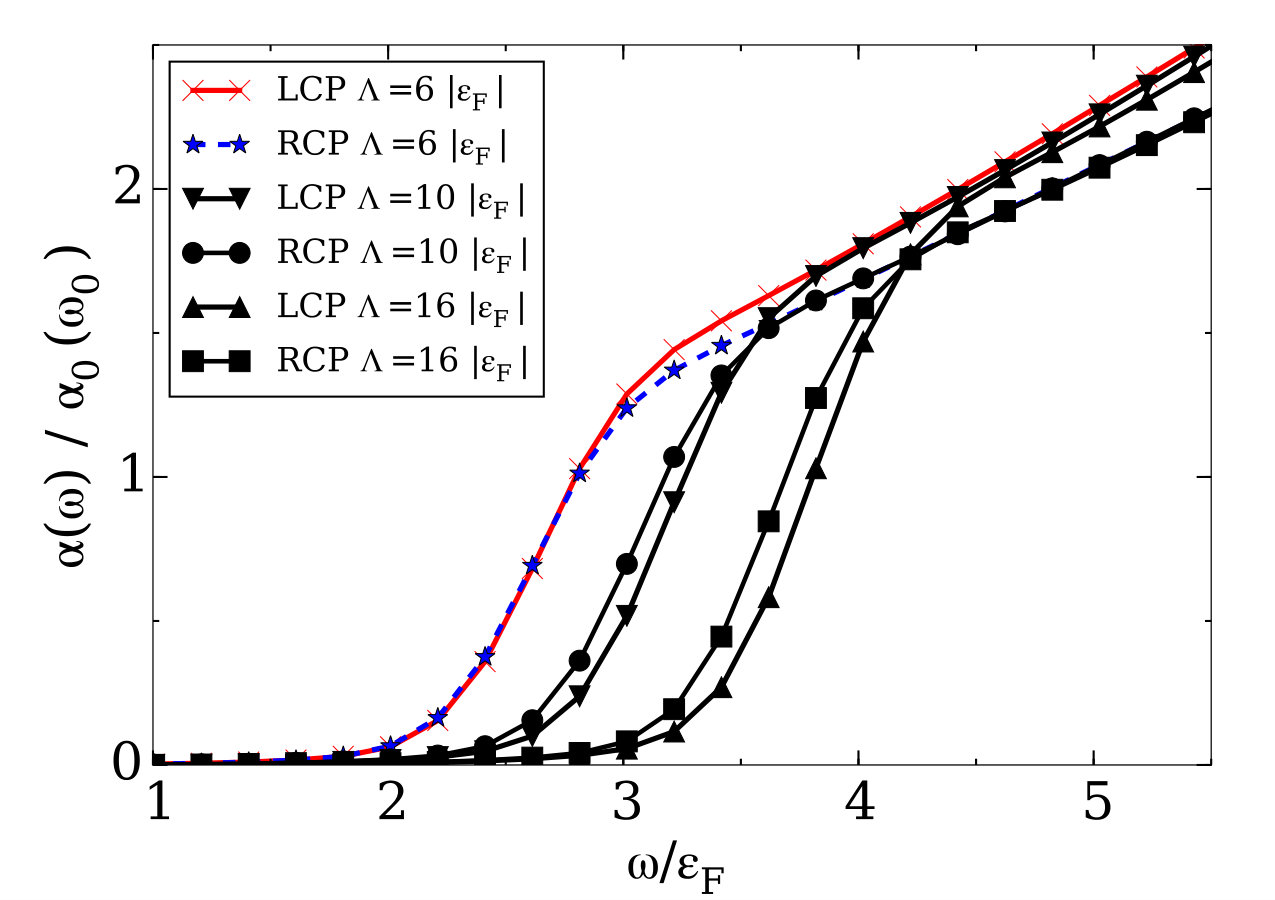 Figure 1
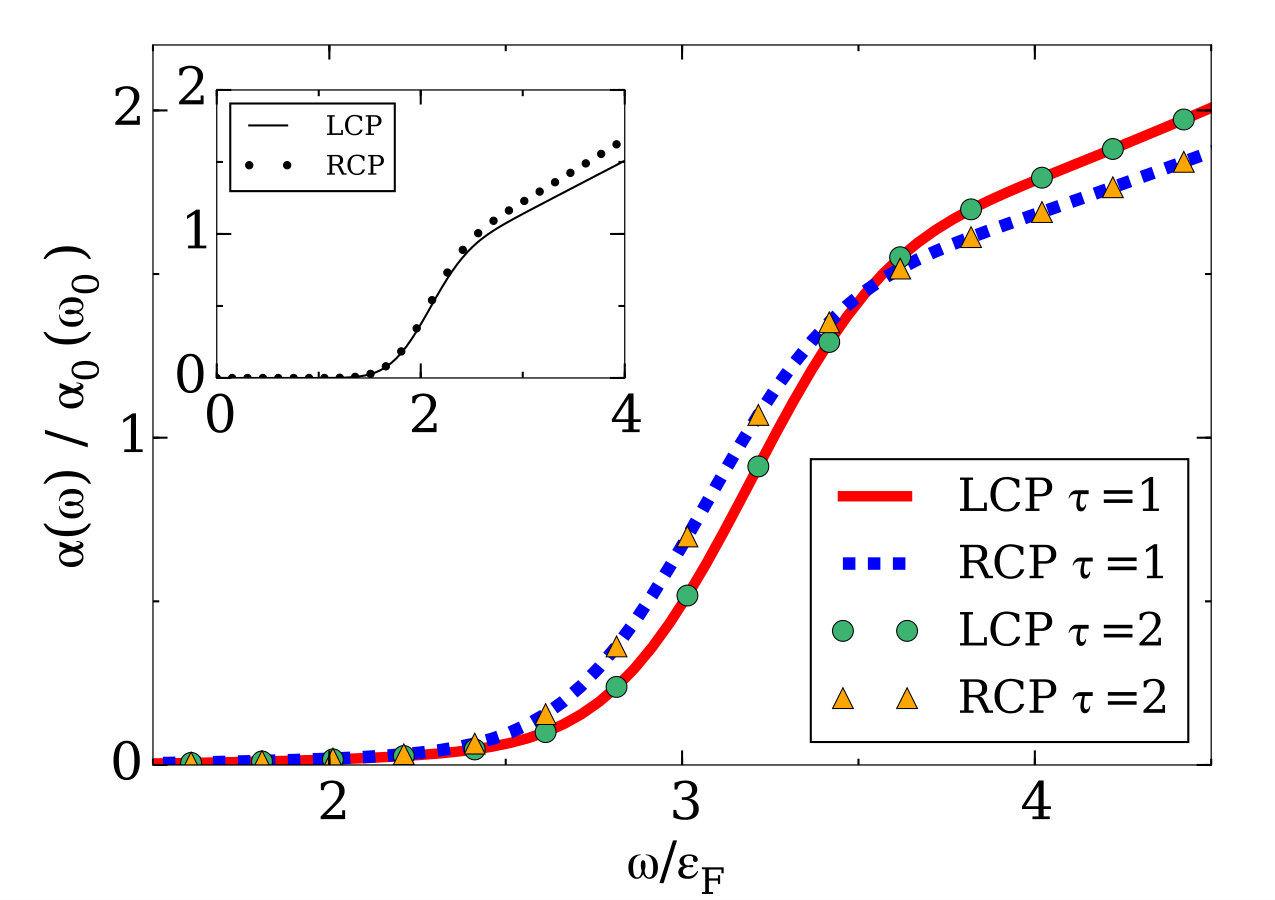 Figure 2
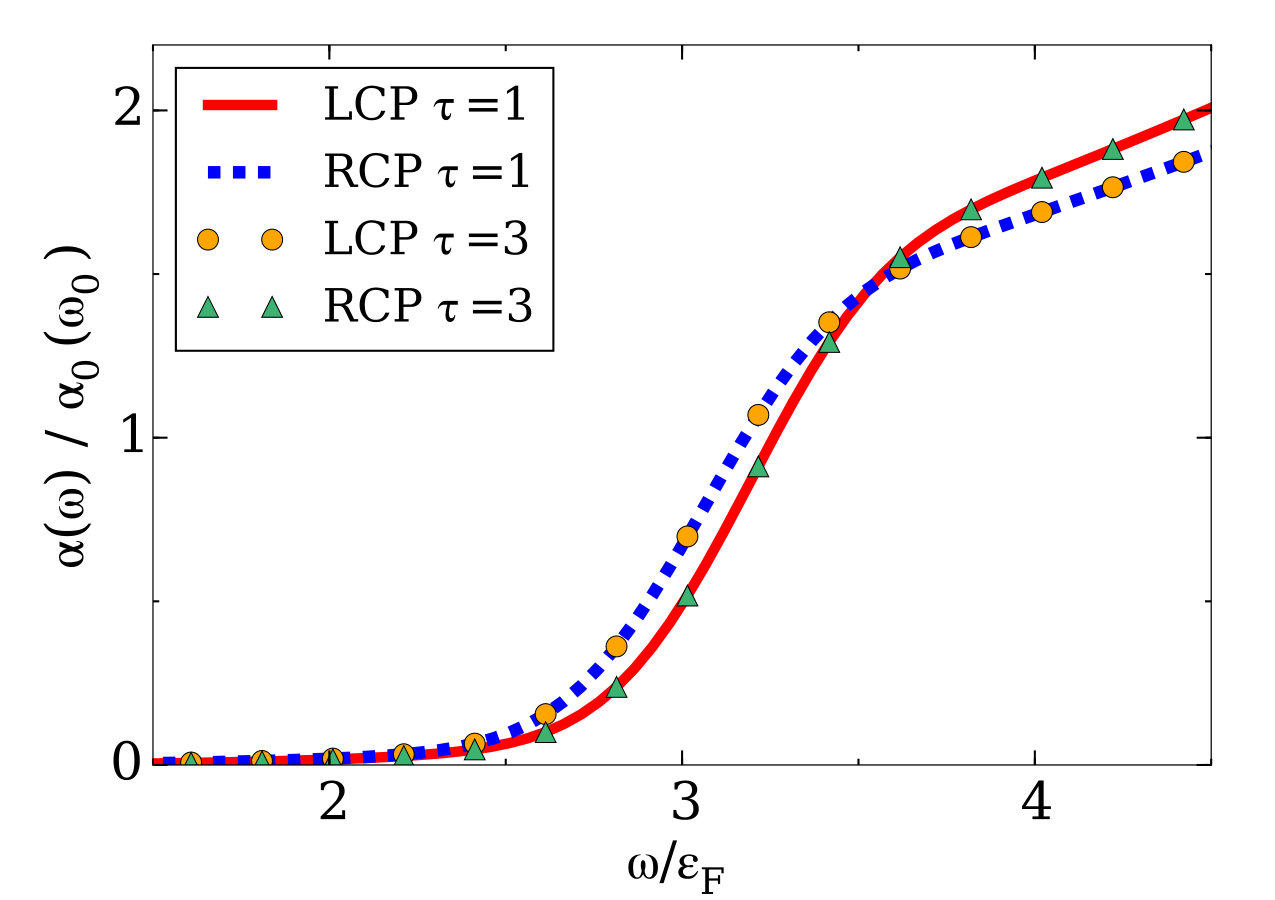 Figure 3
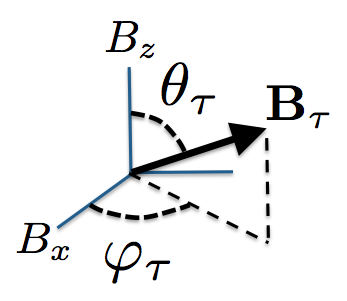 Figure 4
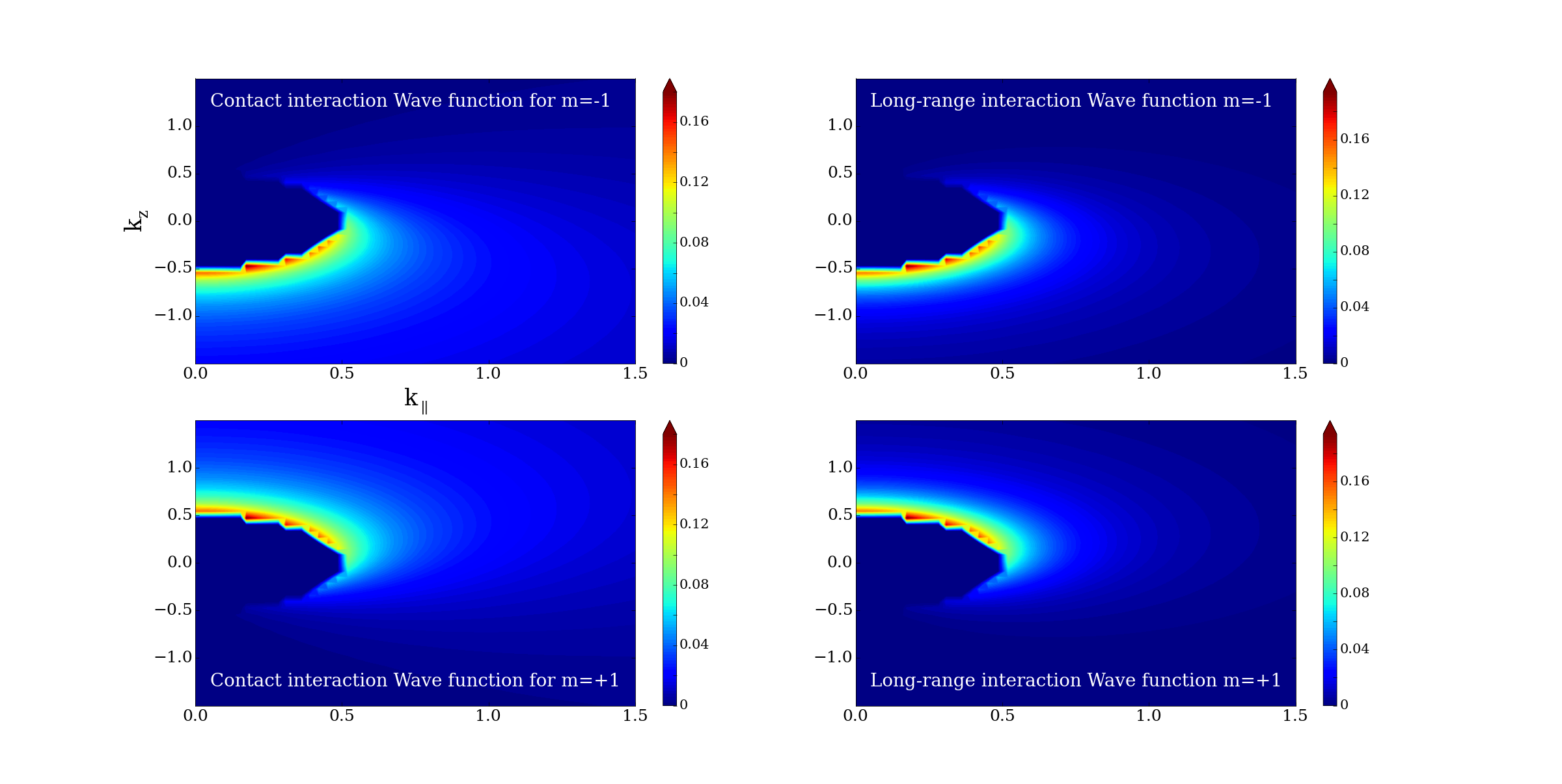 Figure 5
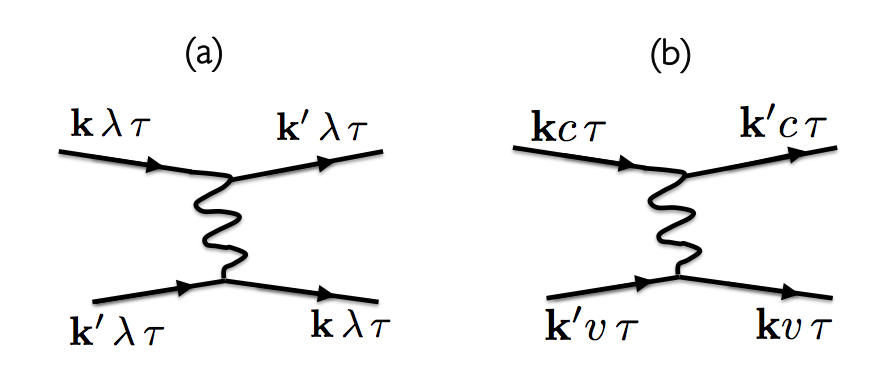 Figure 6
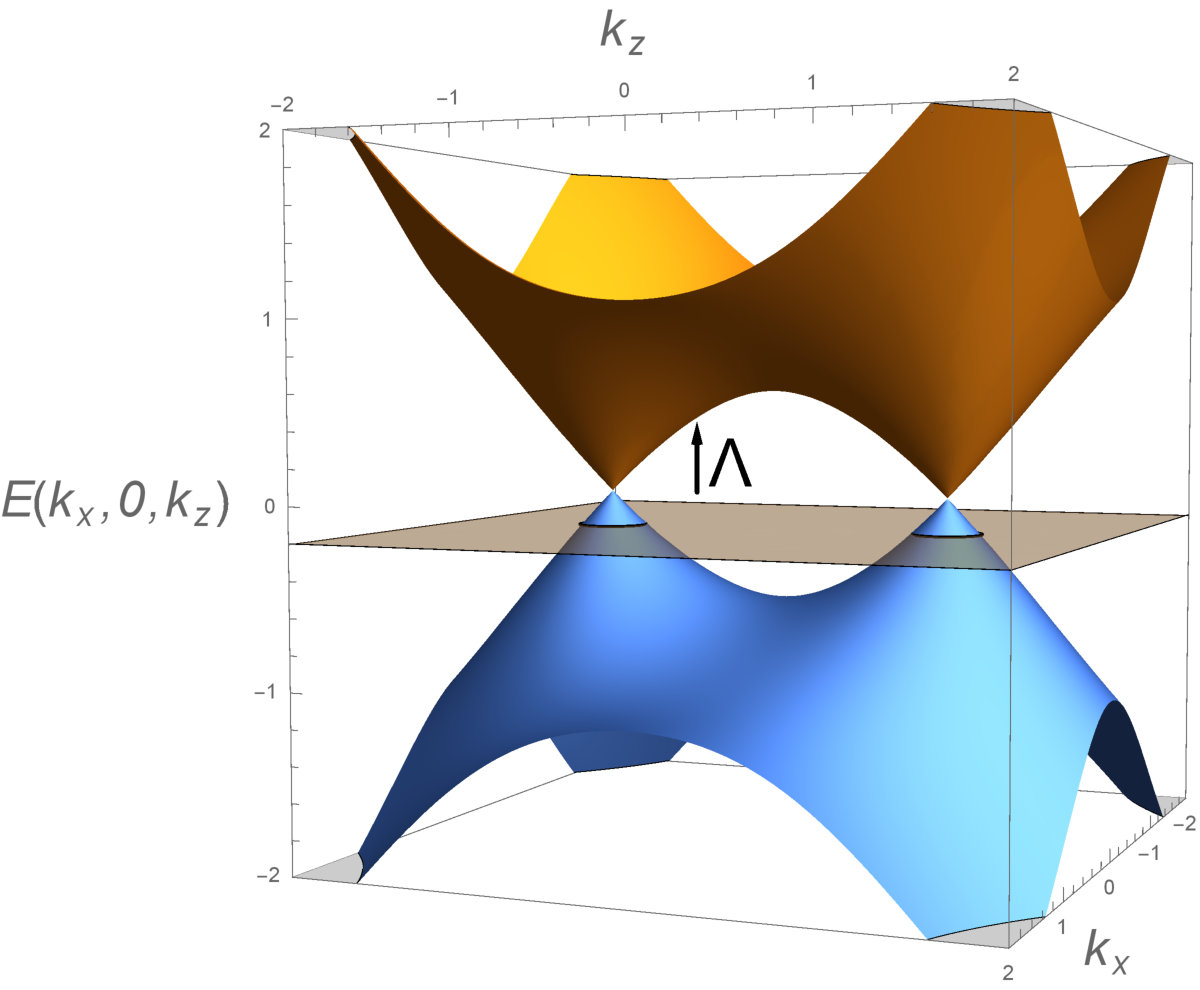 Figure 7
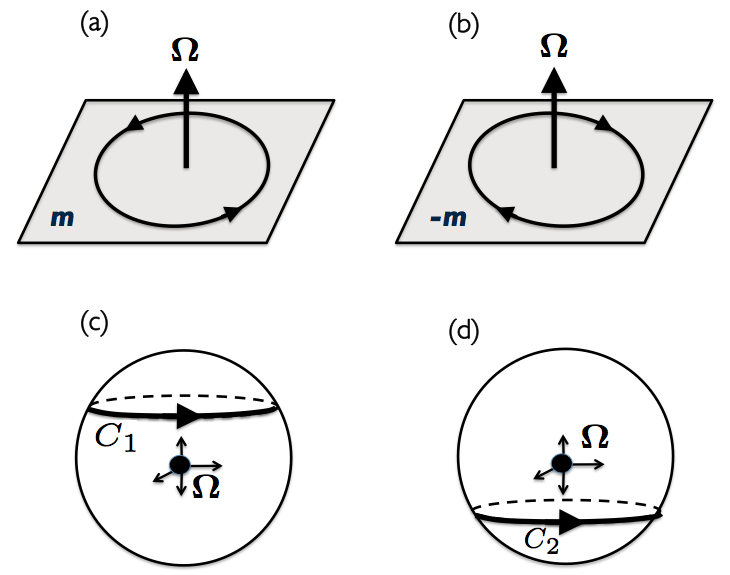 Figure 8
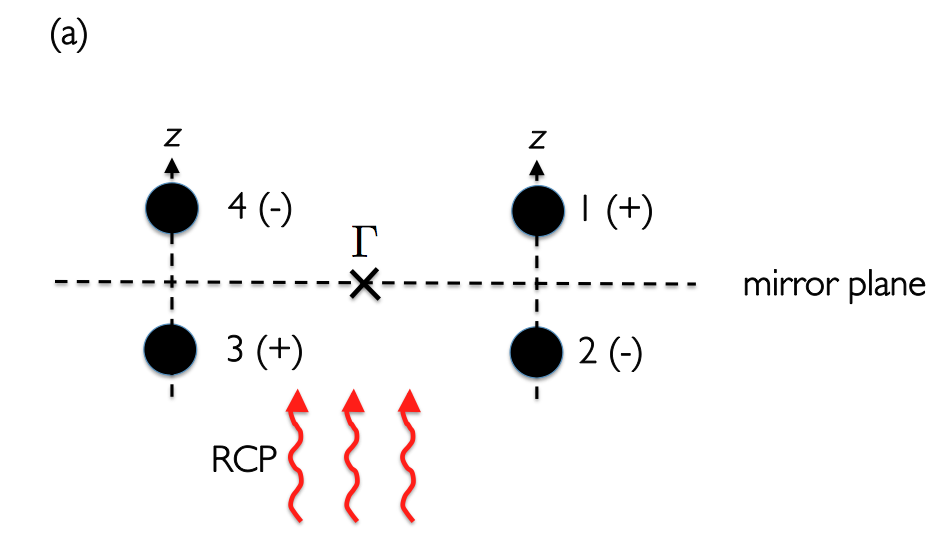 Figure 9
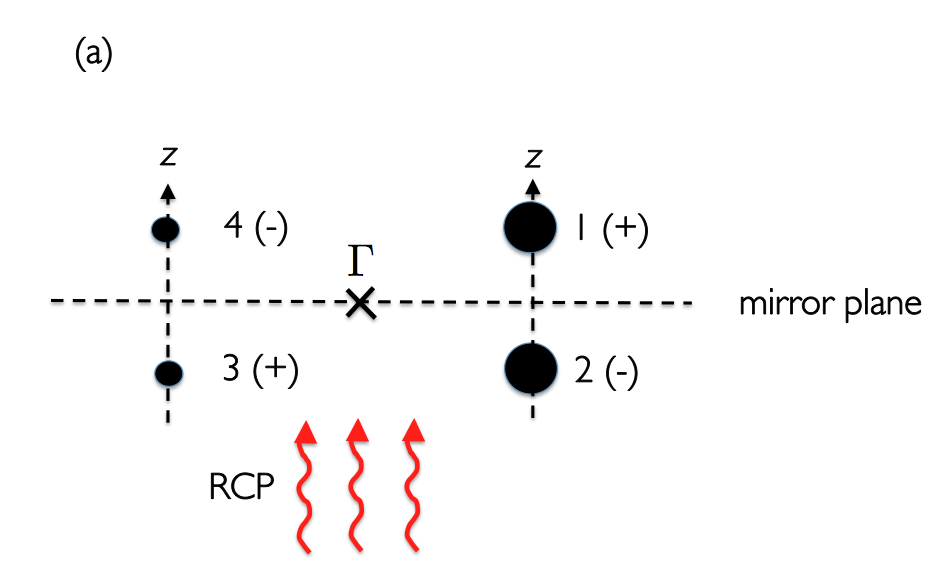 Figure 10
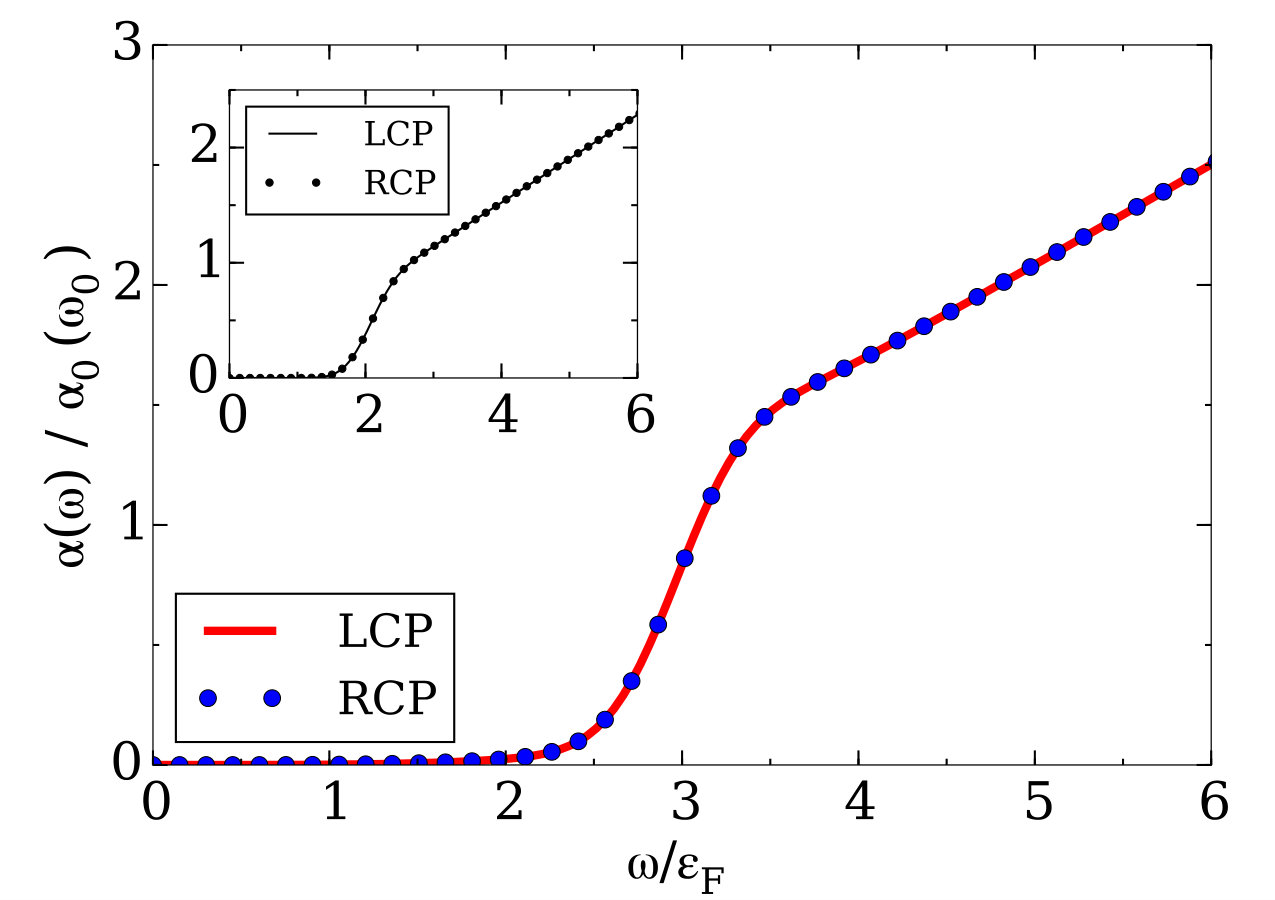 Figure 11
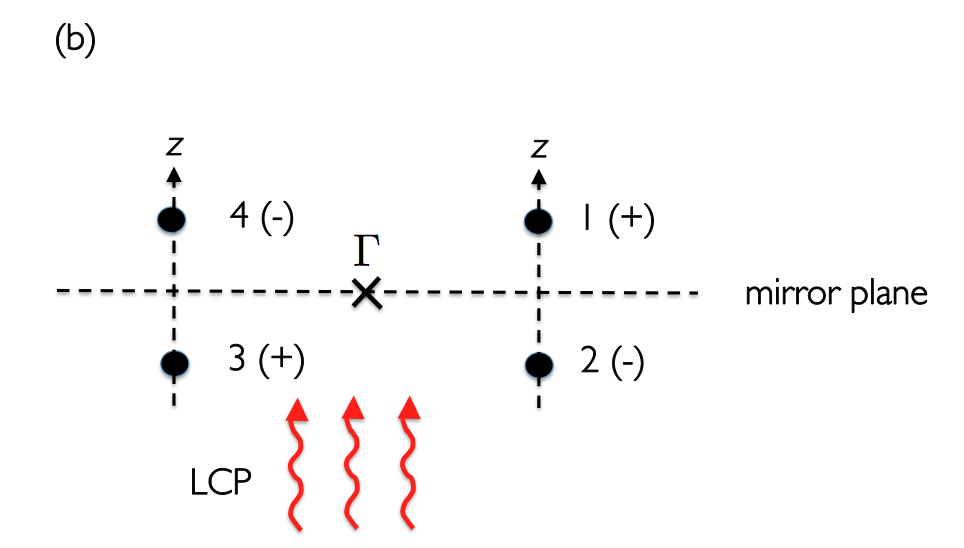 Figure 12
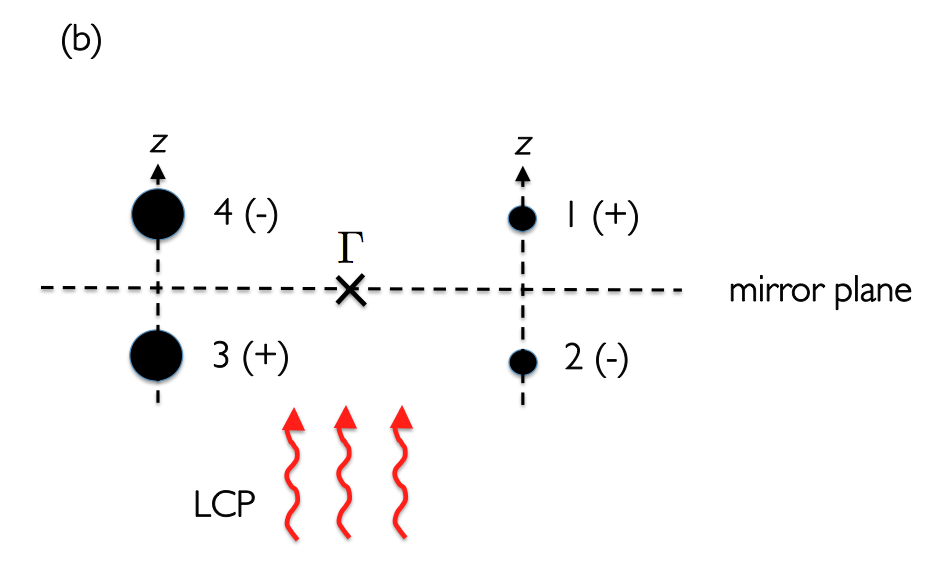 Figure 13
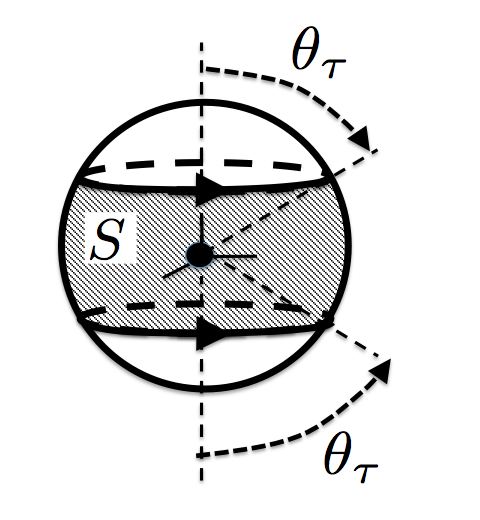 Figure 14
| Nodes | ||||
|---|---|---|---|---|
| Nodes | ||||
|---|---|---|---|---|
Peer Reviews
No public reviews on file for this paper yet. If you reviewed it on a platform where reviews are public (OpenReview, ICLR, NeurIPS, ICML), you can paste yours below so the community can read it here.
Videos
No videos yet. Explain this paper in a talk, walkthrough, or lecture? Add one.
Optical absorption in interacting and nonlinear Weyl semimetals
Simon Bertrand
Ion Garate
René Côté
Institut Quantique, Regroupement Québécois sur les Matériaux de Pointe, Département de Physique, Université de Sherbrooke, Sherbrooke, Québec, Canada J1K 2R1
Abstract
It has been recently predicted that the interplay between Coulomb interactions and Berry curvature can produce interesting optical phenomena in topologically nontrivial two-dimensional insulators. Here, we present a theory of the optical absorption for three-dimensional, hole-doped Weyl semimetals. We find that the Berry curvature, Coulomb interactions and the nonlinearity in the single-particle energy spectrum can together enable a light-induced valley polarization. We support and supplement our numerical results with an analytical toy model calculation, which unveils topologically nontrivial Mahan excitons with nonzero vorticity.
I Introduction
The discovery of Weyl semimetalsreviews (WSM) has ignited a race of experiments aimed at identifying unambiguous physical signatures of Weyl fermions in condensed matter. Thus far, the main efforts have been deployed towards the measurement of the chiral anomaly in electric and thermoelectric transport.huang2015 ; yang2015 ; li2016 ; li2016b ; zhang2016 ; hirschberger2016 However, the various subletiesdosreis2016 ; arnold2016 afflicting these experiments have put in evidence the need to develop alternative probes of Weyl fermions.
One promising alternative route consists of measuring optical properties of WSM. Indeed, recent theories have predicted numerous optical phenomena that originate from the hallmark energy dispersion and chirality of Weyl fermions. To name but a few, predictions include the violation of the Wiedemann-Franz law, tabert2016 a photoinduced anomalous Hall effect, chan2016 ; song2016 a Berry-phase-induced photovoltaic effect,ishizuka2016 a quantized circular photogalvanic effect,dejuan2016 a magnetic-field-induced infared absorption from phonons,song2016b ; rinkel2016 and a magnetic-field-induced second harmonic generation.zyuzin2017 As of now, these predictions await experimental confirmation in spite of recent reports on related optical effects. wu2016
A common element to all aforementioned theoretical investigations of optical properties in WSM is that they either approximate the single-particle energy dispersion around the Weyl nodes to be perfectly linear, or they neglect electron-electron interactions. Hence it is natural to ask whether the interplay of band curvature, Coulomb interactions and the Berry curvature could bring about new optical effects. Answering this question affirmatively is the main purpose of the present work.
Our work is partly motivated by the recent literaturegarate2011 ; efimkin2013 ; zhou2015 ; srivastava2015 on the impact of the Berry curvature on excitons of two-dimensional (2D) insulators. In topologically trivial 2D insulators, the exciton binding energy is independent of the sign of the angular momentum of the electron-hole pair about the direction perpendicular to the 2D plane. In contrast, in topologically nontrivial 2D insulators, the flux of the Berry curvature through the area occupied by the exciton in momentum space has opposite signs for exciton states of opposite angular momenta (see Figs. 1a and b). This results in a splitting of the degeneracy in their binding energies, which in turn manifests itself in a difference in the optical absorption between right- and left-circularly polarized lights (hereafter referred to as RCP and LCP, respectively). Such phenomenon has been predicted to occur for magnetized surfaces of three dimensional topological insulators,garate2011 ; efimkin2013 and for materialszhou2015 ; srivastava2015 (=W, Mo and =S, Se). In this work, we wish to explore a generalization of these ideas to three dimensional (3D) WSM.
At first glance, the intended generalization is not obvious. In the 2D insulator, the presence of a gap in the energy spectrum plays an essential role, for two reasons. First, the gap is necessary in order to have a nonzero Berry curvature. Second, the gap protects the exciton states from hybridization with the particle-hole continuum, and localizes the momentum-space wave function of the exciton in the neighborhood of the gap minimum.
Unlike the 2D insulator, a WSM has a gapless energy spectrum (barring excitonic, charge-density-wave, or related instabilities, for which no experimental evidence exists to date). Moreover, although a hole-doped WSM does contain an optical gap at the Fermi surface, in this case excitons are not separated from the particle-hole continuum and become resonances. However, these differences with respect to the 2D insulating case do not pose a serious problem, because it is sensible to calculate the effect of Coulomb interactions and Berry curvature in the optical absorption even when excitons are hybridized with the particle-hole continuum. A more serious difference is that, unlike in 2D insulators, the Berry curvature in a WSM has the texture of a hedgehog and, accordingly, the flux of the Berry curvature through exciton orbits of a given angular momentum in 3D momentum space changes sign between opposite hemispheres (see Figs. 1c and d). This then creates the concern that Berry curvature effects will tend to cancel out from the optical absorption, because the latter involves a sum of interband transitions over a constant energy surface in momentum space.
As it turns out, the aforementioned concern is materialized when the dispersion of the Weyl nodes is perfectly linear. In such situation, the absorption spectra for LCP and RCP lights become identical, as if the Berry curvature effects were averaged out. However, when (inevitable) nonlinear terms in the electronic dispersion are accounted for, the Berry curvature effect is no longer averaged out and the LCP and RCP absorption spectra become unequal. This is the main result of our work.
The rest of this paper is organized as follows. In Section IIA, we present a model Hamiltonian for a 2-band WSM, including Coulomb interactions and the coupling to an external electric field. As a consequence of the low-energy approximation adopted therein, the model comes with an ultraviolet energy cutoff, which is chosen to be large compared to the Fermi energy (measured from the Weyl node), but small compared to the internodal distance. In addition, we limit ourselves to the long-ranged part of Coulomb interactions, thereby neglecting the Coulomb-interaction-induced internode scattering. One technical advantage of this approximation is that the optical absorption of each node may be studied separately. This is a good approximation insofar as the nodes are sufficiently far from each other in momentum space, a circumstance that may require e.g. strong spin-orbit interactions.
In Sec. IIB, we review the formalism of the optical absorption, and apply it to a generic two-band semiconductor. We put particular emphasis in the discussion of the effective electron-hole interaction matrix element, which inherits information about the Berry curvature. In Section IIC, we apply the formalism of the preceding section to the nonlinear WSM introduced in Ref. [ishizuka2016, ]. In this nonlinear model, the Fermi surface is no longer spherically symmetric, though it maintains a cylindrical symmetry about the axis separating two neighboring Weyl nodes of opposite chirality. In addition, we extend the model to more realistic WSM containing multiple Weyl nodes, with a focus on a time-reversal-symmetric WSM and an inversion-symmetric WSM. In both cases, we assume the presence of at least a mirror plane, which is a common occurrence in most WSM. One important result of this section is that the optical absorption for RCP light involves particle-hole pairs with angular momentum (in units of ) around the axis of the cylinder, while the optical absorption for LCP light involves electron-hole pairs of angular momentum . These selection rules, which hold so long as the propagation direction of the light is parallel to the axis of cylindrical symmetry, are central to the main results of this paper.
Section III is devoted to numerical results. The first main finding is that LCP and RCP absorption spectra are degenerate in the perfectly linear WSM model. We attribute such degeneracy to a pseudo time-reversal symmetry that emerges in the linear spectrum approximation. The nonlinear terms in the spectrum break this symmetry, and consequently LCP and RCP absorption spectra become non degenerate. Roughly speaking, the nonlinearity in the single-particle spectrum enables the Berry curvature to manifest itself in the optical absorption spectrum. The difference between the LCP and RCP absorption spectra (which we variously refer to as the RCP-LCP splitting/asymmetry/difference) scales with the frequency of the absorbed photon. This is a direct consequence of the fact that higher-frequency photons excite electron-hole pairs of higher momenta (where band curvature effects are more pronounced). In a WSM with multiple Weyl nodes, the combination of Coulomb interactions, nonlinearity and Berry phase results in a light-induced valley polarization. Although valley polarization has been amply studied in graphenerycerz2007 and topologically nontrivial 2D insulators,dai2012 to the best of our knowledge the prediction of valley polarization in WSM is new.
Finally, Sec. IV is devoted to an approximate analytical solution of the problem, based on the replacement of the Coulomb potential by a contact interaction. The aim of this section is to corroborate and better understand the numerical results of the preceding section. Simple analysis shows that the electron-hole pairs near the absorption threshold can be regarded as topological Mahan excitons:mahan1966 they have exponentially small binding energies and contain nodes with nonzero vorticity. Moreover, the analytical solution allows to relate the asymmetry between the LCP and RCP absorption spectra to the Berry curvature. Specifically, the asymmetry emerges from a nonzero average over the Fermi surface of the component of the Berry curvature along the direction separating two neighboring nodes with opposite chirality. Nonlinear terms in the energy dispersion are essential in order to have a nonzero value for said average.
Concerning notation, we take and SI units throughout.
II Model and formalism
II.1 Hamiltonian
In the low-energy approximation, a WSM is characterized by a set of Weyl nodes, which we label with an index . In the absence of Coulomb interactions, the electronic structure around a node is described by an effective two-band Hamiltonian
[TABLE]
where is a pseudospin denoting the two bands that touch at the Weyl node, is the wave vector measured from the node, and is an effective magnetic field acting on the pseudospin space. This model is valid for , where is an ultraviolet energy cutoff such that is small compared to the internodal distance. The eigenvectors of are
[TABLE]
where and stand for the conduction and valence band, respectively, whereas and are the polar and azimuthal angles of the vector (see Fig. 2). The corresponding eigenvalues are and . In the second quantized form, the noninteracting model can thus be written as
[TABLE]
where and is an operator that creates an electron in state .
In this work, we wish to investigate the influence of electron-electron interactions in the optical absorption. In the second quantized form, the Coulomb interaction reads
[TABLE]
where is the screened Coulomb potential. The field operators in Eq. (9) can be expanded onto the band eigenstates near the Weyl nodes,
[TABLE]
where , is the volume of the sample, is the location of node in momentum space and is the wave vector measured from the node. Substituting Eq. (10) in Eq. (9), we get
[TABLE]
where
[TABLE]
is the Fourier transform of , is the vacuum permittivity, is the contribution to the dielectric constant coming from the high-energy bands not included in Eq. (1), and is the static dielectric function originating from particle-hole excitations in the two-band model. In the derivation of Eq. (II.1), we have neglected the Fourier modes of involving values of larger than the high-energy cutoff. This approximation is motivated by the fact that the optical absorption of weakly doped WSM is dominated by the long-wavelength part of the Coulomb interaction. Consequently, internode scattering produced by Coulomb interactions is neglected and all momenta appearing in Eq. (II.1) have cutoffs.
There is one more approximation to be made for . Namely, we are to neglect interband Coulomb scattering (from the conduction to the valence band or vice versa), which is justified based on the facts that (i) the Coulomb interaction is maximal at small momentum transfer between the scattered electrons, (ii) the overlap between Bloch spinors at the same momenta and different bands vanishes. This then leaves us with the Coulomb scattering processes depicted in Fig. 3. Similar approximations are common in textbook discussions of the optical absorption.haug2009
The last ingredient of the model is the coupling between electrons and the electromagnetic field. In the “length gauge”,aversa1995 we have
[TABLE]
where is the electric field (approximately uniform) corresponding to the incident light. Adopting the low-energy and dipole approximations, and keeping only interband terms (which are the ones that participate in optical absorption), Eq. (13) becomes
[TABLE]
where is measured with respect to the nodes,
[TABLE]
is the interband dipole matrix element and is the velocity operator of noninteracting electrons. The full Hamiltonian that we will consider is thus
[TABLE]
II.2 Optical absorption
The main objective of this work is to investigate the optical absorption of a hole-doped WSM (see Fig. 4). The central quantity in the optical absorption is the macroscopic interband polarization (dipole moment per unit volume) defined as
[TABLE]
where
[TABLE]
is the (dimensionless) interband coherence, and the average in Eq. (18) is taken over the ground state of . In equilibrium and in absence of an excitonic condensate, . However, under light irradiation, , which then determines the optical absorption coefficient. In order to calculate , we follow the equation of motion approach from Ref. [haug2009, ] and arrive at
[TABLE]
where is the frequency of the electric field, and are the single-particle occupation factors, is an adiabatic switch-on factor to ensure that when ,
[TABLE]
is the Coulomb interaction including the band eigenstate overlap matrix elements, and
[TABLE]
is the difference between the conduction and valence band self-energies, which renormalizes the optical gap. For brevity, we will refer to it as the self-energy. In the derivation of Eq. (19), we have assumed that there is no internode coherence induced by the light ( for ). Accordingly, the optical absorption of each node can be studied separately. In addition, we have adopted the quasi-equilibrium approximation,haug2009 so that are time-independent Fermi-Dirac distributions with an effective Fermi energy. In the linear response approximation pursued below, these occupation factors will be taken equal to those in absence of light. Note that is implicitly present in Eq. (19) through .
The quantity appearing in the Coulomb interaction is not gauge-invariant, though, of course, all physical observables (like the optical absorption) will be independent of the gauge choice. Our gauge choice is set by Eq. (4), which yields
[TABLE]
For brevity, we denote and as and , respectively.
Since the Coulomb interaction is strongest when , we analyze the Coulomb matrix elements in that regime. We get
[TABLE]
where , and are the Berry connections for the conduction and valence bands. Note that these connections are defined with respect to rather than . Explicitly,
[TABLE]
represent the gauge fields created by a monopole located at the Weyl node. Then, Eq. (22) becomes
[TABLE]
This is nothing but the phase of a particle moving on a Schwinger vector potentialshnir2005
[TABLE]
which in our case is the “joint” (particle-hole) Berry connection. The factor , which will play an important role in our results, can be associated with the flux of the “joint” Berry curvature
[TABLE]
through the surface shown in Figure 5.
One of the main drives of our work is to evaluate how the Berry phase appearing in the Coulomb matrix elements impacts the optical absorption of a WSM. In topologically nontrivial two dimensional systems, such as the surface of a magnetized topological insulatorgarate2011 or compoundszhou2015 ; srivastava2015 (=Mo, W; =S, Se), a true energy gap in the spectrum is essential in order to have a nonzero Berry curvature. Furthermore, the gap ensures that the exciton wave function is peaked near the bandgap minimum, where (the sign depends on the sign of the Berry curvature). In such systems, the effect of the Schwinger potential amounts to shiftingefimkin2013 the azimuthal angular momentum of the electron-hole pair by , i.e., , thereby leading to chiral excitons.garate2011 In our case, there is no true energy gap in the spectrum of the WSM, but instead we have an optical gap at the Fermi surface. Moreover, the value of at the Fermi surface can take both positive and negative values. Consequently, the factor tends to average out from the theory and one may expect that the effect of the Berry phase in Coulomb matrix elements will not impact the optical absorption of a WSM in a qualitative manner. Nevertheless, as we shall show below, this expectation holds only for a WSM with a perfectly linear energy spectrum. The inevitable nonlinearities in the energy spectrum will prevent the complete averaging-out of the Schwinger potential, and will translate into an asymmetry between the optical absorption spectra of LCP and RCP lights.
The standardhaug2009 strategy to solve Eq. (19) is to first to expand onto an orthonormal basis as
[TABLE]
where are complex coefficients to be determined and the function satisfies a Wannier equation
[TABLE]
This equation can be interpreted as an effective Schrödinger equation for a particle-hole pair with excitation energies and wave functions , where is the eigenvalue index. A similar equation may be derived from the Green’s function approach.onida2002 The numerical and (approximate) analytical solutions of Eq. (19) will be discussed in Secs. III and IV, respectively. For now, let us suppose that the eigenvalues and the eigenfunctions are known. Combining Eqs. (19), (28) and (II.2), and using , we obtain
[TABLE]
The valley-resolved interband polarization can now be written as
[TABLE]
while the full interband polarization reads . In linear response theory, it is customary to rewrite Eq. (31) as
[TABLE]
where is the (dimensionless) valley-resolved electric susceptibility tensor. Below, we will be interested in the absorptive (imaginary) part of the susceptibility, . The eigenvalues of , denoted as , give the optical absorption coefficients (in units of inverse length) for node :
[TABLE]
where is the eigenvalue index, is the speed of light and is the refractive index of the material (whose frequency-dependence may be neglected in the range of interest). The total absorption coefficient can be determined experimentally via reflectivity measurements.cardona2010 The calculation of valley-resolved absorption coefficients will be the main objective of Secs. III and IV.
II.3 Application to nonlinear WSM
Thus far, the formalism presented has been valid for a generic two-band model with multiple valleys. Here, we discuss the case of a WSM in more detail. The non-interacting Hamiltonian near one of the nodes (e.g., ) is characterized by the toy modelishizuka2016
[TABLE]
where , and and are the Dirac velocities. The parameters and account for the leading nonlinear corrections to the Weyl Hamiltonian (note that and have different dimensions). The parameter is not to be confused with the optical absorption coefficient ; we will attach the frequency label only to the latter. As we shall see, the nonlinear terms in the single-particle energy spectrum alter the optical properties of the WSM qualitatively. Equation (II.3) displays a cylindrical symmetry around the direction. Physically, is the direction that separates a pair of Weyl nodes of opposite chirality. In Eq. (4), coincides with the azimuthal angle of the wave vector . However, differs from the polar angle of whenever or are nonzero.
The nonlinear Weyl model is valid only at low energies, , where is an ultraviolet (UV) cutoff. Consequently, all momenta appearing in Eq. (II.3) have UV cutoffs (which are not symmetric about in presence of nonlinear terms). The energy cutoff is chosen to be large compared to , the Fermi energy measured from the Weyl node ( for a hole-doped WSM). In addition, the cutoff must be small enough so that the nonlinear terms in the dispersion are subdominant with respect to the linear ones.
In a WSM, Weyl nodes appear in pairs of opposite chirality. In this work, we shall be interested in two cases: (i) WSM with time-reversal (TR) symmetry (and broken inversion symmetry), (ii) WSM with inversion (I) symmetry (and broken TR symmetry). For both cases, we shall assume that the crystal has at least one mirror symmetry, which is a common circumstance.
In a WSM with time-reversal symmetry, there must be at least four nodes (unless a node occurs at a time-reversal-invariant momentum, a situation that we do not consider here). We adopt the minimal case, i.e., four nodes, though the generalization to more nodes is straightforward. Nodes 1 and 2 are related to one another by a mirror plane,
[TABLE]
while nodes 3 and 4 are the time-reversed partners of nodes 1 and 2, respectively, e.g.
[TABLE]
In a non-centrosymmetric material with spin-orbit coupling, the pseudospin will transform like a spin under time reversal and mirror operations.hirayama2015 Because the direction in the nonlinear model is the one separating a pair of nodes of opposite chirality, we take a mirror plane perpendicular to : . In addition, , where is the complex conjugation. Table 1 lists the form of for the different nodes. In addition, these symmetries impose , and . Accordingly, is the same for all , i.e., the four Weyl nodes are at the same energy. In addition, for the sake of concreteness, we will hereafter neglect the momentum-dependence of . Thus, we will neglect the tilt of Weyl nodes and our results will be focused on the simplest WSM of type I. In practice, this means that will disappear from Eqs. (19) and (II.2).
A minimal WSM with inversion symmetry has two Weyl nodes, but for consistency we consider the case of four nodes here too. Nodes 1 and 2 are related to one another the mirror plane , while nodes 3 and 4 are the inversion partners of nodes 1 and 2, respectively, e.g.
[TABLE]
Here, is the inversion operator, which takes and acts as an identity in space. Table 1 lists the form of for the different nodes. The symmetry relations for are identical to the ones from the preceding paragraph. Accordingly, the four Weyl nodes are at the same energy in this case as well.
Real WSM often have different sets of Weyl nodes at different energies. Our model captures a set of equienergetic Weyl nodes that are closest to the Fermi energy. The sets of Weyl nodes that are further away from the Fermi energy will have their optical absorption thresholds at higher frequencies, and thus their contribution can be separated out.
Because the model Hamiltonian for each node has cylindrical symmetry, the equation of motion for the interband coherence (cf. Eq. (19)) may be reduced to an effective two-dimensional problem in momentum space, which speeds up its numerical solution very significantly. To see this, we begin by expanding
[TABLE]
where is the azimuthal angle of , and is a good (angular-momentum) quantum number associated with the cylindrical symmetry of the model. Replacing Eq. (38) in Eq. (19), multiplying both sides of the resulting equation by , integrating over , and recognizing that depends on the azimuthal angles only through , we obtain
[TABLE]
where is the renormalized interband transition energy,
[TABLE]
is the effective Coulomb interaction between the electron and the hole in the -th channel at node ,
[TABLE]
is the dimensionless parameter quantifying the strength of Coulomb interactions, and
[TABLE]
is the interband dipole matrix element projected onto the the -th channel. To lighten the notation of Eq. (39), we have introduced
[TABLE]
where is the Heaviside function imposing the ultraviolet cutoff.
From Eq. (40), it follows that is purely real. Similarly, it is easy to see that the difference between and is proportional to , which can be related to fluxes of the joint particle-hole Berry curvature through surfaces of the type shown in Fig. 5.
As expected from symmetry, different values of do not couple in Eq. (39). Much like for Eq. (19), the strategy to solve Eq. (39) is to write
[TABLE]
where are coefficients to be determined and is a solution of the Wannier equation
[TABLE]
This equation can be recasted in the form of an eigenvalue problem, which implies diagonalizing a real non-symmetric matrix (whose eigenvalues will nonetheless be real). Proceeding exactly like in the derivation of Eq. (II.2), we arrive at
[TABLE]
where is the complex conjugate of and we have used . From this equation, we extract the valley-resolved susceptibility tensor, which has the block-diagonal form
[TABLE]
The block can be diagonalized by switching to the basis of RCP and LCP light propagating along : , where . The corresponding eigenvalues are . Hereafter, we concentrate on the imaginary parts of these (positive) eigenvalues, denoted and , which give the absorption coefficients for RCP and LCP electromagnetic waves whose propagation direction is along , respectively. In Ref. [chan2016, ], it has been shown that circularly polarized light leads to a shift in the position of Weyl nodes. This effect does not take part in our expressions for the linear susceptibility , though it would have to be taken into account in the full solution of the semiconductor Bloch equations. For the node, some lengthy but straightforward algebra yields
[TABLE]
where we have used the fact that , so that . Using Tables 1 and 2, the absorption coefficients for the three other nodes can be readily deduced. For example, can be obtained from via , , and . In the time-reversal-symmetric WSM, () can be obtained from () by and . In an inversion-symmetric WSM, and . An important observation from Eq. (II.3) is that only particle-hole excitations contribute to (optical absorption of RCP light), whereas only particle-hole excitations contribute to (optical absorption of LCP light). This selection rule is a consequence of taking the wave vector of the light parallel to the wave vector that connects two Weyl nodes of opposite chirality. It is also the reason why the difference between and , alluded to after Eq. (II.3), can lead to a different optical absorption for LCP and RCP lights.
One can similarly derive an expression for , which will involve only particle-hole excitations. Since the most interesting physical effects emerge under circularly polarized light, we will not consider from here on.
III Numerical results
In order to evaluate the optical absorption for LCP and RCP lights, we solve Eq. (II.3) following the numerical approach of Ref. [garate2011, ], and afterwards enter the solution into Eq. (II.3) (or variants thereof, in the case of nodes). The Dirac delta function of Eq. (II.3) is approximated by a gaussian with a standard deviation of . In the numerical calculation, we discretize the momenta and into points each, following a Gauss-Legendre quadrature. By redoing the calculation with , we have verified that the numerical results for the optical absorption have already converged at . Also, we take , and everywhere (), except for the case of non-interacting WSM (in which case ). Concerning the dielectric function , we adopt the Thomas-Fermi approximation with the screening wave vector , being the node-resolved density of states at the Fermi energy (we also add the leading corrections, though they do not make a significant impact). Finally, unless otherwise stated, we take .
III.1 Single Weyl node
Let us first discuss our results for a single Weyl node, e.g. the node. For a Weyl node with perfectly linear dispersion, the optical absorption for RCP and LCP lights turns out to be identical regardless of Coulomb interactions (see Fig. 6). Mathematically, the RCP-LCP degeneracy originates from the averaging out of the term in Eq. (40). Heuristically, the lack of chirality effects in the optical absorption of a linear WSM can be understood from the arguments sketched in Fig. 1. Physically, the degeneracy is a consequence of a pseudo time-reversal symmetry of the linear model,
[TABLE]
where and is the complex conjugate operator. Under , and hence RCP LCP. Thus, if the model Hamiltonian has a pseudo time-reversal symmetry, the absorption coefficient must be the same for RCP and LCP. This result is at first glance disappointing, because it establishes the degeneracy of LCP and RCP absorption spectra in spite of the nontrivial Berry curvature.
However, the situation becomes more interesting when nonlinear terms in the energy spectrum are incorporated. These terms break the pseudo time-reversal symmetry, i.e., Eq. (49) is no longer obeyed. Consequently, RCP and LCP lights can, and do, produce different absorption spectra (see Fig. 7). This is a qualitatively new effect that cannot be captured in the linear approximation.
Excluding self-energy effects, the difference between the LCP and RCP absorption intensities at frequency is governed by the dimensionless parameters
[TABLE]
assuming . If these dimensionless parameters are small compared to unity, the RCP-LCP splitting is small. Consequently, the RCP-LCP splitting is larger at higher frequencies of the incident light. Along the same lines, and determine the magnitude of the RCP-LCP asymmetry near the optical absorption threshold (). Hence, one way to enhance the RCP-LCP difference near the threshold is to increase the equilibrium hole concentration of the WSM. In addition, we find that the RCP-LCP asymmetry near the threshold is greatly amplified by Coulomb interactions. This is particularly true for the situation with : in this case, will not induce any asymmetry between RCP and LCP absorption spectra unless Coulomb interactions are included. Finally, whether RCP absorption is stronger or weaker than LCP absorption depends on the details of the Coulomb interactions and the electronic structure, though one important observation is that the RCP-LCP difference changes sign when both and reverse their signs.
From a numerical standpoint, the RCP-LCP splitting comes from two sources. One of the sources is the last term in the numerator of Eq. (40), containing ; this term is no longer averaged-out in the presence of nonlinear terms in the energy spectrum. The second source of the RCP-LCP difference is the self-energy term in Eq. (II.3). Although the self-energy is independent of , it produces an anisotropic optical gap in presence of nonlinear terms in the energy spectrum, which affects differently the LCP and RCP absorption due to the disparity between the and dipole matrix elements. Moreover, because the self-energy depends on the UV cutoff, it introduces another pair of dimensionless parameters characterizing the RCP-LCP splitting, namely and .
Unexpectedly, the origin of the RCP-LCP asymmetry does not reside in the difference between particle-hole excitation energies with and ; we find these energies to be very similar to each other. If we ignore self-energy effects, the RCP-LCP asymmetry results purely from the difference between the wave functions corresponding to and particle-hole pairs. We will return to this point in Sec. IV, where it will be shown that the difference between the and wave functions can be given a topological interpretation.
For completeness, Fig. 8 shows the dependence of the optical absorption on the ultraviolet cutoff of the model. The main impact of the cutoff on our results takes place via the self-energy term, which shifts the optical absorption threshold to higher frequencies. A larger cutoff implies a larger self-energy correction. It follows that a larger cutoff will produce a larger the RCP-LCP splitting near the (renormalized) absorption threshold, because (i) and become larger due to an increased threshold frequency, and (ii) and become larger as well. As a result, the valley polarization near the optical absorption threshold can vary from a few percent to several tens of percent as a function of the cutoff. Consequently, a quantitative study of the valley polarization in WSM will require starting from an electronic structure that is devoid of a cutoff. This task is beyond the scope of the present work. At any rate, the qualitative features of the optical absorption spectrum are cutoff-independent.
III.2 Two nodes related by a mirror plane
Let us now consider the optical absorption in the node. By construction, this node is related to the node by a mirror plane perpendicular to . For a given handedness of the incident light, the optical absorption in the node is the same as that of the node, irrespective of nonlinearities and Coulomb interactions (see Fig. 7). Hence, circularly polarized light does not induce a chiral chemical potential in a WSM containing a mirror symmetry.
III.3 Time-reversal symmetric WSM
In Fig. 9, we display the optical absorption coefficient for the Weyl node, which is the time-reversed partner of node . The absorption spectrum for LCP light in the node coincides with the absorption spectrum of the RCP light in the node. This is not surprising, because time-reversal transforms LCP light into RCP light. The situation in this case is illustrated schematically in Fig. 10. Although the total optical absorption is the same for the LCP and RCP lights, the partial (valley-resolved) optical absorption is not. Due to the combined nonlinear energy spectrum and Coulomb interactions, RCP light excites more electron-hole pairs in and nodes, whereas LCP light excites more electron-hole pairs in and nodes. This implies a pairwise valley polarization induced by circularly polarized light. The valley polarization is amplified by Coulomb interactions and may be significant near the optical absorption threshold. Although it has been extensively studied in graphenerycerz2007 and topologically nontrivial 2D insulators,dai2012 we are not aware of prior theoretical or experimental reports of valley polarization in WSM.
III.4 Inversion-symmetric WSM
In our model of WSM with inversion and mirror symmetry, the node-resolved absorption coefficient is the same in all nodes. However, this coefficient differs between LCP and RCP lights. Hence, the total optical absorption is different for LCP and RCP incident lights (see Fig. 11). Such difference in absorption is allowed in a crystal without time-reversal symmetry. Once again, we emphasize that this effect would be absent in the linear approximation of the energy spectrum around the Weyl nodes.
III.5 Reversal of the direction of light propagation
Thus far, we have assumed that the direction of light propagation is along the positive direction. If the direction of propagation is reversed, the roles of LCP and RCP are exchangedyu2016 and consequently the valley polarization is reversed. In other words, LCP and RCP are exchanged in Figs. 7 and 9, while the small and large black circles are exchanged in Figs. 10 and 11.
IV Analytical results
The objective of this section is to support and supplement the numerical results of the preceding section with a simplified analytical solution of Eq. (II.3). Our approach is partly related to that of Ref. [shytov2015, ], which studied two-electron bound states. The main simplification consists of replacing the screened Coulomb potential in real space by a delta function potential. This approximation is valid at length scales that far exceed the screening length, i.e., for momenta that are small compared to the Thomas-Fermi screening wave vector . If is large compared to the momentum cutoff of the model (which is mathematically possible in the large limit, or in the high-doping limit, or else in the neighborhood of a van-Hove singularity for the density of states), but still small compared to the separation between the Weyl nodes, then we can approximate Eq. (40) as
[TABLE]
In this approximation, only channels contribute to the effective electron-hole attraction. Out of these, only the are active under irradiation by LCP and RCP lights. In addition, Eq. (IV) becomes independent of the interaction strength because is independent of in the Thomas-Fermi approximation. Finally, the interaction kernel is separable into “primed” and “non-primed” variables, which will enable an analytical solution of the corresponding Wannier equation. In fact, the problem at hand becomes a variation of the Cooper problem in the BCS theory of superconductivity.schrieffer1957
Let us consider the channel first. Dividing both parts of Eq. (II.3) by (which we assume to be nonzero), multiplying by and integrating over , we arrive at the condition
[TABLE]
where we have taken the zero temperature limit, and (hole-doped WSM). Besides, for simplicity, we have neglected the self-energy correction to the energy bands, so that . We remind the reader that the integrals over momenta are constrained by the condition (cf. Eq. (II.3)).
Equation(52) gives the electron-hole excitation energies corresponding to , at the valley . Proceeding in the same way, we find that the excitation energies for the channels must obey
[TABLE]
In order to obtain approximate analytical solutions of Eqs. (52) and (53), we begin by recognizing that
[TABLE]
where . Applying Eq. (54) to Eqs. (52) and (53), the latter become
[TABLE]
where is the valley-resolved density of states at energy and
[TABLE]
is the average of a function over a constant energy () surface in momentum space around the node .
The solutions of Eq. (IV), labeled by the index , are multiple. Here, we are interested in the solutions of energy near the optical absorption threshold. In this case, the integrands in Eq. (IV) will be peaked near and therefore we arrive at
[TABLE]
where
[TABLE]
In the derivation of Eq. (IV), we have neglected terms. The quantities are the binding energies of Mahan-like excitonsmahan1966 with azimuthal angular momentum . Also, Eq. (IV) is valid only for exponentially small binding energies ().
Let us discuss Eq. (IV) for some special cases. When (linear WSM), we find and
[TABLE]
which implies . Hence, the exciton binding energies in a linear WSM are non chiral.comment
Next, let us allow for nonlinear terms in the energy dispersion. It follows that . To be quantitative, it is convenient to proceed with the following change of variables,
[TABLE]
where and is the determinant of the Jacobian. In spherical coordinates, , with , and . The UV cutoff puts a constraint on , but not in and ; this is one advantage of the coordinate transformation in Eq. (60). The Jacobian is simple only in the case , which we adopt hereafter. For instance, in the node,
[TABLE]
As mentioned above, we take the UV cutoff in such a way that the nonlinear terms are always smaller than the linear terms. This imposes , which in turn ensures that . Using Eqs. (60) and (61), we obtain
[TABLE]
for . The presence of a UV cutoff guarantees that . Substituting Eq. (62) in Eq. (IV) and evaluating the integrals in the latter, we arrive at
[TABLE]
where we have once again taken and we have defined
[TABLE]
as a dimensionless parameter that quantifies the nonlinearities in the single-particle energy spectrum.
Let us analyze some limiting cases of Eq. (IV). When (weakly nonlinear regime), we have
[TABLE]
which is clearly compatible with the starting assumption of . Thus,
[TABLE]
i.e creates a chirality () in the exciton binding energies at a single Weyl node.
If (strongly nonlinear regime with ), we find
[TABLE]
where we have omitted and terms. Similarly, if (strongly nonlinear regime with ), we find
[TABLE]
In sum, in the large regime, the effect of chirality in the exciton bidning energies becomes more pronounced. Yet, much like in the weak regime, the strongest binding for () takes place in the () channel. In addition, the results in the strong regime remain consistent with our starting assumption of .
From Eq. (IV), it is clear that the difference between and originates from . As mentioned in Fig. 5, can be linked to the flux of the joint Berry curvature. It is likewise useful to notice that
[TABLE]
where is the Berry curvature defined in Eq. (27). In other words, the projection of the Berry curvature along the direction that connects two Weyl nodes of opposite chirality must have a nonzero average over the Fermi surface in order to produce an asymmetry between and exciton states. In the linear model (), and the effect of the Berry curvature in the energy splitting between and pairs averages out. This is a manifestation of the pseudo time-reversal symmetry of a Weyl node with linear dispersion (cf. Eq. (49)). In presence of nonlinear terms, and the Berry curvature produces a chirality in the optical absorption.
Thus, our simple analytical model predicts an asymmetry between and . However, both for and , the difference between and is extremely small ( and ). In consequence, any realistic broadening of the particle-hole excitation energies will make such difference utterly inconsequential for the optical absorption. This conclusion is in agreement with the numerical results obtained in Sec. III for the full model. There, we noted that the difference between and is very small for the full model, and that the origin of the asymmetry in the optical absorption lies in the wave functions of the Wannier equation (when ignoring the self-energy term). In order to explain this finding, we will now concentrate on the eigenfunctions of Eq. (II.3). In the approximation of the delta-function interaction, we get
[TABLE]
where are constants (independent of ) that may be determined from the normalization of the wave functions. The validity of Eq. (IV) may be checked by plugging it back into Eq. (II.3), with given by Eq. (IV).
Equation (IV) shows two features that hold regardless of the presence or absence of nonlinear terms in the single-particle energy spectrum. First, the particle-hole wavefunctions have nodes occuring at for , at for , and at both values of for . Second, the quantum number gives the vorticity of the wave functions along infinitesimal loops centered on the nodes. In a way, Eq. (IV) is the particle-hole analogue of the topological nodal Cooper pairs proposed by Li and Haldane in superconducting Weyl semimetals.li2015 One important difference is, however, that in our case exciton condensation is not necessary in order to have .
Figure 12 illustrates the wave functions for as a function of and , thereby confirming the presence of nodes at . Importantly, the same figure shows that the wave functions for the full problem with long range Coulomb interactions also contain nodes at . Consequently, the nodes of the wave functions and their vorticity are topologically robust (i.e., independent of the detailed nature of the Coulomb interaction).
Armed with Eq. (IV), we can understand analytically why the optical absorption at a given node is different for LCP and RCP. Starting from Eq. (II.3), using Eqs. (54) and (IV), assuming zero temperature, and (for simplicity) taking , we arrive at
[TABLE]
We are interested in the values of such that . Then, as shown above, the particle-hole excitation energies are essentially the same for and . Likewise, in the linear Weyl model, , and thus . However, when , there is a difference between and , which once again originates from a nonzero weighted angular average of and . This difference, controlled by the parameter , does not involve any exponentially small numbers, and gives the analytical confirmation of the RCP-LCP asymmetry found numerically in Sec. III. An approximate analytical evaluation combining Eqs. (IV) and (71) yields for , i.e. RCP absorption is stronger than LCP absorption. We have verified that this trend is in agreement with the numerical result in the appropriate situation (contact interaction, , no self-energy term).
We end this section by extending the analytical results to nodes. Let us start with the node, which is a mirror partner of the node. In order to transfer the result for to , we apply , , and . Clearly, . Similarly, it can be shown that is the same for the two mirror-related nodes: the key is to notice that for , while for the node. This gives an analytical explanation to why the optical absorption for mirror-partner Weyl nodes is the same regardless of nonlinearity and interactions.
In a WSM with time-reversal symmetry, the node is related to the node via . Thus, the parameter changes sign from one node to another. In this section, we have found analytically that the contribution from nonlinear terms to the optical absorption is an odd function of . Consequently, we have , which is what we found numerically in Sec. III.
V Conclusions
We have presented a theory of the optical absorption for three dimensional Weyl semimetals with a nonlinear energy dispersion, in presence of Coulomb interactions. The main prediction of this paper is that the node-resolved optical absorption coefficients for right- and left-circularly polarized lights differ, thereby giving rise to a valley polarization. This effect, whose origin we trace to a nonzero average of the Berry curvature over the Fermi surface, is amplified by Coulomb interactions and emerges only when the nonlinearities in the spectrum are included in the theory. Thus, it constitutes an example of new physical effects that can arise from the interplay between nontrivial band topology, electron-electron interactions and band curvature in Weyl semimetals.
We have corroborated the preceding numerical results by performing an analytical study of a simple model, where the screened Coulomb interaction is approximated by a contact interaction. This analytical approach has allowed us to identify electron-hole pairs with exponentially weak binding energies near the optical absorption threshold. These particle-hole pairs (generally known as Mahan excitons) turn out to be topologically nontrivial because their wave functions have nodes with nonzero vorticity. Due to optical selection rules, left- and right-circularly polarized lights are absorbed by particle-hole pairs with opposite vorticity. This disparity is in part responsible for the predicted asymmetry in the absorption spectra for left- and right-circularly polarized lights.
The present work can be refined and extended in various ways. For example, one can redo the calculation for more general electronic dispersions (tilted Weyl cones, type II Weyl semimetals, dispersions without cylindrical symmetry axis, etc), removing the UV cutoff and incorporating all possible scattering processes due to the Coulomb interaction. This would enable a quantitative study of the valley polarization predicted in this work. In addition, it would be interesting to study the impact of static magnetic fields in our results.
We acknowledge financial support from Québec’s RQMP, Canada’s NSERC, and the Canada First Research Excellence Fund. The numerical calculations were performed on computers provided by Calcul Québec and Compute Canada. We thank P. Lopes and P. Rinkel for helpful discussions.
The reference list from the paper itself. Each links out to its DOI / PubMed record.
- 1(1) P. Hosur and X.-L. Qi, Comptes Rendus Physique 14 , 857 (2013); A. Burkov, J. Phys. Condens. Matter 27 , 113201 (2015); B. Yan and C. Felser, ar Xiv:1611.04182 (2016); S. Rao, ar Xiv:1603.02821 (2016); M. Z. Hasan, S.-Y. Xu, I. Belopolski and S.-M. Huang, Ann. Rev. of Cond. Mat. Phys 8 (2017, to appear).
- 2(2) X. Huang, L. Zhao, Y. Long, P. Wang, D. Chen, Z. Hang, H. Liang, M. Xue, H. Weng, Z. Fan, X. Dai and G. Chen, Phys. Rev. X 5 , 031023 (2015).
- 3(3) X. Yang, Y. Li, Y. Zheng and Z.-A. Xu, ar Xiv:1506.03190 (2015).
- 4(4) Q. Li, D. E. Kharzeev, C. Zhang, Y. Huang, I. Pletikosić, A. V. Fedorov, R. D. Zhing, J. A. Schneeloch, G. D. Gu and T. Valla, Nature Phys. 12 , 550 (2016).
- 5(5) H. Li, H. He, H.-Z. Lu, H. Zhang, H. Liu, R. Ma, Z. Fan, S.-Q. Shen, J. Wang, Nature Comm. 7 , 10301 (2016).
- 6(6) Z. Wang, Y. Zheng, Z. Shen, Y. Zhou, X. Yamg, Y. Li, C. Feng and Z.-A. Xu, Phys. Rev. B 93 , 121112 (2016).
- 7(7) M. Hirschberger, S. Kushwaha, Z. Wang, Q. Gibson, S. Liang, C. A. Belvin, B. A. Bernevig, R. J. Cava and N. P. Ong, Nature Materials 15 , 1161 (2016).
- 8(8) R. D. dos Reis, M. O. Ajeesh, N. Kumar, F. Arnold, C. Shekhar, M. Naumann, M. Schmidt, N. Niklas and E. Hassinger, New J. Phys. 18 , 085006 (2016).