Measurement of the $^{64}$Zn,$^{47}$Ti(n,p) Cross Sections using a DD Neutron Generator for Medical Isotope Studies
Andrew Voyles, M.S. Basunia, Jon Batchelder, Joseph Bauer, Tim Becker,, Lee Bernstein, Eric Matthews, Paul Renne, Daniel Rutte, Mauricio Unzueta,, Karl van Bibber

TL;DR
This study measures specific neutron-induced reaction cross sections on zinc and titanium isotopes using a compact DD neutron generator, providing precise data relevant for medical isotope production.
Contribution
It introduces a method for accurate cross section measurements using a flux-trap neutron generator, with results that improve precision over previous data.
Findings
Measured $^{64}$Zn(n,p)$^{64}$Cu cross section as 46.4 ± 1.7 mb.
Measured $^{47}$Ti(n,p)$^{47}$Sc cross section as 26.26 ± 0.82 mb.
Results agree with existing data and theoretical models, with uncertainties below 5%.
Abstract
Cross sections for the Ti(n,p)Sc and Zn(n,p)Cu reactions have been measured for quasi-monoenergetic DD neutrons produced by the UC Berkeley High Flux Neutron Generator (HFNG). The HFNG is a compact neutron generator designed as a "flux-trap" that maximizes the probability that a neutron will interact with a sample loaded into a specific, central location. The study was motivated by interest in the production of Sc and Cu as emerging medical isotopes. The cross sections were measured in ratio to the In(n,n')In and In(n,n')In inelastic scattering reactions on co-irradiated indium samples. Post-irradiation counting using an HPGe and LEPS detectors allowed for cross section determination to within 5% uncertainty. The Zn(n,p)Cu cross section for 2.76 MeV neutrons is reported as 49.3…
Click any figure to enlarge with its caption.
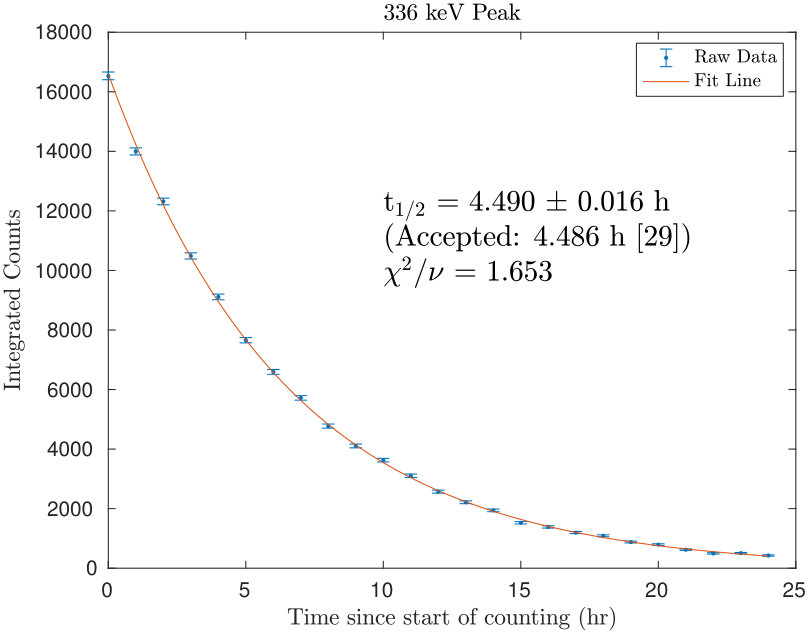 Figure 1
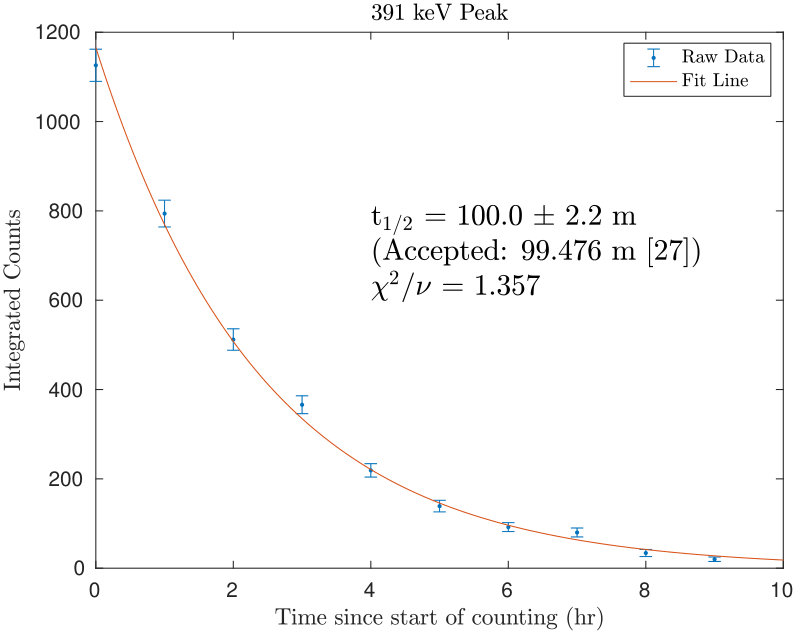 Figure 2
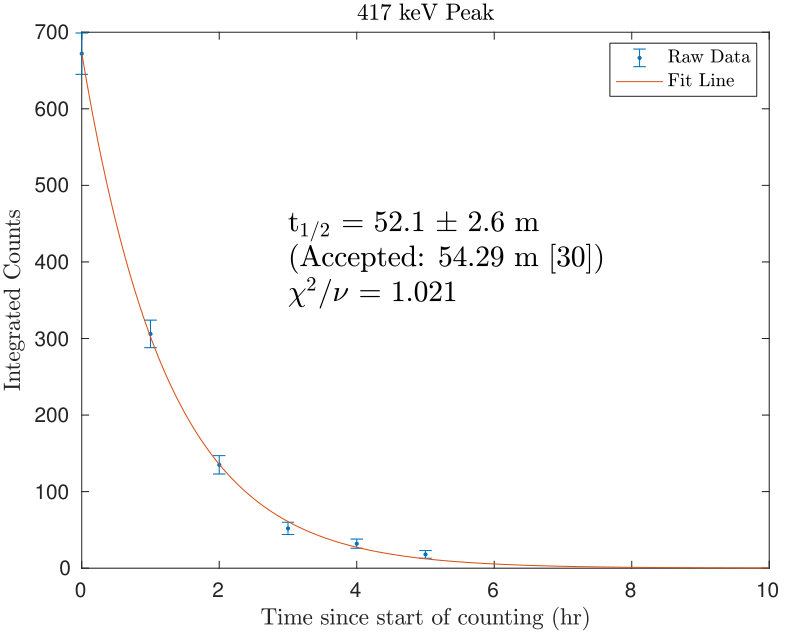 Figure 3
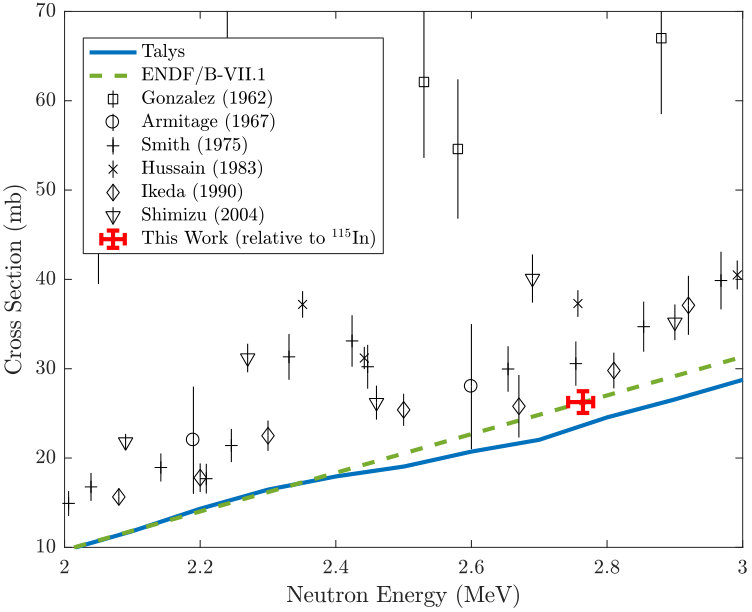 Figure 4
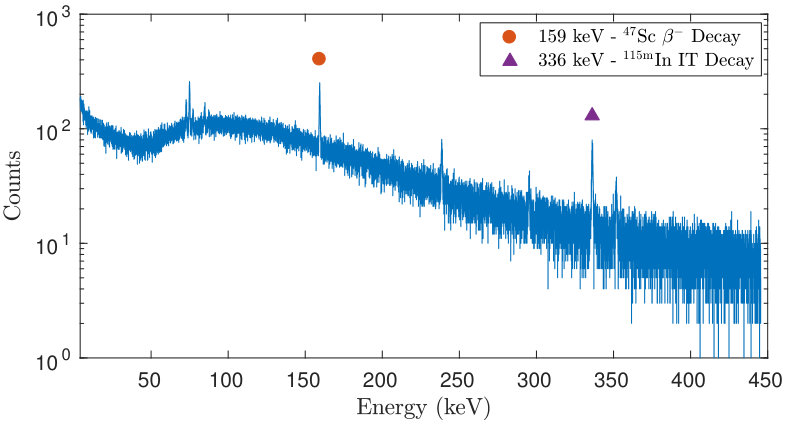 Figure 5
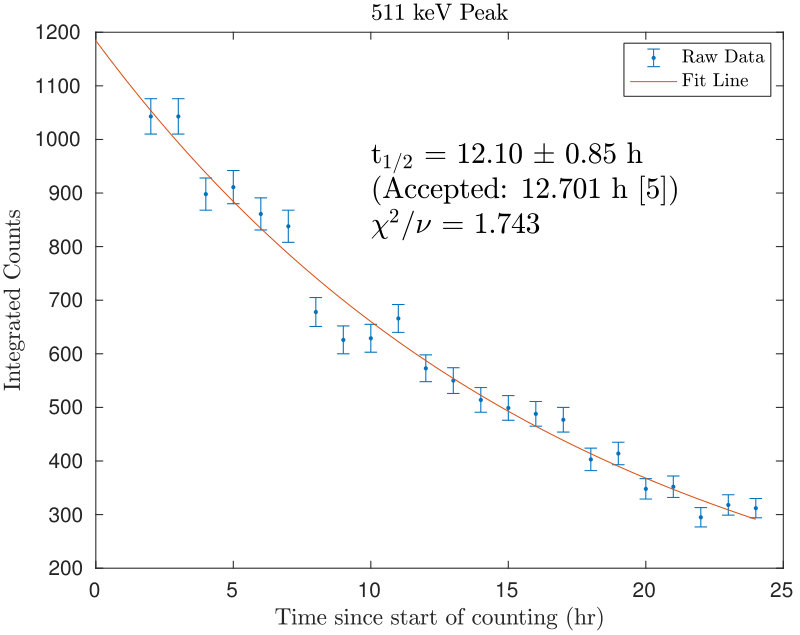 Figure 6
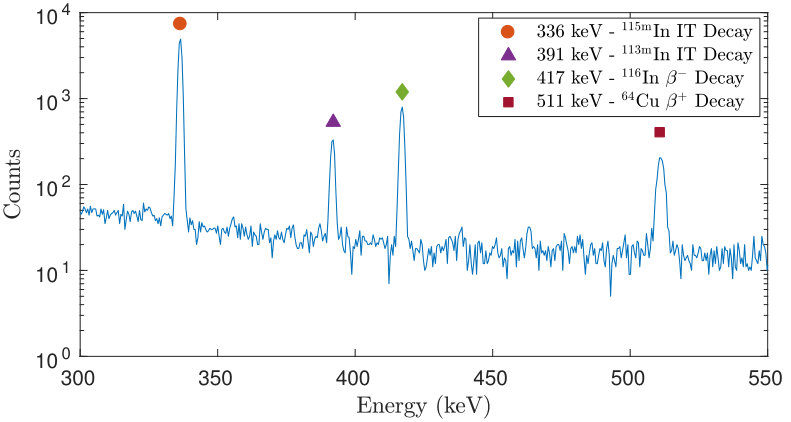 Figure 7
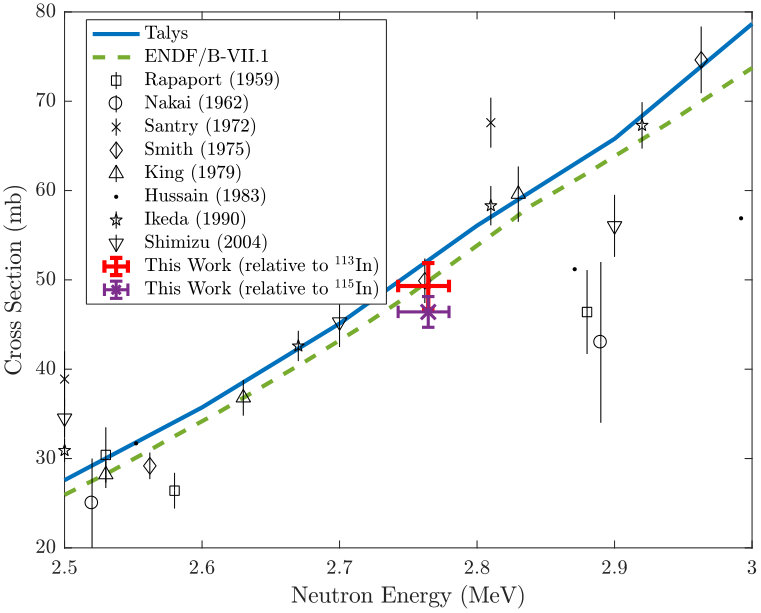 Figure 8
 Figure 9
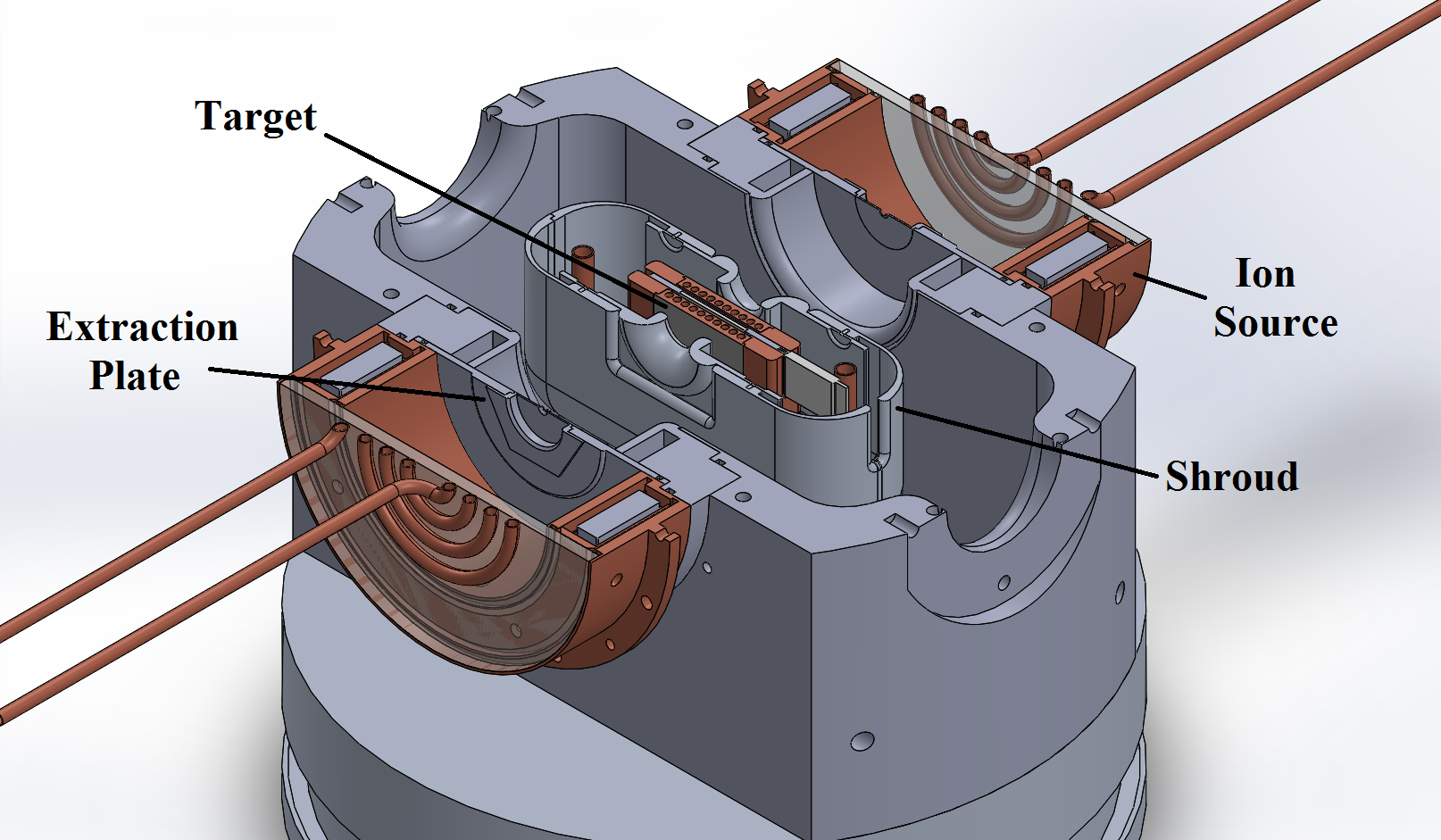 Figure 10
 Figure 11
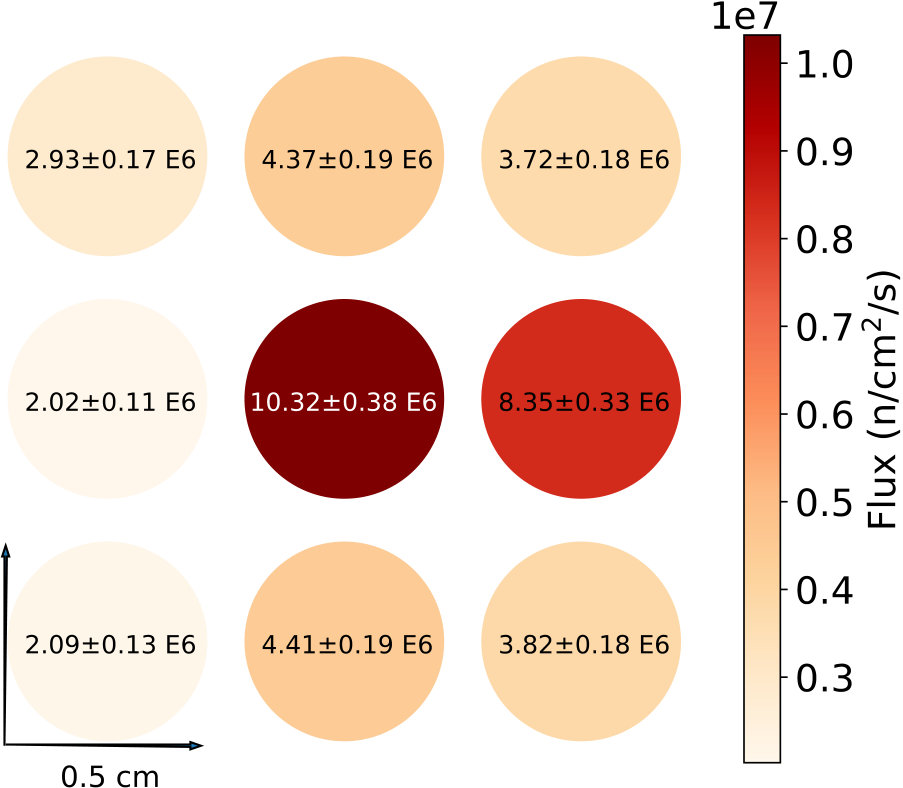 Figure 1
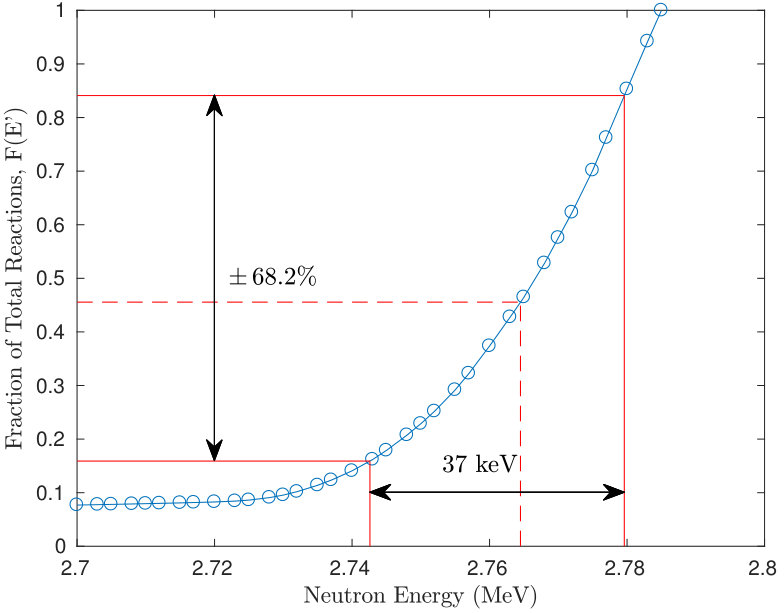 Figure 13
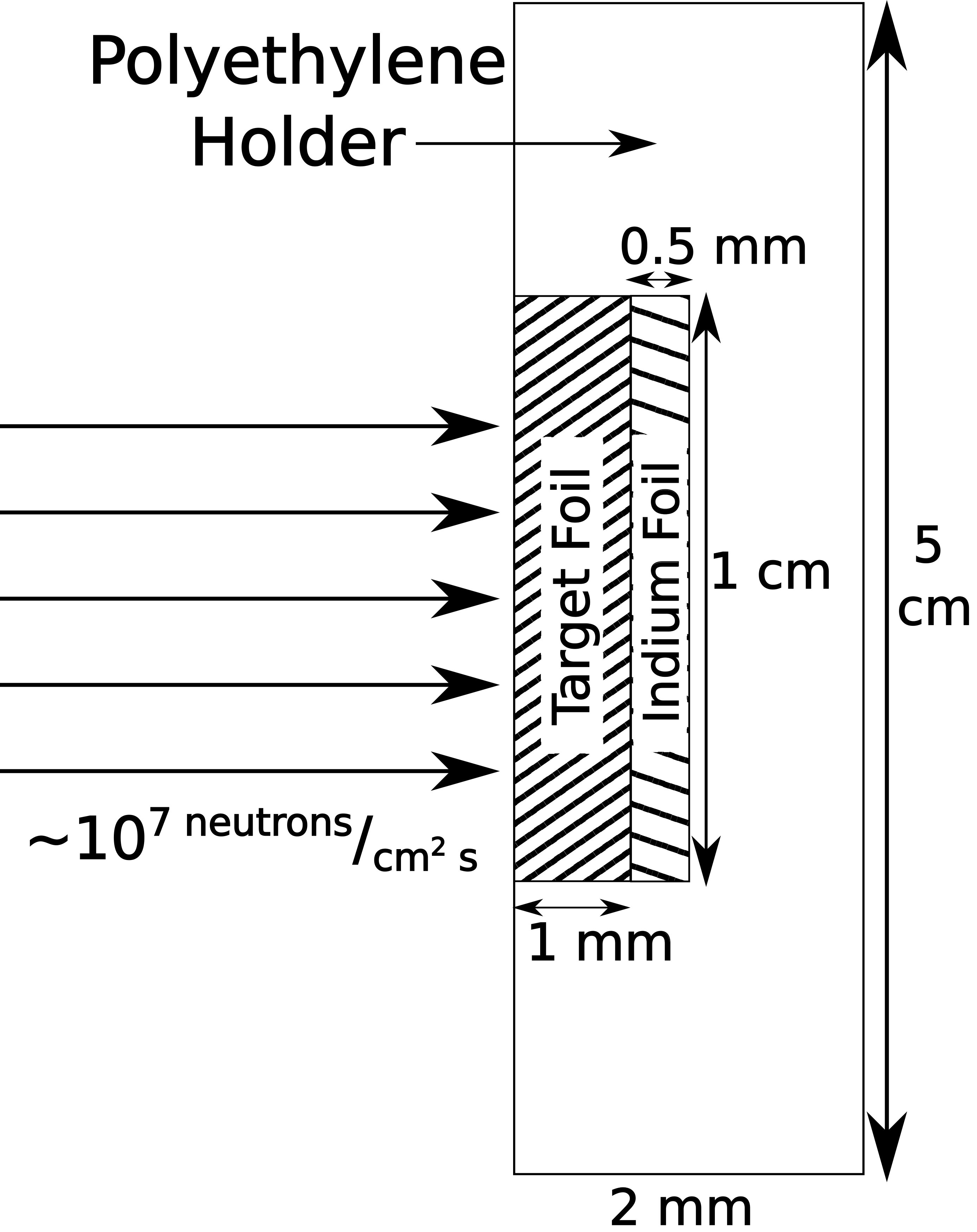 Figure 14
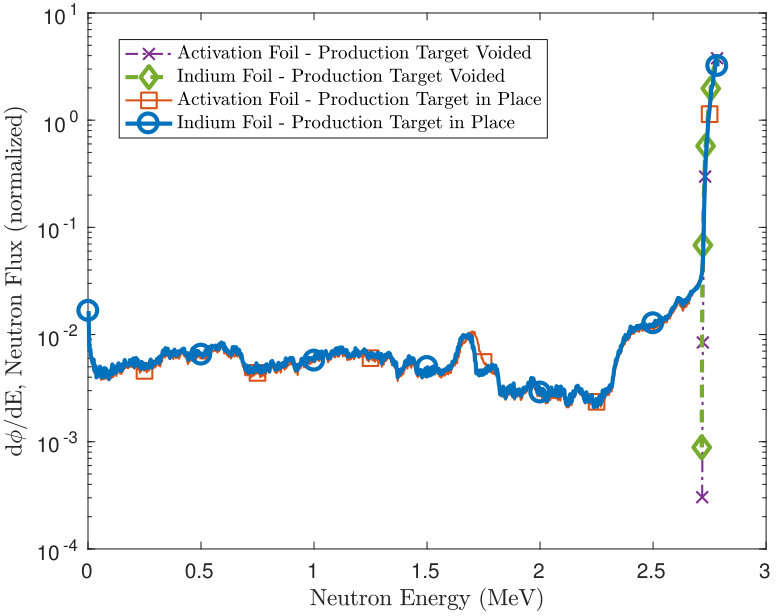 Figure 15
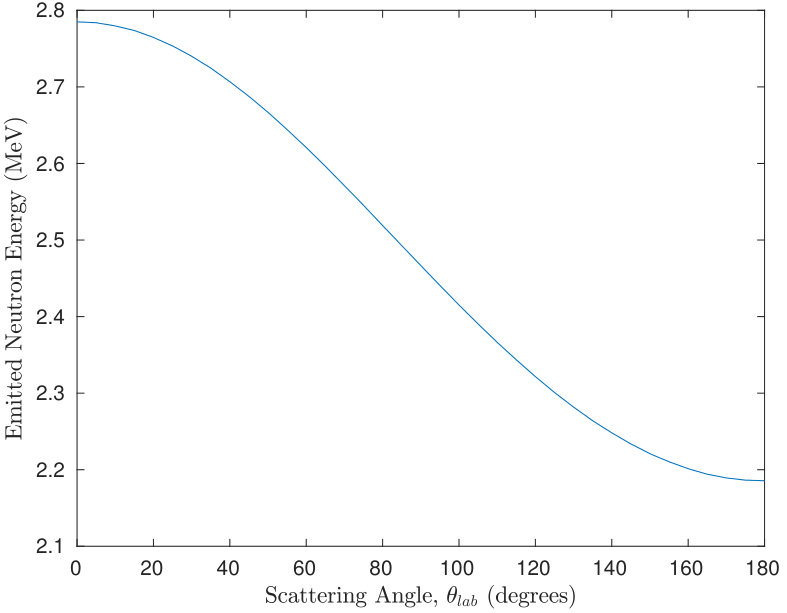 Figure 16
Peer Reviews
No public reviews on file for this paper yet. If you reviewed it on a platform where reviews are public (OpenReview, ICLR, NeurIPS, ICML), you can paste yours below so the community can read it here.
Videos
No videos yet. Explain this paper in a talk, walkthrough, or lecture? Add one.