Towards a heralded eigenstate preserving measurement of multi-qubit parity in circuit QED
Patrick Huembeli, Simon E. Nigg

TL;DR
This paper proposes a high-fidelity, eigenstate-preserving multi-qubit parity measurement method in circuit QED, utilizing dynamical decoupling and heralding techniques to improve quantum error correction in superconducting qubits.
Contribution
It introduces a novel heralded parity measurement scheme with dynamical decoupling to enhance eigenstate preservation and measurement fidelity in circuit QED systems.
Findings
Dynamical decoupling reduces decoherence during photon detection.
Sequence of displacement operations suppresses detector bias.
Heralded detection guarantees successful parity measurement even with finite efficiency.
Abstract
Eigenstate-preserving multi-qubit parity measurements lie at the heart of stabilizer quantum error correction, which is a promising approach to mitigate the problem of decoherence in quantum computers. In this work we explore a high-fidelity, eigenstate-preserving parity readout for superconducting qubits dispersively coupled to a microwave resonator, where the parity bit is encoded in the amplitude of a coherent state of the resonator. Detecting photons emitted by the resonator via a current biased Josephson junction yields information about the parity bit. We analyse theoretically the measurement back-action in the limit of a strongly coupled fast detector and show that in general such a parity measurement, while approximately Quantum Non-Demolition (QND) is not eigenstate-preserving. To remediate this shortcoming we propose a simple dynamical decoupling technique during photon…
Click any figure to enlarge with its caption.
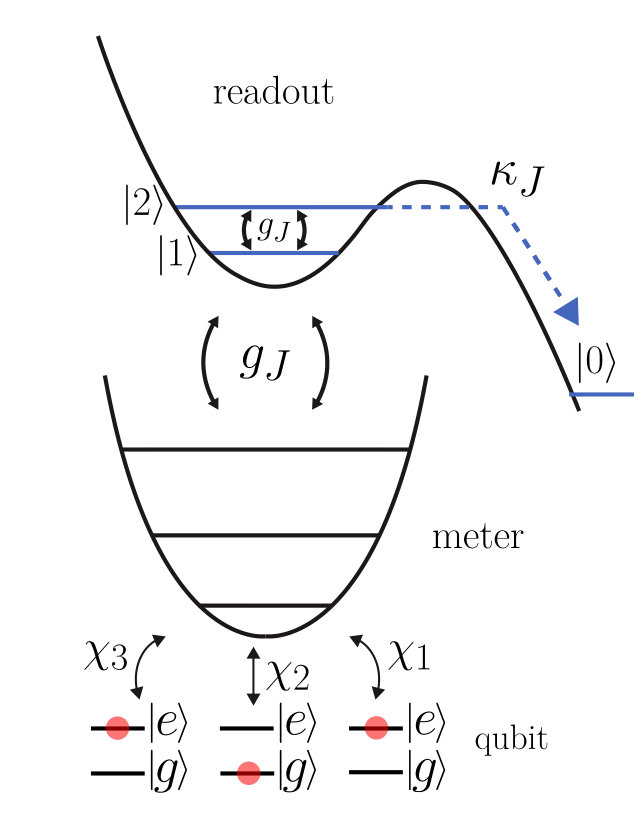 Figure 1
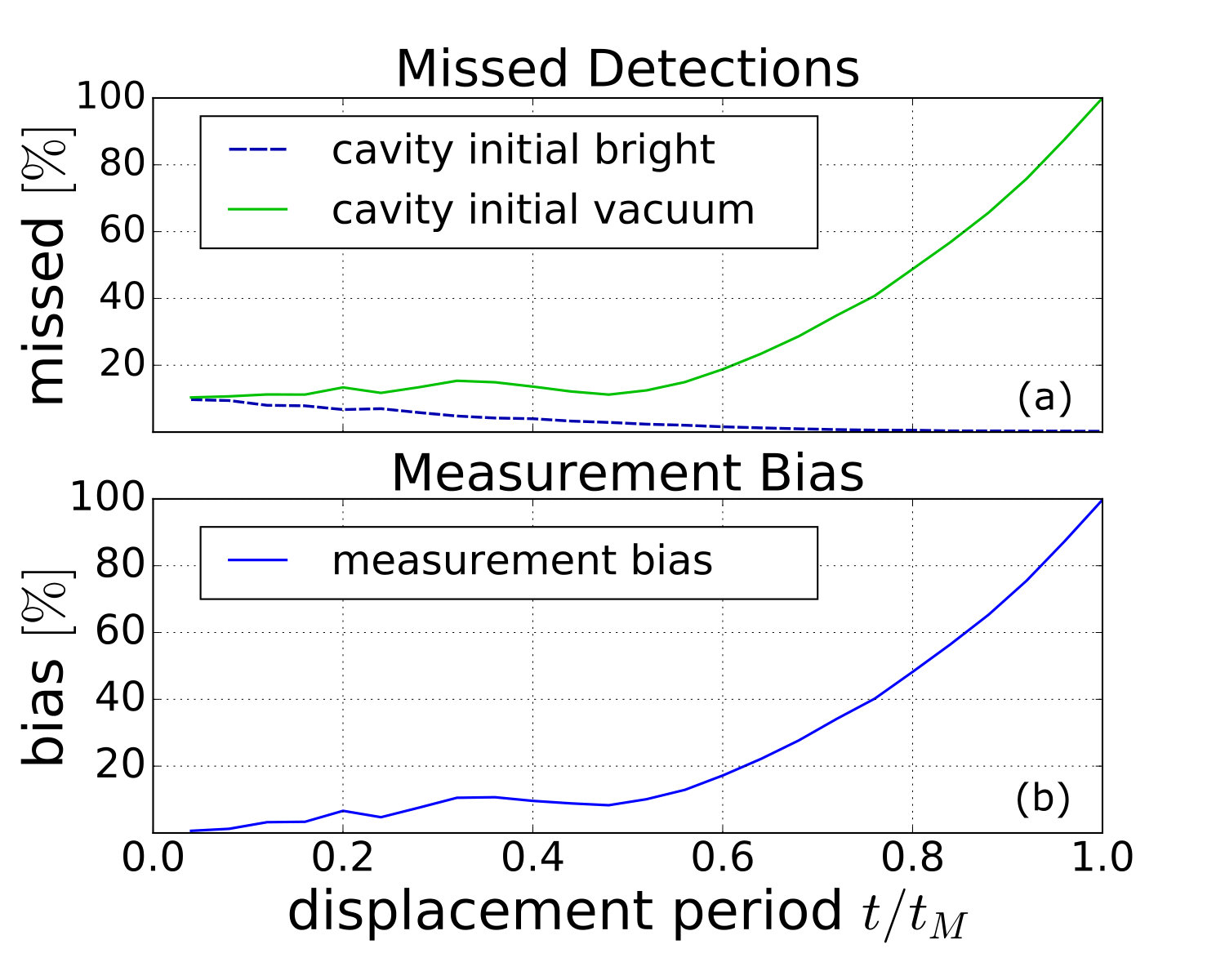 Figure 2
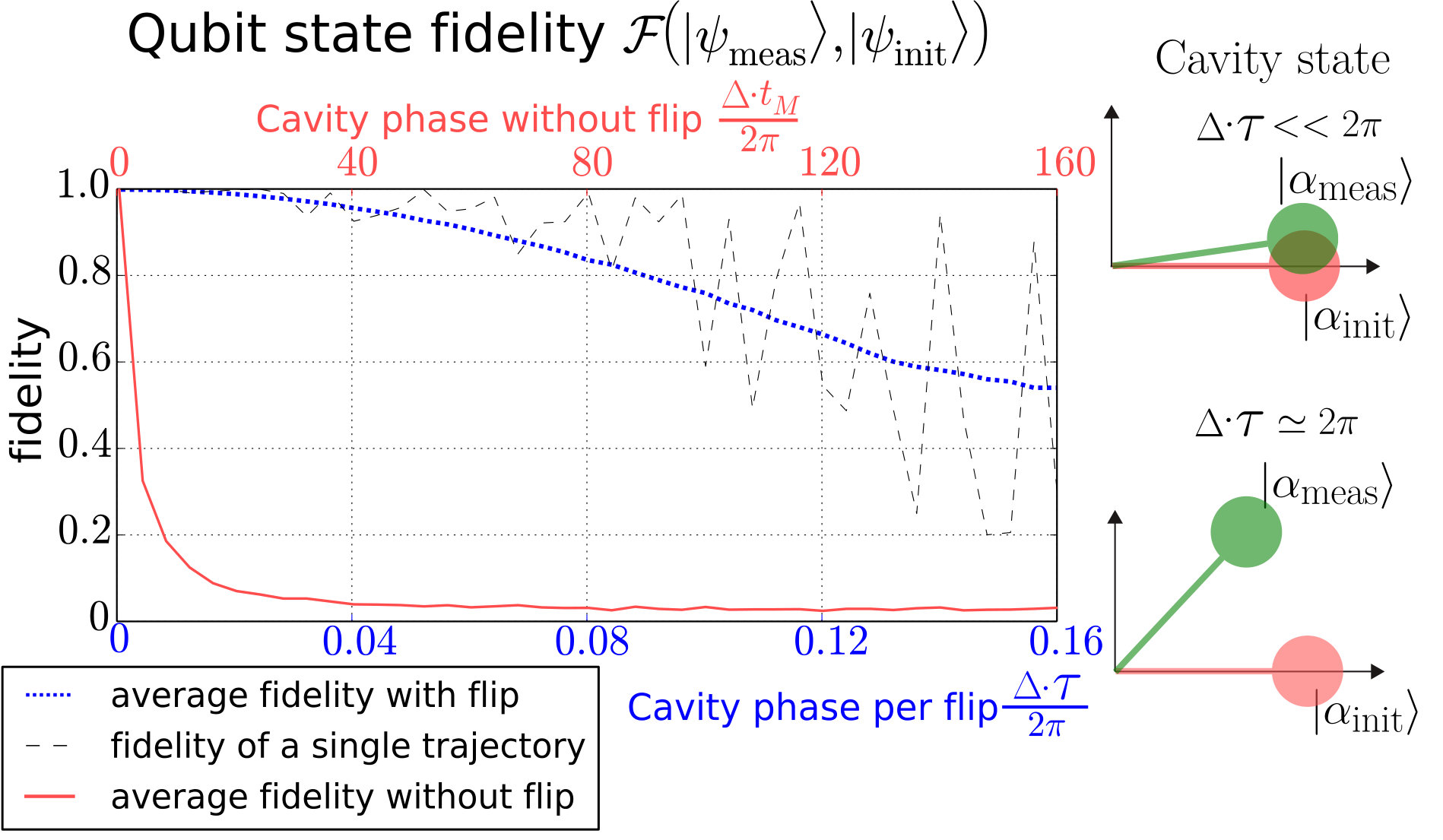 Figure 3
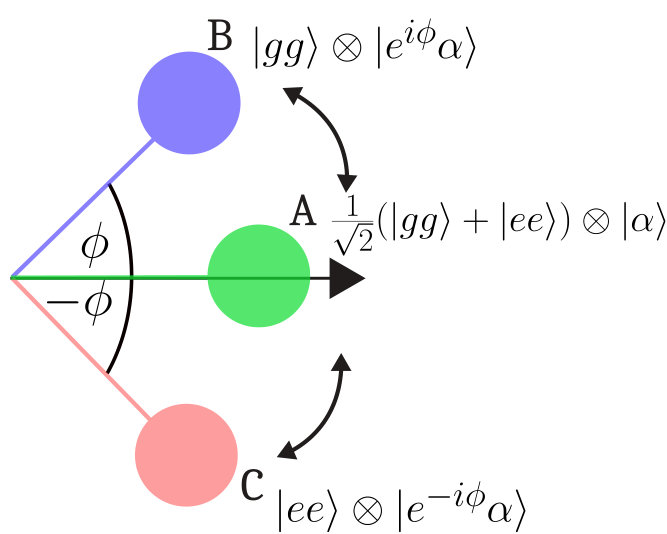 Figure 4
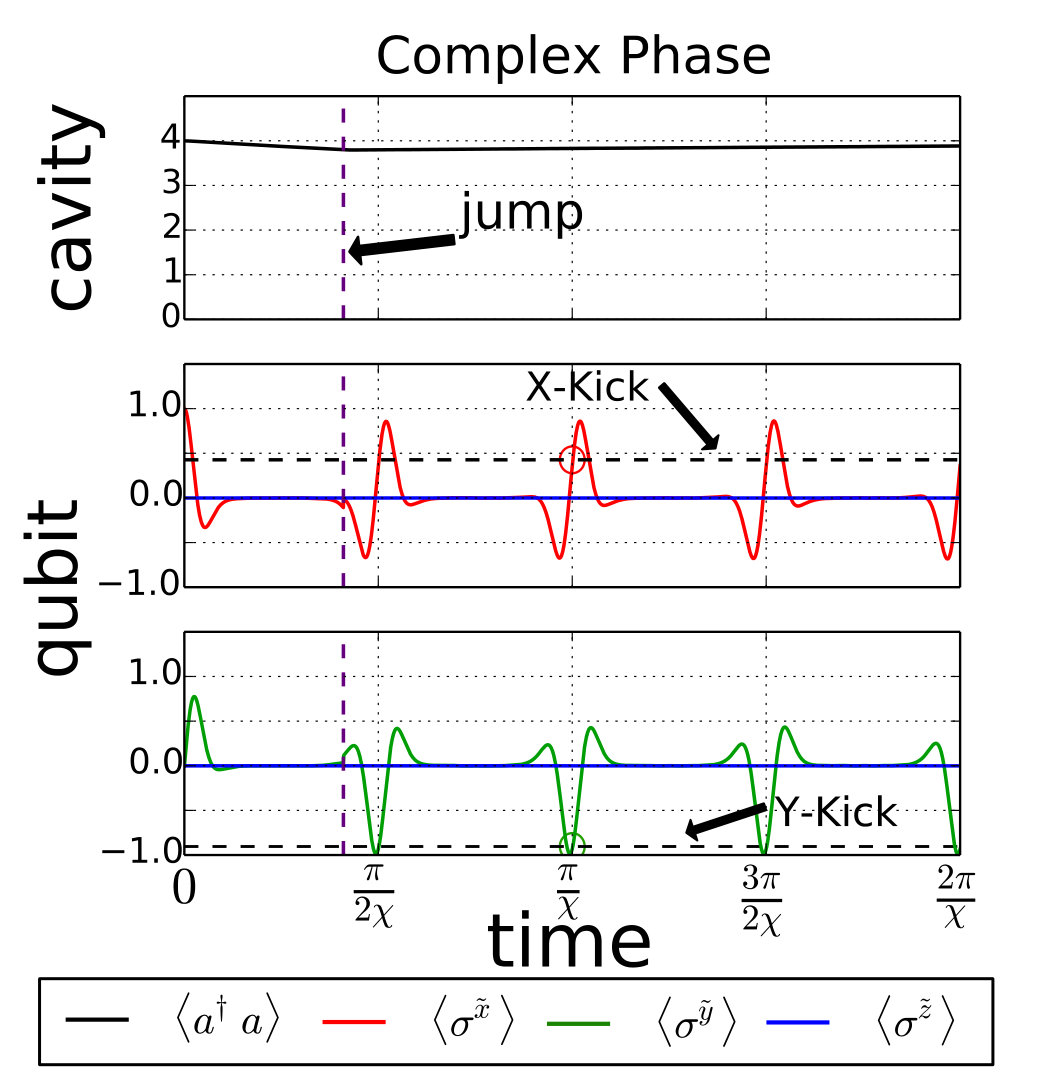 Figure 5
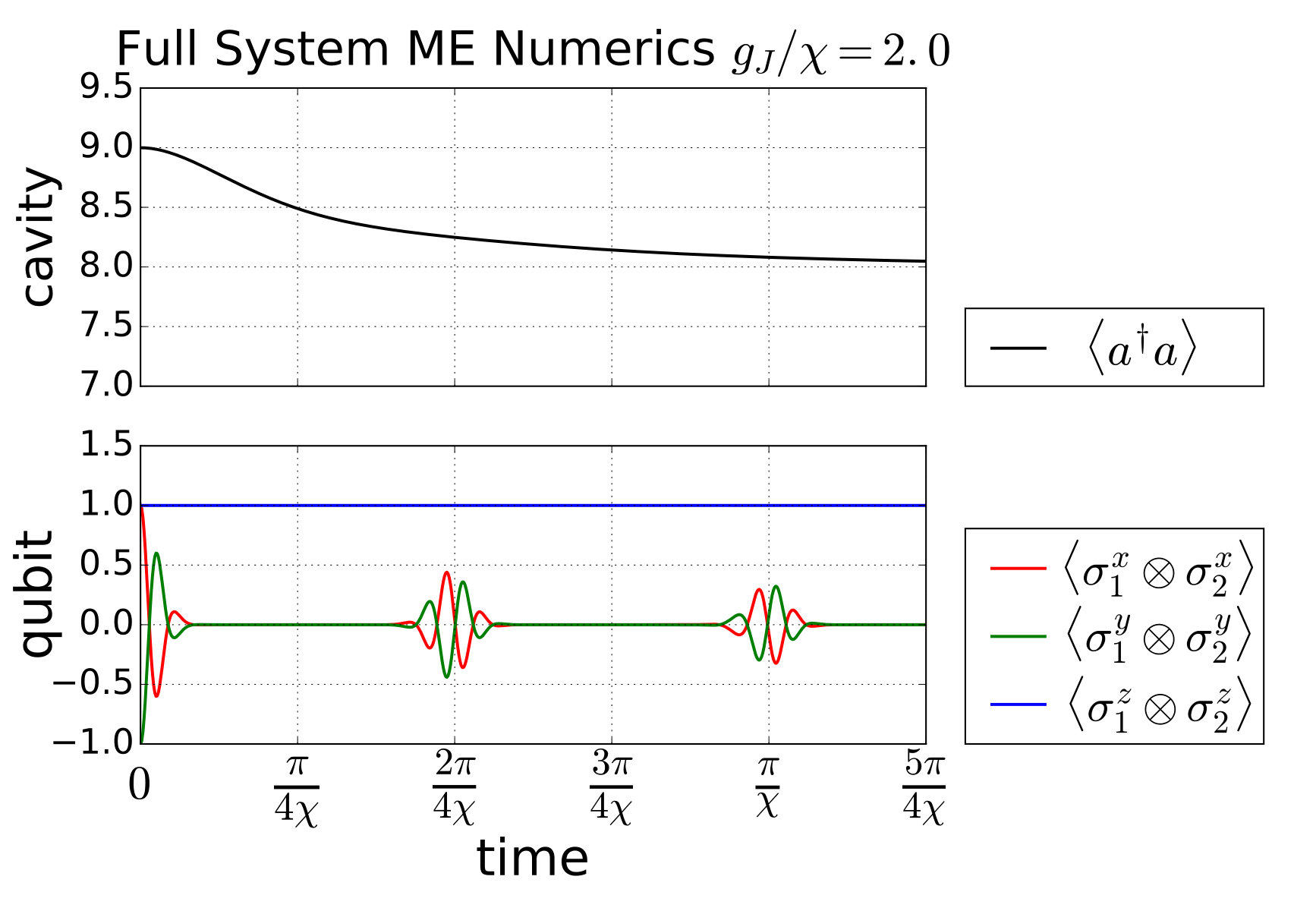 Figure 6
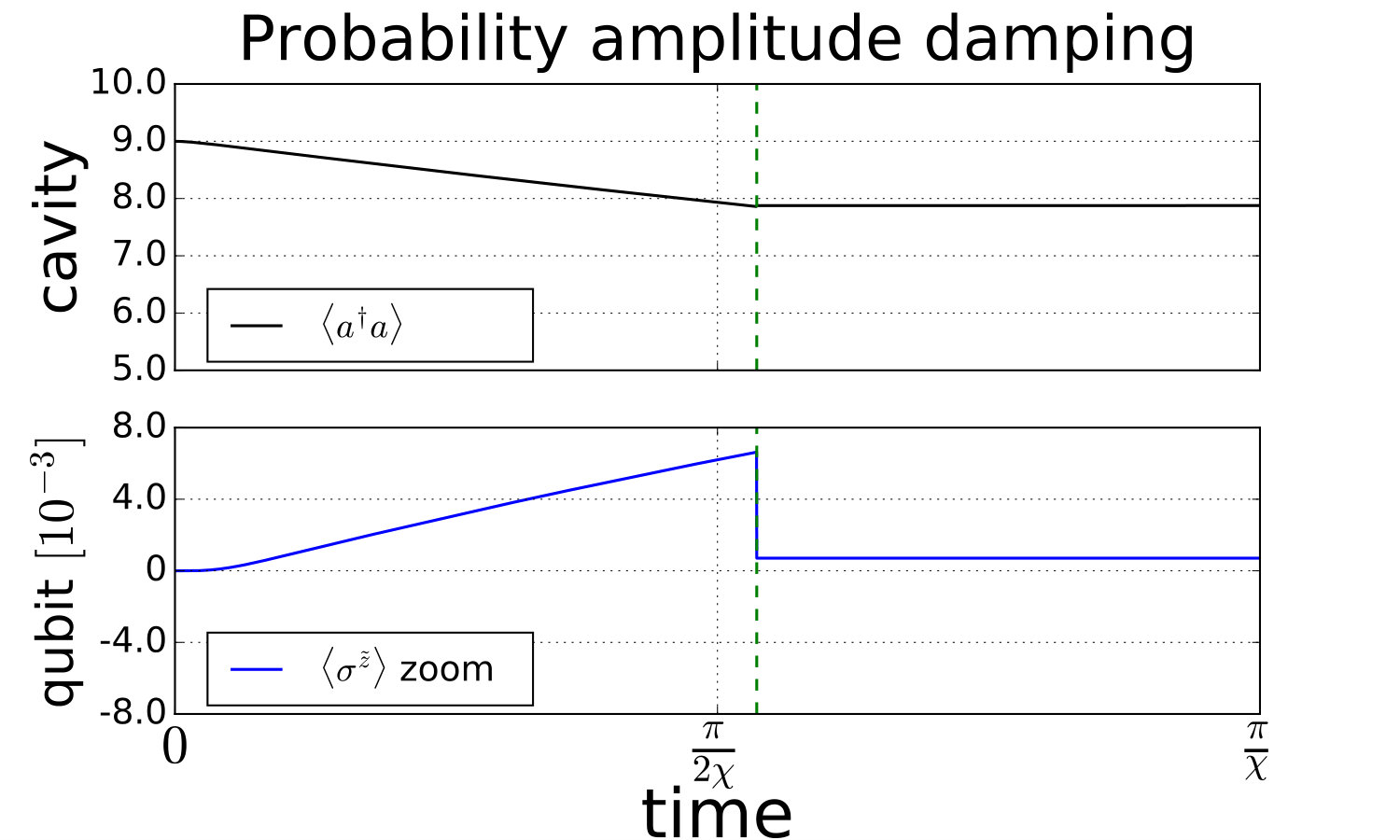 Figure 7
| phase per flip | Fidelity | ||
|---|---|---|---|
| 10 | 25 | 0.04 | 95.5 |
| 10 | 12.5 | 0.02 | 98.8 |
| 20 | 25 | 0.08 | 83.5 |
| 20 | 12.5 | 0.04 | 95.5 |
| 5 | 25 | 0.02 | 98.8 |
| 5 | 12.5 | 0.01 | 99.1 |
Peer Reviews
No public reviews on file for this paper yet. If you reviewed it on a platform where reviews are public (OpenReview, ICLR, NeurIPS, ICML), you can paste yours below so the community can read it here.
Videos
No videos yet. Explain this paper in a talk, walkthrough, or lecture? Add one.
Towards a heralded eigenstate preserving measurement of
multi-qubit parity in circuit QED
Patrick Huembeli1,2
Simon E. Nigg1
1Department of Physics, University of Basel, Klingelbergstrasse 82, 4056 Basel, Switzerland
2ICFO - Institut de Ciences Fotoniques, The Barcelona Institute of Science and Technology, 08860 Castelldefels, Spain
Abstract
Eigenstate-preserving multi-qubit parity measurements lie at the heart of stabilizer quantum error correction, which is a promising approach to mitigate the problem of decoherence in quantum computers. In this work we explore a high-fidelity, eigenstate-preserving parity readout for superconducting qubits dispersively coupled to a microwave resonator, where the parity bit is encoded in the amplitude of a coherent state of the resonator. Detecting photons emitted by the resonator via a current biased Josephson junction yields information about the parity bit. We analyse theoretically the measurement back-action in the limit of a strongly coupled fast detector and show that in general such a parity measurement, while approximately Quantum Non-Demolition (QND) is not eigenstate-preserving. To remediate this shortcoming we propose a simple dynamical decoupling technique during photon detection, which greatly reduces decoherence within a given parity subspace. Furthermore, by applying a sequence of fast displacement operations interleaved with the dynamical decoupling pulses, the natural bias of this binary detector can be efficiently suppressed. Finally, we introduce the concept of a heralded parity measurement, where a detector click guarantees successful multi-qubit parity detection even for finite detection efficiency.
I Introduction
Quantum computers are open quantum systems: The quantum information carriers – qubits – inevitably couple to the outside world and this coupling leads to decoherence. Quantum error correction (QEC), which aims at correcting the errors induced by decoherence, is thus necessary for quantum computation. Stabilizer codes Gottesman (1997) are among the most promising quantum error correction codes. A common feature of all stabilizer codes is that errors happening on the physical qubits can be detected by repeatedly measuring a set of mutually commuting multi-qubit operators called stabilizer operators. Every detectable error needs to anti-commute with at least one stabilizer operator. Typically, stabilizer operators are chosen as elements of the Pauli group, represented by tensor products of single-qubit operators in the set . Here , and are the three spin- Pauli matrices and is the identity operator. If in the system under consideration all qubits can be addressed and controlled individually, then measuring arbitrary multi-qubit Pauli operators is equivalent, up to single-qubit rotations, to measuring arbitrary tensor products of operators in the reduced set . The latter task, which we call parity measurement, is what we focus on in this work.
To be useful for the purpose of quantum error correction, parity measurements need to be eigenstate-preserving, e.g. measuring the parity of the two-qubit state must not destroy the superposition. Note that this is a stronger requirement than asking the measurement to be QND, which only requires that repeated measurements yield always the same result Braginsky et al. (1980).
Developing multi-qubit parity measurements in superconducting circuits is a very active area of research and has been discussed in a number of previous works Tornberg and Johansson (2010); Lalumière et al. (2010); Denhez et al. (2012); Frisk Kockum et al. (2012); Nigg and Girvin (2013); DiVincenzo and Solgun (2013); Riste et al. (2013); Tornberg et al. (2014); Riste et al. (2015); Corcoles et al. (2015); Govenius et al. (2015); Criger et al. (2016); Takita et al. (2016); Blumoff et al. (2016); Cohen et al. (2016). Blumoff et al. (2016) succesfully measured the parity of an arbitrary subset of three superconducting transmon qubits in an approximately eigenstate-preserving fashion based on the theoretical proposal of Nigg and Girvin (2013). In this approach in a first stage, the parity bit is first mapped onto the phase of a coherent state of a microwave field dispersively coupled to the qubits. In a second stage, the parity bit is mapped onto an ancilla qubit and in a final third stage, the parity bit is read out by homodyne measurement of the ancilla qubit.
In the present work we discuss an alternative approach to parity readout. This work is motivated by the desire to improve upon two current limitations of the scheme presented in Nigg and Girvin (2013); Blumoff et al. (2016), namely the reduction of parity detection fidelity due to photon leakage and finite ancilla qubit lifetime. Our proposal can also be seen as an extension of Govia et al. (2015), where it was proposed to correlate the parity of multiple qubits with the amplitude of a coherent state (either the vacuum state or a coherent state with finite amplitude) and then detect the emission of a photon with a microwave photon detector based on a current biased Josephson junction (CBJJ) Romero et al. (2009); Chen et al. (2011); Peropadre et al. (2011); Poudel et al. (2012). A click of the detector corresponds to the switching of the CBJJ to the resistive state. Such an event indicates a certain parity of the multi-qubit state, while the absence of a photon detection indicates the other parity with some probability that depends on the measurement time and the detector efficiency. As presented in Govia et al. (2012, 2014, 2015), this elegant scheme however suffers from two important deficiencies. First, while QND, it leads in general to intra parity-subspace decoherence because a randomly emitted photon carries with it more information than just the parity-bit of the multi-qubit state. For the purpose of QEC it is crucial to limit such information leakage to avoid intra parity-subspace decoherence. Second, because one of the two parities is correlated with a bright state while the other is correlated with the vacuum in the cavity, the parity detection is inherently asymmetric: While a click of the photon detector guarantees the correct parity detection, a no-click event is ambiguous and the wrong parity can be inferred if the measurement time is too short or if the detection efficiency is below unity.
The parity readout proposed in the present work addresses both of these shortcomings: First, by combining photon detection with dynamical decoupling, the measurement induced decoherence is reduced. Second, by periodically swapping the encoding between the two parities and the dark and bright states of the cavity, the bias of the detector is reduced. With these two modifications, the detection of a photon genuinely heralds a successful parity detection with minimal back-action induced intra parity-subspace decoherence. Hence, multi-qubit parity measurements via direct photon detection become a viable alternative for QEC in an architecture where fixed frequency qubits are dispersively coupled to a common bosonic mode.
The manuscript is organized as follows. In Section II, we start by reviewing different methods to encode the parity of multiple qubits into the state of microwave photons. In Section III, we briefly review previous work on how to read out the encoded parity information. In Section IV we introduce our model for parity readout and make a first qualitative discussion of the measurement back-action in Section V. In Section VI we simplify our model. In Section VII, the bulk of this work, we analyze the back-action in the photon detection based parity detection scheme and find that while QND, the parity measurement is in general not eigenstate preserving, i.e. it induces intra parity-subspace decoherence. In Section VIII we propose the use of a simple dynamical decoupling scheme to evade the back-action and quantify the ideal fidelities in this modified scheme numerically. In Section IX we propose a way to reduce the detector bias and show that with these modifications, heralded and unbiased parity measurement with minimal back-action induced intra parity-subspace decoherence is feasible. We conclude this section with an estimate of achievable fidelities for realistic parameter values. Finally, we conclude with some remarks in Section X.
II Review of parity encoding
The parity operator of qubits is defined as
[TABLE]
The eigenstates of are the computational basis states. For a superconducting qubit, they typically correspond to the two lowest energy eigenstates and so that . Sine , the eigenvalue is either or and can be interpreted as the parity of the number of qubits in state . We say that an -qubit state is an even (odd) parity state if it is an eigenstates of with eigenvalue ().
There exist several methods to encode the parity of a multi-qubit state into the state of an electromagnetic field. In Nigg and Girvin (2013); Blumoff et al. (2016) this was achieved by utilizing the dispersive interaction of superconducting transmon qubits with the quantized field of a microwave resonator Blais et al. (2004); Kirchmair et al. (2013). This interaction is characterized by the Hamiltonian term
[TABLE]
where \raisebox{1.50696pt}{\chi}_{i} is the dispersive frequency shift, while and are the annihilation and creation operators of the microwave field. The central idea of the approach of Nigg and Girvin (2013), is to apply pairs of coherent -pulses, which effectively corresponds to the application of , to each individual qubit properly spaced in time such as to control its contribution to the total phase shift of the cavity, which is initially prepared in a coherent state with amplitude . Specifically, if the time delay between two -pulses on qubit is chosen as t_{j}=\frac{T}{2}-\frac{\pi}{2\,\raisebox{1.05487pt}{\chi}_{j}}, then under the action of (2) at time the parity of all qubits becomes entangled with the phase of the cavity state as
[TABLE]
Here and denotes the initial multi-qubit state. are the projectors onto the even () and odd () parity subspaces. Selectivity to an arbitrary subset of qubits can be achieved by instead choosing for Nigg and Girvin (2013).
In Govia et al. (2015) an alternative method for parity encoding was proposed, which also makes use of the dispersive interaction (2). Instead of applying control pulses to the qubits, one applies frequency multiplexed drives to the cavity initially in the vacuum to selectively displace the cavity state out of the vacuum conditioned on a specific parity of the multi-qubit state. This is possible when the frequency shifts of all the even parity states differ from all the frequency shifts of the odd parity states but may require slow pulses to ensure proper frequency selectivity. The encoding thus generated can be written as
[TABLE]
The amplitude is controlled by the envolop of the applied drive pulses. Note that the final encodings (3) and (4) are equivalent up to a displacement operation with .
III Review of parity readout
To complete the parity measurement, the parity information encoded in the cavity, as per Eqs. (3) or (4), must be read out. We next briefly review two ways to achieve this. In Refs. Nigg and Girvin (2013); Blumoff et al. (2016) the cavity state is swapped onto that of an ancilla qubit. The ancilla is initialized in its ground state and is dispersively coupled to the cavity field encoding the parity of the remaining qubits according to (4). The swapping of the parity onto the ancilla is achieved in two steps. In the first step, a conditional -pulse is applied to the ancilla qubit conditioned on the vacuum state of the cavity Leghtas et al. (2013). This step results in the tripartite entangled state
[TABLE]
where and denote the ground and excited states of the ancilla. In the second step, the cavity is disentangled either via a conditional displacement of amplitude conditioned on the ground state of the ancilla qubit Nigg and Girvin (2013), or by inverting the unitary encoding operations Blumoff et al. (2016). This results in the state
[TABLE]
where the parity is encoded in the state of the ancilla. The latter can subsequently be read out via standard homodyne detection Blais et al. (2004); Wallraff et al. (2004).
An advantage of this readout via an ancilla qubit is that after the entanglement swapping, the cavity is back in the vacuum state and no further information about the multi-qubit state can leak out from the cavity. However, the decoherence of the ancilla does limit the fidelity of the parity mapping and readout as observed in Blumoff et al. (2016).
Govia et al. (2015) proposed an alternative readout based on direct photon detection via a CBJJ capacitively coupled to the cavity. The basic idea of this readout, the physical mechanism of which is explained in details in Section V, is as follows: In the state of Eq. (4), if a photon is detected, then the multi-qubit parity is inferred to be even. If a photon is not detected, then the parity is inferred to be odd with some probability that depends on the measurement time and the detector efficiency. In Govia et al. (2015) it was shown that this approach leads approximately to a quantum non-demolition parity readout under the condition that the dispersive shifts of all qubits are equal. However, for the purpose of stabilizer quantum error correction, QNDness of parity measurements while necessary is not a sufficient condition. Indeed the kind of parity measurements required must preserve the coherence within each parity subspace. This property has recently been coined eigenstate preserving QND (EP-QND) Sarlette and Mirrahimi (2017).
One of the main goals of the present work is to analyze in detail the back-action of the parity measurement based on photon detection Govia et al. (2015). In Section V, we show that it is in general not EP-QND because the emitted photons contain more information than the parity bit alone. To a lesser extent, this also affects the parity readout used in Nigg and Girvin (2013); Blumoff et al. (2016), because the parity encoding and the swapping of the parity information onto the ancilla take a finite amount of time during which photons may escape the cavity. In the following we focus on the readout stage of the parity measurement, once the parity bit has been encoded in a photonic state such as in Eq. (4).
IV System and model
We consider a specific circuit quantum electrodynamics (cQED) architecture, where a set of superconducting qubits, such as e.g. transmon qubits, are dispersively coupled to the quantized field of a microwave resonator. A concrete realization of this type of architecture with 3D-transmons and cylindrical microwave resonators is provided in Blumoff et al. (2016) but realizations with coplanar waveguide resonators are also common Riste et al. (2015). In the following we consider an abstract model that applies to both implementations. The considered system is shown in Fig. 1 and consists of a high-Q microwave resonator dispersively coupled to transmon qubits and furthermore capacitively coupled to a CBJJ, which serves as a microwave photon detector Romero et al. (2009); Chen et al. (2011); Peropadre et al. (2011); Poudel et al. (2012). The Hamiltonian we use to model this system is
[TABLE]
Here denotes the Pauli operator for qubit . The inevitable dissipation in the CBJJ associated with the photo-detection process is accounted for by the Lindblad master equation,
[TABLE]
where .
Here we have reduced the CBJJ to an effective three-level system Poudel et al. (2012). The states and represent the two states localized inside a well of the tilted washboard potential of the CBJJ (see Fig. 1). Via the dc current bias, the transition frequency between and is tuned in resonance with the bare cavity frequency . Furthermore, by suitably designing the junction capacitance, it is possible to make the upper level couple strongly to the continuum, which is modeled here as an additional state . A photon leaving the cavity towards the CBJJ coherently populates level , which incoherently decays at a rate into the continuum state . The tunnel coupling of the lower level to the continuum state is exponentially smaller than the coupling between and and will be neglected in the following. Note however that this coupling will lead to dark counts and thus negatively impact the parity readout fidelity. For a discussion of this effect see e.g. Poudel et al. (2012).
V Qualitative discussion of the measurement back-action
In this section we briefly discuss the dynamics of of the full system depicted in Fig. 1, obtained by numerically solving the Lindblad master equation Eq. (8). To illustrate the effect of the measurement we show in Fig. 2 the time evolution of a two-qubit state coupled to a cavity with amplitude and the CBJJ. The system is initially in the state . For simplicity we let the dispersive shifts from Eq. (7) be equal i.e. \raisebox{1.50696pt}{\chi}_{1}=\raisebox{1.50696pt}{\chi}_{2}=\raisebox{1.50696pt}{\chi}.
As a measure for phase coherence within a given parity subspace we use the expectation values for . The hermitian part of the Lindblad master equation (8) leads to a periodical change of and which is a consequence of the entanglement of the qubits with the cavity due to the dispersive interaction. We will refer to the periodical reappearance of maxima in these expectation values as the revival of coherence Walls and Milburn (2007). The decrease in the amplitude of these revivals is a direct measure of the intra parity-subspace decoherence and is a consequence of the non-hermitian part of Eq. (8), which describes the effect of the measurement when ignoring the measurement record. In Section VII we will show that at the level of the individual quantum trajectories, the loss of a photon out of the cavity leads to a random phase kick on the qubit parity-subspaces. Because in the master equation one averages over all such random events, this results in the observed suppression of the revival amplitudes. Furthermore we obtain from the numerics in Fig. 2 that the cavity decay stops after the loss of one photon. This is because the CBJJ is trapped in the continuum state on a much longer time scale than that of the actual photon decay.
The revival time scale can be estimated in the coherent limit, i.e. by considering a reduced system, where the two qubits are coupled to a cavity, without CBJJ and leakage. The unitary time evolution through the Hamiltonian \bm{H}=\omega_{c}\bm{a}^{\dagger}\bm{a}+\raisebox{1.50696pt}{\chi}(\bm{\sigma}_{1}^{z}+\bm{\sigma}_{2}^{z})\bm{a}^{\dagger}\bm{a} leads to the time dependent entanglement of the qubit and the cavity in the form |\psi(t)\rangle=1/\sqrt{2}\left(\ket{gg}\otimes|\alpha e^{+2i\raisebox{1.05487pt}{\chi}t}\rangle+\ket{ee}\otimes\ket{\alpha e^{-2i\raisebox{1.05487pt}{\chi}t}}\right). The revival occurs if the cavity and the qubit are disentangled, i.e. are separable again, hence the time of the revival is t_{\rm rev}=\pi/(2\raisebox{1.50696pt}{\chi}).
VI Adiabatic elimination of the CBJJ
The parity readout discussed in this work takes place in the limit where the effective Rabi coupling between the cavity and the CBJJ is small compared with the decay rate of the metastable state of the CBJJ. In this regime, the population of the metastable state of the CBJJ remains small. This allows us to adiabatically eliminate the CBJJ in the spirit of a Weisskopf-Wigner approximation. In this way we obtain an analytically tractable and physically transparent model of the detector where a photon detection event corresponds simply to a photon loss event out of the cavity. The rate at which such an event takes place is calculated as follows.
Consider a system of qubits in the computational basis state where are fixed but arbitrary. The associated total state dependent dispersive shift is \Delta=\sum_{i=1}^{N}\sigma_{i}\raisebox{1.50696pt}{\chi}_{i}, where if and if . Since the dispersive coupling commutes with , the projected Hamiltonian becomes
[TABLE]
Here we already tuned the CBJJ on resonance with the bare cavity frequency . To solve the master equation for this Hamiltonian we notice that the interaction only couples a closed set of states: , and , where is a Fock state with the photon number and , and represent the states of the CBJJ. If we truncate the Hamiltonian to this reduced set of basis states and define
[TABLE]
where the subscripts [math], , are again representing the states of the CBJJ, the master equation (8) yields a set of coupled linear differential equations,
[TABLE]
In a similar manner as in Schöndorf et al. (2016) these equations can be solved by Laplace transformation (See Appendix A) and yield
[TABLE]
Here we have added a superscript to emphasize the dependence on the photon number . The solution for a coherent state in the cavity is obtained by averaging (12) over the Poissonian photon number distribution Govia and Wilhelm (2016). In the large amplitude limit , we can neglect the relative photon number fluctuations and perform the replacement . We then obtain , with
[TABLE]
This approximation holds in the limit and where and is the effective Rabi frequency. The first inequality defines the regime of an overdamped CBJJ, that directly decays from its excited state to the continuum state , without Rabi flopping with the cavity states and . The second relation embodies that the energy is transferred from the cavity to the CBJJ fast on the time scale characterizing the multi-qubit dynamics. Note that previous work by Govia et al. (2014) focused on an intermediate regime where .
A caveat of the adiabatic elimination is that we have lost the saturation effect due to the long relaxation time of the CBJJ (see Section V). This can however be accounted for a posteriori by matching the effective cavity decay with the saturation behavior of the CBJJ via . Expanding the population decay of the cavity on the left hand side and on the right hand side of this equation for short times, we find the effective decay rate
[TABLE]
This form is reminiscent of the resonant vacuum Purcell decay rate. The second term in the parenthesis represents the effect of the qubit state dependent detuning on the decay rate. It is of order and is therefore negligible as long as the relation holds. In Appendix B, we discuss the consequence of this higher-order term on the measurement back-action. Here we focus on the leading order measurement back-action, which is independent of the multi-qubit state and characterized by the effective detection rate .
VII Characterization of intra parity-subspace decoherence
In the effective model derived in Section VI, where qubits are coupled to a cavity with the effective photon detection rate the Hamiltonian reduces to
[TABLE]
and the dynamics of the dissipative system can be described by the Lindblad master equation,
[TABLE]
However, a master equation is the average over infinitely many measurements and ignores the outcome of individual measurements. A clearer picture of the measurement back-action is obtained from a quantum trajectory analysis which keeps track of the measurement outcome. Because this measurement is based on photo-detection, a trajectory consists of a (pure) state conditioned on the presence or absence of a photon detection event random in time. The corresponding unraveling of the master equation (16) is obtained in a standard fashion Walls and Milburn (2007) by introducing the measurement operators and . If no photon is detected in a given time step the conditional state evolves according to:
[TABLE]
If a photon jump occurs the state evolves according to the jump dynamics
[TABLE]
For parity detection, the initial state is of the form (see Eq. (4)), where is a coherent state and () is the projector onto the even (odd) parity subspace. For compactness we introduce the following notation for an qubit basis state , where is the integer with binary representation . With this notation, the multi-qubit state is with and the parity defined in Eq. (1) corresponds to the Hamming weight of the binary representation of the number . The state right before () and right after () a detection event taking place at time can be written explicitly as
[TABLE]
Here \Delta_{n}=\sum_{i}\raisebox{1.50696pt}{\chi}_{i}(-1)^{n_{i}} denotes the total dispersive shift of the -qubit basis state , and .
The back-action is now clear. Following a photon loss event, the state undergoes a phase kick which depends on the associated multi-qubit state, i.e. each component of the multi-qubit state acquires a different phase. In addition the amplitude of the cavity state is exponentially suppressed at the rate . Crucially, because the phase kicks are random, the dephasing they induce between the multi-qubit components within a given parity subspace results, after averaging, in intra parity-subspace decoherence. The simple physical picture is that an emitted photon carries more information about the multi-qubit state than only the parity bit which is encoded in the presence or absence of a photon. This additional information, which is encoded in the phase of the emitted photon, is in principle accessible and hence its presence must reduce quantum coherence in the same way as for example which-path information suppresses the ability of a quantum particle to interfere with itself in a double-slit experiment.
To confirm this simple interpretation of the dominant source of intra parity-subspace decoherence, we compare, in Fig. 3, the analytic predictions with a numerically exact Monte Carlo quantum trajectory simulation of the full system including the CBJJ dynamics. The system is initialized in the pure state . At the random jump time a jump occurs (vertical dashed line) at which the qubit receives a kick. The 2-qubit state is initially polarized in -direction (). At the revival, where we can neglect the cavity dynamics the expectation values for the 2-qubit state after the jump are \braket{\sigma_{1}^{x}\otimes\sigma_{2}^{x}}=\cos(2\raisebox{1.50696pt}{\chi}t_{J}) and \braket{\sigma_{1}^{y}\otimes\sigma_{2}^{y}}=\sin(2\raisebox{1.50696pt}{\chi}t_{J}). We will refer to this values as X- and Y-Kick. This agrees with the numerical solution obtained in Fig. 3 at the revival times (marked with dots). We emphasize that in contrast to the master equation result of Fig. 2, in the trajectory picture of Fig. 3, the revival height is not damped since the state remains pure along the trajectory.
Having understood the dominant source of back-action in photo-detection based parity measurement, we next turn to the question of how to suppress it. One option would be to use the acquired phase information in a coherent feedback loop to combat decoherence of the multi-qubit state as shown in Frisk Kockum et al. (2012). This should also work in the case where homodyne detection is used instead of photo-detection via the CBJJ Tornberg and Johansson (2010); Frisk Kockum et al. (2012). The phase information gathered in this way could then be used in a coherent feedback loop to combat decoherence of the multi-qubit state. However, homodyne detection in the weak measurement limit, would suffer even more from the entangling dynamics due to the dispersive interaction that is always on. Previous work Puri and Blais (2016) addressed a similar problem by utilizing squeezing to “hide unwanted information” in the enhanced noise of an anti-squeezed quadrature. Alternatively, the unwanted entanglement dynamics in the readout phase of the measurement could be suppressed by using a high-Q tunable resonator, which after the encoding phase is strongly detuned from the qubits. While progress has recently been achieved with the fabrication of tunable high-Q microwave resonators Vissers et al. (2015); Carvalho et al. (2016), further improvements are necessary to make this approach viable. Here we discuss a simpler and more direct alternative that works for fixed frequency resonators and uses dynamical decoupling to minimize the back-action of the CBJJ detector.
VIII Back-action evasion via dynamical decoupling
On the one hand the dispersive interaction of the qubits with the cavity is crucial for the entanglement of the parity state with the cavity state during the encoding stage of the measurement. On the other hand it is not desirable during the readout stage, because it causes the qubit state dependent detuning and therefore the random phase kicks, which induce decoherence. Typically, in a high-coherence architecture the dispersive coupling is not tunable and cannot simply be turned off after the encoding stage. If high-fidelity single-qubit rotations are available, as is the case in state-of-the-art superconducting circuits architectures, we can however effectively cancel the effect of the dispersive interaction on the system dynamics by periodically flipping all the qubits on a time scale shorter than the time scale of the entanglement dynamics . This can be achieved by repeatedly applying the pattern
[TABLE]
on the state, where is the unitary time evolution operator, is the -qubit flip operator and is the time between two consecutive flips (except the first flip of a measurement, which is applied after ).
After each flip, the direction of phase rotation of the cavity state, caused by the dispersive term of the Hamiltonian, is reversed. Figure 4 illustrates the phase dynamics of a multi-qubit state e.g. the state in the rotating frame of the bare cavity frequency Sete et al. (2013). During the time the cavity state entangles with the substates () and gains a phase () according to the time evolution through . It evolves therefore from position A to B (A to C). At this point we flip the qubits by applying the operator , so that during the next unitary time evolution the cavity state rotates back to its initial position A. Since the qubits are still flipped the cavity will continue to rotate in the same direction during the next time step and the cavity state gains a phase of () and evolves from A to C (A to B). At this position we apply again and let it once more evolve according to . This pattern then will be repeated until a photon jump occurs. This technique of dynamical decoupling Ernst et al. (1990) can be applied on any piecewise constant Hamiltonian , which is in our case the Hamiltonian of Eq. (15) repeatedly interrupted by an instantaneous spin flip. If we use the anti-commutation relation we find that the sequence simplifies to , therefore the system will evolve according to the average Hamiltonian . However this result is only exact, if we can neglect dissipation. If a photon jump occurs, the assumption of piecewise constant Hamiltonian does not hold anymore and errors will be introduced. Furthermore, for simplicity the qubit flips are here assumed to be instantaneous but more complex sequences of pulses can be designed to account for finite flip durations Khodjasteh and Lidar (2005).
In Figure 5 we show that the measurement fidelity can be high if the phase between the initial cavity state and the cavity state at the photon jump is small (). We compare the fidelity of the initial qubit state with the state after the photon jump for different at a fixed flip time interval (dotted line) and for the case where we do not apply dynamical decoupling for different at a fixed measurement time (solid line). Each data point is averaged over trajectories. The black dashed line represents a single trajectory at different at a fixed time interval of qubit flips and illustrates the random character of photodetection for . In this limit of fast cavity rotations the dynamical decoupling breaks down, if the cavity is far rotated from its initial direction when the random jump happens. These numerical results provide an upper bound for the achievable fidelities of about . In Table 1 we estimate achievable fidelities compatible with state-of-the-art superconducting circuit architectures and the corresponding qubit flip times : The less phase the cavity gains during a flip, the higher is the fidelity. For a total dispersive shift of fidelities above are reached for switching times on the order of .
IX Detector bias suppression and heralded parity detection
The multi-qubit parity measurement via direct photon detection has a bias towards one of the parities. Due to finite measurement times the parity associated with the vacuum cannot be inferred with the same confidence as the parity associated with the bright cavity state. If we do not detect a photon, there is always a non-zero probability that the cavity is bright and the measurement time was too short to detect a photon decay. If we also include detector efficiencies the measurement bias towards the parity associated with the bright cavity gets even stronger. In order to suppress this bias we apply a sequence of displacement operations to swap the encoding (even bright, odd dark) with (even dark, odd bright) hence ”symmetrizing” the roles of the two parities. Preferably this displacement should be applied only if a qubit flipping sequence is finished, therefore at integer multiples of . In this case we know that the cavity amplitude in the rotating frame of the bare cavity frequency is simply . This procedure will lead to the possibility of a heralded parity detection: If a photon is detected we know that the qubits are in the parity state that is associated with the bright cavity state according to the cavity encoding at the time of detection. If we do not detect a photon during the measurement time we have to ignore the result, reset and repeat the measurement. Figure 6 shows numerical results averaged over 20000 successful measurement runs for different displacement periods . The probability to not measure a photon (Missed Detections) if the cavity initially is in the vacuum state (solid line) decreases for faster cavity displacements. For , if we do not displace the cavity at all, the probability to not detect a photon is because the cavity is dark. Also the probability to miss a photon if the cavity is initially in a bright cavity state increases (dashed line). This stems from the fact that an initial bright cavity does not stay bright for the entire measurement duration but rather switches between the vacuum and effectively decreasing the time where one can measure a photon to . Therefore, for increasing displacement frequencies the measurement bias is suppressed at the cost of an increasing number of failed measurements where no photon was detected. The occurrence of the latter events on the other hand can be reduced by a longer measurement time .
X Conclusion
In conclusion we have characterized an eigenstate preserving multi-qubit parity measurement scheme based on direct microwave photo-detection via a current biased Josephson junction. By dynamically decoupling the dispersive term of the Hamiltonian during readout qubit decoherence is suppressed. Furthermore, by periodically swapping the encoding of the parity onto bright and dark states the measurement bias can be reduced. The detection of a photon then heralds a successful parity measurement. We estimated numerically that high fidelities can be obtained with switching rates on the order of for dispersive couplings of the order of . Finally, we note that although we focused here on a simple microwave photon detector, the CBJJ, the presented parity measurement also works with more sophisticated detectors such as Kyriienko and Sørensen (2016); Inomata et al. (2016).
Acknowledgments: This work was financially supported by the Swiss National Science Foundation and the Spanish MINECO (FOQUS FIS2013- 46768, QIBEQI FIS2016-80773-P and Severo Ochoa Grant No. SEV-2015-0522), Fundación Cellex, and Generalitat de Catalunya (Grant No. SGR 874 and 875, and CERCA Programme). P.H also acknowledges funding from the European Union’s Horizon 2020 research and innovation programme under the Marie Skłodowska-Curie grant agreement No 665884. We thank Christoph Bruder for useful discussions and the anonymous referee for suggesting to us the idea of using a tunable high-Q resonator to mitigate the impact of measurement back-action. The numerical computations were performed in a parallel computing environment at sciCORE (http://scicore.unibas.ch/) scientific computing core facility at University of Basel using the Python library QuTip (http://qutip.org/).
Appendix A Laplace transformation and derivation of
To derive the effective decay rate caused by the cavity-CBJJ interaction we describe the system with the Hamiltonian Eq. (9) and solve the master equation (8). We can rewrite the Hamiltonian in the reduced set of basis sates as
[TABLE]
The master equation (10) then yields the differential equations (11a - 11e). To simplify the calculation we split into its imaginary and real parts
[TABLE]
We next apply a Laplace transformation, with and find
[TABLE]
Here we used the shorthand notation . We are interested in which can be obtained by integrating (See Eq. (11c)). To find we substitute into Eq. (26). The inverse Laplace transform is obtained from the integral:
[TABLE]
which can easily be solved by summing over the residua of the integrand. The poles of are:
[TABLE]
The Laplace transfom of then takes the form
[TABLE]
and the inverse transform is . Finally the occupation of the continuum state is obtained from . By inspection of the residua we see that is the dominant contribution to which simplifies the expression for to
[TABLE]
where we made use of the limits .
Appendix B Higher-order decoherence
In Section VI we derived the detuning dependence of the effective decay rate, with a fixed detuning . Because the detuning \Delta=\sum_{i}\raisebox{1.50696pt}{\chi}_{i}\sigma_{i} depends on the multi-qubit state this means that the effective decay rate can be different for different multi-qubit state components even within a given parity subspace. As a consequence, in addition to random phase kicks that correspond to amplitude preserving random rotations of the multi-qubit state around the logical axis, these higher-order terms will lead to random rotations out of the logical plane. Because the detuning dependence is quadratic and for two qubits we must consider at least three qubits to observe this higher-order effect.
In Fig. 7 we numerically solve for a quantum trajectory of the full system with the Hamiltonian from Eq. (7) for the odd three-qubit state coupled to a cavity with and the CBJJ initially in the state . We define the logical Z-operator . Its expectation displays a clear jump when a photon loss event occurs. Upon averaging over many trajectories this results in an additional contribution to the measurement induced decoherence rate. It remains an open question how to extend the dynamical decoupling scheme to compensate also for such higher-order effects.
The reference list from the paper itself. Each links out to its DOI / PubMed record.
- 1Gottesman (1997) D. Gottesman, Ph.D. thesis, Caltech (1997), URL http://arxiv.org/abs/quant-ph/9705052 .
- 2Braginsky et al. (1980) V. B. Braginsky, Y. I. Vorontsov, and K. S. Thorne, Science 209 , 547 (1980), ISSN 0036-8075, eprint http://science.sciencemag.org/content/209/4456/547.full.pdf, URL http://science.sciencemag.org/content/209/4456/547 .
- 3Tornberg and Johansson (2010) L. Tornberg and G. Johansson, Phys. Rev. A 82 , 012329 (2010), URL http://link.aps.org/doi/10.1103/Phys Rev A.82.012329 .
- 4Lalumière et al. (2010) K. Lalumière, J. M. Gambetta, and A. Blais, Phys. Rev. A 81 , 040301 (2010), URL http://link.aps.org/doi/10.1103/Phys Rev A.81.040301 .
- 5Denhez et al. (2012) G. Denhez, A. Blais, and D. Poulin, Phys. Rev. A 86 , 032318 (2012), URL http://link.aps.org/doi/10.1103/Phys Rev A.86.032318 .
- 6Frisk Kockum et al. (2012) A. Frisk Kockum, L. Tornberg, and G. Johansson, Phys. Rev. A 85 , 052318 (2012), URL https://link.aps.org/doi/10.1103/Phys Rev A.85.052318 .
- 7Nigg and Girvin (2013) S. E. Nigg and S. M. Girvin, Phys. Rev. Lett. 110 , 243604 (2013), URL http://link.aps.org/doi/10.1103/Phys Rev Lett.110.243604 .
- 8Di Vincenzo and Solgun (2013) D. P. Di Vincenzo and F. Solgun, New Journal of Physics 15 , 075001 (2013), URL http://stacks.iop.org/1367-2630/15/i=7/a=075001 .