A Weak Coherence Theorem and Remarks to the Oka Theory
Junjiro Noguchi

TL;DR
This paper introduces a Weak Coherence Theorem for several complex variables that avoids traditional tools like Weierstrass' Preparation Theorem, simplifying proofs of key complex analysis problems using only power series expansions.
Contribution
It formulates and proves a new Weak Coherence Theorem relying solely on power series, enabling simpler proofs of fundamental problems in complex analysis.
Findings
Proves a Weak Coherence Theorem without Weierstrass' Preparation
Provides elementary proofs of approximation and Cousin problems
Simplifies the proof of Levi's problem in complex analysis
Abstract
The proofs of K. Oka's Coherence Theorems are based on Weierstrass' Preparation (division) Theorem. Here we formulate and prove a Weak Coherence Theorem without using Weierstrass' Preparation Theorem, but only with power series expansions: The proof is almost of linear algebra. Nevertheless, this simple Weak Coherence Theorem suffices to give other proofs of the Approximation, Cousin I/II, and Levi's (Hartogs' Inverse) Problems even in simpler ways than those known, as far as the domains are non-singular; they constitute the main basic part of the theory of several complex variables. The new approach enables us to complete the proofs of those problems in quite an elementary way without Weierstrass' Preparation Theorem or the cohomology theory of Cartan--Serre, nor L2-dbar method of Hoermander.
Click any figure to enlarge with its caption.
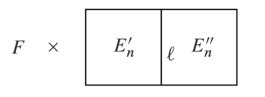 Figure 4
Peer Reviews
No public reviews on file for this paper yet. If you reviewed it on a platform where reviews are public (OpenReview, ICLR, NeurIPS, ICML), you can paste yours below so the community can read it here.
Videos
No videos yet. Explain this paper in a talk, walkthrough, or lecture? Add one.
Taxonomy
TopicsAdvanced Topics in Algebra · Algebraic structures and combinatorial models
A Weak Coherence Theorem and Remarks to the Oka Theory
By Junjiro Noguchi Research supported in part by Grant-in-Aid for Scientific Research (C) 15K04917. AMC2010: 32A99; 32E30 Key words: coherence, Oka, Levi problem, Hartogs’ inverse problem, several complex variables Affiliation and address: Graduate School of Mathematical Sciences, University of Tokyo (Emeritus); Komaba, Meguro-ku, Tokyo 153-8914, Japan e-mail: [email protected]
Abstract
The proofs of K. Oka’s Coherence Theorems are based on Weierstrass’ Preparation (division) Theorem. Here we formulate and prove a Weak Coherence Theorem without using Weierstrass’ Preparation Theorem, but only with power series expansions: The proof is almost of linear algebra. Nevertheless, this simple Weak Coherence Theorem suffices to give other proofs of the Approximation, Cousin I/II, and Levi’s (Hartogs’ Inverse) Problems even in simpler ways than those known, as far as the domains are non-singular; they constitute the main basic part of the theory of several complex variables.
The new approach enables us to complete the proofs of those problems in quite an elementary way without Weierstrass’ Preparation Theorem or the cohomology theory of Cartan–Serre, nor - method of Hörmander.
We will also recall some new historical facts that Levi’s (Hartogs’ Inverse) Problem of general dimension was, in fact, solved by K. Oka in 1943 (unpublished) and by S. Hitotsumatsu in 1949 (published in Japanese), whereas it has been usually recognized as proved by K. Oka 1953, by H.J. Bremermann and by F. Norguet 1954, independently.
1 Introduction and a weak coherence
K. Oka [28], [29] proved three fundamental coherence theorems for
- (i)
the sheaf of germs of holomorphic functions on , 2. (ii)
the ideal sheaf of an analytic subset of an open subset of , 3. (iii)
the normalization of the structure sheaf of a complex space,
where for the second, H. Cartan [4] gave his own proof based on Oka [28] (cf. [17] Chap. 9). We simply call a (resp. non-singular) geometric ideal sheaf of a (resp. non-singular) analytic subset (cf., e.g., [17] Chap. 6). Oka’s Coherence has played a fundamental role in modern Mathematics, so that it led to the notion of ringed spaces due to H. Cartan, and developed by J.-P. Serre, R. Remmert, H. Grauert and A. Grothendieck (cf. [6] p. 162). The proofs of the above coherence theorems rely on Weierstrass’ Preparation (division) Theorem.
The aim of this paper is to formulate a Weak Coherence Theorem (Theorem 1.2 below), which we prove not with Weierstrass’ Preparation Theorem, but only with power series expansions, and then to apply it to prove the Approximation Problem, Cousin I/II Problems, -equation (for functions), holomorphic extensions (interpolations), and Levi’s (Hartogs’ Inverse) Problem for unramified Riemann domains (over )1)1)1)In the present, “over ” will be abbreviated, unless necessary. (see Theorem 4.11 and §4.3); they constitute the main basic part of the theory of several complex variables. The proofs are even simpler than those in the standard references (cf., e.g., Gunning–Rossi [10], Grauert–Remmert [9], Hörmander [12], Noguchi [17]).
Note that the present approach enables us to complete the proofs of those problems in quite an elementary way without Weierstrass’ Preparation Theorem or the cohomology theory2)2)2) We use only the -cocyle class space as a complex vector space. of Cartan–Serre, nor - method of Hörmander. The present paper came out from the study of the degree structure of a generator system of a coherent analytic sheaf by [16].
Let denote a domain of with the structure sheaf . For a holomorphic function in we write for the induced sheaf-section of and for the germ of at . Let be an analytic sheaf on (i.e., a sheaf of -modules over ), and let , , be finitely many sections on . Then the relation sheaf of is a subsheaf of consisting of those germ-vectors such that
[TABLE]
Now we formulate:
Theorem 1.2** (Weak Coherence).**
Let be a complex submanifold.3)3)3) A complex submanifold is not necessarily connected in this paper.
- (i)
The non-singular geometric ideal sheaf is locally finite. 2. (ii)
Let be a finite generator system of on with : i.e.,
[TABLE]
Then, the relation sheaf is locally finite.
We give a proof of this theorem in §2. In §3 we will apply it to prove Oka’s Jôku-Ikô4)4)4) This is a method or a principle of K. Oka all through his series of papers [20]—[30] such that to solve a problem on a difficult domain one embeds the domain into a higher dimensional polydisk, extends the problem on the polydisk, and then solves it by making use of the simple shape of the polydisk (cf. [17]). (see Lemma 3.11), and then we will give a unified proof for Cousin I/II Problems, and -equation for functions in §4 (Theorem 4.11) by combining the Weak Coherence Theorem 1.2 with a method of cuboid induction on dimension; these yield for a holomorphically convex domain (Lemma 4.20), which suffices to derive Oka’s Heftungslemma or Grauert’s finiteness theorem for on a strongly pseudoconvex domain (Theorem 4.21). In §4.3 we finally give the solution of Levi’s (Hartogs’ Inverse) Problem for unramified Riemann domains.
2 Proof of Theorem 1.2
(i) We take an arbitrary point .
Case of : Since is closed, there is a neighborhood of with . Then,
[TABLE]
and therefore, is a finite generator system of on .
Case of : There is a holomorphic local coordinate neighborhood of with such that
[TABLE]
where is a polydisk with center at [math]. Let () be any element. With the coordinate system we write . The function is represented by a unique power series expansion, , which decomposes to
[TABLE]
Here we put , and . Setting
[TABLE]
we have
[TABLE]
For we apply a similar decomposition with respect to variable , so that
[TABLE]
Repeating this process, we get
[TABLE]
If , then , and so . Therefore,
[TABLE]
Thus,
[TABLE]
(ii) We begin with the following lemma:
Lemma 2.4**.**
With the natural complex coordinate system we consider a relation sheaf defined by
[TABLE]
Then is finitely generated on by
[TABLE]
We call () of (2.6) the trivial solutions of (2.5) or of . In the case of , we set the trivial solution to be [math] as a convention.
Proof of Lemma 2.4 : We use induction on . The case of is clear.
Assuming that the case of holds, we consider the case of . Set
[TABLE]
and let be an arbitrary point. If , there is an (), to say, . In a neighborhood of , . Then, (2.5) is solvable with respect to :
[TABLE]
It follows that with ,
[TABLE]
Therefore, is generated by the trivial solutions on .
If , we decompose an element in a polydisk neighborhood of as in (2.2):
[TABLE]
For one gets
[TABLE]
Here, . Since ,
[TABLE]
The second term and so forth of the right-hand side of the equation above do not contain variable , and so is deduced. Thus,
[TABLE]
This is the case of after changing the indices of variables. Therefore, the induction hypothesis implies that is represented as a linear sum of , with coefficients in . Combining this with (2.8), we see that is represented as a linear sum of , with coefficients in .
Continued proof of (ii): Set . We consider the relation
[TABLE]
We set the trivial solutions of this equation as follows:
[TABLE]
We take an arbitrary point . If , then some , to say, . As in (2.7), one sees that is generated by on a neighborhood of .
If , we take a holomorphic local coordinate system in a polydisk neighborhood as in (2.1):
[TABLE]
It follows from (2.3) and the assumption that
[TABLE]
Thus, we may assume without loss of generality that
[TABLE]
Set
[TABLE]
We deduce from (2.9) with that
[TABLE]
By Lemma 2.4,
[TABLE]
is a linear sum of , , with coefficients in . Therefore there are , , such that
[TABLE]
By making use of (2.10) we get
[TABLE]
Thus, is generated on by
[TABLE]
This finishes the proof. ∎
Remark 2.15**.**
- (i)
In the Weak Coherence Theorem 1.2 it is a point to assume that is a generator system of ; otherwise, the proof above does not work even if is non-singular. 2. (ii)
It is an advantage of the above method to the general First Coherence Theorem of Oka that we have an explicit system of generators (2.14).
3 Oka’s Jôku-Ikô
The term “Jôku-Ikô” was used by K. Oka since he wrote the first paper of the series in 1936 and retained this principle all through his works ([20]—[30]) (see footnote 4)); The aim of the present section is to prove Oka’s Jôku-Ikô, Lemma 3.11 below only by making use of Theorem 1.2 combined with Cousin’s integral (3.7). The technics may be essentially similar to those in some references, e.g., Nishino [14] and Noguchi [17], but they are not in a suitable form for our purpose.
3.1 Syzygy for non-singular geometric ideal sheaves
We begin with:
Definition 3.1**.**
A cuboid is a bounded open or closed subset of with the boundary parallel to the real and imaginary axes of . In the case of , is called a rectangle. When is a closed cuboid, we allow the widths of some edges to degenerate to [math], and call the number of edges of of positive widths the dimension of , denoted by .
Let be a domain and let 5)5)5) The symbol “” stands for that the inclusion is relatively compact. be two closed cuboids as follows: There are a closed cuboid and two adjacent closed rectangles sharing a side , and
[TABLE]
We now recall:
Lemma 3.3** (Cartan’s Merging Lemma).**
Let be adjacent closed cuboids as in (3.2), and let be an analytic sheaf on . Let (resp. ) be a finite generator system of on (resp. ).6)6)6) This means that they are defined so in some neighborhoods of and , respectively; this expression is the same through the paper.
Moreover, assume that there are holomorphic functions , , , such that
[TABLE]
Then, there exists a merged finite generator system on .
This is due to H. Cartan 1940; a rather simplified proof of it can be found in [17], “Added at galley-proof”.
Lemma 3.4** (Oka’s Syzygy).**
Let be a closed cuboid.
- (i)
Every locally finite analytic sheaf defined on (i.e., in a neighborhood of ) has a finite generator system on . 2. (ii)
Let be an analytic sheaf on with a finite generator system on such that the relation sheaf is locally finite.
Then for every section there are holomorphic functions , , such that
[TABLE]
*Proof. * The proof is carried out in the same way as in [14], or [17] Lemma 4.3.7 except for the use of the vanishing for an affine convex cylinder domain , which we replace by Cousin’s integral (3.7) as follows. Suppose that is a closed cuboid such that
[TABLE]
Set , and let . Then there is a small such that is defined on
[TABLE]
Set
[TABLE]
where is positively oriented as increases. We define Cousin’s integral of along by
[TABLE]
Then is holomorphic on . After analytic continuations we obtain () satisfying
[TABLE]
We call this the Cousin decomposition of .
The rest is the same as in the proof of [17] Lemma 4.3.7. ∎
By the Weak Coherence Theorem 1.2 and Lemma 3.4 we have:
Theorem 3.9** (Syzygy for ).**
Let be a complex submanifold of a neighborhood of a closed cuboid .
- (i)
* has a finite generator system on .* 2. (ii)
Let be a finite generator system of on with . Then for every () there are holomorphic functions , , such that
[TABLE]
3.2 Oka’s Jôku-Ikô
Let be an open cuboid in , and let be a complex submanifold. The following is fundamental in the Oka theory.
Lemma 3.11** (Oka’s Jôku-Ikô).**
Let be a closed cuboid. Then for every holomorphic function on 7)7)7)With this writing we mean that is a holomorphic function in a neighborhood of in . The notation will be used in sequel. there exists an element satisfying
[TABLE]
*Here, the equality holds in a neighborhood of in .8)8)8) The formulation of this lemma and the proof below should be new. *
Remark. We call above a solution on .
*Proof. * Notice that in the case of , can be any holomorphic function on , and the statement is true. We use induction on .
(a) Case of : Since consists of one point, the assertion is clear.
(b) Case of () with the induction hypothesis that the case of is true: By Theorem 3.9 (i) there is a finite generator system of on a neighborhood of with .
We may assume that is taken as in (3.6). We set
[TABLE]
Since , the induction hypothesis implies that there is a solution satisfying . By the Heine–Borel Theorem there is a finite partition
[TABLE]
such that there are solutions satisfying
[TABLE]
Therefore, . It follows from Theorem 3.9 (ii) that there are () satisfying
[TABLE]
By the Cousin decomposition (3.7) of we write
[TABLE]
Then,
[TABLE]
Thus this yields a solution on ; for this procedure we say that we merge the solutions and to obtain a solution on .
Starting from , we merge and to obtain a solution on . We then merge and to obtain a solution on . Repeating this procedure up to , we obtain a solution on , and set : This finishes the proof of Lemma 3.11. ∎
Remark 3.17**.**
We call the above induction argument cuboid induction on dimension, which will be used furthermore in the sequel.
It is well-known that Oka’s Jôku-Ikô Lemma 3.11 immediately implies (cf., e.g., [17] Lemma 4.4.17):
Theorem 3.18** (Runge–Weil–Oka Approximation).**
Let be an analytic polyhedron of a domain . Then every holomorphic function on the closure is uniformly approximated on by elements of .
4 Cousin I/II, , Extension and Levi’s (Hartogs’ Inverse) Problems
The aim of this section is to show how the result obtained in the previous section is applied to solve the titled problems.
4.1 Cousin I/II, and -Equation
We will give one unified proof to all of the three problems. We recall them: Let be a domain, let be an open covering, and let denote the set of all meromorphic functions in .
- I
(Cousin I) For given () satisfying (Cousin-I data), find (called a solution) with for all . 2. II
(Cousin II, Oka Principle) Here we assume that are simply-connected. Let () be locally non-zero meromorphic functions satisfying
- (a)
(nowhere vanishing holomorphic functions) (Cousin-II data), 2. (b)
(Topological condition) there are nowhere vanishing continuous functions with on .
Find with for all .
We may take a continuous branch in each . It follows that
[TABLE]
- The problem to find the solution above is reduced to the following problem:
For a given family of continuous functions satisfying (4.1), find a continuous function (called a solution) in such that for every
[TABLE] 2. III
(-Equation) For a given --form on with , find a -function (called a solution) on with .
Locally, by Dolbeault’s lemma, there is a solution of this problem in a neighborhood of a point of . Thus, there are an open covering of and -functions on such that . Then, the present problem is equivalent to find a -function (solution) on with for all .
Convention. For a unified treatment for the above problems, we introduce an “argument ” representing one of I—III above,: Problem- means one of Problems I—III above, where Problem-II means Problem (), and a -solution means a solution of the corresponding Problem-.
Remark 4.2**.**
If is so obtained in Cousin-II Problem above, then satisfies the required property for . Then we have a homotopy,
[TABLE]
from the topologically assumed function to an aimed analytic (meromorphic) function .
Remark 4.3**.**
The common property of Problem- that we will use is the following: If and are two solutions of Problem- on an open set in general, then .
We begin with:
Lemma 4.4**.**
Let be an open cuboid in and let be a complex submanifold of . We consider Problem- defined on . Let be a closed cuboid. Then there is a -solution on .9)9)9) Cf. footnote 7) at p. 7).
*Proof. * We use cuboid induction on dimension.
(a) Case of : It is clear by definition.
(b) Case of with the induction hypothesis that the case of holds: Without loss of generality we may assume that is given as in (3.6), and let be as in (3.12). Since , the induction hypothesis implies the existence of a -solution on . Then, by the Heine-Borel Theorem there are a partition of , () as in (3.13), and -solutions on .
If , we say that and is pairwise connected on . It is sufficient to prove the existence of a -solution for each maximal sequence of pairwise connected on ,
[TABLE]
For simplicity we suppose that . It follows from Remark 4.3 that for
[TABLE]
By Oka’s Jôku-Ikô Lemma 3.11, there is a holomorphic function such that
[TABLE]
By the Cousin decomposition of as in (3.7) we have and such that
[TABLE]
We infer from (4.8) and (4.16) that
[TABLE]
Note that (resp. ) is a -solution on (resp. ). Thus, from (4.9) we obtain a merged -solution on from and .
Now, from and we obtain a merged -solution on . We then obtain a merged -solution on from and , and so on; we obtain a -solution on . ∎
Definition 4.10**.**
A complex manifold is said to be holomorphically convex if for every compact subset the holomorphically convex hull of defined by
[TABLE]
is again compact.
Theorem 4.11**.**
Let be a holomorphically convex domain. Then Problem- on has a -solution on .
*Proof. * We take an increasing sequence of analytic polyhedra of ,
[TABLE]
For each we let be the Oka map (a holomorphic proper embedding) of into a closed polydisk , which extends from a neighborhood of into a polydisk, biholomorphic to an open cuboid . Then, the image is a complex submanifold of . We identify with the image .
By Lemma 4.4 there is a -solution on every . Put on . Suppose that -solutions on , , are determined so that
[TABLE]
Let be a -solution on . Since , by Theorem 3.18 there is an element with
[TABLE]
Setting , we see that (4.13) holds up to . Inductively, we have -solutions on satisfying (4.13), and the series
[TABLE]
converges locally uniformly and the limit gives rise to a -solution on . ∎
Remark 4.14**.**
As easily seen, the above proof of Theorem 4.11 works on Stein manifolds, which is defined by:
Definition 4.15**.**
A complex manifold is said to be Stein if the following conditions are satisfied.
- (i)
satisfies the second countability axiom: 2. (ii)
(Holomorphic separation) For every two distinct two point there is a holomorphic function on with : 3. (iii)
For every point there are holomorphic functions , such that : 4. (iv)
is holomorphically convex (see Definition 4.10).
4.2 Extension Problem
By means of the Weak Coherence Theorem 1.2 we consider the extension problem (interpolation problem) from a complex submanifold in a holomorphically convex domain.
Theorem 4.16**.**
Let be a holomorphically convex domain and let be a complex submanifold. Then the restriction map
[TABLE]
is a surjection.
*Proof. * We take analytic polyhedra and Oka maps () as in the proof of Theorem 4.11. By Theorem 3.9 (i) there is a finite generator system of on each , where is identified with .
Let be any element. By Oka’s Jôku-Ikô Lemma 3.11 there are with ().
We set . Suppose that , are determined so that
[TABLE]
For we first note that . By Lemma 3.11 there is an element with . Since , by Theorem 3.9 (ii) there are , , such that
[TABLE]
Restricting this to , we have
[TABLE]
Approximating sufficiently close by on (Theorem 3.18), and setting
[TABLE]
we have
[TABLE]
Then the series
[TABLE]
converges locally uniformly to the limit with . ∎
Remark 4.18**.**
The above proof of Theorem 4.16 works on Stein manifolds.
4.3 Levi’s (Hartogs’ Inverse) Problem
4.3.1 Levi’s (Hartogs’ Inverse) Problem
We first recall some basic terminologies (see, e.g., [9], [12], [17] for more details). Let be a connected complex manifold.
An upper semi-continuous function on is said to be plurisubharmonic if every restriction of to a 1-dimensional complex submanifold of any holomorphic local chart of is subharmonic. If is -class, it is plurisubharmonic if and only if the hermitian matrix
[TABLE]
where is a holomorphic local coordinate system of ; moreover, if
[TABLE]
then is said to be strongly plurisubharmonic.
If carries a continuous plurisubharmonic exhaustion 10)10)10)A functions is called an exhaustion if for all ., then is said to be pseudoconvex. Note that there are several equivalent definitions of being “pseudoconvex” (cf. [10], [9], [12], [14], [17], etc.).
A relatively compact domain is said to be strongly pseudoconvex if for every boundary point there are a neighborhood of in and a strongly plurisubharmonic function on satisfying
[TABLE]
It is known that a strongly pseudoconvex domain is pseudoconvex.
If is connected and there is a locally finite holomorphic map with , then we call a Riemann domain, in general; furthermore, if is locally (resp. non-) biholomorphic, we call a (resp. ramified) unramified Riemann domain; in this case, carries a Riemannian metric induced from the euclidean one on through , so that satisfies the second countability axiom.
It had been known that a Stein manifold is pseudoconvex: Levi’s (Hartogs’ Inverse) Problem had asked originally the converse for univalent domains of . K. Oka extended the problem for Riemann domains. (There was a necessity to do so (cf., e.g., [17] §5.1).)
4.3.2 Oka’s method
Notice that Oka’s Jôku-Ikô Lemma 3.11 is sufficient to deduce Oka’s Heftungslemma which, together with a method of an integral equation and the construction of a plurisubharmonic exhaustion on a pseudoconvex unramified Riemann domain, implies Levi’s (Hartogs’ Inverse) Problem (cf. Oka [25], [26], [31], [30], Andreotti-Narasimhan [1], Nishino [14]):
Theorem 4.19** (Oka, 1941/42/43/53; cf. §5).**
Let be a unramified Riemann domain. If is pseudoconvex, then is Stein.
4.3.3 Grauert’s method
In 1958 H. Grauert [8] gave another proof of Theorem 4.19 by proving the finite dimensionality of the first cohomology of coherent sheaves which was inspired by the Cartan–Serre Theorem for coherent sheaves on compact analytic spaces.11)11)11) Cf. the footnote of [8] p. 466. The proof relies on L. Schwartz’s finiteness theorem, whose rather simple, short and complete proof is found in [5] and [17] pp. 313–315. We shall observe that the Weak Coherence Theorem 1.2 suffices for Grauert’s method to prove Theorem 4.19.
We use the first Čech cohomology . The following immediately follows from Theorem 4.11:
Lemma 4.20**.**
- (i)
If be a holomorphically convex domain of , then . 2. (ii)
Let be a complex manifold with the second countability axiom, and let be a Stein covering of (i.e., every is open and Stein). Then we have
[TABLE]
Then we can apply Grauert’s bumping method [8] to prove:
Theorem 4.21** (Grauert).**
Let be a relatively compact domain of a complex manifold with strongly pseudoconvex boundary. Then we have
[TABLE]
Proof of Theorem 4.19: (i) The key of the proof is to show that a strongly pseudoconvex domain is Stein. Let be a boundary point. By the definition of strong pseudoconvexity there are a neighborhood of in and a quadratic polynomial such that . Then there is a little bit larger strongly pseudoconvex domain such that is closed in . We consider Cousin-I data and of such that for ,
[TABLE]
Theorem 4.21 applied to these Cousin-I data on yields a meromorphic function on such that is holomorphic in , and in , is written as
[TABLE]
where and . Thus and being holomorphically convex is deduced.
(ii) To show the holomorphic separation of , we take two distinct points . We may assume that . Let , be any affine linear curve with . Then there is a unique lifting , such that and . Since is relatively compact, hits the boundary . We may assume that hits first with , so that () and . Note that . With setting we have by (4.22) a meromorphic function in which is holomorphic in .
We consider the Taylor expansions of at and in coordinates . Since has a pole at and no pole at , those two expansions must be different. Therefore, there is some partial differential operator with a multi-index such that
[TABLE]
Since is holomorphic in , this finishes the proof. ∎
Remark 4.23**.**
- (i)
The idea of the proof above is inspired by Oka’s unpublished paper in 1943 ([32]). Note that it is subtle how to deal with the holomorphic separation of an unramified Riemann domain. In Hörmander [12] the holomorphic separation is included in the definition of Riemann domains. In [17] Chap. 7 we used Grauert’s Theorem 4.21 for a non-singular geometric ideal sheaves, which can be also deduced from our Weak Coherence Theorem, but then it involves a sheaf-cohomological argument. In Gunning–Rossi [10] and in Nishino [14] they gave their own proofs. 2. (ii)
The proof presented above provides a complete proof of Levi’s (Hartogs’ Inverse) Problem without the sheaf cohomology theory nor - method.
5 Historical remarks
Here, cf. [17] Chap. 9 “On Coherence”, and cf., e.g., Lieb [13] for the general background.
Oka’s Theorem 4.19 was first proved for univalent domains by Oka [25] (announcement) in 1941, and the full paper [26] was published in 1942 with a comment of the validity for .
In 1943 Oka proved Theorem 4.19 for unramified Riemann domains of general dimension in a series of research reports of pp. 109 in total, sent to Teiji Takagi: The reports were written in Japanese and unpublished (see [31], [32]). He remarked this fact three times, first in his survey note [27] (1949), VIII [29] (1951) and IX [30] (1953). The paper [27] has not been referred very much, but it should have a significant interest, for it was written during the submission of VII [28] before the publication; he had sent it to H. Cartan 1948 one year ago (through the hands of S. Kakutani and A. Weil), and in return he had received Cartan’s conjectural (or experimental) paper [3] referred in [27]. He surveyed the state of the development of analytic function theory of several variables at the time.
In the 1943 reports to Takagi he did not use Weierstrass’ Preparation Theorem, but he was writing a primitive form of the notion of coherence and non-reduced structures of analytic subsets; the study later led to the notion “idéaux de domaines indéterminés”, coherence in 1948 ([28]). The key of Oka’s proof of Theorem 4.19 was his “Heftungslemma”. In [25] and [26] he proved Heftungslemma by Weil’s integral, but in 1943 ([31] no. 1, [32]) he replaced Weil’s integral by simple Cauchy’s integral, proving “Oka’s Jôku-Ikô” for unramified Riemann domains.
In 1949 S. Hitotsumatsu [11] written in Japanese gave a proof of Oka’s Heftungslemma by Weil’s integral to solve Levi’s (Hartogs’ Inverse) Problem in general dimension ; here he gave no argument of plurisubharmonic exhaustions on pseudoconvex unramified Riemann domains, and so the result might hold only for univalent domains.
In 1953 Oka [30] proved Theorem 4.19 above by making use of his First and Second Coherence Theorems obtained in [28]: the Third Coherence Theorem was not used there.
In 1954 Bremermann [2] and Norguet [19] independently proved Theorem 4.19 for univalent domains with general , generalizing Oka’s Heftungslemma by means of Weil’s integral, similarly to Hitotsumatsu [11].
Concluding Remark (Oka’s Problem). It is interesting to learn that Oka invented and proved three fundamental coherence theorems by means of Weierstrass’ Preparation Theorem in order to treat the pseudoconvexity problem on singular ramified Riemann domains. Levi’s (Hartogs’ Inverse) Problem for ramified Riemann domains has a counter-example (Fornæss [7]), but in the same time there is a positive case for which Levi’s (Hartogs’ Inverse) Problem is affirmative ([18]). Because of the above historical facts we may call the following question
Oka’s Problem: What is necessary and/or sufficient for the validity of Levi’s (Hartogs’ Inverse) Problem on a ramified Riemann domain (over ) ? :
This is open even when is non-singular.
The reference list from the paper itself. Each links out to its DOI / PubMed record.
- 1[1] A. Andreotti and R. Narasimhan, Oka’s Heftungslemma and the Levi problem for complex spaces, Trans. Amer. Math. Soc. 111 (1964), 345–366.
- 2[2] H.J. Bremermann, Über die Äquivalenz der pseudokonvexen Gebiete und der Holomorphiegebiete im Raum von n 𝑛 n komplexen Veränderlichen, Math. Ann. 128 (1954), 63–91.
- 3[3] H. Cartan, Idéaux de fonctions analytiques de n 𝑛 n variables complexes, Ann. Sci. École Norm. Sup. 61 (1944), 149–197.
- 4[4] H. Cartan, Idéaux et modules de fonctions analytiques de variables complexes Bull. Soc. Math. France 78 (1950), 29–64.
- 5[5] J.-P. Demailly, Complex Analytic and Differentiable Geometry, 2012, www-fourier.ujf-grenoble.fr/~demailly/ .
- 6[6] J. Dieudonné, Abrégé d’histoire des mathématiques : 1700-1900, I, Hermann, Paris, 1986.
- 7[7] J.E. Fornæss, A counterexample for the Levi problem for branched Riemann domains over 𝐂 n superscript 𝐂 𝑛 {\mathbf{C}}^{n} , Math. Ann. 234 (1978), 275–277.
- 8[8] H. Grauert, On Levi’s problem and the imbedding of real-analytic manifolds, Ann. Math. 68 (1958), 460–472.