Classification of empty lattice $4$-simplices of width larger than two
\'Oscar Iglesias Vali\~no, Francisco Santos

TL;DR
This paper proves that beyond a certain determinant, all empty 4-simplices have width at most two, completing the classification of such simplices and confirming a conjecture by Haase and Ziegler.
Contribution
It establishes an upper bound on the determinant for empty 4-simplices of width three or more and completes the classification of these simplices up to determinant 7600.
Findings
No empty 4-simplex of width three or more has determinant greater than 5058.
Confirmed that only a few empty 4-simplices of width larger than two exist, with specific determinants.
Provided a complete list of all such simplices up to determinant 7600.
Abstract
A lattice -simplex is the convex hull of affinely independent integer points in . It is called empty if it contains no lattice point apart of its vertices. The classification of empty -simplices is known since 1964 (White), based on the fact that they all have width one. But for dimension no complete classification is known. Haase and Ziegler (2000) enumerated all empty -simplices up to determinant 1000 and based on their results conjectured that after determinant all empty -simplices have width one or two. We prove this conjecture as follows: - We show that no empty -simplex of width three or more can have determinant greater than 5058, by combining the recent classification of hollow 3-polytopes (Averkov, Kr\"umpelmann and Weltge, 2017) with general methods from the geometry of numbers. - We continue the computations of Haase…
Click any figure to enlarge with its caption.
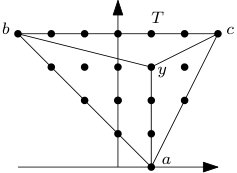 Figure 1
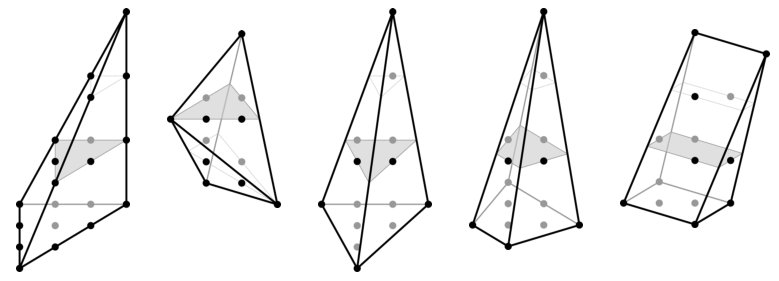 Figure 2
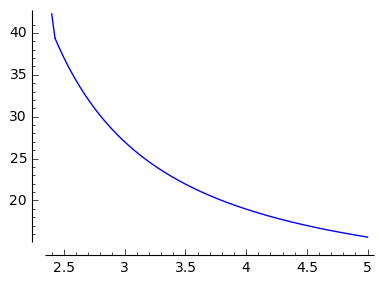 Figure 3
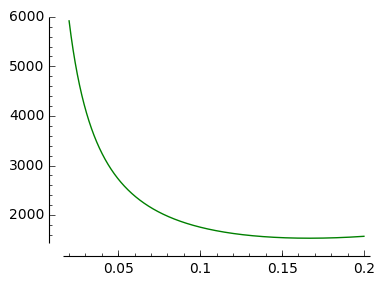 Figure 4
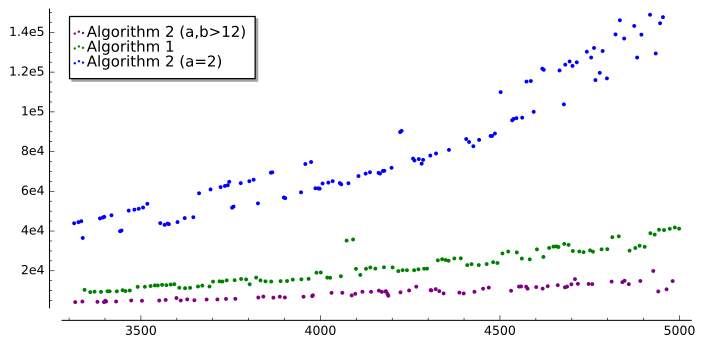 Figure 5
|
|
Peer Reviews
No public reviews on file for this paper yet. If you reviewed it on a platform where reviews are public (OpenReview, ICLR, NeurIPS, ICML), you can paste yours below so the community can read it here.
Videos
No videos yet. Explain this paper in a talk, walkthrough, or lecture? Add one.
Classification of empty lattice -simplices of width larger than two
Óscar Iglesias-Valiño and Francisco Santos
Department of Mathematics, Statistics and Computer Science. University of Cantabria, SPAIN
[email protected], [email protected]
Abstract.
A lattice -simplex is the convex hull of affinely independent integer points in . It is called empty if it contains no lattice point apart of its vertices. The classification of empty -simplices is known since 1964 (White), based on the fact that they all have width one. But for dimension no complete classification is known.
Haase and Ziegler (2000) enumerated all empty -simplices up to determinant 1000 and based on their results conjectured that after determinant all empty -simplices have width one or two. We prove this conjecture as follows:
-
We show that no empty -simplex of width three or more can have determinant greater than 5058, by combining the recent classification of hollow 3-polytopes (Averkov, Krümpelmann and Weltge, 2017) with general methods from the geometry of numbers.
-
We continue the computations of Haase and Ziegler up to determinant 7600, and find that no new -simplices of width larger than two arise.
In particular, we give the whole list of empty -simplices of width larger than two, which is as computed by Haase and Ziegler: There is a single empty -simplex of width four (of determinant 101), and 178 empty -simplices of width three, with determinants ranging from 41 to 179.
Key words and phrases:
Lattice polytopes, empty, classification, simplices, dimension 4, lattice width, maximum volume, enumeration.
2010 Mathematics Subject Classification:
Primary 52B20; Secondary 11H06.
Supported by grants MTM2014-54207-P (both authors) and BES-2015-073128 (O.Iglesias) of the Spanish Ministry of Economy and Competitiveness. F. Santos is also supported by an Einstein Visiting Professorship of the Einstein Foundation Berlin
1. Introduction
A lattice -simplex is the convex hull of affinely independent integer points in . It is called empty if it contains no lattice point apart of the vertices. Empty simplices are the fundamental building blocks in the theory of lattice polytopes, in the sense that every lattice polytope (i.e., polytope with integer vertices) can be triangulated into empty simplices. In particular, it is very useful to have classifications or, at least, structural results, of all empty simplices in a given dimension. Classification will always be meant modulo unimodular equivalence: two lattice -polytopes are said unimodularly equivalent if there is an affine integer isomorphism between them; that is, a map with integer coefficients and determinant such that In dimension two every empty triangle is unimodular; that is, its vertices form an affine basis for the lattice (this statement is equivalent to Pick’s Theorem [6]). In particular, all empty triangles are unimodularly equivalent. In dimension three this is no longer true. Yet, the classification of empty -simplices is relatively simple:
Theorem 1.1** (White 1964 [21]).**
Every empty tetrahedron of determinant is unimodularly equivalent to
[TABLE]
for some with . Moreover, is -equivalent to if and only if .
A key step in the proof of this theorem is the fact that all empty -simplices have lattice width equal to one according to the following definition: For each linear or affine functional and any convex body the width of with respect to is the difference between the maximum and minimum values of on ; that is, the length of the interval . The lattice width of is the minimum width among all non-constant functionals with integer coefficients. In the case of empty -simplices, once we now they have width one there is no loss of generality in assuming that two vertices lie in the plane and another two in , which is essentially what White’s classification says.
As sample applications of classifying empty simplices, let us mention:
- •
It is a classical result of Knudsen et al. [15] that for every lattice polytope there is a constant such that the -th dilation of has a unimodular triangulation; but it is open whether a uniform constant depending only on the dimension and not the particular polytope exists. In dimension three, heavily relying on the classification of empty simplices, Kantor and Sarkaria [14] proved that does the job, and Santos and Ziegler extended this to any . It is unknown whether a universal constant valid for all polytopes of a given dimension exists, starting in dimension four.
- •
In algebraic geometry empty simplices correspond to terminal quotient singularities. Their classification in dimension three is sometimes called the terminal lemma (see some history and references in [16]).
In particular, quite some effort has been done towards the classification of -dimensional ones [4, 5, 7, 8, 10, 16, 18].
So far the main known facts about empty -simplices are:
Theorem 1.2** (Properties of empty -simplices, [4, 5, 10, 16]).**
- (1)
There are infinitely many lattice empty -simplices of width (e.g., cones over empty tetrahedra) and of width **[10, 16]**. 2. (2)
Among the simplices of determinant there are of width three, one of width four, and none of larger width, and their maximum determinant is . The computation up to determinant was done by Haase and Ziegler **[10]** and the extension up to by Perriello **[17]**. 3. (3)
The total amount of empty lattice -simplices of width greater than 2 is finite **[5]**. 4. (4)
Every empty -simplex is cyclic **[4]**. The same is not true in dimension five.
The determinant or normalized volume of the -simplex with vertices is
[TABLE]
For a general polytope , the normalized volume is just the Euclidean volume normalized to the lattice, so that unimodular simplices have volume one and every lattice polytope has integer volume. We distinguish between Euclidean and normalized volumes using for the former and for the latter. Section 2 is written mostly in terms of Euclidean volumes, since it relies in convex geometry results where that is the standard practice, but in Sections 3 and 4 we switch to . For a (perhaps not empty) lattice simplex , its determinant equals the order of the quotient group of the lattice by the sublattice generated by vertices of . is called cyclic if this quotient group is cyclic.
Based on the exhaustive enumeration described in part (2) of Theorem 1.2, Haase and Ziegler [10] conjectured that no further empty -simplices of width larger than two existed. Our main result in this paper is the proof of that conjecture. This in particular provides an independent and more explicit proof of part (3) of Theorem 1.2:
Theorem 1.3**.**
The full list of empty -simplices of width larger than two is as follows: there are 178 of width three, with determinants ranging from 41 to 179, and a single one of width four, with determinant 101.
All empty -simplices in this list (and presumably all -dimensional empty simplices, although we do not have a proof of that) have a unimodular facet111Haase and Ziegler [10] cite the diploma thesis [20] for a proof of this fact, but we have not been able to verify that proof. The closest result that we can certify is that, as a consequence of Lemma 4.3, in order for an empty -simplex not to have any unimodular facet its determinant needs to be at least . We can also say that up to determinant all empty -simplices do have at least two unimodular facets.. This has the implication that they can be represented as
[TABLE]
for a certain . Table 1 gives the full list of empty -simplices of width larger than two in this notation. Observe that the determinant of equals .
The reference list from the paper itself. Each links out to its DOI / PubMed record.
- 1[1] G. Averkov, J. Krümpelmann and B. Nill, Largest integral simplices with one interior integral point: Solution of Hensley’s conjecture and related results. Adv. Math. 274 (2015), 118–166.
- 2[2] G. Averkov, J. Krümpelmann and S. Weltge, Notions of maximality for integral lattice-free polyhedra: the case of dimension three. Math. Oper. Res. , 42:4 (2017), 1035–1062. DOI: http://dx.doi.org/10.1287/moor.2016.0836 · doi ↗
- 3[3] G. Averkov, C. Wagner and R. Weismantel. Maximal lattice-free polyhedra: finiteness and an explicit description in dimension three, Math. Oper. Res. 36 (2011), no. 4, 721–742.
- 4[4] M. Barile, D. Bernardi, A. Borisov and J.-M. Kantor, On empty lattice simplices in dimension 4. Proc. Am. Math. Soc. 139 (2011), no. 12, 4247–4253.
- 5[5] M. Blanco, C. Haase, J. Hoffman, F. Santos, The finiteness threshold width of lattice polytopes, preprint 2016. ar Xiv:1607.00798 v 2
- 6[6] M. Beck and S. Robins, Computing the continuous discretely: Integer-point enumeration in polyhedra. Undergrad. Texts Math. Springer, N.Y. , 2007.
- 7[7] J. W. Bober, Factorial ratios, hypergeometric series, and a family of step functions, J. Lond. Math. Soc. (2) 79 (2009), no. 2, 422–444.
- 8[8] A. Borisov. On classification of toric singularities. J. Math. Sci., N.Y. , 94:1 (1999), 1111–1113. DOI: http://dx.doi.org/10.1007/BF 02367251 · doi ↗