Alternation acyclic tournaments
G\'abor Hetyei

TL;DR
This paper introduces the concept of alternation acyclic tournaments, linking them to median Genocchi numbers, and establishes bijections and formulas that reveal new combinatorial insights and models related to these numbers.
Contribution
It defines alternation acyclic tournaments and connects them to Genocchi numbers using hyperplane arrangements and bijections, providing new formulas and models.
Findings
Alternation acyclic tournaments are counted by median Genocchi numbers.
A bijection with Dumont's objects links these tournaments to Genocchi numbers of the first kind.
New generating function formulas and a simple model for median Genocchi numbers are derived.
Abstract
We define a tournament to be alternation acyclic if it does not contain a cycle in which descents and ascents alternate. Using a result by Athanasiadis on hyperplane arrangements, we show that these tournaments are counted by the median Genocchi numbers. By establishing a bijection with objects defined by Dumont, we show that alternation acyclic tournaments in which at least one ascent begins at each vertex, except for the largest one, are counted by the Genocchi numbers of the first kind. Unexpected consequences of our results include a pair of ordinary generating function formulas for the Genocchi numbers of both kinds and a new very simple model for the normalized median Genocchi numbers.
Click any figure to enlarge with its caption.
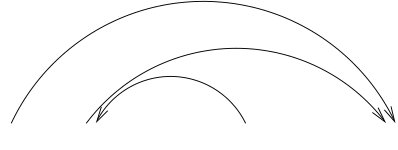 Figure 1
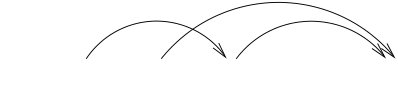 Figure 2
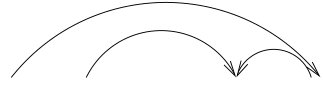 Figure 3
|
|
|||||||||||||||||||||||||||||||||||||||||||||||||||||||||||||||
|
|
Peer Reviews
No public reviews on file for this paper yet. If you reviewed it on a platform where reviews are public (OpenReview, ICLR, NeurIPS, ICML), you can paste yours below so the community can read it here.
Videos
No videos yet. Explain this paper in a talk, walkthrough, or lecture? Add one.
Alternation acyclic tournaments
Gábor Hetyei
Department of Mathematics and Statistics, UNC-Charlotte, Charlotte NC 28223-0001. WWW: http://www.math.uncc.edu/~ghetyei/.
Abstract.
We define a tournament to be alternation acyclic if it does not contain a cycle in which descents and ascents alternate. Using a result by Athanasiadis on hyperplane arrangements, we show that these tournaments are counted by the median Genocchi numbers. By establishing a bijection with objects defined by Dumont, we show that alternation acyclic tournaments in which at least one ascent begins at each vertex, except for the largest one, are counted by the Genocchi numbers of the first kind. Unexpected consequences of our results include a pair of ordinary generating function formulas for the Genocchi numbers of both kinds and a simple model for the normalized median Genocchi numbers.
Key words and phrases:
Genocchi numbers, semi-acyclic tournament, Linial arrangement, Dellac configurations
2010 Mathematics Subject Classification:
Primary 52C35; Secondary 05A10, 05A15, 11B68, 11B83
Introduction
Genocchi numbers of the first kind are closely related to the Bernoulli and Euler (tangent and secant) numbers, and the first classes of permutations counted by them, introduced by Dumont [10] are alternating in one way or another, just like the alternating permutations, counted by the tangent and secant numbers. Whereas the tangent and secant numbers found a geometric interpretation through the work of Purtill [23], Stanley [26] and many people in their wake (using André permutations, first studied by Foata, Schützenberger and Strehl in the 1970-ties [15]), there seems to be far less done in terms of finding geometric interpretations for the various types of Genocchi numbers, studied concurrently with the Genocchi numbers of the first kind. A notable exception is the work of Feigin [13], identifying the Poincaré polynomials of the complete degenerate flag-varieties as -generalizations of the normalized median Genocchi numbers introduced in [16].
This paper proposes a geometric interpretation of the Genocchi numbers, in the world of hyperplane arrangements. We arrive at this interpretation by generalizing the definition of semiacyclic tournaments, used by Postnikov and Stanley [22], and independently, Shmulik Ravid, to bijectively label the regions created by the Linial arrangement. The subject of this paper is this wider class of tournaments (we call them alternation acyclic), which may be used to bijectively label the regions in a homogeneous variant of the Linial arrangement, which we call the homogenized Linial arrangement. The Linial arrangement studied in the literature is a section of our homogenized Linial arrangement. Using the technique of counting points in vector spaces over finite fields, developed by Athanasiadis [2], we are able to prove that the number of regions created by our homogenized Linial arrangement, and thus the number of alternation acyclic tournaments, is a median Genocchi number (Theorem 4.4). No direct combinatorial argument was found for this result. On the other hand, using this result it is possible to find a simple class of objects counted by the median Genocchi numbers, which allow a simple -action, making the known fact transparent, that the median Genocchi number is an integer multiple of . The set of -orbits also has a simple combinatorial representation (Theorem 7.5). While this work was still a preprint, A. Bigeni has found a highly nontrivial bijection [6] between this model and the model of Feigin [13].
We also obtain an explicit combinatorial argument showing that ascending alternation acyclic tournaments (in which each numbered element defeats at least one element with a larger number, except for the largest numbered element), are counted by the Genocchi numbers of the first kind (Corollary 7.3). The extension of this direct counting approach to all alternation acyclic tournaments yields recurrences leading to formulas for the ordinary generating functions for the Genocchi numbers of the first and second kinds.
Our paper is structured as follows. After collecting basic facts about Genocchi numbers, hyperplane arrangements in general and the Linial arrangement in particular, we introduce alternation acyclic tournaments in Section 2 and prove their most important properties. In particular, we show that they induce a partial order which we call the right alternating walk order. In Section 3 we show how to encode each alternation acyclic tournament with a pair , where the permutation is a linear extension of the alternating walk order, and the parent function assigns to each element a larger element or the infinity symbol as its parent, thus defining a partial order that is a forest. Even though this representation is not unique, using it allows us to introduce a homogenized generalization of the Linial arrangement in Section 4 and show that the regions of this hyperplane arrangement are in bijection with our alternation acyclic tournaments. Section 4 also contains the proof of Theorem 4.4, stating that the number of all alternation acyclic tournaments is a median Genocchi number. We take a closer look at the codes in Section 5 and find a way to select unique codes (which we call largest maximal representations) for each alternation acyclic tournament. We also obtain a characterization of all valid codes. In Section 6 we use this characterization to obtain Theorem 6.1, a combinatorial result refining our counting of alternation acyclic tournaments. The key ingredient to obtain this result is a descent-sensitive coding of permutations, using excedant functions, a variant of an idea already present in Dumont’s work [10]. This result allows counting ascending alternation acyclic tournaments with the help of Dumont’s theorem, and introduce new combinatorial models for the median and normalized median Genocchi numbers in Section 7. The generating function formulas are derived in Section 8. This paper raises as many questions as it answers: some of these are mentioned in the concluding Section 9.
1. Preliminaries
1.1. Genocchi numbers
The Genocchi numbers of the first kind are given by the exponential generating function
[TABLE]
The only nonzero with odd is . For even , the first few values of are , , , , and . Their study goes back at least to Seidel [24], who published a triangular table, called Seidel’s triangle, allowing to compute them recursively. Generalizations and variants of Seidel’s triangle include [12, 29]. The first combinatorial models for them were given by Dumont [10]. We will use the following result from his work [10, Corollaire du Théorème 3], which characterizes the signless Genocchi numbers as numbers of excedant functions. A function, defined on a set of integers, is excedant if it satisfies for all . Note that excedant functions are also called surjective pistols by Dumont and Viennot in [11].
Theorem 1.1** (Dumont).**
The unsigned Genocchi number is the number of excedant functions satisfying .
The following wording is easily seen to be equivalent.
Corollary 1.2**.**
The unsigned Genocchi number is the number of ordered pairs
[TABLE]
such that hold for all and the set equals .
Another model, “alternating pistols”, may be found in [27]. For more information on the Genocchi numbers of the first kind we refer the reader to its entries (A036968 and A001469) in [21].
The median Genocchi numbers , also called Genocchi numbers of the second kind, also appear already in Seidel’s triangle. Their study evolved concurrently with the study of the Genocchi numbers of the first kind. For detailed bibliography on them we refer the reader to the above mentioned sources, and their entry (A005439) in [21]. Their first few values are , , , , and . In this paper we will use the following recent result on them, due to Claesson, Kitaev, Ragnarsson and Tenner [9]:
[TABLE]
Here the numbers are the Legendre-Stirling numbers, see the work of Andrews, Gawronski and Littlejohn [1].
The median Genocchi number is known to be an integer multiple of , see [4]. The numbers are the normalized median Genocchi numbers. They are listed as sequence A000366 in [21]. The first few values are , , , , , and . Several combinatorial models of these numbers exists, perhaps the most known are the Dellac configurations [8]. Other models may be found in the works of Bigeni [5], Feigin [13, 14], Han and Zeng [16], and Kreweras and Barraud [20]. We will present a new combinatorial model for the normalized median Genocchi numbers in Theorem 7.5. Recently Bigeni [6] found a highly nontrivial bijection between our model and Feigin’s model [13].
1.2. Hyperplane arrangements
A hyperplane arrangement is a finite collection of codimension one hyperplanes in a -dimensional vector space over , which partition the space into regions. The number of these regions may be found using Zaslavsky’s formula [28], stating
[TABLE]
Here is the characteristic polynomial of the arrangement, which Zaslavsky expressed in terms of the Möbius function in the intersection lattice of the hyperplanes. Instead of using Zaslavsky’s original formulation, we will use the following result of Athanasiadis [2, Theorem 2.2]. In the case when the hyperplanes of are defined by equations with integer coefficients, we may consider the hyperplanes defined by the same equations in a vector space of the same dimension over a finite field with elements, where is a prime number. If is sufficiently large, then the number is the number of points in the vector space that do not belong to any hyperplane in the arrangement:
[TABLE]
1.3. Semiacyclic tournaments and the Linial arrangement
This paper is on a class of directed graphs properly containing the class of semiacyclic tournaments. A tournament on the set is a directed graph with no loops nor multiple edges, such that for each pair of vertices from , exactly one of the directed edges and belongs to the graph. We consider with the natural order on positive integers. A directed edge in a cycle is an ascent if otherwise it is a descent. An ascending cycle is a directed cycle in which the number of descents does not exceed the number of ascents. A tournament on is semiacyclic if it contains no ascending cycle.
Semiacyclic tournaments arose in the study of the Linial arrangement . This arrangement is the set of hyperplanes
[TABLE]
in the subspace given by
[TABLE]
To each region in we may associate a tournament on as follows: for each we set if and we set if . Postnikov and Stanley [22, Proposition 8.5], and independently Shmulik Ravid, observed that, the correspondence above establishes a bijection between the regions of the Linial arrangement and the set of semiacyclic tournaments on the set .
2. Alternation acyclic tournaments
In this section we define alternation acyclic tournaments and show some of their most basic properties. We define ascents and descents essentially the same way as Postnikov and Stanley do it in [22]. The only minor difference is that we will use the notion of an ascent and a descent on all edges, not only on those contained in a directed cycle.
Definition 2.1**.**
We call the arrow an ascent if holds, otherwise we call it a descent. We will use the notation , respectively , to denote ascents and descents respectively. A directed cycle is alternating if ascents and descents alternate along the cycle, that is, and hold for all (here we identify all indices modulo ). A tournament is alternation acyclic (or alt-acyclic) if it contains no alternating cycle.
Clearly an alternating cycle is also an ascending cycle, hence every semiacyclic tournament is also alternation acyclic. In Section 4 we will state an analogue of [22, Proposition 8.5] for alt-acyclic tournaments, and we will explain how each Linial arrangement is a section of a hyperplane arrangement whose regions are labeled with alt-acyclic tournaments.
A generalization of the notion of a directed cycle is a the notion of a directed closed walk, in which revisiting vertices is allowed. The following, important observation implies that, for tournaments, excluding alternating closed walks vs. alternating cycles makes no difference.
Proposition 2.2**.**
Suppose a tournament on contains a closed alternating walk , that is, a closed walk, in which descents and ascents alternate. Then contains an alternating cycle of length .
Proof.
Let be an alternating closed walk of minimum length in . It suffices to show that we must have . Indeed, note that a closed alternating walk must have even length, and there is no closed walk in a tournament, so we must have . Note also that a closed walk of length must visit distinct vertices, as it can not be the composition of a closed walk of length and one additional edge.
Assume, by contradiction, that we have . As usual, we will identify the indices modulo . Furthermore, without loss of generality, we will assume that the arrows are descents and the arrows are ascents.
It suffices to show that in such a closed alternating walk we must have for all . Since we assumed , this will yield a contradiction of the form . We will distinguish two cases:
Case 1: holds. In this case the statement follows from the fact that is an ascent.
Case 2: holds. In this case it suffices to show that we must have : the statement follows then by transitivity from . Assume, by contradiction, that holds. Then either we have and is an alternating -cycle, or we have and we may use this descent to replace the subwalk in the closed walk, thus obtaining a shorter alternating closed walk. In either case, we reach a contradiction with the minimality of . ∎
The following consequence of Proposition 2.2 is analogous to a result by Postnikov and Stanley [22, Theorem 8.6] which characterizes semiacyclic tournaments as tournaments containing no ascending cycle of length at most .
Corollary 2.3**.**
A tournament on is alternation acyclic if and only if it contains no alternating cycle of length .
Another way to characterize alternation acyclic tournaments is to describe them in terms of the right-alternating walk relation.
Definition 2.4**.**
In a tournament on , there is a right-alternating walk from to if or there is a directed walk from to in which descents and ascents alternate, the first edge being a descent and the last edge being an ascent. We will use the notation when there is a right-alternating walk from to , and we will refer to as the right-alternating walk order induced by . We will also use the shorthand notation when and hold.
Proposition 2.5**.**
A tournament on is alternation acyclic, if and only the induced right-alternating walk order is a partial order.
Proof.
The relation is by definition reflexive and it is obviously transitive, as the concatenation of right-alternating walks yields a right-alternating walk. Hence the relation is a partial order if and only if it is antisymmetric. This property is easily seen to be equivalent to the non-existence of a nontrivial closed alternating walk, whose non-existence is equivalent to the non-existence of an alternating -cycle by Proposition 2.2. As noted in Corollary 2.3, the non-existence of an alternating -cycle is equivalent to the tournament being alt-acyclic. ∎
Remark 2.6**.**
There is an apparent asymmetry in the definition of the right-alternating walk order. One could analogously define the left-alternating walk order using alternating walks that begin with an ascent and end with a descent. It is similarly easy to see the analogue of Proposition 2.5 stating that a tournament is alt-acyclic, if and only if is a partial order. It should be noted that the class of alternation acyclic tournaments is closed under reversing all directed edges and it is also closed under renumbering the vertices such that each is replaced by . Under each of these operations, the role of the partial order is taken over by the partial order and vice versa.**
3. Representing alt-acyclic tournaments as biordered forests
A partially ordered set is a forest if every element is covered by at most one element. A formula counting linear extensions of a forest is due to Knuth [18]. For a bibliography on generalizations and recent results we refer the reader to [17]. Note that Hivert and Reiner use the dual definition of a forest, in which every element covers at most one element. We follow the definition of Björner and Wachs [7]. In this section we will show that every alternation acyclic tournament may be represented as a tournament induced by a biordered forest, where one of the orders is a linear extension, and the other one is an arbitrary permutation. We will think of the linear extension as a numbering of the elements from to , and we will encode the second numbering by a word , where the label of is the position of the number in
If an element is covered by an element in a forest, we will write and say that is the parent of . We will also use the notation when has no parent, and we will say that is a root. In fact, the Hasse diagram will be a union of trees, and the roots will be exactly the maximum elements of these trees. Marking the root of each tree defines the partial order. We fix a linear extension of a forest, by numbering its elements in increasing order from to , where is the number of the elements. The parent function must then satisfy for all . The converse is also true:
Proposition 3.1**.**
Given a forest on the set , defined by the parent function , the order is a linear extension of the forest, if and only if the parent function satisfies for all .
Proof.
If the numbering represents a linear extension, then the condition is necessary. Conversely, assume the function satisfies the stated property. If is less than in the order of the forest, then for the length of the shortest path from to in the Hasse diagram we have , implying . ∎
From now on we will identify each element of the forest with its label in a fixed linear extension, and we encode the forest with its parent function . Next we give a second labeling of the vertices in terms of the inverse of a permutation of the set .
Definition 3.2**.**
Given a permutation , we will say that the labeling induced by the positions in is the labeling that associates to each the position of in .
Definition 3.3**.**
We will refer to an ordered triplet of a forest, one of its linear extensions and an arbitrary numbering of its elements as a biordered forest. We will encode the forest and its linear extension with the corresponding parent function , satisfying for all , and the second numbering by the permutation whose positions induce the second numbering. We will refer to the pair as the code of the biordered forest.
The following statement is obvious.
Proposition 3.4**.**
The correspondence described in Definition 3.3 establishes a bijection between ordered triplets formed by a forest on elements, a linear extension of this forest, and an arbitrary numbering of its elements and ordered pairs formed by a function , satisfying for all and by a permutation of .
Remark 3.5**.**
We could also use the language of -partitions, see Stanley’s book [25]. This begins with considering a partially ordered set (in our case: a forest) and a bijection . Stanley calls the labeling natural when is a linear extension of . In such terms, we consider forests with a pair of labelings, one of them natural, the other one arbitrary.**
Next we define a tournament induced by a biordered forest.
Definition 3.6**.**
Let be the code of a biordered forest on elements. We define the tournament as the tournament induced by the biordered forest to be the tournament whose vertex set is and whose directed edges are defined as follows. For all we set if and hold, otherwise we set .
We may visualize the pair as an arc-diagram, shown in Figure 1.
We line up the vertices of the tournament left to right, in the order , , …, . The permutation in Figure 1 is . Next, for each such that , we draw a directed arc from to . For example, in the picture there is an arc from in position to in position , indicating . The number is the leftmost number larger than for which . All numbers larger than that are to the left of defeat , and defeats all numbers larger than to the right of . Hence we have , , and . Similarly we have and so the only ascent starting at is . The parent of the numbers , and is , no arc begins at these vertices, no ascent starts at these vertices. The parent function defines a forest with three connected components, the roots of these three trees are , and , respectively.
The next two statements explain how biordered forests are related to alt-acyclic tournaments.
Proposition 3.7**.**
Every biordered forest induces an alternation acyclic tournament . Furthermore, the permutation is a linear extension of the right alternating walk order induced by .
Proof.
Let be the code of the biordered forest on elements, and let be the tournament induced by it. First we show that is alt-acyclic. By Corollary 2.3 it suffices to show that there is no alternating cycle of length in . Assume, by contradiction, that holds for some . Since we have and we obtain that must appear to the left of whereas can not appear to the left of in . In other words, we must have
[TABLE]
Similarly and imply that we must have
[TABLE]
This is a contradiction, as and can not mutually precede each other in .
To show the second part of the statement it suffices to prove that holds whenever covers in the right alternating walk order. For an arbitrary pair , satisfying , the statement follows then by considering a saturated chain from to . If covers in the right alternating walk order, then there is a such that holds. By the definition of , must be to the left of , whereas can not be to the left of in . In other words, must hold, and is to the left of in . ∎
Our next result is the converse of Proposition 3.7.
Proposition 3.8**.**
Let be an alternation acyclic tournament on , and let be any linear extension of the right alternating walk order. Then there is a unique parent function such that the tournament induced by is .
Proof.
Clearly, for each , the only way to define is to set equal to the leftmost in such that holds, if such a exists, and to set when no ascent begins at . We only need to verify that the tournament induced by the biordered forest with code is the same as the tournament we started with. Consider a pair of vertices satisfying . If or is to the left of then, by the definition of , we must have in and also in . Also by definition, holds in both tournaments, if . We are left to consider the case when is to the right of in . In we must have , the only remaining question is, could we have in the tournament , for such a vertex ? The answer is no, since would imply in contradiction with being a linear extension of the partial order . ∎
Remark 3.9**.**
For any alt-acyclic tournament , the element is always incomparable to the other elements of in the right alternating walk order, hence the partial order has always at least two linear extensions. This makes the use of biordered forests to directly count alt-acyclic tournaments difficult. We will see two different ways to overcome this difficulty in Sections 4 and 5.**
4. Counting alternation acyclic tournaments using hyperplane
arrangements
In this section we introduce a hyperplane arrangement whose regions are in bijection with the alternation acyclic tournaments. Using a result of Athanasiadis [2], we will be able to count them.
Definition 4.1**.**
Consider the vector space with coordinate functions ,…,, ,…,. We define the homogenized Linial arrangement as the set of hyperplanes
[TABLE]
in the subspace given by
[TABLE]
Remark 4.2**.**
Restricting our arrangement in to the set does not change the number of regions, because of the following observation: given a point
[TABLE]
all points of the line
[TABLE]
belong to the same region of , considered as a hyperplane arrangement in , since holds for all . There is exactly one choice of on this line for which the sum of the -coordinates is zero. Intersecting our picture with allows us to get rid of an inessential dimension. It also makes our definition more compatible with the usual definition of the Linial arrangement, due to the following observation. Intersecting with all hyperplanes of the form yields a hyperplane arrangement, which, after discarding the redundant -coordinates, is exactly the Linial arrangement .**
Next we associate to each region of the homogenized Linial arrangement a tournament on as follows. For each , set if the points of the region satisfy , and set if holds for all points in the region. The correspondence is clearly well-defined and injective.
Theorem 4.3**.**
The correspondence establishes a bijection between all regions of the homogenized Linial arrangement and all alternation acyclic tournaments on the set
Proof.
First we show that every tournament associated to a region is alt-acyclic. Assume, by contradiction, that there is a region , such that the tournament is not alt-acyclic. By Corollary 2.3 this implies the existence of an alternating -cycle . By the definition of , all points of the region satisfy
[TABLE]
[TABLE]
We obtain the contradiction .
Next we show that every alt-acyclic tournament on is of the form for some region . Consider an alt-acyclic tournament . By Proposition 3.8, the tournament is induced by a biordered forest with code . Let us set
[TABLE]
and let us set
[TABLE]
Observe first that we have
[TABLE]
hence the point belongs to the vector space . Observe next, that for each the difference is the difference between the positions of and . This integer is strictly more than exactly when or is to the right of in . Therefore is exactly the tournament induced by the biordered forest whose code is . ∎
Now we are ready to prove one of the main results of our paper.
Theorem 4.4**.**
The number of alternation acyclic tournaments on the set is the median Genocchi number .
Proof.
By Theorem 4.3 the statement is equivalent to showing that the number of regions in the homogenized Linial arrangement is . We will find this number using Zaslavsky’s formula (1.2), where we compute the characteristic polynomial using Athanasiadis’ result (1.3). To simplify our calculations, instead of applying (1.3) to the hyperplane arrangement directly, we will count the regions of the hyperplane arrangement , given by the equations (4.1) in with coordinate functions ,…,, ,…,. In other words, rather than removing one inessential dimension by restricting to the subspace (keep in mind Remark 4.2 pointing out that this restriction does not change the number of regions), we add an additional inessential dimension that is not involved in the equations defining the hyperplanes. The proof of Theorem 4.3 may be applied to show that the number of regions is the same as the number of alt-acyclic tournaments on (with the remark that the value of may be chosen in an arbitrary fashion). Let us now consider the hyperplane arrangement as the subset of for some very large prime . Let us introduce the shorthand notation for the number of elements in the set
[TABLE]
In other words, is the set of those points in , for which the set has elements. By (1.3), we must have
[TABLE]
We claim that the numbers satisfy the recurrence
[TABLE]
Indeed, let us first select the values of and of a vector belonging to . Since the set has either the same size as or it has just one more element, the set must have or elements. Furthermore the coordinates and do not satisfy those equations from (4.1) which do not involve or . Depending on the choice between and , this selection may be performed in or ways, respectively. In the case when has elements, there are ways to select the value of from the complement of the set . Once this selection is made, we may select in ways, making sure that belongs to the set . Similarly, in the case when has elements, there are ways to select the value of , and also ways to select the value of afterward. Both and must belong to the complement of in this case. Using the initial condition
[TABLE]
(where is the Kronecker delta function), the polynomials may be computed. Since, for each , the ambient space is dimensional, the number of regions of is equal to
[TABLE]
Introducing , the initial condition (4.4) yields and the recurrence (4.3) may be rewritten as
[TABLE]
Introducing
[TABLE]
the initial condition may be transcribed as , and the recurrence (4.5) may be rewritten as
[TABLE]
Equation (4.6) is a recurrence relation satisfied by the Legendre-Stirling numbers, shown by Andrews, Gawronski and Littlejohn [1, Theorem 5.3], and the initial conditions also match. We obtain that , and that
[TABLE]
It was shown in [9] (see Equation (1.1)) that the above sum equals the median Genocchi number . ∎
5. Direct counting using the largest maximum order
By Proposition 3.8, given an alternation acyclic tournament , after fixing a linear extension of the partial order , there is a unique parent function such that the biordered forest encoded by induces . In this section we fix one such linear extension for each alternation acyclic tournament and describe how to recognize the valid pairs . This will allow us to directly count alternation acyclic tournaments of various kinds.
Definition 5.1**.**
For an alternation acyclic tournament on , we define the largest maximal order to be the permutation , given recursively as follows:
- (1)
* is the largest maximal element of ordered by .* 2. (2)
Once has been determined for all , is the largest maximal element in the poset obtained by restricting the partial order to .
We call the unique pair inducing the largest maximal representation of .
Note that the largest maximal order is necessarily a linear extension of the partial order , and that each is the largest maximal element in the poset obtained by restricting the partial order to the set . For example, the largest maximal order for the tournament induced by the pair shown in Figure 1 is , and the largest maximal representation is shown in Figure 2. It is easy to verify that this diagram induces the same tournament, the fact that this is the largest maximal representation will be easily verifiable using Proposition 5.3 below.
Remark 5.2**.**
Consider the largest maximal representation shown in Figure 3. Here is the largest maximal element of the set because we have and so holds. We only discarded the vertex from the set of elements to be considered as a maximal element, but we can not correctly interpret the restriction of the partial order to the subset without considering the relation of to and in the entire tournament.**
The next statement completely characterizes the largest maximal representations. Recall that is a descent of the permutation of if holds.
Proposition 5.3**.**
Given a permutation of and a parent function
[TABLE]
the pair is the largest maximal representation of the tournament induced by if and only if for each descent of , the vertex belongs to the range of .
Proof.
Assume first that is a largest maximal representation and that is a descent of . By definition is a maximal element in the subset , ordered by , but it is not a maximal element in the subset , since is the largest maximal element in the latter set, and it is smaller than . Hence must cover in the restriction of to . Since, for any, , the relation can not hold, the relation is also a cover relation in the entire set . Thus there is a such that holds. Since is immediately to the left of , we must have .
Assume next that an alt-acyclic tournament is induced by a code , in which for each descent of , the element belongs to the range of . We will show by induction on that for each the vertex is the largest maximal element of the set . For we must have since setting for some would make a descent and is never in the range of the parent function . Assume now that the statement holds for some and consider the set . Since, by Proposition 3.7, the permutation is a linear extension of the partial order , the element is a maximal element of the set ordered by , we only need to show that it is the largest maximal element. There is nothing to prove when holds: adding to the set can only decrease the list of the maximal elements and, by our induction hypothesis, was the largest element on this list before we added . We are left to consider the case when holds, that is, is a descent. By our assumption there is a satisfying . Consider any for which holds. This element is to the left of and it is larger than . Hence we have , implying . We obtained that no element of that is larger than can be a maximal element in this set, with respect to . Therefore is the largest maximal element. ∎
Proposition 5.3 allows us to count alt-acyclic tournaments in a recursive fashion, by using the following reduction operation.
Definition 5.4**.**
Given the largest maximal representation of an alternation acyclic tournament on for some , we define its reduction to the set to be the alternation acyclic tournament with largest maximal representation where
[TABLE]
In other words, the permutation is obtained from by deleting the letter , and the parent function is obtained from by changing all values to .
Proposition 5.5**.**
If is the largest maximal representation of an alternation acyclic tournament on then the pair given in Definition 5.4 is the largest maximal representation of an alternation acyclic tournament on .
Proof.
Clearly is a permutation of , and the function maps into in such a way that holds for all . We only need to verify that for every descent of , the element is in the range of . This is most easily verified by visualizing the reduction operation in terms of the arc representations. In such terms, the reduction operation removes the letter , and redirects all arrows ending in to point to . If a letter in is less than the letter immediately preceding it, the same remains true even after inserting the letter . (Note that is a descent unless .) Finally the range of is obtained from the range of by removing from it (if it was present). ∎
Definition 5.6**.**
We say that an alternation acyclic tournament has type if it is a tournament on , and the parent function in its largest maximal representation satisfies and . We will denote the number of alternation acyclic tournaments of type with .
Note that always holds, so can only hold when . Similarly, must hold.
Proposition 5.7**.**
The numbers are integers, they are given by the initial condition (where is a product of Kronecker deltas), and the recurrence relation
[TABLE]
Proof.
The statement is equivalent to , and the recurrence relation
[TABLE]
Suppose we have an alternation acyclic tournament of type , and consider its reduction . We claim that the type of must be either for some or . Indeed, if is in the range of then the range of has one less element, and properly contains . If is not in the range of then , has exactly one less element than , and the range of equals the range of .
We claim that any alt-acyclic tournament of type (where ) is the reduction of exactly alt-acyclic tournaments of type . Indeed, unless is inserted as the last letter of , it creates a descent, so it must be inserted right before a vertex that is in the range of . There are ways to perform this insertion. Furthermore, we must take a -element subset of and reassign them to have as their parent. A similar, but simpler reasoning shows that for any alt-acyclic tournament of type there are exactly alt-acyclic tournaments of type whose reduction is . ∎
We computed the numbers using Maple and the formula given in Proposition 5.7 for . These are given in Table 1.
A generating function formula for the numbers will be given in Section 8. Inspecting the tables we can make several observations, some of which are easy to show.
Proposition 5.8**.**
* holds for .*
Indeed, for the largest maximal representation , to have elements in the range of , we need at least elements of to have a parent different from .
Proposition 5.9**.**
* where is the Kronecker delta.*
Indeed, when the range of is then all elements have as their parent. It is only a little harder to show that in the main diagonal of each table we have the Eulerian numbers.
Proposition 5.10**.**
The number is the number of permutations of having exactly descents.
Proof.
Because of Proposition 5.8, when we set in the recurrence given in Proposition 5.7, only the term associated to will have a positive contribution. By we get
[TABLE]
for . This is exactly the recurrence for the Eulerian numbers, and the initial conditions match. ∎
It may be a little harder to notice that the numbers in the first column multiplied by the factorial of the row index add up to the Genocchi numbers of the first kind, that is,
[TABLE]
We will prove a generalization of Equation (5.1) in Section 6.
6. Refined counting of alternation acyclic tournaments
The main result of this section is the following generalization of Dumont’s theorem, which also refines Theorem 4.4.
Theorem 6.1**.**
For each , the sum is the number of ordered pairs
[TABLE]
satisfying the following conditions:
- (1)
* and hold for all ;* 2. (2)
the set contains ; 3. (3)
.
Remark 6.2**.**
Theorem 6.1 above is a direct generalization of Corollary 1.2, a restated variant of Dumont’s original Theorem 1.1. This generalization has a shorter proof. A similar but longer argument would allow generalizing Theorem 1.1 to stating that equals the number of excedant functions satisfying the following conditions:
- (1)
holds for ; 2. (2)
; 3. (3)
.
The key ingredient to proving Theorem 6.1 is the following bijection.
Theorem 6.3**.**
There is a bijection between the set of all permutations of and the set of excedant functions such that each permutation and the corresponding excedant function have the following property:
[TABLE]
Proof.
We will describe our bijection using the process of inserting the numbers into the permutation in decreasing order. In order to reduce the number of cases, we place before the first number the number and after the last number the number . Thus every number is inserted between two numbers. For example, for and the permutation we have the insertion process
[TABLE]
The number is computed in step when we insert into the permutation between the numbers and , using the following rule:
[TABLE]
Here is the leftmost number in the current word such that the consecutive subword is decreasing, that is, each number in it is smaller than the immediately preceding number. (We have exactly when is immediately preceded by a smaller number.) In our example we have . In the third step, when we inserted between and , we set , in the fifth step, when we inserted between and , we set . In the last step, when we inserted between and , we set .
The operation is well-defined. The numbers clearly satisfy . Since the number of all words is the same as the number of all excedant functions , to show that we defined a bijection, it suffices to show that our assignment is injective: there is at most one way to reconstruct a permutation from an excedant function .
We always have and the first step is to insert between [math] and , the last line of the definition (6.1) is applicable. Assume, by induction, that there is only one way to reconstruct the insertion of , , …, , based on the knowledge of , , …, . Consider satisfying , and let us show that there is only one way to insert that yields the given value of . Only the last line of the definition (6.1) allows setting , the value of is greater than on the other two lines. Thus, in the case when , we must insert right after [math] as the first new number in our permutation. From now on we may assume that for some . Let be the immediate predecessor of in our current word. We distinguish two cases depending on how and compare. If then can not be inserted anywhere after , since the only way to obtain would be to insert between some and satisfying and . This is impossible: if is a decreasing subword, then so is and so is either or an even earlier number. Thus must be inserted somewhere before , and the only way to get when is a number to the right of the place of insertion is to insert right before . We are left with the case when . If we insert anywhere before , we can not get , only or a number to the left of it. We must therefore insert after in such a way that the second line of (6.1) can be used and it yields . We must find a such that the succeeding is larger than and the subword is decreasing. In other words, we must take the rightmost such that is a decreasing consecutive subword.
We are left to show that the set contains all numbers between and except those values that are immediately preceded by a larger number in the permutation . We prove the following generalization of this statement by induction: at step of the insertion process, the set contains all elements of the set except those numbers, which are immediately preceded by a larger number in the current permutation of . At the first step is inserted and it is preceded by a smaller number. We set . Assume the statement is true up to step and consider the insertion of . If is inserted right after [math], the current set of numbers immediately preceded by a smaller number does not change, and is added to the set . In all other cases is inserted right after a larger number and . If is inserted between and satisfying , then which was hitherto immediately preceded by a larger number, it is now immediately preceded by the smaller number . The set of numbers immediately preceded by a larger number gains as a new element and loses as an element, no other change occurs. This change is properly reflected in setting . Finally, if holds, then the only change to the set of numbers immediately preceded by a larger number is the addition of to this set. This is properly handled, if we select to be a number that is already present in the set . Selecting fits the bill, as can not be immediately preceded by a larger number. ∎
Definition 6.4**.**
We call the excedant function associated to the permutation by the algorithm described in the proof of Theorem 6.3 the descent-sensitive code of the permutation .
Proof of Theorem 6.1: Consider the largest maximal representation of an alternation acyclic tournament and let us replace with its descent-sensitive code . Note that we must have for the largest maximal order of each alt-acyclic tournament and this equality is equivalent to . Hence the function is completely defined by its restriction to the set , which sends this set into itself. Similarly, we must have , thus the restriction of to , which is a function , completely determines . Let us define the vectors and by setting
[TABLE]
and for . The condition is equivalent to and the condition is equivalent to . The description given in Proposition 5.3 may be restated as follows: the pair of functions comes from a largest maximal code if and only if we have
[TABLE]
This is equivalent to Condition (2) in our statement. Finally, is clearly the number of elements sent into by . ∎
An important special instance of Theorem 6.1 is the case . In this case all is satisfied for all and the pairs are exactly the ones that are counted in Corollary 1.2. Equation (5.1) follows.
7. New combinatorial models for the Genocchi numbers
Equation (5.1) inspires introducing ascending alternation acyclic tournaments.
Definition 7.1**.**
We call an alternation acyclic tournament on ascending if every is the tail of an ascent, that is, for each there is a such that .
Lemma 7.2**.**
An alternating acyclic tournament on is ascending if and only if it has type for some .
Indeed, for any biordered forest inducing , if is the code of the biordered forest, holds if and only if is not the tail of any ascent. An alt-acyclic tournament is ascending if and only if is the only element of whose parent is .
Because of Lemma 7.2, Equation (5.1) may be rephrased as follows.
Corollary 7.3**.**
The number of ascending alternation acyclic tournaments on is the unsigned Genocchi number of the first kind .
Taking into account Theorem 4.4, Theorem 6.1 implies the following result on the median Genocchi numbers.
Corollary 7.4**.**
The median Genocchi number is the total number of all ordered pairs
[TABLE]
such that and hold for all and the set contains .
Corollary 7.4 makes the divisibility of by especially transparent. Furthermore, it inspires the following model for the normalized median Genocchi numbers.
Theorem 7.5**.**
The normalized median Genocchi number is the number of sequences subject to the following conditions:
- (1)
the set is a (one- or two-element) subset of ; 2. (2)
the set equals .
Proof.
By Corollary 7.4, the median Genocchi number is the number of pairs of vectors such that and hold for all and the set contains . Let us first define a -action of the set of all such vectors. We define the involution for as follows. The map sends
[TABLE]
[TABLE]
where
[TABLE]
In other words, the map changes only the -th coordinates of and , it swaps and if is a two element subset of and it swaps the pair with the pair . Note that in this second case, we have
[TABLE]
for , as well as for . The action of the involutions is free, as they act on different coordinates. An orbit representative for this action is the sequence of sets
[TABLE]
In the case when we may set and , and in the case when , we may set and . This orbit representative is valid if and only if the set equals . ∎
Remark 7.6**.**
It was recently shown by A. Bigeni [6] that the above model is bijectively equivalent to the model introduced by Feigin [13]. The bijection is highly nontrivial, A. Bigeni’s entire paper is devoted to it. It is through Feigin’s model that the above model is related to the earlier models by Kreweras [19] and by Kreweras and Barraud [20]. All earlier models are related to the Kreweras triangle [19], and there is an interpretation of the numbers in the Kreweras triangle through Bigeni’s bijection. Note, however, that the numbers introduced in this paper form a three dimensional array, and they are not directly related to the Kreweras triangle.**
Remark 7.7**.**
The variant of Theorem 6.1, together with Theorem 4.4 imply the following variant of Corollary 7.4: the median Genocchi number is the number of excedant functions satisfying for and
[TABLE]
8. Generating function formulas
In this section we prove a generating function formula for the numbers introduced in Section 5 and obtain the ordinary generating functions of the Genocchi numbers of both kinds.
We begin with introducing the generating function
[TABLE]
in which we denote the coefficient of by . Proposition 5.7 may be rewritten as
[TABLE]
[TABLE]
These equations gain a simpler form after introducing the formal power series
[TABLE]
For these, equations (8.1) and (8.2) may be rewritten as
[TABLE]
[TABLE]
Let us define the polynomial as the coefficient of in . Equations (8.3) and (8.4) may be transformed into
[TABLE]
[TABLE]
Note that (8.6) also holds for , once we set for all . Let us set finally . Equations (8.3) and (8.4) may be transformed into
[TABLE]
[TABLE]
Again we set for all . This is an array of polynomials that is easy to compute after introducing
[TABLE]
For , Equation (8.7) and repeated use of Equation (8.8) yields for . Hence we have
[TABLE]
For , Equation (8.8) implies the recurrence
[TABLE]
Using Equations (8.9) and (8.10), an easy induction on implies
[TABLE]
Next we introduce
[TABLE]
The definition of implies and . Hence Equation (8.11) may be rewritten as
[TABLE]
Finally, as an immediate consequence of the definitions we have
[TABLE]
Combining the last equation with Equation (8.12) we obtain the formula
[TABLE]
Taking into account we obtain the following result.
Theorem 8.1**.**
The generating function is given by
[TABLE]
By Theorem 4.4, the generating function of the median Genocchi numbers is obtained by substituting and replacing each with in .
Corollary 8.2**.**
The median Genocchi numbers satisfy
[TABLE]
By Corollary 7.3, the generating function of the Genocchi numbers of the first kind is obtained by replacing each by and then taking the coefficient of in in . To use Theorem 8.1, observe that all powers of occur in the products of the form
[TABLE]
Here, for , the factor
[TABLE]
has no constant term, and the coefficient of is . We can take out this factor, simplify by (k+1), and only the constant terms of the remaining factors contribute to the coefficient of . Theorem 8.1 thus has the following consequence.
Corollary 8.3**.**
The Genocchi numbers of the first kind satisfy
[TABLE]
In this formula, when , we define the empty product to be equal to .
9. Concluding remarks
Dumont’s first permutation models for the Genocchi numbers were created by finding a class of excedant functions first [10, Corollaire du Théorème 3], and then establishing a bijection between excedant functions and permutations [10, Section 5]. This bijection is very different from, although similar in spirit to our Theorem 6.3. Using the bijection presented in Theorem 6.3, new classes of permutations counted by Genocchi numbers of the first kind may be introduced, however these classes will be very similar if not identical to the examples obtained by Dumont, after combining his bijection with Foata’s fundamental transformation [15] which transforms counting excedances into counting descents. Dumont’s bijection between permutations and excedant functions makes identifying excedances easy, whereas our bijection is poised on identifying descents. More interesting results could be hoped for by finding new permutation models for median Genocchi numbers using Remark 7.7 and Corollary 7.4. The curiosity of all results presented in this paper is that objects counted by Genocchi numbers of the first kind are presented as subsets of objects counted by median Genocchi numbers: it is usually the other way around in the literature.
This paper arose in a search for generalizations of semiacyclic tournaments that appear in the work of Postnikov and Stanley [22]. In particular, we have found a hyperplane arrangement, whose regions are counted by the median Genocchi numbers, known to be multiples of powers of . Semiacyclic tournaments count regions in the Linial arrangement, which is a section of the arrangement we presented in this paper. The number of semiacyclic tournaments on vertices is known to be
[TABLE]
see [22, Theorem 8.1]. It is hard to miss in the above formula that the sum after the factor is obviously an integer, but not obviously a multiple of . No combinatorial proof of this divisibility is known, perhaps the -counting of the regions of the Linial arrangement by Athanasiadis [3] comes closest. Perhaps the -counting of the regions of our homogenized Linial arrangement, combined with a better understanding how the Linial arrangement appears as a section of our arrangement could help find some additional explanations how divisibility by a power of appears in both settings.
Acknowledgments
This work was partially supported by grants from the Simons Foundation (#245153 and #514648 to Gábor Hetyei). The author thanks Ange Bigeni and two anonymous referees for valuable advice, many great suggestions and important corrections.
The reference list from the paper itself. Each links out to its DOI / PubMed record.
- 1[1] G. E. Andrews, W. Gawronski and L. L. Littlejohn, The Legendre-Stirling numbers, Discrete Math. 311 (2011), 1255–1272.
- 2[2] C. A. Athanasiadis, Characteristic polynomials of subspace arrangements and finite fields, Adv. Math. 122 (1996), 193–233.
- 3[3] C. A. Athanasiadis, Extended Linial hyperplane arrangements for root systems and a conjecture of Postnikov and Stanley, J. Algebraic Combin. 10 (1999), 207–225.
- 4[4] D. Barsky and D. Dumont, Congruences pour les nombres de Genocchi de 2e espèce, Study Group on Ultrametric Analysis. 7th-8th years: 1979–1981 (Paris, 1979/1981), Exp. No. 34, 13 pp., Secrétariat Math., Paris, 1981.
- 5[5] A. Bigeni, Combinatorial study of Dellac configurations and q 𝑞 q -extended normalized median Genocchi numbers, Electron. J. Combin. 21 (2014), Paper 2.32, 27 pp.
- 6[6] A. Bigeni, Combinatorial interpretations of the Kreweras triangle in terms of subset tuples, Electron. J. Combin. 25 (2018), Paper 4.44, 11 pp.
- 7[7] A. Björner, and M.L. Wachs, q 𝑞 q -hook length formulas for forests, J. Combin. Theory Ser. A 52 (1989), 165–187.
- 8[8] H. Dellac, Problem 1735, L’Intermédiaire Math. 7 (1900) 9–10.