Gamma-Gamma Absorption in Gamma-Ray Burst Environments
Markus B\"ottcher Lent\'e Dreyer

TL;DR
This paper investigates the gamma-gamma absorption of very-high-energy gamma-rays emitted by gamma-ray bursts within star-forming regions, finding that such absorption is generally negligible in typical OB association environments.
Contribution
It provides the first detailed estimate of gamma-gamma opacity in GRB environments, showing that VHE gamma-ray absorption is minimal around typical OB associations.
Findings
Gamma-gamma absorption is negligible in typical OB association environments.
VHE gamma-rays from GRBs are unlikely to be significantly absorbed by local stellar radiation.
The study helps clarify the prospects for detecting VHE gamma-rays from GRBs.
Abstract
Gamma-ray bursts (GRBs) are the most violent explosions in the universe, seen primarily as bright, short flashes of gamma-rays. Long GRBs are most likely associated with the violent death of a very massive star. They are thus believed to originate within regions of recent or ongoing star formation with various bright, young stars, for instance, OB associations. GRBs have been detected in gamma-rays by satellite-borne gamma-ray telescopes at MeV - GeV energies, but could potentially also emit gamma-rays at even higher energies (Very-High-Energy [VHE] gamma-rays: E > 100 GeV), as observed by ground-based Cherenkov Telescope facilities, such as the High Energy Stereoscopic System (H.E.S.S) in Namibia. VHE gamma-rays can be absorbed by low energy photons by pair production, and the stars in the vicinity of a GRB provide a dense radiation environment, which could lead to such absorption. We…
Click any figure to enlarge with its caption.
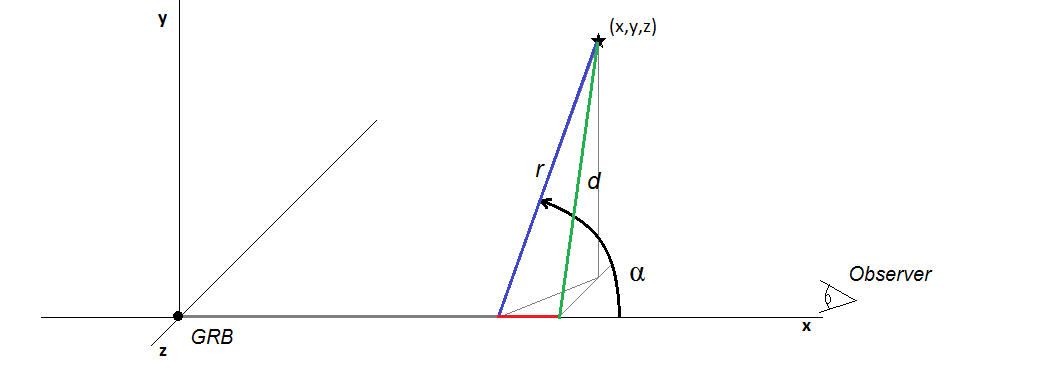 Figure 1
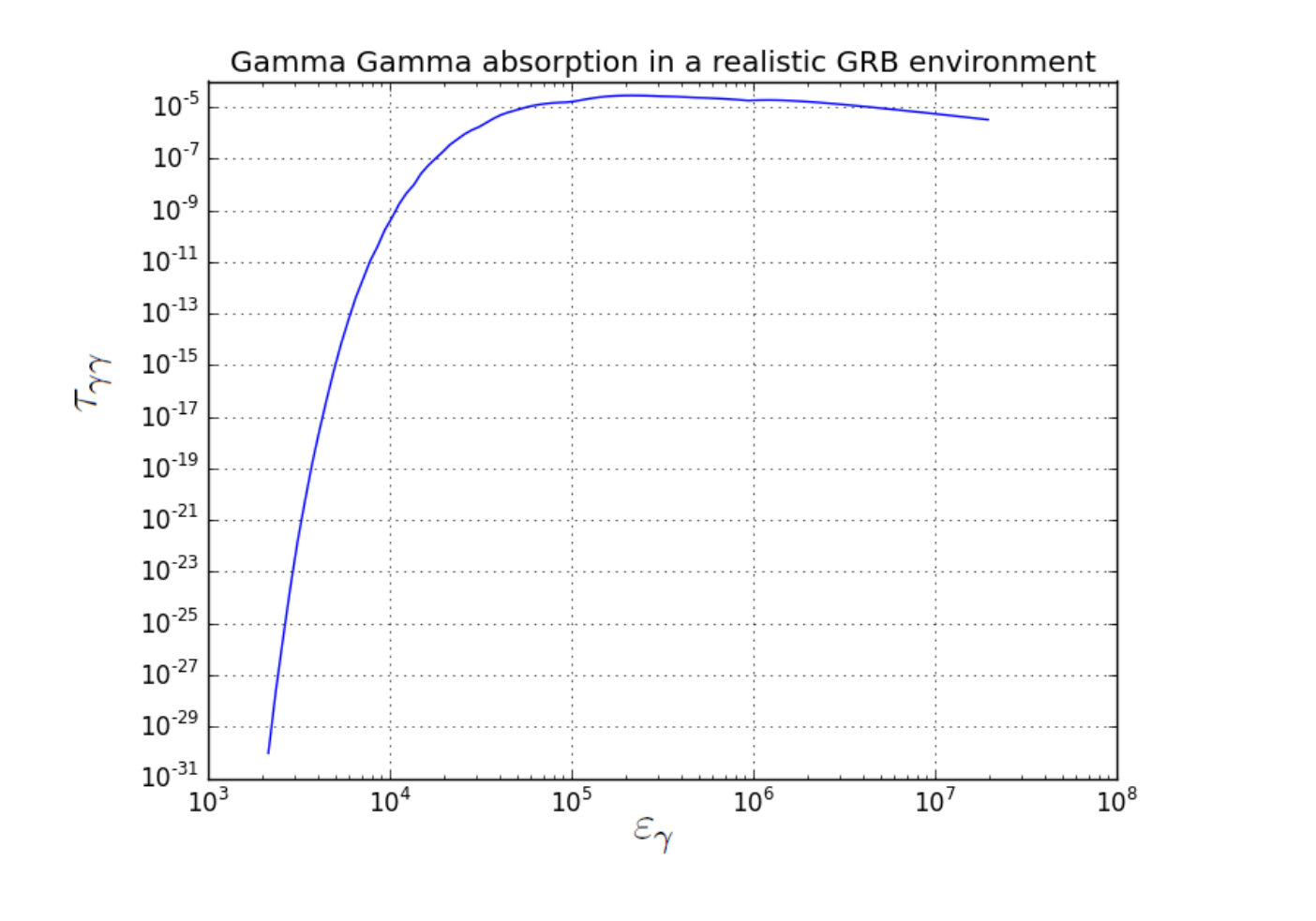 Figure 2
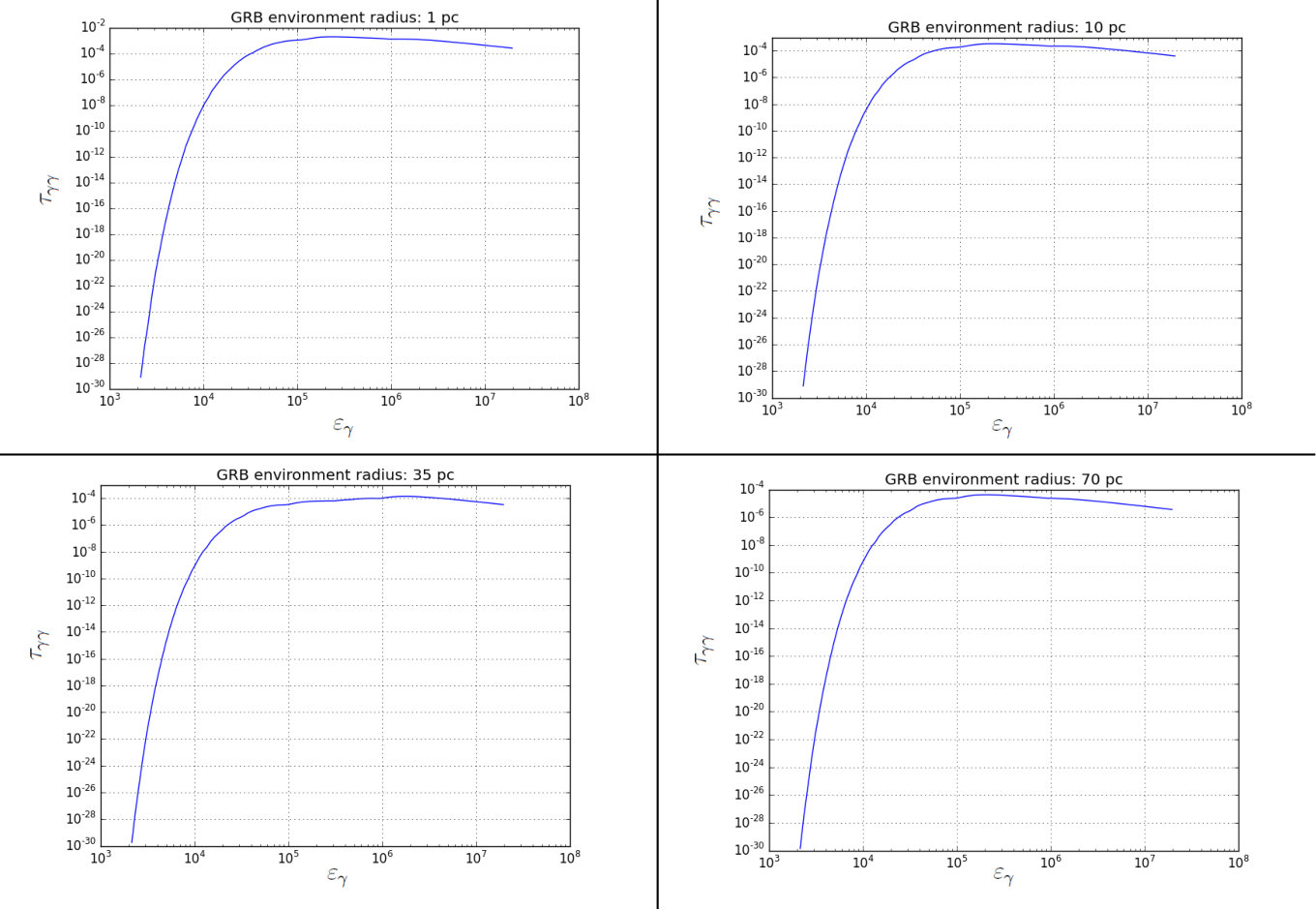 Figure 3
 Figure 4
 Figure 5
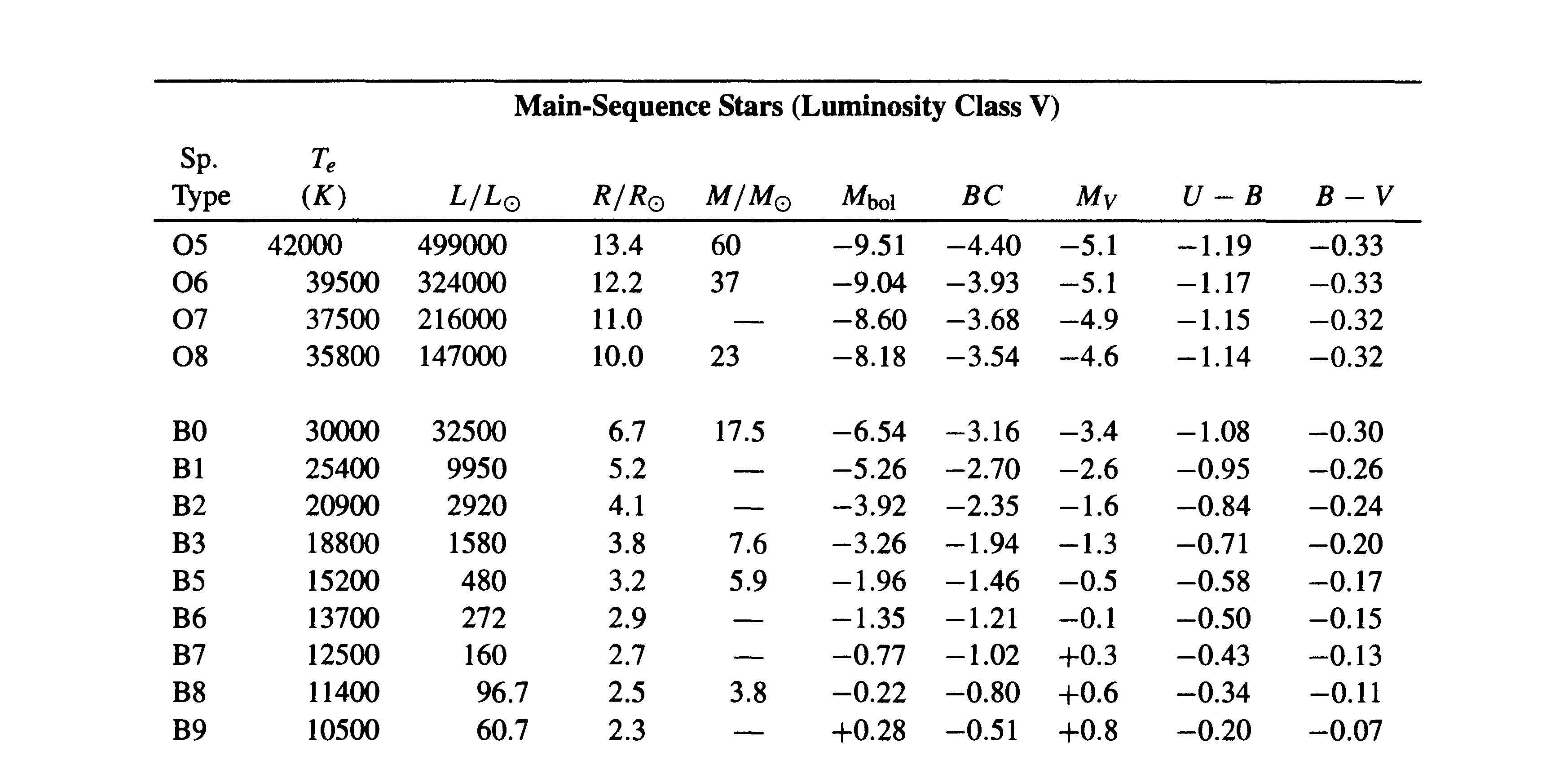 Figure 6
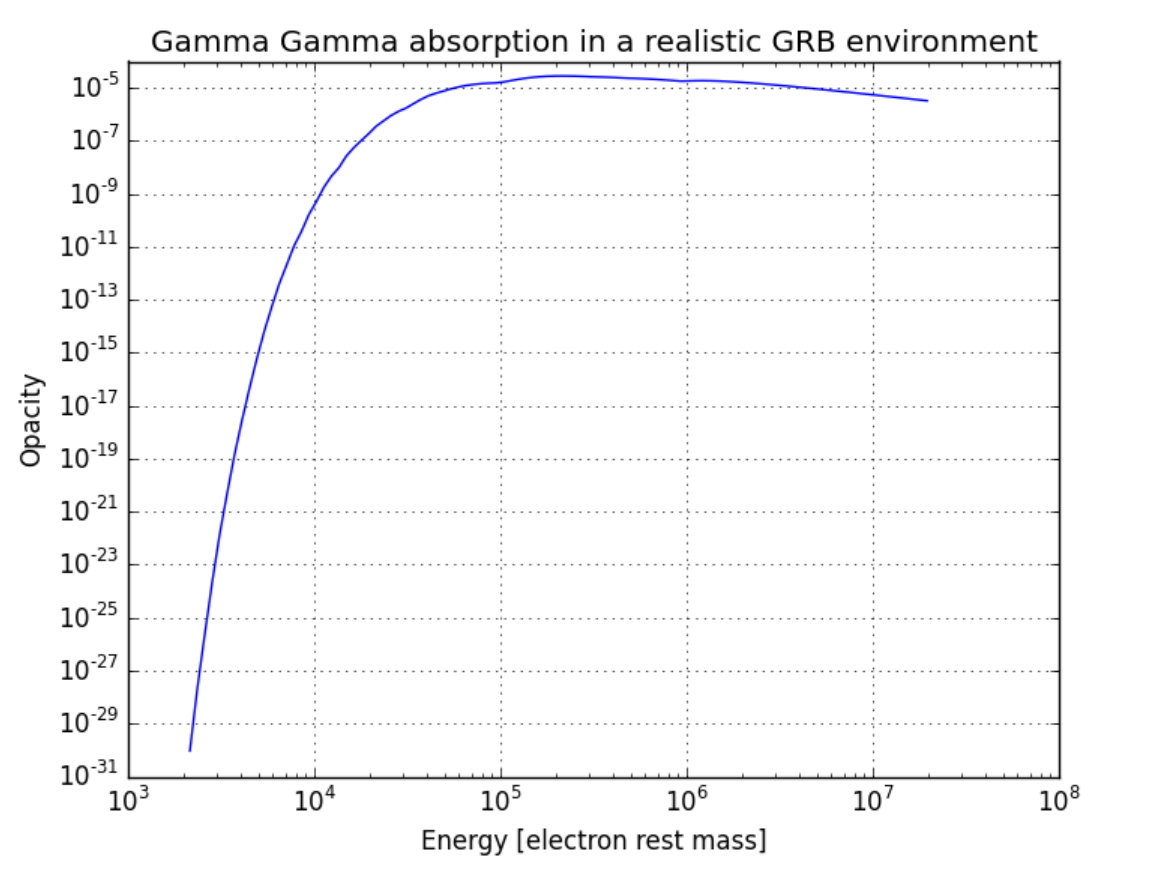 Figure 100
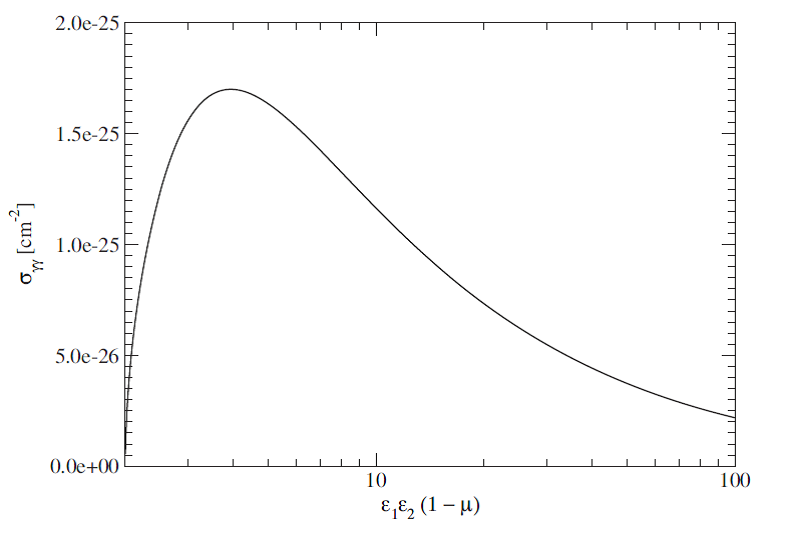 Figure 8
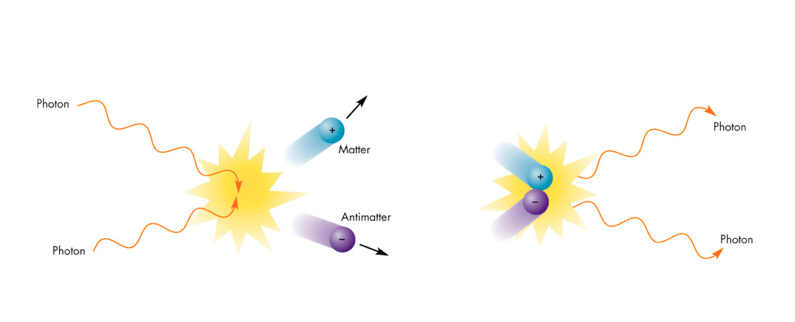 Figure 9
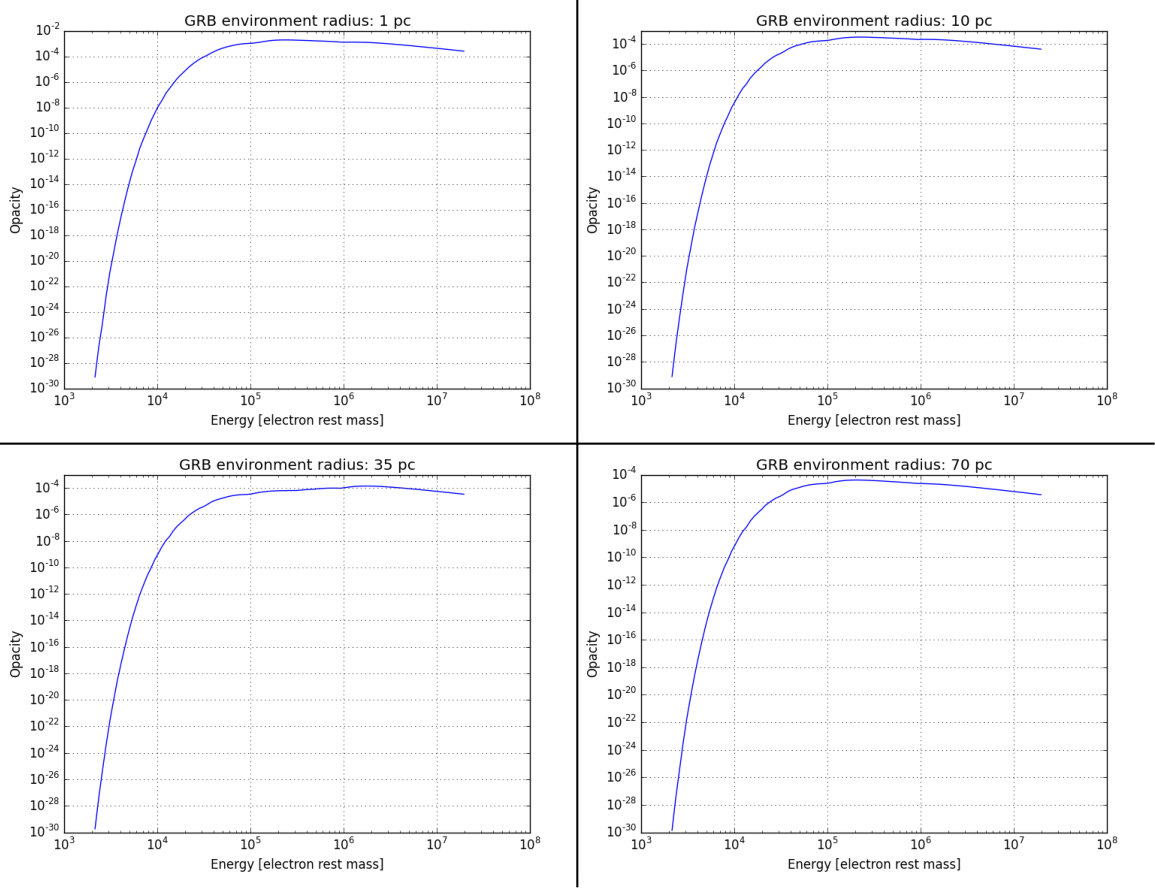 Figure 10
Peer Reviews
No public reviews on file for this paper yet. If you reviewed it on a platform where reviews are public (OpenReview, ICLR, NeurIPS, ICML), you can paste yours below so the community can read it here.
Videos
No videos yet. Explain this paper in a talk, walkthrough, or lecture? Add one.
Taxonomy
TopicsGamma-ray bursts and supernovae
Gamma-Gamma Absorption in Gamma-Ray Burst Environments
Centre for Space Research, North-West University, Potchefstroom, 2520, South Africa
Markus Böttcher
Centre for Space Research, North-West University, Potchefstroom, 2520, South Africa
E-mail The work of M. B. is supported through the South African Research Chair Initiative (SARChI) of the South African National Research Foundation (NRF) and the Department of Science and Technology, under SARChI Chair grant no. 64789. Disclaimer: Any opinion, finding and conclusion or recommendation expressed in this material is that of the authors and the NRF does not accept any liability in this regard. [email protected]
Abstract:
Gamma-ray bursts (GRBs) are the most violent explosions in the universe, seen primarily as bright, short flashes of -rays. Long GRBs are most likely associated with the violent death of a very massive star. They are thus believed to originate within regions of recent or ongoing star formation with various bright, young stars, for instance OB associations. GRBs have been detected in -rays by satellite-borne -ray telescopes at MeV – GeV energies, but could potentially also emit -rays at even higher energies (Very-High-Energy [VHE] -rays: GeV), as observed by ground-based Cherenkov Telescope facilities, such as the High Energy Stereoscopic System (H.E.S.S) in Namibia. VHE gamma-rays can be absorbed by low energy photons by pair production, and the stars in the vicinity of a GRB provide a dense radiation environment, which could lead to such absorption. We have investigated representative GRB environments and provide an estimate of the opacity to absorption for VHE -rays from GRBs. We find that for the likely properties of OB associations around GRB progenitors, absorption is expected to be negligible.
1 Introduction
Gamma-ray bursts (GRBs) are the most violent explosions in the universe, seen primarily as bright, short flashes of -rays. GRBs have been detected in -rays up to a few GeV thus far (e.g., [1]), and although they have not been detected at higher energies by ground-based Cherenkov Telescopes yet, considerable progress has been made with developments in observations, theory, and instrumentation in order to make this possible [25]. GRBs are randomly distributed in the sky [10], and there are no repeating GRB sources [24]. Most GRBs have gradually decaying afterglows in -rays, some also in optical and radio and even extended (in time) emission in high-energy ( MeV) -rays (e.g., [15]). There are at least two classes of GRBs, referred to as long- and short GRBs, depending on their duration, (the time between 5 % and 95 % of the gamma-ray fluence being received), with short GRBs having s and long GRBs having s, up to several minutes. These two classes also differ in the spectral hardness of their sub- emission, with short GRBs typically having harder spectra (e.g., [8]). The observed brightness, combined with the large distances, implies isotropic-equivalent energy outputs of erg (e.g., [10]).
Although the exact origin of GRBs is still under investigation, the two classes are generally believed to have different progenitors based on their host environments. Long GRBs, for instance, are often found in spiral arms (star forming regions) of very faint host galaxies, while short GRBs are generally found far from star-forming regions of their host galaxies. The leading model for long GRBs involves a supernova-like explosion of a very massive star (), where the core collapse leads to the direct formation of a black hole. The rest of the star is accreted onto the newly-formed black hole, resulting in the formation of an accretion disk which, in turn, powers ultra-relativistic jets. These jets seem to be the source of the observed -rays [20, 19].
Short GRBs are likely caused by the coalescence of a black hole and a neutron star or a neutron-star binary. The neutron star will be destroyed by tidal disruption, and its matter will accrete onto the (potentially newly-formed in the process) black hole. This, as in the case of long GRBs, leads to the formation of an accretion disk and the explosion of ultrarelativistic jets. Such events are also expected to produce strong gravitational-wave signals, potentially detectable by LIGO/VIRGO (e.g., [14]).
The very detection of VHE -rays emission from GRBs would severely constrain the physical properties pertaining to the particle acceleration by GRBs, and would therefore severely constrain models for particle acceleration and the total energy budget, and hence the properties of the GRB progenitors [16, 2, 25]. Detections of GRBs at MeV – GeV energies is now routinely provided by the Fermi Gamma-Ray Space Telescope (e.g., [1]), and all of the current Imaging Cherenkov Telescopes have active observing programmes towards the detection of VHE -ray emission from GRBs (e.g., [3]).
Very High Energy (VHE) -rays are subject to pair production of an electron-positron pair through the interaction with optical/infrared photons [13]. Hence, in addition to the question whether particles are accelerated to sufficient energy to produce VHE -ray emission, it is also important to understand their chance of propagating to Earth unabsorbed. An important target photon field for VHE -ray absorption is the Extragalactic Background Light (EBL), which is generally believed to limit the distance to which VHE -ray sources can realistically be detected by ground-based Atmospheric Cherenkov Telescope facilities, to (e.g., [11, 9]). absorption may also play an important role within the -ray emission region of a GRB itself and is likely to have a profound impact on the shape of the emerging -ray spectrum (e.g., [21]. However, also photon fields in the local environment of the source, within the host galaxy, may potentially be relevant and affect the detectability of VHE emission from GRBs.
The purpose of this work is to investigate representative GRB environments and provide an estimate of the opacity to -absorption that VHE -rays from the GRB would be subject to. Short GRBs are known to originate in rather “clean” environments, typically far from bright light sources (such as star-forming regions), so that no absorption by local radiation fields is expected to be relevant. However, long GRBs, resulting from the deaths of very massive (and thus, young) stars, are expected to occur within young star-forming regions (O/B associations), and these are the environments which we will focus on in this study. We therefore consider typical O/B associations likely to host GRB progenitors, and calculate the -opacity for VHE -rays produced by the GRB in such an environment.
2 -Absorption and Pair Production
High-energy -ray photons can interact with each other, and with lower energy photons, to produce an electron-positron pair. This is the process of -absorption, which is the inverse process of annihilation and is one of the most relevant elementary processes in high-energy astrophysics [2]. The role of pair production was first pointed out by Gerasimova [12], and emphasized by Bonometto and Rees in the context of dense radiation fields of very compact objects in 1971 [5]. When a photon of dimensionless energy interacts with a photon of energy , with an interaction angle , the resulting electron-positron pair will, in the center-of-momentum () frame, have equal Lorentz factors, with . The normalized velocities will also be the same (but in the opposite direction) and are given by
[TABLE]
The threshold condition for absorption results from the requirement that , which provides the threshold condition for ,
[TABLE]
The most favorable interaction angle corresponds to head-on collision, where , so that the absolute threshold energy is . The full cross section is given by [13]
[TABLE]
where is the Thompson cross-section, defined as
[TABLE]
The energy dependence of is strongly peaked around , with the threshold energy,
[TABLE]
When the energy of the ray is exactly equal to , the normalized velocities, as well as itself, will be zero (e.g., [4]).
The opacity for absorption of a ray photon, with energy , in a photon field is given, over a path length , by
[TABLE]
where is the distance from the GRB along the -ray path and the solid angle element is (see Fig. 1). If the absorbing radiation field is located outside the emission region, -absorption leads to an exponential factor compared to the intrinsic flux, produced in the emission zone, i.e.,
[TABLE]
where is the observed flux, and is the intrinsic flux.
3 Model Setup and Calculations
We perform our calculation in a co-ordinate system in which the GRB occurs at the origin, with the observer along the -axis. Stars of the O/B association hosting the GRB progenitor are distributed randomly in a volume characteristic for such clusters around the GRB. The geometry for the consideration of a single star located at co-ordinates is illustrated in figure 1. The interaction angle is defined as , where , with being the shortest distance between the star and the line of sight (i.e., the impact parameter), and the current distance between the star and the point along the line of sight,
[TABLE]
OB-associations are loosely organized, very young groups of stars that formed approximately at the same time, containing a significant fraction of O and B stars (e.g., [23]). They commonly contain between and O and B stars, with a total mass between hundreds and thousands of solar masses, and radii between and parsec (e.g., [17]). The stars each have a corresponding luminosity and temperature, taken from [6]. Compared to the dimensions of the O/B association, the stars are small enough to be considered as point sources. This simplifies the calculation of the opacity according to equation 6, as we can substitute the integrals over with a summation over all stars,
[TABLE]
for a total number of stars that are taken into consideration. is the density spectrum of photons from star at point along the line of sight, with which the -ray interacts under an interaction-angle cosine (as a function of ).
The spectra of the O and B stars are approximated as blackbody spectra, corresponding to their temperatures , and luminosities . Proper normalization to the stellar luminosity yields for the photon number density spectrum of an individual star:
[TABLE]
where is the dimensionless temperature of the star.
4 Results and Discussion
As a representative characterization of a typical GRB environment, we consider in our calculations O/B stars with a typical Salpeter initial mass function. O and B stars are characterized by masses of and luminosities of that form in loosely organized groups called OB associations [6]. We consider these stars to be randomly evenly distributed within a radius of parsec around the GRB source. The -opacity has been calculated in an energy range between GeV and TeV, as the opacity at lower energies is found to be negligibly small due to the characteristic optical / UV range of the stellar spectra. The opacity as a function of -ray energy, is shown in figure 2, for one representative realization of the stellar distribution.
The opacity peaks in the -ray energy range of GeV and GeV, and slowly decreases towards higher energies due to the decrease of the cross section with increasing energy in interactions of optical/UV photons and the decrease of the photon number densities at energies with increasing (i.e., decreasing target photon energy towards the IR). The maximum opacity in this specific realization is of order . We performed the same calculation for a large number of realizations of the stellar distribution and found similar results in each case.
In order to investigate the sensitivity of our result on the specifics of the stellar distribution, we conducted a parameter study, in which we varied the radius of the O/B association between parsec and parsec, containing the same number of O/B stars. Characteristic results are shown in figure 3, where again the opacity is plotted as a function of the -ray energy in the energy range of GeV to TeV. As expected, the opacity increases with decreasing radius of the O/B association (i.e., increasing density of stars), but even in the extreme (unrealistic) case of 60 O/B stars within 1 parsec, the opacity still does not exceed .
We therefore conclude that the opacity due to an O/B association hosting a GRB progenitor is expected to be negligible for any realistic configuration. VHE -rays are, therefore, highly unlikely to be significantly attenuated by the photon fields of their host O/B associations.
The reference list from the paper itself. Each links out to its DOI / PubMed record.
- 1[1] Abdo, A.A., et al., 2009, Science , 323 (5922), 1688.
- 2[2] Aharonian, F. A., 2004, Very high energy cosmic gamma radiation: a crucial window on the extreme Universe. Singapore: World Scientific.
- 3[3] Aharonian, F. A., et al., 2009, A&A, 495, 502.
- 4[4] Boettcher, M., Harris, D.E. & Krawczynski, H. 2012. Relativistic Jets from Active Galactic Nuclei. New Jersey: John Wiley and Sons.
- 5[5] Bonometto, S. & Rees, M.J. 1971, MNRAS , 152, 21
- 6[6] Carroll, B.W. & Ostlie, D.A. 1996. An introduction to modern astrophysics and cosmology (Reading: Addison & Wesley)
- 7[7] Catanese, M. & Weekes, T.C. 1999, Publications of the Astronomical Society of the Pacific , 111 (764), 1193.
- 8[8] Dezalay, J. P., et al., 1996, Ap J , 471, L 27.